Tag: Speeches

  • Andrew Mitchell – 2012 Speech on Climate Change

    Below is the text of the speech made by the Secretary of State for International Development, Andrew Mitchell, at Lancaster House in London on 26th April 2012.

    Whether it’s to run the computers of City workers, or to power the sewing machines of Ghanaian seamstresses, we all need energy.

    But, handled carelessly, energy can be our enemy as well as our friend. The more fossil-fuelled energy we use the more CO2 we produce. And the more CO2 we produce the greater our vulnerability to climate change.

    Climate change will hit the world’s poorest people first and hardest – as we see so clearly around the world today – with droughts, floods and famines set to increase in frequency and intensity. The numbers of people at risk of hunger as a result of climate change are projected to increase by between 5% and 20% by 2050, while in Sub-Saharan Africa, 10 million more children are expected to suffer from malnutrition.

    Climate change will also affect us here in Britain. The renowned economist, Lord Stern, estimates that the economic cost of unmanaged climate change could be between 5% and 20% of global GDP. That contrasts with a 1-2% cost if we keep emissions at safe levels and support developing countries to adapt.

    We’re pushing hard to secure an ambitious global deal on emissions, one that prevents global warming from rising above a global average of 2 degrees while also protecting poorer countries as they adapt to the impacts of climate change.

    But we shouldn’t sit back and wait for a global deal we argue. There are things that we need to do now if we are to protect the world’s poorest people and help them to access the energy that will allow them to transform their economies.

    Sustainable Energy for All Initiative and action agenda

    I believe that the Sustainable Energy for All Initiative, and the action agenda launched today, can play a critical role in accelerating progress on this issue.

    No country – especially not our own which led the first Industrial Revolution – has grown without increasing energy. But the benefits aren’t just economic: for women and children in poor households, access to a clean, affordable and reliable energy supply lifts the burdens of drudgery, and the ill health imposed by cooking on open fires.

    British aid is helping. We have set up a cross-Government International Climate Fund, with resources totaling nearly £3 billion. The Sustainable Energy for All Framework will enable us to better co-ordinate with our partners the investments which the Fund is making in clean energy.

    Fresh thinking

    One of the themes which will bring us closer to sustainable energy for all is innovation. My department, the Department for International Development, is exploring how Innovation Prizes might be used to reward fresh thinking in this area.  We also see an important role here for Climate Innovation Centres, and are supporting them in countries including India and Kenya, helping local entrepreneurs to turn ideas and technologies into viable businesses.

    The goals of the Sustainable Energy for All Initiative will not be achieved of course by public finance alone.  We need to unlock much greater amounts of private investment. Here again, the International Climate Fund has a vital role to play.

    Take just one example: the Fund contributes to a multi-donor Climate Investment initiative that is now helping 45 developing countries to pilot low-carbon, climate-resilient development. This includes the Scaling-Up Renewable Energy Programme (SREP) which promises to deliver electricity to more than 2 million people in poor countries.  The additional contribution which the Deputy Prime Minister announced on Tuesday, could, for example, help mobilize finance to add another 500,000 to the electricity grid in Africa.

    New Results-Based Financing facility 

    I can also announce today that Britain will be supporting a new Results-Based Financing facility, working in Low Income countries, especially in Sub-Saharan Africa.  We expect at least 2.5 million poor people to benefit from expanding markets in climate-friendly products, such as solar lanterns or cleaner cookstoves, or by local electricity grids driven, for example, by hydropower.

    We are supporting these initiatives because we recognise that sustainable energy for all is a central element of our common future. The Framework being launched today offers us a clear set of actions to achieve this goal and to tackle the twin challenges of climate change and development.

    We in Britain will deliver on our commitments, so too, must the wider international community.

    Thank you.

  • Andrew Mitchell – 2011 Conservative Party Conference Speech

    Below is the text of the speech made by the then International Development Secretary, Andrew Mitchell, to the 2011 Conservative Party Conference on 2nd October 2011.

    Conference, it is 50 years since a Conservative Prime Minister, Harold Macmillan, set up what is now the Department for International Development.

    Since then, we have made huge progress. But still today:

    Every hour 180 children die needlessly from diarrhoea.

    Tonight, millions of families will spend the hours after sunset in the dark, with no electricity, no running water, no healthcare.

    And in South Sudan this girl is more likely to die during childbirth than she is to finish primary school. Let me just repeat that. This girl is more likely to die during childbirth than she is to finish primary school.

    Even now, in Government, when I go to these places, I still feel overwhelmed by the scale of human suffering. But I am uplifted by the work being done to help and the progress Britain is leading.

    So now, please join me in thanking Britain’s development team Alan Duncan, Stephen O’Brien, Lady Verma and Mark Lancaster for the role they are playing.

    All of us in this team feel personally accountable for the way that taxpayers’ money is spent.

    We know that every pound wasted is a pound not saving lives. So in our first few days in office, we cancelled over £100m of ineffective spending.

    Let me say what else we’ve done to get our house in order.

    We stopped Labour’s practice of sending DFID’s own glossy magazine around the world by airmail at a cost of nearly half a million pounds a year.

    We stopped first-class travel. Just in Labour’s last year in office, they spent a staggering £75,000 on first-class rail tickets.  In our first year, it was just £197 – a reduction of over 99%. Why should British taxpayers pay over the odds to fund complementary cups of tea, when the people we are supposed to be helping don’t have running water?

    And we stopped Labour’s quarter-of-a-million-pound funding for a Brazilian dance troupe in North London which specialises in percussion. At least that’s one Labour fandango which was easy to clear up.

    Conference, this kind of loose spending is not just incompetent. It is an insult to British taxpayers.

    Let us resolve together here today: no more Labour waste.

    We’ve also fundamentally changed the way we direct our aid.

    Look at the map.  Here’s where Labour thought it fit to spend aid while they were in office.

    It doesn’t look like that any more.

    No more aid to China, which spent billions hosting the Olympics. We closed it down.

    Or Russia, a member of the G8.

    As a result of our detailed review we’re closing DFID aid programmes in 16 countries. That, after all, is the whole aim of aid – do it well and then get out when it’s done.

    So as you can see: we’re giving aid to the people who really need it, from the Ghurkha villages of Nepal, to the dignified people of Zimbabwe who have suffered so long under the tyrannical rule of Robert Mugabe.

    And we were just as tough with the international organisations which get British taxpayers’ money. We’ve assessed them and ranked them.

    Now some of these agencies are absolutely brilliant. Let me give you just one example.  We found that GAVI, the Global Alliance for Vaccines and Immunisation, was achieving amazing results.  So, along with Bill Gates, the private sector and other countries, we backed them. I can now tell you that for the next five years the British taxpayer will help to vaccinate a child every two seconds. Ladies and Gentleman, something as small and as simple as this will protect a life every two seconds for the next five years. Lives as important as those of our own children. I’m proud that Britain is leading the way in making that happen.

    But some international organisations are doing less well.  We’ve put four of them into special measures. They need to make serious improvements. No improvements, no more cash from the British taxpayer.

    And we’ve shown some organisations the red card. The International Labour Organisation was not delivering value for the core funding it received. So it’s not getting any more. Conference, I make no apology for saying: we have to be tough when lives are at stake.

    This tough approach means that during the next 4 years we will achieve incredible results.

    – We will get 11 million children into school in the poorest parts of the world

    – 15 million people who don’t have it today will have safe drinking water

    – And 10 million women who have never had access to family planning will have it for the first time.

    And at this time when money is really tight, and the responsibility to spend it well has never been greater, we never forget: these results are paid for by the British taxpayer. When I visit these countries, people come up to me with a simple message. A message I pass on to you today: thank you, Britain, for standing by us in our hour of need.

    Conference, this is Britain at its best.

    And this government is focusing on two key areas: tackling conflict and promoting the private sector.

    To deliver real value for money, we have to tackle the root causes of poverty. And chief among these is conflict.

    And these problems affect us here. Terrorism, the drugs trade, infectious diseases, illegal migration – if we want to tackle these problems at home, we have to understand and address their root causes abroad.

    Some say we can’t afford to engage in development. But Conference, we cannot afford not to.

    So what does this mean in practice?

    In Pakistan, we’re going to get 4 million children into school for the first time over the next 4 years. It is hard to think of a better way to tackle the poverty and illiteracy upon which the terrorist recruiters pray. This is good development and good politics.

    In Somaliland we’re helping to build the police force to promote law and order.

    In Afghanistan, right across the country our work to improve the business environment is paying off.

    Don’t just take my word for it.

    In July, General Sir David Richards, the head of Britain’s armed forces, said this:

    “Alternative livelihoods and development assistance are as important as the determination and courage of our forces. Together they are a powerful combination that will leave an enduring legacy for the Afghan people, the region and international community.”

    I completely agree with him.

    And let us pay tribute today to every single one of the brave men and women of our armed forces, who are working night and day to keep our country safe.

    Our forces’ action helped stop a bloody massacre in Benghazi, and helped create the conditions for the people of Libya to take control of their own destiny.

    And long-term planning was part of the story from the beginning, the lessons of Iraq uppermost in our minds.  Today, working closely with William and Liam, we’re helping Libyans rebuild their country’s police and security forces.

    The Arab Spring has inspired us all, as we see yet again that a yearning for freedom is deeply rooted in the human spirit.

    So let us celebrate the spirit of the Arab Spring, and the millions of ordinary men and women who have made change happen. They are an inspiration to the world.

    Just as conflict causes poverty, so it is the private sector – jobs, property rights, investment – that lifts a country out of poverty.

    By the end of the last government, even Labour Ministers started to mouth words about the importance of the private sector in development. But somehow I always felt that, under the bedclothes late at night, they didn’t really believe it.

    We do believe it.  It’s hard-wired into our Conservative DNA.

    And we now for the first time have a private sector division within DFID, dedicated to promoting that age old Tory principle and truth: that no matter where in our world, private enterprise is the engine of growth and development.

    So Ladies and Gentlemen, under your Government:

    Britain’s development policies transformed.

    Value for money demanded

    Every day, lives saved.

    All thanks to the determination, support and generosity of the people of Britain.

    I want to leave you today with a thought and a photograph.

    I met these children in July. They’re smiling here, but just a few days earlier they’d arrived from Somalia at the largest refugee camp in the world.

    Many of them had shredded feet from walking through miles of desert for up to 30 days. Some of them had brothers or sisters who had died along the way.

    Here on the outskirts of this vast camp they don’t have much, but at least they’re safe and have access to food.

    And looking at these kids – I think of all the suffering they have faced, and the contrast with the lives of our own children.

    And I also think that ours is a world where borders aren’t what they used to be…

    …where threats to our security aren’t defined simply by national armies declaring war on each other…

    …where our own prosperity depends upon poor countries becoming prosperous economies and trading partners.

    One of these children could be the next Bill Gates or the person who discovers the cure for cancer.

    I can’t think of any picture that better sums up the purpose of Britain’s development budget: a better life for millions of the world’s poorest, and a safer, more prosperous world for us all. Thank you.

  • Andrew Mitchell – 2010 Speech in Washington

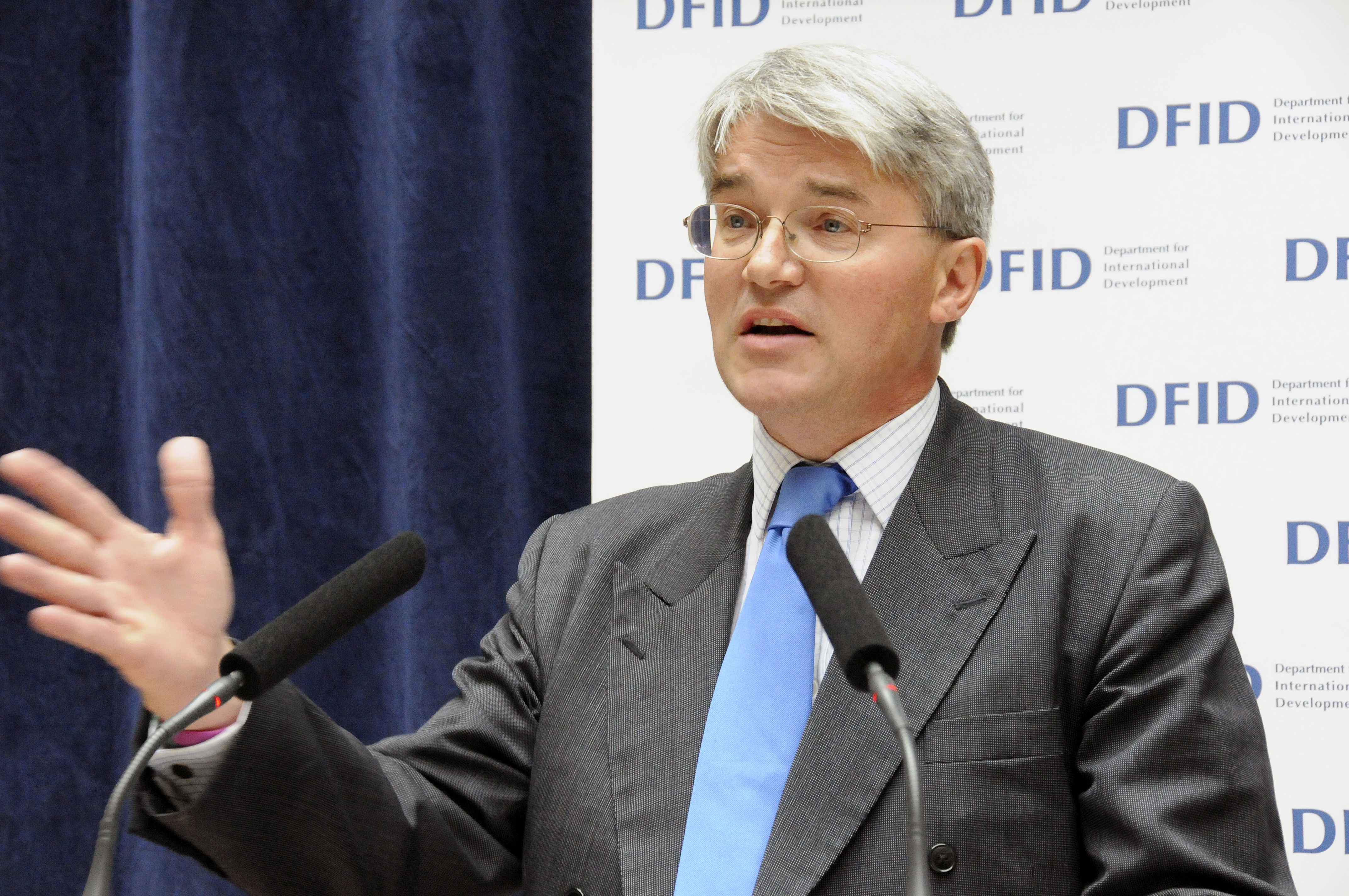
    Secretary of State for International Development, Andrew Mitchell MP, addresses staff at the Department for International Development, London, 13 May 2010

    Below is the text of the speech made by Andrew Mitchell, the then Secretary of State for International Development, in Washington on 26th June 2010.

    As world leaders gather for the G8 Summit, I want today to argue that, over the course of the next five years, we have the means and the opportunity to put to an end some of the most egregious problems facing the world today. But that the only way we will do so is by putting women front and centre of all our efforts. Most importantly, I will argue that this is a perfect moment when, with political will and with leadership, we can change the course of history.

    Our generations are the first that can make a real difference to the discrepancy of wealth and opportunity which exists around the world today. We know so much  more about what works and we know what needs to be done. We understand, for example, that it is conflict ultimately which mires people in poverty. If I think about those dreadful refugee camps that I’ve seen around the world, in Darfur and on the Burma/Thai border, if you are languishing in one of those camps, it doesn’t matter how much access to aid and to trade and to money which you have, until the conflict is over you are going to remain poor and miserable and fightened and dispossessed. And in just the same way we know that it is conflict which mires people in poverty and condemns them to stay there, so we now have learnt and generally accept that it is free trade and the private sector and wealth creation and enterprise and jobs which lift people out of poverty. And I must emphasize the importance, which should never be forgotten, on bringing the Doha round to a successful conclusion. A successful conclusion to the Doha round, and on any basis at all, would mean an increase in world trade of about $300 billion and the total amount of aid flows across the world is something like $150 billion. So the importance of the Doha trade round should never be forgotten. And lastly that money, aid spent well, works miracles, not least when we are talking about maternal health. This is the context within which I want to set my comments today.

    Introduction

    Ladies and Gentlemen, this is my first overseas speech since becoming Secretary of State for International Development and I can think of no better place to deliver it than here, in the home of philanthropy: the Carnegie Endowment; and in that great hothouse of free thought that is Washington DC. And I’d like to congratulate Carnegie as they celebrate their Centennial this year. We have a great dialogue with Carnegie and regard Tom [Carothers] as a member of the Department for International Development family in Britain.

    So, let me begin by paying tribute to President Obama and Secretary Clinton for their commitment to global development. I salute too, the tireless battle pursued against HIV/AIDS by President Bush. And I applaud the pioneering efforts of the Clinton Foundation; the campaign against River Blindness spearheaded by President Carter; and the inspirational work of Bill and Melinda Gates. You are true leaders, one and all.

    Approach to development under new, coalition Government

    I want to begin with a few words about our new coalition government, a government that is motivated by a shared determination to erode these vast inequalities of opportunity that I described and we see around the world today.

    Ours is a new agenda, one of value for money; accountability; transparency and empowerment. We have promised to enshrine in law Britain’s commitment to spend 0.7% of GNI on overseas aid from 2013. And crucially, we will keep aid untied from commercial interests – in this I urge the US to follow our lead.

    Millennium Development Goals

    This new agenda will underpin our approach to the Millennium Development Goals. These goals, agreed by the UN ten years ago, were the concrete embodiment of our generations’ collective commitment to tackle the terrible poverty and suffering that afflict so many. As well as being in our own national interest that is also our shared moral obligation.

    Successes

    And yes, the commitment has led to some real results:

    We are on track to halve extreme poverty;

    We’ve made strong progress on universal primary education, where some thirteen African countries look set to achieve that MDG

    Measles-related deaths fell by 78% between 2000 and 2008

    Challenges

    However, in other areas – and indeed, even within those goals where we are doing quite well – progress is patchy. Most regions are off-track on tackling child mortality; while progress on maternal health is especially disappointing. It’s significant, too, that across all the goals, sub-Saharan Africa lags far behind.

    And, however hard we try, new challenges constantly threaten our ability to meet the MDGs and jeopardise our gains. The world of 2010 is not the world of 2000. We’ve had food price hikes. A global recession. A massive increase in the cost of fuel.

    Some argue that against this backdrop we should focus our attention on domestic priorities. I disagree. This is a time to reaffirm our promises to the world’s poor, not abandon them. We should never balance the books on the backs of the world’s poorest people. It is true that charity begins at home, but it doesn’t end there.

    Promoting global prosperity is also very much in our own interests. Development is good for our economy, our safety, our health, our future. It is, quite simply, the best return on investment you’ll find: a cause that commands consensus across the political spectrum both in Britain and hopefully, here in America.

    So, our response is not to abandon the MDGs but to encourage all parties to work towards a clear action plan that can be agreed at this September’s UN Summit. For our part, Britain will also be aligning development more effectively with other policies, whether with trade, investment and enterprise, climate change or economic growth.

    In the UK, we have brought together the three policy pillars of development, defence and diplomacy through our new National Security Council. This synergy will allow us to reduce poverty in fragile states, while also building capacity and guaranteeing security and stability.

    I know that balancing and integrating all of the elements of power is a major objective for you here in the States.

    There are areas, however, where our approaches to development differ. In Britain, the Department for International Development is a separate Government Department in its own right. As its Secretary of State, I have a seat in Cabinet and on the National Security Council. A vibrant DFID, at the table, agitating, campaigning and helping to deliver progressive change for communities worldwide.

    And in our Government, an equally vibrant coalition whose leaders share a vision of a world where everyone has the opportunity to fulfil their true potential. Abroad as well as at home, we believe in decentralising power and responsibility, empowering citizens, making governments more transparent and accountable.

    Transparency

    Here in the States, President Obama has spoken out for greater transparency and accountability across his administration. Back in Britain, our Prime Minister, David Cameron and Deputy Prime Minister, Nick Clegg, have applied these same principles to our new coalition government.

    That’s why one of the first things I did on taking office was to launch our new UK Aid Transparency Guarantee, a guarantee that will help to make aid transparent to citizens in the UK – and also to those in recipient countries too. This chimes with Raj Shah’s promise to embrace “extreme transparency” throughout USAID. I look forward to working with Raj and to discussing this with him when we meet again this afternoon.

    Results-based aid

    We’re also fundamentally redesigning our aid programmes so that they build in rigorous evaluation processes from day one. The focus will be on outputs and outcomes rather than inputs. In these difficult, economic times donors have a double duty, a responsibility to achieve maximum value for money: not just results but results at the lowest possible cost.

    With this in mind, we want to test the concept of cash on delivery aid that’s been mooted by the Centre for Global Development. CGD has been the leader of so much great thinking on development, and Nancy Birdsall told me this morning that she learnt her trade here at Carnegie.

    We’re also taking a fundamentally new approach to our bilateral and multilateral aid: reviewing what we do – and where – so that we can maintain a ruthless focus on results. At the same time, I’m setting up a new independent body that will gather evidence about the effectiveness of our programmes. Again, our two nations are on the same page: I know Raj Shah envisages a stronger focus on impact evaluation in USAID’s work.

    Let me now, Tom, turn to the most off-track of the MDGs: maternal health.

    Maternal health

    When a jumbo jet crashes anywhere in the world it makes the headlines. If it were to crash week in week out in the same place there’s not a person alive who wouldn’t be talking about it. The international community would set up an enquiry and no money would be spared in making sure it never happened again. Yet, in Nigeria, the equivalent number of women die each and every week from pregnancy-related causes – and the world stands silent.

    In Britain, we want to make a serious contribution to tackling this tragedy. Today, at the G8, our Prime Minister, David Cameron, is working with PM Harper and other G8 leaders to ensure the world delivers on its commitments to cut the number of women and children dying during pregnancy and childbirth in some of the world’s poorest countries.

    The Prime Minister will argue today that it is indefensible in this, the twenty first century that for so many women, pregnancy and childbirth should represent a death sentence or at least, a morbid lottery. Or that the risk to a woman of dying in the UK due to a pregnancy-related cause at some point during her lifetime is 1 in 8,200 while in Niger, it is 1 in 7.

    Every year, at least a third of a million women, and probably more, die due to complications in pregnancy or child birth. The vast majority of those deaths occur in low and middle income countries.

    And research by my department tells us that if a mother dies in childbirth, there is a high chance her child will die within a few months too.

    But we all know – it doesn’t have to be like this. As Melinda Gates said earlier this month, it’s not that we don’t know what to do or that we can’t do it. It’s that we haven’t tried hard enough. We have within our grasp a golden opportunity, a perfect moment when we have the technology and the political will – if not to eradicate maternal mortality – then to reduce it significantly.

    The great blot on public health

    History is on our side. The last time that the UK had a Conservative/Liberal coalition government was back in 1935. That coalition didn’t pull its punches when it referred to Britain’s maternal mortality rate as the “great blot on public health”. Determined to reverse the trend and with political will behind him, the British Prime Minister, Stanley Baldwin established a national midwifery service. This move, coupled with the necessary policies and resources, saw maternal deaths fall by 80% in just 15 years. The resonance with where we are today is uncanny and only serves to sharpen our government’s resolve to seek an equally radical result abroad.

    Innovation

    We will not be afraid to try new approaches: maternal health is an area where there’s room for innovation.

    Look at the example of Madhya Pradesh where pregnant women are offered free transport to hospital and paid 1400 Rupees (about $30) to compensate them for the work their partners lose in having to stay at home to supervise the other children. Phone numbers for the service are widely displayed, while community workers spread the message about safe deliveries and timely check-ups. These workers receive 350 Rupees (about $8 dollars) for every expectant mother that they bring to the hospital.

    Innovation isn’t confined to overseas activities. Closer to home, I was excited to hear of Oxford University’s creative plan to use crowd-sourcing as a means of undertaking research into maternal health. 10,000 healthcare professionals across the developing world will be asked to complete an online survey and to identify where they see the gaps in maternal healthcare in their respective countries.

    We are being equally innovative in my department. Two weeks ago I launched a fund that will allow our health professionals to share their skills with birth attendants, doctors, nurses and midwives across the developing world. We want to encourage partnerships that can pilot new techniques, such as live internet link-ups or the use of mobile phones for emergency referrals or operations.

    Family planning and safe abortion

    I want to turn now, Tom, to a subject that I recognise to be sensitive but which is nevertheless close to my heart. I understand the cultural difficulties implicit in any discussion about contraception and abortion; I merely lay these facts before you: every year 20 million women seek unsafe abortions and 70,000 of them, many still girls, die as a result. And 215 million women around the world who want to use modern contraception don’t have access to it.

    President Obama has described a woman’s right to make a decision about how many children she wants to have, and when, as one of the most fundamental of human freedoms.

    Let me say this to you today: I could not agree with him more.

    Empowering women to take decisions about their own future is the right thing to do for so many, many reasons. Not least, as your President pointed out -the fact that it is a basic human right.

    The UNFPA estimates that satisfying the unmet need for modern family planning would reduce unintended pregnancies by 53 million every year, the greatest reduction being in low income countries.

    We recognise that these are difficult areas and will proceed carefully – while never forgetting that our ultimate goal is always to empower women in their own lives. That goal is simply non-negotiable and I promise you here and now, that Britain will be placing women at the heart of the whole of our agenda for international development. In the immediate term, we will be doing everything in our power to urge all countries to sign up to a strong set of commitments on maternal health at September’s MDG Summit.

    Education

    Just as maternal health covers a whole continuum of care, so too, does gender cover a continuum of opportunity – of which a key stage is education. Focussing our efforts exclusively on women rather than on women and girls is to miss the opportunity to reverse a vicious cycle that can be the lot of girls in poor countries. The cycle starts with limited access to education but soon leads to poor employment, ill-health, early marriage and, all too frequently, to violence and exploitation.

    By making sure that more girls have the chance to attend school we can replace that vicious cycle with a virtuous one that ultimately puts females at the heart of their families and their communities. Bringing in money, supporting local enterprise, making sure their own children are educated. And typically, putting an average of 90% of their earnings back into the family compared to the 30 or 40% that males contribute.

    There are many reasons why education is particularly hard for girls. These can be linked to issues of comparative low status: girls will often be expected to do the household chores or to make the long journey to fetch water, instead of attending school. When I visited Pakistan earlier this month, I saw how insecurity can add to the difficulties girls face. The new work that I was able to announce while I was there will see some 300,000 girls in the province of Khyber Pakhtunkhwa encouraged to attend school in return for a monthly allowance. There is a good story to tell in Afghanistan, too, where 3 million girls are now attending school.

    Making sure that girls are able to have access to education – and are able to complete that education – will remain a key priority for the UK’s Department for International Development.

    Cash-transfers as part of the solution

    Cash incentives can also work for education – and for health too, as we saw with the Madhya Pradesh project – but they can also have a wider application, enabling women to meet basic household expenses and ultimately, to re-invest their savings in the family unit.

    I give you the example of Nihoza Angelique from Rwanda, a country my party knows well. She has less than a quarter of a hectare of farmland on which to support her family of three. However, thanks to development support, she has now been in employment for six months, earning 1,000 Rwandan francs per day (less than $2), out of which she is saving some 400 francs (just under 70 cents) in her newly-opened savings account. With her first salary she bought school uniforms for her children. With her second and third salaries, she bought a goat. She now plans to use her savings to build a house for herself and her children.

    Gender and voice

    We’ve seen, ladies and gentlemen, that when women are empowered economically they are more likely to have a voice in the community and to be advocates for other women.

    In Nepal, the percentage of female Members of Parliament rose from 6% to 33% in 2008, while Ghana has seen a women elected Speaker of the national Parliament for the first time in its post-independence history. In the UK – although we’ve had a woman Speaker, indeed, a female Prime Minister – only 22% of our MPs are women. In your Congress, female representation is just 17%. It’s salutary to be reminded that the developed world isn’t always the shining beacon we might wish it to be.

    On the theme of governance let me say a few words about the new UN Gender Entity. This is an historic opportunity to create an efficient, powerful and well-resourced body that has the chance to make a positive impact on the lives of millions of women and girls across the world. It is vital that a competent and visible leader is appointed as soon as possible, a leader who is mandated to make progress in this crucial area.

    Conclusion

    Ladies and gentlemen, as we sit here in Washington – across the world, millions of people are suffering. Millions of people are denied the dignity and the opportunity they deserve. We can change that.

    The playwright, George Bernard Shaw once said that the essence of inhumanity wasn’t hate, it was indifference. He was right: indifference kills. September’s MDG Summit represents a golden opportunity for us to demonstrate that we are not indifferent, that we will recommit to the promises that we made ten years ago to the world’s poor.

    We must call on the world’s political leaders to come to the Summit ready to make and deliver ambitious pledges. We must urge them to fulfil their aid commitments and to sign up to the Secretary-General’s Action Plan on women and children’s health. We must grasp this single moment that history offers us, a moment when, together, we can make a stand. If we are prepared to do that then we truly can leave this world a better place for generations to come.

    Thank you.
  • Andrew Mitchell – 2010 Speech on Haiti

    Secretary of State for International Development, Andrew Mitchell MP, addresses staff at the Department for International Development, London, 13 May 2010

    Below is the text of the speech made by Andrew Mitchell, the then Shadow Secretary of State for International Development, in the House of Commons on 13th January 2010.

    Throughout the whole country, there will be great concern for the people of Haiti at this awful time. Haiti is the poorest country in the Western Hemisphere and is least well equipped to cope with this catastrophe. As all evidence shows, the actions that are taken in the immediate aftermath of the disaster will determine how effectively the needs which result are addressed. In this case, the whole international community should ensure a swift and effective response, though clearly the US is in the key position to provide help.

    Can the Secretary of State give further details about the composition of the UK assessment team that has been despatched to the region: when will it arrive, and when will we know what further support the UK Government can offer?

    Can he assure the House that the whole Whitehall machinery, as well as just DFID, is firmly joined up on this point?

    Can the Secretary of State provide us with any information about the number of British nationals who are currently in Haiti, their situation, and steps that are being taken to look after them?

    As I have said, the United States will no doubt have the leading role in the international response. What recent conversations has the Secretary of State had with his counterparts in the US to ensure that the international response is properly coordinated?

    Many members of the British public will want to do all they can to support the people of Haiti at this time: what guidance can the Secretary of State give as to how their efforts should best be directed?

    Can the Secretary of State update the House on how the neighbouring Dominican Republic has been affected?

    In 2007 Geoffrey Clifton-Brown, the Shadow Minister for International Development, became the first senior British politician for some time to visit Haiti, and spent time with the UN forces there. We hear that the UN forces have been hit hard by the earthquake. Can the Secretary of State update the House on the latest news about the impact of the earthquake on the UN mission in Haiti, and what discussions has he had with colleagues at UN DPKO in New York about this?

    Our total focus at the moment must be on saving lives and getting help to those who need it. But will the Secretary of State accept that, in due course and when the time is right, we need a full review of Britain’s emergency response process?

  • David Melding – 2006 Speech on Local Government in Wales

    Below is the text of a speech made by David Melding on 11th July 2006. Copies of the speech are in both English and Welsh below.

    IN ENGLISH:

    I also thank Sir Jeremy Beecham and his team. I apologise that I was not able to attend yesterday’s function due to a more pressing one here in the Assembly, but ‘Beyond Boundaries’ will be regarded as a seminal report. It is certainly challenging for us all, not just the Government.

    It is an excellent, ambitious vision that wants public services to be at the centre of life and what it is to be a citizen. I completely agree with that vision and that Wales ought to set itself the ambition of leading smaller countries in delivering first-class public services.

    Sir Jeremy Beecham says that we need to go further and faster. However, I do not think that this is a cosy report; in a subtle way, it is quite critical of many things that are done at present.

    That is not just against this Government; it is also against aspects of the health service and local government, as well as performance from many years ago, no doubt. I think that we need to meet some of the key issues that are raised.

    The first issue that I want to mention is that data and key performance measures have to be improved. I have made the point several times in the Chamber that social services data are often weak, and you cannot really manage, scrutinise, and be confident that you are improving services unless you have effective data, which the public can also understand, and which people can be held to account on.

    I would like a response—perhaps not now, as it is only 24 hours since it was published—on the recommendation that, presumably, the First Minister, or, indeed, the Finance Minister, makes an annual statement on public service performance. That would be a useful debate to have annually.

    Dai Lloyd made the point on improving scrutiny, and I shall not develop his points, but I will say that, in order to scrutinise effectively, you need support and training.

    In the Assembly, that means training for Assembly Members on how to look at and track a budget and legislation, and all sorts of things, but also at local government level.

    I hope that the start that has been made at the WLGA—as well as at the Assembly Government, in fairness—to improve scrutiny, training and performance in local government goes on, but also that we do it ourselves in the Assembly.

    I commend the call for a mixed economy in delivering public services. It is not about privatising services; private companies, voluntary bodies, and, of course, the state sector can all deliver public services.

    There is no problem with that—we do not need to construct lots of ideological walls to prevent that mixed economy. The joint reviews often pointed to the fact that councils had not succeeded well in creating a mixed economy for care.

    The call for pooled sovereignty as a model for joint working is pushing us, and saying, ‘Look, the voluntary approach is not working well, or at least not fast enough’. We will have to look at this, as well as at more regional services, which should be on our agenda.

    There were one or two really quite surprising things, such as whether we should experiment with different models, such as care trusts.

    That has been on the agenda in England, though I do not think that it has seriously been a runner in the Assembly; it is only my own party that has ever raised it as an issue, but perhaps we should look at that in more detail.

    Finally, I agree that standards should be broad rather than extremely detailed, and we need to allow earned autonomy in the response to local need, which means that you can deliver a broad standard, but if you are told to deliver too many small targets, local flexibility is lost.

    However, we must remember that some areas of public services, such as children’s services, are still in need of considerable improvement, and any inspection regime will have to be much more rigorous for much longer, until we are confident that the general service levels are high enough.


    IN WELSH:

    Yr wyf innau hefyd yn diolch i Syr Jeremy Beecham a’i dîm. Ymddiheuraf na allwn fod yn bresennol yn y digwyddiad ddoe gan fod gennyf ddigwyddiad pwysicach yma yn y Cynulliad, ond ystyrir ‘Ar Draws Ffiniau’ yn adroddiad arloesol.

    Mae’n sicr yn gosod her i bob un ohonom, nid dim ond y Llywodraeth. Mae’n weledigaeth ardderchog, uchelgeisiol sydd am weld gwasanaethau cyhoeddus wrth galon bywyd a’r hyn y mae’n ei olygu i fod yn ddinesydd. Cytunaf yn llwyr â’r weledigaeth honno ac y dylai arwain gwledydd llai i ddarparu gwasanaethau cyhoeddus o’r radd flaenaf fod yn uchelgais i Gymru.

    Dywed Syr Jeremy Beecham fod angen inni fynd ymhellach ac yn gynt. Fodd bynnag, ni chredaf fod hwn yn adroddiad cysurus; mewn ffordd gynnil, mae’n eithaf beirniadol o nifer o bethau a wneir ar hyn o bryd.

    Nid dim ond yn erbyn y Llywodraeth hon y mae hynny; mae hefyd yn erbyn agweddau ar y gwasanaeth iechyd a llywodraeth leol, yn ogystal â pherfformiad o nifer o flynyddoedd yn ôl, yn ddiau. Credaf fod angen i ni ddiwallu rhai o’r prif faterion a godir.

    Y mater cyntaf y carwn ei grybwyll yw bod yn rhaid gwella mesurau perfformiad allweddol a data. Yr wyf wedi codi’r pwynt hwn sawl tro yn y Siambr, bod data gwasanaethau cymdeithasol yn aml yn wan, ac na allwch reoli, craffu na theimlo’n hyderus eich bod yn gwella gwasanaethau oni bai fod gennych ddata effeithiol, y gall y cyhoedd ei ddeall hefyd, ac y gellir dal pobl i gyfrif yn ei gylch.

    Hoffwn ymateb—nid yn awr efallai, gan mai dim ond 24 awr sydd wedi mynd heibio ers ei gyhoeddi—ar yr argymhelliad i’r Prif Weinidog yn ôl pob tebyg, neu, yn wir, y Gweinidog Cyllid, roi datganiad blynyddol ar berfformiad gwasanaethau cyhoeddus. Byddai honno’n ddadl flynyddol ddefnyddiol.

    Gwnaeth Dai Lloyd y pwynt am wella craffu, ac ni ddatblygaf ei bwyntiau, ond dywedaf, er mwyn craffu’n effeithiol, fod angen cefnogaeth a hyfforddiant arnoch.

    Yn y Cynulliad, mae hynny’n golygu hyfforddiant ar gyfer Aelodau’r Cynulliad ynghylch sut i edrych ar gyllideb a deddfwriaeth a’u holrhain, a phob math o bethau, ond hefyd ar lefel llywodraeth leol.

    Gobeithiaf fod camau cyntaf CLlLC—ynghyd â Llywodraeth y Cynulliad i fod yn deg—i wella craffu, hyfforddiant a pherfformiad mewn llywodraeth leol yn parhau, ond ein bod hefyd yn gwneud hyn ein hunain yn y Cynulliad.

    Yr wyf yn canmol yr alwad am economi gymysg o ran darparu gwasanaethau cyhoeddus. Nid yw hyn yn ymwneud â phreifateiddio gwasanaethau; gall cwmnïau preifat, cyrff gwirfoddol, ac, wrth gwrs, sector y wladwriaeth, un ac oll, ddarparu gwasanaethau cyhoeddus.

    Nid oes problem gyda hynny—nid oes angen inni godi nifer o waliau ideolegol i rwystro’r economi gymysg honno. Roedd yr adolygiadau ar y cyd yn aml yn tynnu sylw at y ffaith nad oedd cynghorau wedi llwyddo’n dda i greu economi gymysg ar gyfer gofal.

    Mae galw am sofraniaeth wedi’i chronni fel model ar gyfer cydweithio yn ein gwthio, ac yn dweud, ‘Edrychwch, nid yw’r dull gwirfoddol yn gweithio’n dda, neu o leiaf yn ddigon cyflym’. Bydd yn rhaid inni edrych ar hyn, yn ogystal ag ar wasanaethau mwy rhanbarthol, a ddylai fod ar ein hagenda.

    Ceir ambell beth a’m synnodd, megis a ddylem arbrofi gyda modelau gwahanol, fel ymddiriedolaethau gofal.

    Bu hynny ar yr agenda yn Lloegr, er nad wyf yn credu iddo gael ei ystyried yn ddifrifol yn y Cynulliad; dim ond fy mhlaid i sydd wedi codi hyn fel mater perthnasol erioed, ond efallai y dylem edrych yn fanylach ar hynny.

    Yn olaf, cytunaf y dylai safonau fod yn eang yn hytrach nag yn arbennig o fanwl, ac mae angen i ni ganiatáu ymreolaeth wedi’i hennill yn yr ymateb i angen lleol, sy’n golygu y gallwch ddarparu safon eang, ond os dywedir wrthych ddarparu gormod o dargedau bach, collir hyblygrwydd lleol.

    Fodd bynnag, rhaid inni gofio bod rhai meysydd mewn gwasanaethau cyhoeddus, fel gwasanaethau plant, dal angen cael eu gwella’n sylweddol, a bydd yn rhaid i unrhyw drefn ymchwilio fod yn llawer mwy cadarn am gyfnod hwy o lawer, nes y byddwn yn hyderus bod y lefelau gwasanaethau cyffredinol yn ddigon uchel.

  • Alan Milburn – 2013 Speech on the State of the Nation

    Below is the text of the speech made by Alan Milburn on 17th October 2013.

    This State of the Nation Report was laid before Parliament this morning. The Commission on Social Mobility and Child Poverty is required by statute to report each year on what is happening on these issues in our country. This is our first annual report. I would like to place on record my thanks to my fellow Commissioners and our excellent Secretariat for their efforts in compiling this comprehensive survey of trends past and present and what we believe is likely to happen in future.

    When Ministers created the Commission they explicitly asked us to hold their feet to the fire. I hope the report fulfils that remit in a way that is both authoritative and fair. Much of its focus is on what the UK Government and, to a lesser extent, those in Scotland and Wales are doing to tackle poverty and improve social mobility. We also look at schools and universities and the role that employers and professions, local councils and communities are playing. They are all players on the pitch when it comes to improving life chances. In future years our reports will subject each of them to greater scrutiny.

    It is part of Britain’s DNA that everyone should have a fair chance in life. Yet compared to many other developed nations we have high levels of child poverty and low levels of social mobility. Over decades we have become a wealthier society but we have struggled to become a fairer one. When 2.3 million children are officially classified as poor it exacts a high social price. There is an economic price too in wasted potential and lower growth.

    By definition, reducing poverty and increasing mobility is not easy. It requires a long-term effort. Some say it is an impossible task. The Commission does not succumb to that pessimism. We have seen enough evidence from around the world – and in our country’s own history – to know that with the right approach it is possible to break the transmission of disadvantage from one generation to the next. We have grounded much of our analysis and our recommendations in this global evidence.

    We know these are challenging times in which to make progress. Britain faces a triple squeeze on economic growth, family incomes and public spending. In these circumstances it would have been all too easy for Government to abandon the aim of ending child poverty by 2020 and to avoid the long hard haul of making progress on social mobility. We believe the UK Government deserves credit for sticking to these commitments and making new ones. The test we apply in this Report, however, is not about good intentions. We take those as read. It is about whether the right actions are being taken. We find in our Report a mix of good and bad news.

    On child poverty the UK has gone from having one of the highest levels in Europe to a rate near the average over the last 15 years. Since 2010 there has been a dramatic 15% decline in the number of children in workless households but recently there has been a big rise in the numbers of poor children measured as being in absolute poverty and in working poor families.

    On employment we find that there are more people in work than ever before but that the numbers of young people unemployed for over two years is at a twenty-year high and the Government has been too slow to act.

    On living standards we find that real wages were stagnating before the recession and have fallen by over 10% since 2009. Real median weekly earnings are now lower than they have been for over a decade, putting many more families under pressure and forcing many more low-income earners below the poverty line.

    On public spending we find that some services, such as schools, have been relatively protected from cuts but that overall fiscal consolidation has been regressive with the bottom 20% making a bigger contribution than all but the top 20% and an inter-generational injustice which sees better-off pensioners protected but families with children bearing two-thirds of spending cuts.

    On schools we welcome the Government’s energetic focus on reform to drive social mobility and find that the gap between the poorest and the rest has narrowed at primary school and GCSE but widened at A-level. The most deprived areas still have 30% fewer good schools and get fewer good teachers than the least deprived.

    On moving people into work we welcome the big expansion in apprenticeships but not the decision to abolish the Educational Maintenance Allowance. We find that the Universal Credit could be transformative in encouraging more people into paid employment but its impact is weakened by high childcare costs.

    On universities the worst fears about the negative impact of tuition fees have not been realized so far but big falls in applications from mature and part time students and the failure of top universities to diversify their social intake are causes for concern.

    On the professions we find greater efforts to open doors to a wider pool of talent but new research for this Report finds that class is now a bigger barrier than gender to getting ahead in a top professional career. Senior professionals are still more likely to be privately schooled and privileged men.

    There is much to welcome in what Government, employers, schools and universities are doing. We see considerable effort and a raft of initiatives underway. The question is whether the scale and depth of activity is enough to combat the headwinds that Britain faces if we are to move forward to become a low poverty, high mobility society. The conclusion we reach is that it is currently not. We conclude that the statutory goal of ending child poverty by 2020 will in all likelihood be missed by a considerable margin, perhaps by as many as 2 million children We challenge all political parties to say how they would make progress.

    We conclude too that the economic recovery is unlikely to halt the trend of the last decade, where the top part of society prospers and the bottom part stagnates. If that happens social inequality will widen and the rungs of the social ladder will grow further apart. The promising reforms we see in schools and some aspects of welfare will not, on their own, offset the twin problems of high youth unemployment and falling living standards that are storing up trouble for the future. We see a danger that social mobility – having risen in the middle of the last century then flat-lined towards the end – could go into reverse in the first part of this century.

    To avert this we believe that policy-makers need to come to terms with a new truth that emerges from the mass of evidence contained in our Report. Although entrenched poverty has to be a priority – and requires a specific policy agenda some of which the Government is pursuing – transient poverty, growing insecurity and stalling mobility are far more widespread than politicians, employers and educators have so far recognised.

    Too often – in political discourse and media coverage – these issues are treated as marginal when in fact they are mainstream. Poverty touches almost half of Britain’s citizens at some point over a nine-year period and one third over four years. Today child poverty is overwhelmingly a problem facing working families, not the workless or the work-shy. Two-thirds of Britain’s poor children are now in families where an adult works. In three-quarters of those households someone already works full-time. The principal problem seems to be that those working parents simply do not earn enough to escape poverty.

    Then there is the growing cohort of low and middle-income families squeezed between falling earnings and rising house prices, university fees and youth unemployment, who fear their children will be worse off than they have been. Many of today’s children face the prospect of having lower living standards than their parents when they grow up.

    These are profound challenges. We believe, however, that they also present an opportunity: to make the pursuit of a society with less poverty and more mobility something that is relevant to the many not the few in Britain.

    We find, for example, that there has been a change in the geography of educational inequality. London state schools, which used to be the worst in the country, are now among the best. 100 per cent of secondary pupils in Camden, Hackney and Tower Hamlets are now in good or outstanding state schools, but in Middle England places like Bournemouth and West Berkshire it is just over 50 per cent. The nature of the problem has changed – and so too must the policy response.

    For decades the focus has been on moving people from welfare to work. With 2.5 million people still unemployed and appallingly high levels of youth unemployment renewed effort is still needed there. A job remains the best safeguard against being poor. But it is not a cure for poverty. Over the last decade earnings growth has been lagging behind prices. More and more people are at risk of poverty as a result. Today the UK has one of the highest rates of low pay in the developed world. Five million workers, mainly women, earn less than the Living Wage. These are the people that heed the urgings of politicians of all hues to do the right thing, to stand on their own two feet, to strive not shirk. Yet all too often the working poor are the forgotten people of Britain. They desperately need a new deal.

    During the late 1990s and early 2000s, public spending through higher tax credits subsidized stagnating earnings and propped up living standards. Austerity removes that prop. The taxpayer alone can no longer afford to shoulder the burden of bridging the gap between earnings and prices. We conclude that Government will need to devise new ways of sharing that burden with employers in a way that is consistent with growing levels of employment. Making headway on reducing poverty and improving mobility requires a fresh settlement between what the state does, what the market does and what the citizen does.

    Our key recommendations for Government are that it firstly, aims to end long-term youth unemployment by increasing learning and earning opportunities for young people who should be expected to take up those opportunities or face tougher benefit conditionality. Secondly, that it reduces in-work poverty by getting the Low Pay Commission to deliver a higher minimum wage, rewards employment support providers for the earnings people receive not just for finding them a job and reallocates Budget 2013 childcare funding from higher rate taxpayers to help those on Universal Credit meet more of their childcare costs. Thirdly, that it better resources careers services, pays the best teachers more to teach in the worst schools and helps low-attainers from average income families as well as low-income children to succeed in making it to the top, rather than aiming to simply get them off the bottom to succeed at school.

    Next, employers will need to more actively step up to the plate. Our key recommendations are that, firstly, they will need to provide higher minimum levels of pay and better career prospects, enabled by higher skills. Secondly, we call on half of all firms to offer apprenticeships and work experience as part of a new effort to make it easier for those who aren’t going to university – “the other 50 per cent” – to pursue high quality vocational training. Thirdly, we call on the professions to to end unpaid internships and recruit from a broader cross-section of society than many do at present.

    Finally, and perhaps most importantly, we say that every citizen who can should be expected actively to work their way out of poverty by seeking jobs, working enough hours and seizing the opportunities made available to them. We say that the key influencers on children’s life chances are not schools or governments or careers services. They are parents. And we urge Government to break one of the great taboos of public policy by doing far more to help parents to parent.

    We recognise that these, alongside the other proposals we make in this Report, are very challenging recommendations. A far bigger national effort will be needed if progress is to be made on reducing poverty and improving mobility. That will require leadership at every level. Government cannot do it alone. But it does have a special role to play in setting the framework for policy and mobilizing the country to action.

    To play that role effectively we believe Government will need to do more to embed social mobility considerations in its own processes. Currently, we see good intentions and initiatives undermined by too little clarity and coherence. We suggest that the Office of Budget Responsibility is charged with producing independent analyses of key government decisions to ensure that Ministers are getting the maximum mobility-enhancing, poverty-reducing bang for the buck.

    Just as the UK government has focused on reducing the country’s financial deficit it now needs to redouble its efforts to reduce our country’s fairness deficit. If Britain is to avoid being a country where all too often birth determines fate we have to do far more to create more of a level playing field of opportunity. That has to become core business for our nation. We look to Government and others to make it happen.

  • Alan Milburn – 2003 Speech to NHS Executives

    Below is the text of the speech made by the then Health Secretary, Alan Milburn, to NHS Executives on 11th February 2003.

    I would like to begin by thanking you for the leadership you show in the NHS. It has never been more vital.

    In the months to come that leadership will be more important still. We are a critical juncture for the NHS. It is over two years since the NHS Plan was published. Investment in the NHS is rising fast. This April taxes will go up to pay for the extra resources.

    As a result, capacity is growing. From the late 1970s to the mid 1990s only ten major new hospital developments were completed. Since 1997 13 have been built, seven more are under construction and a further 34 are in the pipeline. In each of the five years before 1997 the number of GPs in training fell. In each of the last five years they have risen. There are 10,000 more doctors, 40,000 more nurses, and 11,000 more therapists and scientists working in the NHS now than then. In primary care prescribing of cholesterol lowering drugs has doubled in 3 years. For decades acute and general beds in hospitals were cut back. For the last two years they have grown.

    The local plans PCTs and NHS Trusts are concluding for the next three years will need to increase capacity further: in primary and community services, not just hospital services; in staffing, especially in doctor numbers; in new ways of working, not just the old ways of doing things.

    Extra capacity is needed because the NHS is still working under very real pressure. It is tough out there. It is easy to lose sight of the fact that the journey we have begun is well underway. Of course, there is a long way to go but the momentum is now forwards.

    Take waiting times. Thanks to your efforts waiting times – which had risen for decades – are falling – and doing so on virtually every indicator. In heart surgery, for example, the maximum waiting time which was eighteen months at this time last year will have been halved to nine months by April this year. So, in what remains of this financial year, it will be important to deliver the continued progress we have promised towards an NHS where waiting times are lower and quality is higher.

    For patients, progress will be judged not just on whether waiting times are shorter but on whether their own experience of the service is better. There is no doubt that waiting – whether it is to see the family doctor or the hospital specialist – is the single biggest public concern about the NHS. But unless we can improve the quality of the patient experience we could end up hitting every target and ticking every box – and finding that the public believe the NHS is no better.

    That is why the resources have got to lever in reforms. The investment cannot be used to ossify the system. It must be used to change it.

    Last week I argued for devolving power and resources from Whitehall to the NHS frontline. The move to a more diverse, more devolved NHS will help make local services more responsive to the needs of the local communities they serve. Today I want to set out another crucial element of our reforms: greater choice for patients. I want to describe why I believe choice is important and how we plan to make it happen.

    The starting point is this: when the NHS was created expectations were lower; deference was greater. Today it is the other way around. Some argue that in today’s consumer world the only way to get services that are responsive to individual needs is through the market mechanism of patients paying for their own treatment. I believe that is wrong and would fail. In a world where health care can do more but costs more than ever before, such an approach would make the best health care an exclusive club for only the very wealthy. The new possibilities brought by medical advance and – in our generation, the genetics revolution – make the case for an NHS where care is free and based on the scale of people’s needs, not the size of their wallets.

    So public service values are right. But winning the argument for investment and reform means accepting that the era of one-size-fits-all public services is over. At the heart of public concerns about the NHS is the sense that its services are simply too indifferent to the needs of its patients. Staff and patients alike are up against a system that feels too much like the ration book days of the 1940s. Public confidence demands not just a change in structure but a change in culture too.

    In our first term we tried to make services more responsive from the top down through service targets, inspection regimes and national standards. This national framework of standards is important to guarantee equity but in the period we are now in the transition is towards improvement being driven from below. Hence these three crucial elements of our reform programme:

    Devolution – with Primary Care Trusts having the power to commission local services to meet the needs of local communities.

    Democratisation – with NHS Foundation Trusts transferring ownership from a centralised state bureaucracy into the hands of local people.

    Diversity – with different providers – public, private and voluntary – providing NHS services to NHS patients according to a common ethos, common standards and a common system of inspection.

    These reforms make possible greater choices for patients. There are of course limits to choice in the health service, just as there are in any other service. For one thing, health care is often an emergency service. The last thing the patient in the back of the ambulance wants is to be asked to name their A&E of choice. They want the nearest, fastest service. And for another, patients do not just have a relationship with the NHS as consumers. They are also citizens who recognise that in A&E it is necessary for the less serious injuries to give priority to the more serious ones. In other words patients have both rights and responsibilities. Indeed I believe that as we strengthen rights and choices so we can demand more responsibility from patients – to use services appropriately and to treat staff respectfully.

    But the NHS is a lot more than an emergency service. In fact, only one in three NHS hospital admissions are for emergency cases. Half are for routine, planned surgery where patient choice could play a role. A further one in seven are for maternity services where many mums and dads already exercise choice: between this hospital and that, between a midwife-delivered service and a doctor-delivered one, between a birth at home and one in hospital.

    Indeed, it is precisely because women have been able to exercise choice for themselves that those services have become more sensitive to their needs. When we publish the new national service framework on children’s services later this year it will include proposals on how we can extend choice further in maternity care.

    In other parts of the NHS patients also exercise choice. In primary care for example, most patients are able to choose their own family doctor. Between July and September last year almost quarter of a million patients, through their GPs, booked the time of their hospital appointment at their own convenience rather than the hospital’s.

    No health care system, whether it is public or private, however, can provide unlimited choice. Most private health insurance schemes, for example, exclude maternity care and primary care as well as psychiatric and other long-term treatments.

    But I believe we can open up more choices to NHS patients. The issue is firstly, whether we should and secondly, how we could.

    Let me deal with the first of these issues. It is often argued that capacity constraints mean that choice on the NHS is not possible. It is certainly true that choice can only grow as capacity grows. What is not true is that some capacity is not already available or that more cannot be grown.

    In London, for example, today the average waiting time for elective surgery in different hospitals varies between 10 weeks and 25 weeks. With the right incentives some hospitals would take on more work. When UCLH bought the London Heart Hospital from the private sector last year that doubled local heart surgery rates. In that area today only 40 patients are waiting more than one month for a heart operation, many for personal reasons. That hospital could easily take on more patients. There will be others elsewhere in the country which could do the same. Many more will be able to do so as extra resources produce extra capacity. So the capacity argument against more choice does not work.

    The main argument against more choice has been that it will bring less equity. I want to argue the reverse: that greater choice can mean greater equity.

    We do not start from a position where uniformity of provision in the NHS – with precious little choice for patients – has guaranteed equality of outcomes. In fifty years health inequalities have widened not narrowed. Too often even today the poorest services are in the poorest communities. Choice has only ever been available to those with the ability to pay. Those with the money have been able to exercise more choice – and buy faster, if not better, services as a result.

    This institutionalised two-tier health care is anathema to those of us who believe care should be based on need and not ability to pay. The real inequity is to force the pensioner with modest savings who has worked hard all their lives and then needs a heart operation to choose between paying for treatment or waiting for treatment. That is a dilemma I want to solve.

    We can do so by making choice more widely available on the NHS so that it is extended to the many not just the few. Some say poorer people do not want to exercise choice or are not able to do so. I disagree profoundly. That is patronising nonsense.

    When I grew up on a County Durham council estate it didn’t much impress me that it was the council, not my family, who chose the colour of my front door. Perhaps unsurprisingly hundreds of thousands of council tenants opted out of council ownership when they had the chance to do so. The old-style, often paternalistic take-it-or-leave-it, like-it-or-lump-it relationship between council housing services and council tenants weakened public attachment to public services. Expanding choice can strengthen it.

    And by linking the choices patients make to the resources hospitals receive – alongside the systems of standards, inspection and intervention we have put in place – we can provide real incentives to address under-performance in local NHS services. As we know poorer performance is often concentrated in poorer areas. Giving people the power to choose between services will drive standards up. In this way, greater choice can enhance equity, not diminish it.

    The world has moved on from the days when Henry Ford said you could have any colour car as long as it was black. The Ford Motor Company is 100 years old this year. Today, Ford produce cars so that you can have any colour – including five different shades of black!

    Of course, choice in public services is more complicated than choosing the colour of a new car but unless the NHS offers some choice to patients, more of them – at a time when personal disposable income continues to rise – will simply take their custom elsewhere. More will abandon collectively funded public services for privately paid-for services. In the mid-1950s only half a million people had private cover for health care. Today it is almost 7 million. Ironically, those who rail against choice in public services on the grounds that it is a market-based reform risk ending up strengthening private markets not weakening them.

    The trap we must avoid, is that identified by Richard Titmuss four decades ago, of middle class people opting out so that public services become only for the poor and then end up being poor services. By strengthening the appeal of NHS provision across social classes, greater choice can enhance social cohesion not diminish it.

    The question in my mind is not whether NHS patients should have more choice but how to make choices more widely available.

    We have made a start. And again I want to thank you for the role you have played. Since July last year heart patients waiting more than 6 months for surgery have been offered the choice of early treatment at an alternative hospital – public or private – which has the capacity available to treat them. Over 1,700 out of 3,800 patients – almost half – decided to make that choice.

    They are not the only patients to benefit. Since October last year patients in London waiting for a cataract operation have been able to go to another hospital for treatment if they have waited 6 months. Over two thirds have chosen to do so.

    I now want to explain how we intend to build on these first pilot schemes. We want to extend choice to other geographical locations and other clinical specialities. In the next year around 100,000 extra patients will be able to choose in which hospital they are treated. The sites we have chosen include those where waiting times are longest and where electronic booking of hospital appointments is being tested.

    First, from this summer all patients in London waiting more than 6 months for any form of elective surgery will be offered the choice of an alternative hospital.

    Second, from July patients in West Yorkshire needing eye operations will be offered choice when they are referred to a hospital specialist by their GP. In Greater Manchester those needing orthopaedic, ENT and general surgery will also be offered choice if they have been waiting longer than 6 months.

    Third, also from July, choice will be extended to patients, mainly older people, needing cataract operations in the south of England where waiting times are currently longest. Patients will be able to choose, initially from two and then normally from four hospitals, where to have their cataract operation. The aim is to cut waiting times to 6 months by 2004 and to 3 months by 2005. For cataract patients in the south, this means that the NHS Plan target will be achieved three years ahead of schedule.

    Fourth, the lessons learned from these areas will inform the extension of choice across the whole of England’s health service. From summer 2004, as the Prime Minister announced recently, all patients waiting six months for any form of elective surgery will be able to choose at least one alternative hospital and normally four – public or private – for treatment.

    Fifth, from December 2005, by when extra capacity will have come on stream, choice will be extended from those patients waiting longest for hospital treatment to all patients. They will be offered choice at the point the GP refers them to hospital. Patients needing elective surgery will be able to select from at least 4 or 5 different hospitals, again including both NHS and private sector providers. Millions of patients a year will benefit.

    Sixth, as capacity grows further in the NHS so choice will grow. Beyond 2005 patients needing surgery will be able to choose more hospitals in which they can be treated.

    And choice needs to be embedded across other parts of the NHS where it is appropriate to do so. In primary care, for example, pharmacists will help more patients manage their medicines. More drugs will be sold over the counter rather than needing a doctor’s prescription. NHS Direct will provide more advice and information to more patients. And more NHS Walk-in Centres will allow more patients the choice of where to be treated.

    There need to be other changes too. In a busy mobile society patients should be able to register with a GP practice near where they work if that is more convenient for them. The published Framework Agreement for a new GPs contract also opens up the prospect of greater choice. Patients who have traditionally been referred to hospital for minor surgery or for outpatient consultations could be seen instead in their local health centre by a specialist GP.

    These reforms are about embedding choice across the NHS – from primary care to hospital services. They will require changes in the way the NHS works.

    Patients will need help to make informed choices. Knowledge is power. To make choice work, the NHS will need to provide reliable and relevant information to patients in a way people can understand.

    In primary care, for example, PCTs will need to use the annual patient prospectus, they issue to all the households in their areas, to highlight where women patients are able to see a woman GP. I can also announce today that later this year we will publish local guides to maternity services so that mums and dads-to-be are better informed about the choices available to them.

    More generally we intend to make available easily accessible information on hospital performance, quality and waiting times so that as capacity grows in the NHS patients are able to exercise greater choices. The job of GPs, nurses and other members of the primary care team will increasingly focus on helping navigate patients through the care system so that they can make the choice that best suits them.

    To make choice work there has to be better IT across the whole of the NHS. The huge investment we are making in IT will support this extension of choice. Electronic booking of hospital appointments from the GP surgery will be a reality in all parts of the NHS by December 2005. There will be more information to compare hospitals not just on the internet but through NHS Direct and touchscreens in GP surgeries, pharmacies and other locations. We are also exploring experience from other countries. In Bologna for example, patients themselves, after they have been seen by their GP, can book their hospital appointment, not just through their family doctor or pharmacist, but through a specialist call centre. The system gives patients more direct control and relieves burdens on GPs.

    Choice requires diversity in capacity. A new generation of DTCs will be providing care to 250,000 patients a year by 2005. Insulated from emergency work these will be able to concentrate on elective surgery and shorter waiting times. Some will be run by NHS providers. Others by private sector providers. In making their commissioning decisions PCTs will need to consider how best to use both existing and new private sector provision for the benefit of NHS patients. They will also need to consider how best to use voluntary sector providers. I can tell this conference that, following discussions with key voluntary health care providers, I am planning to draw up a concordat to extend the relationship between the NHS and the voluntary sector.

    And choice will only work if there are the right incentives in the system. From this April we will begin to move to a new system of payment by results for NHS hospitals. Resources will follow the choices patients make so the hospitals which do more get more; those which do not, will not. We will put in more help for hospitals that are struggling to improve. And, alongside this external assistance, these new incentives will act as a spur to improvement. Over the next four years an increasing proportion of each hospital’s income will come as a result of the choices patients make. Choice in other words is not just about making patients feel good about the NHS. It is about giving the patient more power within the NHS.

    All these changes will take time of course. Giving patients greater choice in the NHS requires a fundamental culture change in how the health service works. It will put patients in the driving seat – at the heart of the health service – and not before time. Patients will be able to choose hospitals rather than hospitals choosing patients. There will be more choice in primary care and in maternity care too. This is a world away from the 1940s take-it-or-leave-it top down service.

    For too long, for too many, the choice has been to pay or wait. Mrs Thatcher talked about getting treatment at the hospital of her choosing, at the time of her choosing. Her choice though was to opt-out of the NHS altogether. Our choice is for the NHS but a reformed NHS.

    An NHS where more can have that choice of time and place of treatment; where more can share in choices previously only enjoyed by the few who could afford to pay; where people choose to stay with the NHS not opt-out. An NHS which genuinely puts need before ability to pay. That is what our reforms are about. That is what we intend to deliver.

  • Alan Milburn – 2002 Speech on Healthcare

    Alan Milburn – 2002 Speech on Healthcare

    Below is the text of the speech made by the then Health Secretary, Alan Milburn, on 15th April 2002.

    The debate in the country about the future of our public services is crystalising. The Budget this week will make those dividing lines even clearer. As the Prime Minister, Chancellor and myself have all made clear in recent weeks, the biggest political issue today is whether we are prepared as a country to provide the resources and make the reforms necessary to bring about improvements to our key public services, in particular to the National Health Service

    As a party and as a government we believe that we should be prepared to do so. Our formula is simple: investment + reform = results.

    The debate is now sharpening, not just because of the imminence of the Budget and the progress of the Spending Review, but also because of the position now being taken by our political opponents.

    Today I want to set out both our analysis of the position being taken by the Conservatives and our own analysis that we have made of why a reformed NHS – funded through general taxation – is the right way forward for Britain.

    Our report – The Right’s Remedy – which we are publishing today, highlights where the Conservatives have got it wrong.

    Within the last week we have heard twice from the Conservative Party about the future of health care in our country.

    First, Liam Fox spelling out – in his Secret Speech – the Conservatives’ strategy on the NHS seeking to “persuade the public that the NHS is not working…it has never worked before and will never work” as a prelude to what he called more people having to “self-pay”.

    Second, yesterday the Conservative’s publication outlining what they call “Alternative Prescriptions” for health care in our country. Whilst this second publication avoids plumping for any specific solution – that as Liam Fox makes clear will come later and is dependent upon first undermining public confidence in the NHS – it does now illustrate the clear direction both of Conservative thinking and the Conservative’s strategy.

    They are in the first stage of their approach: undermining the NHS and suggesting there is a better alternative to it. This is a cynical and destructive softening up operation that should be seen for what it is.

    For them the NHS, as Liam Fox puts it “cannot work and won’t work”, and as IDS puts it in today’s publication, “the system is not working.”

    They quote approvingly in their document (page 54) those countries with up to 30% of spending undertaken in the private sector as offering an acceptable level of fairness. This sits interestingly with Liam Fox’s determination to encourage more people to “self-pay” and is the equivalent of up to £20 billion of UK NHS spending.

    What this all points to is that for all their grand study tours of Europe the Conservatives are opting for an American-style solution. A two-tier health care system – for the poor a Medicaid style NHS and “self-pay” solutions for middle income families with top-up services having to be paid for privately. Low income Britain would pay the price through second rate services that are poor because they only serve the poor. Middle income Britain would pay the price through increased costs and extra charges.

    The Conservatives have brought the post war consensus on health to an end. Indeed it is revealing that no-one reading their document could believe they remain committed to a universal NHS that is free to all and accessible to all. Instead they talk up the advantages of other health care systems.

    Their examination of the supposed superiority of other systems for funding health care tells is partial and selective. We too have examined the case for other systems of funding. But, like the BMA who conducted a similar examination last year, we have found these other systems wanting.

    The report we are publishing today contains analysis from a range of academic sources across the world about the fault lines in different systems of health care funding.

    In essence, the problem with social insurance systems is who bears the majority of the costs of the total health care budget. It is estimated that at 2003-4 levels of funding the additional costs of a wholesale move to a social insurance system here would be the equivalent of an extra £1,500 per worker per year using the French model and an extra £1,000 per worker per year using the German model without a single extra penny to currently planned NHS funding.

    In essence the problem with private health insurance – whether compulsory or voluntary – is that it would increase bureaucracy and decrease efficiency. Compulsory private insurance is simply replacing a single state-managed risk pool with numerous, complicated, less efficient private risk pools. Tax incentives to encourage voluntary private insurance are costly, inefficient and inequitable. They tie up millions in dead-weight tax breaks for people who already have insurance before a single extra person takes out private cover. Tax incentives have a cost to the Exchequer and thereby, reduce the levels of investment available to the NHS.

    The truth is there is no perfect health care system in the world. All have strengths. All contain weaknesses. What is wrong is to pretend that the only way to address the weaknesses is to move hook line and sinker to a new system. When the Conservative Party says the NHS should be reformed, what they really mean is that it should be adandoned.

    From a pragmatic point of view the disruption in doing so – not to say the costs of doing so – would delay precisely the improvements in services that people long to see. From a principle point of view we would end up throwing out the baby with the bath water.

    There are many things wrong with the NHS but it does have great strengths. It should be a cause of national pride in our country that no-one asks for your insurance policy or credit card before you get the care you need.

    Without the NHS the sophistication of modern treatments – and of course their cost – would put individual provision of health care beyond all but the very wealthiest in society. Without it the sick would end up paying for the privilege of being sick. In a world where health care can do more and costs more than ever before having an NHS based on need not ability to pay, with services that are free and comprehensive, is a real source of strength for our country and security for our people. So the NHS should be supported with our heads as well as our hearts. The relevance of its values make it the best insurance policy in the world.

    Where it is weak is on two counts

    First, while its values are right its structure is wrong. For decades it has been run as a top down, centralised, monopoly service where patients interests have too often played second fiddle to the system’s interests. It is these faultlines in the system that the NHS Plan seeks to address. By devolving power so that locally run primary care trusts control NHS resources.

    By introducing new incentives so that the best hospitals get more freedoms and the poorest are helped to change or else are taken over. By securing greater diversity with better co-operation between the public, private and voluntary sectors. By giving patients more choice over when and where they are treated. These reforms address precisely the structural weaknesses that the critics of the NHS pretend can only be delivered by rejecting the health service.

    Second, the shortages of capacity that are the cumulative effect of decades of under-investment. On any count comparing health care investment in this country with investment in other developed countries shows that the NHS has been short-changed for decades. It is not a superior system of funding which France and Germany have enjoyed. It is a superior level of funding. The gap on public spending between France and Germany and the UK has been substantial: according to latest OECD figures French per capita public spending on health as a precentage of GDP stood at 7.1%. German public spending at 7.8%. The UK figure was 5.7%. It is this gap that is now being closed. Indeed in the last few years while in France and Germany health spending as a proportion of GDP has been falling, since 1997 in Britain it has been rising.

    The point is this: the NHS can be fixed providing there is the right level of resources and the right programme of reform. The reforms are as important as the resources. Indeed the more cash goes in the more the public have a right to expect they get out. The greater the programme of investment, the bolder the programme of reform. It will take time – the NHS Plan is for 10 years – but what we have started we should now finish.

    This week the battle lines for this Parliament will become clear. Labour committed to building up and reforming the NHS and the Conservatives committed to talking it down, as a prelude to forcing more people into paying for their own care.

  • Alan Milburn – 1999 Speech to the PFI Transport Conference

    Below is the text of the speech made by the then Chief Secretary to the Treasury, Alan Milburn, to the PFI Transport Conference on 2nd February 1999.

    Introduction

    Thank you Adrian for your warm welcome. We have been very privileged to have Adrian Montague to head up the Treasury Taskforce on PFI. Under Adrian’s leadership the Taskforce has done a first class job – getting actively involved with projects on the ground and enabling progress where previously there was deadlock.

    What I would like to do today is to outline the Government’s progress on PFI, the further plans for reform we have in mind and our wider commitment to developing and defining other forms of PPP.

    Government’s progress with PFI

    Indeed, since we came to office in May 1997, this Government has revitalised PFI so that today we can rightly say that it is a key tool in helping provide effective and good value public services. Since the election, we have signed £4 billion worth of PFI deals and we have got PFI working in sectors like health where it had not worked before. By the end of this year, we estimate private sector investment in PFI projects will account for around 14% of overall public sector investment. Accompanying this turnaround has been a tremendous upsurge in confidence both in the public and private sectors that PFI can deliver the goods. And we are now seeing its benefits spread to other parts of the public services such as our schools.

    As Lord Whitty will explain later, transport is a sector that led the way in PFI. It’s worth remembering that it was John Prescott a decade ago who first proposed the sort of public private partnerships arrangements that are now delivering the goods in transport. Schemes on the stock range from those of national and indeed international significance such as the Chunnel high speed rail link to smaller schemes such as the Nottingham Express Transit where PFI is making possible an integrated public system within a busy urban area.

    The Government is proud of our record on PFI. We have been able to get it moving for three reasons.

    Firstly, because when we came to office we were prepared to take tough decisions. In my previous job as Minister for Health for example we had to prioritise a number of major new hospital projects in order to break the logjam that had been allowed to build up. Health service need now dictates which PFI projects get the go ahead. To date 25 new hospital developments have been given the green light as part of the biggest hospital building programme in the history of the NHS. Work on 9 is already under way. The challenge now in the NHS is to get PFI working in smaller scale projects in primary care, mental health and at the interface with social services.

    The second reason we have made been able to make PFI work is because we have been prepared to take head on some of the logistical problems that bedevilled PFI in the past. As you know, one of our first actions was to appoint Malcolm Bates to review the PFI process. He did a great job in analysing problems and more importantly finding solutions. Since Malcolm reported we have fully implemented all of his recommendations.

    We have also recognised the importance of getting the management of staff right when evaluating bids and contracts. Openness between bidders, trade unions and staff is an essential part of any well run procurement process. PFI should not be a secret process because it is about providing better services to the public. That is why we have published guidelines for the consultation of staff and other interested bodies.

    The third and final reason why we have been able to rejuvenate PFI is because this government is committed to public private partnerships in general and PFI in particular. In the past, the dogma of the right insisted that the private sector should be the owner and provider of public services. And the left insisted this was all the responsibility of the state. The modern approach to public services rejects these arguments both of the old right and the old left.

    In some areas, the private sector is best able to provide the services. In others, the public sector is in the best position. And in many cases the best way forward is through new partnerships between the public and the private sectors. Where each brings something to the table. Where we combine private sector enterprise experience with public service values. For this Government the key test is what works. We recognise that what the public want is better quality, more responsive public services. Quite rightly, they want their services to be both dependable and modern. Their concern – like the Government’s – is about outcomes not ownership.

    This is where PFI fits in. One of the main drivers behind it is to give the public sector what the private sector has long expected to be the norm – modern, well-designed purpose-built buildings that maximise savings over the whole life of the project. Better designs means less wasted space, more efficient energy management, lower maintenance costs. It also means more savings that can then be reinvested in frontline services.

    Take the example of the contract recently signed by Falkirk Council, involving the replacement of five schools. It has been enthusiastically received by teachers and pupils alike who all stand to benefit from a decent environment for education. It is also delivering a 15% saving over the life of the contract compared to conventional procurement.

    So we are pioneering new ways of doing things. New partnerships between the public and private sectors. A new understanding that improved public services and better value for money go hand in hand. The Government is committed to investing in our key public services. From April this year there will be an extra £40 billion for health and education. But it is not something for nothing. It is money in exchange for modernisation. PPPs and PFI are one way we are pursuing our investment for reform agenda.

    And we will go on doing so. We have come a long way in the last 21 months. We are proud of what we have achieved but we recognise that there is more to do to make PFI and PPPs more generally a genuine national success story.

    First, then we will be taking action to make PFI deals easier to complete. We are now looking at how to streamline the process of putting a PFI deal together. There is little doubt that the similarities between many PFI deals means that both time and money could be saved by having more standard template contracts. We will publish a guidance paper on standard model clauses by the end of this month. And next month we will publish guidance on accounting treatment that will help determine the optimal level of risk transfer that will deliver value for money.

    These are both important developments in PFI because they will improve the efficiency of procurement, reduce transaction costs and secure better value for money.

    Bates II

    Second though we will continue to improve, identify and develop new opportunities and partnerships with both the public and private sectors. As many of you will know, with the impending expiry of the Taskforce’s 2 year mandate this summer, we have asked Sir Malcolm Bates to take a second look at the PFI and public private partnerships more generally to see how the government could further improve our approach.

    I am not able to speculate about the contents of Sir Malcolm’s report but I am looking forward to reading his report in a few weeks.

    Looking beyond PFI

    What I can say at this stage is that the Government is committed to taking forward a whole range of public private partnerships. That will of course include PFI but not to the exclusion of other forms of partnership. We are committed to making PFI work even better. But not all of our eggs will necessarily be in the PFI basket. Again for us what counts is what works.

    One of the reasons we extended the terms of the second Bates review is that we want to develop PPPs further to exploit all commercial potential and spare capacity in public sector assets.

    Because we are not wedded to a single model for financing arrangements, it means there are new opportunities opening up to enable us to modernise the infrastructure and improve the quality of public services. We need look no further than the Channel Tunnel Rail Link to see the benefits of our flexible approach. Here we are completing the fast rail links between London, Brussels and Paris by restructuring the deal so as to make it commercially viable.

    Elsewhere in transport we are developing very different forms of PPP. In the case of London Underground and National Air Traffic Control, for example, we are restructuring public ownership. Here PPPs are allowing investment above and beyond what would be possible directly through Government. And so we can begin to tackle the legacy of under investment and inadequate maintenance in those organisations.

    Elsewhere we are pursuing other public private partnerships that involve greater commercial freedom for services with a core public function. The Post Office and the Royal Mint are good examples.

    Our Wider Markets Initiative takes a different approach still. It is looking at how we can make better use of the public sector’s great many under-utilised assets. Some assets are surplus – so it seems a nonsense to hold on to them. Other assets can’t be disposed of but are under-utilised. So we are looking at how we can use these assets to the benefit of both the private and public sectors. So for example, the private sector might take a lease, run it, and bring private sector work and services into it. Or make recreational use of Forestry Commission land. Or commercially exploit the intellectual property derived from defence research.

    Each project is different. That reflects different problems and different motivations in very different settings. Improving the quality of public services. Getting value for money. Providing incentives for effective business management. Correcting under-investment. Sweating public assets. Optimising capital investment flow. This diversity calls for the development of new approaches to enable public and private to work together. The Government will be taking a lead in that process in the months ahead.

    Conclusion

    In developing and defining PPP models we will build on our success in getting PFI working. Ours will be a twin track approach. One, improving and extending the PFI. Over the next three years we expect that PFI deals will contribute £11 billion pounds worth of investment in our public services. And two, building on the reservoir of expertise that is growing by the day in both the public and private sectors in finding forms of PPP that best suit the specific needs of particular public services. Today’s conference will help build that capacity still further. I am sure you will find it productive. Thank you for listening.

  • Alan Milburn – 1992 Maiden Speech in the House of Commons

    Below is the text of the maiden speech made by Alan Milburn in the House of Commons on 11th May 1992.

    It is with a great sense of pride that I rise to make my maiden speech—in, appropriately enough, a debate about the future of British Rail. As hon. Members will know, the railways and the town of Darlington, which I am proud to represent, are virtually synonymous. Darlington, however, has another reputation, of which hon. Members are probably aware: its reputation as a barometer marginal seat.

    It is my pleasure to say a word or two about my predecessors. My immediate predecessor, Michael Fallon, was a man of impeccably right-wing views. Indeed, he remained a devoted follower of Mrs. Thatcher even when that fell somewhat out of fashion on the Conservative Benches. He was, none the less, a hard-working Member of Parliament who rose to junior ministerial rank, and I wish him well in his new career outside Parliament.

    I also pay tribute to my two immediate Labour predecessors, Ossie O’Brien and Ted Fletcher. Ossie had the misfortune to serve in the House for only six weeks after his splendid victory in the 1983 by-election; Ted, by contrast, sat for nearly 19 years, often bucking the national trend by dint of his diligence and personal popularity in the town of Darlington. Like those hon. Members, I will always put Darlington’s interests first, and will do my utmost to maintain their record of service to the town’s residents.

    As hon. Members will know, Darlington gave birth to the railways, and so helped to spawn the first industrial revolution. Happily, that spirit of engineering enterprise and skill remains alive today in the string of top international companies for which Darlington is home: Cummins, Bowaters, Torringtons, Rothmans, and Cleveland Structural Engineering, to name but a few. One of those companies, Cleveland Structural Engineering, beat off international competition last week to win the contract to build the Tsing Ma bridge in Hong Kong. The bridge will be the largest structure of its kind in the world, and, like the Sydney harbour bridge, the Tyne bridge and the Humber bridge, it will be built in my constituency. I hope that hon. Members on both sides of the House will join me in congratulating both the work force and the management of CSE on their well-earned success. Whenever I have visited the Yarm road factory, I have been immensely impressed by the skills and commitment that I have seen there; now, they have obtained their just reward.

    Although I am delighted by Cleveland’s success, after hearing the Gracious Speech I am less optimistic about the future for British industry as a whole. The speech was virtually silent about the economy, which remains in such dire straits. That the word “unemployment” did not even earn a mention is an insult to the 4,740 people in the Darlington district who remain without work. The recession has already cost 1,300 manufacturing jobs in my constituency, but all the major forecasts suggest that unemployment is set to go on rising.

    Last year’s record fall in industrial investment risks plunging the country into a repeat of the economic mistakes of the mid-1980s—capacity failing to meet demand, thus forcing up imports and prices and lea ding inevitably to a Government-engineered slowdown. Companies such as CSE deserve better than that. They should be able to rely on the same support as is available to their foreign competitors from their home Governments: measures to stimulate investment in training, transport and technology. Yet here, in the middle of the longest recession since the war, we have the spectacle of the Durham training and enterprise council being forced to cut adult training by more than 20 per cent. in Darlington because its budget has been squeezed dry once again. It is a scandal that those offering youth training will have to provide more for less. Funding for non-endorsed training weeks has fallen from £31 to £28. What was training on the cheap is rapidly becoming training for a pittance.

    These cheap and nasty cuts are pouring Darlington’s future down the drain. I fear that, without a change in policy, Darlington’s very real potential for economic take-off will be grounded, even before it has started. That would be a tragedy because, as Cleveland’s success amply shows, we have much to be proud of in the town of Darlington. The town is ideally placed to be at the core of a new industrial revolution that will bring more high-quality, high-skilled, high-tech, and high-paid employment.

    Darlington’s fortunes, however, depend upon the Government removing the ideological blinkers that so restrict their vision and rethinking their hostility to manufacturing and their indifference to the north. The Government’s preoccupation with the privatisation of the railways is, classically, a triumph of ideological hope over the experience of those countries who owe their fast, efficient and safe railway systems to Government policies on planning and investment. The dictum that the market, and nothing but the market, can bring prosperity to areas like the north has proved disastrously wrong. After 13 years, unemployment is higher, the number of people in work lower and the gap between the rich and the poor ever wider.

    Last week I listened with great interest to the Prime Minister’s promise to open up the powers of Government to public scrutiny. I hope that he will go one stage further and devolve power out from Whitehall to the regions and nations of our land. If the Prime Minister is serious about breaking down concentrations of unaccountable power, he will begin by reversing that process of creeping centralisation that has so characterised Conservative party policies since 1979. The north not only needs restoration of regional policy and proper investment in our transport infrastructure to allow us to compete against better placed regions and nations at the core of the single European market, but we need the right to determine our own future through a new structure of regional government that will take power from the centre.

    Any process of devolution should include giving towns such as Darlington the right to run all their own services. In 1974, Darlington lost its county borough status because of the last Conservative reorganisation of local government. Ministers now have an oppportunity to put matters right by returning to the people of Darlington the powers that are rightfully theirs. I am looking not for any special favours for Darlington, but for policies that will rightly reward the vigour, loyalty and skill of its people. Too many of my constituents have paid the price for the records that the Government have set in the town in recent years—record bankruptcies, record mortgage repossessions and record hospital waiting lists.

    I fear that the policies in the Gracious Speech mean yet more of the same. Darlington deserves a new spirit that forsakes the short term, the quick fix, the “me at the expense of the rest”—a spirit that says that all of us rely on common services because we are all part of the same community.

    For those of us who grew up in the north-east, the past few years have seen a loss of that sense of community which used to characterise life there. When the Conservative party declared that there was no such thing as society, it acknowledged that, by its policies, people had been cut adrift from their communities, and as community has been denied so hope has been smothered. Hope can return to the communities of the north-east, but it needs policies that put talents to use rather than allow them to go to waste; policies that will reduce crime by putting sufficient police officers on our streets. It means policies that will restore pride by cleaning up our environment. It means tackling the obscenity of homelessness and investing in our hospitals and schools. It means, above all, giving regions such as the north-east and towns such as Darlington the chance to compete. It will be my privilige to fight for those policies in the House, I hope for many years to come. I shall do so in order to benefit the whole community of Darlington.