Tag: Speeches

  • John McDonnell – 2015 Speech to Labour Party Conference

    John McDonnell GB Labour MP Hayes and Harlington
    John McDonnell

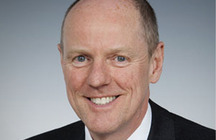
    Below is the text of the speech made by John McDonnell, the Shadow Chancellor of the Exchequer, to the Labour Party Conference held in Brighton on 28 September 2015.

    John McDonnell, Hayes and Harlington, ex officio.

    I warn you this is not my usual rant, they get me into trouble and I’ve promised Jeremy to behave myself.

    Jeremy and I sat down at the beginning of his campaign for the Labour leadership to discuss what they call the strap line for his campaign leaflets and posters.

    We came up with the strapline you see now.

    Straight talking, honest politics.

    It just embodied for me what Jeremy Corbyn is all about.

    So in the spirit of straight talking, honest politics.

    Here’s some straight talking.

    At the heart of Jeremy’s campaign, upon which he received such a huge mandate, was the rejection of austerity politics.

    But austerity is just a word almost meaningless to many people.

    What does it actually mean?

    Well, for Michael O’Sullivan austerity was more than a word.

    Michael suffered from severe mental illness.

    He was certified by his GP as unable to work but despite the evidence submitted by 3 doctors, he was assessed by the company given the contract for the work capability assessment as fit for work.

    Michael killed himself after his benefits were removed.

    The coroner concluded his death was a direct result of the decision in his case.

    I don’t believe Michael’s case stands alone.

    I am grateful to Michael’s family for allowing me to mention him today.

    I send them, I am sure on behalf of all us here, our heartfelt sympathy and condolences.

    But also I want them to know that this party, when we return to Government, will end this brutal treatment of disabled people.

    Austerity is also not just a word for the 100,000 children in homeless families who tonight will be going to bed not in a home of their own but in a bed and breakfast or temporary accommodation.

    On behalf of this party I give those children my solemn promise that when we return to government we will build you all a decent and secure home in which to live.

    Austerity is not just a word for the women and families across the country being hit hardest by cuts to public services.

    Women still face an average 19.1 per cent pay gap at work.

    Labour will tackle the pay gap, oppose the cuts to our public services and end discrimination in our society.

    Whenever we cite examples of what austerity really means the Conservatives always argue that no matter what the social cost of their austerity policies, they are necessary to rescue our economy.

    Let’s be clear.

    Austerity is not an economic necessity, it’s a political choice.

    The leadership of the Conservative Party made a conscious decision six years ago that the very richest would be protected and it wouldn’t be those who caused the economic crisis, who would pay for it.

    Although they said they were one nation Tories, they’ve demonstrated time and time again, they don’t represent one nation, they represent the 1 per cent.

    When we challenge their austerity programme, the Conservatives accuse us of being deficit deniers.

    Let me make this absolutely clear.

    Of course we accept that there is a deficit but we will take no lessons from a chancellor who promised to wipe out the deficit in one Parliament but didn’t get through half.

    Who promised to pay down the debt but has increased it by 50 per cent.

    I tell you straight from here on in Labour will always ensure that this country lives within its means.

    We will tackle the deficit but this is the dividing line between Labour and Conservative.

    Unlike them, we will not tackle the deficit on the backs of middle and low earners and especially by attacking the poorest in our society.

    We have always prided ourselves on being a fair and compassionate people in this country and we are.

    We will tackle the deficit fairly and we can do it.

    Here’s how.

    We will dynamically grow our economy.

    We will strategically invest in the key industries and sectors that will deliver the sustainable long term economic growth this country needs.

    Economic growth that will reach all sections, all regions and all nations of our country.

    And I meant it.

    I was devastated by Labour’s losses in Scotland.

    The SNP has now voted against the living wage, against capping rent levels and just last week voted against fair taxes in Scotland to spend on schools.

    So here is my message to the people of Scotland:

    Labour is now the only anti-austerity party.

    Now’s the time to come home.

    We will halt the Conservative tax cuts to the wealthy paid for by cuts to families income.

    Three weeks ago we saw one of the starkest examples of the difference between us and the Conservatives.

    The Conservatives cut tax credits to working families to pay for a multi billion pound cut in inheritance tax.

    Families who had done everything asked of them.

    Working hard but dependent on tax credits to make up for low pay.

    They will have £1300 taken from them to pay for a tax cut to the wealthiest 4 per cent of the population.

    The Conservatives argued that they’d introduced a so called living wage to make up for the tax credit cut.

    But we all know that it was neither a living wage nor according to the Institute for Fiscal Studies did it make up for the amount families lost.

    I tell you now, when we return to office, we will introduce a real living wage.

    Labour’s plan to balance the books will be aggressive.

    We will force people like Starbucks, Vodafone, Amazon and Google and all the others to pay their fair share of taxes.

    Let me tell you also, there will be cuts to tackle the deficit but our cuts will not be the number of police officers on our streets or nurses in our hospitals or teachers in our classrooms.

    They will be cuts to the corporate welfare system.

    There will be cuts to subsidies paid to companies that take the money and fail to provide the jobs.

    Cuts to the use of taxpayers’ money subsidising poverty paying bosses.

    Cuts to the billion pound tax breaks given to buy to let landlords for repairing their properties, whether they undertake the repairs or not.

    And cuts to the housing benefit bill when we build the homes we need and control exorbitant rents.

    Where money needs to be raised it will be raised from fairer, more progressive taxation. We will be lifting the burden from middle and low-income earners paying for a crisis they did not cause.

    If we inherit a deficit in 2020, fiscal policy will be used to pay down the debt and lower the deficit but at a speed that does not put into jeopardy sustainable economic growth.

    We’ll use active monetary policy to stimulate demand where necessary.

    We’ll also turn the Department for Business, Innovation and Skills into a powerful economic development department, in charge of public investment, infrastructure planning and setting new standards at work for all employees.

    This is a radical departure not just from neoliberalism but from the way past administrations tried to run the economy.

    Why?

    Well we just don’t think the current model can deliver.

    We don’t think that destroying industries and then subsidising a low pay economy through the tax system is a good idea.

    But our radicalism, it comes with a burden.

    We need to prove to the British people we can run the economy better than the rich elite that runs it now.

    That’s why today I have established an Economic Advisory Committee to advise us on the development and implementation of our economic strategy.

    We will draw on the unchallengeable expertise of some of the world’s leading economic thinkers including Joseph Stiglitz, Thomas Piketty, Professor Mariana Mazzucato, Simon Wren Lewis, Ann Pettifor and former member of the Bank of England Monetary Committee, David Blanchflower and many, many others drawn in for their specialist knowledge.

    I give you this undertaking that every policy we propose and every economic instrument we consider for use will be rigorously tested to its extreme before we introduce it in government.

    And we will demand that the Office of Budget Responsibility and the Bank of England put their resources at our disposal to test, test and test again to demonstrate our plans are workable and affordable.

    These bodies are paid for by taxpayers and therefore should be accessible to all parties represented in Parliament.

    In government we will establish and abide by that convention.

    The foundation stones of our economic policy are prosperity and social justice.

    We will create what Mariana Mazzucato describes as the entrepreneurial state.

    A strategic state works in partnership with businesses, entrepreneurs and workers to stimulate growth.

    Government’s role is to provide the opportunity for massive advances in technology, skills and organisational change that will drive up productivity, create new innovative products and new markets.

    That requires patient long term finance for investment in research from a effectively resourced and empowered national investment bank.

    A successful and fair economy cannot be created without the full involvement of its workforce.

    That’s why restoring trade union rights and extending them to ensure workers are involved in determining the future of their companies is critical to securing the skills, development and innovation to compete in a globalised economy.

    We will promote modern alternative public, co-operative, worker controlled and genuinely mutual forms of ownership.

    At this stage let me say that I found the Conservatives rant against Jeremy’s proposal to bring rail back into public ownership ironic when George Osborne was touring China selling off to the Chinese State Bank any British asset he could lay his hands on.

    It seems the state nationalising our assets is ok with the Tories as long as it’s the Chinese state or in the case of our railways the Dutch or French.

    Institutional change has to reflect our policy change.

    I want us to stand back and review the major institutions that are charged with managing our economy to check that they are fit for purpose and how they can be made more effective.

    As a start I have invited Lord Bob Kerslake, former head of the civil service, to bring together a team to review the operation of the Treasury itself.

    I will also be setting up a review of the Bank of England.

    Let me be clear that we will guarantee the independence of the Bank of England.

    It is time though to open a debate on the Bank’s mandate that was set by Parliament 18 years ago.

    The mandate focuses on inflation, and even there the Bank regularly fails to meet its target.

    We will launch a debate on expanding that mandate to include new objectives for its Monetary Policy Committee including growth, employment and earnings.

    We will review the operation and resourcing of Her Majesty’s Revenue and Customs to ensure that HMRC is capable of addressing tax evasion and avoidance and modernising our tax collection system.

    This is how we will prepare for the future and the day we return to government.

    Let me now return to today’s economy because to be frank, I am fearful for the present.

    George Osborne fought the last election on the myth that the slowest economic recovery from recession in a century has been some sort of economic success.
    In reality the Tories presided over the longest fall in workers’ pay since Queen Victoria sat on the throne.

    A recovery based upon rising house prices, growing consumer credit, and inadequate reform of the financial sector.

    An imbalanced economy overwhelmingly reliant on insecure jobs in the service sector.

    Our balance of payments deficit, which is the gap between what we earn from the rest of the world and what we pay to the rest of the world, is at the highest levels it’s been since modern records began.

    I worry that the same pre-crash warning signs are reappearing.

    The UK economy is in recovery despite the Chancellor’s policies and not because of them.

    You know the narrative George Osborne wanted to present of us this week.

    Deficit deniers risking the security of the nation etc.

    It was so obvious you could write it yourself blindfolded.

    He has brought forward his grandiose fiscal charter not as serious policy making but as a political stunt.

    A trap for us to fall into.

    We are not playing those games any more.

    Let me explain the significance of what we are doing today.

    We are embarking on the immense task of changing the economic discourse in this country.

    Step by step:

    First we are throwing off that ridiculous charge that we are deficit deniers.

    Second we are saying tackling the deficit is important but we are rejecting austerity as the means to do it.

    Third we are setting out an alternative based upon dynamically growing our economy, ending the tax cuts for the rich and addressing the scourge of tax evasion and avoidance.

    Fourth having cleared that debris from our path we are opening up a national discussion on the reality of the roles of deficits, surpluses, long-term investment, debt and monetary policy.

    Fifth we will develop a coherent, concrete alternative that grows a green, sustainable, prosperous economy for all.

    We are moving on the economic debate in this country from puerile knockabout to an adult conversation.

    I believe the British people are fed up of being patronised and talked down to by politicians with little more than silly slogans and misleading analogies.

    This is an immense task.

    That’s why we need to draw upon all the talents outside and inside the party.
    I admit that I was disappointed that after Jeremy’s election some refused to serve.

    In the spirit of solidarity upon which our movement was founded I say come back and help us succeed.

    We are in an era of new politics.

    People will be encouraged to express their views in constructive debate.

    Don’t mistake debate for division.

    Don’t mistake democracy for disunity.

    This is the new politics.

    Many still don’t understand its potential.

    As socialists we will display our competence with our compassion.

    Idealists yes but ours is a pragmatic idealism to get things done, to transform our society.

    We remain inspired by the belief and hope that another world is possible.

    This is our opportunity to prove it.

    Let’s seize it.

    Solidarity.

  • Theresa May – 2001 Speech to Conservative Spring Forum

    theresamay

    Below is the text of the speech made by Theresa May, the then Shadow Education Secretary, to the Conservative Spring Forum held on 4 March 2001.

    It is clear from everything that has been said in this session, and from what I see in the schools I visit across the country that what we need now in education is a ‘radical approach – one that focuses on the best interests of children, that understands the purpose of education, that recognises the importance of diversity and choice, and that liberates schools from constant interference by the state.’

    Not my words, but those of the former Chief Inspector of Schools Chris Woodhead.

    Ladies and Gentlemen, the next Conservative Government will provide that radical approach.

    Anyone who visits schools, who sees teachers inundated with paperwork, disruptive children in classes damaging the education of others, schools on a four day week and children being taught by unqualified staff will know that on education this Labour Government is all spin and no delivery.

    When Tony Blair promised education, education, education no-one knew he meant the number of days a week children would be in school.

    It’s no wonder parents are saying – We’ve paid the taxes so where are the teachers?

    But Labour are not just failing to deliver, they are incapable of delivering because they are more interested in spinning to get headlines than they are in the needs of children.

    They promised to spend a greater proportion of the national income on education than the last Conservative Government. They have spent less.

    They promised smaller class sizes. Secondary class sizes have gone up and the pupil teacher ratio in primary schools has gone up.

    They promised to cut bureaucracy. Instead they have deluged schools with endless Whitehall directives and initiatives – from the beginning of last year teachers received a directive a day from the Government.

    Instead of giving more say to parents they have handed more power to local politicians and bureaucrats by scrapping our hugely successful grant maintained schools system.

    They promised to raise teacher morale. Instead teachers are leaving in droves because they are utterly fed up with Blunkett’s bureaucratic burdens and constant interference from the centre.

    And instead of leaving dogma behind they have vigorously pursued their vendetta against grammar schools.

    These are the realities of what Labour has done to education in this country.

    What can we expect from Labour if they get back in.

    More spin, more Whitehall schemes, more paperwork, more disruptive pupils in class, more political correctness,

    But fewer special schools, fewer grammar schools, fewer school sixth forms, fewer teachers,

    Lower standards, larger classes and an education system aimed at turning out politically correct citizens with no idea of the history and culture of their own country.

    Four years on we know the black hole between the rhetoric and reality of Labour.

    When Tony Blair says he wants more private sector involvement in education, we know more power will be given to local politicians and bureaucrats.

    When Tony Blair says he wants a better deal for teachers, we know the Government will continue to stifle the creativity and flair of teachers with a never-ending stream of directives from Whitehall.

    When Tony Blair says he wants more diversity we know he will destroy the grammar schools through Labour’s vindictive ballots.

    And when Tony Blair’s spokesman says it is the end of the bog-standard comprehensive we know the monolithic comprehensive system with no choice for parents is safe under Labour.

    In contrast, Conservatives are ready to deliver a better education for our children, to deliver common sense not dogma.

    We are ready to trust heads and teachers to get on with the job. We are ready to give parents real choice.

    Because we will set schools free and let teachers teach.

    If you had been with me when I visited a school in Lambeth last week I could have shown you exactly what we mean when we say we will set schools free.

    The school was in one of the poorer areas of London. Violent crime there is three times the national average. In 1995 only 1 per cent of pupils came out of that school with 5 good GCSEs.

    But after gaining its freedom under the last Conservative Government through grant maintained status the school improved beyond all recognition.

    A report by Ofsted two years ago said it had made excellent improvement.

    Almost a quarter of the pupils there now leave with 5 GCSEs at A to C and its continuing to improve and they’ve had their first Oxbridge entrant – tell that to Gordon Brown.

    So what happened to turn this school around?

    I’ll tell you.

    We got rid of interference by local politicians and bureaucrats and replaced them with strong leadership from the head.

    We made sure that teachers had the freedom to use their creativity and excellence to inspire the children.

    The school has now developed its own distinct set of values. It has a strict code of discipline, it has its own uniform – a symbol of pride in the school – and it is now extremely proud of its sporting achievements.

    Above all there is a real sense of team spirit among the staff, the pupils and their parents.

    It is these things that make schools a success.

    But Labour has already scrapped the school’s grant maintained status – putting it back under the LEA. And we can be sure that a second Labour term would mean further attacks on all that this and other schools like it have achieved.

    Conservatives on the other hand want to make sure that all schools can benefit from freedom from political interference.

    That’s what we mean when we say we will set all schools free.

    Free Schools will be able to control their own destiny and as with grant maintained schools the quality of life for all in the school will improve. In Free Schools we will see heads, teachers, other staff and governors blossoming as they are able to use their expertise and judgement directly to innovate, to raise standards, to inspire pupils and to make a real difference to the education of children.

    Free Schools mean that, once again, heads will be allowed to enforce discipline in their schools. They will be allowed to exclude pupils who are disrupting the education of the majority of pupils.

    This Government is stifling the creativity and excellence of our teachers. Today they are form-fillers. Teachers will be teachers under the Conservatives.

    Free Schools will mean not only that teachers are allowed to teach, but also that money that is currently wasted on bureaucracy will go directly to schools. Getting money out of central and local government direct to schools will mean on average £540 extra per pupil per year.

    Labour are all spin and no delivery.

    They promised much before the last general election. They have delivered rising class sizes, a national crisis of teacher shortages and schools on a four day week.

    We have listened to parents, teachers and pupils all over the country.

    They’re fed up with Labour and they know its time for common sense policies.

    Education needs a government that trusts teachers and parents, that understands that children are different and their education should reflect their needs, that recognises that education is valuable in its own right and wants all to have the opportunity to develop their full potential.

    Above all we need a government that will set schools free, let teachers teach and give our children the education they need and deserve.

    Conservatives are ready to deliver.

  • Francis Maude – 2001 Speech to Conservative Spring Forum

    Below is the text of the speech made by Francis Maude to the Conservative Spring Forum held on 4 March 2001.

    Thank you, Edward, for your introduction. As you say, we at Westminster and the MEPs have never worked so closely together. We’re part of one team. Working together for our high common purpose, under William’s leadership.

    We must never again allow our party to disable itself by infighting and division. You, our party in the country, would never forgive us if we did. And I pay tribute to Edward’s leadership in Brussels. Never-resting, ever-working; you and your team of MEPs just don’t let up. Probing, questioning, amending; spearheading Conservative plans for real Brussels reform. And you’re a daily reminder to us all.

    Back in 1999, before the European elections no one gave us a prayer. The pollsters and the pundits: they were all the same. But we never gave up. Calmly and relentlessly we carried our message out to the public. And we won a terrific victory. We confounded the pollsters then. We showed – all of us working together – that we can do it – and, yes, we can do it again.

    By God we need to. Because this wretched Government has let the country down so badly. Remember Labour’s promises back in 1997? Robin Cook and his so-called ethical foreign policy. How Labour were going to stand up for Britain in Europe. Tony Blair’s love for the pound. His promise to slay the dragon of the European superstate. They failed to deliver.

    Well, it didn’t last long, did it? It was – yes, it really was – all spin and no delivery. Ethical foreign policy. Take Robin Cook’s famous ethical foreign policy. I spent last weekend, in Zimbabwe. I met some of the bravest people it has ever been my privilege to meet. I met residents in Harare’s high density areas who see their freedoms and jobs disappearing. I met farmers who have been thrown casually thrown off their farms. I met their workers who have been dispossessed of their homes and livelihoods. I met lawyers, and let’s face it, Zimbabwe’s judges are the last redoubt of the rule of law. I met Morgan Tsvangirai, the leader of the Opposition Movement for Democratic Change, whose offices have been bombed, whose activists are beaten up and murdered, who himself lives in daily threat of his life.

    I saw a desperate Zimbabwe. Yet all we hear from this Labour Government is the sound of silence. Their silence is Britain’s shame. Ethical foreign policy? Labour have squandered Britain’s moral authority.

    I tell you this: I think Britain should stand for something in the world. I think Britain should stand up for the rule of law, stand up for free speech, stand up against tyranny.

    So we will speak out. We will lead international opinion, work with Zimbabwe’s neighbours. We will target those people who keep Mugabe in power. We will push for a travel ban on Mugabe’s associates and a freeze on their overseas assets. We will instigate international investigations into their history of murderous wrongdoing. The message will once again ring out across the world: Britain does not appease dictators.

    No one who heard James Mawdsley earlier could have any doubt: the love of freedom and hatred of tyranny burns as strongly in British hearts as it ever has.

    And we will revive that great global network of shared history and common values, the Commonwealth. Conservatives are proud of the Commonwealth. It covers a third of the globe; it unites people of different races, creeds and continents. Our Commonwealth Commission is examining ways in which it can be transformed into a modern and dynamic network organisation, promoting the values of the rule of law, the open economy and democracy.

    We’ll support our American allies in developing a missile Defence system that will give us protection against the Saddam Husseins of this world. And we will ensure that Britain’s armed forces, among the best in the world, are not hamstrung by the faddish imposition of political correctness. Somehow, I just feel that anyone who suggests that to Iain Duncan Smith will get a pretty brisk response.

    Labour: all spin, and no delivery. Tony Blair’s love for the pound? It was a love that didn’t even survive election day morning. Standing up for Britain? So far, at Amsterdam and more recently at Nice, Labour have scrapped Britain`s veto in no fewer than 54 areas. In a rare moment of honesty, Tony Blair admitted that the Working Time Directive was `over the top`. Now, thanks to him, there’s nothing we can do about it. Because Britain no longer has a veto. Because when it comes to it, Tony Blair and his colleagues simply don’t believe in Britain. They don’t understand how Britain can survive and thrive as an independent self-governing country. So they went along with a European Army entirely separate from NATO. Nothing wrong with greater European defence co-operation. We strongly favour it. But it should be within NATO, not outside it. As the Americans now realise, what is being constructed here threatens the future of NATO. We will never allow that.

    And Labour say none of it matters. The European Army is not an army. No? With 60,000 soldiers on standby? Expected to operate as far away as Central Asia? It’s anchored in NATO, they claim. Absolutely untrue, as anyone who examines the documents will confirm. They’ve created an EU Military Committee, an EU Military Staff. Nothing to do with NATO. Indeed, the agreement makes crystal clear that Euro Army operations must remain under EU control at all times. Romano Prodi, as so often, let the cat out of the bag. The European Army, he said, is ‘a milestone in the creation of a united political Europe’.

    And Labour have agreed a Charter of Fundamental Rights, binding in law, which will enable the Luxembourg Court to impose changes in British law without our consent. The Charter of Rights is no more important than the Beano, says the egregious Mr Vaz. Yes, Mr Vaz, we’re really going to take your word for it. Happily the European Commission have been a bit more honest. They say, and they’re right, that it will be mandatory.

    So don`t believe a word Labour says. It’s all spin. They don’t deliver. And they’ll never deliver. Because they simply don`t believe in Britain.

    And no-one should have any illusions about what Labour would do if they won a second term. First, they’ll scrap the pound as soon as they think they can get away with it. And let no-one be taken in with the promise of a referendum. There is as much chance of this being a even-handed referendum as there is of Robin Cook winning an award for humility. With the rules rigged to ensure that the campaign to scrap the pound is allowed to spend millions more than the campaign to keep the pound; with the watchdog Commission being prevented from insisting that the question is fair? Forget it.

    There’s only one way to be sure of keeping the pound. It’s by voting Conservative.

    And that’s not all. Another Labour Government, eagerly backed up by their LibDem lapdogs, would take Britain ever further down the one way street towards the European superstate.

    Here’s an early indication of what’s in store. On 8 May, the Party of European Socialists, of which the Labour Party forms part, will launch a new group. Its name? The New Federalists. Its aim? The Political Union of Europe, and a federation of its states and peoples. Lucky we spotted that one, because something tells me that we wouldn’t have heard about it from Robin Cook or Tony Blair.

    So it’s clear what Labour would do. And it’s not what the British public want. The mainstream majority agree with us. The mainstream majority believe in Britain. They want to be in Europe, not run by Europe. But they think we’re already run by Europe more than they like. There are people who think it’s somehow inevitable that Britain will lose more and more of her powers. That we can only go further and faster down the road to the European superstate. It doesn’t have to be like that. It is only inevitable if Britain lets it happen.

    A Conservative Government will stop the slide to the superstate. And we’ll make sure that in future Britain is run by Europe less than we are today. After all, what other organisation in today’s world is centralising more and more? What business, what international organisation today thinks that the answer is to force more and more decision through the same central meatgrinder?

    We have to move away from the old outdated one size fits all dogma. That belongs to the era of the Cold War, the bloc era. This is the age of the network. We have to reform the EU to make it a modern network organisation. We need a modern multi-system European Union, with different countries working together in different combinations for different purposes.

    So at the first European summit after the election, William and I are going to have a pretty full agenda. Working to bring the European army back within NATO. We will not undermine the military alliance that has kept our world safe and free for fifty years. We make you this pledge. The next Conservative Government will only allow British troops to serve in a European Rapid Reaction Force if it operates within NATO’s command structure.

    Then starting to renegotiate the Common Agricultural Policy. It is absurd that everything still gets decided at EU level. There is growing support in Europe for our policy that much more should be decided at national level. The same with the Common Fisheries Policy. This outdated failure of a policy has got to change. Why should the management of the North Sea fisheries be decided by Greece and Italy, when the Mediterranean isn’t even part of the CFP?

    And, yes, we’ll renegotiate the Nice Treaty. We will not ratify a treaty that gives away Britain’s veto. We want enlargement of the EU, and we want it more quickly. The first wave should be admitted by 2004. It’s a scandal that more than 11 years after the fall of the Berlin Wall it hasn’t even started.

    And we’ll insist on a common sense Flexibility Clause that will make the EU function better. That’ll speed up enlargement, too. It is absurd to require every member state in an EU of nearly thirty countries to sign up to every dot and comma of every EU law there is. Outside the single market and other core areas, countries should be able to decide for themselves whether EU laws make sense for them.

    And there’ll be an end to the continual intrusion of the EU into areas beyond what Parliament agreed. In the first Parliamentary Session after the election, we will enact a Reserved Powers Bill that will guarantee that beyond the powers we intended to transfer, EU law will not override the will of Parliament.

    We don’t have to go ever further down the one-way street towards the superstate. Britain can choose. We can choose to keep the pound. We can choose that Britain will be in Europe. And really will be run by Europe less than we are today.

    This has been a tremendous gathering. A great party has met, knowing that on its shoulders rests the destiny of a great nation. A great nation, and a great people. A people sickened by a government that has abused their trust. A people who are crying out for leaders who deal fairly, who speak the truth. A great English poet once wrote ‘Smile at us, pay us, pass us. But do not quite forget. For we are the people of England, and we have not spoken yet.’

    Before long the people of Britain will speak. We will be their champions. We will be their voice. With William as our leader, we will be a government of which Britain can again be proud.

  • Michael Portillo – 2001 Speech to Conservative Spring Forum

    Below is the text of the speech made by Michael Portillo, the then Shadow Chancellor of the Exchequer, to the Conservative Spring Forum held on 3 March 2001.

    I joined the Conservative Party just after Margaret Thatcher had become leader. I had a burning sense that we had to change Britain. We were overtaxed. The state was taking over people’s lives, making them dependent on government for handouts. But we let them keep more of what they earned, to take on more personal responsibility and have more choices in life.

    After four years of Labour government, we’re headed back to square one. We have a meddling, nannying government, and Labour’s stealth taxes have reduced people’s independence.

    Gordon Brown’s taxes have fallen not on the rich, but on the people who have least. Families and pensioners are dismayed by the cost of petrol and the many sneaky ways he’s raised their income tax. He insulted pensioners with a miserly pension increase of just 75 pence. Having made them poorer with his taxes, he now forces more and more of them to rely on means-tested benefits.

    In Gordon Brown’s Britain well over half our pensioners will face the indignity of revealing all their personal details to the state, in the hope of being granted an income sufficient to pay the Chancellor’s taxes. The form they must fill in even asks if they are pregnant.

    There’s one party that doesn’t forget what we owe to the older generation. One party respects them for their experience and for the sacrifices they made. That party is the Conservative Party.

    We think it crazy to tax people more than they can afford and then make them bow the knee to the state for their basic needs. There’s a better way. We’ll allow people to keep more of their own money.

    Gordon Brown boasts of his surplus. It isn’t his. He’s got it because he’s taxed people so much that he’s outstripped even his own ability to spend our money. Even the government that brought us the Dome can’t waste money as fast as Gordon Brown taxes it. It isn’t Gordon’s surplus, it’s the people’s surplus. Government money is people’s money. And the Conservatives will render unto the people that which is the people’s.

    Everywhere people are disappointed that Labour’s broken its promises. But having failed to deliver, Labour promise more and more and further and further into the future. They promise a spending splurge. As prudent countries around the world wisely cut taxes Gordon’s cut loose on his programme of tax and spend.

    Would it mean still higher taxes? Would there be more stealth taxes, more raids on your pension fund and lower living standards for those on low incomes? You bet your life there would.

    We’ve set out a different way. Each year on average our economy grows. The national cake gets bigger. So each year we can spend more on vital public services, but also allow people to keep more of their own money. But to do that we must plan increases in government spending that the nation can afford. Plans that don’t depend on never-ending growth, as Gordon Brown’s promises do. Plans that are robust and prudent.

    William and I have established five disciplines that will govern the economic policy of a Hague Government. A Hague Government – I like the sound of that.

    First, we’ll ensure that Britain keeps its own currency and that interest rates are set in Britain.

    Second, we’ll increase the independence of the Bank of England.

    Third, we’ll set up an independent Committee of Economic Advisers to give open and public advice on our policies.

    Fourth, we’ll appoint a National Accounts Commission to lay down rules about the government’s accounts, bringing to an end Labour’s era of fiddling the books.

    Fifth, we’ll increase government spending only in line with what the country can afford.

    We can plan to spend as much as Labour on health and education. We don’t need to propose changes to spending on the police or defence. But we will make other changes, changes that improve the performance of government and of the economy and bring about social reform. We’ve set out the most detailed proposals on government spending ever drawn up by a party in opposition.

    We’ll tackle the reform of the welfare state that Labour has ducked. We’ll require single parents with children over eleven to seek work, because studies show that children brought up by a parent who works are much more likely later in life themselves to get jobs.

    We’ll cut programmes in the Department of Trade and Industry because what business needs isn’t more fiddly schemes but lower taxes and less regulation. We’ll transfer public housing to the private sector. We’ll revolutionise the system of student finance. We’ll implement the tough proposals to fight benefit fraud that this government rejected out of hand. And we’ll cut the cost of government.

    We have set out our proposals in minute detail. After two years we’ll be able to save £8 billion compared with Labour’s plans. After two years we can make £8 billion of tax cuts.

    Now, in the next few days you’ll hear the Chancellor talk of tax cuts too. Strange that. He’s spent four years relentlessly putting taxes up, but now suddenly he talks of tax cuts. Could it be there’s an election coming? Could it be he’s afraid we’re winning the argument? Could it be that once again the political agenda is being set by the Conservatives?

    The Chancellor can make tax cuts now simply because he’s over-taxed us. Whatever he gives us back will be small by comparison with what he’s already taken. Because the stealth taxes he’s imposed so far, if they’d been raised honestly and openly, would have raised income tax by 10 pence in the pound. Suppose next week he knocks 2 pence off income tax. He’d still be the 10 pence on, 2 pence off Chancellor.

    If we gave him the chance, once he’d won the election, he’d take back even that. So we’re not going to give him the chance.

    The tax cuts that we offer don’t depend just on today’s surplus. Our tax cuts would be durable and they’d be on top of anything Labour offers us now. We’ll make the tax cuts that Labour can’t because we’ll make the spending changes that Labour won’t.

    It’ll take us the first two years to turn government spending away from Labour’s unsustainable course. But once we’ve done that, we can look forward to more room for manoeuvre – more room for tax cuts.

    We Conservatives haven’t merely set out how we’d cut taxes. We’ve mapped out a way to change Labour’s culture, to create a society that’s fairer and more responsible. We’ve laid out a different vision for our country.

    We’ll abolish taxes on savings and shares. Most of the 17 million families that save will benefit and millions more will be encouraged to save for the first time.

    We’ll raise sharply the amount people over the age of 65 can earn before they pay income tax. Their allowance will rise by £2000 per year. A million pensioners will be taken out of income tax altogether. Most of the remaining 2.7 million will pay £8.50 per week less in income tax.

    Under our plans pensioners will be able to look back on a lifetime of saving and know they did the right thing and were rewarded for doing it.

    We want families with children also to keep more of their money. We’ll reform the new children’s tax credit scheme which is hopelessly bureaucratic. And we’ll make it more generous. We believe that families face the greatest strains when their children are very young. So we’ll allow families with children under five to keep an extra £200 a year of their own money.

    We’ll bring help to widows. We’ll sweep away most income tax on the allowances paid to a widowed parent, leaving her or him about £1000 a year better off.

    I know many parents who aren’t married who make great parents. I’m also aware that statistically children whose parents are married do better in life on average, and their parents are less likely to split up.

    Gordon Brown swept away support for marriage from the income tax system. But marriage is a civic institution: a contract with clear responsibilities. We believe the tax system should recognise it.

    We’ll give people who are married and have youngish children or disabled relatives an allowance worth £1000 a year. Parents will be relieved of some of the pressure to go out to work.

    Our plans help many different types of family. The Conservative Party believes in choice. We want parents – in particular we want women – to have more choice.

    The way we’ve targeted these tax cuts says a lot about this party, our sense of priorities and our aspirations for the British people.

    We’ll encourage personal responsibility. Because people who take responsibility for themselves are more likely to accept it for their families and to recognise their obligations to society. We’ll replace Gordon Brown’s means-tested dependency Britain with William Hague’s responsible society. Britain will be different under the Conservatives.

    One thing won’t change. Under the Conservatives Britain will keep the pound. Britain will remain amongst the huge majority of nations in the world who believe that in a highly competitive world they’ll do best if they have their own currency and set their own interest rates.

    By contrast, across Europe they’re trying to apply just one rate of interest to a wide variety of economies. The strains are beginning to show. Inflation in Ireland and Spain. Unemployment in Germany. Britain remembers only too well how we suffered under the ERM from an interest rate suited to Germany but not to Britain.

    We’re on the side of the moderate majority of the British people. During our Keep the Pound campaigns across the country, people have flocked to register their support. In particular they turned out to cheer a politician who took the campaign to high streets and market squares across Britain. One politician had the energy and guts to do it. His name is William Hague.

    Our job is not so much to convince people to keep the pound. The moderate majority agrees. Rather it’s to convince them that this election may be their last chance to vote to keep the pound.

    The prime minister has rigged the referendum rules. If Labour won the general election, then come the referendum the parties wanting to kill off the pound would be allowed to spend twice as much as we Conservatives would be allowed to spend defending it. The government would soften up public opinion by spraying around taxpayers’ money. And does anyone think that Mr Blair would allow the British public to be asked a straightforward question on the euro? You have more reason to believe in Santa Claus.

    The question would be Do you authorise the government to negotiate the best terms for entry into monetary union when it judges the time and terms to be right? That’d be the question if we were lucky.

    People know there’s more at stake than economics. I referred before to that moment in the New Testament, when Christ held up a coin and asked “Whose head and insignia are on this coin?” The answer was Caesar’s, so render unto Caesar that which is Caesar’s. My point is that right back to Biblical times people have known that there’s a very close connection between the currency and political power. The Queen’s head appears on Britain’s coins. There’s a reason for that. Her head wouldn’t appear on the euro. There’s a reason for that too. Just think about it.

    If the pound matters to you, if you believe in keeping it, if you haven’t given up on Britain, the only way to be sure is to elect a Conservative government under William Hague.

    I think back to those early days of Margaret Thatcher. I remember our preparations for government then and I’m part of those preparations today. I believe that under William Hague we’re radical today, just as we were radical then.

    We’re willing to show how we’d change the role and scope of the state in order to have lower taxes, to make Britain competitive and allow people more personal choice.

    First, we’ll set our universities free from state control. We’ll use future windfalls to the government to endow our great universities. They’ll no longer need to rely on a drip feed from the state. They’ll be free to attract Nobel Prize winners, to direct their research towards innovation and like a Stanford or a Harvard in the United States, provide the British economy with a huge dynamic stimulus.

    Second, we want young people to have bigger pensions than pensioners have today. At present we all contribute to the national insurance fund throughout our working lives and we get a pension of £67 at the end of it. With the single exception of Robert Maxwell, this must be the greatest pension rip-off of all time. The national insurance fund isn’t a fund at all. The money paid in this year goes straight out to pay this year’s pensions. It’s never invested and never grows.

    We should do better. If we allowed our young people the option of putting their contributions into a properly-funded pension, they could carry through their lives something of real and growing value. It would be the modern day equivalent of buying their council house. And that would gradually relieve the enormous liability that will fall on future generations of taxpayers.

    Third, we’re committed to increase spending sharply on the National Health Service. But we don’t pretend that’s going to get Britain up to the standards of health care that people rightly demand. Now what I’m about to say may come as a surprise from me; but in this area we need to become more like the rest of Europe. Yes, you heard it here first.

    Our European partners don’t try to meet all their health needs from taxation alone. They know it can’t be done. They recruit their trades unions and employers to help get their members and employees insured. That way more money pours into health care. We need to do the same, to create a better partnership between public and private sectors, allowing us to have more hospitals and train more doctors and nurses. It’s the only way Britain will have the health care it deserves.

    This party doesn’t rest easy with things as they are. We don’t shy away from far-reaching change. The Conservative Party of today has the courage to look ahead and be radical.

    Labour believes after all these years that society can be made better by government, passing laws, centralising power, issuing directives and raising taxes. Conservatives don’t look to governments to make society better, we look to people.

    We look forward to winning people’s trust and to being in office. We’ll give responsibility back to people: we’ll put trust in our police officers, in our head teachers and our doctors and nurses; and return responsibility to people who save, to pensioners and to parents.

    We’ve set out our policies. They’re Conservative through and through, but they’re Conservatism for our times. They reinforce our long held values, but they’re directed to this new century.

    Our policies will give people choices, leave them with more of their own money and reward them for their efforts. Our policies point the way to a better Britain.

  • Ann Widdecombe – 2001 Speech to Conservative Spring Forum

    Below is the text of the speech made by Ann Widdecombe, the then Shadow Home Secretary, to the Conservative Spring Forum held on 3 March 2001.

    Four years on, they have failed to deliver. Instead, they’ve been tough on the crimefighters. There are 2,500 fewer police since 1997. 6,000 fewer special constables. The Chairman of the Police Federation says that morale is the worst he has ever seen it.

    They’ve been tough on the victims of crime. Remember what their manifesto pledged? That they would ‘ensure that victims are kept fully informed of the progress of their case’. But just this week, Labour’s so-called 10 Year Crime Plan said, ‘Victims and witnesses want to be kept informed. Current performance is not good enough.’

    What a damning indictment of their own record. An admission that they have failed to deliver on their promises.

    This week Labour made a new set of promises in their so-called Crime Plan. They’ve failed to deliver on the promises they made last time – their solution is to make yet another set of promises.

    But let’s take their record into consideration. Broken promise after broken promise. In 1995, Tony Blair said Labour would put ‘thousands more police officers on the beat’. Instead there are 2,500 fewer officers. In 1997, Tony Blair said his child curfew orders would prevent ‘young children wandering the streets at night, getting into trouble, growing into a life of criminality’. Result? Not one child curfew has ever been made. Not a single child has been turned away from a life of criminality. Their manifesto pledged to support the police – but 250 criminals who have assaulted police officers have served less than one third of their prison terms on Labour’s special early release scheme.

    This week, Labour talked about tougher sentences. Don’t you believe it. They’ve already let more than 31,000 criminals out of jail up to 2 months earlier than normal on their special early release scheme. Under Labour, if you get six months, you’ll be out in six weeks. Even John Prescott gets through more of his sentences than that.

    And 1,000 extra crimes have been committed by those criminals, released early by Labour, when they should have been in prison. That’s Labour’s real approach – to let more and more prisoners out of jail earlier and earlier.

    The next Labour Government will give the ‘get out of jail free’ card to even more criminals. Last week, Jack Straw’s special adviser admitted in a leaked memo that their new sentencing plans involve 11,500 more criminals spending less time in prison each year – something he described as ‘a significant softening of sentencing arrangements’.

    Before the last election, Labour promised they’d be ‘tough on crime’. Now Jack Straw says that it depends on the criminals whether crime falls or not. An admission of failure.

    The next Conservative Government will go to war on the criminal as never before.

    Right now, the police force stands depleted and demoralised, burdened with bureaucracy and performance indicators. That has got to change, and fast. So the next Conservative Government will reverse Labour’s cuts in police numbers. We will ensure that they spend their time doing just what they joined up to do, and just what the people of this country want them to do – fighting crime.

    Our ‘cops in shops’ proposals will mean that more communities see their local police officers out and about. It’s a simple, common sense initiative. The officer doesn’t go back to the station to write up his reports, he writes them up in shops and other public places. This has a threefold advantage. First of all, he’s visible. Secondly, he can interact with the community. And thirdly, he is a deterrent.

    And we’re going to have a national police cadet force to make sure that more young people choose a career in the police, and to ensure that their first contact with the police is a positive, confidence-building experience. That’s Common Sense.

    Labour have admitted that they’ve broken their promises to victims and given them a raw deal. The next Conservative Government will change that. We’ll overhaul the law so that it’s on the side of the victim, not the criminal. And victims will be given new statutory rights. The right to a named police officer and lawyer as a point of contact. The right to be kept informed of progress in their cases. The right of access to files if they want to mount a private prosecution. We’ll put Victims First.

    Conservatives will put in place new laws to tackle drug dealers. Those who repeatedly deal to children will in future be given tough mandatory prison sentences. And why should we have laws which give the police powers to combat opium dens, but not crack houses?

    We’ll end Labour’s special early release scheme, under which thousands of robbers, burglars and drug dealers have served less time in prison. Honesty in sentencing will ensure that the sentence handed down in court is the sentence that is served. And when they’re in prison, rather than lying around in idleness, prisoners will do meaningful work, work from which money can be paid to support their families on the outside and as reparation to their victims. Young menaces will be taken off the streets, put into Secure Training Centres, and given a real chance to change.

    Labour will always spin and never deliver. They’ve broken the promises they made at the last election and now they’re making new promises to break after the next one.

    Let’s leave the final word to Jack Straw’s own political adviser, who says that Labour’s policy “doesn’t look very impressive”.

    There can only be one verdict on Jack Straw and Tony Blair: guilty as charged.

    There can only be one sentence passed on Labour: to be thrown out of office for a term of at least five years.

    The next Conservative Government will deliver. And with your help, we’ll win the next election and send the whole Labour Party down.

  • William Hague – 2001 Speech to Conservative Spring Forum

    williamhague

    Below is the text of the speech made by William Hague, the then Leader of the Opposition, to the Conservative Spring Forum on 4 March 2001.

    As we gather here this weekend, we think of our fellow members and friends who had planned to be with us today in Harrogate, but who have had to remain at home or on their farms.

    The thoughts and sympathy of the whole Conference are with all those whose livelihoods are at risk from the spread of the foot and mouth disease.

    The pall of black smoke from the funeral pyres of slaughtered animals across our nation today tells the desperate story of a countryside in crisis.

    I know from my own constituency that, for farmers already struggling in the depths of the worst agricultural depression for sixty years, this latest blow could not be more cruel or more bitter.

    We support all the Government is doing to eradicate the disease and we welcome the financial support they have announced.

    People have responded with calmness and restraint to this crisis. In postponing a protest in which they had invested months of preparation, the hundreds of thousands of people who were due to take part in the Countryside March for Liberty and Livelihood have shown great responsibility and courage.

    I believe it would show the nation’s solidarity with the countryside in this terrible hour if the Government were to suspend consideration of the Hunting Bill in Parliament at least until those who wish to protest against it are free to do so again.
    This morning we have also heard of a different kind of courage – the courage of one young man in a Burmese jail. James Mawdsley.

    We heard about his unwavering belief in freedom.

    We heard of his passionate commitment to democracy and hatred of oppression.

    We heard of his defiance in the face of the extraordinary efforts made to silence him.

    And we heard of his pride that he is part of this Conservative family.

    By his actions James Mawdsley reminded us of all that is best about our Party.

    We remember the enduring values that have run through two centuries of Tory history.

    The Tory values that stretch back to the days when Wilberforce freed the slaves, and Pitt led a war against tyranny, and Burke wrote his great tracts and Shaftsbury stood and watched the pauper’s funeral and dedicated his life to the poor.

    The values that animated the Conservative leaders of the Twentieth Century: the leadership of Winston Churchill, the resolve of Margaret Thatcher and the decency of John Major.

    All of us are proud to be part of this Conservative family.

    And the values that have shaped our past must also guide our future.

    The determination to fight for freedom and democracy.

    The resolve to protect our national independence.

    The courage to speak the truth in an age of spin and political correctness.

    The self confidence to fight for our beliefs even when the odds are against us and to fight so hard against those odds that we win.

    The boldness to fight the next election on the most ambitious Conservative programme for a generation.

    For we are going to go further than any government has ever gone before to hand back to individuals and families the ability to shape their own lives.

    At his Party’s Spring Conference, Tony Blair said that we were to blame for cynicism about politics. What a typically cynical attack from a man whose entire career has been built on one piece of cynicism after another.

    When a Cabinet Minister who is sacked for telling lies is re-appointed, in the face of every constitutional convention, only for the same man to be sacked again from the same Cabinet for the same offence by the same Prime Minister – no wonder the public are cynical about politics.

    When the Lord Chancellor violates the trust of his great office of state to solicit party donations from people whose careers he can control, and then says ‘I’m not sorry, and I’d do it again’ – no wonder the public think that power has gone to their heads.

    When we have a Deputy Prime Minister who tells people not to drive cars but has two Jags himself, and where the Minister who tells people not to have two homes turns out to have nine himself – no wonder the public believe politicians are hypocrites.

    And when the man who holds the highest office in politics will say anything and do anything to stay in power, when he thinks nothing of deceiving the public and Parliament, when he stuffs offices of the Crown with his cronies from Islington, breaking every promise on which he was elected, spinning yet another gimmick and yet another re-announcement in order to disguise his failure to deliver on anything at all – no wonder the public say they don’t trust their Government.

    This morning we read in the papers that, at the last election, the Labour Party hired American students to infiltrate our campaign.

    Well, we have a confession to make. They weren’t the only ones playing that game. We hired a bearded buffoon to infiltrate their campaign. But we never thought in our wildest dreams that he’d end up as Foreign Secretary.

    None of the worthless promises and miserable failure of Labour’s first term compares to what they have in store if we were to let them win again.

    Just imagine four more years of Labour. Try to picture what our country would look like.
    Let me take you on a journey to a foreign land – to Britain after a second term of Tony Blair.

    The Royal Mint melting down pound coins as the euro notes start to circulate. Our currency gone forever.

    The Chancellor returning from Brussels carrying instructions to raise taxes still further. Control over our own economy given away.

    The jail doors opening as thousands more serious criminals walk out early to offend again. Police morale at a new low.

    The price gauge on the petrol pump spinning ever faster as fuel taxes rise still further.

    Letters arriving on doorsteps cancelling yet another round of hospital operations under a Government that is all spin and no delivery.

    That’s Labour’s Britain four years from now.

    And if there are meant to be so many people enthusiastic for another four years of Labour, how come you never meet any of them?

    Labour’s Britain four years from now.

    Could anybody stomach it?

    The Dome still for sale.

    Peter Mandelson re-appointed to the Cabinet for a fourth time.

    The Liberals, on the edge of their seats, still convinced that a referendum on proportional representation is just around the corner.

    We’re not going to sit idly by and let this happen to our country.

    That’s why Michael Ancram has prepared us to fight the best organised, most vigorous, most spirited campaign we’ve ever fought in order to save Britain from this nightmare.

    We are going to say to all the people who have been hit by Labour’s stealth taxes: Can you afford another four years?

    To all the people who are still waiting for their operation: Can you really wait another four years?

    To all the people who are still waiting to see a policeman on their street: Can you really wait another four years?

    To all the parents who are waiting for better education: Can you really wait another four years?

    So we’re ready for the fight. We’re ready because of the changes you have made to our Party. We’re ready because of the victories that you have won in local and European elections.

    But above all we’re ready to speak for the people of Britain: for the mainstream majority who have no voice, for the hard-working people who feel they are ignored, for the men and women who despair that their country is being taken from them. We are not going to let them down.

    We’re ready and we can win.

    As the next election draws near, people are beginning only now to focus on what the two parties stand for.

    Well if there’s one thing above all that sets me apart from Tony Blair, it’s this: I’m not embarrassed to articulate the instincts of the British people.

    The governing of this country has drifted far away from the decent, plain speaking common sense of its people. Its time to bring it back. It’s time to bring Britain home.

    We have a Government that has contempt for the views of the people it governs.

    There is nothing that the British people can talk about, that this Labour Government doesn’t deride.

    Talk about Europe and they call you extreme. Talk about tax and they call you greedy. Talk about crime and they call you reactionary. Talk about asylum and they call you racist. Talk about your nation and they call you Little Englanders.

    This Government thinks Britain would be alright if only we had a different people.

    I think Britain would be alright, if only we had a different Government.

    A Conservative Government that speaks with the voice of the British people.

    A Conservative Government never embarrassed or ashamed of the British people.

    A Conservative Government that trusts the people.

    I trust the people.

    I trust the people on tax. People know that you can’t spend more than you have. And they know that that holds true for governments as well for them. It seems like common sense to you and me. But not to Gordon Brown.

    He’s already running up huge bills on your behalf. He’s promising to blow billions of pounds of your money. And what’s spent today will have to be paid for tomorrow.

    With Michael Portillo as Chancellor, Britain will spend no more than it can afford; and Britain will tax no more than it needs.

    We will scale back the waste and bureaucracy that has grown up like a fungus under this Government. We’ll cut the size of Whitehall and cut the number of politicians.

    I’m going to reduce the size of the Cabinet, cut the number of ministers, reduce the size of the House of Commons, campaign for a European Parliament with 100 fewer members, halve the number of political advisers, and abolish a huge swathe of Labour’s regional bureaucracies and agencies – and their offices in Brussels.

    It is the mission of the next Conservative Government to build the Responsible Society. That’s why I want to support the people who are trying to do the right thing.

    To the hard-working people who set a little bit aside each month, to provide for their children, or to fund their own retirement, I say: you should be rewarded not punished. You should be allowed to keep every penny of the interest on your savings. You’ve already paid tax on your money once; you shouldn’t have to do it twice. We’re going to make your savings tax free.

    And to the pensioners who have paid their contributions throughout their lives, and who now want the dignity of independence, I say: you have already done your bit. You shouldn’t have to go on paying. We’re going to take a million pensioners out of the tax system altogether.

    And to the younger people who don’t want to rely on the state in their retirement, I say: you should have the opportunity to build up your own pension fund. You should be able to use the National Insurance system to fund your own retirement. We’re going to give you the choice we never had to be independent of the Government.

    And to married couples, struggling and sacrificing to do their best for their children, I say: you are doing the right thing. You are providing the stable homes that children need. Your contribution should be recognised. That’s why we’re going to introduce a new Married Couple’s Allowance – a transferable allowance worth as much as £1000. It’s time we had a Government that supported the idea of marriage instead of doing everything it can to undermine it.

    Spending only what the country can afford, rewarding savings, encouraging independence, supporting marriage: people know that these things are common sense. And I trust the people.

    And I also trust our doctors and nurses and teachers and policemen. I say let them get on with their jobs without politicians peering over their shoulders.

    To the teacher weighed down with paperwork, I say: you’ve been messed around too often. You came into teaching to spend your time teaching children not filling in forms.

    Listen to Chris Woodhead, the former Chief Inspector of Schools: ‘David Blunkett has … wasted taxpayers’ money, distracted teachers from their real responsibilities and encapsulated the worst of the discredited ideology that has done so much damage since the 1960s. He has just not delivered. A generation of children has been betrayed’.

    The end of term report on a Labour Government. A generation of children has been betrayed.

    Labour have been listening for too long to the so-called experts who think that competition is a dirty word and that communicating facts to our children is elitist. Well, they’ve had their chance and, in all too many schools, we can see the result: poor discipline, declining standards and low expectations.

    Let’s not be afraid to speak the common sense truth: you can’t have high standards without good discipline.

    Let’s trust the common sense instinct that says that children need a structured day, that heads know most about their own school, and that teachers should be free to get on with teaching.

    When Theresa May is Education Secretary we’re going to set our schools free with their own admissions policies. Parents will get higher standards and a real choice about where to send their children. And teachers who run disciplined classrooms will get our support not end up in court.

    And what’s true for our schools is true for our hospitals. To the patient queuing up even to be allowed on to a waiting list, I say: you’ve waited long enough. Doctors, not politicians, should decide when you are treated.

    When Liam Fox is Health Secretary, there’ll be guaranteed waiting times and those with the most serious conditions will be treated first. Nurses will be nurses, not pen pushers. And instead of Labour’s dogmatic hostility to any form of private medicine, we’re going to expand the total health care available in the country by supporting instead of attacking those who take out personal medical insurance.

    People know that it’s just common sense. And I trust the people.

    And I trust the people on crime. Labour may dismiss the views of the mainstream majority as prejudiced and ignorant. They may scoff at our calls for punishment that fits the crime.

    But we know, and the British people know, that we will never defeat crime until we put more police on the street and given them the support they need to do their job.

    It seems common sense to you and me. But Labour, once again, prefers to listen to the self-appointed experts: to the liberal sociologists, who have so much to say about the rights of the criminal, and so little about the rights of the victim.

    I met a lady a few weeks ago on a housing estate in Newark who said to me: ‘I can’t remember when I last saw a policeman on my street. And I’m frightened to go out after 5 o’clock’.

    I say to her: every street should be safe. And to the people who feel that their own town centres are closed to them on a Friday night, I say: we will crack down on violence and yobbery.

    We will stop releasing prisoners early. We will reverse Labour’s cuts in police numbers. We will support our police where Labour has undermined them.

    And we will take on the compensation culture that pays out thousands of pounds to IRA terrorists who shoot their way out of jail. Such payments insult the victims of terrorism and disgrace our country: I believe it is an outrage.

    The people of Britain want a Home Secretary who will give them back their streets. They want a Home Secretary who will speak up for the victim, not the criminal. Ann Widdecombe will be that Home Secretary.

    And it’s common sense that when we’re dealing with an international trade in asylum seekers, we should make Britain a safe haven not a soft touch.

    So to the law-abiding citizen, who wants to help those genuinely fleeing persecution, but who also wants fairness in the system, I say: we will sort out the asylum crisis. The next Conservative Government will assess the validity of asylum claims within weeks, not years. And, where applications are unfounded, immediate deportation will follow.

    This country must always offer sanctuary to those fleeing from injustice – Conservative Governments always have, and always will. But it’s precisely those genuine refugees who are finding themselves elbowed aside by claimants who have been rehearsed in how to play the system.

    Once again, Labour despises the opinions of the people it is supposed to represent.

    But we trust the people. They are not bigoted or ungenerous. They understand that Britain has responsibilities to those who have been displaced by war or persecution. But they can also read maps. And they can tell that something is going badly wrong when tens of thousands of people are crossing the entire length of the European Continent, travelling through safe countries en route, before suddenly lodging an asylum claim in Britain.

    And they can tell that something is going badly wrong when desperate people hide in the undercarriage of high speed trains to get through the Channel Tunnel.

    We will clear up Labour’s asylum mess. We will welcome genuine refugees, but we will be a safe haven not a soft touch.

    That is not bigotry. It’s plain common sense. People know it. And I trust the people.

    Above all, the people of Britain believe in their country. They are not narrow nationalists. They are not xenophobes. But they take pride in what our country has achieved.

    No country has contributed as we have to the freedom of mankind. Through the centuries, we have aligned ourselves with the cause of nationhood everywhere. In the Nineteenth Century, we sponsored the independence of Italy and Greece and Hungary, and we nurtured the freedom of the South American Republics. In the Twentieth Century, we twice fought for the cause of all nations against tyranny.

    We introduced the world to free trade. We carried law and freedom to new continents. These were our achievements as a sovereign and united country. And they are achievements that we should be proud to teach in our schools.

    But now we have a government that scorns and despises all the things that have made our country what it is. A government that holds Britishness cheap.

    You can see it in their failure to defend the Union of the United Kingdom.

    It is because we believe in the Union that we have accepted the wishes of the peoples of Scotland and Wales to have a Scottish Parliament and a Welsh Assembly. But there is a logical consequence, also vital to the survival of the Union.

    In the opening days of our administration, we will change the rules so that when matters that only affect England come before the House of Commons only MPs from England will vote.

    And we have a Labour Government that scorns and despises the very Parliament to which they were elected.

    Prime Minister’s Questions reduced to once a week. The Speaker driven to complain because announcements are being leaked to the press, not made at the Dispatch Box. The Prime Minister and his MPs rarely even in the Chamber. Parliament’s powers parceled out in every direction – outwards to Brussels, downwards to the devolved assemblies, sideways to our judges through the Human Rights Act.
    Now, Tony Blair intends to give up the first and greatest of Parliament’s prerogatives, namely the right to control revenue.

    Within two years of winning an election, Tony Blair would force this country into the euro.

    It’s true that he’s had to promise us a referendum. But who will set the terms of that referendum? Tony Blair. Who will decide when to hold it? Tony Blair. Who will draft the question? Tony Blair.

    If anyone believes that we’ll be allowed a free and fair vote, just take a look at the way in which Labour have already rigged the rules.

    They’ve given themselves the right to use the Government’s resources to push for a “Yes” vote. They’ve fixed artificial spending limits, to give the “Yes” campaign a huge financial advantage. They’ve even written in a special exemption so that the “Yes” campaign can receive money from elsewhere in the EU.

    They’ll spend every pound they can lay their hands on, until there’s no Pound left at all. And I say to everyone who believes in our country: make no mistake about it, this election is your last chance to keep the Pound.

    And it’s your last chance to vote for a Britain that still controls its own destiny. Labour and their Liberal lapdogs have said that if they win the election, they will ratify the Nice Treaty, and establish a European constitution and the start of an EU legal system. And they’ll agree to the European Army.

    If taxes and defence policy and even criminal justice were run from Brussels, what would be left for Westminster? What would be the point of holding elections here?

    That is why the next election will be different. Because we won’t just be voting for the next government. We’ll be voting on whether the British Crown in Parliament should remain supreme in Britain. We’ll be voting to decide whether our people will remain sovereign their own country.

    With Francis Maude as Foreign Secretary, the next Conservative Government will defend the independence and integrity of our country. We will renegotiate the Common Fisheries Policy and the Common Agricultural Policy because, as Francis said, these outdated and failed policies have got to change.
    And our Reserved Powers Act will write into the law of our land the powers and rights that we hold today and which we will pass to the next generation, so that no stroke of a pen from Brussels, or retrospective court judgement, can take those rights away.

    In defending the sovereignty of our parliament, we defend the sovereignty of our people. We defend our right to live under our own laws.

    So I appeal today to all those people who may not have voted Conservative before, but who believe in an independent Britain. At this coming election, lend us your vote. Vote for us this time, so that your vote will mean something next time, and the time after, and the time after that.

    Each of you in this room will know people who are not Tory supporters, but who share our concerns about the way in which powers are draining away from our Parliament. Good, patriotic people, who may be lifelong supporters of another party, but who are not willing to watch their country being handed away.

    They are people we must reach out to between now and polling day. And we should carry this message to them: we are the only Party that believes in an independent Britain. We are the only Party that has confidence in the character of our people. We are the only party that will articulate their common sense instincts.

    The common sense instinct that the Government should be on the side of the victim not the criminal.

    The common sense instinct that Britain should be a safe haven, not a soft touch.

    The common sense instinct that we should not spend more than we can afford, nor tax more than we need.

    And the common sense instinct that we should be in Europe, not run by Europe.

    We are taking the fight to other parties that scorn and despise the instincts of the people they purport to represent. Other parties that dislike and mistrust all the things that make our country what it is.

    Only the Conservatives have faith in Britain as an independent country.

    Only the Conservatives want to pass on to our children the rights that we have inherited from our parents.

    So as we go out in the next few weeks to campaign, we will be setting out our bold promise.

    Elect a Conservative government and we will give you back your country.

    We say to the pensioner trapped at home after dark for fear of crime: we will give you back your country.

    We say to the pensioner trapped at home after dark for fear of crime, and the young woman afraid to walk down their own street at night – we will give you back your country.

    We say to the parent who despairs of the onward creep of political correctness, and the patriot who sees a political class embarrassed of our proud history: we will give you back your country.

    We say to businessmen overloaded with yet more red tape and regulation, and the family overburdened with extra tax: we will give you back your country.

    We say to the people of our countryside who see their livelihoods and lifestyles under attack, and the people of our deprived inner cities who live in hope: we will give you back your country.

    We say to millions of people who see our right to govern ourselves being steadily eroded, and the independence of our nation dismantled, and the currency of our people threatened with extinction: we will give you back your country.

    In the election about to commence, to all these people, in every part of our land, from every walk of life we say: come with us, and we will give you back your country.

  • Jeremy Hunt – 2005 Maiden Speech to the House of Commons

    jeremyhunt

    Below is the text of the maiden speech made by Jeremy Hunt in the House of Commons on 24 May 2005.

    I congratulate the many new Members who have made their maiden contributions this evening. The hon. Members for Hackney, South and Shoreditch (Meg Hillier) and for Brent, South (Ms Butler) expressed great pride at being the first women to represent their constituencies, and I am particularly proud to be the first man to represent mine in more than 20 years. I am also proud to be standing next to my hon. Friend the Member for Guildford (Anne Milton). She worked extremely hard to win her seat, and no one is prouder than I am to be with her this evening. [Hon. Members: “Love on the Benches!”] I believe that my hon. Friend is married.

    Let me now undertake the enormously pleasurable task of paying tribute to my predecessor, Virginia Bottomley. This House will know that she played a distinguished role on the national stage as Secretary of State for Health and as Secretary of State for the then Department of National Heritage. The House may be less aware that she was also a hugely conscientious constituency MP, a determined champion of local causes and a passionate advocate of the many charities and voluntary organisations in my constituency. She is also immensely photogenic and cuts a wonderful dash in the hills of Haslemere, the gardens of Godalming and the fetes of Farnham. That, I fear, is an area in which I will be unable to follow in her distinguished footsteps.

    [Jacqui Smith: You’re not so bad yourself.]

    I am grateful for that compliment from the Labour Benches; I fear that that may be the end of them.

    My constituency consists of three historic towns and a number of villages that lie between them. Farnham is the largest of the towns, Haslemere is a town of great charm and character, and Godalming has a special place in my heart as I went to school there and my family are originally from there. My late grandmother was still alive when I was selected as a prospective parliamentary candidate, and no one could be happier than she would have been to see me standing here today.

    In many ways, both the problems and the opportunities in my constituency reside in the same fact: we are only an hour from London. That creates not only huge economic opportunities—more than half the working population in my constituency commute to London—but huge development pressures that threaten the special character of my constituency’s towns and villages. I do not wish to depart from the tradition of not being controversial in a maiden speech, but I want to let the House know that I will be campaigning vigorously against the housing targets set for my constituency by the Deputy Prime Minister, who used as his vehicle the unelected, unwanted and unnecessary South East England regional assembly.
    I will also be campaigning strongly for a tunnel for the A3 at Hindhead. There is a huge traffic bottleneck there and enormous problems for traffic coming from London to Portsmouth. The tunnel is a project of national importance, and I urge the Government to reconsider their decision last December effectively to withdraw funding for it.

    The final issue currently of great concern to my constituents is the future of Milford hospital, which is a specialist rehabilitation hospital. More than a quarter of my constituents are retired, and the demand for the services offered by Milford is only likely to increase. However, I am told by my primary care trust that a short-term cash crisis leaves its potential future funding in doubt. I will be campaigning very strongly, locally and nationally, to ensure that Milford hospital does not become a victim of that cash crisis.

    My own background is in education. With a business partner—he is in the Gallery—I set up an educational publishing business that produces guides and websites to help people choose the right university, college or course. I will mention it in the Register of Members’ Interests, and I declare it today because I want to say something about education. I am most grateful to the Secretary of State for Education for sparing time from her schedule, and for making the effort to come and listen to what I have to say.

    We live in a highly competitive world, and most Members in all parts of the House would accept that some inequality is the inevitable consequence of maintaining the link between effort and reward in our society. But given that that is so, there is surely not just an economic necessity but a moral duty to ensure that we give every child in this country the best possible start in life.

    As a prospective parliamentary candidate, I followed in the footsteps of the right hon. Member for Birmingham, Ladywood (Clare Short) and did a week as a teacher in a local secondary school; I also did a week as a classroom assistant in a primary school. I welcome some of the changes in education that we have seen in the past eight years, particularly the literacy and numeracy hours, which have been important contributions. However, if we are to address the shortfalls in our education system, we have to recognise that it is not just a question of funding; we also need a disciplined learning environment and academic rigor. Respect for teachers is vital, but we also need to pay due attention to academic standards. If everyone gets a prize, in the end the prize itself becomes worthless, and the people who suffer most are those with the least. For them, a credible exam result is the very passport that they need to help them to break out of the cycle of low expectations with which they may well have grown up.

    I come briefly to education in the third world, given that the developing world will be discussed at the forthcoming G8 summit. I was recently involved in setting up a charity to fund education for AIDS orphans in Kenya. I did so after sponsoring an HIV-positive child for a couple of years, and I make no apology to the House for coming to the problems of Africa through the prism of a small child’s experience, because in the end this is about individuals and individual suffering.

    I was greatly helped in setting up that charity by Estelle Morris, who was willing to work across party lines to help me get it off the ground. She once said to me, “Jeremy, you care a lot about education and you care about the developing world. Just why are you a Conservative?”, to which I say this: no party has a monopoly on compassion—the challenge is how to apply that compassion in a modern context. For my part, compassion alone is not enough; it needs to benefit the people to whom it is directed. Compassion should lead to independence for those who lack it, to freedom for those who need it and to opportunity for those who crave it. Creating opportunities for those who really need them—whether in this country or in the developing world—will be a major preoccupation of mine for as long as the people of South-West Surrey give me the privilege of representing them in this House.

  • Jeremy Hunt – 2015 Speech to Local Government Association Conference

    jeremyhunt

    Below is the text of the speech made by Jeremy Hunt, the Health Secretary, to the Local Government Association Conference held in Harrogate on 1 July 2015.

    Let me start with a thank you.

    Right now the health and care sectors face a triple whammy: an ageing population, a budget squeeze and rising consumer expectations. And you are operating at the coalface of those pressures, and I want to thank you for the superhuman efforts you are making to make sure we do not let down our most vulnerable citizens.

    Elections focus on the differences between parties. But 2 months on from this last one, we should reflect that there was actually consensus on a critical aspect of health and social care policy: all parties were committed to going further and faster on integration. It also appeared prominently in the Queen’s Speech – and as we have been talking about it you have been getting on and delivering it through the Better Care Fund, where remarkable progress has been made. This includes:

    • 84,000 fewer hospital bed days; around 13,000 more older people remaining at home after discharge; and 3,000 more people being supported to live independently according to current plans
    • every part of the country now on track to start sharing records with the NHS, the most vital bit of integration ‘plumbing’
    • 72 areas – around half the total – actually putting additional money of their own into the pooling arrangements because they’re so enthused about its potential to improve care

    And they are right to be enthused, because some of the plans we’re seeing are truly transformational. 75% of the pooled budgets are being ploughed not into NHS acute care, but into social and community care – exactly the shift we need to keep people healthy and happy in their own communities, to prevent rather than cure, and to avoid unnecessary hospital admissions.

    One piece of the jigsaw, though, is missing as we embark on this journey, and that is effective metrics. Integrating health and social care is a first – perhaps a global first – so it would be fatal if the dead hand of Whitehall tried to tell you how to do it. But we do need to know how well it is going, area by area, so we can identify best practice, learn from each other and provide support where things are going wrong.

    And to help that I am developing a set of unified metrics, bringing together the work on the Better Care Fund with the broader objective of health and social care integration. These will use a methodology agreed by the Department of Health, the Department for Communities and Local Government, the NHS and local government through the Local Local Government Association (LGA), they’ll be independently verified and published quarterly with the first set coming out in December. This way we will help ensure that the process of integration carries on at the pace we need over the coming years.

    Money

    Now integrated care is safe to talk about – because we all agree on it. Trickier is the other issue on your mind right now, which is the spending review. I know that you know I am not in a position to gainsay the Chancellor on this. But I can set out some of the principles guiding our approach.

    The first is that proper funding for all public services in the end depends on a strong economy. So we do need to stick to our challenging deficit-reduction plans as outlined before the election – which we recognise will be particularly challenging for local government.

    Indeed even with a protected budget it will be challenging for the NHS too. On a do-nothing scenario, demand for our services will rise by £30 billion by 2020, with only £8 billion of additional funding – so we are having to find £22 billion of savings, the most difficult efficiency ask of the NHS in its history.

    I am of course only too well aware of the financial challenges that local government has faced over the last 5 years, and we all know there is still more to do.

    But – and this is our second principle – we will fail in our responsibilities to the most vulnerable if we approach those efficiency challenges separately, allowing the pressure of budgets to entrench a silo mentality between the NHS and local government.

    What happens in social care is inextricably linked to what happens in the NHS. A strong NHS needs a strong social care system and a strong social care system needs a strong NHS. It would be easy – but quite wrong – to balance the books by reducing access to care or the quality of care delivered. But if local authorities do that NHS A&E departments will be overwhelmed – and if the NHS does that the demand for permanent residential care that you will have to pay for will mushroom. So we must follow the harder path: finding smart efficiencies that improve patient care – something we can only do by joining forces and facing those efficiency challenges together.

    Personal responsibility

    But there is a third partner we need in this endeavour – and that is the people who actually use our health and care system.

    When Beveridge first called for a National Health Service he attacked the five great evils of ‘want, disease, ignorance, squalor and idleness.’ His guiding principle was that the security of a national health service should be dependent on co-operation between the state and the individual. In other words, ‘the state should offer security for service and contribution.’

    Sometimes the state has not delivered as well as it should – whether Shipman, Bristol Heart, Mid Staffs or Winterbourne View. So my biggest priority as Health Secretary has been a move towards intelligent transparency so we find out quickly where any problems might be happening.

    As a result, for the first time we now know how good our local hospital is; we have independent ratings for GP surgeries and care homes; we publish consultant surgery outcomes and are looking to do the same for medical specialties. From next March Clinical Commissioning Groups (CCGs), too, will be held accountable for the overall quality of healthcare delivered in their area. The NHS is moving from a closed organisation to an open one, with real accountability to taxpayers and patients for the quality of service delivered.

    But to deliver the highest standards of health and care the people who use those services need to play their part too: personal responsibility needs to sit squarely alongside system accountability.

    And that is the national conversation I want to start today.

    Personal responsibility for our health

    We need to start by taking more personal responsibility for our own health.

    The independent, American-based Commonwealth Fund recently ranked the UK first of all major health systems in the developed world. On access to health services the UK is unparalleled. On the safety of care we’re amongst the best. Yet on one key measure we fell far behind. When it comes to preventing illness or leading ‘healthy lives’, we are bottom of the pack, ranked 10th out of 11. That is deeply undesirable in a taxpayer-funded system that relies on a sustainable level of demand for services.

    This country pioneered through local government clean drinking water and clean air in cities – we effectively invented what is now called public health.

    But looking at some of the indicators you wouldn’t know it.

    Despite falling smoking rates, nearly 8 million people in England still smoke, and treating smoking-related illnesses costs the NHS an estimated £2.7 billion a year. Half the difference in life expectancy between our richer and poorer areas is caused by smoking-related illness, with two-thirds of smokers starting as children.

    We also have higher obesity rates than nearly anywhere else in Europe. This is closely linked to soaring type 2 diabetes rates – up 61% in a decade, now affecting 1 in 16 of the adult population and costing the NHS £8 billion a year. While childhood obesity has plateaued, are we really content with 1 in 5 children leaving primary school clinically obese, with three-quarters of their parents not even aware that they have a problem?

    Thankfully people are starting to take more responsibility. Doctors report dramatic increases in the number of expert patients who Google their conditions and this can be challenging for doctors not used to being second-guessed. But it is to be warmly welcomed: the best person to manage a long-term condition is the person who has that long term condition. The best person to prevent a long term condition developing is not the doctor – it’s you. Which is why last year, following changes to the GP contract, the number of GPs offering their patients online access to a summary of their medical record has risen from 3% to 97%. This needs to be the start of a much bigger change where everyone feels firmly in the driving seat for their own health outcomes and an area where the NHS and local government can work together.

    Responsible use of NHS resources

    Part of this change in mentality needs to be more personal responsibility for use of precious public resources.

    On the back of Lord Carter’s report on inefficiencies in procurement and rostering in the NHS, we have recently begun a big piece of work to bear down on waste in hospitals. We are insisting on a laser-like focus from the hospital sector to make sure every penny counts.

    But there is a role for patients here too. There is no such thing as a free health service: everything we are proud of in the NHS is funded by taxpayers and every penny we waste costs patients more through higher taxes or reduced services.

    Yet estimates suggest that missed GP appointments cost the NHS £162 million each year and missed hospital appointments as much as £750 million a year. That is nearly £1 billion that could be used for more treatments or the latest drugs. On top of which we spend £300 million a year on wasted medicines.

    People who use our services need to know that in the end they pay the price for this waste.

    So today I can announce that we intend to publish the indicative medicine costs to the NHS on the packs of all medicines costing more than £20, which will also be marked ‘funded by the UK taxpayer’. This will not just reduce waste by reminding people of the cost of medicine, but also improve patient care by boosting adherence to drug regimes. I will start the processes to make this happen this year, with an aim to implement it next year.

    Responsibility for our families

    The third and perhaps most important area where we need to take more personal responsibility is around care for the elderly. Here yet again health and local government must surely work together.

    You don’t need me to describe the burning platform. By the end of this parliament we will have a million more over 70s, one third of them living alone. Yes the health and social care system must do a much better job at looking after them. But so too must all of us as citizens as well.

    Shockingly, in Edinburgh last week police had to break down the door of a top floor flat because it had been so long since the door had been opened, they had to pick their way through mounds of unopened mail, to reach the body of a man who may have been left undiscovered in his flat for up to 3 years.

    Statistics from the LGA indicate that in 2011 in England there were 2,900 council funded funerals. That is around 8 ‘lonely funerals’ every single day, half of which were for over 65s.

    Are we really saying these people had no living relatives or friends? Or is it something sadder, namely that the busy, atomised lives we increasingly lead mean that too often we have become so distant from blood relatives that we don’t even know when they are dying?

    In Japan nearly 30,000 people die alone every year, and they have even coined a word for it, kodokushi, which means ‘lonely death.’ How many lonely deaths do we have in Britain – where according to Age UK a million older people have not spoken to anyone in the last month?

    It is not all bad news: we have 6 million carers in the UK who do a magnificent job, even if they do not always get the thanks or support they deserve. We have some of the most active charities and social support systems of anywhere in the world. But the uncomfortable truth is that praising that heroic army of carers and volunteers – as all politicians do – is not enough. If we are to rise to the challenges we face, taking care of older relatives and friends will need to become part of everyone’s life.

    International comparisons

    Other countries are starting to wake up to this challenge.

    A Chinese proverb states that ‘an elderly person at home is like a living golden treasure’. At the moment, around 40% of Chinese older people live with their children, but in Beijing they have a policy to increase that to 90% by 2020. China even passed a new ‘elderly rights law’ against ‘neglecting or snubbing elderly people’, which mandated that people should visit their elderly parents often, no matter how far away they live, with fines or prison sentences as penalties.

    Western traditions would rightly resist state interference on this scale. But France too passed an elderly care law in 2004 requiring its citizens to keep in touch with their elderly parents. They did this after a heatwave left 15,000 elderly dead, many of whom were left for weeks before they were found.

    In Italy, they have a well-established system of ‘badanti’ – a system of au pairs or ‘nannies for grannies’. They provide the majority of elderly care in Italy and take care of older relatives while busy parents go out to work.

    In the Netherlands, they’ve introduced a different type of au pair system for elderly people, where students are offered rent-free accommodation in nursing homes in return for spending at least 30 hours a month with some of the elderly residents.

    Another model is championed by the remarkable organisation L’Arche’, which has adopted a revolutionary approach to the care of people with learning disabilities. As a young man in the aftermath of World War II, Vanier L’Arche visited a grim institution in Paris for people with learning disabilities. He was accosted by a young resident who asked him simply: “Will you be my friend?” He was so struck by this cry of loneliness that he invited 2 men from the institution to live with him in his home. This became an international movement where people offer a year of their time to live alongside their charges. As Vanier said: “When you share the same bathroom, and your toothbrush shares the same mug, it’s different”, and there are now 147 thriving L‘Arche communities in 35 countries including our own.

    And we have some remarkable home-grown schemes, too, such as the HomeShare scheme in Dorset to Forth Valley, Scotland; and the Shared Lives programme in 150 locations from Bradford to Brighton. Or the extraordinary efforts of individual citizens like Maria Boot-Handford, a speech therapist from Greenwich, who was so moved by the plight of her elderly neighbours that she negotiated with her NHS employer to work 4 days a week so that she could use her Fridays to spend quality time with 3 different elderly neighbours and visit local nursing home residents.

    But individual examples of inspiration should not mask our national shame: 1 in 10 older people have contact with their family less than once a month and 4 million people say TV is their main source of company. Despite many local examples of innate British kindness and decency, the national picture is far from kind and far from decent.

    New carers’ strategy

    We should also note the hard-headed economic arguments that impact on this debate.

    All families have different needs and situations, and for some residential care will be right. But carry on as we are and we will need 38,000 more care home beds in the next 5 years – the equivalent of around 20 new care homes a month for the next 5 years.   The impact of this on you, the local authorities who fund 40% of all residential care beds, would be disastrous. Care home residents are some of the most frequent users of NHS services, so the financial impact on the NHS would be equally severe.

    Recent evidence suggests change is starting to happen – the latest ONS figures showed a welcome increase in multi-generational households. But with only 16% of older people living with their children in this country compared to 39% in Italy, 40% in China and 65% in Japan, we are starting from a low base and need to ask whether the pace of change is sufficient.

    We are proud of the new rights for carers enshrined in last year’s Care Act and made a manifesto commitment to increase support for fulltime unpaid carers. Passing new laws requiring people to care for relatives is not the British way, but I do want to make sure we are learning from the best of what happens around the world. So I can also announce that my new Minister for Community and Social Care Alistair Burt will develop a new carers’ strategy that looks at the best of international practice and examines what more we can do to support existing carers and the new carers we will need.

    The new strategy will ensure we deliver that – but it will do more. By looking at best practice from around the country and the world, it will seek to answer the big question: what do we need to do as a society to support people who are caring now, and crucially, for the millions who will have a caring role in the future? We can’t put our heads in the sand on this critical issue.

    Conclusion: a new social contract

    I have said before I want Britain to be the best country in the world to grow old in.

    But the government – nationally or locally – can’t do this alone. Attitudes need to change too, so that it becomes as normal to talk about elderly care with your boss as about childcare. Family planning must be as much about care for older generations as planning for younger ones. A wholesale repairing of the social contract so that children see their parents giving wonderful care to grandparents – and recognise that in time that will be their responsibility too.

    Responsibility for our health, responsibility for our families, responsible use of public resources. A revolution in personal responsibility to match the revolution in health and care provision that we are all determined to offer.

    Thank you very much.

  • Jeremy Hunt – 2015 Speech on Patient Power

    jeremyhunt

    Below is the text of the speech made by Jeremy Hunt, the Secretary of State for Health, at the Health Service Journal, Barber-Surgeons‘ Hall, London, on 29 October 2015.

    I want to talk about the most interesting issue in global healthcare. This is something that I believe we will all be talking about long after new models of care, accountable care organisations or any of the current ‘hot topics’ have long become too normal to be interesting.

    I am talking about the inescapable, irreversible shift to patient power that is about to change the face of modern medicine beyond recognition. And I want to talk about how this can ease pressure on frontline doctors and nurses, already working incredibly hard, by creating a stronger partnership between doctor and patient that leads to better outcomes.

    Emma Hill, editor of the Lancet, said that every patient is an expert in their own chosen field, namely themselves and their own life. Doctors now regularly find patients who know more than they do about their rare disease in a way that fundamentally changes the dynamic between doctor and patient to a partnership, or even one where the patient is boss. Perhaps the most eloquent exponent of this change is Professor Eric Topol in his latest book ‘The patient will see you now’. He describes it as the death of medical paternalism and the democratisation of healthcare.

    These changes are being driven by technology and by our ability to use data differently. And although healthcare has lagged behind the travel, retail and banking sectors in embracing what is possible, we are now on the cusp of changes in modern healthcare that will be as profound for humanity as the invention of the internet. Changes that will be as welcomed by doctors as by patients, given the evidence-based improvements in care that follow when patients take more responsibility for their health outcomes.

    It won’t surprise you to know I want our NHS to get there first. It may surprise you, however, to know that with the British people and the government’s strong commitment to NHS values, and the extra £10 billion being invested this Parliament, I believe we are well placed to do so. And it may surprise you even more that I believe that by running faster towards that destination we are more likely – not less – to be able to cope with the huge pressures doctors and nurses face on the frontline now.

    Patient power: the future

    Last month I met Michael Milken, the Wall Street junk bond trader who went to prison, became a philanthropist and is now a major funder of cancer research. I asked him what advice he would give his grandchildren about how to lead their lives. He said ‘think of the world as it will be, not as it is now’.

    So how will the world of medicine look in a decade’s time?

    Take people with complex, long-term conditions. Many of them are prescribed a confusing cocktail of medications, each with a different set of instructions which make it easy to forget or mistake doses. So a British entrepreneur living in California has invented a microchip the size of a grain of sand to make these patients’ lives much easier. This chip is attached to every pill you swallow, and is activated by the liquids in your stomach so your phone records exactly which medicines you have actually taken. Early evidence suggests that this could result in significant behaviour change by patients, notably much better adherence to drug regimes. In one study nearly 40% more patients reached their target blood pressure when using the digital pill.

    Or think about those suffering from mental illness. An app called Ginger has now been developed which advocates say can detect depression or suicidal tendencies with greater accuracy than a psychiatrist. Without even being opened, this app monitors whether you got out of bed, if you skip a meal and if you are texting or calling friends in line with normal social activity. By tracking what an average day looks like for that patient, the app detects deviations from the norm and alerts clinicians or relatives when they should check in to see how you’re doing.

    Or take a child with earache. At the moment his or her parent has to book an appointment with a GP, travel down to the surgery, and get their child’s ear checked for infection with an otoscope. But now entrepreneurs have developed a simple attachment for an iPhone which can take an incredibly powerful and accurate picture inside someone’s ear. This means with 2 clicks the parent can send an image to their doctor and with e-prescriptions and home delivery, the problem can be rectified without stepping outside your home. Time and money are saved, and that family’s consumer experience is revolutionised.

    In some ways this is just the onward march of modern technology finally taking place in healthcare. But these changes are doing something more: all of them are giving patients much greater control of their own healthcare and responsibility for their health outcomes.

    Opportunity for doctors

    Is this good or bad for doctors?

    US health-tech entrepreneur Vinod Khosla says that soon we will never ask a doctor for a diagnosis. Somewhat provocatively he asks why would you trust a human brain to make a judgement when a single drop of blood contains 300,000 biomarkers that can be analysed by a computer before you even have any symptoms. More likely than his prediction is a partnership between a doctor’s judgement and the information provided by data analysis: while the best computer chess programme can now beat the best human player, it has not yet defeated a human working in partnership with a computer.

    That partnership will seem blindingly obvious when it happens.

    Like the transition in tennis from depending on linesmen at Wimbledon to using Hawkeye, the move to the ‘quantified self’ in medicine presents a huge opportunity to improve the quality and accuracy of a diagnosis. Perhaps the most high profile example of this is Angelina Jolie choosing to have a double mastectomy after genetic sequencing. But it is also clear that in an era of chronic conditions, when patients take responsibility for managing their condition, the outcomes are better. The Expert Patient Programme showed that, after training patients to self-manage conditions, 40% felt reduced pain, tiredness or breathlessness within months; and some reported a reduced use in NHS services such as GP consultations and hospitals visits. Likewise when it comes to lifestyle decisions like obesity or relating to smoking, doctors cannot be held responsible. But working with patients who are prepared to take responsibility, they can transform life chances.

    No one disagrees with this – so now it is time to move away from the ivory towers of theory to the gritty job of implementation. Today I will therefore talk about this government’s plan to make this happen and the 4 elephant traps we need to avoid in the process. But first let’s look at our progress to date.

    NHS progress to date

    Over the last few years we have been pursuing an ambitious digital strategy in the NHS. Three years ago I – perhaps foolishly – said I wanted the NHS to go paperless by 2018. I am sure someone somewhere will be able to find a lone sheet of paper in use in 3 years’ time, but the spirit of that ambition remains alive and well, not least thanks to the inspirational leadership of Tim Kelsey and his team and NHS England.

    For example last year the number of GP practices offering access to summary GP records rose from 3% to 97%. And in the last 2 years the number of practices offering e-booking and e-prescribing rose from 45% to 99%. Take-up by the public is still lower than we want, but from April next year all patients will be able to access their full GP electronic record and not just a summary. By 2018 this record will include information from all their health interactions across the system and by 2020 it will include interactions with the social care system as well. By then patients will not just be able to read their medical record but add their own comments. They will also be able to link it to wearable devices like Fitbits or Jawbones.

    As important as the improvements in clinical care that come from electronic health records is the cultural change that comes from transparency. In January, the World Wide Web Foundation ranked the UK first in the world for open data, which includes a health category. Similarly, Professor Don Berwick of the world renowned Institute for Healthcare Improvement, has commended our ‘serious commitment to evolving the NHS as a learning organisation committed to the never-ending pursuit of safer care’. [describes slide]

    From a standing start a year ago, the new MyNHS website has drawn together outcomes and performance data across the whole health and care spectrum, from individual consultants, GP surgeries and dentistry practices, to care homes, hospitals and mental health facilities. The site now holds 700,000 individual pieces of performance data and has been visited over 300,000 times – with many of those via the BBC! We now have a new-look MyNHS with much more user-friendly functions, and we will continue improving it to help drive this consumer revolution in our NHS.

    But we didn’t stop with a new website. There’s now monthly publication of ‘never events’; some 10.5 million responses to the Friends and Family Test; the new duty of candour; the new ‘no-blame’ patient safety investigatory service, IPSIS; CQC ratings by hospital department; GPs soon telling patients about local hospitals’ CQC ratings to inform referral choices; Sir Bruce Keogh’s review of the professional codes to ensure people are able to report openly and learn from mistakes; and from next March the publishing of estimated avoidable deaths by hospital.

    I said in July this kind of intelligent transparency would not just empower patients, but could also help make the NHS the world’s largest learning organisation.

    But while we can be proud of our progress in building a patient-focused culture, for anyone who believes in the NHS as passionately as this government does there is still much work to do. We still put too many obstacles in the way of doctors and nurses wanting to do the right thing; bureaucracy, blurred accountability and a blame culture are still too common.

    So here are 4 ‘elephant traps’ that we need to avoid followed by some areas where we need to go further and faster to harness the opportunities offered by empowering patients.

    1 The bureaucracy trap

    Surely people say technology will help to reduce bureaucracy by eliminating repetitive form filling? Not in parts of the US. While thanks to President Obama’s Health Information Technology for Economic and Clinical Health Act, the US has gone further and faster than most countries in digitising hospital records, this change has met huge resistance from doctors because of the extra burden that can reduce contact time with patients. Put simply for many doctors it feels like screen contact has replaced eye contact.

    One recent US study videoed 100 patient visits and found doctors were spending around one third of the time looking at their screens. Another found that emergency room doctors spend 40% of their time filling out online forms and just 28% with patients. An emergency department in Arizona tried to attract applicants by stating on the advertisement that they had no electronic medical records. This was a selling point for the hospital. In the UK, some think the new IT system at Addenbrooke’s helped tip it into special measures.

    The lesson here must be to ensure that new IT systems improve rather than reduce clinician productivity – so that it helps rather than hinders them in their jobs. Professor Robert Wachter of the University of California San Francisco says this means understanding that the digitisation of healthcare is about ‘adaptive’ change rather than just ‘technical’ change – a change in behaviour rather than just a new process. And I will discuss later the need to get this right in general practice as well as hospitals.

    2 The accountability trap

    One of the best reasons for investing in digital records is to allow communication between multi-disciplinary teams in different organisations for patients with complex needs. But by making cross-team and cross-agency working easier, there is also a risk that accountability to the patient is blurred.

    Let me read you a line from a recent report about a tragedy in our NHS: ‘Assurance had become circular. The CQC was taking reassurance from the fact that the PHSO was not investigating; the PHSO was taking assurance that the CQC would investigate, the SHA was continuing to give assurances based in part on the CQC position. Monitor asked for assurance and received the perceived wisdom.’

    Now let me read you a line from a completely different report about a different tragedy: ‘There was a systemic culture where organisations took inappropriate comfort from assurances given by other organisations. As a result, organisations often failed to carry out sufficient scrutiny of information, instead treating these assurances as fulfilling their own, independent obligations’.

    That was Morecambe Bay and Mid Staffs respectively, perhaps our 2 greatest healthcare scandals in recent history, with more in common than we’ve cared to admit. One of the biggest lessons that I have learnt in my time as health secretary is that if the buck stops with 6 people, it stops with no one. Technology should allow easy communication with the person responsible for your care. But what if no such person exists? We must never let shared records become an excuse for diluted accountability or the lack of a personal touch, which is why the work done by the Academy of Medical Royal Colleges about clinical accountability outside hospitals is so important. I am delighted that guidance has been published today.

    3 The cost trap

    Computer systems are expensive. They can also be a total waste of money. Just look at the Connecting for Health catastrophe. £9 billion over 10 years came to virtually nothing in our biggest ever IT disaster. While all such investments have the right intentions, many in practice divert resources away from frontline care. And often the investment was targeted at improving organisational convenience rather than patient experience. The lesson here is surely that incremental improvements closely tied to clinician productivity and patient experience are as valuable as big bang changes which carry much greater risk.

    4 The data security trap

    We need to be honest. None of this – none at all – will be possible if the public do not trust us to look after their personal data securely. Remember Vinod Khosla’s 300,000 biomarkers in a drop of blood? But who will send their sample to a laboratory if they are worried about the security of highly personal information? The plain truth is that the NHS has not yet won the public’s trust that it is competent in protecting basic personal information. Hospitals, GP surgeries and social care organisations do not yet all have proper data security protocols in place. So the new data guidelines being developed by Dame Fiona Caldicott, our National Data Guardian, as well as the CQC’s review will be vital.

    Let’s be ambitious when it comes to technology – but let’s be humble as well. We haven’t always got this right, especially when it has interfered with rather than enhanced the relationship between doctor and patient.

    So I am delighted to announce today that Professor Robert Wachter, not only UCSF Professor but also author of The Digital Doctor and a world expert on the promise and pitfalls of new IT systems, will conduct a review for the NHS on the critical lessons we need to get right as we move to a digital future. He will guide and inspire us as Professor Don Berwick did on safety and we look forward to receiving his report next summer.

    Five point patient power plan

    Four elephant traps to avoid – and 5 suggestions where we need to go further to make a reality of patient power. Because we have already started this journey these 5 points are more about plugging some gaps in the architecture and making sure we square the opportunities ahead with the significant financial and operational pressures we face. But if we plug those gaps and stick to the plan I am confident as promised in July – we really can make NHS patients some of the most powerful in the world.

    First we need to plug the transparency gap. We publish more information than anywhere else, but we need to go further, and ensure that we have truly intelligent transparency. That’s why the King’s Fund report on CCG accountability is so important. I can announce today that we are pressing ahead with these changes in accordance with their advice. Chris Ham advised us that aggregated ratings were only possible if human judgement was used to interpret the data we have, so NHS England will provide ratings of all CCGs, similar to the ratings that Ofsted and the CQC provide in the following categories: outstanding, good, requires improvement, inadequate. This will have that element of human judgement that the King’s Fund advised was important and will help people have a good sense of the quality of healthcare provision in their area and how it compares to other localities.

    By June next year we will publish these – both as an overall rating, and for cancer, dementia, diabetes, mental health, maternity and learning difficulties. In line with the Kings Fund recommendations, the ultimate judgements for these ratings will be made not by algorithm but by expert committees. I am delighted to announce the names of the people chairing two of these expert committees today: Harpal Kumar of Cancer research UK for cancer and Paul Farmer of MIND for mental health. The overall CCG rating published next June will use 2015-16 data and be informed by the current NHS England CCG scoring methodology.

    However under Ian Dodge’s leadership NHS England will be developing a new methodology based on the wider responsibilities CCGs now have for their local health economies. Ian will consult with CCGs on this so that the new methodology is in place from the start of the next financial year, to inform the next set of ratings published in June 2017. We will also to do more to ensure the public get clear information about the quality of their local GP surgery, informed by the Health Foundation’s work. We should not underestimate the boldness of publishing these ratings. This has never been done anywhere else in the world.

    Secondly, we need to tackle the accountability gap that I touched on earlier. How can patients be truly in control if they don’t know where the buck stops for their care? We’ve made good progress on this front with the introduction of named GPs, names above the bed in hospitals, and the Academy report into named responsible hospital consultants. We’re now going further, and hard-wiring the principle of named, responsible clinicians into planning guidance next year. Today’s report from the Academy of Medical Royal Colleges will be another big step forward as I mentioned.

    Thirdly we need to tackle the time gap. Patients will never be powerful if we do not give their doctors enough time to listen to them. Managers will never make the right decisions if they do not have time to listen to their own frontline staff. We need to think about this across the system, but today I am announcing a 4 point NHS England plan to help one group in particular: GPs.

    Firstly, by cutting down on the ludicrous amounts of time they have to spend chasing different organisations for payment by allowing everyone access to GPs’ own payments system. Secondly, to stop the pointless referrals from hospitals back to GPs when they miss an appointment – a total waste of professional time that accounts for around 3% of all GP appointments. Thirdly, we must make general practice truly paperless by 2018. Embarrassingly someone told me that we believe the NHS is currently the world’s largest purchaser of fax machines.

    Finally, we need to support GPs to innovate locally across organisational boundaries. Today an independent review on the PM Challenge Fund has shown a statistically significant 15% reduction in minor self-presenting A&E attendances by patients at those practices. This is family doctoring at its best: keeping people happy and healthy outside hospital.

    Next, a patient-centred system needs to ask whether it really is really giving patients choice and control over their care at every available opportunity. So we will continue to explore ways to increase choice in maternity, end of life care and the roll out of personal budgets, where NHS England has promised plans before the end of the year.

    Finally, and most difficult of all, we must continue to tackle the culture gap which still acts as a barrier to putting patients first. Professor Sir Mike Richards frequently expresses astonishment at the variations in care he has found in NHS hospitals – much greater than he anticipated, with world class hospitals like Frimley and Salford Royal alongside 22 hospitals which sadly have had to be put into special measures. The CQC say this variation is not principally about money, challenging though the current financial situation is, but about leadership and culture. People become doctors and nurses because they want to do the right thing for patients. But too often a defensive culture makes them pay too high a price for speaking out if they think they have made a mistake or seen others making a mistake. We must accept that there will always be mistakes, sometimes with tragic consequences. But the overwhelming patient interest is in an open and transparent culture that learns from those mistakes and stops them being repeated.

    And that patient interest is served not just by eliminating variation between hospitals – but within them as well. A patient-centred system cannot justify mortality rates 15% higher for those admitted on a Sunday compared to those admitted on a Wednesday. Hospitals must be allowed to roster according to patient need – and to those who point to low morale as a reason not to change this, I simply say the highest morale is almost always found at the hospitals that are best at looking after patients. There is no conflict between a motivated workforce and a patient-centred culture – on the contrary the overwhelming evidence is that they go together. So we must challenge those who resist improvements that put the patient interest first with the utmost vigour.

    Conclusion

    Technology in healthcare should never be an end in itself. It must be about improving the safety of your baby’s delivery, accurately identifying if you’re having a heart attack, or diagnosing your cancer more quickly. But most of all it must be about control – about moving away from a culture when you ‘get what you’re given’ to a democratic culture where for the first time in centuries of medical history the patient really is the boss. Both the tech optimists and the tech sceptics have plenty of evidence to use. But I am unashamedly one of the optimists. When it comes to the coming changes in healthcare, it’s not man versus machine, it’s what man and machine can accomplish together. And to that there really are no limits.

  • David Cameron – 2015 Speech in Poland

    davidcameron

    Below is the text of the speech made by David Cameron, the Prime Minister, in Warsaw, Poland, on 10 December 2015.

    Thank you Prime Minister for welcoming me here to Warsaw.

    It is an honour to be the first leader to make a bilateral visit to Poland since your inauguration.

    The relationship between the United Kingdom and Poland matters – it matters for our prosperity and for our security.

    It always has. It always will.

    This year we commemorated the 75th anniversary of the Battle of Britain, and it was an honour to do so in St Paul’s Cathedral in London standing alongside President Duda.

    People in Britain never forget how brave Polish pilots played such a critical role in standing up for freedom and in fighting fascism.

    And we will never forget the role that Poland played in standing up to communism and restoring liberty to this continent.

    The images of Solidarity, defying and defeating a repressive government and ultimately helping to tear down the iron curtain – these are the images of my childhood, images which have shaped my entire political outlook.

    Today, in 2015, I believe we are natural partners.

    Partners in trade – the UK is Poland’s second largest trading partner and British companies invested over 3 billion euros here last year.

    Partners in defence – as fellow NATO members, we are steadfastly committed to the security of our allies.

    And as partners in the EU – it is great to see a sister party in the European Conservatives and Reformists Group back in power.

    Together we founded that group, now the third largest grouping in the European Parliament.

    I look forward to building stronger links between our parties – in Brussels but also in Poland and in Britain too.

    We have had very good discussions here, particularly about working together on defence and on EU reform.

    Let me say a word on each.

    Defence and security

    We are both strong members of NATO.

    We are both meeting the target of spending 2% of GDP on defence.

    And Britain is committed to making the next NATO Summit, which will be held here in Warsaw next July, as much of a success as the Wales Summit was.

    The United Kingdom is firmly committed to protecting the security of NATO’s eastern flank.

    The Royal Air Force regularly participates in the Baltic Air Policing mission and we have deployed 3,000 troops on training exercises in Poland in the last 15 months alone.

    But we want to do more, that’s why Britain is one of the first countries to join NATO’s new training and capability initiative that will mean the persistent presence of NATO troops in Poland and its neighbours.

    And we will lead NATO’s high readiness joint action task force in 2017 and provide around 1000 personnel for the task in subsequent years.

    We also want to reinvigorate our bilateral security relationship, so today we have agreed to hold the next meeting of our foreign and defence ministers in the UK early next year, and we’ve to work together on the situation in Ukraine and in countering Russian propaganda.

    We also want to enhance the collaboration between our defence industries, in particular by looking at what more we can do on technology transfer.

    EU reform

    Turning to EU reform.

    We both believe in a Europe of nation states, in a European Union that recognises that its strength comes from diversity, and which has the flexibility to respond to the concerns of member states.

    We have discussed in some detail the reforms I am seeking to address the concerns of the British people about the status quo.

    And there is much on which we agree, as you’ve just said.

    We both want to see a stronger role for national parliaments and an acceptance that ever closer union is not the aim of all.

    We both want new rules to govern the relationship between those inside the eurozone and those like both Poland and the UK who are outside.

    We both think much more should be done to make the EU a source of growth and jobs – cutting back needless bureaucracy and driving forward completion of both the single market and trade deals with fast growing parts of the world.

    Even on the most difficult issue of welfare, we have agreed to work together to find a solution.

    I support the principle of free movement and I greatly value the contribution that many Poles and other Europeans make to Britain.

    The challenge is the scale of the vast movement of people we have seen across Europe over the last decade and the pressure that can put on public services.

    That is the problem we need to address and I believe with the type of political will I have seen here in Poland we can find a way.

    I want Britain to stay in a reformed European Union, and the Prime Minister has made clear that Poland wants Britain to remain in the EU.

    Conclusion

    So I think these have been excellent discussions.

    We are 2 leaders that want to work together to get things done – to create jobs for our citizens and to help keep them safe too.

    The relationship between our countries is already good but I believe we have the opportunity to make it great.

    And I look forward to working together to achieve just that.

    Thank you.