Tag: Speeches

  • Theresa May – 2012 Speech on Olympic Security

    theresamay

    Below is the text of the speech made by Theresa May, the Home Secretary, on 25 January 2012.

    The 2012 London olympic and paralympic games will be the greatest sporting event in British history – an event of which the whole nation can be proud.

    This summer we will welcome athletes from around the world to our shores.

    10,500 olympic athletes from 205 national olympic committees and 4,200 paralympic athletes from 170 national paralympic committees will come to Britain.

    The busiest competition day will attract 800,000 spectators to the various olympic events. Millions of lucky fans will get to see the games in person.

    Around the globe, the TV audience will number four billion.

    And it is our aim to host a games and to hold a celebration that captures the imagination of the world.

    Safe and secure games

    As Home Secretary, I am ready to take on the challenge of delivering a safe and secure games.

    Security planning began even before we won the bid in 2005. It has been going on ever since.

    Our aim is to deliver a safe and secure London 2012 games, that upholds olympic values and the olympic ethos.

    That means we need a security approach that is robust but seamless; visible but not intrusive; tough but intelligent.

    And that is what we will deliver.

    Our security plans are well-developed and our security operation is on track. I know the international olympic committee shares that judgement.

    Today I want to tell you about our security operation so that you too can have the same reassurance that the games will be, not only an amazing spectacle, but also a safe one.

    Ongoing threats

    Like all western countries, the UK faces a number of ongoing threats to our national security. We have taken all of them into account in our planning.

    We know we face a real and enduring threat from terrorism and we know that the games – as an iconic event – will represent a target for terrorist groups.

    Our olympic security plans have been developed against an assumption that the terrorist threat level at the time of the games will be severe.

    The terrorist threat has developed and evolved over the past few years.

    That is why our security plans compliment and draw on the capabilities and expertise developed through our world-leading counter-terrorism strategy, CONTEST.

    But importantly, we have specifically designed in the ability to be flexible and we have kept everything under regular review.

    That flexibility will be crucial at games time. It will allow us to respond rapidly and effectively to any unforeseen developments.

    The police will be the lead agency in charge of olympic security. They know how to keep the streets of Britain safe better than anyone else. But our overall approach to security is that this will be a joint effort.

    The police will be working with their colleagues from LOCOG – the london organising committee – the fire and ambulance service, and the private security industry to deliver a safe and secure games.

    And the police will be drawing on the important capabilities that the military can provide.

    An inter-departmental security group, which I chair, has been established to ensure that all of the different organisations involved are working seamlessly together and that their plans are all aligned.

    And I’m sure that throughout this conference you will hear from all of the agencies involved about how closely together they are working.

    A nationwide event

    There are now just over six months to the opening ceremony for the olympic games on 27th July.

    But our security operation does not start with the opening ceremony. It begins with the olympic torch relay, starting at Lands End in Cornwall on the 19th of May, with a dedicated team of police officers trained and ready to run alongside the torch for the entire 70 days it is on the road.

    The torch will be carried by 8,000 torch bearers who will carry the torch through more than 1,000 cities, towns and villages across the UK.

    That just shows that this will be a nationwide event, not just a London Games.

    Most events will take place in the newly constructed Olympic Park in East London, one of the largest urban parks created in Europe for 150 years.

    If you’ve visited the olympic park, as I have several times, you will know just how impressive it is.

    But the games are not just about the olympic park. And they’re not just about London. The games are for the whole of Britain.

    There’s sailing in Dorset; rowing in Buckinghamshire, near to my constituency.

    There’s canoe slalom in Hertfordshire; mountain biking in Essex; road cycling in Surrey and paralympic road cycling at Brands Hatch in Kent.

    And there will be olympic football matches taking place in Coventry, Glasgow, Cardiff, Manchester, Newcastle and Wembley.

    The sheer size and scale of the games shows how complex managing security is.

    It is an unprecedented challenged.

    But we start from a position of strength.

    Security investments

    Our police service is admired and emulated around the world. Our counter-terrorism strategy is widely studied and copied. Our security and intelligence agencies are recognised as amongst the best in the business. And our track record of hosting major events – from state visits, to music festivals and from premier league football matches, to Royal weddings is unparalleled – in fact, it’s one of the reasons we won the bid.

    Building on that excellent existing capacity, we’ve made specific security investments to respond to the specific security challenge of the olympics.

    Over 95 per cent of construction at the olympic park has now been completed on time and on budget. That includes the security side.

    High levels of protective security have been put in place at the olympic park, and security has been designed and built into the venues, making them safer both at games time and when they are used after the games.

    We’ve already upgraded and enhanced the capability of police control rooms at Lambeth and Hendon.

    We’ve expanded the capacity of the airwave emergency services radio system.

    And we have now opened the olympic clearing house, which I visited last week. In that excellent facility, I saw the screening and background checking process that will be used to check more than 380,000 applicants for accreditation to the games.

    Added to these important investments, we have also opened two new security and intelligence coordination facilities.

    The police led multi-agency National olympic coordination centre is now up and running. Led by assistant commissioner Chris Allison, this unique facility will have a national overview of how the olympic security operation is working.

    And we have also put in place a specific intelligence capability in advance of the games to allow us to identify and disrupt threat.

    The olympic intelligence centre is now producing and disseminating national olympic threat assessments on areas like crime and terrorism for use by our police, intelligence agencies and by security liaison officers from the different countries attending the games.

    And there will be other issues to face during the games, including public disorder and serious organised crime.

    Cyber security

    A strong possibility is the threat from cyber crime and cyber security.

    We are aware of the threat from so called ‘hacktivist’ groups. These groups may attempt to target the games and may also attack the websites of high-profile sponsors associated with the games.

    We already have our own robust plans in place to deal with a cyber attack against games systems.

    And we are now also working with industry to strengthen their ability to defend themselves from cyber attacks.

    The police are also working against cyber criminals, with a dedicated police operation against those who would seek to illegally profit from the games.

    That operation has already made nearly one hundred arrests of organised criminals and work continues behind the scenes.

    We are also helping the police and LOCOG to deal with the other emerging threats that have faced the Home Office in recent months, such as encampment protests.

    So we have recently clarified and strengthened our policy on encampment style protests inside olympic venues.

    Three aspects

    Our approach to such protests will now be based on three aspects:

    Strict security and screening measures to help stop the necessary equipment being brought into olympic venues.

    Encouraging an immediate response from LOCOG to any encampment that does get through.

    And rapid follow up action by the police, in support of LOCOG, using all available powers to remove encampments and equipment.

    I have explained this new policy to LOCOG, as the event hosts for the olympics. Its success will depend on LOCOG adding tents and related equipment to the list of items prohibited from being brought into games venues – I trust they will now do so.

    I have also stressed to the police that they must act swiftly in support of LOCOG should they receive a complaint.

    Alongside preparing plans, designing systems, building structures and training people we also need to ensure that our plans are sound, that systems work, that buildings are suitable, and that everyone with a role knows precisely what they are doing during the games.

    Every police force’s individual operational plans have now been independently scrutinized by Her Majesty’s Inspectorate of Constabulary and assessed through a series of peer reviews.

    And we have a comprehensive testing and exercising programme to ensure that absolutely everything runs smoothly come games time.

    Last week, officers from the Metropolitan Police’s marine policing unit and the Royal Marines carried out joint exercises on the Thames.

    Speedboats, helicopters and armed officers operating on London’s iconic waterway are a very visible example of the olympic exercise programme.

    Behind the scenes, the testing and exercise programme is even more impressive.

    It ranges from simulated incidents to ‘live play’ with police officers and other emergency services, with the blue lights on and sirens blaring, as they would during a real incident.

    Several large exercises have already taken place involving thousands of participants acting in the role they would actually play during the games.

    These exercises test all aspects of planning, including resilience and decision-making.

    All of these exercises are aimed at testing our plans and learning the lessons. Where things go well, we will build on that success. Where things go wrong, we will correct the mistakes. We will develop and improve.

    UK’s largest ever peace time logistical operation

    The games time security operation will be the UK’s largest ever peace time logistical operation.

    It will involve hundreds of thousands of police officer deployments across the country at 36 competition venues.

    Alongside those officers will be 23,700 LOCOG venue security personnel.

    And the armed forces will also be on standby to support the civilian authorities should they need it. In particular, they will provide certain specialised capabilities such as bomb disposal, maritime support and enhanced air security over London.

    The overall security operation will be active 24 hours a day, 7 days a week from before the torch relay enters London in July, right through to after the paralympics closing ceremony in September.

    It is because of this unprecedented challenge that we have undertaken such thorough planning, have made such significant investments and will carry out such extensive testing and exercising.

    We must now grasp the opportunity that 2012 represents to show the whole world all that is great about Great Britain.

    We will rise to the challenge.

    Thank you.

  • Peter Luff – 2012 Speech at Defence Academy

    Mr Peter Luff MP, who has been confirmed a new Parliamentary Under Secretary of State for Defence, is pictured at the Ministry of Defence in London. Mr Luff was educated at Windsor Grammar School and Corpus Christi College, Cambridge, where he read Economics. Mr Luff worked from 1977 to 1980 for Peter, now Lord, Walker who was then MP for Worcester. He then went on to be head of private office to former Prime Minister the late Sir Edward Heath in the early 1980s. After this Mr Luff became a successful businessman in the corporate communications industry. He has also been company secretary of his family's retail stationery firm. In 1997 Mr Luff was appointed chairman of the Commons Agriculture Committee. In 2000 he joined the front bench as an Opposition Whip and served as Assistant Chief Whip from 2002 to 2005. Since the 2005 election, Mr Luff has been Chairman of the influential Business, Innovation and Skills Committee and its predecessors (the Trade and Industry and subsequently Business and Enterprise Committees). Mr Luff was first elected as MP for Worcester in 1992 and then for the new Mid-Worcestershire seat in 1997. He lives in the county with his wife Julia. They have two grown-up children.

    Below is the text of the speech made by Peter Luff, the then Minister for Defence Equipment, Support and Technology, at the Defence Academy in Shrivenham on 25 January 2012.

    Introduction

    Thank you Frances [Chief Executive, Dstl] for that kind introduction, and for inviting me to Dstl’s new starter conference.

    I endorse your point about “bothering the boss”, ask obvious questions; ask why; challenge orthodoxy.

    After a remarkable five-year tenure, your time as Chief Executive is drawing to a close.

    I have greatly enjoyed working with you over the last 20 months, so I want to begin by thanking you for all that you’ve achieved.

    Under your leadership, the new centralised headquarters at Porton Down was created, not just a new building and a very impressive one at that, but new systems and new ways of working that make for an altogether more vibrant and engaged Dstl than the one you inherited.

    Dstl has also taken the lead role in formulating the MOD’s science and technology programme for the Chief Scientific Adviser.

    This requires Dstl to reach out to the widest pool of potential innovators in industry, academia, and other research organisations.

    The flagship of this effort is perhaps the Centre for Defence Enterprise.

    I’m a very big fan of the CDE; it has the potential to make a major contribution to our armed forces and the economy, not least SMEs.

    Crucially, Dstl’s continuing status as a trading fund means you can offer transparency to your customers and gives Dstl every incentive to perform even better, it’s an entirely suitable status for the job in hand.

    Of course, your successor, Jonathan Lyle, while receiving a strong inheritance, still has some pretty demanding challenges ahead of him, not least the move from Fort Halstead, a project I’ll be watching closely.

    Delivering battle winning technologies to our armed forces during a major period of transformation for defence will be a formidable test of Dstl’s capabilities, and you in this room, as well as Jonathan’s leadership.

    But, Frances, you’ve bequeathed Jonathan a fine legacy: both he and Dstl can look to the future with confidence.

    Importance of science / new blood

    And that future is represented by you, the new starters with us today.

    It’s great to see the injection of new talent which is the lifeblood of any effective organisation, and Dstl is no exception.

    History is replete with world-changing discoveries by young scientists, often by sheer accident.

    Take chemistry.

    In 1856, the 18 year old British chemist, William Perkin, made the first ever synthetic dye while trying to produce artificial quinine.

    80 years later, the young American chemist, Roy Plunkett, discovered Teflon while working on a new kind of CFC.

    And just 10 years ago, I am reliably informed, American student, Jamie Link, discovered smart dust when one of the silicon chips she was working on burst.

    Incredible discoveries, and all 3 still have defence and security applications today.

    For those of you who’ve joined Dstl further on in your careers, I have some words of encouragement too.

    Research and who are we to challenge the value of research, suggests that genius strikes later in life than it used to for those engaged in physics, chemistry, and medicine.

    Today the average physicist does his Nobel prize-winning work at age 48.

    And for those, like me, who still find that very young, you can be encouraged by Professor Hawking, arguably the world’s most famous scientist and still going great guns at 70.

    In fact, I often wish I had opted for a science or engineering degree instead of studying economics, the dismal science.

    But one of the great privileges of my work as a minister is that I have the opportunity to engage world-class scientists, engineers, and of course analysts, across the whole of the defence community.

    Their collective aim is to ensure that the equipment our armed forces use remains at the cutting edge of technology, that’s what it’s all about.

    And Dstl, this unique scientific community of 3,500 talented and creative people, is the heart of that effort.

    I’m immensely proud of the work everyone does in Dstl, on your own, collaboratively with the private sector and universities, and internationally with other governments.

    Almost every week I see things to celebrate thanks to the scientific endeavours Dstl undertakes.

    I want the public to hold defence scientists, engineers, and analysts in the same high regard they hold our armed forces.

    I’m also conscious that much of the equipment we have today is based on the defence science and technology of the past.

    I’m grateful for the investment made by previous generations in today’s armed forces.

    And that should remind us of the responsibility we have for future generations.

    That’s why protecting the defence science and technology budget has been probably my critical bottom line since becoming a Minister.

    That support should never be unquestioning, however.

    As someone who studied economics instead of science, I’m acutely aware that science without practical application is a tough sell in these austere times.

    I have to show taxpayers that we are spending their money wisely and providing our armed forces with the equipment and support they need.

    And the economic situation we inherited is forcing everyone to prioritise, including Dstl.

    I believe Dstl has 3 priorities which I want to talk about this morning: supporting current operations; preparing for future challenges; and making every pound count.

    Role of Dstl, supporting current operations

    First, current operations.

    I am delighted to see that ‘Maximising the impact of science and technology on front-line operations’ is the theme for your conference.

    And that’s only right, because the main test of your worth is your ability to translate ingenuity into combat edge in the field.

    That might mean helping surveillance in counterpiracy operations off Somalia.

    Or countering IEDs in Afghanistan.

    Operations in Afghanistan, of course, are particularly dynamic.

    The threat is constantly evolving.

    Our enemies quickly adjust their tactics.

    We have to bring new solutions to the front line at pace.

    Thankfully, innovation is the heart of what Dstl does.

    More scientists have deployed to the front line in recent years than at any time since the Second World War.

    Indeed, some of you new starters may be hoping to deploy there; I’m sure some of you certainly will.

    I, and my ministerial colleagues, regularly meet Dstl personnel on our visits to Afghanistan, and what really shines through is their commitment to what they’re doing.

    They’re great ambassadors for the organisation.

    Above all, military commanders tell me how much they rely on the expert scientific advice, statistical analysis, and on the spot technical solutions which Dstl staff deliver.

    That advice, analysis, those solutions, are protecting our people, boosting their capability, and saving lives.

    Like Tarian Quickshield which Dstl developed in partnership with Amsafe Bridport in Dorset.

    For those of you who don’t know already, it’s a new form of netting which acts as vehicle armour.

    It’s incredibly light, and is capable of stopping a lethal RPG attack in its tracks.

    On the commercial side, it’s great to see a British SME involved in the product development.

    And now that they are in partnership with ‘Singapore Technologies Kinetics’, the makers of the Warthog armoured vehicle, I’m sure that this new technology will do well in the export market.

    It’s a textbook example of how our acquisition cycle can work.

    Dstl expertise has also been central to the tremendous advances in battle field medicine we’ve seen in Afghanistan.

    The management of military trauma patients has been significantly improved by new blood clotting assessment techniques.

    That really is saving lives today, including members of the public here at home who are benefiting from these pioneering techniques.

    And when a requirement for a new generation of lightweight protected vehicle was identified to replace Snatch Land Rover, Dstl was involved throughout the process, in particular, working with DE&S on a novel specification which would maximise survivability.

    Now known as Foxhound, this was a project which incorporated the latest armour research, state of the art technology from the motorsport industry, and underwent rigorous trial including simulating IED explosions.

    The whole process from initial concept to production took just 36 months, and again it’s likely to attract significant export interest.

    The first vehicles will arrive in Afghanistan fairly soon.

    Of course, not every operation is thousands of miles from home.

    This year’s Olympic and Paralympic Games will be a busy time for defence to say the least.

    We will be making a significant contribution to the safety and security of the games in support of the Home Office and Police.

    Dstl will be providing a number of niche capabilities to keep athletes, spectators, and the public safe.

    Now, frustratingly, the problem is that the classification of the work you do means we can’t talk about it as freely as we might like.

    But your work will always be valued by those ‘in the know’.

    And we must be sure we talk about it whenever we can.

    Role of Dstl, helping to meet new and emerging challenges
    While current operations remain the overriding priority, we’ll be looking to Dstl to help us meet new challenges too.

    Wherever you’re based, and whatever your particular role, you will be helping to shape and protect our future in all sorts of ways.

    For example, during the Strategic Defence and Security Review, Dstl policy analysts and embedded military personnel ran a series of war games to help defence planners identify the type and size of forces that could be required in the future.

    Their work was absolutely crucial in helping Ministers and the Defence Board to make evidence based decisions about the transformation of defence and is precisely the kind of creative work Dstl excels in.

    Looking ahead, I think we have several main challenges.

    For instance, the benefits of blueskies and longterm research are undoubted.

    It balances our focus on the here and now, and is the best guarantee that the here and now of 10 to 20 years’ time can be met with confidence.

    But we need to find ways of working with the people who know what potential opportunities and threats will emerge in the next two decades, people in our excellent universities.

    That’s why we’ve introduced defence sponsored PhDs, 32 new ones this year.

    Candidates will investigate topics of relevance to defence and the wider community, and will hope to bring wider academic thinking to bear more directly onto defence challenges.

    And how do we get the balance right between the here and now, and our future needs?

    There are many options, not least closer co-operation with partners like the US and France, and I’ll say more about that shortly.

    And we must, going back to the theme I’ve mentioned already, become better at communicating the importance of committing scarce resources to invest in defence science and technology, and properly communicate the role of Dstl within the MOD.

    We must help people understand why technology which can’t be seen or touched is as vital as tanks, ships, or planes.

    I’ll have more to say about these things very soon indeed, when the Defence and Security Equipment white paper is published.

    Role of Dstl, helping to make every pound count

    The third main priority for Dstl is one that’s also close to my heart as a politician.

    You are integral to making every pound we spend on equipment, support, and technology count.

    To begin with, your trading fund status gives you a financial edge and flexibility.

    It keeps everyone’s eye on the bottom line.

    But you must still be very careful not to do what would be more appropriately done in the private sector.

    You are not free to compete with private sector or academia, but to do the things for defence which can only be done by and in government.

    That’s why I’m pleased that intellectual property can be exploited through Dstl’s subsidiary, Ploughshare Innovations Ltd, which licenses the technology or exploits it through joint ventures.

    I strong support that entrepreneurial approach.

    I want to see a lot more of it across defence science and technology.

    Dstl can also help through innovation and partnership.

    Scientific innovation and engineering ingenuity relevant to defence are often found in surprising places.

    By reaching out to industry, particularly SMEs and the academic world, the Centre for Defence Enterprise is bringing much needed innovation to defence, and proving that value for money and profitability are far from mutually exclusive.

    One of CDE’s particular strengths, I believe, is its accessibility.

    The regular surgeries where individuals and companies can get personalised guidance on what MOD is looking for, and how to pitch their ideas.

    It’s about widening MOD’s supplier base.

    Providing visibility of MOD’s requirements.

    Educating and supporting new supply networks.

    Giving opportunities for the military to become directly engaged in science and technology.

    And helping potential suppliers understand defence, potential suppliers who didn’t understand that they could work with defence or what actually might be required or needed by defence.

    The CDE successfully cuts through a lot of the red tape.

    What I want now is to see more of those ideas and concepts becoming mature products which contribute to Defence capability.

    But perhaps the most important contribution Dstl can make is by helping the MOD to become a more intelligent and demanding customer.

    We need solutions which offer cutting edge technology yet are cost effective.

    A big ask, but I believe it can be done.

    Dstl has the right sort of culture and approach to drive this ethos forward, taking others, industry in particular, with you.

    By understanding how integration really works and marshalling open systems, we can access the best of innovation and ensure it delivers the best for our armed forces.

    To help this process, as I mentioned earlier, we will very shortly and I mean very shortly, be publishing our white paper which will address several critical defence science and technology issues:

    – what should the balance of priorities should be for the science and technology programme over the next five years?

    – what are the main elements of being an intelligent customer for capability, equipment and services which depend on science and technology to ensure better value for money?

    – how can government encourage and champion greater pull through of innovative ideas into applications and contracts?

    Making sure we get the very best out of our budget also means a greater focus on international partnerships.

    And, I repeat, by only doing in government what has to be done in government.

    Collaboration is the way forward: with the private sector; with industry; with academia; with our allies.

    Now, we have long established links with the US, of course.

    And now we’re actively looking to work with others, particularly with France and with India.

    For example, our work on complex weapons with the French is demonstrating the benefits of mutual dependency, where it makes sense and we are keen to explore other opportunities with industry.

    And we’re developing a new collaboration programme with India’s research and development organisation to explore areas like ‘energetic technologies’, ‘horizon scanning’, and ‘human factors’.

    I know that CSA came back from India recently and was very impressed by its scale and quality.

    There will be more detail in the white paper which will set our future course in science and technology.

    Conclusion

    One thing is certain.

    All of you new starters here today will be underwriting the future of Britain’s security.

    Whether as scientists, engineers, or analysts.

    And whether it’s force protection capability and operational planning.

    Medical research or CBRN analysis.

    Or C4ISTAR, which was so crucial in delivering precision weapon effect in our operations in Libya.

    You are Dstl new starters at a time of great change across defence.

    But you are joining a highly influential organisation with a global reputation.

    And you are joining an organisation committed to nurturing your talent and developing your skills.

    Please take advantage of the opportunities you will be offered to work in industry or specialist work in universities such as getting chartered status for your profession.

    These wider experiences will stand you in good stead.

    Because you are the ‘go to’ hub when we need the kind of ‘out of the box’ cost effective ideas and solutions that industry is not always able to research or provide.

    Dstl regularly tests the art of the possible.

    Finding solutions, for today and tomorrow and working with industry to deliver them.

    Dstl has an outstanding reputation for exploring new horizons for defence and science on a tight budget.

    It will often be hard with many challenges along the way.

    But the work you will be doing will be fascinating and incredibly worthwhile.

    And surely few endeavours are as noble as making sure that taxpayers’ money is spent wisely and well, delivering battle winning capability to our armed forces, and ensuring our country’s security.

    That is the endeavour you have embarked upon, and I think you have made a very wise choice.

  • Greg Clark – 2012 Speech on Civil Leadership

    gregclark

    Below is the text of the speech made by Greg Clark, the then Minister of State for Decentralisation and Planning, at the Birmingham Chambers of Commerce on 25 January 2012.

    I’m delighted to have this opportunity to speak alongside Lord Adonis and Lord Heseltine, who have done so much to galvanise the debate on the future of our cities.

    It’s also an honour to share a stage with Mike Ward and Sir Peter, each of whom brings so much passion and intelligence to working for the future of their respective cities.

    All I want to do today is answer a simple question. It is to explain why, in the Coalition Agreement, the Government made a commitment to establishing elected mayors in cities outside London, subject to a confirmatory referendum of local people.

    Let me start with an example that will be familiar to everyone here. Nearly one hundred and forty years ago, Joseph Chamberlain became mayor of Birmingham. At the age of 37, he was not what would now be called a career politician. He had spent his early life running family businesses – trading in ironware and shoes. But his business acumen equipped him well for civic life. After just three years as mayor, he was able to boast that he had left his city “parked, paved, assized, marketed, gas and watered and improved.”

    His influence is still evident today, from parks that soften the city, to fine buildings on Corporation Street, to the University. But his legacy is more than physical: he has become a symbol of what good local government can achieve, and an abiding inspiration to generations of people who believe in public service in their city.

    It is no coincidence, I would argue, that Chamberlain represented a particular brand of leadership. He was a charismatic individual who assumed the captaincy of his city, exercised broad powers, and set a clear personal vision.

    Today, the great challenge before us is one of economic growth. And I am convinced that the battle for Britain’s prosperity will be won or lost in our cities. It is a challenge on a global scale. Consider Birmingham, the second largest city economy in the United Kingdom, but only now the 71st largest in the world. A world, in which economic power is shifting from West to East and North to South. Where, when it comes to competing for the brightest graduates and the best investment, you don’t just have to beat Barcelona, but Bangalore too.

    Our cities have great strengths and a proud history, but they need to fight harder than ever to be heard in world that is dawning. Vigorous local leadership is becoming more important as every year goes by.

    It is self evident that each of our cities is distinct and unique. Bristol and Newcastle, Manchester and Leicester, they all have different ambitions, different assets. No team of ministers or officials in London – no matter how bright or well-intentioned – can devise one set of solutions that fit these very different circumstances. To achieve their ambitions, to fulfil their potential, cities need to take charge of their own destinies. The drive must come from within, not without.

    To achieve their ambitions, to fulfil their potential, cities need to take charge of their own destinies.

    Where we can see strong leadership, complemented by clear accountability to local people, we in central Government are ready to help cities do things their way. Our great cities should not be run as branch offices of central Government. This may turn the established order on its head, but it’s time that Whitehall knew its place. Let Birmingham be Birmingham, let Manchester be Manchester. Let cities have the powers and freedoms they need tailored to their individual circumstances. I am, for example, looking forward to talking with Sir Peter about the new freedoms he needs to help him shape Leicester’s future.

    Local leadership can come in many forms. Look at Mike’s past eight years as leader here – producing ambitious plans for the city centre, securing improvements to New Street Station, and getting the new library underway. Or take Mike’s key role in making a success of the new Local Enterprise Partnership, for example by securing the involvement of Andy Street – the MD of John Lewis – one of Britain’s most outstanding business leaders in one of Britain’s most admired companies. Mike’s achievements stand as testament that great things are possible under current arrangements.

    But I believe the evidence also shows that some forms of leadership are better suited than others in helping cities reach their full potential. The experience, both in this country and abroad, suggests that the leadership model with the greatest promise of all is the elected mayor.

    Research undertaken on behalf of the Joseph Rowntree Foundation in 2005 found that the democratic mandate provided by directly elected mayors has – and I quote “provided a basis for a stronger, more proactive style of leadership than other models.”

    The world’s great cities have mayors who lead for their city on the national and international stage, attracting investment and jobs.

    Look at the cities that Birmingham is twinned with: Chicago, Frankfurt, Johannesburg, Lyon and Milan. All led by an executive mayor.

    We believe that mayors can help English cities achieve their full potential too.

    In its twelve years of existence, the Mayoralty of London is already hailed across the world for its influence in raising the profile of the capital and for securing major projects the city needs – from Crossrail to the Olympic games.

    Mayors have clout – a personal mandate to speak truth to central Government, to argue for the interests of those they represent.

    Mayors are visible – with a profile that makes them natural ambassadors for their cities, especially when it comes to attracting investment.

    And with a four-year term, mayors have the space to think for the long term, to make tough strategic decisions, to get public and private sectors working together effectively.

    In short, I believe that mayors have the greatest potential of any leadership model, which is why we are asking our largest cities to vote on whether they want to move to a mayoral system.

    To those who worry that our proposals represent an imposition on communities – I would say that, on the contrary, referendums give people a chance to look at the evidence and decide for themselves. All we are doing is insisting on the debate – and giving the people of each city the chance to have their say.

    Last Thursday, Parliament considered the order that would allow the people of Birmingham can have their say on the 3rd May. Subject to further parliamentary debates, we soon hope to confirm that ten more cities will be having a referendum in May too. If cities vote yes to having a mayor, a further ballot will take place to decide who that first mayor should be.

    The new mayor should be in place sooner rather than later to get on with the job. So I can announce today that our intention is that this ballot will take place on November 15: the same day as the elections for the first police commissioners – and hence a day that I hope will be a landmark in the shift of powers and influence from Whitehall to communities.

    2012 will be a mayoral year in Britain. We will see a contest that will decide who will be leader of our capital city in this, its Olympic summer. We will see mayoral referendums in 11 of our great cities. Where cities want it, we will see further votes in November. There is every prospect that by the end of this year a new generation of mayors will be in post.

    Now it’s over to you. This May, the people of our cities will have the chance to have their say. Now is the time to start weighing up what a mayor can do for your city, and so I welcome today’s debate as just such an opportunity.

    Thank you to the Chamber of Commerce for hosting this occasion. Birmingham has made a rich contribution to the history of municipal leadership. I can’t think of a better place to witness a debate that is key to its future.

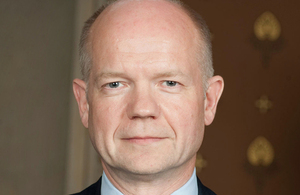
  • William Hague – 2012 Speech on India

    williamhague

    Below is the text of the speech made by William Hague, the then Foreign Secretary, at King’s College in London on 26 January 2012.

    I am very grateful to Lord Duoro and Professor Khilnani for their very kind introduction; and to everyone at King’s College for the great privilege of inaugurating your venerable university’s newest Institute.

    When I travel overseas I am struck by how often the leaders I meet begin our discussions with stories of studying here in Britain. Shared educational experiences create a bond for life. The fact that so many people of other nationalities find the allure of British universities irresistible is a great asset to our nation. It contributes to our economy, to our reputation as an open society and to our cultural influence in the world. Conversely – although this is an impression rather than a hard and fast rule – I have noted that when I visit a country in which we do not traditionally have a close partnership in foreign policy, it is often the case that our educational links are at a low level as well.

    Foreign Policy is not just about international summits and resolutions. It rests on a web of connections, and more so as the twenty-first century goes on, between individuals, families, civil society, companies, and academic institutions like your own. And in order to have successful relations with a country like India we have to have the deepest possible understanding of its culture, its history and politics, its rich traditions and its complex geography. We need a strong awareness of all the factors that contribute to its policies and its relations with the rest of the world, and we must constantly update our assumptions as those factors change over time.

    This is why I have launched a new programme in the Foreign Office called Diplomatic Excellence, which is designed to foster and retain deep cultural knowledge and understanding of other nations among our diplomats, including their language skills. It is a programme which our diplomats have embraced with enthusiasm, and it includes the formation of a new cadre dealing with India and a new diplomatic training programme to deepen our expertise in contemporary India.

    One of the first to take up this programme was our new High Commissioner in India, who had just spent more than two months travelling across the country before taking up his post, to deepen his own understanding of the beautiful and fascinating country he now serves in – and in which I spent my honeymoon.

    So I applaud the thinking behind this Institute as being very much in tune with our own, and hope that the Foreign Office will also benefit from the fresh perspective you will bring to our understanding of India, and that we will be able to draw upon you as a source of expertise.

    We are working hard to champion British education overseas as a Government, including very recently signing an agreement with Brazil, which I visited last week, that will bring 10,000 Brazilian students to study here in Britain over the next four years. They will be joining the 400,000 foreign students who already do so, including 40,000 from India alone – not to mention the many others who are on joint programmes between British and Indian universities. Today British universities are developing closer ties with many first class institutions in India, and are champing at the bit to set up in India themselves once changes to Indian legislation permits them to do so.

    So it really is a promising moment for King’s College to open an Institute devoted to promoting intellectual and practical engagement with contemporary India.

    For this century will be shaped by India more than any other that has come before it.

    Now is the time to study India, to invest in India and to work with India. This applies to all of us; to those of us in Government seeking a stronger foreign policy and economic future for this country; to businesses seeking to expand, and to individuals seeking new opportunities and a deeper understanding of today’s world.

    India is making its mark on the global economy with electrifying skill, innovation and dynamism. It is already one of the largest economies in the world and will soon have the world’s largest population.

    It is leading the way in the development of renewable energy and green technologies.

    It is playing an increasingly important role in the affairs of the world – from tackling piracy off the Horn of Africa to United Nations peacekeeping and development support to Afghanistan.

    It stands as a beacon of successful democratic and economic development, one that many developing nations look to for an example to follow.

    And it enriches our shared culture in innumerable ways – from the prize-winning novels of Aravind Adiga to the sporting prowess of Sachin Tendulkar.

    I was delighted to be able to join the Prime Minister on his trip to India soon after we took office. There was a tangible sense of optimism in the air. People across India are justifiably proud of the direction that their country is taking, and their enthusiasm is infectious. At the same time, the Indian people and their representatives are rightly focused on ensuring that each one of the 1.2 billion Indians shares the benefits of this amazing development story.

    There can be few other countries anywhere in the world that are as genuinely optimistic and positive about India’s success as we are here in Britain.

    India’s success speaks for itself, but nonetheless I spent several years in opposition speaking at the parliamentary despatch box, describing the great and inexorable shift in the international landscape typified by the rise of India and the other emerging powers, and calling for British foreign policy to expand its reach and ambition in response to these changes.

    The rise of India and other nations is good for the people of those countries; it is good for the world; and it brings immense opportunities for a country like Britain that is able to seize them.

    We are at a crucial moment in the global economy, in which nations must adapt and compete successfully or risk falling behind.

    Here in Britain we have every confidence that we will be a nation that adapts and that thrives over the long term. We are reforming our welfare and education system, adopting the most competitive tax system in the G20, and using our foreign policy to plug Britain into the fastest-growing parts of the world economy and to boost exports and investment. This is an enormous challenge and it comes at a time of great economic difficulty, but we have brought all the energy of the Government to bear on these issues.

    It is why, alongside all the effort I devote as Foreign Secretary to global crises and problems, my Department is devoting more effort to supporting the British economy than at any time in our recent history. That means intensifying the relationship with India.
    We are investing far more diplomatic and resource into relations with the other rising economic and political powers, opening six new Embassies and up to seven new Consulates General, and sending more staff to over 20 countries. This is helping us to support British business, but it is also necessary in order to understand an influence the far greater number of centres of decision-making that exist today.

    India is very much at the forefront of our efforts.

    We came into Government seeking a new Special Relationship with India. We see enormous value in the ties between our countries; in our shared values, the living bonds between our citizens, our membership of the Commonwealth and the complementary nature of our economies.

    We want a relationship between India and Britain that is stronger, wider, and deeper.

    We want to be India’s partner of choice in a whole range of areas as it develops its economy, supporting jobs creation and growth in both our countries.

    We have set the target of doubling our trade with India by 2015 compared to 2010 and are making good progress: our exports were up more than 40% last year and India is now our third largest market outside the EU.

    And we also want to see India represented at the top table of international decision-making, working more closely with us and other nations to address global issues.

    That is why we support reform of the UN Security Council and a permanent seat for India. The time has come to make Security Council reform a reality. The institutions that underpin global governance must become more representative if they are to succeed in finding legitimate and sustainable solutions to the challenges of this century. This will not be easy to achieve, but it is essential. And while our countries do not always agree in foreign policy, we have a strong base to build on many shared values and a growing range of common interests that bind us.

    In building this stronger relationship we know, as our Prime Minister has said, that, as he put it, “Britain cannot rely on sentiment or on shared history for a place in India’s future”. It is something that we must work hard to achieve.

    Our Prime Ministers are in regular contact, seven British cabinet Ministers have visited India since May 2010, and I hope to visit again this year.

    We are increasing our frontline staff in India by thirty officers. This is a considerable diplomatic reinforcement.

    We have ambitious plans to open up to eight new British Trade Offices around the country, as part of a strategy to widen our focus beyond Delhi, Mumbai, Chennai, Kolkata and Bangalore.

    And we plan to open new Deputy High Commissions in some of India’s other fast-growing cities.

    We see many benefits for India in this stronger relationship.

    We support the greater international role and voice for India that I have described, at the UN and elsewhere.

    As India’s companies go global, reaching into new markets, the United Kingdom offers the brands, the creativity and the technology that Indian consumers and entrepreneurs want.

    As India develops the skills of its growing workforce, we have the expertise to help.

    We are a springboard into the European Single Market and the leading advocate of EU Free Trade Agreements, including that with India which we hope to see concluded this year.

    We have refocused our long-standing development relationship to focus on attracting pro-poor private investment into the poorest states, on women and girls; and on laying the foundations for an enduring partnership on global issues.

    Through the British Council and their Project English Initiative, and with support from Department for International Development, we have reached 17million learners and are helping train one million English teachers across India.

    And I must also say here a word about immigration. We want the brightest and the best to come to Britain. We have made our immigration system far more efficient and targeted. For too many years it was chaotic. Over the past two years this Government has put a stop to the abuse that had damaged the reputation of our immigration system. But we are clear that if you want to come to Britain legitimately as a student, a business person or a visitor, then you are very welcome in the UK.

    So for all these reasons this new Institute could not have come at a better time.

    I wish the King’s College India Institute and its students every success in the coming years.

    I congratulate Professor Khilnani and all those involved for the foresight and vision behind this project, and I share their great enthusiasm for it.

    It is inspiring to think of all those who will expand our intellectual horizons and cement our ties with India in the years to come by studying here.

    And it is a great pleasure, on India’s Republic Day and the 62nd anniversary of the signing of its Constitution, to express my sense of optimism and excitement about our relations with India and all that lies ahead for the citizens of both our countries, and the firm commitment of Her Majesty’s Government to even closer ties in the years to come and indeed we can hope throughout this century, which is very much India’s to shape.

  • Dominic Grieve – 2012 Speech at London Common Law and Commercial Bar Lecture

    dominicgrieve

    Below is the text of the speech made by Dominic Grieve, the then Attorney General, at the London Common Law and Commercial Bar Lecture on 26 January 2012.

    It is a great pleasure to have been invited here this evening to address such a learned audience. I would like firstly to thank Michael Kent, for inviting me to do so.

    Although the thrust of my lecture is about human rights, I thought it might be helpful to start by explaining something about my role as a Law Officer and how human rights law impacts on and forms a key part of my work. I want then to turn to consider what, from my perspective, are the key challenges facing the Human Rights Act and European Convention on Human Rights and how meeting these challenges requires an understanding of the proper relationship between Strasbourg, our domestic courts and Parliament and their reconciliation.

    Role of the Law Officers

    So I will turn first to the role of the Law Officers. I as Attorney and the Solicitor General as my deputy have three main roles: as Chief Legal Advisers to the Government, as the Government Ministers responsible for the ‘Law Officers Departments’ and finally as guardians of certain public interest functions which include, for example, our role as protectors of charity and of the administration of justice-something which has just lead me to prosecute a juror for contempt of court.

    In terms of the ‘Law Officers’ Departments’, I am responsible for the superintendence of the Crown Prosecution Service, the Serious Fraud Office and Her Majesty’s Crown Prosecution Service Inspectorate. This superintendence role involves supporting the independence of the prosecutors in taking prosecution decisions and means that l am answerable to Parliament for these prosecuting bodies and for negotiating their budgets.

    In carrying out my role as Chief Legal Adviser to the Government, I have a special relationship with the Legal Advisers to Government departments which entitles them to consult me on any matter. Indeed, the Ministerial Code sometimes requires it. Many of the difficult legal issues that policy development gives rise to never come to the Attorney General and the lawyers of the Government Legal Service could be described as the day to day guardians of legality, propriety and indeed, human rights. However, Government lawyers do consult us on legal issues which are particularly difficult or sensitive legally or politically and, often, those issues may involve human rights. The fact that Government lawyers can come to us for advice means that they can discharge a role in their respective departments that reflects ours at their head, not as politicians of course, but as Civil Servants who are also independent professionals.

    From this position they advise Ministers on the legality of what they want to do, working up solutions when what is proposed collides with the constraints imposed by, say, the Human Rights Act, or EU law.

    Unlike civil servants, the Law Officers are also of course politicians and members of the Government. Although I am not a member of Cabinet, I will attend when my advice is required or when matters within my responsibility come up for consideration. I will also attend Cabinet committees if my presence is needed in order to give legal advice or to understand policy issues on which my advice is likely to be required.

    The role and human rights

    Although as a matter of Convention, we do not disclose whether the Law Officers have advised on a particular issue or not, it is clear from the fact that the Human Rights Act 1998 has implications for a whole range of government policies that human rights issues are never far from my mind or that of government lawyers more generally. Indeed, it can be no secret that I am regularly asked to advise on whether particular policy proposals are compatible with one Convention right or another.

    In addition, the Law Officers have a specific role in ensuring that human rights implications of proposed primary legislation are given careful consideration. This role is not always well known by those outside Government so I will explain it a little further.

    As Law Officers, both I and the Advocate General for Scotland, the Liberal Democrat peer Jim Wallace, are members of the Cabinet Committee on Parliamentary Business and Legislation. The main function of this Committee is to consider the readiness of Government Bills and to authorise their introduction.

    As a part of this process every department is required to produce a memorandum containing a full and frank legal analysis of the strengths and weaknesses of the human rights issues raised in the Bill and an indication of whether the Minister in charge of the Bill can make a statement that in his or her view the provisions of the Bill are compatible with the Convention rights as required by section 19 of the Human Rights Act.

    Either the Solicitor General or I read all these memoranda to satisfy ourselves and provide assurance to the Committee that the department has adequately demonstrated its human rights reasoning. This oversight role has given us a very good insight into how the Human Right Act operates and, indeed, shapes Government policy before it becomes law.

    In this respect, I think it is worth pausing here to consider how the Human Rights Act has affected the basic model of English law. According to Dicey, the Vinerian Professor of English Law at Oxford in the late 19th century, a key tenet of the rule of law is that no man is punishable or can suffer any detriment save for a distinct breach of law established in the ordinary legal manner before the ordinary courts of the land. In other words, a person can do anything he wants as long as it is not against the law. Although this still holds true, section 6 of the Human Rights Act makes it unlawful for public authorities to act in a way which is incompatible with a Convention right.

    The types of judgment that have to be made in determining whether a particular act is compatible with a Convention right may make it very difficult to explain clearly what a public authority can do and what it can’t. Sometimes it will be obvious that the European Convention prevents a particular approach. But quite often the judgment will be fact specific, for example, in respect of a decision about whether to disclose personal information to another body or individual. It may also involve the law and lawyers entering territory which might previously have been left entirely to Politicians in the executive and to Parliament.

    Take the case of Mr Gleaves and Mr Grant, two prisoners who brought test cases against the Ministry of Justice, on which the High Court gave judgment last month.

    The claimants alleged that the fact that they were housed in a single cell with no in-cell sanitation was a breach of their Article 3 and Article 8 Convention rights.

    An electronic system was in operation to enable them to leave their cell to access a lavatory. However, this did not always enable prisoners to leave their cells promptly for this purpose. Mr Justice Hickinbottom, who decided the claims, accepted that on occasion a prisoner might be forced to rely on the bucket in their cell. The question was whether that amounted to inhuman and degrading treatment contrary to Article 3 or a breach of their right to respect for their private life contrary to Article 8. Mr Justice Hickinbottom decided that it did not. However, if he had found otherwise, the prison service could have been forced to spend significant amounts of money building new cells and modifying old ones given that each cell would not have been big enough to house a lavatory. This would no doubt have been at the expense of other worthy projects and programmes.

    I don’t seek to suggest that prison accommodation should not be required to comply with some basic standards or that the court should not have had jurisdiction to decide this case, but I simply seek to highlight that the nature of the judgments which must be made in some human rights cases can be intensely political and may stray into what Lord Justice Laws has previously described as areas of ‘macro-policy’.

    Lord Sumption in his impressive F.A. Mann Lecture last year described the way in which the Human Rights Act ‘has significantly shifted the boundaries between political and legal decision-making.’ He explained that when judges make decisions involving qualified Convention rights, the determinations almost always involve striking a difficult balance between competing public interests, which is an inherently political exercise.

    Although by enacting the Human Rights Act Parliament has sanctioned the courts to make these decisions, he concludes that there is no denying that ‘it removes important areas of policy from the domain of democratic accountability.’

    Equally, there is no doubt that there are many examples of the Human Rights Act helping to improve the way that public authorities make decisions. For example, few could disagree with the outcomes of cases such as R v East Sussex County Council which overturned a ban on manual lifting of severely disabled patients which had been imposed solely with regard to rules for the health and safety of carers and without sufficient thought as to its impact on the disabled people they were serving. The court did not seek to interfere with the balance the local authority might ultimately decide to strike between these competing interests but it did ensure that both interests were properly taken into account by the local authority in formulating its policy.

    It is true that in judicial review cases the courts may also become involved in areas of macro-policy but the common law limits of judicial review mean that there is at least some recognition that it is for the policy maker to make the initial decision. In areas where the law provides the policy maker with a discretion, the elected decision maker may opt for one of a range of permissible approaches and the common law principles of judicial review recognise that their choice should normally be respected by the courts in a democratic state. The Human Rights Act does not, on its face, recognise the same limitations.

    It seems to me that this explains to a large extent why human rights law remains almost constantly in the news. Almost every week sees a new judgment from the Supreme Court or a decision of the European Court of Human Rights in Strasbourg. There are frequent calls to scrap the Convention and there is a current debate about the repeal of the Human Rights Act.

    There is also a great deal of polemic on how the Convention works in practice to affect our lives -a subject that appears to often generate rather more heat than light.

    In order to try and introduce a little more light than heat the Government has taken two initiatives. On 7 November the United Kingdom took over the Chairmanship of the Committee of Ministers, the governing body of the Council of Europe which is the international organisation through which the Convention was adopted. The UK Chairmanship is a once in a generation opportunity to drive forward reform of the European Court of Human Rights. We want to help the court deal with its backlog of cases to ensure that serious breaches of Convention rights are handled speedily and to help the Court to focus on those cases that genuinely need to be addressed at Council of Europe level.

    Furthermore in March the Government established a Commission to investigate the creation of a UK Bill of Rights. The Commission on a UK Bill of Rights provides us with the first proper opportunity since the passage of the Human Rights Act to consider how we should best enshrine the Convention rights in UK law and follows much academic debate on the subject which I shall touch on later in this talk.

    Court reform

    In addressing the topic of court reform in Strasbourg I want to stress at the outset that there is no question of us withdrawing from the European Convention of Human Rights or the jurisdiction of the European Court of Human Rights as some critics of the Convention have advocated. The Government believes that both the court and the Convention are an essential part of the system for protecting human rights across Europe.

    Reform however is necessary. At present the court is drowning under the volume of work that its presence has generated. To get an idea of the scale of this, in the first 40 years of its existence, 45,000 cases were presented to the court. This contrasts with last year when 61,300 applications were made to it. This has led to a huge backlog of cases, amounting to more than 160,000 at its peak. And although steps have been taken to reduce that backlog by extra resources to filter out the hopeless cases it means that those remaining will need more detailed scrutiny and very lengthy time delays still exist. The latest figures from the Court Registry tell us that the average waiting time between a case being received by the court and it being communicated to the relevant Government is 37 months. On average it then takes a further 17 months to get judgment in Committee cases and this figure rises to 25 months in Chamber cases. The Court has 3,100 applications pending that were lodged before 2005, 400 of which have yet to be communicated to the relevant Government.

    Not surprisingly therefore the United Kingdom is not alone in its concern. There is unanimous agreement across all the 47 member states that reform is needed and the process is already underway and we want to build on the measures adopted by the Council of Europe at the Interlaken and Izmir Conferences in the past two years during our Chairmanship of the Committee of Ministers.

    Following interim advice from the Commission on a UK Bill of Rights, we have now made clear what our objectives during the Chairmanship will be. In particular, we want to help the Court deal with the backlog of applications. The Court has already made significant progress by developing new, more efficient working methods and prioritising cases more effectively. But further improvements are needed and that’s what we want to support. We are keen to look again at the admissibility criteria to ensure that the Court can focus on those serious cases which genuinely need to be dealt with at supra national level.

    We also want to improve the procedures for the selection of well-qualified judges to the Court.

    Our period of chairmanship only lasts for 6 months and therefore these are certainly ambitious objectives. However, the prize is an important one – a court which is able to focus on handling the most important cases more quickly, efficiently and transparently. It is therefore my sincere hope that with the help and assistance of the other 47 member states we will be successful in delivering the reforms the Court so badly needs. I and my ministerial colleagues have been investing a lot of effort consulting and lobbying other member states. The Prime Minister made a speech to the Parliamentary Assembly of the Council of Europe yesterday, as I did earlier in the summer.

    The Foreign Secretary, William Hague, the Minister of Europe, David Lidington, and the Lord Chancellor, Ken Clarke, have both been out to Strasbourg and to various European capitals to explain and build support for the proposals along with other Ministers. We are also engaging with the technical working groups at official level on the proposals. We have made some progress but there is a long way to go. But we are ready to put in the necessary effort.

    The reforms I have mentioned so far are primarily procedural. But I want to say more about one other idea which I believe can both help reduce the backlog of cases and will also allow the Court to assume its proper role as the guardian of the Convention – that is, strengthening the principle of subsidiarity.

    Subsidiarity has a specific meaning in the context of the Convention. The principle of subsidiarity is that the national authorities of Member States (that is, their governments, legislatures and courts) have the primary responsibility for guaranteeing and protecting human rights at a national level and the European Court of Human Rights has a subsidiary role in supervising the protection of Convention rights. The principle of subsidiarity recognises the fact that, as I was saying earlier, the Court is at times having to make intensely political judgments and the balance to be struck between competing interests should often be decided at a local level. As Lord Sumption has said ‘rights are necessarily claims against the claimant’s own community, and in a democracy they depend for their legitimacy on a measure of recognition by that community.’

    It helps to ensure that proper account is being taken of democratic decisions by national parliaments – a concern which has arisen most forcefully in the prisoner voting debate – and that the views of the national courts who will have considered the issue prior to it reaching Strasbourg are also accorded due respect.

    This principle of subsidiarity is well established and has been recognised by the Council of Europe in both the Interlaken and Izmir Declarations on reform of the Court as well as in the case-law of the Strasbourg court.

    The United Kingdom agrees that this should be the guiding principle governing the relationship between our national courts and the European Court of Human Rights. Of course the United Kingdom must still be subject to the judgments of the Strasbourg Court but the Court should not normally need to intervene in cases that have already been properly considered by the national courts applying the Convention.

    One way of strengthening the principle of subsidiarity is for the Court to afford Member States a wide margin of appreciation where national parliaments have implemented Convention rights and where national courts have properly assessed the compatibility of that implementation with the Convention.

    During our Chairmanship we will work with Member States of the Council of Europe to see how this agreed guiding principle of subsidiary can be strengthened. However, it is important to note that the corollary of this principle is that there should be effective systems in place to protect the Convention rights at the national level – which neatly leads me on to the second challenge I said was facing us today.

    Human Rights Act

    How best should we enshrine the Convention into the law of the United Kingdom? This is the question the Government has asked of the Commission on a UK Bill of Rights.

    To be precise the terms of reference are to:

    … investigate the creation of a UK Bill of Rights that incorporates and builds on all our obligations under the European Convention on Human Rights, ensures that these rights continue to be enshrined in UK law, and protects and extend our liberties. It will examine the operation and implementation of these obligations, and consider ways to promote a better understanding of the true scope of these obligations and liberties.

    The Commission is due to report by the end of the year and I am looking forward to its conclusions and recommendations. However, we should not underestimate the difficulty of the task facing the Commission and I think it would be helpful to set out some thoughts about the Human Rights Act and what it means for the relationship between our domestic courts and Parliament and the domestic courts and Strasbourg.

    First, we need to be clear about what the Human Rights Act does. The Human Rights Act is not synonymous with the Convention. Nor is it some sacred tablet of stone. It is simply the method by which the United Kingdom has chosen to incorporate the Convention into our domestic law. The Government has asked the Commission to investigate the case for replacing the Act with a UK Bill of Rights which will ensure that the Convention rights continue to be enshrined in UK law.

    The Government is not intending to limit or erode the application of any of the rights and freedoms in the Convention. However, as with the question of court reform, deciding how best to incorporate the Convention into UK law requires an understanding of the nature of some of the judgments which have to be made in human rights cases and the fact that where there is a balance to be struck between competing rights, there may be more than one permissible answer.
    This was recently recognised by the Court of Appeal in the case of PE (Peru) v the Home Office where the Court accepted that whether a person’s deportation was proportionate or disproportionate for the purposes of Article 8 was a question of judgment and that the courts and tribunals were essentially carrying out an evaluative exercise. In some deportation cases, the only permissible finding would be that deportation was proportionate. In others, the only option would be a finding that it was disproportionate. However, there would be cases where either finding was permissible and could not be appealed against. In other words, the court considered that it should defer to the views of the first tier tribunal when it came to look at these cases on appeal.

    Jonathan Sumption appeared to go further than this in his F.A. Mann lecture when he said that there needs to be some separation between the determination of a policy’s lawfulness and an assessment of its merits.

    In his view, this requires a measure of restraint on the part of the judges which involves deference not to ministers but ‘to the constitutional separation of powers which has made the minister the decision-maker’ and not the judge.

    The principle of deference supports the Home Secretary’s decision to give a greater steer to judges on where Parliament considers the balance should be struck in cases involving the deportation of foreign criminals where Article 8 of the Convention protects the right to a private and family life but may be moderated in the public interest. The Government is entitled to say that the domestic courts have placed too much weight on the family rights of foreign criminals and to redress the balance in the Immigration Rules by ensuring that they more fully reflect the compelling public interest in the maintenance of an effective immigration control in respect of those who have committed criminal offences.

    Parliament, before whom these changes to the Immigration Rules will be laid, is best placed to decide on difficult policy questions such as where the balance should be struck in relation to the deportation of foreign criminals. In changing the rules we will respect the jurisprudence of the Strasbourg court and reflect the margin of appreciation that the European Court of Human Rights has correctly afforded to Member States in coming to such decisions.

    Indeed, my work as a Law Officer has shown me how difficult policy-making has become. Courts are increasingly being asked to make judgments under the Human Rights Act which would previously have been considered to be questions of pure policy and it can be very difficult for the policy maker to second guess whether a particular policy will, in the end, be found to be compatible with the Convention. This level of uncertainty can, as we all know, lead to significant amounts of litigation, sometimes at great cost to the public purse.

    To deal with this problem, I have explained how we need to clarify how the Strasbourg Courts should view the judgments of our domestic courts and how the domestic courts should take into account the balance struck by Parliament and Ministers on human rights issues. Before I end, I also want to say something about the way in which the domestic courts may view the judgments coming down from Strasbourg.

    Section 2 provides that national courts determining a question which has arisen in connection with a Convention right must take into account any judgment of the European Court of Human Rights in so far as, in the opinion of the court, it is relevant to the proceedings in which that question has arisen.

    Although as a matter of international law, Strasbourg judgments against the UK are binding on us, domestically British courts are not bound to follow the jurisprudence of the Strasbourg court when considering other cases. They must take it into account. But what does that mean in practical terms? We must turn to Lord Bingham’s judgment in Ullah v Special Adjudicator in 2004 and I quote:

    “The House is required by section 2(1) of the Human Rights Act 1998 to take into account any relevant Strasbourg case law. While such case law is not strictly binding, it has been held that courts should, in the absence of some special circumstances, follow any clear and constant jurisprudence of the Strasbourg court … This reflects the fact that the Convention is an international instrument, the correct interpretation of which can be authoritatively expounded only by the Strasbourg court.

    From this it follows that a national court subject to a duty such as that imposed by section 2 should not without strong reason dilute or weaken the effect of the Strasbourg case law. It is indeed unlawful under section 6 of the 1998 Act for a public authority, including a court, to act in a way which is incompatible with a Convention right. It is of course open to member states to provide for rights more generous than those guaranteed by the Convention, but such provision should not be the product of interpretation of the Convention by national courts, since the meaning of the Convention should be uniform throughout the states party to it. The duty of national courts is to keep pace with the Strasbourg jurisprudence as it evolves over time: no more, but certainly no less”.

    Interestingly however, Lord Irvine of Lairg made it very clear last month in his lecture ‘A British Interpretation of Convention Rights’, that he did not consider that this was the intention of Parliament when it enacted the Human Rights Act. In his view, section 2 means that the courts must take account of the Strasbourg jurisprudence but they are not bound by it. Indeed, an amendment to the Human Rights Act when it was going through Parliament to the effect that the courts were bound by the Strasbourg case law was expressly rejected by Parliament as I well remember from my participation in the debates at the time.

    An interpretation of section 2 which recognises that the national courts are not always bound by Strasbourg jurisprudence and may disagree with Strasbourg in at least some circumstances is necessary if we are to fully take into account the principle of subsidiarity.

    The key question is whether domestic courts – and the Supreme Court in particular – should be allowed to differ from Strasbourg where they consider that they are better placed to understand the impact of Convention rights in the UK and thus enter into a productive dialogue with the Strasbourg court?

    This issue has been the subject of growing discussion amongst the judiciary and academics. Lord Hoffman raised it in his lecture to the Judicial Studies Board in March 2009 as did Lady Justice Arden in her Thomas More lecture here two years ago. The Lord Chief Justice also discussed the point in his evidence to the Lords Constitutional Committee last year. In the case of Horncastle, the Supreme Court considered whether legislation which allowed for the admission of evidence of an absent witness at a criminal trial will result in an unfair trial.

    In doing so the Court had, by virtue of section 2 of the Human Rights Act, to take into account the Strasbourg decision in Al-Khawaja and Tahery v United Kingdom which had found that convictions based solely or decisively on hearsay evidence of an absent witness, whom the accused had no opportunity to examine, were incompatible with the right to a fair trial under Article 6 of the Convention. However, the Supreme Court declined to follow the Strasbourg decision, on this rare occasion, as it had concerns about whether the European Court had sufficiently appreciated or accommodated particular aspects of the UK trial process. The Supreme Court was entering precisely into a valuable dialogue with Strasbourg where the Grand Chamber has now reconsidered the matter, deciding that a conviction based solely or decisively on hearsay evidence of an absent witness would not automatically breach Article 6.

    Judge Bratza, in his concurring opinion in the Grand Chamber, described this as ‘a good example of the judicial dialogue between national courts and the European Court on the application of the Convention’. Whilst the Grand Chamber was not able to accept all the criticism of the European Court’s previous judgment, in his view, it has now addressed what appears to be one of the central problems identified by the Supreme Court, namely the inflexible application of the ‘sole or decisive test’. He explains that the Grand Chamber not only took into account the views of the Supreme Court but also re-examined the safeguards in the relevant legislation which are designed to ensure the fairness of the criminal trial.

    We would therefore benefit from better definition of the very important relationship between the national courts and Strasbourg. Had we wished, in 1998 the UK could have made it clear that the national courts must follow the jurisprudence of the international court and allowed the courts to strike down primary legislation. We specifically chose not to do so.

    If the current system is not working we could positively provide for a right of rebuttal, as Lady Justice Arden put it in her Thomas More Lecture, which allows the Supreme Court here or in another member state to be able to say to the Strasbourg court that it has not made the principle clear, or that it has not applied the principle consistently, or that is has misunderstood national law or the impact of its decisions on the UK legal system.

    This it seems to me is an area which needs further thought and I will not attempt to provide a complete solution here tonight. It is for the Commission to consider the position and reach its conclusions first.

    Whatever one thinks about the success or failure of the Act in incorporating the Convention into UK law, it must be recognised that it is a complex piece of legislation. This complexity arises from its attempt to deal with a number of fundamental constitutional relationships – between the national courts and Strasbourg; between the national courts and Parliament as well as the relationship between the executive and Parliament.

    There is I believe a unique opportunity during the time of our Chairmanship of the Committee of Ministers and with the Commission for a UK Bill of Rights now considering these issues, for us to ensure that these relationships are examined and perhaps better defined.

    I hope we will be able to have a reasoned and accurate debate about the challenges posed by the European Court of Human Rights and the operation of the Human Rights Act to our democratic institutions as well as a proper appreciation and recognition of its undoubted benefits.

    It is important also that we include the general public in this debate to ensure that they too understand the benefits of the Convention and its influence on their lives. The public do not always see the way in which human rights help to ensure structure and rigour in policy making. For example, the Human Rights Act may lead a lawyer in Government to ask an official to gather more evidence for the proposed policy approach or to give a person the opportunity to be heard before a particular decision is made. It is this aspect of the Human Rights Act which may largely go unnoticed by the public but which can bring real benefits to them.

    Acceptance of human rights will always be controversial because of the fact that certain fundamental rights are universal and should apply to everyone, whatever they may have done and whether or not they themselves have shown respect for the human rights of others. Nevertheless, there can be debate about how far those fundamental rights extend and in setting those limits we must properly recognise the role of Parliament and elected politicians as well as the courts. If we do that, I am confident that we will be able to achieve consensus both at home and throughout Europe on a flexible framework of human rights which can meet the challenges ahead and continue the essential promotion of human rights for both ourselves and future generations.

  • Justine Greening – 2016 Speech at the Education World Forum

    justinegreening

    Below is the text of the speech made by Justine Greening, the Secretary of State for International Development, at the Education World Forum in London on 18 January 2016.

    Introduction

    I’m delighted to be here with you this evening, to discuss education priorities for the next generation. It is fantastic to see so many countries represented here at this conference.

    When I was attending my local comprehensive school in Rotherham, I never thought I would one day find myself talking to the Education World Forum as the UK’s Secretary of State for International Development.

    I know that I wouldn’t be here today if it wasn’t for my school – and particularly those amazing teachers who supported me to learn and then inspired me to achieve my dreams.

    I still remember, in particular, my French teacher and what was great about him as a teacher, was that he would make learning fun but you would always come away with clear points learnt. 10 years later I still remembered a lot of what he taught me – and one of the real tests of education is not just what you remember at the end of the year, but what is still with you a decade later. Teachers also give the opportunity for us to learn important values and provide us with the space to develop our own style and be creative.

    These teachers transformed my life and prospects – and, I’m sure, many of you looking back on your schooldays would feel the same way. Everyone starts school a rough diamond – our teachers are like jewellers who polish us and make us the best and brightest we can be.

    For me, this is why education matters, to realise your potential and ultimately be able to choose the life you want and have a chance to put dreams into action.

    And that’s why this Forum matters – it’s a moment to come together and a chance for us to reflect on the progress that is being made – but also on the challenges that remain. This gives the opportunity to take stock, reflect and understand the perspective in order to develop a strategy, and also to share experience of what works and doesn’t work.

    The challenge

    In my role as Secretary of State at DFID, we really have seen tremendous progress. The world has made dramatic and unprecedented progress – helping more and more children go to school, since the Millennium Development Goals were agreed 15 years ago. A whole generation received an education that was denied to their parents and their grandparents. The education goals are some of the most important within the Global Goals.

    The North Nigerian Chibok girls exemplify the importance of education. They had managed to complete primary and secondary school already and were denied the opportunity to progress.

    So we cannot rest on our laurels.

    In September, the world signed up to the new SDG Four for providing a quality education for every child by 2030 and ensuring that all girls and boys have access to quality early childhood development as well.

    This is the right ambition at the same time – as we know – it is not going to be easy. There is a huge challenge ahead.

    My teachers, and many of your teachers, were fantastic but there are still millions of children around the world without teachers, without a classroom, without so much as a textbook.

    It is an issue of quantity. 124 million children and adolescents are out of school, rough diamonds. This means we may never see what they could’ve been and what they might’ve achieved.

    It is also an issue of quality. And many more are in school but without basic skills. At least 250 million children of primary school-age cannot read and write – even after some of them have spent 4 years in school. The issue of quality is so important.

    We know girls around the world are still less likely to attend school than their brothers. There is an unseen army of girls.

    Some of these girls come under pressure to take on the burden of domestic work in their homes. Some of them are taken out of the classroom to undergo FGM (Female Genital Mutilation) or child marriage and never return… Still more out of school because of their country being in conflict situations.

    Either way, all of these girls are losing out on an education and losing out on the life and future they might have chosen for themselves. This is why it has been a focus for DFID for a number of years and also why the UK has a vital role around the world.

    Some children are being denied an education because of where they are – such as the 37 million children out of school in crisis-affected countries. I have just returned from Lebanon and Jordan where I met Syrian refugee children who are in school.

    In my recent visit it showed that by working together with the Jordan Minister we can achieve great things. I also had an excellent meeting with the Lebanese Minister. We are hugely supportive of their aim to get every Syrian child into education.

    DFID’s work

    All of this is why, for my Department, education is an absolutely core part of what we do.

    The UK has helped 11 million children get a decent education in the last five years, training 190,000 teachers, building classrooms and ensuring the poorest girls and boys have school bursaries and textbooks. And we’re going to keep on doing all of that work – we’ve committed to help 11 million girls and boys gain a decent education by 2020.

    It is important that we focus on those that are most likely not to be in school. The hardest to reach children – particularly girls and children in crisis affected countries – are, and will continue to be, a huge focus of our work. We are working in Democratic Republic of Congo to try and encourage this.

    Educating children in emergencies is, of course, an urgent, global challenge.

    And the UK has allocated £115 million to provide protection, psychosocial support and education for children affected by the crisis in Syria and the region.

    And this year there will be two key moments for the world to rise to this challenge.

    One is, at the London conference on the Syria crisis next month, where we are proposing that the Conference agrees the ambitious goal that all refugee children from Syria and host country children are in education by the end of the 2016/2017 academic year. I hope the whole international community can get behind this vital commitment. There will be no future for Syria if we do not invest in its young generation now.

    We all have choices about how we want to educate our children and want them to grow up with a chance to fulfil their potential. We must look to focus on those out-of-school and about ensuring they are able to go back and rebuild. You have to realise they feel cheated out of education.

    And secondly, beyond Syria, the World Humanitarian Summit in May is another crucial moment for us all to commit to a better international model for schooling the millions of children affected by conflict and disaster.

    Through education, we can also help protect children and young people from the dangers of extremism by teaching tolerance, freedom of religion or belief, and global citizenship.

    Conclusion

    Investing in education is to invest in a country’s potential and future. This is important because a country’s best asset is its people.

    Ultimately, if we get this right, we are building better, safer futures for all children around the world

    You all have amazing jobs – roles that will shape children’s’ futures. I believe a countries biggest asset is its people.

    For me education is about about freedom, it’s the way you become yourself, the best version you can be and it’s about choice – being able to choose the future you want and there is nothing more important.

    Thank you – and enjoy your evening.

  • Nick Gibb – 2016 Speech on School Leadership

    nickgibb

    Below is the text of the speech made by Nick Gibb, the Minister of State for Schools, at The Key in London on 26 January 2016.

    Can I start by saying thank you for inviting me to visit The Key and discuss school leadership with you today? In just 8 years you have grown to become a fixture in the English education ecosystem, and I am a great admirer of the guidance and support you offer to school leaders.

    I am all too aware that a government cannot drive up school standards alone. What government can do is set the conditions in which schools are able to improve themselves. That is why heads are so central to our vision of a school-led system, and why I want to talk about school leadership today.

    In his memoirs about his own school days, Winston Churchill recalled his old master Dr Welldon, and observed that: “Headmasters have powers at their disposal with which Prime Ministers have never yet been invested.” And that was before the current era of unprecedented school autonomy.

    Compared with 2010, all headteachers have more power to exclude pupils whose behaviour disrupts the education of those around them, more power to move on teachers who do not meet their expectations of quality teaching, and more power to determine how teacher pay should relate to performance.

    In addition, headteachers no longer have to complete self-evaluation forms, submit annual absence and performance targets to local authorities, or instruct their teachers to teach in a particular style – and produce written lesson plans – simply to please Ofsted inspectors.

    We have got rid of 10 different data collections for schools since 2010, such as ‘making good progress’ and ‘standards fund monitoring’, and we have removed 21,000 pages of unnecessary school guidance, reducing the volume by 75%, and centralising all that remains in one place on the GOV.UK website.

    For headteachers who lead academies the freedoms are more extensive still. They have more control over their funding, the ability to change term times and the school day, greater freedom over their curriculum, and the freedom to choose where to go to get the best services, such as behaviour support and school improvement – or indeed to provide such services in collaboration with other academies.

    But, more importantly, the academies programme has been driven by the fact that, like the lotus fruit in The Odyssey, once headteachers taste school autonomy there is no going back.

    We have been guided in this policy by the international evidence that high levels of school autonomy, coupled with strong accountability and excellent leadership, are consistent features of the top-performing education systems. Conversely, there is nothing more deflating than being responsible for an organisation over which you do not have adequate control.

    A great privilege of having served as Schools Minister in 2 successive governments has been meeting inspiring headteachers. In particular, I have been deeply impressed by those heads who have grasped the opportunities offered by today’s era of school autonomy to make a clean break with the current orthodoxies of how schools should be run, and plough their own furrow.

    It is a remarkable fact that the best non-selective state secondary school in the country today, according to the 5 A*-to-C measure, is not situated in a middle-class suburb, or a pleasant rural town. Instead, it is situated in one of the most disadvantaged London wards for child poverty, and 41% of the school’s pupils are eligible for free school meals – almost 3 times the national average.

    Yet at this school, King Solomon Academy, 95% of pupils gained 5 good GCSEs in 2015, and 77% of pupils passed the EBacc, an achievement which would have been branded fanciful at the time of their opening in 2009. In that year, King Solomon Academy was founded by Max Haimendorf as a ‘new academy’, and from its inception it used academy freedoms to break from the orthodoxies of English state-schooling.

    The behaviour and ethos of King Solomon Academy is explicitly modelled on the strict ‘no excuses’ approach of American charter schools, but coupled with a deep concern for the well-being of the pupils – tough love, some may say. In addition, the curriculum focused on depth before breadth. Their inspirational mathematics teacher Bruno Reddy ensured that every pupil mastered their number bonds and times tables to the point of instant recall, as a prerequisite for further teaching.

    As our free school and academy reforms mature, I am certain that we will see more and more brave and free-thinking school leaders, such as Max, whose pupils achieve previously inconceivable feats under their charge.

    Ever since she burst onto the public stage in 2010, I have been a great admirer of Katharine Birbalsingh. She is currently running a free school in Wembley which shows an admirable disregard for the way in which English schools are normally operated. At her school, desks are always in rows, there are no graded lesson observations of teachers, and pupils memorise subject content for weekly tests. And, if visitors to the school do not like what they see, Katharine says ‘tough’ – they must reserve judgement until the school’s first set of GCSE results in 3 years’ time.

    However, we can’t have a school system defined by a handful of exceptional individuals. For there to be a real step change in the life chances of pupils throughout the country, we need school leadership to show strength in depth in all parts of the country.

    And to ensure that heads are the best they can be, there is a role for the government to play. Over the past 6 years, our reforms have focused on building the networks of collaboration and support which will allow best practice to spread to most schools.

    The National Professional Qualifications are now delivered by schools and other providers, allowing aspirant heads to train on the ground with serving headteachers. Some of our leading teaching schools and MATs have embraced this opportunity to create new leadership development organisations, such as Inspiring Leaders, Taudheedul Education and Cabot Learning Federation.

    We have funded other targeted programmes to develop excellent leaders for challenging schools, such as High Potential Senior Leaders, currently delivered by Future Leaders, and High Potential Middle Leaders, currently delivered by Teaching Leaders.

    Programmes such as these act as a pipeline for young, aspirant heads who want to gain leadership responsibility, and are keen to do so in those schools that need them most. So far, High Potential Senior Leaders has provided training to 667 assistant and deputy headteachers, helping them to secure and excel in their first headship position.

    In addition, we are encouraging more of the best school leaders in the country to become national leaders of education (NLEs), with a stated purpose of improving education provision beyond their own school. As of January 2016, there are over 1,000 NLEs and more than 370 national leaders of governance.

    For bright and ambitious young graduates, a career in teaching now offers rapid advancement opportunities to rival any other profession. If our schools are to improve across the board, our education system needs to reward hard work and ambition, not just time served.

    And career advancement for teachers does not end with headship. The challenges of running a multi-academy trust demand a whole different set of abilities compared to headship, but equally should offer an exciting new avenue for our brightest and best in the profession to continue progressing throughout their careers.

    This government will have achieved its aims, if, in the years to come, teaching has become established as one of the most exciting, rewarding and fulfilling professions available to young people.

    We are aware, however, that even the best headteachers are not superhuman. That is where organisations such as The Key serve a clear purpose. Running a school is a demanding and complex process, and the help that The Key offers in all areas, from planning a budget for the coming year, to risk-assessing a school trip, is invaluable.

    The Key also offers help in school improvement, school curriculum and classroom teaching. Here, I would encourage your organisation, and all other organisations involved in the same field, to be as discerning and rigorous as possible in deciding what to promote as ‘good practice’.

    I will give an example of how it can be done badly. In a report last year, a highly influential international thinktank examined ‘Schools for 21st-Century Learners’, promoting to schools approaches such as ‘authentic learning’ and ‘technology-rich environments’.

    In a passage on ‘inquiry learning’, this report cited a case study of a secondary school in the north west of England where pupils work for 1 day a week on research projects; where they were free to pursue their own interests with teachers simply acting as ‘facilitators’.

    On reading this case study, I decided to investigate how well the school in question actually performs. It turns out that for the past 2 years, over half the pupils have not achieved 5 GCSEs graded A* to C including English and maths, and in 2013 the school was graded ‘requires improvement’ by Ofsted.

    Why on earth, I ask myself, would an organisation which is geared towards improving educational outcomes profile a struggling school with unimpressive examination results as an exemplar? The only answer I can reach is that for many in education, a preference for child-centred teaching methods is still allowed to trump actual evidence of failure and success.

    I am confident that the education sector is moving towards becoming a mature profession, where evidence is finally allowed to trump orthodoxy and dogma. To speed this process along, it is the responsibility of all organisations involved in helping headteachers with school improvement to be absolutely rigorous in scrutinising the methods and approaches they promote.

    Whether promoting the merits of project work or direct instruction, synthetic phonics or whole word, a knowledge-based curriculum or a thematic curriculum, educators must ask themselves, “Do I wish this to be true, or do I know this to be true?”.

    In England, we have some truly astonishing schools which achieve great results against the odds, and the number of such schools is growing with every year. We should not be looking to struggling schools where half of the pupils do not meet the minimum expected standard for inspiration.

    So my challenge to The Key, and any organisation of a similar nature, is to ask yourselves whether you are comforting schools by reflecting current orthodoxies, or challenging schools to improve by promoting approaches which have been proven to work.

    I look forward to answering your questions.

  • Claire Perry – 2016 Speech on Train Tickets

    claireperry

    Below is the text of the speech made by Claire Perry, the Parliamentary Under Secretary of State for Transport, at the Transport Ticketing and Passenger Information Conference 2016, Old Billingsgate Market, London on 26 January 2016.

    Introduction

    Good morning.

    I jumped at the chance to speak today (26 January 2016) at the seventh Transport Ticketing and Passenger Information Conference. Because although transport ticketing has come a long way in 7 years, the impressive technology on display here today shows how much more can be delivered. And I think we are at a tipping point of improvement and innovation, where government can help but private transport operators can drive forward and deliver the changes.

    So this morning I would like to give you a refreshed government perspective on transport ticketing. To set out what has already been achieved. But also to set out a direction of travel for the future.

    How far we have come

    The great news from recent years is just how far smart ticketing has spread outside London.

    While London still leads in the number of journeys made using smart tickets, the regions are catching up.

    Britain’s 5 biggest bus operators have just announced their plan to introduce contactless payments on all their 32,000 buses operating outside London by 2022. And next month, customers with a smart card registered account travelling on Essex’s C2C rail services who suffer a delayed journey, even for only a few minutes, will receive compensation automatically.

    While rail customers in the Midlands and the north can now download tickets directly to their mobile phones and have them scanned on-board and at the station gatelines. I saw the system in action last July and was really impressed — a simple and quick digital ticketing system planned and introduced by the rail industry working together. It’s fitting that the north of England, the birthplace of the modern railway and a place where the first Edmondson railway ticket was issued is once again pioneering the future of ticketing.

    That pioneering spirit is one reason why in the Spending Review we committed £150 million to support Transport for the North — a new partnership of the northern city authorities, government and national transport agencies who are together working on a plan to bring a single smart ticketing and travel information system to the north of England, making travel by rail, bus, Metro and tram as simple and convenient as possible.

    Making rail journeys better

    So there’s a huge amount happening across all forms of transport.

    But as Rail Minister, my primary focus is on making rail journeys better. It’s no easy responsibility.

    For decades, successive governments have failed to spend the amount of money needed to support the demands we are placing on our railway network. Since privatisation, passenger journeys have more than doubled, and customers rightly expect a good journey for what they are paying.

    But by 2009, the World Economic Forum ranked the quality of Britain’s railways as 21st in the world. Far behind Germany at 5th and France at 4th, and even one place behind India. That is completely unacceptable.

    Rail is not some heritage “has been”, but a vital, fast and clean part of a 21st century transport landscape. So since 2010, we have begun a massive programme of rail investment: committing over £38 billion to improve our railways — and that sum does not include the vast bulk of HS2 spending.

    We are building new stations, and refurbishing old ones like Reading, Manchester Victoria, Birmingham New Street and London Bridge. Laying new tracks. Electrifying more than 850 miles of the network. And bringing thousands of new train carriages into service.

    Since 2013, we have also had a fresh approach to franchising. Rather than assessing franchise bids purely on the basis of the best possible price, we also take into account quality of service for rail customers. So any operator who wants to run a rail franchise in this country must show how over the lifetime of the franchise they will deliver a better service for customers.

    It’s an approach that is delivering real benefits, such as better trains, more frequent services, onboard wi-fi, refurbished stations and better customer information and service.

    But we cannot claim to have truly modernised our railways if we don’t also transform ticketing.

    South East Flexible Ticketing

    Since 2011, we have made good progress on smart ticketing in the south east of the country through the South East Flexible Ticketing programme, known as SEFT.

    SEFT is a government-backed programme under which train companies can collaborate to offer smart ITSO-based tickets that work seamlessly across the south-east.

    The programme has grown to include 5 train companies covering over 70% of the south-east’s annual season ticket commuter market.

    But SEFT is doing more than extend smart ticketing coverage. SEFT is showing that different operators can come together. They can get their back-office IT systems to talk to one another. And they can provide a seamless customer experience across different operators and different transport modes.

    So SEFT has helped smart ticketing technology to mature and industry expertise to grow. But above all, it has helped us reach the point at which future innovation can be led by the private sector. By companies who know their customers’ needs and have the ambition to meet those needs, and an ambition to run their businesses with more innovation and efficiency.

    And it’s that sense of ambition that our new approach to franchising is designed to stimulate.

    So when last year we set out our aims for the forthcoming Southwestern and West Midlands franchise competitions, we said that we wanted bidders to make a significant increase in the use of smart ticketing.

    When the competition begins in earnest in the spring, we expect to see some really exciting proposals. But this expectation isn’t a one-off.

    In the future, anyone who bids to operate a rail franchise will need to show plans to offer smart ticketing that meets customers’ needs.

    Thanks to our SEFT programme there’s a proven system ready for train operators to use, so customers can enjoy a seamless travelling experience.

    The future — moving on from magstripe

    Because, after all, the industry’s overriding commitment should be to the fare-paying customer.

    And if smart ticketing is to become established on our railways, it will mean the death of the tangerine ticket; the familiar orange magstripe paper ticket that has served Britain’s rail customers for thirty years.

    A ticket that has done its job well, but now seems woefully inadequate for the future — especially for an industry focused on customer service.

    Convenience

    As Rail Minister and a regional MP, I travel on our railways a lot. And I know how after a few journeys the tangerine tickets proliferate in every purse, pocket and bag.

    Tickets, seat reservations and even the receipt from the ticket machine — all the same size and colour. All needing to be physically printed at some point in my journey. Easily lost or mistaken. Leading to the familiar gate line ‘pocket pat-down’. Or the shamefaced plea for mercy from the harassed station staff. “Honestly I did buy the return, here is my receipt.”

    Imagine how much worse that is when you are the Rail Minister.

    But it’s not my experiences that matter. But the missed opportunity to link ticketing across travel modes, deliver much more customer convenience, and drive great customer relationship management.

    Customer choice

    Any good business wants to get to know its customers better. To know their preferences and habits. To be able to close the gap between what customers pay for and what they actually use. And to offer new products and services that meet their needs. That’s what smart ticketing can offer both company and customer. And that’s why it’s important that in the longer term customers are offered not just digital tickets, but truly smart tickets.

    I am often asked what sort of smart ticketing the government wants to see. And my answer is this. The government is agnostic. The choice should be the customer’s.

    If the customer wants to load their tickets onto the bank card they used to buy their tickets online, or onto their phone, a watch, or a bracelet, or, if like one Moscow Metro user they want to insert a chip under their skin, the choice ought to be theirs.

    And rail operators should be free to figure out how to deliver what their customers want and what works for their business.

    But amid all the radical ideas, careful thought must also be given to the needs of customers who over many years have grown used to paper tickets.

    There’s nothing wrong with a big bang introduction of new technology. But some people will benefit from a staged approach, or extra help from staff. Many people still like interacting with others when buying tickets. Or carrying paper proofs of their purchase. And of course, smart devices need electrons.

    Conclusion

    So I hope that I have given the conference plenty to talk about.

    Since privatisation, customer numbers on our railways have more than doubled, and the government is now investing an unprecedented sum of public money in rail.

    It’s fair to expect the industry to respond with new ticketing that customers want to use. Because the momentum is with smart ticketing. It’s no longer an optional extra. It’s an inevitability.

    Smart ticketing has already made travelling easier for millions of customers. Now the challenge is to bring its benefits to millions more.

    That’s an exciting prospect — and I’m looking to the industry to make it happen.

    Thank you.

  • Tim Loughton – 2011 Speech to Fostering Network

    timloughton

    Below is the text of the speech made by Tim Loughton, the then Parliamentary Under Secretary of State for Children and Families, on 22 November 2011.

    I must start by paying my thanks to the Fostering Network. I admire it hugely and I am grateful to Robert, his team and all your members for their support over the last year.

    In particular, let me thank you for your involvement on the Foster Carers’ Charter and for the excellent guide you have developed on putting it into practice. Finally, let me pay special thanks to the Fostering Network for its support to local services in their recruitment of foster carers.

    The unique skills and dedication of carers are absolutely essential to improving the lives of looked after children. And the Government is very clear that we must attract more skilled people into fostering as a top priority.

    I saw a quote in the Guardian earlier this year in which a carer described her six years of fostering as “a very humbling job”.

    I meet foster carers up and down the country all the time in my work – and I can assure you this modest, unassuming assessment of their role is characteristic of most.

    So, I am delighted we are now working with the Fostering Network to help local services recruit more of their calibre through programmes like Foster Carer Fortnight.

    In the last month, we have stepped through the gears once again.

    And there has been a lot of positive media around adoption with the launch of Give a Child a Home. Unfairly I think, fostering missed out on some of the headlines.

    Let me start therefore, by saying that this Government is as committed to fostering as ever.

    We did not publish Give a Child a Home to promote one service over another.

    We published it to get to grips with improving outcomes for kids in care. Whether it be in fostering; residential homes; special guardianship orders; or – for a small proportion – adoption.

    The Fostering Network’s role in reducing that gap between young people in care – and those living outside of care – has been particularly pronounced over the last year.

    Together, we launched the Foster Carers’ Charter in March. We published the revised regulations, guidance and national minimum standards in April.

    We rolled out the Fostering Changes parenting programme. And we have secured very nearly £2.5m in funding between 2011 and 2013 for multi-dimensional treatment foster care and KEEP, which help foster carers respond positively to the needs of the children in their care and address the treatment needs of foster children – particularly those with more challenging problems.

    But of course we always need to do more, not least at a time of growing numbers of children coming into care.

    And I thought the importance of your work was very effectively underlined at the launch of the report from the Safeguarding Children Research Initiative yesterday.

    Once again, we saw that the majority of vulnerable children who are abused and maltreated at home, go on to do better in terms of their well-being and stability when they are placed in the care of councils.

    For many of these children, this is thanks to the sensitive and expert care provided by their foster carers. In fact, we know that the vast majority of looked after young people – 74 per cent – are living with foster carers.

    But as I say, we understand that there is more to do. In particular, there is the need that the report correctly identifies for more specialist provision – to help children overcome the difficulties they experience.

    So, I can assure you now that next year will be just as busy as the last.

    Amongst other things, we will be rolling out extra support to the most vulnerable children. We will be looking for better ways to support foster carers. And we will be working hard to support both fostering agencies and local authorities.

    Let me take each of those areas in turn. Starting with vulnerable children.

    We know looked after children need three things in place to achieve their potential. First, they must receive good parenting from every person involved in their lives. Not least foster carers.

    Second, they need to be listened to and be given a real voice: a real say in the decisions that affect their future.

    And third, there must be stability in their lives.

    We are now tackling each of these areas and making good progress.

    For example, we are working to improve young people’s health; placement stability; the successful transition to adulthood; and the daily experience of being in care.

    I am also holding quarterly, face-to-face meetings with four groups of young people: those in care, those who have been adopted, children in residential homes and care leavers.

    And I have set up the Tell Tim website where looked after children and foster carers can write in and let me know their concerns direct.

    Finally of course, we are making huge strides to improve standards in education for our most vulnerable children.

    Almost every time I meet young people in care, they tell me they need to enjoy the same opportunities in the classroom as their peers.

    I am clear that this should mean providing extra support at every step of their education journey.

    So, in the early years we are providing a weekly entitlement to 15 hours of free early education to all two year olds in care. Giving them the opportunity to learn, play and gain the necessary skills to do well when they start school.

    We are allocating extra funding to schools to support the most disadvantaged pupils through the Pupil Premium. This will be allocated to all children who have been looked after for more than six months, as well as pupils on free school meals.

    We are ensuring looked after children have an entitlement to the new 16 to 19 bursary, worth £1,200 per year – £400 more than they would have received under the Education Maintenance Allowance.

    And we are funding local authorities to provide a minimum £2,000 higher education bursary to any care leaver starting a course of higher education – up until their 25th birthday.

    Why is this activity so important? It is important because a decent education is absolutely core to giving looked after children a level playing field in opportunities.

    My chief concern however – as minister for safeguarding – is to make sure children reach the school gates in the first place, and are ready to learn when they do.

    We launched Professor Munro’s review of child protection just a month after taking Government. And from the start, we wanted it to be different.

    Unlike other reviews of child protection, it was not commissioned as a knee-jerk response to a crisis.

    We gave Professor Munro all the time she needed to conduct a considered review, consulting the frontline, as well as children and young people.

    We are currently working our way through her recommendations. But I’m pleased to say I have already put in place three key principles for our work:

    First, reducing bureaucracy and prescription.

    Second, being child-centred.

    And third, trusting skilled frontline professionals to use their judgment.

    On this last point, I am unequivocal that the issue of trust is as relevant to fostering as it is to social care.

    Foster carers are consummate professionals and we need to treat them as such. For too long, this simply hasn’t happened.

    In the same Guardian article I mentioned at the start, Helen Clarke from the Fostering Network makes the point that ‘no-one becomes a foster carer for the money.’

    I don’t dispute this. But I am very clear we must support families who open their doors to vulnerable children better than we have done in the past.

    We want this to happen in three ways: First, through trust. Second, by ensuring they are not let down financially. And third, by providing proper training.

    We introduced the new statutory framework and Foster Carers’ Charter to underline the importance of valuing foster carers, trusting them to take everyday decisions about their foster child, and involving them in care planning decisions.

    I have a map on my office wall reminding me exactly which areas have signed up – and which haven’t. In the new year, I will be doing a full audit of sign up to the charter and the Government will be gathering and disseminating good practice.

    I want all fostering services to be able to show that they have used the charter to engage with their foster carers, foster children and other partners on how to improve fostering services in their area.

    The anecdotal evidence I have so far is positive. I know Foster Care Associations around the country have been doing excellent work with local authorities to develop the charter and support local improvements.

    But I’m deeply concerned that foster carers are still telling me the revised fostering guidance is being followed well in some areas, poorly in others.

    My main bugbear is the lack of movement in some communities on the delegation of authority to foster carers.

    I was quite explicit about the importance of effective delegation of authority in my letter to directors of children’s services in August last year. Asking them to ‘give the maximum appropriate flexibility in making decisions relating to children in their care’.

    The Fostering Network has produced an excellent toolkit to help councils improve their practice in this area. And the Foster Carers’ Charter also refers to proper delegation to foster carers.

    I appreciate the difficulties for authorities who have to keep one eye on the legal framework governing parental responsibility.

    But we know proper delegation is vital to foster carers’ providing excellent parenting. And children in care have told me it is vital to giving them the same opportunities as their peers.

    There is no reason why a child should miss out on a school trip. It simply accentuates the feeling of difference between one child and another.

    In my book, this is a simple matter of trust. And I am of the belief that if someone has taken the decision to look after another person’s child, the very least we can do is treat them as adults.

    Quite clearly, this includes Government and that is why we are taking action in three significant areas.

    First, we are calling on councils to end the sclerotic red tape that prevents people stepping forward to become foster carers.

    Personally, I am particularly pleased that my colleague Grant Shapps, the Housing Minister, is issuing guidance shortly to councils, making it crystal clear they should consider how their actions will help people looking to adopt or foster a child.

    Currently there is a Catch-22 situation that is blighting prospective parents’ and carers’ efforts to do either: legislation rightly requires adopted and fostered children to have their own bedroom.

    But currently it is often difficult for prospective foster carers to obtain a larger council house before their application to adopt or foster is approved.

    The new guidance on allocating council homes will break down the barriers between different council departments, and ensure the needs of children will be considered. Along with the needs of those waiting to adopt or foster.

    The second area of Government support is a financial one. And I am delighted that our plans for the Universal Credit recognise the uniquely valuable role they play.

    Like now, we will be disregarding fostering payments when we work out carers’ entitlement to benefits, so families don’t lose out because of their goodwill.

    Single foster carers, or nominated members of a fostering couple, will not be expected to search or be available for work until their youngest foster child reaches 16. And if needed by the foster child, this may be extended to both members of a couple or until the child leaves care.

    Importantly, we also plan to introduce new provisions so that where a carer intends to continue fostering, they will be allowed up to eight weeks between placements before being expected to look for work.

    The third and final area is training.

    We understand that fostering is a 24/7 job that requires great skill. And I am pleased the Government is promoting the use of evidence-based interventions that help carers deal positively with the complex needs of looked after children.

    Among the interventions that we know work best are Multi-dimensional Treatment Foster Care and KEEP. The feedback I have looked at over the last few months from both MTFC and KEEP has been strong. Amongst other quotes, I have seen the following from a foster carer: “KEEP has taught me how to see behind the behaviour and anticipate possible problems.”

    And on MTFC, a quote from West Sussex Council saying: “We feel passionately that the MTFC model could be of much wider value to children”.

    I am very clear that we must continue to support foster carers to do the best possible job. To make them feel valued. And to recognise the life changing role they play.

    The final area I want to look at today, is support to fostering service providers and local authorities.

    I am deeply concerned that there is still a great deal of local variation at the moment in outcomes for looked after children.

    I can name one part of London where only 49 per cent of looked after children were in education, employment or training at 19. Equally, I can show you areas in the capital where 83 per cent are in education, employment and training .

    This is my great frustration. There are some local authorities doing outstanding work on fostering. But we are terrible at spreading best practice in this country.

    I took the decision to publish local authority performance tables to shine a light on this variability. One of the indicators will be on placement moves. And we will be taking tough action to deal with councils who are failing.

    I opened a centre in London four-and-a-half years ago called the Ealing Horizons Centre. It provides fabulous ‘one stop shop’ support to children in care in the borough for things like school, counselling and career advice.

    Some of the results it has achieved for their 400 plus children are quite extraordinary. Particularly in areas like the rates of children going on into higher education ,18 per cent as compared to a national average of six per cent of looked after children.

    If outcomes and stability for vulnerable children are to improve, local authorities need to look at the way they strategically plan and commission services for looked after children.

    And they need to look at best practice and spread it more widely. Can Ealing be replicated in Leeds, Manchester or Birmingham? Or perhaps there are elements that can simply be cherry picked.

    On foster care specifically, I honestly don’t care whether a council uses in-house fostering services, agency services, or a combination of the two – just as long as they use the best services.

    I will say this though, many independent fostering providers I have seen are at the cutting edge of innovation and I can promise you they are worth looking at.

    The Fostering Network and its members are leading this innovation through the work they are doing with KPMG to trial social pedagogy in foster care. We piloted social pedagogy in children’s homes and I am a firm admirer of the child-centred, holistic approach it takes to service delivery.

    My one piece of advice today is that local authorities should not turn a blind eye to this. As strategic commissioners, they need to make sure markets are effectively developed and managed (including both in-house and external placements) to ensure the very best outcomes are achieved.

    At the very least, I want a level playing field between local authorities, and independent fostering agencies.

    There are more than 65,000 looked after children in this country. 48,500 of them are in foster care. If we don’t spread best practice more widely and encourage innovation, the gap in outcomes between the top 10,000 and bottom 10,000 will continue to remain unacceptably large.

    Over the next 18 months, I will do everything in my power to support councils, foster carers and fostering service providers to narrow those gaps. But in return, please do let us know where changes need to be made. And please do work to flatten out the huge gap in outcomes between local areas.

    Let me finish by again stressing this Government’s commitment to foster care. This is a long journey. But we have taken important first steps in the last 18 months. I want those steps to become a sprint in the years ahead. And I want outcomes for looked after children to be transformed in the process.

    Thank you.

  • Nick Clegg – 2012 Speech on Working Families

    nickclegg

    Below is the text of the speech made by Nick Clegg, the then Deputy Prime Minister, at the Institute for Government in London on 26 January 2012.

    Yesterday’s GDP figures remind us that the road to the UK’s economic recovery will be long. And progress will be uneven. Those GDP figures remind us that we cannot simply ride out these troubles, waiting for the good times to roll around again. Nor can we return to business as usual. The financial crash and the recession that followed were unprecedented, and they were global. But the UK’s weakness in the face of those events was a damning indictment of the way our economy had been run. An economy that became closed, elitist, driven by vested interests, where we prized recklessness and short-term gains and undervalued stability and hard work.

    So picking ourselves up for good means fundamental reform. Hitting the reset button to ensure that, not only does prosperity return, but this time it’s properly shared and really lasts. The first part of that is clearly deficit reduction. Filling the black hole; wiping the slate clean; preventing years of higher interest rates and fewer jobs; ensuring that the next generation does not pay for this generation’s mistakes; creating the sound public finances – the macroeconomic stability – that we know is a prerequisite for lasting growth.

    But, beyond that, we must also rebalance our economy: ending our overreliance on financial services and the South East; shifting from consumption to investment; from debt-driven bubbles to sustainable growth. And there is another element of rebalancing – rebalancing our tax and benefits system. Because both need to be rebuilt with work at their heart, restoring some sense to the assistance and rewards the state provides.

    We cannot pin all our hopes on the traders or the bankers. It will be the millions of hardworking Britons who deliver the nation from these difficult times. So we must now make the most of all of our human capital. And we must help struggling families stand on their own two feet. That means a benefits system that gets more people into work and a tax system that ensures work pays. Today I want to say a word on each.

    First, benefits. I have always believed in a welfare system that helps those in need, those who cannot work must be protected and those who have jobs must be confident that, should they lose them there is a safety net in place. That is precisely why, in the Autumn Statement last year. The Coalition committed to the full uprating for pensions and out-of-work benefits from April – 5.2%, in line with inflation. Not everyone agreed that “the unemployed” should receive the full uplift, certainly not in the current climate. And, if you believed everything you read, you would think that these benefits are, essentially, unlimited handouts for the ‘idle poor’. But that just shows what is so often wrong with this debate.

    For one thing, for decades now benefits have been uprated in line with prices, while earnings have generally increased at a faster rate. So the value of benefits such as Jobseekers Allowance have actually shrunk over the years, compared with the incomes of those in work. But, even more importantly, abuse of the benefits system by a minority has obscured the needs of a deserving majority. The older people who have contributed to our society for their whole lives, those who cannot work due to disability or serious illness. And – the group most often forgotten – working people who have been laid off, through no fault of their own and, most often, for short periods of time. Yes, sometimes the system is exploited – and that cannot be accepted. But the majority of people who claim JSA are off benefits within three months, people who pay their taxes, support their families, but are temporarily down on their luck. So we need a benefits system that helps those who can work into work.

    And it is that simple principle that drives the Coalition’s welfare reforms. From the Universal Credit, to the benefits cap, to the Work Programme and the Youth Contract. While the economy was booming we saw four and a half million people stuck on out-of-work benefits, the number of young and unemployed hardly changed.

    There are now 2.6 million people on incapacity benefits, 900,000 of them have been parked there for 10 years or more. And where children grow up in homes where no one works, they are twice as likely to experience long spells of unemployment themselves. It isn’t right; the country can’t afford it, the Coalition is determined to see it change.

    Nearly 70 years ago, when William Beveridge designed the welfare state, he imagined a system that would give people protection from cradle to grave. Not one that would act as a crutch every day in between. The state must offer security in hard times. But it should not, he warned, ‘stifle incentive, opportunity, responsibility’. In the words of another great liberal, John Stuart Mill, ‘assistance should be a tonic – not a sedative’. I couldn’t agree more. And it is those same values, that same belief in the potential of ordinary men and women to flourish, that needs to be instilled in our tax system too.

    My philosophy on tax is simple: the system should reward effort, enterprise and innovation and bear down on those things which are bad for our society. That sounds like a proposition with which most people would agree, but attitudes to tax are a good proxy for our deepest political instincts. And the three major political traditions in the UK – conservatism, socialism and liberalism – have very distinct approaches.

    For those on the philosophical right, taxes are necessary. But there is an understandable fear that tax-done-badly can threaten entrepreneurialism and business, strengthening the hand of an intrusive state. That wariness means the right can be less inclined to promote tax as a way of redistributing wealth and opportunity, putting less of an emphasis on using the tax system to tackle inequality, for example, between those who earn their income and those who are asset rich.

    For the traditional left, on the other hand, taxes are the principal means of redistribution. Socialists will support a penal rate of tax on the highest earners simply because it makes them poorer. For them, tax is a badge of socialist success: the more, the better. They would rather draw money in through the state and then hand it back to people, rather than letting them keep more of their earnings in the first place.

    The liberal approach, put most simply, is based on a profound commitment to the value of paid work. Citizens are empowered when they can keep the fruits of their own labour. As Gladstone said, it is better for money to ‘fructify in the pockets’ of the people who earn it, rather than in the Treasury. And fiscal liberalism supports taxes on unearned wealth, precisely to lighten taxes on the wages of the hardworking.

    Those principles could not be more important today. Because, in developed economies around the world, in every country now seeking to get back on the right path. Where money is scarce, where, every day, families are tightening their belts, the biggest question we face is this: how is that burden shared?

    That’s why, this week, we heard President Obama devote his State of the Union Address to greater fairness in the American tax system. It’s why tales of tax avoidance are filling our newspapers everyday. And every politician now has a simple choice: do you support a tax system that rewards the hard-working many? Or do you back taxes that favour the wealthy few?

    I know which side of the line I stand on: the UK’s tax system cannot go on like this. With those at the top claiming the reliefs, enjoying the allowances, hiring other people to find the loopholes, while everyone else pays through the nose.

    So the Coalition is calling time on our unfair and out-of-whack tax system. We’ve put up Capital Gains Tax, ending the scandal of a hedge fund manager paying less on their shares than their cleaner paid on their wages. We’ve reduced tax breaks on pension funds for the very rich. We’ve clamped down on avoidance and taken steps to raise an extra £7bn through closing the tax gap.

    And my priority in Government is freeing the lowest-paid from income tax altogether and cutting income tax for millions of ordinary workers. Over recent weeks you will have heard a great deal about fairness at the top, through Vince Cables’ reforms to curb excessive executive pay. You will have heard a great deal about fairness at the bottom, through reform of our welfare system to ensure benefits are fair and reasonable and to get more claimants into work. This is about fairness in the middle, more money in the pockets of the people who need it.

    Whether you call them the ‘squeezed middle’, ‘hard-working families’, or, as I have, ‘alarm clock Britain’, cutting income tax is one of the most direct tools we have to ease the burden on low and middle earners – the people whose incomes are too high to qualify for welfare benefits but too low to provide any real financial security; the group whose plight the Resolution Foundation has done so much to highlight; the working mum whose bills keep rising but whose wages do not; the father kept awake in the dead of the night, worried tomorrow the company will be laying people off; the young couple who used to look forward to the holiday they would book or the car they would buy but who now know that if the boiler breaks or the washing machine packs up, the money just isn’t there.

    Go back 50 years or so and many more working people were exempt from income tax thanks to a more generous tax-free threshold. But over the last few decades, wage rises have outpaced the increase in the allowance sucking more and more people into the income tax net. And, while in the early 70s, the Personal Allowance was worth around 28% of average earnings, by 2010 that had dropped to around 20%.

    I am extremely proud that the Coalition is on track to raise the personal allowance to £10,000 for ordinary taxpayers over the course of this Parliament. We’ll make sure that anyone earning £10,000 or less will pay no income tax at all and, for those on middle incomes, the first £10,000 they earn will be tax free.

    For millions of basic rate taxpayers – ordinary, hardworking people – that means paying £700 less in income tax each year – around £60 a month. In the 2010 Budget we increased the tax allowance from £6,475 to £7,475. This year we have already announced a planned rise of an additional £630, meaning that a total of 1.1 million more people will no longer pay income tax at all.

    But today I want to make clear that I want the Coalition to go further and faster in delivering the full £10,000. Because, bluntly, the pressure on family finances is reaching boiling point. Compared to those at the top, these families have seen their earnings in decline for a decade and that’s got worse since 2008 with lower real wages and fewer hours at work.

    Ongoing consolidation in the UK public finances has meant necessary increases in taxation, reductions in spending, restrictions on public sector pay, and higher contributions on pensions. Last year brought much higher world inflation – some food prices have doubled, some energy prices have gone up by 50%. And, yes, we are now seeing some moderation in inflation. But, in just three years, real household disposable incomes have fallen by some 5 per cent – one of the biggest squeezes since the 1950s, since the records began.

    These families cannot be made to wait. Household budgets are approaching a state of emergency and the Government needs a rapid response.

    Delivering the £10,000 personal allowance more quickly will need to be fully funded. We cannot just cut taxes by raising borrowing – that is just extra taxation deferred. And it would undermine our success in restoring stability and credibility to the public finances. So we need to find the money – and that will not be easy, of course.

    But to those who say: we cannot afford to do this, I say we cannot afford not to do this. And it is because of the pressure our economy is under that there is now an urgent need to give families more help; an urgent need to rebalance our tax system so it rewards work and encourages ordinary people to drive growth. And that means those who are better off paying their fair share.

    In its recent excellent report ‘Divided We Stand’ the OECD noted how the incomes of the richest 1 per cent have soared away from everyone else over the last 20 years and showed that these people could be making a bigger tax contribution. They also made clear that the right way to do this is not to increase marginal tax rates on work any further. This would simply drive many of the rich away to other countries or encourage them to use tax avoidance mechanisms more aggressively. Instead, they suggest, governments need to look at tackling industrial-scale tax avoidance as well as at the allowances and reliefs which favour those on very high incomes.

    That is how we can raise the average taxes paid by the very rich without any further rise in marginal rates. To that end the Coalition set up the Aaronson Review to look at a General Anti-Avoidance Rule on tax so that the tax industry cannot spend all its time creating ever more contrived schemes undermining the principles and intentions of the system.

    There are a range of other, specific areas where we need to be tough too, not least stamp duty avoidance, particularly on higher end property sales and the transferring of assets and income abroad to avoid UK tax.

    We need to look at what more can be done to “green” the tax system. Not just because we care about the planet we leave our children, although that would be reason enough, but because, when the decision is between taxing pollution or taxing hard-graft, the right impulse is obvious.

    And, there is another big part of the tax system where I believe we need to be much more ambitious: serious, unearned wealth. The eyewateringly lucrative assets so often hoarded at the top. We still live in a society where, for so many people how much you earn can never compete with how much others own. Our tax system entrenches that divide and we need to be bold enough to shift the burden right up to the top.

    I know the Mansion Tax is controversial but who honestly believes it is right that an oligarch pays just double the Council Tax of an average homeowner even if their house is worth one hundred times as much? And who seriously thinks we would kill aspiration through a levy on the 0.1% of the population who own £2 million pound homes? The Mansion Tax is right, it makes sense and I will continue to make the case for it. I’m going to stick to my guns.

    So, to finish as I began: we are living in tough times. And many families are feeling the pinch. We need more of those who can work to be in work, and real rewards and incentives for those who are.

    It is often said that to govern is to choose and, in particular, to choose whose side you are on. That is especially true when there is no money around. My choice is clear: I want to help the hard-pressed and the hardworking. If that means asking more from those at the top – so be it.

    We are committed to eliminating the deficit and eliminate it we will. But I am determined that we do so in a way that is fair, that rebalances our economy that gives the right people their dues.
    People want economic competence, but they want compassion too.

    It is my job to make sure this Government delivers both.

    Thank you.