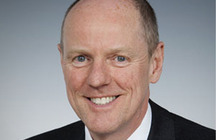
Below is the text of the statement made by Nick Gibb, the Minister for Schools, in the House of Commons on 12 July 2016.
I am today publishing the reports of the three initial teacher training (ITT) expert groups which I commissioned last year, following a review of ITT carried out by Sir Andrew Carter OBE. Alongside these reports I am also publishing a Government response setting out how we intend to take forward the groups’ recommendations.
The review groups were tasked with developing a new framework of core content for ITT; behaviour management content for ITT; and a set of standards for school-based ITT mentors. The three groups were chaired by, respectively, Stephen Munday CBE, Tom Bennett, and the Teaching Schools Council (under the leadership of Vicki Beer CBE and, latterly, Dr Gary Holden).
Sir Andrew Carter’s report, published in January 2015, highlighted that the system in England is generally performing well, but that more needs to be done to ensure all trainee teachers receive a strong grounding in the basics of classroom management and subject knowledge development, as well as key areas of practice such as assessment and an increased understanding of pupils with special educational needs and disabilities (SEND). Sir Andrew also suggested that the quality of school-based ITT mentoring is not as good as it could be, and his report made a number of recommendations to both Government and the sector in this regard.
Good teachers are the single most important factor influencing pupils’ achievement in school. The Government are therefore committed to ensuring that the education system can recruit, train, develop and retain the best possible teachers in our schools. Key to this is to strengthen the quality and content of ITT programmes so that new teachers enter the classroom appropriately equipped in essential areas such as subject knowledge development and subject-specific pedagogy, practical behaviour management strategies, a sound understanding of SEND, and the ability to use the most up-to-date research on effective teaching practice.
The Government welcome the reports of the three expert groups as an important step towards realising our goals of further improving the quality of teacher training and raising the status of the teaching profession, while directly addressing the issues raised by the Carter review. Our recent White Paper, Educational Excellence Everywhere, published in March 2016, set out plans to develop a new set of quality criteria that will in future be applied when training places are being allocated to providers. We will therefore consider how best the new framework of content can be used to inform those criteria, with a view to ensuring that all providers who are allocated training places are clearly demonstrating the quality of content in their courses. Further detail of how we intend to apply the new criteria to the allocation of ITT places from 2017/18 onwards will be published shortly.
Tom Bennett’s report sets out some clear recommendations for the teacher training sector on how behaviour management should be delivered within ITT. An abridged version of his full recommendations has formed part of the new framework of core content for ITT. It is clear from the report that providers of ITT should ensure that trainees are able to access high-quality training before they are ready to enter the classroom; this is a recommendation with which we strongly agree, and we would encourage all providers to ensure that their programmes are structured accordingly.
Linked to high-quality training programmes is the critical role that school-based mentors should play in supporting teacher trainees to develop into effective teachers. This is particularly true as we continue to drive the move towards more school-led teacher training, as set out in the White Paper. The Teaching Schools Council, led firstly by Vicki Beer CBE and subsequently by Dr Gary Holden, has developed a set of standards that I believe can help to bring consistency to the practice of mentors, raise the profile of the mentoring role in school-led training, and contribute to building a culture of coaching and mentoring within the teaching profession. All of these are crucial if our next generation of outstanding teachers is to have the greatest possible impact on improving standards of teaching and allowing our children to reach their full potential.
I am placing copies of the reports from Stephen Munday CBE, Tom Bennett and Dr Gary Holden, along with the Government’s response to their recommendations, in the Libraries of both Houses.
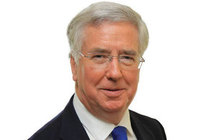
Below is the text of the speech made by Michael Fallon, the Secretary of State for Defence, in the House of Commons on 11 July 2016.
With permission, Mr Speaker, I will make a statement on the NATO summit held in Warsaw last Friday and Saturday.
The 2015 strategic defence and security review reaffirmed NATO’s position at the heart of UK defence and security. The United Kingdom remains a leader within the alliance, with the second largest defence budget after the United States, and the largest in Europe. The range of challenges that the alliance faces, including Daesh, migration and Russian belligerence, meant that this summit was of major importance for Euro-Atlantic security. The overwhelming message from Warsaw was one of strength and unity. We believe that the summit has delivered an alliance that is now more capable and that projects stability beyond our borders, based on stronger partnerships, which collectively protect our citizens and defend Europe.
At the Wales summit in 2014, NATO agreed its readiness action plan to ensure that the alliance can respond swiftly and strongly to new challenges. The UK is at the forefront of these efforts: our Typhoons are currently conducting Baltic air-policing missions from Estonia; our ships are making a significant contribution to NATO’s naval forces: and we will lead NATO’s very high readiness joint taskforce next year, with 3,000 UK ground troops ready to deploy within days.
To demonstrate the allies’ solidarity, determination and ability to act in response to any aggression, Warsaw builds on the Wales’ commitments by delivering an enhanced forward presence in Estonia, Latvia, Lithuania and Poland. I am proud that the UK is one of four nations to lead a framework battalion alongside Canada, Germany and the United States. These battalions will be defensive in nature, but fully combat capable. The UK force will be located in Estonia with two UK companies, a headquarters element and equipment including armoured vehicles, Javelin anti-tank guided missiles and mortars. Denmark and France have said that they will provide troops to the UK battalion. In addition, we will also deploy a company group to Poland. That is our response to Russian aggression. NATO’s approach is based on balancing strong defence and dialogue. Dialogue remains right where it is in our interests to deliver hard messages to promote transparency and to build understanding to reduce risks of mis- calculation.
Credible alliance defence and deterrence depends on NATO’s ability to adapt to 21st-century threats through both nuclear and conventional forces. The summit recognised the important contribution that the UK’s independent nuclear deterrent makes to the overall security of the alliance. I can confirm that we expect the House to have the opportunity to vote to endorse the renewal of that deterrent next Monday.
Initiatives on cyber and hybrid warfare among others will give the alliance the capabilities that it needs to respond quickly and effectively. However, modern capabilities require appropriate funding and here good progress has been made against the defence investment pledge, a key commitment from Wales. Following this Government’s decision to spend 2% of GDP on defence and to increase the defence budget in each year of this Parliament, cuts to defence spending across the alliance have now halted, with 20 allies now increasing defence spending, and eight allies committing in their national plans to reaching the 2% target.
Delivering the best for our country also means maximising the talent in our armed forces. The Prime Minister has accepted the recommendation of the Chief of the General Staff to open up ground close-combat roles to women. NATO’s role in preventing conflict and tackling problems at source has become ever more important as threats to alliance security grow out of instability and fragile or weak states. NATO’s defence capacity-building initiative, which was first announced in Wales, is a powerful tool in projecting stability and we in the United Kingdom continue to provide significant support to Georgia, Iraq and Jordan.
Building on that, the allies agreed that NATO will conduct training and capacity building inside Iraq. In Afghanistan, local forces are taking responsibility for providing security across their country. Our long-term commitment, as part of NATO’s Resolute Support mission, is crucial. Next year, we will increase our current troop contribution of 450 by 10% to help build the capacity of the Afghan security institutions.
The summit also reiterated its support for our European partners, including Ukraine and Georgia. I was delighted that Montenegro attended the summit as an observer, as a clear sign that NATO’s door remains open.
However, the scale of Europe’s security challenges means that NATO must work with a range of partners to counter them. This summit sent a strong message of NATO’s willingness to build strong relationships with other international institutions. I welcome the joint declaration by the NATO Secretary-General and the Presidents of the European Council and the European Commission on NATO-EU co-operation. We continue to support a closer relationship between NATO and the EU to avoid unnecessary duplication.
Our strong message to our allies and our partners was that the result of the referendum will have no impact on any of our NATO commitments and that NATO remains the cornerstone of our defence policy. The United Kingdom will be leaving the European Union, but we are not reducing our commitment to European security—we are not turning our back on Europe or on the rest of the world.
HMS Mersey will deploy to the Aegean from late July to continue our support for NATO’s efforts to counter illegal migration. We will also provide a second ship—RFA Mounts Bay—to the EU’s Operation Sophia in the central Mediterranean, and NATO has agreed in principle to provide surveillance and reconnaissance support to that operation too.
It is a United Kingdom priority for NATO to do more against Daesh. NATO’s airborne warning and control system will now support the counter-Daesh coalition. In addition to our own assistance to the Government of national accord, we will consider what NATO can do in Libya—for example, through capacity building of the Libyan coastguard.
It is our firm view that the Warsaw summit successfully demonstrated that the alliance has the capacity, the will and the intent to respond to the range of threats and challenges that it may face. The summit also showed that Britain is stepping up its leading role in the alliance by deploying more forces to NATO’s eastern borders and to NATO’s support to Afghanistan and in countering illegal migration. With that strong UK leadership, Warsaw will be remembered for the concrete steps that were taken to deliver a strong and unified alliance that remains the cornerstone of European defence and security. I commend this statement to the House.
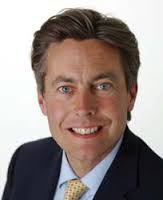
Below is the text of the speech made by Ben Bradshaw, the Labour MP for Exeter, in the House of Commons on 11 July 2016.
I am going to tell the House a story about myself—although it is not just about me but about the thousands of people who use the Great Western Railway service every year, and the many thousands who have signed a petition protesting about its so-called new policy.
I have not owned a car for more than 20 years. Before being elected to the House and every week since then, I have cycled from this place to Paddington railway station, put my bicycle on a train, travelled back to Exeter, taken my bicycle off the train, and gone about my constituency business. At the end of the weekend, I have done the same in reverse. First Great Western—or Great Western Railway, as it has now rebranded itself—has had a perfectly good and workable cycling policy, which has encouraged people to book a space in advance but has allowed people such as me to turn up and, if there is space in the cycling carriage, to put their bicycles on board. There is a designated space at the front of the train, with room for six bicycles.
In the nearly 20 years for which I have represented Exeter in the House, I have generally not reserved a space. I can count on the fingers of one hand the number of occasions on which I have arrived at Paddington or Exeter and not been able to get my bike on to a train because it has been full. There are nearly always spaces in the cycle carriages. So the House will understand why, when I was told by a Great Western Railway employee at Exeter station in April that the company was about to introduce a compulsory booking system for people with bicycles, I was somewhat concerned. I immediately asked to speak to a senior manager, who reassured me that this was not the case, and that discretion would be allowed. However, I took the precaution of writing to the managing director of Great Western Railway asking him to repeat that assurance. I explained to him the scenario that I have just outlined: it seemed to me to be ridiculous—Orwellian, even—that if people turned up at a station with a bicycle and there were spaces in the carriage designed for carrying bicycles, they should not be allowed to take their bicycle with them.
The managing director gave me a very reassuring response. On 26 April, he wrote:
“We understand that there will be times when booking is not possible and space is available on board.”
Booking, of course, is not possible for people like me, and many of the thousands of other people who do not know what train they will be able to catch. The business of the House is very unpredictable, as are my constituency commitments.
The managing director went on to say:
“Station staff have been briefed to allow bikes on board if this is the case, and we are checking that this message has reached colleagues, and you should not therefore have any issues travelling without booking a space for your cycle if there is space on board.”
That was back in April. I have to say that, in spite of that reassurance from Mark Hopwood, I was subsequently inundated with emails, letters, tweets and Facebook messages from other people in my position, who told me that they had encountered difficulty getting their bikes on to a train without a reservation, even when there were spaces on board.
I wrote my letter to Mr Hopwood from a train on which I had put my bicycle, without a reservation, and there were spaces on board. To this day, at many Great Western Railway stations, there are signs and Tannoy announcements saying “You cannot put your bike on this train unless you have a reservation”. That is a lie. It is not true. It is not the policy, as Mr Hopwood told me in his letter. But it is still being represented as the policy at stations, in Tannoy announcements and in messages. So it is not surprising that there is confusion among GWR staff.
I was then contacted by a constituent of the hon. Member for Bristol North West (Charlotte Leslie), who has also been lobbied on this. Sadly, she is unwell and cannot be here today. Her constituent had received a missive from another GWR management member that completely contradicted the assurance I had been given by Mr Hopwood. He said: “To be clear, we require you to reserve your bicycle on our high-speed trains, as our publicity states.” He went on to say, or to imply, that this was about preparing for the introduction of the new high-speed trains, which we are very much looking forward to serving our part of the world in the far south-west. I understand, however—the Minister may like to clarify this in her reply—that they are not due to come into service for another two years, so I was not quite sure why he was preparing for this event.
Simon Pritchard goes on to explain in his email that the reason they are doing this is that in the new high-speed trains the cycle spaces, instead of being in a designated carriage at the front of the train, will be in three separate areas along the train—two in each area, or more if the train is longer—so in order to try and avoid the chaos and confusion that would ensue from people trying to get their bikes on a train if they had not booked, they were trying to encourage people to book in advance. That is all very well, and I will come back to it in a moment.
Another problem that has exacerbated this whole issue is that it is incredibly difficult, complicated and clunky to book a bicycle on a train. People either have to telephone, although the telephone service operates only within certain working hours, or they can book online, but that can be done only when booking a ticket. So the only way people returning from a journey who already have a ticket can book is by phone, which, as I have said, does not operate for many hours of the week, or by going to a station. Of course, that is massively inconvenient for customers.
I went back to Mr Hopwood to seek clarification. I applied for this Adjournment debate, too, in the hope that this might make something happen. Indeed, as is so often the case when one secures an Adjournment debate, I received another letter from Mr Hopwood today, written last Friday, which is moderately reassuring. He has invited me to a meeting with cycling groups, which I am very happy to take up. He says that this discretion of people being allowed to take their bicycles on a train without a booking will continue, and implies it will do so until the new trains are introduced. He goes on to say they are working on a reservation system that will allow customers to take a bike on a train independently from their ticket purchase at short notice, even after the train has started its journey. Up until now, people have only been able to book a bike on a train up to two hours before that train has started its journey. On the long journey from Penzance to Paddington that is completely impractical because by the time the train has started its journey and someone has decided what time train they are going to get, the train has already left the station at Penzance so they cannot book their bike on. He also says that there will be an online service, a telephone service and service at stations and that they hope to have this facility available to customers by the start of the December timetable.
That is a welcome improvement and concession by GWR, which I am convinced has happened only as a result of the pressure put on it by customers who have used its service over the years. Mr Hopwood then argues that this will provide the flexibility cyclists have asked for and allow bookings to be made much closer to departure. If that is the case, it is an improvement. However, he also goes on to claim that the requirement to book space on long-distance services is not unusual and he says that other railway companies—he quotes more than three, but the three I am concentrating on are the three I know: CrossCountry, Greater Anglia and South West Trains—also have mandated bicycle reservations.
Well, I can tell Mr Hopwood that I took my bicycle on a CrossCountry service on Saturday without a reservation. I have taken it up to Norwich on Greater Anglia in the past six months without a reservation, and I have also taken it on South West Trains without a reservation in the past six months, so what he says is simply not the case. At a time when we should be encouraging people to use sustainable transport and to travel sustainably, rail companies should be bending over backwards to encourage people to use their bicycles.
Dr Sarah Wollaston (Totnes) (Con)
I thank the right hon. Gentleman for securing the debate and absolutely agree with everything he has said so far. Does he agree that it was clear from the Get Britain Cycling inquiry that he and I served on in the previous Parliament that active travel to work is a key aspect of encouraging people to get cycling, and that the health benefits that that brings are not in dispute?
Mr Bradshaw
Yes, I completely agree. I have described the system as Orwellian partly because of the confusion and the contradictory messages that are being given to the public, but the hon. Lady is exactly right that this is a moment in our history when we should be encouraging people to use sustainable transport and to take their bikes on trains. If there is space on trains, people should be allowed to put their bikes on to them.
This is a classic example of a big organisation announcing a policy without consulting any of the people who use the service and without thinking through its implications and repercussions. It then has to backtrack and try to clarify the situation, but does not really clarify it properly. It ends up thinking, “Oh dear, we’ve got ourselves into a bit of a mess here. How are we going to get out of this?” If only it had consulted the people who actually use the service, it could have avoided this situation. I can think of many examples of this happening in public life. I am sure that the Minister, who has a lot on her plate at the moment, can think of some as well.
The company has introduced this mandatory reservation system, which turns out not to be mandatory, in advance of the introduction of the new trains, but why on earth did it not wait until the trains were actually introduced? Instead, it has introduced the policy now, which has been confusing and might put people off taking their bikes on trains. It is okay for me because I have this letter from Mr Hopwood saying that I can take my bike on a train without a reservation if there is space for it. I have put a copy of it on my iPhone so that if I ever have any problems, I can flash it at the guard and say, “Look, I have an assurance from your boss that this is okay.” I have also put a photograph of the letter on Twitter and elsewhere. For the ordinary tourist or non-regular traveller, however, the policy will be a real deterrent to their doing exactly what the hon. Member for Totnes (Dr Wollaston) has said is the right thing to do.
I ask Great Western Railway to issue a clear, comprehensive clarification of its policy, and to make it absolutely clear publicly in the notices that it puts in railway stations and in the announcements on the tannoy, which are still inaccurate, that people can still put a bicycle on its trains without a reservation until the new trains are introduced. Also, as I mentioned a moment ago, Mr Hopwood is wrong about the practice on CrossCountry, Greater Anglia and South West Trains. Those trains already have a system whereby bicycles can be accommodated, with two at the front, two in the middle and two at the back. That is the system that Great Western is about to introduce. It is not difficult for someone to put their bicycle on a train if there is a space for it; they just need to move up and down the platform and put it into the space. This idea that people should be required to book in advance because of the new configuration of the trains, even if no one else has booked and spaces are available, is Orwellian and against the whole thrust of Government policy.
I hope that the Minister, given all the other problems on the railways that she is facing, will be able to have a quiet word with Great Western Railway and sort this issue out to reassure people who, like me, have been using the system perfectly happily for many years. This unnecessary change that has created an almighty mess and confusion, and I hope that she will be able to get Great Western to see sense.
Below is the text of the speech made by Will Quince, the Conservative MP for Colchester, in Westminster Hall on 12 July 2016.
I beg to move,
That this House has considered compensation for rail passengers.
It is a great pleasure to serve under your chairmanship, Mr Evans. May I thank the Under-Secretary of State for Transport, my hon. Friend the Member for Devizes (Claire Perry), for being here to respond on behalf of the Government? May I also apologise to her for once again raising an issue involving trains?
My constituency, as the Minister knows, is home to many commuters. We are just under an hour away from London Liverpool Street station, and tens of thousands of my constituents travel on the Great Eastern main line every day. I admit that they have many complaints—short formations; staff members being unavailable; broken toilets; and services disrupted by too much rain, wind, sun and every other type of weather. My Twitter feed is often inundated with criticisms of our train operator; most are valid, and some less so.
All of us in this House know that few things are more annoying than a delayed train. All too often, we have swept this issue under the carpet by saying that at least the trains are clean, and with laptops we can still work, even if we are delayed. We prioritise new rolling stock and free wi-fi as part of new franchises, but let us be clear. We cannot just think of these people as passengers stuck in a carriage going nowhere and being a bit annoyed. They are commuters who cannot make it into work due to factors beyond their control, and job insecurity can follow. They are parents unable to get home in time to have dinner with their children or put them to bed, missing out on something so important to their lives.
I would like to take this opportunity to applaud the Government for recognising this issue and not only investing in our railways but committing to reducing the threshold for compensation to 15 minutes from half an hour. The Government are also extending the Consumer Rights Act 2015 to our railways, which will allow for compensation when the service our constituents receive does not meet expectations. I have some thoughts on this matter—particularly on the urgency of implementation, but I will spare the Minister those on this occasion. Much more needs to be done on making it as easy as possible for passengers to receive any compensation they are owed. I hope the Minister will agree that the end point must be commuters automatically receiving compensation when their train is delayed.
Another issue, which is potentially even more frustrating, is that many franchise holders may be profiting from these delays. As I have mentioned, passengers are currently able to claim for compensation from train operators when they suffer delays greater than 30 minutes. What many probably do not realise is that Network Rail pays out compensation to train operators whenever there is disruption on the track. That compensation is known as schedule 8 payments. The guidance on those payments states that their purpose is to
“compensate train operators for the financial impact of poor performance attributable to Network Rail and other train operators”.
That is not unreasonable; I do not think any of us would believe it is. Given that we do not have vertically integrated lines, Network Rail is responsible for track and signalling. Who would want to take on a franchise if they were financially liable for things beyond their control?
The problem is that there can be a big gap between the amount of compensation train operators receive from Network Rail through schedule 8 payments and the amount of compensation then paid out to passengers for delays. For example, Abellio Greater Anglia—the train operator that runs the line in my constituency—last year received £8.56 million in compensation from Network Rail for disruption. How much did it pay out to passengers for delays that year? Just £2.3 million. That is a subsidy of more than £6 million, and it is not a one-off. East Midlands Trains received £11 million from Network Rail but only paid out £516,000 to passengers. Southeastern received £7.09 million but paid out £1.35 million. Southern, which we know has issues at the moment, received £28.54 million from Network Rail and paid only £1.6 million to passengers. That is nearly a £27 million difference.
I know that train operators would say we cannot compare those figures and that they measure different things, but my response is simple. On seeing the massive subsidies for delays that operators are receiving, the average person will ask, “What incentive do our franchise holders have to push Network Rail to tackle these issues? Why would they demand better infrastructure when they are profiting from my disruption as a commuter?” As I mentioned, I welcome the Government cutting the threshold for when passengers can receive compensation. However, I truly believe we need further reform. We need to deal with the subsidy for delays.
Tom Tugendhat (Tonbridge and Malling) (Con)
May I praise my hon. Friend for securing this debate on an extremely important issue and for the research he has done into the figures? It is essential that we highlight what is effectively a double subsidy. After all, it is a subsidy to Network Rail from the taxpaying population who are using the trains to get to work that is going back to the train companies they are already buying tickets from. It seems rather extraordinary that people are now paying twice for delayed trains, not just once.
Will Quince
My hon. Friend raises a good point. I strongly believe that rail operators should not receive more in schedule 8 payments than their passengers receive in compensation for delays and the cost of handling the disruption, and I have a solution.
One option is to claw back the difference to Network Rail and ring-fence the money for infrastructure improvements in the line, which I am sure the Minister would like. That would tackle the issue by ensuring that the necessary infrastructure was funded and delivered on. However, given that we believe very much in devolution, localism and empowering our constituents, we should ensure that passengers have a say on how the money is used, even if it is not in the form of direct compensation. I suggest that the Government seek to change the terms of our franchise agreements to require that, at the end of every financial year, train operators put any net difference between these amounts into a fund to be controlled by a local railway panel. That panel could be modelled on local highways panels and involve local authorities, businesses and rail passenger groups. It would listen to passengers on how they would like the extra funds to be used to improve their railway, whether it is through extra benches at stations, cleaner trains, stronger wi-fi or more staff.
I accept that that may not be possible without being subject to judicial review while train operators have existing franchise contracts. Instead, we should make those conditions part of all new franchise agreements, coming into effect on each line whenever the franchise comes up for renewal. No one disagrees with Network Rail compensating franchise holders when there are delays due to infrastructure problems, but it is not right that train operating companies are able to receive more money in compensation for delays than they pay out to their passengers. It is a subsidy for failure. We need to stop rail operators profiting from the disruption of passengers’ lives and end the subsidy they are receiving from delays.
Below is the text of the speech made by Matt Hancock, the Minister for the Cabinet Office, in London on 12 July 2016.
The Civil Service is engaged in a mission to improve the lives of everyone in Britain.
Put simply, its role is to help the government of the day develop and implement its policies. But we know this is far from simple. This means tackling some of the country’s most complex and unique challenges.
There are always challenges. And now more than ever we must rise to them.
From steering the country through the ravages of war, to global leadership in tackling climate change. From the rise of the automobile to the heights of the digital world, the Civil Service for 160 years has served Britain with dedication and distinction.
Now we must add to our tasks the task of leaving the EU. While I voted remain, all democrats must respect the clear decision of the British people.
Now we must rise again to the challenge, and make Brexit Britain the global success we all know in our hearts it can be.
And I’m delighted to be here, setting out this challenge, at Civil Service Live.
We’ve held events across the country, from Coventry to Cardiff, Sheffield to Glasgow, and now London.
Over 7,000 civil servants have attended and many will have contributed to the conversation about how we build a brilliant Civil Service.
That feedback has been used to test and shape the Workforce Plan that I will outline to you today.
Through all this change, the strength of the Civil Service rests on the rock of its immutable core values – objectivity, honesty, integrity and impartiality.
Because honest administration and official advice given without fear or favour means a better government and a safer and better society for our citizens.
Through this change, the legitimacy of the Civil Service rests on its service of the democratically elected government of the day.
I know the Civil Service will turn brilliantly to deliver on the new direction the people have set our nation on.
And the capability of the Civil Service rests on how it shapes and adapts to the changes in the world.
So this is about how we build on these foundations, and equip the Civil Service to deliver its mission for the people of our country.
Why are we here?
A year ago, I set out my expectations for what the Civil Service needs to look like in 5 years time.
Delivering better services, with strong leadership and outstanding people.
We are well on the way to achieving that vision. But everyone knows there is more to do.
Today we are publishing a plan that sets out how we can take that further.
Building on years of work to reform the Civil Service, it sets out a clear vision of a Civil Service workforce we want to see.
A workforce packed full of talented, motivated, dynamic people, dedicated to improving the country they love.
With more people recruited from outside, from different backgrounds, with different experience of life and work.
An organisation with more authority, more engagement, more accountability and more trust throughout.
The Workforce Plan is all about how the Civil Service can adapt to be the best.
How we respond to the changing nature of work, and especially the digital revolution.
Why we need to change.
And what we plan to do to deliver that modern Civil Service our country will need.
Let me take each in turn.
Future of work
We need to build a Civil Service that can adapt to a world where new technology is radically changing the future of work.
It’s a challenge and a huge opportunity.
For years physical tasks have been automated. Now cognitive tasks are being automated like never before.
This is inevitable. It can’t be resisted. But we can and must make this change work for us.
The goal is to automate work, but humanise jobs.
This sort of transformation, using the best technology, means we can deliver better services and lower costs.
It can free people up to do the thinking, the managing, the creating.
But it also means the jobs will be different.
I’ve been struck in the year I’ve been responsible for digital transformation, that any particular technology is only a tiny part of the solution – maybe 10%.
90% is about culture, training and human behaviour.
I no longer think of digital transformation.
I think about business transformation; using the best available digital technology.
We must support this disruption, and support those disrupted.
And support for those whose jobs are disrupted puts a focus on training and skills like never before.
Training in the new technology. That’s important, and this plan will reform Civil Service Learning to deliver cutting edge training.
World-class leaders
And the skills to embrace change; to manage effectively; to trust and to take responsibility. These skills can be taught. They can be learned.
For too long, management of our people in parts of the Civil Service has been the preserve of the amateur. But management – change management; culture management; people management – these things can and in future will be actively taught.
And I want to turn upside down the way training is decided on.
In the past there’s been a laissez-faire attitude to training that has encouraged people to train, and to train in what they fancy or think will be useful.
This approach is a dereliction of duty.
Training is part of a manager’s toolkit. Part of the role of the line manager is to guide people’s careers. This means steering – and requiring – training that a member of staff needs. Hands on, caring deeply about the progress of each direct report.
Not relying on faux-objective box-ticking ‘competency tests’, but on trusting managers to know, and care for the progress of their team.
And that of course requires leadership. Inspirational confident leadership, at every level, that develops talent and empowers staff to deliver.
We have some areas of excellent leadership in the Civil Service. I want to pick out the Department for Work and Pensions in particular for praise.
But across the board, standards can and must be higher if we’re going to get the best out of people.
That is why the Civil Service will be setting up a new flagship leadership academy. This will work with leading academics to provide world-class learning. Creating an ethos of excellence where leaders learn from each other.
And leadership should not be the preserve of those at the top. We need world-class leaders at every level.
So we will create leadership and management apprenticeships, building on the excellent expansion of apprenticeships already begun.
And we will be re-launching the learning curriculum for all civil servants.
This will provide valuable learning opportunities for those at every level.
The result will be leaders who are confident and inspiring. Leaders who empower and listen to their people.
Most inclusive employer
It’s been said before and with good reason; the Civil Service’s greatest single asset is its people.
So as well as strengthening those who are already civil servants, how do we attract the best too?
I believe passionately that to govern modern Britain, the Civil Service must become more like modern Britain.
We need to cast our net wider and further. We should be attracting and developing the best talent from right across our society, no matter who they are or where they come from.
Because everyone should have the chance to succeed and serve their country.
And because organisations work better when they are more diverse.
Evidence shows that decisions drawn from a range of experiences, backgrounds and attitudes are better decisions.
In March, we published the ambitious Talent Action Plan and launched our ambitions social mobility strategy, setting out the steps we are taking to become the most inclusive employer in the UK.
We will be undertaking a comprehensive review of the employee experience. Including the way the Civil Service identifies talent, to ensure every talented individual has the opportunity to progress.
True social mobility will only be achieved if we attract, recruit and promote people based on merit and potential, not polish.
This is essential to unlock the potential of all staff in our workforce, and all future recruits. Whether they are based in London or elsewhere in the UK. Where they work in policy, operations or elsewhere. Whether they attended university or not. And whatever their family background.
Movement
Last year I said I wanted a more porous Civil Service, with more exchange in and out.
Young people entering the job market today can expect to move jobs between 12 to 15 times on average.
Careers are changing and with it the standard of a job for life is long gone. Many people now expect to change jobs during the course of their career.
Civil Service structures need to reflect this, supporting short- and long-term careers. Making it easier for people to move in and out with ease.
Everyone should have the chance to apply for a job serving their country.
So we will be opening up recruitment. Roles will be advertised externally, by default, first in the Senior Civil Service, then throughout by the end of this Parliament.
Secondment opportunities will be expanded. Increasing exchange in and out, working with other employers to make normal an exchange of skills that will benefit the Civil Service. It will benefit wider society too. Increasing diversity of thought and experience, and helping us to tackle the hardest national problems.
Career paths
Movement should be planned and purposeful, to build skills and expertise where they are needed, whilst recognising that sometimes it takes time in post to build experience.
We want to stop the absurd reality that to get a promotion you have to move. It prevents people getting deep experience and staying put to see a job through, and encourages people to flit from one job to another.
No longer should we take people with no experience of an area or job and throw them in at the deep end because they have a gap in their experience.
Gone are the days of the gifted amateur. Today’s world is too complex and demands are too high. Today’s plan takes the professionalisation of the Civil Service further.
So I’d say to everyone wanting to build a career in the Civil Service:
Specialise; focus on your strengths; become the expert, become the best in the world at what you do. Don’t flit around.
And under the new plans for a professionalised Civil Service you will be rewarded.
Alongside this to develop breadth of experience, and depth of expertise, we must build career paths at all levels of the organisation, that reach right to the top.
We are leading the way by co-chairing the development of national apprenticeship standards for professions.
We also now have specialist Fast Stream programmes for Digital, Commercial, Finance, Project Delivery and HR. These are growing technical skills in our people from the start of their careers – setting them up for success. And I want to see top people from all these professions reaching the top.
This all complements the work that professions are doing more widely. Commercial, for example, are creating career paths across the Civil Service that extend beyond departmental boundaries.
All this will allow civil servants to make informed decisions. Informed decisions about how they develop their career, about the learning they need to build skills, and about when they should move role or seek promotion.
Flexible reward
To attract and promote the best talent from across society, we also need to reward and promote hard work and success. And we need to reward specialist expertise.
We are recruiting in an increasingly global and competitive market. And we need to be able to compete. The reward offer needs to provide value for money. But it also needs to be fair.
We need a total reward package that can continue to attract talented people. Both now and in the future.
Commercial and digital skills are in demand and in short supply. Not just in the UK but globally.
Government manages some of the most complex, and high risk, commercial contracts. So we must be ready. And we must prepare now.
So we are creating a new commercial organisation, for senior specialists.
It will help us attract these skills. It will create structured career paths and offer a competitive reward proposition through a set of new pay ranges.
We’re also looking at pay for digital specialists over this year.
And more widely, we will be reviewing the reward framework for civil servants.
Conclusion
All civil servants should find something in this for them.
It is ambitious. And it is rightly ambitious.
The Civil Service does vital work for the nation.
But it’s also practical and deliverable. And it must be delivered. For the benefit of the Civil Service. For the benefit of civil servants. And for the benefit of the nation.
This is where you have a part of play. This plan cannot be delivered without the support of civil servants.
It needs to be more than just a piece of paper. And it will be each one of you that brings it to life.
We will help you to do this. Giving you the tools and the support to build a modern career in a modern civil service workforce.
I’ve said before I want to see jobs as good as at Google. I mean it. And one of the reason the jobs in the Civil Service are so good is because the mission is so important.
We serve our country. Come, serve, and gain that deep expertise. There is no more noble calling.
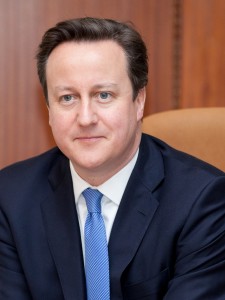
Below is the text of the speech made by David Cameron, the Prime Minister, in Downing Street, London on 11 July 2016.
Good afternoon.
I am delighted that we are not going to have a prolonged Conservative leadership election campaign.
I think Andrea Leadsom has made absolutely the right decision to stand aside and it is clear that Theresa May has the overwhelming support of the Conservative Parliamentary Party.
I am also delighted that Theresa May will be the next Prime Minister. She is strong, she is competent, she is more than able to provide the leadership that our country is going to need in the years ahead and she will have my full support.
Obviously with these changes we now don’t need to have a prolonged period of transition, and so tomorrow I will chair my last Cabinet meeting. On Wednesday, I will attend the House of Commons for Prime Minister’s Questions and then after that I expect to go to the Palace and offer my resignation so we’ll have a new Prime Minister by Wednesday evening.
Below is the text of the speech made by Harriett Baldwin, the Economic Secretary to the Treasury, in London on 11 July 2016.
It’s great to be here today at Barclays Accelerator.
This is a fantastic space for a community of entrepreneurs and experts to find new opportunities to take your businesses forward – often using the very latest technologies to do so.
But what I want to talk about today certainly isn’t rocket science. But it is one of the very best ways any business can improve and thrive. And that’s by harnessing the full talents and potential of women.
Find out more about the Women in Finance Charter
This is a real passion of mine – both as a woman who has worked in this sector, and as the Treasury Minister responsible for Financial Services in the UK.
Because everyone here will recognise that this is still an industry dominated by men.
That was certainly the case when I started working at an investment bank in the late eighties. And I am disappointed to say it’s still the case 30 years later.
The pay gap between men and women is worse in Financial Services than in any other industry in the UK – with a woman getting 60p for every £1 a man earns.
Furthermore, just 6% of CEOs in this sector are women. And it’s not much better if you look one step down the ladder either.
Well it’s 2016, and change is long overdue.
I’m proud of the UK’s success in Financial Services. But I’m also convinced that we will not maintain our reputation as a world-leader in this sector, unless we become a world-leader in diversity too.
That’s not just the right thing to do, it’s the best thing to do for the success of any business. Quite simply, firms with a good gender balance perform better.
So I want to tackle this head on.
That’s why I asked Jayne-Anne Gadhia, the CEO of Virgin Money, to look at why so few women were represented in the top jobs, and what we could do about it.
She sadly can’t be with us today due to a family bereavement, but I want to pay tribute to the huge amount of work she put into this.
That culminated in the publication of an excellent review last March at the Bank of England, which recommends how this industry can make sure more women are rising through the ranks into the more senior roles. This launch was backed at the very highest level by the Governor Mark Carney.
And it’s thanks to her work, that the Treasury has launched a Charter for Women in Finance, asking companies to sign up to the principles she recommends.
And I’m really delighted to announce today that 72 financial services firms have now signed up to this. Together these firms employ over 530,000 people in the UK.
And they are companies of all shapes and sizes. From global banks to credit unions, national insurance companies to fintech start-ups.
We also have regulators, trade bodies and market places like the FCA, the BBA and the London Stock Exchange signed-up.
And every one of these organisations has done a huge amount to really commit to the Charter and its goals.
Let me give you just three examples.
And it would be wrong if I didn’t, at this point, start with Jayne-Anne’s company, Virgin Money, as she has been forging the way forward.
As you would expect, at Virgin Money, they’ve set themselves a fantastic target: to achieve a 50:50 gender balance at every level of their organisation by 2020.
HSBC are also setting the same target for their senior management team.
And last month, I went to speak to a financial services consultancy and recruitment firm called E2W in Kent.
They may be a smaller business but they are making a mighty effort to drive forward change and help us make this Charter a success by using their industry networks to raise awareness of the Charter and its objectives.
And so I want to thank not only these firms, but every single organisation which has signed up to the Charter.
We all share the same determination to make change happen and achieve the gender balance that we need to see.
We have today published the list of all firms that have signed the Women in Finance Charter on the gov.uk website, so that members of the public can see which firms have made these commitments.
And by the end of September, every one of these firms will have set out their own tailored targets for making progress towards gender balance at the top of their organisation on their websites.
So in September 2017, the think tank New Financial will gather data about signatories’ progress and produce the first Annual Review of the Women in Finance Charter, looking at what really works in practice.
But we want more and more firms to get on board and sign up.
We need to create a groundswell of organisations determined to make change happen.
I want the UK to be the best in the world when it comes to financial services. And that means giving women the opportunities they deserve in the 21st century to help that happen.
So I’d like to thank everyone for coming here today to celebrate this milestone in the road to improving diversity in this industry.
All of you who have already signed up to the Charter are really pioneering the way forward.
And I have no doubt that it will bring you more success in the future.
Because those who lag behind risk not only losing out in terms of performance, but also in terms of recruiting the best talent, or retaining and attracting customers.
We need more businesses to recognise this – across all sectors.
Last year, the government published a productivity plan which looked at what was holding our economy back.
And one of the key factors was that women so often face barriers which prevent them from realising their full potential.
That’s why it’s important that we all set to work to turn this around. Because if we do, there are huge gains to be made.
The Charter is one of a number of ways we’re helping to improve diversity across the workforce.
It goes hand in hand with the drive from endeavours like the review on women in senior leadership in business, led by Sir Philip Hampton and Dame Alexander. Or the work of the Investment Association’s Diversity Project, chaired by Helena Morrissey, founder of the 30% club.
So let’s keep working together, on all of these fronts, to make change happen.
Below is the text of the speech made by David Cameron, the Prime Minister, on 11 July 2016.
It’s great to be back here, because this is the right place to talk about the future for the British economy. Why? Because in the new situation we face, we are going to need to play to our strengths.
And the British aerospace industry is clearly one of those greatest strengths. It’s the second biggest in the world, based on long-term investment, science, research and high skills, and its products and expertise exported across the globe.
Indeed, every two seconds, a plane takes off or lands somewhere in the world whose wing design was tested right here at Farnborough. And by the end of the decade, if you board a large passenger plane, as often as not, it will be powered by a Rolls-Royce engine.
That is the scale and success of British aerospace today.
Now just over a fortnight ago, the British people voted to leave the European Union. That went against what I recommended. I don’t resile from what I said, from my warnings of a short-term shock, medium-term uncertainty and some long-term risks.
Indeed, we’ve already had a taste of the turbulence in global markets and in terms of the value of the pound. And there will be other problems ahead.
But I want to be clear: we will deal with them from a position of strength, with a growing economy, a greatly-reduced deficit, with low inflation and more jobs and businesses than ever before in our country.
Above all though, we must recognise we are in a new reality now. We must accept it, we must make it work. That’s the way British business is responding to the referendum result.
As one of your longest-serving chairmen wrote to me this weekend and said: “We must make the most of the cards in front of us, not ask for a new hand.”
The key things we need to get right are these: our future relationship with Europe, Britain’s underlying productivity challenges, the need to grow exports faster, and encourage more inward investment. And above all, we need to think big and think radically about how to ensure the best possible outcome for the United Kingdom in these new circumstances.
Trade and investment
This amounts to the biggest challenge for the British political system that we have faced for around 40 years. It will require a massive national effort, not just for government departments, civil servants and ministers, but an effort that means working together with business and industries in a way we’ve never seen before. And as we do so, I want to spell out the big things that I think that effort should focus upon.
First, we have got on focus on trade and investment as never before. UK Trade and Investment has gone from strength to strength in recent years. Our exports to China have increased by 90%, to South Korea they’ve more than doubled and we’ve made impressive progress in markets like Chile and Pakistan.
But the fact is, despite all the benefits of selling goods and services abroad, just 11% of British companies export. Of those who do, only 5% of what we make and sell goes to fast-growing markets like China and India. We still do more trade with Belgium than we do with Indonesia, Singapore, Vietnam and Malaysia combined. We do more trade in services with Luxembourg than with the massive economies of Turkey and Saudi Arabia.
Now people read those figures in two ways. Some emphasise the importance of our European market. And others say it shows how far we have to go in driving exports into the expanding markets. Both of those readings are right. And we need to do both things – we need to win in Europe and win in the rest of the world.
Now around the world, middle classes are rapidly expanding. Young populations are growing and growing. More and more people have disposable incomes; more and more have smartphones. And those people want to buy British – to wear our clothes, listen to our music, watch our football teams, use our apps, fly in our planes, drive in our cars. They are starting to want to buy the things we’re especially great at, like services.
UK Trade and Investment has made great strides. But we need a further step change in the pace and the effort and the activity that we undertake. And as we recast our relationship with Europe, this is our moment to do so. But UKTI cannot do it alone.
Six years ago, I gave some very clear instructions to the Foreign and Commonwealth Office. To our diplomats and our staff overseas I said: you are also our trade envoys. To our embassies and high commissions I say: you are the shop windows for Britain.
We set up a GREAT campaign to promote Britain in 144 countries. You can see it emblazoned everywhere, from the Moscow Metro to the Rio cable cars that we are going to see a lot of in the coming months. And today the Foreign and Commonwealth Office is much more commercially minded.
New opportunities
So I say now we have to redouble our efforts again and embrace the new opportunities.
We need to draw up a list of the countries and territories we should be thinking of for our future trade deals, led by the department for business, the Foreign Office and more.
Now we need to develop the skills necessary to strike those deals. It’s not optional now; it is essential. Britain’s economic future relies on it – and the renewed push needs to begin right now.
Next, we need to address one of the remaining fundamental weaknesses of our economy. We face a massive productivity challenge. Yes, our growth here in Britain has been stronger than many. And yes, in the last Parliament we created more jobs in the UK than the rest of Europe put together. But our output per person, per hour is still lower than America, Germany and France.
Now is the moment to tackle it. There is no single, silver bullet. The work we have done on cutting businesses’ taxes and prioritising infrastructure – that helps, and must continue.
High-speed rail, green investment, super-fast broadband: this needs to be combined with building more homes, reforming planning, starting more apprenticeships.
And now that we are coming out of the European Union, we must rapidly explore all the new potential opportunities for supply-side reforms, for example on taxes, which could also boost our productivity.
But above all, our response to the productivity gap needs to be business-led, and I welcome the initiatives coming from British business.
Dynamic economy
I also think we should be taking note from industries that do this well. In aerospace, productivity is growing 15 times faster than in the rest of our economy. I say: let’s take your lead, learn the lessons that you provide, and get more industries doing what you’re doing.
Next, we should focus on how we can help different sectors to thrive, just as this aerospace sector does. Yes, we need a dynamic market economy that pulls its weight in every sector – from manufacturing to services. And yes, in that dynamic economy we must recognise that new, insurgent businesses, and indeed new, insurgent industries, mustn’t be held back – after all, they are often the ones that drive new investment and jobs.
And I don’t believe in picking winners. But there are sectors where Britain clearly has a competitive edge, and where there can be strong partnership between business and government. And we need to build on that record.
We’ve got it in aerospace. We’ve got it with the automotive industry. But I want us to have it elsewhere, in pharmaceuticals, in life sciences, in all the different aspects of tech – green tech, financial tech, in our world-beating creative industries and financial services.
We’re getting there, but we need to go faster, linking academia with industry to discover cures for new diseases, backing advanced manufacturing for the industries of tomorrow, making it easier for our film studios and fashion houses to flourish, and getting the funding to the tech start-ups that are set to change the way that we live.
Collaboration
And that leads me one final point about collaboration. Because when you consider the challenges that we face and the opportunities that we have now got to make the most of, it is obvious that we are going to need an all-government effort. We cannot afford to work in silos. And this must be driven from the top.
Take our National Security Council, now been operating for six years. I wouldn’t argue that creating it has solved all our security problems or dissolved all the threats that we face. Of course not. But it has helped us to face them in a more joined-up, strategic and effective way. Why? Because we bring together all the weapons in our armoury – military, intelligence, counter terrorist policing, aid, diplomacy, development – it brings all these things together to meet the challenges that we face.
And now that the UK faces – alongside that set of security challenges – a new set of economic challenges; it is, in my view, time to do the same thing in the economic sphere.
When we are trying to break into new markets and sign new trade deals, we need all our economic, business and industrial might working together in the same direction – our business leaders, universities leaders and more.
When we are examining ways of driving up productivity, we need all the economic departments at the table – not just the Treasury, but education, infrastructure, regional planning, everyone.
The threats we face don’t neatly fit into one department’s remit. I would say they are everyone’s remit.
Now it’s a matter for the next Prime Minister what structures to set up, but I would strongly advise taking an approach like the one I have just set out.
As for our European relationship, there is a huge amount of work to do, complex issues to understand and crack, a negotiating mandate to draw up, and the big, strategic decisions are for the next Prime Minister. But the groundwork is underway.
All I would say about the outcome is this: I believe it is in our fundamental national and economic interests to remain very close to the European Union, for trade, for business, for security, for cooperation. So let that be our goal.
So the right relationship with Europe, higher productivity, more exports and inward investment – these are the things that we have to get right – and they will require a massive national effort.
Looking at the aerospace industry – growing four times faster than the rest of our economy; with 90 per cent of its turnover made up of exports; and an exemplary relationship with government, academia and other industries – we can see just what can be delivered.
So I would argue that we need to come together. We need to make the most of the cards in front of us. We need to build that strong, dynamic economy that really could be the envy of the world.
Below is the text of the speech made by Theresa May, the Home Secretary, on 11 July 2016.
Two weeks ago, I launched my candidacy to become the Leader of the Conservative Party – and Prime Minister of the United Kingdom.
And last week, I won the overwhelming support of my colleagues in the House of Commons. Nearly two thirds of the Conservative Party in Parliament. Left and right. Leavers and remainers. MPs from the length and breadth of Britain. The result showed that, after the referendum, the Conservative Party can come together – and under my leadership it will.
I am here today – in the great city of Birmingham – to launch my national campaign, in which I will make my case to the Conservative Party membership – and the country as a whole.
That case comes down to three things.
First, our country needs strong, proven leadership – to steer us through this time of economic and political uncertainty, and to negotiate the best deal for Britain as we leave the EU and forge a new role for ourselves in the world. Because Brexit means Brexit and we’re going to make a success of it.
Second, we need to unite our Party and our country.
And third, we need a bold, new, positive vision for the future of our country – a vision of a country that works not for a privileged few but for every one of us.
My vision of a country that works for everyone
It is about that vision that I want to talk to you today. Because if we’re going to govern in the interests of the whole country, we cannot become defined exclusively by the process of our withdrawal from the EU. That is an important job and we’re going to get it done. But we also need a Government that will deliver serious social reform – and make ours a country that truly works for everyone.
Because right now, if you’re born poor, you will die on average nine years earlier than others. If you’re black, you’re treated more harshly by the criminal justice system than if you’re white. If you’re a white, working-class boy, you’re less likely than anybody else to go to university. If you’re at a state school, you’re less likely to reach the top professions than if you’re educated privately. If you’re a woman, you still earn less than a man. If you suffer from mental health problems, there’s too often not enough help to hand. If you’re young, you’ll find it harder than ever before to own your own home.
But, as I have said before, fighting these injustices is not enough. If you’re from an ordinary, working-class family, life is just much harder than many people in politics realise. You have a job, but you don’t always have job security. You have your own home, but you worry about mortgage rates going up. You can just about manage, but you worry about the cost of living and the quality of the local school, because there’s no other choice for you.
These are the reasons why, under my leadership, the Conservative Party will put itself – completely, absolutely, unequivocally – at the service of ordinary, working people. It is why we will make Britain a country that works for everyone:
An economy that works for everyone, so we don’t just maintain economic confidence and steer the country through challenging times – but we make sure that everyone can share in the country’s wealth.
A society that works for everyone, so we can bring people back together – rich and poor, north and south, urban and rural, young and old, male and female, black and white, sick and healthy, public sector, private sector, those with skills and those without.
A democracy that works for everyone, so we can restore trust and confidence in our most important institutions – and the political process itself.
And a party that works for everyone – because we can’t build a country that works for all unless we, the Conservatives, are truly a party that works for all.
An economy that works for everyone
In the coming weeks, I will set out my plans to take our economy through this period of uncertainty, to get the economy growing strongly across all parts of the country, to deal with Britain’s longstanding productivity problem, to create more well-paid jobs, to negotiate the best terms for Britain’s departure from the European Union – and to forge a new role for ourselves in the world.
But today, I want to talk about my plans to reform the economy so that it really does work for everyone. Because it is apparent to anybody who is in touch with the real world that people do not feel our economy works that way at all. Talk to almost any ordinary member of the public, and the frustration they feel about the loss of control over their day-to-day lives is obvious.
They are the ones who made real sacrifices after the financial crash in 2008. Some lost their jobs, some reduced their hours, others took a pay cut. Wages have grown, but only slowly. Taxes for the lowest paid went down, but other taxes, like VAT, went up. Fixed items of spending – like energy bills – have rocketed. Monetary policy – in the form of super-low interest rates and quantitative easing – has helped those on the property ladder at the expense of those who can’t afford to own their own home.
There isn’t much job security out there. Some find themselves exploited by unscrupulous bosses. And, yes, some have found themselves out of work or on lower wages because of low-skilled immigration. It’s harder than ever for young people to buy their first house. There is a growing divide between a more prosperous older generation and a struggling younger generation. And there is a gaping chasm between wealthy London and the rest of the country.
When you add all of these things up, the only surprise is that there is so much surprise in Westminster about the public’s appetite for change. And make no mistake, the referendum was a vote to leave the European Union, but it was also a vote for serious change.
Yet so many of our political and business leaders have responded by showing that they still don’t get it. There are politicians – democratically-elected politicians – who seriously suggest that the Government should find a way of ignoring the referendum result and keeping Britain inside the European Union. And there are business leaders whose response has not been to plan for Britain’s departure or to think of the opportunities withdrawal presents – but to complain about the result and criticise the electorate.
Well, I couldn’t be clearer. Brexit means Brexit. And we’re going to make a success of it. There will be no attempts to remain inside the EU, no attempts to rejoin it by the back door, and no second referendum. The country voted to leave the European Union, and as Prime Minister I will make sure that we leave the European Union.
And I am equally clear about the need for change. I am not going to ignore the public when they say they’re sick of politics as usual. I am going to make sure that the motives of the Government will never be in any doubt. We, the Conservatives, will put ourselves at the service of ordinary, working people and we will make Britain a country that works for everyone – whoever you are and wherever you’re from.
The Government has made great strides in the last six years, dealing with the debt crisis, reducing the deficit, and presiding over an economic recovery. But if we are going to make sure our economy truly works for everyone – if we are going to help people to take control of their lives – we need to take action in four different ways. We need to reform the economy to allow more people to share in the country’s prosperity. We need to put people back in control of their lives. We need to give more people more opportunity. And we need to get tough on irresponsible behaviour in big business.
Reforming the economy for greater shared prosperity
I will start with economic reform. Because for a Government that has overseen a lot of public service reforms in the last six years, it is striking that, by comparison, there has not been nearly as much deep economic reform. That needs to change for a simple reason. If we want to increase our overall prosperity, if we want more people to share in that prosperity, if we want bigger real wages for people, if we want more opportunities for young people to get on, we have to improve the productivity of our economy.
Yet we have long had a problem with productivity in Britain. So I want to make its improvement an important objective for the Treasury. I want to see an energy policy that emphasises the reliability of supply and lower costs for users. A better research and development policy that helps firms to make the right investment decisions. More Treasury-backed project bonds for new infrastructure projects. More house building. A proper industrial strategy to get the whole economy firing. And a plan to help not one or even two of our great regional cities but every single one of them.
Putting people back in control
If we are going to have an economy that works for everyone, we are going to need to give people more control of their lives. And that means cutting out all the political platitudes about “stakeholder societies” – and doing something radical.
Because as we saw when Cadbury’s – that great Birmingham company – was bought by Kraft, or when AstraZeneca was almost sold to Pfizer, transient shareholders – who are mostly companies investing other people’s money – are not the only people with an interest when firms are sold or close. Workers have a stake, local communities have a stake, and often the whole country has a stake. It is hard to think of an industry of greater strategic importance to Britain than its pharmaceutical industry, and AstraZeneca is one of the jewels in its crown. Yet two years ago the Government almost allowed AstraZeneca to be sold to Pfizer, the US company with a track record of asset stripping and whose self-confessed attraction to the deal was to avoid tax. A proper industrial strategy wouldn’t automatically stop the sale of British firms to foreign ones, but it should be capable of stepping in to defend a sector that is as important as pharmaceuticals is to Britain.
And I want to see changes in the way that big business is governed. The people who run big businesses are supposed to be accountable to outsiders, to non-executive directors, who are supposed to ask the difficult questions, think about the long-term and defend the interests of shareholders. In practice, they are drawn from the same, narrow social and professional circles as the executive team and – as we have seen time and time again – the scrutiny they provide is just not good enough. So if I’m Prime Minister, we’re going to change that system – and we’re going to have not just consumers represented on company boards, but employees as well.
There are other ways, too, in which we need to put people back in control. As the Government reforms public services, we should encourage public sector workers to set up mutuals. As we take infrastructure decisions – like with new housing, roads, or exploration for oil and gas – the benefits should be shared not just with local authorities but with local people themselves.
Giving people more opportunity
And this brings me on to the third way in which we need to make our economy work for everyone – which is by giving people more opportunity. This, to me, is what the Conservative Party is all about. In the name of equality, Labour end up holding people back – but we believe in setting people free to go as far as their talents will take them.
That is why school reform is such a passion for so many Conservatives – and I will be setting out my own plans for schools policy in the coming weeks. But it is also why housing matters so much, and why we need to do far more to get more houses built.
Because unless we deal with the housing deficit, we will see house prices keep on rising. Young people will find it even harder to afford their own home. The divide between those who inherit wealth and those who don’t will become more pronounced. And more and more of the country’s money will go into expensive housing instead of more productive investments that generate more economic growth.
Getting tough on corporate irresponsibility
The fourth way in which I want to make our economy work for everyone is by getting tough on irresponsible behaviour in big business. Because yes, we’re the Conservative Party, and yes we’re the party of enterprise, but that does not mean we should be prepared to accept that “anything goes”.
The FTSE, for example, is trading at about the same level as it was eighteen years ago and it is nearly ten per cent below its high peak. Yet in the same time period executive pay has more than trebled and there is an irrational, unhealthy and growing gap between what these companies pay their workers and what they pay their bosses.
So as part of the changes I want to make to corporate governance, I want to make shareholder votes on corporate pay not just advisory but binding. I want to see more transparency, including the full disclosure of bonus targets and the publication of “pay multiple” data: that is, the ratio between the CEO’s pay and the average company worker’s pay. And I want to simplify the way bonuses are paid so that the bosses’ incentives are better aligned with the long-term interests of the company and its shareholders.
I also want us to be prepared to use – and reform – competition law so that markets work better for people. If there is evidence that the big utility firms and the retail banks are abusing their roles in highly-consolidated markets, we shouldn’t just complain about it, we shouldn’t say it’s too difficult, we should do something about it.
And tax. We need to talk about tax. Because we’re Conservatives, and of course we believe in a low-tax economy, in which British businesses are more competitive and families get to keep more of what they earn – but we also understand that tax is the price we pay for living in a civilised society. No individual and no business, however rich, has succeeded all on their own. Their goods are transported by road, their workers are educated in schools, their customers are part of sophisticated networks taking in the private sector, the public sector and charities. It doesn’t matter to me whether you’re Amazon, Google or Starbucks, you have a duty to put something back, you have a debt to your fellow citizens, you have a responsibility to pay your taxes. So as Prime Minister, I will crack down on individual and corporate tax avoidance and evasion.
It is not anti-business to suggest that big business needs to change. Better governance will help these companies to take better decisions, for their own long-term benefit and that of the economy overall. Under my leadership the Conservative Party will resolutely remain the party of enterprise and we will help British businesses to stay competitive and create more well-paid jobs.
This is a moment of great national change – and we must rise to the occasion
This is a different kind of Conservatism, I know. It marks a break with the past. But it is in fact completely consistent with Conservative principles. Because we don’t just believe in markets, but in communities. We don’t just believe in individualism, but in society. We don’t hate the state, we value the role that only the state can play. We believe everybody – not just the privileged few – has a right to take ownership of what matters in their lives. We believe that each generation – of politicians, of business leaders, of us all – are custodians with a responsibility to pass on something better to the next generation. Above all, we believe in Britain – and in the British people.
From Robert Peel to Lady Thatcher, from Joseph Chamberlain to Winston Churchill, throughout history it has been the Conservative Party’s role to rise to the occasion and to take on the vested interests before us, to break up power when it is concentrated among the few, to lead on behalf of the people. It has been our strength as a Party that at moments of great national change, we have understood what needed to be done. And believe me, nobody should doubt that this is another of those moments of great national change.
We must leave the European Union – and forge a new role for ourselves in the world.
And we must make Britain a country that works not for a privileged few but for every single one of us.
To do those things we need to come together – as a Party and as a country – under strong and proven leadership.
And then together, we will build a better Britain.
Below is the text of the speech made by David Cameron, the Prime Minister, in Warsaw, Poland on 9 July 2016.
Britain’s membership of NATO is vital for our country because it helps to keep our nation secure and our people safe.
It is vital for NATO too because for 65 years the United Kingdom has played a leading role at the heart of this successful alliance, deploying British troops alongside our Allies around the world, from Afghanistan to the Aegean to the Baltics.
We have played a key role in making sure that together we stand up to aggression, we face up to new threats, and we invest in the latest capabilities.
Wales 2014 was an absolutely key moment in NATO’s development – pledges there included the defence investment pledge, which set the ambition for all Allies to increase defence spending to meet our level of ambition.
And it was at Wales where we agreed a vital package of reassurance measures to deter Russian aggression.
Here at Warsaw, we have reaffirmed Britain’s commitment to this Alliance with concrete action to tackle the threats we face from Russia, from terrorism and from illegal migration.
Let me say a few words on each.
Russia
First, Russia. Two years on from Russia’s illegal actions in Ukraine, our message to Russia has not changed. Such action is indefensible and wrong. And we will always stand up for the sovereign right of countries to make their own decisions.
But we are not seeking confrontation with Russia. Indeed, we are working to prevent it. So we will continue to pursue a twin track approach of deterrence and dialogue.
The multi-national spearhead force that we agreed at the Wales Summit is now operational. It’s capable of deploying anywhere on Alliance territory in just a few days – so it sends a strong, clear message to Russia that NATO stands ready to respond quickly to threats.
And Britain will lead the land force next year, providing 3000 troops along with tanks and Warrior armoured fighting vehicles.
We have also agreed to further reassure our Allies by increasing the number of NATO troops present along our eastern flank. And once again, the UK will play its part. On land with the deployment of 500 soldiers to Estonia early next year as well as an infantry company to be based here in Poland, and in the air by taking part in next year’s air policing mission.
But we must also engage in a hard-headed dialogue with Russia to avoid misunderstanding or miscalculation. And that’s why we have agreed that the first meeting of the NATO-Russia Council in many months will take place next week.
Terrorism
Turning to terrorism, NATO has an important role to play beyond its borders helping to prevent countries becoming a safe haven for terrorists who can threaten us here at home.
That is what we did in Afghanistan and today we have reaffirmed our collective commitment to support a more secure and stable future for that country.
The Alliance has agreed to maintain funding for the Afghan security forces through to 2020 and to keep a significant NATO troop presence into the next fighting season.
As part of this, the UK will do more to train Afghan officers. We will keep 450 troops there into 2017 and we will deploy a further 50 personnel to provide additional mentoring, particularly for the Afghan air force. We will also step up NATO’s efforts to help the Iraqi government tackle Islamist extremism.
Two years ago at the Wales summit, we agreed to offer a NATO training mission once an Iraqi government was in place.
That mission, training Iraqi forces inside Jordan, has been such a success that today we have agreed to provide counter-IED, medical and security training within Iraq.
And Britain will provide £1 million in funding to help get this up and running.
It is vital that as we work to defeat violent extremism around the world, we equip other countries to deal with these threats too.
Migration
Finally, we have discussed how NATO can work alongside other organisations like the EU to tackle different challenges such as illegal migration.
Such co-operation has proved effective in the Aegean where the NATO naval operation has helped to reduce the number of people embarking on these perilous journeys from a peak at one stage of 2700 people moving every day from Turkey to Greece to around 70 today. It has been a very strong success.
The United Kingdom was one of the first countries to contribute a ship to that mission and today I can announce that we will maintain our role with the deployment of HMS Mersey later this month to take over from RFA Cardigan Bay.
Nuclear deterrent
So here at this summit the UK has underlined the importance of the contribution we make to this Alliance – with further deployments on land, in the air and at sea.
Of course, this is only possible because we have stood by our commitment to spend 2% of our GDP on defence. Indeed our defence spending is one quarter of the European total. We have the largest defence budget in Europe, the second largest in NATO and we are maximising our investment in the front line.
We will spend £178 billion over the next decade on equipment and equipment support. A lot of people talk about the 2% commitment, rightly, but there is also a commitment to spend 20% of your defence budget on equipment programme, again a pledge that Britain more than meets.
And we must invest in the ultimate insurance policy of all – our nuclear deterrent.
So today I can announce that we will hold a Parliamentary vote on 18 July to confirm MPs support for the renewal of a full fleet of four nuclear submarines capable of providing around-the-clock cover.
The nuclear deterrent remains essential in my view – not just to Britain’s security but – as our allies have acknowledged here today – to the overall security of the Alliance.
Conclusion
To conclude, I think this summit has underlined one very important message – that while Britain may be leaving the European Union, we are not withdrawing from the world, nor are we turning our back on Europe or on European security.
We will continue to be an outward-looking nation that stands up for our values around the world – the only major country in the world to spend 2% of our GDP on defence, as promised, and 0.7% of our GDP on overseas aid, as promised. Only Britain, amongst the major countries, has kept those 2 vital pledges. And they massively enhance our standing and our ability to get things done in the world and our ability to keep people safe at home.
We are a country that is willing to deploy its troops to reassure our Eastern partners or to help countries further away defeat terrorists.
A country with the ultimate deterrent. And above all, a proud, strong United Kingdom that will keep working with our allies to advance the security of our nation and people for generations to come.