Tag: Speeches

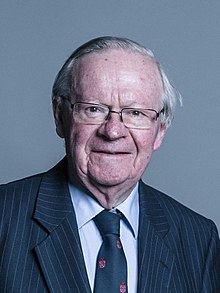
  • Liam Fox – 2019 Speech on Global Trade

    Below is the text of the speech made by Liam Fox, the Secretary of State for International Trade, on 1 February 2019.

    Good morning.

    The arguments around Britain’s exit from the European Union have been intense and passionate.

    Understandably, they have dominated the political agenda and consumed most – sometimes all – of our political bandwidth.

    On Tuesday the House of Commons voted to support a deal, with changes to the backstop. And the Government will now talk to the EU about how we address Parliament’s views.

    But, however we ultimately separate ourselves from the European Union, we must remember that there is a world beyond Europe and there will be a time beyond Brexit. That is what I would like to begin to focus on today.

    The UK’s future role

    The first question we must ask is a general one. What should Britain’s place in the world be? Where should we direct our great political, diplomatic and economic energies?

    What, if you like, is our mission?

    It used to be fashionable to quote Dean Acheson, US Secretary of State under Harry Truman, in saying that Britain had “lost an empire and not yet found a role”.

    That may have once been true. For some, the EU seemed to provide an answer. But the UK has been always an awkward member, unsuited politically and temperamentally to the demands and destination of ever-closer union.

    Our new relationship will be far better for both the UK and the EU. Now Britain is taking back ownership of our destiny. Where we share a common agenda, the EU will find a stalwart friend, and a close political and economic ally.

    We are emerging into a world that is crying out for leadership, and our country is uniquely placed to meet the global challenges of the 21st century.

    The 2015 Strategic Defence and Security Review sums up our position perfectly. As it says:

    “We sit at the heart of the rules-based international order. The UK is the only nation to be a permanent member of the UN Security Council and in NATO… the Commonwealth, the G7 and G20, the Organization for Security and Cooperation in Europe, the OECD, the World Trade Organization, the International Monetary Fund and the World Bank.

    We use our membership of these organisations as an instrument to amplify our nation’s power and prosperity. In all these organisations, we play a central role in strengthening international norms and promoting our values. We promote good governance, anti-corruption, the rule of law and open societies.

    We maintain and champion free trade, and we work with growing powers around the world to build a stronger and more resilient global economy.”

    It’s hard to put it better than that. As Britain takes up her role as a fully independent actor on the world stage, this is an enviable position from which to be starting.

    The Department for International Trade has, since its creation, been looking to that world beyond Europe and that time beyond Brexit.

    And in an era where globalisation and rapid technological advancement are fundamentally changing the face of global commerce, Britain will have a clear role in helping to identify and meet the challenges and opportunities ahead.

    In Davos last week, trade ministers considered a paper from the Global Future Council on International Trade and Investment. It set out a number of scenarios for the future trading environment.

    They started with the optimistic – where countries cooperate to address issues through a revitalised WTO and complementary international frameworks – then they had the less optimistic, where countries cooperate but are drawn into competing blocs, producing a Balkanisation of global trade.

    And finally they had the genuinely pessimistic where there would be a rise of protectionism and where countries could not cooperate, leading to prohibitive unilateral barriers with consequent inefficiencies, high economic risks and a decline in productivity and innovation.

    It is essential that Britain uses its new role to help push the global trading arguments in the right direction.

    Over the coming months I will be talking about the challenges we face in more detail such as the consequences of a protracted US – China trade dispute, the potential slowing of the global economy and the unmet challenges in the global trading system.

    Today I want to set out our general approach to the institutions that govern global trade and where we believe momentum is required.

    Opportunities of independent WTO membership

    Our first port of call has to be the WTO – the home of the rules-based international trading system that underpins our prosperity.

    Now we all accept that the WTO as it stands may be imperfect. Some of its rules may be outdated. But, as Spanish-American Philosopher George Santayana said: “Those who cannot remember the past are doomed to repeat it.”

    We have tried a world without multilateral institutions, where the economically powerful sought to defend their interests by erecting high tariff walls.

    It didn’t work out very well. Which is why, when the world came back together there was a strong desire to develop a framework where national governments could create collective solutions to shared challenges.

    Since the end of the Second World War, falling tariffs and an ever more integrated rules-based system – underpinned by the General Agreement on Tariffs and Trade and the World Trade Organisation – have brought great benefits, both to developed and developing economies, in terms of stability, predictability and openness, creating greater opportunities for exporters and lower prices for consumers.

    And it is important to remember at this juncture that we are committed to multilateral solutions not for altruistic reasons but because they best serve the interests of the UK and the wider world.

    The case for trade

    It is also important to remember and to remind our people that free enterprise and open trade have taken more than 1 billion people out of abject poverty in the last generation or, as Francis Fukuyama put it in his latest book “Identity”, the percentage of children dying before their fifth birthday has declined from 22% in 1960 to less than 5% by 2016.

    But we have never seen trade simply as an end in itself. Trade is a means by which we are able to spread prosperity. That prosperity underpins social cohesion. That social cohesion, itself in turn, underpins political stability and that political stability is the building block of our collective security.

    In the interconnected and interdependent world of globalisation, we cannot disaggregate these elements without risking profoundly unwanted consequences.

    Security, environmental concerns, trade, economic development, these are best tackled by countries working together. And not just two or three working together – but many, ideally all.

    Economic nationalism may look like an attractive shelter from the winds of change that have come with the era of globalisation and even more from the technological revolution in which we find ourselves, but it is a mirage.

    The alternative to an international rules-based system is at best a deals-based system that will suit only the strongest and at worst a free for all that will put at risk much of the progress we have made in recent decades.

    The principle of working through consensus is one held dear by WTO members – and the United Kingdom and the United States were key in forming that organisation. Decisions forced on countries by a larger group will not be legitimate, will not be respected and cannot ultimately be enforced.

    But consensus building can be, and indeed has been, painstaking and slow. In the WTO, as in many international arenas, finding that sweet spot has proved elusive. So many of our collective ambitions for the multilateral system remain unfulfilled.

    Now the WTO has, of course, had its successes such as the Government Procurement Agreement, the Information Technology Agreement, the Trade Facilitation Agreement, among others. But the reality is that we have not yet been successful in moving the system forward from the balance we achieved at the end of the Uruguay Round.

    The changing global economy

    Fundamental changes in the world economy have created an entirely new trading environment.

    The global economic centre of gravity is shifting, from North America in 1990 to China and the Far East in 2050. While we still expect North America and Europe to remain key trading partners for the UK, the growth in the East represents a huge opportunity for the UK to establish new, and grow existing, trading relationships.

    It is predicted that the share of global GDP of the seven largest emerging economies – including China, India and Turkey – could increase from around 35% to nearly 50% by 2050, which would mean that they overtake the G7.

    This is particularly relevant in the case of China, for example, which by 2050 will reach a projected $51.3 trillion at Purchasing Power Parity, from $21.4 trillion now, with India reaching $30.7 trillion by the same year.

    The Chinese bond market is expected to grow from around US $3 trillion to US $32 trillion by 2030, which is not a long time away, and by 2050, Asia’s financial sector is likely to be four times the size of that in the West.

    I often point out to those who are sceptical about the scale of change that China is expected to have 220 cities with a population of more than a million by 2030. The whole of Europe has just 35. This will be driven, in part, by a rapid expansion of the global middle class, which is expected to reach 5.4 billion people by 2030, up from 3 billion in 2015. Asia is expected to account for the vast majority of this growth.

    But as well as a fundamental shift in who we trade with, how we trade is changing too.

    The revolution in e-commerce is now a major component of world trade, from some of the world’s largest corporations, like Amazon, to the thousands of small companies who have never before been able to trade internationally.

    And such an upheaval requires a fundamental shake-up of the rules which govern international trade. We live in a world where there is an increasing blurring of what constitutes a good and what constitutes a service and yet the regulatory system is a long way behind the curve.

    Imagine what would have happened back in 1995 when the WTO was created if I had asked you the following question – “if I sell you code over the Internet to make something on your 3-D printer, have I sold you a good or a service?”

    In 1995 you would not have understood the terms of the question because the terms would not have been invented yet. Yet these are the terms in which we trade today in the real global economy, but the system of global governance has not kept up.

    Even if we ignore technological advances, patterns of international trade are still shifting rapidly.

    We live in a world where complex global value chains are an ever more important part of how we do business yet our trading system still applies taxes – for let’s be very frank that “tariff” is simply a more acceptable way to describe taxes – a nice euphemism, but they are taxes – multiple times before the creation of a final product. This locks up value and increases costs to consumers.

    Then we come to what we actually trade. Services are now a larger part of the world economy than ever before and Britain is the second largest services exporter in the world, behind the United States.

    A recent WTO report estimates that, while services comprise two-thirds of global GDP and employment – and nearly half of world trade on a value-added basis, the barriers to trade in services are about as large as those in goods were half a century ago.

    This has to change. Despite recent high-profile tensions, global tariff levels on goods have reached a historic low. But we have yet to achieve the same level of liberalisation for services.

    Pursuing trade policies that promote openness and better reflect these developments in the global economy would boost productivity, raise living standards and promote competitiveness.

    And these reforms will only become more vital as the interdependence of the global economy actually increases.

    Benefits of multilateralism

    So, recognising this, what is the correct response for governments like ours, which are committed to global solutions to global challenges?

    One option is bilateral or regional agreements. The Comprehensive and Progressive Agreement for Trans-Pacific Partnership, or CPTPP – much easier to say in the morning – is a good example, and of specific interest to a post-Brexit UK.

    Its 11 member states constitute some 13% of global GDP. As you will be aware, the United Kingdom will, potentially, seek accession to CPTPP upon our exit from the EU.

    I am delighted, Dean, that you mentioned that Policy Exchange endorsed this course of action in a paper last summer.

    And, as many of you will be aware, the EU-Japan Economic Partnership Agreement comes into force today.

    The UK was, naturally, deeply involved in the negotiation of this agreement. And, as both our Prime Ministers have made clear, this ambitious EPA will form the basis of our new economic partnership.

    Neither side intends to put up barriers where none now exist, and the UK-Japan Trade and Investment Working Group is striving to deliver this commitment.

    Agreements such as these can be useful complements to the multilateral core. Which is why, given certain conditions, they are recognised as a possible deviation from the Most-Favoured Nation principle. They are easier and they are quicker to negotiate.

    But they cannot tackle problems caused by widespread agricultural or industrial subsidies, they cannot adequately address unfair competitive practices, and ultimately the economic benefits unlocked by such agreements are relatively small compared to those of an agreement between all 164 WTO members.

    Now, that does not mean we should not pursue them vigorously as an adjunct to wider liberalisation agreements but, equally, we need to remember that true multilateralism is, and will remain, the gold-standard of international trade agreements.

    It minimises the risk of trade diversion. It lowers the costs for businesses, allowing them to take a common approach to non-tariff measures across a wide range of countries and markets.

    For nations themselves, multilateral agreements provide stability and predictability, as well as guarding against ad hoc protectionism.

    There is strong evidence of the trade creating effects of the GATT and WTO. In 2007 a paper was published that modelled the value of imports from 1950 to 2000. It found that world imports are higher by 120%, or $8 trillion in 2000, relative to a world without the GATT and WTO.

    And that is a truly historic achievement.

    Of course, it has not been without its issues. The same report highlighted that the benefits have sometimes been uneven amongst developing nations.

    Crucially, there is also evidence that sectors that have been mostly excluded from multilateral negotiations have not increased trade as a result of the GATT and the WTO.

    If Britain’s destiny is to be a global champion of trading freedoms, then these two challenges represent our global mission – a direction of focus and an opportunity to change the world for the better.

    Liberalisation of trade in services

    Our first priority must be the liberalisation of the global trade in services.

    Now I’m sure that this audience is familiar with the headline figures. The UK economy is one of the most services-intensive on earth, with services comprising 79% of our GDP.

    The sector employs some 26 million people in this country. Out of every five people in Britain with a job, four of them work in a service industry.

    And these are remarkable figures by any measure. And they mean that the UK has a vast amount to gain by working with partners to make services markets more open, more transparent and more competitive.

    And it must not be overlooked that, because so many aspects of the production of physical goods are in fact services – such as design, distribution, logistics and marketing, that liberalising services will also drive wider international trade.

    Currently, it is estimated that the trade costs for services are up to three times higher than those for goods.

    Between 1995 and 2005 trade costs for goods fell by around 15% – while the trade costs for services have remained, to this day, fairly constant.

    Research from the Bank of England suggests that if a large sample of trade partners lowered their services trade barriers to the level of the least restrictive country, the UK’s current account deficit could fall by up to 16%.

    Leaving the EU gives us the freedom to pursue an independent trade policy that reflects our unique strengths in services.

    A policy that is focused on our areas of competitive advantage – such as finance, insurance and business services.

    And together, these comprise 57% of our services exports.

    But it also gives us the opportunity to instigate international services liberalisation through fora such as the WTO.

    We will actively engage in current discussions to agree new rules in key areas such as e-commerce, and to ensure domestic regulations do not constitute unnecessary barriers.

    We are of course committed to TiSA, the ambitious, but currently stalled, agreement on trade in services.

    TiSA has the potential to set the international standard and deliver a significant boost to the global economy, and we will continue making the case for it. But it is not our only option.

    Digital trade

    I have already very briefly touched on the way that the digital economy is revolutionising trade. Digital and associated technologies are an area in which the UK is genuinely world-leading, and commands a significant competitive edge.

    The ability to send data across borders is the central requirement for international digital trade. And data flows are the life-blood of today’s digitalised economies.

    They are vital not only to high tech industries but also traditional sectors, good and services as well. And I believe that it is patently absurd to talk about moving goods and services but not data in a modern economy.

    And that is why obstacles such as data localisation must be tackled if we are genuinely to be able to take advantage of the digital era.

    And ensuring that such flows continue unimpeded is a top priority for the United Kingdom. But if we are to ensure that data is free-flowing, we must also see that cross-border data flows are governed responsibly with modern, liberal and ambitious regulations, including the safe handling and storage of people’s personal data.

    UK and the Commonwealth

    Now, working to liberalise the trade in services will be of vast economic benefit to the UK and our partners.

    But there is a greater mission that I alluded to earlier. The United Kingdom is uniquely placed to help redress the imbalance of the multilateral system, and to bring developing nations to the fore of the international trading community.

    In 2019 our work at the WTO will move forward apace.

    As the world’s fifth largest economy but also as a leading commonwealth nation, we occupy an exceptional place among the world’s biggest economic players.

    Not only do we have historic and cultural ties to many of the world’s developing nations, but we are also part of an existing community of nations that are eager and willing to deepen their trading ties.

    Britain has enormous scope to facilitate, and enact, change.

    We believe that the real story of the Commonwealth is its vast potential for trade and investment opportunities.

    The 52 member states boast a combined population of over 2.2 billion people, 1 billion of whom are under the age of 25.

    Their economies are wonderfully diverse, each with their own specialisations, industries and opportunities.

    Most importantly, Intra-Commonwealth trade has consistently grown faster than the global average.

    The Commonwealth Secretariat has calculated that bilateral trade costs for Commonwealth partners are, on average, a stunning 19% lower than between non-Commonwealth members.

    To date, Commonwealth nations have registered over 600 trade liberalisation measures with the WTO.

    Clearly, the potential is there, and so is the will.

    WTO engagement in 2019

    So 2019 will be a significant year for both the UK and the WTO.

    The UK is leaving the European Union. The WTO is facing many challenges to the ruled-based multilateral trading system.

    As an independent member, the UK will have greater freedom to advance our agenda – in line with the terms of the withdrawal agreement – and to take advantage of the opportunities that leaving the EU presents us with in respect of our presence and participation at the WTO.

    We will need to establish the UK as a credible, influential and creative WTO member – and there are a number of steps we need to take.

    Establishing our own independent GATT and GATS schedules… …accession to the GPA… … complying with our notification and other WTO obligations and participating effectively in WTO fora, such as in the 28 WTO sub-committees that cover all aspects of multilateral trade… And of course to bolster the rules-based multilateral trading system, with the WTO at its centre.

    We have the Global Dialogue on Trade, in which the CBI and our branch of the International Chambers of Commerce are strongly involved.

    This is assessing what needs preserving and what needs improving in the multilateral trading system, and how to equip the WTO with the tools needed to tackle new challenges and disruptions of the 21st century.

    The UK has world-class ‘soft power’ and we will be using this to hold meetings with developing countries, including in the Commonwealth, and maximising opportunities to promote and develop strong relationships to defend the interests of developing countries and the UK.

    And we want to partner with Commonwealth countries to engage in WTO reform discussions in the sectors of the future.

    We will encourage Commonwealth trade ministers at our next meeting, which Britain will chair, to set out ambitious thinking on how we can bring our trade and development policies closer together so that we can provide mechanisms for ever more countries to trade themselves out of poverty and into sustainable prosperity.

    We need to build alliances to update and enhance the WTO rulebook to tackle underlying trade tensions. These issues include industrial subsidies, state-owned enterprises, and tackling blockages in ongoing negotiations, such as over fishing subsidies. We also need to establish new regulations and norms to facilitate emerging regulatory needs – as I have mentioned, such as in digital trade and service liberalisation.

    But we also need to encourage trust and transparency in the WTO, in particular, modernisation of the dispute settlement system, improving WTO member compliance with notification requirements, and take another look at special and differential treatment.

    For, if we are to have an international rules-based system that inspires confidence, then it needs not only to be fair but transparent. We must know which industries genuinely belong to the private sector and which are simply a cover for state economic activity.

    We must redouble our efforts against overproduction, subsidy and dumping. We must protect intellectual property and strengthen our measures against IP theft and the restrictive treatment of foreign investors that are operated through mechanisms such as forced joint-venture requirements.

    It is clear that while there are enormous opportunities in the global trading environment, with both the changing global patterns of trade and the nature of what is traded itself, there will be considerable challenges to be faced.

    Security, environment, migration, trade and economic development. These things are related – part of the same continuum, as I described earlier.

    The WTO and other international institutions have their parts to play in producing stable conditions for progress and prosperity.

    But ultimately it is the responsibility of governments, of individual members, to provide the guiding vision. That vision needs to have not only a coherent intellectual and philosophical base but also practical solutions to some of the seemingly intractable problems that we face.

    Building consensus requires everyone to have a stake in the solution. It has to work for the smallest and most economically vulnerable as well as the strongest and most advanced economies. It has to provide confidence for those who face an era with an almost unprecedented rate of change, socially and technologically.

    And it will involve updating our global institutions so that they reflect the realities of the 21st century – not the political, economic and social patterns of the second half of the second half of the 20th century when they were created.

    I believe that together with our partners around the world, using all the advantages that I have set out, the United Kingdom can rise to this challenge as a modern, independent, free-trading nation.

    We are not passengers in our own destiny. It is time for us to have a clear direction and set a firm course for our future.

    A nation is a human thing. Influence is, at least in part, a reflection of our own self confidence.

    We have so much to offer – to ourselves and to the world around us.

    A confident Britain will help build a confident future for all.

  • Jesse Norman – 2019 Speech on Transport

    Below is the text of the speech made by Jessie Norman, the Minister of State for Transport, on 31 January 2019.

    Opening remarks

    Thank you very much. It’s a massive pleasure to be able to welcome all of you to this Transport Technology Innovation Showcase today.

    I’d also like to welcome the Government Office for Science and of course the work they’ve done on this new Foresight report.

    This is a terrific document. It is a very interesting and thought-provoking and subtle piece of work, and I think it’s going to make a big difference to how we think about mobility strategy in the years to come.

    A new era in transport

    The word “historic” is wildly over-used. But even so I think it is fair to say we are at a genuinely historic juncture for transport in this country.

    We can think of the 19th century in terms of the coming of the railways and the astonishing social and economic and cultural changes which that created. And we can also think of the effects of the motor car in the 20th century and the changes that created.

    But I want to suggest in the time-honoured fashion that we are on the cusp of something extraordinarily interesting, by way of a transport revolution for the 21st century.

    As you will be aware, technology often has its inflection points. Sometimes change is slower than people think. The Boeing 737 is more than 50 years old, after all. But there are moments of disruptive change, and this is one of those moments.

    It is not going to be dominated by a single invention or technological breakthrough.

    Rather it is the way in which a series of new technologies come together in a great turbulent confluence and play off each other, and play off other social trends and economic incentives that I think will transform the way in which we travel, plan, use, pay for and operate transport.

    Offering great opportunities for British business and industry to create new products, to conquer markets and ultimately to build economic value.

    Learning lessons from the car

    If we are going to do that, we’ve got to have foresight. But we’ve also got to have hindsight. We’ve got to learn from the past.

    In the years after World War 2, Britain embraced the motor car as emphatically as it abandoned rail travel. Between 1945 and 1970 the number of cars on our roads rose nearly tenfold.

    Cars were new, shiny and aspirational. For the British people, coming out of a wartime environment, filled with desire for the new and transformative, cars were everything that other modes of transport were not.

    As cars became more affordable, people enjoyed previously unimaginable levels of freedom and independence.

    They could live further from their place of work, consider jobs in other towns and cities, and still stay close to friends and family. In effect, cars created the suburbs and opened up the countryside.

    For businesses, cars meant they could exploit a wider labour market. They could build offices at more accessible and affordable locations. They could send their sales reps to meet clients face to face around the country.

    In short, travel was democratised.

    It’s important to note that the triumph of the motor car didn’t arise from any single public or private choice. It arose from countless smaller ones. No one, certainly not in government or outside, had more than a tenuous grasp on how exactly transport would evolve.

    Or how the growth of motoring would affect our society and environment and our wellbeing.

    The trends were noted in some quarters, but that doesn’t seem to have counted for much during the 1950s when cars were flying out of the showroom at a time when Britain was the second largest manufacturer of cars in the world, behind only the Unites States.

    These benefits were celebrated, and rightly so. But people were unaware of costs that only became apparent later.

    Traffic congestion. Falling use of public transport. Falling use of active travel. Air pollution. Greenhouse gas emissions. Wider health effects, especially the spread of obesity. Greater social separation.

    The point about separation really matters. As you will know, I am someone who thinks a lot about norms and values in people’s lives as well as economics and politics. One of the worries I have is this: what does it do to an already individualistic society when someone is in a car in their own demarcated space surrounded by their personal area of control and not mixing with other people? Does it serve to encourage individualism, and if so what does that mean?

    And of course this transition imposed huge externalities. Huge costs imposed on other people or other communities or other places, costs that were deferred or pushed onto others without any great recognition of what their effects might be.

    So it’s really important to maintain a sense of history, to continue to look backwards, and to reflect on previous lessons learned as we seek to do great things in the future.

    Transport’s wider impact

    So the 20th century motoring boom left us with a mixed legacy – something in many ways to be excited about and proud of, but something that also contained real worries for the future.

    But as we think now about the transport technologies of the future – electric cars, hydrogen power, autonomous vehicles, drones, the use of big data across the whole range of transport – we understand so much more about the complex interactions between transport and everything around it.

    Yes, we have the same practical need to achieve greater mobility, as we did in the past. And yes we still want new technologies to provide us with fast, reliable, safe, affordable transport connections. These things haven’t changed.

    Only this time, we can be much more explicit and self-conscious about the moral and political choices that come with those decisions.

    We are in a kind of Burkean moment. Burke talked about past, present and future, generations that have passed away, those that are living and still yet to come, society as an inheritance that we receive, that each generation must cherish, must improve and pass on to future generations.

    This is a Burkean moment for transport. We need to work out what we think about that, why it matters, what the drivers of change are, and how we can build a consensus that can sustain itself over time. And this is a huge challenge. A challenge for us in government, but also a challenge for you, a challenge for everyone.

    We will move, if we do it right, from siloed thinking to a more integrated approach – integrated in terms of technology, geography, economics, sociology and culture.

    To think about mobility in a different way.

    We will think of it in part as more of a service, but that’s just one part of it. When we travel today we think about whole journeys, but now we can use technology to plan every part of that journey. When I came here today, I came on my bike – I’m a bike-o-holic – but I also took the tube. We think about passenger information and payment being merged together.

    And when we do these things, we are seeing early signs of the future. We see mobility apps filling unused capacity, encouraging shared mobility, and reducing spikes in demand, so that we can all benefit from faster, more reliable journeys.

    The key lesson remains, transport is not, and has never been, just about transport. It’s about better connected cities, and better housing. It’s about rural areas and rural connectivity. It’s about loneliness, more inclusive communities and more productive businesses. It’s about society and culture.

    In government, we know that signing off a transport scheme today affects society in a vast number of different ways. This in turn raises questions of accountability, not just for use of public money but for the future – and whether we have thought about future generations and the impact of our choices. And it raises questions of how we support innovation – one of the things very close to the heart of people here.

    We’ve already placed some significant limits on the use of internal combustion engines in transport, to control its harmful side effects. Now we have to decide what we want from emerging vehicle technologies.

    What balance do we seek? What do we want in the way of efficiency? What do we want in the way of fairness? What do we want in the way of inclusivity?

    How can we use policymaking to support wider goals of clean air, higher productivity, and more sustainable economic growth? And how do we bring these new technologies to market?

    Foresight and government FOM strategy

    That’s the wider context in which this Foresight report is being launched. Foresight is a difficult thing to gain. Any help one can have in this area is important—to gain a foundation of understanding and evidence to inform our decisions and anticipate future trends.

    Thinking about the impact of change on different parts of society, younger people and old. Thinking about the economics of electric vehicles.

    Thinking about the changing cost of manufacturing, purchasing, running, repairing battery operated cars. All the things that it will mean for car owners, the motor trade, and those around them.

    These three foresight scenarios are a really helpful way of helping us look at the different trade-offs and the agendas that could potentially dominate the public discussion.

    Of course we intend to use the report, and indeed we will use it, as we reflect further on the Industrial Strategy we’ve launched. That strategy is an attempt to become self-conscious in some of the ways I’ve described today—about where we place our bets, and what we’re trying to achieve.

    Some countries claim not to have an industrial strategy. But believe me, any one who says that has a strategy -they just don’t know it.

    In the UK, we are investing nearly £1.5 billion‎ between 2015 and 2021 to support the growth of ultra low emission vehicles. But we have also spent £250 million up to 2021 to support more than 200 companies and research organisations developing technology for autonomous vehicles.

    Because we want to build that next generation, next century research base. And our new Future of Urban Mobility Strategy which will come out in the next few weeks will do that from the point of view of cities.

    Investment

    But one thing that is really exciting to me – I come from a family of entrepreneurs – is to look at the different companies that are actually driving the change.

    The car platforms which have historically been dominated by huge manufacturers are suddenly opening up. They are becoming platforms for technology on which smaller players, more entrepreneurial, more energetic players, can make a difference using better technology and communications.

    We’ve seen some fantastic examples of that just recently at the Future Aviation Security Solutions event last week. At today’s innovation showcase you’ll see some of that innovation and energy at work, and it is profoundly exciting.

    The Transport Technology Research Innovation Grant, and Innovation Challenge Fund have made a big difference in this area. We have funded 146 projects over the past five years.

    More than half of T-TRIG awardees have entered into subsequent collaborations, and raised over £25 million extra from the private sector and other funding sources. Not huge numbers, but a very useful start.

    For example, Tevva Trucks developed a system which allows diesel HGVs to switch to electric running in emission-controlled areas—a system which has secured a £12 million investment for Tevva from India.

    Other beneficiaries of early DfT funding include Wayfindr – a charity which has developed an indoor navigation technology for the visually impaired.

    And of course e-cargo bikes. We’re already thinking about how we can support and fund the growth of e-cargo bikes and a much greener and higher quality last mile.

    Conclusion

    Ladies and gentlemen, we have no time to lose. The pace of technology change can be very quick.

    The first main passenger rail line between Manchester and Liverpool was opened in 1830. But it took just 30 years to complete the whole of the rest of the British rail network—10,000 miles of rail track built right across the nation, in just three decades.

    Yes there was cut-throat competition and a certain amount of skulduggery. But there was also huge energy and creativity, and the great transport challenge we face is also going to be about creativity and energy, as well as nimbleness, imagination and technology.

    So I am delighted not just to welcome you today, but to thank Foresight for the fantastic work that they’ve done. If we think about it hard, and we do it well, we can transform mobility in this country.

    Thank you very much.

  • Chris Skidmore – 2019 Speech on Higher Education

    Below is the text of the speech made by Chris Skidmore, the Minister of State for Universities, Science, Research and Innovation, on 31 January 2019.

    Thank you for inviting me to the Royal Academy of Dramatic Art (RADA) to give my first speech as Universities Minister. As one of the oldest and most prestigious centres of dramatic art training in the UK, I’m delighted to see how RADA is not just producing exceptional talent for our world-leading dramatic art sector, but extending its reach far beyond the Academy’s walls through community partnerships and industry collaborations. And I know the same approach is true of many higher education institutions across the country.

    I may have only been Universities Minister for several weeks, but even in this short space of time I’ve seen plenty of instances of universities and colleges up and down the country acting as vital pillars of their communities: educating the next generation of students; feeding our world-leading industries with vital knowledge and skills; continually pushing the boundaries of what is possible with ground-breaking research; and working closely with local businesses to create jobs and help solve some of the greatest societal challenges of our time.

    I feel very privileged to be Universities Minister. My predecessors have said they felt it was the best job in government. And I have to agree. Having begun my career as a historian and university lecturer, I understand the power of higher education and want to use this occasion today to outline to you my early priorities and vision for the sector, and how we can work together to meet the opportunities and challenges that lie ahead.

    I understand I am speaking to you at an unprecedented time of change, what with Brexit coming ever closer and the uncertainties this causes in terms of future recruitment, staffing, student numbers and funding. I also understand the uncertainty caused by the ongoing Review of post-18 education, which is looking at how we can ensure post-18 study routes in England are joined up and supported by a system of funding that works for students and taxpayers alike.

    I want to reassure you today that I hear your concerns and I am keen to work with you during this difficult period. I have already started having conversations with many of you about these important issues and I am eager that these conversations continue over the weeks and months ahead. I know there is much to discuss. I am also certain there will be an appropriate occasion for me to address these issues in detail in the future. But, for the purposes of my speech today, I want to look at the broader themes unpinning higher education and their impact on the continued health of the sector.

    Let me start by start by taking a step back. Over the past few months, hundreds of thousands of prospective students have made some of the biggest decisions of their lives when preparing their UCAS applications to university. Twenty years ago, I was in the very same situation.

    Clearly, there have been many significant changes to higher education since my days as an undergraduate: the student finance system has evolved, student number controls dropped and a range of new regulatory instruments advanced and developed. The coming into effect of the Higher Education and Research Act in 2017 means plenty of changes are still afoot.

    As the first major regulatory reform of the English higher education sector in 25 years, the HERA created the Office for Students (OfS), a new body to regulate and fund higher education providers. It also created UK Research and Innovation (UKRI), which brings together the seven UK research councils, Innovate UK and Research England to take a strategic approach to research and development activities across the country. With these changes has come increased accountability. And it is now more important than ever that our higher education system delivers for students.

    This means providing value for money – not just for students and graduates, but also for government and taxpayers who contribute substantially to the way the sector is funded. It also means providing a first-rate student experience to ensure that all students, of all backgrounds and circumstances, receive a top-quality education and a fulfilling university experience that will enrich their lives and future careers.

    On that point, I would like to thank my predecessor for his invaluable work on enhancing student mental health support and helping to drive a significant step change in the way universities are looking out for student wellbeing.

    This includes the three pillars of the government’s new deal on student mental health. The first is the University Mental Health Charter led by the Charity Student Minds; the second is tackling the transition issues students face, especially when moving from school or college into university; and the third is looking at improving information sharing so that institutions can get better at involving families and friends in supporting students in difficulty.

    As a constituency MP, I have seen first-hand the devastation that is caused when a student slips through the net. So, I intend to continue my predecessor’s good work in this area. In March, I will be hosting a roundtable on University Mental Health Day, and I will correspond with the Chair of the information sharing task group to ensure meaningful improvements are being made. I am also interested in listening further to the wider issues around transition to university, including students’ experiences of the private rental market, and receiving the healthcare and support they need both in and out of term-time.

    My vision for our universities and colleges is a positive one. I’m not going to be a Minister who comes in and beats up or needlessly berates the sector. Instead, I want to restate my commitment to you today to work in partnership with you to ensure our higher education sector remains one that works for everyone and of which we can be proud in generations to come.

    Today in England, 18-year-olds are entering higher education at a record rate, including 18-year-olds from disadvantaged backgrounds. I celebrate the fact that more people are going to university. It may not be the right option for everyone, but anyone who can benefit from it should be supported to go. Just last week I responded to a tweet by a mixed-race girl questioning whether going to Oxbridge will be right for her. Of course, I tweeted straight back saying “yes, go and make the most of a wonderful opportunity”!

    Despite the evident progress that has been made, her hesitation shows there is still much more to be done to improve access to higher education. It is clearly not acceptable that, in this day and age, where you come from, or who you are, can still determine your life chances and likelihood of going to university. It is not acceptable that only 13% of white boys in receipt of Free School Meals go on to higher education. It is not acceptable that only 18% of pupils in the North East of England on Free School Meals go on to university. And it is not acceptable that only 28% of Black Caribbean boys in receipt of Free School Meals progress on to higher education, compared to 51% of Black African boys and 64% Chinese boys.

    There is clearly still much work to be done. I want to see a world where the percentage of students with disabilities is more reflective of the percentage in wider society. I also want to see more people going to university from care backgrounds, from military households, and from other currently under-represented groups. These are just some of the “burning injustices” that the Prime Minister pledged to tackle when she assumed office. And now that I am Universities Minister, I am determined to help her break down these barriers relentlessly.

    Given the extent of recent regulatory changes, I understand the prospect of increased government intervention may raise alarm bells in the sector. But let me reassure you today that, as a former academic myself, I fully appreciate the concept of institutional autonomy. And I believe so much of what is good about our universities today has come about because of the freedom they have been able to exercise.

    But we must be honest with ourselves and face facts: this government invests substantially in higher education and has a responsibility to see that it works for everyone. We cannot just sit back on our hands and wait for more progress – especially when there is a clear and urgent need to equip people with the skills this country needs for the future.

    With the UK’s departure from the European Union coming ever closer, all eyes are turning to creating a new vision for life in a post-Brexit Britain – a vision not just for jobs and our economy, but a vision for our future education, knowledge and skills. I want to reassure everyone in the sector today that I am committed to placing higher education right at the heart of this vision.

    Determining this vision comes down to the question of what we want our post-18 education system to look like – not just by next year, but by the end of the next decade, by 2030. To make real progress, it is imperative we have a long-term plan.

    Thanks to advancements in data collection and insights, we already have a very good picture of how far the sector has come. We have already published 10 years’ worth of Longitudinal Educational Outcomes (LEO) data and, by 2030, we’ll have published 10 years more. Through data such as this, we are becoming ever richer, and an advanced analysis of this data is going to be crucial as we shape the sector going forward.

    As Universities Minister, I recognise the power of LEO data to generate positive headlines and provide an important source of information for students who want to see how much they could earn after graduation. To improve students’ access to this information, as well as other open HE data, we are already running the Higher Education Open Data Competition, which supports the development of cutting-edge and innovative digital tools to help present this data to prospective students in an easily accessible and comprehensible way.

    I also realise the LEO data could be developed further. So I am keen to engage with the sector to explore how to make the most of this data going forwards. For one, I want to look at ways of making this data more readily available to the academic research community to allow for more in-depth analysis. I also intend to set up a Data Advisory Committee to help me ensure, as Minister, that we are making the most of the opportunities thrown up by these rich new datasets and that they are being used in the best way possible – to ensure they are reaching those who could benefit from them; that they are being used in context; and that their insights and implications are being fully understood.

    Having more data in higher education ultimately provides us with new and exciting opportunities. The Teaching Excellence and Student Outcomes Framework (TEF), which is leading the way in providing students with greater transparency and choice, is another example of positive change. We are now firmly in the throes of institutional TEF Year 4, as well as the first pilots of the subject-level TEF.

    Although I appreciate the TEF has raised questions, no university should shy away from it. The independent review of the TEF, which launched earlier this month and is chaired by Dame Shirley Pearce, provides an important opportunity to take stock of the TEF from a constructively critical perspective. As part of the review, I am pleased to note that Dame Shirley has commissioned the Office for National Statistics to carry out an analysis of the statistical information used in TEF assessments and its suitability for generating TEF ratings. This review gives us the best chance to look at the TEF from all angles, and I hope that you will take the opportunity to make your views known to Dame Shirley over the consultation period ahead.

    As much as I see the value of more data, I am also aware of concerns it has given rise to about the value for money of certain courses, disciplines and institutions. On this, I believe we need to take a step back and ask what exactly value for money means in the context of higher education. Successful outcomes for students and graduates are about much more than salary: if we are to define value purely in economic terms, based on salary levels or tax contributions, then we risk overlooking the vital contribution of degrees of social value, such as Nursing or Social Care, not to mention overlooking the Arts, Humanities and Social Sciences – the very disciplines that make our lives worth living.

    How you define value for money depends heavily on how you envisage the kind of world you want to live in. For my part, a society without people to care for each other; to support each other; to teach the next generation; or to step in selflessly in times of crisis is a very sad society indeed. Equally, although I am officially Minister for Science, I take great pride in wanting to be Minister for the Arts and Humanities as well – disciplines which enrich our culture and society, and have an immeasurable impact on our health and wellbeing.

    As we move forwards into the future, the last thing I want to see is value judgements emerging which falsely divide the Sciences and Engineering from the Arts, Humanities and Social Sciences. To do so would be a travesty. Our future success depends on all these disciplines being completely intertwined.

    The government has already acknowledged this fact in our approach to the Industrial Strategy. As a joint Minister in BEIS, I am taking forwards work to alleviate the grand challenges, whose success depends not just on advancements in science, but on a recognition of the human condition. To achieve our ambitions, we don’t just need scientists and engineers, but a whole host of people with the human and cultural skills to make the science work.

    Institutions like RADA are performing a key role in nurturing the creative talent this country needs. Just last week I met students enrolled on creative arts courses at Ravensbourne University and was struck by the power of their discipline to enhance other sectors and industries as well as fuel its own.

    The UK is a global leader in the creative industries. The UK video games industry, which combines the best of advancements in science and the Arts, is the largest in Europe, contributing over £1.5 billion to the UK economy. It is no coincidence that over 60 universities in the UK are offering courses to feed this booming industry. Innovation doesn’t distinguish between creative skills and scientific knowledge; indeed it thrives on it. So, we should be doing all we can to ensure our higher education sector continues to provide the pipeline of creative talent our research and development needs.

    This takes me on to my next point, which has to do with the breadth and depth of course provision. As knowledge progresses, so too does innovation. To be fit purpose in the future, it is vital the sector continues to develop not just the subjects people study, but the way in which they study them.

    Just this week, Parliament approved regulations to enable more universities and colleges to offer accelerated degrees. These are identical to conventional degrees in every way but one: they can be completed one year sooner than the standard equivalent. Accelerated degrees allow students to save significantly on tuition and living costs, as well as save on time, as students can start or return to work a year earlier than their counterparts on standard three-year courses.

    I realise accelerated degrees are not for everyone. But they certainly work for the students I met recently who are enrolled on two-year courses at both Middlesex University and St Mary’s University Twickenham. And they are just one way that the sector can expand its offerings for those who are looking for something different from their higher education experience.

    Three-year, classroom-based degrees are not necessarily the norm, and they certainly won’t be the norm in the future, as we strive to enhance graduate employability and tailor degrees to the needs of the future workforce. The rise in popularity of Degree Apprenticeships is certainly showing us that we can break the traditional mould around higher education, by giving people a chance to earn while receiving first-class degree-level education. Having held a roundtable with students on Degree Apprenticeships at Manchester Metropolitan University last month, I have seen for myself how Degree Apprenticeships can provide high-quality routes into sustainable careers.

    I know as well as you do that the work of our universities is not just about purely academic pursuits detached from the real world, and that being academic can also mean being technical and vocational. There is a strong track record of collaboration and joint working between universities and businesses in this country, and plenty institutions are now offering industry placements or sandwich years. Aston University, for one, has strong links to employers, and more than 70% of its students undertake a year in industry as part of their degrees.

    Our modern universities are particularly well-placed to be supporting businesses in their local areas – producing 63% of all graduate start-ups and supporting almost 23,000 SMEs. These institutions are key to our economy and key to unlocking people’s potential, with their wide range of high-quality Level 4 and 5 qualifications. Technical qualifications like these are crucial to meeting the skills requirements of industry, as well as giving students the flexibility and portability of qualifications they need. I am keen that universities are supported to develop their technical education offerings, and I have been delighted at the way in which universities have engaged so extensively in the current competition to develop a network of new Institutes of Technology (IoTs), which are set to play a key role in delivering the higher technical training our country needs.

    For too long, the university experience has been seen as something for the young. But I know not all undergraduates are under 20 and I have met many students over recent weeks returning to university later in their lives. As we head towards the future, we have an added imperative to ensure that higher education works for everyone and that mature students cannot just re-skill, but re-re-skill themselves at whatever point in their lives they choose to do so. We must never close the door on that dream.

    In my vision for the sector, people should be free to embark on higher education at any time that is right for them. We should build bridges to make this happen. By 2030, I want us to have built a post-18 education system that gives people the flexibility they need – so that no-one who has quit higher education, for whatever reason or circumstance, has to feel they have dropped out with no routes back in later in their lives.

    Building these bridges requires a ‘student-centred’ approach. This is why we should all be thinking about how to redouble our efforts to enhance participation in higher education to ensure all students have the best chance at staying the course.

    Higher education providers plan to spend over £860m this year on access and participation activities across the sector. This is a significant amount of money that could make a real difference to people’s lives. I want to ensure this money is being used in the right way, in the areas that need it most – not just to raise aspirations to get people into higher education, but to ensure university works for them while they are there. To continue the positive efforts my predecessor started in this area, I am keen to host a roundtable with leaders across the access and participation space to understand how we can work together to make this happen.

    The Office for Students (OfS) is also rightly taking the lead in this area, as well as in some of the big issues facing the sector at the moment, including grade inflation and the large rise in unconditional offer making. The high standing of UK higher education is in our gift. To preserve it, we must be guided by what is right for students. The OfS is guided by exactly that, and I encourage all of us to work with it as it makes sure the next generation of students can access higher education, participate and succeed.

    As Minister for Science and Research as well as Universities, I recognise that universities are not ‘big schools’. With research and innovation functions, I understand that higher education institutions are complex ecosystems, which rely on the success of post-graduates as well as undergraduates. For that reason, I want to ensure that Masters and PhD students are not lost from the access and participation debate, and I urge you all to look at how we support our thriving post-graduate communities to enhance our future prosperity.

    As part of the Industrial Strategy, the government has committed to achieving 2.4% investment in R&D by 2027. But this money is not going to make a difference without a strong talent base. That is why we need to be thinking now about how we can get more people staying on for PhDs in the future.

    I understand the present climate may be one of unpredictability. But let us not forget, today, that we share a common goal and a common mission to create and maintain the best, most innovative and most flexible higher education sector in the world. Let us be guided in creating this vision by what is best for the common good – and ultimately what is best for individual students and our country.

    So, I ask you now: by 2030, when we think about the higher education sector we want to see, will it still be appropriate to talk about academic education versus technical education; to talk about Science versus the Arts; or indeed to talk about FE versus HE? Will we still be thinking about undergraduates over postgraduates; about school-leavers over mature learners; and about those on traditional three-year degrees over other modes of study?

    By 2030, I hope not. And I sincerely hope, that when it comes to creating the higher education sector of tomorrow, we will no longer be talking about parity of esteem but, instead, be driven in our mission by a unity of purpose.

  • Jeremy Wright – 2019 Speech at the British Library

    Below is the text of the speech made by Jeremy Wright, the Secretary of State for Digital, Culture, Media and Sport on 31 January 2019.

    Good morning everyone.

    The British Library is a monument to ingenuity, to knowledge and to creativity.

    If you go to the excellent Treasures exhibition here you can see manuscripts from Mozart, sketches from da Vinci and lyrics handwritten by the Beatles.

    Fragments of paper showing how a germ of an idea can turn into something that has a lasting impact on the world where we live in.

    But the British Library is also a symbol of how rapidly technology can transform everything we take for granted.

    Thirty years ago the British Library was one of the world’s largest collections of human knowledge, because of its millions of printed books.

    Now it has embraced digitisation and has been partnering with tech firms to bring their collection to more and more people, for the public good.

    The tech for good movement is critically important. Important to the future of the tech sector and to harnessing its potential to help us solve the major issues facing us all.

    And today I wanted to talk about four areas I see as vitally important if it is to keep going from strength to strength.

    Safety and ethics

    The first is making sure safety and responsibility are central as these new technologies develop and evolve.

    One of the primary roles of any well-functioning society is to protect those within it.

    As a policymaker and as a parent, I welcome efforts by the industry to embed features that protect against harm into their products and platforms.

    Last year, Government came together with Microsoft and engineers from some of the world’s biggest tech firms to develop a prototype tool that can be used to automatically flag potential conversations taking place between child groomers and children.

    As more and more of our interactions move online, it is imperative that technology companies are designing systems that are safe, secure and that protect privacy from the very start.

    In October we published a Code of Practice, a set of guidelines to help ensure that the Internet connected products we use in our homes are built to standards that protect our privacy and safety.

    And recent events have confirmed what we already knew. That technology companies need to do more to keep people safe online.

    We have all heard about the tragic case of Molly Russell and we will all feel condolences for her family.

    And I am sure we all feel huge respect and admiration for the dignified way her in which her father has not just borne his family’s loss but also sought to see something good comes of it.

    And you will know too that the Government will soon bring forward a White Paper which will in essence set out the responsibilities of the online companies, how these responsibilities should be met and what should happen if they are not.

    Every new technology creates its own debates around ethics, from the Industrial Revolution raising questions about working conditions, to the motorcar leading to formalised rules of road safety.

    Although we are thinking about the newest technologies, this is an age old question.

    How can we maintain the exhilarating flow of ideas and information that we love about new technologies, whilst developing the necessary rules of the road?

    Especially as the rise of artificial intelligence driven products and services has posed new questions that will impact us all.

    Our Digital Charter is a rolling programme of work to agree norms and rules for the online world and put them into practice.

    As part of this work, the Centre for Data Ethics and Innovation will help us confront these critical issues.

    This pioneering body has been established to help government understand the challenges and opportunities presented by AI, and the steps we need to take to ensure those technologies deliver for the good of society.

    Talking to all those who have a stake in the way these technologies are developing – citizens and consumers; industry and regulators; civil society and research centres – the Centre will identify how and where we need to regulate to ensure AI is safe, ethical and trusted.

    This programme of work is critical. Because trust is the lifeblood of any digital economy. And building that trust should be a shared objective.

    Trust is increased if people can see the work done to ensure the risks of technological development have been mitigated, but just as importantly if people can see the good tech can do.

    Incentivising responsible technology

    And so the second area I want to speak about is the need to incentivise those who want to use their skill and scale to tackle weighty social issues.

    It is no coincidence that DCMS has responsibility for both digital policy and for civil society. The intersections between the two are great and the rewards are vast.

    We already know how much digital infrastructure like broadband, and 4G and 5G contribute to the growing economic health of the places where we live and work.

    Market towns and coastal communities apparently left behind by changes in our economy are reviving because people are able to live there and stay in touch with the big cities, and indeed with clients around the world.

    Churches are finding new ways of becoming literally beacons of social connection – by fixing broadband transmitters to their spires.

    Government alone cannot achieve thriving communities and social value, but government can help to bring together and support civil society to do so.

    And one way of doing this is through using the convening power of Government to support those organisations that are really making a difference.

    That is why the UK’s Industrial Strategy set four Grand Challenges to harness the power of innovation to benefit society.

    Our technology and civil society sectors are, at their core, all about shaking up established conventions and solving problems.

    And there are so many social issues where technology can play a part.

    Take loneliness, one of the greatest public health challenges of our time.

    Up to a fifth of all UK adults feel lonely most or all of the time. And there is evidence showing loneliness can be as bad for our health as obesity or smoking.

    We have already seen some fantastic work here.

    For example, Goodgym, which matches regular runners with isolated older people who they can visit as part of their daily exercise.

    And Activage, a pilot led by Samsung, which aims to reduce social isolation through using the latest Internet of Things technology to monitor falls and vital statistics, so older people can live independently in their homes and communities for longer.

    To keep this momentum going, we are investing a million pounds to drive social tech innovation in civil society, to help develop solutions to tackle loneliness and bring communities together.

    This Tech for Good Challenge Prize will set inspiring targets to focus the efforts of industry, civil society and government.

    Successful participants will be rewarded with a cash incentive and ongoing business support.

    I am also proud that we will be supporting this year’s Digital Agenda Impact Awards as its official government partner.

    These awards, taking place in London on 7th March, will showcase the best innovations in responsible ‘Tech for Good’ from across UK businesses, government and non-profits.

    And we don’t just incentivise tech pioneers through grants and awards.

    But also through showing the world that we have the best possible environment for businesses to succeed.

    And one way of doing this is through embracing innovation friendly regulation.

    The Financial Conduct Authority’s Green Tech Fintech Challenge is a strong example of that.

    It supports a number of firms, including many of our dynamic start-ups, in developing products and services to help our transition towards a greener economy.

    The challenge provides guidance and live market testing, which can be essential in helping a product overcome the hurdles faced by businesses that want to try something different for the greater good.

    And while investment in UK tech continued to be the highest in Europe in 2018, social tech ventures can often find it challenging to raise appropriate capital at the right time.

    We need to encourage greater access to capital as these ventures scale and grow their social and environmental impact.

    So we are supporting the foundation of a fund of up to 30 million pounds of equity investment in social tech ventures.

    This fund will be run by the Social Tech Trust who have almost ten years of experience in supporting socially-transformative technology.

    It will focus on three key areas; communities, health and financial inclusion, where the targeted funding has the potential to transform society.

    It is imperative that we get our top talent working on solutions to these issues, and the big social challenges that concern us all.

    And if we succeed, responsible technology can be seen as an attractive pathway for those who want to stay at the cutting edge.

    Breaking down barriers

    The third way we will support tech for good firms is through breaking down barriers.

    Data is a good example of that. The flow of data sits behind all of our online interactions.

    Of course, not all data can, or should, be made open. But there are lots of untapped opportunities here.

    Currently organisations looking to access or share data can face a range of barriers, from trust and cultural concerns to practical and legal obstacles.

    To address them, we are exploring new mechanisms for data sharing, in particular data trusts, which were recommended by the AI Review and committed to in the Industrial Strategy AI Sector Deal.

    The Office for AI is working with the Open Data Institute to explore how data trusts can help organisations increase access to data while retaining trust in its use.

    Data trusts operate by allowing multiple individuals or organisations to give some control over data to a new institution – the trust – so that it can be used to deliver benefits, for themselves or other people.

    That benefit might be to create new businesses, help medical research or empower a community.

    By reducing the friction costs of data sharing, we can encourage the safe, fair, ethical and legal sharing of data.

    And I am pleased to announce today that we are exploring the use of data trusts to help us make an impact on major social issues. And let me give you two examples.

    In partnership with the WILDLABS Tech Hub and conservation charities, we are investigating if a data trust can help make wildlife data from across the globe more accessible, to help us tackle the illegal wildlife trade.

    This is ranked as the fourth most lucrative transnational crime after drugs, weapons and human trafficking with an estimated annual revenue of up to 17 billion pounds.

    Through sharing image data, we can train algorithms that could help border control officers around the world identify illegal animal products from their smartphones.

    Whilst audio data can be used to train algorithms to detect sounds, like gunshots, our the noise of illegal fishing vessels, and share real-time alerts with field rangers.

    We will also be working to address another critical issue – that of food waste.

    It is estimated each year 100,000 tonnes of food from retailers and food manufacturers – equating to 250 million meals – is edible and readily available but goes uneaten each year in the UK.

    We will be working with WRAP and leading food and drink businesses to investigate if a data trust can improve the ability of organisations to track and measure food waste.

    This will support global food waste reduction efforts and delivery of the UN’s Sustainable Development Goal. It would also help reduce greenhouse gas emissions and water usage.

    This is exciting, innovative work, where the Open Data Institute will be working in the open with a wide range of interested organisations to design something that is ethical, fair and innovative.

    The aim of this first stage is to work with these partners to develop a blueprint for a data trust and then decide how best to take forward the development of the actual trust itself.

    These partnerships encapsulate the approach we need to take when it comes to new technologies.

    Bringing together government, technology and civil society, to pioneer new approaches to making the world around us safer, cleaner and more fulfilling.

    A strong foundation of digital skills

    My final point today is about our people. After all, our people are our greatest tech resource.

    And the best way to futureproof our economy amidst a time of unprecedented change is to to make sure we have a digitally skilled workforce.

    Digital technology is continuing to transform the nature of work and the skills that are valued by employers.

    Digital skills are not only essential for those who want to work in our thriving tech sector.

    But they are essential for everyone.

    Britain needs stronger digital skills at every level, from getting people online for the first time, to attracting and training the world’s top coding talent.

    Our Digital Skills Strategy has made huge strides in this area.

    This month we announced the beneficiaries of our new Digital Inclusion Innovation Fund.

    That 400,000 pound fund focuses on tackling digital exclusion amongst disabled and older people, two of the groups most excluded and slowest to adopt basic digital skills.

    One pilot project that the fund will support is creating ‘smart homes’ in rural West Essex.

    This innovative project will see home owners trained to help their peers improve their digital skills.

    They will receive a digital assessment, before having their homes kitted out in the latest tech.

    Supported by younger digital ‘buddies’, they will then teach their peers how to make the most of this smart technology.

    But there is always more we can do.

    If we are to make technology a force for good, we need to make sure that everyone has access to these skills, whatever their background.

    Just as we encourage diversity in public life, as it improves decision making and leads to a greater diversity of thought, the same applies for technology.

    This was the thinking behind the Tech Talent Charter, which gives organisations tangible actions and principles to adopt to help them change their hiring practices.

    The Charter has recently celebrated its first anniversary with the publication of its first report, benchmarking diversity in tech roles across industries.

    We now have over 290 signatories, from international tech giants right through to start-ups, SMEs and charities. All UK Government departments have signed up.

    So change is underway. And it is moving fast.

    Automation will have a profound impact on the nature of work, but it will also create new jobs in every sector.

    In November, we announced a fund to improve digital leadership skills in the social sector through awarding grants from our one million pound Digital Leadership Fund.

    Doteveryone is one of the recipients and there are many more too.

    Digital leadership will grow the resilience of the social sector so that charity leaders up and down the country can make informed digital choices and understand the impact of tech on their beneficiaries.

    And we are also working with the Centre for Acceleration of Social Technology and its wide network of cross-sector partners.

    Through this partnership, we will explore how we can best provide charities with the support they seek to embed digital in their strategy, services and culture.

    By doing so, we can ensure that social sector organisations are able to harness the huge opportunities that tech provides, so they can become more resilient, collaborative and responsive to their users.

    Because it is essential for the social sector to play a fundamental and leading role in the digital revolution.

    Conclusion

    From creating the next generation of digital leaders to developing solutions to tackle loneliness, we are supporting the tech pioneers who will chart our new path.

    Tech for good isn’t a nice-to-have, a beneficial byproduct of the fourth industrial revolution.

    This is the revolution.

    So we need to work with new technologies, to maximise its awesome potential, whilst protecting its users from emerging harms.

    It is not an easy balance to strike.

    But in this country, we are blessed with a pioneering tech sector and thriving civil society.

    And forums like this, bringing together people who care about technology and its positive impact, will be crucial.

    So thank you for all the work you are doing and for the leadership you have shown on this.

    Please keep investing, innovating and inspiring so we can all make the world a better place.

    Thank you very much.

  • Philip Hammond – 2019 Speech at TheCityUK Annual Dinner

    Below is the text of the speech made by Philip Hammond, the Chancellor of the Exchequer, on 30 January 2019.

    Paul, thank you very much for those kind words of introduction, and for inviting me to speak to you again tonight.

    Let me start where you left off, by offering my thanks to John, as he steps down later this year as Chairman of TheCityUK’s Board.

    I know you are a keen singer John. So let me just say that your leadership was pitch perfect…and best of luck with the next gig.

    And, of course, thanks to you too, Paul, as you start your final year as Chairman of the Advisory Board.

    This really is the changing of the guard for TheCityUK, and I thank you both for your exceptional leadership over a critical period.

    Let me also pay tribute to all of you in this room.

    You lead and champion a crucial sector of the British economy…

    …supporting business with capital and services…

    …and households with mortgages, insurance and pensions.

    You contribute over £176 billion of GVA to our economy…

    …creating a trade surplus of over £75 billion at the last count…

    …and employing more than 2 million people in every region and nation of the UK.

    But as the world changes, so must The City.

    And I want to talk this evening about how we work together to ensure that your sector remains at the forefront as Britain rises to the challenges of a changing world…

    …and that the UK continues to be a world-leading finance and business centre long after the Brexit turmoil has died down.

    There is a story about a politician whose wife would introduce him at speaking events, by saying:

    I am afraid my husband cannot speak for more than ten minutes, or he will have a problem with his throat – I will slit it.

    My wife, sadly, isn’t here tonight, but with the dessert still to come, I promise you I will pretend she is.

    Let me start by updating you on Brexit.

    I do, of course, understand your frustration at the Brexit process.

    I cannot make it go away…

    …(the frustration nor the process)…

    …but I can try to explain what is happening and what is likely to happen next.

    Last night’s vote gives us, for the first time, a clear commitment by Parliament to support a deal.

    But it is, of course, a deal with significant differences to the one that has been agreed with the EU…as I think the EU quickly observed!

    So we face a challenging task in seeking to persuade the EU to move its position. But that is what we will be seeking to do.

    The PM also made a very important commitment to those who were seeking to prevent a “No Deal” outcome.

    She told them that yesterday would not be their last chance to attempt to persuade the House to do so – and that there will be an opportunity to repeat last night’s vote on February 14th.

    So we now have a clear timescale: the PM will work up a new proposal to put to the EU over the coming days.

    She will negotiate on the basis of that proposal for the very best deal it is possible to secure – and will bring that back for approval by the Commons.

    If that approval is not forthcoming, there will be a further opportunity for Parliament to reach a majority decision about how to proceed on February 14th.

    Navigating Brexit in good order is clearly our most immediate task – but it is not the only challenge on the horizon.

    Nor, over the long-term, is it necessarily the most significant.

    The City would be facing profound change, even if we were not leaving the EU.

    The global economy is changing; an irreversible shift of wealth and power is taking place.

    Dramatically higher savings rates in some Emerging Market economies…

    …and the growth of a vast new middle class…

    …mean the geographical balance of asset holdings is changing at a breath-taking pace.

    At the same time, the technology revolution is having a profound impact on our economy and society…

    …forcing us to take radical action to ensure we have the skills and talent we need for the future.

    Against this backdrop, and even without Brexit, we would have had to make the case all over again for Britain as the best place in the world for financial and business services.

    And we have a plan to do so.

    We start from a position of strength.

    The City has a long history of dynamism and agility, and significant structural advantages, that mean it is well-positioned to respond to challenges and turn them into opportunities.

    The fundamentals of our economy are robust…

    …we are dealing with the deficit, cutting taxes, and tackling the productivity challenge through our modern Industrial Strategy…

    …and it has grown continuously for eight years – proving remarkably resilient in the face of Brexit uncertainty.

    Paul, you rightly challenged me on what the government is doing about investment and infrastructure.

    And I have an answer:

    Through initiatives like the National Productivity Investment Fund…

    …the government is delivering the biggest sustained programme of public sector investment since the 1970s…

    …and is committed to 2.4% of GDP being spent on research and development, in a partnership with industry to ensure Britain remains at the cutting edge.

    But despite these successes I am not for one moment, complacent about our economic performance; I know we will only stay ahead by being one step ahead of the competition.

    So let me set out my vision for the future prosperity of the UK’s finance sector – and then, I promise, it will be time for dessert.

    First, our future success will depend on becoming more, not less open as an economy.

    The deal that we have negotiated with the EU – which remains in my opinion the best basis for a negotiated Brexit…

    …means that we will retain close economic and trading links with our EU neighbours, including in financial services, even as we leave the EU.

    But of course, that relationship will evolve…

    …and over time we must expect EU business to be a gradually declining share of our financial services exports…

    …as a steadily rising proportion will be with the fast-growing economies beyond Europe.

    We are well equipped to make this transition.

    We have always had a global outlook – part of the world, not just part of Europe.

    Our historic relationships mean we are uniquely well-positioned to build trade and economic partnerships with the fastest expanding markets.

    And we should not underestimate the significance of the change that is underway in the global balance of financial power…

    …nor the scale of the opportunity it represents.

    Emerging and developing economies together are home to 85% of the global population and 90% of people under 30…

    …and their economies already account for nearly 60% of global economic activity and one third of global trade…

    …but they account for just 10% of the global financial system.

    So, as savings accumulate and the new middle class grows exponentially…

    …there is an enormous opportunity for the City.

    The government is taking action to support you to take advantage of this profound transformation.

    Our Global Financial Partnerships strategy is an ambitious programme to build Financial Services links with sophisticated financial centres around the world…

    …that will provide new levels of market access and new channels into emerging and developing economies for UK businesses.

    That strategy will utilise the new flexibilities at our disposal as we leave the EU…

    … as well as leverage existing approaches, like bilateral Dialogues and regulatory cooperation.

    So that a Bank based in London can deliver services as easily to a business on the other side of the world as it can today to one on the other side of the Channel.

    We are already seeing the first fruits in insurance agreements signed in recent weeks with the US and Switzerland.

    I am grateful for your support and input in developing this strategy – and I look forward to working with TheCityUK to build on this momentum in the months ahead.

    In parallel with these profound changes, the rising tide of protectionism is imposing tariffs on hundreds of billions of dollars of trade.

    I am clear that Free Trade is the only way to secure prosperity around the world.

    So we need to make and remake the case for free and open markets.

    But we must also make the case for reform.

    And nowhere is that reform more needed than in liberalising the rules for trade in services.

    Services now account for 65% of global GDP…

    …and as much as 80% of the most developed economies.

    So liberalising trade in services would be one of the simplest and quickest ways to rebalance global trade.

    Doing so would be:

    …good for the global economy as a whole – IMF analysis shows that reducing trading costs for services by 15% could boost total GDP of G20 countries by more than $350 billion this year…

    …good for developing countries, with the IMF and World Bank estimating that liberalising services trade could raise manufacturing productivity in these economies by over 22%…

    …and exceptionally good news for the UK as the world’s second largest exporter of services.

    So I very much welcome the start of formal negotiations in Davos last week on the eCommerce agreement between 75 WTO members.

    But we must go further still.

    The UK will lead the world in arguing for services liberalisation, through pushing for ambitious services provisions in Free Trade Agreements…

    …and multilaterally through the wider WTO reform agenda…

    …using our expertise to shape and influence the liberalisation of the global services economy.

    In the new global economy, our world-leading record on innovation and technology will secure the UK’s competitive advantage.

    Nowhere is that truer than in financial services.

    The FinTech revolution is driving a remarkable transition in the way we access financial services – changing the way these services work, and the structure of the industry.

    And Britain is at the forefront of it.

    We’ve heard a lot about ‘unicorns’ over the last few weeks. But frankly, I’m more interested in growing tech ‘unicorns’, than slaying Brexit ones..

    A record-breaking £12 billion was invested in UK Fintech in the first six months of last year alone – so I expect to see a lot more of them, grazing contentedly in UK fields, in future.

    But alongside investment and innovation, a safe and transparent regulatory environment – one that fosters, rather than stifles, innovation – will be a key location driver for cutting edge technology businesses in the years to come.

    So we’ve set up the Cryptoassets Taskforce to provide certainty about regulation and tax while protecting consumers and markets in the face of growing use of cryptoassets and distributed ledger technology.

    We are leading the world in meeting the ethical challenges of technology innovation, by establishing the Centre for Data Ethics and Innovation…

    …and through the Regulators’ Pioneer Fund, we are supporting our statutory regulators to develop world-leading regulatory responses to the challenge of new technology.

    Finally, for the professional services industry, Britain must remain open to talented professionals from around the world. And it will.

    As we leave the European Union, free movement from the EU will end…

    …and we will move to a globalised immigration system.

    But the Immigration White Paper is clear, it proposes removal of the cap on numbers for highly skilled workers, and the resident labour market test; and the continuation of short-term business mobility.

    Our objective is a system that responds to public concerns about freedom of movement, while protecting our economy…

    …by making sure that businesses can get the talented people they need, when they need them, with minimal friction.

    We have announced a 12-month engagement period – and I urge the City to engage constructively with this process.

    Domestic skills will also be crucial to the future of this sector. And I’d like to thank TheCityUK, and Mark Hoban in particular, for their crucial work on our domestic skills pipeline.

    I look forward to hearing your proposals soon.

    The City has long been a world-leading financial centre;

    Our history is one of innovation, resilience and openness.

    Our success today is built on a complex ecosystem, not easily or quickly replicable by others.

    But to remain ahead, we must evolve, as we have done continuously in the past.

    Managing our exit from the EU…

    …developing new opportunities in our domestic market…

    …and building our presence in the fast-growing Emerging Market economies.

    Fighting for liberalisation of trade in services…

    …embracing and shaping technology…

    …leading the regulatory response to it…

    …and developing the skills we need for our future.

    Working together…

    …capitalising on London’s strengths…

    …we will build the most cyber-secure; best regulated; most innovation-friendly financial centre in the world.

    The trading location of choice.

    Match fit, and ready for the future.

    Let’s do it together.

  • Matt Hancock – 2019 Speech on AIDs

    Below is the text of the speech made by Matt Hancock, the Secretary of State for Health and Social Care, on 30 January 2019.

    It’s great to be here today at this global forum with such a global audience. And somewhat of a relief.

    When George called and asked me to be part of a project that’s very close to Elton John’s heart, I have to admit I feared the worst.

    Luckily for us all, it wasn’t a musical collaboration, but Sir Elton’s other great passion. And it’s a passion that I share and fully support.

    I pay tribute to the work Sir Elton John has done over so many years, and to the Evening Standard for your leadership and campaigning and support.

    HIV and AIDS are challenges that we must rise to together. The injustice, the unfairness, and the sadness they have brought and bring to this day must be tackled by us all.

    They are global challenges that require global solutions and global co-operation. But I’m here because every global solution starts locally.

    Just up the road from here, in Soho, is the building where perhaps the most important, and most successful, public health campaign in history was born.

    In 1986, one of my great predecessors, the Health Secretary Norman Fowler, faced a controversial health challenge. A lot of people felt helpless and there was a lot of tension.

    Instead of flinching, he did the right thing and brought together medical experts and the finest minds in ad-land with one clear aim: to stop people dying of AIDS.

    I was 7 years old. And I still remember the advert that came out of that meeting. I guess many of you do too.

    There was a volcano erupting, a tombstone with the word ‘AIDS’ carved into it in huge letters and a very scary voiceover from John Hurt warning the audience: “don’t die of ignorance”.

    And it worked. I, for one, was terrified. I didn’t know what AIDS was – but, like everyone else, I found out.

    That campaign saved lives. His decision showed that governments can make a difference.

    It was imitated around the world. It stayed true to Fowler’s principle of “fighting the disease, not the person”. And it continues to inspire us about the power of public health interventions.

    The Terence Higgins Trust found that countries who were slower to act still had twice as many HIV infections as the UK more than 2 decades later.

    Thanks to that campaign, my generation grew up knowing AIDS was a potential death sentence.

    That doesn’t have to be the case anymore. Thanks to medical breakthroughs, public health campaigns, breaking down stigma and better education, AIDS is no longer a death sentence here.

    I feel proud that Britain has made such progress. But when I think about what’s going on elsewhere, I feel anger that our progress is not yet reflected around the world.

    Just look at the statistics: 1.8m children are still living with HIV. Every week, 7,000 young women become infected with HIV.

    In 2017, 940,000 people died of AIDS-related diseases. That’s equivalent to all the people living in Manchester and Liverpool.

    The fight against HIV is indistinguishable from the fight for equality and the fight against discrimination.

    Let’s not pull our punches: discrimination costs lives. Discrimination on gender or race or sexuality makes it harder for people to seek protection and help.

    As Oscar Wilde said: “The road to freedom has been long and smeared with the blood of martyrs, and the fight’s not over yet.”

    For a generation, the road to justice has been smeared with the blood of those who suffered the injustice of HIV. We have it within our grasp to end that discrimination and to end HIV, and we must not fail.

    Britain demonstrated global leadership on AIDS with that ad campaign in the 1980s. And we are determined to do that again.

    So today we’re redoubling our commitment to act with a new global campaign.

    I’m delighted this campaign is a joint effort between us in health and my brilliant colleague Penny Mordaunt in international development.

    Because what the success of that campaign 30 years ago proves to me is that what we do in this city, in this country, can resonate around the world. It can make a difference.

    What we do locally in London, in Delhi, in Nairobi, in Maputo, in Kiev, in Atlanta, in other cities, has an impact globally.

    We’re all part of the global solution to this global challenge, and none of us have all the answers or can do it alone. So I’m delighted to announce we’re putting in money.

    In a minute, Penny will explain what we’re doing internationally, and the money we’re putting in to help other nations.

    But setting an example matters. So I’d like to, just for a moment, to share with you a new world-leading initiative here in the UK.

    Today we’re setting a new goal: eradicating HIV transmission in England by 2030. No new infections within the next decade, becoming one of the first countries to reach the UN zero-infections target by 2030.

    This goal will be stretching it because it means preventing infections in higher-risk and harder to reach groups. But it is a realistic aim.

    Part of our approach is our HIV Innovation Fund, which will support 13 local innovative initiatives to reduce the risk of people contracting or passing on HIV, reduce stigma and reach hard-to-reach communities.

    Another part will be to review how we commission sexual health services, to make sure they are available to all.

    And we’re going to increase access to PrEP for people in high-risk categories. We’re going to double the number of people who can receive the potentially life-saving HIV prevention drug.

    The NHS is halfway through a 3-year clinical trial into PrEP, but we’ve decided to expand it early to include 26,000 people because the need has been far greater than anticipated.

    From the ultra-local to the truly global, that’s the approach we must take to eliminate AIDS.

    Each nation may be at a different stage, face different challenges, possess different resources, but we share the same goal.

    And let us just allow ourselves to dream that one day we can bear witness, within a generation, of going from ‘don’t die of ignorance’ to an AIDS-free world.

    That goal is now within our grasp. Let us work together to achieve it.

    We will fight prejudice, we will fight wrong, we will fight evil, whether the evil of an indiscriminate virus or of an evil discriminatory heart.

    We will champion the dignity of all human beings and the dignity of the human spirit. Let us pledge together: we will do our part and we will not fail.

  • James Brokenshire – 2019 Speech at Building London Summit

    Below is the text of the speech made by James Brokenshire, the Secretary of State for Housing, Communities and Local Government, on 30 January 2019.

    Introduction

    Thanks, John [Dickie], it’s great to be here.

    As a London MP, I know just how vital the capital’s businesses and the talented, dedicated people who lead them, work in them and support them are to our country’s prosperity.

    And I want to thank you for helping make London the global beacon for creativity, diversity and enterprise that it is.

    To be a Londoner, born or adopted, is a badge of pride and testament to this great city’s ability to embrace opportunities and challenges like no other.

    As such, I know that our capital – and, by extension, our country – is well–placed to seize the opportunities that lie ahead.

    But of course, I recognise that also means delivering economic certainty and stability, that means delivering a Brexit deal in the best interests of our economy, and the best interests of our country.

    Last night’s vote in the House of Commons showed that Parliament does not want to leave the EU without a withdrawal agreement and future framework.

    The government will now redouble it’s efforts to secure arrangements which will do just that, and secure a deal that Parliament can support and deliver on the vote of the British people in the referendum and get on with delivering our vision of building a country that works for everyone.

    That very much means building the homes our country needs and that is central to that ambition, and indeed what today’s event is all about.

    There are few places in our country where this need is more acute – where the gap between demand and supply, between what people can afford and what’s on offer, is more stark.

    This isn’t just a top priority for Londoners.

    As the Prime Minister has said, it’s a top priority for our country.

    We’ve made some important progress.

    Last year, we delivered the highest number of new homes in a decade – 222,000 – up 2% on the previous year.

    And just a fortnight ago, we learned that the number of new homes being built had hit the highest level for a decade – up 12% on the previous year.

    This is positive news.

    And I want to pay tribute to everyone here today for your contribution to this.

    In all, since 2010, this government has delivered over one million new homes and we’re determined to get that up to 300,000 homes a year by the middle of the next decade.

    London will be key to achieving that goal.

    Which is why it was disappointing to see that net additions in London were down by almost 20% last year, with 21 boroughs showing a dip in their annual supply.

    So, there’s no question that we need to raise our game urgently – to seize every opportunity to boost supply across the capital and key transport corridors and deliver for the Londoners who just want a place to call home.

    The government is playing its part.

    We’re putting billions into housing and infrastructure – at least £44 billion of financial support over 5 years.

    We’re reforming planning to provide greater certainty and clarity for developers and communities and have empowered Homes England, our new national housing agency, to take a more strategic and assertive approach to increasing supply around and outside London.

    We’ve also removed the government cap on how much councils can borrow to build more – a real breakthrough – and are investing £2 billion of long–term funding to help housing associations deliver.

    And I’m delighted to announce today that we’ll be making £497 million available to housing associations to help build 11,000 new affordable homes, including properties for social rent.

    These strategic partnerships – agreed by Homes England – will give associations from Essex to Ecclestone the freedom to spend this money where it will have the biggest impact.

    Taking us a step closer to meeting our ambition of delivering 300,000 homes a year.

    But this isn’t just about getting the numbers up.

    It’s also about putting fairness at the heart of the housing market – by restoring the dream of home ownership and championing renters through our new £7.2 billion Help to Buy scheme to 2023 and initiatives like Build to Rent.

    And by taking action to end rough sleeping for good and implementing a new regulatory framework for building safety following the tragedy at Grenfell Tower – ensuring we deliver for all parts of our society.

    London stands to benefit hugely from these measures – particularly the removal of the removal of the borrowing cap which could unlock around 10,000 homes – and which many in the sector have been calling for for some time.

    It’s been great to see how warmly this has been welcomed by councils in London and elsewhere – and how ambitious they are about making the most of this opportunity to deliver the next generation of council housing.

    It’s notable, too, that the capital has received around half of the national funding pot for the Affordable Homes Programme in recent years and we’re providing £486 million to the Greater London Authority to help deliver 3 of our new funds: Accelerated Construction, Land Assembly and Small Sites.

    Funds that, together, will help generate over 8,000 new homes by unlocking land, delivering homes more quickly and diversifying the house building market.

    On top of this, there’s the Budget announcement that the first successful Housing Infrastructure Fund Forward Funding Bid would be in London.

    This amounts to £291 million of grant funding for vital infrastructure on the Docklands Light Railway, which will ease pressure on existing services in the area and unlock up to 18,000 homes across East London.

    We’re also investing in skills through, for example, a £24 million Construction Skills Fund that will see 7 housing sites in London benefit from on-site construction training hubs.

    And, crucially, we’re backing innovation in housebuilding such as Modern Methods of Construction.

    I want to see the sector really embracing this more innovative approach over the coming months to build faster, improve productivity and drive up choice and quality for people in and outside the capital.

    Which is why I’m delighted to be announcing today that Homes England will be putting £9 million towards building new modular homes on top of some of London’s buildings.

    An exciting venture that will see homes constructed offsite and then transported to 5 sites across the city – and that demonstrates our commitment to working with diverse developers to promote innovation and deliver for London.

    So, across board, this government is making every effort, from every angle, to get London – and Britain – building.

    And we now need to see the GLA also stepping up.

    Because despite all the talk of putting housing first, its record in recent years has been disappointing.

    And it’s ordinary Londoners who are paying the price.

    I share your worries about the consequences.

    About the young people who can’t afford to take up a job here because of sky-high rents.

    About the family who have to move out to get a place with a garden where their children can play.

    About the workers who keep London going priced out of even living within commuting distance.

    It’s with them in mind that the government has raised concerns about the Mayor’s draft London Plan, which we will be pursuing through the Examination in Public which is currently underway.

    But, first and foremost, we want to see the GLA urgently picking up the pace and delivering against their programme targets on the Affordable Homes Programme as well as the new land funds I mentioned earlier – and working with authorities in London and the South East, as well as private developers, to drive up overall housing delivery.

    London’s boroughs can and must also lead the charge – both individually and by working together across boundaries – to match the record of those such as Croydon, Westminster and Wandsworth, which are going the extra mile to build more homes.

    Because there has been no better time – with all the support this government is providing – for local authorities to develop new partnerships and to be bolder and more ambitious in their thinking about how to drive up supply and meet their residents’ needs.

    We can see this starting to happen through projects such as Capital Letters, an unprecedented collaboration between London’s boroughs and government, backed by £38 million of funding, to provide extra homes for vulnerable families who are at risk of becoming homeless.

    And on this same, critical issue, there’s PLACE, the first collaboration of its kind by London’s boroughs to use temporary modular accommodation to tackle homelessness.

    Exciting, inspiring examples of just what’s possible when councils join forces and can count on government support when needed.

    We need others in the sector – developers, housing associations, forums like this – to also get involved and explore what more we can do.

    I’m ready and willing to play my part in this – to work with individual boroughs, if needed, to push up supply.

    If you have thoughts and ideas about how we go further, faster, about what might be holding us back from delivering, tell me. I will listen.

    And, working together, I’m confident that we can and will fix this – and raise the bar for all our communities.

    And, yes, that includes London.

    Conclusion

    Our capital punches well above its weight in so many respects, but we know that it includes people and places that are struggling to forge their own destinies, to reach their potential.

    Who can see success, but feel cut off from it.

    We have a chance to change that – to create a housing market that works for everyone.

    And, in doing so, create a country that works for everyone.

    That means not just building more homes, but building stronger communities.

    The terrible events at Grenfell and last year’s terror attacks underline why this matters so much.

    So, we must keep this issue in our sights – especially if we’re to ensure all parts of our country and all parts of our capital can take advantage of the opportunities that lie ahead.

    On this and on delivering the homes we need, there are few places better equipped to take the lead than London, with its endless diversity, boundless ambition and openness to the best the world has to offer.

    That’s why this government is doing everything we can to deliver for the capital and its people.

    And it’s now time for others with a stake in their future to make the most of the support and tools on offer and make the difference we all want to see…

    …this great city continuing to succeed, with all Londoners sharing in this success and being able to truly make it their home.

    Thank you.

  • Penny Mordaunt – 2019 Speech at AIDSfree Cities Global Forum

    Below is the text of the speech made by Penny Mordaunt, the Secretary of State for International Development, on 30 January 2019.

    Good morning everyone, the first thing I want to say is a huge thank you for you all for coming together and for our shared commitment to create an AIDS free for all.

    I am just going to go slightly off-script, don’t panic Officials but are Dean Street in the room today? I just wanted to give a shout out to Dean Street, because on my travels I have met so many people that have benefited from your amazing service. What you do is truly phenomenal and I think sometimes when we look at, what my budget is doing and DHSC’s budget is doing; we think about tests, we think about drugs and we think about all those numbers and things we can measure, what we sometimes don’t think about is health care professional time.

    The thing that everyone always says about Dean Street is that quite often very vulnerable people with very complex lives are given time with health care professionals that makes a difference to them and gave them something that their GP couldn’t do for them, that other people couldn’t do for them and that I think is absolutely fantastic. At a moment when the Health Secretary and I and other members of the Cabinet are scratching our heads and thinking about Global Britain this is what Global Britain means to me, it’s our technical expertise, it’s our fantastic NHS as well as our budgets and all that we want to lever in and it’s everything that Britain has to offer the rest of the world; but Dean Street you’re wonderful.

    I am delighted that the Department of Health and Social Care, is joining with DFID along with the the Elton John AIDS Foundation and the Evening Standard as well as the Fast Track Cities Initiative and Johnson&Johnson to achieve this fantastic partnership. And through the partnership we’ve highlighted that – while the world has made great strides in addressing HIV and AIDS – we must step up our efforts if we are to meet the Global Goal 3.3 to end AIDS by 2030.

    That battle is far from over especially in poorer countries where stigma, lack of awareness and scarcity of life-saving medicines may persist. AIDS remember, is still the biggest killer of women of reproductive age around the world.

    The UK continues to be at the forefront of the global AIDS response. In 2017, UK aid helped the Global Fund provide 17.5 million people with treatment and protect nearly 700,000 babies from infection. And our 20-year agreement with Unitaid and support to the Clinton Health Access Initiative has given the world great advancements in HIV testing and treatment, at affordable costs.

    Our task is not easy, while we continue to advance some treatment, we must also address some of the most challenging drivers of HIV infection. Through UK aid supported research we now know that we will not reduce HIV infections if we don’t also address gender inequality and violence against women and girls. That’s why DFID continues to put women and girls at the heart of everything that we do.

    In some parts of the world we are also seeing growing stigma and discrimination and a backlash against rights, all of which fuel HIV infections among some of the world’s most vulnerable people. In July last year, we proudly extended our support to the Robert Carr Civil Society Networks Fund by £6m to support populations affected by HIV.

    And we are also delivering change at home. In the LGBT Action Plan, with my other hat on, we have committed to ensuring that health and social care services better meet the needs of lesbian, gay, bi-sexual and and trans people. From appointing a National Adviser on LGBT health, to make the changes to gender identity services, and to ensure that LGBT people receive better and more appropriate care.

    In London and the UK, we have demonstrated what is possible if the right services and support are in place. We are so proud of London’s success and we are thrilled to be able to share our experiences and inspire other cities to accelerate towards their own 90-90-90 targets.

    Through the AIDSfree appeal we are proudly supporting the Elton John AIDS Foundation to expand testing and treatment in Maputo in Mozambique and Nairobi in Kenya, for vulnerable young people. Through UK Aid Match, we are doubling public donations made through the Evening Standard appeal up to £2m, for projects in these two cities.

    UK Aid Match means that every time the British public donate to the AIDSfree appeal, we will match this pound for pound and double their generosity. In this case, it will directly change – and in many cases, save – the lives of people living with HIV in those two cities. The appeal is still going so please help us publicise it.

    And also through our significant funding to Unitaid, UK aid is supporting further work by the Elton John AIDS Foundation and it’s partners in Kenya to expand HIV testing and treatment for young men. This is the first project within the MenStar Coalition an initiative launched in Amsterdam last year to tackle HIV and AIDS which I was very pleased to endorse.

    Today is about celebrating success and driving action – I applaud you for your leadership, your commitment and this partnership. We look forward to a productive day ahead, and to seeing the strides that we are going to take to achieve Global Goal 3.3: to end AIDS by 2030. Starting right here today at the Global Forum.

    The scale of our ambition is clear, we all passionately believe that we can create an AIDS free future for the world, and I know that we’re going to.

  • Jeremy Hunt – 2019 Speech on Persecution of Christians

    Below is the text of the speech made by Jeremy Hunt, the Foreign Secretary, on 30 January 2019.

    Archbishop, bishop, distinguished guests, ladies and gentlemen, a very warm welcome this morning to this very important occasion and very significant launch.

    Last Sunday, many people here will have been going to church, as indeed was the case in the Philippines at the Cathedral of Our Lady of Mount Carmel in the Southern Philippines. And in the middle of that service, a bomb exploded and 20 people were killed and the perpetrators then issued a hate-filled statement labelling the Cathedral as a ‘crusader temple’.

    And this was a very vivid reminder of the terrible truth that freedom of worship is something that cannot only not be taken for granted, but is a growing concern all over the world.

    And what happened in the Philippines has happened in Egypt. We know now from the excellent Open Doors report that a quarter of a billion Christians are suffering some sort of persecution all over the world, and we know that a number of the countries where this happens are countries that we don’t necessarily talk about.

    Countries like Afghanistan, Somalia, Sudan, Libya, North Korea, but also in some of the bigger countries.

    We know that there are serious and growing issues in China. And also in countries where we might have hoped there wouldn’t be a serious issue, like India, we know that this is becoming a much bigger issue.

    And as me and my team at the Foreign Office reflected on this, we wanted to ask ourselves a question as to whether the FCO, which has one of the best global networks of any diplomatic service – we basically after the Americans and the Chinese have the third biggest diplomatic network of any country alongside the French – and we wanted to ask ourselves a question as to whether we really are doing as much as we possibly could.

    And we wanted to do this not just because freedom of worship is a fundamental human right, but because also freedom of worship is the invisible line between open societies and closed societies.

    Where freedom of worship is hampered or prevented, then usually that’s a sign of lots of other things going wrong, and we wanted to make sure that the UK is doing everything to champion the values that we all believe in.

    I am a Johnny-come-lately to this, because we have in the Foreign Office a fantastic minister, Lord Ahmad, who has been championing religious freedom since before I became Foreign Secretary, and himself comes from a Muslim minority faith – the Ahmadiyya community that have effectively been banished from Pakistan because it’s not safe for them to be in Pakistan, and have had to move away. And many of them are based in the UK, but actually all over the world, so this is someone who knows from his own life the dangers.

    But very much on his advice, we particularly want to look at the issue of Christian persecution.

    Because the evidence is that 80 per cent of all the people who are suffering religious persecution are Christian.

    And we want to, if I can put it this way, banish any hesitation to look into this issue without fear or favour that may exist because of our imperial history, because of the concerns that some people might have in linking the activities of missionaries in the nineteenth century to misguided imperialism. And all those concerns may have led to a hesitation to really look at this issue properly, and we don’t want that to happen.

    And in order to keep us on the straight and narrow I’ve asked the Bishop of Truro, Bishop Philip Mounstephen, to do an independent review, and to work with all of you, to work with the FCO, and to tell us how we should approach this and what more we can do.

    And what I want to do is, what I’m hoping the outcome of this will be is, first of all in practical terms, I want to make absolutely sure when I am meeting a foreign minister, a prime minister or a president in another country, and there’s an issue concerning religious freedom, and in particular the rights of Christians, I want to make sure that it is absolutely on my list of things that I need to raise.

    Sometimes you do these things publically, sometimes you do them privately, but we should always be doing them if they need to be done and I want to make sure that happens and I don’t think it does at the moment.

    But secondly, I want to see what we can do to build an international coalition of countries that are concerned about this so that we can play, I think the role that Britain has played for many years, which is whilst recognising that we’re not a superpower, at the same time, not underestimating the power and influence that we have as a very well-connected country to bring together other countries that share our values and give a voice to people who don’t have a voice.

    And I think the final point I want to make which everyone in this room will be well aware of, but I’m not sure necessarily that the public outside are: we are a wealthy country and we sometimes think that when it comes to the rights of Christians this is really about wealthy people.

    It isn’t.

    The people who are suffering are some of the poorest people on the planet and they happen to have the faith that I have, that many people here have, and they happen to be suffering very badly for it.

    There is sometimes good news.

    I think the news about Asia Bibi this week is extremely encouraging, but the truth is that unless we make a real effort and unless the world knows that we are making a real effort, those bits of good news will become the exception and not the rule. And that’s what we don’t want to allow to happen.

    So thank you very much for your support.

    I’m sure, I say this in advance as a bit of expectation-setting, I’m sure we won’t be able to do absolutely everything you want, Philip, but we are very, very serious about doing what we can and we’re incredibly grateful for the support of many people here and many people outside as we in the Foreign Office go on a journey and think really hard about what we could do better.

    Thank you very much.

  • Oliver Letwin – 2019 Speech on Brexit

    Oliver Letwin

    Below is the text of the speech made by Sir Oliver Letwin, the Conservative MP for West Dorset, in the House of Commons on 29 January 2019.

    Unlike the right hon. Member for Wolverhampton South East (Mr McFadden), I am a very easy man to please. I voted for the Prime Minister’s first deal, I shall vote for whatever she brings back and I am going to vote for the Brady amendment. I am past caring what deal we have, I will vote for it to get a smooth exit.

    The fact is that tonight we are faced with a choice of huge significance for our country, but it is not about the deal we do or do not get eventually, which I suspect in ​the long run will have to be done through some kind of consensus we have not yet found in this House. We are not really voting about that tonight.

    The 29th of March is not an abstract fact, it is going to happen. There is going to be a 29 March, which is a real day, and what we are really voting about tonight is the question whether, in the absence of this House taking action, we will leave the EU without a deal—in fact, in the absence of the House taking action tonight rather than two weeks from now, because I do not believe that vote is really going to happen. I am perfectly aware that some very old friends of mine, whose integrity and passion I respect and admire, believe that leaving without a deal is a perfectly tolerable outcome, or even a good outcome, for this country. I respect that opinion, but I do not share it.

    I am also aware that many people think the Conservative party will suffer if it is seen in any way to do anything that delays the exit date. I accept that there is some suffering, and I have experienced some of it in my constituency. I have experienced some of it through the tirades of those who send me emails and the like. I accept that.

    What my hon. Friends ignore is what will happen, first, to this country, which should be our first preoccupation, and, secondly, to our party if we leave on 29 March, taking the risks involved in not having a deal, and it goes wrong. Incidentally, I entirely accept that it might be perfectly all right, but it might not. If it is not, it will be Conservative Members and our Government—it will not be Opposition Members, some unseen force or the EU—to whom those difficulties will be attributed by the population of our country. When the people elect a Government, they expect that Government to look after them and not to impose risks and difficulties.

    If those risks materialise, our party will not be forgiven for many years to come. It will be the first time that we have consciously taken a risk on behalf of our nation, and terrible things will happen to real people in our nation because of that risk, and we will not be able to argue that it was someone else’s fault. I beg those Conservative Members who are still in doubt—I know there are many who are not—to consider that issue when we go into the Lobbies tonight.

    Finally, I will say one word on the question whether amendment (b) and the Bill proposed by the right hon. Member for Normanton, Pontefract and Castleford (Yvette Cooper) and my hon. Friend the Member for Grantham and Stamford (Nick Boles) is some kind of constitutional outrage. The Father of the House spoke about it, as did my right hon. and learned Friend the Member for Beaconsfield (Mr Grieve), and I will add a word.

    It is a fine thing to debate constitutional process but, if one is going to do so, it is important to read the books. It is important to know what our constitution is. There is one pre-eminent authority on the law of our constitution, and the one thing that A. V. Dicey makes clearer than anything else in his very large book is that the House of Commons has undisputed control of its own procedures. The Standing Orders of the House of Commons, which Bagehot tells us are the nearest thing in this terrible constitutional melee to a constitution in our country, are under the control of this House. There is ​nothing improper, wrong or even unusual about changing Standing Orders by a majority of this House of Commons. Until 1906, the Government did not have control of the Order Paper. It was invented for a particular reason that the Government should have that control, but there is no need for them to have it in future.