Tag: Speeches

  • George Eustice – 2019 Speech on Hares Preservation

    Below is the text of the speech made by George Eustice, the Conservative MP for Camborne and Redruth, in the House of Commons on 14 May 2019.

    I beg to move,

    That leave be given to bring in a Bill to prohibit the killing or taking of hares during the breeding season; to repeal the Hares Preservation Act 1892; and for connected purposes.

    One of the things that we all need to learn when we are first elected to the House is that it can be surprisingly difficult to get things done. A Minister who remains in one place for long enough will, slowly but surely, get important issues over the line, but not everything. For me, following my time in the Department for Environment, Food and Rural Affairs, modernising our rules relating to hare preservation and, in particular, a close season on the shooting of hares remains unfinished business.

    Hares are an iconic and much-loved species, famed for their boxing behaviour in March. However, their population has fallen to an estimated 800,000, from what was thought to be about 4 million in the mid to late 19th century. Our hare population is under increasing pressure from disease—including the rabbit haemorrhagic disease virus, which was identified in hares in January this year—and also from illegal hare coursing.

    Let me take this opportunity to commend the work that the police are doing to tackle the illegal gangs who are responsible for hare coursing. Yesterday, I spoke to Phil Vickers, the national lead on these issues. We are now seeing far more police co-operation and co-ordination nationally. Police forces in Lincolnshire, Cambridgeshire, Humberside and North Yorkshire are working together and sharing intelligence. The police estimate that about 150 hardened individuals are responsible for the majority of these illegal hare coursing events. Last year, the police prosecuted 47 individuals in Lincolnshire alone, so progress is being made. The police would welcome some changes in the law, such as a provision to make it easier for them to seize dogs and recover the cost of kennelling them, but that will be a matter for a different piece of legislation on a different day. My Bill addresses the shooting of hares.

    The Government estimate that about 300,000 hares are shot each year, mostly during February and March. That figure sounds quite high, so when I first heard it, I felt some scepticism, and I took the liberty of talking to a gamekeeper on the Babworth estate, Jonathan Davis, about how it was possible for it to have become so high.

    The figures are broadly as follows. There are 3,900 registered shooting estates in the UK. It is estimated that about 80% of them do not shoot hares, mainly because those in the shooting community increasingly recognise the plight of our hares and want to play their part in protecting them. However, around 20% of shooting estates—that is 780—still run organised hare shoots. They typically run across three days and the average take per day is 100 hares. If we add to that some of the more informal hare shoots that take place on farms, especially in Lincolnshire and East Yorkshire, we quickly realise that an assessment of 300,000 hares killed per year is indeed realistic, and if we set that against the estimated population of just 800,000 hares nationally, we see that that is of great concern.​

    A key tenet of all game and wildlife conservation is that we should protect species during their breeding season. That is why we have statutory close seasons on everything from ducks and pheasants through to deer, woodcock and geese. There are also animal welfare issues in targeting species during their breeding season. A baby hare—a leveret—will be dependent on its mother for typically four weeks after it is born, and if its mother is killed, the leveret will perish, which is a welfare concern.

    As long ago as 1892, our Victorian forebears recognised the need to protect hares during their breeding season. The Hares Preservation Act 1892 introduced what was called a close time during the breeding season and it delivered this close time in those days through implementing a ban on the sale of hares or hare meat during the months of March to July inclusive. This 127-year-old law remains in force today, but it predates the advent of refrigeration and freezer technology, and it was also introduced in an era when hares were hunted predominantly for food, not shot, as now, for sport. As a result, the 1892 Act is hopelessly out of date; it is no longer effective. It is, indeed, no longer even enforced. It also leaves in place a peculiar anomaly and legal uncertainty in some areas that a game pie sold from the freezer by a pub cannot be sold during the months of March to July inclusive even though the hare may have been killed during the winter months.

    My Bill would replace the 1892 Act with its ban on sale with a modern-day close season prohibiting the killing or taking of hares during the breeding season. Northern Ireland and Scotland already have such legislation in place; indeed, virtually every other European country that has a brown hare population protects its hares. We in England and Wales are unique so far in failing to do so, and this is an oversight that must be addressed.

    In Scotland, the close season runs from the beginning of February, and I am open to discussion about precisely when the close season should be for England and Wales. My starting point is that at the very least it must replicate the provisions of the 1892 Act and cover the months from the beginning of March to the end of July, but there is a very strong case to have protection at least from the beginning of February, possibly even earlier, since we know that hares are capable of breeding during February, and in practice the shooting estates that still run hare shoots do not really shoot hares during the winter months because they are targeting game birds, and there are also safety concerns in shooting hares in a shoot if they are targeting, for instance, pheasants. What they actually do, when the close season for game birds begins at the end of January or beginning of February, is have another month or two when they run hare shoots; that gives them a commercial income during February and March.

    I should add that I am also open to making provision to license culling in certain circumstances to prevent severe damage to crops, or to have some kind of limited farmers’ defence as provided in other legislation such as the Deer Acts.

    Occasionally, this House passes small but important legislation, which can get forgotten or even neglected over time. Despite multiple better regulation initiatives by Governments of all colours over the decades, Ministers and Whitehall have collectively repeatedly decided that now is not the time to take action. This House has chosen ​not to repeal this hare legislation because it recognises that its intent and purposes are as valid, or more valid, today than ever before, yet this House and successive Governments have failed to take the action necessary to make this legislation effective in a modern era.

    I want to persuade the House that now, finally, is the time to put this right and introduce a modern close season to safeguard our hares, because in January this year the Department for Environment, Food and Rural Affairs identified the rabbit haemorrhagic disease virus 2, which has devastated our rabbit population, in hares for the first time, and estates right across East Anglia are reporting a worrying concern. With the instant die-off of hares and many hare carcasses being found, it is clear that the RHDV2 is having a devastating effect.

    As our hare population—what is left of it—faces this threat, it is essential that we act now to reduce the mortality of our hare population and to afford our hares the protection they deserve.

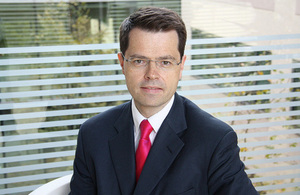
  • James Brokenshire – 2019 Statement on Councils in Northamptonshire

    Below is the text of the speech made by James Brokenshire, the Secretary of State for Housing, Communities and Local Government, in the House of Commons on 14 May 2019.

    On 29 November 2018 I told the House that I was launching a statutory consultation on the proposal for reorganising local government in Northamptonshire which I had received from seven of the area’s eight principal councils. The councils had submitted this proposal in response to the invitation issued on 27 March 2018 following the recommendations in the independent inspection report on Northamptonshire County Council.

    This locally-led proposal is to replace the existing eight councils across Northamptonshire (the County Council and seven district councils) with two new unitary councils—one for North Northamptonshire covering the existing districts of Kettering, Corby, East Northamptonshire and Wellingborough, and the other for West Northamptonshire covering the existing districts of Daventry, Northampton and South Northamptonshire. The proposal envisaged the new councils being fully operational from 1 April 2020.​
    The statutory consultation closed on 25 January and invited views from councils concerned, other public sector providers and representatives of business and the voluntary sector and welcomed views from any interested persons.

    I have received a total of 386 responses. The district and county councils—except for Corby Borough Council—and councillors and public service providers, including the Police and Crime Commissioner and health partners, generally supported the proposal. Responses from businesses, members of the public, parish councils and community organisations were more mixed.

    This consultation supplements the consultation exercise undertaken on behalf of the Northamptonshire councils by the independent opinion research services. This exercise included face to face workshops, a representative telephone survey of Northamptonshire residents and an open questionnaire.

    Ninety per cent of respondents to the telephone survey agreed that there was a need to make changes to Northamptonshire local government and 74% agreed with the unitary proposal; 83% of the over 6000 individuals who responded to the open questionnaire agreed that there was a need for change, with 67% agreeing that a number of unitary councils should be introduced and 44% supporting the proposal for two unitary councils.

    I have now carefully considered the councils’ proposal, along with the results of the consultation exercises, a report by the Northamptonshire Children’s Commissioner, submitted to my right hon. Friend the Secretary of State for Education and me, on how best to ensure continued improvement of the fragile children’s social care service in Northamptonshire in the context of reorganisation, and all other relevant information and material available to me. I have concluded that the proposal meets our publicly stated criteria for local government reorganisation. If implemented, I am satisfied that the proposal would improve local government and service delivery in the area, has a good deal of local support and the area of each new unitary represents a credible local geography.

    This is on the basis that there is a children’s trust covering the whole of Northamptonshire, which, with my support, my right hon. Friend the Secretary of State for Education is minded to establish, as recommended by the Children’s Commissioner, if the unitary proposal is to be implemented. With such an arrangement children’s social care would not be disaggregated with the trust discharging functions on behalf of both councils. My right hon. Friend will be publishing the Commissioner’s report today. It is also on the basis that work continues to be taken forward in Northamptonshire to do more to integrate adult social care and health services.

    I have therefore decided, subject to the issuing of statutory directions requiring the establishment of a children’s trust and to parliamentary approval of the secondary legislation, to use my powers under the local government and public involvement in Health Act 2007 to implement the proposal. These powers enable me to implement a unitary proposal with or without modification and in this case, having carefully considered all the material available to me, I have decided to make one modification to the proposal.

    This is to extend the period for fully implementing the new arrangements so that the new councils are operational from 1 April 2021. While I recognise that a ​delay in implementation will mean potential savings estimated in the proposal will not be realised for another year, I am clear that the extended implementation period means we can be confident that there will be a safe and effective transition to all the new service delivery arrangements across the whole of the area, including for those crucial services supporting the most vulnerable. Throughout this extended period my Commissioners will be able to continue to support the County Council.

    To support the transition, I have decided to establish shadow authorities. I envisage the May 2020 local elections in Northamptonshire will be elections to those shadow authorities rather than to district councils, with the district elections currently due on that date being cancelled. In line with the approach in the proposal for elections to the new unitary councils, I also envisage the elections to the shadow authorities are held on the basis of three member wards resulting in the North Northamptonshire Council having 78 members and West Northamptonshire ​Council having 93 members. Those so elected would be members of the new councils when these go live in April 2021. Elections to parish councils will proceed as scheduled in May 2020.1 intend to confirm these electoral arrangements shortly after hearing any views the district and county councils may have on this.

    I now intend to prepare and lay before Parliament drafts of the necessary secondary legislation to give effect to my decisions. Establishing these new unitary councils will be a significant step towards ensuring the people and businesses across Northamptonshire can in future have the sustainable, high-quality local services they deserve. I welcome the commitment of all the existing councils and their partners to drive forward this process of establishing new councils and transforming local service delivery. I am confident this will continue.

  • Robert Goodwill – 2019 Statement on the Agriculture and Fisheries Council

    Below is the text of the statement made by Robert Goodwill, the Minister of State for Agriculture, Fisheries and Food, in the House of Commons on 14 May 2019.

    Agriculture and Fisheries Council takes place in Brussels on 14 May.

    As the provisional agenda stands, the primary focus for agriculture will be on the post-2020 common agricultural policy (CAP) reform package. Ministers will exchange views on the new delivery model in the regulation on CAP strategic plans.

    Member states will also exchange views on the agricultural aspects of the Commission’s communication titled “Clean Planet for all: strategic long-term vision for a climate neutral economy”.

    The Commission will then provide an update on the performance of EU agricultural trade after which Ministers will hold an exchange of views.

    There are currently three items scheduled for discussion under ‘any other business’:

    Information from the Netherlands delegation on the judgement of the Court of Justice on organisms obtained by mutagenesis (case C-528/16).

    Information from the Spanish and French delegations on the regulation on the European maritime and fisheries fund.

    Information by the Belgian delegation on the situation in the fruit sector for apples and pears.

  • Penny Mordaunt – 2019 Speech at Sea Power Conference

    Below is the text of the speech made by Penny Mordaunt, the Secretary of State for Defence, on 15 May 2019.

    Well, good morning.

    I am delighted to be here. No, more than delighted to be here. I am honoured be here. Not just to be able to thank RUSI for all it does, but to thank you, and particularly those in uniform for your service.

    And of course to deliver the Sir Henry Leach memorial lecture…

    For all his considerable achievements, he is perhaps best known for his unwavering resolve. He told Margaret Thatcher not only that the Falklands Islands should be retaken, but that they must be retaken, and not everyone agreed with him, but he had confidence in the quality of his personnel. That under-resourced, as even they were then, professionalism and belief in our cause would carry the day, and he wasn’t wrong.

    Maybe if it hadn’t been Henry Leach, we would be a different nation today. Some people think we are. They’re wrong. We still have the right stuff in the Royal Navy and for that matter the British Army and yes, even the Royal Air Force.

    For him, and for his Prime Minister, in deciding that course of action, the principles were clear. Their confidence and resolve created a focus and an effort to assemble that famous task force and get the job done.

    Those two great leaders – military and political – provided reassurance in those troubled times.

    Political turmoil at home, a resurgent left wing, calls on other parts of the Exchequer, a distracted America, sound familiar?

    In troubled times, we search for those great personal qualities in others to lead our nation and reconnect with the ambitions the people of this country feel so strongly and so intuitively.

    Leach and his prime minister articulated a national mission hard-wired into the souls of their nation and the people.

    How were they able to do that? To swell hearts? To focus minds?

    To define what it is to be a patriot?

    Did they use the power of their personal philosophy to mould our great institutions?

    Actually it was the opposite.

    They felt the values of the institutions of our nation so strongly, that their personalities were shaped by them.

    They became the living embodiment of their nation’s enduring values and they were a beacon of freedom to those under tyranny.

    And they inspired courage in others.

    They were moved by tolerance, respect, plurality of thought, justice, compassion and above all, a love of freedom. They clearly saw what Thatcher called: “the primacy of the heart” and they accepted no “makeshifts” as Sir Henry would have put it.

    All of us can understand this because all of us – especially those in public service – have been shaped by those values. Why else would we wish to serve? And when I look round this room on this Spring morning, I wonder what your stories are?

    What has this great nation stamped on your hearts?

    Why do you find yourselves here?

    Why is it that we serve?

    Personally, I can still recall the sight of HMS Hermes leading that task force out of Portsmouth Harbour.

    And as a nine-year-old, I didn’t know much about that scene. But witnessing it, and Thatcher’s resolve, and Leach’s confidence, well I knew Britain stood up to bullies.

    …and I knew it was important that we did.

    It was important enough for some of those ships and my class mates’ fathers not to return.

    I’d encountered courage, I’d seen duty, and I’d seen sacrifice for something greater than ourselves.

    And 37 years later, when I was asked by Major General Julian Thompson to address the San Carlos dinner, the reunion of that task force, well I saw it again.

    And I can tell you the veterans remain to this day as uncompromising in their approach to the enemy as they towards their food and drink…

    I’m going to talk to you today, and in the future about, ships, boats, cyber and all sorts of other things.

    I want you to know however, from the outset, that I understand the business we’re in is primarily about people, it’s about heart and guts, it’s about imagination and belief, vision and ambition.

    And our country, at such a profound cross roads in its story, facing such uncertainty and yes opportunity, needs the values Leach admired like never before.

    Freedom, democracy, rule of law and the rules-based order…

    Our citizens want the nation to be able to affect and improve the world.

    They want us to go out and sort out problems.

    And I know from my previous department, their generosity and their care for others around the world.

    They hate that feeling of impotence when we can’t protect people.

    And they want us to be able to further our national interests.

    And this means they want us to remain a nation with the inclination and the ability to act.

    They want us to influence, to deter and to intervene. And they want us to be able to do this even when that means us standing alone.

    Britons intuitively understand Global Britain and you do too because you’re at its heart. You are the foundation of global Britain.

    You’re the ones with the reach, the connections, the platforms, the security and partnerships.

    Without you, we cannot protect shipping. Without this, trade deals won’t yield dividends.

    Without you to guard peace and security, nations can’t lift themselves out of poverty.

    Without you to combat threats…whatever their shape and size… evil will prevail.

    Global Britain is a protector, it’s a wealth bringer, it’s a problem solver, a life saver and a peace broker. And nothing symbolises our intent and ambition for global Britain and has captured the hearts of our citizens more than our new carriers.

    They are a mighty symbol of our intent.

    The most powerful ships Britain has ever built.

    Nine acres of sovereign territory that will give us the ability to project power from anywhere in the world.

    Whether as part of a discrete operation, in support of land operations or as part of a coalition of allies and partners. They are versatile and they are a global influence.

    In 2010, when I made the case for the carriers, I just pointed to every humanitarian crisis and brewing conflict situation we had ever experienced since we’d had carriers.

    And I challenged people to name one situation in which that capability had not been instrumental in getting a good outcome.

    Sir Henry had only two mini-carriers in his day and I’m sure he is looking down on us with envy.

    Last year our mighty Queen Elizabeth tested out the F35b aircraft at WESTLANT.

    This year it will be returning to the Eastern seaboard to conduct flight trials with our own F35b future fighter.

    And when Prince of Wales joins her in the fleet in the near future…we will have one carrier available at very high readiness at all times…

    And this will match our strategic nuclear deterrent with a conventional one.

    I want to make sure that we make the most of this incredible sovereign capability.

    And that’s why today I can announce that we will develop a new policy that will set out how those ships will deliver for our nation in the years ahead.

    The national carrier policy will lay the blueprint for how we use them to deliver global Britain’s objectives around the world.

    Our carriers are setting the tone for the future Navy that I want to see and they’re instilling confidence, closing deals and protecting the rules-based order.

    And projecting our intent in uncertain and a challenging world.

    …a world that is becoming increasingly complex

    … the challenge of China rising

    …the threat from a Russia resurgent

    …the ever-changing shape of violent extremism and terrorism

    ….the growth of cyber threats…and organised crime

    The grey areas of new weapons and new theatres.

    There are huge challenges ahead of us, and there will be many demands made of us.

    So, we had better be prepared.

    Like Sir Henry, when he gate crashed that emergency cabinet and Thatcher asked him what she could do for him.

    He replied ‘No, Prime Minister, it’s what I can do for you’,

    So, what are we doing to stay ready?

    In the past 12 months we’ve been… training in Norway’s Arctic tundra

    Drug busting in the Arabian Gulf…establishing field hospitals in the South Sudan

    Helping enforce UN sanctions in South Pacific

    And escorting Russian vessels off the premises

    And, silent and undetected you’re maintaining our continuous-at-sea deterrent.

    In all that you do you carry the reputation of Great Britain with you

    …because you influence and you shape the world around you

    …you’re the prototype that other seeks to emulate

    …and partner of choice for our allies

    And I’m proud that you’re strengthening partnerships around the world at all times…

    With HMS Defender supporting NATO while on Exercise Formidable Shield.

    With HMS Montrose and our Mine Countermeasures Force now permanently in the Middle East and a Naval Support Facility in Bahrain – keeping vital shipping lanes open

    With our Royal Navy soon to sail to the Baltic as part of the Joint Expeditionary Force – reinforcing partnerships with like-minded northern European allies

    And with our development of the North Atlantic Joint Operating Area…that will soon guard mile after mile of vital waterway.

    Our people are not just exceptionally brave but also enormously innovative and creative. Today they’re doing everything

    …from devising new environmentally-friendly ways to power headquarters in the field

    …to delivering AI and robotics into every fighting arm

    …courtesy of our new pioneering new Naval X accelerator

    And at the very pinnacle of the pyramid you’ll find the Royal Marines

    …developing Future Commando Force

    In a reimagined global Britain, Defence will continue to be the first duty of the nation

    But it must up to our ambition:

    …maintaining a ruthless focus on its mission

    …becoming more forward deployed

    …and going out of its way to work with friends and allies

    But if our future fleet is to respond to the growing demands, we need to do much more:

    Investment will remain critical

    We have done a great deal to drive out inefficiencies in defence

    But there is more for us to do.

    And today you will hearing about the direction and innovation in the RN, about our new capabilities coming online and being planned.

    But I think we need to get some fundamentals right too if we are going to match the Navy and the nation’s ambition.

    In 2015 we rightly committed to meet NATO commitment to spend 2% of GDP on defence. Understandably people focus on that number. Politicians point to it. And rightly encourage other nations to match it.

    But that’s not the whole story.

    I just want us to briefly recap the headlines from the last three defence reviews. In 1997, the review pledged to deliver 32 destroyers and frigates and 2 Amphibious Assault Ships. In the event, we got the 2 Assault ship…but only six frigates and destroyers.

    In 2010 SDSR, we said we would deliver 2 carriers and 19 destroyers and frigates …of which 6 were Type 45s and 13 were Type 26s. Well we got the carriers. But the 13 Type 26s were reduced to 8 and we’ve ordered 3 of them.

    And in SDSR 2015 we set out a shopping list of 8 T26s, 5 Type 31e, 2 OPVs and 4 ballistic missile submarines. I am determined that remains on track.

    I ask you, what is the point of methodically reviewing threats and tasks, formulating capability and then not delivering it?

    What’s the point of building ships only to mothball them for lack of crew, spares or funds?

    What is the point of costly design and innovation if we only intend to build a handful?

    What is the point of running on old vessels and delaying new ones and running up massive costs in the process?

    If the RN and wider defence is to deliver on the ambitions of our country, then we must tackle both the funding and the political behaviours which constantly undermine it.

    In the coming weeks, I’m going to be saying more about how we build on all the good work and lessons to date, most notably from the carrier alliance.

    To how we ensure Defence sits at the heart of the prosperity agenda.

    To end the vicious circle of unfulfilled SDSRs and more of the same.

    To create a virtuous circle where we recognise that it’s long order books and a steady drumbeat in our yards that strengthens our supply chain and brings down the overall cost of procurement. What’s needed is a closer partnership with industry that gives them confidence to invest and build and us the confidence that we can and must buy British.

    We must recognise that if Britain’s armed forces don’t use it, Britain’s businesses will find it harder to sell it. We have to walk the walk, as well as talk the talk.

    And we must do more to maximise the full value of our resources to build up Britain…not only is that necessary in terms of creating skills and resilience.

    But it’s vital in creating an environment where Defence gets the critical investment it needs.

    Now as I stand before you today, I can’t tell you that The Treasury is going to welcome that message. I cannot tell you that The Treasury will agree with all of my message.

    What I can promise you though, is that The Treasury will hear this message.

    We know that Defence must play a much greater role in the whole of government’s prosperity agenda.

    WHAT THIS MEANS FOR INDUSTRY

    What does all this mean for industry? It means we’re looking to you to match our ambition. To get the ships we need, we need the shipbuilding. That means improving the relationship between industry and Government

    A few years ago, Sir John Parker’s report laid bare the challenges. The old days of changing requirements on a whim and being vague about what we need in the long-term, that must end our Recent Acquisition Review. Took a sample of live MOD programmes.

    It found on average that the initial estimated cost of a project rose by 35 per cent and delivery time by 46 per cent. That’s not just costing us time and money…that is damaging our operational effectiveness.

    So my challenge to industry is to become more sustainable. To do more to deliver value for money. To stick to fixed project budgets and to innovate in the way you build. To up your competitiveness…building exportability in as standard and to deliver faster…the days of taking decades to build a ship are over.

    I know you’ve been told this before, but what’s different now is that both you and I recognise that the politics also needs to change.

    And we have to continually learn.

    Which is why I’ve commissioned work examining the lessons from the Mars tanker procurement, especially for our UK supply chain.

    Britain already has incredible shipbuilding heritage but I think we should prepare for a fantastic future, too.

    Aircraft Carrier Alliance showed that Britain has what it takes to produce first class fifth generation ships.

    Just as the lessons of Type 26 is that we have the capability to design frigates that are the envy of the world.

    We need to learn these lessons as we bring in our next generation of Fleet Solid Support Ships…our logistic backbone. So it’s time for a sea change in industry as well. Let’s replace Sir John’s old vicious cycle with a virtuous circle.

    And let’s remember Sir Henry’s favourite words:

    The sea endures no makeshifts. Discipline, courage and contempt for all that is pretentious and insincere. These are the teaching of the ocean and the elements – and they have been the qualities in all age of the British sailor.

    As we prepare the next chapter for the fleet…

    As we go into the next CSR.

    As we transform defence

    Let’s have some honesty about what it takes.

    Let’s have some honesty about what it costs.

    Let’s have some confidence about its value and some rigour in the planning.

    Let’s have some excellence in our partnership and some clarity in our mission.

    As your Secretary of State all I ask is for your help in that task.

  • Liam Fox – 2019 Speech to the Institute of Government

    Below is the text of the speech made by Liam Fox, the Secretary of State for International Trade, on 15 May 2019.

    Good morning everyone.

    When people talk about, or write about, the Department for International Trade, they tend to do so in rather vague terms about what they call ‘trade deals’.

    While trade policy is an important part of what we do, it accounts for less than 20% of our total staff.

    As an international economic department we are responsible for helping sell UK goods and services to the rest of the world, negotiating market access for UK exporters, assisting outward direct investment for UK companies into overseas markets and for foreign direct investment into the UK.

    So I am very grateful to the Institute for Government for providing this opportunity to set out how DIT came into existence, its current role and its future ambitions.

    And I am proud to lead a department which has a direct and measurable impact on our prosperity.

    In 2017/18 alone, we helped UK businesses export goods and services worth around £30.5 billion.

    Using analysis by the Institute for Economic Affairs, it is estimated that this could potentially generate around £10 billion for the Exchequer.

    Despite a challenging global economic climate, British exports now stand at a record high of £640 billion – that’s a year-on-year increase of 3%.

    Since the Referendum alone, UK exporters have sold around £1.7 trillion of goods and services to the rest of the world.

    What’s more, our efforts to keep the UK in the global spotlight as an attractive place to do business has helped stock levels of foreign direct investment hit another record-high of £1.34 trillion.

    This has helped generate around 1,500 new jobs across the country each week.

    Between 2016 and 2018 we supported more than 3,500 inward investment projects, creating and safeguarding over 170,000 jobs.

    And the UK is the number one destination for foreign direct investment in Europe and third in the world last year behind only China and the United States.

    It actually seems remarkable to me that three years ago DIT did not even exist.

    When I was asked to set up the new department by the Prime Minister in 2016 we had nothing.

    No desks, no phones, no IT, no office and no staff.

    In fact, on day one I was 25% of the department!

    Today we are a department of nearly 4,000 people, led by an excellent Permanent Secretary in Antonia Romeo and equally excellent Chief Trade Negotiation Adviser, Crawford Falconer.

    The UK stands ready to implement an independent and visionary trade policy for the first time in more than 40 years.

    It is truly a pivotal moment for the country, and I am delighted to say that we are starting from a position of strength.

    I wanted this morning to take a step back, as Bronwen says.

    How did we get to this point? Where did we start from? And what lessons does it have for the future?

    When I became Defence Secretary in 2010 we were faced with reshaping a dysfunctional Ministry of Defence in real time – with £39 billion inherited departmental overspend, a 7% budget cut to be implemented to help reduce the government deficit, two military conflicts in Afghanistan and Libya, a strategic defence review that had not been conducted for 12 years and the loss of around 37% of our civil servants as a consequence of the above.

    People

    And this experience was crucial when it came to creating a new department.

    While we needed to develop our policies, our strategy and direction, as well as building the very infrastructure from which everything else flows – and all in a very short space of time – we were free from the limitations of someone else’s structures and constraints.

    We knew we had to be clear about our purpose from the outset.

    We had to find a way to incorporate existing organisations like UK Export Finance, our export credit agency.

    So we organised ourselves around three very distinct pillars: trade policy, including trade agreements; investment promotion; and export promotion.

    And everyone in the department belongs to one of these. And each of the pillars is owned by a dedicated Minister, and a dedicated Civil Service Director General.

    We also had to create an organisational plan to implement these three pillars, build HR and finance capabilities, find office space, and – crucially – find the very best people available to fill them.

    Setting up a Departmental Board, including recruiting a team of Non-Executive Board Members led by the excellent Simon Walker, was crucial as it acts as the central coordinating structure of the entire department.

    And the Board, which I chair, meets around 10 times a year.

    We just held our 27th board on Monday.

    It plays a fundamental role in challenging and scrutinising the department’s business, while simultaneously setting our strategic direction and supporting my Ministerial team and senior Civil Servants in delivering our long-term goals.

    We publish our agenda to our staff worldwide before the Board sits so they can comment and feed into it, and we inform them of our discussions and decisions afterwards both by email and by video.

    But even with this in place, it was clear that we had a problem: the UK had not operated its own independent trade policy for more than 40 years and there were very few civil servants or Government Ministers with direct experience in this highly technical field, and no collective Whitehall memory on which to draw.

    All of this could seem daunting, but I actually think that the uniqueness and genuinely ground-breaking nature of the challenges fuelled the excitement and expectation of what lay in store for the department.

    But pulling together this team in such a short space of time required a great deal of cooperation across Government.

    Now some might think that with more than 430,000 employees scattered across the country and internationally the Civil Service is unwieldy.

    Actually, nothing could be further from the truth.

    At its best, few organisations are as dynamic and quick to react as the Civil Service.

    So when the call went out for help in staffing DIT, other Government departments did all they could to release the people with the right skills.

    And our team worked frantically over the summer so we could hit the ground running when Parliament returned from the summer break in 2016.

    There is not a day goes by when I am not impressed by the dedication, drive and professionalism of those who have helped create DIT, and delivered world-class advice and delivered out objectives as the structures bedded in.

    Learning

    However, while we had some very experienced people from the outset, they did not necessarily come with the policy expertise that we required.

    That’s why we made it an early priority to reach out to the people who already had the expertise that we needed, holding consultations with trade experts around the world.

    We were able to draw on the skills and expertise from strategic partners such as Canada, Australia and New Zealand who advised us, for example, on establishing our own trade remedies function.

    And there was a great deal to learn, with policy details like procurement, intellectual property, tariffs or rules of origin requiring a whole new level of understanding, or a different perspective in the context of an independent UK trade policy.

    That’s why we unveiled the International Trade Profession last year.

    This is the newest Civil Service profession and is designed to recruit and train a new generation of international trading talent.

    More than 2,500 civil servants have joined so far and are being equipped with the skills they need to make our country the great trading nation that we can be.

    Another challenge was the need for DIT to become a credible, data-driven, intelligence-led and more efficient organisation.

    This meant developing our analytical, statistical and data science capabilities, and rolling out a new range of surveys and data collections to inform the development of trade and investment policy.

    We laid the groundwork to build solid relationships with the ONS and HMRC to deliver the necessary trade statistics, and we pushed forward with the OECD and WTO cutting-edge initiatives developing new measurements of digital trade and Trade in Value Added.

    I remember when we started commenting on the lack of data that seemed to be there and I remember saying that if I made decisions when I was still practising medicine on the basis of the same level of information I would probably have found myself up in front of the General Medical Council.

    But we have built that capability and are continuing to build it today.

    We made sure businesses were involved in helping shape the department from the outset by opening a channel of communication to understand what mattered to them, while at the same time opening the eyes of many companies to the potential of what was coming down the track.

    And we expanded our World Trade Organisation mission in Geneva as a very early priority in fact within days, to lay the foundations for when we take up our seat as independent member.

    Vision

    So having got the right people in the right places, we needed to set a clear direction for the department.

    So in my first major speech as Secretary of State I made the case in Manchester for free trade and an open and liberal trading environment and warned about the dangers of protectionism.

    I said there that “free trade has, and will continue to, transform the world for the better, and the UK has a golden opportunity to forge a new role for ourselves and importantly for the rest of the world.”

    I believe this passionately and setting out this intellectual creed from the start was essential in shaping DIT’s culture and its direction.

    But in a department the size of DIT, with a presence in 108 countries, political direction by my excellent team of Ministers and myself can only go so far on a day-to-day basis.

    So we wanted to create a set of values that went to the very heart of everything we do.

    We called it the DIT Spirit.

    Central to this is our “vision to create a UK that trades its way to prosperity, to stability and to security”.

    Our values of being Expert, Enterprising, Engaged and Inclusive guide how we deliver our vision and what we expect of one another.

    These values are in turn underpinned a raft of behaviours that we expect all staff to model.

    By setting out our values so early and clearly, we have been able to build a culture of trust and purpose which, in less than three years, is I think established, coherent and cohesive.

    This is reflected in our People Survey results, which have shown consistent improvement in the level of employee engagement across the department.

    If, of course, there’s a downside, it’s when the Treasury tell me we’ve got a very high application to job ratio and therefore there’s no free-market case to see our salaries go up!

    Senior leadership team

    Now the efforts of our early senior leadership team to build capacity at pace were quite remarkable.

    A single Departmental Plan needed to be built, publicly outlining our core strategic objectives, and how we were going to achieve them.

    Trade and investment sector teams, spread across several organisations, had to be brought together: from UKTI, UK Export Finance, the Trade Directorate team at the Department for Business, Innovation and Skills, and overseas teams from the FCO.

    Other teams such as the Trade Policy Group needed to be scaled up very quickly. And teams that didn’t even exist, including our corporate functions such as the Ministerial Strategy Directorate, Private Offices, Finance, HR and Communications functions all needed to be built.

    Future

    Everyone involved in DIT has been in some way involved in something ground-breaking.

    As the Institute for Government has said, the UK is unique in carrying responsibility for export promotion, export finance, trade remedies and international negotiations in a single department.

    We also carry export licensing on top of that.

    This sets us apart from so many of our strategic partners such as Australia, or Canada, the EU, or the United States.

    Indeed, across the non-EU G20 countries only China and Indonesia have a separate trade department. Which puts us in a strong position.

    We are an international economic department of state, which has brought together skillsets in trade promotion, trade policy, foreign direct investment, outward direct investment and export promotion in one place.

    We also convened The Board of Trade for the first time in 150 years to champion exports, inward investment and outward direct investment, but most importantly to ensure that their benefits are spread across all parts of the United Kingdom.

    We will be meeting tomorrow in Belfast and I’ve been fortunate enough to have senior individuals from across the political parties with experience, Patricia Hewitt, for example, former Secretary of State at DTI, is one of our members, Brian Willson also has joined us.

    We have also established a network of Her Majesty’s Trade Commissioners who are responsible for our nine global regions.

    They were selected from the very best talent, across both the public and private sector, for their expertise in specific markets from China to the US and everywhere in between.

    Their job, alongside our Trade Policy Group and our partners across the world, is to secure the best market access, trade and international relationships that the UK will need as demand from growing markets in Asia and growing technology change over the next decade and more.

    And our trade commissioners set priorities for wide geographical areas and promote the department’s work overseas, but they are responsible for their own regional trade plans, setting out our ambitions in those regions for exports, outward direct investment and foreign direct investment back to the UK.

    Now, there were those, and probably still are those, who believe that such a level of autonomy given by a Secretary of State to our Trade Commissioners was, to use the words of Yes Minister, “a very brave decision, Minister”.

    But I think our trust has been shown to be very well placed.

    And I’ve always said there’s no point in having the most intelligent and most intuitive staff if you don’t allow them to use their intelligence and their intuition to be able to serve the organisation better.

    As a department we’ve have continued to run the Exporting is GREAT campaign to raise awareness among UK businesses about how exporting can help firms to grow.

    We have launched the online great.gov.uk platform which has, among other things, a live directory of exporting opportunities.

    For the first time anywhere, a Government – this Government – is putting business directly in touch with potential customers overseas.

    Some 149,300 exporting opportunities have been advertised since the service’s launch to UK businesses.

    And we are continuing to support the excellent work of UK Export Finance, the world’s first credit agency which this year celebrates its 100th birthday.

    Its ground-breaking and innovative work remains as relevant today as it did when it was first created, with some £50 billion worth of financing available in 65 international currencies.

    Last year we launched the new Export Strategy to make Britain a 21st century exporting superpower.

    Through this we are informing, connecting and financing businesses of all sizes in a bid to increase our exports from 30% to 35% of our GDP moving us towards the top of the G7.

    One thing that struck me, however, is that not everyone understands the value of what we sell.

    So, this morning’s check you’re awake quiz: if I were to ask you to rank the following sectors in order of their estimated export contribution to the UK economy, with the greatest at the top, what would you say?

    So you have insurance and pensions, whisky, defence, and education. Where do you rank them from one to four?

    Well, it may surprise you to learn that based on the latest figures education would come top with £19.9 billion.

    Based on the latest ONS figures, the total export of insurance and pension services from was just behind at £18.8 billion.

    The defence sector comes in at £5.9 billion in the same period.

    And whisky exports, according to the ONS, were £5 billion last year.

    Now, drawing comparisons is always a minefield and I want to make clear that while these are official figures, I’m not strictly comparing like with like.

    But I think it gives us an idea of the huge diversity and strength of the UK’s exports – and not always in sectors that the public might readily think of as being exports for the UK.

    We’ve also secured a deal with the WTO to remain within its Government Procurement Agreement, providing access to the £1.3 trillion a year’s worth of procurement opportunities in the global public tender market in a no deal scenario.

    We have agreed a no deal tariff policy across Whitehall to minimise costs to business, mitigate price impacts on consumers, and support UK producers against unfair trade practices. In the event of a no deal exit, 87% of total imports to the UK by value will be eligible for tariff-free access.

    We have also set up a Trade Remedies Investigations Directorate to ensure the UK can continue to provide support to domestic industries to counter unfair subsidies or dumping. And we have worked to ensure we have bilateral agreements in place to ensure continuity of trade with key markets currently covered by existing EU trade arrangements worth £71 billion, whether that is in the event of no deal, or probably more importantly after the proposed implementation period. I could go on, but I think you get the picture.

    Conclusion

    What we have achieved in three years is working for Britain and I would just like to say that I’m enormously proud and grateful to my team.

    We are helping businesses access new markets, with new tools and new technologies to improve the living standards of people around the world, who are benefiting from greater choice at lower prices.

    This in turn helps drive global prosperity, contributes to global stability and security, and underpins the Government’s agenda for a Global Britain.

    We’re on the cusp of striking out with our own trade policy for the first time in more than four decades. When we do so we will have the freedom to shape a better future, not just for ourselves and our own people, but for the wider world too.

    As I’ve often said, we don’t see trade as an end in itself; we see trade as a means to an end.

    It is a way by which we can spread prosperity.

    Spreading prosperity helps underpin social cohesion; social cohesion underpins political stability; and political stability is the building block of our collective security.

    And it’s a continuum that cannot be interrupted without unwanted consequences. All we require is the courage to seize the opportunities that are out there and my department stands ready to help the country do just that.

    Thank you.

  • John Glen – 2019 Speech to Equifax Conference

    Below is the text of the speech made by John Glen, the Economic Secretary to the Treasury, on 16 May 2019.

    It’s a great pleasure to speak to you today.

    Technology and innovation is one of the most exciting and uplifting parts of my brief as City Minister and that’s particularly true right now with the political situation.

    The digital revolution rumbles on at breakneck speed, throwing up all sorts of interesting questions for the future of financial services…

    How do we protect consumers and investors without stifling growth and enterprise?

    How can technology help us balance the needs of an ageing population against the aspirations of young people?

    And how do we ensure that the most vulnerable members of our society aren’t locked out of the opportunities or left behind by the pace of change?

    Our answers to these questions, and others like them, will shape the strength and success of our economy every bit as much as Brexit, if not more so.

    It’s not a job for government alone. Government can play a convening role; but it’s a shared effort with business and academia.

    So the subject of today’s conference – Making Smart Decisions Together – is apt, and not just from a technological standpoint.

    I congratulate Equifax for putting together a programme that’s open to the social as well as the financial opportunities that arise from the advent of Open Banking, Big Data and Artificial Intelligence.

    What I’d like to do this morning is frame these discussions by outlining what the government is doing to ensure the UK remains at the forefront of innovation in these areas; and what we’re doing to help direct this technology towards the challenge of financial inclusion.

    Throughout history, there have been moments when technology takes a great leap forward…

    The invention of the World Wide Web – thirty years ago – was a case in point.

    Tim Berners-Lee’s supervisor famously described his proposal as “vague but interesting”, which must surely be the understatement of the century.

    Certainly, it has transformed the way we trade, bank, invest, borrow, pay and donate money, as well as how we work and communicate with one another.

    And the UK has been right at the heart of this transformation.

    In fairness, our geography helped.

    Wall Street is 2,500 miles from Silicon Valley – but on this side of the pond, you can walk from the Square Mile to the Silicon Roundabout in about twenty minutes.

    But, just as importantly, we had the connectivity and the skills necessary to flourish.

    The global reach of the City of London – allied to our nationwide strengths in research and innovation – proved a truly winning combination.

    Today, the UK is regularly voted the best place in the world to start and grow a FinTech business….

    …ahead of New York.

    …ahead of Paris.

    …ahead of Hong Kong, Singapore and Shanghai.

    Savour that for a moment… it’s a real tonic for those of us who believe Britain still has what it takes to tread a bold and ambitious path in the world.

    We have something very precious indeed, and the government wants to do everything we can to nurture the formula behind our success.

    We want our financial services sector to be the most competitive and innovative in the world.

    One that continues to fuel jobs and growth, while delivering choice and value for customers.

    And to achieve that ambition, we need to be ready to take advantage of the next great technological leaps as and when they arrive.

    Open Banking is a case in point.

    Two years ago, the Competition and Markets Authority published its ground-breaking Retail Market Investigation Order.

    It requires the nine largest banks in the UK to build standardised systems, so customers can share their financial information with FinTech firms quickly and securely.

    This has kick-started a transformation in retail banking.

    In November last year, a beauty salon in Kent became the first small business to apply for a loan in the UK using Open Banking.

    The lender, Iwoca, was able to use the customer’s banking transaction history to speed up the decision-making process – funds were released within an hour-and-a-half.

    Likewise, M&S Bank is using Open Banking to simplify its mortgage application process: now the data is readily available, most customers are no longer required to provide traditional bank statements.

    We can expect to see a growing number of new products and innovations appear as Open Banking gains traction.

    But this is nothing compared to the possibilities of Artificial Intelligence and machine learning.

    This data-driven revolution has already arrived – or at least, that’s what Alexa told me to say this morning.

    Of course, Equifax is itself one of the pioneers.

    Your patented NeuroDecision machine learning technology is paving the way for the use of advanced neural network modelling in credit scoring.

    And whether it’s banks using chatbots to provide personalised customer services…

    …investors drawing on big data analytics to make faster and more accurate market forecasts…

    …or insurance companies employing algorithms to spot financial crime…

    …no part of the sector will be left untouched.

    The UK is currently ranked first in the Government (AI) Readiness Index, based on our ability to absorb and exploit the potential of this technology.

    We’re already home to some of the most established names in the business, like Deepmind and Swiftkey.

    But we’re also home to the rising stars…

    Like Cleo, a London-based start-up which uses AI to analyse people’s spending habits to help them better manage their money. Founded in 2016, it now has 600,000 users across the UK and North America.

    And Onfido, which uses photo recognition algorithms to help companies verify their customers using live images. Established by three Oxford University graduates, it now employs 200 people in five countries.

    (PWC) predict that by 2030, (AI) could boost our national (GDP) by 10%.

    But this £230-billion opportunity won’t come about by itself.

    That’s why the government’s (AI) Sector Deal is bringing together almost £1 billion’s worth of contributions from government, industry and academia to unlock this potential.

    Together, we’re seeking to attract the best and the brightest from around the world with our new Turing (AI) Fellowships…

    And we’re investing in home-grown talent by creating more than 1,000 (AI) PhD and Masters places at universities across the country.

    Meanwhile, our pioneering Centre for Data Ethics and Innovation seeks to ensure the benefits of this technology are felt evenly across our society.

    This leads me to the crux of my message this morning.

    Digital innovation can’t just be about providing wealthy people with sophisticated products and services.

    If that’s all we achieve, then we will have failed to grasp the full potential of this technology.

    Because the real opportunity before us is to bring about a stronger and more resilient financial sector – one that caters for everyone in our society.

    I’m not trying to be all touchy-feely.

    I’m a red-blooded capitalist. I believe in the power of markets to lift people out of poverty and drive our individual and collective prosperity.

    But the hard truth is that a growing number of people feel like our economy doesn’t work for them, or their families.

    I encounter examples at my constituency surgery every week.

    Young people who can’t get on the housing ladder.

    Single mums and dads struggling with the costs of pay-day loans and rent-to-own schemes.

    Older people worrying about how to meet the cost of care without selling their home.

    My view is simple.

    Government and industry has an obligation to put this right, and to ensure everyone can access safe and affordable forms of credit that are appropriate to their needs.

    For our part, the government is directing £55 million from dormant bank accounts to help address the supply of affordable credit.

    This money will be arranged through a new independent organisation – Fair4All Finance – which will be fully operational in the autumn.

    In terms of the role for business, the government doesn’t want to mandate firms to provide products and services…

    Rather, we want to encourage lenders to think about how technology can help vulnerable individuals tell a more convincing story about their financial integrity, so they can access the normal financial choices that most of us take for granted.

    Take housing as an example.

    Many people who rent accommodation go on to face problems getting a mortgage because they have a low credit score.

    In 2017 we launched the Rent Recognition Challenge to find a simple way to record and share rental payment data with lenders and credit reference agencies.

    It was a ‘Dragons Den’ style competition, backed by a £2 million prize fund.

    One of the three winners – Bud – is using its share of this money to build an artificial-intelligence driven rental recognition tool which automatically detects when an individual is paying rent and prompts them to get the payments verified.

    It also takes advantage of Open Banking by allowing lenders to integrate this service into their apps, so people can use the data when they apply for a mortgage.

    This for me is indicative of the real power of FinTech – products that deliver a social as well as a financial benefit.

    Following on the success of the Rent Recognition Challenge, we are launching the Affordable Credit Challenge.

    We want to create a whole new market of products to serve credit unions and other social lenders – ones that are tailored to the needs of this diverse sector and the communities they serve.

    Applications open this summer, and I’m looking forward to seeing what ideas emerge.

    Of course, these are just two examples.

    Financial inclusion is a complex issue.

    But as the digital revolution continues, I have faith that it will offer more and more solutions.

    The only limit is whether we have the attitude, aptitude and ambition to make them most of the opportunity.

    I’m optimistic that we have, because every time I attend events like this, I’m reminded that the dynamism and energy of our financial services sector is alive and kicking.

    And I’m encouraged that together we can help tackle some of the great financial challenges of our time.

    So I wish you every success in your discussions today.

    And as we look to the growing opportunities for FinTech, let me assure you – the government is there to support you every step of the way.

  • Sajid Javid – 2019 Speech on Terrorism

    Below is the text of the speech made by Sajid Javid, the Home Secretary, in London on 20 May 2019.

    It’s a pleasure to be here in New Scotland Yard, the home of Counterterrorism Policing, with such a distinguished audience.

    And to be introduced by our outstanding head of CT Policing.

    Now, if anyone here is watching ‘The Looming Tower’, a TV drama about siloed US security agencies not talking to each other about potential threats, you might worry that’s how it works here.

    But if that was ever true there and then, it’s certainly not true here and now in the UK.

    Every week Neil and I sit down with the Director General of MI5 and we go through all of the high-priority investigations.

    Making sure the top threats are prioritised and coordinated.

    Since becoming Home Secretary a year ago, it’s been a huge privilege to be trusted with daily decisions that directly affect the security of our citizens.

    Some of them can mean the difference between life and death.

    So, it’s a responsibility I take very seriously.

    Being ultimately responsible for the security of more than 65 million people has meant me personally signing several thousand warrants, day and night.

    Giving the green light to operational decisions.

    All the while proactively reforming many policies across the board.

    It puts a lot of other Westminster issues in perspective.

    Most of my previous jobs were focused on unleashing what you might call the positive parts of human nature – such as enterprise, creativity, charity…

    But for those virtues to flourish, we also need to constrain the darker side – violence, exploitation, injustice.

    Tough decisions must be made to maintain our security.

    And nobody in government knows that better than the Prime Minister.

    Someone who has done more than anyone – both as our leader and as Home Secretary – to keep this country safe.

    Someone who has remained resolute in the face of terror attacks, cyber onslaughts and the use of a nerve agent on British soil.

    And I’d like to pay tribute to her today for her tireless commitment to our national security.

    The first duty of government is of course to protect its citizens

    That is why I want to talk today about how we are doing just that – protecting our citizens from individuals, organisations and even states that wish to do us harm.

    Security underpins everything – our liberty, and our prosperity.

    That spectrum of security goes all the way from Stop and Search on our streets, to supporting our soldiers on operations.

    From intervening early to stop a young person from carrying a knife or to prevent the risk of radicalisation.

    Fundamentally, security underpins the unity of our society and our values.

    And that, of course, is what motivates our enemies.

    Those that challenge us – whether it’s the twisted ideology of religious or political extremism, or the cold calculation of state actors, they do so because they detest our values.

    They seek to sow division between us because they see our strength in unity.

    They fear that strength, and that drives their hatred.

    For some, this can be very close to home.

    For Muslims, it is painful to see how the religion of our parents and grandparents is so often misunderstood and misrepresented… twisted by extremists on all sides so that they can sow the seeds of division and violence.

    But we are better and bigger than that.

    We are, and will always remain, an open, fair, and tolerant society.

    Those are our values.

    And we will not allow hatred, intolerance, and violence to destroy them.

    This country is under the protection of the finest police, security, intelligence, and armed forces in the world, many of them working right here in New Scotland Yard.

    Your excellent work, hand-in-glove with MI5, does more to keep us safe than most of the public will ever know.

    That’s the way it should be.

    Each and every day, our security services fight against terror – from large international terrorist groups, to radicalised individuals.

    In the past two years, they have foiled 19 major terrorist attacks – 14 of them Islamist, and 5 of them motivated by extreme right-wing ideologies.

    But those are just the headline figures.

    For each attack prevented, there are dozens more that never have the chance to begin in the first place.

    And despite this impressive work, the tempo of terrorist activity is increasing.

    The London Bridge inquest is a chance to reflect on the 2017 attacks in the UK.

    To remember the victims of terrorism, and the loved ones that they leave behind.

    And to examine publicly the systems we have put in place to protect the UK.

    To help us do just that, I can announce that I’ve appointed Jonathan Hall QC as the Independent Reviewer of Terrorism Legislation and I’m delighted he’s joined us here today.

    It’s clear that the threat from beyond our shores is also increasing.

    More than 250 dead in Sri Lanka on Easter Sunday.

    Worshipers slaughtered in mosques in Christchurch.

    A journalist shot dead by dissident republicans in Northern Ireland.

    And Al-Qaeda are regaining their strength.

    Old threats return as new ones emerge.

    In our ever more interconnected world, these threats are not constrained by national borders.

    Globalisation and the indiscriminate nature of terror means that we are all potential victims.

    Although the London Bridge attacks took place in the heart of our capital, more of the victims were foreign nationals than UK citizens.

    In fact, more UK citizens were murdered in the recent bombings in Sri Lanka.

    When it comes to security, no country is truly an island.

    We have seen how quickly dangerous ideologies, from Islamism to extreme populism and nationalism, can sweep across countries and continents.

    Daesh’s so-called Caliphate has now been defeated on the ground, but the poisonous ideology remains.

    In fact, of all the terrorist plots thwarted by the UK and our Western allies last year, 80% were planned by people inspired by the ideology of Daesh, but who had never actually been in contact with the so-called Caliphate.

    And just as its fighters were drawn from every corner of the world, including too many Brits, we have taken an international response to this menace.

    Now, many of these fighters have been captured but some may wish to return home.

    It is a challenge that dozens of our allies face.

    The police and security services have worked tirelessly to identify those intending to travel overseas to join Daesh.

    They have seized passports at the border and prevented them from leaving the country.

    And – along with concerned friends, families and public-sector colleagues, the police have directed hundreds of at-risk individuals to support from our Prevent programmes to move them away from terrorism.

    We did not stop everyone, as the case of Shamima Begum shows.

    But the systems we have put in place, they starved Daesh of many more British recruits.

    Of course, our action against Daesh does not stop at the border.

    We have been a leading member of a coalition of nations that has taken action to strike against Daesh, eroding their strength in the region, their threat to the region, and their threat to the wider world.

    That included the targeting of Mohammed Emwazi, the figurehead of their evil execution squad.

    And we are working with our international partners on efforts to prosecute fighters where they are captured.

    It is only right that those nations that have suffered most under Daesh have the chance to bring them to justice.

    But the difficulty in prosecuting Emwazi’s alleged collaborators – El Shafee Elsheikh and Alexanda Kotey – shows just how hard this can be.

    And it shows how I must remain single-minded in using all the powers at my disposal to protect this country.

    When we assess that someone poses a real threat, we will work to stop them from returning.

    Sometimes to do that I have to deprive people of their British nationality.

    I continue to do so, to keep this country safe.

    But I understand these decisions raise questions and they raise concerns.

    I first learned of the full parameters of the power in my previous role, when the then Home Secretary – she explained it to me.

    It was at that moment that I had the worrying realisation that, given my heritage, that power in theory could be applied to me.

    But I want to reassure anyone with the same thoughts that they have nothing to fear.

    Deprivation is never a step that is taken lightly.

    Those that say otherwise are only seeking to divide our society.

    Decisions are made following incredibly careful consideration of advice from the security services, counterterrorism policing and specialist legal and security officials at the Home Office.

    There is a statutory right of appeal.

    And the power can only be applied when depriving an individual would be conducive to the public good.

    Deprivation should never be the first choice of action.

    But when some of the world’s most dangerous people have the right to return to these shores…

    I will do everything I can to prevent that.

    Of those who have returned, we have already prosecuted over 40 returnees for offences committed overseas, or as a result of counter-terrorism investigations.

    But we do have to remember that young British children traumatised by their experiences in Daesh-held territories are victims too.

    So, we offer support to those who do return to the UK, and we are considering what more we can do to help them.

    I want to make sure this challenging situation can’t be repeated.

    So, under the new Counter-Terrorism and Border Security Act, we introduced a power where, if necessary to protect the public from terrorism, I can designate a region anywhere in the world and make it an offence for British nationals to be there.

    Today I can announce that I’ve asked my officials to work closely with CT policing and intelligence agencies to urgently review the case for exercising this power in relation to Syria, with a particular focus on Idlib and the North East.

    So, anyone who is in these areas without a legitimate reason should be on notice.

    I can also see that there may be a case in the future for considering designating parts of West Africa.

    But wherever this power is applied, I am determined it will not inhibit the delivery of essential humanitarian aid.

    From terrorism, to crime, to hostile state activity, we are facing international problems, that require an international response.

    My job title might be Home Secretary.

    But much of the threat we face at home comes from abroad.

    So, since taking this job I’ve travelled to Europe, Asia, the US and beyond to discuss global security issues with my counterparts.

    Wherever I have travelled, I have been welcomed with open arms and proposals of cooperation.

    It’s not just my winning personality.

    We are fortunate to be citizens of a country that is an intelligence and security superpower.

    After the United States, we are probably the largest contributor to the international system of defence and intelligence that keeps the world safe.

    There are other nations of similar size and similar resources. But what sets us apart is teamwork.

    More than any other country on Earth, the UK has a coherent, connected approach to intelligence and security.

    And when threats do appear, the world turns to the UK for leadership, support, and action.

    As these threats become more global we rely on an international system of defence, policing, security and intelligence.

    A safety net that is based upon cooperation, and unity.

    These structures rely upon free, democratic nations to pool information, coordinate law enforcement, and surrender suspected criminals across borders.

    Our European partners are, of course, key to this.

    They share the same values. They encounter the same challenges. They face the same enemies.

    There is no doubt that Europol, the European Arrest Warrant, the Schengen Information System and other channels of cooperation have helped to keep our citizens – and those of other EU countries – safe.

    We have kept track of dangerous individuals. We’ve prevented crime. We’ve frozen assets. And we have protected our citizens.

    Whatever the outcome of Brexit, we want this collaboration to continue.

    To that end, we are joined today by the Parliamentary State Secretary at the German Interior Ministry, Professor Gunter Krings.

    Welcome Gunter and I look forward to our meeting later today.

    Following my recent discussions with Interior Minister Horst Seehofer, we have reaffirmed our shared commitment to working together to protect citizens.

    Specifically, in the event of a no-deal Brexit we have agreed to intensify cooperation and swiftly conclude any necessary bilateral security arrangements.

    You see, whatever the outcome of EU Exit, the UK will still have the capacity and the capability to protect itself.

    Yes, a comprehensive and legally binding partnership on security is still our preferred option.

    But we have also worked hard to prepare for a no-deal scenario.

    And I have directed my department to make full use of the extra time we now have until October to do even more. Contingency plans are already in place to move police and judicial cooperation onto tried and tested non-EU mechanisms, such as Interpol.

    And we are building up other international capabilities.

    Last year I attended the Five Eyes summit in Australia.

    And in two months’ time I am pleased to say that we will host the next summit in Manchester.

    There we will take forward an agenda with our allies on emerging threats – from drones to cyber, and many of the issues that I’ve talked about today.

    As the only European member of the world’s foremost intelligence alliance, the UK is the hub of a truly global intelligence and security network.

    Nothing will change this.

    We have developed an overseas strand to our world-leading counter terrorism strategy CONTEST.

    We can ban terror organisations in the UK if they pose a threat anywhere in the world, which is why I recently proscribed Hizballah.

    And with 50 UK liaison officers providing expertise around the world, CT police are a great example of what we can offer the rest of the world.

    For example, in January, they were doing crucial work in Nairobi within hours of that horrific hotel attack.

    So, one certainty of Brexit is that it will not change the fact that we are one of the key global players in keeping people safe.

    But we know not all countries are as constructive in their approach.

    The conclusion of the Cold War was not the end of state-on-state threats that many had actually predicted.

    Salisbury was a sharp reminder of that.

    We continue to face direct threats from a range of state actors who wish to challenge our status, undermine our democracy, and divide our society.

    These range from espionage, to subversion, and sabotage, to disinformation, coercion and even attempted assassination.

    The risks posed to the UK from hostile states have both grown and diversified.

    Our country and our allies face a range of new and distinct threats, especially as foreign companies become increasingly engaged in our telecommunications infrastructure.

    We’ve already seen some of our closest intelligence partners – such as the US and Australia – set out their decisions on access to their networks.

    These are countries we must continue to co-ordinate closely with.

    I share some of their concerns and am certainly taking them into account as this government makes a final decision on 5G.

    Not all hostile state activity in this space is at the cutting edge of technology. Not all our work.

    In February we created a new power allowing police to stop people at UK ports and borders to determine if they are involved in hostile state activity.

    We also used existing immigration powers in dozens of cases and continue to do so to harden our defences against this activity and I will not hesitate to do so in the future.

    My message is clear – the UK is open to the world, but if you seek to do us harm, you are not welcome.

    But we do need to go further.

    Since the Salisbury attack, the Home Office has been reviewing the laws we have around hostile state activity.

    I believe that there are some real gaps in our current legislation.

    We have to ensure that we have the necessary powers to meet current and evolving threats to the UK, both domestically and overseas.

    Getting this right and having the right powers and resources in place for countering hostile states must be a post-Brexit priority.

    So, I can announce today that we are preparing the way for an Espionage Bill.

    This will bring together new and modernised powers, giving our security services the legal authority they need to tackle this threat.

    The areas this work will consider includes whether we follow allies in adopting a form of foreign agent registration and how we update our Official Secrets Acts for the 21st century.

    I have also asked my officials to consider the case for updating treason laws.

    Our definition of terrorism is probably broad enough to cover those who betray our country by supporting terror abroad.

    But if updating the old offence of treason would help us to counter hostile state activity, then there is merit in considering that too.

    The threats against us are many and varied.

    But that is no reason to be fearful.

    We are citizens of one of the safest countries in the world and a genuine intelligence and security superpower.

    We have robust legislation.

    We have international reach.

    World-class police and intelligence services.

    We take what we have, and we build on it – constantly improving our systems, our processes, and our capabilities.

    It is one of the things I think makes us exceptional.

    The United Kingdom has a combination of strength and unity that sets us apart from our friends and enemies alike.

    Those enemies range from entire states, to lone individuals.

    They seek to humiliate us.

    To destroy our democracy and to undermine our values.

    To sow the seeds of division.

    But they all have one thing in common.

    They know, deep down, that they cannot beat us.

    Because from every challenge we have emerged stronger.

    Determined.

    Unafraid.

    And, most importantly of all, united.

    Thank you very much.

  • John Glen – 2019 Speech to CityWeek

    Below is the text of the speech made by John Glen, the Economic Secretary to the Treasury, on 20 May 2019.

    It’s a great privilege for me to deliver the opening remarks at this year’s City Week.

    I think in ordinary circumstances, today would be a dream occasion for a Treasury minister.

    Unemployment down, wages up, inflation steady.

    Nine years of consecutive growth behind us. Five more to come.

    The City’s traditional strengths in good health, with a trade surplus in financial services of more than £60 billion – the largest in the world.

    FinTech flourishing; other new sectors taking root – in London and in the regions of the United Kingdom.

    I suspect several of my predecessors would have sacrificed their first born for such a positive set of indicators…or if not a first born, then certainly a private secretary or two.

    And yet there remains a stubborn shadow over an otherwise positive outlook.

    You won’t be hearing rhetorical gymnastics from me today to try to disguise the fact that we are not where I’d hoped we’d be in terms of Brexit.

    I know the City wants and frankly deserves certainty, and I’m sorry I can’t give you that today (Monday 20 May 2019).

    But it’s absolutely right that the government continues to seek consensus for a deal that can command a majority in the House of Commons.

    Yes, it’s a slow and frustrating process, but we’re a democracy;

    As Churchill said, “the worst form of government – except for all the others”.

    But the fact of the matter is we can’t allow the impasse in Parliament to hold the City back…

    So this morning, I want to look beyond Brexit, and talk about the long-term opportunities that exist for the United Kingdom among the markets of the future.

    That’s not to downplay your concerns.

    But now that the danger of a cliff-edge exit in March has passed, we do have an opportunity to pause, step back and take stock.

    Because the danger is that we become so drawn into the Brexit debate that we lose sight of where our real strengths and opportunities lie.

    So, let us start by asking ourselves: where will the growth in demand for financial and professional services come from over the next decade?

    Earlier this month, I welcomed my Hong Kong counterpart to London for the first UK-Hong Kong Financial Dialogue.

    We agreed to deepen our cooperation on financial services, particularly in accessing China and Asia.

    One of the initiatives we discussed was the Greater Bay Area.

    The potential found along this stretch of coastline is astounding.

    Eleven major cities.

    70 million people.

    Three of the world’s 10 largest container ports.

    And a £1.5 trillion economy which is expected to double between now and 2025.

    All within an area representing just 1% of China’s landmass.

    Now it struck me that we often approach the opportunities of China’s growth as if it were comparable to a traditional economic partner, when we should in fact be thinking of it as the equivalent of 4 or 5 European-sized markets.

    This is just the view in 2019.

    What about 2030, when Africa has a larger working age population than China?

    Or 2050, when Indonesia has displaced Germany as one of the world’s 5 largest economies; with Mexico, Turkey and Vietnam rapidly rising-up the ranks?

    PwC predict that by 2050, the ‘E7’ countries will have a 46% share of global banking assets, whilst the G7’s share will shrink to just 30%.

    This might seem a long time away, but in the grand sweep of history it really isn’t.

    And while it’s important we establish our future regulatory relationship with the EU, the fact of the matter is London isn’t a European financial hub. It’s a global financial hub. And we must never forget that.

    And if we’re serious about retaining London’s pre-eminent position, then we need to act now to strengthen the skills, the structures and the partnerships that will serve us in the decades ahead.

    Because the energy and focus we devote to this task will shape our future prosperity every bit as much as Brexit, if not more so.

    I know many of you are already focused on doing just that.

    Last week, I had the pleasure to attend Aviva’s annual reception in Parliament, where I heard about their efforts to expand into Indonesia’s growing insurance market.

    Everything I’ve seen in my time as City Minister gives me reason to be confident.

    Because while Parliament has been deadlocked, the City has been moving forward; doing what you do best…

    Embracing new ideas…

    Exploring new markets…

    Pursuing new opportunities…

    Believe it or not, some of us in Westminster are trying to look to the world beyond Brexit too.

    So what I’d like to do now is highlight four areas of activity where the government and the City are working together to unlock the long term global opportunity.

    Green Finance

    The first is Green Finance.

    As many of you know, the UK is already leading the world in this fast-developing sector.

    More than 100 green bonds have been listed in London to date, from 16 countries raising $26 billion.

    And a host of new initiatives are gaining traction, including green loans, green mortgages and ESG exchange traded funds.

    I want to do all that I can to maintain the momentum.

    Our aim is to establish the UK as the undisputed global hub of green finance, with links to all the major markets.

    Later this year, we will publish our Green Finance Strategy to put flesh on the bones of this growing ambition.

    And the Green Finance Institute – which will be launched on 2 July – will put our plans into action, developing and communicating the UK’s strengths in this dynamic market.

    I welcome the recent appointment of Dr Rhian-Mari Thomas as CEO, and under her leadership I have absolutely no doubt that the Institute will help drive the green finance agenda in this country and around the world.

    FinTech

    The second opportunity is FinTech.

    Last month’s FinTech Week was a chance to reflect on progress since the government published our FinTech Sector Strategy.

    Our five FinTech Bridges are up and running, linking our most promising start-ups with overseas markets.

    The revolution in Open Banking is underway, heralding greater competition, innovation and choice than ever before.

    And our regulatory sandbox has been widely admired – and much copied – all around the world.

    Indeed, the FCA’s proposal to create a global sandbox has now found form in the Global Financial Innovation Network.

    Operating since January, it’s looking at ways to enable firms to test products and services in multiple jurisdictions.

    A UK company – Onfido – is among those selected for the pilot programme.

    The very fact that the UK is front-and-centre of this work is testament to the global recognition of our FinTech strength.

    And it shows what we can achieve when government and business come together around a comprehensive, long-term set of goals.

    India

    And where better to leverage our growing strengths in Green Finance and FinTech than in the world’s fastest growing economy?

    India currently invests more in the UK than in the rest of the EU combined, and it’s the third area of opportunity I want to highlight this morning.

    The UK is already India’s partner of choice for professional and financial services.

    Last month saw the first ever Masala Bond issued by a sub-sovereign Indian entity…and they chose to do it here in London.

    Now we are working to extend our partnership.

    In February, the Green Growth Equity Fund invested over £150 million in Ayana Renewable Power; the first such investment by this new UK-India venture.

    We expect the Fund to raise up to £500 million of international investment through the City of London to support sustainable energy initiatives on the sub-continent.

    And in February, we launched the first UK-India Joint Working Group on FinTech, to identify mutual opportunities for our respective tech sectors.

    Both these examples are indicative of the opportunities that exist for the UK when we nurture our long-term partnerships.

    With that in mind, the government is very pleased to be co-hosting the Square Mile’s first ever India Day with the City of London Corporation on 16 July.

    China

    From India, our journey of opportunity and ambition continues eastwards, toward China, my fourth and final example.

    I’ve mentioned the inaugural Hong Kong Financial Dialogue.

    There was a real warmth and openness to our discussion that was obviously based on our shared history but, more importantly, the shared appreciation of the opportunities that exists to deepen cooperation between our two financial centres.

    We were joined by 60 industry representatives to discuss how we can maximise the opportunities around RMB internationalisation, the Greater Bay Area Project and the Belt and Road.

    Impressive as China’s growth has been over the past few decades, their experience of regulation, investment, project management and other areas is still maturing – which of course plays to the UK strengths.

    As the Chancellor made clear during his recent visit to China, the UK is a ‘natural partner’ when it comes to Belt and Road.

    A partner with the legal and technical expertise to support the design, development, contracting and delivery of major infrastructure projects.

    And with the capacity in our capital markets to help finance them too.

    Over the past decade we’ve established the UK as the leading financial services partner for China, and London as the leading global centre for RMB trading.

    And next month, here in London, we will use the tenth annual Economic and Financial Dialogue between our two countries to deepen that relationship further still.

    Global Financial Partnerships

    So I’ve given you a brief flavour of some of the initiatives I’ve been involved with as City Minister…

    Markets of the future…

    Allied to the rising economies of the world…

    And underpinned by the City’s time-honoured strengths…

    We’re nearly half way through 2019 and the possibilities are coming thick and fast…

    I highlighted India and China…but I could have just as easily chosen other examples.

    This week the PM and Chancellor will meet with leading figures from financial and professional services to discuss how to ensure that the UK’s business environment remains one of the most competitive in the world for these sectors.

    And when we leave the EU, we will pursue our Global Financial Partnerships Strategy…

    …seeking deeper, enduring, open and ambitious relationships…

    …making it easier for firms to do business with other markets around the world…

    …cementing the City’s position as the global capital of finance…

    …and shaping Britain’s place in the world for years to come.

    Unfortunately, I must leave to prepare for two Westminster Hall Debates and Treasury Oral Questions later today.

    But Katherine Braddick, HM Treasury’s Director General Financial Services, is here for the Panel Discussion.

    Let me end by saying I know Brexit is frustrating. I hear your varied concerns. The government hears them too, and we will do all we can to ensure you have the assurances and continuity that you need.

    But ultimately our success rests not on regulatory alignment or political agreements, critically important as they are.

    Our success rests on the confidence and ambition that exists in this room.

    You are the leaders and influencers within the Square Mile, and our economy at large.

    Where you tread, others will follow.

    So, I wish you every success for this week’s conference.

    And as you chart the way forward, I will do everything within the power of my office to support you on your journey of global opportunity.

  • Jeremy Wright – 2019 Speech at Launch of TechNation Report

    Below is the text of the speech made by Jeremy Wright, the Secretary of State for Digital, Culture, Media and Sport, on 14 May 2019.

    Thank you very much.

    It has been a successful and exciting few days for our DCMS sectors.

    Last week, four English football teams qualified for European finals, the first time ever that all the finalists have come from the same country.

    And this report shows that our digital economy is leading the way in Europe too.

    We are fourth in the world for scaleup investment after only the USA, China and India.

    Thirty five per cent of Europe and Israel’s tech unicorns have been created in the UK.

    And last year, total venture capital investment in UK tech topped six billion pounds, more than any other European country.

    This report is a worthwhile reminder of how far we have come. And it makes a number of interesting recommendations which we will study with interest.

    There is still work to do if we want to stay on top.

    So today I wanted to talk briefly about what change we need to see if we are to keep this momentum going in the years ahead.

    Encouraging investment

    First, we need to encourage investment.

    Today’s report tells a compelling story in this area. Investment for UK high-growth digital tech firms grew 61 per cent between 2017 and 2018 – driven in large part by our ambitious tech scaleups.

    And in the growing fintech sector, we were ranked number one in the world for scaleup investment.

    Despite this positive outlook, there are some firms that can find it challenging to raise capital, particularly within the tech for good sector.

    If we want mission-driven tech businesses to have a positive impact on society, then we need to help them flourish and scale up, through giving them the right support and funding.

    So we have announced that we are backing the UK’s leading dedicated supporter of social tech – the Social Tech Trust – to set up a new investment fund.

    This fund will provide ventures with the access to capital that they need at the right time, so that we can boost our already thriving tech for good sector, which was valued at 2.3 billion pounds last year.

    The aim is to raise up to 30 million pounds for this investment fund, to help ventures focused in three key areas of social transformation: health, wealth, and communities.

    This is part of a package of support, including a fund of one million pounds to drive social tech innovation in civil society, to help develop solutions to tackle social isolation and bring communities together.

    We also need to encourage innovation friendly regulation, especially for start-ups, which already face so many challenges in their formative years.

    Modern businesses require modern regulation – and the UK is leading the way in embracing change.

    The Financial Conduct Authority’s Green Tech Fintech Challenge is a good example.

    It supports a number of firms, including many of our dynamic start-ups, in developing products and services to help our transition towards a greener economy.

    The challenge provides guidance and live market testing, which can be essential in helping a product overcome the hurdles faced by businesses.

    I want our regulators to carry out their essential roles – preventing harm, and providing certainty to businesses and trust to citizens – whilst supporting the innovation that has helped us deliver these exceptional results.

    Skills and talent

    My second point is about having the best possible tech talent here in the UK.

    The report shows the UK is the number one destination for tech talent, employing five per cent of all tech scaleup employees globally.

    Success requires an immigration system that welcomes the world’s top tech talent.

    Like our Tech Nation Visa, which enables the brightest and best to come and work in the UK’s digital technology sector.

    And our Entrepreneur and Graduate Entrepreneur visas, which have recently been revived in response to feedback from the tech sector.

    As we leave the EU, we need a future immigration system based around bringing skilled people to the UK. I know this is a priority for you and I will continue to – reflect your needs at the Cabinet table and beyond.

    It is also pleasing to see that cyber, AI, and Cleantech are all featuring in the top ten sectors for employment in high-growth tech firms.

    This shows that the newest and most exciting technologies are being developed right here in the UK. But we need to make sure everyone feels the benefits.

    Digital technology is continuing to transform the nature of work and the skills that are valued by employers.

    And the best way to futureproof our economy in a time of unprecedented change is to promote digital skills. And I know that this is a view shared by employers too.

    From making coding in the curriculum compulsory at school age, through to supporting a more flexible labour market and expanding digital training for adults, we have a far-reaching programme to support digital skills.

    Our Digital Skills Partnerships have made huge strides to improve digital capability right across the country.

    And our AI Sector Deal included a focus on skills and talent, by developing new industry funded AI Masters programmes, cutting-edge PhD places and creating a globally respected fellowship scheme.

    This work is so important.

    Because we cannot become a truly digital nation until we have a skilled, digital workforce that makes use of all the available talent.

    Regional tech economy

    Finally, I want to talk about the importance of our regional digital economies.

    It is easy as we gather here in the heart of the capital to focus our attention on London.

    There is no doubt that London is one of the world’s great hubs for technology and commerce. And we don’t want to change that.

    London-based companies receive billions of tech investment every year, almost twice as much as their European counterparts.

    But we have a crucial opportunity to use technology to drive regional economies and help deliver prosperity right across the country.

    I have been pleased to see that the report illustrates that over the last 12 years, we have seen a much greater distribution of investment all across the UK, rather than just in the capital.

    It shows that although 36 per cent of tech investment is now in London, the East of England has seen a massive 206 per cent increase in capital investment over the past twelve years.

    This means that many of our towns and cities have thriving tech ecosystems and are creating fast-growing businesses that are competing successfully with European capitals.

    Sixty UK unicorns have now been created outside of London.

    And in terms of unicorns, Manchester is neck and neck with Amsterdam, while Oxford and Cambridge combined are outperforming Berlin and Paris.

    Last year, Tech City UK and Tech North evolved into Tech Nation.

    This wasn’t just a rebranding but reflects the Government’s commitment to supporting tech pioneers wherever they are based.

    And Tech Nation’s Enterprise Engagement Managers, who work alongside key digital partners in their host region, are a key part of our vision for future success.

    This means rolling out the best physical infrastructure all across the UK, for example through unlocking the potential of full fibre and 5G.

    And also through making sure we unlock the potential of our rural digital economies, through TechNation and also by using all the other levers that we have as a Government.

    Conclusion

    After this speech, I am taking the Eurostar to the VivaTech summit in Paris. So I am very grateful to you for hosting this event at Kings’ Cross…

    That summit brings together leaders from the tech sector, civil society and Government to discuss how to get the best from new technologies.

    And I will be taking this report with me.

    What better way to show that we remain an innovative and outward looking nation, open to new ideas, investment and talent from all across the world.

    This report tells a story of innovation and ingenuity.

    And our challenge now is to write the next chapter.

    Thank you very much.

  • David Gauke – 2019 Statement on the Court and Tribunal Estate Consultation

    Below is the text of the statement made by David Gauke, the Lord Chancellor and Secretary of State for Justice, in the House of Commons on 13 May 2019.

    On 10 May I published the response to the “Fit for the future: transforming the court and tribunal estate” consultation. It sets out how decisions regarding the future of the estate should be made and makes clear that people will continue to be able to access courts and tribunals while providing value for money for the taxpayer and ensuring long-term efficiency.

    The consultation published in January 2018, has been developed to complement HMCTS’ £1 billon reform programme, which is bringing new technology and modern ways of working to the justice system, making it more accessible for everyone. It received 249 responses and as a result, the response published today, strengthens and updates the principles underpinning future decisions relating to changes to our estate. It ensures that:

    When visits to courts are necessary, travel times and ease of transport will continue to be prioritised—with added support for vulnerable users

    Court and tribunal buildings will be fit for purpose and can be maintained at a reasonable cost to the taxpayer

    Specialist front-of-house staff will be at courts to support the public and legal professionals, and will be trained in new technologies

    The estate is aligned with the reform programme

    The provision for hearings in physical court rooms will remain essential for the fair, just and proportionate delivery of justice. Yet we anticipate that fewer interactions with the court and tribunals system will happen in this way. Any future changes to the court estate which result in the relocation of a service from a local area will be consulted on publicly before a decision is made, using the criteria set out in the Fit for the Future principles.

    We expect the modernisation being delivered by the reform programme to provide additional routes to justice and as a result lead to a reduction in the use of our court and tribunal buildings. These modem channels will be additional to, rather than substitutions for, existing routes. We make a commitment that we will not act on assumptions by proposing to close courts unless we have sound evidence that the reforms are actually reducing the use of those buildings.

    Naturally, with an estate of this size there may be changes in demand for reasons other than uptake of digital services, and in those circumstances, it may be ​sensible to close or merge courts. Furthermore, this consultation has no effect on previously announced closures which will go ahead as planned.

    Our response to the consultation addresses several concerns which we have committed to improving. One is that journeys to and from court should be reasonable and, for the overwhelming majority of users, this would be one that allowed them to leave home no earlier than 7.30am, attend their hearing and return home by 7.30pm the same day by public transport. We also set out how we will measure this commitment and what other factors we will consider, for example, the circumstances of users including those that are vulnerable.

    The consultation was broadly positive about proposals regarding the design of our court and tribunal buildings and reinforced the need for the security of those who use and work in our courts and tribunals to be paramount and for ensuring suitable facilities for vulnerable users. This is reflected in the new “Court and tribunal design guide” published today.

    Our revised principles will strengthen and guide our analysis and assessment when we consider future changes. It will better align the management of our estate to the wider modernisation of our services and will make sure the court and tribunal estate remains fit for the 21st century.

    Court and tribunal design guide

    Alongside fit for the future, HMCTS has also published a new Court and tribunal design guide. This has been developed after engaging with user groups, to make sure the guide improves the experience for court and tribunal users, while providing value for the taxpayer.

    It provides the standards for refurbishment and redevelopment of existing and future court and tribunal buildings. It aims to enable optimum use of facilities and improve user experience and, along with the key elements of safety and security, sets out five principles that must be incorporated into any building design. These principles define that court and tribunal buildings must be appropriate, effective, accessible, flexible and sustainable.

    The guide was developed through extensive engagement with court and tribunal users to ensure standards and designs meet their needs. The “fit for the future” consultation sought views on the proposed principles and approach to improving the design of court and tribunal buildings and a total of 181 responses were received.

    The guide will be used by HMCTS to help inform current and future building and refurbishment work undertaken across the court and tribunal estate. As lessons are learned and HMCTS reform initiatives develop, the design guide will be updated.

    A copy of the consultation response has been placed in the libraries of both Houses.