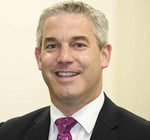
The report written by Adam Heppinstall, published on 28 April 2023.
Text of Report (in .pdf format)

The report written by Adam Heppinstall, published on 28 April 2023.
Text of Report (in .pdf format)

The comments made by Lucy Powell, the Shadow Culture Secretary, on 28 April 2023.
I have this morning received the report of the investigation into Richard Sharp which Labour instigated. The report is clear: Mr Sharp breached the rules expected of candidates by failing to disclose his involvement in a personal loan to the then PM.
As a result, this breach has caused untold damage to the reputation of the BBC and seriously undermined its independence as a result of the Conservatives’ sleaze and cronyism.
This comes after 13 years of the Tories doing everything they can to defend themselves and their mates. From Owen Patterson to Dominic Raab, and now Richard Sharp, instead of doing what’s best for the country the Prime Minister was more interested in defending his old banking boss. The Prime Minister should have sacked him weeks ago. Instead it took this investigation, called by Labour, to make him resign.
Rishi Sunak should urgently establish a truly independent and robust process to replace Sharp to help restore the esteem of the BBC after his government has tarnished it so much.

The letter written by Lucy Frazer, the Culture Secretary, to Richard Sharp, the outgoing Chair of the BBC, on 28 April 2023.
Dear Richard
Thank you for your letter notifying me of your decision to resign from your position as Chair of the British Broadcasting Corporation. I understand and respect your decision to stand down.
As you have stated the BBC is a great national institution. Over the past 100 years it has touched the lives of almost everyone in the United Kingdom and plays a unique part in our cultural heritage. It is respected globally, reaching hundreds of millions of people across the world every week. No other country in the world has anything quite like it.
I would like to take this opportunity to thank you for the work you have done and the leadership you have provided as Chair of the BBC. You have been a champion for what a strong BBC can achieve, not only for audiences at home, but also for the BBC’s contribution to the economy and to the UK’s global soft power. I would like to express my gratitude for your work with the government to maintain the BBC World Service in its unrivalled status as the world’s largest international broadcaster, and supporting its crucial role in tackling harmful disinformation through providing trusted news and analysis globally.
I know that you are held in high regard by the BBC Board. You have clearly demonstrated your commitment to public service, and I especially applaud the work you did during the pandemic. Your decision to step down in the wider interests of the Corporation is further testament to that commitment.
Certainty and stability for the Corporation are clearly a shared priority. In this context, I have spoken to the Board and they have proposed that you stay in place until the next Board meeting on 27 June 2023, whilst an Acting Chair is appointed in line with the Charter. I have accepted this and would like to thank you for your continued service to assist in ensuring an orderly and smooth transition takes place. We will also move to launch a process to identify and appoint a permanent new Chair.
Thank you, once again, for your service and I wish you well for the future. I am sure there will be further opportunities for you to make a significant contribution to public life.
Yours sincerely
Rt Hon Lucy Frazer KC MP
Secretary of State for Culture, Media and Sport

The speech made by Andrew Mitchell, the Minister for International Development at the Foreign Office, on 27 April 2023.
I’m conscious that I’m talking in the heat of a massive crisis in Sudan. Clearly our thoughts are with British nationals being evacuated and the brave servicemen and women risking their lives to secure safe passage back to the UK. And our thoughts are with the 45 million people in Sudan who are bearing the brunt of suffering.
It is essential that the ceasefire is maintained and that a political process is secured. If not, the humanitarian consequences will be incalculable. The UK will continue to work tirelessly to help bring an end to the violence and provide vital humanitarian relief.
Today in this great centre of learning and scholarship, we assert again our commitment to change the lives of the world’s poorest and drive forward shared prosperity.
Today, we commit to persuading more of our fellow citizens that international development is core to our own national interest as well as the right thing to do.
Today, we reaffirm our priorities, and show how we can secure these goals through partnership to achieve progress and prosperity. And we underline Britain’s historic commitment through the international system to those who dwell in the poorest and most challenging of circumstances.
Today, we seek to promote a British policy and priority, which is above party politics, and which is seared into our national conscience as people across our country have shown through their generosity and compassion to those suffering in distant places, where for many in their darkest moments after flood, earthquake and disaster, Britain has been a beacon of hope, and of light at a time where the international system is fractured. And Russia’s war in Ukraine shows that core international values and rules can be brutally assaulted and overturned.
We restate in strong terms, our belief in an effective and ambitious rules based international system, essential to address climate change, the existential crisis of our time, as well as the causes of migration and global health security. A time when crises are everywhere, but leadership is not. When we can save a bank in California in 3 days, but Zambia waits more than 2 years for debt relief. When our children can secure mortgage finance for 30 years, but developing countries secure maturities just over 5 years. And when the Sustainable Development Goals (SDGs) agreed with the rest of the world under David Cameron’s leadership are way off course at this halfway point.
We invoke the famous dictum of Douglas Hurd, one of the UK’s most distinguished Foreign Secretaries, that through the international system, Britain can punch above its weight. After 30 years of unprecedented poverty reduction, when the benefits of technology and globalisation supported by aid and development lifted quality of life around the planet, we have come to the hard stop of COVID and Russia’s invasion of Ukraine. With 70 million people falling back into poverty, with millions of girls out of school, with famines stalking the lands of East Africa, with 5 seasons of failed crops due to drought, where at least 40,000 people have died and where children are starving to death. And this year at the international meetings which I attended just 2 weeks ago in New York and Washington, I heard clearly the loud voices of the global south, but not only the south, voices of dismay and distress, that anger is rising, as they see a developed world which can invent quantities easing to find money for themselves, but cannot find the money to save the planet.
These are the issues that collectively we face. We are called to deliver the SDGs when at halftime, if I may use a football analogy, we are 2-nil down. And we must transform international finance to mobilise the trillions of dollars that are needed if we are to deliver on our promises on climate change, and secure the future of our planet, a planet which we share, but with vastly unequal resources were those who have done least to cause the climate crisis are hit first and hit hardest by it.
In Niger, where I was recently trying to advance our shared security and economic interests, a country among the poorest and most challenged in the world, they lose each day to climate change, the equivalent in arable land of close to 500 football pitches. And in some regions, 50% of the girls are married by the age of 15, and pregnant by the age of 17.
And so just as the world came together at the millennium to make poverty history and stand by the Millennium Development Goals, so today, the Bridgetown agenda and the Sustainable Development Goals call on our generation to shoulder our responsibilities and deliver.
We face a complex environment where resources in many wealthy countries are depleted and constrained by domestic priorities including, frankly in Britain, where Parliament accepted a temporary reduction in spending below our commitment to allocate 0.7% of our own national income. I know that these cuts are painful for our partners, and yes, they dented the UK’s reputation.
But today is about looking forward. The government’s decision to allocate an additional £2.5 billion to the ODA budget to help relieve pressures resulting from Britain’s embrace of those fleeing persecution in Ukraine and Afghanistan, is a clear signal that things are changing. And of course, we will return to 0.7% as soon as the fiscal tests are met.
But returning to 0.7% is not the whole story. New approaches that reflect the changing world around us will be vital. It is even more important meanwhile that we press for creative ways of mobilising new and additional funds to ensure our development objectives are on track. We must redouble our efforts to go beyond aid to secure the gains and the results our consciences and interests demand with all the resources and tools at our disposal.
I come now to how we will do this, through the changes we are making to reinvigorate Britain’s development leadership, which has been sorely missed by our friends and allies across the world. And international leadership owned by the British people, our universities and think tanks and by the British NGOs and charities too, which are at the forefront of all our work. It is this leadership which pledges to work in patient, long term partnership with people and governments around the world. Where engagement comes without coercion. And where tackling the development crisis and the climate crisis are not a choice, but 2 sides of the same coin that need to be resolved together.
I’ve been back as the UK is Development Minister for exactly 6 months. As set out in the recent Integrated Review, the Prime Minister has thrown his full weight behind our international development work. It is the path set out by our international development strategy on which we must go further and faster.
Britain’s development leadership will not be reinvigorated until we can deliver on the promise of the merger. There is a great prize to be grasped here. A merger which is seen as a success for both development and wider foreign policy will avoid once again in the future, a development department being spun out to the foreign office with a prolonged period of Whitehall introspection and disruption, which inevitably results.
Working together development and foreign policy are a powerful force. They nurture trust and reciprocity. By supporting the ambitions of our partners, development amplifies our diplomatic influence. And by the same token, our diplomatic reach helps deliver our development goals. Helping others helps us.
We need an approach fit for the 21st century, which understands that development and geopolitics go hand in hand. And that development is long term, an approach which deploys the full panoply of UK diplomacy and soft power, where development is dynamic and forward looking, and which readily adapts to the pace and scale of global change. So change is required to achieve this.
Firstly, we will greatly strengthen the way government addresses all development issues. We will create a second Permanent Under-Secretary within the Foreign Office responsible for ODA (Official Development Assistance). A cross-Whitehall committee will be co-chaired by myself, the Development Minister, and the Chief Secretary to the Treasurer, my friend and colleague John Glen. And it will focus on both the quality and coherence of ODA spend to ensure that this precious budget is delivering value for money for taxpayers and producing results on the ground.
Second, the Development Minister has returned to the Cabinet table, and now also sits on the National Security Council where defence, diplomacy and development are hardwired together. Of great importance too, the Development Minister will be Governor to the 5 major multilateral development banks, including the World Bank and the African Development Bank. It is within these institutions that critical experience and financial firepower reside. This must be harnessed if the SDGs and climate goals are to be achieved.
Finally, international development leadership cannot solely be delivered by geography. Policy is thematic. We need an answer to the question: how do I interact with the British government on international development, whether I’m an NGO or an international organisation?
So today I launched a new brand to recognise the breadth of our work and collaboration that promises value for money to our taxpayers, reliability to our partners and friends around the world, and a commitment to help reach our global goals: UK International Development – UKDEV. We will continue to use the UK aid brand to badge our humanitarian work and we will continue to do so with sensitivity, especially in conflict zones.
But this new brand, UK International Development, will badge the Foreign Office’s work to use a diverse range of partnerships to advance development progress to build widely shared prosperity.
Placing partnership at the heart of the UK’s offer shows that at its core, international development is not about charity, handouts and dependency. It is about listening to our partners and working together to secure shared objectives.
So, by these 3 sets of changes, we bring together the direction and grip necessary for Britain to reassert our aspiration for global leadership, and building national and global systems that really work for people and planet.
This brand is intended to be bigger than just our Foreign Office programme, and to embrace not just the rest of government, but Britain’s much wider set of civil society actors and partner with us. Our universities, our scientific establishments, our NGOs and volunteers together with many private sector actors. It is that totality of effort that makes the new brand. We are bigger than our parts.
I now turn to the 7 key priorities for the UK set out in the Integrated Review which we will drive forward with new determination and vigour. Three of these priorities I will talk about only briefly today. First, we will place ourselves at the centre of the global health agenda, which promotes pandemic preparedness, prevention and response at home and abroad, underlining that no one is safe until everyone everywhere is safe.
Next, we will champion open science for global resilience. Britain is a research and science superpower.
And third, we will bear down on money laundering and the flows of dirty money which deprive countries of their legitimate tax receipts and represent money stolen particularly from Africa and African people. There is a great cross-party consensus and collaboration on this issue I pay tribute to Margaret Hodge and Nigel Mills for leading this work in Parliament. We will change the way we operate to ensure that these vast sums wherever possible are trapped, frozen and returned. This is one of the great examples of how action in the UK can pay dividends for our partners around the world making ourselves more secure and supporting global development.
Globally the OECD (Organisation for Economic Co-Operation and Development) estimates that countries are missing out on between $100 and $240 billion in revenue from multinational tax avoidance. With the right support it is estimated that lower income countries could raise an additional $260 billion in tax revenue.
The National Crime Agency estimate that hundreds of billions of dollars are laundered through UK and UK linked corporate structuring each and every year.
Global Health, open science, dirty money are essential parts of a wide ranging and ambitious long-term agenda. But there are 4 other areas above all, where I am today setting out new and greater ambition.
First, we confirm that we place the position of girls and women at the forefront of everything we do. It is not possible to understand development unless seen through the eyes of girls and women who bear the brunt of extreme poverty and conflict too often in the most hideous of ways.
We will continue to push back on those who seek to challenge the hard-won rights of women and girls at every opportunity.
I am determined that we will continue to champion the rights of all girls to 12 years of quality education. And so we will launch a new public campaign on girls’ education results with easy access to information which shows the huge difference we are making.
I’m also delighted to announce that the UK is launching today an innovative new programme SCALE, which stands for scaling, access and learning and education. This builds on all we have learned from the girls’ education challenge fund. We will partner with governments that want to test new approaches, and then scale them up in their national systems. This will lead to an additional 6 million girls in school over 4 years, thanks to the British taxpayer.
We have recently allocated £90 million to help children access education in emergencies. And we should never forget that one of these girls may one day discover the cure for cancer.
We are determined through our work on family planning to enable many more women to decide for themselves when and whether they have children. And through the work championed so fulsomely by my ministerial colleague, Lord Ahmad, to protect women from sexual violence and through our efforts to lead the development of a global framework for tackling sexual exploitation and abuse, and sexual harassment in development and peacekeeping.
Second, we believe it is the private sector which can help in extraordinary ways to boost the growth of prosperity in the poorest parts of the world. Ensuring that investors are treated fairly under the rule of law is critical to trade and investment.
It remains the case that the vast majority of all jobs in the world are created by private enterprise and not by governments. It is by being economically active, having a job, that citizens are able to elevate their living standards, and importantly, to thrive on their own terms.
Under our British Investment Partnerships approach, we will mobilise through investment partnerships, up to £8,000 million of financing by 2025.
I am today announcing the first new initiatives and services under our 5 new UK Centres of Expertise on economic development. These will draw together UK expertise across business, the private sector, academia and government to advise on trade, green growth, citizen infrastructure, public finance, and financial services to provide support to our partners on economic growth and on job creation.
British International Investment (BII), formerly CDC, has been significantly reformed over the last decade. Supported by a team of 600 experts, in 2010 there were just 47, BII is now the leading international development finance institution in the world, deploying both patient and pioneer capital, it is a key private sector investor across the poor world, even investing in ports in the Horn of Africa.
BII now supports businesses that employ directly and indirectly around 1 million people in poorer countries, that’s potentially over 1 million families with food on the table, while paying $10 billion dollars in tax into the treasuries of poorer countries over the last 5 years. It proves beyond doubt that the private sector is the engine of development and not, as some think, the enemy of it.
I want BII to be at the very forefront of development finance. I take the inquiry by Parliament’s International Development Select Committee very seriously indeed. I stand ready to consider their recommendations and will be discussing and following up on these with the BII board in the coming months to make sure that they continue to do all that they can to reduce poverty, deliver impact and support green transition.
When I had the privilege of being Secretary of State in DFID, I was proud that we were the most transparent development agency in the world. I am proud of BII and I want to see it lead the way in demonstrating to the world how transparent a development finance institution can be, and I intend to publish a roadmap of BII commitments towards this.
But our partnership with the private sector goes way beyond the work of BII, along with UKEF (UK Export Finance), the British export credit guarantor, and the rest of British investment partners, we will boost living standards through British investment while securing a return for our taxpayers.
Next April, our Prime Minister will host a UK Africa Investment Summit in London and we expect billions in investments and millions of jobs to result. Harnessing the power and potential of the private sector will be central to our strategy to help build prosperity.
Third, we are determined that we will not rest while people in the world are starving to death. I have met communities where children are dying from malnutrition. In Sad’a in Yemen I’ve been to malnutrition wards were terrified mother’s cradle emaciated little children and where British taxpayer funded medical care was their last and only hope. In Karamoja in Northern Uganda, malnourished and emaciated children queued quietly in line for supplies of life saving emergency peanut based paste paid for by the British taxpayer. It is frankly obscene, that in the 21st century, and in our world of plenty, children are today slowly starving to death.
So next year, we will spend £1,000 million on humanitarian relief, including in ways that build future resilience to climate impacts, and meet our commitment to climate change adaptation.
Funding to deliver water by lorry must always be accompanied by investment in water retention reservoir capacity for the future so that subsequent crises are met with greater resilience. So in New York on the 24th of May, we will co-host an international pledging event where we will announce our humanitarian funding for the Horn of Africa. The conference will be a key moment to secure funding for the largest humanitarian crisis in the world and highlight the urgent need for countries facing the brunt of climate impact to access climate finance.
I am announcing that we will set up a new UK Centre for veterinary innovation and manufacturing to apply recent vaccine tech breakthroughs to zoonotic disease threats that compound the danger to livestock in drought conditions.
We will also continue to champion British research and investment in partnership with others, which has produced new bio-fortified crops like the vitamin A sweet potato, which are now feeding millions of smallholder farming families across the world, averting damage to health, physical and cognitive development.
And the mobile money system, M-Pesa, developed thanks to a British taxpayer grant enables money to be moved and weather alerts and farming advice to be swiftly received. This model has become a global beacon for financial inclusion across the continent and beyond. So from the depths of despair, we have seen how partnerships fuel the progress on which prosperity depends.
So towards the end of the year, we will hold in London an event to bring together British and international expertise in tackling hunger and starvation with the support of the academic, medical, research, philanthropic, and NGO and charity community. This event will show our own taxpayers and constituents why this work is both in our national interest and the right thing to do.
We will inaugurate the Child Nutrition Fund this autumn, working with the Gates Foundation, the Children’s Investment Fund and UNICEF, Britain will lead what is an innovative, affordable way of tackling child wasting and build resilience to famine in some of the most vulnerable countries in the world.
And through co-financing, insurance products and other multipliers working both bilaterally, and through the multilateral system, we will augment and increase our own scarce and valuable funding. Our aim is to extract a quart from a pint pot and we have made a good start with our significant co-financing plans with other partner countries. We recently announced a partnership that saw $2 million of the UK’s humanitarian funding package matched by Saudi Arabia, providing a boost to the World Food Programme and supporting those in desperate need in Somalia. We want to expand the scope of our aid relationship with Gulf partners, and have agreed to scale up our co-funded programmes from tens to hundreds of millions of pounds.
And so I come finally to the last of our priorities. It is at the heart of everything we need to do. It is to generate the funding needed to tackle climate change and reassert the primacy of purpose of reaching the SDGs. Here the role of private sector investors will be central. For example, pension funds alone amount to $60 trillion, which will overwhelmingly drive forward the global response. The overarching aim of the Spring Meetings of the IMF (International Monetary Fund) and World Bank in Washington just 2 weeks ago, was how we can radically scale up their resources to mobilise the hundreds of billions needed to deliver on the promises the international community has repeatedly made at the SDG summits and the COPs.
Make no mistake, as I said at the outset of my remarks today, we are now reaching a tipping point. We’ve heard the challenge of the poor world at our own COP in Glasgow, and the rising voices of outrage at last year’s COP in Egypt. By the time we reach COP28 at the end of this year, we will need to show clear and unmistakable progress.
Of course, we need a clearer pipeline of oven ready climate mitigation and adaptation programmes. We must recognise also that a country like Somalia simply doesn’t have the technical expertise to get through the due diligence gateways to access these global climate funds.
In Somalia, Britain is helping with invaluable technical expertise, and we can and will do more. But progress depends above all on the capacity of the international financial system. And that is why I made clear in Washington that the sweating of the balance sheets of the World Bank and the other huge multilateral development banks combined with the creative financial engineering skills of a sector replete with expertise and experience must now be brought to bear to produce a quantum of financial support, which is unprecedented.
At the World Bank meetings, I approved changes to the capital adequacy reserve ratios. A reduction in the IBRD (International Bank for Reconstruction and Development) requirement limit from 20% to 19%, just 1%, releases for lending an additional $4 billion each and every year.
Britain has announced a series of guarantees over the last 18 months to expand MDB (Multilateral Development Bank) lending to countries in Asia and Africa by $4.5 billion. And the UK is urging the IMF to increase still further its support for the poorest countries, including through targeted gold sales, none of which incidentally scores against our ODA budget unless called, and is therefore incremental to the 0.55% we are investing this year.
And we are driving innovation in insurance. The UK is a founding member of the regional risk pools. The Caribbean risk pool pays out in 14 days and transfers $1.2 billion of risk annually off country’s balance sheets to the private markets. Africa is transferring $1 billion of risk to date and paid out the first drought insurance support for Somalia.
While we were in Washington, the Chancellor of the Exchequer Jeremy Hunt signed off $5.3 billion of special drawing rights to support 2 different funds delivering directly to the world’s poorest people.
Again, this is an in addition to our spending through the development budget, and it is our experts in finance and development in the British team who are driving forward this agenda precisely because of the expertise and geographical reach, which exists in the British Foreign Office.
By the time we meet for the annual meetings in Marrakech in October, I want to see much greater progress across all the multilateral development banks towards the several hundred billions of dollars in additional financing the G20 expert group identified.
All this additional financing capacity will only be able to benefit the poorest if we also tackle the global debt crisis. Official creditors must urgently reach an agreement on debt restructuring in Zambia and Ghana. There is no time to waste.
And we are leading the way to avoid debt crises reoccurring in the future. UKEF is the first export credit agency to offer to build in climate resilient debt clauses. These clauses allow debt repayments to be suspended when climate shocks such as hurricanes hit. This in turn frees up resources quickly to respond to crisis. The first deals using these clauses will be announced over the next few months. By the end of this year, we hope that several other bilateral private and multilateral lenders will have agreed to offer the same clauses.
These steps ladies and gentlemen reflect the ambition of the Bridgetown agenda championed vigorously by the formidable voice and charismatic presence of the Prime Minister of Barbados, Mia Mottley. I have no doubt that this voice is going to be heard.
Her agenda for progress is gaining widespread support. And Britain, and indeed President Macron in France, are right behind it. To deliver on our funding promises to reinvigorate the SDGs, to elevate the desperate lives so many lead in our world today and literally to save our planet before it is too late, that voice is not going to be silenced.
And as we pass through the waypoints on our journey to COP28 at the end of this year, the G7 leaders’ summit, the summit for new global finance pact in Paris, the Africa climate action summit, the G20 leaders’ summit, UNGA, including the SDG summit in New York, the IMF World Bank annual meetings in Marrakech, the clamour for justice and the response of rich countries will be critically evaluated by our friends and our allies. But also we are being watched by our constituents, particularly the younger generation, who are increasingly determined that those who are today the key decision makers on this vital agenda measure up to this task.
We must be honest and accept that we do not currently enjoy sufficient support for this wide-ranging and ambitious agenda from the British public. At the moment, the Development Engagement Lab comprising academics at the University of Birmingham and University College London, tell us that public support has been around the 50/50 mark for much of the last decade.
But I am determined that we shall win over the doubters and drive-up support to the 70/30 mark over the next 10 years. To do this, we will need to get out of London, and not to visit capital cities around the world but to visit small towns and villages in our own United Kingdom, to explain what we do in simple and straightforward language that everyone can relate to. With confidence, but also with humility with facts, data and evidence, but also with human stories and compelling tales. Tales that are heartening, as well as sobering. Drawing on the numerous examples and experiences that make up the story of great British International Development. I intend to provide a communication platform to the people that the research shows the public trust the most.
We will show that the generational ambitions for progress on climate progress, on women and girls’ progress, on business working for sustainability, not against it, are core to UK ambitions, with the final prize being greater prosperity in the world and the UK.
And so today, I am issuing an invitation to all of you to partner with us to tell a story of progress in these universal challenges. Together, we must work to achieve a step change in both domestic understanding and support for the UK’s international development work, laying firmer foundations for a better future together.
I want us to drive more awareness, more action, more donations and ultimately more support by engaging beyond current supporters.
To show that we in government are serious about playing our part, I will be setting a new target for the new second Permanent Under-Secretary to improve public support as measured by the Development Engagement Lab year on year over the next decade.
And I expect the Foreign Office to seize this opportunity to use the new UK International Development brand to convene a partnership with UK universities, the private sector and the thousands of household name charities. I expect to see a step change in the capacity and capability at the Foreign Office to engage positively the UK public starting this year.
And later this year, we plan to invite tenders for a new international volunteering programme. Similar to the former international citizens’ service, it will be an opportunity for young people to engage internationally and support our development work across the world.
I am minded to publish a White Paper which will outline our plans for the next 7 years, setting out a long-term direction for British International Development leadership until 2030. It will chart a course that will build on the International Development Strategy, accelerate our determination to deliver on climate change, and galvanise international support to meet the Sustainable Development Goals.
This endeavour will draw on the full resources of the Foreign Office, bringing together our political and development expertise.
It will underpin our commitment to delivering value for money to our taxpayers, reliability to our partners and friends around the world, and a commitment to meet the global goals that emphasises it is opportunity, not charity that is needed.
It is partnerships which secure progress and build shared prosperity. There are no quick fixes in development, we are in it for the long haul. And though the challenge is formidable, the rewards are immense.
We have not a moment to lose.
So today I pledged that the government will drive forward the UK’s fight to reduce poverty and boost climate security, to reassert our aspiration for global leadership, and to say loudly, and clearly, Britain is back.
Thank you very much.

The speech made by Grant Shapps, the Secretary of State for Energy Security and Net Zero, in London on 26 April 2023.
Good morning to everybody, and welcome to 1 Birdcage Walk, a building that was absolutely state of the art when it was first opened in 1899, as home for the Institute of Mechanical Engineers.
It featured such spectacular features, including passenger lifts and telephones, it was well ahead of its time. By 1940, the glamour slipped away. The entrance itself and roof were sandbagged. The windows were netted. And the basement was turned into an air raid shelter.
After all, we are located just across the road from Churchill’s nerve centre, from where he directed the war effort.
Indeed, 1 Birdcage Walk was later to play a profoundly important role in World War II, when it was used by senior army engineers to actually plan D-Day – working out how to launch and then sustain the greatest seaborne invasion ever staged, and certainly one of the greatest engineering triumphs in military history.
At the end of the war, another great British engineer – Frank Whittle – he came here as well, to deliver the first public lecture about the jet engine.
It was particularly thanks to his genius and perseverance that we led the world in the UK in the development of jet technology in the 1940s, and that the first commercial airliner to usher-in the jet age was the British deHavilland Comet, designed and built in my own Hatfield constituency I should say.
In those years, this building saw Britain at her very best.
A generation that faced up to the most formidable challenges with guts and determination, but also a generation that capitalised on opportunities once the war was over.
Whittle was just one of a long line of British engineering pioneers who had the confidence to take risks, to innovate and to lead.
But it was a leadership that began almost 2 centuries before, when James Watt’s steam engine fired up the Industrial Revolution.
And it was a leadership that continued into the 1950s, when Britain built the world’s first full-scale nuclear power station at Calder Hall, in Cumbria.
Today we need to regain this leadership, as we embark on a new energy transition.
Because there is a simple, single and very harsh fact… we have neglected energy security for far too long in this country.
And if one event brought that realisation home, it was surely Putin’s invasion of Ukraine.
That single, brutal act highlighted our over-exposure to volatile international energy markets, after decades of dependence on often imported fossil fuels…. so it is hastening our energy transition not just here but throughout the world.
So that no one should allow, particularly Vladimir Putin, to hold the British people to energy hostage ever again.
And so this government has stepped in. This winter for example, we have been paying around half the typical household bill.
But to deliver the kind of cheaper, clean energy that we want to see in Britain in future, we must now diversify, decarbonise, and domesticate energy productions, to take control of our energy security.
That’s why in February this year, the Prime Minister created the new Department for Energy Security and Net Zero. Two sides of the same coin.
And it’s why we’ve wasted no time in publishing our Powering Up Britain strategy – in fact just 50 days after the department itself was created.
This document explains how we’re going to wean ourselves off fossil fuels, how we’re going to replace them with home-grown renewables and nuclear, and how we’ll bring down energy bills – and keep them down – so that energy prices eventually become the cheapest in Europe by the date of 2035.
And just as we did in the past, we will make the best use of British expertise and British assets, to propel that energy transition forward.
We’re already making very good use of the Great British weather.
In fact the UK is a global leader in offshore wind. I don’t think most Brits realise, but not only do we have the world’s largest offshore windfarm – but we have the second largest… and the third largest… and we’re just constructing the fourth largest at Dogger Bank II.
But there’s another colossal opportunity waiting for us in the North Sea.
And this time, it’s not based on extraction and it’s not based on the wind.
It’ll be generated by filling the spaces partially left by oil and gas extraction, and it will be with the storage of CO2 – a process known as carbon capture, utilisation and storage.
Very simply, it involves separating CO2 from industry and, instead of emitting it into the atmosphere, storing it permanently and safely under the seabed.
Now I wage most people in this country have never heard of CCUS.
But they will very soon – because Britain has one of the greatest storage potentials in the entire world.
We have quite literally been blessed with a geological goldmine, waiting to be exploited.
Deep below the North Sea floor, we have numerous and vast storage reservoirs.
To give some idea about the potential, I can explain that the UK Continental Shelf could have enough capacity to store about 78 billion tonnes of carbon.
Now if you’re like me, that doesn’t necessarily mean very much, so I challenged my officials to tell me what that will be in, sort of, real money.
And my officials tell me that broadly, that’s the equivalent to the weight of about fifteen billion elephants.
Or to put it another way, about 234 million Boeing 747s.
By either measure – a jumbo amount of storage space.
At atmospheric pressure, 1 tonne of CO2 has the same volume as about a hot air balloon, but actually when we store it will be under high pressure, to compress it, and use a lot less space.
This could be absolutely huge for the UK, and even in the short term, we’ve got very high ambitions.
By 2030, we want to remove the same amount of carbon dioxide from CCUS as produced by up to 6 million cars on the road – or in effect, taken off the road.
And if we were able to fill the UK’s theoretical potential for CO2 storage, then we could avoid the cost of today’s emissions trading price, about £90 per tonne of carbon, which could in theory provide a sector in the region of £5 trillion.
This means the UK has an opportunity to not only store our own CO2, but also get value from storing other countries’ CO2 as well.
For instance, we could use our reserves, our capacity, to store 100 years of UK CO2 – and 100 years of Europe’s CO2 as well.
Underlining the incredible national asset that carbon storage could become for the UK.
And there’s another huge benefit as well.
To meet our net zero targets, not only do we need to embrace clean energy, we also need to help heavy industry decarbonise.
Industrial carbon capture and storage actually makes that possible.
Indeed, it will be critical to the deep decarbonisation of industries like cement and chemicals, which really have no other way to ensure that they can go green.
So we’re going to create a pathway for those industries so that businesses can carry on investing in Britain, confident that they can still achieve net zero targets.
We can lead the world in safely capturing and storing this carbon dioxide, from industries that can’t decarbonise at the pace they require. And that, in turn, will help provide reliable electricity supplies, ensuring energy security, whilst removing carbon dioxide from our air – so we can even carbon negative.
And we’re ready to act right now, I should say we are one of probably only four or five countries in the world with either capacity, or indeed, according to global rankings, the readiness to get on with this job.
To give industry a real springboard towards this CCUS future, I just announced an unprecedented £20 billion in the Powering Up Britain document last month to invest in CCUS.
We’re going to establish two industrial clusters by the middle of this decade – the HyNet and East Coast clusters in the North West, and North East of England – to form what we’re calling Track 1 of our plans.
And we’ll expand the Track 1 clusters, to include the Humber later in the year, and we’re going to develop a further two clusters as part of Track 2, which we plan to have up and running by 2030.
As a result, CCUS could support some 50,000 jobs by 2030 – particularly benefitting places like the North East, Humber, Scotland, and Wales.
Of course, I should say that very considerable challenges remain, both on technical grounds and in terms of proving the technology, so we’re only at the start of the journey.
We are working with our friends in Europe, to cut the costs of the technology, and remove regulatory barriers to moving CO2 across borders, because transporting it will be a core part of the story.
The UK actually co-leads the CCUS work internationally within the Clean Energy Ministerial group of major countries, so we’re particularly well placed to remove the obstacles and make progress on this.
Carbon capture is just one of many industries around the North Sea, which caused the Economist to recently say that the North Sea is potentially “Europe’s New Powerhouse.”
On Monday I was in Belgium at a leaders’ summit of nine North Sea nations to discuss co-operation and scaling up these types of technologies.
The variability in wind in the North Sea, for example, can put pressure on different parts of our energy grid.
One way to address that is with interconnectors between different nations, which can produce a balance in production and demand cycles.
So I was pleased to announce on Monday the new “LionLink” interconnector with the Netherlands. It’s capable of producing about 2 gigawatts of electricity for both countries, powering around 2 million homes. When it’s built it will be the world’s largest interconnector of its type – and is able to power the equivalent of Greater Manchester and Birmingham combined.
I also signed an agreement with Denmark to exploit low carbon opportunities, all part of a massive programme of government incentives and support to help Britain tap North Sea resources, at a scale unimaginable until very recently. For example, the new Dogger Bank windfarm will produce 3.6GW when it reaches full capacity in 2026.
3.6GW is about the equivalent of the output of three and a half times the typical nuclear power plant, that gives you an indication of the size and scale of what’s going on in the North Sea. Some of the new wind farms to be built will have a scale that’s so large that a single turn of some of the turbines would cover seven football pitches joined together. The scale of this is perhaps something that the British people are so far unaware of.
Whilst the energy industry is abuzz with all of this immense change, I just want to stress our support for Britain’s existing oil and gas industry.
It has done an important job, through COVID, through Putin’s invasion of Ukraine.
And, in line with our net zero 2050 commitment, we will not shy away from awarding new licences where they are justified, and where they can benefit Britain. It is very important to understand that even the Intergovernmental Panel on Climate Change, the IPCC, recognises, we will still need some oil and gas, even in 2050, even when we’re net zero. So it simply makes no sense whatsoever to deny our own oil and gas, and instead import it – with twice the embedded carbon – from elsewhere in the world.
So we remain absolutely dedicated to the North Sea Transition Deal – helping decarbonise the industry whilst protecting thousands of jobs.
It will be worth remembering, when carbon capture and storage is thriving in years to come, that the space we’re exploiting by removing oil and gas is what is partially creating the space to be able to store the CO2 in the future.
So, as we navigate the path through the biggest energy transition since 1 Birdcage Walk was opened in 1899, we remember the innovators and visionaries who went before us, from Watt to Whittle – who saw a changing world and they grabbed the possibilities and the potential to adapt.
We now have the potential to lead the world once again, not just harnessing the wind of the North Sea, but the spaces below the bed of the North Sea, to store extraordinary volumes of carbon dioxide in the very place where fossil fuels laid buried for millions of years.
Now I can’t claim that any of this will rival the fame of D-Day or the glamour of the jet engine, but I’m sure that carbon capture will, in years to come, also earn its place in the history books – not only as one of the great engineering feats of our times, but also as one of the turning points in Britain’s transformation to a very prosperous, net zero nation.
Thank you very much.
![Suella Braverman – 2023 Speech at the Public Safety Foundation [redacted version]](https://www.ukpol.co.uk/wp-content/uploads/2021/02/braverman-150x150.jpg)
The speech made by Suella Braverman, the Home Secretary, on 26 April 2023. This is the redacted version issued by the Government press release which has removed political content. We asked the office of Suella Braverman for the complete text, but they didn’t respond.
Thank you, Rory for that introduction. You know better than most, from your own experience on the beat, the realities that our brave police officers face when going up against violent thugs and other criminals, and the damage that crime can do to people and communities.
And that’s why it’s wonderful to be here welcoming the launch of The Public Safety Foundation, an organisation committed to making the UK the safest place to live, work, and raise a family.
This really is the perfect forum for setting out my ethos for common sense policing.
Everything that our police officers do should be about fighting crime, catching criminals, and keeping the public safe.
My mantra at the Home Office is simple: common sense policing.
Common sense policing means more police on our streets.
It means better police culture and higher standards.
It means giving the public confidence that the police are unequivocally on their side, not pandering to politically correct preoccupations.
It means measuring the police on outputs such as public response times, crimes solved, and criminals captured.
It means police officers freed up to spend their time on proper police work.
It means police prioritising the highest harm crimes and those that matter most to the public.
It means the police making use of powers like stop and search that have proven effective in taking weapons off our streets.
And above all else, common sense policing means officers maintaining a relentless focus on fighting crime, catching criminals, and keeping the public safe.
I am going to speak to each of these themes in turn today.
Firstly, the public wants to see more bobbies on the beat and so do I.
It is central to common sense policing.
Everyone who has been part of the government’s Police Uplift Programme should be immensely proud of what we’ve achieved in the last few years.
[…]
We’ve delivered an additional 20,951 officers into policing over the past three years.
There are now almost 150,000 police officers across England and Wales. The highest number ever.
24 forces now have more police officers than they ever had before the programme.
I am extremely grateful to police chiefs for leading this drive.
And to those men and women who have signed up: you are now part of a policing family epitomised by bravery, and dedicated to public service and safety.
As part of the new generation of policing, you will help to raise standards, refocus priorities, and maintain our world-leading place in policing.
Policing must remain open to the best and the bravest – whether or not they have a degree. And common sense policing means encouraging the recruitment of officers that come from and live in the communities they serve, familiar with local challenges, and familiar to local people.
That’s why I have widened the pool from which we can recruit, by enabling non-degree holders to be part of policing. It’s not about how many exams you sit or essays you can write – important skills though those are. It’s about common sense, problem-solving, strength- of character and strength of physique.
20,000 officers is not just a statistic in a press release.
The uplift is already delivering improved outcomes for policing and the communities they serve.
All forces now have a named officer and contact information on their websites, meaning our commitment to greater local accountability as set out in the Beating Crime Plan.
More police, means more flexibility for forces to do what makes sense locally, which goes to the very heart of common sense policing.
A Police and Crime Commissioner recently explained how the uplift is making a difference in their patch: They said: “Additional officers have been deployed into our more rural communities, which allows response times to lessen and takes pressure off urban-based officers from covering a wider area allowing them to focus on localised crime.”
In one force, much of uplift has been reinvested in to tackling rape, with the creation of an additional 119 roles.
Another force has used the uplift to double the size of its knife crime team, boosting its capacity to seize dangerous weapons and keep people safe.
Recruiting officers is crucial to getting more bobbies on the beat. But retention of existing officers is similarly important.
Every force must focus on retaining the essential skills and experience of existing officers.
We are driving forward work to support this, whether that’s through the College of Policing’s Leadership Centre, the NPCC’s Productivity Review, or introducing a statutory Police Covenant, which is already delivering tangible benefits for the police.
For the first time, new officers are given pre-deployment mental health training to ensure they are able to manage the rigors of frontline policing.
And welfare standards covering the entire workforce are now assessed as part of the regular force inspection programme.
It is also vital that policing can offer a pathway back for those who do leave, to ensure that experience doesn’t only ever leave the building.
Whilst many forces have deployed rejoiner schemes at entry level, I am not convinced that all forces are doing enough to encourage more senior people back into policing.
There is scope to expand these schemes to focus on key skills gaps using the standards and guidance developed by the College of Policing.
[…]
This is a great success story. But what will really count is what an expanded police force – this new generation of policing – does next.
More policing is necessary but not sufficient. Common sense policing must also mean higher standards, better culture, and more effective policing.
Baroness Casey’s review into the Metropolitan Police makes for harrowing reading.
As I said in the House of Commons, there have been serious failures of culture and leadership.
I have the utmost confidence in the Met’s new leadership team. Sir Mark Rowley is right to make the restoration of public confidence in policing his top priority and I will give him every support as he pursues his turnaround plan.
But I also expect those with direct political accountability for forces – PCC’s in general, and with respect to the Met, the Mayor of London in particular – to properly exercise their oversight functions.
Baroness Casey’s review will inform the work of Lady Elish Angiolini’s inquiry which will look at broader issues of policing standards and culture.
Steps have already been taken to ensure that forces tackle weaknesses in their vetting systems. I am currently reviewing the police dismissals process to speed up the removal of those officers who fall short of the high standards expected of them.
That review is also looking at simplifying the process for dealing with poor performance and ensuring that the system is effective at enabling an officer who fails vetting checks in service to be removed.
The law-abiding public must be able to know that they can trust any officer they see. Those who are not fit to wear the badge must never do so, and where they are exposed, they must face justice and be driven out of the force.
I have seen examples of strong leadership transforming police forces up and down the country. So, I’m confident that policing can and will step up.
Changing the culture doesn’t just mean addressing the sorts of issues that Baroness Casey identified and raising professional standards to the level that the public rightly expect. That is a pre-requisite.
A common sense culture in policing must also mean that policing understands and reflects public expectations about the police’s proper focus and function.
For too long, too many in authority have indulged a narrative that crime, rather than being a destructive option chosen by a criminal minority, is an illness to be treated.
This narrative seeks to diminish individual responsibility and culpability by holding that criminals are themselves victims.
This modern emphasis on the needs of delinquents, thugs and criminals, however cruel their intentions or damaging their behaviour may be, displaces the old fashioned and just retributive consideration of the criminal events themselves, and of the effect they have on the genuine victims.
People want their government and their police to be unequivocally on the side of the victims, rather than making excuses for, or distracted by efforts to redeem the perpetrators.
It’s something I hear a lot. On my travels around the country. On the doorstep. People everywhere tell me they want common sense, good old fashioned criminal justice.
They want the police to turn up quickly when they’re called.
They want to know that when a crime is reported it will be properly investigated – and, so I’m glad that all domestic burglaries now receive a police response, as I called for last autumn.
They want hope that the police might even catch the crooks.
And they want confidence that when someone is arrested, if they are found guilty, they will be appropriately punished.
Because without risk of capture or of punishment, without an appropriate cost to those breaking the law, criminals will take advantage.
That sense of mission must be reflected in police priorities if the police are to retain public confidence.
Sometimes the police simply need to make better arguments. Most people recognise that smartphone clips of a contested incident circulating on social media only ever tell a fraction of the story. Where appropriate, forces should do more to share body worn video footage. It is vital to public confidence that the police can quickly demonstrate the legitimacy of action to counter spurious claims and trial by social media that may otherwise follow and allow dangerous narratives to take hold.
Maintaining public confidence, also requires that the police be seen as politically impartial, and unequivocally on the side of the law-abiding majority.
When police officers stood by as a statue was torn down; when the police were pictured handing cups of tea to protestors engaged in blocking a road; or when police chiefs spend taxpayers’ money that could have been spent fighting crime, on diversity training that promotes contested ideology like critical race theory; the reputation of policing as an institution, is damaged in the eyes of the public.
Some forces have ‘equality’ teams that have completely abandoned impartiality in favour of taking partisan positions – sometimes even engaging in political argument on Twitter.
Now I believe in the police. But the policing in which I believe isn’t riven with political correctness, but enshrined in good old-fashioned common sense.
The perception – however unjustified or unrepresentative – that some police are more interested in virtue signalling, or in protecting the interests of a radical minority engaged in criminality, than they are protecting the rights of the law-abiding majority – is utterly corrosive to public confidence in policing. The police must be more sensitive to this and work harder to counter it.
If police chiefs approached instilling a culture of political impartiality, with the same dedication which they approach instilling a culture of diversity and inclusion, I have no doubt that public confidence in policing would be materially improved.
More police, and better police culture, is essential. But positive effects are blunted if the police are not free to properly focus on policing.
That is why, over the last 6 months, I have led a broad programme of common sense policing reforms to reduce unnecessary and inappropriate burdens on police time.
Chief amongst those burdens is the amount of time police spend responding to mental health call outs. I am frequently told about officers waiting 10-20 hours with patients who need medical attention. This is an unacceptable use of police time.
We want frontline officers to be able to focus on fighting crime, and the work they are trained to do. Police officers are not mental health specialists, and the best place for people suffering a mental health crisis is a healthcare setting.
This includes developing a National Partnership Agreement to ensure health calls are responded to by the most appropriate agency.
The ‘Right Care Right Person’ approach sets out a threshold to assist police decision-making on responding to incidents. It is founded on the understanding that police should only be responding to health and social care incidents where there is an immediate risk of serious harm or criminality.
A toolkit to assist forces in their implementation of the Right Care Right Person will be rolled out in the coming months, and guidance for the health sector is also being prepared.
Whether it’s saving an estimated 400,000 police hours a year by reforming the Home Office Counting Rules (reducing them from 350 pages to almost 50 pages); or reforming the redaction process so officers spend less time stuck behind a computer screen; we are doing all that we can to support forces to ensure their officers spend as much time as possible on the beat.
But it’s not enough merely to free up more police resource. Common sense policing means acknowledging that police resource is necessarily finite, and that it must therefore be deployed on the things that matter most to the public.
It’s with this sentiment in mind that I recently introduced a new code of practice on non-crime hate incidents.
Taking action for hurt feelings is not the job of our police.
Curbing freedom of expression is not the job of our police.
Enforcing non-existent blasphemy laws is not the job of our police.
The new code makes clear that personal data should only be recorded if there is a real risk of significant harm and stresses the importance of giving proper weight to freedom of expression.
The public want to see the police focussed on the highest harm crimes and those that are priorities to address in their communities.
They want to see the police tackling violence against women and girls – a key priority to which we’ve committed nearly a quarter of a billion pounds in Home Office and wider government funding through 2025.
They want to see the police focused on tackling child sexual exploitation which is why we launched a new Grooming Gangs Task Force, introduced mandatory reporting, and will be announcing further measures when responding to the recommendations of the Independent Inquiry into Child Sexual Abuse, next month.
They want to see police cracking down on drugs and associated criminality. I’m proud to say that together with the police, we have done considerable damage to county lines gangs, seizing record amounts of drugs, making 20,000 arrests for drug related offences and disabling 1,600 organised crime gangs since 2021.
They want to see the police tackling knife crime which is why I’m doubling down on stop and search and launching a public consultation on banning machetes and other large knives that should have no place on our streets but are readily available online.
They want to see the police treating antisocial behaviour as a priority crime which is why we’ve just published a bold and ambitious action plan to address this blight on communities.
And they want to see that the police are on their side when it comes to addressing highly disruptive protests which is why we strengthened police powers in this area. This has already supported the arrest of over 750 individuals by the Metropolitan Police alone since October 2022.
By contrast, the public do not want to see the police turning up to residential addresses to police bad jokes on Twitter.
And when it comes to delivering on the public’s priorities, common sense policing calls for the use of the most effective tools available, without regard to political correctness.
Stop and search is a perfect example. It is a critical tool which I, and this government, fully support the police using to keep our streets safe.
I’m proud to say that under this government, it has never been easier for the police to make legitimate use of stop and search powers.
Stop and search has helped remove over 40,000 weapons from our streets and led to over 220,000 arrests since 2019.
Stop and search acts as a deterrent by preventing offenders from carrying weapons in the first place.
And Serious Violence Reduction Orders, currently being piloted in four police force areas, will provide the police with enhanced powers to stop and search adults already convicted of knife or offensive weapons offences – reducing violence and crucially saving lives.
Common sense policing requires the police to use all available powers, without fear or favour, to keep the public safe and stop the misery caused by violence and drugs.
That is why I intend to write to police chiefs in the coming days, to reiterate the importance of stop and search and the government’s full support for the police’s appropriate use of it.
[…]
Domestic burglary and robbery are around half the level they were in 2010.
Violence and vehicle theft are around 40% lower than in 2010.
And fewer people are dying from drug and alcohol related deaths compared to 2010.
But I also see policing at a turning point. With devastating events like the murder of Sarah Everard, forces in special measures, and the problems highlighted in the Casey report, we must all work towards rebuilding public trust and refocusing on the public’s priorities.
Common sense policing is the way we will do that.
More police on our streets.
Better police culture.
Higher standards.
More effective policing.
Focused on the public’s priorities.
Making use of all appropriate powers.
Pursuing good old fashioned criminal justice rather than social justice.
Relentlessly focussed on fighting crime, catching criminals, and keeping the public safe.
That is the policing that the decent, hard working, law-abiding majority, up and down this country, can get behind and have confidence in.
Common sense policing we can all be proud of.
Thank you.

The email sent by Andrew Bridgen, the then Conservative MP for North West Leicestershire, on 20 September 2023.
Dear Ms Stone
Strictly Private and Confidential
Further to the letter I have sent to you concerning your investigation into representation made on behalf of the Curious Guys and Mere Plantations, I am writing to you about a number of comments which have been made to me about your ongoing role as Parliamentary Standards Commissioner.
I have learnt only too well during my time in Westminster that this place has always been one of gossip in corridors and tearooms. I was distressed to hear on a number of occasions an unsubstantiated rumour that your contract as Parliamentary Standards Commissioner is due to end in the coming months and that there are advanced plans to offer you a peerage, potentially as soon as the Prime Minister’s resignation honours list. There is also some suggestion amongst colleagues that those plans are dependent upon arriving at the ‘right’ outcomes when conducting parliamentary standards investigations.
Clearly my own travails with Number 10 and the former PM have been well documented and obviously a small part of me is naturally concerned to hear such rumours.
More importantly however you are rightfully renowned for your integrity and decency and no doubtsuch rumours are only designed to harm your reputation.
I do apologise if you find the contents of this letter offensive, it is certainly not my intention, but I would be grateful if you would provide me reassurance that you are not about to be offered an honour or peerage and that the rumours are indeed malicious and baseless.
Yours sincerely
Andrew Bridgen
Member of Parliament for North West Leicestershire
REPLY:
Dear Mr Bridgen
I am writing in response to your email to me of 20 September 2022.
The investigation into allegations that you had breached the Code of Conduct in relation to paid advocacy and declaration of interests was referred to the Committee on Standards on 8 September 2022.
It is not appropriate for you to contact me in relation to your case when that case is in the possession of the Committee. The Committee would expect that all correspondence between myself, as Commissioner, and a Member relating to a case should be disclosed to it.
I shall therefore be sending a copy of your email of 20 September, and this response, to the Committee on Standards.
The Parliamentary Commissioner for Standards is an independent officer of the House, appointed for a fixed term of five years under Standing Order No. 150. The role is not susceptible to external influence or political pressure.
Yours Sincerely
Kathryn
Kathryn Stone OBE
Parliamentary Commissioner for Standards

The statement made by Andrew Bridgen, the MP for North West Leicestershire, on Facebook on 26 April 2023.
My expulsion from the Conservative Party under false pretences only confirms the toxic culture which plagues our political system.
Above all else this is an issue of freedom of speech. No elected Member of Parliament should ever be penalised for speaking on behalf of those who have no voice.
The Party has been sure to make an example of me.

The speech made by Jim McMahon, the Labour MP for Oldham West and Royton, in the House of Commons on 25 April 2023.
I beg to move,
That this House calls on the Government to set a target for the reduction of sewage discharges, to provide for financial penalties in relation to sewage discharges and breaches of monitoring requirements, and to carry out an impact assessment of sewage discharges; and makes provision as set out in this Order:
(1) On Tuesday 2 May 2023:
(a) Standing Order No. 14(1) (which provides that government business shall have precedence at every sitting save as provided in that Order) shall not apply;
(b) any proceedings governed by this Order may be proceeded with until any hour, though opposed, and shall not be interrupted;
(c) the Speaker may not propose the question on the previous question, and may not put any question under Standing Order No. 36 (Closure of debate) or Standing Order No. 163 (Motion to sit in private);
(d) at 6.00pm, the Speaker shall interrupt any business prior to the business governed by this Order and call the Member for Oldham West and Royton or another Member on his behalf to move the motion that the Water Quality (Sewage Discharge) Bill be now read a second time as if it were an order of the House;
(e) in respect of that Bill, notices of Amendments, new clauses and new Schedules to be moved in Committee may be accepted by the Clerks at the Table before the Bill has been read a second time.
(f) any proceedings interrupted or superseded by this Order may be resumed or (as the case may be) entered upon and proceeded with after the moment of interruption.
(2) The provisions of paragraphs (3) to (18) of this Order shall apply to and in connection with the proceedings on the Water Quality (Sewage Discharge) Bill in the present Session of Parliament.
Timetable for the Bill on Tuesday 2 May 2023
(3) (a) Proceedings on Second Reading and in Committee of the whole House, any proceedings on Consideration and proceedings up to and including Third Reading shall be taken at the sitting on Tuesday 2 May 2023 in accordance with this Order.
(b) Proceedings on Second Reading shall be brought to a conclusion (so far as not previously concluded) at 8.00pm.
(c) Proceedings in Committee of the whole House, any proceedings on Consideration and proceedings up to and including Third Reading shall be brought to a conclusion (so far as not previously concluded) at 10.00pm.
Timing of proceedings and Questions to be put on Tuesday 2 May 2023
(4) When the Bill has been read a second time: (a) it shall, notwithstanding Standing Order No. 63 (committal of Bills not subject to a programme order), stand committed to a Committee of the whole House without any Question being put; (b) the Speaker shall leave the Chair whether or not notice of an Instruction has been given.
(5) (a) On the conclusion of proceedings in Committee of the whole House, the Chairman shall report the Bill to the House without putting any Question.
(b) If the Bill is reported with amendments, the House shall proceed to consider the Bill as amended without any Question being put.
(6) For the purpose of bringing any proceedings to a conclusion in accordance with paragraph (3), the Chairman or Speaker shall forthwith put the following Questions in the same order as they would fall to be put if this Order did not apply—
(a) any Question already proposed from the Chair;
(b) any Question necessary to bring to a decision a Question so proposed;
(c) the Question on any amendment, new clause or new schedule selected by The Chairman or Speaker for separate decision;
(d) the Question on any amendment moved or motion made by a designated Member;
(e) any other Question necessary for the disposal of the business to be concluded; and shall not put any other Questions, other than the Question on any motion described in paragraph (15) of this Order.
(7) On a Motion made for a new clause or a new Schedule, the Chairman or Speaker shall put only the Question that the clause or Schedule be added to the Bill.
Consideration of Lords Amendments and Messages on a subsequent day
(8) If on any future sitting day any message on the Bill (other than a message that the House of Lords agrees with the Bill without amendment or agrees with any message from this House) is expected from the House of Lords, this House shall not adjourn until that message has been received and any proceedings under paragraph (9) have been concluded.
(9) On any day on which such a message is received, if a designated Member indicates to the Speaker an intention to proceed to consider that message—
(a) notwithstanding Standing Order No. 14(1) any Lords Amendments to the Bill or any further Message from the Lords on the Bill may be considered forthwith without any Question being put; and any proceedings interrupted for that purpose shall be suspended accordingly;
(b) proceedings on consideration of Lords Amendments or on any further Message from the Lords shall (so far as not previously concluded) be brought to a conclusion one hour after their commencement; and any proceedings suspended under subparagraph (a) shall thereupon be resumed;
(c) the Speaker may not propose the question on the previous question, and may not put any question under Standing Order No. 36 (Closure of debate) or Standing Order No. 163 (Motion to sit in private) in the course of those proceedings.
(10) Paragraphs (2) to (7) of Standing Order No. 83F (Programme Orders: conclusion of proceedings on consideration of Lords amendments) apply for the purposes of bringing any proceedings on consideration of Lords Amendments to a conclusion as if:
(a) any reference to a Minister of the Crown were a reference to a designated Member;
(b) after paragraph (4)(a) there is inserted—
“(aa) the question on any amendment or motion selected by the Speaker for separate decision;”.
(11) Paragraphs (2) to (5) of Standing Order No. 83G (Programme Orders: conclusion of proceedings on further messages from the Lords) apply for the purposes of bringing any proceedings on consideration of a Lords Message to a conclusion as if any reference to a Minister of the Crown were a reference to a designated Member.
Reasons Committee
(12) Paragraphs (2) to (6) of Standing Order No. 83H (Programme Orders: reasons committee) apply in relation to any committee to be appointed to draw up reasons after proceedings have been brought to a conclusion in accordance with this Order as if any reference to a Minister of the Crown were a reference to a designated Member.
(13) Standing Order No. 82 (Business Committee) shall not apply in relation to any proceedings on the Bill to which this Order applies.
(14) (a) No Motion shall be made, except by a designated Member, to alter the order in which any proceedings on the Bill are taken, to recommit the Bill or to vary or supplement the provisions of this Order.
(b) No notice shall be required of such a Motion.
(c) Such a Motion may be considered forthwith without any Question being put; and any proceedings interrupted for that purpose shall be suspended accordingly.
(d) The Question on such a Motion shall be put forthwith; and any proceedings suspended under sub-paragraph (c) shall thereupon be resumed.
(e) Standing Order No. 15(1) (Exempted business) shall apply to proceedings on such a Motion.
(15) (a) No dilatory Motion shall be made in relation to proceedings on the Bill to which this Order applies except by a designated Member.
(b) The Question on any such Motion shall be put forthwith.
(16) Proceedings to which this Order applies shall not be interrupted under any Standing Order relating to the sittings of the House.
(17) No private business may be considered at any sitting to which the provisions of this Order apply.
(18) (a) The start of any debate under Standing Order No. 24 (Emergency debates) to be held on a day on which proceedings to which this Order applies are to take place shall be postponed until the conclusion of any proceedings to which this Order applies.
(b) Standing Order 15 In line 4 (1) (Exempted business) shall apply in respect of any such debate.
(19) In this Order, “a designated Member” means—
(a) the Member for Oldham West and Royton; and
(b) any other Member acting on behalf of the Member for Oldham West and Royton.
(20) This Order shall be a Standing Order of the House.
The motion would allow for parliamentary time on Tuesday 2 May to progress Labour’s Bill, the Water Quality (Sewage Discharge) Bill, which would finally see an end to the Tory sewage scandal. The reason we are here today is that the country we love, and the quality of life for millions of working people, is being treated with utter contempt: dumped on with raw human sewage; dumped on on an industrial scale; dumped on with at least 1.5 million sewage dumps last year alone; and dumped on for a total of 11 million running hours. That is a sewage dump every two and a half minutes. Just in the course of this debate, 70 sewage dumps will take place in the country, in the places where people have invested everything they have, where they have put down their roots and where they have invested the most precious of things—their families and shared futures. Those sewage dumps are going into the seas where people swim, the canals alongside which people take their dogs for a walk and the very beaches where our children build sandcastles.
Stephen Crabb (Preseli Pembrokeshire) (Con) rose—
Alun Cairns (Vale of Glamorgan) (Con) rose—
Jim McMahon
I will make some progress and take some interventions later—[Interruption.] Hang on; your moment will come.
It goes to our leisure and beauty spots. Businesses rely on tourists coming with confidence.
It is clear that the Tories either do not know, or do not care about the human impact of the Tory sewage scandal. This affects every stretch of our coastline across the country, and it shows the contempt that the Tories have for our seaside towns, from Hartlepool to Hastings, from Bournemouth to Falmouth, from Camborne to Blackpool, and everywhere in between. Beyond the coast, our national parks and areas of outstanding natural beauty, which are home to our stunning lakes, and our rivers, the arteries of our nation, are being sullied by the Tory sewage scandal.
Alun Cairns rose—
Kelly Tolhurst (Rochester and Strood) (Con) rose—
Mr Speaker
Order. May I say to the hon. Lady and the right hon. Gentleman that, yes, the hon. Member has to give way, but you cannot permanently be stood there until somebody—[Interruption.] You do not need to give me any indications. I am telling you what the rules are and the rules will be applied. Secretary of State.
Jim McMahon
Thank you, Mr Speaker—we’ve 12 months yet. I will take interventions once I have made progress on this section. Hon. Members should not worry; their opportunity to defend the last 13 years in government will come—they should not worry too much about that.
At its heart, this speaks to whether families should have the right to live a decent and fulfilled life. People look to our seas, lakes and rivers for quality of life. They are the very places where people live, work and holiday together, and where families create memories, forge bonds and strengthen relationships by enjoying the beauty that our country has to offer. More than just the daily grind of work, it is about who we are and it is those moments together that make life worth living. But the truth is that the Tories are turning our green land into an open sewer.
Kelly Tolhurst
I thank the hon. Gentleman for giving way, but I would like him to outline when he or the Labour party realised that sewage was being put into rivers and seas. When was the Labour party made aware of that originally?
Jim McMahon
I welcome that intervention. I would also welcome an explanation to the hon. Lady’s constituents as to why there have been 200 sewage incidents in her own backyard. That is why her constituents send her here—to ensure that their interests are put right—[Interruption.] I will come on to Labour’s record, but I warn Government Members that it may not paint the last 13 years in a good light.
Several hon. Members rose—
Jim McMahon
I will make some progress.
This is an environmental hazard, a health hazard and an economic hazard. The full scale of the billions of pounds that the Tory sewage scandal is costing our businesses and local economies is still not fully known. Why? Because the Government will not undertake an economic assessment of the impact of sewage dumping. What do they have to hide? [Interruption.] Members will like this bit—hang on. While the Secretary of State has been on taxpayer-funded jollies to Brazil, Canada, Egypt, France, Japan, Panama and the US, as shadow Environment Secretary, I have travelled to every corner of the country to hear first-hand about the impact of the Tory sewage scandal. While she has been in duty free, I have been here on duty—that’s the difference—[Interruption.] There’s more, hold on. You’re in for a bumpy ride. The next three hours will not be like first class, I can tell you that much.
I have met businesses that have been forced to pull down the shutters when sewage alerts drive people away from beaches. I have met people in Hastings who are suffering the effects of having contracted hepatitis and Weil’s disease just because they encountered sewage in the open waters. I have met community groups such as that self-organising, fundraising and monitoring the water quality in the River Kent. They are saying to the Government that enough is enough. I heard the same things in Oxford and when I met Surfers Against Sewage in Cornwall.
Sally-Ann Hart (Hastings and Rye) (Con)
On a point of order, Mr Speaker. The hon. Member said that he came to visit Hastings and spoke to people—he never informed me of his visit to Hastings.
Mr Speaker
That is not a point of order, but I would say to the hon. Lady that, if somebody has been to her constituency, it is absolutely correct that Members should give notice to the MP whose constituency they are visiting. I do not care which side of the House Members sit on. You must do the right thing and let a Member know that you are entering their constituency.
Jim McMahon
I am very happy to look into that point. As a matter of course, we always ensure when visiting the constituents of Conservative MPs that as a matter of respect we inform the local MP. I would love nothing more than for a Conservative MP to attend those visits and explain their voting record to their constituents. I know that Helena Dollimore, the Labour and Co-operative candidate, was very much made aware, so I will follow that up and ensure, if it did happen, that it does not happen again.
Earlier this week, I met environmental groups from across the country to hear about the impact that the Tory sewage scandal is having on their communities. They stand proud of their communities, but they are equally angry, and they are right to be angry. Only this weekend, we celebrated St George’s Day and spoke about what makes England so special, and what makes it a green and pleasant land. For example, the brilliant Lake Windermere, England largest lake, formed 13,000 years ago from the melting ice, is a world heritage site and attracts 16 million visitors every year. What William Wordsworth once described as:
“A universe of Nature’s fairest forms”
is now dying at the hands of this complicit Government. One member from the Save Windermere campaign told us that, due to the constant pollution, a whole five-mile stretch of the lake has been turned bright green because of excessive pollutants being dumped in it. Even the glorious Lake Windermere is not off bounds.
The fantastic coastline of Cornwall draws in millions of visitors and is a magnet for surfers—surfers who face the prospect of becoming ill simply by going out in the water. There are campaigners for the River Ilkley, in self-styled God’s own country, Yorkshire.
Several hon. Members rose—
Jim McMahon
I will take an intervention shortly from the Opposition Benches.
Mr Speaker, do you know that raw human sewage is even being discharged moments away from these very Houses of Parliament? Members should think about that when they go to vote. There is no place exempt from the Tory sewage scandal—and what a metaphor for the last 13 years of a Tory Government.
Mike Amesbury (Weaver Vale) (Lab)
I thank my hon. Friend for giving way. My constituency is named after the River Weaver, which is at the heart of our community. We have the River Mersey as well. Some 19,000 hours’ worth of raw sewage has been discharged into those rivers. I thank the shadow Secretary of State for giving the whole House the opportunity to stand up for our local rivers, waterways and beaches. I encourage Members from across the House to join us in voting for the motion today.
Jim McMahon
That is exactly what this debate is about: MPs who care about the places they represent standing up for what is right, instead of making excuses for 13 failed years in government. That is exactly why Members are sent to this House, and others could take note.
What we have seen is that there is no respect for our country, there is no respect for our values, there is no respect for our history and there is no respect for our future. What is more, there is no respect for the working people who make this country what it is.
What was the Secretary of State’s response when this issue was first raised? First, she told Parliament that meeting water companies was not her priority, passing the buck to her junior Minister; then she broke the Government’s own legal deadline for publishing water quality targets; and then she announced, repeatedly, that she would kick the can down the road on cleaning up our waterways. Since then, we have had three panic-stricken announcements of the Secretary of State’s so-called plan, each one nothing new but a copy and paste of what went before. We know the Tories do not have a plan. At best, they have a recycled press release. That is the difference. I give way to the Chair of the Environment, Food and Rural Affairs Committee.
Sir Robert Goodwill (Scarborough and Whitby) (Con)
I do not think anyone would argue that we do not need to invest more in better water quality. More parts of the country need to see schemes such as the new water treatment works in Scarborough and the 4 million litre storm water tank, also in Scarborough. What we need to debate is timescale and affordability. Does the hon. Member think that it is slightly ironic that, when even the most modest prediction is that his proposals would put £1,000 on the average water bill, the second debate this afternoon is on the cost of living increases?
Jim McMahon
Honestly, I am staggered. I say that with respect to the Chair of the EFRA Committee. Our figures are based on the Government’s figures, and I am happy to put them in the House of Commons Library. DEFRA’s own figures put a cost on Labour’s plan and, let me tell him, the lowest estimate is 10% of what has been taken out in dividends. Those are not our figures; they are the Government’s own figures. If the Environment Secretary has not read her own assessment of ending the Tory sewage scandal, it will be in the Library at the end of the debate; Members can read it for themselves. This is her day job, right? She is meant to understand the data her Department produces and form a plan behind that. I am sorry that my expectations were obviously too high. [Interruption.] Members will enjoy the next bit.
Let us not forget the Environment Secretary’s first spell in DEFRA. In her three years as water Minister, she slashed the Environment Agency’s enforcement budget. Its ability to tackle pollution at source was cut by a third, resources to hold water companies to account were snatched away and there was literally the opening of the floodgates that allowed sewage dumping to take place. What have been the consequences? There has been a doubling of sewage discharges: a total of 321 years’ worth of sewage dumping, all on her watch and straight to her door. She said that getting a grip of the sewage scandal was not a priority, but something for other people to sort out. What she really meant was that it was not politically advisable, because her own record spoke for itself. I have a simple question: how can she defend the interests of the country when so implicated in destroying it? The public are not stupid. They see this issue for exactly what it is: the Tory sewage scandal.
Kelly Tolhurst
Will the hon. Gentleman give way?
Jim McMahon
I have already given way once. Let me make some progress.
Last week, Labour published analysis of Environment Agency and Top of the Poops data which showed that in 2022, Tory Ministers—this is the Cabinet, the highest seat in government—allowed 7,500 days’ worth of raw human sewage to be dumped in their constituencies. The data showed that there is a sewage dump taking place every 22 minutes in their own backyard. That Tory Cabinet Ministers are willing to allow that to happen to their own constituents really speaks volumes. In Suffolk Coastal, a constituency that may be familiar to the Environment Secretary, there were 426 sewage dumps last year. In the Chancellor’s constituency, there were 242. In the Prime Minister’s Richmond, Yorks constituency—proof that this goes all the way to the top—there were 3,500 sewage dumps.
Cherilyn Mackrory (Truro and Falmouth) (Con)
I thank the hon. Gentleman for giving way. Will he acknowledge that the only reason he is able to reel off those statistics is because the Conservative Government have ensured that we now have 91% monitoring, soon to be 100%, across the country? Will he also acknowledge that that has only happened under a Conservative Government and that the last Labour Government did absolutely nothing?
Jim McMahon
I am not one to offer advice to those on the Government Benches, but I will just say this to eager Back Benchers bobbing for their Whips: they might want to check their constituency’s data before getting up to defend the Government’s record. [Interruption.]
Mr Speaker
Mr Seely, you are trying to catch my eye, but you will not do it by chuntering from that position.
Jim McMahon
Thank you, Mr Speaker. The hon. Lady will know that her own constituency has had nearly 2,000 sewage dumps. If she wants to defend that record to her constituents, then so be it—fine. But if she does not want to remind her constituents, I can guarantee this: the Labour candidate will. That is what this debate is about and why Members are so exercised, let us be honest. Are Members exercised because our rivers, lakes and seas are being dumped on, or are they exercised because they have now realised that they might have to face the consequences of that dumping? That is what the excitement is about.
Several hon. Members rose—
Jim McMahon
I am going to make some progress.
The Government will blame everybody: the Victorians, devolved Administrations, home drainage, housebuilders, people flushing items down the loo. Now, it is true that this issue has to be faced on multiple fronts, but there is one common theme that has run throughout the Secretary of State’s period in office. What is it? They never take responsibility; it is always somebody else’s fault; it is never at the door of the Government. Let me be clear: the levers of power were always there to be pulled. The truth is that the Government did not even lift a finger to try and that is why we are in this situation today.
Conor McGinn (St Helens North) (Ind)
One hundred years ago in St Helens we had chemical factories, coalmines, glassworks and no environmental regulations, but with 835 sanctioned spills in 2022, pollution in our rivers and waterways is arguably worse now than it was then. Does my hon. Friend share the frustrations of the volunteers who look after the Sankey canal and valley, and engage in activities such as litter picks, that no matter how much rubbish they get from the towpath, there is 10 times more going into the canal itself?
Jim McMahon
That is a really good point. Many people think that this must be an issue that affects our seas and our national parks, but it goes to every community. For those who live in an urban community, the stream or canal network near their home is being dumped on. For many communities that is all they have. That is their bridge to nature, and it is being treated with such disrespect by the Government in a way that cannot carry on.
I want to return to the issue of levers of power, because quite a lot of what I hear is that the scale of the challenge is overwhelming and that to face it is far too great a mountain to climb. Economic regulation of the water industry in both England and in Wales has always been controlled by the Tories here for the last 13 years, treating England and Wales as an open sewer. That lever could have been pulled to improve water performance, holding water companies to account and resourcing the work needed to combat sewage pollution in England. [Interruption.] I hear the Environment Secretary chuntering; hopefully, she will address that.
To be absolutely clear about where power sits in our democracy and where Government responsibility sits when it comes to water: first, economic regulation—the levers of power, the purse strings—are not devolved at all.
Alun Cairns
On a point of order, Mr Speaker. I seek your guidance. The shadow Secretary of State may have inadvertently misled the House. He said moments ago that water and environmental policy were reserved, but they are devolved. I suspect that he might be embarrassed that the Welsh Government have not acted—
Mr Speaker
Order. You will leave—
Alun Cairns
He is seeking to obfuscate responsibility—
Mr Speaker
Order. I have told you before, Mr Cairns, that when I stand up, I expect you to sit down. When I start to speak, I do not expect you to carry on speaking. Mr Cairns, you have been pushing your luck for quite a few weeks, and I am serious. I hope that in future you will take notice, because we will make sure that you do. I do not want to get to that point, but you are pushing me towards it. I am not responsible for what the shadow Secretary of State says. He has heard your point—although it was not a point of order—and I will leave it to him.
Jim McMahon
I am not sure whether Parliament can do some sort of induction for Conservative Members on how Parliament works and where power sits, but the House of Commons Library is very good at providing briefings for MPs. To be clear, the economic regulator Ofwat reports solely to the Environment Secretary for the UK. That is a matter of fact. It is not devolved; it is for the UK. The economic levers of power have allowed £72 billion of shareholder dividends to go out the door on one side, while England and Wales have been turned into an open sewer on the other. That goes right to the door of the Secretary of State.
I credit the Welsh Labour Government for their record of leading on nature and the environment. Like me, they say that whether in England or in Wales, every part of the land that we care about and love, where working people have a right to a decent life, should be kept in good check and with the respect that it deserves.
Several hon. Members rose—
Jim McMahon
I will make some progress.
Conservative MPs should see this as a second chance, which everyone deserves. Let us take our mind back to the first chance, which was the passage of the Environment Act 2021, and an amendment that Labour backed that would have introduced a legal obligation to bring down sewage dumping progressively. It was blocked by Conservative MPs, who voted against it. It fell at the first test, but we believe in second chances. Today provides that second chance to right that wrong and to get behind Labour’s plan to clean up the Tory sewage scandal.
Let me come to Labour’s record, because the Conservatives would have us believe that the scale of dumping was inevitable, that there is nothing we can do about it, and that there is no alternative or somehow it has always been terrible. That is not what the evidence says. The last Labour Government had a proud record of delivering improvements in water quality. Shortly after the Labour party left office, the Environment Agency—in the Secretary of State’s own Department—reported that our rivers were cleaner than at any time since before the industrial revolution. In fact, in 2002, the then Environment Minister—the former Member for Oldham West and Royton, as it happens—celebrated how clean the water was when he took to it in Blackpool, with cameras looking on, to celebrate the proud moment that it met bathing water quality status. I would not think that the Environment Secretary would have the confidence to go swimming on the shores of Blackpool today, since over the past year there have been 22 incidents—62 hours—of raw human sewage being dumped in those waters, straight into the Irish sea.
We have shown that Labour will clean up the Tory sewage scandal—we have done it before, and we can do it again. In the absence of any leadership from the Government, Labour is stepping up. Today, there is finally something worth getting behind, after waiting 13 lost years—a whole generation of opportunity taken away.
Let me address cost. We are in the middle of a Tory cost of living crisis. Households are being hammered, and at every angle it seems that things are getting worse, not better. People see that when they go to the supermarket for their shop—again, a risible failing by the Secretary of State responsible for food, who does not think it is her job to have a roundtable with the food industry—and straight through to energy bills and mortgages. People are feeling the pinch. In their water bills, people are already paying for a service. Sewage treatment is itemised in every one of our bills but is not being delivered. Instead, the Tories are allowing water companies to cut corners and to dump sewage untreated.
Paul Holmes (Eastleigh) (Con)
Will the shadow Secretary of State give way?
Jim McMahon
Let me make this point, because it ties in with following the money and tracking back to the impact. The storm overflow data, which water companies themselves provide to the Government, tells us that not a single one of the dumping incidents from last year was a result of exceptional circumstances. They were not down to rainfall or storms—the water companies and the Government say so. It is about a lack of treatment and investment. [Interruption.] I hope that the hon. Member for Eastleigh (Paul Holmes) can learn to be quiet without the attention. That is basic good sense.
We need to address the issue of who pays. We believe that the polluter should pay. At the same time, water companies have walked away with £72 billion in dividends, and water bosses have enjoyed payments and bonuses of millions of pounds, even after sewage dumping had been identified. The Bill is about fixing those loopholes that allow poor practice and corner cutting, to ensure that the Government and the water companies together are acting in the public interest. It is not right that working people are paying for the privilege of having raw human sewage dumped in their communities.
Paul Holmes rose—
Jim McMahon
I will give way to the hon. Gentleman, as he has been persistent.
Paul Holmes
I note that the shadow Secretary of State’s paragraph on the Labour record was very short—perhaps because under the Labour Government 7% of sewage discharges were monitored, whereas now that is 91%, with an ambition of 100% through the legislation that the Secretary of State has laid out. Why can the shadow Secretary of State not stand at the Dispatch Box and welcome that, and accept that his party did nothing about this issue in its time in government?
Jim McMahon
I am not sure that was worth waiting for. The hon. Gentleman was so persistent that I thought a gem would come to advance the debate, but the House was left wanting, yet again. I am proud of Labour’s record. We went from industrial pollution affecting our rivers and canals to the cleanest water since before the industrial revolution. That progress and legacy should have been built on, but they have been trashed. We have gone backwards, not forwards.
We need to change the culture in water companies and demand change, by setting down legally binding targets and enforcing straightforward penalties for failure. The Bill protects bill payers in law—no ifs, not buts. The cost must and will be borne by water companies and their shareholders, protected in the Bill in black and white. That is the basis of our motion, and it is what Members on all sides of the House will vote for later—not a fabricated version of reality that does not hold up to the evidence; no more jam tomorrow, asking people to wait until 2050 at the earliest to see an end to the sewage scandal; in black and white, a plan finally to end the scandal.
Let me outline what the Bill does, before I close and allow other Members to speak. It will deliver mandatory monitoring on all sewage outlets and a standing charge on water companies that fail.
Kelly Tolhurst
Done.
Jim McMahon
One minute. That will mean that where a discharge station is not in place or is not working, the water companies will pay a standing charge, assuming that sewage is being discharged. Automatic fines for discharges will end the idea that people have to go through a costly and protracted investigation and prosecution to hold water companies to account. Water companies will pay on day one, the second that sewage is discharged. Legally binding targets will end the sewage discharge scandal by 2030. We will give power to the regulators and require them to properly enforce the rules. Critically, and in black and white, we will ensure that the plan is funded by eroding shareholders’ dividends, not putting further pressure on householders by adding to customers’ bills.
Let me be clear: any Tory abstentions or any votes against the motion or the current Bill are yet another green light to continue the Tory sewage scandal.
Anthony Mangnall (Totnes) (Con)
The hon. Gentleman has made the fatal error of thinking that we are supporting the water companies, when we are holding them to account. That is exactly why we have threatened them with unlimited fines; exactly why Ofwat has passed new rules to restrict dividend payments; and exactly why we now have the most stringent measures on water companies in Europe. What did the Labour party do, because it did not hold water companies to account?
Jim McMahon
The hon. Gentleman is definitely currying favour with the Conservative Whips Office, and I give him credit for energetically reading out the Whips’ top lines—[Interruption.]
The hon. Member for Hastings and Rye (Sally-Ann Hart) said earlier that her office was not informed about our visit to her constituency, when we met our fantastic candidate, Helena Dollimore. I have been handed a copy of an email that proves not only that her office was informed of the visit, but that that email was acknowledged by her office.
Mr Speaker
Does the hon. Member wish to respond to that point?
Sally-Ann Hart indicated dissent.
Mr Speaker
Okay. Carry on.
Jim McMahon
I will come straight to the point: had the Conservative Government, in their 13 years in office, treated this issue with the importance that is needed and dealt with the water companies—
Anthony Mangnall
Will the hon. Gentleman answer my question now?
Jim McMahon
The hon. Gentleman can answer this question for his constituents: over the last 13 years, why has an average of £1.8 billion every year been taken in shareholder dividends and not invested in water infrastructure? That is a record. [Interruption.] I do not care what the Whips Office has briefed; I care about the evidence. That is what every debate in the House should be based on. I respectfully ask him to go away and test the evidence, rather than reading the top line.
Several hon. Members rose—
Jim McMahon
A lot of Members have put in to speak in the debate and they have a right to be heard, so I will bring my remarks to a close.
This plan is the first step in Labour’s reform of the water industry and will work towards building a better Britain. After 13 years, the Tories have run out of road, run out of ideas and run out of time. Labour is ambitious for Britain and for working people. That starts with treating the country, working people and local businesses with the respect that they deserve.