Tag: Speeches

  • Jonathan Ashworth – 2020 Speech on the Covid-19 Response

    Jonathan Ashworth – 2020 Speech on the Covid-19 Response

    Below is the text of the speech made by Jonathan Ashworth, the Labour MP for Leicester South, in the House of Commons on 2 June 2020.

    There have now been 56,308 excess deaths since the beginning of March, 12,500 of which are not related to covid, but we do have one of the worst excess death rates in the world—why does the Secretary of State think that is? What does he believe is the cause of the non-covid excess death rate?

    With respect to the PHE’s findings, which I am pleased to see published today, we have always known that there is a social gradient in health. The poorest and most deprived have inequality in access to healthcare and inequality in health outcomes. What the Secretary of State has confirmed today is that covid thrives on inequalities. Yes, indeed, black lives matter, but it is surely a call to action that black, Asian and minority ethnic people are more likely to die from covid and more likely to be admitted to intensive care with covid. He has seen the findings. I note that the Equalities Minister is taking work forward, but what action will be taken to minimise risk for black, Asian and minority ethnic people?

    There are other vulnerable groups who are highly at risk. I am sure the Secretary of State will have seen today the Care Quality Commission report which shows a 134% increase in deaths of people with learning disabilities. Surely it is now time to expand testing to those under 65 in receipt of adult social care.

    On the easing of restrictions, the Secretary of State said that this was a sensitive moment—well, quite, Mr Speaker. Our constituents have concerns and are looking for reassurance, particularly those in the shielding group. They really should not have had to wake up on Sunday morning to find out that they could now leave the house once a day. They need clarity and details. And why were GPs not informed in advance?

    We are still at around 50,000 infections a week, so may I press the Secretary of State a bit further on the easing of restrictions? The biosecurity level remains at 4, but his own Command Paper from 11 May said that changes to lockdown

    “must be warranted by the current alert level”.

    At the Sunday news conference, the Secretary of State for Housing, Communities and Local Government said that all the proposed easing of restrictions had been modelled and showed that the R value remained below 1. That is, of course, reassuring, but will he now publish that modelling so that it can be peer-reviewed?

    The easing of restrictions was based on tests, so may I ask the Secretary of State a couple of questions? First, on NHS capacity, we know that the NHS has not been overwhelmed, but that has been on the back of cancelled planned surgery, delays to vital treatment, and the postponing of cancer screening. Arguably, it has been the biggest rationing exercise in the history of the NHS. Will he now publish the total number of planned operations that have been cancelled and detail them by procedure? As the lockdown is eased, is it his intention to step down some of that surge capacity so that this backlog of clinical need can start to be tackled?

    On managing the virus, one of the tests is on whether we can manage the virus, but, as the Secretary of State has said, that depends on testing and tracing. There is now capacity for more than 200,000 tests, but there is still a lack of clarity about how that figure is arrived at. The UK Statistics Authority has written to him today, saying that his figures are still

    “far from complete and comprehensible”,

    that the testing statistics still fall well short of standards in the code, and that it is not surprising that testing data is mistrusted. That is quite damning, I have to say to him. Will he start publishing again the actual numbers of people tested? Will he stop counting tests mailed to homes as completed? Will he detail what proportion of the 200,000 tests are diagnostic PCR, what proportion are antibody, and what proportion are surveillance? Can he tell us how many care home staff and residents have been tested? When will he start weekly testing of all NHS staff, as that is crucial for getting on top of infections in hospitals? Will he tell us what percentage of the Deloitte-run testing facilities have been sent to GPs?

    On test and trace, which is absolutely vital to safe easing out of the lockdown, the Prime Minister told the House before the recess that it would be “world-beating” and operational by yesterday, but it is not actually fully operational at a local level, is it? Can the Secretary of State confirm that local directors of public health have been told to prepare strategies for tracing with a deadline of the end of June, that they will not actually start receiving local individual data until next week, and that many have still not been told their allocations of the extra £300 million nor what they can spend it on? When will they get those allocations? Despite this, he said yesterday that test and trace is up and running. I am not sure how he can say that it is up and running when local directors of public health are still asking for that information. Will he publish the data and what percentage of infections have been contacted and how many contacts have been followed up? Will that data be published on a daily basis?

    This is a crucial week, given the easing of restrictions, and our constituents want reassurance and clarity, but I am afraid that trust has been undermined by the Dominic Cummings scandal. Our constituents want to do the right thing for their loved ones and their neighbours. Can he give them those reassurances today?

  • Matt Hancock – 2020 Statement on the Covid-19 Response

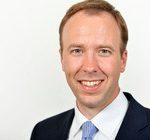
    Matt Hancock – 2020 Statement on the Covid-19 Response

    Below is the text of the statement made by Matt Hancock, the Secretary of State for Health and Social Care, in the House of Commons on 2 June 2020.

    With permission, I would like to make a statement on coronavirus.

    Thanks to the collective determination and resolve of the nation, we are winning this battle. We have flattened the curve, we have protected the NHS, and together we have come through the peak. Yesterday, I was able to announce that the level of daily deaths is lower than at any time since lockdown began on 23 March. Today’s Office for National Statistics data show that the level of excess mortality is also lower than at any time since the start of lockdown, falling on a downward trend. The ONS reports 12,288 all-cause deaths in England and Wales in the week ending 22 May. That is down from 14,573 in the previous week. That latest figure is still above the average for this time of year and we must not relent in our work to drive it down, but it is now broadly in line with what we might typically see during the winter. We never forget that each of those deaths represents a family that will never be the same again. This House mourns each one.

    We are moving in the right direction, but this crisis is very far from being over and we are now at a particularly sensitive moment in the course of the pandemic. We must proceed carefully and cautiously as we work to restore freedom in this country, taking small steps forward and monitoring the result, being prepared to pause in our progress if that is what public safety requires. So today I would like to update the House on two important aspects of the action we are taking.

    First, NHS Test and Trace is now operational. That means we have updated our public health advice. Since the start of the crisis, we have said to people that you must wash your hands, self-isolate if you have symptoms, and follow the social distancing rules. All those remain incredibly important, but there is a new duty—and it is a duty—that we now ask and expect of people. If you have one of these symptoms—that is: a fever; a new, continuous cough; a change in your sense of taste or smell—you must get a test. We have more than enough capacity to provide a test for anyone who needs one and we have more than enough capacity to trace all your contacts. So, to repeat: if you have symptoms get a test. That is how we locate, isolate and control the virus. By the way, I make no apology for this overcapacity. The fact that we have thousands of NHS contact tracers on standby reflects the fact that transmission of the virus is currently low. If we were in a position where we needed to use all that capacity, it would mean that the virus was running at a higher rate—something that no one wants to see.

    Secondly, I want to update the House on the work we are doing to understand the unequal and disproportionate way that this disease targets people, including those who are from black or minority ethnic backgrounds. This is very timely work. People are understandably angry about injustices, and as Health Secretary, I feel a deep responsibility, because this pandemic has exposed huge disparities in the health of our nation. It is very clear that some people are significantly more vulnerable to covid-19, and that is something I am determined to understand in full and take action to address.

    Today, I can announce that Public Health England has completed work into disparities in the risks and outcomes of covid-19, and we have published its findings. PHE has found the following. First, as we are all aware, age is the biggest risk factor. Among those diagnosed with covid-19, people who are 80 or older are 70 times more likely to die than those under 40. Being male is also a significant risk factor. Working-age men are twice as likely to die as working-age women. Occupation is a risk factor, with professions that involve dealing with the public in an enclosed space, such as taxi driving, at higher risk. Importantly, the data show that people working in hospitals are not more likely to catch or die from covid-19.

    Diagnosis rates are higher in deprived or densely populated urban areas, and we know that our great cities have been hardest hit by this virus. This work underlines that being black or from a minority ethnic background is a major risk factor. That racial disparity holds even after accounting for the effects of age, deprivation, region and sex. The PHE ethnicity analysis did not adjust for factors such as comorbidities and obesity, so there is much more work to do to understand the key drivers of these disparities, the relationships between the different risk factors and what we can do to close the gap.

    I want to thank Public Health England for this work. I am determined that we continue to develop our understanding and shape our response. I am pleased to announce that my right hon. Friend the Equalities Minister will be leading on this work and taking it forward, working with PHE and others to further understand the impacts. We need everyone to play their part by staying alert, following the social distancing rules, isolating and getting a test if you have symptoms. We must not relax our guard but continue to fight this virus together. That is how we will get through this and keep driving the infection down. I commend this statement to the House.

  • Lisa Nandy – 2020 Speech on Hong Kong

    Lisa Nandy – 2020 Speech on Hong Kong

    Below is the text of the speech made by Lisa Nandy, the Shadow Foreign Secretary, in the House of Commons on 2 June 2020.

    I thank the Foreign Secretary for coming to the House to make this statement and for advance sight of it. In particular, I thank him for the sentiment of solidarity that he expressed at the end of his statement.

    We are deeply concerned about events in Hong Kong. We share the Government’s opposition to the national security law. We want to see real action to address police brutality and the steady erosion of the joint declaration. We want the people of Hong Kong to know that the world is watching. We also want them to know that the world is prepared to act. Can I press the Foreign Secretary for more clarity on BNO passport holders? We welcome the announcement that visa rights will be extended. He says that they will be able to come to the UK if China continues down this path and implements this legislation. Will he tell us at which stage he envisages our taking action? When will these measures be brought before the House? I also ask him for more details about how this will apply. Will it apply to the 350,000 people who hold valid passports, or to the 2.9 million who are eligible? For this to be meaningful, surely it has to apply to people’s families. Will he confirm whether this is the Government’s intention, and what assessment he has done of the numbers?

    The first rule of any sanction against China must surely be that it does not harm the people of Hong Kong. Will he tell us what assessment he has made of the potential loss of millions of highly skilled people from Hong Kong; and what assessment he has done of the USA’s recent announcement, which I understand he supports, that Hong Kong is no longer autonomous? Will he therefore support the withdrawal of trade preferences and economic sanctions? There are implications for China and, of course, implications for the UK, but there are also serious implications for the people of Hong Kong, many of whom he does not appear to be offering safe haven to. What impact does he believe that that will have on them?

    We have been asking for concrete steps, and I welcome the fact that the Government are now signalling that they are prepared to take these, but the joint declaration has been repeatedly undermined since 2012. As the former Governor of Hong Kong put it, that has been met with only “tut-tutting” and “embarrassed clearing of the throat” from UK Ministers. Why has the Foreign Secretary not pressed for an independent inquiry into police brutality? Given the serious implications for human rights, does he welcome, as we do, the suggestion by former Foreign Secretaries that an international contact group should be established? He knows that the only long-term solution to this is universal suffrage. We must see pressure from Britain on the Hong Kong authorities to begin the process of democratic reform.

    I was astonished that, in his statement, the Foreign Secretary did not address how the UK intends to respond to the threat of countermeasures by China. It is increasingly clear that we need an alliance of democracies to ensure that we can maintain, as he says, a constructive dialogue with China on shared challenges, not least on climate change, while standing up to aggressive behaviour and clear breaches of international law. He referenced the statements by the UK, Australia, Canada and the US, which was welcome, and the additional statements from New Zealand, Japan and the European Union. It is time for an international democratic alliance to come together and speak with one voice. The G7 is now off. The G20 is not meeting. The discussion at the UN Security Council has been blocked by China.

    It is time for Britain to be far more proactive. In recent weeks, Australia has shown real leadership on the search for a vaccine for covid-19 and France has led the charge for a global ceasefire. On this of all issues, why is Britain not stepping up and showing the leadership the world needs?

    Finally, I am concerned that this exposes some serious, deep contradictions in the Government’s approach to China. For a decade, we have been told that we are in a “golden era” of Sino-British relations, whereas the right hon. Gentleman has said that we cannot go back to “business as usual” with China. What does any of this mean in practice? The Government have finally accepted that there are concerns about the threat the Huawei contract poses to national security and are reportedly working with other countries to explore an alternative, but will he rule out Chinese involvement in any new nuclear projects beyond Hinkley? With a long and deep recession likely, the need for a coherent approach is only becoming more urgent. We do not have a strategy abroad. We do not have a strategy at home. This needs a calm and sensible approach, to maintain a constructive dialogue and build far greater strategic independence; the two are not contradictory but go hand in hand. Now is the moment that Britain must step up, show global leadership and begin to take this seriously.

  • Nicola Sturgeon – 2020 Statement on the Coronavirus

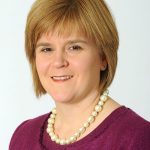
    Nicola Sturgeon – 2020 Statement on the Coronavirus

    Below is the text of the statement made by Nicola Sturgeon, the Scottish First Minister, on 2 June 2020.

    Good afternoon everyone. Thank you for joining us.

    I’ll start as always with an update on the current position in relation to COVID-19.

    As at 9 o’clock this morning, there have been 15,471 positive cases confirmed – which is an increase of 53 from the figures I gave you yesterday. However, I need you to note today that this figure of 53 includes 40 older positive test results, which have only been received today and are being added to the overall total now.

    A total of 1,168 patients are currently in hospital with either confirmed or suspected COVID-19 and that is an increase of 122 from yesterday.

    However, please note that the number of confirmed cases in hospital actually decreased by 23 compared to the figures yesterday.

    A total of 34 people last night were in intensive care with confirmed or suspected COVID-19. That is an increase of 7 since yesterday – all 7 of those are suspected cases at this stage, not confirmed cases.

    I am also able to confirm today that since 5 March, a total of 3,721 patients who had tested positive and required admission to hospital for the virus have now been able to leave hospital.

    And unfortunately, in the last 24 hours, 12 deaths have been registered of patients confirmed through a test as having COVID-19 – that takes the total number of deaths in Scotland, under that measurement, to 2,375. Of course, tomorrow we will have the weekly report from National Records of Scotland which includes confirmed and suspected deaths from the virus.

    Each one of these of course is an individual whose loss is being grieved and mourned by many. I want again today, to send my condolences to everyone who has lost a loved one to this illness.

    Lastly, on statistics I can confirm that the latest report on delayed discharges has been published today. That includes details on the number of older people discharged from hospitals – where they had no clinical need to be – to care homes. In April that figure was 510. An additional 600 were discharged during April to their own homes.

    In addition to thanking our health and care workers – as I do again today from the bottom of my heart – there are two other groups I want to pay tribute to and these groups are relevant to the two substantive issues I want to cover today.

    The first group is our unpaid carers, who of course provide vital support to family, friends and neighbours at all times. This pandemic has been an especially stressful time for many of them, and I want to thank each and every one of them, you if you are watching, for your efforts.

    One of the ways in which the Scottish Government has already acted to support carers, is by establishing a Carer’s Allowance Supplement – worth £460 a year. The supplement is paid to around 83,000 people across the country who receive Carers’ Allowance – people who are on low incomes, and who provide 35 hours or more of unpaid care to a child, or to an adult on disability benefits.

    Last month, we announced that these carers will receive a further Coronavirus supplement of £230. Parliament approved our plans two weeks ago, and so people who are eligible will receive this payment at the end of this month, together with their normal Carer’s Allowance Supplement.

    The specific date of payment will be confirmed in the next few days. Let me stress now, if you are eligible, you don’t need to do anything to receive this Coronavirus supplement – it will be paid to you automatically at the end of the month.

    I know that this pandemic has been really hard for everyone but it has been very hard for carers emotionally – you are inevitably concerned about your own health, and the health of the people that you are caring for. However in many cases, it has also been very difficult financially. This extra payment is one way of providing you with some additional help – but is also an important way of us acknowledging the help and care that you provide to others.

    I also want to acknowledge that this week is Volunteers Week – that’s an opportunity for all of us to highlight and celebrate the service of volunteers in communities the length and breadth of the country.

    Of course, like unpaid carers, the efforts of volunteers are important at all times, but the Covid outbreak has demonstrated once again just how much they contribute. The Scotland Cares campaign, which you will recall we launched at the end of March, received more than 80,000 sign-ups in total. More than 60,000 of those were from people who wanted to volunteer through the British Red Cross or through Volunteer Scotland.

    Some have been shopping for their neighbours – making sure people get the food and prescriptions and other essentials they need – others have been making befriending calls, or providing emotional support, to isolated or lonely people.

    Some are directly helping with the response to COVID-19, and others are volunteering through long-standing community organisations.

    There are also some people who signed up who may not have been asked to volunteer yet, but you may well be needed in the future – for example in supporting people who are asked to self-isolate under the “test and protect” system.

    And of course, alongside the tens of thousands of people who have signed up under the Scotland Cares campaign, there are hundreds of thousands of people and many of you watching will be amongst that number who have been volunteering for years and in some cases for decades.

    There are also, I know, many of you who are maybe not formally recognised as volunteers, but who have been performing important acts of kindness for neighbours and friends for a long, long time. I want to say how grateful I am, and how grateful the Scottish Government is to each and every single one of you.

    Our national response to Covid depends on people being prepared to look out for each other and show solidarity with each other. Volunteers are an essential and highly valued part of that collective national effort.

    Of course, each and every one of us has a part to play in that effort. And it remains the case, that the best way in which each of us can show solidarity with each other, is by sticking to the rules and the public health guidance.

    That is the point I want to end on this afternoon.

    You should still be staying at home most of the time right now, and you should still be meeting fewer people than normal.

    I’d ask all of you to consider whether or not your life feels as if it is going back to normal? I’m sure that’s not the case but if it is, perhaps you should think about whether you are following all of the public health guidance because unfortunately, and regrettably, our lives shouldn’t feel completely normal right now.

    When you do meet people from another household, when you are away from home, you should stay outdoors at all times, and you should stay 2 metres apart from people in other households.

    Now you might be reading or hearing in the media today some voices saying that 1 metre is sufficient – so I want to take the opportunity today to stress that the clear and strong advice from the Scottish Government is to stay 2 metres apart from those in other households.

    Don’t meet up with more than one other household at a time, don’t meet more than one a day – and please keep to a maximum, and I stress, a maximum of 8 people in a group.

    Remember to wash your hands often. That is actually more important as you start to meet, albeit at a physical distance, with people from other households. So wash your hands often and thoroughly. If you’re away from your home, out and about, please remember to take hand sanitiser with you.

    Wear a face covering when you are in shops or on public transport. And again, I want to make a direct appeal to you here, if you haven’t been wearing a face covering so far when you’re in a shop or on public transport or in other enclosed spaces, I’m asking you to please think about doing so now. Because it can offer some protection to other people, it protects them from you transmitting the virus to them if you have it perhaps without knowing it and other people who wear a face covering are offering you some protection as well. So again, it’s something all of us can do to protect each other.

    Remember to avoid touching hard surfaces – and when you do touch a hard surface remember to clean it.

    And if you have symptoms of COVID-19 – a new, continuous cough; a fever; or a loss of, or change in, your sense of smell or taste – you should get tested, and follow the advice on self-isolation.

    I want to underline that point today as well. The success of our test, trace and isolate system – Test & Protect – depends on everyone with symptoms coming forward and getting tested.

    So if you do experience symptoms – please do not delay – do not do that thing that sometimes in normal times all of us do, wait to see if we feel better after a day or so. The moment you start to experience these symptoms, book a test at nhsinform.scot or you can phone NHS 24 on 0800 028 2816.

    It is really important that if you experience those symptoms, a cough, fever, a loss or change in sense of taste or smell then you come forward and book a test.

    Above all else, and this is my final point, please remember that the individual decisions that all of us take right now have an impact far beyond our own health and wellbeing – our individual decisions right now affect the wellbeing of our families, our communities, indeed they affect the wellbeing of the entire country.

    The Scottish Government’s responsibility to lead the country through this pandemic and to take all of the appropriate practical steps we need to take is a responsibility we and I, personally take very seriously.

    But the truth is that our success or failure in suppressing this virus and keeping it suppressed will also depend on all of us as individual citizens and it will depend on our collective efforts as a society.

    We must all continue to do the right thing by each other – by following all the rules and following all of the public health guidance.

    I want to stress today that if we all do that, we will continue to slow down the spread of this virus and we will save lives. So my thanks to each and every one of you for doing that so far and I ask you to continue to do the right thing.

  • Nicola Sturgeon – 2020 Statement on the Coronavirus

    Nicola Sturgeon – 2020 Statement on the Coronavirus

    Below is the text of the statement made by Nicola Sturgeon, the Scottish First Minister, on 1 June 2020.

    Good afternoon. Thanks for joining us for today’s briefing.

    I want to start by providing provide an update, as I always do, on the current position in relation to Covid-19.

    As at 9 o’clock this morning, there have been 15,418 positive cases confirmed – an increase of 18 from yesterday.

    A total of 1,046 patients are in hospital with confirmed or suspected Covid-19. That represents a total decrease of 27 from yesterday, including an increase of 3 in the number of confirmed cases.

    A total of 27 people last night were in intensive care with confirmed or suspected Covid 19. That is the same as the figure yesterday.

    I am also able to confirm today that since 5 March, a total of 3,695 patients who had tested positive and required hospital treatment for the virus have been able to leave hospital.

    And unfortunately, in the last 24 hours, 1 death has been registered of a patient who had been confirmed through a test as having Covid-19 – that takes the total number of deaths in Scotland, under that measurement, to 2,363.

    That figure should be treated with some caution. Although deaths can be registered at weekends, registration numbers are usually relatively low at the weekend and they can be especially low on a Sunday.

    For example, just to illustrate that point, last week I reported 3 deaths on Monday, but then reported 18 deaths on Tuesday. That should be taken into account when looking at today’s figure.

    And of course we must always remember that these numbers are not simply statistics. They represent unique and irreplaceable individuals whose loss is mourned by many. I want to send my condolences to everyone who has lost a loved one to this virus.

    I also want to express once again my deep thanks to our health and care workers. You are doing incredible work in exceptionally challenging circumstances, and all of us owe you a debt of gratitude.

    The statistics that I have just read demonstrate the real progress we have made together against the virus. There are now far fewer people in hospital and in intensive care than at the peak of the outbreak.

    But these statistics also demonstrate how fragile that progress is. There are still hundreds of people in hospital and suffering from this virus. There are still new infections in many health board areas. And it is still the case that every day, I have to stand here and confirm further loss of life.

    The fact is the virus is being suppressed – but it has not gone away, and it is still extremely dangerous. Indeed, our routemap out of lockdown expressly recognises that during phase 1, which we entered on Friday, there is still a high risk that the virus is not yet contained.

    We all must understand that and continue to remember it.

    I know that in the last three days, many of you have had long-awaited reunions with family, friends and loved ones. I really hope you enjoyed that – and enjoyed the lovely weather too.

    I also know that the vast majority of people stuck to the rules when having those reunions and I want to thank you sincerely for that – you stayed outdoors in small groups, and you stayed more than 2m away from other households. So again my thanks to you for that.

    However it is also clear that over the weekend not everyone stuck to the rules. I’m told by the police that on Saturday alone there were 797 dispersals and that is people being moved on for not complying with the rules. To give some content to that, that 797 is five times higher than the figure the previous Saturday.

    And there were clearly cases where, despite the guidance we have issued, people were driving more than 5 miles to beauty spots. In some cases, people were staying overnight in tents, caravans or motorhomes.

    Some of the early statistics we have from Transport Scotland are especially concerning.

    Overall, transport yesterday was 70% up from the previous Sunday. Transport on Saturday was 60% up on the week before.

    In some places – like Loch Lomond and Glencoe for example – the increase was even more dramatic.

    On Saturday, on the A82 by Loch Lomond, traffic was around 3 times higher than the previous Saturday. We saw a similar picture around Glencoe.

    I’m going to be blunt here – it is very hard to see how all of that can have been caused by local residents, or by people travelling a reasonable distance to meet loved ones.

    So we will be considering all of this as we continue to assess the impact of the Phase 1 changes.

    Last week we deliberately allowed some flexibility when we changed the lockdown restrictions. We recommended that people don’t travel more than 5 miles for recreation, but we left room for some discretion so that you could go further to visit family.

    And we strongly recommended that when two households meet, there should be no more than eight people in total in a group – but again, we put that into guidance rather than putting it in law, because we trust, and continue to trust, the majority to keep those groups small and to stay within the rules.

    But it is worth being clear, in fact I have a duty to be clear with you, that if there is continued evidence of even a minority not abiding by those guidelines and travelling unnecessarily – if people meet up in larger groups or make journeys which risk spreading the virus – we will have to put those restrictions, on group size and travel distance, into law. And we won’t hesitate to do so if we think it is necessary for the collective safety and wellbeing of the nation.

    I should make clear, of course, that the stipulation that no more than two households can meet at any one time is already the law, and if need be, it will be enforced.

    And I also want to remind you that the two households should keep 2 metres apart from each other, not share food or utensils, and not go inside each others’ houses.

    And the reason I’m stressing all of this – the real danger we still face – is not because I want to be imposing these restrictions but it is because the progress we have made so far in tackling Covid-19 is not guaranteed and it is not irreversible. Cases could increase again, it won’t take too much for that to happen, rather than continuing to decrease. And if that happens then that will result in more loss of life.

    And if all of that happens restrictions will have to be reimposed, rather than being relaxed. None of us want that. But the only way of avoiding it, is for all of us to comply with the rules.

    Unless you are an essential worker, or work in one of the categories now permitted to be at work – you should still be spending the majority of your time at home.

    You should still be seeing far fewer people than you might normally do. And those meetings you are now able to have – and your life more generally – still should not be feeling normal.

    That basic point applies to everyone. I know that young people, for example, will be hugely frustrated after weeks in doors, and will be desperate to spend more time with friends in the park or at the beach. Young people may also think they are generally less likely to become very seriously ill as a result of this virus.

    I want to say very directly to young people, this virus can still be harmful to you. And even if you yourself are not adversely affected, you can still pass the virus on to other young people, and then some of them may pass it on to others – for example parents or grandparents – who are at greater risk of becoming seriously ill. So please think about that wider interest when you are considering your own behavior in the days and weeks to come.

    All of us want to be able to lift more restrictions, so that we can meet friends in more normal circumstances. We also want to be able to restart NHS services, as the Health Secretary spoke about yesterday – and to allow people to get back to work, school or study.

    But we can only do this if we keep driving the overall level of Covid infections down, and if we continue to suppress the spread of the virus. And we can only do that, if people continue to stick to the rules.

    So please, if I can conclude again by reminding you of what we are asking everybody to do:

    Only meet people from other households outside – because the risk of transmission outside is lower than the risk of transmission indoors – and even outdoors stay 2 metres apart from the other household when you do meet.

    Don’t meet with more than one other household at a time, don’t meet more than one a day and keep to a maximum of 8 people in a group.

    Wash your hands often. Take hand sanitiser with you if you are out and about.

    Please wear a face covering when you are in shops or on public transport or other enclosed spaces where physical distancing might be more difficult.

    Avoid hard surfaces – and clean any you do touch.

    And if you have symptoms, get tested and follow the advice on self isolation.

    Above all, more generally – and this applies to each and every one of us – let’s remember that each decision we take as an individual, affects the safety and wellbeing of us all.

    I know that that’s difficult. I understand just as much as anybody does the desire to see more people, and to travel outside your local area.

    But if we all stick to these rules we are helping to suppress this virus. But if even just a few of you don’t stick to these rules, we are providing a chance for the virus to spread more quickly, and to spread to different parts of the country.

    We need to continue to do the right thing, and to do right by each other. I know that the vast majority of you are doing that. Again, I want to sincerely thank you for that.

    My appeal goes to everybody across the whole population. Let’s stick together and let’s all do the right thing for the benefit of ourselves and each other.

  • Dominic Raab – 2020 Statement on Hong Kong

    Dominic Raab – 2020 Statement on Hong Kong

    Below is the text of the statement made by Dominic Raab, the Foreign Secretary, in the House of Commons on 2 June 2020.

    I would like to update the House on the situation in Hong Kong. As all Members will know, Hong Kong’s historic success was built on its autonomy, its freedoms and the remarkable resourcefulness and determination of its people. We have long admired their prosperity and their values, respected through China’s own expression of the one country, two systems approach—an approach that China itself has long articulated and affirmed as the basis for its relations with Hong Kong. The UK, through successive Governments, has consistently respected and supported that model, as reflected both in China’s Basic Law and also the joint declaration, which, as Members will know, is the treaty agreed by the United Kingdom and China, registered with the United Nations, as part of the arrangements for the handover of Hong Kong that were made back in 1984.

    Set against this Chinese framework and the historical context, on 22 May, during a meeting of the National People’s Congress, China considered a proposal for a national security law for Hong Kong, and then on 28 May the National People’s Congress adopted that decision. China’s Foreign Minister, State Councillor Wang Yi, made it clear that the legislation will seek to ban treason, secession, sedition and subversion, and we expect it to be published in full shortly.

    This proposed national security law undermines the one country, two systems framework that I have described, under which Hong Kong is guaranteed a high degree of autonomy with Executive, legislative and independent judicial powers. To be very clear and specific about this, the imposition of national security legislation on Hong Kong by the Government in Beijing, rather than through Hong Kong’s own institutions, lies in direct conflict with article 23 of China’s own Basic Law and with China’s international obligations freely assumed under the joint declaration. The Basic Law is clear that there are only a limited number of areas in which Beijing can impose laws directly, such as for the purposes of defence and foreign affairs, or in exceptional circumstances in which the National People’s Congress declares a state of war or a state of emergency.

    The proposed national security law, as it has been described, in terms of the substance and detail, raises the prospect of prosecution in Hong Kong for political crimes, which would undermine the existing commitments to protect the rights and freedoms of the people of Hong Kong, as set out in the joint declaration, but also reflecting the international covenant on civil and political rights. Finally, the proposals also include provision for the authorities in Hong Kong to report back to Beijing on progress in pursuing national security education of its people—a truly sobering prospect.

    We have not yet seen the detailed published text of the legislation, but I can tell the House that if legislation in those terms is imposed by China on Hong Kong, it would violate China’s own Basic Law. It would upend China’s one country, two systems paradigm, and it would be a clear violation of China’s international obligations, including those made specifically to the United Kingdom under the joint declaration.

    Let me be clear about the approach that the United Kingdom intends to take. We do not oppose Hong Kong passing its own national security law. We do strongly oppose such an authoritarian law being opposed by China, in breach of international law. We are not seeking to intervene in China’s internal affairs, only to hold China to its international commitments, just as China expects of the United Kingdom. We do not seek to prevent China’s rise—far from it. We welcome China as a leading member of the international community, and we look to engage with China on everything from trade to climate change. It is precisely because we recognise China’s role in the world that we expect it to live up to the international obligations and the international responsibilities that come with it.

    On Thursday, working closely with our partners in Australia, Canada and the United States, the UK released a joint statement expressing our deep concerns over this proposed new security legislation. Our partners in New Zealand and Japan have issued similar statements. The EU has too, and I have had discussions with a number of our EU partners. The UK stands firm with our international partners in our expectation that China lives up to its international obligations under the Sino-British joint declaration.

    There is time for China to reconsider. There is a moment for China to step back from the brink and respect Hong Kong’s autonomy and respect China’s own international obligations. We urge the Government of China to work with the people of Hong Kong and with the Hong Kong Government to end the recent violence and to resolve the underlying tensions based on political dialogue. If China continues down this current path, if it enacts this national security law, we will consider what further response we make working with those international partners and others.

    I hope the whole House agrees that we, as the United Kingdom, have historical responsibilities—a duty I would say—to the people of Hong Kong. I can tell the House now that if China enacts the law, we will change the arrangements for British National (Overseas) passport holders in Hong Kong. The House will recall that the BNO status was conferred on British dependent territories’ citizens connected with Hong Kong as part of the package of arrangements that accompanied the joint declaration in 1984 in preparation for the handover of the territory. Under that status currently, BNO passport holders are already entitled to UK consular assistance in third countries. The British Government also provide people with BNO passports visa-free entry into the UK for up to six months as visitors.

    If China follows through with its proposed legislation, we will put in place new arrangements to allow BNOs to come to the UK without the current six-month limit, enabling them to live and apply to study and work for extendable periods of 12 months, thereby also providing a pathway to citizenship.

    Let me just finish by saying that, even at this stage, I sincerely hope that China will reconsider its approach, but if it does not the UK will not just look the other way when it comes to the people of Hong Kong; we will stand by them and live up to our responsibilities. I commend this statement to the House.

  • Louise Casey – 2020 Statement on Rough Sleeping

    Louise Casey – 2020 Statement on Rough Sleeping

    Below is the text of the statement made by Louise Casey, the Prime Minister’s adviser on rough sleeping, on 31 May 2020.

    Firstly can I add my own condolences to the families and friends of all those who have so sadly passed away, due to COVID-19.

    At the outset of this awful crisis it became clear that what we needed to do, was do all we can to make sure we were protecting some of the most vulnerable people in our society.

    And we must continue to do so, the pandemic is not over.

    For homeless people, the task was to bring as many people in off the streets and out of communal shelters.

    The goal was to protect rough sleepers from the virus, give them the chance to self-isolate, and, ultimately therefore, to do the best we can to save their lives.

    There was an absolutely extraordinary response, across the public sector, charities and businesses in response to my call to get ‘everyone in’.

    Those efforts have resulted in close to 15,000 people across England now being helped.

    I’d like to take this opportunity, alongside the Secretary of State, to thank everyone involved – it was an extraordinary and unusual endeavour. From the dedicated outreach workers, the hard-working council staff to hotels that have opened their doors, and faith and community groups who provided friendship and food.

    It has been a heartening example of what we can do when we need to do it and the best of Britain in this time of crisis.

    And, by bringing almost everyone in, we now have an another extraordinary and unusual endeavour ahead, to try and change their lives for good beyond the immediate response to COVID-19.

    I stand ready to work with all partners and esteemed colleagues in Wales, in Scotland and in Northern Ireland.

    So, I’m really pleased the government is investing in these 6,000 new homes along with the extra support and money for the costs of their support. Meaning that we can help the most vulnerable rough sleepers, in the long term.

    This is a really good start. I am grateful to the Secretary of State and the Prime Minister for their support. But none of us should underestimate the challenge ahead in order to keep everyone in.

    There is much more that we need to do, but for now, I’d just like to thank – those in local government, the health service, the civil servants and the countless charities and community groups, who have helped protect this, one of our most vulnerable groups in our society, during this pandemic.

    And those, such as the Prince’s Trust, Business in the Community, Comic Relief, the Anglican and Catholic churches who have pledged wider support.

    So, now that so many are inside, I hope that we can keep it that way. What has been done here, is a small but incredible silver lining – in the dark cloud, that is COVID-19.

    Thank you.

  • Robert Jenrick – 2020 Statement on the Coronavirus

    Robert Jenrick – 2020 Statement on the Coronavirus

    Below is the text of the statement made by Robert Jenrick, the Secretary of State for Housing, Communities and Local Government, on 31 May 2020.

    As Communities Secretary, I will be updating you on our support for the most vulnerable people in society, I’ll be updating you on how we’re shielding people from coronavirus in England, and the next steps in our programme of support for rough sleepers during this pandemic.

    But first, I want to update you on the latest data on the coronavirus response.

    4,285,738 tests for coronavirus have now been carried out in the UK, including 115,725 tests carried out yesterday
    274,762 people have tested positive, that’s an increase of 1,936 cases since yesterday
    7,639 people are currently in hospital with coronavirus, down 15 % from 8,945 this time last week

    And sadly, of those tested positive for coronavirus, across all settings, 38,489 have now died. That’s an increase of 113 fatalities since yesterday.

    Behind each of those deaths is a mourning family, and heartbroken friends and loved ones. Our thoughts and prayers, as ever, are with all of them.

    At the start of this pandemic, we advised Clinically Extremely Vulnerable people to shield until the 30 June. These are individuals who are most at risk of severe illness if they contract the virus – so protecting them has been especially important during the pandemic.

    I think it’s important to explain who is shielding.

    They are not exclusively older people. Over half are under 70. Over 90,000 of them are actually children and they sadly will not be able to return to school tomorrow if their year group is. And hundreds of thousands of those shielding are – or were – at work before the pandemic. Many of these people are working from home, but where this is not possible, they are unable to do the jobs I am sure they would wish to be doing.

    The one thing they all have in common is that they have made a huge sacrifice. I would like to echo the Prime Minister in recognising the resilience of people shielding across the country and express our admiration for their ongoing efforts.

    We know that they often live with other people, so this has had profound impact on their lives as well – and family members have often had to sacrifice a lot to protect the people they love the most. And I know that a significant number of those shielding haven’t left the house at all for 9 or 10 weeks – that is quite an extraordinary restriction on their lives.

    For those who were advised to shield, we set up the National Shielding Service, a huge logistical exercise, unprecedented since the Second World War.

    This has included delivering over two and half million free food boxes, securing priority supermarket delivery services, ensuring people could get medicines delivered to their doorstep, and working closely in partnership with local government and our fantastic NHS volunteer responders helping people in a myriad of other ways, be that delivering shopping, calling people for a ‘check in and chat’ or providing essential care.

    Over 350,000 who are shielding have registered for some support from government, like food, like medicine deliveries. But more than half of those shielding have also said to us they want someone to talk to over the phone – so none of us should forget the emotional burden isolation places upon people, and the effects on mental health and general wellbeing.

    For anyone, shielding or not, it’s important you seek the help you need. And it is available despite the restrictions. So please, if this is you go to GOV.UK or the Every Mind Matters website for advice and practical steps as to what you can do and the support that’s available for your wellbeing during this time.

    I am immensely grateful to all of those in the NHS who have and continue to go above and beyond to support those most at risk during the virus.

    We also recognise the role of local councils and parish councils, who have supported their residents with great effect.

    When we announced a gradual relaxation of restrictions in the last week, I know that many people who are shielding will have been asking: what about me?

    Today we are setting out the next steps for the shielded.

    Now that we’ve passed the peak and the prevalence of COVID-19 in the community has reduced significantly, we believe that the risk to those shielding is lower, as it is proportionately for the general population.

    As with the guidance for shielded people more generally, we want to give people the information and advice they need to make the best decisions for them. This is, as always advisory, for the shielded.

    So, as a first step, I can announce today that we have updated the shielding guidance so that from tomorrow, Monday the 1st of June, people will be advised that they can take initial steps to safely spend time outdoors. This guidance is for England only but we are working very closely with the devolved administrations in Scotland, Wales and Northern Ireland who will issue their own guidance in due course.

    Those shielding will be able to spend time outdoors with members of their own household or, if they live alone, with one person from another household.

    This reflects a lower risk of transmission outdoors, as well as the significantly reduced prevalence of COVID-19 in the community. The full guidance will be uploaded to GOV.UK later today.

    You must still follow social distancing guidelines and remain at a 2 metre distance from others.

    This will enable those shielding to see loved ones, like children and grandchildren.

    Something many I know, are aching to do.

    Having spent many weeks indoors, some will understandably be very cautious and concerned about going outdoors. You should only do what you are comfortable with.

    In our road map we set out, while the shielding guidance is currently in place until the end of June, it may need to be extended beyond that point. Our guidance to those who are shielding will always be advisory, but it is also critical that it is based on the most up to date evidence and data.

    So today, I can say that as part of each review for the social distancing measures for the wider population, we will also review the risks for the clinically extremely vulnerable and assess whether, as we currently believe, the shielding period needs to be extended, and whether it is possible for the shielding guidance to be eased further.

    We will base each assessment on clinical advice from our medical experts, and the best data available about the prevalence of COVID-19 within the community.

    The next review of shielding measures will take place the week commencing 15 June and will consider the next steps for the programme more generally beyond 30 June.

    Following that review, the NHS will also write to all individuals on the shielding patient list with information about next steps on shielding advice and the support that will be available to them.

    If the conditions become less favourable, our advice to those being asked to shield will unfortunately need to be tightened.

    The Government will continue to ensure that support is available to those who need it for as long as possible and for as long as people are advised to follow shielding guidance.

    Once again, can I thank all those shielding for your patience and fortitude thus far. Everyone in the country appreciates the unique challenges you face, and we want to continue to do all we can to ensure that whilst you may be at home, shielding, you are not alone.

    Secondly, I wanted to provide an update on our work on rough sleeping. And I’m joined by the Prime Minister’s advisor on rough sleeping, Dame Louise Casey.

    From the start of this pandemic, we believed we had a special duty to protect the most vulnerable people in our society. And this was especially necessary for those people sleeping rough on our streets.

    Working hand-in-hand with charities and local councils, we have offered accommodation to over 90% of rough sleepers known to us at the start in order to help them stay to safe during the pandemic.

    I want to thank everyone who has been involved in this huge national effort. Thousands of lives have been protected as a result of your work.

    We’ve ensured councils in England have the funding to help continue housing rough sleepers in emergency accommodation as part of the £3.8 billion we’ve provided them in the last 2 months. And we will continue to fund this essential work to get the job done.

    But, as we enter the next phase in our fight against coronavirus, it is right that we start to look ahead.

    Our goal has always been that as few people as possible return to the streets. But words and promises are not enough.

    Because of the action we have already taken, for the first time, in my lifetime, we know who the vast majority of rough sleepers are and where they are living.

    That means we can assess each individual’s needs and tailor the support we provide next. Some people will need help to return to the private rental sector, but others will need accommodation to be provided so they can start to rebuild their lives.

    That is why 6,000 new supported homes will be made available for rough sleepers, providing safe accommodation for people we have helped off the streets during the pandemic.

    The government is backing this effort with £433 million to fast-track the safe accommodation desperately needed to ensure as few rough sleepers as possible return to the streets.

    3,300 of these new homes will become available in the next 12 months, and £160 million will be spent this year to deliver that.

    But rough sleeping is as much a health issue as it is a housing issue – it is a crisis of addiction and mental health as well.

    So we will provide specialist support staff for rough sleepers in this new accommodation to ensure they can continue to receive the health support they will need to transform their lives and fulfil their potential.

    These homes will be a springboard to better things. And they will serve as a new national asset and be a symbol of hope and our belief that no one’s path is predetermined.

    I’m now going to pass over to Dame Louise Casey.

  • Queen Victoria – 1873 Queen’s Speech

    Queen Victoria – 1873 Queen’s Speech

    Below is the text of the Queen’s Speech given in the House of Lords on 6 February 1873. It was spoken by the Lord Chancellor on behalf of HM Queen Victoria.

    My Lords, and Gentlemen,

    I GREET you cordially on your reassembling for the discharge of your momentous duties.

    I have the satisfaction of maintaining relations of friendship with Foreign Powers throughout the world.

    You were informed when I last addressed you that steps had been taken to prepare the way for dealing more effectually with the Slave Trade on the East Coast of Africa. I have now despatched an Envoy to Zanzibar, furnished with such instructions as appear to me best adapted for the attainment of the object in view. He has recently reached the place of his destination, and has entered into communication with the Sultan.

    My ally the German Emperor, who had undertaken to pronounce judgment as Arbiter on the line of Water-boundary so long in dispute under the terms of the Treaty of 1846, has decided, in conformity with the contention of the Government of the United States, that the Haro Channel presents the line most in accordance with the true interpretation of that Treaty.

    I have thought it the course most befitting the spirit of international friendship and the dignity of the country to give immediate execution to the award by withdrawing promptly from my partial occupation of the Island of San Juan.

    The proceedings before the Tribunal of Arbitration at Geneva, which I was enabled to prosecute in consequence of the exclusion of the Indirect Claims preferred on behalf of the Government of the United States, terminated in an award which in part ​ established and in part repelled the claims allowed to be relevant. You will in due course be asked to provide for the payment of the sum coming due to the United States under this award.

    My acknowledgments are due to the German Emperor, and likewise to the Tribunal at Geneva, for the pains and care bestowed by them on the peaceful adjustment of controversies such as could not but impede the full prevalence of national goodwill in a case where it was especially to be cherished.

    In further prosecution of a well understood and established policy, I have concluded a Treaty for the Extradition of Criminals with my ally the King of the Belgians.

    The Government of France has, during the recess, renewed its communications with my Government for the purpose of concluding a Commercial Treaty to replace that of 1860, which is about to expire. In prosecuting these communications I have kept in view the double object of an equitable regard to existing circumstances, and of securing a general provision more permanent in its character, and resting on a reciprocal and equal basis, for the commercial and maritime transactions of the two countries. I hope to be enabled within a short period to announce to you the final result.

    It has been for some years felt by the Governments of Russia and the United Kingdom respectively, that it would be conducive to the tranquillity of Central Asia if the two Governments should arrive at an identity of view regarding the line which describes the northern frontier of the dominions ​ of Afghanistan. Accordingly a correspondence has passed, of which this is the main subject. Its tenour, no less than its object, will, I trust, be approved by the public opinion of both nations.

    Papers will be laid before you with relation to the awards delivered under the Treaty of Washington, to the commercial negotiations with France, and to the northern frontier of the dominions of Afghanistan.

    Gentlemen of the House of Commons,

    The estimates of the coming financial year will be presented to you. They have been framed with a view to the efficiency and moderation of our establishments, under circumstances of inconvenience entailed by variations of an exceptional nature in the prices of some important commodities.

    My Lords, and Gentlemen,

    Although the harvest has been to some extent deficient, the condition of the three Kingdoms with reference to Trade and Commerce, to the sufficiency of the Revenue for meeting the public charge, to the decrease of pauperism, and to the relative amount of ordinary crime, may be pronounced generally satisfactory.

    A measure will be submitted to you on an early day for settling the question of University Education in Ireland. It will have for its object the advancement of learning in that portion of my dominions, and will be framed with a careful regard to the rights of conscience.

    You will find ample occupation in dealing with other legislative subjects ​ of importance, which, for the most part, have already been under your notice in various forms and at different periods. Among these your attention will speedily be asked to the formation of a Supreme Court of Judicature, including provision for the trial of Appeals.

    Among the measures which will be brought before you, there will also be proposals for facilitating the Transfer of Land, and for the amendment of our system of Local Taxation, of certain provisions of the Education Act of 1870, and of the General Acts regulating Railways and Canals; together with various other Bills for the improvement of the Law.

    I earnestly commend your deliberations to the guidance and favour of Almighty God.

  • Queen Victoria – 1872 Queen’s Speech

    Queen Victoria – 1872 Queen’s Speech

    Below is the text of the Queen’s Speech given in the House of Lords on 2 February 1872. It was spoken by the Lord Chancellor on behalf of HM Queen Victoria.

    My Lords, and Gentlemen,

    I avail myself of the opportunity afforded by your re-assembling for the discharge of your momentous duties to renew the expression of my thankfulness to the Almighty for the deliverance of my dear son the Prince of Wales from the most imminent danger, and of my lively recollection of the profound and universal sympathy shown by my loyal people during the period of anxiety and trial.

    I propose that on Tuesday the 27th instant, conformably to the good and becoming usage of former days, the blessing thus received shall be acknowledged on behalf of the nation by a Thanksgiving in the Metropolitan Cathedral. At this celebration it is my desire and hope to be present.

    Directions have been given to provide the necessary accommodation for the Members of the two Houses of Parliament.

    The assurances of friendship, which I receive from Foreign Powers, continue to be in all respects satisfactory. I need hardly assure you that my endeavours will at all times be steadily directed to the maintenance of these friendly relations.

    The Slave Trade, and practices scarcely to be distinguished from Slave Trading, still pursued in more than one quarter of the world, continue to attract the attention of my Government. In the South Sea Islands the name of the British Empire is even now dishonoured by the connexion of some of my subjects with these nefarious practices; and in one of them the murder of an exemplary Prelate has cast fresh light upon some of their baleful consequences. A Bill will be ​ presented to you for the purpose of facilitating the trial of offences of this class in Australasia; and endeavours will be made to increase, in other forms, the means of counteraction.

    Various communications have passed between my Government and the Government of France on the subject of the Commercial Treaty concluded in 1860. From a divergence in the views respectively entertained in relation to the value of Protective Laws, this correspondence has not brought about any agreement to modify that important Convention. On both sides, however, there has been uniformly declared an earnest desire that nothing shall occur to impair the cordiality which has long prevailed between the two nations.

    Papers relating to these subjects will be laid before you.

    The Arbitrators appointed pursuant to the Treaty of Washington, for the purpose of amicably settling certain claims known as the “Alabama” claims, have held their first meeting at Geneva.

    Cases have been laid before the Arbitrators on behalf of each party to the Treaty. In the Case so submitted on behalf of the United States large claims have been included which are understood on my part not to be within the province of the Arbitrators. On this subject I have caused a friendly communication to be made to the Government of the United States.

    The Emperor of Germany has undertaken to arbitrate on the San Juan Water Boundary; and the Cases of the two Governments have been presented to His Imperial Majesty.

    ​The Commission at Washington has been appointed, and is in session. The provisions of the Treaty which require the consent of the Parliament of Canada await its assembling.

    Turning to domestic affairs, I have to apprise you that, with very few exceptions, Ireland has been free from serious crime. Trade in that part of the United Kingdom is active, and the advance of agricultural industry is remarkable.

    I am able also to congratulate you, so far as present experience allows a judgment to be passed, upon the perceptible diminution of the number both of the graver crimes, and of habitual criminals, in Great Britain.

    Gentlemen of the House of Commons,

    The principal Estimates for the coming year have been prepared. They will at once be laid before you; and I trust that you will find them suitable to the circumstances of the country.

    The state of the Revenue affords favourable indications of the demand for employment and the general condition of the people; indications which are corroborated by a decline of pauperism not inconsiderable.

    My Lords, and Gentlemen,

    Your attention will be invited to several measures of acknowledged national interest. Among these there will be Bills for the improvement of Public Education in Scotland, for the regulation of Mines, for the amendment of what is known as the Licensing system, and in relation to the Superior Courts of Justice and Appeal.

    In particular, a Bill, having for its main object the establishment of ​ Secret Voting, together with a measure relating to corrupt practices at Parliamentary Elections, will be immediately presented to you.

    Several measures of administrative improvement for Ireland will also be laid before you.

    There will likewise be laid before you Legislative Provisions founded on the Report of the Sanitary Commission.

    You, my Lords and Gentlemen, will, I am confident, again apply your well-known assiduity to that work of legislation which, from the increasing-exigencies of modern society, still seems to grow upon your hands. And I shall continue to rely, under Divine Providence, alike on the loyalty of my people, and on your energy and wisdom, to sustain the constant efforts of the Crown to discharge the duties, to uphold the rights, and to defend the honour of the Empire.