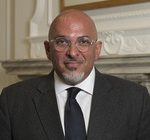
Below is the text of the statement made by Alok Sharma, the Secretary of State for Business, Energy and Industrial Strategy, in the House of Commons on 29 June 2020.
I beg to move, That the Bill be now read a Second time.
Covid-19 has had a profound impact across the economy. It required many businesses to shut their doors on 23 March, and they have taken a significant economic hit to protect the public’s health, so it was vitally important, at the start of this pandemic, that we put our arms around businesses to provide them with support to protect our people’s livelihoods at the same time as we protected our nation’s health.
So far, the job retention scheme has supported over 9 million jobs; 2.6 million people have been helped by the self-employment scheme; over 850,000 small businesses have benefited from around £10.5 billion in grants; and over £40 billion of Government-backed loans have been made to over 970,000 businesses. Every one of these interventions has helped individual families in each of our constituencies, but we are now reopening the economy in a cautious and phased manner, and the measures in the Bill are designed to provide a boost to businesses to help them as they look to bounce back from a period of enforced hibernation.
On 25 June, the Corporate Insolvency and Governance Bill received Royal Assent, and I thank the right hon. Member for Doncaster North (Edward Miliband) and all colleagues for their support in an expeditious passage for that Bill. Similarly, I hope we will be able to expedite the passage of the Business and Planning Bill. I acknowledge the very constructive discussions that we have had on the individual measures in the Bill with the shadow Secretary of State and, indeed, all shadow Ministers.
The overall aim of the Bill is to provide an adrenaline boost to key sectors of our economy. We want to support the hospitality sector by allowing outdoor dining and off-premises sale of alcohol, helping the sector back on its feet with the promise of al fresco dining for all this summer.
Jonathan Gullis (Stoke-on-Trent North) (Con)
Does my right hon. Friend agree that the measures allowing al fresco dining are essential to allowing the food and hospitality sector to bounce back following lockdown, and will he encourage all those businesses to go and update their ceramics and buy purely from Stoke-on-Trent?
Alok Sharma
My hon. Friend makes a compelling case for his constituency, and he makes an equally important point that this is an opportunity to get businesses going—up and running—after a period of enforced hibernation.
Sir Edward Leigh (Gainsborough) (Con)
We are all very grateful for my right hon. Friend’s efforts, particularly to help small businesses. I have noticed in Lincolnshire that small businesses and shops seem to have done better during the lockdown, as people have wanted to shop locally. As we are helping small business, would it not be a retrograde step if we were to reopen Sunday trading laws, since it is our present Sunday trading laws that do so much to protect small shops and businesses from large businesses and supermarkets?
Alok Sharma
As my right hon. Friend will know, measures related to Sunday trading are not in the Bill, but of course Sunday trading has been temporarily relaxed in the past, during the Olympics, and that was about ensuring support for businesses and consumers. But as I said, that is not in the Bill.
Through this Bill, we also want to support the construction sector to get Britain building again by enabling the extension of site operating hours and extending until 1 April 2021 planning permissions that have lapsed or will lapse between 23 March and 31 December.
Katherine Fletcher (South Ribble) (Con)
Does my right hon. Friend agree that construction is vital to getting our economy going, including in South Ribble, where my constituents are looking forward to the new Tesco’s in Penwortham? For that reason, I welcome these measures. Does he agree that they are vital to supporting growth as we come out of lockdown?
Alok Sharma
My hon. Friend makes an important point. I know she is working incredibly hard to support businesses in South Ribble, and I am sure she is looking forward to going to the Tesco’s once it is up and running.
We also want to support the transport sector by enabling shorter-term licences for drivers of heavy goods vehicles and passenger carrying vehicles and allowing for the risk-based testing of HGVs and public service vehicles. These measures will allow goods and public transport to keep moving. We want to continue to support small and medium-sized enterprises through the quicker delivery of bounce-back loans, which have provided a financial lifeline for more than 920,000 small businesses so far. This measure is retrospective and will disapply elements of consumer credit law.
Kevin Hollinrake (Thirsk and Malton) (Con)
I speak as co-chair of the all-party group on fair business banking and support the suspension of the Consumer Credit Act 1974 with regard to bounce-back loans due to affordability issues, but does the Secretary of State agree that it is vital that lenders still comply with the requirement to treat customers fairly in the collection process or if there are debt issues later on and that forbearance is applied?
Alok Sharma
As ever, my hon. Friend raises an incredibly important point. Yes, forbearance is part of these measures, and we would expect that very much to apply.
Before I turn to the detail of the Bill, I want to thank all those across industry and both Houses who have engaged with the Government to help develop the measures in the Bill. I also thank the Local Government Association, the National Police Chiefs’ Council, the Home Builders Federation and the British Property Federation for sharing their expertise. I am pleased to say that the measures in the Bill enjoy wide stakeholder support. The LGA, the Federation of Small Businesses, the British Beer and Pub Association, UKHospitality, the Freight Transport Association, the Road Haulage Association, the Royal Town Planning Institute, the British Property Federation and UK Finance have all expressed their support.
Huw Merriman (Bexhill and Battle) (Con)
I add my name to that long list, but can my right hon. Friend give some confidence to local authorities? There are a lot of planning rules and regulations, and some of our planning officers are quite conservative in their interpretation. Where there is discretion, can we send the message out from this place that decisions must be decided in favour of business and of opening up?
Alok Sharma
Of course we want to make sure that businesses open up, and we want local authorities to help local businesses do that, which is precisely the reason for these measures. We will publish guidance alongside the measures in the Bill, and I would ask local authorities to adhere to it. If my hon. Friend has any specific suggestions, I would be very happy to hear from him, as would my right hon. Friend the Secretary of State for Housing, Communities and Local Government, who will wind up this debate.
Greg Clark (Tunbridge Wells) (Con)
My right hon. Friend is making a compelling case for giving a boost to many sectors of the economy, but will he reflect on the fact that some sectors will not be able to reopen because of the necessary rules? I am thinking of theatres, concert venues and other music venues. Given the need to adhere to the rules, will he make special provision for those that cannot trade their way out of difficulty?
On the point that my hon. Friend the Member for Bexhill and Battle (Huw Merriman) made, it would be very unfortunate if any of these venues, theatres or concert halls fell into insolvency, and we hope to avoid that, but in doing so we should guard against granting planning permissions that take them immediately out of those very valued uses. Will my right hon. Friend reflect on both during the passage of this Bill?
Alok Sharma
My right hon. Friend, who has previously served as Business Secretary with great distinction, raises a number of important points. On insolvency, he will know that with the support of both Houses, we passed the Corporate Insolvency and Governance Act 2020, which came into effect on 25 June. When it comes to providing support to businesses, I think the best thing we can possibly do is to open them up, and I know that that is a sentiment that he will appreciate as a former Business Secretary. I would love to be able to have the whole economy operating and opening up, but we all understand why we are taking a phased and cautious approach: we want to continue to meet our five tests, and we want to ensure that the R value stays below one. In the tourism sector and the theatre sector, which he mentioned, ministerial colleagues are working closely on these issues.
I turn first to the temporary measures in the Bill to step up the recovery of our hospitality sector. Our 127,000 pubs, restaurants and cafés, which employ around 2 million people, are the lifeblood of our high streets and town centres. Social distancing guidelines significantly affect their capacity to accommodate customers, and food and beverage service activity has fallen by nearly 90% in the last quarter. The Bill introduces a temporary fast-track process for pubs, cafés and restaurants to obtain local council permission to place tables and chairs on the pavement outside their premises.
Anthony Mangnall (Totnes) (Con)
I spent my weekend in Dartmouth speaking to some of those businesses in the hospitality and tourism trade. May I associate myself with the words of my hon. Friend the Member for Bexhill and Battle (Huw Merriman) about making sure that councils are not over-zealous in their approach to allowing businesses to adopt the measures in the Bill for outdoor dining? I think it is very important that we can give those businesses reassurance.
Alok Sharma
Of course my hon. Friend makes an important point, but I think local authorities will understand that it is in their self-interest to ensure that businesses can open and that high streets flourish. I certainly encourage businesses to look at the guidance and adhere to it.
Meg Hillier (Hackney South and Shoreditch) (Lab/Co-op)
In my borough, licensed premises are a very important part of the local economy, and we work with local residents to support them. This measure, with seven days’ notice, allows an enormous amount of off-sales, which are already causing havoc in my constituency with people defecating, urinating and leaving problems in parks. People are talking about fake Glastonbury. This is going to cost my borough a lot of money to police. We are not party poopers, but we do not want the other sort of pooping, either. Will the Secretary of State make provision to allow councils some discretion where there is a particular problem with a licensed premises causing antisocial behaviour?
Alok Sharma
Ultimately, it is possible to revoke these permissions, and expedited processes have been put in place. Nobody wants to see bad behaviour, but this is a 10-day process, and there is an opportunity in the first five working days for anyone to put in their views to the local authority. Ultimately, the local authority decides. There is also a clear requirement that a legible notice is put up at the premises, so anyone who is in the locality will be able to see it when they pass by, and they can make representations if they wish. These new measures will cut the time to receive approval for this licence from an average of 42 working days to just 10 working days, and the application fee is capped at £100.
Public safety and access for disabled people using pavements is of course absolutely vital, so I can confirm that local authorities will be able to refuse or revoke licences where appropriate. The Government will be publishing minimum requirements and guidance for footway widths and distances required for access by disabled people.
Matt Western (Warwick and Leamington) (Lab)
The Secretary of State spoke earlier about the organisations that he has consulted. Has he engaged with, say, the Guide Dogs for the Blind Association to understand the sorts of risks and challenges that people with sight loss face? We have a centre for guide dogs in my constituency. This is a real issue for these organisations.
Alok Sharma
I can confirm that we have engaged with disability groups in the preparation of the clauses in this Bill.
We will also be making changes to alcohol licensing. Currently, any licensee wishing to add off-the-premises sales permission has to apply for a licence variation. This takes time, with a 28-day notice period, adverts placed, and sometimes a hearing. Ordinarily, of course, that is necessary. However, hospitality businesses are not operating in ordinary economic times, as we all acknowledge, so the Government are temporarily changing the process. Under the measures in this Bill, most licences will automatically and temporarily be extended to include off-the-premises sales. However, there are safeguards in place. The extension will not include premises that have been denied off-sales permission or had it removed within the past three years. Taken together, these measures will help our hospitality industry to get back to business over the busy summer months.
Meg Hillier
Has the right hon. Gentleman given any thought to allowing a review of this Bill, because—I am particularly talking about the hospitality industry—it will be coming into operation over a busy summer period, and we will see the effects of that? If he were to agree to a three-month review period where we, as a House, can see the evidence and then, if necessary, amend legislation, that would be a welcome step.
Alok Sharma
First, these are of course temporary measures. A 90-day rolling review, which I think the hon. Lady is proposing, would undermine the certainty that we are giving businesses in terms of these particular measures. She will know, however, that should the Government wish to extend any of the measures, they will be subject to made affirmative or draft affirmative procedures, so they will come before the House before there is any opportunity to extend them further.
I now return to the issue of trying to get the construction sector moving. In 2018, this sector represented almost 9% of our GDP. Lockdown has had a profound impact on construction sites across the country. We estimate that almost 1,200 unimplemented major residential planning permissions, with capacity to deliver over 60,000 homes, have lapsed or will lapse between the start of lockdown on 23 March and 31 December this year. Therefore, the Bill introduces powers to extend these planning permissions and listed building consents to 1 April 2021. This will be automatic for permissions that have not lapsed at the point that these measures come into force. Lapsed permissions can be reinstated and can benefit from the same extension, but subject to necessary environmental approvals.
We will also make it quicker for developers to apply for longer construction site working hours. This will help to facilitate safe working—for example, by staggering workers’ hours—and to make up for lost progress. Applications will be concluded within 14 days. This measure does not apply to applications from individual householders. Local authorities retain discretion and can refuse applications where there would be an unacceptable impact. Again, this is a temporary measure. Extended hours can only last up until 1 April 2021, unless extended by secondary legislation.
Richard Fuller (North East Bedfordshire) (Con)
Across my constituency, there is already tremendous local sensitivity about excessive developments, the planning process and some of the procedures for public participation in the process being curtailed—there are virtual meetings and sometimes council executives make decisions on their own. Will the Secretary of State assure me that the Bill will not limit public participation in anything that might be the result of an extension or expansion of existing planning permission or indeed a new planning permission?
Alok Sharma
No, it will not. I will talk a bit about hybrid appeal proceedings, and I think my hon. Friend will find that helpful.
There are two further planning measures that relate to the new spatial development strategy for London and hybrid appeal proceedings. The Mayor of London will shortly publish the new spatial development strategy, setting out plans for new homes for London. The Bill temporarily removes, until 31 December, the requirement for the strategy to be available for physical inspection and to provide hard copies on request. That ask from the Mayor of London will help to address practical challenges from social distancing.
Social distancing has also constrained the Planning Inspectorate’s ability to conduct hearings and inquires, and a backlog has been growing. Through the Bill, we will enable the inspectorate to combine written representations, hearings and inquiries when dealing with appeals. That change was recommended by the independent Rosewell review. A recent pilot undertaken on the review measures reduced average decision-making time from 47 weeks to 23 weeks.
Jim Shannon (Strangford) (DUP)
The Secretary of State mentioned 60,000 houses that big companies will be able to build, but does he recognise that small and medium-sized companies that do refurbishments, extensions and small works are critical to the core of the economy? Will he ensure that they can also progress their applications through councils for approval? They may be sitting on the line where that may not happen.
Alok Sharma
As I said, these measures will not relate to residential applications that have been made. The whole point is to get the construction sector moving. I have talked about a range of measures that we have set out for the sector, and I hope that more SME builders will be able to take advantage of them.
The Bill will enable lenders to continue issuing bounce-back loans quickly and at scale. It will retrospectively disapply the unfair relationships provisions in the Consumer Credit Act 1974 for lending made under the scheme. Reflecting current circumstances, the bounce-back loan scheme allows lenders to rely on self-certification from the business that it meets the eligibility criteria for the scheme and can afford to pay back the loan. It also provides for simpler information disclosure requirements to the borrowers. That will ensure that small businesses can continue to access the financial support that they need without undue delay.
Richard Fuller
I am very grateful to the Secretary of State for giving way. I want to take him back to the point about public participation, because it is such a sensitive area. He said that in clause 20, the procedures for planning proceedings can be altered. Either now or in Committee, can he clarify who will be making those decisions and what impact that will have on public participation in relation to housing developments that might have a dramatic impact in the area? I want to be clear about whether the Bill will affect that dramatically.
Alok Sharma
The Minister for Housing, my right hon. Friend the Member for Tamworth (Christopher Pincher), will deal with the details of that. The point of these measures is to get the economy going, which my hon. Friend the Member for North East Bedfordshire (Richard Fuller) is keen to do. I understand his point, and we will address it in Committee.
The Bill temporarily allows the issuing of one-year lorry or bus driving licence renewals, rather than the standard five years. Shorter renewals will be allowed if an applicant is otherwise healthy but unable to obtain the medical report required for a five-year licence. That will relieve pressure on GPs and allow drivers to continue to work.
The Bill also reforms powers to exempt temporarily goods vehicles, buses and coaches from roadworthiness testing. That will allow the high demand for heavy-vehicle testing, which restarts from 4 July, to be managed in a manner that prioritises road safety by targeting higher-risk vehicles or operators.
In conclusion, the Government have stood shoulder to shoulder with businesses throughout the covid-19 emergency and now, as we emerge from this pandemic, we need to support our economic recovery and help businesses with more flexible ways of working. The great British economy, helped by a willing public, is reawakening from its enforced slumber. Taken together, the measures in the Bill are designed to provide a much-needed economic boost, and I commend it to the House.