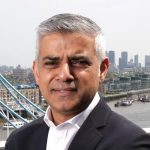
The speech made by Sadiq Khan, the Mayor of London, at the Mansion House in London on 12 January 2023.
I’d like to align myself with the Lord Mayor’s words on levelling-up… he is of course entirely correct – London both requires levelling-up and is required for levelling-up to be successful across the country.
The Lord Mayor is already proving a tireless champion for the City of London – both here at home and across the world – and I’m looking forward to working more closely with him in future. As the Lord Mayor said, London’s diversity of thought, cultures and backgrounds has long given our city a competitive edge, as I can see looking around Mansion House this evening. As Mayor, I’m committed to harnessing the thinking and talent to deliver a better London, a city that is fairer, and more prosperous for everyone. Now we know, that neurodivergent Londoners have so much to offer our city, from innovative thinking to creative approaches. City Hall is proud to already be working closely with Neurodiversity in Business and tonight, I’m committed to making London the neurodiverse capital of the world.
I’d also like to pay tribute to everyone from local government here with us.
As someone who began my time in public life as a councillor, I can’t imagine a more difficult period to serve in local government.
Terrible pressure on budgets.
Covid.
And now the worst cost-of-living crisis for a generation.
You play a critical role supporting the welfare and wellbeing of our communities.
And you don’t get anywhere near the recognition you deserve.
So, I want to express my sincere gratitude to all the council leaders, councillors and officers here tonight from across the political spectrum – not only for continuing to deliver vital public services, but for standing up for Londoners in the most challenging of circumstances.
My Lord Mayor, Ladies and Gentlemen, I want to use this opportunity to speak mostly about a phenomenon that occupied our TV screens, newspapers and Twitter feeds for many years.
But which seemingly has now vanished without trace from our national political discourse.
No, not Boris Johnson…
But Brexit.
Given a sizeable number of politicians seem to have taken a vow of silence on its damaging impact, I’m conscious that breaking the Brexit omerta makes me somewhat of an outlier.
I understand the genuine apprehension many share about this issue.
No one wants to see a return to the division and deadlock that dominated our body politic for 5 long years.
I certainly don’t want to re-open old wounds.
However, the inescapable truth is that this unnecessarily extreme, hard-line version of Brexit is having a detrimental effect on our capital and country – at a time when we can least afford it.
We can’t – in all good conscience – pretend that it isn’t hurting our people and harming our businesses.
As Mayor of this great city, choosing not to say anything would be a dereliction of duty.
We’re gathered in one of the great financial districts in the world – supporting millions of jobs and generating billions in tax revenue – but the reality is that the City of London is being hit by a loss of trade and talent… because of Brexit.
So, my message is this:
Trying to will Brexit into a success, or simply ignoring its impact, is not a strategy that will deliver prosperity for London or a brighter future for Britain.
If we’re not honest about this problem we cannot ever hope to fix it.
Raising Brexit this evening is not about trying to make a partisan point.
Or just a chance to moan about the past.
What I’m interested in is the future – doing what we all know is right for London – and looking at how we can sensibly and maturely mitigate the damage that’s being inflicted.
Let me share three short examples: First, our national economy.
We’re facing an economic downturn.
Yes, we’re not alone – the economies of the US, EU and China are all forecast to contract – but the UK is predicted to face the worst recession and weakest recovery in the G7.
In fact, UK GDP is set to shrink by 1 per cent this year, compared to 0.1 per cent for the eurozone.
What makes us exceptional?
Well, Brexit has already reduced our GDP by 5.5 per cent…
It’s reduced investment by 11 per cent…
And reduced goods and services trade by 7 per cent.
The hard mainstream? Brexit we have is a drag on growth, investment and trade.
Fixing it would mean the recession would be less painful and less prolonged.
This is what businesses are telling me across our city – and I have a responsibility as Mayor to speak up on their behalf.
Second, the cost-of-living emergency…
The London School of Economics found that Britons are paying an extra 6 billion pounds to eat because of Brexit.
That’s 210 pounds added to the average household’s supermarket bill over a two-year period.
Food inflation is now running at more than 13 per cent and its poorer families – who spend a higher proportion of their income on groceries – who are being hit the hardest.
A Brexit tax on life’s essentials is the last thing they need right now.
So, putting right the wrongs of Brexit would mean we can ease the pain on those less able to shoulder the burden.
Third, our public services…
Many are now in a desperate state, most acutely our NHS and I want to pay tribute to all of those who work in our national health service.
The estimated cost to the Treasury in lost tax revenues due to Brexit is 40 billion pounds.
With more than one million Londoners currently waiting for treatment…
With nurses on strike for the first time in history… and doctors, paramedics, 999 call handlers, physiotherapists soon to join them..
With patients needlessly dying because of unprecedented delays…
We simply cannot forgo 40 billion pounds of potential investment in our health service.
So, repairing our relationship with Europe would mean we can better support our NHS.
After two years of denial and avoidance, we must now confront the hard truth:
Brexit isn’t working.
It’s weakened our economy…
Fractured our Union…
And diminished our reputation…
But crucially… not beyond repair.
A New Year brings new opportunities.
And political leaders must now seize the opportunity, and with renewed purpose set out the need to reform our relationship with Europe.
Not with a return to the interminable Brexit wars of the past.
But with a sincere, considered, civil debate about Britain’s future that has at its core a clear-eyed view of the national interest.
Let me be clear:
We need greater alignment with our European neighbours – a shift from this extreme, hard Brexit we have now to a workable, softer version that serves our economy and people.
That includes having a pragmatic debate about the benefits of re-joining the Customs Union and the Single Market.
If the government wants to get the ball rolling on fixing Brexit, the perfect place to start in London would be addressing our labour and skills shortage.
The number of businesses in our city experiencing at least one skills shortage has now risen to almost 7 in 10.
Meanwhile, the number of jobs in our city held by EU-born workers has fallen by over 80,000 – putting huge strain on crucial sectors such as hospitality and construction.
Devolving powers to London and allowing us to create a regional shortage occupation list would be one way to give businesses the ability to attract and retain talent in the areas they need it most.
But another option would be a fundamental rethink of the existing Brexit deal.
Securing a better Brexit would mean more trade, higher investment and stronger growth.
It would mean a boost to both exports and living standards.
It’s key to unlocking London’s full potential and, in turn, helping us to power the national recovery.
More broadly, the government needs to entrust communities with the power to control their destiny.
Devolution improves our economy and politics.
Even in the face of huge challenges, we’ve shown what can be achieved from City Hall…
We’re building more council homes than at any time since the 1970s.
We’re taking huge strides to clean up London’s toxic air.
We’re offering free skills training to anyone who’s unemployed or in low-paid work.
We’ve delivered the Elizabeth Line and much, much more.
But fixing Brexit will mean we can accelerate our efforts to build a better London for everyone – moving faster to achieve a city that is safer, fairer, greener and more prosperous for all.
Let me just end by saying this:
While it’s true that the twin nightmares of the pandemic and Russia’s illegal invasion of Ukraine continue to cause great harm, we cannot continue to hide under the covers from the damage being done by Brexit.
We are no longer in 2016 or 2019.
The landscape has shifted.
More and more Londoners are worried about the impact of Brexit on our city.
Our business community is increasingly speaking out and in growing numbers.
It’s time the government caught up.
Ministers seem to have developed selective amnesia when it comes to one of the root causes of our problems.
Brexit can’t be airbrushed out of history, or the consequences wished away.
Europe was, is and will remain our most important relationship, but it’s in desperate and urgent need of repair.
So, let 2023 be the year we summon up the political courage to rebuild those essential bridges and tear down those needless walls standing in the way of our businesses and our people.
The future prosperity of our capital and country depends upon it.
Thank you.
Finally, can I ask everyone to join me in raising a glass… to the Lord Mayor and the Lady Mayoress.
