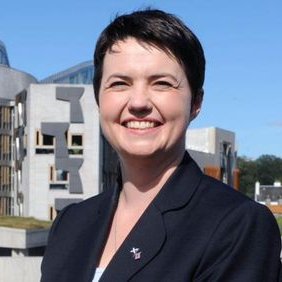
Tag: Ruth Davidson

  • Ruth Davidson – 2024 Comments on the General Election Result

    Ruth Davidson – 2024 Comments on the General Election Result

    The comments made by Ruth Davidson, the former Scottish Conservative leader, on 4 July 2024.

    So actually 131 – while, there is no dressing it up, this is a massacre – they’ve actually, if this is right, pulled a few back from where they thought they were.

  • Ruth Davidson – 2021 Speech on Covid-19

    Ruth Davidson – 2021 Speech on Covid-19

    The speech made by Ruth Davidson, the Conservative MSP for Edinburgh Central, in the Scottish Parliament on 4 January 2021.

    First, I offer my condolences and those of my party on the news of the passing of Kay Ullrich, who was respected by members across the chamber.

    I, too, am grateful to you, Presiding Officer, for recalling Parliament for today’s statement.

    Nobody wants to live under restrictions for a moment longer than is absolutely necessary or wants those restrictions to be any tighter than needed. However, the increase in infection rate and the transmissibility of the new variant give grave cause for concern. We have come too far to throw all our efforts away, and the roll-out of the vaccine means that we can see a time, soon, when all this will begin to be over.

    That said, this is hard news at a hard time, when the resilience of people across the country has already been worn down over the past year. Many will be dismayed by today’s news, not least the parents of school pupils, who now have to rip up their childcare plans, negotiate with their employers and worry about their children’s fractured education.

    The Children and Young People’s Commissioner Scotland has expressed concerns that closing schools poses

    “a serious risk of harm to the wellbeing of children and young people”.

    He has warned that

    “support for online learning is being provided inconsistently”

    across Scotland and that

    “there is not enough national guidance and support for schools”

    from Government ministers, which threatens a further widening of the attainment gap. What further steps is the Scottish Government taking to address those concerns and to ensure that Scottish pupils continue to get equal access to high-quality education?

    The First Minister:

    I agree that it will be very hard for everybody across Scotland to hear this news today and to contemplate the reality of it over the next few weeks. I reiterate to people that we do not take these decisions lightly. We agonise over them, and we announce such restrictions only if we really feel that there is no alternative. Right now, the only alternative is greater loss of life and the potential for our national health service to be overwhelmed. At this point in time, speed of action is the most important factor of all.

    The decision over which we agonised most was that on the further closure of schools for the majority of pupils. The issue of schools, closed or open, has been contentious in recent weeks, and teachers and others have understandably raised concerns. However, I hope that people see from the responses and actions of the Government that we have striven, and will continue to strive, to keep schools open as normally, as often and for as long as possible. We deem today’s decision to be necessary, for the reasons that I have set out.

    I will ensure that the Cabinet Secretary for Education and Skills sets out for MSPs over the next couple of days the steps that are being taken to ensure that the provision of online education is as parents want it to be and that local authorities are working to ensure that it is of a consistent quality across the country. As I indicated in my opening remarks, we have already taken steps to ensure that more young people have access to digital devices, in order to make online learning more accessible to them.

    Schools and local authorities already have contingency plans in place. Advice for parents is available via the Parent Club website. Parents can also speak direct to schools for more advice. Glow, which is the national online learning platform, has seen a huge increase in users and usage since earlier last year, and we are working actively with local and national partners to enhance the online and remote learning options for pupils. That work will continue over the course of next week and for as long as is necessary.

    I end my answer by reiterating that we want the measures to be in place for as short a period as necessary, for all the reasons that I think everybody understands and agrees with.

    Ruth Davidson:

    Today’s announcement underscores the need to have a comprehensive test and trace system in place. In August, the First Minister promised that, between the UK Government Lighthouse laboratories and NHS Scotland facilities, we would have the capacity for 65,000 tests per day. However, the highest number of tests that were carried out in a single day was 30,619, on Christmas day. Currently, one third of tests are carried out by NHS Scotland, and the majority by the Lighthouse labs. She also promised that the three regional hubs for testing would have opened by the end of December but, so far, only two have done so.

    The test positivity rate over the past seven days is now the highest that it has ever been since the Scottish Government started publishing that data in August. Is there capacity in Scotland to carry out 65,000 tests per day? If there is, why is the number of tests that are carried out on any day well below half of that capacity? When will the Edinburgh regional hub be open for testing?

    The First Minister:

    Yes, there is capacity for 65,000 tests per day. That target, which we set earlier in the year, was met by Christmas. However, the number of tests that are actually carried out on any given day is largely demand driven, because it depends on the number of people with symptoms who come forward for testing. We have seen, and I think that we will continue to see, that number rise as, unfortunately, the faster-spreading strain of the virus infects more people. However, the numbers for capacity and the demand for testing will often not be exactly the same, for obvious reasons.

    Although some aspects of testing of asymptomatic people are not done through the PCR testing that goes through the laboratory network—they are now increasingly done through lateral flow testing, the results of which do not appear in these numbers—other aspects of it are done in that way. For example, we are well through the process of transferring testing of care home staff from the Lighthouse lab network to the NHS Scotland lab network.

    We have a well-functioning test and protect system, which continues to be a really important part of our response to the virus. However, because the virus is now spreading faster, we must have a range of different responses in order to complement that system. As far as interventions are concerned, just as the test and protect system has been important, the vaccine programme will become increasingly important over the next period.

    I understand that there has been a last-minute—or, I should say, late-stage—issue with a sprinkler system in the Edinburgh regional lab. That is in the process of being rectified, and the lab is due to open shortly.

    Ruth Davidson:

    Today’s announcement of further restrictions is particularly difficult to take when in recent weeks we have had such positive news of vaccines being approved and being bought in such large quantities by the UK Government. In her statement, the First Minister said that we are in a race between the vaccine and the virus. It will be impossible to know whether we are winning that race at any given time if we show only the daily infection figures without the daily vaccination figures. Members of the public need more information on precisely how the roll-out is going, both nationally and in their areas, as well as on when they will receive their doses. Also, last week, the health secretary said that those aged over 80 will be invited by letter to attend for vaccination.

    Will the First Minister commit today to publishing not just the national vaccination figures but the numbers of people who have been vaccinated, broken down by health board, so that people can see the progress that has been made in their communities? Can she tell us now when everyone in the over-80 cohort will receive letters with details of their vaccination appointments?

    The First Minister:

    When Parliament was recalled last week, I said—I think in response to a question from a Labour member—that we intend to break down into categories the numbers of people who have been vaccinated, which we currently publish weekly. I hope that we could also do so by region and by health board. I will consider whether there is potential to have greater frequency of publication. I am simply mindful of not putting too many burdens of data collection and publication on the people whom we are expecting to undertake that huge logistical challenge, so it might be that weekly publication will remain the best balance, together with a greater breakdown of statistics.

    It is not that long since the vaccines were approved. In particular, the Oxford-AstraZeneca one is still at an early stage. However, we have already vaccinated more than 100,000 people. At this stage, a small percentage of our population has been vaccinated; the level in Scotland is slightly higher than those in the other UK nations. However, we must continue to focus on accelerating the process as much as possible. As I said earlier, at the moment that is largely constrained by supply. We know what we expect to receive for January, which I hope is a conservative estimate. We are not yet clear on what supplies we can expect beyond that.

    As for the call for priority for the over-80 population, vaccination of those people will start shortly and will be an on-going process. We have been recalculating our modelling for the speed and timescale of vaccination as a result of the change in the chief medical officer’s advice on giving the second dose of the vaccine up to 12 weeks after the first dose, rather than three weeks after it. That will allow us to get the first dose of vaccine to more people much more quickly. We are ensuring that we take full advantage of that, just as we are taking full advantage of the supplies of the vaccine as we get them.

    Ruth Davidson:

    Today’s announcement raises immediate practical questions, and one of the primary ones concerns the legal requirement for people to work from home where they can. That raises all sorts of issues, including who is a key worker and what constitutes essential labour in a workplace outside the home. Who should make such decisions, and what is the process for arbitration in the event of a dispute between a workplace and a local authority or between a boss and an employee? In the first lockdown, we saw different interpretations being used by different local authorities, and different services being provided depending on category. People need to know what the new rules are, how they will apply to them and what recourse will exist where there is conflict. Will the First Minister therefore provide clarity on those important points?

    The First Minister:

    We will set out more guidance on those points. On the issue of key workers in the education context, local authorities have specifically asked for some flexibility in that regard, which I think it is important to afford them.

    There is a balance to be struck. In terms of business, we are not, as of now, in quite as restrictive a position as we were back in March—when non-essential work in construction and manufacturing, for example, was closed—but we need to keep that under review. We need to look at not only the spread of the virus but the really important relationship, which I understand, between people’s ability to work—or rather, the requirement on them to work—and their ability to look after their children and take part in online learning for those children at home.

    The Cabinet Secretary for Economy, Fair Work and Culture will have discussions as early as this afternoon with business organisations, and discussions with trade unions, to ensure that we help people—just as we did back in March—to navigate their way through what I recognise is a difficult situation. However, the message to businesses is that we are again asking them to scrutinise their operations rigorously, as they did in March, and assure themselves that the people whom they are requiring to be at work are genuinely only those who cannot do their job at home. There is a need to ensure that as many people as possible who can work from home are supported to do so.

  • Ruth Davidson – 2018 Speech to Conservative Party Conference

    Below is the text of the speech made by Ruth Davidson, the Leader of the Scottish Conservatives, at the Conservative Party Conference held in Birmingham on 1 October 2018.

    Friends, it’s great to be back here in Birmingham.

    Seven years ago, I came to conference looking to lead the party north of the border.

    I promised you I would grow the Conservative family in Scotland. Well, never let it be said, I’m not a woman of my word.

    Conference, there are plenty of things I could talk to you about today.

    I could tell you about the fantastic work our 31 MSPs are doing in Holyrood, day by day holding Nicola Sturgeon’s miserablist SNP government to account.

    I could let you know about the work of our superb 13 Scottish Conservative and Unionist MPs.

    Who, day by day, are showing that you can stand up for Scotland, without walking out on the UK.

    Or I could talk for days about all the unseen stuff – the work our hundreds of councillors are doing every day for communities right across the country, showing that, contrary to our opponents’ claims; Conservatism isn’t alien to Scotland, but that’s it’s OF Scotland.

    Friends, I could talk a lot about all this.

    But, actually, what I want to talk about isn’t the day to day of parliamentary speeches or council chamber business.

    I want to talk about what matters.

    Things that, when you’re about to step back from the front line for a bit – as I’m about to do – are perhaps a little easier to see.

    And I want to make a plea.

    To look beyond the sound and fury that passes for our politics just now. Where the extremes get ever louder and the centre falls to silence.

    Where more energy is expended on twitter spats and below the line comments, than on making it that bit easier for those who come after.

    The people whose daily hopes, worries and aspirations should be at the heart of all we do.

    People struggling for a deposit, or desperate to get home from work before the nursery closes, or looking to ensure they can receive enough social care to stay in their own home.

    These are the people who need to be first in our minds.

    And it’s by focussing on their concerns that we do what’s needed – to bring the country back together.

    Because there’s no point pretending.

    The last two years have exposed some deep divisions in this country – and in this party.

    And here’s a safe prediction: in the days and weeks ahead we’re going to hear more of them.

    The fact is this: Brexit is happening. One way or another, we need to sort this.

    So let me just address three issues.

    First up – I want to deal with this question of another referendum.

    Because over the last few weeks, I keep being asked:

    Ruth you voted Remain, surely you’d welcome the chance to try and reverse the result. Why not back another vote?

    Why not join all the other people who were happy to support a referendum when they thought they’d win, and are now crying foul and insisting we go through it all again.

    Well, here’s the thing conference.

    Those of us in Scotland have been at this for some time already.

    Four years ago, the SNP told Scotland they’d respect the independence referendum result. And for four long years, they’ve been pushing, pushing, pushing to have another go. And to keep going till they get the result they want.

    And my response and the Prime Minister’s response has been clear: the people of Scotland spoke. They said No. It’s time to move on.

    Well – the same message applies with Brexit.

    I don’t get to stand here and profess myself a democrat – to declare that some decisions are so big they can’t be taken by politicians alone – and then demand a re-run just because I wasn’t on the winning side.

    And if I tried to argue differently – to insist that one referendum result was sacrosanct while another should be immediately overturned, well, that would make me just the worst type of hypocrite.

    So whether you’re Conservative, Labour, Leave or Remain, Yes or No – we must respect the democratic choices we make – or we undermine the principles we all claim to uphold.

    Conference, I didn’t get the result I wanted in 2016.

    But you don’t get to demand a re-run just because you didn’t get what you want.

    That way leads to more division, more rancour and a politics trapped in the past.

    The people voted. And there is no way to bring this country back together that doesn’t respect the vote.

    But here’s the next thing.

    These two referenda I’ve fought over the last decade have made one thing obvious: binary choices divide us into camps.

    And, now – across the UK – the danger as we enter this crucial period in our nation’s history is that we become too entrenched to reach across to the aisle in search of common ground. That our division on one issue, prevents us from making common cause on others.

    Friends, as we approach these crucial few weeks and months, we need to go back to our Conservative principles.

    The principles of country, of duty, of practicality and of delivery.

    The belief that every prudent act is based on accommodation and accord.

    That the best is the enemy of the good if it stops us improving the outcomes for the country.

    The attitude that listens, eyebrows raised, to ivory-towered schemes of the ideological puritan and replies: aye, right.

    It’s this practical, pragmatic and utterly Conservative approach that will get us through.

    Because, when the future of our country is at stake, it is essential.

    Here’s the truth:

    We can agree a Brexit deal under the Conservatives, or we can risk handing the keys of Downing Street to Jeremy Corbyn.

    I know which one I believe is in the national interest. I stand by the prime Minister.

    And lastly, if we want to sort this, let’s remember this too.

    Two years ago in July, standing on the steps of Downing Street, Theresa May gave her first address as Prime Minister and mentioned something that people tend to forget.

    It’s that the full title of our party is the Conservative and Unionist party.

    And she said: “That word Unionist is very important to me”.

    Well – me too.

    Yes – ensuring a good future relationship with the EU is important – indeed, vital for our country’s future.

    Yes – we must show our friends and allies across the continent that we intend to remain the open, engaged, responsible nation we always have been.

    But let’s never lose sight of the fact that the Union that’s most important to us is our own:

    the Union of Scotland, England, Wales and Northern Ireland.

    Let’s remember that across the UK, there are those who are working day by day to break up that union – and who believe that a chaotic Brexit will help.

    Let’s remember this also: the rock upon which this party is founded is a belief in the unity of this country and the enterprise of its people.

    So let’s commit to making this our number one priority:

    to make sure that the Union – our Union – emerges stronger, not weaker, from these next few weeks – because THAT is what matters the most.

    So conference:

    We sort this by respecting the democratic result.

    We sort it by using our Conservative values, of putting the national interest first.

    And we sort it by always, always keeping our eye on the most important prize of all: keeping our country together.

    And if we get that right, let’s remind ourselves where it leads

    To a Conservative government getting on with the job.

    To a Conservative government doing what we always do:

    Getting more people into work, fixing the public finances, supporting people off of welfare, cutting taxes for the lowest paid, helping businesses thrive – sorting out the mess we’re left by a Labour government, getting Britain back in the black.

    I know there’s some debate right now about how we respond to Mr Corbyn’s Labour party.

    Here’s my advice: folks, just leave him to his Labour takeover.

    Let him crack on with all those 9 hour long meetings of the National Executive Committee he seems to love…

    Let get him get on with compositing motions and allowing deselections of long serving members.

    Let him spend his time on that.

    And instead, let us get on with facing up to the challenges of the 21st century which need our attention.

    By tackling the housing crisis, sorting out planning laws and delivering new affordable homes – so young people starting out in life can buy their first home.

    By improving childcare, making it more flexible, freeing up hours – so people can juggle work and family life more easily.

    By boosting school standards, putting head teachers in charge, championing vocational qualifications – so there is an education system that works for all.

    By delivering security in old age, putting our NHS on a firm footing – so the healthcare supported through work can be accessed in retirement.

    And let’s do it not just in England and Wales, but in Scotland too.

    People keep asking me: do you seriously think you can beat the SNP?

    Damn right I do.

    Because Scotland has had enough of the negativity, the grievance, the decade long moan.

    Instead, we want to crack on.

    So yes, there IS a job I’m after. It’s the job of First Minister of Scotland.

    Because I want to lead the country – and leave the SNP’s decade of division behind us.

    Instead, to move forward.

    To restore our education system, to make us the real Northern powerhouse, to build the homes our young people deserve.

    With a clear goal in mind: to make Scotland the best place in the UK to live, to work, and to raise a family.

    Conference, I’m tired of talking about the constitution.

    I want to get on and boost the country I love.

    To focus on what matters to people’s lives.

    A decent job.

    A home of your own

    Time for your family.

    Security in retirement.

    It doesn’t sound like much, does it?

    But for too many people in our country, it remains a dream that’s out of reach.

    Let’s get behind the Prime Minister, so she can get Brexit done.

    So that we can throw all our energies on making that dream come true for everyone in this country.

    That’s the real challenge before us.

    So – together – let’s all rise to meet it.

    Friends, before I go – it’s my real pleasure to welcome the new leader of the Welsh Conservatives to the stage.

    His unveiling was like the best Welsh rugby commentary I’d ever heard.

    “Byron Davies announces that Paul Davies has triumphed over Suzy Davies to replace Andrew RT Davies.”

    Paul took his Preseli Pembrokeshire seat off the Labour party in 2007 and has never looked back.

    He’s a true servant of the party, a champion of Wales and I look forward very much to working with him in the future.

    So Conference, please give a big welcome to Paul Davies.

  • Ruth Davidson – 2017 Speech at Conservative Party Conference

    Below is the text of the speech made by Ruth Davidson, the leader of the Scottish Conservatives, at the Conservative Party conference held in Manchester on 2 October 2017.

    Thank you conference.

    It’s great to be here in Manchester. Or as I call it, the Southern powerhouse.

    I want to talk to you about the general election. In fact, I want to talk to you about two of them.

    The first one – two years ago.

    And for us in Scotland, the same old story.

    Knocking our pans in.

    Hitting countless doors, delivering thousands of leaflets, too many conversations to count, another pair of boots ruined.

    And at the end of it all?

    We started with one MP. We ended with one MP.

    We’d survived the SNP tsunami, but were no further forward than when we began.

    …we were still outgunned by those sodding pandas.

    But, two years later, we had a second election – this June.

    Back on the stump.

    Back knocking those same doors, delivering more leaflets, having thousands more conversations and – yes – by the end of it, another pair of boots totalled.

    But this time, it was different. This time people were looking for a serious alternative to a nationalism that had let down our schools and was more concerned with division than delivery.

    And we went from one MP to 13. Our best result in decades.

    After years of heroically holding the line on his own, suddenly David Mundell got some company.

    The pandas are going to have to go some, to catch up now…

    It’s been quite a ride, conference.

    And we’re not done yet – far from it.

    But, conference, we didn’t turn things around in one seven-week campaign.

    We did it through grafting hard between elections. By organising. By making and remaking the argument.

    And I have watched. With incredulity, the response to the Labour party conference this week.

    Commentators, who should know better, declaring Jeremy Corbyn as a shoo-in to number 10, just because Glastonbury chanted his name to the White Stripes. Folks, he hasnae even won a raffle.

    Well, conference I have been here before and I can tell you how this story ends.

    I have watched as Nicola Sturgeon sold out rock venues. As she released a line of signature clothing. As she sold foam fingers to the faithful so they could point at the sky as she flew in a helicopter she’d slapped her face on, over their heads.

    I’ve read the commentary that said her momentum was irresistible, that everything would be swept before her.

    And all the other parties in Scotland should just pack up, and go home.

    Well, conference, I don’t like anyone telling me where to go.

    Politics is not for faint hearts. It’s not about what’s in fashion or who is the absolute boy.

    It’s about making the case for what you believe in.

    It’s about service and duty and getting the job done. Delivering for others. And giving everyone the chance to get on.

    And, just as the SNP came crashing down to earth. Just as they lost 40 per cent of their seats in June. Just as half a million Scots chose to take their vote away. So too can the Corbyn bubble burst, but only if we work hard to make it so.

    Because, you know what? People tire of being offered free unicorns. Of easy promises that don’t add up.

    They want serious solutions to the issues facing their world.

    They want opportunities to make their own lives better.

    A good school so their children can do anything they set their mind to.

    A strong economy so they’ll always have the security of work.

    Well-funded public services to look after their needs

    And to keep more of their own money because they make better decisions for their family’s future than the state makes for them.

    That’s what we offer. That’s what Theresa May offers.

    A belief in country, duty, service and the power of people.

    And that’s what we fight for.

    Always. We fight.

    ……

    We may have five years, but I tell you – we need to get to work right now.

    Because the in-tray is full.

    Firstly. Brexit.

    It’s time to get the best deal we can.

    And you know what?

    It’s time we in this party made it clear – that we’re not Leavers or Remainers anymore – we’re just Brits.

    People who were asked to make a decision. Did. And now want to deliver that decision in the best way possible. Who now must unite behind our leader to get the best deal for us and the right deal for Europe as well.

    Next we’ve got to deliver that strong economy and world-class public services.

    Ten years of tough times since the crash – it’s time to show working families right across the UK – from a tenement in Glasgow, to a one-bed in Grantham – that we’ve got their back.

    Yes, we’ve got record employment in the UK today – but we also need to recognise the pressures faced by the job-juggling generation, where two or even three jobs are needed to make ends meet.

    The sheer effort that takes – just to keep going.

    The strain it puts on relationships.

    The stress of not knowing if you’re going to make your rent.

    And what will happen if you can’t.

    These people are looking to us for answers – and for action to make their lives easier.

    It’s our duty to deliver.

    Also, to make our country fairer.

    To make it clear: this party isn’t there for those at the top of the ladder – this party IS a ladder.

    It’s what we’re about: to help people move up and get on.

    To be the party of home-building.

    The party that enshrines excellence in education – no matter the school.

    The party that will take action on the low wage economy and help lift living standards.

    Further, to be a beacon in the world. To help those that are hurting and fight for those who can’t fight for themselves. To go into bat for our friends and allies.

    To be able to say when you go abroad that despite the financial hit of the last few years – that my country, our country, kept its commitments to the world’s poor and will continue to do so.

    And finally, conference, to stay united.

    To stay one United Kingdom.

    By being a nation that realises the ambitions of everyone in this country. That seeks to be a home for all who live here.

    And I mean everyone.

    From the people who voted to leave the UK, to the majority who voted to stay…

    From the people who voted to remain in the EU to the people who voted to leave.

    From the people who can trace their ancestors back through generations, to people who’ve settled here from somewhere else.

    …who pursued that innate Conservative instinct to better themselves and their families and build a new life in a new land.

    We need to stand together, Not defensive in this diversity and our sometime disagreement – but to be confident in our ability to embrace difference and debate.

    And to have the courage to confront not just our strengths but our weaknesses too.

    We are a remarkable Union, conference.

    Because of the leadership of this party – our Union is known the world over as a Union of choice, not of force.

    A Union that, three years ago, put our democratic right to choose whether to leave before its very survival.

    That’s not nothing. In fact, the more time passes, the more remarkable it becomes.

    And let’s say it loud and proud – that this is a Union that that does not hoard power to the centre, but has sought to push it out.

    And again, did so thanks to a Conservative party which – as Edinburgh, as Cardiff, Manchester and Teeside will attest – is now THE party of devolution.

    Not Labour, certainly not the LibDems. Us.

    And a party that now wants to use Brexit to go further – to ensure that the power surge that will hit Britain when we leave the EU is felt in Edinburgh, in Cardiff Bay and in Stormont too.

    I’m proud of that, conference. I’m proud of all we’ve done in the last few years to keep this country together and move forward as one.

    But we should recognise that these huge changes to our nation pose challenges too.

    Devolution of power has transformed our nation for the better. It has put power closer to people.

    But – at the same time – while we’ve built vigorous new devolved structures, we’ve not done enough to nurture that which binds us.

    As the Prime Minister said in Scotland earlier this year, all too often, Whitehall devolves and forgets.

    And the danger is that we become a country that stays together, but lives apart.

    With the cracks exploited by those who would pull us apart for good.

    So let me make a plea today.

    Yes – let’s absolutely press on with more devolution. But it’s time for a bit more Union too.

    More Union right across Britain.

    More Union in all parts of our nation – benefiting us all.

    More Union spread evenly– and not just based in London.

    ***
    Now let me make this clear: conference, I love London.

    No plans to move there myself, but great to visit.

    And it’s wonderful that our small island nation plays host to the capital of the world.

    But the truth is: for all the devolution of power in the last twenty years, our Union continues to be far too London-centric.

    Compare us to our friends around the world. New York’s global status doesn’t diminish Washington’s political clout, or LA’s creativity, or Silicon Valley’s entrepreneurialism. Instead, America has a cluster of great global cities.

    Or look at Germany – where Berlin’s political heft is balanced by the financial hub of Frankfurt and the industry of Munich.

    We’re the odd one out – in fact, among major global capitals, only Moscow accounts for a greater share of national product than London.

    And this imbalance is getting crazy.

    We live in a country where the property values of London’s top 10 boroughs are worth more than all of Northern Ireland, Scotland and Wales combined.

    Where you can sell a three bed semi in Ilford, and buy half of Sutherland.

    Where, in a capital city already zooming forward on the jet fuel of high finance, the economy is further boosted by enough civil servants to fill Wembley.

    It is time for change – to fulfil the plans we set out at the election this year…
    …to give Britain a shake and spread more of our Union outside the capital.

    To see our great metropolitan cities have a larger share in the government of our country.

    To ensure that – if our civil service and cultural bodies are to claim to be UK institutions – they must be present across our whole United Kingdom.

    To move more of the infrastructure, the people and the administration of our country out of the capital and into the country.

    It is happening to a degree already of course.

    More civil service jobs coming to my constituency in central Edinburgh.

    The fantastic new V+A museum rising up in Dundee, ready to show the best of Scottish and British design.

    And here in Manchester, the Northern Powerhouse now showing the way ahead.

    But I want to see more. We need to see more.

    The government’s industrial strategy is designed to boost growth in places across all four nations of the United Kingdom.

    And it’s reviewing the various agencies based in London to see which ones could be ready for a move.

    So I want us to seize the opportunity to ensure more of them come to Scotland.

    Conference, here’s the bottom line.

    The success of our Union cannot and should not be measured by the fact the alternative has failed.

    That separation is a busted flush.

    No – our success must be measured by our determination to always improve.

    By going the extra mile. By refusing to accept the status quo as a given. And being restless for change.

    By recognising that thousands of our fellow countrymen and women no longer see this country as theirs.

    By seeking not to shun them, or dismiss their complaints – but to answer them with action.

    And that must be our task as we go forward from conference this week.

    In Government, across the United Kingdom, united behind our Prime Minister, determined to face the challenges of the future.

    To tackle injustice.

    To be the ladder.

    To create real social cohesion.

    And – in opposition in Scotland – we must be ready to change, and to win.

    Because, I don’t know about you, but after ten years of SNP Government, it seems to me like it’s time for a new broom.

    It’s not going to be Scottish Labour, by the way.

    They swap leaders so often that Trump’s communications director feels sorry for them.

    But us? We’re serious.

    …serious about restoring Scotland’s reputation as the education capital of the world.

    ….serious about boosting our productivity – to get Scotland’s economy firing once again.

    And serious about running a government in Scotland that just gets on with the job for once.

    A government you can trust to focus on the tough choices.

    To dump the tedious grievance politics and the petty complaints.

    Instead, to act as a grown-up partner within a reformed United Kingdom – eager not just to better Scotland but – in so doing – to better our wider nation too.

    As a party that, in Scotland, is re-engaging with our roots.

    A party as Teddy Taylor once put it, isn’t just there for the people in the ‘big hooses’.

    But for those who clean their tenement step as well.

    That’s the party we are building in Scotland and across the United Kingdom.

    A party that speaks to the hopes of our nation as a whole.

    From car production lines in Coventry to contact centre staff in Cardiff.

    From ship workers in Glasgow to software designers in Dundee.

    A party that reaches out to every corner of our country with a level head, but also an open heart.

    And with a clear set of values.

    …That strong families are the foundation of a stable society.

    …A good education is the key to a lifetime of opportunity.

    …That everybody should have a safe and secure home.

    …That there should be a job for everyone who wants to work – and that pay should be fair.

    These are the things I believe in – and I know you believe in them too.

    So it’s time for us – all of us – to unite and fight.

    Unite and fight for the union of our nation

    …For the security people want.

    …For the prosperity families need.

    …For the future our young people deserve.

    Unite and fight for this country we are proud to serve.
  • Ruth Davidson – 2013 Conservative Conference Speech

    Below is the text of the speech made by Ruth Davidson to the 2013 Conservative Party Conference in Manchester.

    Good morning.

    Friends, I hope you’re enjoying conference.

    And, as you enjoy it, I want you to reflect that this could be your last ever UK party conference.

    Because by this time next year the people of Scotland will have voted in a referendum which will decide not just if Scotland should be in or out of the UK, but will decide whether the UK will exist at all.

    It is a huge decision.

    Touching every one of our great British institutions

    Affecting our businesses and our prosperity, our services and our security, our allies and our place in the world.

    A decision made by people now, on behalf of generations still to come.

    Because this decision isn’t the same as election.

    If we don’t like the result, we can’t just come back in 5 years’ time and vote again.

    It is a choice that is vital and is binding.

    And while everybody understands why this matters to Scotland, I want to talk to you this morning about its importance to the rest of the UK. And why, as Conservatives, we are leading the fight to keep our country together.

    Firstly, we are unselfconscious in the love of our country. We have worked and strived for generations to build a Britain that we can be proud of.

    In the good times, we have shared our prosperity and our expertise.

    In darker days, we have stood shoulder to shoulder with our allies; and with each other.

    The Union is in our DNA.

    But don’t take my word for it.

    Research conducted last month showed how party voters would cast their ballot.

    Only two thirds – 68% – of SNP voters would actually support independence.

    75% of Labour and 80% of Lib Dems were Backing Britain.

    But 98% of Conservatives said they wanted to keep our Kingdom United.

    And friends, d’you know what I want? I want the names and numbers of the other 2%

    Because, as a party, we rejoice in our nation’s success, appreciate our proud history and strive to make Britain better still.

    Our Conservative values – freedom for the individual, success based on hard work, horizons limited only by ambition – they reflect our national character.

    We’re a party that says it doesn’t matter if you’re a grocer’s daughter, or a working class boy from Brixton – you can be Prime Minister.

    A country that says it doesn’t matter where you were born, if you make Britain your home and don the Team GB jersey, win or lose, we will cheer you around the Olympic track.

    A society which says it doesn’t matter if you are Welsh first. Or Scottish, English or Northern Irish. You are British too.

    And we are all equal under the Union flag.

    And that flag is a sign, a symbol of how our nation can be a force for good in this world.

    And let me tell you how I know that – because I’ve seen its power at work.

    Before I was elected, I was a journalist and broadcaster.

    And as young reporter, I was sent to Kosovo, to see the work our troops were doing there.

    I was with the Black Watch regiment, and saw lads younger than me patrolling the streets and protecting schoolchildren from attack.

    Clearing bombs and dealing with bullets aimed at those who came from a different ethnic background.

    And they did all of that with a patch on their arm – the Union Flag.

    They did it because they believed in something, and I believe in it too.

    I know that the world is a safer place for Kosovars, ethnic Serbs and Albanians because of the service men and women of our country.

    Not just the Black Watch, but the Royal Regiment of Wales, who served alongside them in Pristina; the Royal Irish Regiment, the Household cavalry, the parachute regiment, the Royal engineers, the marines, the RAF and others.

    The UK has the most professional fighting force in the world.

    And when Scotland’s First minister, Alex Salmond, says – as he did – that our troops should never have been there, that stopping genocide and ethnic cleansing on Europe’s shores was in his words ‘unpardonable folly’ I say no, Alex.

    That was an unpardonable slur.

    We are a responsible nation in the world and we are not afraid to help shoulder the burden of a persecuted people.

    And we’re only able to do so because we have the integrated armed forces we do – pulling together from every part of the UK to keep our people safe at home and to work for peace abroad.

    Can you imagine this time next year if there’s a ‘yes’ vote; trying to pick apart different divisions, splitting up regiments, dividing our nation’s military hardware…

    …Our frigates and fighter jets, arms and artillery like a feuding couple dividing up their furniture?

    It doesn’t bear thinking about.

    We are stronger together, safer together, at our very best together.

    And, while we can make these arguments of the heart; of our dual identity, of our shared history, of the common endeavour to build and develop the most successful political, economic and cultural union in the modern world….

    …As Conservatives, we are a practical people too, and look also for the arguments of the head.

    Everyone in the UK benefits from our borderless Union.

    Scotland exports more to the rest of the UK than it does to the rest of the world combined.

    And – in return – we buy back too.

    In fact, we import more than twice as many goods by value from the rest of Britain than the rest of the globe.

    Tens of billions of pounds and hundreds of thousands of jobs rely on our shared market and cross border flow.

    And it’s not just goods and finance criss-crossing north and south. It’s people too.

    Labour migration is estimated to be up to 75% higher within an integrated UK – allowing us to share skills and knowledge.

    And it works. More than 800,000 Scots live and work in other parts of the UK.

    And 400,000 people in Scotland were born in England, Wales or Northern Ireland.

    Over the years we have worked together and fought together. We have mixed our families together.

    We are not easily separated by those who now seek to divide us.

    And we work hard for each other.

    Nearly 200,000 financial services jobs in Scotland rely on companies selling pensions, mortgages and insurance to the rest of the UK.

    More likely than not, the financial products which secure your home and support you in old age are looked after in Scotland – as nine out of ten of these customers live in the rest of the UK.

    In defence – right now 5,000 people in Scotland are hard at work constructing the next generation of vessels for the Royal Navy.

    And, In fact, every lens of every periscope of every submarine which has ever served – now or in history – under the white ensign has been constructed by the same specialist company in Scotland.

    I know, because they’re in my constituency in Glasgow.

    And in medical research.

    It’s not just Dolly the sheep.

    Because of the UK’s support structure, nine out of ten women and eight out of ten men are now surviving skin cancer, thanks in part to the work being done at Dundee University.

    Scottish expertise, UK support, worldwide benefits. Achieved Together.

    Now Conference, in Scotland, issues around the referendum are reported every single day.

    I know that’s not the case elsewhere – at least, not yet.

    And when you do get a news report, down south, more likely than not you’ll be hearing from Alex Salmond.

    He’s the one talking Britain down and saying that Scots are desperate to leave.

    Well, I’m telling you now. Don’t believe it.

    When it comes to this issue, Alex Salmond doesn’t speak for a majority of Scots. In fact, he never has.

    Time after time, poll after poll, people in Scotland say they want to stay.

    But we’re not complacent.

    In the months ahead we have a lot of work to do to hammer home to people just how much Scotland gains from being part of the UK and how much the United Kingdom benefits from Scotland as a member.

    As a nation, we know we are greater than the sum of our parts.

    And I think Scotland’s First Minister has cottoned on to that recognition.

    Because he’s opened up a new tack in recent months.

    Not content, to just make promises about everything that would stay the same under independence – Keep the Queen, Keep the pound, Keep the Bank of England – whether it is in his gift or not.

    Not content, just to make assertions about a separate Scotland’s place in the world. – Automatic membership of NATO and the EU – against expert advice.

    But his new tack is the last refuge of every shameless populist in history staring down the barrel of defeat.

    It’s to promise things for free.

    A quick tally shows – with 11 months still to go – at least £32 billion pounds of uncosted promises.

    Under his independent utopia Alex Salmond promises to:

    – Increase overseas aid

    – Reverse benefit reforms

    – Underwrite oil decommissioning

    – Set up a Scottish Spy service

    – Subsidise more windfarms

    – And renationalise the Royal Mail.

    – By polling day, I’m expecting free beer with every vote.

    All of these promises made to people in Scotland.

    None of them with any explanation of how they would be paid for.

    In fact, a secret leaked document from Scotland’s Finance secretary shows his projection that – far from being able to offer unlimited bonuses – Scotland would be worse off than the rest of the UK by 2016-17 and would start under independence laden with a debt and debt interest we’d struggle to pay.

    That’s not me saying Scotland couldn’t be a separate country – of course we could.

    But why would we want to when we gain so much as part of the UK?

    And the man in charge of the sums for breaking up Britain – when even he – admits we’d be worse off as a nation?

    Friends, it is this ‘say anything’, ‘do anything’, ‘promise anything’ approach to breaking up Britain that we are fighting.

    And it is a fight.

    And I’m asking you to join me in it.

    I know that many of you living in other parts of the UK won’t have a vote – but we all have a stake in the result, and we can all play a part in securing our country for the future.

    When Quebec went to the polls to decide whether to leave Canada in 1995, the result was exceptionally close.

    The secessionists were ahead until the day itself.

    There was just a 1% margin of victory.

    And the single fact credited with making the difference between staying and going, between uniting the country or dividing the nation – was that the rest of Canada said ‘We want you to stay’.

    So, over the next year, when Alex Salmond comes on your television, saying things designed to get right up your nose.

    Know that he’s doing it on purpose, and that he doesn’t speak for the majority of Scots.

    Know too, that while this is the most important decision in Scotland’s history – it also affects each and every one you, no matter where you live.

    In three hundred years we have built our nation together, fought together, traded together, lived, loved, settled together.

    Shared our countries risks.

    Benefitted from its rewards.

    We walk taller, shout louder and stand stronger together.

    I am proud of the Britain that we’ve built together

    And I will fight heart, mind, body and soul to keep it together.

    Friends,

    Over the next 11 months, we have a huge fight to save our United Kingdom.

    It’s a fight we can win.

    It’s a fight we must win.

    Conference, with your help, it’s a fight we will win.

    Thank you.