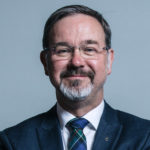
The speech made by Ronnie Cowan, the SNP MP for Inverclyde, in the House of Commons on 2 November 2022.
Norway has been mentioned a lot this afternoon, has it not? I had the good fortune to visit Norway last week. I met representatives from Parliament, Government, academia, the civil service, trade unions and non-governmental organisations, and I was struck by the way that they worked together with respect and trust to create a better Norway for everyone. Had I suggested to them that they were too small to be an independent nation, and that they would be better sharing their governance or their financial levers with their Scandinavian neighbours, they would have laughed me out of the room. I noticed that none of the Unionist MPs on the trip with me asked that question either. It is strange how that respect is afforded to Norway—a small, northern European, independent, sovereign nation of 5 million people—but not to Scotland.
Norway has alliances with other countries within which they co-operate. All of that is negotiated between equals who respect one another. Norway became independent in 1905 and has never looked back. It has experienced some tough times, but Norwegians took on the problems and solved them. That is how normal countries work.
That reminded me of Hugh MacDiarmid’s poem, “Scotland small?”:
“Scotland small? Our multiform, our infinite Scotland small?
Only as a patch of hillside may be a cliché corner
To a fool who cries ‘Nothing but heather!’ where in September another
Sitting there and resting and gazing around
Sees not only the heather but blaeberries
With bright green leaves and leaves already turned scarlet,
Hiding ripe blue berries; and amongst the sage-green leaves
Of the bog-myrtle the golden flowers of the tormentil shining;
And on the small bare places, where the little Blackface sheep
Found grazing, milkworts blue as summer skies;
And down in neglected peat-hags, not worked
Within living memory, sphagnum moss in pastel shades
Of yellow, green, and pink; sundew and butterwort
Waiting with wide-open sticky leaves for their tiny winged prey;
And nodding harebells vying in their colour
With the blue butterflies that poise themselves delicately upon them;
And stunted rowans with harsh dry leaves of glorious colour.
‘Nothing but heather!’—How marvellously descriptive! And incomplete!”
That is how it works. If the Unionists think Scotland is too small, they make it so because of their crushing lack of ambition and confidence in themselves and their fellow Scots, but they will not enforce their dystopian vision of an impoverished Scotland on me. I choose MacDiarmid’s view of a flourishing Scotland over the barren views of the Unionists any and every day of the week. Maybe they should ask themselves why Scotland has not voted for the Conservatives and Unionists in any significant numbers since 1955.
Among the statistics that outline Scotland’s wealth and, importantly, its potential, it is interesting to note that we have 61% of the seawater of the United Kingdom and the majority of the natural gas, crude oil, coal reserves, timber production and so on. That is not what we would expect of a country that is told that it is dependent on Westminster and that we are too poor to be independent.
As we transition away from fossil fuels, however, there are two figures that interest me more. First, Scotland has more than 25% of all the wind and wave energy potential in Europe. That is where our energy will come from as part of a clean, green, renewable energy package, providing for today’s needs while safeguarding the future for generations to come. The second figure is that Scotland has 90% of all the UK’s surface freshwater. Economists predict that water will be the new oil. We have more water in Loch Ness than all of England and Wales combined. Scotland has 31,000 freshwater lochs, equating to 100 times more water than it uses.
We can be self-sufficient in beef, sheep, dairy, pigs, cereal and potatoes. We are not too poor. We must not allow ourselves to be drawn down into the poverty mindset of the Scottish Unionist parliamentarians. Their poverty of aspiration does not reflect the economy of an independent Scotland; it reflects their desire to maintain the status quo and scare the people of Scotland into compliance with a UK Government who have shown themselves to be economically illiterate, out of touch with the needs of the majority of people and interested only in the inner machinations of their own party.
There is only one way in which Scotland can experience the benefits of our own resources, which is for all political decisions made for the people of Scotland to be made by the people of Scotland. There is only one path that leads to greater ownership and responsibility. There is only one outcome that provides the autonomy and the power required to grow and develop a strong, vibrant, inclusive and sovereign nation: independence from the corrupt and moribund United Kingdom of Great Britain and Northern Ireland.
With an independence referendum, we have an opportunity to re-establish an independent nation and, importantly, design that nation. With all the financial levers, together we can design welfare, banking, taxation, land ownership, foreign policy, defence, education, energy, health and transport in a fashion and to a standard that we feel is fitting and appropriate, built by Scotland for all of Scotland.
The wind of change is blowing. It will bring with it a nation full of hope, ambition, opportunity, respect, co-operation and equality. It is up to everyone who believes that Scotland must be a free and independent sovereign nation if it is to reach its potential to work together to achieve that aim. If we allow ourselves to become fractionalised as a force, we are beaten. We must keep our eyes on the prize, and we shall achieve our goal.