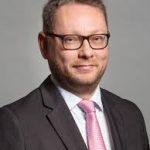
Tag: Richard Thomson

  • Richard Thomson – 2022 Speech on Standards in Public Life

    Richard Thomson – 2022 Speech on Standards in Public Life

    The speech made by Richard Thomson, the SNP MP for Gordon, in the House of Commons on 7 June 2022.

    I would like to begin by echoing the comments made by the right hon. Member for Orkney and Shetland (Mr Carmichael) and saying how disappointing I find it that there are not more contributors from the Government Benches. Indeed, the Government Benches resemble more the decks on the Marie Celeste than a Parliament on a day when we are debating something of such import, notwithstanding the excellent contributions, in their own way, made by the hon. Members for Weston-super-Mare (John Penrose) and for Devizes (Danny Kruger).

    I also enjoyed very much the contribution made by the right hon. Member for Derby South (Margaret Beckett). Her scepticism towards a written constitution disappointed me but did not surprise me. There are many big ticket constitutional items that this place could benefit from, such as seeing us elected here under a proportional voting system, and having a written constitution, a bill of rights and an independent constitutional court beyond the scope of ministerial interference. Those are just the standard trappings of modern liberal democracies, but I have long since given up any hope of them coming into effect in this place, which is one of the reasons why I think it would be better for Scotland, where I believe a consensus for such measures exists, to make a fresh start.

    Even with those big ticket reforms, we still need codes, standards, norms and conventions for how individuals and groups operate within that framework. In her opening remarks, the right hon. Member for Ashton-under-Lyne (Angela Rayner) referenced Professor Peter Hennessy and his “good chap” theory of government. In putting that forward, he emphasised the courtesies, conventions and orthodoxies that are taken for granted and which mean that the situation Lord Hailsham described many years ago—of government being like an elected dictatorship—never actually comes to pass, and that the individual excesses of Ministers, Prime Ministers or over-mighty and overreaching Executives can be curbed and corrected, rather than having anyone or anything slithering in between the gaps that exist and exhausting all reserves of trust and good will when they are no longer deserving of either.

    In those spaces, standards matter; any perception to the contrary that is allowed to build up damages politics in general and damages us all. It diminishes the legitimacy of the decisions we take and deters good people from getting involved in public life. Most damaging of all, it pushes people away from having the chance to express their views democratically by participating at the ballot box.

    We have heard in several contributions so far the continuing reverberations of partygate. Certainly, in a debate on standards, that provides a target-rich environment. But even prior to that, there were no shortages of areas of concern. To pick an example, notoriously, when the Prime Minister’s ethics adviser found that the Home Secretary had breached the ministerial code governing Minister’s behaviour, the only consequence that flowed from that was that the Prime Minister’s adviser ended up having to resign while the Home Secretary remained in office. Although a court found that the Prime Minister had not misapplied the ministerial code—whatever people might think about it, legally it was a sound decision—it was a sound decision simply because of the nature of how the code works at the moment: the Prime Minister retains complete control over all references, including any references in the code relating to himself.

    A standards system can operate only with as much integrity as those charged with implementing it have themselves. We have a Prime Minister who is not only the gatekeeper to that process, but also effectively the judge, the jury and, if need be, the executioner, and he remains so despite his manifest unsuitability, in my view, to carry out that role and despite the very clear recommendations of the Committee on Standards in Public Life referenced in the motion before us today.

    I accept that there has been a fresh iteration, as the Paymaster General, the right hon. and learned Member for Northampton North (Michael Ellis) says, of the ministerial code and how it applies. At a time when the public focus on standards has never been higher, it is very disappointing that the Prime Minister and the Government have once again decided to pick and choose what suits them and what does not. It is telling that the seven Nolan principles were removed from the introduction to the Government’s guidance, effectively disassociating the Prime Minister personally in word from that which he had already quite spectacularly disassociated himself in deed during his time in office.

    If the problems are clear, so too are the solutions—or at least some of them. It was illustrated graphically in stark terms yesterday that the Prime Minister has lost a considerable amount of authority within his party, an authority he had already lost in the electorate at large a long time ago. I am bound to observe that in Scotland the Prime Minister can now rely on the support of only two of its 59 Members of Parliament—although we are a day on from yesterday and who knows what positions the hon. Member for Moray (Douglas Ross) has contorted himself into since then? Sadly, the Prime Minister is not about to be run out of office in the next two hours, but whether it is in the next two days, two weeks, two months, two years, most assuredly the Prime Minister will be gone, meriting his own rather inglorious set of footnotes in history.

    This issue, therefore, is about the standards framework we have going forward. We should not twist it or distort it to suit the present incumbent, but we should be mindful of examples of his own behaviour in order to make the code and its operation as watertight as it ever can be. I challenged the Paymaster General, when he was good enough to take my intervention, on whether the Government would implement all the recommendations, as he indicated when he said he was supportive of the principles. I have to say that I remain baffled about how the Government can support the principles of the motion while recommending that Members abstain and still saying that they will not support the implementation of all the measures in full.

    In closing my remarks, I do not think there is anything that can be done to restore the reputation of this Prime Minister or the Administration he leads, but what is needed urgently is to rebuild trust by reaffirming immediately and without qualification the seven principles of public life—selflessness, integrity, objectivity, accountability, openness, honesty and leadership—and by implementing, without repetition, deviation or hesitation, each and every one of the recommendations in the report, as the motion before us calls for.

  • Richard Thomson – 2022 Speech on the Northern Ireland Protocol

    Richard Thomson – 2022 Speech on the Northern Ireland Protocol

    The speech made by Richard Thomson, the SNP MP for Gordon, in the House of Commons on 17 May 2022.

    I thank the Foreign Secretary for advance sight of her statement. We have heard plenty about the alleged shortcomings of the protocol, but there should be acknowledgement of the Government’s role in negotiating it; that does not even seem to have reached the level of being limited and specific, from what we have heard today. Ultimately the problem this legislation purports to deal with is not to do with the protocol, which was made necessary by the kind of Brexit that the Government eventually negotiated; the seed of the problem was in the very nature of the settlement.

    Neither my colleagues nor I deny for one moment the hurt and upset caused to many in Northern Ireland by the protocol, but we must not forget that Scotland and Northern Ireland as a whole both voted against Brexit, and that there was not cross-Union consent for where we are now. If the consequences of that deal are judged to be not in the best interests of the people of Northern Ireland, we need to be honest and recognise that the consequences of the entire withdrawal agreement are not in the interests of any place in the UK, because “getting Brexit done” has meant border checks for goods going from Great Britain to the EU or to Northern Ireland, but an absolute free-for-all for anything coming into Great Britain.

    We on the SNP Benches have said all along that a stable agreement needs to be reached with the EU that works for all parts of the UK, and I genuinely wish the UK Government well in that, but with the crisis in Ukraine, the last thing we need to be doing is thrashing around here pointlessly in a snare of our own making. Domestic legislation will, even if passed, not wash away the need to comply with international commitments; nor will it change the fact that if the UK is neither in nor aligned with the single market and customs union, that still creates a trade border that needs to go somewhere.

    Restoring devolved government in Northern Ireland and resolving the self-inflicted wounds of Brexit will require good will, trust and a negotiated settlement. I am sorry to say that the threats of unilateral legislative action by this Government to override their own deal are unlikely to be taken seriously in Belfast, and will not be taken seriously in Brussels; there is absolutely no reason why they should be taken seriously in this place either.

  • Richard Thomson – 2021 Speech on the Ballymurphy Inquest Findings

    Richard Thomson – 2021 Speech on the Ballymurphy Inquest Findings

    The speech made by Richard Thomson, the SNP MP for Gordon, in the House of Commons on 13 May 2021.

    I thank the Secretary of State for advance sight of his statement.

    The pain that the loved ones of the victims of the Ballymurphy killings have gone through over the past half century is unimaginable. I pay tribute to their courage, their fortitude, their dignity and their unswerving determination to seek the truth—however difficult that was—about how their loved ones died. The First Minister of Northern Ireland, Arlene Foster, put it extremely well when she said:

    “Lots of lessons to be learned. Grief is grief. Justice must be blind. Too many empty chairs across NI and unanswered questions.”

    The path to truth, justice and reconciliation, as we know, is an imperfect one. While the past cannot be changed, its truth can be acknowledged and reconciliations made easier. In that vein, the Prime Minister should come to the House to offer that apology in person on behalf of the citizens in whose names these actions were taken, and apologise not only for the length of time it has taken to bring truth to the families but for the unjustified and unjustifiable deaths of their entirely innocent loved ones. Does the Secretary of State agree more generally that justice delayed is justice denied and that the best interests of truth, reconciliation and the wider public interest are not best served by seeking to put a time bar on the pursuit of justice?

  • Richard Thomson – 2020 Speech on the Testing of NHS and Social Care Staff

    Richard Thomson – 2020 Speech on the Testing of NHS and Social Care Staff

    Below is the text of the speech made by Richard Thomson, the SNP MP for Gordon, in the House of Commons on 24 June 2020.

    I record my thanks on behalf of the Scottish National party group of MPs for the work that NHS staff and care staff have done throughout these islands during the course of the pandemic to date. I do not think it is an exaggeration to say that theirs has been a superhuman effort, for which some have given everything they could, including, sadly, their lives. We remember the 312 staff UK-wide who have lost their lives in the service of others, including the seven healthcare workers and the 12 social care workers in Scotland. There are no words of mine, or, I suspect, anyone else that can thank them enough for their work. We should not underestimate the toll it has taken and will continue to take in the months ahead.

    Throughout this time, we have clearly seen the value of public service and our public services. The weekly clap for carers showed people’s genuine gratitude and thanks to those who work to care for us and restore us to health. However, clapping is not enough. As we move towards what we generally term the new normal, I think the public would expect that new normal to be much better than the old normal that we came to take for granted.

    My party is committed to the principle of fair working and does everything it can to ensure the safety and welfare of Scotland’s health and social care workforce. Work is taking place to provide a range of staff wellbeing services and to share that with people working in the health and social care sector. I will give some brief examples. On 11 May, the Scottish Government launched the national wellbeing hub, PRoMIS, which was created in partnership with key agencies, professional bodies and trade unions and will support all health and social care staff in Scotland.

    My party has long advocated a real living wage, and since 2011 the Scottish Government have paid the real living wage to all their staff, including NHS workers, and that has recently been extended to all adult social care workers. Scotland was the first country in the UK to announce a death-in-service provision for NHS staff for covid-19-related deaths, including for frontline permanent and fixed-term staff, NHS locums, GP locums and NHS bank staff who are not included in the coverage provided by the pension scheme. Last month, the Health Secretary in Scotland also announced a scheme for care workers in respect of sick pay and ​death-in-service benefits, whereby a one-off lump sum of £60,000 will be payable to a named survivor, and that will be retrospective.

    We are seeing infection rates reduce because of the way that people have heeded the strong message to stay at home, protect the NHS and save lives. That message has, at times, seemed to be under threat—not least when the Prime Minister, given a choice between protecting his chief adviser and the integrity of the public health messaging, inexplicably came down on the side of his chief adviser. I see the hon. Member for Moray (Douglas Ross) in his place. I am certain that he will have quite a bit to say later with which I will struggle to agree, but I want to record my respect for him saying publicly what many of his colleagues must have been saying in private, which he left the Government in order to do.

    Douglas Ross (Moray) (Con)

    As this debate is largely about testing, could the hon. Member perhaps get back to how the Scottish Government are doing on testing, given that they are only meeting a third of the capacity for daily testing?

    Richard Thomson

    I thank the hon. Member for that intervention, and I will come to that, if he is patient.

    I am not privy to the scientific advice that the Prime Minister has access to, but the apparent ease with which some have been prepared to prioritise short-term economic considerations or individual liberty ahead of the need for collective wellbeing and avoiding a potentially disastrous second wave makes me glad that the rules being followed in Scotland are being decided in Scotland. I very much hope to be wrong, but the potential for a second wave of infection in parts of England seems very real right now, and I get the growing impression that if that is to be avoided, it may be more by luck than by judgment.

    It is precisely because of the dedication of NHS and care staff, clear advice and the selflessness and self-discipline of millions of people that progress has been made. In Scotland, Test and Protect is fully in place, and without the boastfulness of saying that it is world-beating, it works and is in place. That has allowed Scotland to enter phase 2 of the route out of lockdown, which will allow NHS boards to begin moving out of a crisis response into the recovery phase, in line with the framework. That means that health boards will be able to start prioritising cancer surgery for those most in need of that treatment and to restart wherever possible urgent elective surgery that had previously been paused, as well as IVF treatment, following the necessary approvals. It means implementing the remobilisation plans for health boards and integrated joint boards, which deal with social care, to increase the provision in order to address the backlog of demands, to handle urgent referrals and to triage routine services. It will also see the reintroduction of some chronic disease management, including pain and diabetes services.

    Inevitably, there will be a backlog to be dealt with, but due to the professionalism of the staff, I think we can have confidence that it will be dealt with as we begin the process of recovery. I know how difficult it has been for people who have had procedures or treatments postponed due to the pandemic, but the message is clear: Scotland’s NHS is open, as it always has been, for ​those who need it. Anyone with medical concerns should not hesitate to contact their GP or NHS 24 or attend hospital if their illness merits it.

    Patient and staff welfare must be at the heart of the plan, as it has been through the emergency stage, and testing will be at the heart of that. The routine testing of the NHS workforce in Scotland will be extended from 8 July, as more services resume. That means that staff who work in specialist cancer services, provide long-term care for the elderly or work in residential mental health care will be offered weekly testing from 8 July. That builds on the routine testing, which is already offered to care home staff and aims to protect staff and patients by reducing the spread of the virus in hospitals and other healthcare settings. In addition, Healthcare Improvement Scotland will be resuming its inspection programmes.

    We have seen the value of the public services and the ethos of public service. We have seen it in those who have helped to keep our NHS and care settings open, saving lives and providing care for those who have needed it. Many of those who have made the greatest sacrifice are those who have come here from other countries to work in our NHS and our care services. Because of economic and social circumstances, many have been at far greater risk from the virus than it was reasonable for anyone to expect, and we have particularly seen the worrying outcomes of coronavirus in the black, Asian and minority ethnic community. There is likely to be a number of intersecting factors in that, but it is important that they are properly understood and that the measures that come out of that are acted on. I am pleased to say that the Scottish Social Justice Commission will look at the figures that have come out in that respect to look at how we can change to address those issues.

    In conclusion, there are things that it would be valuable for us to do. First, we need to value our public servants. It is nowhere near enough to clap: we need to care for our carers and families in life, as well as, sadly, sometimes in death. We should pay them what they are worth, provide them with the equipment that they need, show them that they are valued and give them reasons, whether financially or just in terms of plain decency, to believe that they have respect and that they are valued in what they do.

    We need to value the contribution that many from our immigrant communities make to our health and care services. Getting rid of the immigration health surcharge is a very welcome step. The commitment of those workers to the NHS in the country that they now call home is not in doubt, and it is time that the Government considered in what other ways they could work to remove any doubt that there might be about our commitment to them.

    Secondly, lest there be any doubt, for all the massive contribution of the private sector in overcoming supply chain challenges, it was a publicly owned, publicly operated, free-at-the-point-of-need health service and public services that rose to the challenge of caring for us in these times, often acting as the carer of last resort. That lesson has never been forgotten in Scotland. I wonder if it is time for this Government to remember that.​

    Thirdly, the virus has not gone away. There is no vaccine in immediate prospect. If we go too quickly, too far and too fast with easing restrictions, we risk very much undoing the good work that has been done. We need to honour the sacrifices that have been made by so many people by not rushing back to normal too soon. It would be a very bitter pill indeed if we were to do that, if we were to see a second wave and if the work done to date counted for less than it ought to.

  • Richard Thomson – 2020 Maiden Speech in the House of Commons

    Below is the text of the maiden speech made by Richard Thomson, the SNP MP for Gordon, in the House of Commons on 20 January 2020.

    It is a great pleasure to follow the hon. Member for Stoke-on-Trent South (Jack Brereton) and to be called to make my maiden speech on behalf of my constituents as the newly elected Member of Parliament for Gordon.

    Before I get under way, I draw Members’ attention to the fact that I am a member of the Aberdeen city region deal joint committee, and I confirm that I have supplied this information in the Register of Members’ Financial Interests because it is relevant to some points I wish to make towards the end of my speech.

    It is a particular privilege to make my first parliamentary contribution as my party’s spokesperson on business and industry. Before I come to the substance of the debate, however, I take this opportunity to acknowledge the service of my predecessor, Mr Colin Clark. I first ​got to know Colin when we were both councillors in Aberdeenshire. I had particular reason to get to know him because his election as a councillor for Inverurie deprived me, as the council leader, of a working majority. However, whether in our dealings on Aberdeenshire Council, in my dealings with him when he was a Member or, subsequently, in our dealings throughout the campaign, I have always found Colin to be a very courteous and generous opponent. I wish Colin, his family and the team of staff who worked alongside him all the very best for the future.

    Like many colleagues, it has been a privilege for me to have served in local government, and particularly to have had responsibility, as council leader, for all the local government area of Aberdeenshire. I will resist the temptation to say that I now represent the finest part of that historic county, not least because I have no wish to be assailed quite yet by indignant parliamentary neighbours, on whichever side of the Chamber they happen to sit.

    Nevertheless, Gordon is a constituency of real contrasts. Geographically, despite its northern location, it sits right on the cusp of highland and lowland Scotland. It is a mix of city and country, upland and lowland, urban and rural. Starting in the north-west, taking in the historic town of Huntly and the villages and landscapes of Strathbogie and Strathdon, it heads eastwards into the fertile agricultural lands of the Garioch and Formartine, where towns such as Insch, Inverurie, Ellon and Oldmeldrum sit close to rapidly expanding settlements like Kintore and Balmedie. Finally, it sweeps down to the banks of the River Don, where the historic papermaking industry continues to this day—in fact, it is where much of the paper we use here in the House of Commons still comes from—and then into the northern suburbs of the great city of Aberdeen, taking in Dyce, Bucksburn, Danestone and Bridge of Don itself.

    Many of my constituents still find work in the traditional areas of agriculture and food production. Many, of course, work offshore either in the oil and gas sector or in the burgeoning renewables sector. In Gordon, we brew, we distil and we grow. Through the offshore energy sector and the north-east’s world-leading universities, we extract, we harness, we innovate and we power. The strength of the private sector is complemented by the role of the public sector and those who teach, who care, who make, who mend and who help others to live the best lives they possibly can, whatever their circumstances.

    Gordon is a constituency that not only makes things; it makes people. It is an area where people are hard-working, fair-minded and community-spirited. It is a welcoming place that embraces those who come to make their lives there, no matter where in the world they come from and no matter what their circumstances. It is a place that earns its prosperity, even if sadly still too few have the opportunity to participate in it. In short, we are a region rich in human and natural capital, and in the end markets for what we produce, we are an area that has always looked outwards to Europe and the world, and is determined to continue doing so.

    My constituency is one that emphatically did not vote to “Get Brexit Done”—quite the reverse. People there are pragmatic and well understand the benefits EU membership has brought us, as well as the pitfalls of trying to leave under a Government seemingly without a clear idea of the terms on which they would like that to happen. Although my constituents can take political ​uncertainty in their stride, they understand well the need to progress on the basis of a realistic consideration of the problems that might occur. Watching supporters of the Government swaggering into television interviews and arguing about who is going to have the biggest set of bongs in the negotiations to come with our European partners leaves them, as it does our European partners, pretty well cold. This House, in its deliberations to come, would do well to heed the wise words of the Danish Finance Minister Kristian Jensen, when he observed that

    “There are two kinds of European Nations—there are small nations, and there are countries that have not yet realised that they are small nations.”

    There is absolutely nothing wrong with being a small nation. I, like my colleagues, hope to see another one emerge on to the international stage in the not-too-distant future. When you understand, as we do, that it is possible to enhance your national sovereignty by sharing it and that it is possible to share it without anyone else getting it, you see that it is little wonder that EU membership has not ever seemed to provoke the kind of existential crisis in Scotland that it has elsewhere in the UK.

    This is, of course, a debate on the economy and, in drawing my remarks to a close, I wish to highlight three challenges pertinent to my constituents in particular. The first relates to the energy transition. Of course North sea oil and gas will continue to meet our energy needs and provide employment for some time to come. However, we need to be preparing to enact a just transition to the low-carbon industries of the future, harnessing fully the skills and knowledge of our present industries. The best way to start would be to ring-fence the corporation tax receipts from that industry and invest the proceeds with that objective in mind.

    The second relates to diversifying the local economy. We need to be growing other areas of our economy in the north-east too, whether that is in digital, life sciences, food and drink or tourism. This is something on which there is complete consensus throughout the north-east, so it remains a disappointment to me that when it comes to the Aberdeen city region deal and the subsequent side deal, the Scottish Government are still out-funding the UK Government’s contribution by a factor of 2:1. The Scottish Government are also still doing too much of the heavy lifting on broadband, given that responsibility is still in the purview of Westminster. I believe it is time the UK Government started to take their responsibilities for that seriously, while they still have them.

    The final challenge relates to alignment with the single market. We can well see the contradiction between a Prime Minister who assures our colleagues in Northern Ireland that there will be no divergence between Northern Ireland and Great Britain, and a Chancellor who says that there will be changes. There is not so much as a chlorinated chicken whiff of a trade deal coming along that will compensate for the trade deals we are about to leave behind. We must remain in alignment with the single market and not allow the Prime Minister another chance to crash out, leaving others to pick up the pieces of that failure.

    If the election brings us two comforts, they are these: first, the Prime Minister is now the master of his own destiny and so is responsible for and in charge of everything that now follows, with the resulting mess ​being his and his alone. Secondly, the people of Scotland have chosen my party to represent them in this place to defend their interests. That is a task I look forward with relish to carrying out, along with my colleagues.