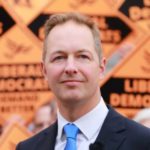
Tag: Richard Foord

  • Richard Foord – 2025 Speech on UK-USA Trade Agreements

    Richard Foord – 2025 Speech on UK-USA Trade Agreements

    The speech made by Richard Foord, the Liberal Democrat MP for Honiton and Sidmouth, in the House of Commons on 30 April 2025.

    I beg to move,

    That leave be given to bring in a Bill to require the Secretary of State to lay before Parliament any trade agreement between the UK and the USA which the Government proposes to implement; to prohibit the implementation of such an agreement without the approval by resolution of each House; to make provision for the amendment of such agreements by Parliament; and for connected purposes.

    Let us cast our minds back four years to the spring of 2021. Liz Truss was the Secretary of State for International Trade. Boris Johnson was Prime Minister. The export of British goods to the EU had fallen sharply in January of that year, and the end of the Brexit transition period was nigh. The Government were in a hurry. Boris Johnson sat down for dinner with the Australian Prime Minister here in Westminster. After three hours of small talk, a little negotiation and plenty of Australian red wine, Johnson agreed to remove tariffs on over 99% of Australian products entering the UK, including beef. The Government knew that such a deal would harm the UK agriculture and food industries. The Government’s own analysis predicted that the deal could leave the UK agriculture and food sectors £278 million worse off.

    The Australian high commissioner, who had been sitting at the table, moved quickly. Scribbling down Johnson’s generous pledge, he excused himself to go to the toilet and handed a note to an aide as he did so. Within minutes it was scanned, turned into a formal trade document, printed and slipped into an official-looking folder. The high commissioner then casually walked back into the dinner carrying the so-called deal. That was all it took to sell out the UK’s farmers: a wine-soaked dinner, a hastily scribbled note and a signature from a Prime Minister prepared to ignore the good advice of his own trade negotiators.

    Without proper parliamentary scrutiny and a vote on any deal with the United States, we risk adding to the pressure on our already struggling farmers, stripping away safeguards on British citizens’ data and sidelining democratic scrutiny itself. Currently, parliamentary scrutiny of international treaties in the UK is woefully inadequate. The Government can negotiate and sign a treaty with another country—even one as significant as the US—using prerogative powers, without having to put it to a vote in Parliament. Under the Constitutional Reform and Governance Act 2010, known as CRaG, signed treaties must be laid before Parliament for 21 sitting days. Parliament can raise objections but it cannot propose amendments and there is no requirement for a vote. Recommendations born of scrutiny are advisory, and not in the least bit binding.

    Evidence was provided to the International Agreements Committee in the other place last year. It showed just how outdated the UK’s treaty scrutiny system is, set against how trade arrangements have evolved and become more complicated. Modern trade deals now reach deep into domestic policy: they shape our food standards, our data rights and even the regulation of artificial intelligence. If Back-Bench MPs are shut out of the process, so too are the people we represent.

    Parliamentary scrutiny was demonstrably weak in the wake of the UK’s trade deals with Australia and New Zealand. The International Trade Committee condemned the Government’s approach, saying that it had “undermined” scrutiny. The Johnson Government did this by triggering the 21-sitting-day statutory period before Committees had received evidence or completed reports on the trade deal. This meant that Parliament had little information with which to assess the agreements. When the Australia deal was signed, Labour—then in opposition—rightly demanded a parliamentary vote. Now in government, it would do well to heed its own previous calls for proper scrutiny.

    In east and mid-Devon, farmers who I represent have been hit hard by the poorly negotiated trade deals with Australia and New Zealand, which come on top of the planned changes to inheritance tax and the peremptory closure of the sustainable farming incentive. Even if a future UK-US trade deal upholds our food standards, west country farmers and others could still be undermined. The Government offer assurances about shutting out hormone-treated beef and chlorinated chicken, but concerns remain that the US could still flood the UK market with beef that is not hormone treated. The Government have assured us that there will be no compromise on environmental and animal welfare standards in the UK, but again, these assurances count for little if imports from overseas are not produced to the same environmental standards or with the same requirements for high animal welfare standards.

    The UK is already too reliant on imported food. Imports made up around 40% of the UK’s food supply in 2023. UK food self-sufficiency has already fallen sharply, from 78% in 1984 to just 60% today. There are those who say that some sectors will always fall victim to trade negotiations, because the Government must balance the demands of various industries, but some of the factors currently being discussed by our trade negotiators are cross-cutting, and that includes matters of digital trade and data.

    The US wants a digital-first deal. That would mean locking in rules that protect the interests of silicon valley, not the British public. It has already been speculated that the Government are considering reducing or scrapping the digital services tax, which would cut taxes for some of the wealthiest and most powerful American companies in the world at the expense of public service users in the UK. The Office for Budget Responsibility forecasted that the tax raised £700 million in 2024-25—revenue that the Treasury can ill afford to forfeit at this time.

    Vice President J. D. Vance alleged in a speech at the Munich security conference that

    “old, entrenched interests”

    are

    “hiding behind ugly, Soviet-era words like ‘misinformation’ and ‘disinformation,’”.

    That brand of free speech pays little heed to facts. Vance may be representing some not altogether transparent interests himself. The US is pushing to overcome data localisation. That could allow US-based tech firms to centralise their data operations in the United States and rule out data storage in the UK. If that came about, it would weaken the protection for British citizens’ data, making it difficult to enforce UK privacy laws.

    Take as an example the contract that Palantir agreed with the NHS in 2023 to install its federated data system. If a US-UK trade deal restricted data localisation, it could allow NHS medical records to be exported to the US, handing Palantir the power to exploit the enormous commercial value of British citizens’ data. Although Palantir claims that it will only act as a processor of data, its business model is rooted in extracting value from data for commercial ends. With access to one of the world’s richest health datasets, Palantir could package insights and sell predictive analytic services to private healthcare providers, insurers and pharmaceutical companies. Palantir’s co-founder Peter Thiel has called the NHS a system that “makes people sick”. He claims that freedom and democracy are no longer compatible. Parliament should have the means to ensure that Thiel’s understanding of freedom cannot bypass British democracy.

    This is not just about trade; it is about trust. The Leader of the Opposition should know: the right hon. Member for North West Essex (Mrs Badenoch) was the Secretary of State for International Trade in 2023 when the Australia and New Zealand trade deals came into effect. Farming paid the price last time, and it could happen again—our digital freedoms could pay the price, too.

    My Bill is simple: it does not block a US deal or tie the Government’s hands; it requires that Parliament has a greater say. That is what democracy demands, and that is what the public expects.

    Question put and agreed to.

    Ordered,

    That Tim Farron, Calum Miller, Helen Morgan, Sarah Olney, Edward Morello and Richard Foord present the Bill.

    Richard Foord accordingly presented the Bill.

    Bill read the First time; to be read a Second time on Friday 16 May, and to be printed (Bill 228).

  • Richard Foord – 2022 Speech on the Avian Influenza Outbreak

    Richard Foord – 2022 Speech on the Avian Influenza Outbreak

    The speech made by Richard Foord, the Liberal Democrat MP for Tiverton and Honiton, in Westminster Hall, the House of Commons on 30 November 2022.

    It is a pleasure to serve under your chairmanship, Sir George. I will make some comments about compensation and timescales for restocking.

    On compensation, although the Government have made some moves in the direction of valuing the destroyed birds earlier following the avian flu outbreak, it is still not good enough. I want to describe the situation for one of my constituents. The birds that she and her family keep were infected in spite of being inside. Perhaps the avian flu got in via some fresh straw, but over 30,000 birds were destroyed. The valuation of the stock by the APHA was made promptly but, despite the outbreak occurring in early August, they have still not received any compensation for the second of their two sites. It was only last week that they received compensation for the first. This is entirely unacceptable given that their incomes ceased at the point of the cull and compensation was needed to ensure that bills were paid. Speedier payment of compensation is critical.

    Secondly, I will comment on restocking timescales. The secondary cleaning and disinfection protocol, as described by DEFRA, is not fit for purpose. It provides three options for restocking the farm. The quickest restocking option is unavailable to many small and medium-sized farms and free-range producers, which means that they are forced to choose restocking the poultry, and that cannot be carried out until 12 months after the avian flu outbreak. That is catastrophic for farm businesses whose main income is from poultry. They are stopped from trading for an entire year because of this legislation. It is causing otherwise viable businesses to go to the wall. In one case in my constituency of Tiverton and Honiton, when the bank became aware of this requirement for a 12-month pause in the farm being restocked, the lender requested that the constituent’s banking facility be removed.

    In addition to the volume of avian flu cases expected this winter, this legislation means that there will be shortages lasting well over a year, especially in the seasonal Christmas turkey market. Many farms, if stuck with the 12-month restocking option, will be unable to produce turkeys not only this Christmas, but next Christmas. I have not read any scientific evidence that backs up the 12-month restocking rule. Professor Ian Brown, head of virology at the APHA, confirmed at a conference this week that the virus can live during the winter period for six weeks. If the longevity of the virus is only six weeks, I see no reason why a farm should be forced to cease trading for a whole year.

    The secondary cleansing and disinfecting requirements, which must be achieved to restock a farm with poultry, are not fit for purpose. That is especially the case for a small, family-run and free-range farm, for seasonal poultry producers and for those operating on earth or stone floors. My hon. Friend the Member for Westmorland and Lonsdale (Tim Farron) is absolutely right that any enforced shutdown of a farm needs to be based on science. At the moment, there seems to be little or no scientific justification relating to the longevity of the virus that requires a 12-month shutdown.

    Sir George Howarth (in the Chair)

    Order. I remind the hon. Gentleman that there is one more speaker to be called and I will be calling the Front Benchers at 10.28 am.

    Richard Foord

    Thank you, Sir George; I will be brief.

    My constituents and I suggest that the current 12-month period should be reduced to six months, and the onerous and expensive cleansing and disinfecting requirements should be reduced. We propose that no differentiation should be made between the treatment of earth, stone or concrete floors. Having farms out of production for two Christmas turkey-producing seasons is catastrophic for small, family-run businesses. To summarise, the Government should think again about the payment of compensation and the timescales for restocking.

  • Richard Foord – 2022 Speech on the UK Trade Deals with Australia and New Zealand

    Richard Foord – 2022 Speech on the UK Trade Deals with Australia and New Zealand

    The speech made by Richard Foord, the Liberal Democrat MP for Tiverton and Honiton, in the House of Commons on 14 November 2022.

    Farmers across the UK, but particularly in my part of Devon, are deeply concerned by how the Government have approached these new trade deals. Let us cast our minds back to 2016, when we were told that a veritable land of milk and honey awaited us and that new trade deals would be easy to sign. Since 2016, the Government have signed a number of trade deals, but let us look at the detail of that apparent success. Almost all those deals have been roll-overs aiming to maintain the terms we already had. Only four of the trade deals are new, including the Australia and New Zealand deals that we are discussing today—hardly the boom in export trade we were promised.

    The Government’s approach during negotiations with Australia and New Zealand seems to have been to sell out British farmers left and right—and then some—to try to clinch a deal. These trade deals are more about attempting to garner positive headlines than supporting our world-leading agriculture and fishing industries. Both deals will see farmers across the west country undercut as produce made to lower standards will be allowed to flow into the UK.

    The Government claim they will not water down our food and animal welfare standards—and on paper they may well not—but where does that leave farmers in reality? It will be almost impossible for our farmers to continue to compete on such an unequal playing field, particularly given the increased costs that are making everyone cut back. It is frankly ludicrous to suggest that UK farmers will benefit from these deals when they tie not one, but two hands behind their backs. Add to that the Government’s botched implementation of the payments with the new environmental land management scheme, which is already pushing many farmers to the brink with cuts to the basic payments, and we have a recipe for disaster for our farmers.

    The upside in exchange for all this pain and misery set to be inflicted on rural communities by both these trade deals is a whopping 0.11% increase to our GDP. That is a drop in the ocean compared with the turmoil it will cause here at home. Many farmers across Devon are already struggling to make ends meet, yet with these deals, this Conservative Government have shown that they either do not get it, or simply do not care. More than 64,000 people across the south-west work in agriculture, and many are seeing their future put at risk owing to botched trade deals such as this. The New Zealand free trade agreement gives the opportunity for tariff-free import volumes to rise to 165,000 tonnes by year 15. That, combined with 125,000 tonnes from Australia, is almost the entire volume of lamb consumed annually in Britain. As the chief executive of the National Sheep Association said earlier this year,

    “neither does it win on our aspiration for high standards, climate change targets, or reliable food security.”

    Farmers across my part of the world will never forgive this Government if they continue down this deeply destructive path. As mentioned by Members previously, this debate today is not even a full debate. We are not discussing a substantive motion, as requested by the International Trade Committee, so everything we say here will not prevent the Government barrelling ahead with these plans anyway. We must ensure that this House and its Members have the final say on the trade deals we are discussing, and we must ensure that our aim is always to negotiate deals that protect and support UK farming and fishing, rather than bartering away those arrangements.

  • Richard Foord – 2022 Speech on Documents Relating to Suella Braverman

    Richard Foord – 2022 Speech on Documents Relating to Suella Braverman

    The speech made by Richard Foord, the Liberal Democrat MP for Tiverton and Honiton, in the House of Commons on 8 November 2022.

    On 5 April 1982, three days after the invasion of the Falkland Islands, the then Foreign Secretary, Lord Carrington, resigned. He took full responsibility for a failure by the Foreign Office. The Foreign Office had not signalled in advance of the Argentine invasion that the UK would stand resolutely by the people of the Falkland Islands. The Franks inquiry, in the following months, had access to some of the relevant papers. We later learned that the Prime Minister, Margaret Thatcher, had asked Lord Carrington to stay on, but Carrington had decided to do the decent thing. He resigned.

    Just imagine what would have happened if Lord Carrington had returned to office six days after his resignation. The Government would have barely had time to work out where South Georgia was, never mind give orders for its recapture—yet a Cabinet Minister’s return to office six days later is the situation that we see in this Government in 2022. This was just six days after she, by her own admission, deliberately emailed sensitive documents to a friend on the Back Benches without clearance. Since then, we have also heard about six further data breaches. What do they relate to? We do not know, so sensitive are they.

    Lord Carrington understood a phrase that I was reminded of by a constituent from Axminster recently: noblesse oblige. One must act in a fashion that conforms to the position and privileges that have been bestowed upon one. This Government cannot seem to recognise that with privilege comes responsibility. We are in this place to act on behalf of our constituents and the country, not our own vested self-interest or party political interests. This exposes something about the Prime Minister. In spite of a myth crafted by a slick PR campaign, he is just as complicit as Conservative Prime Ministers before him.

    It is clear that the Government have learned little from the past two years, including the by-election in Tiverton and Honiton this summer. Voters overwhelmingly said that they had had enough of sleaze and cover-up, yet to coin a phrase from one former Prime Minister, nothing has changed. This Home Secretary readily uses inflammatory language to exacerbate anxiety about inward migration. There is a real issue relating to inward migration that has developed while the Home Secretary has been in government, but instead of whipping up fear by speaking of an “invasion”, she should learn from Lord Carrington who, when faced with a real invasion—that of the Falkland Islands—did the right thing and resigned. So, too, should she.

  • Richard Foord – 2022 Comments on Matt Hancock Going on I’m a Celebrity

    Richard Foord – 2022 Comments on Matt Hancock Going on I’m a Celebrity

    The comments made by Richard Foord, the Liberal Democrat MP for Tiverton and Honiton, on Twitter on 1 November 2022.

    This is just ridiculous. As MPs it’s our role to represent our constituents and help them with issues they’re facing – not take weeks off to go on reality TV. If Mr Hancock wants to spend his time outside of Parliament, then frankly he should resign.

  • Richard Foord – 2022 Comments on the Resignation of Liz Truss

    Richard Foord – 2022 Comments on the Resignation of Liz Truss

    The comments made by Richard Foord, the Liberal Democrat for Tiverton and Honiton, on Twitter on 20 October 2022.

    We do not need another un-elected Conservative Prime Minister lurching from crisis to crisis. We need a general election, to get this rotten Government out of power and enable us to deliver the real change our communities need.

  • Richard Foord – 2022 Comments on Government Budget U-Turn

    Richard Foord – 2022 Comments on Government Budget U-Turn

    The comments made by Richard Foord, the Liberal Democrat MP for Tiverton and Honiton, on Twitter on 3 October 2022.

    Let’s be clear, the only reason Kwarteng has shelved plans to cut taxes for the wealthiest is because of the political backlash. He still thinks it is the right idea and went ahead with it despite the cost of living crisis. The Chancellor is woefully out of touch and must go.

  • Richard Foord – 2022 Speech on Ukraine

    Richard Foord – 2022 Speech on Ukraine

    The speech made by Richard Foord, the Liberal Democrat MP for Tiverton and Honiton, in the House of Commons on 9 September 2022.

    The Ukrainian, Leon Trotsky, said:

    “You may not be interested in war, but war is interested in you.”

    Leon Trotsky was previously a resident of Mykolaiv and Odessa. This phrase, uttered by Trotsky the communist revolutionary, has proven quite accurate for many people living in those parts of Ukraine in 2022.

    The Liberal Democrats must add to the chorus of condemnation in relation to Putin’s nuclear threats. President Joe Biden said, on the eve of the February invasion:

    “We have no intention of fighting Russia.”

    As Ukrainian courage and willingness to resist Russia’s occupation have grown, so has NATO’s willingness to supply materiel to Ukraine and so have Ukrainian ambitions grown in terms of how much of their country can be de-occupied.

    Putin claimed yesterday that, at the Istanbul talks in March this year, Ukraine’s representatives gave positive responses to Russia’s proposals. Putin claimed that a

    “peaceful settlement obviously did not suit the West, which is why, after certain compromises were coordinated, Kyiv was ordered to wreck all these agreements.”

    We in the UK should state plainly that Kyiv’s war aims are for Kyiv to formulate, independent of its friends and allies in the west.

    Some have said that, without NATO, Ukraine would not prosper militarily in the way that Ukraine appears to be doing, and that we in the west need to determine our own end state, our own strategy, and then influence the Ukrainians. I would counter that we must make it plain to Putin and the wider world that it is the Ukrainian Government who are making all the decisions.

    We need to be straightforward about the fallacy of Putin’s narrative that Kyiv is “receiving orders” from western advisers, as he puts it.

    Putin said yesterday:

    “Some irresponsible Western politicians are doing more than just speak about their plans to organize the delivery of long-range offensive weapons to Ukraine…Washington, London and Brussels are openly encouraging Kiev to move the hostilities to our territory.”

    I suggest that it would be simple for the Minister to correct that misinformation and to state that London has offered our allies in Kyiv no encouragement to strike Russia within its own borders. Rather, we should expose Putin’s rhetoric by stating categorically that the UK’s multiple-launch rocket system is supplied on condition that it is not used to strike anything within Russia’s internationally recognised borders.

    It was mentioned earlier that some of us on the all-party parliamentary group on Ukraine were hosted last week in Kyiv by Yalta European Strategy. I joined that APPG visit and, like the hon. Members for Cardiff South and Penarth (Stephen Doughty) and for Isle of Wight (Bob Seely), I was interviewed on Ukrainian television. I offered viewers of Priamyi TV reassurance that the change in the UK of both the Head of State and the Prime Minister within just a few days would not disrupt the support the UK gives to Ukraine.

    Political parties across this House have united in opposition to Putin’s brutal and illegal war of conquest. The Liberal Democrats will back the steps necessary to ensure that the light of freedom and democracy continues to burn in Kyiv. It was striking last week to look into the eyes of counterpart MPs from the Ukrainian Parliament, the Rada. Like others on the Ukraine APPG, I was struck by how fiercely independent those parliamentarians we met are—they would be unwilling to take orders from anyone, be it Russia, Europe or anywhere else.

    Some Members of this House may not be interested in war. Given that war risks being, as Trotsky said, interested in us, I urge those colleagues who do have some bearing on the situation to stand firm in the face of aggression and threats. Then we should hope that Ukraine shows magnanimity in its dealings with Russia, so that it may bring this sorry episode to a close.

  • Richard Foord – 2022 Maiden Speech in the House of Commons

    Richard Foord – 2022 Maiden Speech in the House of Commons

    The maiden speech made by Richard Foord, the Liberal Democrat MP for Tiverton and Honiton, in the House of Commons on 6 July 2022.

    Thank you, Mr Speaker, for calling me to speak.

    In the past, I worked with the conflict, stability and security fund, so I know how important it is that international development funding of the sort that we are discussing is used well by the UK.

    I must admit that, in this new job of mine, I am still learning my way around the maze of corridors, anterooms and stairways—only once so far have I ended up in the scullery. The Tiverton and Honiton constituency, which I am fortunate to represent, is made up of several other significant towns—Axminster, Seaton, Cullompton and Colyton, which brands itself a rebel town—and nearly 100 villages. It stretches from the fringes of Exmoor at Bampton to the Jurassic coast at Branscombe. I look forward to hosting you, Mr Speaker, in Honiton, where we will get to go to Allhallows Museum and see the Honiton lace that your ceremonial robe is made of.

    I pay tribute to two of my predecessors as MP for the part of Devon that I will do my very best to represent. One was an MP who took up office in 2010, and the other first came to this place as MP for Tiverton in 1835; they are Neil Parish and Lord Palmerston. In his maiden speech made over a decade ago, Neil Parish said that he wanted to see fairer funding for schools. I know that he tried in earnest to seek that additional schools funding, but we are still waiting for action on that. I think here specifically about Tiverton High School. After the by-election, I was pleased to see the former Secretary of State for Education tweet that he had heard local concerns about that school. Now that he is Chancellor of the Exchequer, he should know that my constituents are still looking for action rather than tweets.

    Neil Parish was a strong voice for farmers not just in Devon, but across the country. He led a rebellion of Conservative MPs on the Government’s Agriculture Bill and aimed to prohibit the import of food produced to lower animal health standards and lower welfare standards than those that we use in the UK. Farmers in Devon and elsewhere are struggling to deal with the rising price of fuel, feed and fertiliser. I pledge to continue to work with bodies such as the National Farmers Union to stand up for farmers and ensure that they have a champion here in Westminster.

    Every time I walk up the staircase to my office here, I find myself eyeballed by a bust of the former Foreign Secretary and former Prime Minister, Lord Palmerston. Palmerston was the MP for Tiverton for 30 years, and he went on a journey—one recently experienced by a few of my constituents at last month’s by-election. He started out a Conservative but later became a Liberal. I honestly think that is what we are hearing across the country: a groundswell of opinion from people who feel taken for granted. Just yesterday, we saw two senior members of the Cabinet quit, citing a lack of integrity, and I think that it is time for those remaining members of the Cabinet to heed the message from voters in Tiverton and Honiton at our by-election last month and show the Prime Minister the door.

    Lord Palmerston was also Prime Minister, at the end of the Crimean war. He spoke about Russian foreign policy in this place 160 years ago:

    “The policy and practice of the Russian Government in regard to Turkey and Persia has always been to push forward its encroachments as fast and as far as the apathy or want of firmness of other Governments would allow it to go but always to stop and retire when it has met with decided resistance.”

    I am much less fatalistic about Russia’s expansionist ways. With a different leader at a different time, I do not suppose that Russia would be bound to invade its neighbour. But the UK is right to support Ukraine for many reasons. For me, the most important relates to the way Ukraine gave up its status as a country in possession of nuclear weapons, in part because of the assurances it received at the time from countries, including the UK, as part of the Budapest memorandum. Under the memorandum, we offered assurances to Ukraine in relation to its security. While they were not security guarantees, I see the support the UK is showing Ukraine as consistent with what we pledged back in 1994.

    I suggest that the UK should show the same solidarity and ability to work with European neighbours that Britain showed during the Crimean war. Liberal democracy must be defended and preserved, regardless of who Palmerston’s latest successor might be.