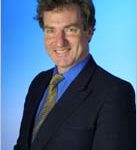
Tag: Peter Ainsworth

  • Peter Ainsworth – 2002 Speech at the Tenant Farmers Association AGM

    Peter Ainsworth – 2002 Speech at the Tenant Farmers Association AGM

    The speech made by Peter Ainsworth, the then Shadow Secretary of State for Environment, Food and Rural Affairs, on 12 February 2002.

    I know that this has been for many of you a truly terrible year. Your chairman has described it as ‘horrendous’.

    It was horrendous even by the standards which your industry had sadly come to expect.

    In the three years to June 2001, over 60,000 farming jobs were lost, and total farm incomes crashed from over £5 billion to £1.8 billion. What other industry could take that kind of punishment and survive?

    By the start of last year, for many of you, achieving the National Minimum Wage was a pipe dream.

    You could be forgiven for asking what you had done wrong to invite the series of traumas, akin to the plagues of Ancient Egypt, which one after another struck. BSE, Classical Swine Fever, dreadful harvests, unprecedented rainfall, a collapse in commodity prices.

    And just when you thought it could not possibly get worse – it did.

    Next week will see the grim anniversary of the date on which Foot and Mouth became official.

    The scale of the disaster remains vividly in the mind. Over 2000 confirmed cases across thirty counties. Many of you saw your livelihoods quite literally vanish before your eyes as some 6.5 million animals were slaughtered, often in brutal circumstances, on nearly 10,000 farms.

    These are the official figures.

    Some estimates have put the number of animals slaughtered at nearer 10 million.

    I know that these numbers, horrific as they are, don’t tell the whole story. It is hard for anyone who was not directly touched by the tragedy to understand the emotional impact on the farming communities and families where the culling took place.

    I am acutely aware of the vital role played by this Association in providing advice, information and consolation during those painful months. It was a ghastly time, but the worst of times can often bring out the best in people and the whole country was moved by the resilience, determination and decency of the farming community during those days.

    There remain many questions to be answered by the Government over its handling of Foot and Mouth. When, precisely, did Ministers first become aware that the disease had broken out? Why was there a three day delay in imposing a total movement ban? Why were Ministers so slow in grasping the need for urgent action? Why was there no contingency plan in place? Why didn’t they mobilise local vets? Why did they rule out vaccination? Why was chaos allowed to develop before the army was finally called in to help with the disposal of carcasses? Was contiguous culling carried out legally? Who drew up the maps on which the culling was based? Why does the Prime Minister refer all enquiries to Defra when it was he who assumed personal responsibility for managing the outbreak?

    Were the Government’s eyes so transfixed by the date of the General Election that they couldn’t see the tragedy unfolding before them?

    All these questions, and more, we will continue to ask.

    But the honest way to learn the Lessons of Foot and Mouth would be to hold an independent public inquiry.

    Just why the Government has set its face against a thorough public scrutiny of its handling of the disease can only be guessed at. The fact is that if they have nothing to hide they have nothing to fear from a Public Inquiry, and in the absence of openness, we are left to draw our own conclusions about what it is they do not want to have exposed.

    What is certain is that the Prime Minister’s stance on this issue has done nothing whatever to heal the growing rift between Government and countryside which was already all too visible before the last Election.

    To make matters worse, the first measure introduced by the Government since the outbreak, the Animal Health Bill (Animal Death Bill) confers sweeping new powers of entry and destruction on Ministers and officials, and insinuates that farmers were chiefly responsible for the spread of Foot and Mouth.

    The uncompensated financial loss caused by Foot and Mouth to the livestock industry stands at over £1 billion.

    But the true costs to the wider economy have been far greater.

    It was only in the aftermath of the devastation that the Government seems to have begun to grasp the idea that farming is not an isolated activity, and that what happens to farming affects us all. That is why the future of agricultural policy is so important.

    Much has been said and written of the opportunities which now exist to develop a radical new approach to farming policy, but Ministers who lecture the rural community about the need for change must remember that before change must come trust. There remains an urgent need to restore consumer confidence in British farm produce, but equally urgent is the need to address the dysfunctional relationship between Government and the farming community.

    The most important policy objective must be to enable a return to profitable farming; this, more than any new regulations, will help to ensure the future of the rural environment. In fact the swathes of red tape are part of the problem and the Curry report has some useful recommendations to make in this area. Of course there is a need for regulation where issues concerning human health, the environment and animal welfare are concerned, but the command and control culture which originates from the Common Agricultural Policy and finds its expression in the Defra paperchase would be quaint if it were not so damaging.

    In all the discussions about the Future of farming, too little attention has been paid to the particular difficulties suffered by the tenant farmers. Given that you account for some 9.5 million hectares, 40% of land farmed in this country, your interests might be expected to form rather more than a footnote.

    If structural changes are believed to be necessary to farming, then Government thinking must take account of tenant farmers. With no assets to rely on, facing retirement can be a daunting prospect.

    That is why, before the last Election, we promised to use the Rural Development Regulation to introduce a retirement package for tenant farmers which would not only benefit existing tenants but also, importantly, help encourage newcomers into the tenanted sector.

    The Government made a similar pledge but so far they have done nothing to keep it; and we will work with you to hold them to their promise.

    Many of the problems facing farming and the environment will yield no easy or quick solutions, but a determined effort to get government out of the daily management of rural businesses would be a start.

    It seems that hardly a week goes by without some new regulation making life harder. In fact, since 1997 there have been a staggering 15,000 new regulations which have impacted on farming in some way. From the Right to Roam to the vibration of tractors, nothing can be allowed to happen without Ministerial approval and the endless, wasteful unproductive bureaucracy that goes with it.

    As Iain Duncan Smith said recently;:

    “It sometimes sees that what is not illegal is becoming compulsory”.

    What is happening to our country? What is happening to our freedom?

    And what is the meaning of Free Trade when British farmers are being asked to compete for supermarket orders with overseas producers who are less constrained by animal welfare, hygiene and environmental regulations?

    We must ensure that you are able to compete on fair terms.

    When it comes to farming, I want to hear a little less about free trade and a lot more about fair trade.

    The Curry Report had little to say about this, but it had much to say about modulation; indeed although it contains helpful thinking on better marketing and streamlining bureaucracy, modulation is its Big Idea.

    I am keen to help you do what, by and large, you have always done: manage the environment in sustainable way. The beauty of our landscape is of huge economic benefit, but it is more than that. For most of us, whether we live in the countryside or in cities, it has an intangible strength; something which cannot be adequately portrayed in a picture postcard; something essential to the way we think of ourselves as a nation.

    This environment is your work place and it has been fashioned by farmers over the centuries. It didn’t get there by accident, it got there because of you and your predecessors.

    But the words sustainable development become meaningless if sustainable does not also mean profitable.

    What worries me about the enthusiasm shown by Curry for modulation is that, under existing EU laws, it could simply mean that the taxpayer ends up paying an even higher bill, whilst farm incomes continue to decline and farmers become more, not less, dependent on the state.

    I will not attempt, this afternoon, to reform the CAP, although radical reform is urgently needed. The present stand off between the Commission on the one hand and Poland on the other shows just how great the problems are. Let me just say that you have a right to expect the British Government to have identified clear objectives long before now and to be taking a lead in mapping out the future of European agricultural policy. Well, if you know what Margaret Beckett wants out of CAP Reform do let me know, because I haven’t got a clue and don’t suppose she has either.

    The problems centred around the CAP and WTO talks must not be allowed to divert attention from measures which could be taken now. I have touched some of them:

    Start cutting bureaucracy now;

    Begin to rebuild trust;

    Help with retirement plans;

    Encourage new entrants to farming;

    Tackle unfair imports.

    And how about this? Margaret Beckett is keen to talk about encouraging local consumption of local food. We all think this is a good idea. Why doesn’t the Government take a look at its own food procurement policies and put its money where its mouth is (or vice versa)?

    Finally, the negligent approach to controlling illegal food imports is a disgrace which should be put right immediately. After all that went wrong last year, after all the waste and the cost and the heartbreak, perhaps the most disturbing thought is that literally nothing has been done to prevent Foot and Mouth being imported again tomorrow.

    I am once again, extremely grateful for the opportunity to share some thoughts with you today.

    In the months ahead, I look forward to working with TFA to develop the policies which you need, which we all need, for rural Britain to reverse the years of decline and to become once again a vibrant place to work and a source of physical and emotional nourishment.

    And I will never forget that all too often, Government has been part of the problem not part of the solution.

  • Peter Ainsworth – 2002 Speech on the Environment, Challenge and Opportunity

    Peter Ainsworth – 2002 Speech on the Environment, Challenge and Opportunity

    The speech made by Peter Ainsworth on 21 March 2002.

    Given that the environment is where we all live, I’ve never understood why, historically, it has come so low down the pecking order of political priorities.

    For years it was regarded as the unique preserve of cranks, new agers and people with strange beards. The caricature, usually unfair, of the tree hugging weirdo was easy to dismiss.

    But should we have so lightly dismissed the work and warnings of poets and writers who, from the outset of the Industrial Revolution that built and sustained cities like Sheffield, began to show an acute regard for the relationship between man and nature?

    The sense that something quite serious was going wrong runs like a thread through literature, from Wordsworth to TS Eliot, from Blake to Betjeman and Philip Larkin.

    They worked from instinct, but 200 years after the start of the Industrial Revolution, science has begun to catch up with instinct and we know we have a problem.

    It was in fact Margaret Thatcher who changed the whole nature of the debate about the environment. In a speech to the Royal Society in 1988, she took many by surprise in launching a series of new initiatives to protect the local and global environment, observing that “we have no freehold on this earth, only a full repairing lease”.

    Politicians who dismiss the environment should remember that parliamentary seats can be won or lost on issues like incinerators, landfill sites, housing schemes, quarrying proposals, and flood defences.

    So let’s put paid, once and for all, to the notion that the environment is not politically important.

    We live in a time when the world has never been more connected. The internet, satellite television, mobile phones, email can put us in touch with almost anyone from almost anywhere at the press of a few buttons. These connections mean that this world has become, for mankind, a smaller place. What happened in New York on September 11th had an impact on communities as far afield as Sheffield and Sydney.

    Yet there is a big paradox, in this age of connectedness, people feel that they have never been less connected with each other where it really counts; at home or in the communities where they live and work. Indeed, the very word ‘Community’ is in danger of becoming a meaningless piece of political jargon in a country where most people live in cities and don’t even know who their neighbours are, let alone share with them a developed commitment to work together and share their ideas and experiences.

    So the age of connectedness is also an age of palpable alienation for many people. A time in which, perhaps not surprisingly, casual and violent crime is on the increase.

    What has any of this got to do with the environment?

    Well, as I have said, the environment is where we live, it is quite literally everywhere; it is the context in which we lead our lives. If we degrade the environment we degrade ourselves. Conversely, a society that invests in its environment is not only placing a proper emphasis on the quality of the lives of its citizens, but also recognising its obligations to future generations. In so doing it helps to create a more stable society and, internationally, a more secure world.

    Those of us who care about the state of society are concerned by the indifference shown by large numbers of people, especially younger people, to politicians in particular and politics in general. The fact that more 18-25 years olds voted for Will or Gareth in Pop Idol than voted for Will or Tony in the General Election tells its own story.

    One of the reasons for the profound and, ultimately, worrying disconnection between politicians and voters is that politicians have utterly failed to keep up with the changed nature of the public’s aspirations. If we begin to work on the basis that there’s more to the quality of life than the standard of living, and that the quality of our shared environment helps to determine the quality of our lives, maybe we can begin to speak a language which people will understand.

    For this to happen, Government needs to ask itself what it is there to achieve, and to understand that, without the active support of people, nothing will happen at all.
    As Iain Duncan Smith has said:

    “People’s best intentions are defeated if doing the right thing actually makes them worse off. The job of Government is to align people’s best interest with their self-interest; to make it easier for people to follow their natural inclination to care for the environment; it is about giving purpose and direction to what people are prepared to do for free”.

    In practical terms, this means for example making it easier for households first to reduce the amount of waste they generate and then to recycle more of it. The costs of doing this need to be seen against the costs of not doing it – the financial, environmental and political costs of, say, large scale waste incineration or landfill, and I don’t need to tell people in Sheffield about those.

    As you may know, the Conservatives are presently engaged in a fundamental review of policy. The development of detailed policy will come later, but this does not prevent us from articulating some basic principles from which specific ideas will evolve.

    We believe in reducing the power and the role of the state; in increasing the opportunity and choice which people can exercise in their own lives; in providing security for our citizens; and in supporting enterprise.

    How might these principles be applied to the environment?

    Firstly, we recognise that the environment is not simply a national issue; that there is a need to work with the EU and other international organisations to forge binding global commitments to meet our obligations to future generations. I am delighted by the progress made towards ratification of the Kyoto Treaty. Though there remains much to do to persuade the developing world that it is in their interest to join up, and of course the onus is now on the US to come alongside the rest of the developed world.

    Secondly, we accept that there is a role for regulation to control activities which are contributing to climate change or which threaten the local environment . But regulation should be carefully targeted, properly thought through in genuine consultation, simple and effective. There are too many complex and overlapping regulations at present; the result can be a bureaucratic nightmare which hinders compliance and gives environmental protection a bad name. Law of unexpected consequences is an every present risk. The hugely expansive shambles of fridge mountains is an object lesson in exactly how not to regulate.

    We need to establish a more mature relationship between Government and industry; one which avoids arbitrary intervention but is based instead on a recognition of mutual needs, abilities and responsibilities.

    Thirdly, we believe that there is a role for fiscal intervention in the interests of a better environment. But we must ensure that environmental taxes actually deal with environmental problems.

    A Climate Change Levy which does virtually nothing to prevent climate change but which costs manufacturing industry £ million and exports jobs to countries with lower environmental standards is obviously counter-productive.

    An Aggregates Tax which nobody, including the Treasury, understands and which simply increases imports of products made from aggregates is plainly likely to fail.

    If we are to have taxes which discourage environmentally damaging activities let’s be straight forward. For example, if we are concerned about the impact of carbon emissions on the future viability of the planet (and we should be) shouldn’t we be thinking about taxing carbon emissions and seek to persuade other countries to do the same?

    Fourthly, we need to get away from the idea that Government action, the passing of new laws and regulations, is the answer to everything.

    I went into politics because I believed in its power to make things happen, not to stop them happening.

    It is important to emphasise that I am not advocating a laissez fair approach to the environment, the stakes are far too high for that. On the contrary, I believe that we need a step change in our approach to tackling environmental problems which reflects both the urgency of the need for action and the scale of the business challenge which this presents. Instead of seeing environmental improvement as a problem, we should start to see it as an opportunity.

    That’s what companies like Shell and BP are doing. Across the world, Shell is working on the delivery of 1,000 megawatts of renewable wind energy, aiming not only to achieve major environmental benefits but also to improve security of energy supply through diversification. The company is also now investing heavily in a joint venture to develop, manufacture and market hydrogen storage units which make use of the emerging science of fuel cell technology. They claim that fuel cells, which could revolutionise the way we power vehicles, are “the power plant of the future”.

    Last week, Lord Browne of Madingley, the Chairman of BP, made a speech in Stanford, Connecticut in which he detailed how, in the last 5 years, BP has cut the level of its own CO2 emissions by 14 million tonnes. They have achieved this through efficiency and technology, and through better management of the energy they use. The result has not only been beneficial to the environment, but also beneficial to the business.

    He also drew attention to BP’s investment in renewable energy sources, where their work on photovoltaics is on track to deliver 300 megawatts of solar panels each year by 2007 – supplying five million people. The market for these products is at present very small, but it is growing at around 40% this year and, particularly given the massive scope for their use in the developing world, the potential is immense.

    I have chosen to highlight BP and Shell because they have traditionally been regarded as environmental villains. Whilst their mainstream activities still depend on the exploitation of non-renewable resources, they have seen the new market opening up for cleaner, greener technology – and they want to be part of it. They will need to be part of it if they want to retain leading positions in the energy market of the 21st Century.

    The present global market for environmental products and services is worth around $515 billion, and it is forecast to grow to nearly $700 billion by 2010. That makes it not only one of the world’s largest business sectors, but one of the fastest growing. In the UK the market is already worth £16 billion and is thought to sustain some 170,000 jobs – and they can’t all be local authority inspectors.

    I want to see more British companies playing a leading role in developing new technologies which will not only mean new high quality jobs, but also a cleaner, safer, more sustainable planet.

    In the end, it will be up to you in industry to take up this challenge. But it is Government’s job to set the framework in which you can maximise the opportunities which are out there. You will not be helped if the Government’s mind-set remains wedded to outmoded concepts of tax and regulation. Already, Germany, Austria and Denmark, for example, are moving ahead of us; and it is interesting to note that the examples I used earlier from Shell and BP involve investment in overseas markets, not in the UK. There is a real danger of Britain being left behind.

    Just as we need policies that make it easier for people to care for the environment, to align their best interest with their self interest, so we need policies which do the same for business.

    We need an approach from Government that moves beyond flailing sticks which all too often miss the target, and offers instead some carrots if we are to take advantage of 21st century technology for the benefit of the planet, and the bottom line.

    Since the dawn of the Industrial Revolution the interests of economic development and the interests of the environment have essentially been in conflict. It is a conflict we cannot allow to continue, and forging a reconciliation between these two forces is one of the great challenges to our generation of politicians, businesses and citizens. I believe not only that it can be done, but that it must be done.

  • Peter Ainsworth – 2002 Speech to Conservative Spring Forum

    Peter Ainsworth – 2002 Speech to Conservative Spring Forum

    The speech made by Peter Ainsworth at Conservative Spring Forum on 23 March 2002, launching the Conservative Rural Action Group.

    Welcome to the launch of this unashamedly ambitious project whose aim is to reconnect people who live and work in the countryside with the people who take decisions about their future.

    This initiative is a response to the deep sense of frustration and anger which people feel about the way their hopes, their problems, their efforts and aspirations have been ignored, thwarted and trampled by a Government that doesn’t understand the countryside and doesn’t care either.

    Everywhere we go, we meet people who feel a profound sense of alienation from Government, Westminster, Whitehall and Brussels.

    Everywhere we go, we find that the bonds of trust which should exist between a Government and rural people have been broken. The bonds of trust must be rebuilt.

    Without them, the process of restoring the countryside, working in partnership to create a vital, living rural economy, cannot even begin.

    We want to see rural communities united in hope, rather than insecurity; rural activities encouraged rather than scorned; rural values protected rather than regulated out of existence.

    Yesterday, the Government published its submission to the Lessons Learned Inquiry on FMD.

    It is an object lesson in arrogance, larded with complacency, peppered with evasion and served up with dollops of whitewash…

    …..If we have learned one thing from Foot and Mouth it is that what happens to farming matters to the whole rural economy and to each and every one of us.

    CRAG is born out of a need. We want to be a campaigning organisation;

    We want it to build a network of members throughout the UK;

    We want it to support our councillors and politicians at home and in
    Europe fighting for the things that matter to the countryside:

    – Farming;

    – Local services – like the police, transport and housing;

    – Local democracy;

    – And protecting greenfields and the landscape which helps give
    us identity as a nation.

    I want it to feed in policy ideas and feed out our commitment to making change for the better.

    Your participation will be essential.

    I pay tribute to the work of Sheila Gunn who has done so much to develop the idea of CRAG. I pay tribute to the work of the Conservative Countryside Forum over the years and in particular to Nigel Finch and his executive committee who have done a very great deal to promote the interests of the countryside within the Party. We value the work they have done and want it to continue as part of CRAG. I am delighted that both the Forum and the Countryside Council, led by John Peake have given their support to the creation of this new umbrella organisation. I am delighted, too that distinguished artist and conservationist David Shepherd has expressed strong support and is willing to get involved.

    CRAG will be broadly based, as interested in tackling rural poverty as in supporting traditional country sports. It will be run professionally; it will be have its own board and chief executive; it will work closely with our Front Bench team and yet have an independent voice.

    I am only too aware that there are already a host of organisations out there claiming to speak for rural Britain.

    CRAG will have a crucial difference. It will be more than a voice.

    Lobby groups are just that; they can lobby, but in the end decisions are taken by Governments. Lobby groups have about as much chance of forming a government as Liberal Democrats.

    CRAG will be affiliated to the Conservative Party, and we have every intention of forming the next Government.

    By joining CRAG, people will be able to say, “Yes, the countryside matters to me”, but they will be able to add, “Yes, I’m willing to work with a Party that believes in rural Britain, and wants to win elections to make life better for rural communities and the landscape we cherish.

  • Peter Ainsworth – 2008 Environmental Business Speech

    Below is the text of a speech made by Peter Ainsworth to the Environmental Business Conference on 2nd December 2008.


    I am deeply grateful to the EIC for inviting me to participate in this conference. As you all know, the issue of climate change has been taken away from the Government Department which I shadow. Merlin Hyman’s insistence that I should join you today is proof that there is life after DECC.

    The Environmental Industries Commission has a crucial role to play in the fight to overcome the environmental and commercial challenges facing business and industry.

    By showing genuine leadership in an area where so often there is none, the EIC is at the forefront of the push towards a low-carbon, environmentally-focused, economy.

    And the economy must be that way, or we won’t have much of one.

    We all know that the economy is in trouble.

    Uncertainty is rife. It is harder to get loans.  It is harder to get good ideas off the ground.  It is harder for businesses to plan for the future when others are going under.

    Yet these difficulties are made worse still when Government fails to offer clarity and leadership.

    Investing in the environmental industries should not be a gamble.

    People are worried about their jobs and businesses and are anxious about what next year will bring. These are real and immediate concerns.

    Yet we must not lose sight of the prospects for our long term advantage in the world economy.  The only way forward is to move to a genuinely low carbon way of doing business.

    The current crisis is just that: a crisis. But as I said here in April, there is a Chinese symbol for crisis which means both danger and opportunity.

    It is essential that, in dealing with the present crisis, we do not lose sight of the opportunity for a different kind of growth.

    We must build new, green businesses and make old businesses greener.

    This way we will create new and lasting jobs. Here. At Home. In the UK. And around the world.

    So right now, whilst all attention is understandably focussed on damage limitation, we need to remember an important point:  there is no trade-off between the green agenda and saving the economy.  They go hand in hand.  Our economy, our environment, our country, must be equally resilient.

    We are becoming far too dependent on foreign oil and gas. In the last three years, our domestic oil production has fallen by 9%.  This is trend will continue.

    The UK has recently become a net importer of gas.  By 2010, imported gas is set to make up half of our supply. This poses a serious risk to the country.

    We are losing our resilience.

    We are becoming weaker and more vulnerable.

    In the spring of 2006, a supply problem in Europe meant that we, in Britain, had to fork out an extra £1 billion pounds to heat our homes.

    We cannot afford to be so exposed to factors beyond our control.

    It stunts our economic growth and leaves the most vulnerable in society at risk.

    I guess what I am saying is that it’s not just in your interest to go green. It’s in the national interest. So green really is the new red, white, and blue.

    The Government can wring its hands about the failure to meet domestic fuel poverty targets, but the truth is that if we don’t control the fuel, we don’t control the price of it.

    When we are dependent on others, we put our industry and citizens at risk.

    To break free we must go green.

    Our economy is in need of an overhaul. It needs re-engineering. We cannot afford to grow in the way we have for the last century and a half; behaving as if we were masters of nature, and not a part of the natural world.

    It is clearer now than ever that we simply cannot afford growth if it isn’t green.

    In the frightening risk of economic decline lies our generation’s chance to shift to a greener way of living and doing business.

    It is our only chance.

    From the ashes created by economic behaviour based on short term greed and hubris we have a golden opportunity to learn, and to build a stronger, more sustainable and greener economy.

    We must seize this chance.

    The future of our economic competitiveness is inseparable from our environmental competitiveness.

    If we want more jobs in this country now and economic advantage around the world tomorrow, we must develop our environmental industries.

    We need new industries, rooted in a new green, British workforce, with British know-how, and scientific excellence behind them.

    We have a long way to go.

    The Environmental Industry in the UK has an estimated turnover of £25 billion and includes 17,000 companies.

    But I really do believe it must and can be stonger.

    The projected world turnover is set to increase to $688 billion by 2010. Britain must be a player in that market.

    Though there has been enormous progress in our environmental industries in the last two decades, our competitiveness is still at risk.

    The most recent Government estimate of the number of British jobs in environmental industries is 350,000. Yet Germany has almost as many in renewable energy alone.

    Renewables in the UK?  The sector employs 15,700.

    We are falling behind.  We should be a world leader, not a laggard.

    Consider what happened with Pelamis Wave Power.  A British company developed the technology to generate enough power for 1,000 homes from completely sustainable tidal power.  Where was it built?  Portugal.

    I use this example from the energy world because it neatly illustrates a point.  British innovation without an outlet at home.

    We are big on ideas, but rubbish at delivering results.

    Talking of rubbish, look at our waste industry.

    The spot price for recycled plastics has plummeted-from £200 a tonne, to £10.  Now local authorities are having to find places to store the stuff and that isn’t easy or sustainable.

    I work on the assumption that people want to do the right thing for their families, communities and local environment.  But there is a real risk that confronted with mountains of bottles, paper, and glass, they will ask, ‘why bother?’

    That is a question which we cannot allow to be asked.

    Why did this happen?  Global economic circumstances certainly play their part: the price of virgin material has fallen and China’s demand has dropped.

    But it didn’t have to be as bad as this. The UK just doesn’t have the infrastructure to process the waste.  There has not been nearly enough investment because not enough has been done to encourage the market.

    The industry in the UK is worth £6.8 billion.  Germany’s is worth 7 times that.  Now, Germany’s market for recyclable materials is also suffering, and there will certainly be some losers, but the strength of their market means that they will be the first to rebound when the price goes up.

    They have the capacity to wait out a bad spell.  We won’t fare as well.

    This is the kind of strength that we need to encourage at home.  This is the kind of resilience we will need to compete abroad.

    Although hidden behind the headlines about economic meltdown, the challenges facing our global environment are profound.  You all know the dangers.  They haven’t gone away just because other problems have turned up.

    Yesterday, the Committee on Climate Change published its review.  As Lord Turner put it, ‘the challenge is not the technical feasibility of a low-carbon economy but making it happen.’

    The debate; the endless Reviews and Reports; and the time for talking and consultations: they are all over.

    Now we need to get down to the tough business of getting the job done.

    In a climate of uncertainty, Government needs to set a clear direction.  With the Climate Change Act-demanded and strengthened by the Conservatives, we have our framework.

    Now, we must make it work.

    The Government must isolate and destroy the barriers to encouraging new markets, new technologies and new solutions.  Now we need to roll up our sleeves and get to work.

    We need to put political will behind regulatory change to clear the way for new markets.

    We have made some progress.  Despite hostility from the Government, we fought to have a feed-in tariff in what is now the Energy Act.  Instead of overlapping and convoluted regulation of the energy sector, companies and individuals can be confident that they will get a return from renewable energy.  It now makes economic sense to make energy green.

    Bio-methane from farms has the potential to make a real contribution to our gas supply.  This resource can be tapped but it needs similar regulatory reform.

    We want to help people enter the market through better, clearer signals that give a long term guarantee that their investments will be worth it.

    Of course, Government cannot do everything, nor should they.  We have to work together with industry and the public.

    For example, we should take advantage of potential offered by biogas. Yet to make this happen, we need to make it possible for more farms to feed their gas back into the national grid.

    If the goals are clear, together we can give confidence and expunge the blockages to decarbonising our economy.

    Our approach to feed-in tariffs and biogas are two examples with a common theme: Clarity.

    Unless we make the direction clear, we will never decarbonise our economy.

    It is also a matter of trust.

    Unless investors can trust the Government to hold a course and stick to its green commitments, we will never stimulate the green economy or make our country more resilient and our citizens safer.

    We have a plan. In the next few months, we will be publishing our comprehensive guide to how we will do this.  Our Low Carbon Economy Paper will be a detailed plan for change.

    It will outline clearly the market signals and regulatory changes that are needed to increase energy efficiency in homes, businesses and farms; it will show how new networks can be created for decentralised energy and mass use of sustainable transport; it will address the barriers to reducing emissions; and it will map the pathway to our ambition for a zero waste Britain.

    We need clarity if we are going to be competitive.

    Because if we are to compete economically in the future, it will be on green terms.

    Going green will make us safer and better off.

    Stronger and more resilient.

    These are difficult times. But we must, and will, hold fast to the green agenda.

    Don’t let anyone tell you there is a choice between the economy and the environment.

    There isn’t.

    So, as we rebuild the global economy, we must make sure we do so as if the Earth matters, as if our natural capital matters as much as the capital we put in the bank.

    We must seize our opportunity and, in doing so, make our environment, our economy, and our society more secure.

  • Peter Ainsworth – 2008 Conservative Party Conference Speech

    This session is about the local environment, the places where we live. But this week of all weeks we don’t need to be reminded that events that happen on a global scale can hurt every family.

    The economic problems reverberating around the world can, and must be put right.

    We were promised no more boom and bust. And look what happened.

    But when it comes to the global environment, if that goes bust, there will be no boom ever again.

    So, as we rebuild the global economy, we must make sure we do so as if the Earth matters, as if our natural capital matters as much as the capital we put in the bank. We must make both more secure.

    With our dependency on foreign oil, with food prices spiralling and jobs at risk there is an urgent need to forge a greener economy that promises less dependency, more security, less risk, more jobs.

    As David Cameron said in June, ‘we cannot afford not to go green’.

    Going green means being safer by being more self sufficient; it means building a more robust and resilient Britain in a troubled world.

    But we need a Government that sends out consistent and clear signals.

    It’s no good Ministers going around the world lecturing countries like India and China about carbon emissions and then ushering in a new generation of dirty coal fired power stations.

    Or building a third runway at Heathrow regardless of the impact on the local and global environment.

    Why should anyone take lectures from Labour when over half of all Government departments have bigger carbon emissions than a decade ago.

    And I can’t think of a better way of undermining the green agenda than slapping a retrospective tax on cars we’ve already bought.

    That’s a stealth tax, not a green tax.

    We need an honest government, a government of courage and vision, to see us through tough times.

    There is a great opportunity for Britain.

    Germany already has over a quarter of a million ‘green collar’ jobs. We have a handful.

    It is not good enough to sit back and watch, while other countries take the lead developing new economic opportunities. That is exactly what Labour has done.

    It’s just not good enough for Britain, for our families and children.

    We need a different approach – one that makes it easier to do the right thing.

    We won’t build more resilient communities by sitting in Whitehall banning things.

    For example, we should reward people who do more recycling – not punish people who don’t.

    We want literally to give power to the people, enabling communities to create their own green electricity and profit from it.

    And we want to provide incentives for employers to help those who work for them make their homes more energy efficient.

    The challenges we face may be huge, and global, but often the answers will lie close at hand.

    I am delighted that we are joined by Bill Bryson, who is doing so much to protect and promote our local environment.

    Caring for the areas where we live, creating green spaces and preserving wildlife habitats; these are important to our wellbeing and can help build pride in our communities.

    Just four miles from here is Sandwell Valley, a nature reserve run by the RSPB. I went there on Monday.

    A green oasis.

    I went pond dipping with a group of local school children. Their enthusiasm was amazing.

    Newts and creepy crawlies are always going to be more memorable than double maths.

    The lake in the reserve was originally designed as a flood defence measure. It’s a brilliant example of how we can help prevent flooding and make life better and more beautiful, by working with nature.

    And so many other places know how important it is that we adapt to a changing climate. Floods both this year and last, which brought so much misery to thousands of people, exposed frightening weaknesses in our defences against extreme weather.

    Going green will make us safer and better off.

    These are difficult times. But we must, and will, hold fast to the green agenda.

    It is the resilience agenda.

    Don’t let anyone tell you there is a choice between the economy and the environment. There isn’t.

    It begins with the places we all call home: our street, our town, our city, each individual action however insignificant it may seem is a building block to a more resilient Britain and a greener and safer world.

  • Peter Ainsworth – 2008 Speech to Sustainable Development Conference

    Below is the text of the speech made by Peter Ainsworth to the Sustainable Development conference on 10th March 2008.


    Someone said recently that politicians talking about Sustainable Development sound like Soviet rock ‘n’ rollers. He’s right. The lyrics are terrible: Integrated Framework; Social Equity and Cohesion; Global Environmental Governance; Convergence. Catchy stuff, isn’t it? Anyone dropped off yet?

    There are two problems with using language like this. One, it kills stone dead any idea of Sustainable Development as a vital opportunity for change. Secondly, terms like Global Environmental Governance make it sound as if we’ve got the problem of sustainable development sorted.

    Well, we haven’t. Not by a long chalk.

    It’s hard to believe that Margaret Thatcher spoke about the dangers of global warming back in 1988. She said it was quite possible ‘we have unwittingly begun a massive experiment with the system of this planet itself’. And where are we now? After 20 years of conferences and debate – we’re using up natural resources faster than ever, and the pace of climate change is quickening beyond scientists’ worst expectations. Tipping points we thought were generations away are coming closer every year. It’s taken a very long time for us to accept that fossil energy was, in the words of writer Bill McKibben, ‘a one-time gift, that underwrote a one-time binge of growth.’ The experiment has gone horribly wrong.

    So today what I want to talk about is how we move from talk to action.

    Last September the Quality of Life Group, set up by David Cameron, published its findings and proposed some exciting and far-reaching proposals. It successfully sought answers to the key question of how can we continue to be an economically successful nation and, at the same time, an environmentally and socially healthy one?

    We have got to change the current mindset.

    Over many years, we’ve got into the habit of defining progress by the single criterion of economic growth. And levels of income and consumption have soared in most developed countries during that time. Yet the people of those same countries report no increase in their sense of happiness or wellbeing. In many cases they report a decline.

    That’s an odd kind of progress.

    Of course we need economic growth; but not at all costs.

    We need a stronger, greener society. One that recognises the importance of wellbeing.

    Green spaces are essential to this, and Local Authorities have a vital role to play, through the planning system, in ensuring that planning is not just about buildings, but about the spaces that surround them.

    But what’s the point of a green space if mothers are afraid to let their children play there? Or if, every two minutes, a plane screams overhead?

    To state the obvious, our environment is where we live. But we have failed to recognise its importance either locally or globally.

    The fact is that UK carbon emissions have risen over the last ten years. OK; the government reported a 0.1 percent fall in carbon pollution last year; at that rate it will take us over 500 years to reach our 2050 reduction target. We haven’t got 500 years; we may have as few as five to begin to make a difference to the quality of the world our children will inherit.

    We can’t go on as we are.

    The good news is that the market is on the case. Increasingly, the business community is recognising the opportunities for ‘green growth’. Large utility companies have brought renewable power into millions of homes. The decision by M&S just last week to charge for plastic bags was a brave and welcome move and shows that responsible business is playing its part.

    Responsible businesses can see the opportunities created by increasing consumer awareness of the ethical and environmental values attached to what we buy.

    And I don’t think that this is just a middle class phenomenon; nor do I think that it will fade away at the first whiff of an economic downturn.

    Consumers are not about to start demanding less. They never have before.

    But the bad news is that it will take more than a market-led approach to achieve a truly green economy.

    We need the engagement of a far-sighted government, with joined-up policies, and the courage to implement them. And that’s the missing part of the equation at the moment.

    The Climate Change Bill, currently in the House of Lords, has the potential to deliver a step change in the way we think about, and plan for, a sustainable society.

    But in itself it will not be enough.

    The key test will be the extent to which the Bill changes the mindset in Whitehall and Westminster. The Bill will set a framework; but it is a coherent approach to policy making that is needed.

    Let me offer one stark example of the present confusion over policy.

    Pollution from aviation is the fastest growing source of climate change gasses.

    Yet, even as the Climate Change Bill is making its way into legislation, the Government is supporting a massive increase in the capacity of Heathrow airport

    It just doesn’t add up.

    I don’t say that any of this is easy. But I do say that we need to be consistent.

    Where’s the political and economic clear-sightedness? Where’s the joined-up thinking? Where’s the courage to carry through change?

    Hitting our emissions targets and building a sustainable society will require a wholesale transformation of our energy and transport infrastructures.

    We need an ambitious and determined government.

    We have a long way to go in a very short time.

    The UK has just signed up to a 15% total renewable energy obligation by 2020. By implication, that means that we will need to obtain around 40% of our electricity from renewable sources. It’s a heck of a challenge, given where we are today. Bottom of the EU league table for renewable energy.

    Instead of being a leading innovator in renewable energy, we have the most expensive wind energy in Europe, and – worse still – we are teetering on the edge of building the first new coal-fired power station for thirty years.

    The support mechanism for large scale renewable technologies has primarily benefited onshore wind power and landfill gas generation, to the neglect of other technologies farther up the cost curve, many of which could play a major role in our low carbon future, particularly in microgeneration technologies.

    This is why we recently announced our Feed in Tariff policy, which will provide a twenty year price guarantee to microgeneration technologies; significantly reducing our carbon emissions and enhancing our energy security in the process.

    Feed in Tariffs have worked to great effect in other EU countries, Germany in particular, which can now boast up to 300,000 people working in the renewable industries. Germany has 10 times the installed wind energy capacity of Britain, and 200 times more solar capacity. You will note that Germany is neither 10 times windier nor 200 times sunnier than the UK, yet they are leading the world in these technologies.

    It’s about having the right policies.

    The EU renewables industry already has a turnover of €20 billion per annum. The Stern review estimated that global climate change markets will be worth US$500 billion per annum by 2050. How much of this $500 billion green economy will be located in the UK?

    This is not just about being Green. It’s about being competitive; and it’s about being secure.

    So let’s have more of the politics of ‘can do’, and less of the politics of ‘cannot’.

    My father used to tell me that there’s no such word as “can’t”. .

    Here are some things we can do.

    Last week we announced three new climate change policies designed to help decarbonise our economy whilst still allowing it to grow, through utilising Britain’s natural advantages: our intellectual capital, our financial capital, our enterprising spirit, as well as our public willingness to act on climate change:

    Green technology Incubators will allow more of our finest research minds to actualise their ideas in to viable businesses. We have some of the finest research universities in the world, yet in Britain today, we are concerned that is much too difficult to turn bright ideas into a working enterprise. We have seen too many great technologies fail to reach the market, getting caught in the trap between a great idea and a viable company.

    Secondly, last week we announced our intention to establish the world’s first dedicated trading market for companies focused on green technology. Britain is privileged to have access to some of the world’s finest financial minds and investors in the City of London. The Green Environmental Market is designed to help London become the world’s leading centre for the listing and trading of companies in the field of environmental technology. GEM will build upon the success of AIM (Alternative Investment Market) in attracting green technology companies, but have its own distinct identity and listing criteria.

    Thirdly, we proposed introducing new Green Individual Savings Accounts, which will enable the public to save more than they currently are allowed tax free, provided these funds are being only invested in environmentally friendly companies. These Green ISAs – or GISAs – will engage the public in a new way in the issues around climate change – and show them very clearly the economic benefits of green investment. And by providing lucrative new sources of that investment, Green ISAs will create a race to the top by incentivising businesses to adopt environmentally friendly policies.

    These are the kind of policies that we believe will allow Britain to deliver on our Climate Change Bill commitments. These are the policies that will deliver dynamic industrial change and create hundreds of thousands of new jobs in the UK economy.

    As Jonathon Porritt has acknowledged, there has been some progress.

    The Government has already ‘adopted’ our policy of transferring the Air Passenger Duty from individual passengers to the whole flight, so as to incentivise the airlines to fill their planes and thus reduce the carbon pollution per person to as low as possible.

    It now appears that the Government may also be adopting out feed in tariff policy. Imitation is the sincerest form of flattery.

    It is an extraordinary fact that, in an age of concern over energy security, over two thirds of the energy created in a traditional hydrocarbon power plant is lost, primarily up the chimney, as waste heat. To deal with this, we have announced our intention to introduce a Waste Heat Levy, to incentivise large energy producers and users to make use of their waste heat.

    And then there’s our plan for a ‘Carbon Levy’, which will be a tax on carbon intensive energy production, to replace existing ‘Climate Change Levy’ – which has a great brand name, but which is unfortunately just a non-discriminating tax on industry’s use of electricity, regardless of its origins.

    That’s what central government should be doing.

    We need to put a price on carbon across the economy. We must ensure that the carbon costs of all activities are factored in to the policy making process. The present way in which the Government treats carbon costs as off balance-sheet would do credit to Enron.

    And just as important, it should make sure it takes the country with it. Not nearly enough has been done to engage other key groups in the process: local government, the business community, local communities, and individuals. As a result, people feel disempowered and disconnected from what the Government is saying about Green issues, and suggestions of higher taxes on polluting products and activities are greeted with hostility.

    That is understandable, if green taxes are simply presented as a punitive add-on to our existing system. What we need is a more fundamental shift in taxation – away from “pay as you earn” and towards “pay as you burn”. Green taxes needn’t – indeed must not – raise the overall tax burden.

    But we do need to shift the revenue base away from taxes on work and families, towards taxes on carbon and other pollutants.

    The message to consumers must be clear: environmentally responsible choices will save you money.

    So if those are some of the national changes we face as we move towards developing a sustainable society – what about the global picture?

    You don’t have to be a fully fledged federalist to work out that the EU has a very important role to play, both in encouraging sustainable practices at home and in the wider world.

    Harnessing the power of the world’s largest single market to drive up product standards around the world, for example.

    Or developing innovative market based mechanisms like the Emissions Trading Scheme:

    Of course, it is widely accepted that Phase One of the ETS has been a failure in terms of actually reducing emissions. Too many credits were handed out for free, giving dirty industries a licence to pollute. But this has been a political failure, not a market failure.

    The very existence of the ETS has proved that the mechanics of a carbon market can be made to work, and that is a major achievement in its own right

    Phase II already looks more promising; the auctioning of up to 10% of allowances has helped to drive the price of carbon to above €20 per tonne.

    But it is Phase Three of the ETS, which runs from 2013-2020, and is being negotiated this year, where we must focus our efforts. For EU Emissions Trading Scheme to deliver as a true carbon reduction mechanism, we need to aspire to, argue for, and hopefully achieve 100% auctioning of credits in the Third Phase.

    If we are to stand a chance of tackling climate change we have to have reach international agreement on a way forward post-Kyoto. This is the true test.

    All the world’s eyes are currently on the USA, waiting for whoever wins the Presidential race to ensure that the mightiest nation on Earth, and its biggest polluter, takes its rightful place at the head on international efforts to curb climate change and adapt to its impacts.

    Crucial to the success of the international action the world needs, by the way, will be an effective and fair means of halting deforestation.

    And we can start by demanding sustainable biofuels.

    It is utter madness to impose quotas for the use of biofuels without ensuring that they can be obtained from sustainable sources. There is a real risk that the British taxpayer will be contributing to the destruction of the rainforest and rising world food prices in the name of the environment.

    Twenty years on since Margaret Thatcher warned that we might be experimenting with the planet, we desperately need, above all, to change the mindset of government.

    Let’s see an end to the flabby, half-hearted, contradictory and complex approach we have witnessed to date.

    This is the ecological, social, economic, security and moral issue of our times.

    We must rise to the challenge.

    And, in view of the sheer scale of it, it’s just as well that there’s no such word as “can’t.