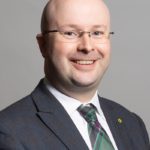
Tag: Patrick Grady

  • Patrick Grady – 2022 Speech on Prepayment Meters

    Patrick Grady – 2022 Speech on Prepayment Meters

    The speech made by Patrick Grady, the Independent MP for Glasgow North, in the House of Commons on 15 December 2022.

    May I say what a moving experience it was to be in the Chamber this morning for the commemoration of the holocaust?

    I congratulate my hon. Friend the Member for Glasgow North East (Anne McLaughlin). She is my constituency neighbour, and indeed my constituency MP, and she has done extremely well to secure this debate and in all her work on this important issue. I do not think there is anything wrong in principle with the concept of prepayment meters. There will always be consumers who find the ability to pay up front, instead of in arrears, helpful and convenient for a variety of different reasons. For some there will be a sense of security about their ability to budget, and to make sure that money is not spent on other things. There is perhaps a certain convenience, especially for those familiar with the technology, around digital prepayment where meters can be topped up from apps or by phone.

    However, as my hon. Friend made clear, there is something fundamentally flawed about the way prepayment meter schemes work in this country, and as we have heard, the consequences are profoundly challenging. It has never been clear to me—I do not think it is clear to anyone in the Chamber—why there should be such a significant differential cost between prepayment meters and paying by direct debit. Although efforts have been made in recent years to align prices, there are still significant discrepancies. Citizens Advice has calculated that households who are moved to a prepayment meter this year alone will collectively spend £49.6 million more than they would have as direct debit customers over the coming winter. The excuses given by energy companies—that admin and infrastructure costs are higher—simply do not wash, especially with the arrival of smart meter and remote technology.

    The much higher standing charge is particularly pernicious and unfair. My very limited experience of prepayment metering is relatively benign. Our campaign headquarters during the independence referendum campaign had a pay-as-you-go electric meter. In some respects that was helpful, because we did not need to worry about a bank account, and in theory we only paid for what we needed. However, on more than one occasion when we opened up the shop we found that the power was off because daily standing charges had eaten away at the credit, even though nobody had been in or used any power for several days. For us, that was a minor frustration and inconvenience, but for some of the most vulnerable in society, that represents a premium charge in already difficult and often heartbreaking situations.

    Marie Curie’s “Dying in Poverty” report talks about situations where patients come home from hospital or a hospice to find the lights out, the heating off, or their meter in debt. People with terminal conditions, rushed perhaps at short notice to A and E, are unlikely to be thinking immediately about topping up their gas or electric meters, and if an extended stay leads to credit running down, they could return to a cold or dark property without immediate options to fix it. Marie Curie’s research also shows that a terminal diagnosis can lead to a 75% increase in energy bills. I have spoken in this place before about my very close friends Mel and Tom. Mel has very late stage cancer, and she explained some of the difficulties they are facing to Marie Curie:

    “I live in the Highlands of Scotland, which is a colder climate and as soon as my bones get cold, they hurt. It’s very painful. We have to keep the house warm, but with the energy prices going up, we can’t do that.”

    For customers like Mel and Tom who are on prepayment meters, the costs are already higher than they are for other customers. They already face high costs compared with those who can pay by direct debit, and those costs are rising as a result of overall market increases in prices. Overall usage is going up because of the particularly cold snap, and then usage is increasing again because keeping the house warm is literally a medical requirement. I think that counts as a quintuple-whammy, and it is all down to factors outwith their control. The Government and the Minister should listen to Marie Curie’s calls for all terminally ill people, regardless of age, to be eligible for support from the winter fuel payment and the warm home discount scheme.

    Anne McLaughlin

    My hon. Friend directed me to the story of the couple he mentioned. One of the most moving things to read was that, on top of needing to keep everything warm, all Mel wants to do is provide memories for her little boy—positive, happy family memories. She said that she cannot even begin to do that because she is too busy trying to keep on top of the energy bills. Does my hon. Friend agree that that is one of the hardest things for any parent to bear?

    Patrick Grady

    Yes, absolutely, and I recommend that everyone in the House reads that report, and not just that testimony, but testimonies from other people across the country. The point Mel made is that they are not unique. That situation is repeated up and down the country, and all of us will have such cases in our inbox. My hon. Friend mentioned Scope’s research, which found that 50% of disabled people who are on prepayment meters say they are forced to ration energy usage so that they do not lose supply, 26% are going off supply in order to save money, and 14% went off supply because they were not physically able to top up their meters due to their impairment. That is disgraceful behaviour on the part of energy companies—cutting people off because they physically cannot access their prepayment meters. Citizens Advice has documented similar cases. The increasing practice among energy companies of using smart meter technology to force people on to prepayment meters is particularly concerning, especially when they are using it as a means of avoiding the requirement for a warrant to enter people’s homes.

    I echo Citizens Advice’s call for a moratorium on all forced switches to prepayment meters until at least April 2023. That chimes with the calls in my hon. Friend’s motion, in her ten-minute rule Bill and in other ten-minute rule Bills and motions that have been brought before the House. The Government have been using sitting Fridays in this Session to put a lot of very worthy legislation through the House, so there is no reason why they could not find a way to prioritise my hon. Friend’s Bill and offer some security to those who face fuel poverty or disconnection this winter.

    The Government must work with and, if necessary, proactively regulate the energy companies to ensure that prices are aligned. Nobody should pay a premium just because of the type of meter or payment method they use, and especially not those who can least afford it.

    Rachael Maskell

    Does the hon. Gentleman agree that the Government really need to talk to directors of public health? We are seeing a real spike in respiratory syncytial virus among children and babies, and in community-acquired pneumonia and flu. People in cold conditions are often the most susceptible to illness. To prevent a further crisis in the NHS, it is therefore really important that preventive measures be put in place so that people are not cold and living in damp housing.

    Patrick Grady

    The hon. Lady is absolutely right. The case studies that we have highlighted show that this is a health issue: it is about people’s health and wellbeing. It is not about some sort of privilege or nice thing to have.

    If people’s body temperature is not allowed to remain stable and they are not kept warm, the costs will ultimately be passed on to the NHS. Like a lot of interventions and preventive measures, this is going to have to be paid for somehow, so it should be paid for in a way that keeps people well, comfortable and cared for in their own home. Otherwise, the costs will be passed on via the interventions that come through the NHS. The energy companies need to realise that and step up their response. They are getting money up front from prepaying customers, and presumably they earn interest on money going into their bank account before the energy has been consumed, so you would think it would be in their interest to make prices fair across the board.

    If the Government will not regulate the energy companies and the prices that people have to pay, they should devolve the powers so that Scotland’s Parliament can step up and step in. As my hon. Friend the Member for Glasgow North East says, we are talking about energy-rich Scotland, where people living in fuel poverty look out their windows and see cheap, renewable, clean wind turbines on the horizon—energy-rich Scotland, where the average energy costs are higher than in the other parts of the UK and the use of prepayment meters is disproportionately higher. Energy-rich Scotland, as we all like to say on the SNP Benches, has the energy but does not yet have the power. As with so many issues, if the UK Government will not act, people in Scotland will ultimately decide to take power into their own hands through independence.

  • Patrick Grady – 2022 Speech on Scotland’s Future

    Patrick Grady – 2022 Speech on Scotland’s Future

    The speech made by Patrick Grady, the Independent MP for Glasgow North, in the House of Commons on 14 December 2022.

    I echo the welcomes given to the hon. Member for Aberdeen South (Stephen Flynn) and the tributes paid to the right hon. Member for Ross, Skye and Lochaber (Ian Blackford).

    It was, interestingly enough, on 4 July 2018 that this House endorsed, without a Division, the principles of the claim of right for Scotland, acknowledging the sovereign right of the people of Scotland to determine the form of government best suited to their own needs. The Supreme Court decision about the limits of the Scottish Parliament’s power with regard to legislating on reserved matters does not change the validity of the claim of right or the reality that it expresses.

    It is a simple matter of fact that when a majority of people in Scotland are prepared to vote for independence, Scotland will become an independent country. The best way to demonstrate that majority would be through a referendum on a simple question, along the lines of the referendum held in 2014. Incidentally, the way to prove the opposite would also be through a referendum; if the Unionists are so convinced of their cause, why are they not allowing a referendum to happen and so settle the question? The reality is that they are running scared.

    Today’s motion would allow the Scottish Parliament to legislate for a referendum at a time of its choosing—any time of its choosing. That arrangement is far more in keeping with the claim of right than Scotland’s Parliament having to go cap in hand to this place whenever a majority of MSPs are returned with a mandate for a referendum. If the UK Government, backed up by their Better Together allies, continue to veto or ignore the Scottish Parliament and Scottish Government, it stands to reason that a different kind of electoral test will be needed.

    The 2019 general election, three years ago this week, was an effective—we might even say a de facto—referendum on Brexit. The Conservatives sought a mandate to implement the hardest possible Brexit short of a no deal. If memory serves, the Liberal Democrats, none of whom appear to be here today, sought a mandate in that general election to completely overturn the Brexit referendum result. The SNP manifesto supported a UK-wide second EU referendum with remain on the ballot paper, while making it clear that the best option for Scotland is and always has been independence in Europe.

    Political parties are absolutely entitled to put their proposition to the voters, and the voters make up their minds. Labour, apparently, intends to stand at the next election on a platform for sweeping constitutional reform: abolition of the House of Lords and a new devolution settlement, even though Labour established the current devolution settlement through a series of referendums. The position now seems to be that a Labour Government, elected on maybe 40% or 45% of a UK-wide vote, would have a mandate to completely reform both the United Kingdom constitution and the current devolution settlement. However, an overall majority of votes for pro-independence candidates in Scotland would not constitute a mandate for anything. I am not sure how they make that add up.

    During this debate, we have heard from the Better Together parties that it is a waste of parliamentary time and that constituents want us to talk about the cost of living crisis, supporting public services and the challenges facing the economy. But as the hon. Member for Edinburgh East (Tommy Sheppard) laid out right at the start, the responses needed to really tackle all those issues in Scotland require the full powers of independence. It is Westminster that still holds the purse strings, embarking on yet another round of austerity, continuing with the absolute folly of Brexit, and increasingly oblivious to the climate emergency and its own commitments to emissions reductions.

    It is independence that will truly liberate Scotland’s Parliament to invest in Scotland’s people and places and to have the chance to build the fairer, greener, healthier society that we all know is possible—a society that welcomes people, wherever they have come from around the world, and seeks to build peace and justice across the globe. Those are the opportunities that inspired me to join the campaign for independence 25 years ago, and those are the opportunities that an increasing—and eventually unstoppable—majority of people in Scotland are now starting to reach for.

  • Patrick Grady – 2022 Speech on the Sovereignty of the British Indian Ocean Territory

    Patrick Grady – 2022 Speech on the Sovereignty of the British Indian Ocean Territory

    The speech made by Patrick Grady, the Independent MP for Glasgow North, in Westminster Hall, the House of Commons, on 7 December 2022.

    I am not entirely sure where to begin. I suppose I congratulate the hon. Member for Shrewsbury and Atcham (Daniel Kawczynski), and I welcome his interest in this issue. Many of us in the Chamber are members of the Chagos islands (British Indian Ocean Territory) all-party parliamentary group and have spoken frequently in Westminster Hall and the main Chamber on the question of sovereignty and the rights of the islanders and their descendants. I do not recall ever seeing the hon. Member for Shrewsbury and Atcham at those APPG meetings. I have not gone through the minutes of all 30 meetings that have taken place since I joined in 2016, so perhaps I missed him.

    Daniel Kawczynski

    Can I put on the record that I have attended some of those meetings? I suspect that he is getting wrong information. We can show him accounts of me attending those meetings.

    Patrick Grady

    I am happy to stand corrected on that. As far as I could tell from a search of Hansard, the hon. Gentleman has mentioned the British Indian Ocean Territory once in his career in this place, which was last year in a debate on AUKUS. His peroration probably gave us a sense of the real priorities behind this debate.

    At base level, I do not disagree. The Chagossian community should absolutely be involved and consulted in the negotiations on the future of the islands—many of us who have been involved in the all-party group have been campaigning on that for many years. I say “good luck” to him getting the United Kingdom Government to recognise the sovereignty of a people and that their democratic future should be decided in a referendum on the future of their territory, because the UK Government are very clearly against that kind of democratic process. It is important that we find a way to make sure that the community are properly consulted.

    I suspect that the issue will divert away from the specific question of sovereignty and to their rights and the future of their connection with the islands themselves. As the hon. Member recognises, the community is quite widely dispersed because of the historical actions of the United Kingdom Government. It is incredibly diverse as well, and different groups will have different views on exactly what a resolution should look like.

    A mechanism that can include the diaspora would be welcome. It might be impossible, as he alluded to, but there is no reason that the Governments that represent them cannot put their interests at the forefront when they are at the table. He is right that there is a Chagossian community represented by the United Kingdom Government. There is a Chagossian community represented by the Government of Mauritius and a Chagossian community represented by the Government of the Seychelles, and there will be smaller diasporas elsewhere in the world. That is what parliamentary democracies are for and what democratic representation is for. That is what many of us would want to see achieved.

    Human Rights Watch, which I am sure is an organisation that the hon. Gentleman engages with on a regular basis, has called for the inclusion of community voices, saying:

    “Righting the half century of wrongs to the Chagossian people means full reparations – their right to return in dignity and prosperity; full compensation for the harm they have suffered; and guarantees that such abuses never happen again.”

    That is where we ought to try to find some kind of consensus.

    I come from a political tradition where sovereignty lies with the people; not with a Crown, not with a Parliament and certainly not with a Government. In reality, sovereignty always ultimately lies with the people. People have the fundamental human rights to freedom of speech, thought and assembly. Those are manifested in the right to live under the rule of law. Those rights can be denied, as they have been in the case of the Chagossians, but they cannot be taken away. That is why among all the negotiations are questions about the future of the base on Diego Garcia, which, incidentally—I wanted to ask about this in an intervention— probably took quite a lot of concrete to establish.

    I am not sure if I completely understood the hon. Member’s argument. It appeared to be that in the 1960s it was okay for the United Kingdom to buy an island, militarise the south Indian ocean, pour lots of concrete on Diego Garcia and forcibly displace a population in doing so, but now it would be completely wrong for any other Government to consider such course of action.

    The notion that we should tell other countries to do what we say and not what we do is not always the most conducive to building world peace and stability. In among all those questions, we have to put the interests of the community first. We as Members have a duty to scrutinise the Government and speak out on behalf of our constituents, whether they are members of the Chagossian community or—like those who contact me—committed human rights activists who believe that everyone in the world should enjoy the rights we too often take for granted here in the United Kingdom. I hope the Government’s movements on this issue will at last lead to some kind of equitable status that resolves the question of sovereignty in international law, but more importantly, achieves justice at last for the people of the Chagos islands.

  • Patrick Grady – 2022 Speech on International Human Rights Day

    Patrick Grady – 2022 Speech on International Human Rights Day

    The speech made by Patrick Grady, the Independent MP for Glasgow North, in Westminster Hall, the House of Commons, on 8 December 2022.

    It is a pleasure to serve under your chairmanship, Mr Paisley. It is a real pleasure to follow the hon. Member for Strangford (Jim Shannon); not many people get to do that in this place, but it is my privilege today.

    I congratulate the hon. Member for Rutherglen and Hamilton West (Margaret Ferrier) on securing such an important and valuable debate, and on her long-standing commitment to these issues. I will probably end up echoing much of what others have already said, but that demonstrates the cross-party consensus that exists on these issues, and the importance of the Government paying attention to them. On the issue of ministerial corrections and the exchange on Saudi Arabia, the Procedure Committee is currently looking into how the record is corrected appropriately. We will make a point of drawing that particular correction to the attention of the inquiry.

    As others have said, Saturday marks Human Rights Day and the beginning of a year of activism and activity, culminating in the 75th anniversary of the universal declaration of human rights on 10 December 2023. The fundamental human rights set out in that declaration are just that: fundamental and intrinsic to every single human being. As we have heard throughout the debate, rights can be—and all too often are—denied, suppressed or not exercised. But they still exist at a fundamental level. Those rights belong to all of us, individually and collectively. In some senses, when they are denied to one person or one group of people, we are all diminished. We all have a responsibility to seek justice and restoration of those rights for all.

    This issue is of huge concern to constituents in Glasgow North. I am proud to represent one of the biggest and most active Amnesty International groups in the country, based in Glasgow’s west end. I congratulate the group on its ongoing work. Many of those constituents will be taking part in Amnesty’s “Write for Rights” campaign at this time of year. I have vivid memories of first attending an Amnesty talk as a young person. It was about prisoners of conscience and the significant impact that writing to detained people and Governments to support their freedom can have. In some ways, it is a real privilege to be able to put those points directly to the UK Government years later.

    I echo the cases highlighted by the hon. Member for Rhondda (Chris Bryant), particularly Aleksandra Skochilenko in Russia and Luis Manuel Otero Alcántara in Cuba. We heard about both of those significant cases in the Jubilee Room earlier this week. I echo the calls of my constituents and other Members here today for the UK Government to make representations to their counterparts in those countries, asking for justice and the release of those prisoners. Equally, I echo calls for efforts to secure the return of UK nationals arbitrarily detained abroad, including Morad Tahbaz and Mehran Raoof in Iran, Alaa Abd El-Fattah in Egypt and Jagtar Singh Johal in India.

    Another regular topic in my constituency inbox is the situation in Israel and the Occupied Palestinian Territories. Yesterday, some of us had the opportunity to witness some of the tragic acts of settler violence that take place there on a daily basis, using virtual reality technology brought to a room in Portcullis House by Yachad and B’Tselem, Both organisations should be congratulated for their efforts to work across communities in the Holy Land to bring about a peaceful political resolution to the conflict. It is interesting how this technology is being used to help us understand human rights abuses around the world. A few weeks ago, I, my hon. Friend the Member for Argyll and Bute (Brendan O’Hara) and no doubt many others also used it to better understand the experience of the Yazidis, who the hon. Member for Congleton (Fiona Bruce) spoke about so powerfully.

    I also hear from constituents, including some with direct personal experience, about the importance of supporting campaigners who support women, life and freedom in Iran. The decision of the Iranian regime to execute dozens or more protesters stands in contrast to the inspiring and determined action of the ordinary citizens standing up against brutality and dictatorship. I have already written to the Foreign Secretary about these matters on behalf of my constituents, but perhaps the Minister could say a bit more about how the Government are continuing to support the UN Human Rights Council’s fact-finding mission on human rights violations in Iran, and what steps they are taking to ensure that people associated with the actions of the Iranian regime here in the UK are not afforded any kind of sanctuary, protection or impunity.

    The Father of the House, the hon. Member for Worthing West (Sir Peter Bottomley), mentioned the exhibition in Upper Waiting Hall that has drawn attention this week to the journalists and activists in Eritrea who were rounded up by their country’s regime in 2001 and have never been heard from since. We were fortunate to welcome the UN special rapporteur on human rights in Eritrea, Dr Mohamed Abdelsalam Babiker, to the Jubilee Room earlier this week and to hear directly from him about the ongoing efforts to document the terrible human rights abuses in Eritrea and the steps being taken to hold that Government to account. Eritreans make up one of the largest populations of refugees in this country—indeed, that is the case in many countries—because their claims to asylum are so clear and so many of them have to flee for their lives.

    Jeremy Corbyn

    A recent Westminster Hall debate focused on Ethiopia, particularly the situation in Tigray. Does the hon. Gentleman agree that we need to keep the pressure up on the Ethiopian Government to ensure that human rights observers from the United Nations Human Rights Council have absolutely unfettered access to all parts of the country?

    Patrick Grady

    The right hon. Gentleman is absolutely right. Sadly, many of those observers do not have the access they require and to which they have a right under an international mandate.

    In Scotland, we welcome refugees and are proud to have them in our communities, but people should not have to flee oppression and brutality, so more must be done to call out the practices of the Eritrean regime and, indeed, other regimes in that part of the world. On top of all that, the horn of Africa in East Africa is undergoing a severe food crisis. Right now, more than 19 million people are directly affected by chronic food shortages, but the right to adequate food, water, sanitation and clothing is declared under article 25 of the universal declaration of human rights. Several of us have been to see Save the Children today, its Christmas jumper day, on which it is raising awareness of food insecurity overseas and, sadly, increasingly in the United Kingdom. Also, as the right hon. Member for Kingston upon Hull North (Dame Diana Johnson) has said, the UK Government’s massive cuts to the aid budget are sadly making it much more difficult to respond adequately to the food crisis in the horn of Africa, in a way that might have been possible in the past.

    As others have said, there is some irony in the fact that we are using these debates to ask the UK Government to take action on human rights abuses around the world at a time when the legal framework on human rights in this country seems to be under threat. I have heard from a significant number of constituents who are deeply concerned about the so-called Bill of Rights, which is technically before this House, although there is no clear timetable for Second Reading or any further stages. The Bill as published would diminish the rights of those seeking sanctuary here in the UK. It would remove obligations on some public authorities to respect existing rights and make it much more difficult to seek recourse from the courts when rights are threatened. The best thing the Government could do with this Bill is bin it, leave it in the legislative doldrums and let it disappear at the end of the Session.

    Constituents are also concerned that there might be attempts to change provisions and protections for certain minority groups in the Equality Act 2010, despite there being no particularly clear need for that to happen. I share the concerns about the ever-growing drumbeat on the Tory Back Benches, and even within the Cabinet, for withdrawal from the European convention on human rights, as the right hon. Member for Islington North (Jeremy Corbyn) said. Indeed, as the right hon. Member for Orkney and Shetland (Mr Carmichael) said, that may well have an impact on the ability of the devolved legislatures and Governments to exercise their statutory rights and obligations under the terms of their founding Acts. That leads me to the same question that the right hon. Member for Islington North asked: how can such actions by the UK Government lend them any kind of international credibility when they are attempting to speak out against human rights abuses elsewhere in the world?

    If the Government really want to legislate in the area of human rights, perhaps they could consider proposals for a new UK supply chain regulation: a business, human rights and environment Act that would require companies to take reasonable measures to identify, prevent, mitigate and account for the actual and potential impacts of their activities on people and the environment. In Brazil, Colombia, which the hon. Member for Rhondda referred to, the Democratic Republic of the Congo and many other resource and mineral-rich countries, too many people are forced to work in almost slave-like conditions or are having their land seized for mining and monocropping to provide consumer goods for those of us who already live in comfort and plenty.

    As other Members have said, many of the issues that we have discussed today are the focus of a range of all-party parliamentary groups, particularly the all-party parliamentary human rights group. Unlike some APPGs, these are often supported by volunteers, charitable groups and Members’ staff, who are effectively donating their time on a pro bono basis. They provide valuable information for debates such as this, and for those of us who are active members. We thank them sincerely for their work. They help us to hold the Government to account and to make sure, as I hope the Minister will confirm, that the Government will remain committed to protecting and enhancing fundamental human rights, both around the world and here at home.

  • Patrick Grady – 2015 Parliamentary Question to the Department for Business, Innovation and Skills

    Patrick Grady – 2015 Parliamentary Question to the Department for Business, Innovation and Skills

    The below Parliamentary question was asked by Patrick Grady on 2015-10-26.

    To ask the Secretary of State for Business, Innovation and Skills, if the Government will take steps to increase support for UK-based renewable energy companies to invest in developing country markets through export credit guarantees.

    Anna Soubry

    UK Export Finance (UKEF) has risk capacity available to support UK based businesses in the renewable energy industry looking to export to, and invest in, developing countries, through the provision of export credit guarantees, financing and insurance.

    UKEF continues to promote its products and services to companies in the renewable sector so they are aware of the support that is available if it is required.

  • Patrick Grady – 2015 Parliamentary Question to the Department for Environment, Food and Rural Affairs

    Patrick Grady – 2015 Parliamentary Question to the Department for Environment, Food and Rural Affairs

    The below Parliamentary question was asked by Patrick Grady on 2015-10-15.

    To ask the Secretary of State for Environment, Food and Rural Affairs, if she will issue a response to EDM 402, Use of Cages to Rear Birds for Shooting.

    George Eustice

    Recent Defra funded research into the use of cages for rearing gamebirds compared with more traditional pen systems found no difference in welfare between the two systems. The Government intends to review the statutory Code of Practice for the Welfare of Gamebirds Reared for Sporting Purposes next year. In the meantime, if anyone considers that the welfare of a gamebird is being compromised they should report it to the Animal & Plant Health Agency who have powers to investigate such claims.

  • Patrick Grady – 2015 Parliamentary Question to the Department for Business, Innovation and Skills

    Patrick Grady – 2015 Parliamentary Question to the Department for Business, Innovation and Skills

    The below Parliamentary question was asked by Patrick Grady on 2015-10-15.

    To ask the Secretary of State for Business, Innovation and Skills, if he will issue a response to EDM 373, Applying Results of Experiments on Animals to Humans.

    Joseph Johnson

    The Government considers that the carefully regulated use of animals in scientific research remains a vital tool in improving the understanding of how biological systems work and in the development of safe new medicines, treatments and technologies.

    At the same time, the Government believes that animals should only be used when there is no practicable alternative and it actively supports and funds the development and dissemination of techniques that replace, reduce and refine the use of animals in research (the 3Rs), in particular through funding for the National Centre for the 3Rs, and also through ongoing UK-led efforts to encourage greater global uptake of the 3Rs.

    Advances in biomedical science and technologies – including stem cell research, in vitro systems that mimic the function of human organs, imaging and new computer modelling techniques – are all providing new opportunities to reduce reliance on the use of animals in research. As part of this, Innovate UK is awarding £4m this year to fund collaborative projects with industry to support the development and application of new non-animal technologies.

    EU and UK law requires safety testing on animals before human trials for new medicines can begin and animal research still plays an important role in providing vital safety information for potential new medicines.

    The Early Day Motion (EDM 373) rightly draws attention to the UK life science sector’s Concordat on openness in animal research which was launched last year, and provides new opportunities for transparency and debate in this area. www.understandinganimalresearch.org.uk/news/communications-media/concordat-annual-report-2015/.

  • Patrick Grady – 2022 Speech on Climate Change and Human Security

    Patrick Grady – 2022 Speech on Climate Change and Human Security

    The speech made by Patrick Grady, the Independent MP for Glasgow North, in Westminster Hall on 3 November 2022.

    It is a pleasure to serve under your chairmanship, Mr Efford. I congratulate the hon. Member for Bath (Wera Hobhouse) on securing such an important debate and my hon. Friend the Member for Glasgow South (Stewart Malcolm McDonald) on supporting it, as numerous Members have done.

    In 2007 the Stern report stated that climate change was the greatest and widest-ranging market failure that the world had ever seen, but here we are—all these years later—and it seems that warning is still falling on deaf ears. I used to stand in Westminster Hall debates and say that climate change threatens to undo progress towards the millennium development goals and the sustainable development goals. After only seven years since I was elected in 2015, we can now say that climate change is undoing progress towards the millennium development goals and the sustainable development goals. It is making it harder to reach poverty eradication targets, gender equality targets, and education and health targets. In some cases, we are going backwards on those indicators, after a period of progress that should be acknowledged.

    Climate change is not something that is happening somewhere else, in faraway parts of the world; as the hon. Member for Bath said, it is beginning to disrupt our own way of life in these islands, across western Europe and across what we call the developed world, and it is becoming increasingly clear that things are going to get worse before they start to get any kind of better. This is an issue of huge concern to my constituents in Glasgow North, who I hear from regularly on all the points raised by the hon. Lady.

    Glasgow could not have been prouder to host COP26 last year, but the conference was not a one-off: the clue is in the name. It is part of a process, and in the very near future—next week—COP27 will take place, where the work must continue on the progress towards making real the commitments to which Governments have pledged, whether that is coming up with the funds that have been committed to mitigation and adaptation measures, or making clear statements and demonstrations of action towards the targets that have been agreed upon and that we need to go further and faster to reach. The security implications—in the broadest meaning of that word—can already be seen all around the world.

    The scarcity of vital natural resources, water scarcity and crop failure are often the root of instability in so many of the flashpoints and troubled parts of the world that we debate not infrequently here in Westminster Hall, including the situation in Tigray, Ethiopia. I firmly suspect that if people had more confidence in predicting the rains and being able to grow crops to feed themselves and their families, the chances are that the instability there and in so many other parts of the world would be significantly lessened. Many of the roots of such conflicts are to do with scarcity, particularly of water and food, the supply of which is directly affected by climate change.

    Wera Hobhouse

    Does the hon. Gentleman agree that we always look at these things in silos and do not make the connections, and that if we put climate change in the centre of the connections we created, we might tackle these issues much better?

    Patrick Grady

    The hon. Lady is absolutely right. I will reflect a little more on those interconnections later. This is exactly about that kind of domino effect, because the Government are really concerned about the small boats crisis and people coming to the United Kingdom, but what are many of those people fleeing? They are fleeing scarcity and instability in their home countries. The changing climate is leading to the massive displacement of populations across the world. Difficult though the UK Government might think the migrant crisis is on the shores of Great Britain, it is considerably greater in other parts of the world, such as Africa and Asia, where there are massive movements of populations—and climate change is at the root of it all.

    It is worth reflecting on the instability that even the concept of climate change is starting to cause; and I will return to some of these ideas later. There is climate change denial in so many parts of the world, even in so-called western liberal developed democracies. When climate change starts to become an ideological divide, that in itself causes instability and is part of a polarisation that we are seeing across the world, particularly in the United States, which the hon. Member for Bath mentioned. The extremes of response to the climate crisis that we have seen in the space of the change of one Administration—and the risk of that swinging back in the other direction—is in itself a significant challenge to the world’s ability to respond to climate change. That has an impact on the politics of those countries and, perhaps, to a certain extent here.

    Here at home we are also experiencing the effects of climate change. Just in the past 12 months we have experienced increasing extremes of weather. There was a heatwave not just down here in London: we even had record temperatures up in Scotland. Although on one level people might make a joke about that and say it is quite a nice thing—“It makes a change” and so on—it is becoming a new reality that we have to adapt to, and that is not cost-free.

    As the hon. Lady said, climate change also affects the food supply and food security in Scotland and across these islands. Last week, there was a Westminster Hall debate about global food security; we used to talk about food security as a problem elsewhere, but it is becoming a real challenge in the United Kingdom too. That is also true of our energy security, as she set out.

    There is a real danger of a feedback loop: we have a shortage of energy so we dig more coal out of the ground and burn it, but that worsens the problem of climate change and increases the challenge and the costs to the Government in the long run. The Government have to grasp that tackling climate change is the ultimate idea of preventive spend. We are going to have to pay for the costs of a changing climate, which has largely been brought about by the process of industrialisation in the west over the past 150 years or so, and we can do that either now in such a way that we prevent, mitigate and adapt to the changes, or later as the changes become more extreme and severe. That will cost us more in the long run, so it makes financial sense to start to invest now in tackling the causes and effects of climate change. It will also enhance our security.

    That brings me to my challenges to the Government. I do not know what the right word is, but this is not about ideology. There may be free market, right-wing solutions to the climate crisis—setting aside what Lord Stern said back in 2007—so bring them forward. Let the market compete to find the most effective form of renewable energy and the most effective way to maximise crop yields, but not in a way that continues to cause problems. Externalising the costs of those things in the first place led to where we are.

    Some of us might think that we need a bit more in the way of state intervention and direction of spending, but we should all start from an agreement that the climate and nature emergency is real. Sadly, I am not 100% convinced that everyone on the Government Benches would be willing to stand up and say that. In the Chamber, I asked the previous Secretary of State for Business, Energy and Industrial Strategy, the right hon. Member for North East Somerset (Mr Rees-Mogg)—in the short time he was in post—whether he believed that the climate emergency is real and that anthropogenic climate change is happening today, and he completely dodged the question. Ministers in the western world in this day and age should not be dodging that kind of question. The answer to the question, “Is anthropogenic climate change happening today in front of us?” is yes. There might be a debate about how we tackle it, how we respond and how we prevent it from getting worse, but the answer to the question is yes.

    I am sure the Minister will confirm that the Government’s position is that the climate change that is being experienced all over the world is the direct result of human behaviour over the past 150 years or so. It might be a bit difficult to get the Government to start to adopt the language of climate justice and to recognise the historical obligation that we in the west have to people in other parts of the world who are being hit by climate change first and hardest, but the point of debates such as this is to put those points to them and hear them argue either why that is not necessary or why they do not agree.

    In among all that is the mainstreaming of our net zero targets. We should put that at the heart of Government policy and then, yes, debate how things will be delivered and the best way to invest resources, and the best way to let the market respond, if that is what people believe, or whether to let the state intervene more heavily, if that is what people believe.

    Wera Hobhouse

    The hon. Gentleman is generous to give way again. He is coming to the issue of delivery. Ultimately, we all agree that the pathway is there but the delivery is not happening fast enough. That really worries me, which is why I said at the very beginning of the debate that this is not a bus that we can miss: we have to get on with things now. Does the hon. Gentleman agree with the Climate Change Committee, which has said that the Government must now urgently focus on the delivery of their own targets?

    Patrick Grady

    Yes, absolutely. The Government have agreed to the targets and achieved a certain amount of cross-party consensus on them. That is important given how some people want to use the very concept of climate change as a political wedge issue, when in fact it is something that should unite us as far as possible. Especially among all the chaos and revolving doors for Ministers of late, the Government should speak with one voice on these issues. Irrespective of which Department or Minister happens to respond to this debate, we should hear the voice of the UK Government, with all the weight that that is supposed to carry.

    Even though we do not have a Foreign, Commonwealth and Development Office Minister responding to today’s debate, it is important to address the question of the aid budget, its diminution, the cuts to it that are being applied across the board and the risk of further cuts to come. I come back to my point about preventive spend. If we do not support small farmers in different parts of Africa to grow sustainable crops without the need for expensive and polluting fertilisers, if we do not support communities to access fresh and clean water, and if we do not support girls to get into education so that they can raise healthier and stronger families and contribute to their economy, we really should not be surprised if, further down the line, those people start to get quite annoyed and upset about the kind of lifestyle that is being forced upon them and decide to take matters into their own hands. Indeed, they may decide to get on a small boat and come across to the United Kingdom, where everything seems to be much more comfortable. The Government must realise the importance of preventive spend and not just address the issues of climate justice and poverty eradication but understand that it is to everybody’s benefit to tackle such issues.

    We all have to agree that this is the defining challenge of our times. By all means we should have a debate about the precise way in which we can reach our goals, but let us not argue about whether those goals have to be met, because not meeting them will simply make matters considerably worse, not just for people overseas but for people on these islands, too. We have to continue to hold the Government to account in the way that our constituents want us to, and we have to hope that the Government are prepared to recognise the consensus that can exist and get us forward and closer to tackling the causes and effects of climate change.

  • Patrick Grady – 2022 Speech on the Contribution to the UK Made by International Students

    Patrick Grady – 2022 Speech on the Contribution to the UK Made by International Students

    The speech made by Patrick Grady, the Independent MP for Glasgow North, in Westminster Hall on 2 November 2022.

    It is a pleasure to serve under your chairmanship, Mr Stringer, and to catch your eye slightly spontaneously—it is much appreciated. I also congratulate my hon. Friend the Member for Stirling (Alyn Smith) on securing this important and timely debate. I did not necessarily need to speak, because I basically agreed with every single word that he said.

    Like the other speakers, I am proud to represent a university constituency, and the University of Glasgow has an incredibly long and proud international history. I do not mean that as a cliché—it was literally founded by a papal bull in 1451, so it has a very long history indeed, and it is proud of its international outreach since that time.

    One of the outstanding points in its history occurred in 1837 when it awarded James McCune Smith his medical doctorate. He was the first African-American to be awarded a medical degree, and went back to the United States, where he practised medicine and pharmacy and was an absolute pioneer and champion of the anti-slavery and equal rights movements in those days. Today, the James McCune Smith learning hub bears his name and sits proudly on University Avenue in the west end of Glasgow. It is testament not just to his achievements and to the university’s achievements over all the years, but to the very presence of the international students in such great numbers that have made the institution what it is today—as many of 14,000 of them, if I am reading the statistics correctly, across undergraduate, postgraduate taught and postgraduate research courses. They come from dozens and dozens of countries; as far as I can tell, practically every country in the world is represented by at least a handful of students on the campus and in our city, and that is testament to all the points that have been made by Members today. That is true of the city as a whole.

    I am proud to represent the University of Glasgow. I am also proud to be a graduate of the University of Strathclyde, and everything that I say about what international students bring to the city and the country applies equally to the University of Strathclyde, to Glasgow Caledonian University, to Glasgow School of Art, to the Royal Conservatoire of Scotland and to the many further education institutions that the city and the country are so rightly proud of. As I say, that impact is visible across the city as a whole, in the shops, in the catering outlets and in the visible presence of the cultural festivals that the student cohorts bring to the city. It is present and visible in the way in which the campuses themselves have been shaped, with the incredible new facilities provided in the new buildings, many of which are available for use by the public as a whole, contributing to the society and economy of the communities to which the universities belong in exactly the way that we have heard.

    The presence of international students, as other Members have said, raises ambitions and standards in the institutions and in the communities as whole. That is not without its challenges. Anyone, particularly students trying to find accommodation in Glasgow over the last few months, will be able to testify to that, and that is true of other cities as well. However, that speaks to the importance of creating a welcoming environment and the importance of having the infrastructure in place to support the presence of so many students. A big part of that involves providing certainty about numbers and certainty of access.

    That starts to speak to the UK Government’s policies on funding for institutions, and particularly on access to visas and country entry requirements. It is not just about study visas, but about post-study work visas. This is not purely transactional, and students should not just come for three or four years, then leave again, but can be inspired to settle, make their home here and continue to contribute to our economy and society.

    Sadly—and I suspect anyone with a university in their constituency will find this— the casework continues to suggest that is not always the case. I remember one of the very first constituents who came to see me in 2015 was literally a rocket scientist and could not get a visa to work here. In the end, I think we managed to make some kind of progress, but the people we want to attract are banging their head against the wall of the universe of the UK Government’s hostile environment policy. This is where, as with so much of the new Government’s agenda, the reality of their stated ambition is going to have to confront the practice of what they are trying to input because, if they really do want growth and a global Britain, putting up barriers to people coming here is contradictory to both of those things. It will not achieve either the outcome that they want to see or the outcome that those of us who believe in multiculturalism and internationalism want to produce: a growing and diverse society.

    The main Chamber is currently discussing the concept of independence, and Government Members—and indeed some Opposition Members—want to make the case for the strength of the Union. However, limiting and undermining the ability of further and higher education institutions to attract students from all around the world is not an argument in favour of the Union. That does not speak to the strength of the UK.

    Again, if strengthening the Union is one of this Government’s priorities, they need to look at their policies in these areas. I echo all of the points made by my hon. Friend the Member for Stirling and the hon. Member for Sheffield Central (Paul Blomfield), and, indeed, much of what the hon. Member for Strangford (Jim Shannon) said. I pay tribute, once again, to the incredible community at the University of Glasgow. Long may that internationalism—that outreach to the world and that bringing of the world to our fantastically diverse city—continue.

  • Patrick Grady – 2015 Parliamentary Question to the Foreign and Commonwealth Office

    Patrick Grady – 2015 Parliamentary Question to the Foreign and Commonwealth Office

    The below Parliamentary question was asked by Patrick Grady on 2015-10-09.

    To ask the Secretary of State for Foreign and Commonwealth Affairs, what information his Department holds on UK-based companies (a) manufacturing and (b) selling arms for use in Eritrea.

    Grant Shapps

    No. All UK based companies must abide fully by the UN arms embargo on Eritrea, which prohibits the manufacturing or selling of arms to the Government of Eritrea.