Tag: Parliamentary Question

  • Janet Daby – 2023 Parliamentary Question on the Retention and Recruitment of NHS Workers

    Janet Daby – 2023 Parliamentary Question on the Retention and Recruitment of NHS Workers

    The parliamentary question asked by Janet Daby, the Labour MP for Lewisham East, in the House of Commons on 24 January 2023.

    Janet Daby (Lewisham East) (Lab)

    If he will bring forward a plan to increase (a) retention and (b) recruitment of NHS staff.

    Jim Shannon (Strangford) (DUP)

    What steps he is taking to ensure that gaps in the NHS workforce are filled.

    Karl MᶜCartney (Lincoln) (Con)

    What progress he has made on increasing the number of doctors and nurses in the NHS.

    The Secretary of State for Health and Social Care (Steve Barclay)

    The long-term workforce plan that is being developed by NHS England will help to ensure that we have the right staff numbers with the right skills to deliver high-quality services in the future.

    Janet Daby

    Is the Secretary of State fully aware that under this Government every part of the NHS is in crisis? Are the Government satisfied with the fact that, as medical students in their second year told me recently, the shortage of staff on hospital wards and the pressures on those wards are affecting their training? The students also told me that they had little aspiration to work as junior doctors in the UK after qualifying, because of the acute strain on the NHS and because they felt undervalued. Does the Secretary of State know about this, and what is he going to do about it?

    Steve Barclay

    We see a considerable number of applications for medical undergraduate places, far in excess of the number of places available. We have boosted the number of places—[Interruption.] The hon. Member for Ilford North (Wes Streeting) chunters from the Opposition Front Bench, but when I was last in the Department and the Chancellor had my role, we increased the number of medical undergraduate places by 25%. Indeed, we have more doctors and nurses than we had last year, and 3.5% more full-time equivalent staff: we have over 42,000 more people working in the NHS than we had last year.

    Jim Shannon

    The British Heart Foundation has reported that by the end of August 2022 a record 346,000 people were waiting for heart care. Despite the best efforts of NHS staff, workforce shortages are affecting primary and secondary care services. Can the Secretary of State explain how the Government’s comprehensive NHS workforce plan will address specific gaps in the workforce, especially those in cardiology services?

    Steve Barclay

    The hon. Gentleman has raised an important issue. I think that, in particular, we should look at our approach to major conditions, and I will say more about our thinking in that regard at the start of topical questions. I also think that we need to look at the issue of heart conditions in the context of the wider debate about excess deaths; we know that there is a particular issue in the 50 to 64-year-old cohort. As well as providing those extra doctors and clinicians—and from next autumn we will also have the additional medical doctor degree apprenticeship route—we need to look at methods of upstream testing, particularly in respect of heart conditions.

    Karl MᶜCartney

    In reference to my right hon. Friend’s earlier answers, we are keen to see the success of the new Lincoln medical school leading to more locally trained NHS professionals working across Lincolnshire. What more can the Government do to remove barriers to entry to ensure that anyone who can do so is able to train to become a doctor, nurse, dentist or dental nurse in our NHS, specifically in Lincoln and Lincolnshire?

    Steve Barclay

    My hon. Friend raises an important point on two levels. The first relates to how we boost recruitment in areas such as Lincolnshire, and the new medical school in Lincoln will play a key part in that. The second relates to how we increase the retainability of staff in those parts of the country, and having more on-the-job training and apprenticeships is a key way of doing that. That is why things like the new medical doctor degree apprenticeship will be particularly relevant to cohorts of the population in areas such as Lincoln.

    Mr Louie French (Old Bexley and Sidcup) (Con)

    One of the biggest issues my local hospitals raise with me in outer London is the impact of Sadiq Khan’s ultra-low emission zone expansion, with nurses and other staff facing charges of £12.50 per shift or £25 if they are working nights. Given that 50% of London’s emergency service workers live outside the capital, does the Minister agree that the Mayor and the Labour party should stop ignoring Londoners and drop their ULEZ tax rate?

    Steve Barclay

    My hon. Friend raises an important point about the additional costs that the London Mayor is imposing not just on NHS staff but on all staff working in the capital, in contrast to the approach the Chancellor has taken to energy support to help staff across the workforce, including in the NHS, with the cost of living.

    Sir Gary Streeter (South West Devon) (Con)

    Most of the GP practices in South West Devon report to me that their biggest challenge is recruiting new doctors. Does my right hon. Friend have an estimate of the number of young doctors finishing their training this year who are likely to want to become GPs, and can he reassure us that that is a greater number than the number who are likely to retire in the next 12 months?

    Steve Barclay

    My hon. Friend raises two important themes. The first relates to how many are in training, and I think it is around 4,000. We have boosted the number of GP training places and we have looked at medical schools as a specific issue. Also, he will have seen some of the changes being made around pensions in order to better retain staff, mindful of those clinicians who are leaving the profession, and further discussions are taking place with Treasury colleagues in that regard.

    Helen Morgan (North Shropshire) (LD)

    In Shropshire there are 14% fewer GPs and 29% fewer GP partners than in 2019, yet in the period from April to November 2022, they provided 6% more appointments. It is this additional workload that is causing burnout in GP practices and a flight from the profession. What is the Secretary of State doing to improve the retention of GPs as well as recruitment?

    Steve Barclay

    It is important to look at the number of doctors in general practice, and those numbers are up. There are 2,298 more than there were in September 2019, so we are increasing the number of doctors. What is also important is getting the right care at the right time within primary care, which is about the wider workforce—the paramedics, the mental health support and others working in primary care—and there are an extra 21,000 there. This is enabling GPs to see more patients a day and allowing more patients to get the right primary care, perhaps not from a doctor but from others who can offer specialised support.

    Eddie Hughes (Walsall North) (Con)

    One of the best ways to improve recruitment and retention is to make sure that staff have an excellent working environment, which is why I campaigned for a new urgent and emergency care department at Walsall Manor Hospital. I was successful, and it is opening in March. Will one of the ministerial team join me to celebrate this success?

    Steve Barclay

    I welcome my hon. Friend’s drawing attention to the investment that has been made, which is in no small part due to his campaigning and championing his constituents, as he does so assiduously. I think the Minister of State, Department of Health and Social Care, my hon. Friend the Member for Colchester (Will Quince) has plans to join him to mark the opening of that important facility, which shows our investment in the estate within the NHS.

    Mr Speaker

    There will be a 24-hour service at Chorley as well, I hope.

    Gareth Thomas (Harrow West) (Lab/Co-op)

    One way to improve retention and recruitment of NHS staff at Northwick Park Hospital, which serves my constituency and which I believe the Secretary of State visited last Thursday, would be to invest in doubling its intensive care beds. Did the Secretary of State discuss that issue with the chief executive of Northwick Park when he visited last week? Will he tell us when he might be able to announce funding for the new 60-bed unit that Northwick Park needs?

    Steve Barclay

    The hon. Gentleman is right to highlight the importance of bed capacity at Northwick Park, but my discussions with the chief executive were more in the context of how step-down capacity will relieve pressure on A&E. The hon. Gentleman will know that Northwick Park has one of the busiest, if not the busiest, A&Es in London on many days, and the chief executive spoke to me about the value of adding extra bed capacity from a step-down perspective, much more so than from an intensive-care perspective. If there are specific issues for intensive care, I am happy to follow them up with the hon. Gentleman.

    Mr Speaker

    I call the shadow Minister.

    Dr Rosena Allin-Khan (Tooting) (Lab)

    In mental health we rely on staff, not shiny machinery, so why is the Secretary of State rehashing old announcements and scrapping plans? It is because the Government have run out of ideas. Labour has a plan. We will recruit 8,500 more mental health professionals, ensuring a million more patients get treated every year. We will double the number of medical school places. We will train 10,000 extra nurses and midwives every year, and we will focus on retaining the fantastic staff we already have. Where is the Government’s plan? We have had our plan for two years, but they are binning theirs.

    Steve Barclay

    It is slightly odd for the hon. Lady to talk about a plan when she does not agree with the plan of the shadow Health Secretary, the hon. Member for Ilford North (Wes Streeting). He plans to use the private sector, which he describes as “effective and popular,” whereas the hon. Lady said:

    “In my own brief in mental health we have use of the private sector, which ultimately often lets patients down.”

    First, the hon. Lady does not agree with the shadow Secretary of State. [Interruption.] The hon. Lady chunters, but she asked about a plan when she does not agree with her own Secretary of State.

    Secondly, the hon. Lady talked about shiny new equipment. I am delighted that she allows me to draw the House’s attention to yesterday’s announcement of a fleet of 100 new mental health ambulances, which will relieve pressure on A&E. I am delighted that she gave me an open door to highlight that investment, which is part of our £2.3 billion investment in mental health.

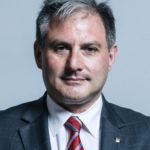
  • Jack Lopresti – 2023 Parliamentary Question on Ambulance Cover on Strike Days

    Jack Lopresti – 2023 Parliamentary Question on Ambulance Cover on Strike Days

    The parliamentary question asked by Jack Lopresti, the Conservative MP for Filton and Bradley Stoke, in the House of Commons on 24 January 2023.

    Jack Lopresti (Filton and Bradley Stoke) (Con)

    What steps he is taking to ensure that ambulance services continue to operate during strikes.

    The Secretary of State for Health and Social Care (Steve Barclay)

    We have introduced a range of contingency measures, such as the provision of military personnel, who are available to assist with the driving of ambulances, and community first responders, who can help before ambulances arrive on the scene.

    Jack Lopresti

    Will my right hon. Friend join me in thanking call handlers at the South Western Ambulance Service NHS Foundation Trust—and the public—for halving the number of 999 calls to the trust over the last month, and reducing average call answering times by 95%, to just three seconds? Will he also join me in expressing dismay at the approach taken by the Leader of the Opposition during the most recent session of Prime Minister’s Question Time in seeking to sow fear in the hearts of my constituents and others for his own narrow political gain?

    Steve Barclay

    I am happy to join my hon. Friend in paying tribute to the work of call handlers at the South Western Ambulance Service, and to the staff there as a whole. He is right to draw attention to the improved performance that we have seen in recent weeks, and also right to point out that all parts of the United Kingdom have faced considerable challenges, particularly over the Christmas period when we saw a significant spike in flu levels.

    Rachael Maskell (York Central) (Lab/Co-op)

    We have just heard in the Health and Social Care Committee that on strike days there was a drop in service demand, but also value added by the increased clinical support, resulting in better and more cost-effective decisions. Why does that happen on strike days rather than on every single day of the year?

    Steve Barclay

    We are taking a number of steps to improve performance, and not just on strike days—but I thought the hon. Lady was going to refer to the comment that she made about those on her own Front Bench, when she said:

    “I think what our health team need to do is really spend more time in that environment with clinicians to really understand what drives them.”

    We on this side of the House are spending a significant amount of time with clinicians, and it is important that those on the hon. Lady’s Front Bench do so as well.

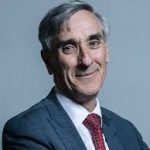
  • John Redwood – 2023 Parliamentary Question on Pausing the Ban on New Petrol and Diesel Vehicles

    John Redwood – 2023 Parliamentary Question on Pausing the Ban on New Petrol and Diesel Vehicles

    The parliamentary question asked by John Redwood, the Conservative MP for Wokingham, in the House of Commons on 18 January 2023.

    John Redwood (Wokingham) (Con)

    As we are very short of commitments to assemble more EVs in the United Kingdom, which would be needed to create battery demand, will the Minister pause the ban on the sale of new petrol and diesel vehicles until our EV capacity has caught up? Otherwise, the industry will shrink too much.

    Graham Stuart

    I thank my right hon. Friend, whose economic insights I always value and appreciate. However, we are committed to electric and zero-emission vehicles and we will not stimulate investment in those sectors by removing the mandates that drive consumer choice and have led to such a significant change in our road transport emissions. We are going to have even more ambitious steps.

  • Mark Hendrick – 2015 Parliamentary Question to the Department for Communities and Local Government

    Mark Hendrick – 2015 Parliamentary Question to the Department for Communities and Local Government

    The below Parliamentary question was asked by Mark Hendrick on 2015-10-28.

    To ask the Secretary of State for Communities and Local Government, if he will take steps to commemorate the 350th anniversary of the passage into law of the Five Mile Act 1665.

    Mr Marcus Jones

    My Department has no plans to commemorate the 350th anniversary of the passage into law of the Nonconformists Act 1665.

    The Nonconformist Act was rightly repealed in 1689.

    Freedom of speech, freedom of worship, democracy, the rule of law, and equal rights define us as a society. The Government is determined to promote these values actively, working in partnership and alongside all communities.

  • Liz Kendall – 2015 Parliamentary Question to the Women and Equalities

    Liz Kendall – 2015 Parliamentary Question to the Women and Equalities

    The below Parliamentary question was asked by Liz Kendall on 2015-11-25.

    To ask the Minister for Women and Equalities, how many (a) men and (b) women have been promoted within the Government Equalities Office in each year since 2010.

    Edward Timpson

    The information is not readily available and could only be obtained at disproportionate cost.

  • Patrick Grady – 2016 Parliamentary Question to the HM Treasury

    Patrick Grady – 2016 Parliamentary Question to the HM Treasury

    The below Parliamentary question was asked by Patrick Grady on 2015-12-16.

    To ask Mr Chancellor of the Exchequer, what representations he has received about the work of Royal Bank of Scotland’s Global Restructuring Group.

    Harriett Baldwin

    The Government is aware of the reports published by Sir Andrew Large and, separately, by Dr Lawrence Tomlinson into Royal Bank of Scotland (RBS)’s treatment of customers and businesses in financial difficulty.

    The Financial Conduct Authority (FCA) has appointed Promontory Financial Group and Mazars to independently review the allegations in the reports against RBS’s practices. If the findings from the review reveal issues which come within the FCA’s remit, the FCA will consider further regulatory measures.

    The Government’s shareholding in RBS is managed at arm’s length from HM Treasury by UK Financial Investments (UKFI). However, UKFI’s role is to manage the investment, not the bank. Commercial affairs remain the responsibility of the bank’s independent management team.

    RBS is making progress to deal decisively with the problems of the past, which will allow it to become a simpler, safer and more focused bank that works for the UK economy. Under the leadership of Ross McEwan RBS has made good progress in becoming a simpler, safer and more focused bank that works for the UK economy.

  • Tim Loughton – 2016 Parliamentary Question to the Home Office

    Tim Loughton – 2016 Parliamentary Question to the Home Office

    The below Parliamentary question was asked by Tim Loughton on 2016-01-27.

    To ask the Secretary of State for the Home Department, how many (a) CRB checks and (b) Disclosure and Barring Service checks have been carried out in each of the last 10 years.

    Karen Bradley

    The table below shows the total number of Standard and Enhanced certificates issued by the Disclosure and Barring Service over the last 10 years. The figures include applications for volunteer roles, which are processed free of charge.

    Organisation

    Financial Year

    Standard & Enhanced Certificates Issued

    CRB

    2005/06

    2,776,378

    CRB

    2006/07

    3,278,031

    CRB

    2007/08

    3,323,402

    CRB

    2008/09

    3,856,583

    CRB

    2009/10

    4,301,313

    CRB

    2010/11

    4,312,533

    CRB

    2011/12

    4,074,241

    CRB (to Nov-12)

    2012/13

    2,842,832

    DBS (from Dec-12)

    2012/13

    1,223,773

    DBS

    2013/14

    3,948,733

    DBS

    2014/15

    4,111,856

  • Christopher Chope – 2016 Parliamentary Question to the Home Office

    Christopher Chope – 2016 Parliamentary Question to the Home Office

    The below Parliamentary question was asked by Christopher Chope on 2016-02-24.

    To ask the Secretary of State for the Home Department, when she plans to reply to the letters dated 11 December 2015, 14 January and 10 February 2016 from the Dorset Police and Crime Commissioner on port security and border controls; and if she will place a copy of her responses in the Library.

    James Brokenshire

    The Home Secretary sent a response to the letters dated 11th December 2015 and 14th January 2016 on 22nd February 2016. She has not received a third letter. Responses will not be added to the library, this is not usual practice for private correspondence.

  • Martyn Day – 2016 Parliamentary Question to the HM Treasury

    Martyn Day – 2016 Parliamentary Question to the HM Treasury

    The below Parliamentary question was asked by Martyn Day on 2016-03-21.

    To ask Mr Chancellor of the Exchequer, with reference to paragraph 2.159 of Budget 2016, what assessment his Department has made of the potential effect of the freeze in petrol and diesel duty on (a) carbon emissions by cars and (b) the environment.

    Damian Hinds

    The Government took a wide number of factors into account when considering the case for a further duty freeze, including the impact on carbon and emissions. The data shows that carbon dioxide and air pollutant emissions from the road transport sector have continued to fall since 2011 when Government cut fuel duty by 1 penny per litre and froze it. This information can be found here in Table TSGB0308: https://www.gov.uk/government/statistical-data-sets/tsgb03

  • Andrew Rosindell – 2016 Parliamentary Question to the Department for International Development

    Andrew Rosindell – 2016 Parliamentary Question to the Department for International Development

    The below Parliamentary question was asked by Andrew Rosindell on 2016-04-13.

    To ask the Secretary of State for International Development, how much her Department spent on cultural and arts projects overseas in 2014.

    Mr Desmond Swayne

    During 2014, DFID did not disburse Official Development Assistance to any country for cultural and arts projects.