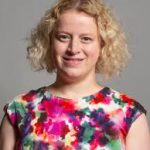
Tag: Olivia Blake

  • Olivia Blake – 2023 Speech on Snares

    Olivia Blake – 2023 Speech on Snares

    The speech made by Olivia Blake, the Labour MP for Sheffield Hallam, in Westminster Hall on 9 January 2023.

    It is a pleasure to serve under your chairship, Mr Vickers. I thank the hon. Member for Don Valley (Nick Fletcher) for opening the debate in a measured way. Some 267 of my constituents signed the petition, which shows the huge love of nature and animals there is in my constituency.

    Snares are indiscriminate, yet universally cruel. What is clear is that the non-statutory code is simply not enough to protect animals from painful injuries, suffering and death. As we have heard, that includes protected animals, such as badgers, and even cats and dogs. DEFRA’s own research shows that 68% of animals caught are not the intended target species. Under the code, snares should be checked twice, but the law only requires them to be checked once every 24 hours. It is hard to comprehend the volume of snares, given that 1.7 million are set every year. We have heard from other Members about the huge and lasting impact that snares can have on the wellbeing on animals, such as capture myopathy, panic immobility, thirst, starvation, dehydration and many more.

    We know that snare users have admitted that non-target species have been caught in their snares. For example, DEFRA research from 2008 to 2010 showed that 60% of people using fox snares admitted that they had captured non-target species in them. Landowners who do not use snares do not want to go back to their use. There are many landowners, of many hundreds of thousands of hectares up and down the country, who no longer use snares, and will not use snares, because they view them as incredibly cruel.

    We know that cats and dogs organisations are unified in their opposition to the use of snares because, within three years, 97 cats and 31 dogs were caught in snares. I am a dog owner—I have a dog necklace on today—and I would be horrified if, out in the countryside, my dog was unfortunate enough to step in a snare and be injured. I do not think that anyone should have to go through that.

    Break-away snares, as we have heard in the debate, have been seen as almost an answer to this situation. However, 69% of badgers do not escape from those snares, so they are not a solution; they are not even 50% good at what they are saying they are good at. The National Anti Snaring Campaign commissioned TTI Testing to do tests on those snares; it found that a force of over 70 kg of weight would be needed on a 2 mm wide area of the snare to cause a break. That is a huge amount of force that would need to be exerted on a snare. If you have ever seen an animal in a bad situation, Mr Vickers, you will know that they are not directionally pulling; the forces are very dynamic when they are struggling and they will not be able to get out of those snares. That is why 69% of badgers were unable to escape from them.

    We have also heard a lot about the different impacts of predators, but we have had a 64% decline in rabbits and a 44% decline in foxes. Declines in nature species are incredibly complicated. We cannot just say, “This is down to predators.” We have seen paper after paper looking at habitat loss, agricultural practices and their impacts on insects and other things that bird species might eat, and the lack of different crops and changes in sowing, and the impact on nesting spaces within that. The impacts of all of those different elements cannot just be laid at the feet of foxes or rabbits. It is absolutely a falsehood. It is a false flag.

    Predation, yes, is an issue, but there absolutely are alternatives to snaring to help protect species from predation, whether through trap and release, electric fencing, wire netting, motion sprinklers, ultrasonic devices or the use of radios and reflective surfaces. There are many different ways of putting predators off, and ensuring that we have a habitat and landscape available to lapwings and curlews is the most important thing in their protection.

    Sir Robert Goodwill

    Does the hon. Lady genuinely think that those deterrence methods would be suitable, and work, on the vast thousands of acres on the North Yorkshire Moors, where lapwings and curlews need to be protected?

    Olivia Blake

    We know the nesting areas of certain birds, and we already put signs up to say, “Keep your dogs on a lead” or “Do not go in this area,” and I think that, actually, yes, where snares are no longer used—on many hundreds of thousands of hectares—those alternatives have been used well. We are not seeing any of the organisations that have moved away from snares saying, “Actually, it hasn’t worked; we want to go back to using snares,” because those alternatives have proved effective. I think that that needs to be on the record in this debate. It is just a false flag to say that predation is the problem here. Loss of habitat, and the impacts that we have had on our environment, cannot be understated in this, as I have said.

    I just think that we need to ban snares because they are cruel and indiscriminate, as I have said, and there is nothing about them that we could not think outside the box and find an alternative for. I think we all have enough ingenuity that cruelty does not have to be the first and only option in the way that we manage our landscape and protect the species that are special to us.

  • Olivia Blake – 2022 Comments on the Language Used by Suella Braverman

    Olivia Blake – 2022 Comments on the Language Used by Suella Braverman

    The comments made by Olivia Blake, the Labour MP for Sheffield Hallam, on Twitter on 1 November 2022.

    Suella Braverman is not fit for office.

    Political decisions she made have left children in dangerous, inhumane conditions in Manston.

    And yday she described asylum seekers as an “invasion”, the day after a petrol bomb attack on a migrant centre.

    The Home Secretary must resign.

  • Olivia Blake – 2021 Speech on Miscarriage Research

    Olivia Blake – 2021 Speech on Miscarriage Research

    The speech made by Olivia Blake, the Labour MP for Sheffield Hallam, in the House of Commons on 17 June 2021.

    I would like to thank Mr Speaker, through you, Madam Deputy Speaker, for allowing parliamentary time on this important topic in this Adjournment debate on miscarriage. I wanted to bring to the Chamber’s attention the recent series of papers published in The Lancet entitled “Miscarriage matters” and the petition by Tommy’s on support for women after miscarriages. The petition currently has over 170,000 signatories.

    I know that this topic is often one that is difficult to talk about, but I hope that by giving the Chamber an opportunity to hear some of the experiences and latest research, this debate can act as a catalyst for change for miscarriage services in the upcoming women’s health strategy. For too long, miscarriage has been a taboo, and I was disappointed that while the press release on the women’s health strategy call for evidence mentioned breaking taboos, it did not mention miscarriages directly—only pregnancy-related issues.

    I am so pleased that prominent women, like Meghan Markle and Myleene Klass, have been brave enough to speak and break the taboo about their experiences. Miscarriage is little spoken about but incredibly common. One in four pregnancies is thought to end in miscarriage. The research suggests that 15% of recognised pregnancies around the world end in miscarriage—that is 23 million a year or 44 miscarriages a minute. Black mothers face a 40% higher relative risk than white mothers and the risk of miscarriages is lowest between the ages of 20 and 29, but goes up threefold by 40 and fivefold by 45. Unfortunately, I think that this commonality and the well-known challenges in women’s health have meant that services are not always set up in the best interests of women. Miscarriages are often a symptom of an underlying health condition. They should not just be seen as a fact of life, and I am concerned that this attitude speaks to wider gendered inequalities in our society.

    I shared my own experience in a Westminster Hall debate last year and I have been overwhelmed by families contacting me to share their experiences. I have heard from women who have never told anyone but their partners that they have experienced a miscarriage and women who have experienced this 30 years ago still carrying the hurt, and now, some are seeing their children going through exactly the same issues. Although I spoke of my loss to highlight the impact of the pandemic, what is clear to me is that, covid or not, there are some huge holes—sometimes voids—in the care provided. Some people are lucky enough to have access to fantastic services and early pregnancy units. Others attend their GPs and others end up at A&E. Unfortunately, some attitudes seem to be very, very prevalent both in society and in some health services.

    Jim Shannon (Strangford) (DUP)

    May I just say how moved I was—the hon. Lady knows this—by her contribution in Westminster Hall on that day? It moved me to tears. I congratulate her on securing this debate. We should change the way we handle support for miscarriages as a result of that debate. Does she not agree that the threshold of three miscarriages in a row for NHS investigation must change, as every miscarriage is devastating and the estimation of an acceptable level of loss is abhorrent?

    Olivia Blake

    I absolutely agree and I will come on to the issue of how care is provided later in the debate.

    There seems to be a general lack of understanding that while miscarriage is common it is also incredibly traumatic and can lead to mental health problems. The Lancet research series highlights that anxiety, depression and even suicide are strongly associated with going through a miscarriage. Partners are also likely to be affected and previous reports have highlighted links with post-traumatic stress disorder. Despite that, the loss associated with miscarriage can often be minimised with phrases such as, “It’s okay, you can just try again,” or “It just wasn’t meant to be this time.” After my miscarriage, I got into a cycle of blaming myself and obsessing over what went wrong—if I ate the wrong thing, lifted something too heavy and so many other ridiculous thoughts. I have had to have counselling to deal with my trauma, but it was not offered. It was something that I had to seek out myself.

    The same cycle has been described back to me again and again and again by people who have experienced miscarriages. My brave constituent Lauren, who has allowed me to share her story today, has sadly suffered three miscarriages. She has never ever been offered any mental health support through the miscarriage pathway. In fact, even after she requested it, her miscarriages were not even recorded on her medical notes, leaving her to explain to five different healthcare professionals about her three miscarriages. On one occasion, a member of staff asked her when she had had her first child. That is clearly incredibly distressing, and why I support calls for better data collection and patient recording of miscarriages.

    Women have also told me about suffering three, four and five miscarriages. The reasons found for them were underlying health conditions, such as blood clotting disorders, autoimmune diseases and thyroid disease. Since my miscarriage, I ended up in hospital again and was diagnosed with diabetes, an issue that may have been picked up if testing had been carried out at the time of my miscarriage. The information I have received since my diagnosis of diabetes about pregnancy has been very informative and helpful, and a really stark contrast to those who have to get information about miscarriage.

    There are some excellent examples and many, many committed staff who often share the frustrations about the system, which has a hard cut-off of 24 weeks for some support services. We have seen a huge number of organisations stepping forward to fill the gaps in support and advice: Tommy’s, Sands, the Miscarriage Association and, locally in Sheffield, the Sheffield Maternity Cooperative. I spoke with Phoebe from the Cooperative, an experienced midwife who herself has gone through a miscarriage. She works with individuals and families across the city to provide timely, appropriate and sensitive care, after her own experiences were, unfortunately, the exact opposite of that.

    So what shall we do? I hope today the Minister will respond to the key findings of The Lancet series and to these key asks. The first is that the three-miscarriages rule has to end. The large number of people who signed the Tommy’s petition shows the strength of feeling on that. We would not expect someone to go through three heart attacks before we tried to find out what was wrong and treat them, so why do we expect women to go through three—in some cases preventable—losses before they are offered the answers and treatments they need? Instead, the research recommends a graded support system where people get information and support after their first miscarriage—we should not phrase it like that, though—tests after the second, and consultant-led care after the third.

    The second key ask is 24/7 care and support being available. That care should be standardised to avoid a postcode lottery or the patchy provision currently available, and it should include follow-up mental health support to help to reduce mental illness post miscarriage.

    Finally, we need to acknowledge that miscarriage matters and start collecting data on miscarriage, stillbirth and pre-term rates. I was shocked to find that no central data existed on the statistics and these estimates are based on very many different sources. We must break the taboo on miscarriage. I know from personal experience, and from many people who have contacted me, that we could do so, so much better. Will the Minister today commit to take forward these proposals and take a stand for women, individuals and families the system is failing? And will she meet me and campaigners to discuss this issue further?

  • Olivia Blake – 2021 Speech on the Obesity Strategy

    Olivia Blake – 2021 Speech on the Obesity Strategy

    The speech made by Olivia Blake, the Labour MP for Sheffield Hallam, in the House of Commons on 27 May 2021.

    Like almost everyone speaking in the debate today, I support measures to ensure that people have a healthy relationship with the food that they eat. However, healthy eating habits cannot simply be measured on weighing scales or counted in calories. Today, we are facing a mental health crisis, one element of which is the rising epidemic of eating disorders, including obesity.

    I fear that our strategy falls well short of the social and mental health support needed to help people manage a healthy relationship with food. I am talking about those who have any conditions relating to weight management, whether that is diabetes or heart disease, or an eating disorder. I hope that the new funding for services will see those approaches supported.

    While I am fully supportive of interventions such as restrictions on advertising and work to improve the diet of the nation, I remain very concerned about certain aspects of the strategy. Before the pandemic, hospital admissions were increasing, especially among teenagers. In 2019-20, we saw a sharp 32% increase on the previous year to more than 21,000 cases, nearly 5,000 of which were children. In addition to hospital admissions between February 2020 and January 2021, the eating disorder charity Beat reported a massive 173% surge in demand for its services. During that time, we saw no corresponding rise in the levels of funding going to eating disorder services. I have sat with eating disorder specialists who have told me that the money that is available often fails to get to the frontline. One doctor I spoke to said that his service was originally designed for 60 children, but now serves 280, with inadequate funding for those places.

    I know that NHS trusts are also struggling with non-specialist in-patient services for children. The rising demand means that they just do not have the expertise available to treat in-patients with eating disorders properly, with many waiting for urgent beds for children in crisis in any specialist unit anywhere in the country. We still see a situation in adult services where there are no waiting time targets for support for eating disorders.

    I am highlighting this dire situation because one measure of the Government’s obesity strategy involves calorie labelling on menus. Among those who will be reading those menus will be people with eating disorders. There is a wealth of research that shows that calorie labelling can exacerbate unhealthy relationships with food and can be a predictor of the onset of eating disorders. In trying to fix one problem, there is a real danger that Ministers will make another far worse, the costs of which are not trivial. Eating disorders have the highest mortality rate of any mental health problem, and people who suffer from them are at increased risk of suicide and self-harm. While it is true that half of those with eating disorders recover, 20% remain in a chronic condition.

    We should look at obesity in the round. Balanced nutritious meals, promoting healthy diets such as Mediterranean diets, and healthy levels of exercise are far more important ways of maintaining a healthy weight. I urge the Government to rethink and revisit that aspect of the plan, come up with a solution that balances the needs of all. If we really want to promote healthy eating habits, calories on menus are not necessarily the way to do it for the whole population and risk making a very bad situation even worse for those suffering from or at risk of developing eating disorders. I say this as someone with type 2 diabetes. I have lost weight in order to manage my diabetes. There is a real issue with anxiety around calories and weighing out food. More needs to be done to recognise these anxieties and mental health issues.

  • Olivia Blake – 2020 Speech on Free School Meals

    Olivia Blake – 2020 Speech on Free School Meals

    Below is the text of the speech made by Olivia Blake, the Labour MP for Sheffield Hallam, in the House of Commons on 16 June 2020.

    I would like to take a moment to remember Jo Cox, a fellow Yorkshirewoman. She was such an inspiration and stood up against inequality and the loneliness that often accompanies it.

    I welcome the Government U-turn on free school meals over the summer. I pay tribute to Marcus Rashford for his leadership over the past few days. Perhaps Government Members could take some lessons from that.

    Since the onset of the covid-19 crisis, 1.5 million people have reported going a whole day without food. The use of food banks has soared. Mutual aid groups, food banks and campaigners in my constituency have struggled to provide the food that the people of Sheffield need. Their work and the work of others is heartening, but it is also a travesty that in the sixth richest country in the world it falls to volunteers and the charity sector to ensure that no one is going hungry.

    Over the past few years in Sheffield, we have seen a growth in activities for young people that now must involve the provision of food, whether they are holiday hunger projects or term-time clubs. Children are struggling to get the nutrition they need and rely on such projects, as well as free school meals. The demand is high and it is growing. Communities have identified the need, but it is clear that they do not have the resources to prevent hunger in their neighbourhoods. They cannot solve the structural issues of inequality, low pay, insufficient social security, and rising costs in housing, energy and the basics. Solving that requires action and intervention from this place.

    The pandemic has not created this crisis, but it has shone a light on the weaknesses that already exist. According the Trussell Trust’s “State of Hunger” report, 8% to 10% of households in recent years have experienced food insecurity, leading to 1.5 million units of emergency food parcels—

    Madam Deputy Speaker (Dame Rosie Winterton)

    Order. [time for speech ran out]