Tag: Nicola Sturgeon

  • Nicola Sturgeon – 2017 Speech at SNP Spring Conference

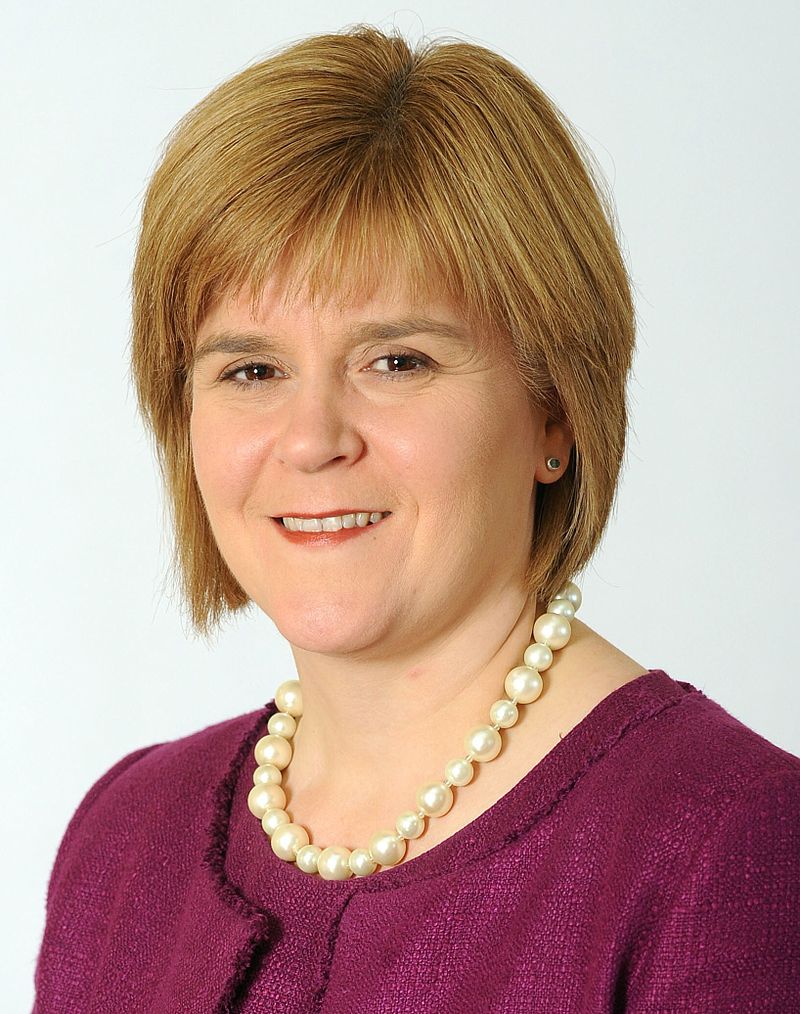
    Below is the text of the speech made by Nicola Sturgeon, the leader of the SNP, at the party’s spring conference held on 18 March 2017.

    It’s great to be here in the Granite City.

    To look out at a conference hall packed with so many people from all walks of life and from every corner of our country.

    You reflect the strength and depth of the SNP.

    You are a reminder that other parties might appeal to one section of our community or one part of our country.

    Not the SNP.

    We are a national party.

    A national party with a truly internationalist outlook.

    Our priority, now and for the generations who come after us, is to build a better Scotland for everyone who lives here – no matter where you come from.

    Often, in these times, I am reminded of our dear friend, the late Bashir Ahmad.

    Bashir came to Scotland from Pakistan in 1961 to work as a bus driver.

    46 years later he became Scotland’s first Asian member of our national Parliament.

    The first time he addressed an SNP conference, Bashir articulated this simple message.

    ‘It’s not where we come from that’s important…’ he said.

    ‘It’s where we are going together.”

    Today, with the forces of intolerance and xenophobia seemingly on the rise across our world, Bashir’s words have never seemed more appropriate.

    Let us rededicate ourselves, today, to the spirit of that message.

    Inclusion, tolerance, diversity.

    Let’s make these the foundation stones of the better Scotland we are seeking to build.

    Friends,

    It is great to see so many of you here today.

    But I hope you will forgive me…

    …because my speech this afternoon is not really aimed at you.

    Of course, I could be going out on a limb here…

    …but I am assuming I already have your support.

    I am assuming that you need no persuading that Scotland should not be dragged out of Europe by a Tory government intent on a disastrous hard Brexit.

    And I am guessing that you are already convinced that Scotland has what it takes to join the family of independent nations.

    Friends,

    Our job is not to talk to each other.

    It is to reach out to those not persuaded – to put ourselves in their shoes.

    To understand the hopes, fears and ambitions of all our fellow citizens.

    And to do what we can to establish common ground.

    Always remember Bashir’s words – carry them with you in your heart.

    What matters is ‘where we are going together’.

    These words don’t just apply to how we treat those who from other countries.

    They must apply to how we treat each other – all of us who live here and call Scotland home.

    We all want the best for our country – we just have different views on how to achieve it.

    As Scotland’s government, we bear a special responsibility to offer a hand across these differences, to build consensus where we can.

    So let us resolve to argue our case with passion and commitment, yes, but – at all times – with courtesy, understanding and respect.

    In that – as in everything else – it is my job to lead you by example.

    That is why I speak today not just as SNP leader to our party conference.

    But as the First Minister, to all of Scotland.

    I know that the plan I set out on Monday was music to the ears of SNP members and independence supporters up and down the country.

    And let me set out again what that plan is.

    After the terms of Brexit are clear but while there is still an opportunity to change course, the people of Scotland will have a choice.

    There will be an independence referendum.

    But I also know that for every one of us who is full of excitement and anticipation, there will be someone else feeling nervous and anxious, perhaps even resentful.

    In the last few years it has been one big decision after another.

    You have been bombarded with statistics, claims and counterclaims.

    You might have had heated discussion with friends and family.

    Even though you may feel – like we do – that 2014 was a positive and vibrant exercise of democracy, you might not relish going through it all over again.

    I understand that.

    So I want you to know that I did not reach the decision lightly.

    Indeed, for months, I have strived to find compromise and agreement with the Prime Minister.

    Despite our overwhelming vote for Remain, the Scottish Government accepted that Scotland, within the UK, would leave the EU – but that we should seek to retain our place in the single market.

    We proposed substantial new powers for the Scottish Parliament – short of independence – that would help protect Scotland’s interests in a post Brexit UK.

    But instead of meeting us half way or, frankly, any of the way, Westminster chose to dig its heels in.

    Our efforts at compromise with the Prime Minister met with a brick wall of intransigence.

    And that is a concern that should resonate far beyond Scotland.

    The Prime Minister’s attitude should worry all of us hoping that negotiations with Europe will not be a disaster…

    …because – and let me put this bluntly – if she shows the same condescension and inflexibility, the same tin ear, to other EU countries as she has to Scotland then the Brexit process will hit the rocks.

    Of course, that’s the outcome that hard line Brexiteers are agitating for.

    But it would be in no-one’s interests.

    So as Article 50 is about to be triggered, let me say this to the Prime Minister.

    Stop putting the interests of the right wing of your own party ahead of the interests of the people of our country.

    For me, though, the Prime Minister’s refusal to budge an inch meant that I had to make a decision.

    I could take the easy option.

    I could let Scotland drift through the next two years, hoping for the best, but knowing that the worst is far more likely…

    Waiting for the chance to say I told you so….knowing that by then it might be too late to avoid the damage of a hard Brexit.

    Or I could make a plan now to put the Scottish people in charge of our own future.

    I choose to put the people in charge.

    The fact is our country stands at a crossroads.

    The future of the UK looks very different today than it did two years ago.

    We know change is coming.

    The only question is what kind of change.

    And on that we are not powerless.

    We can still decide which path we take.

    Whatever our different opinions on independence, we can all unite around this simple principle.

    Scotland’s future must be Scotland’s choice.

    Which brings me to the Prime Minister’s statement on Thursday.

    To stand in the way of a referendum would deny us that choice.

    It would mean that the path of our country was determined, not by us, but for us.

    Decided by an increasingly right wing, Brexit obsessed Tory government.

    A government that some predict will be in power now until 2030 and beyond…

    …thanks in no small part to the embarrassing shambles of an opposition that Labour has become.

    A Tory government, dominated by the likes of Boris Johnson and Liam Fox, deluding themselves about rebuilding the empire and re-floating the Royal Yacht Britannia…

    It seems they want to go back in time.

    But it’s not just nostalgia for empire that they are keen on.

    They clearly long for the days before we had a Scottish Parliament.

    The days when Tory governments could do anything they wanted to Scotland, no matter how often they were rejected by the voters.

    The days when they could impose the poll tax, destroy Scottish industry and deny all demands for constitutional change.

    Well, the Prime Minister should understand this point. And understand it well.

    Those days are gone and they are not coming back.

    Next week, in line with the mandate secured at last May’s election, we will ask the Scottish Parliament to agree that the Scottish people should have the right to choose our own future.

    We will ask Parliament to agree that this choice should be exercised at a time when we know the terms of Brexit…

    …but before it is too late to take a different path.

    And we will ask Parliament’s permission to seek the legal authority that will allow the people of Scotland to have that choice.

    If a majority in the Scottish Parliament endorses that position, the Prime Minister should be clear about this.

    At that point a fair, legal and agreed referendum – on a timescale that will allow Scotland an informed choice – ceases to be just my proposal, or that of the SNP.

    It becomes the will of the democratically elected Parliament of Scotland.

    To stand in defiance of that would be for the Prime Minister to shatter beyond repair any notion of the UK as a respectful partnership of equals.

    She has time to think again and I hope she does.

    If her concern is timing then – within reason – I am happy to have that discussion.

    But let the Prime Minister be in no doubt.

    The will of our parliament must and will prevail.

    Of course, the Tories’ reluctance to allow Scotland a choice is not hard to fathom.

    They are now terrified of the verdict of the Scottish people.

    They know, as well as we do, that what is at stake in the years ahead is not just our place in Europe, important though that it is.

    What is at stake is the kind of country we are going to be.

    With independence, the country we become is up to us – all of us who live here.

    We can choose to be a compassionate country – with a big heart and a helping hand for those in need.

    An open country that doesn’t pull up the drawbridge and look inwards…

    …but one that encourages the best and brightest from around Europe to make Scotland their home…

    And not just from the goodness of our hearts, but for reasons of hard headed self interest as well.

    Scotland needs people to want to work here – in our businesses, our universities and our public services.

    Of course people have concerns about immigration that need to be addressed. I know that from my own constituency.

    But as we decide the kind of country we want to be, we must be clear about the choice on offer.

    For the current UK government, ending free movement comes before everything else – including the health of our economy.

    It is their number one priority.

    And make no mistake.

    For Scotland, the result will be lower living standards and a hit to our prosperity.

    So, not just for the sake of our values…

    …but for our economic future as well, it’s time to take a different course.

    It’s time to stand against the demonisation of migrants.

    And to stand up for those who choose to join us in building a better Scotland.

    Of course, we don’t yet know exactly what the Tories want a post Brexit UK to be like.

    But there are two recent developments that point the way.

    Last year, under pressure, David Cameron accepted what was called the Dubs amendment.

    It committed the UK to providing a safe haven for unaccompanied child refugees – some of the most helpless and vulnerable people on our planet.

    But last month, the UK government called a halt to the Dubs scheme.

    They said that their new approach to refugees was ‘absolutely right’.

    Well, I beg to differ.

    I think it is absolutely wrong.

    It is inhumane and it must be reversed.

    The second issue is the status of EU nationals.

    Men and women who have built lives, families and careers here.

    People who – overnight in June last year – lost all certainty about their futures.

    It is a depressing commentary on the state of British democracy that it took the House of Lords to do the right thing.

    But, fair play to them – they did. They secured an amendment to the Brexit bill guaranteeing the right of EU citizens to stay in the UK.

    It is therefore even more depressing that the Westminster government then whipped its MPs in the House of Commons to overturn that guarantee.

    It is indefensible.

    You cannot lecture others about politics not being a game – while you are using the lives of human beings as pawns.

    Let me make this clear.

    In an independent Scotland, the SNP would guarantee – unequivocally – the right to stay here for all EU citizens who do us the honour of making our country their home.

    Compassionate, open-hearted and hard-headed – that’s the kind of country I want Scotland to be.

    We must be resourceful and enterprising as well.

    No-one owes Scotland a living…

    …but we are more than capable of earning our own success.

    In the debate about our future, the people of Scotland deserve to hear us speak frankly about the challenges facing the Scottish economy…

    …the challenges of independence…

    …and the challenges we will face under an austerity obsessed Tory government pursuing a hard Brexit.

    We should embrace that scrutiny.

    Opponents of independence, as is their right, will make their case by highlighting what they see as the difficulties.

    It will be up to us to demonstrate how those difficulties can be overcome.

    But as we do so, let’s never forget this…

    …we have the strongest foundations on which to build.

    Advantages that few nations can match.

    Unrivaled energy resources.

    Some of the world’s best universities.

    Strength in finance and business services.

    Cutting edge expertise in life sciences and advanced manufacturing.

    A truly world class food and drink industry.

    And the best tourist attractions anywhere in the world.

    Well, almost the best…

    …according to Rough Guide, we are actually the second best country in the world to visit this year.

    But we are aiming for the top spot!

    The point I’m making is this.

    As we debate our future, let’s do so openly and honestly.

    But let no one – for or against independence – ever seek to run down Scotland’s strengths and our nation’s great potential.

    What we must all do is strive to make our country even better.

    So, when we look at a fiscal deficit created on Westminster’s watch, let’s decide that allowing Westminster to keep making the same mistakes over and over again is not the best way to deal with it.

    Instead, let us be a country that works out how to build, grow and innovate our way to a stronger and more sustainable future – in a way that keeps faith with our own values of social justice.

    A country that makes its own choices.

    Like choosing to invest in public services and a brighter future for our young people…

    …not in a new generation of nuclear weapons.

    Our Growth Commission is currently working on a clear plan for Scotland’s economic future.

    The Commission will conclude its work over the next few months and we will then present its outcome for public scrutiny and debate.

    It will address the challenges we face in a hard headed and realistic way.

    But it will also set out the massive opportunities we have as a country – if we choose to grasp them.

    You know, since the Brexit vote, I’ve had loads of messages from people in other parts of the UK asking if they can move to Scotland.

    Now, I’m sure many of them are joking.

    But there is a serious point.

    The UK is about to turn its back on membership of the world’s biggest single market.

    Imagine what will happen if Scotland chooses to stay.

    We will become a magnet for talent and investment from all across the UK.

    So let me issue this open invitation today.

    Scotland isn’t full up.

    If you are as appalled as we are at the path this Westminster government is taking, come and join us.

    Come here to live, work, invest or study.

    Come to Scotland – and be part of building a modern, progressive, outward-looking, compassionate country.

    It is down to us to make the economic case for independence.

    To answer, clearly, the questions that people ask. And we will.

    But we should also be clear about this – those who argue for Scotland to stay in the UK have big economic questions to answer too.

    We know that down that path lies austerity, cuts and the impact of leaving the single market.

    The Westminster government is now even openly threatening a race to the bottom in tax, wages and working conditions.

    That is no basis for a modern economy.

    The kind of economy we are seeking to build is founded on a different vision.

    Not a race to the bottom…

    …but investment to lift people up.

    That’s our plan, not just with independence, but in the here and now.

    Since we took office, Scotland’s productivity – so crucial to our economic prospects – has grown by almost ten percent.

    Productivity in the rest of the UK has grown by just one-tenth of one percent.

    So we have a good record, but we have more to do.

    Key to our success will be digital skills.

    It is estimated that if we make better use of cloud technology and big data, the benefits to our economy could be over £5 billion a year.

    Recent studies estimate that we need more than 12,000 new workers with digital skills every year.

    And yet only a quarter of businesses report that they are doing anything at all to develop the technology skills of their current workforces.

    We need to change that. Scotland can’t afford to lose out on the digital revolution.

    So I can announce today that we will establish a new, three year, £36 million support fund to meet the upfront costs of digital skills training.

    Helping business to invest in their staff and build our country’s future.

    A strong economy is the basis for strong public services.

    In a few weeks, people across the country will make their judgment on who should run local services.

    The Tories have based their entire campaign for these council elections on denying the people of Scotland the right to choose our own future.

    Our campaign is all about improving Scotland’s communities.

    And here we have a clear choice too.

    Last month, our budget invested hundreds of millions of pounds of extra resources in local services.

    The Tories voted against that budget because it didn’t deliver a tax cut for the highest earners.

    Same old Tories. Tax cuts for the richest and just cuts for the rest.

    So my message today is clear – don’t let the Tories get their hands on your local services.

    On May 4th, vote SNP.

    We work to build a better Scotland every day.

    In May, as well as contesting the council elections, we will mark ten years of our SNP government.

    I am proud of the work we have done…

    …but I know we have much, much more to do.

    Today, I want to thank everyone, up and down the country, who works in our public services.

    I want to thank particularly those who work in our NHS.

    Today, of course, there are more people working in our health service than ever before.

    The additional staff employed since we took office would fill this auditorium 6 times over!

    And that is necessary.

    With populations getting older, pressures on health services across the world are intense.

    Nowhere, perhaps, do we see that more clearly than in our accident and emergency services.

    But there we also see the commitment of our NHS professionals.

    In Scotland, 90.8% of patients are seen within the 4 hour target.

    That’s still not as good as we want it to be…

    …but it is better – by a significant distance – than any other part of the UK.

    In England, the figure is just 77.6%.

    More than 13 points behind Scotland.

    Perhaps someone should have informed the Prime Minister of that fact before she had the brass neck to lecture us about governance.

    But we have more to do.

    One of the challenges that our NHS faces is the increasing number of people seeking support from mental health services.

    Actually, that’s a welcome development.

    It shows that the stigma that stopped people asking for help in years gone by is now fading.

    But it places an obligation on us to invest more in services to meet that need.

    Over the next few weeks, we will publish our new, ten year Mental Health Strategy.

    That strategy will focus not just on traditional mental health services.

    It will look at what we need to do across the NHS and in wider society too.

    For example, we know that GP surgeries and A&E services are often the frontline for mental health.

    And outside the NHS, we know that too many who end up in our prisons and police cells have mental health issues that go untreated.

    We want to change that.

    So let me outline today just some of the action we will take.

    We will increase the mental health workforce, giving access to dedicated mental health professionals –

    – to all of our A&E departments, 24 hours a day

    – to all of our GP practices

    – to every custody suite in every police station

    – and to our prisons.

    In total we will increase the budget by £35 million over the next five years to support the employment of 800 additional mental health workers in our hospitals, GP surgeries, prisons and police stations.

    Providing health care to those who need it is one of our most important responsibilities.

    But I have made clear that the defining mission of our government is education.

    I believe Scotland as a country has the right to choose our own future.

    But we must also make sure that the people who live here have the means and opportunity to make choices about their own lives.

    That means building a country where every child can make the most of their talents.

    We are determined to close the attainment gap in our schools.

    But we know that life chances are too often determined before a child even starts school.

    Doubling the provision of high quality, state funded childcare – as we intend to do in this parliament – is therefore a key part of our plans.

    Rightly, when we talk about the childcare revolution, we focus on the benefits for children and parents.

    But there is another benefit.

    Delivering our pledge will involve the recruitment of thousands more people to work in our nurseries.

    We need to demonstrate how much we value this work.

    I am proud of the steps our government has already taken to extend payment of the Living Wage.

    We have led by example in the public sector.

    And we have encouraged businesses to see the benefits, not just for their staff, but also for their bottom line.

    I can confirm today that we intend to apply that approach to our expansion of childcare.

    In public sector nurseries, staff already receive the living wage.

    But there are currently around 1,000 private nurseries helping to deliver our free childcare
    policy…

    …and currently around 80% of the childcare staff who work in them don’t earn the living wage.

    That’s 8000 people in total.

    There are few more important jobs than caring for our youngest children.

    So I can announce today that, by the end of this parliament, we will invest £50 million to ensure that all staff working in private nurseries delivering our childcare pledge are paid the real living wage.

    Friends,

    We can do all these things to improve the lives of the people of Scotland because we are in government.

    And it is a privilege to serve.

    That privilege to serve is something we should never take for granted.

    We must earn and re-earn the trust of the people each and every day.

    The opportunity to serve our country in government was something past generations of SNP members could only dream about.

    But it is down to their efforts that I stand here before you as First Minister.

    When the story of our party and of Scotland’s independence is written, it will be those who worked so hard against seemingly impossible odds who will take centre stage.

    And there is little doubt that one person and one date will stand out.

    Winnie Ewing, 1967.

    Exactly fifty years ago, Winnie won the Hamilton by-election and made this famous declaration:

    “Stop the world. Scotland wants to get on.”

    Let those words resonate today.

    We are a European, internationalist party, leading a European, internationalist country.

    We will make sure that our voice is heard here at home.

    And we will stand up for Scotland’s values abroad.

    One of those values is self determination…

    …an unshakeable belief in the sovereign right of the people of Scotland to determine our own future.

    Last week, I had the very sad honour of speaking at a memorial service for one of the greatest advocates of that principle, the late Canon Kenyon Wright.

    When he chaired the Constitutional Convention, Kenyon posed this question of the then Tory government’s opposition to devolution –

    “What happens”, he asked, “if the other voice we know so well responds by saying – we say no and we are the state?”

    His answer to that question, so relevant again today, was this:

    “Well we say yes and we are the people”.

    Friends,

    As we go forward we must work to win the support of the people and communities we serve.

    We must always work to build a better Scotland – for everyone who lives here.

    We must stand up for our country.

    …and always trust the people.

    As we approach this crossroads in our national life.

    Let us resolve to give Scotland a choice.

    Let this message ring out today.

    Scotland’s future will be in Scotland’s hands.
  • Nicola Sturgeon – 2017 Speech on Conservative Policies

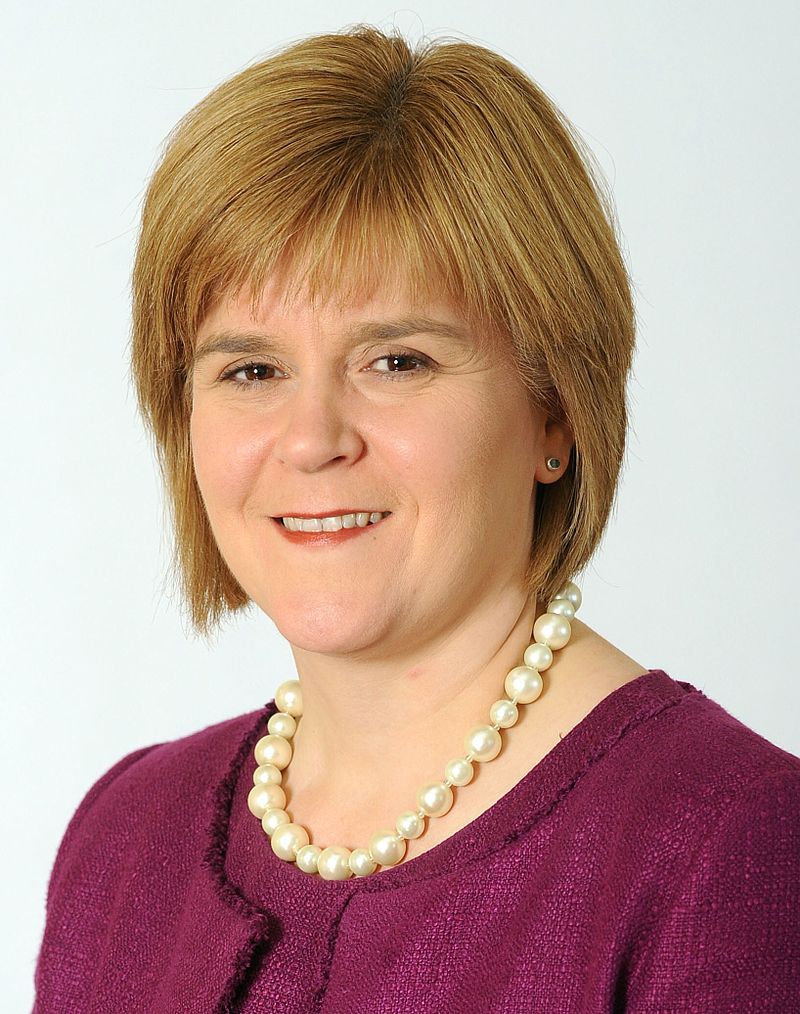
    Below is the text of the speech made by Nicola Sturgeon, the Scottish First Minister, on 17 April 2017.

    The last few days have exposed the full horror of the rape clause, the wider issues around the cap on child tax credits and the complicity of Scottish Tories in the utterly immoral policies of their Westminster colleagues.

    The Tory government’s decision to ban low income families from claiming tax credits for any more than two children, and then force women to prove that they were raped in order to claim tax credits for a third child is inhumane and barbaric – and as we saw in the protest in George Square last week, it is an issue of increasing public anger as the full reality of this inhuman policy becomes clear.

    And while the rape clause is the most attention grabbing of the Tories welfare cuts, it’s not the only way in which women are being made to pay the price of Tory policies. Cuts to tax credits will affect women far more than men, because more of women’s income is dependent on benefits and child tax credits.

    50,000 Scottish households are expected to be affected by the cuts to child tax credits that will take effect by 2021. New families applying for tax credits could lose £545 a year.

    Since these cuts were first announced, with the detail of the rape clause buried deep in one of George Osborne’s final budgets, the SNP’s Alison Thewliss – backed by MPs and MSPs from Labour and the Greens – has led the campaign against them. That cross party support has been hugely important, but the behaviour of the Scottish Tories has been nothing less than contemptible.

    Having repeatedly failed to speak out against this disgusting policy, Ruth Davidson then tried to hide behind her official spokesperson. And then, last week, she came out in open support of the rape clause.

    She also made the suggestion that the Scottish Parliament should simply step in and pay for these benefits instead.

    That was just a desperate smokescreen – an attempt to deflect attention from the Tories’ direct responsibility for this policy and hide her own blushes. The truth is that, far from standing up to her Tory colleagues, Ruth Davidson is defending them regardless of the impact on families across Scotland.

    Let’s be clear, the answer to Tory cuts cannot simply be for the Scottish Government to get out the sticking plasters and patch up the Tories’ mess – using money intended for public services, while the UK Government pockets the savings from their cuts. The solution is for the Tories to scrap the rape clause and the two child policy – not just in Scotland but across the whole of the UK.

    Of course, if the Tories do want Scotland to take on the responsibility then let’s see all social security powers, and all of the funding used to pay for it, transferred to the Scottish Parliament – that way we can deliver a fair and balanced social security system across the board instead of just trying to clear up the mess.

    And when the Tories say these cuts are needed to help balance the books, we should never forget that in the very same budget in which they said there was no money to pay for tax credits, they found the money to cut taxes for the highest earners – a tax cut that the Scottish Tories supported north of the border as well.

    Many years ago, Theresa May infamously said that people often see the Tories as the nasty party. Now that she is Prime Minister, it appears that she – and Ruth Davidson – are determined to live up to that reputation.

  • Nicola Sturgeon – 2015 Rural Summit Speech

    nicolasturgeon

    Below is the text of the speech made by Nicola Sturgeon, the Scottish First Minister, in Musselburgh on 24 November 2015.

    The rural parliament was established to ensure that the needs of rural communities were considered, debated and acted upon by government, by the wider public sector and by local communities themselves.

    Last year’s event was a major success, and I welcome the fact that next year’s parliament – which we hope will be even more successful – will be held in Brechin. I’m sure that they will be great hosts.

    For today’s rural summit, I want to do two things. The first – very simply – is to confirm that the Scottish Government broadly agrees with the five “asks” which you have just heard outlined. We believe that delivering them – in partnership with rural communities – will bring benefits for rural areas and for Scotland.

    We will publish a detailed response before the end of the year, and as part of that, we will make it clear that we expect all public sector bodies to play their part in meeting our shared aims for rural communities.

    The second thing I want to do – which will take a bit more time – is to set the Scottish Government’s ambitions for rural Scotland a wider context.

    The Programme for Government which we published in September – sets out our intention to create a Scotland which is fairer, more prosperous, and which has more empowered local communities.

    So I’m going to look at each of those aims – fairness, prosperity and empowerment – in turn.

    Because each in different ways demonstrates the potential value of the rural parliament. Although the aims we have for rural areas are often the same as those for Scotland as a whole – what’s often distinctive, are the particular issues and challenges which rural areas face.

    If you look at our ambitions for a fairer Scotland, for example, we know that in general – although there are genuine difficulties around measuring rural poverty – poverty rates seem to be lower in rural Scotland than in urban Scotland.

    But there are some quite specific problems in rural areas. For example – and I know this was raised in Oban last year – in remote rural areas, more than 1 person in every 5 lives in extreme fuel poverty. In the rest of Scotland it’s fewer than 1 in 10.

    Fuel poverty is something this government is determined to address – it’s scandalous that in a developed, energy-rich nation, there are people who cannot afford to heat their homes. So we are allocating almost £120 million this year to relieve poverty and improve energy efficiency across Scotland.

    But we know that we need to do more for rural areas. That’s why we have established a Rural Fuel Poverty Task Force – to explore the specific challenges we face, and to guide future policies. It will report within a year with specific proposals which make it easier for people in rural areas to keep their homes warm.

    Another example is housing. The Scottish Government is currently well on course to deliver our pledge of 30,000 affordable homes during this Parliament. That’s a record level since devolution. And one of our key commitments for the next parliament is to increase this still further, and deliver 50,000 affordable homes in the next 5 years.

    But we know that there are very specific challenges relating to rural areas.

    That’s why we have established a new rural housing fund. It’s open to community groups and rural landowners – meaning that they can take a more active role in meeting the housing needs of local communities.

    Again, it’s a specific intervention targeted at a specific rural issue – it will help to reduce housing costs, and enable more people to live in rural areas.

    Alongside our work to promote equality, we also want to build prosperity.

    The two go together – a more equal society, where everyone can participate to their full potential, will lead to a stronger and more sustainable economy. And we need a strong economy to fund the public services we value so highly.

    My view is that although rural areas face challenges, they also have great economic opportunities – maybe to a greater extent now, than at any time for many years.

    It’s maybe worth providing some context for that statement. Tomorrow night, there’s a reception in the Scottish Parliament. It will mark the 50th anniversary of the establishment of the Highlands and Islands Development Board – now Highlands and Islands Enterprise.

    When that board was established, it was a time of great gloom about the economic prospects of the Highlands and Islands. The population of the area had been in decline for more than a century. Unemployment was higher than in the rest of Scotland.

    Times have changed dramatically since then. In fact, the population of the Highlands and Islands is now at its highest point in more than a century. The area accounts for 4/5 of Scotland’s total population growth since the 1960s. Employment is higher than the Scottish average.

    This area has a stronger, more diverse and productive economy than ever before.

    There are still challenges. But the successes have been significant. And one thing which is contributing to those successes is that if you look at the key sectors in our national economic strategy – ones where we see great growth potential for the future – they are ones where rural areas are well placed to prosper. For example they include tourism, food and drink, renewable energy and life sciences.

    So what we are doing is promoting those sectors – food and drink has been a huge success story in recent years, for example. And we are also providing the wider business support and infrastructure investment which will help rural communities to flourish.

    Rural rates relief benefits more than 2,500 businesses across Scotland. It’s an important way of alleviating the extra costs companies can incur, and of helping the sustainability of the rural economy.

    We’re making major investments in rural infrastructure. This autumn has seen the completion of the Borders railway – the longest new domestic railway line in Britain in more than a century.

    We’ve also started work on the dualling of the A9 – our largest road infrastructure project for a generation. It will bring major economic benefits across the north of Scotland.

    And the Digital Scotland Superfast Broadband project is currently making broadband available to approximately 7,000 properties every week. By the end of 2017, 95% of properties across Scotland will have access.

    I’m going to spend a bit of time talking about that, since I know that it was a major issue in Oban last year.

    To give some idea of how much we have achieved so far – 2 years ago, only 4% of homes in the Highlands could get superfast broadband. Now, it’s 59%. By the end of next year, that proportion will increase to 84%.

    But – and this is a hugely important point – we see that as a staging post, rather than an endpoint. That’s why we have lobbied the UK Government to introduce a Universal Service Obligation for broadband – it’s commitment to do that is welcome.

    And we have allocated £7.5 million to Community Broadband Scotland to work with local communities to reach the remaining properties in the Highlands and across Scotland.

    That actually provides a very good example of the value of the rural parliament. Earlier this year, the rural parliament asked for more data about the Digital Scotland programme. It wanted greater transparency about which postcodes weren’t likely to be connected under the current plans.

    That information is now starting to be released more quickly. It means that communities – if they’re not likely to be covered – can get on with developing alternative plans.

    We’ve seen a good example today of what can be achieved by local communities here in East Lothian.

    Community Broadband Scotland has just announced a grant of £150,000 to Humbie Lammermuir Community Enterprise – a non-profit venture which has been established to deliver broadband in the villages of Humbie, Fala and neighbouring areas.

    The initial project – using wireless transmission – could connect up to 250 homes. It’s a good example of how Government funding, combined with local initiative, can make a major difference.

    Improving digital connectivity doesn’t just boost economic opportunities; it transforms the way people live, work and learn. That’s particularly true in remote and rural Scotland – so we need to do everything possible to connect those areas.

    And I know that the rural Parliament, as you have already shown, will be an important ally of the Scottish Government – and sometimes a very challenging ally – as we work to do that.

    The grant to Humbie Lammermuir Community Trust demonstrates something else. It’s a good example of the fact that economic development requires more than central or local government investment. It’s often about local initiative.

    That’s why – and this of course is a major theme of the 5 “asks” from the parliament – this Government is giving communities more power to take decisions about issues which directly affect them.

    For example the Parliament passed a Community Empowerment Act earlier in the summer– among other things, it requires public bodies, including the Scottish Government, to consider how to engage with local communities.

    We have also a target of ensuring that 1 million acres of land were in community ownership by 2020. We have set up a short life working group to help us to achieve that target. We have also introduced a Land Reform Bill, and we are trebling the size of the Scottish Land Fund, which supports community buy-outs.

    And we are taking very specific steps to give more powers to islands and coastal communities. In September we published a consultation paper seeking views on specific proposals for an islands Bill.

    We’re also ensuring that when Crown Estate lands are devolved to the Scottish parliament, the parliament will in turn devolve power to local communities.

    We will consult widely on the best way of doing that. But we have already made it clear that Coastal and island communities will benefit from the net revenues resulting from offshore activities within 12 miles of their coast. It’s a further way in which we will ensure that local communities benefit from their natural resources.

    It is consistent with a wider vision for Scotland – as a nation whose natural resources bring prosperity to every corner of the country.

    The rural parliament has an important role to play in achieving that vision. It is also a further vital way of giving communities a stronger voice and a bigger say.

    By coming together, we can discuss and address the distinct challenges and opportunities facing rural areas. We can ensure that local communities have a real say in the decisions that directly affect them. And we can take steps which will improve the prosperity and wellbeing of rural Scotland, and of Scotland as a whole.

    So I’m delighted to speak here this afternoon; I wish all of you, all the best for a productive set of discussions; and I look forward to working with you in the months and years ahead.

  • Nicola Sturgeon – 2015 Speech at Jimmy Reid Memorial Lecture

    nicolasturgeon

    Below is the text of the speech made by Nicola Sturgeon, the Scottish First Minister, at the Jimmy Reid Memorial Lecture held in Glasgow on 24 November 2015.

    Thank you, Grahame [Smith, General Secretary of the STUC].

    You know, I sat quite a few of my university exams in this room. But I don’t think I’ve ever been set a bigger test than to follow what we have just seen.

    To give a lecture in Jimmy Reid’s honour – in the room, indeed on the very spot, where he delivered, what is undoubtedly the finest political speech in Scotland’s postwar history – is a daunting challenge. It is also of course an enormous privilege.

    I was privileged to know Jimmy, and it’s a particular honour tonight to speak in the presence of his family. I am grateful to them, and to all of you, for coming here tonight, and to the Jimmy Reid Foundation for organising tonight’s event.

    I’m going to start with the rectorial address you’ve just listened to – partly because it’s magnificent, but partly also because it’s directly relevant to what I want to talk about tonight. The reason that speech has endured – and you heard it very clearly in that clip – is that Jimmy, above all else, was making a moral case. He was articulating the values which he exemplified throughout his entire life.

    He argued that humans are essentially social beings. We flourish through contact, conversation, the contribution we make to each other and to our wider society. And so when people sign up to the values of a rat-race, when they allow themselves to be blinded to the misfortunes of others.

    And also, when things are done to people – when they are told they are expendable, or feel excluded from decision-making – it doesn’t simply cut their income. It corrodes their soul and diminishes their sense of self. So the basic principle of empowerment – through respect for individual dignity, and encouragement of individual potential – is at the core of what I want to talk about tonight.

    The title of this speech is that worker’s rights are human rights. I’ll spend some time looking at the UK Government’s Trade Union Bill – since it’s such an extraordinary and unwarranted assault on some of the social and economic rights we value and have come to take for granted.

    I’ll then make a broader case about rights; about our duty to recognise and cherish the value, dignity and potential of every individual in our society – and the fact that when we fail to do so, we don’t just harm those individuals, but diminish our society as well.

    But I want to start with some immediate context. Tomorrow, the Chancellor of the Exchequer will announce the results of the UK government’s spending review. He has a chance – possibly the final chance – to accept austerity is not a necessity, to change course on some potentially catastrophic decisions.

    For example, if all of the UK Government’s proposed tax credit changes are implemented, around 200,000 families with children in Scotland stand to lose an average of approximately £3000 a year. More than three quarters of the families who receive tax credits have at least one person who works. The cuts are directly targeted at working people on low incomes and their children. They hurt many of the people we most need to help.

    I call, again tonight, on the Chancellor to reverse his decision to cut tax credits when he has the opportunity to do so tomorrow. If he doesn’t do so, the Scottish Government will set out proposals to protect the incomes of low paid families in our budget in December.

    Obviously, the substance of the Chancellor’s proposals on tax credits is of greatest concern, but the process is deeply damaging too.

    There was no consultation before the Chancellor announced these cuts in June and no mention of them in the Conservative manifesto. The decision was taken behind closed doors with no opportunity for people to vote against it, and the full implications and will be made clear to families in letters around Christmas time. This is something which is being done to people – to working families and their children – with no opportunity for meaningful debate or discussion, or for them to influence their own destiny.

    If you reflect on the opening of Jimmy Reid’s rectorial address– its evocation of “the despair and hopelessness that pervades people who feel with justification that they have no real say in shaping or determining their own destinies” – it’s hard to avoid the conclusion that UK Government policy is not tackling alienation, it is breeding alienation.

    The tax credit cuts; the bedroom tax; the way in which budgets in recent years have impacted most negatively on women, those on low incomes and people with disabilities – These are things which are being done to the least powerful in our society, by a Government which too often seems oblivious to the consequences.

    And they are now being accompanied by other measures which seem set to strike at basic and fundamental rights – protections which are most valuable, for people who are at their most vulnerable. The proposal to abolish the Human Rights Act is one deeply regressive step; the Trade Union Bill is another.

    When Jimmy Reid spoke here in April 1972, it was towards the end of the Upper Clyde Shipworkers dispute. The work-in Jimmy helped to organise was arguably – in fact, in my view, unarguably – the greatest achievement of the post war union movement in Scotland. It asserted the fundamental right of individuals to work. It did so through a peaceful, positive, optimistic, uplifting protest which captured the imagination of people at home and around the world.

    It stands as an enduring example of how trade unions empower people; of how they provide a voice for those who might otherwise go unheard.

    The right to strike is an essential part of that, but the real value of trade unions goes much further. They help employers to create the safe, humane, productive working conditions which head off industrial disputes – and which build better businesses. Because of that, trade unions are a force for good in modern society.

    That’s certainly been our experience in Scotland. Industrial relations here are strong. The number of working days lost due to strikes has declined by 84% since 2007- that’s the highest reduction anywhere in the UK. Last year, fewer days were lost in Scotland, relative to our working population, than in any other part of the UK.

    And so the UK Government’s proposed Trade Union Bill is based on a worldview we simply don’t recognise. It sees the relationship between employers and unions as one of conflict rather than co-operation. It does not reflect public opinion here, or the reality of industrial relations either. It offers illiberal solutions to a problem which simply doesn’t exist in Scotland.

    And it makes an overwhelming case – one which both the Scottish government and the STUC made last year – for trade union law to be devolved to our own democratically elected parliament in Scotland. After all, that Bill doesn’t contain a single proposal, in my view, which would ever be passed by the current Scottish Parliament. In fact, in a debate two weeks ago, the Scottish Parliament disagreed with the bill by 104 votes to 14.

    It’s worth looking at some of the measures. The UK Government wants the right to restrict facility time. Facility time means that employees can spend time carrying out union duties – helping employees at disciplinary hearings, offering training, or meeting employers. It’s a vital part of partnership working, it is the embodiment of how we do industrial relations – it’s not an abuse which needs to be controlled.

    The UK Government also advocates a ban on public sector employers using “check off” facilities – that’s the payroll mechanism which enables union membership subscriptions to be deducted at source.

    Now the Scottish Government, as an employer, has been operating a check-off facility for years. The costs are so minimal that we have never charged unions for it.

    The UK Government intends to make our actions illegal. It’s maybe worth repeating that. The UK Government doesn’t want to stop using check-off procedures themselves; it wants to make them illegal for the Scottish Government to use.

    It’s an extraordinary and completely unacceptable attempt to control how we act as an employer. It demonstrates that fundamentally, the UK Government wants to discourage union membership. The provision has no other conceivable purpose.

    The UK Government also wants the power to call in agency workers to take over the duties of people who go on strike. And it has consulted on the proposal that picket leaders should wear armbands or identification tags – a proposal that quite frankly borders on the sinister.

    Liberty has pointed out that this provision increases the chances of blacklisting – something which has been a very real and recent danger for union members.

    Overall, in fact, Liberty has stated that the Bill “represents a severe unnecessary and unjustified intrusion by the state into the freedom of association and assembly of trade union members.”

    The UK Government’s own Regulatory Policy Committee has pointed out that key consultation proposals aren’t backed by any supporting data. The entire Bill is driven by dogma and ideology rather than being underpinned by evidence. That’s why the Scottish Government is part of a broad coalition – among the devolved administrations, the trade unions and wider civic society – we are, and will continue to be vigorously opposing the Bill.

    We have argued for it to be voted down at Westminster. We have proposed that Scotland should be exempted from its provisions. And since the Bill will have a significant impact on Scotland – including on how the Scottish Government as an employer carries out devolved functions – we will argue that it should only apply to Scotland if legislative consent is given by the Scottish Parliament. It is almost impossible to imagine that such consent would ever be granted.

    We will do everything in our power to frustrate this Bill. Finally, if the Bill is passed, and its provisions do apply to Scotland, the Scottish Government will not willingly co-operate with it. We will seek to do everything we can to continue the good workplace practices that the Bill attacks. Indeed, I can pledge categorically tonight that we would never employ agency workers in the event of industrial action in the Scottish Government.

    But in addition to opposing this Bill we want to do something much more positive. We want to exemplify here in Scotland that there is a better way of conducting industrial relations; one which is based on a different vision of society. After all, there’s a fundamental contradiction in the UK Government’s approach. The UK Government claims to want a high-wage/high-productivity economy. But if you genuinely want to bring that about, hostility to union membership makes no sense.

    It’s maybe worth looking at West Germany after the war. It developed what became known as Rhine capitalism. It was based on a strong sense of partnership between workers, trade unions, businesses and the public sector. Rhine Capitalism encouraged competitive markets, but combined them with strong social protections. As a result, the German economy has been characterised by innovation, high productivity and strong exports.

    That approach to the economy was based on a distinct vision of society. Article 1 of postwar Germany’s constitution places human dignity as the underpinning principle of the entire state. That feeds into concepts such as the constitutional principle of the “social state” – a state which strives for social justice.

    What we’re aiming to create in Scotland isn’t identical, of course – this is a different time and context. But the core principles are very similar – they’re based on human dignity, value and potential. We have put a commitment to inclusive growth at the heart of our economic strategy. We reject the idea that a strong economy and a fair society are competing objectives. Instead, we recognise them as mutually supportive.

    Of course we need a strong economy to fund the public services we value so highly.

    But it is just as true that a more equal society, where everyone can participate to their full potential, will lead to a stronger and more sustainable economy. And workers who are well educated and trained, well paid and highly valued and supported, will be more productive than those who aren’t.

    That is the principle driving our Fair Work Convention that was established earlier this year. It’s a partnership between Government, unions, employers and employees. It aims to promote productivity in a way that ensures that companies and employees all benefit.

    We’ve also established the Scottish Business Pledge for companies that openly embrace those values to show public leadership and commitment. More than 150 companies in Scotland have signed up. And we are championing the real living wage – last year there were only 34 living wage accredited employers in Scotland, now there are 400, and that number is growing.

    We have also published new procurement guidance which explicitly recognises fair work – including payment of the living wage – as important considerations when we decide how public sector contracts are awarded.

    Now, these are just beginnings – but they are very important beginnings. We’re starting to use the influence and purchasing power of government to send a clear signal. Progressive employment practices are something to be celebrated – not simply because they’re good in themselves, though they are, but also because they contribute to long-term economic and business success.

    And of course the basic principle that applies to businesses – that they prosper when their people are valued and empowered – also applies to society as a whole.

    Many of you will remember Jimmy Reid’s memorial service. Billy Connolly was one of the speakers, and told a story about going for walks with Jimmy in Govan when they were young. This was probably in the late 1950s or early 1960s. It resonated particularly strongly with me because many of the streets they walked are streets I now represent in parliament.

    Jimmy would point to a tower block and say: “Behind that window is a guy who could win Formula One. And behind that one there’s a winner of the round-the-world yacht race. And behind the next one … And none of them will ever get the chance to sit at the wheel of a racing car or in the cockpit of a yacht.”

    Jimmy put the same sentiment even more poignantly when he spoke in this hall – “I am convinced that the great mass of our people go through life without even a glimmer of what they could have contributed to their fellow beings.”

    Getting people to see that glimmer, and kindling it into a spark or fire of ambition, and then enabling them to realise that ambition – that is one of the key challenges today for government and for wider society.

    Indeed, if you were to ask me to sum up what I consider to be my mission as First Minister, assuming I am re-elected next May, it would be that – the mission of making real progress towards genuine equality of opportunity It will require sustained work to tackle intergenerational poverty.

    That’s why I’ve appointed an independent adviser on poverty – to advise and, more importantly, challenge my government to subject all of our policies to the test of whether they help tackle poverty.

    It’s also why our commitment to transformative, high quality and universally available childcare; and our determination to close the attainment gap at school; and our work to ensure that more children from deprived areas get to university are such important priorities for this government.

    But helping everyone to realise their potential, creating a society in which the determinants of an individual’s success are their own talents and their capacity for hard work, not the accident of their birth or their family background – that will also require sustained work to overturn stereotypes and challenge assumptions.

    Last week I went to two events, one after another – one relating to digital skills, and another relating to childcare.

    Both are hugely important – we will need thousands more digital specialists in our workforce every year for the next decade, and we will also need many more childcare workers.

    But if we proceed as we always have done – 80% of the new digital workers will be men, and more than 90% of the child care workers will be women. It would be wrong to proceed as we have done. That’s why I put such emphasis on gender equality and the need to tackle gender stereotypes.

    Similarly, we know we need many more doctors over the coming years. But if we proceed as we have in the past, only 1 in 20 will come from the most disadvantaged areas, rather than the 1 in 5 that equality of opportunity would demand. That’s why the work I’ve put in train through the Commission for Widening Access to university is so important.

    Because the facts that I have just cited don’t reflect the real talents of people in Scotland – instead, they reflect social circumstance and entrenched assumption.

    And the truth is this – we simply can’t afford as a society, morally or economically, to squander so much of our talent. The price is too high.

    I was incredibly fortunate when I was growing up, to have parents who instilled an absolute belief that if I wanted to, had the ability and worked hard enough, I could go to university and achieve my dreams. I’m all too aware that too many people still – more than 30 years later – aren’t that fortunate.

    So there’s a responsibility on all of us to encourage each other’s ambitions, and also to vigorously challenge society’s barriers and stereotypes.

    And there’s a particular obligation for Government in everything we have responsibility for – whether it’s – support for pregnant mothers, or care for older people; tackling the inequities in our education system ; reducing reoffending, or developing a new welfare system; promoting equal marriage rights, or resettling refugees.

    There is an fundamental human right and an obligation to demonstrate that we value the dignity and recognise the potential of every individual. It’s an important part of empowering our people and our communities.

    One of the things which came to define the referendum debate last year was not just a desire, but a yearning, for a better society – not just a more prosperous society, but also a fairer one country as well. That wasn’t confined to those who voted yes – it was shared across the entire country.

    And one of the things which also changed last year was that we all got to see that alternative futures for Scotland are possible. As a nation we could see what every individual would ideally know from birth – that we control our own fate; that with hard work, the sky is the limit.

    I see it as my job, and the job of my government to take that sense of possibility, and to help people experience it in their day to day lives. Our great challenge – and opportunity – is to ensure that:

    Schoolchildren thinking about their future know that if they work hard, they can achieve their dreams;

    That workers have a real voice in how their employers operate; That their rights are not expendable; that welfare recipients are spoken to as human beings, not scrutinised as cheats;

    That people who run small businesses get encouragement to grow;

    That citizens have a say in the future of their communities;

    That older people receive the support and care they need to live with security and dignity. That is the society we should be striving for.

    Jimmy Reid rejected a society where human beings are told that they are expendable; where ordinary people are excluded from the forces of decision-making; where people feel themselves to be victims of forces beyond their control.

    We must reject a society where workers’ rights are derided; where inequality is unchecked; where working families wait to get letters telling them their income is being cut by thousands of pounds.

    Instead, we can build a better society, based on respecting rights, recognising dignity and encouraging and, crucially, enabling each other’s potential.

    Near the beginning of my speech I quoted some of the opening words of Jimmy Reid’s rectorial address. I want to end with the final verse of the final song which was played at his memorial service. It was Paul Robeson’s wonderful version of “Ode to Joy”. It speaks of a society where:

    None shall push aside another

    None shall let another fall.

    March beside me, sisters and brothers

    All for one and one for all.

    The verse represents the antithesis of the rat race Jimmy Reid rejected. Its vision – of individuals making progress through solidarity – is the one which he worked towards throughout his life.

    My hope is that we in Scotland can make much more progress towards it in the years ahead. If we do, we will live in a wealthier, fairer, better nation. And we will have built a fitting memorial to the wonderful, inspiring and challenging legacy of the great and irreplaceable Jimmy Reid.

  • Nicola Sturgeon – 2012 Speech to SNP Party Conference

    nicolasturgeon

    Below is the text of the speech made by Nicola Sturgeon to the 2012 SNP Party Conference on 21st October 2012.

    I am immensely proud of what was achieved in the past 5 years – not by me, but by those who work day and daily to care for the sick and vulnerable.

    Today, in our Scottish Health Service, we have the lowest waiting times on record. We have the lowest ever rates of hospital infection. Patient care is safer than ever.

    And, unlike in England, our NHS is secure as a public service.

    There will be no privatisation of the NHS in Scotland – not by this government. Not now, not ever.

    Today, I want to pay a personal tribute to our National Health Service. To all of the doctors, nurses, managers, allied health professionals, cleaners, auxiliaries – to everyone who works so hard – I say a heartfelt thank you.

    I owe you a debt of gratitude. We all owe you a debt of gratitude.

    Delegates,

    Moving on from the NHS was always going to provoke mixed emotions in me.

    But there were no mixed emotions about accepting the First Minister’s invitation to be the new Cabinet Secretary for Infrastructure and the Constitution.

    My first job was to agree the transfer of power that puts beyond doubt the ability of our Parliament to legislate for an independence referendum.

    That job was started by Bruce Crawford and I want to take this opportunity today, on behalf of the whole party, to thank Bruce for his excellent and vital contribution to the Scottish Government over the the past five years.

    Delegates,

    As you know, the agreement with the UK government was signed on Monday.

    I have it here.

    An original, signed copy of the Edinburgh Agreement.

    Delegates,

    This piece of paper allows me to stand here before you and say, without a shadow of doubt, that there will be an independence referendum.

    It will be in the autumn of 2014.

    And just as we promised, it will be a referendum made here in Scotland.

    Young people who can marry, have kids and pay taxes will get the right to vote on the future of our country.

    Not to give us an advantage.

    But because votes for 16 and 17 year olds is the right thing to do.

    There will be just one question on the ballot paper.

    One question.

    And to that one question, there is only one answer.

    That answer is Yes.

    Delegates,

    This will be a referendum made in Scotland.

    And it must also be a referendum decided fairly and squarely.

    The issue that most exercised the UK government during the negotiations was campaign funding.

    They think that the limits proposed in our consultation are too low.

    Well, let me be clear. We will set the spending limits with care. We will listen to our consultation. We will listen to the Electoral Commission. We will listen to both campaign organisations.

    And then we will take a decision that is right for Scotland. A decision that guarantees a level playing field and a fair contest.

    Make no mistake, this time around, Scotland’s future will not be bought and sold for anyone’s gold.

    Delegates,

    Our government’s top priority is economic growth.

    The GDP and employment figures this week remind us just how fragile our economy is.

    As a government we are doing everything we can to get the economy growing again.

    But as we push in one direction, Westminster pulls in the other.

    Last week, David Cameron stood up at his party conference and said that, despite all the problems in the economy, he thought that Britain was on the right track.

    He made that claim less than 24 hours after the IMF predicted that the economy will shrink this year.

    And this week we had the sorry spectacle of the Prime Minister making a complete mess of energy policy.

    As families face rising bills, David Cameron came up with a plan that quickly looked more like a practical joke than a practical policy.

    Unfortunately, energy price regulation is reserved.

    But where we can act, we do.

    So while the fuel poverty budget is being cut to zero in England, our government will invest £200m in this and the next two years to tackle fuel poverty.

    That is real, tangible help to the people of Scotland from this Scottish government.

    Delegates,

    The hard fact is that the Tories have failed Scotland.

    And the overwhelming case for our independence is made all the stronger by the unfair, destructive, self-defeating policies of this arrogant, incompetent, out of touch Tory government.

    We need a change of direction.

    If we are to get our economy back to long term health, get our people back to work, create opportunities for our young people and make sure that our nation’s wealth is used to build a stronger and fairer society, then we need control of our own resources. We need the power to take our own decisions. We need independence.

    Without it, we are working with one hand tied behind our back. While we want to invest in the modern infrastructure our country needs, the Tories are slashing our capital budget by one third.

    And they are doing it at a time when we should be supporting our construction industry, not attacking it. Creating jobs, not destroying them.

    Delegates,

    Housing investment benefits the construction sector but it also delivers a vitally important social return.

    As a government, we have a proud record on housing.

    In the last Parliament, we increased investment by 40% compared to the previous administration.

    We built more houses for social rent.

    And it was this government – our government – that started a new generation of council house building in Scotland.

    Just last year, councils built more than 1000 houses.

    Do you remember how many council houses Labour built in their last four years in office?

    Let me remind you. It was 6. A grand total of 6 council houses – each and every one of them in Shetland.

    That is why this party will never, ever, take lessons from Labour on housing.

    Today, I can announce a further shot in the arm for house building in Scotland. A boost for the construction industry that so badly needs our help and support.

    Thanks to the sound decisions announced by John Swinney in his budget last month, I can announce a package of £45 million that will go directly to supporting the delivery of 1,200 new houses across councils, housing associations and the private sector.

    Action that will protect up to 800 jobs.

    Action from a government doing everything in our power to get our economy moving.

    Delegates,

    We are doing everything we can but our economy needs more.

    So I have a very direct message for the Chancellor today. A message on behalf of every construction firm clinging on by their fingertips, on behalf of every unemployed person desperate for some light at the end of the tunnel.

    Our economy needs a capital stimulus and it needs it now.

    If the Chancellor cares about getting growth back in our economy, if he cares about getting people into work and giving our young people hope of a brighter future, then listen – not to us – but to the growing band of economists and business organisations who say it is time to take a different course.

    Use the Autumn budget statement to increase capital spending and accept, once and for all, that we will not cut our way out of this recession.

    We must build our way out of recession.

    Delegates,

    I don’t meet many people who think the economic policies of successive UK governments have been good for Scotland.

    But I do meet people who ask, how do we know independence will be better?

    Friends, there is no country in the world – big or small – that is guaranteed success.

    But the combination of our natural resources and the skills and intelligence of our people make us just as capable as any other nation in the world of being a successful, prosperous independent country.

    That Scotland could thrive as an independent nation is not, never has been, never should be in doubt.

    And shame on any politician who ever suggests that it is.

    But we’re not nationalists just because we believe Scotland could be independent.

    We are nationalists because we believe Scotland should be independent.

    For us, independence is the means by which we build a wealthier, healthier and fairer Scotland.

    The last Government Expenditure and Revenue calculations – the GERS figures as they are commonly known – showed that in 2010/11, Scotland was better off than the rest of the UK to the tune of £2.7 billion.

    That’s £500 for every person in Scotland.

    Delegates,

    Only independence will ensure that, in future, Scotland’s resources are invested for the benefit of Scotland’s people.

    Never before has it been more important to make and win that argument.

    In the last few weeks, we have seen the emergence of a new Tory/Labour effort to write Scots off as subsidy junkies.

    According to Johann Lamont, we have a something for nothing culture.

    Ruth Davidson says that nine out of ten of us make no contribution and are little more than scroungers on the state.

    What an insult to each and every hard-working, law-abiding, tax-paying citizen of this country.

    Now, I don’t expect any better of the Tories. But what has happened to Labour?

    The truth is Scotland doesn’t have a Labour Party and a Tory Party any more.

    What we have is the Thatcherite Tories of Ruth Davidson and the one nation Tories of Johann Lamont.

    One Scotland, two Tory parties.

    Labour should be ashamed of itself.

    Delegates,

    The unionist parties don’t just oppose independence – they want to roll back the hard won gains of devolution as well.

    Free personal care, medicines free at the point of need, bus travel for pensioners, education based on the ability to learn not the ability to pay.

    These are not signs of a something for nothing society.

    They are the hallmarks of a decent society and we will fight to protect them.

    And to those who say they can’t be afforded when the Tories are cutting our budget, we say this.

    The answer to Tory cuts is not to hit the elderly, the sick, the struggling family or the young person aspiring to a university education.

    The answer to Tory cuts is to control our own resources.

    Control our own resources so that we can get our economy growing.

    Control our own resources so that we can choose the priorities of our people over weapons of mass destruction on the river Clyde.

    Delegates,

    We will be better off with independence.

    Not just economically. We will be better off as a society too.

    The welfare reform agenda of the UK government is a real cause for concern.

    Not because its wrong to encourage people into work. I agree that the best route out of poverty is work.

    But I do not agree with that being used as the excuse for crude budget cuts that will hit the disabled and the vulnerable hardest.

    Last month, Citizens Advice reported that the number of Scots needing food parcels had doubled as a result of welfare changes and benefit delays.

    Food parcels in energy rich Scotland.

    That is unacceptable. It offends our sense of decency.

    And if that is what our opponents mean by better together, then I say the case for independence is unanswerable.

    Because, you see, I don’t accept that it is inevitable.

    Yes, money is tight. Yes, Labour and the Tories have put us in debt.

    But there are still choices to be made.

    In his last budget, George Osborne made a choice for us.

    He chose to cut the top rate of tax for people earning over £150,000 a year from 50 to 45p.

    A tax cut that will cost more than £10 billion over the next three years. A tax break funded by cuts in welfare for the poorest.

    Delegates,

    That is just wrong.

    Its robbing Peter to pay Paul. Except that’s probably not the best way to describe it. Because while those who benefit from top rate tax cuts are usually men, those who are hit hardest by welfare cuts are women and children.

    Delegates,

    I do not believe that would ever be Scotland’s choice.

    That is why each and every one of us has a duty to explain to our friends and our neighbours the reality of independence.

    It’s not about waving flags.

    It’s about the kind of society we want to build for ourselves and our children.

    Independence is about having the powers we need to eradicate, once and for all, the obscenity of child poverty in our rich society.

    Delegates,

    Make no mistake, we need independence to ensure that we have a welfare state that reflects our values.

    But, as a government, we are determined to do everything we can now to mitigate the worst impacts of these cuts.

    Next April, responsibility for the Social Fund passes from Westminster to the Scottish Parliament. The Social Fund comprises Community Care Grants, small amounts of money to help vulnerable people live independently, and Crisis Grants for people who have nowhere else to turn and who need access to small lifeline grants to provide the basics like food for their children.

    I welcome the transfer of responsibility. But the amount of money being transferred with it – £24m – is less than was spent on the Social Fund back in 2005.

    Delegates,

    I can announce today that we will replace the Social Fund with a new Scottish Welfare Fund.

    And we will go further.

    We will reverse the cuts that have been made to that Fund by both Labour and Tory governments.

    We will increase it by £9 million and provide essential crisis support in these difficult times for 100,000 more of our most vulnerable people.

    Our Scottish Government will not desert any of Scotland’s people in times of need.

    Friends,

    The case for independence is strong and it is compelling.

    Over these next two years, we will set out for the people of Scotland the opportunities of independence.

    But we will also set out the cost of Scotland not being independent.

    Without independence, regardless of which unionist party is in power, billions more of our oil revenues will be spent on Westminster priorities rather than on our own.

    We will see our welfare state continue to be dismantled.

    And, make no mistake, promises of more powers will disappear without trace because Westminster will think it has put Scotland firmly back in its box.

    And, without independence, we will have to bear the cost of a new generation of nuclear weapons on the river Clyde when we should be getting rid of Trident from Scottish waters once and for all.

    Delegates,

    The stakes are high but the choice is clear.

    It is a choice of two futures.

    A future shaped by those of us who live and work here. A future that reflects our values and speaks to who we are. Or a future shaped by a Westminster system that is increasingly out of touch with Scotland and the values we hold dear.

    I trust – we trust – that the Scottish people will make the right choice and their answer will be yes.

    Friends,

    Our opponents will do everything they can to misrepresent what we stand for.

    But we know and Scotland knows that our cause is a noble one. The Scotland we seek is modern, welcoming and inclusive.

    We want a new relationship of equals with our friends in the rest of the UK. One that is based on co-operation and solidarity.

    I am as proud a Scot as its possible to be. I’m also the grand-daughter of an English-woman. I represent a constituency where, in one primary school alone, more than 20 different languages are spoken.

    Some of the strongest supporters of independence I know are people who have come to Scotland from other countries.

    They understand that important though national identity is to each and every one of us – be it Scottish, English, Irish, British, European, Pakistani, whatever – that’s not what independence is about.

    Independence is about making sure that those of us who choose to live here have the political, social and economic powers that we need to build a prosperous, successful, confident and outward looking country.

    That is our independence and we are proud to champion it.

    Delegates,

    I often imagine visiting that multi-lingual school in my constituency ten years from now to speak to children who aren’t yet born about the days before Scotland was independent.

    I imagine the look of incredulity on their faces as they struggle to comprehend that their country was ever not independent.

    And the really wonderful thing is knowing that no-one will ever tell these kids that Scotland is too wee, too poor or too stupid to stand on our own two feet.

    No-one will tell them that because we will have proved it wrong and they will be the living embodiment of the modern, successful country we know an independent Scotland can be.

    Delegates,

    That dream can become our reality. That is the prize now within our grasp.

    Be under no illusion, the next two years will be the toughest of our political lives. We’ve got a lot of work to do.

    But when did we ever let that put us off? If we had, I wouldn’t be standing here as Deputy First Minister and Alex Salmond would not be the outstanding First Minister of Scotland that he is today.

    We won a majority last year because we had the best record, the best team and the best vision for Scotland.

    And we will win the independence referendum because we will put forward the best case, the strongest case, the positive case for our country’s future.

    Fellow nationalists,

    We are so lucky.

    Not many people get the chance to shape a nation.

    And yet this is the opportunity that each and every one of us has been given.

    What a privilege for our generation of Scots.

    So let us make this promise today, to ourselves and to future generations.

    We will win our independence.

    Yes, we will.

  • Nicola Sturgeon – 2012 Speech on Universal Benefits

    nicolasturgeon

    Below is the text of the speech made by Nicola Sturgeon on 3rd October 2012.

    It’s always good to start on a note of consensus, so let me say that there is one thing that I agree with Johann Lamont about.

    We do have big questions to ask and to answer about the future of Scotland – about the kind of country we want to be.

    So I don’t criticise Johann Lamont for asking the questions.

    But, unlike her friends on the Tory benches, I take issue with the conclusion she has reached.

    It’s a conclusion that has its roots in the deeply misguided belief of Labour that this parliament should be responsible for divvying up the national cake but have no power to influence the overall size of that cake.

    A conclusion – no matter how much she tries to duck and dive and deny that this benefit or that is under threat – that puts at risk many of the hard won social policy victories of this parliament, like free personal care.

    And policies, like the council tax freeze, that just five months ago were backed wholeheartedly by Labour when they promised to continue it for another 5 years.

    Presiding Officer,

    We’ve had Nick Clegg apologising for breaking his promises in government – Labour must be the first party on record to manage to break its promises from opposition.

    It would be funny if it wasn’t so tragic. It beggars belief that a Labour leader would reach the conclusion that the best response to Tory cuts is to take away benefits and opportunities from pensioners, the sick, families already struggling to make ends meet and working class kids who aspire to a university education.

    And how does Johann Lamont describes policies designed to take a bit of the pressure off household budgets, to give our elderly some dignity and peace of mind in their later years, to ensure that education is not the preserve of the wealthy but open to all who have the ability to learn?

    She calls these policies part of a ‘something for nothing’ culture.

    What an insult to those who work hard, pay their taxes, save what they can and simply expect that their government gives them something back in return.

    What a betrayal of the values that once defined the party she leads. The party of Nye Bevan reduced to attacking the very principle of universality.

    Now, Labour tries to say it’s about making the well-off pay more – that it’s about people like her and me.

    Well, let me tell her the truth. Let me tell her who she has really put in the frame, who she has chosen to make this debate about.

    It’s the pensioner in my constituency – who has worked all of her life – who told me recently that before concessionary travel, she rarely got to see her elderly sister who lives in Inverness but is now able to do so regularly.

    It’s the woman with a serious, life-limiting chronic condition – earning little more than £16,000 – who told me that she had often had to choose which of her medicines to take because she couldn’t afford to take them all.

    It’s the dementia sufferer whose free personal care might just make the difference between her having to sell her family home or not.

    And it’s the young person from a working class family who dreams of going to university but knows that, no matter how supportive and encouraging her parents are, she would never be able to if she had to pay tuition fees.

    And since Johann Lamont likes to make these things personal, let me tell her this: that one is about me because it is exactly the position I – and I am sure many others in this chamber – was in.

    We are beneficiaries of free education – we have no right to pull up the ladder of opportunity and deprive today’s young people of what we were able to take for granted.

    So, presiding officer, these are the people that Johann Lamont has chosen to make this debate about.

    No wonder voices in her party are calling it chaotic and shambolic.

    And no wonder the Tories are queuing up to congratulate her.

    Because these are the people she thinks should bear the brunt of Tory cuts – the people that she would subject to the indignities of means testing for their bus pass or their personal care.

    Well, we think differently.

    We will protect the council tax freeze, free education, bus passes and personal care for our elderly and the principle of healthcare free at the point of need.

    We will continue to do so within a balanced budget – a budget that every year is presented to this parliament for the kind of debate that Labour say they want.

    A budget that, yes, is being cut by the Tory government that Labour is so keen to team up with, but that will nevertheless strive to boost growth, protect jobs and household budgets and make Scotland a fairer place to live.

    A budget that despite the nonsense talked by Labour, has and will continue to be informed by the Beveridge and Christie reports – whether that is in our approach to preventative spend, our focus on efficiency, our difficult decisions on pay restraint or our ambitious programme of public service reform.

    We have and will continue to take the tough decisions. We will make our choices and stand by them.

    And let’s not forget that the choices we have made were overwhelmingly endorsed last year by the Scottish people.

    But the choices we make within the fixed budget we have at our disposal are not the only differences between Labour and the SNP.

    Nor, perhaps, are they even the biggest.

    The fundamental difference is this.

    Labour is happy to accept a future for Scotland that has us simply deciding how to pass on Tory cuts. We are not.

    The real tragedy of Johann Lamont’s speech is that she has allowed herself to be imprisoned in a Tory straitjacket, accepting forever the inevitability of decisions taken elsewhere.

    Accepting a situation where we have the responsibility for dividing up the cake, but no power to influence its size.

    We think differently.  We want all of Scotland resources to be available to this parliament so that we can seek to chart a different course and shape a different future.

    I have said before and I will say again, independence is not a magic pill. It will not take away the difficult financial climate that we live in – thanks in no small part to the economic mismanagement of successive UK governments. Nor will it remove at a stroke the difficult decisions that flow from that.

    But it will open up different choices.

    In Johann Lamont’s world, the only choice is whether to punish the pensioner or the student, to pass on cuts to the sick or to the family struggling with council tax.

    With independence, we will have different choices. We will have the ability to make economic choices that might get our economy growing faster so that revenues increase.

    We will have the choice to shape a welfare system that seeks to reduce welfare costs by lifting people out of poverty, rather than have imposed on us one that pushes people deeper down into poverty.

    And we will have the choice – the real choice – not to spend hundreds of millions of pounds on Trident nuclear weapons and invest instead on the things that really matter.

    So that’s the real debate – the one that this country needs to have.

    It’s a debate about who is going to determine the choices that define our politics. Who is going to shape our future as a country?

    A right wing Tory government or this parliament and the people whose lives are affected by the decisions we take.

    I know this wasn’t Johann Lamont’s intention, but I have no doubt that her interventions of the last week will lead many more people to the latter option – to the conclusion that our own destiny should be in our own hands.

    The conclusion is that Scotland will be better off independent.

  • Nicola Sturgeon – 2011 Speech at SNP Party Conference

    nicolasturgeon

    Below is the text of the speech made by Nicola Sturgeon, the then Scottish Deputy First Minister, to the SNP Party conference on 21st October 2011.

    Let me start today with just two words.

    They are sincere and heartfelt.

    Thank you. Make no mistake: it is your hard work – and that of the generations of nationalists in whose footsteps you follow – that make it possible for me to stand here before you today as a member of an SNP majority government.

    I know I speak on behalf of all my colleagues in the Scottish government and every member of the Scottish parliamentary group when I say that, as party activists go, you are quite simply the best.

    And what an achievement. An SNP majority government.

    Be honest, how many of you thought that was even possible? I know I didn’t. And, whatever he might try to tell you now, neither did Alex.

    Our opponents certainly didn’t think it could be done. They thought they had come up with the perfect voting system – one that would stop the SNP ever winning a majority.

    It turns out they couldn’t even get that right. What an incompetent bunch they are.

    Delegates, on May 5 we didn’t just win. We broke the mould of Scottish politics.

    69 seats. 53 first past the post victories.

    And indulge me just for a moment – 5 constituency victories in the city of Glasgow.

    I tell you, it will take something special to match the atmosphere in the Glasgow Exhibition Centre in the early hours of May 6.

    First we won my own constituency – Labour’s top target seat in Scotland – with a majority more than double that of the biggest Labour majority in the city.

    And then Glasgow Kelvin, Cathcart, Shettleston and Anniesland all joined the SNP fold.

    Delegates,

    It was such a great feeling that I am determined to do it all over again in 2012.

    I intend to be in the Glasgow Exhibition Centre next May when the SNP removes the dead hand of Labour control from Glasgow City Council.

    And, delegates, let us resolve today to win next year’s council elections in every part of Scotland.

    Our victory in May was seismic. We re-drew the map and changed the face of Scotland forever.

    But, impressive though it was, it’s not the scale of our victory that matters most.

    What matters most are the reasons for it. We won because we kept our promises to the people of Scotland.

    We demonstrated competence in government, not just in good times but in tough times.

    We were honest when we couldn’t make the progress we wanted. And we showed humility when we got things wrong.

    We demonstrated that we were on the side of individuals, families and communities right across our country.

    We knew how much pressure household budgets are under, so we froze the council tax.

    And, delegates, we will continue to freeze the council tax for all of this parliament.

    We understand the aspirations of working class men and women to see their kids go to university, so we abolished tuition fees.

    And, be in no doubt, education will stay free with the SNP.

    We believe that the corner shop, the family business and the local entrepreneur, are the engines of economic growth, so we removed the rates burden from tens of thousands of small businesses.

    Delegates,

    We were a minority in Parliament but we built a coalition with the Scottish people.

    And, of course, we had something else that none of the other parties even came close to.

    In Alex Salmond, we had a candidate for First Minister who was head and shoulders above the rest.

    Alex led from the front. He gave the people of Scotland a message of hope and a vision for the future.

    And, when the going got tough, he didn’t run away and hide.

    Alex – we thank you for your leadership of our campaign, our party and, above all, for your outstanding leadership of our country.

    Delegates, We won because we are in touch with the country we serve.

    We are part of the families, the communities, the towns, cities and villages that we represent.

    We are not run by remote control from London. We don’t take our orders from elsewhere. Our decisions are rooted here in Scotland, in the lives and experiences of the people we ask to vote for us.

    We are Scotland’s party. And that is why we won.

    Delegates, Everyone accepts that lessons need to be learned from election defeats. But the same is true of election victories.

    The lesson for us is that people liked the substance of our government. And they also liked its style.

    Our majority gives us a mandate to govern decisively and we will. As Bruce Crawford will testify, it’s great not having to worry about knife edge votes in parliament.

    But we are not in politics to do things just because we can. We are in politics to do the things we should.

    We are in politics to do right for Scotland. To make our country fairer. To make our country independent.

    We are the progressive force in Scottish politics. That means standing up and being counted for what we believe in.

    But it also means persuading and building consensus. Our coalition with the people matters just as much now as it did when we were a minority.

    So let us be clear. We will continue to govern with conviction and purpose, but also with humility and a willingness to listen.

    We will work hard to translate our majority into real and solid achievements for Scotland. But we wont’t govern just by the weight of our numbers.

    Delegates, The real worth of our government is that we have the confidence, the conviction and the ability, to govern by the power and the strength of our argument and that is what we will do.

    Of course, in the last parliament, as a minority, we occasionally won the argument but still lost the vote.

    That’s what happened on alcohol minimum pricing. Labour’s decision to vote down minimum pricing haunts them to this day.

    That vote said they cared more about petty party politics than about the public health of the nation.

    And no party that gets its priorities that wrong is fit to govern our country.

    Delegates, I can tell you today that our minimum pricing bill will be reintroduced to parliament within the next month.

    When that Bill is passed, Scotland will become the first country to introduce a minimum price per unit of alcohol. The world is watching us.

    Being first with a policy means that it comes with no absolute certainties.

    I know that. But I also know that the evidence, the real life experiences of doctors, nurses, the police, and sheer common sense tell us it can work to reduce the dreadful damage that alcohol misuse does to our communities.

    So it may not be the politically easy thing to do, but I believe in my heart that it is the right thing to do.

    And I am very proud to be part of a government that has the courage to do what is right.

    Last year, dozens of clinicians signed a newspaper advert backing us on minimum pricing.

    Last week, 60 leading clinicians in England – speaking on behalf of tens of thousands more – wrote to the newspapers pleading with the UK government to abandon their plans to privatise the NHS.

    Those pleas fell on deaf ears. It now seems inevitable that the Tories, aided and abetted by their Liberal partners, will break up the NHS in England.

    Delegates, Our country may not yet be independent.

    But, thankfully, our NHS is independent. And let me make this clear. The NHS in Scotland will remain a public service, paid for by the public and accountable to the public.

    There will be no privatisation of the National Health Service in Scotland. I say that not out of blind ideology – though I have always thought that the ideology of a health service, in public hands and free at the point of need, is a rather fine one.

    I say it because I believe – I have no doubt – that our NHS can and will outperform the privatised experiment south of the border.

    It is well known that we already have waiting times lower than at any time in the history of the NHS in Scotland. What is less well known is that we are now the only part of the UK where hospital waiting times continue to fall.

    Delegates, that is an achievement to be proud of.

    And it hasn’t been achieved by NHS staff competing against each other. It has been achieved by NHS staff working together in the interests of patients.

    So we will continue to build on these achievements. We will make good on our pledge to protect spending in the NHS.

    Over the next four years, an extra £1 billion will be invested in our health service.

    And I guarantee this: that money won’t be wasted on senseless reorganisations. Every single penny will support frontline patient care.

    Delegates, We do face tough times. I know that the health service and it’s staff are not immune from these challenges. But I believe that if we work together for the public good, Scotland ’ s NHS will get through these difficult times and emerge stronger.

    And I will do everything in my power to make that happen. It was Nye Bevan – the founding father of our health service – who said that the NHS would last as long as there were enough folk left with the faith to fight for it.

    Well let us leave no doubt. We have faith and we will always fight for Scotland ’ s National Health Service.

    Delegates, The NHS delivers excellent standards of care but it needs to do more to keep people well and out of hospital.

    One of the biggest challenges in the health service today is the rising incidence of diabetes.

    Nearly 10% of hospital spending now goes on treating diabetes and the complications it causes.

    And the health consequences for patients of not managing the condition properly can be devastating.

    It is now widely accepted that insulin pumps can make a real difference to the ability of people with Type 1 diabetes to manage their condition and prevent complications.

    They don’t work for everyone but clinical guidelines say that far more people in Scotland should have access to them than is currently the case. Right now, only about 2.5% of patients have them.

    So I make this commitment today. By 2013, 25% of all type 1 diabetes sufferers under the age of 18 will have access to insulin pumps.

    And over the next three years we will triple the total number available to sufferers of all ages to more than 2,000 – improving the quality of life for patients right across Scotland.

    Delegates, Shortly after the election, I said that improving care for our elderly people is my personal priority.

    As part of that commitment, let me make this clear – our government will always support what is one of the Scottish Parliament’s proudest achievements.

    Free personal care for the elderly is safe in our hands. But we know there are big challenges ahead in providing care for the elderly.

    The answer to that challenge lies in improving how we care for our older people. What most people want more than anything as they grow older is to stay in their own homes. To live independently for as long as possible.

    And, delegates, we have an obligation to our older people to make that happen. But too many older people end up in hospital when they shouldn’t and too many stay there much longer than they need to.

    We have made big progress in reducing delayed discharges in hospitals.

    The current target is that no-one should be in hospital more than 6 weeks after being deemed fit for discharge. Labour never came close to meeting that target.

    We have made progress. But it doesn’t go far enough. There are still far too many patients who are stuck in hospital for up to six weeks just because the right care is not available for them in the community. That is far too long.

    Delayed discharges waste NHS resources. 200,000 bed days are lost every year.

    That’s equivalent to a large acute hospital being occupied all year by people who don’t need to be there. And it costs £ 50m.

    But worse, much worse, is that delayed discharges rob older people of their quality of life. We must do more to tackle these unnecessary waits. And, delegates, I am determined that we will.

    We will cut the maximum time that it is acceptable for any older person to be delayed in hospital. The target will initially reduce from six weeks to four weeks.

    And I can announce today that by the start of 2015, under this SNP government, no older person will be unnecessarily delayed in hospital for any longer than two weeks.

    Delegates,

    I am proud of Scotland’s National Health Service. And I am extremely proud of the people who work in it. Let us thank them for all that they do.

    Theirs is a difficult job in the best of times. But these are tough times.

    The economic climate – and our commitment to no compulsory redundancies – means that a pay freeze for all but the lowest paid has been unavoidable.

    But what is avoidable is the increase in pension contributions planned by the UK government.

    Make no mistake, these increases are not about making pensions sustainable.

    They are a Westminster cash grab for the purposes of deficit reduction.

    So, let me say this very directly to the UK government. As Scottish Health Secretary, I object – at a time when wages are frozen – to you reducing the deficit at the expense of Scotland’s NHS workers.

    They should not be paying for the mistakes of the bankers and Westminster politicians who wrecked our economy.

    Delegates, It would make more sense for pensions policy to be decided here in Scotland.

    And that is what will happen when Scotland is independent.

    We are closer to that now than ever before. Our victory means that there will be an independence referendum.

    To paraphrase the late Donald Dewar – I like the sound of that.

    The panic engulfing our opponents shows that they know we are winning the independence argument.

    But we must take nothing for granted. The decision on Scotland’s future rests with the Scottish people.

    Our responsibility is to persuade them that independence offers a better future for our country.

    We know that the campaign against independence will be relentlessly negative.

    We are told that legions of UK ministers will come north to tell the Scottish people what to do.

    But, don’t worry, Jim Murphy says he won’t share a platform with David Cameron.

    Just ponder that for a moment. He won’t share a platform with a Tory Prime Minister. But he’s quite happy to let the same Tory Prime Minister keep the power to cut Scotland’s budget.

    What a disgrace.

    Delegates, For the UK parties, the independence debate is not about the best interests of Scotland.

    They just want to keep control of Scotland’s resources.

    David Cameron gave the game away when he came north last week to lay claim to the next generation of north sea oil.

    Well, hear this, David Cameron. It always was Scotland’s oil. It still is Scotland’s oil.

    And it is time the people of Scotland got the benefit of it. The other parties say they want us to spell out what independence means.

    So let me spell it out.

    Independence means no longer having to watch our national wealth being squandered by Westminster governments.

    Independence means having an economic policy suited to our needs, with increased capital investment supporting and creating jobs.

    Independence means having a welfare system that can tackle the scourge of child poverty. It means not having to put up with Tory policies that will consign tens of thousands of our children to a life of deprivation.

    Independence means deciding for ourselves whether to send our young men and women into conflict. And it means knowing that we need never, ever, again be dragged into an illegal war.

    Independence means getting to decide our own priorities.

    And, delegates, independence will mean no longer having to put up with the obscenity of Trident nuclear missiles on the river Clyde.

    Delegates, Our case for independence will be based on the simple but powerful belief that, as a country, we are better placed than anyone else to take the right decisions for our future.

    That with the talents and skills of our people, and control over our own resources, we can build a more successful, prosperous and socially just country.

    It’s a message of empowerment and responsibility. A message of hope and possibility.

    And I believe, with every fibre of my being, that it will prevail.

    Delegates, I believe that we will win the independence referendum.

    Fellow nationalists, We now have the opportunity that so many have worked so hard for over so many years.

    The once in a generation opportunity to win independence. It’s down to us to make sure we grasp that opportunity.

    Edwin Morgan, the late Scottish Makar said: ‘Don’t let your work and hope be other than great’.

    Well, friends, our cause is great. Let us make sure that our hope and our work live up to it.

    Let the words of Edwin Morgan ring in our ears as we seek to win the independence of our nation.