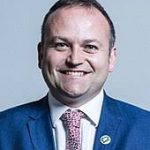
Tag: Neil Coyle

  • Neil Coyle – 2020 Speech on Free School Meals

    Neil Coyle – 2020 Speech on Free School Meals

    The speech made by Neil Coyle, the Labour MP for Bermondsey and Old Southwark, in the House of Commons on 21 October 2020.

    In 2010, the incoming Conservative Prime Minister promised to fix what he termed “broken Britain”. A decade later, we are having a debate about whether or not children go hungry next week and I have to run a food bank from my constituency office. When Labour left office, 40,000 were using food banks, last year it was 1.4 million people, 7,000 of whom were in Southwark, including hundreds of working people.

    My constituency is at heart of London. It may be the capital city of the fifth wealthiest nation on the planet, but in some wards child poverty is as high as 40%. It was the coalition who scrapped the proper measurement of poverty and then scrapped the previous Labour Government’s statutory commitment to end child poverty by this year—by 2020. Today’s debate shows the impact of that downgrade of the need to tackle child poverty. It was not just a downgrade, but a direct exacerbation of the problem directly imposed by Government policies. The Secretary State waxed lyrical about universal credit with its perverse and catastrophic five-week delay, but the Government’s own statistics show that, this year, more than 200,000 people who applied for universal credit were paid after five weeks. A third of the applicants got nothing and others have been forced to take out a loan from the Department for Work and Pensions, totalling now almost £1 billion. People sought help, but all they were given was debt and no recourse to public funds, which was a condition imposed on some people, but which leaves children growing up without access to the same support as the kid they were born next to at St Thomas’s Hospital and sit next to at St Saviour’s school. The Children’s Society tells us that there are 175,000 children in that position. The Home Office refused to release the figure, even though the Prime Minister promised that he would. I ask Members to contrast that pernicious national Government approach of state-sponsored food poverty with a willingness to help elsewhere.

    I am proud of the efforts of my local Labour council to tackle food poverty, providing free healthy school meals for all primary school children since 2011. There are 59 members of the Southwark Food Action Alliance, including the council and faith groups such as the Salvation Army, and even private companies such as Engie and British Land understand that there is a problem. There are also some great local charities such as the Central Southwark Community Hub under Felicia ​Boshorin’s brilliant leadership, which has fed 2,300 families since April alone, Time & Talents has an amazing team under Sarah Gibb and Pecan, the Southwark food bank, which, last year, fed more than 2,400 children.

    Matt Rodda (Reading East) (Lab)

    My hon. Friend is making an excellent point about how the voluntary sector, individuals and local councils have stood up and filled the enormous gap left by the Government. I pay tribute to the Lunch Bunch in Woodley in my constituency of Reading East, to a range of other local charities, including Sadaka and Whitley Community Development Association, and to Reading Borough Council for its work. When will the Government stand up and play their part?

    Neil Coyle

    I am glad that my hon. Friend’s constituency has organisations like those in mine.

    Organisations have popped up in response to covid, such as the mutual aid groups, and existing organisations such as Burgess Sports and Pembroke House have extended their activities to help feed families. They all deserve community gratitude, but they have worked so hard because the Government have created and then ignored the need for help—a Government headed by a man who apparently cries himself to sleep because he is now receiving only £150,000 a year. Well, boo hoo!

    I want to end by talking about a real injustice. This year, children have largely, thankfully, escaped the worst health effects of covid, but they have not been spared the economic impact on their parents. In Bermondsey and Old Southwark, unemployment has jumped by 5,000, many parents are still prevented from working and we face the cliff edge of the end of the furlough scheme, which has helped 24,000 people in my constituency alone. Children feel the injustice of that situation. The Government have a genuine chance to act today—mindful, I hope, of the 300,000-and-growing signatures on Marcus Rashford’s petition.

    I will finish by quoting Charles Dickens, who, of course, lived in Southwark. In the 1860s, he wrote “Great Expectations”, in which he said:

    “In the little world in which children have their existence, there is nothing so finely perceived and so finely felt as injustice.”

    It is injustice that we vote on today. MPs can allow an injustice to occur or we can vote to prevent an injustice from being done to children, through no fault of their own. I know how I will be voting—I will be voting to end injustice.

  • Neil Coyle – 2020 Speech on the Domestic Abuse Bill

    Neil Coyle – 2020 Speech on the Domestic Abuse Bill

    Below is the text of the speech made by Neil Coyle, the Labour MP for Bermondsey and Old Southwark, in the House of Commons on 28 April 2020.

    Madam Deputy Speaker, may I add my gratitude to you, the Speaker’s team and everyone in this place who is ensuring that we can continue to scrutinise the Government in these unique and challenging times?

    I thank the Government for bringing this legislation back at this difficult time. It is good to see such broad cross-party agreement on this issue. I congratulate the new shadow Home Secretary, my hon. Friend the Member for Torfaen (Nick Thomas-Symonds), and his Front-Bench team for their leadership, their constructive engagement and their early involvement on this issue.

    On a personal note, may I say how wonderful it is to see my hon. Friend the Member for Birmingham, Yardley (Jess Phillips) on the Front Bench? Her formal role on the Bill and her participation from the Labour Front Bench are long overdue. Her all-party parliamentary group on domestic violence and abuse worked with the APPG on ending homelessness, which I co-chair, on the “A Safe Home” campaign, which is backed by Crisis, Women’s Aid, SafeLives and many more organisations and individuals. As the hon. Member for Beaconsfield (Joy Morrissey) indicated, the campaign also has cross-party support.

    Sadly, there is a huge overlap between domestic abuse and homelessness. Last year, almost 24,000 families who were homeless or on the brink of homelessness had experienced or were at risk of domestic abuse. “A Safe Home” seeks to ensure that the Bill enables everyone who is homeless because they are fleeing domestic abuse to have access to a safe permanent home.​

    That was necessary before the virus struck; the most recent Office for National Statistics figures show that the number of women murdered in the UK increased to 214 in the 12 months to March 2019, including a rising number killed at the hands of their partner or former partner. It is even more crucial now we know that the lockdown has brought with it a rise in attacks. Refuge’s national domestic abuse helpline has seen a 49% increase in daily calls and a quadrupling of web traffic.

    Sadly, for some, the threat is fatal. The Counting Dead Women project estimates that 14 women were killed during the first three weeks of the lockdown. “Stay home, stay safe” is not true for everyone. I hope Ministers will ensure that safe long-term accommodation is guaranteed, to give women a better chance of escape without fear of ending up homeless.

    Currently, anyone fleeing domestic abuse must prove that they are significantly more vulnerable than anyone else to be guaranteed help from councils for a permanent home. Some local authorities use that as a gatekeeping tool. Awful examples include women being told to go and get a letter from their abuser to prove they have been abused. Research last year for the APPG on ending homelessness revealed that almost 2,000 people were unable to meet the vulnerability threshold in England alone. Those are women who were not provided with a safe home after initial help in refuges—women left facing homelessness or a return to an abusive relationship. The Bill must end that fatalistic situation.

    Helping those 2,000 people would not be a huge commitment for the Government. My council, the London Borough of Southwark, is already adopting that measure. Although I hope the Government follow where Southwark leads, this issue should not be dependent on leadership in any one postcode, borough, town or city. Ministers have the chance to address this issue nationally through the Bill, and they must rise to the challenge.

    When Ministers announced the statutory duty on local authorities to provide temporary accommodation-based support last year, it was welcomed across the House and the country. An extension to an automatic guarantee of safe long-term housing would be similarly welcomed and is just as essential. I also hope Ministers recognise that the Bill needs to extend the statutory duty on local authorities so that it covers not just accommodation but all the specialist support necessary to rebuild lives.

    Nearly 70% of survivors access other services that are provided in the community, including independent domestic violence and abuse advisers, counselling, and young people’s and children’s workers. Children who have experienced domestic abuse should be able to access counselling and support, but that is not currently covered by the Government duty and is poorly delivered at local level. A full statutory duty and resources are required to commission the full range of specialist domestic abuse services that are needed, and the Bill is the right vehicle to provide that.

    The current crisis has made the issue far more acute, but there was already insufficient funding in the system. Two thirds of the people referred to refuges in 2018-19 were turned away. With more people at risk during this lockdown and after it ends, the Government must act now to provide sufficient sustained funding in the longer term. I hope to join the Bill Committee to raise those and other issues in more detail for all the organisations working on the frontline. Those issues include splitting ​universal credit payments to prevent economic abuse; ending no recourse to public funds restrictions on essential support for women and children currently denied help—shamefully—in this country; introducing a gendered definition, given the higher prevalence of women experiencing abuse; fully ending cross-examination in courts; criminalising the use of threats to share naked or sexual images in order to abuse or control someone; and the proper enforcement and monitoring of non-molestation protection orders, which is far too patchy currently, and which I hope Ministers will act on, given the heightened risk now, more than ever, in lockdown Britain. I hope to see progress on all those issues as the Bill makes progress and look forward to the Minister’s reply.