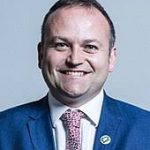
Tag: Neil Coyle

  • Neil Coyle – 2016 Parliamentary Question to the Department for Work and Pensions

    Neil Coyle – 2016 Parliamentary Question to the Department for Work and Pensions

    The below Parliamentary question was asked by Neil Coyle on 2016-04-08.

    To ask the Secretary of State for Work and Pensions, what plans the Government has to change (a) the points awarded to individual descriptors under the personal independent payments (PIP) and (b) other elements of the PIP assessment process system.

    Justin Tomlinson

    As confirmed by my right honourable friend the Secretary of State in his statement to the House on 21 March, the proposed changes to PIP will not be going ahead.

    We spend around £50bn every year on benefits alone to support people with disabilities or health conditions, with spending on Personal Independence Payment (PIP) and Disability Living Allowance (DLA) having increased by more than £3 billion since 2010. The government is committed to talking to disabled people, their representatives, healthcare professionals and employers to ensure the welfare system works better with the health and social care systems and provides help and support to those who need it most.

  • Neil Coyle – 2016 Parliamentary Question to the Department of Health

    Neil Coyle – 2016 Parliamentary Question to the Department of Health

    The below Parliamentary question was asked by Neil Coyle on 2016-05-20.

    To ask the Secretary of State for Health, what assessment he has made of the potential effect of his proposals for the future of community pharmacy on care for vulnerable patients.

    Alistair Burt

    Community pharmacy is a vital part of the National Health Service. We want to see a high quality community pharmacy service that is properly integrated into primary care and public health in line with the Five Year Forward View.

    We want to make pharmacists a pivotal part of primary care for all patient groups, including the elderly and vulnerable, by increasing the number who bring their skills to general practitioner (GP) practices, care homes, urgent care and public health settings. We have consulted on how best to introduce a Pharmacy Integration Fund to help transform how pharmacists, their teams and community pharmacy will operate in the NHS, bringing clear benefits to patients and the public.

    Our aim is to ensure that those community pharmacies upon which people depend continue to thrive. We are consulting on the introduction of a Pharmacy Access Scheme, which will provide more NHS funds to certain pharmacies compared with others, considering factors such as location and the health needs of the local population.

    The community pharmacy proposals for 2016/17 and beyond, on which we have consulted, are being considered in respect to the public sector equality duty, the family test and relevant duties of the Secretary of State under the NHS Act 2006.

    An impact assessment will be completed to inform final decisions and published in due course.

  • Neil Coyle – 2016 Parliamentary Question to the Department for Environment, Food and Rural Affairs

    Neil Coyle – 2016 Parliamentary Question to the Department for Environment, Food and Rural Affairs

    The below Parliamentary question was asked by Neil Coyle on 2016-07-07.

    To ask the Secretary of State for Environment, Food and Rural Affairs, what steps the Government is taking to work with the Mayor of London to improve air quality in London.

    Rory Stewart

    The National Air Quality Plan for nitrogen dioxide, published in December last year, sets out a comprehensive approach for meeting the air quality challenges by implementing a new programme of Clean Air Zones, along with the Ultra-Low Emission Zone in London. The Plan combines targeted local and national measures, forming part of a wider approach that exploits new and clean technologies, such as electric and ultra-low emission vehicles.

    The Government has committed over £2 billion since 2011 to increase the uptake of ultra-low emission vehicles, support green transport initiatives and support local authorities to take action.

    The Mayor is responsible for air quality standards in London. The Mayor provides the framework and guidance which London boroughs use to review and improve air quality within their areas. The new Mayor recently set out his plans to improve air quality in London.

  • Neil Coyle – 2022 Parliamentary Question on the Tier 1 Investor Visas Review

    Neil Coyle – 2022 Parliamentary Question on the Tier 1 Investor Visas Review

    The parliamentary question asked by Neil Coyle, the Independent MP for Bermondsey and Old Southwark, in the House of Commons on 19 December 2022.

    Neil Coyle (Bermondsey and Old Southwark) (Ind)

    When her Department plans to publish the review of tier 1 investor visas.

    The Minister for Security (Tom Tugendhat)

    This question has been raised on many occasions, including, funnily enough, by me in a former incarnation. I am pleased to say that we are approaching the moment when I will be able to satisfy not only the hon. Gentleman’s but my desires.

    Neil Coyle

    Sounds fascinating, Mr Speaker, but the Minister—whom I congratulate on his role—knows that this review was commissioned nearly five years ago, so it is pathetic not to be able to give us a direct answer on when it is coming. Contrary to today’s rhetoric on securing borders, can he confirm that this scheme quickly became a security risk to this country, with no fewer than 10 Russians who were approved under the scheme now being sanctioned by the UK, and that more than 6,000 others granted tier 1 visa status are now being reviewed as a security risk to this country?

    Tom Tugendhat

    The hon. Member makes some solid points about the dangers of the involvement of certain states—in this case, Russia—in the United Kingdom. He should also be aware that the visa scheme closed in February 2022, and the response to Russian aggression or Russian influence in this country has been pretty robust. Indeed, since 2019, we have increased spending on the National Crime Agency by 30% and £200 million extra has gone in. As he knows, there is a long way to go and that is exactly what I am going to be doing over the next few years.

  • Neil Coyle – 2015 Parliamentary Question to the Home Office

    Neil Coyle – 2015 Parliamentary Question to the Home Office

    The below Parliamentary question was asked by Neil Coyle on 2015-10-15.

    To ask the Secretary of State for the Home Department, what research licences are under consideration by her Department relating to medicinal benefits of cannabinoids.

    Mike Penning

    The Home Office issues controlled drug licences to those who wish to possess, supply, produce or manufacture controlled drugs. Licences are not issued for individual pieces of research. Licences are not ordinarily granted for individual substances but schedules of substances.

  • Neil Coyle – 2015 Parliamentary Question to the Department for Work and Pensions

    Neil Coyle – 2015 Parliamentary Question to the Department for Work and Pensions

    The below Parliamentary question was asked by Neil Coyle on 2015-10-20.

    To ask the Secretary of State for Work and Pensions, with reference to the contribution of the Minister of State for Disabled People to the debate on Welfare Reform (Sick and Disabled People) of 27 February 2014, what progress his Department is making on an assessment of the effect of welfare changes on disabled people and carers; and when his Department plans to publish that assessment.

    Justin Tomlinson

    Cumulative impact assessment analysis published by HMT is the most comprehensive available, as spending is not the only way to help disabled people and carers. It is crucial that any assessment includes looking at further support including health spending, employment support, and investment in infrastructure, as well as the introduction of the National Living Wage, the extended childcare offer for working parents of three and four year olds and the increase to the personal allowance. HM Treasury’s analysis includes these wider impacts in its cumulative analysis.

    However, it is not possible to produce a cumulative impact assessment of policies on disabled people and carers using this model only.

    The Government has published analysis showing how the share of public spending that benefits households and the share of tax paid by households changes as a result of government policy.

    The richest fifth will be paying a greater proportion of taxes in 2017-18 than in 2010-11 as a result of government policy – and more than all other households put together.

    The proportion of spending received by households in each quintile has not changed since 2010-11: around half of all spending on welfare and public services is still going to the poorest 40 per cent of households.

  • Neil Coyle – 2015 Parliamentary Question to the Department for Work and Pensions

    Neil Coyle – 2015 Parliamentary Question to the Department for Work and Pensions

    The below Parliamentary question was asked by Neil Coyle on 2015-10-20.

    To ask the Secretary of State for Work and Pensions, what steps his Department is taking to increase the accuracy of initial personal independence payment (PIP) decision-making to address the rate of successful appeals of PIP.

    Justin Tomlinson

    The Department monitors the quality and accuracy of its decision making with a robust quality assurance framework where feedback is given to individual decision makers as required. When a decision is overturned by a tribunal, it does not necessarily mean that the original decision was incorrect. A reason for a decision being overturned could, for example, be the provision of additional written evidence that was not available to the original decision maker. That is why we reformed the system, with the introduction of mandatory reconsideration, which enables a further opportunity for evidence to be provided without need to go to appeal. Of course, the Tribunal can form a different view based on the same facts and medical evidence. We will continue to use feedback from the Tribunal to inform the Department’s approach to decision-making or consider onward challenge where that is appropriate.

  • Neil Coyle – 2015 Parliamentary Question to the Department for Work and Pensions

    Neil Coyle – 2015 Parliamentary Question to the Department for Work and Pensions

    The below Parliamentary question was asked by Neil Coyle on 2015-10-27.

    To ask the Secretary of State for Work and Pensions, pursuant to the Answer of 23 October 2015 to Question 12674, what his Department is doing to ensure that people provide sufficient written medical information for their initial Personal Independence Payment decision to prevent the need for reconsiderations and appeals.

    Justin Tomlinson

    Claimants are invited to provide any evidence that they have to hand when they submit their "PIP2 How your disability affects you" questionnaire. We also ask them who assessment providers can approach to seek further evidence.

    We have worked with organisations representing disabled people to improve our communications; we now provide additional information to claimants outlining more specifically the types of evidence which are most helpful in enabling us to carry out an assessment.

    In every case the health professional conducting the assessment will consider any evidence that the claimant has provided, and will also consider whether further evidence will help them in providing advice on the claim to the Department’s decision maker. Ensuring that the claimant is able to tell us who is best placed to provide supporting evidence forms a core part of our approach. Such evidence can come from a variety of sources, including GPs, hospital consultants, community psychiatric nurses and social workers, as well as family members and carers.

    We would urge all advisors and advocates to encourage claimants to provide relevant evidence at the earliest opportunity to avoid the need for reconsiderations and appeals, and minimise consequent costs for the tax-payer.

  • Neil Coyle – 2021 Speech on Universal Credit

    Neil Coyle – 2021 Speech on Universal Credit

    The speech made by Neil Coyle, the Labour MP for Bermondsey and Old Southwark, in the House of Commons on 18 January 2021.

    Today is blue Monday, when people feel at their lowest ebb, and the actions of this true blue Government will add to that despair. The Government were elected on a promise to level up, but are cutting help at a crucial time—in the middle of a pandemic, with rising unemployment and restrictions not yet lifted. People worried about their finances and pushed to the edge by covid will see how much the Tories really care today in the way they are holding this debate and in their denial about wider universal credit problems.

    This system has been running for eight years, but it costs more than the legacy system and actually helps fewer people. A third of applicants last year got nothing—turned away at the point of need. It has caused food bank usage to rise dramatically, and food banks tell me that the last thing people require in their support needs is a cut from Government now. Last year, more than 300,000 people got their first payment late, and that figure will be substantially higher this year according to the Government’s own figures. This is a Government whom the UN has shown have created a system that requires people to experience poverty, much of it through in-built delays to payments. Delays are not free: rent does not stop and the need to eat does not stop. The Government’s solution for the people facing those delays is debt. Last year, half a million people seeking help were told they could only have a loan, with the universal credit deficit in the Department for Work and Pensions reaching £1 billion.

    Extra funds are available to help, if the Government fixed the problems. The National Audit Office has shown that more than £1 in every £10 spent on universal credit is erroneous in one way or another, and the Government have not done enough to fix that problem.

    In Southwark, a third of the people on universal credit are in work. The constituents I have seen include a woman whose entire first monthly payment of universal credit was £17.68. I have been helping a man whose combination of furlough and universal credit does not even cover his rent and bills. These are people required to use a food bank from my constituency office in the heart of central London.

    And the Tory response to these circumstances is to cut help. It is extraordinary. We see their true blue values in the wider debate on tackling poverty—values that led to the ludicrous insinuation from the hon. Member for Mansfield (Ben Bradley) that Government food vouchers were being used in “crack dens and brothels”, and the suggestion from his Tory colleague the hon. Member for Redcar (Jacob Young) that they were being used to buy alcohol, when they simply cannot be. More than 9,000 people in Redcar are on universal credit and deserve better representation. By contrast, their previous MP has been working in a food bank and setting up a book bank to help local children.

    Then, of course, there is the Leader of the House, who has attacked UNICEF and charities helping children in Southwark. The fact that UNICEF and the UN are highlighting and seeking to alleviate poverty in Britain should shame our Government and secure action, but instead the Government attack the messenger. They pretend that their system is working, when it is failing people even with the uplift. They pretend that Labour would scrap the lot, putting out trash information because the truth is too painful for them to admit. They pretend to care. If they really did, they would be hammering on the Minister’s door and demanding an extension of help today, not a cut.


  • Neil Coyle – 2020 Comments on UK/EU Trade Deal

    Neil Coyle – 2020 Comments on UK/EU Trade Deal

    The comments made by Neil Coyle, the Labour MP for Bermondsey and Old Southwark, on 24 December 2020.

    Once again I find myself out of sync with the Labour whip and direction from shadow cabinet. I had hoped this would change in 2020. I have until 30th (my birthday!) to decide what to do. Happy Christmas!