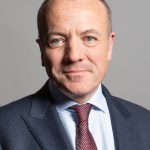
Tag: Mike Kane

  • Mike Kane – 2023 Speech on the Budget

    Mike Kane – 2023 Speech on the Budget

    The speech made by Mike Kane, the Labour MP for Wythenshawe and Sale East, in the House of Commons on 20 March 2023.

    It is a pleasure to follow the hon. Member for Hazel Grove (Mr Wragg). I look forward to catching up once again at our annual meet-up at the carnival in July, and I wish him all the best with his therapy.

    The Secretary of State mentioned the great British invention of tarmac. John Loudon McAdam was a Scottish engineer in the 17th and 18th centuries who added coal tar to stone surfaces. That became tarmac, or “tarmacadam”—that is where the name comes from. I thought it was an odd reference for the Secretary of State to make, though, as we cannot get enough money for our crumbling roads and the potholes that we all face.

    Every day, I hear residents and businesses in Wythenshawe and Sale East talk about the harsh realities of the cost of living at the moment: old-age pensioners are afraid to put on their heating; more and more working families are using food banks; nurses, teachers and firefighters are struggling with household bills as costs go up and their pay stays the same; people are unable to meet private rents or manage rising mortgage rates; and local businesses are closing down because of overheads.

    Last Wednesday, the Chancellor had a chance to show that he is on the side of Britain’s people and businesses with a Budget that offered real support and serious solutions, but that is not the Budget we got. Instead, what the Chancellor offered was a Budget that did worse than deny people’s realities: it insulted them, with a £1 billion pension cut for the richest 1%; a stealth tax freezing income tax levels, meaning workers will see their pay squeezed further; and an overarching message that the Government’s plan was working and the economy was not that bad, at the same time as the OECD announced that the UK will be the only—the only—G7 economy to shrink this year.

    Where the Chancellor came closest to offering real support, he did so by stealing ideas from others, yet bungled the detail. The hon. Member for Bassetlaw (Brendan Clarke-Smith) mentioned the expansion of free childcare. Sadly, we will not see that crucial support to help parents get back into work introduced in full until September 2025. As it stands, the subsidy from childcare providers is so high that it threatens to put them out of business.

    I welcome the extension of the help with energy bills. The Government again capitulated to what Labour and campaign groups have been calling for, for months. But with an extension of just three months and more limited support, what we are seeing is more sticking-plaster politics. Where is the investment in green energy, which is the only way we will achieve true energy security? Then there was more of the same, with recycled ideas and empty promises from the many Tory Chancellors and Prime Ministers of the past. To level up, the Chancellor announced plans for the Truss-Kwarteng “investment zones”. Forget HS2, Northern Powerhouse Rail or solid regeneration projects for Wythenshawe town centre and Sale town centre, all of which have been delayed or denied by the Government. Instead, they think these low-tax, reduced regulation, potential Canary Wharfs will generate jobs and skills in left-behind communities. These are far from the serious solutions that Britain needs. What the Chancellor put forward is a Budget that denies reality, delivers little and borrows heavily; a Budget from a Government who are out of touch, out of ideas and quickly running out of time.

    Under this Government, people are getting poorer. People are being supported into work, but getting paid less and taxed more, while public services struggle to cope—all the hallmarks of an economy in managed decline. Our people and businesses deserve more. We need a Budget that delivers for people, communities and businesses like those in Wythenshawe and Sale East: 1,600 homes for Wythenshawe town centre, if we had got our levelling up bid; 250 homes for Sale town centre; investment to regenerate Wythenshawe hospital, but with the hospital building programme stuck in the muck we could build 1,000 homes on that site with the right release of investment; an HS2 station near my constituency and an extended Metrolink loop line; a station on the mid-Cheshire line; scrapping business rates; and a proper plan to address skills gaps that are holding back our small and large businesses.

    What we need is a Budget that acknowledges reality and the scale of the challenge head-on, but meets them with the hope, ambition and determination needed to get Britain back on the path to growth. But for that style of Budget, it seems we will have to wait longer still.

  • Mike Kane – 2023 Speech on Lifeboat Services – Search and Rescue

    Mike Kane – 2023 Speech on Lifeboat Services – Search and Rescue

    The speech made by Mike Kane, the Labour MP for Wythenshawe and Sale East, in Westminster Hall, House of Commons, on 10 January 2023.

    As ever, it is a pleasure to serve under your chairmanship, Mr Davies, and I thank the hon. Member for Torbay (Kevin Foster), who represents a beautiful part of the world, for his excellent speech. My researcher indicated that 52 awards for gallantry have gone to the hon. Gentleman’s RNLI station alone.

    I shall be following the hon. Member for Totnes (Anthony Mangnall), who advocated for the National Independent Lifeboat Association, and the hon. Member for Paisley and Renfrewshire North (Gavin Newlands), in that we are not really having a debate, because there is consensus. The only note of division I think I heard was in the intervention from the hon. Member for Caithness, Sutherland and Easter Ross (Jamie Stone) on the hon. Member for Moray (Douglas Ross). Perhaps we need a separate debate on what we call that firth; the name Inverness strait might help to sort this out. [Interruption.] I see I have caused complete division across the Chamber.

    Next year, it will be 200 years since William Hillary’s vision of saving souls at sea became a reality, and on 19 December 2022 the Minister and I were at the Dispatch Box for the Second Reading of the Seafarers’ Wages Bill. Today, we have heard the story of the Penlee lifeboat disaster, which was eloquently told by the right hon. Member for New Forest East (Sir Julian Lewis), and on 19 December, the 41st anniversary of the disaster, we were able to have recorded in Hansard our thanks to the crews who went out that night in 1981.

    The RNLI was formed to save souls at sea and the institution’s priorities were

    “the preservation of human life…assistance to vessels in distress…the preservation of vessels and property…the prevention of plunder and depredations in case of shipwreck…succour and support of those persons who may be rescued…the bestowing of suitable rewards on those who rescue the lives of others”.

    I want the debate to recognise those people as well and to be an acknowledgement of those who risk their lives to save those in peril on the sea.

    As shadow maritime Minister, I know only too well the sacrifices made by our seafarers, which we saw during the pandemic. However, professional seafarers are not the only people our lifeboats serve to protect. We have seen the small boats in the English channel, which, as has been mentioned, is the busiest shipping lane in the world. We have seen children, women, families and individuals being plucked from the seas by the RNLI and others, and we have heard testimony from those who are tasked by the coastguard to perform their rescue missions without prejudice and without judgment.

    There is nobody who is illegal. If people are in peril on the sea, we rescue them—no ifs, no buts. I thank those people for their service and for their determination to save everyone and anyone who gets into difficulty around UK and Irish shores. This is such a vital lifesaving service—so selfless—that, as has been mentioned, it is almost unbelievable that the RNLI receives no money from Government and is funded primarily by donations.

    My best man was rescued from a cliff by the RNLI, when he was a child and on holiday. We have been friends for 30 years, and he has fundraised for the RNLI all his life, even being in a landlocked constituency. Imagine how the course of my life might have changed, had that rescue gone wrong, so I, too, pay personal tribute to the RNLI.

    As I was preparing this speech last night, I noticed that at 6 pm lifeboats were launched from Hartlepool and Ramsgate. At 9.40 pm there was an incident that led to Tynemouth launching a rescue mission, with another one launching from Falmouth at 11 pm. Remarkable bravery takes place every day and every night. Since 1824 the RNLI has saved almost 143,000 lives. I go back to the original mission statement of Sir William Hillary, when he conceived the idea of the RNLI. I should add that the use of the word “men” is of its time, and not reflective of the nature of the RNLI, who for generations have had women launching lifeboats and working alongside crew to ensure that boats could set sail efficiently and speedily. More recently, they have crewed the boats and acted as shore crew. Now, the RNLI has more than 300 women crew and a third of their lifeguards are female, preventing accidents before they happen with good safety advice and keen stewardship of the shore.

    Sir William said that at the heart of this institution would be

    “a large body of men…in constant readiness to risk their own lives for the preservation of those whom they have never known or seen, perhaps of another nation, merely because they are fellow creatures in extreme peril.”

    Every lifeboat volunteer—whether they be a fundraiser, a coxswain or at the helm— exemplifies that mission statement, and I would like to thank them for their service and their contribution to search and rescue.

  • Mike Kane – 2015 Parliamentary Question to the Department for International Development

    Mike Kane – 2015 Parliamentary Question to the Department for International Development

    The below Parliamentary question was asked by Mike Kane on 2015-11-20.

    To ask the Secretary of State for International Development, how her Department is contributing to the co-ordination of work across Government to support the achievement of the Sustainable Development Goals.

    Justine Greening

    The UK welcomes, and is committed to championing, the Sustainable Development Goals. Through our commitment to global development, and by honouring our 0.7% aid commitments, we will play a key role in helping countries to achieve these goals – especially on eradicating extreme poverty, hunger and disease. This will be a cross-government effort, with DFID and other Departments contributing to the successful implementation of the Goals, both internationally and here in the UK.

  • Mike Kane – 2016 Parliamentary Question to the Department for Transport

    Mike Kane – 2016 Parliamentary Question to the Department for Transport

    The below Parliamentary question was asked by Mike Kane on 2016-01-14.

    To ask the Secretary of State for Transport, what assessment he has made of the potential merits of the use of sealed tamper-proof bags for duty-free purchases to discourage consumption of alcohol in airports or onboard aircraft in order to reduce disruptive behaviour on flights.

    Mr Robert Goodwill

    The Government welcomes industry’s commitment to tackling the issue of excessive alcohol consumption in airports and on-board aircraft. The use of tamper-proof bags for duty-free purchases is currently being trialled at a number of UK airports and as part of that trial industry will reach a view on the potential merits of this approach.

  • Mike Kane – 2016 Parliamentary Question to the Home Office

    Mike Kane – 2016 Parliamentary Question to the Home Office

    The below Parliamentary question was asked by Mike Kane on 2016-03-22.

    To ask the Secretary of State for the Home Department, what steps she is taking to ensure that local authorities are properly informed and involved in decisions to distribute asylum seekers.

    James Brokenshire

    The Home Office maintains active partnerships with the local authorities that have volunteered to become dispersal areas across the UK and funds regional Strategic Migration Partnerships (SMPs) to plan the dispersal of asylum seekers across the region. The partnerships consider the impact on communities and local services so that adjustments can be made where appropriate. This ensures that community cohesion, social welfare and safety issues are properly considered.

    SMPs act as a focal point allowing the sharing of expertise and vital information between the Home Office, its asylum accommodation providers, local government, health, education and the police, ensuring coordinated planning and leadership on asylum dispersion. They also consider other funded objectives such as initiatives in support of visa policy; modern slavery; immigration sanctions and improvement; vulnerable children (including Unaccompanied Asylum Seeking Children) and adults; No Recourse to Public Funds policies of local government; EU migration and integration.

    The Home Office, our housing contractors and the SMPs work closely with local authorities to ensure we can accommodate asylum seekers in appropriate accommodation.

  • Mike Kane – 2016 Parliamentary Question to the Home Office

    Mike Kane – 2016 Parliamentary Question to the Home Office

    The below Parliamentary question was asked by Mike Kane on 2016-05-09.

    To ask the Secretary of State for the Home Department, how many people from Eritrea are currently held in immigration detention centres in the UK.

    James Brokenshire

    As at 31 December 2015, there were 20 Eritrean nationals in detention in the UK. The Home Office publishes quarterly and annual statistics on the number of persons removed or departed voluntarily from the UK within Immigration Statistics. Information on those in detention by nationality is available in the latest release, Immigration Statistics: October to December 2015, table dt_13_q from GOV.UK on the statistics web pages at:

    https://www.gov.uk/government/organisations/home-office/series/immigration-statistics-quarterly-release

  • Mike Kane – 2015 Parliamentary Question to the Department of Health

    Mike Kane – 2015 Parliamentary Question to the Department of Health

    The below Parliamentary question was asked by Mike Kane on 2015-11-19.

    To ask the Secretary of State for Health, what assessment he has made of the adequacy of the provision of services targeted at young people with dementia.

    Jane Ellison

    The Government is clear that all types of dementia remain a priority and will implement the Prime Minister’s Challenge on Dementia 2020 in full to make sure that dementia care, support, awareness and research are transformed by 2020. That is why on 21 February 2015, the 2020 Challenge was launched.

    Under the Prime Minister’s Challenge on Dementia 2020, we wish to encourage greater personalisation in the provision of post-diagnosis services including for younger people with dementia – this means building support around the individual with dementia, their carer and family and providing them with more choice, control and flexibility in the way they receive care and support – regardless of the setting in which they receive it.

    The Challenge recognises that local commissioners and providers need to continue to improve their understanding of the best ways to tailor post-diagnosis support services based on their local population’s needs.

    It is therefore for clinical commissioning groups and local authorities, working together, to ensure that high quality, personalised services are delivered for people with dementia and their carers.

  • Mike Kane – 2016 Parliamentary Question to the Home Office

    Mike Kane – 2016 Parliamentary Question to the Home Office

    The below Parliamentary question was asked by Mike Kane on 2016-01-14.

    To ask the Secretary of State for the Home Department, what plans she has to review the licensing arrangements for airside bars and restaurants in airports.

    Karen Bradley

    Under the Licensing Act 2003, airside bars and restaurants at airports designated by the secretary of state do not require a licence. There are no plans to review this.

  • Mike Kane – 2016 Parliamentary Question to the Home Office

    Mike Kane – 2016 Parliamentary Question to the Home Office

    The below Parliamentary question was asked by Mike Kane on 2016-03-22.

    To ask the Secretary of State for the Home Department, what steps she is taking to ensure that local authorities have appropriate resources to support and deal with increased demand for their services by asylum seekers.

    James Brokenshire

    The Home Office maintains active partnerships with the local authorities that have volunteered to become dispersal areas across the UK and funds regional Strategic Migration Partnerships (SMPs) to plan the dispersal of asylum seekers across the region. The partnerships consider the impact on communities and local services so that adjustments can be made where appropriate. This ensures that community cohesion, social welfare and safety issues are properly considered.

    SMPs act as a focal point allowing the sharing of expertise and vital information between the Home Office, its asylum accommodation providers, local government, health, education and the police, ensuring coordinated planning and leadership on asylum dispersion. They also consider other funded objectives such as initiatives in support of visa policy; modern slavery; immigration sanctions and improvement; vulnerable children (including Unaccompanied Asylum Seeking Children) and adults; No Recourse to Public Funds policies of local government; EU migration and integration.

    The Home Office, our housing contractors and the SMPs work closely with local authorities to ensure we can accommodate asylum seekers in appropriate accommodation.

  • Mike Kane – 2016 Parliamentary Question to the Home Office

    Mike Kane – 2016 Parliamentary Question to the Home Office

    The below Parliamentary question was asked by Mike Kane on 2016-05-09.

    To ask the Secretary of State for the Home Department, how many adults from Eritrea who previously applied for asylum as unaccompanied children were served with removal directions in (a) 2013, (b) 2014 and (c) 2015.

    James Brokenshire

    Our records indicate that fewer than a total of 5 adults from Eritrea who previously applied for asylum as unaccompanied children were served with removal directions from 2013 to 2015.