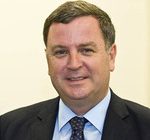
Tag: Mel Stride

  • Mel Stride – 2022 Speech on Cultural Objects Protection from Seizure Bill

    Mel Stride – 2022 Speech on Cultural Objects Protection from Seizure Bill

    The speech made by Mel Stride, the Conservative MP for Central Devon, in the House of Commons on 28 January 2022.

    I beg to move, That the Bill be now read the Third time.

    This is a short, two-clause Bill that extends the period of protection against court-ordered seizure for cultural objects on loan from abroad. The Bill amends part 6 of the Tribunals, Courts and Enforcement Act 2007, which provides immunity from seizure for cultural objects on loan from abroad in temporary exhibitions in public museums and galleries in the United Kingdom. Under section 134 of the Act, cultural objects that are on loan from abroad to feature in exhibitions held in UK museums and galleries approved under the Act are protected from court-ordered seizure for a period of 12 months from the date when the object enters the United Kingdom.

    The legislation was prompted by events in 2005, when 54 paintings, including works by Picasso, Matisse and Cézanne, were seized by customs officers in Switzerland. The paintings, from the Pushkin State Museum of Fine Arts in Russia, were impounded after they had left the town of Martigny in Switzerland. The Swiss authorities acted on a court order obtained by a Swiss import-export firm, Noga SA, which claimed that the Russian Government owed it several million dollars in unpaid debts relating to an oil-for-food deal signed in the early 1990s and which sought to enforce a Stockholm arbitration award in its favour.

    The impounding of the paintings was just one of several attempts by Noga to recover its purported debt by seizing assets abroad. In 2000, Noga instituted proceedings to seize a Russian sailing ship that was due to take part in a regatta in France; it then sought to freeze the accounts of the Russian embassy in Paris. Both actions were dismissed by court rulings in favour of Russia. In 2001, it tried to appropriate two Russian military jets during the prestigious Le Bourget air show in France; that attempt also failed.

    But it was Noga’s seizure of the Pushkin paintings that sparked the most outrage of all. The director of the State Hermitage Museum in St Petersburg said that

    “works of art are now being used as hostages in trade disputes”.

    Although the seizure order was quickly cancelled by Switzerland’s Federal Council, the Hermitage warned that no Russian museum would be able to send objects on loan to any overseas venue unless it received concrete legal guarantees that its artworks would not be seized during the loan period.

    John Lamont (Berwickshire, Roxburgh and Selkirk) (Con)

    I congratulate my right hon. Friend on his Bill. Does he agree that the relatively minor change in it will give great reassurance to overseas lenders about their capacity and confidence to lend assets to the United Kingdom? In the Scottish Borders, across Scotland and across the UK, all our constituents will now benefit from being able to enjoy those assets, and the lenders will have the comfort of knowing that they are safe here.

    Mel Stride

    My hon. Friend precisely pinpoints the advantage of the Bill, which is very narrowly defined but will provide extra certainty to those who lend artworks to England and Scotland and the museums therein that those artworks will be returned in due course. That comfort will drive further loans in future, which will be to the benefit of the people in this country, our tourism industry and our cultural offering in general.

    The measures in the 2007 Act enable the UK Government, the Governments of Scotland and Wales and the Northern Ireland Executive to give guarantees for such loans in the United Kingdom. Since the Act’s introduction, the Secretary of State for Digital, Culture, Media and Sport has been responsible for approving institutions in England for immunity from seizure, and the devolved Administrations have similar powers for other parts of the United Kingdom. To gain approval under the Act, institutions must demonstrate that their procedures for establishing the provenance and ownership of objects are of a high standard.

    In 2007, it was considered that 12 months was an adequate period to allow objects to arrive in the UK and to be returned following their inclusion in a temporary exhibition. Section 134(4) of the Act therefore provides:

    “The protection continues…for not more than 12 months beginning with the day when the object enters the United Kingdom.”

    Sir Greg Knight (East Yorkshire) (Con)

    I congratulate my right hon. Friend on getting this far with his Bill. Has he received any letters of objection from anyone, anywhere, to what he proposes?

    Mel Stride

    The Bill has widely been received very positively. There have been very positive discussions with the devolved Governments, as I outlined in the debate on amendment 1 and my other amendments. There have been some changes in relation to Wales and Scotland, but the Bill has received support across the House; it went through Committee without Division, and my amendments on Report have been agreed to without Division. It is an important and widely supported set of measures.

    The only exception in which the 12-month period can be extended is where an object suffers damage and repair work is needed. The legislation has been effective over the years and has enabled many exhibitions to be enriched by loans that the public might not otherwise have been able to see. There are now 38 institutions across the United Kingdom that have been approved for immunity from seizure and where objects have benefited from protection. Those 38 institutions are in England and Scotland; there are currently no approved museums in Wales and Northern Ireland.

    Alex Sobel (Leeds North West) (Lab/Co-op)

    For many of our regional museums, galleries and historic houses, temporary exhibitions are made up with a relatively small number of items from abroad. Does the right hon. Gentleman think we will expand on that number of 38 institutions, to allow many more of our regional museums and galleries to have immunity from seizure?

    Mel Stride

    I thank the hon. Gentleman for his intervention. My understanding is that the application process to become an approved institution or museum is relatively straightforward. It is rigorous in the sense that, clearly, a number of important aspects have to be met. I would defer to the Minister, who might tell us a little more in his concluding remarks about the guidance that is appropriate and how it operates in those circumstances.

    As I was saying, my Bill was drafted to allow the period of protection to be extended beyond 12 months, at the discretion of the Secretary of State for Digital, Culture, Media and Sport for institutions in England or the relevant approving authority in the devolved nations. That was to ensure that the protection remains fit for purpose and can adequately respond to unforeseen circumstances, and to provide increased confidence in the UK system for those who generously share their cultural objects with UK audiences. The new power to extend would apply following an application from an approved museum or gallery, and extensions would be granted for a further three months initially, with a possibility of a further extension if that is considered necessary. The circumstances in which an extension may be considered will be set out in guidance.

    Anthony Browne (South Cambridgeshire) (Con)

    I commend my right hon. Friend for getting the Bill before the House. It is clearly an important measure and it is important to support the tourism industry, which generates so many jobs. In what sort of circumstances might an institution want to apply for the extension? Have those circumstances happened in the past or is this just a precaution to deal with situations that might arise in the future?

    Mel Stride

    I will come on to these points imminently, but let me immediately address the question my hon. Friend has posed. The circumstances have not arisen in the past in the UK, and the 12-month period has always been adequate. However, things such as the covid problems and the grounding of air flights—a volcanic eruption happened in Iceland some years ago and grounded flights—are causes for concern. The most important thing is that although we have not had a situation where we would have needed an extension in the past, there is no doubt that this comfort is required for those lenders who generously lend their cultural artefacts to our museums and galleries.

    The devolved Administrations have all shown strong support for the purpose of the Bill. However , the Department for Communities in Northern Ireland has decided at this time that it is unable to prioritise a legislative consent motion in the Northern Ireland Assembly and that Northern Ireland must, regrettably, be removed from the Bill. That is unfortunate, although in practical terms it has little impact at present, as there are currently no approved museums in Northern Ireland, as I have said. Furthermore, following discussions between the UK and Welsh Governments it has not been possible to reach agreement on how the concurrent power to extend the 12-month period of protection will apply across the two nations, the Welsh Government have declined to table a legislative consent motion for the Bill as it stands. Therefore, the Bill has been amended to remove its application in Wales. As with Northern Ireland, there are currently no Welsh institutions approved for immunity from seizure, so in practical terms that has no direct impact at the moment. I am informed that a legislative consent motion has been successfully lodged in the Scottish Parliament so that the measures in the Bill can and will have effect in Scotland. Given the decisions taken in relation to Wales and Northern Ireland, the Bill has been amended so that the power in proposed new subsection (4A) to extend the protection period for three months applies only in relation to objects that are either in the UK for the purpose of a temporary exhibition in England or Scotland, or in England or Scotland for one

    “of the purposes mentioned in subsection 7(b) to (e)”.

    I know all hon. Members will be very familiar with them. That will limit the effect of any extension of the maximum protection period to England and Scotland. I emphasise that the 12-month protection period under the 2007 Act will continue to apply across the United Kingdom as it currently does.

    Our museums have shown, particularly during the anxious times of the past two years, that they are incredibly good at managing unforeseen events. Where it has been possible, exhibitions have gone ahead and works returned to lenders on time. However, that has not always been the case and the restrictions and difficulties with international travel that we have all faced mean it has not always been possible to return loaned items as rapidly as desired once exhibitions have concluded.

    As restrictions in the UK continue to be eased, museums will be able to plan with greater confidence. A number of exciting exhibitions are already planned for this year, including the Raphael exhibition at the National Gallery, Van Gogh’s self-portraits at the Courtauld Gallery and “Surrealism Beyond Borders” at Tate Modern. We can expect all those exhibitions to be popular with the public.

    We may feel safer in going about our daily lives, but we should not forget mother nature’s ability to surprise us. On Second Reading, I raised the disruption to air travel caused by the Icelandic volcano that erupted in 2010; the eruption earlier this month of the Tongan volcano, which threw out a huge cloud of volcanic ash, is further evidence that we can be taken unawares and forced to change our plans, sometimes at very short notice.

    Anthony Browne

    I thank my right hon. Friend for his detailed exposition of the legislation, which I strongly support. He mentioned in his introduction the various circumstances in which it is deemed necessary for there to be protection against action taken overseas—in Switzerland, France and so on; is he aware of any UK cases of the court-ordered seizure of artworks that have come here for exhibitions? In what sort of circumstances might that happen in future? Would it be when law enforcement authorities are worried about, for example, the breaking of anti-money-laundering rules, which we have talked about? Or would it be families trying to get back goods that they think belong to them rather than to foreign galleries?

    Mel Stride

    My hon. Friend is, of course, very familiar with the issue of economic crime as he serves with me on the Treasury Committee and we are currently looking into these very matters in great detail. I believe there probably have been instances in which there has been a need within our country’s borders to seize objects and cultural artefacts. I cannot give my hon. Friend specific examples, but there will have been such seizures and the capacity for them will remain—for example, under proceeds of crime legislation if artefacts are used to conceal drugs or similar or for something associated with money laundering. Seizures could still occur under certain circumstances, but those circumstances are narrowly defined and will not be changed in any way by this legislation.

    I hope that right hon. and hon. Members will agree that the Bill is an important and worthy measure that will give our museums and galleries, and those who lend to them, greater comfort in knowing that the protection afforded under the 2007 Act can be extended if travel plans are disrupted and it is not possible to return loaned objects within the current 12-month period.

    Sir Greg Knight

    I thank my right hon. Friend for giving way again; he is being generous. I notice that the power to extend by three months can be repeated again and again—there is no limit on how many times the relevant authority can extend the period for three months. Why has my right hon. Friend phrased the legislation in that way? Would it not have been better to give the relevant authority the power to extend for a longer period?

    Mel Stride

    I believe the three-month period came out of the consultation process. The Department for Digital, Culture, Media and Sport has been conducting an informal consultation with museums and the rest of the sector and it was felt that, in the context of the existing 12-month protection, three months was a reasonable and proportionate further extension. It is relatively straightforward for the Secretary of State, or for Scottish Ministers when the question relates to Scotland, to bring forward further extensions—it is not a lengthy or onerous process—so three months seemed a reasonable period of time. We have to put forward some kind of period for extension because that has to be addressed.

    The Bill will ensure that our national museums and galleries can continue to host major exhibitions, which provide so much enjoyment for the many millions of people who visit them every year and which are vital as we continue to rebuild our economy. I commend the Bill to the House.
  • Mel Stride – 2021 Speech on HRH The Duke of Edinburgh

    Mel Stride – 2021 Speech on HRH The Duke of Edinburgh

    The speech made by Mel Stride, the Conservative MP for Central Devon, in the House of Commons on 12 April 2021.

    Today’s tributes have demonstrated that there are few who have lived a life as full as that of The Prince Philip, Duke of Edinburgh. There are even fewer who have dedicated their life to the service of our country with such resolution and unwavering commitment. His was a long life that saw early service in the Navy in the second world war, where he served with distinction within both the Mediterranean and Pacific fleets. Before that, he graduated as best in class as a naval cadet at the Royal Naval College in Dartmouth, something of which we in Devon are particularly proud.

    There could surely be few as active as he in support of both community and country. He was a patron, president or member of more than 800 organisations and he made over 22,000 solo engagements during the reign of Her Majesty the Queen. It was not until the age of 96 that he retired from royal duties. He truly did fill Kipling’s unforgiving minute with 60 seconds of distance run.

    He will be especially remembered for championing the environment, and of course, as we have heard, for the Duke of Edinburgh’s Award, in which hundreds of thousands take part every year, including many young people in my constituency, to develop their skills and mature into more confident, capable and caring people—to give them, as he termed it, a sense of responsibility to themselves and their communities. In my constituency, the Duke of Edinburgh’s Award is offered at all three of my secondary schools and it is embraced with vigour, with around 100 students at Queen Elizabeth’s School in Crediton alone completing an award in a typical year. Dartmoor, which lies at the heart of my constituency, has been the beautiful place of challenge where so many people from all over our country and from a huge diversity of backgrounds have embraced the Duke of Edinburgh’s dream, and millions of young people up and down the United Kingdom and across 140 countries around the world have much to thank him for. He changed lives, and that is a legacy of which to be especially proud.

    Above all, however, our thoughts must be with Her Majesty the Queen and her family. Over 70 years of marriage, the longest serving British royal consort in our history and a long life as a supportive husband to Queen Elizabeth now leave what must be a terribly painful void. Our thoughts are with the Queen and all her family, and the thoughts of my family—of Michelle, Natascha, Ophelia and Evelyn—are with her, too. May the Duke of Edinburgh rest in peace.

  • Mel Stride – 2020 Speech on Covid-19

    Mel Stride – 2020 Speech on Covid-19

    Below is the text of the speech made by Mel Stride, the Conservative MP for Central Devon, in the House of Commons on 11 May 2020.

    Thank you Madam Deputy Speaker. May I begin by associating myself with the very poignant and moving remarks made by those on both Front Benches about those who have sadly lost their lives to this devastating virus, and with the appreciation that they showed to those who have helped so much and are on the frontline?

    I will address my remarks specifically to some of the economic issues around covid-19, not least the inevitable withdrawal of some of the Government’s support for businesses as we come out of lockdown. I do not say “inevitable” because the Government were not right to introduce the scheme in the first place—the Chancellor did entirely the right thing, and came in with the scale and pace to support business—but in the longer term, the amount of spend involved in such measures is simply unsustainable.

    For example, the furlough scheme is costing as much on an ongoing basis as the funding of the national health service. Before coronavirus, Governments agonised over whether we could spend another 1%, 2% or 3% on the national health service, but here we are spending the equivalent of 100% on furloughing 25% of all workers in the United Kingdom.

    I want to focus for a moment on how we might unwind the furlough scheme most productively and effectively. First, we should seek to taper it away, from 80% down to 60% and then to 40% and so on, to smooth our exit. Secondly, it is particularly important that employers should contribute to the cost of furlough beyond the end of June, because many of those with staff currently on furlough are not having to pay them and have no intention, in the medium term at least, of bringing them back in to their business. Thirdly, we need to encourage part-time working within the furlough scheme, where possible.

    Finally, the Chancellor should look very closely at targeting support, not just in respect of the furlough but in respect of the other support that the Government are providing. There are at least three categories of businesses in our economy at the moment. There are those that will survive without any additional support through this crisis. Indeed, there is a small minority of businesses whose business model has actually thrived under our current circumstances. They clearly do not warrant support. Secondly, there are companies that, in the medium term, can be bridged out of the current crisis, through the provision of support. That is where a particular focus must lie. Thirdly, there are those businesses whose business model is such that, under the new economy of social distancing and before a vaccine arrives, they are, sadly, going to struggle to survive even if they are given support. I urge the Chancellor to take the courageous and difficult decisions on targeting at business and sector level, to make sure that the Treasury’s finite resources are used productively to support jobs and the economy as we emerge on the other side.

    We also need to start talking about the plan beyond coronavirus, even though that may seem some way away. We need to talk about growth and how we are going to support consumer expenditure in particular, given that consumers do not feel like spending and may have increased their savings during this crisis. Temporary tax incentives, such as a time-limited VAT break, may be good in that regard. Finally, as I stick within my four minutes, business indebtedness will have increased. We need the Government to look at how some of that debt can be turned into equity, so that businesses can focus on investing and creating jobs.

  • Mel Stride – 2020 Speech in Response to the Budget

    Below is the text of the speech made by Mel Stride, the Conservative MP for Central Devon, in the House of Commons on 11 March 2020.

    There is no doubt that this Budget has been framed against one of the most challenging moments in this country’s economic history. As the Chancellor set out, many fundamentals of our economy are strong: record levels of employment; the lowest level of unemployment since 1974; low and stable inflation; and real wages that have risen over a two-year period. Nevertheless, the Chancellor was equally right to point to the huge challenges that lie ahead. He did not mention the trade deal that we are negotiating with the European Union, or—at least explicitly—the many accelerating challenges around climate change. Instead, he rightly and substantially focused on the challenge of coronavirus.

    These challenges often emerge without much warning. In 2013, the then newly appointed Governor of the Bank of England, Mark Carney, was asked by the Treasury Committee about what he saw as the main challenges over the coming years, and he did not mention one of the three external challenges that I have just presented. These things come at us pretty fast and are sometimes very unexpected, and the Chancellor is to be congratulated on looking closely at those challenges, and coming up with robust responses.

    None the less, at the heart of this Budget hangs an important question: are the fiscal rules to which we are working robust enough, and do the spending and taxation proposals in the Budget—we will, of course, pick over them in some detail over the coming hours and days— stack up in terms of maintaining the fiscal responsibility that the markets expect of us? I think the Chancellor said that he was fundamentally sticking to the rules in the Conservative party manifesto to ensure that day-to-day spending is in balance over a three-year horizon. I think the Chancellor also suggested that, given the OBR’s forecasts, in about 2022-23 the head- room around those rules would be something in the order of £12 billion. That is all well and good—that is a reasonable level of firepower—but he also pointed out that the impact of coronavirus will not, because the cycle of the Budget forecasting by the OBR will have had a cut-off about two weeks or more ago, have been taken fully into account. I suspect that one of the key questions we will be putting to the Chancellor of the Exchequer, when he appears before our Treasury Committee this time next week, will be to probe the figures around the headroom that is assumed in those particular numbers.

    John Redwood (Wokingham) (Con)

    Does my right hon. Friend not accept that in these very exceptional circumstances the rules have to be flexed for the temporary expenditure on the virus consequences, just as even the EU has said it to Italy, where Italy obviously has a very difficult problem?

    Mel Stride

    My right hon. Friend is absolutely right that we flex the rules to accommodate the circumstances. My point is that when we talk about headroom within our fiscal rules, we have to make sure that the number we are focused on is as accurate as possible. Given what ​is happening with coronavirus and the fact that the OBR struck its forecasts some time ago, the current forecasts are almost certainly already out of date.

    Jonathan Edwards (Carmarthen East and Dinefwr) (PC)

    Once again the OBR figures show a downgrade, so do today’s Budget announcements not mask a decade of failure of economic policy by the British Government?

    Mel Stride

    Quite the reverse. I began by pointing out that the fundamentals of the economy are strong. They certainly were not strong in 2010. We inherited something of a mess from the Labour party.

    Sir Desmond Swayne (New Forest West) (Con)

    Will my right hon. Friend reflect on the significant temptation that the Government can now borrow for 10 years at 0%?

    Mel Stride

    My right hon. Friend intervenes exactly as I am about to move on to just that point. I assume that the Chancellor is adhering to the rules set out in the manifesto. In other words, we will borrow up to 3% of GDP, subject to a cap in the event that the interest on that borrowing meets or exceeds 6% of the Government’s revenues. It seems to me, from what I have quickly scribbled on the back of a piece of paper, that the kind of figures for public sector net investment he envisages rolling out—I think he gave a figure of £110 billion by 2024-25—probably pushes us right up against that 3% level. I am looking at the Chancellor and he is kind of nodding, slightly at least, so I am assuming that that is broadly correct. The Select Committee will want to probe how sustainable that is, particularly in light of possible recasting of forecasts going forward.

    The Chancellor also raised a very interesting point about how to categorise human capital as between day-to-day spending and investment. I know he will be looking at that very closely. I can assure him that the Treasury Committee will be also be looking at that very carefully to make sure it is a rational and sensible thing to do, and not in any way shuffling the figures around to spend more and break existing arrangements. The announcements on greater spending on housing, green investment, flooding arrangements, roads, rail and the A303—thank you for what you are doing for the south-west, Chancellor—are all important, particularly given our historically low levels of productivity.

    Caroline Lucas (Brighton, Pavilion) (Green)

    There has been plenty of green rhetoric in the Budget for sure, but Treasury decisions continue to drive the climate emergency. There will be a freeze on fossil fuel duty, over £20 billion for new roads, compared to just £1 billion on green transport, and no commitment to removing the climate-destroying duty to maximise the economic recovery of fossil fuels. Does the right hon. Gentleman not agree that when it comes to showing how muddled he is on green issues, the Chancellor is absolutely getting it done?

    Mel Stride

    I am afraid I have to completely disagree. To give them credit, the Government were in the vanguard of making the commitment to net zero by 2050. Indeed, the Chancellor made a very important announcement just now about a huge investment in carbon capture and ​storage, which could be a part of further revolutionising the production of power and energy in our country, and making sure it is greener.

    Turing briefly to the remarks the Chancellor made in respect of the Green Book and how investments are analysed, it is very important that we get that right, not least in encouraging green investment. The Chancellor might want to look at the kind of discount rates we apply to green investment propositions to make sure that the Government are encouraged to invest upfront rather than further back in time. On levelling up, the Green Book needs to accommodate the fact that we need to get away from the natural returns we get in London and the south-east, and get investment out into the regions, particularly the south-west of England. [Interruption.] I see the Chancellor nodding again. That all helps to meet our net zero quest.

    Rushanara Ali (Bethnal Green and Bow) (Lab)

    I am very grateful to the right hon. Gentleman, a fellow member and Chair of the Treasury Committee, for giving way. Does he agree that while there should be a rebalancing, it is important to recognise that inequality has to be tackled in cities like London as well as in towns and across the country? For instance, my constituency has the highest rate of child poverty in the country. We need a much more nuanced and granular response to inequality. Will he say something about the fact that the Chancellor has left out much-needed investment in local government? The investment in housing is welcome, but it needs to go a lot further to tackle the housing crisis.

    Mel Stride

    On where the investment is going, I have yet to pore over the granular detail, as the hon. Lady suggests, in the Red Book. What I do know, with regard to looking after the less advantaged and the lowest paid in our society, is that important reference was made by the Chancellor to the increase in the national living wage, worth £1,000 a year. Of course, this is a Government who increased the personal allowance, taking millions of people, particularly the lowest paid, out of tax altogether. The changes to the threshold of national insurance contributions to £9,500 will also serve that particular purpose.

    Turning to the support that the Chancellor has identified for small and medium-sized enterprises, this is absolutely vital and lies at the core of how we will cope, or otherwise, with what is to follow over the coming weeks and months. We face both a supply and demand-side effect for SMEs. The Bank of England dropped the base rate by 0.5% today, which was clearly co-ordinated with the Budget, and made changes to the counter-cyclical buffers that banks have to hold. That is all well and good and will help banks to put more money into those businesses, but the real issue will be around the fiscal measures that the Chancellor has announced, particularly relating to business rates, time-to-pay arrangements and the deferral of taxation.

    I will just say to the Chancellor that the Committee will look at three particular aspects, the first of which is how quickly help can be got out there and whether HMRC is spring-loaded to ensure that businesses are aware of what is available and how to take advantage of it as quickly as possible. I am encouraged by his comments about the helpline. Secondly, is it enough support? That needs to be monitored very carefully. Finally, there is ​the targeting aspect. Businesses in particular sectors are hurting more than others. We need to make sure that additional help is provided for them, just as we did in similar circumstances in the 2001 foot and mouth crisis, when the agricultural sector needed support. We need to recognise that there are particular types of businesses in that situation.

    I am conscious of the time that I have taken and the fact that other Members will want to come in, so I will end by touching on a specific measure that the Chancellor raised: entrepreneurs’ relief. He has taken a brave step, and the right step, in that respect. He is absolutely right that making the changes that he suggested—a reduction from £10 million to £1 million—is not about beating up on the self-employed or entrepreneurs; it is about making sure that tax reliefs are fit for purpose. The changes that he has made, including the increase in R&D tax credits, the more generous treatment in the structures and building allowance and the changes in the employment allowance, will be much more meaningful and powerful in supporting small businesses than entrepreneurs’ relief ever was.

    Mr Tanmanjeet Singh Dhesi (Slough) (Lab)

    Does the right hon. Gentleman share my concerns that the Chancellor is not doing enough to tackle the problem of the quality of social care, given that he barely mentioned it in the Budget statement and that 87 people a day die waiting for the care that they need?

    Mel Stride

    The Prime Minister has been consistently clear that we will engage with other parties over the issue of social care, and those discussions will occur. My plea to the House is that people do not seek to take political advantage of the situation and that they engage in a constructive manner.

    Finally, the fundamental review of business rates is most welcome. We know why business rates have generally been there—they are easy to collect and it is difficult for tax avoidance and so on to occur—but they are a huge burden on many small and medium-sized enterprises up and down the country. There was no mention in the Chancellor’s remarks of the digital services tax, and I hope I can take that to mean that we are going ahead with that—he is nodding—in the matter of a short few weeks. It is right that we do that.

    Google, Facebook and Amazon—those kinds of businesses—need to pay fair taxes in our country. It is not a case of tax avoidance, but of the international tax regime being unfit for the 21st century. We have to get away from attributing tax rights simply to where the bricks and mortar, the people and the intellectual property are, and where management decisions are taken, and look more at where value is created. In the case of those businesses, a huge amount of that value is created here and we must tax it appropriately. I know the Americans will apply quite a lot of pressure and have done so already, but I urge him to stand up to that. We have engaged multilaterally with the OECD and the European Union for the preferred outcome of a multilateral approach, which will avoid double taxation problems and issues associated with going unilaterally, but we have waited too long. We must not, like other countries, step back under pressure. We must go forward with that tax as of the start of the next tax year.

    I say to the Chancellor that we in the Committee are his candid friends and we look forward to working with him. Given the kind of pressures and difficulties for our ​economy and our country at the moment, we are, right across the House, all in this together, and we look forward to him appearing before our Committee on Wednesday next week.

  • Mel Stride – 2019 Statement on the Bullying and Harassment of MP’s Staff

    Below is the text of the statement made by Mel Stride, the Leader of the House of Commons, on 17 July 2019.

    I beg to move,

    That this House has considered the Gemma White report on bullying and harassment of MPs’ Parliamentary staff.

    Let me begin by thanking Gemma White QC for her report, and paying tribute to all who came forward to share their personal experiences with her.

    Each of us is directly responsible for the staff whom we employ. Without them we would not be able to carry out our duties effectively, and I am sure all Members will want to join me in expressing our immense gratitude for the hard work, support and loyalty that those who work in our offices provide for us day in and day out. We would not be able to serve our constituents without them, and, as such, they matter not just to us as Members of this House, but to the millions of constituents up and down our country whom we are here to represent.

    I am sure that Members in all parts of the House will share my concern about a number of the matters to which the report refers. It highlights statements alleging deeply inappropriate conduct on the part of some Members towards their staff, and between staff. It contains serious allegations, including those relating to Members who

    “shout at, demean, belittle and humiliate their staff on a regular basis, often in public.”

    Reference is made to

    “staff being subject to unwanted sexual advances, often accompanied by touching, sometimes forceful.”

    We should not hesitate to condemn any occurrence of that kind as completely unacceptable, and as a failure to uphold the standards that we expect in our Parliament. The report constitutes a call to all Members of all parties to continue to act together to ensure that appropriate measures are taken to prevent and deal effectively with bullying, harassment and sexual harassment, and I reiterate that call today.

  • Mel Stride – 2018 Speech on Leaving the European Union

    Below is the text of the speech made by Mel Stride, the Financial Secretary to the Treasury, in the House of Commons on 28 November 2018.

    Today the Government published the analysis of the economic and fiscal effects of leaving the European Union, honouring the commitment we made to the House. It is important to recognise that the analysis is not an economic forecast for the UK economy; it only considers potential economic impacts specific to EU exit, and it does not prejudge all future policy or wider economic developments. The analysis sets out how different scenarios affect GDP and the sectors and regions of the economy against today’s arrangements with the European Union. Four different scenarios have been considered: a scenario based upon the July White Paper; a no-deal scenario; an average free trade area scenario; and a European economic area-type scenario. Given the spectrum of different outcomes, and ahead of the detailed negotiations on the legal text of the deal, the analysis builds in sensitivity with effectively the White Paper at one end and a hypothetical FTA at the other.

    The analysis shows that the outcomes for the proposed future UK-EU relationship would deliver significantly higher economic output, about seven percentage points higher, than the no-deal scenario. The analysis shows that a no-deal scenario would result in lower economic activity in all sector groups of the economy compared to the White Paper scenario. The analysis also shows that in the no-deal scenario all nations and regions of the United Kingdom would have lower economic activity in the long run compared to the White Paper scenario, with Northern Ireland, Wales and Scotland all being subject to a significant economic impact.

    What the Government have published today shows that the deal on the table is the best deal. It honours the referendum and realises the opportunities of Brexit. [Interruption.] It is a deal that takes back control of our borders, our laws and our money. [Interruption.] Let me be very clear to the House and to those who say that the economic benefits of staying in the EU mean that we should overturn the result of the referendum: to do so would open up the country to even further division and turbulence, and undermine the trust placed by the British people in our democracy. What this House and our country face today is the opportunity presented by the deal: a deal that honours the result of the referendum and safeguards our economic future; or the alternative, the risk of no deal or indeed of no Brexit at all. [Interruption.]

    Mr Speaker Order. Somebody said something about “dishonest”. No Member should accuse another Member of being dishonest in this Chamber. I am not quite sure who I heard, but that must not be repeated. This is a disagreement between right hon. and hon. Members, and colleagues must remember that.

    John McDonnell The Chancellor promised us that the House would have a detailed economic analysis of the options ahead of the meaningful vote on Brexit. ​The least we could expect is that, instead of touring the broadcast studios, the Chancellor would be here himself to present an oral statement on the information.

    Let us be clear. We are now in the ludicrous position of seeing an analysis produced today on the economic implications of Brexit, which is in fact largely an assessment of the Chequers proposals abandoned months ago. What the analysis produced by the Treasury today shows us is that if a no-deal scenario with no net EEA migration comes to pass—something the Government have recklessly, if incredibly, been threatening—we could see GDP almost 11% lower compared to today’s arrangements. Under the hard Brexit some Government Back Benchers have been promoting, it would be 7% smaller. Only a Chancellor who talks about “little extras” for schools would talk about this kind of effect as being “a little smaller”.

    Can the Minister confirm that no deal is not an option the Government will allow to happen? Does the Minister agree that the one thing this document shows is that the deal on the table is even worse than the abandoned Chequers deal? Have the Government done any analysis whatsoever of the actual proposed backstop arrangements and will they be published in advance of the vote in a few days’ time? What fiscal assumptions is the Department making about extending the transition period, given that there may be no limit to what the European Union could ask for in return for such an extension? To be frank, if the Minister’s Government are not prepared to put jobs and the economy first in their Brexit negotiations, is it not time that they stepped aside and allowed Labour to negotiate that deal?

    Mel Stride Let me deal first with the point the right hon. Gentleman made about the Chancellor. The Chancellor is of course accountable to this House. He will be appearing before the Treasury Committee on Wednesday to give full account of the arrangements we are discussing today. Indeed, the Prime Minister herself will be appearing before the Liaison Committee.

    The right hon. Gentleman raised the Chequers deal and the fact that analysis is being based around that in this paperwork. That is entirely appropriate given that, as he will know, the political declaration suggests a spectrum of possible outcomes for the arrangements. That is why we not only analyse the Chequers proposal, but have a sensitivity analysis around that proposal as well.

    The right hon. Gentleman raises the issue of a no-deal scenario. It is the Labour party that is pushing us more in the direction of a potential no-deal scenario by—I have to say it—deciding for its own political reasons to object to the deal we have put forward. To be clear, that deal is good for safeguarding the economic future of our country and it delivers on the 2016 referendum, giving us control of our borders, our money, our laws and ensuring we protect the integrity of the United Kingdom, while allowing us to go out and make future trade deals. This Government are totally committed to achieving that.