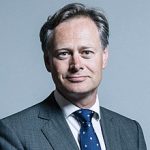
Tag: Matthew Offord

  • Matthew Offord – 2014 Parliamentary Question to the Ministry of Justice

    Matthew Offord – 2014 Parliamentary Question to the Ministry of Justice

    The below Parliamentary question was asked by Matthew Offord on 2014-04-08.

    To ask the Secretary of State for Justice, how many (a) asylum and (b) non-asylum New Matter Starts were awarded to the firm that had its award of a contract withdrawn in August 2010.

    Mr Shailesh Vara

    These questions relate to ongoing litigation against the Lord Chancellor and in the circumstances it would be inappropriate to respond at the current time.

  • Matthew Offord – 2014 Parliamentary Question to the Department for Communities and Local Government

    Matthew Offord – 2014 Parliamentary Question to the Department for Communities and Local Government

    The below Parliamentary question was asked by Matthew Offord on 2014-04-10.

    To ask the Secretary of State for Communities and Local Government, what steps his Department is taking to ensure that the planning system gives priority to creating additional school places.

    Nick Boles

    The Government recognises the importance of building new schools. The National Planning Policy Framework therefore makes clear the importance of planning for new school development in order to ensure that a sufficient choice of school places is available. The Government has also introduced additional permitted development rights to allow the change of use from some existing buildings to a state funded school.

  • Matthew Offord – 2014 Parliamentary Question to the Department for Energy and Climate Change

    Matthew Offord – 2014 Parliamentary Question to the Department for Energy and Climate Change

    The below Parliamentary question was asked by Matthew Offord on 2014-04-10.

    To ask the Secretary of State for Energy and Climate Change, what steps he is taking to ensure that the renewable heat incentive scheme is targeted on households most in need of help with their energy bills.

    Gregory Barker

    The domestic Renewable Heat Incentive (RHI) is targeted at, but not limited to, homes off the gas grid, which are more expensive to heat than those with mains gas. Households without mains gas have the most potential to save on their fuel bills and decrease their carbon emissions. The RHI is funded through general taxation rather than through a ‘green levy’ on energy bills.

    As well as homeowners, the domestic RHI is also open to social landlords and private landlords. Following the very successful Renewable Heat Premium Payment Social Landlords’ Competitions, with over 4,200 installations to date, we expect to see significant take-up in the social housing sector.

  • Matthew Offord – 2022 Speech on the National Food Strategy and Food Security

    Matthew Offord – 2022 Speech on the National Food Strategy and Food Security

    The speech made by Matthew Offord, the Conservative MP for Hendon, in the House of Commons on 27 October 2022.

    It is a pleasure to speak in this debate, and I congratulate my right hon. Friend the Member for Tatton (Esther McVey) and the hon. Member for Bristol East (Kerry McCarthy) on securing it. I have been calling for a national food strategy for many years. Like the hon. Member, I agree that the food strategy is not about the nanny state; it is a road map, putting a spotlight on the path that we should tread as a nation.

    The national food strategy mentions food security a lot. Many of us are concerned about that, but what is food security? Academic research on that issue found that there are more than 200 definitions of “food security”. The NFS, however, defines self-sufficiency as the ability of a nation to produce its own food, but under that definition the UK has not been self-sufficient in food security for the past 176 years. We are all aware of the problems with the blockades during the first and second world wars. The Agriculture Act 1947 was designed to improve food security, but I am not convinced that we have since achieved that.

    Many people say that food security is all about shortage, but we have to ask ourselves, “Is there actually a shortage of food?” No, there is not. Global food production is forecast to be higher this year than last. If England’s 2019 wheat crop had been used for human consumption alone, it would have provided 2,500 calories per person per day for 63 million people while using less than 20% of our agricultural land.

    Globally, a large share of crops are used to fuel cars and feed livestock. In the US, a third of the maize crop is turned into biofuels in a process that is worse for the climate than burning fossil fuels. Grain is expensive not because it is scarce, but because we feed most of it to livestock. Animals consume a disproportionate amount of feed to supply a small amount of meat. That ensures that 70% of farmland produces just 10% of the calories manufactured in the UK each year.

    Some hon. Members will be able to see where the debate is going. The issue of meat consumption is important to many people in the United Kingdom, and the popularity of vegetarianism and veganism is more important than ever. I will declare an interest: I have been a vegetarian for 39 years—not for moral or ethical reasons, but simply because I do not like eating meat. The hon. Member for Bristol East is a vegan, probably for the same reason, so I share her love of chickpeas rather than of Cheshire lambs. There are alternatives. I would never stop anyone eating meat, and I feel that everyone has the right to do so. It is important to many people and they enjoy it, so we should let them continue to eat meat.

    However, the food strategy has one area in which the Government have missed a trick: sustainable protein. The Government have the opportunity to become a global leader in the sustainable protein space. When I say protein, I mean plant-based or fermentation-made and cultivated meat, eggs, dairy and seafood. If we establish the UK at the forefront of the protein transition, we will help to make the UK’s food system more resilient, healthier and more sustainable. At the same time, the industry would align with many of the UK’s existing policy commitments, including reaching net zero carbon emissions by 2050, addressing the looming threat of antimicrobial resistance and championing animal welfare. It would also further cement the UK’s reputation as a climate leader and a global scientific superpower.

    Making meat from plants and cultivating it from cells presents enormous opportunities to provide the British public with the familiar foods that they want, but at a fraction of the external cost to the environment and planetary health. Plant-based meat production results in up to 90% fewer greenhouse gas emissions and uses up to 99% less land than conventional meat. When produced with renewable energy, cultivated meat could cut the climate impact of meat by 92% and use up to 95% less land. In addition, those sustainable proteins are free from antibiotics and involve no risk of the emergence of zoonotic diseases, which is associated with raising and killing animals for food.

    Back in June, I asked the Government whether they would consider sustainable protein as part of the national food strategy. They said that it was a very important issue, on which they were very keen, but they decided not to include it as part of the national food strategy. I therefore ask the Minister to do so today. This is an opportunity not to prevent people from eating meat, but to give them a choice. As a vegetarian, I would have the choice to eat such a product, whereas other people would have the choice of eating what is considered freshly reared meat or something that has been created. That could also help to address some of the issues surrounding food labelling. I know that many colleagues share concerns about production methods in certain religious communities, so the alternative protein market would allay some of those concerns.

    I ask the Minister to do four things: establish a strategy to make the UK a global leader in the sustainable protein space; invest in open access research and development for sustainable proteins; ensure a fair and robust regulatory plan for the market; and invest to ensure a dynamic industry ecosystem. That could help many parts of the world, and the UK could really take its place as a global leader in the market. Rather than cutting down on choice, it would extend choice to our constituents.

  • Matthew Offord – 2022 Tribute to HM Queen Elizabeth II

    Matthew Offord – 2022 Tribute to HM Queen Elizabeth II

    The tribute made by Matthew Offord, the Conservative MP for Hendon, in the House of Commons on 10 September 2022.

    It really is an honour to speak on behalf of my constituents in Hendon. The Queen was no stranger to my constituency, which she visited on more than 12 occasions. In 1945, three Dakota aircraft, bearing Their Majesties the King, the Queen and Princess Elizabeth, and a press entourage, left RAF Hendon for the first royal visit by air, to Northern Ireland. That was followed by a visit by a pregnant Her Majesty to the drapers’ cottages in Mill Hill. She subsequently planted a cedar tree to commemorate the 150th anniversary of the founding of Mill Hill School. She formally opened the RAF museum in Hendon. She opened the Peel Centre at Hendon Police College. She performed a royal review at the Hendon Police College as part of her silver jubilee.

    In 1982, as colonel-in-chief of the Royal Engineers, the Queen spent the day at Inglis barracks, visiting the Home Postal Depot, Royal Engineers, and unveiling a commemorative statue called “Letter from Home” to mark the centenary of the British Forces Post Office. In 1985, she opened the Central Public Health Laboratory in Colindale. In 2001, she laid a wreath to inaugurate the Metropolitan Police memorial in the grounds of the Metropolitan Police training establishment in Colindale.

    The golden jubilee north London celebration was held at Copthall Stadium, Mill Hill. I was pleased to be one of the newly elected councillors who was able to be there to meet the Queen in person. In 2005, she visited the emergency call centre at Hendon Police College after the tsunami disaster. In 2012, in her final visit, the north London diamond jubilee procession of Her Majesty and the Duke of Edinburgh came through Edgware.

    In my constituency, the regard in which Her Majesty is held by ethnic minorities is second to none. As we have already heard today, the people of Hendon hold the Queen in high regard, and it still impresses me that, at the end of every sabbath service, without exception, my constituents in synagogue say a prayer for the Queen and the royal family. They have been saying that prayer since 1952 when Her Majesty ascended to the throne. There have been more than a dozen versions to reflect changes through marriages and deaths, but the one constant in the prayer throughout the last 70 years has been our sovereign lady, Queen Elizabeth.

    I have often said that none of us in politics is very important, and it is my belief that there is only one person who is important in politics, and that is the monarch. As we have seen in the last few days, Prime Ministers and Members of Parliament come and go but the monarch remains. Each and every one of us have made sacrifices to be here in this place, but the Queen made even greater sacrifices for over 70 years. That commitment to public service is unimaginable to us.

    A friend left a message on her Facebook page that really summed up what I would say to the Queen right now, if I had the opportunity:

    “Good night, God bless, and thank you for everything.”

    Long live the King.

  • Matthew Offord – 2022 Speech on Iran’s Nuclear Programme

    Matthew Offord – 2022 Speech on Iran’s Nuclear Programme

    The speech made by Matthew Offord, the Conservative MP for Hendon, in the House of Commons on 30 June 2022.

    I thank my right hon. Friend the Member for Newark (Robert Jenrick) for this debate—it has certainly been a long time coming—on an issue of concern to many of us in this House. I pay tribute to him for his efforts in securing it. The contributions of all Members have been not only well reasoned but very constructive. The right hon. Member for Islington North (Jeremy Corbyn) raised issues that perhaps we do not all agree with, but it is important for us to consider them as part of today’s discussion.

    The spectre of a nuclear-armed Iran has been looming for several years, and it presents a profound threat to our collective way of life. Only last night I gave a speech to the National Jewish Assembly, where I was asked at what point the United Kingdom would step in to stop the emergence of a nuclear Iran. I have to say that, if we fail to take action now, our later options will be a lot more extreme. The moment to take the appropriate action, under the JCPOA, is now.

    It is almost unthinkable that the world’s greatest sponsor of state terrorism could be on the nuclear threshold, but that is the reality. Two of today’s speakers have mentioned Ahmadinejad saying that he would like to wipe Israel off the map, which could be taken in two ways. I think he was being provocative while at the same time speaking politically. The issue of the JCPOA and a nuclear Iran is not about Israel and Iran. It is not even about Sunni and Shi’a Muslims. It is about the Twelver Muslims, who have a different ideology and view of the world, which they would like to see adopted by other Muslim countries, and they would certainly like to see it in the western hemisphere as well.

    This fundamentalist regime is responsible for the most heinous human rights abuses, both at home in Iran and, indeed, abroad. It is a regime that is committed to exporting violent ideology across the world, that has reneged on repeated commitments to the international community, and that has been found guilty in European courts of orchestrating terrorist events. I have mentioned previously that those terrorist events included the possibility of five parliamentarians—two of us are sitting here today—being subject to the violence and destruction orchestrated and founded by Tehran.

    The entire integrity of the JCPOA and its ability to curtail Iran’s nuclear ambitions have been called into question by several of us for many years. Originally, we were concerned that there were no clauses in the JCPOA requiring Iran to stop transferring funds to terrorist proxies. It certainly did not seek an end to domestic human rights abuses in the country, or to end the testing of the ballistic missile programme. Those were all structural weaknesses of the JCPOA and we were very concerned about that.

    It is not just centre-right politicians in the United Kingdom and the United States who are concerned about this issue. Senator Robert Menendez, the Democrat chair of the Foreign Relations Committee, recently questioned why his own Administration were trying to return to the JCPOA when it was

    “not sufficient in the first place—and still doesn’t address some of the most serious national security concerns we have.”

    He is by no means alone in reaching such a conclusion.

    It is an inescapable reality that Iran’s systematic non-compliance with the JCPOA nuclear deal has rendered it dead, despite the efforts of the US and the E3 to resuscitate it. Yet all the available evidence suggests that the E3 and the US remain committed, albeit perhaps forlornly, to desperately resuscitating the 2015 framework. There seems to be no plan B under consideration.

    The reported terms of the renewed nuclear agreement make for alarming reading. Not only will it leave much of Iran’s nuclear infrastructure intact; it will also receive enormous sanctions relief. It is clear that this will again fail to provide a long-term, sustainable answer to Iran’s belligerent nuclear actions.

    The great risk is that, in the absence of an ambitious, broad and punitive nuclear framework, Iran will become a nuclear-armed state in a matter of years—perhaps just three. Buying time is not a viable strategy for the UK Government. At some point, the international community is likely to be faced with an Iranian regime arming itself with a nuclear weapon. We will have far fewer options in tackling that scenario than we do today.

    The lesson that we learned from Iraq is that we do not invade sovereign states without a plan, so our plan must be formed now. If we are to avoid military action of any kind, we must seek an assurance from the Iranians that they will abide with an agreement.

    One of the other great weaknesses of the JCPOA was its failure to address Iran’s blatant arming and funding of its terrorist proxies. That led directly to the conflicts in Lebanon, Yemen, Syria and other parts of the world. That was hard to stomach at the time and we need to address it again today.

    We cannot allow funds, resources, men, manpower and money to go into furthering conflicts around the world. That would not only provoke greater incivility but provide more impetus for migration and create evermore refugees in the international community. We would be assisting in that objective, and we must stop it. These terror groups are primed to unleash, at any second, horrific violence against civilian targets across the world, all at the behest of their Iranian paymasters.

    In her summing up, will the Minister provide justification for why we appear to be compounding the great mistakes of the previous agreement in 2015? Will she assure us that she is making it a priority to tackle this issue? I join colleagues in asking her to consider proscribing the Islamic Revolutionary Guard Corps. At the very least, we owe that to the British victims of that organisation.

    I have previously welcomed the Foreign Secretary’s commitment to

    “work night and day to prevent the Iranian regime from ever becoming a nuclear power.”

    I hope that she will keep up that commitment, but does the Minister believe that the deal under consideration is truly capable of preventing Iran from getting its hands on the most devastating weapons known to man? In the event of a new JCPOA, can the Minister outline what further steps will be taken to build on what has clearly become a limited and ineffective mechanism?

    Time is upon us, and history will judge us for the decisions we make today and on any future agreement. For the safety and security of not only the middle east but the wider world, we must do the right thing. That may be a hard decision, and it may be a difficult process, but failure to do so could ultimately lead to greater conflict.

  • Matthew Offord – 2021 Speech on Sri Lanka

    Matthew Offord – 2021 Speech on Sri Lanka

    The speech made by Matthew Offord, the Conservative MP for Hendon, in the House of Commons on 18 March 2021.

    I start by highlighting my chairmanship of the all-party parliamentary group on Sri Lanka. Sri Lanka’s relationship with the rest of the world has been strongly shaped since the end of the conflict by allegations that the army committed war crimes and crimes against humanity during the final phase of the civil war.

    A UN panel of experts reported in April 2011 that there were credible allegations of those crimes by both Government and Tamil Tiger forces. It remains my opinion that both sides were at fault. However, I regret the Government of Sri Lanka’s decision to withdraw support for UNHRC resolution 30/1 and note that previous domestic initiatives have failed to deliver meaningful accountability. I therefore urge the Sri Lankan Government to engage in a process that has the confidence of all on the island.

    But it would be remiss to state that the current Sri Lankan Government have failed to act. The Office on Missing Persons and the Office for Reparations are to be retained and strengthened, so that communities may build trust. It will be good to see reform of the Prevention of Terrorism Act and progress on the release of political prisoners. We must act as a critical friend to the country. We need to help strengthen democratic institutions, and we must trust Sri Lanka to develop its own judicial and non-judicial mechanisms.

    Since the end of the conflict, reconciliation has occurred between Sinhala, Tamil and Muslim communities. People are able to live wherever they wish. They benefit from state resources, such as free education and health services. Private land that was occupied by the military has been returned, former conflict areas have been de-mined with assistance from the United Kingdom, and more than 12,000 ex-LTTE— Liberation Tigers of Tamil Eelam—cadres have been rehabilitated. There is a greater connectivity throughout the island and globally, and all of this has transformed the business sector and the lives of everyone in the country.

    But we should remember that resolution and accountability are not a panacea for addressing underlying tensions. Questions about how to address the legacy of the Sri Lankan conflict must be answered: what kind of justice is attainable? How should the victims of violations be treated in the process? What might punishment look like, and how can justice play a constructive role in forging a lasting peace?

    Draft legislation for a truth and reconciliation commission had been prepared under the previous Sri Lankan Government, and that could be revisited. If it gains universal support in Sri Lanka, truth seeking among all stakeholders, including the diaspora in many of our communities and constituencies, could make a lasting difference. When these issues have been resolved, a sustainable and acceptable peace will endure. Given the good will between our two countries, I ask the Minister: how can the UK help to facilitate a TRC mechanism that is unique to the needs of Sri Lanka?

  • Matthew Offord – 2021 Speech on Holocaust Memorial Day

    Matthew Offord – 2021 Speech on Holocaust Memorial Day

    The speech made by Matthew Offord, the Conservative MP for Hendon, in the House of Commons on 28 January 2021.

    In last year’s debate, I spoke about the only concentration camp on British soil, on the island of Alderney. Lager Sylt and Lager Norderney contained Russian and Polish prisoners-of-war, as well as Jewish slave labourers. I raised the issue of undisclosed and unrecorded burial sites of murdered inmates and told the House:

    “Rabbinic law dictates that the grave sites of Jewish people should not be disturbed.”

    However, I expressed my personal view that

    “unmarked graves, mass graves and locations of bodies hidden by their murderers are not proper graves in themselves, and I believe that it is appropriate for the identification of bodies to be undertaken”—[Official Report, 23 January 2020; Vol. 670, c. 492.]

    Some people took my words as advocating a full exhumation of the Channel Islands, but that is not necessary or even desirable. The burial site on Alderney was designated and formally marked by the Commonwealth War Graves Commission as an official war grave, but it was deaccessioned by the CWGC in 1961.

    Back in July 2019, my right hon. Friend Lord Pickles, head of the UK delegation of the International Holocaust Remembrance Alliance, along with the deputy head, Sally Sealey, and Dr Gilly Carr, a member of the UK delegation, visited Alderney. The purpose of the trip was to make an assessment of the island’s holocaust-related heritage sites after the revelation of new geophysical evidence and the potential presence of further bodies in a mass grave on Longis Common on Alderney.

    Putting aside the religious issues, it has been stressed to me that opening mass graves is not as revealing as one might imagine that and that gains in knowledge are slight compared with the moral and spiritual costs of disturbance. Knowledge already exists about the sites, and the combination of non-intrusive means of investigation, world war two aerial imagery and research of the records should be sufficient to tell us, with some certitude, what lies beneath Longis Common. I have been advised that a considerable amount is already known about what lies beneath that ground. That is because the British Government are still sitting on embargoed files that detail what they found at the cemetery after the war and their own excavations at the cemetery. Today, I am calling on the Government to find the missing records of the 1961 exhumation, and the detailed records that the UK made of each set of remains by the British excavation in Alderney. We have a duty to ensure that no one is left behind. I ask the Government to play their part and do the right thing by releasing all information and documents in their possession.

  • Matthew Offord – 2020 Speech on Holocaust Memorial Day

    Matthew Offord – 2020 Speech on Holocaust Memorial Day

    Below is the text of the speech made by Matthew Offord, the Conservative MP for Hendon, in the House of Commons on 23 January 2020.

    Thank you, Mr Deputy Speaker, for calling me to speak after that passionate speech.

    I am very pleased to have the opportunity to contribute to the debate, as I have more Jewish constituents than anyone else in the Chamber today, apart from, of course, my hon. Friend the Member for Finchley and Golders Green (Mike Freer). Unfortunately he is not able to speak because he is a Whip, but I am sure he will be thrilled that I am, no doubt, speaking on his behalf as well.​

    If, as a Member of Parliament for any faith group, I either promote or defend a cause or an issue, many critics will say, “Well, you would say that, wouldn’t you, because your constituents would expect you to do so.” For many of my constituents—and, by default, for me as well—the holocaust is something very personal. I have constituents who were in places such as Bergen-Belsen, one of whom I have spoken about previously in the Chamber, of whom I am indeed very fond, and whom I visit regularly. I should take this opportunity to wish mazel tov to Manfred Goldberg and Kurt Marx, who both received the British Empire Medal for services to holocaust education in the new year’s honours list. We are very proud of them.

    Just like the hon. Member for West Ham (Ms Brown), I take the opportunity at this time of year to do two things. First, I always like to read a memoir or factual account of the holocaust, and I am pleased to be reading “If this is a man” by Primo Levi right now. The second thing I like to do—again, like the hon. Member for West Ham—is to consider Holocaust Memorial Day from a different perspective, and for the past few months I have been thinking about concentration camps on British soil.

    Any Member who has read Nikolaus Wachsmann’s brilliant book “KL: A History of the Nazi Concentration Camps” will know how the concentration camps came about. The KL refers to the German word “Konzentrationslager”. In Germany in 1933, many of the first people arrested by the Nazis were detained in a variety of locations, including police stations, stables, schools and even industrial buildings—certainly none of the locations we have in our public consciousness. Those people were held in “protective custody” for their own safety, and most of them were released at a later stage. During that time, the law was used to defend many of them. Their relatives went to the courts to say that their treatment was not as it should be, and under the law they did have some protections, but of course that did not last. We know that, as the second world war continued, the rules certainly changed.

    The Konzentrationslager of Dachau in 1933 was very different from the Konzentrationslager of Auschwitz in 1944. Initially, Dachau targeted political opponents of the Nazis, such as German communists, socialists, Roma, Jehovah’s Witnesses, homosexuals and persons accused of asocial or socially deviant behaviour. By contrast, Auschwitz was a sprawling death camp containing European Jewry, Gypsies and others. As Primo Levi wrote:

    “Trains heavily laden with human beings went in each day, and all that came out was the ashes of their bodies, their hair, the gold of their teeth.”

    Representation of these camps in films and popular culture depicts Auschwitz-Birkenau as the pinnacle of the death camps, but Treblinka was close behind it in the number of people who were murdered, alongside other camps such as Belzec, Chelmno and Sobibor. All those camps were devoted to killing. They were death camps, and anyone who went through their gates would not come out again. In 1967, the West German Ministry of Justice drew up a list of 1,200 camps that it said were sub-camps of the main ones. The Jewish Virtual Library has come up with the even greater figure of 15,000 camps that it says were effectively Konzentrationslager.​

    To many of us, the representation of the camps through their names suggests a distant location and an otherness that is foreign and certainly not part of the British collective consciousness, but that is not the case. Last summer I was fortunate enough to sail to the Channel Islands, the only part of the British Isles to be inhabited by the Nazis during the second world war, and I visited Alderney. In January 1942, the Nazis built four camps in Alderney. There were two work camps, Lager Helgoland and Lager Borkum, and two concentration camps, Lager Sylt and Lager Norderney. Lager Norderney contained Russian and Polish prisoners of war, and the Lager Sylt camp held Jewish slave labourers. There are 397 graves in Alderney, out of a total population of about 6,000. On their return to Alderney, the islanders had little or no knowledge of the crimes that had taken place, because when they were finally allowed to return in December 1945, the majority of the senior German officers had left and no one really knew what had happened.

    Interestingly, in research being conducted by Professor Caroline Sturdy Colls at Staffordshire University, she has described the estimate of the number of victims as “very conservative”, given the difficulty of identifying prisoners in war records. The whole issue of post-holocaust archaeology is very much a contested area, and indeed very painful for many people who had direct experience of the holocaust. The professor has said that her research on the island has come up against great “hostility”, including from the Alderney Government, who she said had refused a permit for her to excavate some of the sites, forcing her to rely, in the research that she undertook, on “non-invasive” methods of analysis, such as drone filming.

    I have to tread carefully as I say this, but there is also some reluctance on the part of the Jewish community in the United Kingdom to give permission for the excavation of Jewish burial sites. This is a very delicate area, and I know that the great Chief Rabbi, Ephraim Mirvis, who is my constituent, has been involved in this issue. Rabbinic law dictates that the grave sites of Jewish people should not be disturbed. I have a great deal of sympathy with that point of view, but I do have a belief that unmarked graves, mass graves and locations of bodies hidden by their murderers are not proper graves in themselves, and I believe that it is appropriate for the identification of bodies to be undertaken, because people do need a proper resting place. I do not believe that the locations that I have described are proper graves; and as Elie Wiesel wrote,

    “to forget the dead would be akin to killing them a second time.”

    So I certainly will continue with the conversations that I have had with others about the delicate, sensitive process of identifying locations of bodies, and also the persons in those graves.

    So for me, Holocaust Memorial Day is not just something that is evoked through films such as “Schindler’s List”; it is something that is very personal and pertinent to many of my constituents. I shall conclude with the words of Primo Levi, in his fantastic book, in which he says:

    “It happened, therefore it can happen again: this is the core of what we have to say.”