
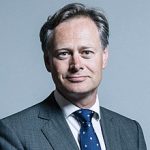
Tag: Matthew Offord

  • Matthew Offord – 2023 Speech on World Down Syndrome Day

    Matthew Offord – 2023 Speech on World Down Syndrome Day

    The speech made by Matthew Offord, the Conservative MP for Hendon, in the House of Commons on 23 March 2023.

    It is a pleasure to speak in this debate and I am pleased to see colleagues here who have come with their own experiences. I congratulate my right hon. Friend the Member for North Somerset (Dr Fox) on securing the debate and I thank him for his work with his Bill.

    We discuss lots of issues in this Chamber, often prompted, lobbied for or orchestrated by individuals who have the loudest voices, including those who organise the petitions we debate in Westminster Hall, which have to have 100,000 signatures. Those people know how to work the system, so this afternoon it is good to take part in a debate prompted by those whose voices have been heard less frequently over the years. Those voices sometimes belong to less able-bodied people or, as in this case, those who have Down syndrome.

    My hon. Friend the Member for Stoke-on-Trent Central (Jo Gideon) spoke movingly about her own experiences; it was emotional for her to relate those experiences to us. She spoke about her father and his experience of having a brother who was left in care. There was a time when people with Down syndrome or other disabilities were always put into care. That was a terrible time and I am very pleased that we have now moved beyond that.

    My hon. Friend the Member for Ashfield (Lee Anderson) mentioned the caring role of parents who are able—or in some cases not able—to look after people who are suffering from these terrible conditions. We should pay tribute to them, especially those in the Public Gallery today. I have to admit that I could not undertake that role. I do not, unfortunately, have children, but I would find it very difficult to look after the day-to-day needs of anyone with any kind of disability. I will be honest and say that I could not do that. I pay tribute to my sister, who is undertaking a caring role at the minute. As I have explained to her, that is not something that I could do. Some people, like me, simply cannot do that.

    Several years ago, I went to visit Saira and Anthony Hettiarachchi, who run the Dillon care home in West Hendon. Both Saira and Anthony are friends of mine. Saira was a Conservative councillor and worked in the sector for many years, meaning she was able to take some of those skills to her work at the council, including in children’s services. During my visit, she introduced me to many of the people she looked after, perhaps because their parents were unable to do so or because Saira’s care home was able to provide better care for them. She introduced me to a boy with Down syndrome called Michael, who did not have great verbal or other communication skills but could dance; actually, he danced rather well. He was a bit more like a cat than I am. He could dance and he was able to express himself. I was quite amazed at the time that someone who I thought would not be able to undertake that physical exertion was able to do that.

    Later on, I saw Michael again, when I was at the St Joseph’s Pastoral Centre in Hendon. I saw not only Michael but other children with Down syndrome. They all seemed to communicate with each other, as they were winning awards, in their own special way. It was interesting to see because they were a group within the group and they were acting just like other children. There was no difference between them. It struck me that they were like anyone else, and had the same hopes and aspirations.

    I have visited the Larches community trust in Edgware on several occasions, as I mentioned in my maiden speech, which was established by Linda Edwards. On one visit to the centre, I was asked, as many of us often are, to say a few words without any notice. I thought, “I’m going to take a risk, on this occasion. I’m going to say what I think.” I know the Whips complain that I often not only say what I think but vote the way I think is appropriate, but on that occasion I thought I would take the chance, and it was worth it.

    I spoke about people with Down syndrome and I said how they were coming out of the darkness and into the mainstream. An example I raised was about a person called Liam Barstow, who many people will know better as Alex Warner, the character in the soap opera, “Coronation Street”. Liam was born with Down syndrome and was discovered by the producers of “Coronation Street” when they ran a workshop for actors with disabilities, called Breaking Through. They were so impressed with his abilities, they decided to create a role for him. One producer said, “It’s not some politically correct thing. We found there a really great actor with a wonderful sense of timing.”

    I do not really watch soap operas, but on the occasions that I have seen “Coronation Street” I have been quite amused by some of lines that Liam has. We all know Roy Cropper is a character in “Coronation Street” who runs the local café. I would not call him a ladies man, but there was an occasion when he had two female acquaintances who were friends. Liam delivered a wonderful line, asking Roy if he was a “playa”, which was a hilarious moment.

    There have been other examples of people with Down syndrome in popular culture. Other people have spoken about their experiences today, which is good, and this is a very serious issue, but we need to highlight other ways in which people with Down syndrome have made great contributions. I particularly like the film, “The Peanut Butter Falcon”. It is about a boy with Down syndrome who escapes from an assisted living facility and befriends a wayward fisherman on the run. The reason he escapes is that he wants to become a professional wrestler, which brings across to us that people with Down syndrome have hopes and aspirations, just like anyone else.

    Like the hon. Member for Strangford (Jim Shannon), I have to raise the film “An Irish Goodbye”, which I have watched twice. For those who have not seen it, it is set in a working farm in rural Northern Ireland and follows the reunion of estranged brothers Turlough, played by Seamus O’Hara, and Lorcan, played by James Martin, after the untimely death of their mother, hence the title of the film. Lorcan wants to continue working the land he grew up with, but Turlough decides he should go and live with their aunt on the other side of Ireland. To prevent that, Lorcan says he has a bucket list his mother wanted to complete and will only leave the farm if he and Turlough have completed every single wish on their mother’s list—all 100 of them. I suggest people watch the film because it is a wonderful example of an individual who has broken free from stereotypes to become a commanding actor.

    I highlight both productions because for many years people with disabilities, including those with Downs syndrome, have been written off and consigned to a lifetime on benefits. That is repugnant and I believe that both Liam and Jack have established themselves as actors.

    As the hon. Member for Strangford said, Jack used to be a barista, which he claims he would be quite happy to go back to, but I hope he continues to act. He has recently been filmed playing a harmonica in a bar, which shows he has a range of talents and interests. Maybe there should be a genre of films with leading characters with Down syndrome, but before I am criticised for singling people out, I would say viewers who watch these productions will experience empathy with these characters, get used to seeing their point of view and come away with an acceptance that they face additional hardships, but still have the same hopes and desires as everyone else. People with Down syndrome are not the others in society that they once were.

    I have often thought we could include more people in what we do in this place, and the debate today is a good example of that. We should ensure that people who suffer from Down syndrome are given the opportunities they deserve, and that they come into the mainstream and perform their best role in life.

  • Matthew Offord – 2015 Parliamentary Question to the Foreign and Commonwealth Office

    Matthew Offord – 2015 Parliamentary Question to the Foreign and Commonwealth Office

    The below Parliamentary question was asked by Matthew Offord on 2015-11-24.

    To ask the Secretary of State for Foreign and Commonwealth Affairs, what assessment his Department has made of the likelihood of a possible deal to unify Cyprus.

    Mr David Lidington

    The Government is a strong supporter of the UN-facilitated settlement process, and will do whatever we can to help. On 19 November the Secretary of State for Foreign and Commonwealth Affairs, my right hon. Friend the Member for Runnymede and Weybridge, visited Cyprus and met President Anastasiades and Mr Akinci, commending both for their courageous leadership and urging them to take the bold steps needed to secure a historic agreement. As the Secretary of State said last week, there now exists a ‘real opportunity’ to end four decades of division on the island.

  • Matthew Offord – 2016 Parliamentary Question to the Ministry of Defence

    Matthew Offord – 2016 Parliamentary Question to the Ministry of Defence

    The below Parliamentary question was asked by Matthew Offord on 2016-02-04.

    To ask the Secretary of State for Defence, what assessment he has made of the potential effect of the Strategic Defence and Security Review on the future size and power of the armed forces.

    Michael Fallon

    By 2025 we will have a highly capable expeditionary force of around 50,000. Joint Force 2025 will enable our Armed Forces to project power, deploy quickly and for longer periods and make the best use of new technology. We are investing in our front line by spending £178 billion over the next decade on equipment. We have committed to protecting the size of the Armed Forces by increasing the Royal Navy and Royal Air Force by a total of 700 personnel and not reducing the Army below 82,000.

  • Matthew Offord – 2016 Parliamentary Question to the Department for Transport

    Matthew Offord – 2016 Parliamentary Question to the Department for Transport

    The below Parliamentary question was asked by Matthew Offord on 2016-04-19.

    To ask the Secretary of State for Transport, what recent progress has been made on the Thameslink programme; and if he will make a statement.

    Claire Perry

    London Bridge station works are progressing to schedule to enable the planned opening of part of the new concourse in late summer.

    The new Class 700 trains are undergoing testing on the network and are due to enter passenger service on the Brighton to Bedford Thameslink route this spring.

  • Matthew Offord – 2016 Parliamentary Question to the Department for Transport

    Matthew Offord – 2016 Parliamentary Question to the Department for Transport

    The below Parliamentary question was asked by Matthew Offord on 2016-06-07.

    To ask the Secretary of State for Transport, what assessment his Department has made of the merits of planting noise barriers with vegetation alongside motorways and trunk roads.

    Andrew Jones

    The Department for Transport has made no recent assessment of the merits of planting noise barriers with vegetation alongside motorways and trunk roads.

    Guidance on the design of noise barriers, which includes vegetated barriers, is contained within the Design Manual for Roads and Bridges:

    http://www.standardsforhighways.co.uk/ha/standards/DMRB/vol10/section5.htm

  • Matthew Offord – 2015 Parliamentary Question to the Department of Health

    Matthew Offord – 2015 Parliamentary Question to the Department of Health

    The below Parliamentary question was asked by Matthew Offord on 2015-11-24.

    To ask the Secretary of State for Health, what assessment his Department has made of the reasons for disparities between clinical commissioning groups in achieving the recovery target for mental health patients who have received NHS treatment.

    Alistair Burt

    NHS England monitors clinical commissioning groups’ (CCGs) performance against the recovery target for people who have received psychological therapies through the Improving Access to Psychological Therapies (IAPT) programme.

    The Department is working closely with NHS England to reduce the variation in recovery rates across CCG areas. Key factors that have been identified are variation in data quality, waiting times, numbers of sessions completed by patients, leadership and supervision of services and particular challenges in areas with high deprivation.

    NHS England is working with good performers and is analysing data from the IAPT programme to better understand factors that impact on recovery performance.

    NHS England is also supporting lowest performing IAPT providers to improve their recovery rates and is offering workshops to spread good practice to all commissioners and providers.

  • Matthew Offord – 2016 Parliamentary Question to the Department for Culture, Media and Sport

    Matthew Offord – 2016 Parliamentary Question to the Department for Culture, Media and Sport

    The below Parliamentary question was asked by Matthew Offord on 2016-02-10.

    To ask the Secretary of State for Culture, Media and Sport, what steps his Department is taking to identify the best ways to tackle cultural heritage destruction overseas.

    Mr Edward Vaizey

    This Government is committed to the protection of cultural heritage from destruction overseas. That is why we secured £30m of Overseas Development Assistance from 2016 to 2020 for our newly-established Cultural Protection Fund – to create opportunities for economic development through building capacity to foster, safeguard and promote cultural heritage.

    The British Museum’s Iraqi Heritage Emergency Management Programme (announced on the 28th October at the Cultural Protection Summit) is the Fund’s first programme. A period of consultation is now underway with expert stakeholders working in the arts, heritage, museums and development sectors, to help determine its exact scope and identify best practice.

  • Matthew Offord – 2016 Parliamentary Question to the Department for Transport

    Matthew Offord – 2016 Parliamentary Question to the Department for Transport

    The below Parliamentary question was asked by Matthew Offord on 2016-04-19.

    To ask the Secretary of State for Transport, what progress is being made to increase the number of train stations with step-free access.

    Claire Perry

    Under the £390m Access for All Programme, launched in 2005, 150 stations across Great Britain received an accessible route into the station and to and between each platform. A further £160m to extend the programme and deliver step-free access at an additional 68 stations. In addition, whenever infrastructure works are carried out at stations, they must comply with the relevant UK and EU accessibility standards. Each rail franchise also has a Minor Works budget of typically around £250,000 that can be used for small improvements to accessibility.

  • Matthew Offord – 2016 Parliamentary Question to the Department for Transport

    Matthew Offord – 2016 Parliamentary Question to the Department for Transport

    The below Parliamentary question was asked by Matthew Offord on 2016-06-07.

    To ask the Secretary of State for Transport, what assessment his Department has made of the potential merits of installing a continuous noise barrier on the eastern side of the M1 passing through Mill Hill.

    Andrew Jones

    On the M1 between the A41 near Apex Corner and M1 junction 2 in the Mill Hill area, four areas are identified by the Department for Environment, Food and Rural Affairs noise mapping process as being noise ‘Important Areas’ which require further investigation.

    One of these areas is located along the M1 southbound carriageway from the beginning of Station Road to Woodland Way, opposite Mill Hill Broadway station and is currently being studied to see if a noise barrier is practical here. There are a number of issues to be investigated, including whether a barrier can be put in place over a structure and along an embankment.

  • Matthew Offord – 2015 Parliamentary Question to the Department for Transport

    Matthew Offord – 2015 Parliamentary Question to the Department for Transport

    The below Parliamentary question was asked by Matthew Offord on 2015-11-24.

    To ask the Secretary of State for Transport, what assessment his Department has made of the level of awareness among drivers who do not normally use the Dartford Crossing that a charge is made for using that crossing.

    Andrew Jones

    In July 2014 Highways England undertook research to assess levels of public awareness of the introduction of Dart Charge. Following the Public Information Campaign that ran from October to December 2014, further research took place to assess how the campaign had increased public awareness.

    Both surveys were based on samples of over one thousand drivers, consisted of a mix of online responses and face to face interviews, including both regular and infrequent users of the Crossing. Between July and December 2014 awareness rose from 43% to 80% for online respondents and 47% to 89% for those interviewed face to face.

    The initial compliance rate is 92.6% since the launch of Dart Charge in November last year, which compares favourably with other similar schemes around the world and indicates strong awareness levels among drivers.