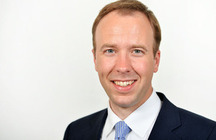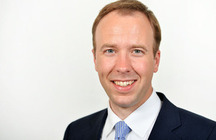
Below is the text of the speech made by Matt Hancock, the Minister for the Cabinet Office, on 2 February 2016.
Today, I want to talk about inequality in the public sector – and beyond – and why it matters for building a society in which all can reach their potential.
We meet as guests of Mary Ward House – in the room that a hundred years ago was the site of the famous debate on women’s suffrage between Mary Ward and Millicent Fawcett.
And while we celebrate the advances they secured – we are still very far from being the fair society we need to be.
A hundred years later indefensible inequalities still exist in this country.
Inequalities of income, inequalities of opportunity, inequalities rooted in prejudice, inequalities imposed by social injustice and we see the consequences of these inequalities in the professions, the media, the arts, sport – and in public service.
The specific nature of the problem we face in public service is laid out in the Bridge report into inequality in the Civil Service Fast Stream published today. The Bridge report is a call to action on my part as Paymaster General.
But the fight against inequality is a struggle that engages us all across government.
The brute facts of inequality demand a strong and united response.
In Britain today around 13% of people are from an ethnic minority.
Yet only 7% of judges, 6% of FTSE 100 leadership, and just 4% of the Senior Civil Service are.
On another measure, only 4.4% of successful applicants to the Civil Service Fast Stream are from working class backgrounds, in comparison to the third of the population in employment who are working class.
Money can’t buy me love, but it still buys a golden ticket into the heart of the establishment. And that’s just not fair.
And why am I speaking out about this?
After all, I’m white and male, I went to both Oxford and Cambridge, I’m from the north, and even then I’ve lost my accent.
But the reason I’m in public service now is because I believe that everyone should have the chance to reach their potential, whatever their background.
That no one should be defined by the circumstances of their birth, no one should be held back by poverty, or ethnicity or culture.
And that each individual has something precious to give, and it is our task to unlock that gift.
For me, a commitment to making opportunity more equal isn’t just an ethical imperative. It makes sound business sense.
All the evidence shows that organisations work better when they are diverse.
Publicly traded companies with male-only executives perform worse than those with both male and female executives, and higher ethnic diversity is linked to increased earnings.
We need to think about diversity not just in terms of legally protected characteristics – gender, sexual orientation, race, disability – but in terms of making sure institutions are full of people from different backgrounds, experiences, and attitudes, who approach the same problem in different ways.
That way you get better decisions, more interesting solutions, and ideas you simply don’t have in a monochrome team.
In the most dynamic societies, there is a fluidity between bottom and top, and talented, hard-working people have the chance to get on, whoever they are and wherever they come from.
So should inequalities – of race and gender and income – should they bother us?
My answer is emphatically yes. We should care about people getting filthy rich. Why?
First of all, because we care deeply about social mobility, and there is clear evidence that countries with higher income inequality have lower levels of social mobility.
As Miles Corak has eloquently put it, there is a ‘Great Gatsby Curve’ that links inequality and social mobility.
It’s harder to climb the ladder of opportunity if the rungs are further apart.
We’ve got to put more rungs in that ladder.
Second, because we should care that rewards for effort are fair. When 2 people with the same talent work just as hard, isn’t it fair they get the same reward?
Fairness, of course, is different to equality. The pursuit of equality of outcome alone can be deeply unfair, and lead to an unjust, something-for-nothing system.
Rather, fairness is about just rewards: the idea that what you get out should be proportional to what you put in. After all, society rests on consent, and social solidarity is good in itself.
Everyone should get a fair crack of the whip.
But even on this basis, inequality matters, because, yes, in a fair society individuals should face the consequences of their choices and efforts; but, no, people should not be punished or held back for circumstances beyond their control.
And we are making progress.
In Britain, according to the ONS, looking at the numbers, inequality is falling.
Our relentless focus on supporting people who want to work hard and get on – with 2 million extra jobs and apprenticeships, nearly 4 million of the lowest paid taken out of income tax altogether, and incentives to make sure it always pays to work – has helped to ensure inequality has fallen. In fact the Gini coefficient, the standard measure of inequality, went down from 33.2 to 32 over the last Parliament.
And our radical reforms to drive school standards up will help in the longer term.
Across the world, the story is the same.
In his inaugural speech, President Kennedy said that “man holds in his mortal hands the power to abolish all forms of human poverty and all forms of human life”.
Much of Kennedy’s presidency was taken up with trying to avoid the latter, but more recently we have been making extraordinary progress on the former.
In the last quarter century, the number of people living in extreme poverty around the world has fallen by half, from almost 2 billion to less than a billion, and the proportion of the world’s population in absolute poverty has collapsed by 3 quarters in my lifetime.
The proportion of the world’s population that are illiterate has fallen from around half in Kennedy’s time to just 18% today.
In fact, the extension of the free market economy and the extension of free education has brought billions of people out of poverty. It is the most progressive policy with the biggest impact on the well-being of humanity in history.
But while incomes between the bottom and the middle have become more equal, asset price rises and increased returns on skills to mean the gap in wealth between the very top and the rest have risen.
When Kennedy entered the White House, the share of income going to the top 1% in the UK was around 3.5%.
By the time of the financial crisis in 2007 to 2008, it had reached 8.3%.
In the UK, we have taken steps to make sure the broadest shoulders bear the greatest burden. Our overhaul of the Stamp Duty system ensures those at the very top pay their fair share. And we are abolishing permanent ‘non-dom’ status.
The top 1% of earners now pay a higher share of income tax – projected to be 27.5% this year.
But there is more to do. So we should continue to act, in a way that tackles injustice and protects people’s economic security from those who would use this concern to practice the destructive politics of envy.
I want to see an end to inequalities in the public sector too.
The Civil Service
The Civil Service is engaged in a mission to improve the lives of the entire country.
In my very first speech as Minister for the Cabinet Office, I said that to govern modern Britain, the Civil Service must be more like modern Britain.
The Bridge Group report we commissioned then pulls no punches.
Yes, the Civil Service has improved. And it compares favourably to many other organisations in the public and private sectors.
The proportions of people from ethnic minorities or declaring a disability are at historic highs; and women represent 54% of the Civil Service.
But the representation of all these groups at senior levels is still far too low.
And when you look more broadly at social background, this is where we find the most glaring inequality.
It finds the Civil Service Fast Stream – still the most prestigious route in – is ‘deeply unrepresentative’ of the lower socio-economic groups in our society.
One in 3 people employed in Britain today are working class.
But only 8% of applicants to the Civil Service Fast Stream are from working class backgrounds, and only 4% actually receive offers.
This makes the Fast Stream less diverse than Oxbridge, where the equivalent figure is 7.2%.
In fact in every group of universities from which the Civil Service recruits, Fast Steam applicants are less likely to come from lower socio-economic groups.
This amounts to a huge pool of talent that we are not tapping into. And this must change. As the report says, we are ‘losing out on many other talented individuals, who would flourish if given the opportunity’.
We need to cast the net wide – not fish in a small pond.
The Civil Service can set this example for others to follow.
It would not be the first time it has done so.
Until 1855, access to the Civil Service was riddled with cronyism and corruption. Following the blunders of the Crimean War, the case for reform was unanswerable.
So in 1855 the Civil Service Commission was set up to oversee recruitment on the basis of fair and open competition, and drag Whitehall kicking and screaming into the 19th century. It would oversee a new system of recruitment based on fair and open competition. This was the beginning of a permanent Civil Service: a meritocracy, guided by the vital principles of integrity, honesty, objectivity and impartiality that have sustained it ever since.
If that was the birth of the modern Civil Service, then another modernisation is long overdue.
We have to deal with the perception that the passport to public service is stamped with privilege.
So what are we going to do about it?
The report
The independent research by the Bridge Group was commissioned by me and Jeremy Heywood, the Cabinet Secretary and Head of the Civil Service.
We commissioned it because we, and the whole senior leadership of the Civil Service, are determined to tackle the issues it exposes – head on.
I think it’s a tribute to the Civil Service that far from being defensive about these concerns, the Civil Service is embracing the challenges it faces.
The response
We will be setting out our full strategy on boosting social mobility in the Civil Service in the spring, but I want to sketch out some of the action we are taking.
The report calls for a root and branch overhaul to the way the Civil Service recruits talent.
And we need to make promotion fair and based on talent not time serving.
I want to end inequalities of access and progress.
Some of this has started, and needs rocket boosters.
Other parts will be new.
First, we need to measure the problem.
We will collect postcode and school-attended data so we can measure the problem real time.
And from this year we are giving permanent secretaries specific social mobility objectives within their single departmental plans.
Next, whether we are recruiting from outside or promoting from within, we need to make the selection process as transparent and fair as possible. There must be no barriers that might exclude talented people from underrepresented groups.
So, we are tackling bias, conscious or otherwise. We have this autumn introduced name-blind recruitment across 75% of the Civil Service, on the way to name-blind as standard across the public sector.
We want a more porous boundary between public service and private endeavour, so it becomes the norm not the exception to have a career switching between.
Today we commit to publishing pay ratios in the Civil Service for the first time.
And crucially, we’re changing the way people apply to join the Civil Service, so we spot potential not polish.
The report finds barriers in the application process, including its intimidating length and London-centric focus. Yes, our grand buildings in Whitehall are splendid and spectacular, but they aren’t exactly designed to make you feel comfortable. So we’ll change how and where selection is done. We are shortening the application process and wherever possible, aligning apprenticeship and graduate recruitment.
The report finds a lack of adequate outreach on university campuses. We’re going to send out existing Fast Streamers to campuses across Britain, so we look for talent at a wider range of universities.
The report also finds ‘minimal outreach to schools’. So we will radically increase mentoring.
Earlier this month, the Prime Minister announced the launch of a new national mentoring campaign in schools.
We’ll lead by example, sending people to mentor pupils from disadvantaged backgrounds over an academic year. They aim to raise aspirations, increase confidence, inform and encourage. We’re already supporting in 20 schools, but I want to see that expanded to at least 200.
Apprentices too are central to our task.
In 2013 we launched the Apprenticeship Fast Track. It has proven hugely successful. Almost 1,000 have come through so far, with all the verve, diversity and energy that apprentices represent.
In the Civil Service I want to see, future leaders are as likely to come from the ranks of Fast Track Apprentices as they are from Fast Stream graduates.
I want the Cabinet Secretary of 2050 to be someone who came into the service as an apprentice. You may be sitting in this room.
So I can announce today that we will radically expand our apprenticeship scheme. We will recruit at least 750 new Fast Track Apprentices in September – and 200,000 across the public sector – by 2020.
All these measures together add up to the most significant shake-up of Civil Service recruitment in a generation.
Yes, the public sector can provide leadership. But as the Bridge report says, its findings ‘have implications for the way all professional firms could recruit for diversity and excellence’.
So today, I’ve written to the 200 companies who signed up to our social mobility business compact, and I’ve urged them to read the Bridge research and consider its lessons for their own businesses.
Conclusion
This is our goal: a Britain, fair to all, where effort is rewarded.
Where all have the chance to succeed, and to serve their country.
Where we fulfil that dream held by the seekers of equal opportunity here a century ago.
That every one of the citizens we serve has the opportunity to reach their God-given potential.