
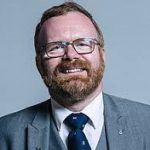
Tag: Martyn Day

  • Martyn Day – 2024 Speech on Freedom and Democracy in Iran

    Martyn Day – 2024 Speech on Freedom and Democracy in Iran

    The speech made by Martyn Day, the SNP MP for Linlithgow and East Falkirk, in the House of Commons on 1 February 2024.

    I am grateful to the hon. Member for Harrow East (Bob Blackman) for securing this debate. The issue of freedom and democracy in Iran is a very important one, and I find myself commending him for his speech and agreeing with every point he made.

    As we have heard, the issue is really about a lack of democracy and a lack of freedom. Elections will of course be held on 1 March to Iran’s Parliament, but they can in no way can be considered free, fair or credible. It is more of a selection than an election, with the unelected, 12-strong Guardian Council having the power to approve candidates. With a track record of banning moderates and reformers from standing, it is no surprise that many candidates have already been disqualified. This body can also veto laws made by the Parliament.

    My litmus test for fair, free and credible democratic elections is: can any individual freely stand for election, can anyone vote in secret for any individual who is standing and can the sovereignty of the people be exercised by their representatives? Clearly, Iran fails on all those counts. The reality is that Iran is ruled as a totalitarian theocracy: it is not a democracy. Ultimate power rests in the hands of the country’s Supreme Leader, Ayatollah Ali Khamenei, and the unelected institutions under his control.

    Corruption persists across all levels, with powerful actors such as the Islamic Revolutionary Guards Corps operating beyond scrutiny. Media and civil society face restrictions hindering their role as independent watchdogs for ensuring transparency and accountability. The regime, as we have heard, is ruthlessly held in place by its intelligence and security force the IRGC and is supported by the wider apparatus of the state, including the judiciary, the Ministry of Intelligence, the police and others.

    Iranian authorities have extensively used Iran’s repressive machinery to censor discussion of these issues and persecute women, human rights defenders and anti-death penalty activists. Political activists who support democratic change have been particularly vulnerable to detention and death over many years, despite which the organised resistance, the People’s Mujaheddin Organisation of Iran—or MEK—have remained determined to establish a free democratic and secular republic, and I wish them every success with that struggle.

    The level of oppression and human rights abuses by the current regime in Iran is truly appalling and is getting worse. According to Freedom House, Iran has decreased its total global freedom status from a derisory 14 out of 100 in 2022 to 12 out of 100 last year. Freedom House gave Iran zero scores for most areas of fundamental rights including: the individual right to practice or express religion, faith or non-belief in public and private; free and independent media; the Government operating with openness and transparency; safeguards against corruption; the question of whether the freely elected head of Government and national legislative representatives determine the policies of the Government; and fair and free elections.

    The UN special rapporteur on the situation of human rights in the Islamic Republic of Iran expressed alarm at

    “the disproportionate number of executions of members of minority communities, in particular the Baluch and Kurdish minorities”,

    and I share this concern. Last year, at least 864 people were executed, the highest figure since 2017. Any use of the death penalty is unacceptable to me and I believe this substantial increase reflects the regime’s inability to suppress the protests that have arisen.

    Women lack equality and face discrimination in both law and practice. Examples include a woman’s testimony in court being given half the weight of a man’s and unequal compensation for victims’ families. Women also face disparities in inheritance rights. The regime fails to protect women and children from sex trafficking while Iranians and migrant workers, especially from Afghanistan, are subject to forced labour and debt bondage.

    The reality is that some 88 million Iranians are effectively living in what is a state prison, otherwise known as the Islamic Republic of Iran. But it does not have to be that way and I applaud the courage and determination of those who have stood up to the regime and protested for the rights that we take for granted, and have done so at great risk to themselves.

    The ongoing uprising began in September 2022 with the arrest of a Kurdish Iranian girl in Tehran by the Tehran morality police for not veiling, after which she was brutally beaten, fell into a coma and tragically lost her life while in custody. That brutal killing of Mahsa Amini prompted widespread protests across Iran, with thousands of people demanding regime change for a secular democratic republic. The ongoing uprising has resulted in over 800 unlawful deaths, including of minors and women. Additionally, around 30,000 Iranians face cruel treatment in jails, including torture and sexual violence, highlighting the dire situation in Iran.

    Ultimately, Iran’s future must be decided by its own people, but given that they have virtually no avenues for reform, the people have no option but to resist, to demonstrate, to defend themselves, and to seek alternative forms of opposition. Iran has been witnessing a massive popular uprising—a call for freedom and democracy largely led by women and young people. I have heard it described by some as a revolution, and I hope it is a successful one. It has clearly rattled the Tehran regime and I believe this is partly behind the regime promoting and encouraging conflict outwith its borders as it seeks to dampen the momentum of the protests inside Iran while simultaneously rallying the regime’s own forces behind the Supreme Leader’s fundamentalist agenda.

    As we have heard, Iran is the biggest state sponsor of terrorism. This exporting of international terrorism by Iran cannot and will not be tolerated, nor should be its support for Russia in the war with Ukraine, use of cyber-attacks, or hostage-taking diplomacy, and I condemn the involvement of Iranian officials in the killing of US servicemen. According to reports in The Times on Tuesday this week:

    “Tehran has already been accused by MI5 and police of more than a dozen assassination and kidnap plots in Britain against dissidents and media organisations in the past two years. Officials have previously expressed fears that, emboldened by the situation in the Middle East, Iran could ramp up its activity in the UK and present a wider terror threat.”

    Although I welcome the recent announcement of additional sanctions on senior Iranian officials, I wonder why we are not taking an even stronger approach. At a minimum, we should urgently proscribe the IRGC as a terrorist organisation. I have lost count of the number of times that I and others have called for that action. Proscription would be a tangible step in the UK in the furtherance of freedom and democracy in Iran. We should also support calls for the UN to dispatch international observers to visit Iran’s prisons and to meet those detained by the regime. We should all support the democratic aspirations of the Iranian people. I pay tribute to the work of the resistance units that emerged in late 2017 and have helped inspire Iranians to defy the prevailing tyranny.

    In conclusion, the SNP stands in full solidarity with Iranians journalists, women, men and young people calling for democratic change. The bravery of Iranian citizens standing up against brutality and dictatorship is beyond inspiring. I wish them every success in seeking a new democratic and secular republic in Iran. It will be better for them and the world when they succeed.

  • Martyn Day – 2016 Parliamentary Question to the Department for Work and Pensions

    Martyn Day – 2016 Parliamentary Question to the Department for Work and Pensions

    The below Parliamentary question was asked by Martyn Day on 2016-01-06.

    To ask the Secretary of State for Work and Pensions, when work first began in his Department on consideration of the proposal to include Dupuytren’s contracture in the list of industrial injuries recognised for disablement benefits.

    Justin Tomlinson

    Work began in May 2014 following publication of the Industrial Injuries Advisory Committee’s report on Dupuytren’s Contracture. It is expected that a decision whether or not to add it to the list of prescribed diseases will be made early this year and will take account of the potential costs involved and other relevant factors.

  • Martyn Day – 2016 Parliamentary Question to the Department of Health

    Martyn Day – 2016 Parliamentary Question to the Department of Health

    The below Parliamentary question was asked by Martyn Day on 2016-02-01.

    To ask the Secretary of State for Health, what assessment he has made of the risk to the UK and Europe of the spread of the Zika virus.

    Jane Ellison

    Public Health England (PHE) continue to monitor the situation closely and have provided revised travel advice and updated guidance to healthcare professionals on the management of patients returning from affected countries who present with symptoms. There is no evidence to suggest that the mosquitos that are known to carry Zika are established in the United Kingdom or could survive in our climate and therefore the risk to the UK population from Zika is very low. PHE is in regular contact with specialists in other European countries, as well as internationally, to make sure all necessary steps are being taken to protect the UK travelling public.

  • Martyn Day – 2016 Parliamentary Question to the Foreign and Commonwealth Office

    Martyn Day – 2016 Parliamentary Question to the Foreign and Commonwealth Office

    The below Parliamentary question was asked by Martyn Day on 2016-02-24.

    To ask the Secretary of State for Foreign and Commonwealth Affairs, if he will make representations to his Turkish counterpart on military action in the south east of Turkey and the consequences of that action for Kurdish civilians.

    Mr David Lidington

    I refer the hon. Member to my answer of 16 February 2016 (PQ 26321) to the hon. Member for Hornsey and Wood Green (Catherine West).

  • Martyn Day – 2016 Parliamentary Question to the Cabinet Office

    Martyn Day – 2016 Parliamentary Question to the Cabinet Office

    The below Parliamentary question was asked by Martyn Day on 2016-03-16.

    To ask the Minister for the Cabinet Office, what steps is he is taking to support the youth work sector; and if he will take steps to support that sector through sustainable funding, investment in research and incentives to encourage volunteering.

    Mr Rob Wilson

    It is the responsibility of local authorities to decide how to allocate funding for youth services according to local need, through the existing statutory duty (Education Act 2006, Section 507B). Government launched the Delivering Differently for Young People Programme to offer practical support to local authorities in exploring innovative and sustainable models for delivering youth services. Government continues to support the Centre for Youth Impact to work with youth organisations to undertake research to measure impact and demonstrate value to funders and commissioners. We are also committed to expanding National Citizen Service, which many youth sector organisations help to deliver. Government is taking new steps to encourage and enable social action. This includes a further £15m investment in the next phase of the Centre for Social Action. We want social action to become a lifelong habit.

  • Martyn Day – 2016 Parliamentary Question to the Department for Work and Pensions

    Martyn Day – 2016 Parliamentary Question to the Department for Work and Pensions

    The below Parliamentary question was asked by Martyn Day on 2016-09-02.

    To ask the Secretary of State for Work and Pensions, pursuant to the Answer of 9 May 2016 to Question 35941 and with reference to the Answer of 12 January 2016 to Question 21220, on industrial injuries disablement benefit: Durpuytren’s contracture, for what reasons a decision has not yet been made on whether to add that condition to the list of industrial injuries disablement benefit diseases.

    Penny Mordaunt

    A decision on whether to add Dupuytren’s contracture to the list of prescribed diseases can only be made after the potential impacts and other considerations have been fully evaluated. We will announce our response to the Industrial Injuries Advisory Council’s recommendation in due course.

  • Martyn Day – 2016 Parliamentary Question to the Ministry of Justice

    Martyn Day – 2016 Parliamentary Question to the Ministry of Justice

    The below Parliamentary question was asked by Martyn Day on 2016-09-15.

    To ask the Secretary of State for Justice, what assessment she has made of the potential effect on the number of medical and injury awards to staff of raising the pension age of prison officers and other frontline uniformed staff.

    Mr Sam Gyimah

    Prison officers are highly valued public servants, who do an important job protecting the public and keeping prisoners safe. The Justice Secretary recently met the POA to discuss their concerns.

    Public sector pension schemes have been reformed to rebalance taxpayer and member contributions in the short term, and to ensure that costs are sustainable and fair in the long term.

    An Equalities Assessment for the Alpha pension age change is available on gov.uk. The change eventually moves normal pension age to 68, and was introduced in the context of generally improving life expectancy. The higher normal pension age of 68 does not take effect until 2042, and of 67 not until 2025.

  • Martyn Day – 2016 Parliamentary Question to the Department for Work and Pensions

    Martyn Day – 2016 Parliamentary Question to the Department for Work and Pensions

    The below Parliamentary question was asked by Martyn Day on 2016-01-06.

    To ask the Secretary of State for Work and Pensions, pursuant to the Answers of 8 December 2015 to Question 18144 and 22 December 2015 to Question 19937 on Dupuytren’s contracture, what his Department’s timetable is for considering whether to add that condition to the list of industrial injuries disablement benefit discussions.

    Justin Tomlinson

    Work began in May 2014 following publication of the Industrial Injuries Advisory Committee’s report on Dupuytren’s Contracture. It is expected that a decision whether or not to add it to the list of prescribed diseases will be made early this year and will take account of the potential costs involved and other relevant factors.

  • Martyn Day – 2016 Parliamentary Question to the Department for International Development

    Martyn Day – 2016 Parliamentary Question to the Department for International Development

    The below Parliamentary question was asked by Martyn Day on 2016-02-01.

    To ask the Secretary of State for International Development, what proportion of the Government’s humanitarian budget was allocated to education in emergency situations in each of the last three years.

    Mr Nick Hurd

    The amount of bilateral ODA spent on education programmes in fragile or conflict-affected states where humanitarian programming is also active for the last three years is: £143.9 million in 2012, £226.3 million in 2013 and £199.9 million in 2014. Between 2010 and 2015 DFID supported 11m children in school, of which 7.5m were in fragile or conflict-affected states. DFID has again pledged to support 11m girls and boys with a decent education between 2015 and 2020.

    DFID is supporting improvements to how the international community provides education in emergencies, including leadership to establish the ‘No Lost Generation’ Initiative to provide over 251,000 Syrian children with education inside Syria and in the region. At the Conference on Supporting Syria and the Region on 4th February we were instrumental in getting the international community to agree that all Syrian refugee children and affected host country children should be in education – formal school or non-formal – by the end of 2016/17.

  • Martyn Day – 2016 Parliamentary Question to the Department for International Development

    Martyn Day – 2016 Parliamentary Question to the Department for International Development

    The below Parliamentary question was asked by Martyn Day on 2016-02-24.

    To ask the Secretary of State for International Development, if she will increase aid to Jordan in order to help that country cope with the inflow of Syrian refugees.

    Mr Desmond Swayne

    At the Supporting Syria and the Region Conference, the Prime Minister announced that the UK will more than double our total pledge to the Syria crisis from £1.12 billion to over £2.3 billion. This funding will support those in need inside Syria and in the surrounding region which is dealing with the impact of the crisis, including Jordan. Final country allocations are still being decided but it is clear that aid from the UK in Jordan will rise compared to previous years.