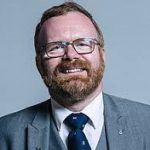
Tag: Martyn Day

  • Martyn Day – 2024 Speech on Freedom and Democracy in Iran

    Martyn Day – 2024 Speech on Freedom and Democracy in Iran

    The speech made by Martyn Day, the SNP MP for Linlithgow and East Falkirk, in the House of Commons on 1 February 2024.

    I am grateful to the hon. Member for Harrow East (Bob Blackman) for securing this debate. The issue of freedom and democracy in Iran is a very important one, and I find myself commending him for his speech and agreeing with every point he made.

    As we have heard, the issue is really about a lack of democracy and a lack of freedom. Elections will of course be held on 1 March to Iran’s Parliament, but they can in no way can be considered free, fair or credible. It is more of a selection than an election, with the unelected, 12-strong Guardian Council having the power to approve candidates. With a track record of banning moderates and reformers from standing, it is no surprise that many candidates have already been disqualified. This body can also veto laws made by the Parliament.

    My litmus test for fair, free and credible democratic elections is: can any individual freely stand for election, can anyone vote in secret for any individual who is standing and can the sovereignty of the people be exercised by their representatives? Clearly, Iran fails on all those counts. The reality is that Iran is ruled as a totalitarian theocracy: it is not a democracy. Ultimate power rests in the hands of the country’s Supreme Leader, Ayatollah Ali Khamenei, and the unelected institutions under his control.

    Corruption persists across all levels, with powerful actors such as the Islamic Revolutionary Guards Corps operating beyond scrutiny. Media and civil society face restrictions hindering their role as independent watchdogs for ensuring transparency and accountability. The regime, as we have heard, is ruthlessly held in place by its intelligence and security force the IRGC and is supported by the wider apparatus of the state, including the judiciary, the Ministry of Intelligence, the police and others.

    Iranian authorities have extensively used Iran’s repressive machinery to censor discussion of these issues and persecute women, human rights defenders and anti-death penalty activists. Political activists who support democratic change have been particularly vulnerable to detention and death over many years, despite which the organised resistance, the People’s Mujaheddin Organisation of Iran—or MEK—have remained determined to establish a free democratic and secular republic, and I wish them every success with that struggle.

    The level of oppression and human rights abuses by the current regime in Iran is truly appalling and is getting worse. According to Freedom House, Iran has decreased its total global freedom status from a derisory 14 out of 100 in 2022 to 12 out of 100 last year. Freedom House gave Iran zero scores for most areas of fundamental rights including: the individual right to practice or express religion, faith or non-belief in public and private; free and independent media; the Government operating with openness and transparency; safeguards against corruption; the question of whether the freely elected head of Government and national legislative representatives determine the policies of the Government; and fair and free elections.

    The UN special rapporteur on the situation of human rights in the Islamic Republic of Iran expressed alarm at

    “the disproportionate number of executions of members of minority communities, in particular the Baluch and Kurdish minorities”,

    and I share this concern. Last year, at least 864 people were executed, the highest figure since 2017. Any use of the death penalty is unacceptable to me and I believe this substantial increase reflects the regime’s inability to suppress the protests that have arisen.

    Women lack equality and face discrimination in both law and practice. Examples include a woman’s testimony in court being given half the weight of a man’s and unequal compensation for victims’ families. Women also face disparities in inheritance rights. The regime fails to protect women and children from sex trafficking while Iranians and migrant workers, especially from Afghanistan, are subject to forced labour and debt bondage.

    The reality is that some 88 million Iranians are effectively living in what is a state prison, otherwise known as the Islamic Republic of Iran. But it does not have to be that way and I applaud the courage and determination of those who have stood up to the regime and protested for the rights that we take for granted, and have done so at great risk to themselves.

    The ongoing uprising began in September 2022 with the arrest of a Kurdish Iranian girl in Tehran by the Tehran morality police for not veiling, after which she was brutally beaten, fell into a coma and tragically lost her life while in custody. That brutal killing of Mahsa Amini prompted widespread protests across Iran, with thousands of people demanding regime change for a secular democratic republic. The ongoing uprising has resulted in over 800 unlawful deaths, including of minors and women. Additionally, around 30,000 Iranians face cruel treatment in jails, including torture and sexual violence, highlighting the dire situation in Iran.

    Ultimately, Iran’s future must be decided by its own people, but given that they have virtually no avenues for reform, the people have no option but to resist, to demonstrate, to defend themselves, and to seek alternative forms of opposition. Iran has been witnessing a massive popular uprising—a call for freedom and democracy largely led by women and young people. I have heard it described by some as a revolution, and I hope it is a successful one. It has clearly rattled the Tehran regime and I believe this is partly behind the regime promoting and encouraging conflict outwith its borders as it seeks to dampen the momentum of the protests inside Iran while simultaneously rallying the regime’s own forces behind the Supreme Leader’s fundamentalist agenda.

    As we have heard, Iran is the biggest state sponsor of terrorism. This exporting of international terrorism by Iran cannot and will not be tolerated, nor should be its support for Russia in the war with Ukraine, use of cyber-attacks, or hostage-taking diplomacy, and I condemn the involvement of Iranian officials in the killing of US servicemen. According to reports in The Times on Tuesday this week:

    “Tehran has already been accused by MI5 and police of more than a dozen assassination and kidnap plots in Britain against dissidents and media organisations in the past two years. Officials have previously expressed fears that, emboldened by the situation in the Middle East, Iran could ramp up its activity in the UK and present a wider terror threat.”

    Although I welcome the recent announcement of additional sanctions on senior Iranian officials, I wonder why we are not taking an even stronger approach. At a minimum, we should urgently proscribe the IRGC as a terrorist organisation. I have lost count of the number of times that I and others have called for that action. Proscription would be a tangible step in the UK in the furtherance of freedom and democracy in Iran. We should also support calls for the UN to dispatch international observers to visit Iran’s prisons and to meet those detained by the regime. We should all support the democratic aspirations of the Iranian people. I pay tribute to the work of the resistance units that emerged in late 2017 and have helped inspire Iranians to defy the prevailing tyranny.

    In conclusion, the SNP stands in full solidarity with Iranians journalists, women, men and young people calling for democratic change. The bravery of Iranian citizens standing up against brutality and dictatorship is beyond inspiring. I wish them every success in seeking a new democratic and secular republic in Iran. It will be better for them and the world when they succeed.

  • Martyn Day – 2016 Parliamentary Question to the Department of Health

    Martyn Day – 2016 Parliamentary Question to the Department of Health

    The below Parliamentary question was asked by Martyn Day on 2016-01-11.

    To ask the Secretary of State for Health, if he will take steps to establish an inquiry into the use of perfluorochemicals in fast-food packaging.

    Jane Ellison

    European Union Legislation already requires that food contact materials must not transfer harmful chemicals into food. Recent reports in the media have referred to changes being introduced in the United States to ban the use of some perfluorochemicals in food packaging. The Food Standards Agency has confirmed that perfluorochemicals are not used in paper and cardboard fast food packaging in the United Kingdom and will continue to work with the industry to ensure they meet their responsibilities under the legislation.

  • Martyn Day – 2016 Parliamentary Question to the Department for Business, Innovation and Skills

    Martyn Day – 2016 Parliamentary Question to the Department for Business, Innovation and Skills

    The below Parliamentary question was asked by Martyn Day on 2016-02-01.

    To ask the Secretary of State for Business, Innovation and Skills, what assessment he has made of the returns to the public purse of British Business Bank investments in Funding Circle.

    Anna Soubry

    British Business Bank’s investment in Funding Circle is one of a portfolio of investments managed by the commercial arm of the bank – British Business Bank Investments Ltd. To date, £60m has been committed to Funding Circle, an amount which has supported over 7,000 businesses. The investment contributes a financial return in line with the performance of the wider portfolio.

  • Martyn Day – 2016 Parliamentary Question to the Foreign and Commonwealth Office

    Martyn Day – 2016 Parliamentary Question to the Foreign and Commonwealth Office

    The below Parliamentary question was asked by Martyn Day on 2016-02-24.

    To ask the Secretary of State for Foreign and Commonwealth Affairs, if he will make representations to his Turkish counterpart on military action in the south east of Turkey and the consequences of that action for Kurdish civilians.

    Mr David Lidington

    I refer the hon. Member to my answer of 16 February 2016 (PQ 26321) to the hon. Member for Hornsey and Wood Green (Catherine West).

  • Martyn Day – 2016 Parliamentary Question to the Foreign and Commonwealth Office

    Martyn Day – 2016 Parliamentary Question to the Foreign and Commonwealth Office

    The below Parliamentary question was asked by Martyn Day on 2016-03-16.

    To ask the Secretary of State for Foreign and Commonwealth Affairs, if he will take steps to ensure that Salva Kiir and Riek Machar are included in UN Security Council-authorised sanctions imposed on generals obstructing the peace efforts in South Sudan.

    James Duddridge

    Our efforts are focussed on ensuring President Kiir and Riek Machar implement the peace agreement, starting with the formation of the transitional government. We will continue to assess the need for targeted sanctions against South Sudan’s political and military leaders. We strongly support a UN arms embargo for South Sudan and are actively pursuing this with our UN Security Council partners.

  • Martyn Day – 2016 Parliamentary Question to the Foreign and Commonwealth Office

    Martyn Day – 2016 Parliamentary Question to the Foreign and Commonwealth Office

    The below Parliamentary question was asked by Martyn Day on 2016-09-05.

    To ask the Secretary of State for Foreign and Commonwealth Affairs, what representations the Government is making to the governments of India and Pakistan on finding a peaceful solution to the situation in Kashmir which fully involves the people of Kashmir in the process.

    Alok Sharma

    The longstanding position of the United Kingdom is that it is for India and Pakistan to find a lasting resolution to the situation in Kashmir, taking into account the wishes of the Kashmiri people. It is not for the United Kingdom to prescribe a solution or to act as a mediator. We encourage both sides to maintain positive dialogue, but the pace and scope of this is for them to determine.

  • Martyn Day – 2016 Parliamentary Question to the Department for Transport

    Martyn Day – 2016 Parliamentary Question to the Department for Transport

    The below Parliamentary question was asked by Martyn Day on 2016-09-15.

    To ask the Secretary of State for Transport, if he will assess the potential merits of introducing more incentives to encourage motorists to use cleaner fuels and public transport.

    Mr John Hayes

    The Department for Transport assesses a number of different fuels in terms of a range of environmental impacts including air quality and greenhouse gas emissions. A number of initiatives are underway to encourage cleaner, lower carbon fuels.

    This Government is investing over £600 million in this Parliament in addition, to a more favorable tax regime towards less polluting vehicles to ensure that almost all cars and vans are zero emission vehicles by 2050.

    The Renewable Transport Fuel Obligation (RTFO) has supported a market for low carbon fuels and delivered significant greenhouse gas emissions savings. In 2014/15 these savings were equivalent to taking 1.3 million cars off the road. We have been working with industry and others on proposals to increase the supply of low carbon fuels in line with our UK carbon budget targets. We plan to consult on proposed changes to the RTFO scheme later this year.

    The Government will continue to promote public transport choices, supporting the market for innovative forms of transport and encourage a move to cleaner and lower carbon vehicles.

  • Martyn Day – 2016 Parliamentary Question to the Department of Health

    Martyn Day – 2016 Parliamentary Question to the Department of Health

    The below Parliamentary question was asked by Martyn Day on 2016-01-12.

    To ask the Secretary of State for Health, what assessment he has made of the potential role of technology in reducing aseptic pharmaceutical medication error.

    George Freeman

    Where appropriate, automation has a role to play in ensuring consistent output from aseptic compounding and increased production capacity. It may also provide additional protection against microbiological contamination by use of ‘closed systems’ of manufacture.

    Licensed specials manufacturers may consider automation as an appropriate solution for their product range and capacity. In these cases, Medicines and Healthcare products Regulatory Agency inspections assess whether the process design, validation, personnel, training and procedures relating to the automated system comply with the requirements of Good Manufacturing Practice.

  • Martyn Day – 2016 Parliamentary Question to the Foreign and Commonwealth Office

    Martyn Day – 2016 Parliamentary Question to the Foreign and Commonwealth Office

    The below Parliamentary question was asked by Martyn Day on 2016-02-01.

    To ask the Secretary of State for Foreign and Commonwealth Affairs, if he will make representations to the Chinese government on the human rights situation in Hong Kong and the alleged abduction of Lee Bo.

    Mr Hugo Swire

    I refer the honourable member to the answer I gave on 4 February 2016 to question number 24423.

  • Martyn Day – 2016 Parliamentary Question to the Department for Business, Innovation and Skills

    Martyn Day – 2016 Parliamentary Question to the Department for Business, Innovation and Skills

    The below Parliamentary question was asked by Martyn Day on 2016-02-24.

    To ask the Secretary of State for Business, Innovation and Skills, what assessment he has made of the implications of a decision to leave the EU on the higher education fees status of EU students becoming classed in the same way as that for non-EU overseas students; and whether his Department plans to assess the potential effect of any such change in classification on the number of students coming from EU member states to study in the UK.

    Joseph Johnson

    At the February European Council, the Government negotiated a new settlement, giving the United Kingdom a special status in a reformed European Union. The Government’s position, as set out by my right hon. Friend the Prime Minister to the House on 22 February, is that the UK will be stronger, safer and better off remaining in a reformed EU.