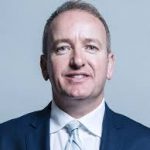
Tag: Mark Pritchard

  • Mark Pritchard – 2016 Parliamentary Question to the Ministry of Justice

    Mark Pritchard – 2016 Parliamentary Question to the Ministry of Justice

    The below Parliamentary question was asked by Mark Pritchard on 2016-01-12.

    To ask the Secretary of State for Justice, if he will introduce tele-teaching in prisons and young offending facilities to improve general education and reduce reoffending rates.

    Andrew Selous

    A review of the quality of education in adult prisons and young offender institutions for 18-20 year olds is currently being led by Dame Sally Coates and will report in due course. Options for improving education outcomes will be considered, including looking at the most effective use of Distance Learning and ICT. Dame Sally is due to report later this year.

    The review of the youth justice system in England and Wales being led by Charlie Taylor will also consider education in the youth secure estate and will conclude later this year.

  • Mark Pritchard – 2016 Parliamentary Question to the Home Office

    Mark Pritchard – 2016 Parliamentary Question to the Home Office

    The below Parliamentary question was asked by Mark Pritchard on 2016-03-07.

    To ask the Secretary of State for the Home Department, if she will take steps to reduce the number of dogs used for medical experimentation.

    Karen Bradley

    Our annual statistics show that in 2014 less than 0.1% of animals used in research in Great Britain are dogs. Dogs are primarily used in procedures for regulatory testing. They are also used in other procedures such as nutritional studies and to better understand naturally occurring diseases and to develop treatments for dogs themselves.

    The Home Office is responsible for regulating the use of dogs in research under the Ani-mals (Scientific Procedures) Act 1986. Dogs are a specially protected species under the Act and the Home Office will grant a project licence for a programme of work using dogs only where the purpose of the programme of work specified in the licence can be achieved only by their use; or where it is not practicable to obtain other suitable animals.

    Since 2010 the number of procedures performed on dogs has dropped nearly 30% from 5,782 in 2010 to 4,107 in 2014.

  • Mark Pritchard – 2016 Parliamentary Question to the Foreign and Commonwealth Office

    Mark Pritchard – 2016 Parliamentary Question to the Foreign and Commonwealth Office

    The below Parliamentary question was asked by Mark Pritchard on 2016-09-13.

    To ask the Secretary of State for Foreign and Commonwealth Affairs, if he will discuss with his counterpart at the (a) Department for Environment, Food and Rural Affairs and (b) Iranian government to assist the government of Iran in helping to halt the decline in the number of Asiatic cheetahs.

    Mr Tobias Ellwood

    We are aware of the plight of Asiatic cheetahs in Iran and we welcome conservation efforts by Iran and the UN. My officials have held preliminary discussions with the Iranian Embassy in London on the issue.

  • Mark Pritchard – 2015 Parliamentary Question to the Department for Transport

    Mark Pritchard – 2015 Parliamentary Question to the Department for Transport

    The below Parliamentary question was asked by Mark Pritchard on 2015-11-06.

    To ask the Secretary of State for Transport, when he will publish a timetable for the refurbishment of Wolverhampton train station.

    Claire Perry

    The refurbishment of Wolverhampton train station is part of the Wolverhampton Interchange Scheme, which is being driven forward by a partnership of Wolverhampton City Council, Centro, Neptune, Network Rail, Virgin Trains and the Canal and River Trust. The Department is not leading on this project.

  • Mark Pritchard – 2015 Parliamentary Question to the Department for Environment, Food and Rural Affairs

    Mark Pritchard – 2015 Parliamentary Question to the Department for Environment, Food and Rural Affairs

    The below Parliamentary question was asked by Mark Pritchard on 2015-12-08.

    To ask the Secretary of State for Environment, Food and Rural Affairs, if she will meet (a) Surfers Against Sewage and (b) other charities and non-governmental organisations to discuss measures to keep the UK’s beaches clean for sport and recreational activities.

    Rory Stewart

    The vast majority of our beaches are high quality. We are determined to keep them that way and we are willing to work with all those who want to achieve this. Defra officials regularly meet Surfers Against Sewage and other environmental Non-Government Organisations to talk about the issues impacting our beaches. I would be pleased if they would contact my office to discuss a meeting.

  • Mark Pritchard – 2016 Parliamentary Question to the Department for Transport

    Mark Pritchard – 2016 Parliamentary Question to the Department for Transport

    The below Parliamentary question was asked by Mark Pritchard on 2016-01-12.

    To ask the Secretary of State for Transport, if he will discuss with the Highways Agency the time taken to (a) programme and (b) complete highway works on the M54 in Shropshire.

    Andrew Jones

    (a) With regard to current and future works on the M54 in Shropshire, there are currently no delays to the programme of works for the current financial year, 2015/16.

    (b) For the forthcoming financial year, 2016/17, Highways England is in the process of finalising the programme of works. This will be completed by the middle of February. The proposed works are:

    Scheme

    Nature of work

    M54 WB J3 Exit Slip Resurfacing

    Pavement

    M54 J7-6 Fence & Barrier

    Fences and Barriers

    M54 J2-M6 J10A WB

    Pavement

    M54 J10a-J1 Drainage

    Drainage

    M54-M6 J10a-J1 WB Drainage

    Drainage

    M54-M6 J10a-J1 EB Drainage

    Drainage

    M54 J4 Traffic Signals Refurbishment

    Traffic Signals

    There have recently been problems with the concrete carriageway on the eastbound side of the M54 between junctions 3 and 2. Highways England has carried out a significant number of temporary repairs and is likely to undertake some more substantial repairs by the end of April 2016, whilst we investigate a longer term solution.

  • Mark Pritchard – 2016 Parliamentary Question to the Department for Environment, Food and Rural Affairs

    Mark Pritchard – 2016 Parliamentary Question to the Department for Environment, Food and Rural Affairs

    The below Parliamentary question was asked by Mark Pritchard on 2016-03-10.

    To ask the Secretary of State for Environment, Food and Rural Affairs, what steps she is taking to improve the speed with which payments are made to small farmers under the Basic Payment Scheme.

    George Eustice

    As of 10 March the Rural Payments Agency has paid in the region of 83% of all eligible claims received. Of these some 81% of small farm businesses had received their payments. The Rural Payments agency is working to pay the remainder of claims as promptly as possible with between 800 and 1,000 staff working on processing claims.

  • Mark Pritchard – 2016 Parliamentary Question to the Department for Transport

    Mark Pritchard – 2016 Parliamentary Question to the Department for Transport

    The below Parliamentary question was asked by Mark Pritchard on 2016-09-13.

    To ask the Secretary of State for Transport, if he will introduce stronger key performance indicators to evaluate the performance of Highways England.

    Mr John Hayes

    The Government will review Highways England’s existing performance indicators and targets when setting the next Road Investment Strategy. As part of this process the Government will consider whether existing indicators and targets should be strengthened, and whether new indicators should be introduced.

  • Mark Pritchard – 2022 Comments on UK Companies Involved in Russia

    Mark Pritchard – 2022 Comments on UK Companies Involved in Russia

    The comments made by Mark Pritchard, the Conservative MP for The Wrekin, in the House of Commons on 7 December 2022.

    There is no doubt that the UK has led the Ukraine war effort with the United States, and there is no doubt that the UK has led the international sanctions regime, but this urgent question is about UK companies. Does the Minister share my concern that DP Eurasia is selling pizzas in Russia, Unilever is selling Cornetto ice creams in Russia, and HSBC is still servicing Russian corporate clients? Does he think that is acceptable? What more action can the Government take to encourage those companies to remove their services and businesses from Russia and to divest themselves fully, rather than just give interviews to corporate magazines and offer warm words?

    James Cartlidge

    My hon. Friend makes an important point. It is for good reason that we do not entertain specific discussions on individual companies and their commercial interests, but we have been very clear on the need to divest. We have an outright ban on investment in Russia, and I sincerely hope that companies are not abusing that. I am not going to suggest that the companies he mentioned are doing so or comment on those specific cases, but I am always happy to meet my hon. Friend, or receive correspondence from him, if he has concerns in that regard.

  • Mark Pritchard – 2015 Parliamentary Question to the Department of Health

    Mark Pritchard – 2015 Parliamentary Question to the Department of Health

    The below Parliamentary question was asked by Mark Pritchard on 2015-10-19.

    To ask the Secretary of State for Health, if he will take steps to work with his Iranian government counterpart to share best practice in drug rehabilitation programmes.

    Jane Ellison

    The late Hamid Ghodse, Professor of Psychiatry and Addictive Behaviour at St George’s University of London, was an Iranian citizen, and helped promote links between British addiction experts and their counterparts in the Islamic Republic of Iran for the sharing of clinical expertise in the treatment of drug dependence. Such links between United Kingdom and Iranian experts continue and best practice is also shared in meetings organised by the World Health Organization and the United Nations Office on Drugs and Crime.