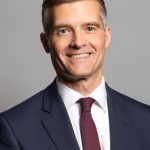
Tag: Mark Harper

  • Mark Harper – October 2022 HS2 Update

    Mark Harper – October 2022 HS2 Update

    The statement made by Mark Harper, the Secretary of State for Transport, in the House of Commons on 27 October 2022.

    Review of High Speed 2, including programme update, local community impact and engagement, environment, benefits and programme governance.

    Overview

    I am reporting continued progress on High Speed 2 in this, the Government’s fifth update to Parliament. Phase 1 (west midlands to London) remains within the budget and schedule range, is hitting construction milestones, has made progress on key procurements, and is supporting more jobs and apprenticeships than ever before. HS2 Ltd is progressing key activities for phase 2a to support the next stage of delivery, and since the last report the phase 2b western leg Bill had its Second Reading, in June 2022, and is progressing through the legislative stages. This report shows how, at this important time, we are continuing to grow the economy and bring communities together across the north of England, the midlands and the south.

    Key achievements in this reporting period (February to August 2022 inclusive) are:

    HS2 now has over 350 active sites between west midlands and London, since 2017 over 950 apprentices have been recruited and, as of September, over 29,000 jobs are being supported.

    Laing O’Rourke Delivery Ltd has been awarded the contract for the construction of the HS2 interchange station at Solihull, worth up to £370 million (in 2022 prices). The contract will involve the finalisation of the detailed design and the subsequent construction of the station.

    “Dorothy” became the first tunnel boring machine (TBM) to complete its first bore and is now preparing for the second parallel tunnel. The 1-mile tunnel preserves the ancient woodland above at Long Itchington wood. Four TBMs have now been launched on phase 1 and driven a total distance of approximately 8.4 miles.

    In May, the Canterbury Road vent shaft became the first diesel-free work site on the HS2 programme. This is a significant step towards the project’s aim to be net-zero carbon from 2035.

    The Phase 2b western leg hybrid Bill secured its Second Reading in the House of Commons, by 205 votes to six, and the first additional provision was deposited in July.

    This report uses data provided by HS2 Ltd to the HS2 ministerial taskforce for phases 1 and 2a and covers the period between February 2022 and August 2022 inclusive. Unless stated, all figures are presented in 2019 prices.

    Programme Update

    Schedule

    On phase 1 (London to west midlands), delivery continues to accelerate towards peak construction next year. The forecast for initial services from Birmingham to Old Oak Common remains within the range of 2029 to 2033, with HS2 Ltd currently reviewing its detailed construction and systems installation schedules to address some pressures within this range.

    Phase 2a (west midlands to Crewe) remains on track to be delivered between 2030 and 2034. Land possessions and enabling works are under way. The next stage is to appoint the design and delivery partner who will oversee the construction phase, award the advanced civil works contracts and begin the early stages of procuring the main works capacity.

    On phase 2b western leg (Crewe to Manchester), the delivery into service date range remains 2035 to 2041, as provided in the strategic outline business case.

    Affordability

    The approximate cost range for the elements of the scheme committed to by the Government for phases 1, 2a, 2b western leg is £53-71 billion in 2019 prices. This range does not include HS2 East, which is at an early stage of development and cost estimates are subject to further work from HS2 Ltd and Network Rail.

    Phase 1 remains within its overall budget of £44.6 billion, which includes contingency held respectively by HS2 Ltd and by the Government. The previous HS2 Minister noted in his last report to Parliament his concern at the steady increase in cost pressures on phase 1 reported alongside drawdowns in contingency. In accordance with the arrangements in its development agreement with the Department, HS2 Ltd has indicated that, if unmitigated, the final delivery cost is likely to exceed its target cost of £40.3 billion, based upon its forecast of future spending. As a result, in September the Department commissioned HS2 Ltd to develop and implement actions to bring projected costs back in line with the target cost.

    To date, out of the phase 1 target cost of £40.3 billion, £18.3 billion has been spent, with an additional £1 billion for land and property provisions, and £10.6 billion has been contracted and has not been spent. The remaining amount is not yet under contract. The target cost does not include Government-held contingency.

    HS2 Ltd has drawn £1.5 billion of its £5.6 billion delegated contingency for phase 1—an increase of £0.2 billion since the last update—leaving about £4.0 billion.

    HS2 Ltd is projecting around £1.9 billion of net additional cost pressures on phase 1—an increase of about £0.2 billion since March. Of the £1.9 billion, the key pressures are:

    An estimated £1.1 billion (increase of £0.3 billion since the last update) for potential additional main works civils costs stemming largely from lower than planned productivity and additional design costs.

    A pressure of £0.4 billion on the cost estimate for the HS2 Euston station. The move to a smaller, less complex 10-platform, single-stage delivery strategy at Euston, as confirmed in my predecessor’s report, is now the basis for ongoing design work and other activities. The Department anticipates that this will assist in addressing some of the cost pressure at Euston as the updated station design is developed over the coming months. This work will also consider and address the appropriate level of contingency that should be held to manage risks that are likely to arise during the construction of an asset of this complexity. I will provide further updates as this work progresses over the course of the next 18 months.

    A pressure of £0.3 billion (increase of £0.1 billion since the last update) against HS2 Ltd’s budget for changes to Network Rail infrastructure at Euston and Old Oak Common that are required to operate the new HS2 stations.

    A further £0.1 billion of net cost pressures presenting on other parts of the programme. This is the aggregate total of smaller potential cost pressures.

    A total of £0.8 billion of net savings and efficiencies have been identified within phase 1. These principally consist of savings across the main works civil portfolio and savings in the acquisition and resale of land and property. These have partly offset gross cost pressures resulting in the net figure above.

    On covid-19 costs, HS2 Ltd’s assessment of the likely financial impact of the pandemic on delivering phase 1 remains estimated within the range of £0.4 billion to £0.7 billion. Further claims are subject to detailed scrutiny by the Government and will only be allocated against contingency once this assessment has been finalised. Further detailed claims are currently under review by HS2 Ltd and further updates will be provided in future parliamentary reports.

    Following confirmation of the move to the more efficient 10-platform station design and single-stage build at Euston station, significant elements of the design work on the original 11-platform station can no longer be used. As the cost of this earlier design work has ceased to be of future benefit to HS2 Ltd, the related costs were reported as an “impairment” in HS2 Ltd’s published annual report and accounts for 2021-22.

    The phase 2a budget remains unchanged, with a cost range of £5.2 billion to £7.2 billion. The Government intend to set a target cost alongside publication of the full business case.

    On phase 2b western leg, the financial case of the strategic outline business case published in January 2022 presented an estimated cost range of £15 billion to £22 billion. Removal of the Golborne link from the scope of the phase 2b western leg Bill scheme has reduced the overall estimated cost range to £13 billion to £19 billion.

    Consistent with the rest of the economy, the HS2 programme is experiencing high levels of inflation. HS2 Ltd is working with its suppliers actively to mitigate inflationary cost increases. The Department for Business. Energy and Industrial Strategy and Office for National Statistics September construction update showed that construction materials across all work in the UK have experienced inflation of 18% from August 2021 to August 2022. While inflation is not affecting the overall affordability of HS2 in real terms, because the total budgets and cost estimates for each phase are set in 2019 prices, it is creating pressures against its existing annual funding settlements, which have been set in cash. I am clear that HS2 Ltd and its supply chain must do all that they can to mitigate inflationary pressures.

    Delivery

    Work continues at pace on phase 1, with several significant developments to report. Across the programme HS2 Ltd reports that it has moved 24.4 million m3 of earth, the equivalent of over 9,760 Olympic-size swimming pools’ worth. The new launching gantry “Dominique” has installed the first decks of the Colne Valley viaduct, which will be the longest railway bridge in the UK. The viaduct will carry the new high-speed line across a series of lakes and waterways on the north-west outskirts of London. Across the phase 1 route, 8.4 miles of tunnel work has been driven so far. Progress has recovered well following an enforced shutdown to investigate and learn lessons from a small tunnel fire that took place in May this year. TBM Dorothy safely completed the first bore under Long Itchington wood in Warwickshire in July.

    At Old Oak Common, station work continues with the Old Oak Common and Park Royal Development Corporation, the London Mayor and the Department for Levelling Up, Housing and Communities to bring forward proposals for the regeneration of the area around the station.

    Stage 1 of the two-stage design and build contract for Birmingham Curzon Street station is expected to conclude later this year, subject to agreement of an affordable target price.

    In July, HS2 Ltd awarded the contract to design and build the interchange station in Solihull to Laing O’Rourke Delivery Ltd. The contract, worth up to £370 million (in 2022 prices), will see work in two stages to finalise the detailed design and then build the station. HS2 Ltd continues to work collaboratively with private and public sector stakeholders to support the ambitions of the

    Urban Growth Company and the local authority to realise the economic and social benefits of HS2 and provide up to 30,000 new jobs and 3,000 new homes.

    HS2 Ltd continues tendering for phases 1 and 2a rail systems packages (including track, catenary, mechanical and electrical, power, control and communications).

    At Euston, HS2 Ltd and its construction partner, Mace Dragados, are continuing to optimise design and construction efficiencies. Work progressing on site includes demolitions, piling of the station box structure, the construction of a relocated London underground traction sub-station, the creation of a new utility corridor and construction of a new six-storey site accommodation block. In parallel, HS2 Ltd and Network Rail, with support from the Euston Partnership, are working together to develop a cost-effective design that provides integration between the HS2 station and the redevelopment of the Network Rail station and delivers value for money. Lendlease, the Government’s master development partner at Euston, hosted the first in a series of public exhibitions and outreach events due to take place over the next year to gather feedback from the community and understand how proposals for a Euston masterplan can support local aspirations.

    On phase 2a, early environmental works continue at multiple sites along the route and the design for enabling civils works progresses at pace. Illegal protestors were successfully evicted from two key sites.

    The phase 2b western leg Bill had its Second Reading in June 2022. The first additional provision (AP1) was deposited on 6 July, giving effect to Parliament’s instruction to remove the Golborne Link from this Bill while alternatives are considered. HS2 Ltd has held eight in-person events and three webinars ahead of depositing the first AP, attended by over 400 people. 134 petitions against the Bill and 21 against AP1 were received and a Select Committee is being convened to consider these petitions. A supplement to the strategic outline business case was published at Second Reading, setting out the impact of removing the Golborne Link from the Bill on the scheme’s business case. As the Bill progresses, HS2 Ltd is working to develop a robust future delivery strategy for the scheme.

    The Government are continuing work to develop plans for HS2 East, a new high-speed line between the west midlands and east midlands, which would enable HS2 to serve Nottingham and Sheffield (via Derby and Chesterfield). Development of plans for HS2 East is being carried out by HS2 Ltd and Network Rail, in conjunction with work to electrify the Midland main line. The output of this work will be used to inform future decisions on how to progress the scheme, including how HS2 East can support economic growth aspirations in the region. The Government have recently provided funding to support the East Midlands Development Company to develop a revised HS2 growth strategy to reflect proposals for HS2 East.

    Local community impact and engagement

    Local impacts are unavoidable on a project of the scale of HS2. However, I expect HS2 Ltd to do its utmost to reduce disruption where it is reasonable to do so and to treat communities affected by construction with respect, sensitivity and professionalism. Independent construction inspectors continue to assess the considerate delivery of HS2 works. Following a public recruitment process, the Government announced on 25 April that Stewart Jackson had been appointed for three years as the independent HS2 residents’ commissioner.

    The HS2 helpdesk has recorded 181,585 enquiries or complaints since its launch in 2018. I am pleased that 100% of urgent construction enquiries and complaints between April and August 2022 have been responded to within two working days.

    The community and business funds (CEF and BLEF) are available to communities and business groups that are disrupted by construction of the railway. Over £12.4 million has so far been granted to 216 projects, helping HS2 to leave a positive legacy in areas near the new railway.

    In its 2021 community engagement strategy, “Respecting People, Respecting Places”, HS2 Ltd committed to continue to involve communities in opportunities to benefit and learn from the project. So far, 9,258 engagement activities have taken place along the line of route, with 101,614 people attending. HS2 Ltd has visited 91 primary schools, involving 7,598 children in “playing it safer” sessions.

    Protestors have continued to target land required for construction of the railway. HS2 Ltd estimates that illegal protest has cost the project £36.5 million in direct costs and around £110 million in consequential costs, such as delays, to date. HS2 Ltd has successfully enforced several civil injunctions. In September 2022 it was granted a route-wide injunction by the High Court, prohibiting trespass on and obstruction of access to land owned by the Secretary of State that HS2 Ltd is entitled to possess. It is not intended to prevent lawful protest. The injunction is now active along the phase 1 and 2a routes. The injunction order contains provision for the injunction to be discharged or varied at any time and is relisted for renewal each May.

    Land and property

    In 2020, a comprehensive review of land and property acquisition led to 36 proposals for change, intended to improve the experience of property owners affected by the new railway. I am pleased to report that, two years later, all 36 proposals have been progressed as far as possible, including HS2 Ltd’s online portal that makes it much easier for property owners to track their claims. I continue to seek further improvements in the operation of HS2 land and property schemes and the treatment of people impacted.

    Environment

    Over 800,000 trees and shrubs have been planted as part of HS2’s green corridor.

    HS2 continues to be at the forefront of efforts to decarbonise construction and to leave a positive environmental legacy. Since the last report, the first diesel-free construction site has started in action, including using the UK’s only electric crawler cranes. The programme has successfully trialled hydrogen fuel cells to replace large diesel generators, eliminating noise and air quality impacts for local residents. It has also made use of cutting-edge Formula 1 technology to use fuel more efficiently. New conveyor systems have been introduced, for example in Warwickshire, to reduce impacts to residents by reducing HGV traffic on local roads.

    To support the achievement of biodiversity targets, £1.5 million of funding has been provided for six environmental enhancement projects in the Trent Sow parklands and Cannock Chase area of outstanding natural beauty associated with phase 2a.

    HS2 Ltd will publish the latest environmental sustainability progress report soon, which will provide up-to-date information on HS2’s environmental impacts and activities. HS2 Ltd will also shortly publish its ancient woodland summary report, with details of how it is mitigating impacts on these irreplaceable habitats.

    Benefits

    I am delighted that, as of September, HS2 is supporting over 29,000 jobs. To date, 2,580 businesses are already working on the project—over 60% are SMEs and 97% are UK-based. The programme will create 2,000 apprenticeships, with over 950 having been recruited since 2017, and there have been 2,200 jobs starts by people who were previously workless.

    The Government will publish an HS2 local growth action plan later this year on how we will continue to support HS2 places to realise their local growth and regeneration ambitions.

    On active travel, the Department has asked HS2 Ltd to assess making design changes in five more locations on phase 2a, in addition to the 20 locations HS2 Ltd is already committed to making design changes on phase 1. HS2 Ltd is continuing to assess the feasibility of repurposing haul road and maintenance access tracks for local community benefit, with pilot projects being progressed.

    The Government are exploring how we can support inward investment opportunities linked to HS2 and particularly how we can encourage large national and international investors to consider investing in places with HS2 stations and the surrounding areas.

    Programme Governance and Controls

    An updated HS2 Ltd framework document was published in August. It governs the corporate relationship between the Department and HS2 Ltd, confirming key responsibilities, accountabilities, and expectations. I will provide an update on the recruitment of a permanent chair for HS2 Ltd in my next report. Until the permanent chair is in place, Sir Jonathan Thompson will continue to chair board meetings in his capacity as deputy chair.

    Forward Look

    On phase 1, preparation continues for a TBM launch at Long Itchington wood to create the second bore, before this TBM is moved to Bromford tunnel in Birmingham. Following the recent successful launch from West Ruislip of the TBM named Sushila by local schoolchildren, preparations are under way for the next TBM to be launched from this site shortly.

    In the next six months, HS2 Ltd will further develop its approach to managing the supplier alliance that will be delivering the rail systems packages such as track installation, overhead catenary and signalling systems. This will include developing and testing its internal processes and systems to manage the integration risk between the 14 different suppliers, development of its leadership capability and the evolving governance arrangements as it moves from a civils-led programme to a systems and operability-led programme.

    I will continue to engage closely with Parliament and will provide my next update in spring 2023.

  • Mark Harper – 2022 Comments on Rishi Sunak Becoming Prime Minister

    Mark Harper – 2022 Comments on Rishi Sunak Becoming Prime Minister

    The comments made by Mark Harper, the Conservative MP for the Forest of Dean, on Twitter on 21 October 2022.

    Rishi was right then and he’s right now.

    Rishi has the economic credibility needed to get us back on track.

    Rishi has the honesty and integrity required to be a PM we can be proud of.

    Rishi will build a team to govern in the national interest.

    Proud to be backing Rishi Sunak.

  • Mark Harper – 2022 Speech on Energy Price Capping

    Mark Harper – 2022 Speech on Energy Price Capping

    The speech made by Mark Harper, the Conservative MP for Forest of Dean, in the House of Commons on 8 September 2022.

    I will keep the scope of my comments brief, Mr Deputy Speaker, given the time available. The written statement included confirmation—the Prime Minister also confirmed this—that the Chancellor will set out the expected costs as part of the fiscal statement. Will those costs include the Government’s assumptions for how wholesale prices will move over the coming months and years? Yes, it is an estimate, but we have to make assumptions to calculate the cost. Secondly, and importantly, will the estimates of the cost of that package be independently scored by the Office for Budget Responsibility, or will they simply be the Government’s assessment of costs? It would be helpful if the Minister could confirm which of those it will be when he responds to the debate.

    I welcome wholeheartedly confirmation from the Prime Minister that people who are off the gas grid will be protected by this announcement. A full 40% of my constituents are off the gas grid, and I believe the number is broadly similar in the Prime Minister’s constituency. It is great to have confirmation that they will be helped, but a bit more detail on process is important. People who buy oil or liquefied petroleum gas tend to buy it in lumps—they have to fill a tank. If they were to place an order today, for example, to ensure they have sufficient energy, they will need to know whether the costs of that order will be covered by the price guarantee, or whether that will be only for deliveries that take place after 1 October. Although the details may need to be worked through, confirmation about that is incredibly important. It would be terrible if someone on a low income made a very expensive purchase today, and then discovered that they had inadvertently cut themselves out of help. Equally, we do not want people running out of energy by delaying those purchases.

    My final point is to flesh out what I said in my intervention on the Leader of the Opposition. My understanding is that over half of the £170 billion excess profit includes profits made by foreign companies on energy supplied to the United Kingdom. It is not within the scope of the Exchequer to tax that. Secondly, we already have a windfall tax. We are already taxing excess profits at a total rate of 65%. That windfall tax has been legislated for by this House, and it will stretch forward to December 2025. I do not really know what the Labour party is arguing for, and I noticed that after my intervention, the Leader of the Opposition would not say what rate he thought a windfall tax should raise—65% seems quite high to me, and it would be helpful if Labour could confirm what it believes it should be.

  • Mark Harper – 2021 Speech on Covid-19 Restrictions

    Mark Harper – 2021 Speech on Covid-19 Restrictions

    The speech made by Mark Harper, the Conservative MP for the Forest of Dean, in the House of Commons on 14 December 2021.

    Let me start with a few words about the big picture. My hon. Friend the Member for Winchester (Steve Brine) put this very well. We know that covid is going to be with us forever, and we know that we are going to have variants forever. The chief scientific adviser has told us that, and I agree with him. There are many people who think that we will just have to wait a bit and it will all be over, but that is not happening. We have to be realistic about what we are facing, and according to Jeremy Farrar, we are facing this challenge as probably the best protected country in the world through vaccination.

    This was effectively the first big test for the Government: how do we deal with a variant of concern in a very well vaccinated population? I am disappointed that we have quickly gone into panic and emergency mode, with late Sunday night broadcasts—not in the House of Commons where questions can be asked—scaring people witless. For example, they have been told that two doses give them no protection, which is not true. Two doses provide weakened protection from omicron against infection, but they still provide good protection against serious disease. I am concerned that many people out there who have had two doses and who are perhaps vulnerable now feel that they have no protection. That is simply not correct. If this is the first test, I do not think we are doing very well.

    Aaron Bell

    The data from South Africa that we heard this morning in the Science and Technology Committee showed that we still have good protection against severe disease from two doses of Pfizer, but it has gone down from 93% to 70% for hospitalisation. That is four times the risk of hospitalisation.

    Mr Harper

    I have seen that, and I look forward to the information from the UK. The point I have been making in my constant repetition about the House sitting next week or the week after or being recalled—my right hon. Friend the Member for South West Wiltshire (Dr Murrison) also mentioned this—is that we are learning new information every day, and when we get that information, we might need to make different decisions. The House needs to be involved in those decisions; they should not simply be made by Ministers by decree. I repeat that point, and I do not understand why Ministers will not give us that assurance. It would build a lot of trust and good will among colleagues, and I do not understand why they will not give that commitment.

    These decisions have significant economic and social impacts, as well as impacts on the NHS’s ability to deliver non-covid treatments. My hon. Friend the Member for Winchester has already pointed out that the NHS is going to scrap a whole load of elective surgeries and consultations with GPs in order to get boosters delivered. That might be the right decision, but I do not think that a proper balancing is taking place. Goodness knows how long it is going to take us to recover from the creation of this new backlog over the coming months. If the Government’s fears, as set out by the Secretary of State, are confirmed in any way, what is the exit strategy? What approach are they going to take to ensure that we do not face on-and-off seasonal restrictions forever? That is a serious question, and it has been raised by other colleagues. We need an economy that functions, people need to build lives that can function and the NHS needs to be able to function and deliver all the other healthcare we require.

    Let me turn briefly to plan B. I am happy to support the measures on self-isolation. I simply note that, two weeks ago when we were asked to vote to restrict them, I voted against that. Two weeks later, the Government have agreed that I was right to do so, because they are effectively revoking those earlier measures. I will leave that thought with colleagues for when they decide whether they wish to listen to the advice of Ministers or others.

    On vaccine passports, the Government’s plan B makes it very clear that Ministers’ preference is for vaccine-only passports. The only reason why tests have been incorporated is to buy or secure the support of the Opposition. That is the only reason. Ministers’ preference in writing is for vaccine-only certificates, so we know what they would like to do if they could get away with it.

    The Secretary of State also made some commitments about not supporting mandatory vaccination for the entire population. The only reason that needed to be said is that, two weeks ago, the Prime Minister put on the table the whole concept of mandatory vaccination and talked about having a “national conversation” about it. All I say is that, if Ministers wish to build trust and good will, they need to be careful about what they say. They should not fling these very troubling concepts around without thinking about them. Words have consequences, both in terms of what happens in the real world and of the trust that needs to be built with Members of Parliament and the public.

    What is proposed for vaccine passports is very limited, but that was the case everywhere they were introduced around the world. Everywhere they have been introduced, they have been extended. In Wales, for example, where Labour is in power, they have been extended in terms of the venues to which they apply, so anyone who thinks that Ministers will stick to what is currently on the Order Paper are, I am afraid, kidding themselves.

    The final thing I say to colleagues is this: the vote on vaccine passports is not just about the regulations on the Order Paper; it signals how we wish to treat this House, how we wish to be treated on behalf of our constituents, and the direction of travel and the approach. If my colleagues wish to send the Government a clear signal that they need to rethink their approach, then, certainly on vaccine passports, they should vote against them. Send the Government a clear message that we can do better. There is a better way, and we should send that message today.

  • Mark Harper – 2021 Speech on the Obesity Strategy

    Mark Harper – 2021 Speech on the Obesity Strategy

    The speech made by Mark Harper, the Conservative MP for Forest of Dean, in the House of Commons on 27 May 2021.

    As I said in my interventions on the Minister, I very much support the Government’s objective. A situation in which 36% of adults in England are overweight and 28% are obese is not good, and there are many health consequences of it, but my view is that, fundamentally, we need, first, to enable people to understand whether they are overweight or obese. That might sound like a foolish thing to say, but there is some evidence that people do not recognise whether they or those around them are overweight or obese, and are not very good at working that out.

    Secondly, we need to make people understand the health consequences of being overweight or obese. The Minister talked about incentives. The real incentive that people should have is that they want to be healthier. Unless individuals themselves want to be healthier and move towards a healthy weight, it seems to me that we will not get very far.

    Frankly, getting to a healthy weight means having a healthy diet. It does not mean going on a diet and then going back to unhealthy eating; it means changing diet permanently. In many cases, it means making not dramatic changes but small changes that people stick to, such as reducing portion sizes. It is about reducing treats and things we like, not getting rid of them. When I eat, I like all the bad things, but I have become better as I have got older—I have needed to—and now I am a bit more controlled about how many times I have them. I watch the size of my portions, because as I have got older, I have had to watch what I eat.

    It seems to me that it is about diet, not about individual foods. As my hon. Friend the Member for Buckingham (Greg Smith) said, demonising individual foods is not a very successful strategy. There are plenty of things that I like that would individually be very unhealthy, but I just do not eat them very often. That is where we need to get to: people need to understand what a healthy weight is, understand the health consequences and want to get there themselves.

    I have a couple of questions for the Minister. She spoke about the evidence for out-of-home labelling. The impact assessment is a rather weighty document of 76 pages, but one of the things that I learned as a Minister is that it is worth plodding through such documents. There is lots of useful information in it, but I did not find any compelling evidence that introducing out-of-home calorie labelling would have any significant impact on the quantity of calories that people consume. Given the concerns that the hon. Member for Bath (Wera Hobhouse) and the charity Beat have rightly set out about those with eating disorders, the case for its successful impact is not very compelling. There is quite a lot of concern that it will not be helpful, so I think the Government ought to think again about their approach.

    I also have a question about the soft drinks industry levy. The levy has been successful in reducing the amount of sugar consumed; in my constituency, Suntory Beverage & Food Great Britain and Ireland, which produces Lucozade, Ribena and Orangina, has led the industry in taking more than 50% of sugar out of its products. It has also invested £13 million in new machinery at its Forest of Dean plant to produce those products—I was very proud to launch the new production line. However, although we have reduced the amount of sugar consumed, I have seen no evidence that we have therefore reduced the quantity of calories consumed or made any impact as a result.

    Alun Cairns

    My right hon. Friend is making a very effective, cogent argument. Does he agree that because there is a will to come up with a solution that will have an impact, there is a danger that unless we take account of all the evidence, including his points about the impact of the sugar tax, we might well feel better for doing something, but not quite achieve what we set out to achieve?

    Mr Harper

    That is right. I am very keen that we look at the evidence. I can see that through reformulation we have led the industry—the company that makes Lucozade and Ribena has been successful in doing that—but the real question is whether that has reduced the number of calories consumed, both by adults and by children, and had any impact on the number of people who are overweight or obese. It has clearly been successful in reducing the quantity of sugar consumed, but as my hon. Friend the Member for Buckingham said, sugar in itself is not a bad thing; people need to consume a certain amount of sugar to have a healthy diet. My worry is that we have reduced the amount of sugar in these products, but that will not actually make any difference to whether people have a healthy diet.

    All these measures need to be tested. The point that I was making to the Minister earlier is that I do not want us to introduce them, wait nine years until 2030, and then say, “Goodness, it hasn’t worked.” I absolutely accept the Minister’s point that national targets may not make sense, but we need to look, at a local level, at whether the measures are successful. If they are not working, we need to change them and look at what the evidence suggests would be more successful in getting people to a healthy weight so that we all lead a healthier lifestyle.

  • Mark Harper – 2020 Speech on BBC Regional Politics Coverage

    Mark Harper – 2020 Speech on BBC Regional Politics Coverage

    Below is the text of the speech made by Mark Harper, the Conservative MP for the Forest of Dean, in the House of Commons on 22 June 2020.

    A few thoughts occurred to me when I was listening to my hon. Friend the Member for Tiverton and Honiton (Neil Parish) and some of the interventions that I think the BBC board would do well to reflect on.​

    The first is the question of the licence fee. I have my thoughts, and although I have not reached a conclusion about the licence fee, I can see both sides of the argument. One of the important things for the BBC to reflect on is that if it wants to retain the support of people across the country—although the hon. Member for Glasgow East (David Linden) is no longer in his place, this is a debate that happens in Scotland, Wales and Northern Ireland, as well as in England—it needs to retain the support of people from across the country for a compulsory fee. My hon. Friend the Member for Winchester (Steve Brine) said that if people do not pay that fee, they will go to prison. The BBC does need to think about what it is delivering. If it is not going to deliver anything different from what is available on a purely commercial basis, actually the licence fee is difficult to justify, so that is worth its reflecting on.

    I talked about cost in my intervention earlier; that is actually very interesting, and again the BBC should reflect on it. I was looking at an interesting tweet from Chris Mason yesterday about technology. He had the example of a piece to camera that he did for the “Six O’Clock News” yesterday. The camera in question was the size of a highlighter pen, and the monitor used to film it was on his mobile phone. It seems to me that the developments in technology—I know this from interactions I have had with our own journalists from BBC Radio Gloucestershire about some of the technology now—mean that people can do things remotely. We do not have a whole swathe of people turning up; it is an individual, and those individuals do the recording, clip up the programmes and transmit them electronically straight into the studio. Technology should enable the BBC to deliver more local coverage more cost-effectively than ever before.

    Of course, the BBC also has more platforms. My hon. Friend the Member for Tiverton and Honiton talked about some well-watched television programmes in our region including “Sunday Politics West” and “Inside Out”. However, it is worth reflecting on the fact that these BBC local journalists not only produce content for BBC local radio, such as the fantastic BBC Radio Gloucestershire, and for television—for example, “Points West”, the evening news in our region, and “Sunday Politics West”—but also generate content for the BBC’s own website. I know that that can be controversial, because many local journalists and local newspapers think that that local content unfairly competes with them, and indeed it does, but we should just think about the fact that if the BBC is producing local content, it is a bit silly if we cannot access it on all the different platforms. The cost of producing regional and very local content is coming down and the number of platforms available for people on which to view that content is going up so people can see that content more effectively. Those are both questions for the BBC to focus on.

    The hon. Member for Chesterfield (Mr Perkins) also focused on accountability. This is not just about holding us here in Parliament to account on how we conduct ourselves locally and on our records as parliamentarians; it is also about local government, which he mentioned. It is important to have important local outlets—both newspapers and the BBC—because otherwise our local councils will not be held to account by anyone. Even in the time I have been involved in politics in my constituency, ​the level of coverage of what goes on in local council chambers has plummeted. We do not get the dedicated local government reporters that we used to get. There may be a big story going on in a local council—for example stories about social care or how we look after people with learning disabilities and how effectively we get them into work—but such local issues are never going to be covered properly by national broadcasters unless we have a truly national scandal. Instead, we have to depend on effective local coverage, which in terms of reach means the BBC.

    It is also worth focusing on how many people actually see this content. I may not be completely up to date with the figures, but I remember, on my most recent visit to BBC Radio Gloucestershire, asking about the number of people who listen to its programmes. Its morning breakfast programme, the drive time programme, is listened to by many people in my own constituency as they commute —or at least as they used to commute by car, in the days pre-coronavirus—and in Gloucestershire more people listen to that programme than listen to Radio 4’s “Today” programme. So more people in Gloucestershire listen to that local radio station for their news and current affairs and to hold their democratically elected politicians to account than listen to a national leading broadcast programme.

    That is really important, and it says two things to me. First, it says that if we did not have that local programme, we would not be holding local politicians, local business leaders and local decision makers to account. Secondly, the fact that the listening figures are so high suggests that my constituents and other Gloucestershire residents find that content more relevant and more interesting to them than that of the national broadcasting programmes that are available at the same time. If the BBC is thinking about its attractiveness to the public—this comes back to my point about the licence fee—it would do well to reflect on that before it wantonly casts these services aside.

    My final point, on the cost-effectiveness of the regional services, is the point I made in my intervention. When I visit Radio Gloucestershire—and also when I visit BBC Bristol when I am there for “Sunday Politics”—I look around the studio and see how the staff have to multi-task to put programmes together. I do not see a lot of fat, a lot of waste or a lot of unnecessary fripperies. I see a very cost-effective operation covering what my hon. Friend the Member for Tiverton and Honiton has described as a big region in the south-west. It is a shame that our colleague from Scotland, the hon. Member for Glasgow East, has gone, because my parliamentary neighbour, my hon. Friend the Member for Tewkesbury (Mr Robertson), is fond of saying—I checked this once, to ensure that it was accurate—that his constituency in Tewkesbury is closer to the England-Scotland border than it is to Land’s End. That just demonstrates the size of one region in England, and it shows the nonsense of suggesting that even that one region can be adequately covered from London, let alone all the regions in England. That is a really important point for the BBC to bear in mind.

    Those of us who have had the opportunity to go to BBC HQ at Broadcasting House will have noted the disparity in the resources put into the BBC centrally. I remember having a conversation with the then Prime Minister, David Cameron, who told me that, when he did a press conference, he used to marvel—that is perhaps ​not the right word—at the number of questions he used to get from different bits of the BBC. Every single BBC programme insisted on sending its own person, rather than there being a single person to ask a question. There would be a question from the “Today” person, a question from the “Newsnight” person and a question from the BBC’s political editor. That did not suggest an organisation that was focused on delivering value for money. The BBC should bear that in mind.

    Steve Brine

    On that point, sort of, has it not been fascinating during the Downing Street press conferences to see the regional reporters ask their questions? They do it with a straight bat, without an agenda and without a tone. They just get to the nub of the question that matters to the people in their area. Has not that just been so refreshing?

    Mr Harper

    My hon. Friend makes a good point. That is absolutely accurate, and the questions from the local journalists are often far more difficult for the Minister to answer because they are focused on the issue at hand. They do not have any of the Westminster aspect to them; they are straightforward questions. Those journalists are doing what journalists should always do, which is to ask us the questions that the listener or viewer at home wants them to ask. The journalist should be putting the question that the person at home, looking at the screen or listening to the radio, has in their head to the people making the decisions. If they are doing that, they are absolutely doing their job properly.

    My final point is about some of the subjects covered, which I think the hon. Member for Chesterfield also touched on, as did my hon. Friend for Tiverton and Honiton. I will pick two examples. The first, which was a little while ago—well, it seems like a long time ago, but it wasn’t really—is flooding, which impacted different parts of the country in different ways and was something that sadly we experienced ourselves in my county of Gloucestershire. That is one set of circumstances when local reporting is at its best—when journalists get out into communities and report on the aspects of the issue that really matter to individuals.

    I also agree with what the hon. Gentleman said about the coronavirus outbreak, two aspects of which are worth noting. The first is that the huge amount of very locally focused responses in our communities—through local resilience forums, county councils, district councils, volunteers, and town and parish councils—has been covered in local media outlets, including the BBC, in a way that it simply would not have been, and has not been, in national broadcasting.

    Mr Perkins

    The right hon. Gentleman is right that the local context has been different. What is also different is local accountability, because councils have decisions to make about the local response to coronavirus, and politicians have to answer for those decisions, whether they be council leaders or Members of Parliament. That is the other dimension to the point he is making.

    Mr Harper

    I am grateful for that spot-on intervention, which leads to my final point, about one of the things that we will now be focused on. The Prime Minister tomorrow will announce further moves, I hope, to enable us to get our economy back on track and functioning. One of the important ways to facilitate that is through the test and trace system, which is starting to be up and ​running, and that is being dealt with not just by the NHS nationally. There is also an important local component, in that locally based, locally employed and locally accountable directors of public health will be responsible by the end of this month for putting together a local outbreak plan to deal with the inevitable local outbreaks—I say inevitable because we have already seen outbreaks in our country and others, whether in specific localities or specific businesses. That will be absolutely critical in getting the country functioning again while keeping people safe, and those outbreak plans will be locally developed, by locally accountable officials and councils.

    That aspect is important, but when the inevitable outbreaks of coronavirus happen, it will also be really important to have quality journalism to report on what has happened in a non-sensationalist, factual way, so that local people know what is going on, what the facts are, what is being done to keep them safe and what they need to do to keep themselves and their communities safe. If we were to get rid of that local reporting and accountability, the country and our communities would be the poorer for it.

    My hon. Friend the Member for Tiverton and Honiton should be thanked for his wisdom in securing this debate, but also for brilliantly planning it to occur on a day when he would have a little more time than is often available in an Adjournment debate, thereby ensuring what I think will be quite a full debate. I hope the powers that be in the BBC watch BBC Parliament, which is another very valuable service delivered by the BBC, listen to the clear cross-party message—that should sound an alarm with them—from both main political parties and some of the smaller parties, and think very carefully about whether, come September, they should bring back BBC regional coverage and protect it in the months and years to come.