Tag: Maiden Speech

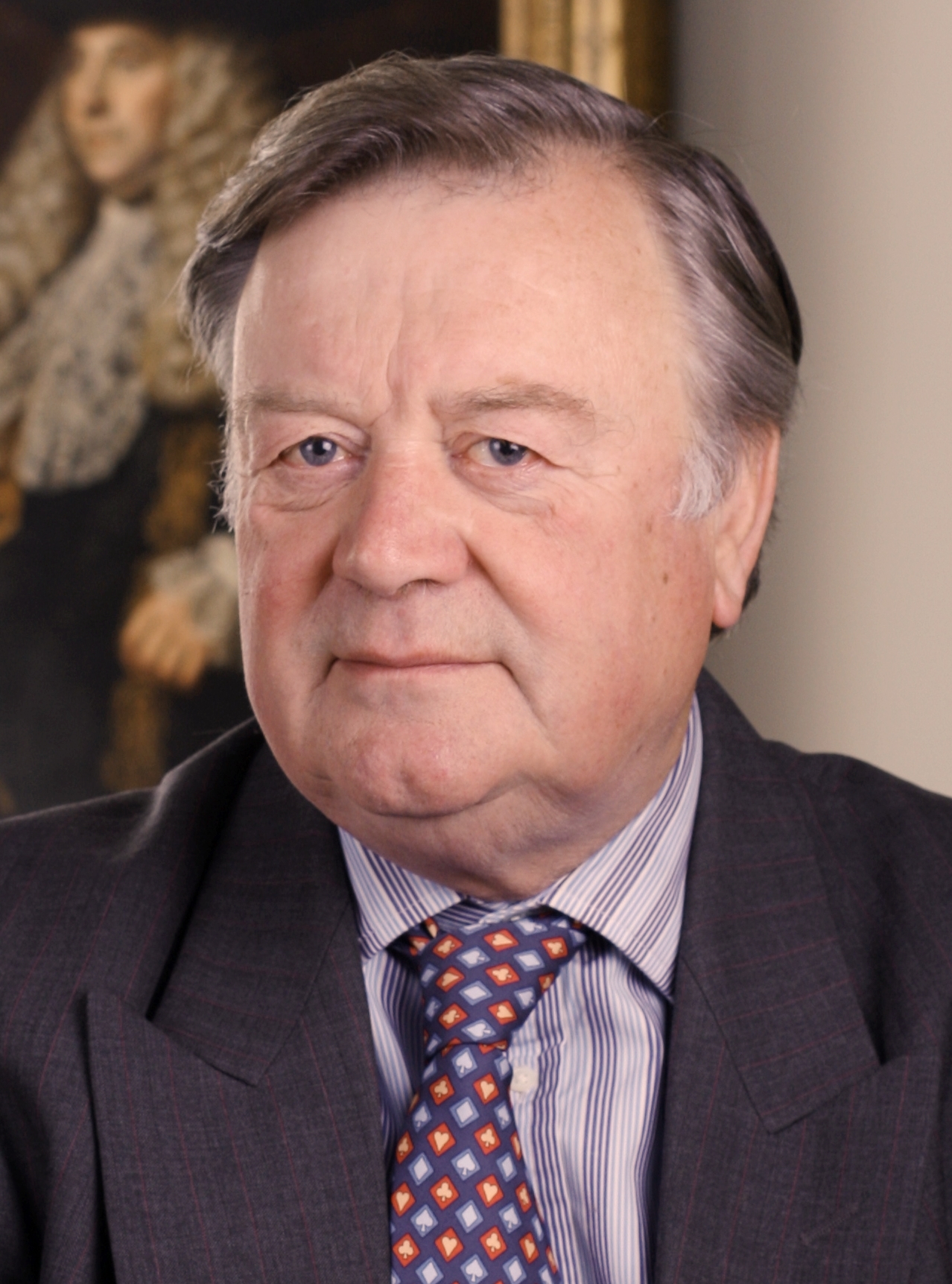
  • Cecil Franks – 1983 Maiden Speech in the House of Commons

    Below is the text of the maiden speech made by Cecil Franks in the House of Commons on 31st October 1983.

    I thank you, Mr. Deputy Speaker, for calling me to speak in this debate and in so doing giving me the opportunity of making my maiden speech on a subject which is of vital importance to my constituency. It is a privilege also to be called to speak after such a distinguished parliamentarian a s the right hon. Member for Blaenau Gwent (Mr. Foot), even though our views will differ widely.

    Barrow and Furness is a new constituency comprising the whole of the former constituency of Barrow-in-Furness, together with the Low Furness region of the former constituency of Morecambe and Lonsdale.

    Barrow-in-Furness was represented for 17 years by the right hon. Albert Booth who served the constituency and his constituents with great distinction, achieving high Government office as a member of the Cabinet. He is a man of great integrity and principle, and I am happy to have this opportunity of paying him tribute.

    The Low Furness area was represented from 1979 by my hon. Friend the Member for Morecambe and Lonsdale (Mr. Lennox-Boyd). He, too, was assiduous in his concern for his constituents, by whom he was and is held in high regard and esteem, and I wish to place on record my personal appreciation of the guidance and assistance that I have received from him since I became a Member of this House.

    The town of Barrow-in-Furness lies at the end of the peninsula of south-west Cumbria. It is a shipbuilding town whose prosperity depends entirely on the viability and success of its major employer, Vickers Shipbuilding and Engineering Ltd.—a constituent part of British Shipbuilders. The design and building of submarines, both conventional and nuclear powered, has been largely concentrated by British Shipbuilders at the Vickers shipyards, where over 8,000 people are employed in design and construction. In addition, there is a successful engineering section primarily involved in the design and manufacture of armaments, employing a further 4,500 people. With profits last year of £19 million, the company is the most successful within British Shipbuilders and has a management and workforce confident in themselves.

    Whilst I have no wish to introduce a note of controversy in a maiden speech, I should be failing in my duty to my constituents if I omitted to make the point that with 12,500 people employed in the company, the vast majority of whom live within the constituency, several thousand of my constituents would have faced inevitable job loss and redundancy if the electorate had preferred the defence policies of the Opposition to those of the Government.

    Great efforts have been made to widen the industrial base and three local employers of note should be mentioned. British Gas has constructed a terminal at Rampside, where gas from the Morecambe bay field is received, treated and then fed into the national grid.

    British Nuclear Fuels Limited has a large capital investment in its terminal at Ramsden docks where irradiated nuclear fuel is imported from Japan, transported by rail up the west Cumbrian coast to Windscale and Sellafield, reprocessed and exported back to Japan. After the export of oil, the operations of British Nuclear Fuels Ltd. are one of the largest, if not the largest, single sources of export earnings, something which is perhaps not widely known.

    Also located in Barrow, is the paper tissue mill of Bowater Scott, which, with four mills in production, is the largest manufacturer of paper tissue in the United Kingdom and, together with a similar sized company in West Germany, the largest in the world outside the United States.

    Four miles north of Barrow lies the small town of Dalton-in-Furness, whose residents have waited for many years and with great patience, for the construction of the Dalton-in-Furness bypass on the A590, which carries the heavy traffic to and from Barrow. I fear that their patience will not endure much longer.

    Beyond Dalton-in-Furness, sweeping up the peninsula, is the Low Furness region, as picturesque a part of the Lake District as any, with its rolling farmland and gentle hills, and its attractive villages and beautiful coast overlooking Morecambe bay.

    The natural centre of the area is the market town of Ulverston, charming and dignified and a centre of tourism in its own right. In addition to the market, there is a regular and lively cattle market serving the whole of south Cumbria. There is also a small but successful light industrial estate.

    Two other points of interest are that Ulverston is the birthplace of Stanley Laurel of Laurel and Hardy fame, and also that it is the home of Hartley’s Brewery, from whence comes a well-known and popular local beer. It is fair comment to say that for many years much pleasure has been given to a great number of people by the happy combination of Laurel and Hartley.

    Turning to the subject of the debate, let me say clearly and without equivocation that I endorse entirely the Government’s approach and policy on the deployment of cruise missiles. I find it incomprehensible that there are those who argue that strength will come from a voluntary and self-inflicted weakness. I find it equally incomprehensible—and reprehensible—that there are those who seem to find their natural allies not with the democracies of the West but with the tyrannies and dictatorships of those who are our enemies in thought and deed; and that there are those who oppose, as a matter of course, each and every act that the Western democracies take to safeguard and defend themselves.

    The defence of the realm is the prime duty of the state. The deployment of cruise missiles will counter the imbalance that threatens our security. This threat is not of our making or of our choosing, and those who criticise and condemn should direct their words and energies to our enemies and not to our allies.

    We are part of the western Alliance, and the British people, in decisive terms, have spoken for this to continue and to be strengthened. In two world wars, our allies have played a critical part in the defence of our freedom and independence, and our future freedom and independence lie in the preservation of a strong and united partnership with our NATO allies. This is the path that we must follow; there is no other.

    I crave your indulgence, Mr. Deputy Speaker, and that of the House, to widen somewhat the scope of my remarks and to make reference to two allied aspects of defence of particular importance to my constituency—the Trident programme and the development of Sea Dragon.

    Trident is a parallel part of our nuclear defence strategy. The Trident submarine is being designed and will be constructed at the shipyards of Barrow. The policy issues have been fully debated in the House and suffice it for me to say on that that the Trident programme has my full support. But where others have spoken on aspects of policy, my concern goes further, because the employment of 4,000 constituents is, and will be, dependent on Trident for the next decade and beyond. Barrow has placed its trust in the Government’s commitment to Trident and that trust, in turn must be fully honoured.

    Sea Dragon is also designed and built in Barrow. It is a close-in weapon system, the last-resort defence to Exocet and similar missiles when Sea Dart and Sea Wolf have failed to take out the threat. British-designed and built, it is currently in competition with two similar but inferior systems designed abroad. The export potential is tremendous and I urge that an early decision be made in favour of Sea Dragon. In passing, may I also mention that a decision is awaited on the conventional submarine, SSK 2400, where export orders are also anticipated.

    As I said earlier, where others may speak on defence on matters of policy and principle, my concern goes beyond because the House will appreciate that the whole prosperity and economy of my constituency is dependent on a firm defence commitment. Barrow and Furness has a Member of Parliament who believes in defence, and in defence in modern terms. I will not fail my constituency and I am resolute in my belief that the Government will not fail the country. Strength, not surrender, must be our single-minded objective, for there is no credible or acceptable alternative.

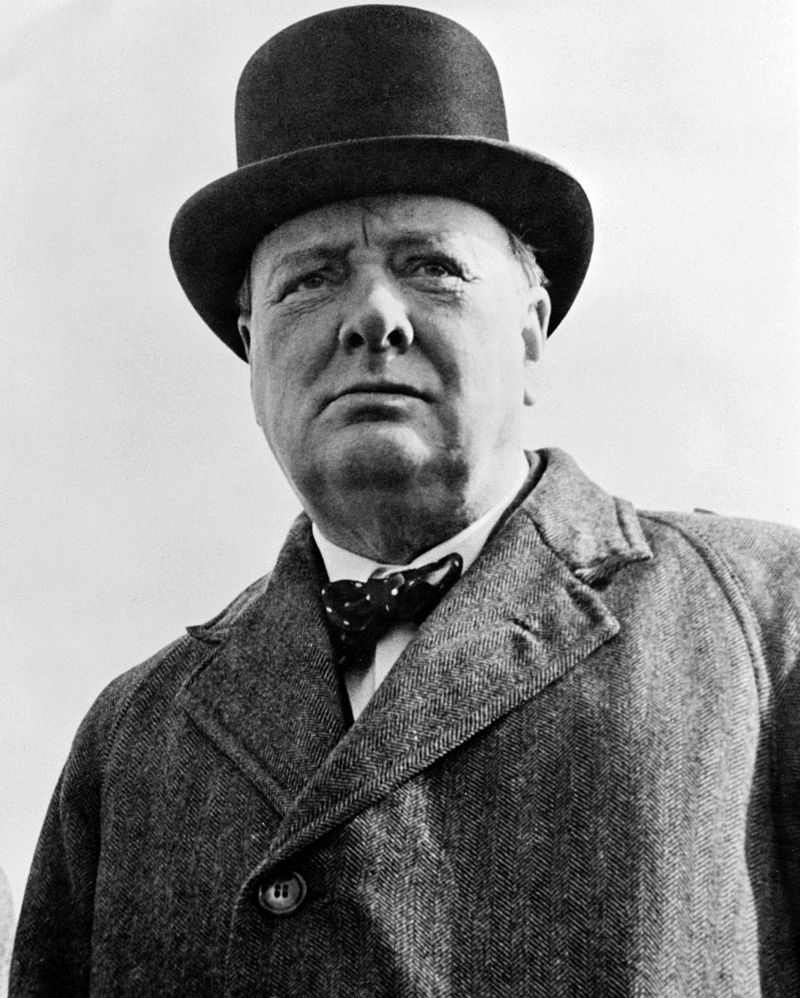
  • Cecil Parkinson – 1971 Maiden Speech in the House of Commons

    Below is the text of the maiden speech made by Cecil Parkinson in the House of Commons on 4th February 1971.

    I had wondered, as all new Members wonder, I am sure, just what my experiences in my by-election had to do with the very strange life I have found myself leading since my election. Tonight I realise that one of my experiences was very relevant. Night after night in my by-election campaign I listened to the star speaker from London make my speech. All of a sudden, the chairman called on me and with the tatters of my brilliant speech I then had to entertain an audience for 25 minutes. My experience tonight has brought those memories very vividly back to me.

    I entered the House as the representative of Enfield, West after the by-election in November, and I am the newest Member. The constituency of Enfield, West is comprised of the residential part of Enfield, Hadley Wood, which has some very distinguished-looking hon. Members, who I am sorry to say sit on the benches opposite when they are here, the urban district of Potters Bar and South Mimms. It is comprised of beautiful rolling countryside, some of the loveliest parts of what is left of the green belt in the north of London. One of the great ambitions which I as the Member, kin Macleod as my predecessor, and all my constituents have is to make sure, for our sake and the sake of London, that we work very hard to keep that green belt.

    There is very little industry in my constituency, as the officials of Transport House who came down for the by-election found out. They arrived with a plan to have a series of factory gate meetings and found to their horror that it would not work. We have only one factory in the constituency, with a single gate, and they felt that 21 appearances by my opponent might injure rather than help his case.

    In case hon. Members opposite think that this seems to mean that I am not qualified to speak about anything to do with working people, may I add that I was born and bred in the north of Lancashire, in a very tough part of the country, and I am not talking about things that I have read about when I talk about the plight of pensioners and the working man.

    One of Enfield’s greatest distinctions is that it was represented in this House for 20 years by Iain Macleod, one of the great Parliamentarians of this or any century. He was a great man, a great patriot and a great servant of the people of his constituency. Hon. Members will not be offended if I take this opportunity to pay tribute both to his work and that of his wife Eve. Together they worked for more than 20 years for their constituency. I am very proud to have been chosen to succeed him; I am very sad that the opportunity for me to do so ever arose.

    Iain Macleod had a great interest, which he shared with his wife, in the welfare of the elderly and disabled, and it is partly because of that that I wish to speak in this debate. None of us on either side of the House can fail to be concerned about the plight of the pensioner. I am sure that we all accept that society has a great obligation to do as much as it can for the pensioner.

    This Government, in spite of the rather cavalier way in which the hon. Lady the Member for Hitchin (Mrs. Shirley Williams) dealt with the things they have done already, have, I claim, demonstrated their real concern for the plight of the pensioners through the actions that they have taken already and the assurance we have had from my right hon. Friend—a man who is known to keep his word and who is determined to carry out our pledge. I think we can rest assured that the Government are aware of and are concerned about the plight of the pensioners.

    It is entirely right that we should accept a special responsibility for this generation of pensioners, the vast majority of whose careers suffered the economic consequences of two world wars and the world depressions of the 1920s and 1930s. Many of these people would have been at their optimum age at the time when there was not an opportunity to use their talents, and I have never heard any Conservative worker or hon. Member reproach any pensioner about the fact that he is poor. In fact, to make a party point—although I know that I am not supposed to—Conservative workers are too busy working with the meals-on-wheels service and other social work to bother to recriminate with the people they spend so much time trying to help. I thought that that was an unworthy remark by the hon. Member for Caerphilly (Mr. Fred Evans), and I am sure that when he thinks about it he will wish to withdraw it.

    Every day I get letters and receive visits from pensioners who seek help. It is important at this time for the House not to appear to be trying to turn the pensioners into a sort of political football, for neither side to be trying to steal a march on the other in terms of talk about concern, in terms of trying to prove that if only they were in Government they would be doing more and more. I was surprised to hear the hon. Lady refer to the claim, which is often pointed out by hon. Members opposite, that the Labour Government’s first action when they came to power in 1964 was to increase pensions. One of the shabbiest incidents of those early months was the fact that they promised to increase the pensions but when pressed said that administratively it was not possible. It was Lord George-Brown, at the mini-conference the Labour Party held after the 1964 election, who confessed that it was not administrative problems but financial ones which were delaying the increase and who once again, as so often in his parliamentary career, blew the gaff.

    I share the concern of my hon. Friends about the attempt by certain sectional groups to grab the old-age pensioners, for their own particular ends and who appear to be using them. One man in particular who claims that it is his responsibility to extract the maximum for his workers, seems to spend six days a week—this is the only controversial thing I shall say—stirring up inflation in trying to grab more than his share of what is going and on the seventh day organises rallies for the people who will suffer most from his activities of the previous six days. It is perhaps the eleventh Commandment—”Six days shalt thou labour to stoke inflation and on the seventh thou shalt organise and finance rallies for the victims of inflation and shed crocodile tears at the effect of thy previous six days work.” It is neither convincing nor worthy and I hope that it will be dropped. It is worsening a situation for a section of the community who cannot look after themselves, who are defenceless. The last thing they need is to have their hopes falsely raised to be used by people for any ends other than just getting the best deal they can for pensioners.

    Apart from joining hon. Members on both sides of the House in the hope that, when my right hon. Friend says that an announcement will be soon, he means very, very soon, I want to make two specific points. One has been made by a number of hon. Members and concerns the earnings rule. I think that this must be relaxed so that those who can and wish to help themselves may do so without, as so often happens now, having to be party to bending the law. I think it is undignified and unworthy that pensioners should be paid a bit under the table, as is done in many instances, because people realise that to pay them any more would cause them to lose some of the pension they have richly earned. I urge the Government not to be put off by this temporary crisis and to press on with long-term plans to encourage earnings-related occupational pension schemes.

    I cannot share the sorrow of hon. Members opposite that the Crossman plan was abandoned. I do not think that it was a very sound plan. I think that it had the potential of being highly inflationary. We prefer properly funded diverse occupational schemes. We believe in them for two reasons.

    The first is that they are a better hedge against inflation than a promise by the Government to take inflation into account, because Governments always want to underestimate inflation. Secondly, we believe that, by having this diversity, giving people a choice and having a variety of schemes, we are taking away from the State the ability to interfere with and control a vast number of people’s lives. I view with great distaste the fact that at the moment millions of people are forced to rely on the judgments of this House for the amount of their pensions. I look forward to the day when people are members in very large numbers of occupational schemes, properly handled, properly funded and properly resistant to inflation. I look forward to hearing more from the Government about plans for their fall-back scheme, and I hope that it will be treated as a matter of great urgency.

  • George Osborne – 2001 Maiden Speech in the House of Commons

    gosborne

    Below is the text of the maiden speech made in the House of Commons by George Osborne on 3rd July 2001.

    I congratulate my hon. Friends on their maiden speeches. They have a great advantage over me: they have completed this ordeal, which is still ahead of me.

    I should like to begin by paying tribute to my predecessor, Mr. Martin Bell. He was the first Independent Member elected to the House for 50 years. He tells the story of how, shortly after his election, he was invited to tea by Barbara Castle. Over tea and biscuits in the House of Lords, she summed up her advice, drawn from her 60-year career in politics. She said to him, “Young man”—which, he confesses, completely won him over—”whatever else you do, you must never be afraid to stand alone.” Of all people, this former war reporter probably needed that advice the least.

    Martin Bell had stood alone courageously in the Balkans when he reported the wars in that region in all their brutality. In the House, too, he stood alone. He stood alone when he forced the Government to find time to ratify the Ottawa convention on land mines. He stood alone when he controversially spoke out against the air strikes against Iraq. He also stood alone when he campaigned to overturn 50 years of Whitehall stonewalling on the question of far east prisoners of war.

    Be it Serbia, NATO or the Ministry of Defence, Martin Bell took on powerful opponents and won. However, two opponents in the end defeated him. The first, I am happy to say, was my hon. Friend the Member for Brentwood and Ongar (Mr. Pickles) who defeated him in the general election. The second was the Speaker’s Chair, because he campaigned long and hard for the Cross Benches below the Bar of the House to be recognised as part of the Chamber, but he failed miserably. That is a good lesson to all new Members on the power of the Speaker’s Chair in such matters.

    Many people come to the House as idealists and leave it as cynics. I have got to know Martin Bell quite well in the past couple of years, and it strikes me that he came to the House as a cynic and left as an idealist. The man in the white suit will be as missed in the corridors of the Palace of Westminster as he will be by people on the streets of the Tatton constituency, whose interests he represented so well. I am greatly honoured to take his place in the House.

    The very name of the Cheshire constituency that I now represent is a clue to the fact that it is not a single community, but a collection of communities. Tatton is not a town or a village. In fact, no one lives in Tatton—or not any more. Tatton is a building. I believe that I am one of only two Members whose constituency is named after a building. If hon. Members are trying to remember who the other one is, I shall put them out of their misery—it is the hon. Member for Brighton, Pavilion (Mr. Lepper).

    Unlike the Brighton Pavilion, Tatton Park is the rather austere, imposing ancestral home of the Lords Egerton, who are now deceased. It is now the National Trust’s most visited property, and home to many popular exhibitions and concerts in my constituency. On Tatton Park’s doorstep is the beautiful and historic market town of Knutsford. Once a major stop for travellers on the road to Manchester, it has long been replaced in that function by the less historic and frankly less beautiful M6 Knutsford service station. Thankfully, the coaching inns on King street remain, and more leisurely tourists still visit in large numbers.

    Knutsford got its name from the place where the Danish King, King Canute, forded the River Lily—hence Canute’s ford. I can report to the House that the majority of the residents in Knutsford, like me, take what could be called a Danish view of the Government’s plan to join the single currency. Knutsford may be steeped in history but it has its modern problems, such as the constant pressure of development and traffic and the fear of crime. I shall seek to overturn the recent decision of Home Office Ministers—the Financial Secretary to the Treasury is a former Home Office Minister—to deny us funding for closed circuit television. There is also the noise and pollution from Manchester airport’s second runway. One of my priorities will be to try to change the law to allow airports to fine planes that deviate unnecessarily from agreed flight routes and noise limits.

    Around Knutsford stretches the fertile Cheshire plain, in which lie the beautiful rural villages of Mobberley, Pickmere, Plumley, Allostock, Byley, Whitley, Comberbach and Lower Peover—I have left out half of them. Lower Peover is an idyllic village with a fantastic local pub called “The Bells of Peover”, in which General Eisenhower and General Patton once planned the D-day landings. These days drinkers plan who will buy the next round.

    All those villages have suffered from the collapse of rural services, the deep recession in agriculture and the disaster of foot and mouth disease, to which my hon. Friend the Member for Leominster (Mr. Wiggin) eloquently referred. Farmers in Crowley, who are now struggling with a recent outbreak, or employees at the Chelford market who have seen their jobs disappear, do not agree with the Prime Minister that we are on the home stretch in tackling the consequences of this disease. I shall do everything that I can to ensure that Cheshire’s rural communities get the support they need.

    On the western edge of the constituency are Barnton, Rudheath and Anderton—three suburbs of the old ICI salt town of Northwich—which have often been neglected in the politics of the constituency. I am determined that that will end. At the other end of the constituency lie the former cotton towns of Wilmslow and Handforth, and the famous village of Alderley Edge, which is known to locals for its infamous traffic problems. Together they make up a wonderful residential area that is also home to many successful companies, including the research laboratories of Astra Zeneca, where world-leading research is carried out into cancer and heart disease.

    Wilmslow is famous across Britain as the home of football players, “Coronation Street” stars and pop singers. However, the town’s most famous celebrity is known simply as Pete. He was an unfortunate man who was found garrotted, beaten and stabbed on Lindow common. Wilmslow is not a violent place, so that discovery came as a bit of a shock. The local police launched a murder investigation. Inquiries were made and suspects were interviewed, but even the excellent detective work of the Cheshire police could not solve this murder, for it turned out that Pete had been dead for 2,000 years, preserved in the peat bog that gave him his name. He now lives in the much safer surroundings of the British museum.

    Another famous Wilmslow resident was the code breaker and computer pioneer, Alan Turing. It is a sad irony that the man who did more than almost anyone else to defeat the Nazi tyranny by breaking the Enigma code was persecuted in Britain for his homosexuality, and committed suicide. It is a welcome sign of a more understanding age that a statue of Turing has just been unveiled in Manchester.

    Although much of the Tatton constituency is prosperous—not for nothing is it the place where Mr. Rolls met Sir Henry Royce—there are pockets of deprivation on the Longridge, Spath Lane and Colshaw Farm housing estates, and in many of the rural areas. I shall do everything that I can to help those communities.

    I am delighted to have been elected to represent such a tine constituency, but it deeply concerns me that so many fewer of my constituents chose to participate in the election. Our turnout, like that of many constituencies, fell by more than 10 per cent. Some people argue that that is nothing to worry about, as it is a sign of a contented population who are happy with the present state of affairs. I believe that that is a dangerous and mistaken understanding of what is happening out there in the country.

    My constituents are not content with the state of the national health service, the education system or the transport system. They are not happy to go on paying ever more taxes, or that their streets are not safe. Far from it—they are deeply angry about all those things, and they feel that we, their politicians, are not listening to them. The people of Cheshire feel remote from what is going on in Westminster. They see our debates and watch Ministers on television, but they do not hear much that relates to their daily lives. They feel even remoter from what is going on in the institutions of the European Union, whose financing we are discussing.

    New directives emerge from the bureaucratic ether, and no one bothers to explain to the people and the companies affected where they came from or why they are needed. Billions of pounds of taxpayers’ money is spent on hugely wasteful EU projects, such as the aid budget or the common agricultural policy. Everyone throws up their hands and says, “We know it’s a waste of money, but there’s nothing we can do about it.”

    The politicians of Europe, including our own British Government, proceed down the path of ever closer European integration, drawing up plans for European armies, European constitutions and European taxes. No one stops to ask the people of Europe whether this is actually the direction in which they want to travel. It is striking that the only two countries that have asked their peoples, in the last year, whether they are happy with the direction that Europe is taking have received a resounding no as an answer. But the reaction of European politicians to the results of the Irish and Danish referendums has been to bury their heads in the sand and pretend that they did not happen.

    This Bill and the Bill that we shall debate tomorrow are supposed to pave the way for the enlargement of the European Union. No one is more passionate about enlargement than I am; no one is more anxious than I am to see the countries of central and eastern Europe brought in from the cold, and welcomed fully into the concert of democratic European nations. Let me declare an interest: I am part-Hungarian. My grandmother’s family fled to Britain from Budapest just after the war because they had lived through the devastation of the Nazi tyranny, and wanted to escape the tyranny of Soviet rule. In 1956, their house in London became a home for refugees from the Hungarian uprising.

    The lessons that I learn from my family’s past are these: one must not impose political systems on peoples who are unwilling to accept them; one should not allow a gap to open up between the governed and the governing; and one cannot afford to stop listening. The situations are of course very different, but the lessons are ones that we in Westminster, and those who are shaping the future of the European Union, would do well to remember.

    I thank the people of Tatton for sending me to this House.

  • William Hague – 1989 Maiden Speech in the House of Commons

    williamhague

    Below is the text of the maiden speech made by William Hague in the House of Commons on 20th March 1989.

    I wish to speak briefly on the Budget, as my first and modest contribution to the proceedings of the House. Before I do so, I pay tribute to my predecessor as Member for Richmond, Sir Leon Brittan, and will say a few words about the constituency that he represented so well. I am fortunate to be able to do both with uninhibited pleasure.

    Most new Members elected at by-elections speak of a predecessor who was distinguished but is sadly deceased, but I am delighted that my predecessor, who made such a major contribution to the House and who was so highly regarded by his constituents, is very much alive and well and is by all accounts doing an extremely good job as a European Commissioner. There is no doubt that he will be sorely missed in Richmond—a constituency that he served with extreme thoroughness and attention to detail. Even when he was Home Secretary, he never missed a weekend surgery and never failed to involve himself in as many aspects as possible of life in north Yorkshire. He set the highest standards of service to his constituency, and I will be doing well if I can live up to them.

    All I can say is that, over the coming months, I shall try to be inspired by Sir Leon’s example, rather than being intimidated by it. It would be all too easy for the new Member of Parliament for Richmond to be intimidated by the past. I number among my constituents not only Sir Leon Brittan but his predecessor Sir Timothy Kitson and my noble Friend Lord Tranmire, the former Sir Robin Turton, who sat in this House for 45 years for Thirsk and Malton, part of which is now included in my constituency.

    Those former Members will be very valuable sources of advice. Some might observe that they will also he rather varied sources of advice. However, the fact that they remain deeply rooted in the area says something about the strong attachment of Members of Parliament to Richmond and its surrounding area, because of both the natural appeal of its countryside and the independent character of its people.

    It is almost unnecessary for me to tell the House about my constituency, because many right hon. and hon. Members are already surprisingly familiar with it. I am one of the few Members of Parliament, along with those representing constituencies in the east end of London, who has a regular television series about his constituency. Also, many right hon. and hon. Members have spent more time in my constituency in the past few months than I have spent in the House. Right hon. and hon. Members could be forgiven for believing that the right hon. Members for Plymouth, Devonport (Dr. Owen) and for Yeovil (Mr. Ashdown) had taken up permanent residence in my constituency. They certainly provided a valuable off-season boost to the local tourist trade. They will always be welcomed back, though perhaps they are the only two tourists in the whole nation who I hope will spend less money on their next visits than they did on their last.

    I hope that all those who visited Richmond during the by-election had an opportunity to enjoy the diverse nature of the region. Although always associated with the magnificent hillside town of Richmond itself and with the splendid dales to the west of it, my constituency embraces a rich breadth of physical geography and human activity —from the hill farmers in the dales and on the edges of the moors, to the lowland arable farmers around Northallerton and Thirsk; from the 20 industrial estates that have brought a growing sense of enterprise and availability of employment to the area, to the commuters in the north-east who work on Teesside and to the large number of people who come to the area to retire. Richmond’s variety defies simple description.

    In addition, my constituency has a huge military presence. The area is proud to host one of the country’s largest Army garrisons at Catterick, and now we also have a major air defence base at RAF Leeming. That variety, and the popularity of north Yorkshire as a place to live, means that behind the idyllic image are mounting stresses and strains, both economic and social. Much has been said about the plight of the inner cities in the 1980s, but I fear that much will have to be said in the 1990s about the strains of rural life.

    Although my constituency, like the rest of the country, has grown more prosperous in the past 10 years, and although unemployment has fallen by 40 per cent. over the past three years, one must not overlook the depressed incomes of the farming community, the shortage of housing for local people—ironically coinciding with housing development on a scale that threatens traditional village life—the tendency for younger people to move elsewhere, and the appalling and increasing pollution of some of the nation’s most beautiful rivers. Those are not the subjects of today’s debate. Nevertheless, I hope to help ensure that they will not go unnoticed or unaddressed in the House.

    My constituents are interested in all those matters, but they are interested also in the Budget—despite all the efforts of the media to convince us that it was boring. Like me, my constituents approve of the Budget because of its most obvious characteristic—that my right hon. Friend the Chancellor of the Exchequer used what room for manoeuvre he had to help those people whose efforts were most unfairly penalised by the existing tax structure. I strongly welcome the changes my right hon. Friend made to national insurance contributions and his abolition of the hated pensioners’ earnings rule. I believe that right hon. and hon. Members in all parts of the House believe that the Chancellor did the right thing in the circumstances, and they should have the good grace to say so.

    Much of the debate about the economic situation has been taken up with discussing the direction of and the explanations for inflation, interest rates and the public sector surplus. However, that debate has been concerned mainly with the short term—with this year and next year. When I look at the economic background to the Budget, what I find interesting are some of the other economic indicators whose improvement has been strong and marked over a sufficiently long period to become an established trend.

    Today, companies’ real rate of return is at its highest since the 1960s. Investment has risen twice as fast as consumption for the past seven years. Labour productivity has risen faster in the 1980s even than in the 1960s. That should bring home to us the fact that, whatever the arguments about last year’s or this year’s forecast, the fundamental indicators of the economy’s future performance and output are better than they have been within the political lifetime of most right hon. and hon. Members, and within the entire lifetime of some of them.

    Maintaining that progress requires lower levels of inflation and of short-term interest rates—otherwise, the increased confidence that is at the centre of all those improvements will disappear. However, no one has argued convincingly that there is a better policy for bringing inflation down than that which the Chancellor is pursuing. Most criticism has been of the “We wouldn’t have started from here” variety, but it is incumbent on those who would do the Chancellor’s job for him to say what they would do if they had to start from here.

    Nevertheless, it must be recognised that we face over the next year inflation at a higher level than we would have wished. Some people are less able than others to cope with that inflation, and some are particularly worried about it. Foremost among them are elderly people who are wholly or largely dependent on their basic state pension. The Government have done a great deal to help many pensioners in several ways. The abolition of the earnings rule will help many who are still able to earn, and lower inflation over the lifetime of the Government has helped those with savings.

    Last autumn’s announcement of an additional increase this year for the oldest pensioners will help those in that category. Huge numbers, however, still depend heavily on the basic state pension. In the coming year, they face a pension increase indexed to, but lagging behind, RPI inflation—which may in any case understate the inflation that they experience, as their own expenditure is disproportionately weighted towards some large items such as household rates and basic utilities, the cost of which for most people is rising faster than the retail price index.

    I hope that in the coming year the Government will have the pensioner in the forefront of their collective mind and, as far as the economy permits, will feel able by some means to help still more pensioners by doing somewhat more than simply indexing their basic pensions to the RPI. If they can do that, they will avoid much dissatisfaction and some genuine hardship.

    That is the point that I wanted to make—within the context of strong and whole-hearted support for the economic and budgetary policies of Her Maesty’s Government. I thank the House for its indulgence, and hope that there will be many more occasions, Madam Deputy Speaker, on which I may try to catch your eye.

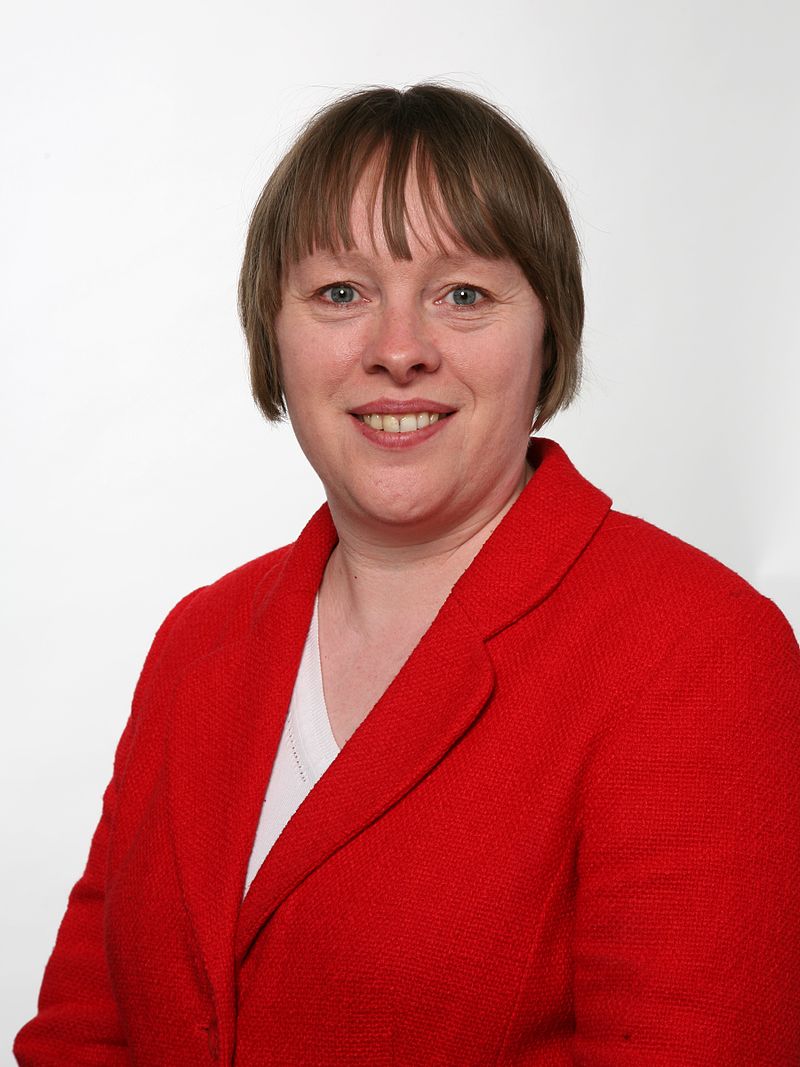
  • Maria Eagle – 1997 Maiden Speech in the House of Commons

    marieagle

    Below is the text of the maiden speech made by Maria Eagle in the House of Commons on 17th June 1997.

    I am grateful to you, Mr. Deputy Speaker, for allowing me to make my maiden speech in this important debate. I am particularly happy to be able to congratulate my hon. Friend the Member for St. Helens, North (Mr. Watts) on his first contribution, and I am sure that we shall hear many more contributions from him.

    Garston is positioned to the south of most of the well-known Liverpool landmarks, and it is a mixed residential and industrial constituency. It includes some of the docks and the old industrial heartland of the city, much of which was devastated in the early 1980s. Were I to list the factories and employers who have gone from my constituency, it would be a depressingly long list. Liverpool, however, is irrepressible and the people are of the best sort. There are encouraging signs of hope and renewal, especially in the single regeneration budget partnership areas of Speke, Garston and Netherley valley.

    Garston’s borders are logical on three sides—the River Mersey, the green belt at the southern edge of the city and the M62. The border on the fourth side runs almost down Queens drive, but not quite. My constituency is perhaps the most socially and economically diverse of all the Liverpool seats and as such, it has always been a volatile swing seat. It used to be a true marginal, but it has lately swung strongly to the Labour party. Although I might like to think that that phenomenon coincides precisely with my appearance on the scene, in fact it predates it. Garston’s progress to an 18,000-plus Labour majority has been aided enormously by the slow death of the Tory party in Liverpool.

    Whichever of the two—the right hon. and learned Member for Rushcliffe (Mr. Clarke) or the right hon. Member for Richmond, Yorks (Mr. Hague)—who are vying to be Leader of the Opposition is successful in grabbing that poisoned chalice, he might profitably reflect on how his party can ever again be relevant to the people of my constituency. If he finds an answer, he may well be on the way to renewing his party. As recently as 1979, Garston was held by the Conservative party, but now it is a very distant third.

    Garston contains some of the most desirable and expensive housing in Liverpool, in the Woolton and Allerton areas, and has the highest proportion of owner-occupation in the city, but it also has huge peripheral estates in Netherley and Speke and some very poor private terraced property in Garston, some of which is unfit for human habitation. Unemployment is well above the national average and all indices of deprivation show Liverpool to be very poor—one of the poorest regions in the European Union. Large swathes of my constituency suffer the problems associated with unemployment and poor housing—poverty, ill health and crime, to name just three—yet the community spirit is strong.

    Throughout the constituency, community-led groups and businesses have sprung up to try to tackle the problems—whether by way of credit unions taking banks to the estates, such as those in Netherley and Speke, long since abandoned by commercial institutions, or by way of employment and regeneration initiatives, the list is almost endless. SMART, ARCH, CREATE, VANT—I could go on for many hours about the good work of those organisations in my constituency, but time is short. Suffice it to say that the capacity of the people of Garston constituency to fight for improvements and life chances for themselves and their families is endless and inspiring.

    Despite the efforts being made, however, regeneration is never an easy task. Some basic problems must be tackled by the Government, and I shall address one of the most basic problems in my constituency, which the Government can and should tackle—the provision of adequate housing. First, I want to refer to three of my predecessors—Eddie Loyden, David Alton and Sir Malcolm Thornton. All have represented part of my constituency and all left this House on 20 April or 1 May.

    Many hon. Members on both sides will recall Eddie Loyden as a modest man, but a determined fighter for his constituents and for his strongly held socialist beliefs. A seafarer and a docker, his fight on behalf of the families of the victims of the MV Derbyshire typifies him. I know that hon. Members will join me in wishing him a long and active retirement.

    David Alton was another respected representative of the Grassendale ward of the Garston constituency. He has now gone to the other place where, I have no doubt, he will continue to speak up for Liverpool.

    Sir Malcolm Thornton, who left this House at the behest of his constituents in Crosby rather than of his own volition, was the Member for Garston between 1979 and 1983, so I ask the indulgence of my hon. Friend the Member for Crosby (Ms Curtis-Thomas) if I make some remarks about him. Our paths crossed in 1992, when I fought Crosby for Labour while Sir Malcolm Thornton fought it for the Conservatives. I came, as I recall, a rather glorious second. I recall seeing Sir Malcolm again on 2 May 1997 after his shock defeat. He was as courteous and gracious in defeat as he had been in victory five years previously. I am sure that all hon. Members wish him well in his future endeavours, whatever they are. I certainly wish all my predecessors well.

    Something else all my predecessors and I share, apart from having had the honour of representing Garston, is that we have all made maiden speeches about housing. That illustrates how, across party and through time, the issue has been so important in Garston. It still is.

    Council housing in Liverpool is, in the main, very poor. Of more than 45,500 dwellings, almost 27,000—over half—are structurally substandard or in poor condition. Much of the stock is ill maintained, some of it designated defective under housing defects legislation, and some which is defective has not been designated. The local authority estimates that £700 million is required to bring the stock up to standard. The standard in Liverpool council housing for heating is one gas fire. Damp, disrepair, mould growth and the consequences for the health and well-being of the occupants are endemic throughout the stock. Those consequences include needless and difficult additional burdens for thousands of my constituents who already have many other burdens to bear.

    I know about this, not just because 80 per cent. of my constituency case load relates to housing problems, but from my experience before the election as a solicitor in private practice in Liverpool, specialising in housing law. During my time in the House, I want to achieve an improvement in living conditions for those in the poorest housing. Before my election, I used the courts—civil and criminal—to achieve that for those who sought my help. Now I shall use legislation. However improvements are achieved, they are long overdue.

    In her maiden speech in 1945, Bessie Braddock—a well-known Liverpool Member of Parliament whom I feel I can cite because she had a connection with Bennett street in Garston—told of families of 10 in her Liverpool, Exchange constituency who were forced to live in overcrowded conditions. At my first constituency surgery after the election, I was consulted by a constituent who complained that she and her family of 10 were overcrowded in their home in Speke, yet she had no immediate prospect of adequate housing. Little seems to have changed in Liverpool.

    We must do something about that state of affairs. That is why I welcome and support the Bill. It begins to tackle the housing crisis that has been worsened by the dogma of the Conservative party and bequeathed to the nation. It makes provision for the Secretary of State to take into account capital receipts set aside for debt redemption when issuing supplementary credit approvals. That sounds dry and technical, but it will get some of the £5 billion of locked-up set-aside capital receipts back into the equation for rebuilding and rehabilitating social housing. The measure is long overdue, delayed purely by the previous Government’s prejudice against social housing.

    In Speke and Garston, in Netherley and Childwall valley, we need repairs and improvements to houses—and soon. I welcome other initiatives that the Government are supporting, such as establishing housing companies and mechanisms to involve tenants. I believe passionately in the strength, sense and ability of ordinary people to shape and transform their lives, given half a chance. I have a particular belief in the capacity of Liverpudlians to do that. Their solidarity, community spirit and adaptability are demonstrated every day on the estates to which I have referred. Let us ask them what they want to do, and listen to the answers.

    Landlords, even social landlords, do not have a monopoly of wisdom—certainly not in Liverpool. The best of them would not claim to. I hope that, with the backing of the Government, determined to make a difference in Speke and Netherley, things will change. The Bill is a good start. Perhaps we can then ensure that the next hon. Member for Garston—who, I trust, will not come to the House for many a long year—will be able to choose a different subject for his or her maiden speech.

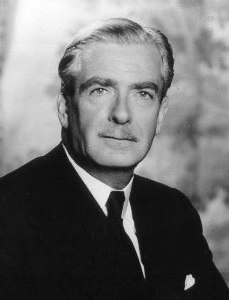
  • Anthony Eden – 1924 Maiden Speech

    anthonyeden

    Below is the text of the maiden speech in the House of Commons of Anthony Eden on 19th February 1924.

    May I, at the outset, ask for the usual courtesy and indulgence which is always extended to a maiden speech. The last speaker made great play of a little geographical tour, and he asked us from what quarter we expected an attack from the air. I do not know, but I do not think that is the point we want to discuss. Surely, the point is rather that we should prepare to defend ourselves against an attack from any quarter. There can be little doubt that this question is of exceptional interest in this House, and the reasons are not very far to seek. In the first place, it is not in the nature of things possible to provide hastily and at a moment’s notice for air defence; and, in the second place, the very heart of our country, the city of London, is especially vulnerable to attack from the air. For these reasons, I hope that the Government will not be tempted too much by sentiment, and will rather act, as we gather from the speech of the Under-Secretary, not in accordance with his principles, but in accordance with the programme he has inherited from other parties, and that the Government will, as a matter of insurance, protect this country from the danger of attacks from the air.

    The Under-Secretary asked what was meant by adequate protection, and he said he believed preparedness was not a good weapon. That may be, but unpreparedness is a very much worse weapon, and it is a double-edged one, likely to hurt us very seriously. The Under-Secretary quoted an old military maxim, and I will quote one which is that “Attack is the best possible form of defence.” [HON. MEMBERS “No, no!”] I expected hon. Members opposite would be a little surprised at that doctrine. I was not suggesting that we should drop our bombs on other countries, but simply that we should have the means at our disposal to answer any attack by an attack. It is a natural temptation to hon. Members opposite, some of whose views on defence were fairly well known during the years of the War, to adopt the attitude of that very useful animal the terrier, and roll on their backs and wave their paws in the air with a pathetic expression. But that is not the line on which we can hope to insure this country against attack from the air. I believe and hope that hon. Members opposite will carry out the programme which they have inherited, and will safeguard these shores, so far as they may, from the greatest peril of modern war.

  • Donald Dewar – 1966 Maiden Speech in the House of Commons

    donalddewar

    Below is the text of the maiden speech made by Donald Dewar in the House of Commons on 4th May 1966.

    It is with some trepidation that I find myself on my feet at this early stage. Many of my hon. Friends counselled a longer wait, but a maiden speech is an ordeal which does not improve with contemplation and I decided to take my courage in both hands and rely on the traditional tolerance of the Committee.

    I am the first Member of the Labour Party to be returned for South Aberdeen, and I suppose it is fair to ask why the people in that area have decided to turn their backs on a well-entrenched Conservative tradition which has been energetically represented for 20 years by my distinguished and in some ways rather formidable predecessor, Lady Tweedsmuir.

    I think that the answer is fairly clear. It is that in South Aberdeen, as in many other parts of the country, they were impressed by the priorities and programmes of the last Labour Administration, and particularly in my area by an Administration which could deal energetically with a serious financial crisis and at the same time manage to reduce unemployment and so eliminate that endemic plague, the unemployment spiral dictated by external balance of payments difficulties. It is that in particular which ensured the return to Parliament of myself and many of my hon. Friends with increased majorities. It is because I think that the Budget will continue these sensible and flexible policies which have brought about this increase in prosperity and stability in my part of the world that I welcome the Budget.

    I think it is only fair and right that the basis of the taxation system should be broadened. I think it is right that the imbalance which allowed the non-manufacturing sections of the economy to escape their fair share of the burden of taxation should be put right. It is equally right and convenient that the Chancellor’s catchment area should be increased. It is difficult to quarrel with any of these things.

    I am impressed with the general engineering of the tax which will bring about a desirable switch in the deployment of labour in this country. I do not think that it will be dramatic, but it will be a trend which we can all welcome. I am very clear in my own mind that the objections coming fierce and fast from the Opposition benches on the subject of hoarding of labour are misplaced and wildly exaggerated. We know that in British industry there are many firms with old-fashioned ideas. We know that there are people who are not interested in the desirable movement towards capital-intensive as distinct from labour-intensive firms, and we all accept that there are people with the old-fashioned idea that one cannot install a machine until the plant it replaces has been written off at a rate of depreciation which is often arbitrary and ill-advised. All these things we accept, but it is a long step from saying this to saying that a marginal supplement for the employment of labour in manufacturing industry will radically encourage this state of affairs. Taking the tax overall, and looking at the employment picture, and the Government’s policy on, say, investment incentives, there is no doubt that the merits of the measure far outweigh what is a very marginal argument against it.

    I enjoyed my first Budget, because when I arrived at the House I got the impression that many hon. Members opposite were coming to gloat. They were looking forward to hearing a Labour Chancellor of the Exchequer having the unfortunate experience of having once more to flog the old pack horses of the economy, to increase direct taxation, to “have a go” at tobacco, beer, and so on. I got the impression that their smugness—I think that that is a fair term to use—began to turn to dismay as the proceedings wore on and they realised that that was not happening, and their minds were being asked to grapple with something which was new, something which was modern, and which they began dimly to realise was tailor-made to meet the requirements of the British economy.

    At the end they were bemused, and some of them have not recovered from the attack and are using the same arguments and the same slogans which they have shouted against every Labour Budget for many years, and the tragedy is that as the ground has shifted, and as the arguments are different, their old slogans are even less appropriate than in the past.

    Having said that I welcome the Budget, I must make it clear that as the Member for South Aberdeen I have certain reservations about specific facets of it which it is only fair openly to express. Some of the reservations have been mentioned by the right hon. Member for Orkney and Shetland (Mr. Grimond). I accept them to some extent, but only to some extent. I am one of the representatives of a city of 180,000 people which is almost entirely dependent on administration and service industries connected with a considerable agricultural hinterland, and although we have two important, though small, shipyards—important in the local sense—whose future we watch over anxiously, and certain pockets of machine tools and paper manufacturing industries in the area, it is basically true that the number of employers who will get the premium can be counted on the fingers of one hand, and it is therefore fair to concede that this tax will be initially unpopular and much misunderstood in my constituency.

    The second great pillar and prop of South Aberdeen is tourism, and already we have heard sounds of grumbling discontent from the tourist industry which has been excluded from the Government’s incentives, and I have no doubt that in the near future the discontent and grumbling will increase and will be a considerable embarrassment to Members like myself.

    With this I sympathise and must say that I am worried about the tourist industry. In a city like Aberdeen, there will be a temptation to pass on to the customer the increases due to this taxation. If that is done this tourist trade which basically depends on internal tourism with people coming from other parts of Britain to Aberdeen, will become even more vulnerable to the ever-increasing plethora of cheap Continental holidays. I hope that the people in the industry will realise that it is in their interests to try to absorb most of these costs. But, on the other hand, I hope that the Chancellor will be receptive to what I know will be a great deal of pressure from both sides of the House to try to do something to help the tourist trade, particularly in areas like this.

    Again, the service industries may also be tempted to pass on the increased costs. I hope that they will not do so, because thanks to the efforts of a Labour Government, the real problem in Aberdeen is not unemployment. The real problem is uncompetitive rewards, and a man in the North-East knows that he can get half as much again for the same job, and the same hours, by going to the Midlands or to the prosperous south of England. The result is that we are an open society in the sense that we can be raided, and are being raided by foraging parties for labour which drain off on enormous amount of the skilled manpower in our part of the country. I.C.I. and Stewarts and Lloyds are two recent examples, and I am worried that people, by unthinkingly passing on these increases in the service industries, will raise costs, even if nothing like as spectacularly as people say, but still significantly so, with the result that the level of wages will be even more uncompetitive.

    There is a further danger that employers will use this as an excuse for keeping down the level of wages. If there is one section of the Aberdeen community which deserves criticism it is the industrial and commercial community, which has for too long been willing to accept comfortably low labour costs at the price of continuing local stagnation and emigration. I hope that local employers who will be affected by this tax will carefully examine their profit margins and the situation in which they find themselves before they glibly victimise their customers and ultimately themselves by just raising prices.

    It has been said that the answer is to attract manufacturing industries to areas like Aberdeen. This is easily said, and I pay tribute to the great success of the Labour Administration in this field. The fact that I am here is a tribute to that success. The First Secretary reeled off a very lengthy list of such measures this afternoon, and I do not wish to repeat it, because it is familiar to us all. But I feel this will inevitably be a long-term business. It is by no means hopeless to talk about diversifying industry in Aberdeen. We can do it ultimately, but the basic shape of our economy will remain unmodified for a considerable time. Because of that we cannot look for a quick change, and we must face the possibility that this tax will have some unfortunate repercussions in the short term.

    This will sound like special pleading, and so it is, but it will be heard not only from people in the north-east of Scotland but in the Highlands, in the Scottish Borders and probably in many parts of England from areas with similar problems. I hope that these pleas will be listened to carefully by the Chancellor. There are the real difficulties for the tourist and also the fishing industry, the status of which I believe is still a matter of discussion in relation to the new tax. I hope that the Chancellor will look at the whole problem of regional development. This new and imaginative tax—this novel weapon in the Chancellor’s armoury—is a great improvement on the old rigid deflationary machinery in terms of flexibility, and it is used at the moment to favour manufacturing as against service industries. It could be used to encourage regional development as against the over-eager growth in more geographically favoured parts of Britain.

    The point to grasp is that these two objectives are not incompatible, and it is wrong to try to pretend that we cannot achieve both. I hope that in the near future the Chancellor will listen with sympathy to the plea of the development areas, and see whether he cannot make this kind of concession. We have made enormous progress in areas where there has been traditionally little Labour support, because we have been able to convince the electorate that we stand for a controlled steady and all embracing growth which will benefit all sections of the population. We have an enormous record of achievement in this respect.

    While I welcome this enlightened and important tax, which will do something to increase mobility of labour, stimulate productivity and bring economic sanity to this country, I hope that my right hon. Friend will slant it in such a way that it will not interfere with the general trend of Labour policy, which has been to help regions like mine. My right hon. Friend has an enormous amount to his credit. He can increase this by a few minor adjustments in this Budget. I hope he will make the effort and continue to aid, encourage and inspire growth and effort in areas for which he has so rightly done so much in the last two years.

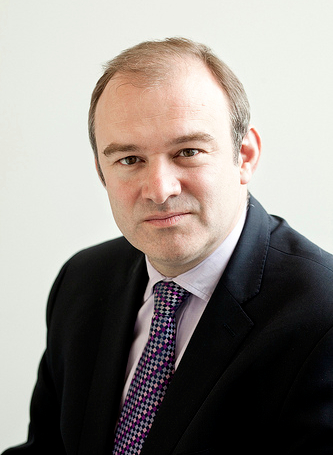
  • Ed Davey – 1997 Maiden Speech in the House of Commons

    eddavey

    Below is the text of the maiden speech made by Ed Davey in the House of Commons on 6th June 1997.

    It is a pleasure to follow the hon. Member for Hendon (Mr. Dismore), although a daunting prospect because he gave us such an entertaining and interesting speech. I congratulate him on making such an erudite maiden speech.

    I would also like to offer the hon. Gentleman my sympathy and condolence for having the hon. Member for Hartlepool (Mr. Mandelson) in his constituency. This obviously brings a new meaning to the big brother state. I hope that the health service in the hon. Gentleman’s constituency improves, because having the hon. Member for Hartlepool looking over his shoulder all the time might not be good for his health.

    From listening to Labour Members and to my hon. Friend the Member for Southwark, North and Bermondsey (Mr. Hughes), it is clear that a great consensus is emerging on the new government for London. That consensus spreads to the wider community—the business community, as the Minister said, in the boroughs, and in the population of London as a whole. The need to remove the quango state that was introduced by the previous Government, and the need for a strategic authority that is democratically accountable to the people and will take a strategic perspective on issues such as employment, transport and the environment—issues that affect the daily lives of our constituents—is crucial.

    There is a genuine debate, however, about the suitability and appropriateness of having a directly elected mayor. My hon. Friend the Member for Southwark, North and Bermondsey described our position clearly. I am concerned that we will have some very odd hybrid if we have an elected authority and a directly elected mayor. The mandates will clash. It will be a recipe for confusion, and the only way around that—perhaps a separation of powers model—is a recipe for gridlock.

    I see no merit in a directly elected mayor. Indeed, I endorse the remarks of the hon. Member for Brent, East (Mr. Livingstone). Why are we not going for the tried and tested model of party competition for the new strategic authority? That seems sensible. I would support a strategic authority that was elected in a proportionally representative system. I urge the Minister not to be affected by “manifestitis” and to be open to the idea of having a multi-question referendum.

    I am very grateful for having this early opportunity to make my maiden speech. I am the first ever Member of Parliament for the new constituency of Kingston and Surbiton. It was formed from the old Surbiton seat and from the southern part of the old Kingston upon Thames seat and covers a number of communities, from Malden Rushett, Chessington and Hook in the south, through to Tolworth, Berrylands, New Malden, Norbiton and Worcester Park. It covers three quarters of the royal borough of Kingston, which through its long and distinguished history has previously returned only Conservative Members of Parliament to the House, so I am especially pleased that the royal borough is now represented on the Liberal Democrat Benches, by me and my hon. Friend the Member for Richmond Park (Dr. Tonge). It is a great responsibility, but I look forward to meeting the challenge.

    My predecessor in the Surbiton seat, Richard Tracey, was first elected in 1983. He has a long history of public service and, on behalf of my constituents, I thank him for all his work over the years for the people who live in the Surbiton area. I trust that his experience in the media as a former BBC presenter will suit him well as he embarks on a new career.

    My predecessor in the Kingston upon Thames seat was perhaps better known in the House. I recommend that hon. Members who want to inquire about how he is getting on go to my hon. Friend the Member for Harrogate and Knaresborough (Mr. Willis), from whom I understand that Mr. Lamont is doing very well. He is remembered affectionately by many of his constituents, whom he helped.

    In a former life, I was an avid reader of his speeches as I used to assist my right hon. Friend the Member for Berwick-upon-Tweed (Mr. Beith) in his many battles with the former Chancellor, but it is not Mr. Lamont’s speeches as Chancellor that I reflected on in making my maiden speech and wanting to pay tribute to him. I looked back at his very good maiden speech, which I recommend to other hon. Members. I should like to quote one or two phrases from it because they reflect interestingly on recent debates.

    For example, Mr. Lamont said early on in his speech: I have to admit that for some years I have been strongly pro-European. Hansard does not record whether he said that sotto voce, but he went on: I hope that everyone will agree that by making an uncompromisingly European speech I am being as non-controversial as it is possible to be. If only that were still the case. I recommend the speech because it talks about the advantages of European governance. He said: At least in the Community there is nothing secret about the way in which the Commission’s thinking is developing. It is a shame only that, when he took office, he did not reflect on those views and still kept, unfortunately, the Budget purdah. I hope that this Government will be a little more open.

    My favourite part of the speech is when the former Chancellor discussed the foreign exchange markets. He referred to currency volatility in the early 1970s and stated: One wonders how much of last year’s currency upheaval could have been avoided had there been a joint European strategy”.—[Official Report, 13 July 1972; Vol. 840, c. 1887–92.] How times have changed since 1972.

    I do not, however, want to dwell on the past. My constituents’ main concern is education—our future. Kingston schools are extremely popular, and teachers, parents, governors, councillors and council officials work very hard to deliver high-quality education in our area, but in recent years their efforts have been thwarted by cuts imposed by central Government, which have led to huge overcrowding and some of the largest class sizes in the country.

    Efforts to absorb those cuts from central Government have proved impossible within the current draconian system of local government finance, so, unfortunately, some of the cuts have been experienced in schools. To meet previous cuts, the authority had to run down its reserves, which are now at the minimum prudential level, yet in the past three years the grant has been cut by £15.1 million.

    The authority has worked hard to make efficiency savings to try to meet that challenge and has achieved savings of nearly £4 million, but last year’s cut was just one too many and schools felt it badly. In looking to next year, my concern is that the Chancellor of the Exchequer will somehow be able to escape from the trap on public spending in which he has put himself. I am filled with dread when I hear him reiterate the Labour party’s manifesto commitment to keep the previous Government’s public spending controls for the next two years. When one talks to professionals, one realises that the claim that money from the abolition of the assisted places scheme will fill that gap insults their intelligence. More money is needed.

    Cuts have been made not only in schools but in further and higher education. In Kingston college, last year’s settlement means that 20 teachers—10 per cent. of the staff, in one college, in one year—may face redundancy.

    I hope that there is a plan to escape that trap somehow. Liberal Democrats will make no apology for returning to this issue time and again, because it is at the heart of the education debate. Until we have more resources for schools and colleges, sanity will not return to the education system.

    If the Government put education at the top of their agenda, as they said they would, we shall be helpful, and make suggestions. In that spirit, as they prepare for the future, I would like to offer them an idea for their welfare-to-work proposals. In my constituency we have Hillcroft college, which presents a unique example of the type of programme that the Government should have in mind.

    Hillcroft is the only adult education institution in the country geared solely to the needs of women. Over many years it has helped women who missed out on their first chance of education; women who as single parents are trying to find a path back into the workplace; and women who had previously been dependent on the social security system.

    In a recent visit to the college, I was most impressed by the way in which the college supports individual women’s needs, as some try to repair some of the self-confidence that was shattered by some of the previous Government’s policies. I recommend that Ministers come to my constituency, visit Hillcroft and use it as an example in their deliberations on the Government’s welfare-to-work proposals.

    In Kingston and Surbiton there is a wealth of examples of policy initiatives that the Government could usefully study—some to follow and some to forget. Kingston university has expanded tremendously over the past few years, and I hope that the proposals in the Dearing report will enable that process to continue.

    Unfortunately, many problems have been caused by police cuts in Kingston. In the past two years we have lost more than 40 officers.

    The need for a strategic transport policy is one of the subjects of the debate today. In Kingston we certainly have not had such a policy. Moreover, South West Trains has made appalling cuts in services, and the recent infamous cuts have caused many problems for my constituents.

    The accident and emergency department in Kingston hospital experiences queues every day of the week. Unfortunately, until there is more capital funding to build a new accident and emergency department there, those problems will continue.

    One Kingston policy is highly germane to the debate, and I recommend it to the Government. For the past three years the borough council has pursued the policy of devolution of power to neighbourhoods. The neighbourhood system has been a huge success. In the past, central committee meetings were held at the guildhall, and a few political aficionados used to attend and listen to the debates. There was little participation, and the general public did not know what was going on.

    Now, seven neighbourhood committees have been set up round Kingston, which is the smallest borough in London. Many people come to the meetings and participate, and democracy has flourished in our borough. The efficacy of policy decisions, too, has improved because of the public participation.

    The success of the neighbourhood system, that revolution in decentralising power within a borough, has become so famous that many people have come to Kingston to study it. After the first two years of its implementation, the previous Government’s district auditor produced a glowing value for money report on it.

    The report said: Communications between officers and with citizens appear to have improved as a result of the neighbourhood structure”, and there is real value in local diversity … for many service areas, there is clear justification for delegation to achieve a local focus”. The extra marginal cost was found to be minimal, and the auditor also noted that the royal borough of Kingston operated on staff numbers that were among the lowest for outer London borough councils.

    The district auditor was not alone in praising the value of the neighbourhood system. In a recent document entitled “Innovative models of local authority working”, the local government management board said: Kingston has achieved much and is a good example of clear devolution plans being carefully implemented in a very limited timescale. Its experience is well worth considering and drawing upon.

    We have heard today about the powers of the strategic authority and how it will be elected, but I hope that any Green or White Paper will refer also to the inter-relationship between the strategic authority and the borough councils—and between councils themselves, and within councils—so the debate is not just about the strategic authority; it is about all aspects of the future governance of London.

    I would like an assurance from the Minister that any future Green or White Paper will allow scope to discuss models of how power can be decentralised within, and to, boroughs. Taking power from the centre to empower communities and citizens was what the neighbourhood system in Kingston was all about. If that is the goal of the Government’s proposals for the governance of London, they will be a great success and improve the lives of the people of London. After all, it was the Prime Minister who, in the John Smith memorial lecture on 7 February 1996, said: I want to enable local communities to decide more things for themselves through local councils. I agree, and I hope that the Government’s proposals for the future governance of London follow that statement.

  • Ken Clarke – 1970 Maiden Speech to the House of Commons

    kenclarke

    Below is the text of the maiden speech in the House of Commons made by Ken Clarke on 8th July 1970.

    May I first of all thank you, Mr. Deputy Speaker, for allowing me to catch your eye. May I also thank hon. Members in anticipation of the usual indulgence which I am sure they will show to a maiden speaker.

    The first convention that I should like to follow, I follow not out of convention but quite sincerely, and that is to say a brief word or two about my predecessor, Mr. Tony Gardner, who represented the constituency of Rushcliffe in the last Parliament. Other hon. Members will know better than I the work that he did in this House. I can bear witness to the popularity in which he was held in his constituency and to the hard work that he did on behalf of his constituents of all parties. I am sure that in my constituency there is some regret at his absence from this House.

    In that remark, I reveal that I represent the constituency of Rushcliffe which, like so many marginal seats, is not one entity at all but contains a number of areas which do not have a great deal in common. One part of the constituency is predominantly rural and agricultural. Another part is a collection of former mining villages which are slowly being rejuvenated, and the largest area is an urban district on the edge of the City of Nottingham.

    One thing that those areas have in common, in so far as they have one local political problem in common at all, is the problem of education, which concerns parents throughout the constituency, and particularly the problems of secondary reorganisation. I should like to use the example of my constituency because the situation in the County of Nottingham, and in my constituency in particular, is not only of local interest but is of real relevance to the national debate. I think that the examples will illustrate how unreal this debate on secondary reorganisation can be if reduced simply to a contest, as it were, between those who are in favour of 11-plus selection and élitist education, on one side, and those who are against it, on the other. In my view, that would be a complete distortion of what ought to be the real debate on the ground in areas such at Nottinghamshire.

    The first example I give is that the present Conservative local authority in the County of Nottingham is building purpose-built comprehensive schools without any local Conservative opposition whatever. A new school is being erected at Chilwell in my constituency, which will be a purpose-built comprehensive school having excellent educational amenities and will replace unsatisfactory earlier education buildings. It will be clear to all hon. Members who listened to what my right hon. Friend the Secretary of State said today that that project will go ahead under the auspices of the Conservative-controlled authority and without the slightest hindrance or obstruction from her, either by way of her new circular or otherwise.

    I contrast that with another example from my constituency, of a reorganisation which took place under the former Government and which was initiated when a different party was in control in the local authority. It was a reorganisation carried out following Circular 10/65, creating a school in West Bridgford known as the Rushcliffe Schools. As a result of that change, the present system is that three separate buildings are described as one school; they are 1½ miles apart, the pupils travel from one to another by bus, and the staff travel from one to another by car. That is called comprehensive education.

    It goes further than that. Many hon. Members have examples of that sort of thing in their constituencies as a result of reorganisation, but few will have the additional problems affecting the Rushcliffe Schools. Part of the catchment area is genuinely comprehensive in its admissions policy and has all-ability entrance. But part of the catchment area lies within the constituency of Rushcliffe itself and comprises a number of villages in Nottinghamshire south of the River Trent. Pupils from that part have to sit the 11-plus examination, and those who are thought suitable for an academic education enter the grammar school stream of the comprehensive school while the others enter the local secondary modern schools. That was called a system of comprehensive education and was approved by the former Secretary of State.

    I do not oppose such a system because I oppose any abolition of the 11-plus or because I believe in an élitist selective form of education, and nor do my right hon. and hon. Friends, but I should expect all hon. Members on both sides to oppose that sort of educational nonsense which results in such unfortunate effects on those villages where pupils either go or do not go into a school like the Rushcliffe Schools.

    We have heard a good deal from the benches opposite, notably from the right hon. Member for Newcastle-upon-Tyne, Central (Mr. Edward Short) who moved the Amendment, about the need for central guidance from the Secretary of State in helping local authorities to deal with their problems. I look forward to central guidance from the present Secretary of State along the lines not of doctrine but of policy directed to avoiding the problems such as those which I have outlined in connection with the Rushcliffe Schools. That guidance should be based more on a concern for the best use of educational facilities in a particular area and should have more regard to parental wishes and the wishes of staff, having regard also to whether an existing school system in an area is in need of reform or is working properly. I dare say that if those criteria had been applied at an earlier stage to the reorganisation in my constituency, the present situation in the Rushcliffe Schools would not have materialised.

    I make one more point in the same connection. That particular change-over was carried out and was approved by the then Secretary of State in the name of uniformity. Hon. Members opposite will understand how it happened, and may, perhaps, be able to think of some excuse when they learn that there was a purpose-built comprehensive school in the same district as the Rushcliffe Schools, it being argued on that ground – in terms familiar to those who have listened to the debate thus far – that because there was a purpose-built comprehensive school in the area, it was illogical not to have the whole area go comprehensive. On that ground, it was said that one should go in for the strange concoction which is now the Rushcliffe Schools.

    Although, in the abstract, it may seem illogical to combine the two doctrines, on the ground, as soon as one looks at this particular problem one sees that it is quite illogical to say that because one purpose-built comprehensive school was built, one should totally disrupt the secondary education of pupils throughout the area. Uniformity introduced in that way will do great harm. Indeed, nothing will do more to discredit any move towards comprehensive education than to couple it with an insistence that the change-over must come as soon as any comprehensive school is built. If, whenever a comprehensive school is built, the result is that throughout the surrounding area schools in totally unsuitable buildings are brought into the change-over and are called comprehensive, the whole idea will be discredited and the pupils of the area will be adversely affected.

    As I see it, the Government face two problems arising out of the change-over where it has taken place in the way which I have described. First, it will be necessary to reintroduce the flexibility and the common sense which, much to my reassurance, we heard the Secretary of State emphasise today. Although it may catch the notice of the education Press a little less often, it makes far more sense to look at individual cases and to consider them carefully before plunging into changes which may seem on the face of them to have some doctrinaire attractions.

    Second, because of what has happened, I feel that the present Secretary of State should be generous in approving the building programmes and new resources in such areas – again, I have particularly in mind schools such as the Rushcliffe Schools – where the damage resulting from what has been done needs to be repaired. The only solution to that school is the necessary building of new premises to make sure that the schools can be put in one place and adequately provide for their area. I hope that the new Secretary of State will regard as one of her priorities in considering future building programmes the need to put right mistakes of this sort which have flowed from Circular 10/65 and the previous Government’s education policy.

    I thank the House for its indulgence. I hope that the problems which I have outlined and the illustrations which I have given from my constituency will help to shed a little more light on what I feel should be the real issues in this debate on secondary education.

  • Winston Churchill – 1901 Maiden Speech in the House of Commons

    winstonchurchill

    Below is the text of the maiden speech of Winston Churchill, held in the House of Commons on 18th February 1901.

    I understood that the hon. Member to whose speech the House has just listened, had intended to move an Amendment to the Address. The text of the Amendment, which had appeared in the papers, was singularly mild and moderate in tone; but mild and moderate as it was, neither the hon. Member nor his political friends had cared to expose it to criticism or to challenge a division upon it, and, indeed, when we compare the moderation of the Amendment with the very bitter speech which the hon. Member has just delivered, it is difficult to avoid the conclusion that the moderation of the Amendment was the moderation of the hon. Member’s political friends and leaders, and that the bitterness of his speech is all his own.

    It has been suggested to me that it might perhaps have been better, upon the whole, if the hon. Member, instead of making his speech without moving his Amendment, had moved his Amendment without making his speech. I would not complain of any remarks of the hon. Member were I called upon to do so. In my opinion, based upon the experience of the most famous men whose names have adorned the records of the House, no national emergency short, let us say, of the actual invasion of this country itself ought in any way to restrict or prevent the entire freedom of Parliamentary discussion. Moreover, I do not believe that the Boers would attach particular importance to the utterances of the hon. Member.

    No people in the world received so much verbal sympathy and so little practical support as the Boers. If I were a Boer fighting in the field—and if I were a Boer I hope I should be fighting in the field—I would not allow myself to be taken in by any message of sympathy, not even if it were signed by a hundred hon. Members. The hon. Member dwelt at great length upon the question of farm burning. I do not propose to discuss the ethics of farm burning now; but hon. Members should, I think, cast their eyes back to the fact that no considerations of humanity prevented the German army from throwing its shells into dwelling houses in Paris, and starving the inhabitants of that great city to the extent that they had to live upon rats and like atrocious foods in order to compel the garrison to surrender. I venture to think His Majesty’s Government would not have been justified in restricting their commanders in the field from any methods of warfare which are justified by precedents set by European and American generals during the last fifty or sixty years. I do not agree very fully with the charges of treachery on the one side and barbarity on the other.

    From what I saw of the war—and I sometimes saw something of it—I believe that as compared with other wars, especially those in which a civil population took part, this war in South Africa has been on the whole carried on with unusual humanity and generosity. The hon. Member for Carnarvon Boroughs has drawn attention to the case of one general officer, and although I deprecate debates upon the characters of individual general officers who are serving the country at this moment, because I know personally General Bruce Hamilton, whom the hon. Member with admirable feeling described as General Brute Hamilton, I feel unable to address the House without offering my humble testimony to the fact that in all His Majesty’s Army there are few men with better feeling, more kindness of heart, or with higher courage than General Bruce Hamilton.

    There is a point of difference which has been raised by the right hon. Gentleman the Leader of the Opposition upon the question of the policy to be pursued in South Africa after this war has been brought to a conclusion. So far as I have been able to make out the difference between the Government and the Opposition on this question is that whereas His Majesty’s Government propose that when hostilities are brought to a conclusion there shall be an interval of civil government before full representative rights are extended to the peoples of these countries, on the other hand the right hon. Gentleman the Leader of the Opposition believes that these representative institutions will be more quickly obtained if the military government be prolonged as a temporary measure and no interval of civil government be interposed. I hope I am not misinterpreting the right hon. Gentleman in any way. If I am, I trust he will not hesitate to correct me, because I should be very sorry in any way to misstate his views. If that is the situation, I will respectfully ask the House to allow me to examine these alternative propositions. I do not wish myself to lay down the law, or thrust my views upon hon. Members. I have travelled a good deal about South Africa during the last ten months under varying circumstances, and I should like to lay before the House some of the considerations which have been very forcibly borne in upon me during that period.

    In the first place I would like to look back to the original cause for which we went to war. We went to war—I mean of course we were gone to war with—in connection with the extension of the franchise. We began negotiations with the Boers in order to extend the franchise to the people of the Transvaal. When I say the people of the Transvaal, I mean the whole people of the Transvaal, and not necessarily those who arrived there first. At that time there were nearly two and a-half times as many British and non-Dutch as there were Boers, but during the few weeks before the outbreak of the war every train was crowded with British subjects who were endeavouring to escape from the approaching conflict, and so it was that the Uitlanders were scattered all over the world. It seems to me that when the war is over we ought not to forget the original object with which we undertook the negotiations which led to the war. If I may lay down anything I would-ask the House to establish the principle that they ought not to extend any representative institutions to the people of the Transvaal until such time as the population has regained its ordinary level. What could be more dangerous, ridiculous or futile, than to throw the responsible government of a ruined country on that remnant of the population, that particular section of the population, which is actively hostile to the fundamental institutions of the State? I think there ought to be no doubt and no difference of opinion on the point that between the firing of the last shot and the casting of the first vote there must be an appreciable interval that must be filled by a government of some kind or another.

    I invite the House to consider which form of government—civil government or military government—is most likely to be conducive to the restoration or the banished prosperity of the country and most likely to encourage the return of the population now scattered far and wide. I understand that there are hon. Members who are in hopes that representative institutions may directly follow military government, but I think they cannot realise thoroughly how very irksome such military government is. I have the greatest respect for British officers, and when I hear them attacked, as some hon. Members have done in their speeches, it makes me very sorry, and very angry too. Although I regard British officers in the field of war, and in dealing with native races, as the best officers in the world, I do not believe that either their training or their habits of thought qualify them to exercise arbitrary authority over civil populations of European race. I have often myself been very much ashamed to see respectable old Boer farmers—the Boer is a curious combination of the squire and the peasant, and under the rough coat of the farmer there are very often to be found the instincts of the squire—I have been ashamed to see such men ordered about peremptorily by young subaltern officers, as if they were private soldiers. I do not hesitate to say that as long as you have anything like direct military government there will be no revival of trade, no return of the Uitlander population, no influx of immigrants from other parts of the world—nothing but despair and discontent on the part of the Boer popuation, and growing resentment on the part of our own British settlers.

    If there was a system of civil government on the other hand, which I think we have an absolute moral right to establish if only from the fact that this country through the Imperial Exchequer will have to provide the money—if you had a civil government under such an administrator as Sir Alfred Milner—[Cries of “Hear, hear,” and “Oh”]—it is not for me to eulogise that distinguished administrator, I am sure he enjoys the confidence of the whole of the Conservative party, and there are a great many Members on the other side of the House who do not find it convenient in their own minds to disregard Sir Alfred Milner’s deliberate opinion on South African affairs. As soon as it is known that there is in the Transvaal a government under which property and liberty are secure, so soon as it is known that in these countries one can live freely and safely, there would be a rush of immigrants from all parts of the world to develop the country and to profit by the great revival of trade which usually follows war of all kinds. If I may judge by my own experience there are many Members of this House who have received letters from their constituents asking whether it was advisable to go out to South Africa. When this policy of immigration is well advanced we shall again have the great majority of the people of the Transvaal firmly attached and devoted to the Imperial connection, and when you can extend representative institutions to them you will find them reposing securely upon the broad basis of the consent of the governed, while the rights of the minority will be effectively protected and preserved by the tactful and judicious intervention of the Imperial authority. May I say that it was this prospect of a loyal and Anglicised Transvaal turning of the scale in our favour in South Africa, which must have been the original “good hope” from which the Cape has taken its name.

    It is not for me to criticise the proposals which come from such a distinguished authority as the Leader of the Opposition, but I find it impossible not to say that in comparing these two alternative plans one with the other I must proclaim my strong preference for the course His Majesty’s Government propose to adopt. I pass now from the question of the ultimate settlement of the two late Republics to the immediate necessities of the situation. What ought to be the present policy of the Government? I take it that there is a pretty general consensus of opinion in this House that it ought to be to make it easy and honourable for the Boers to surrender, and painful and perilous for them to continue in the field. Let the Government proceed on both those lines concurrently and at full speed. I sympathise very heartily with my hon. friend the senior Member for Oldham, who, in a speech delivered last year, showed great anxiety that everything should be done to make the Boers understand exactly what terms were offered to them, and I earnestly hope that the right hon. Gentleman the Colonial Secretary will leave nothing undone to bring home to those brave and unhappy men who are fighting in the field that whenever they are prepared to recognise that their small independence must be merged in the larger liberties of the British Empire, there will be a full guarantee for the security of their property and religion, an assurance of equal rights, a promise of representative institutions, and last of all, but not least of all, what the British Army would most readily accord to a brave and enduring foe—all the honours of war.

    I hope the right hon. Gentleman will not allow himself to be discouraged by any rebuffs which his envoys may meet with, but will persevere in endeavouring to bring before these people the conditions on which at any moment they may obtain peace and the friendship of Great Britain. Of course, we can only promise, and it rests with the Boers whether they will accept our conditions. They may refuse the generous terms offered them, and stand or fall by their old cry, “Death or independence!”[Nationalist cheers.] I do not see anything to rejoice at in that prospect, because if it be so, the war will enter upon a very sad and gloomy phase. If the Boers remain deaf to the voice of reason, and blind to the hand of friendship, if they refuse all overtures and disdain all terms, then, while we cannot help admiring their determination and endurance, we can only hope that our own race, in the pursuit of what they feel to be a righteous cause, will show determination as strong and endurance as lasting. It is wonderful that hon. Members who form the Irish party should find it in their hearts to speak and act as they do in regard to a war in which so much has been accomplished by the courage, the sacrifices, and, above all, by the military capacity of Irishmen. There is a practical reason, which I trust hon. Members will not think it presumptuous in me to bring to their notice, is that they would be well advised cordially to co-operate with His Majesty’s Government in bringing the war to a speedy conclusion, because they must know that no Irish question or agitation can possibly take any hold on the imagination of the people of Great Britain so long as all our thoughts are with the soldiers who are fighting in South Africa.

    What are the military measures we ought to take? I have no doubt that other opportunities will be presented to the House to discuss them, but so far as I have been able to understand the whispers I have heard in the air there are, on the whole, considerable signs of possible improvement in the South African situation. There are appearances that the Boers are weakening, and that the desperate and feverish efforts they have made so long cannot be indefinitely sustained. If that be so, now is the time for the Government and the Army to redouble their efforts. It is incumbent on Members like myself, who represent large working class constituencies, to bring home to the Government the fact that the country does not want to count the cost of the war until it is won. I think we all rejoiced to see the announcement in the papers that 30,000 more mounted men were being despatched to South Africa. I cannot help noticing with intense satisfaction that, not content with sending large numbers of men, the Secretary of State for War has found some excellent Indian officers, prominent among whom is Sir Bindon Blood, who will go out to South Africa and bring their knowledge of guerilla warfare on the Indian frontier to bear on the peculiar kind of warfare—I will not call it guerilla warfare—now going on in South Africa. I shall always indulge the hope that, great as these preparations are, they will not be all, and that some fine afternoon the Secretary of State for War will come down to the House with a brand-new scheme, not only for sending all the reinforcements necessary for keeping the Army up to a fixed standard of 250,000 men, in spite of the losses by battle and disease, but also for increasing it by a regular monthly quota of 2,000 or 3,000 men, so that the Boers will be compelled, with ever-diminishing resources, to make head against ever increasing difficulties, and will not only be exposed to the beating of the waves, but to the force of the rising tide.

    Some hon. Members have seen fit, either in this place or elsewhere, to stigmatise this war as a war of greed. I regret that I feel bound to repudiate that pleasant suggestion. If there were persons who rejoiced in this war, and went out with hopes of excitement or the lust of conflict, they have had enough and more than enough to-day. If, as the hon. Member for Northampton has several times suggested, certain capitalists spent money in bringing on this war in the hope that it would increase the value of their mining properties, they know now that they made an uncommonly bad bargain. With the mass of the nation, with the whole people of the country, this war from beginning to end has only been a war of duty. They believe, and they have shown in the most remarkable manner that they believe, that His Majesty’s Government and the Colonial Secretary have throughout been actuated by the same high and patriotic motives. They know that no other inspiration could sustain and animate the Regulars and Volunteers, who through all these hard months have had to bear the brunt of the public contention. They may indeed have to regret, as I myself have, the loss of a great many good friends in the war. We cannot help feeling sorry for many of the incidents of the war, but for all that I do not find it possible on reflection to accuse the general policy which led to the war, we have no cause to be ashamed of anything that has passed during the war, nor have we any right to be doleful or lugubrious. I think if any hon. Members are feeling unhappy about the state of affairs in South Africa I would recommend them a receipt from which I myself derived much exhilaration. Let them look to the other great dependencies and colonies of the British Empire and see what the effect of the war has been therel Whatever we may have lost in doubtfu. friends in Cape Colony we have gained ten times, or perhaps twenty times, over in Canada and Australia, where the people—down to the humblest farmer in the most distant provinces—have by their effective participation in the conflict been able to realise, as they never could realise before, that they belong to the Empire, and that the Empire belongs to them. I cannot sit down without saying how very grateful I am for the kindness and patience with which the House has heard me, and which have been extended to me, I well know, not on my own account, but because of a certain splendid memory which many hon. Members still preserve.