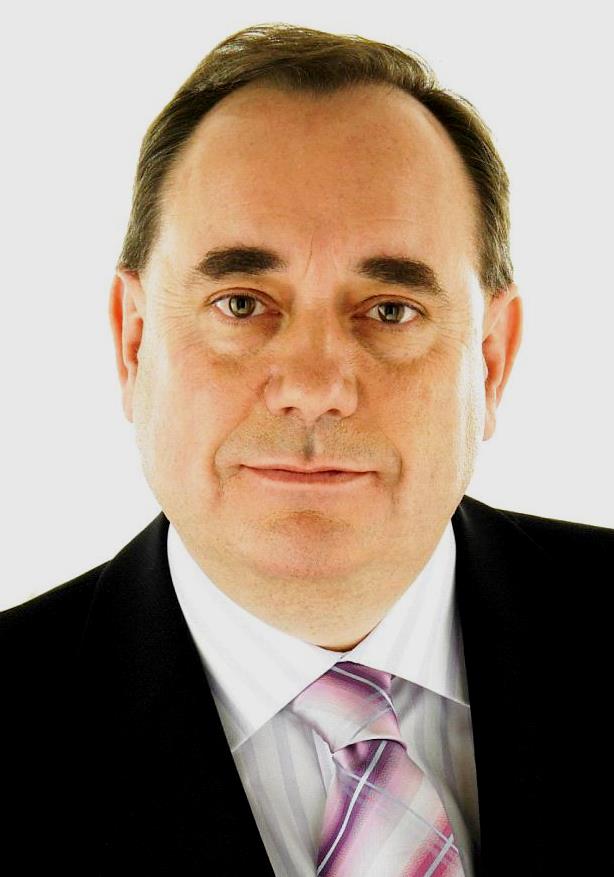
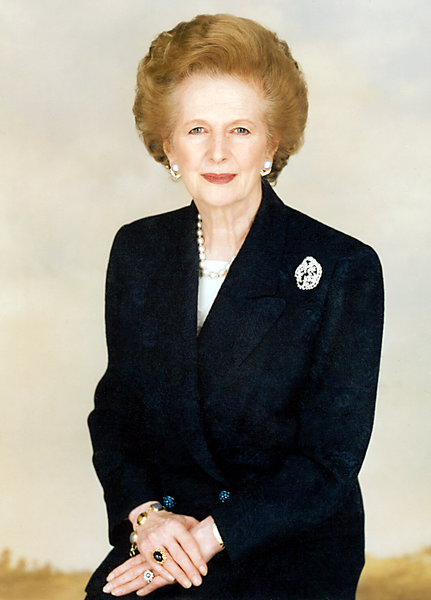
Tag: Maiden Speech

  • Simon Hughes – 1983 Maiden Speech in the House of Commons

    Below is the text of the maiden speech made by Simon Hughes in the House of Commons on 21st March 1983.

    I hope that it is significant that I utter my first words in the House on the first day of spring. The occasion may be doubly significant in that I follow not only to these Benches but in this debate a Member for the borough of Croydon. In 1949 Fenner Brockway wrote a biography of one of my most eminent predecessors, Dr. Salter, whom I believe you met, Mr. Speaker, before you were called to high office or had started on your journey to this place.

    The borough from which my constituency takes its name was described by Fenner Brockway in 1949 as a backwater in the life of the metropolis”. I shall deal with the economics of the matter in a moment, but politically one thing seems sure. Not only is Bermondsey no longer a political backwater; it is arguable that today there runs through it the strongest current in British political life. That may be because over many years, and particularly since they have been closed, massive pressure has built up behind the dock gates that have represented the industry and the economy of that part of south-east London, and that pressure has found its escape at last.

    In 1884 the Bill to establish separate parliamentary representation for Bermondsey was introduced in the House by the Liberal Adminstration. The issue which concerned the first Member for Parliament for the area was one that is as commonly discussed on these Benches today. It was the issue of electoral reform. Seventy-five years ago my Rotherhithe predecessor, Mr. Carr-Gomm, argued for the representation of workers on the Port of London Authority. The demand for the proper representation of workers on the seat of management has not been heeded as it might have been in the intervening time.

    Sixty years ago, in 1923, in an address to the electors of Bermondsey before a campaign that was successful, but—perhaps I know the feeling—not originally expected to be so, a Methodist minister and Liberal candidate, Rev. Kedward said: The enemies are in front of us in plain sight: unemployment, poverty, sickness, bad housing; let us attack them with courage. He continued: There is no easy road to victory over such foes, no magic word which when uttered will banish cares for ever”. In the same year Dr. Salter made his maiden speech, calling for a national minimum wage and decent treatment for the people who start at the bottom of the heap. He said that in a civilised society every worker has a right to a living wage. That has been a principle, though not a practice, endorsed by Governments since then. He added that wages have now sunk for millions of our people below the subsistence level”. I use his words because they are no less appropriate today. He added that it is grossly unfair that the whole burden of that depreciation of the standard of life should be borne, as it is, by one class, and that the most helpless and the weakest class. If the country has to submit to a reduction of the standard of living, that should be universally applicable.”—[Official Report, 7 March 1923; Vol. 161, c. 627–36.] I listened to the Chancellor’s Budget statement last week, and I ask him this: where are the reforms of justice and the social progress of sympathetic and progressive economic management? Why will he not consider giving the security and hope that his long-suffering fellow citizens in the inner cities need to hear from this place? Why could he not promise that they, when qualified adults, would not be left behind in the struggle for survival, and often not just left behind but also left out? Why, after 60 years, could he not ensure that people received a decent minimum wage? If he wants to see a monument to his four years of economic policy, let him come and look at my constituency. The Chancellor’s Budget last week and the examples given by his colleague today reminded me, in a phrase that came to mind last Tuesday, of a Chancellor fiddling while Britain groaned.

    My predecessor gave 36 years of distinguished service to the House and for much of that time served all the constituents whom I now have the honour to represent. He was joined in that task for a short time by my right hon. Friend the Member for Glasgow, Hillhead (Mr. Jenkins), until my right hon. Friend’s seat was taken away by the process of democracy. In that election, in which my predecessor first stood as a candidate at Rotherhithe, there was one thing in common with my own—his Conservative opponent, like mine, lost his deposit. In a local election in Bermondsey two weeks after my own election, the Conservative vote fell yet again—this time to 3.6 per cent. The message is firm. The deserving people of the inner city are saying loud and clear that they have no trust in the Conservative Government.

    In the words of the right hon. Member for Leeds, South (Mr. Rees), there is a rumbling of discontent. I, too, rumble with discontent. I come here to share that anger and discontent. As in the city of Cardiff, which I know well, as do you, Mr. Speaker, and as does the right hon. Member for Cardiff, South-East (Mr. Callaghan), male unemployment in my constituency is very high. In Southwark it is no less than 18.6 per cent.; yet the Chancellor holds back for a further seven months the restoration of the unemployment benefit abatement for those who need that money to live. Of all London’s ratepayers, the residents of Southwark pay the highest inner city rates. Non-domestic ratepayers pay 245p in the pound and, as in Cardiff, are daily being driven out of business. The borough has the worst record for empty properties and hard-to-let accommodation of any authority in London. The Opposition can take no comfort in that, as it is the Labour party which is responsible locally.

    Just before I took my seat in the House there was a pensioners’ lobby here. One out of five of my constituents was represented by those who rightly came here to ask for a better deal. What do they receive in the Budget? The answer is a mean-minded and ill-timed administrative alteration in pensions that will lose 70p for a single person and 110p for a married couple every week. They receive no help with heating or standing charges and are still penalised if they receive income which is additional to their pension.

    At the other end of the age scale, the young, with whom I have worked for a long time in this city, are job-starved, often educationally deprived, having left school before the statutory age, and look with little hope at the future of communities where they want to stay. Therefore, as in the past, they are soon forced out—and will continue to be so, whether it be on bicycles or whichever other form of transport the Government have not seen fit to provide.

    Yesterday’s papers told us that the low-paid have lost at least £45 a year in real terms over the period of the past five Budgets. It is no benefit to them to know that people who earn £30,000 now get an extra £3,500 each year.

    The economy of the past four years has done nothing for the inner city. That area is as bare, empty and lacking in progress as it was in 1979. Our people refuse to believe that there cannot be a better way. They also refuse to believe that they do not deserve a better way. I hope that I am not arrogant, but I am angry on their behalf. I am not only the newest but I am the youngest Opposition Member of this House. I am here to tell the House what people said by electing me three weeks ago. This waste and mismanagement of our resources, both human and natural, is, and I agree with the right hon. Member for Cardiff, South-East, not only unacceptable, but immoral too.

    The people of Bermondsey and Southwark are, however, spirited and have not yet given up the fight. The spirit that led them to resist some of the worst attacks that the city knew during the second world war has led them, in peace, to resist the destructive attacks of politicians in their turn. However, they cannot resist for ever. They have already been generous. They were generous when my learned predecessor made the mistake of saying that the docks would close only over his dead body. They forgave him for that. They were also generous to the Leader of the Opposition when he made similar statements about an election not many weeks ago. They spared him from that. However, they cannot be generous for ever. They have turned to me and I, above all, now turn to the House to remedy their problems.

    William Wilberforce died 150 years ago this year. It was his part as a reformer to liberate the people who were enslaved abroad. At home, Gladstone and Lloyd George followed that tradition, as did others who turned their attention to inner cities where the work was done and where the workers remain. My politics are to be those politics of liberation. I am anxious to liberate our people—those whom I can help—in little ways as we are allowed to do, from enforced idleness, unjustified discrimination and harmful dogma.

    I have news for the hon. Member for West Stirlingshire (Mr. Canavan). He seems to think, to judge from his comment when I took my seat, that I shall not be here for long. I can tell him this. I shall be here for as long as is necessary to work for those people who sent me here to get them back to work.

    I conclude with a quotation from a small guide which my library provides for those who want to know about the history of the constituency which I now have the honour to represent. It says: People are right to be proud to say ‘I am from Bermondsey’. This little area has a great history. In the old times it was the place of Chaucer, Shakespeare and, later, Dickens. It continues: In Victorian times it was at the centre of London’s trade and industry. Later, it took a lead in social reform. Now is a time of change when Bermondsey, like its neigbours in North Southwark and Rotherhithe, awaits new developments. The tide of economic welfare has flowed out far enough and for long enough as well. Although there may be an appropriate analogy between my arrival here and the quiet, timid and, as yet, inexperienced first cuckoo of spring, I hope that the Government will listen and learn that it is still not quite too late to turn the tide and to come to the rescue of the people who, at the moment, are beached and waiting for help.
  • Michael Howard – 1983 Maiden Speech in the House of Commons

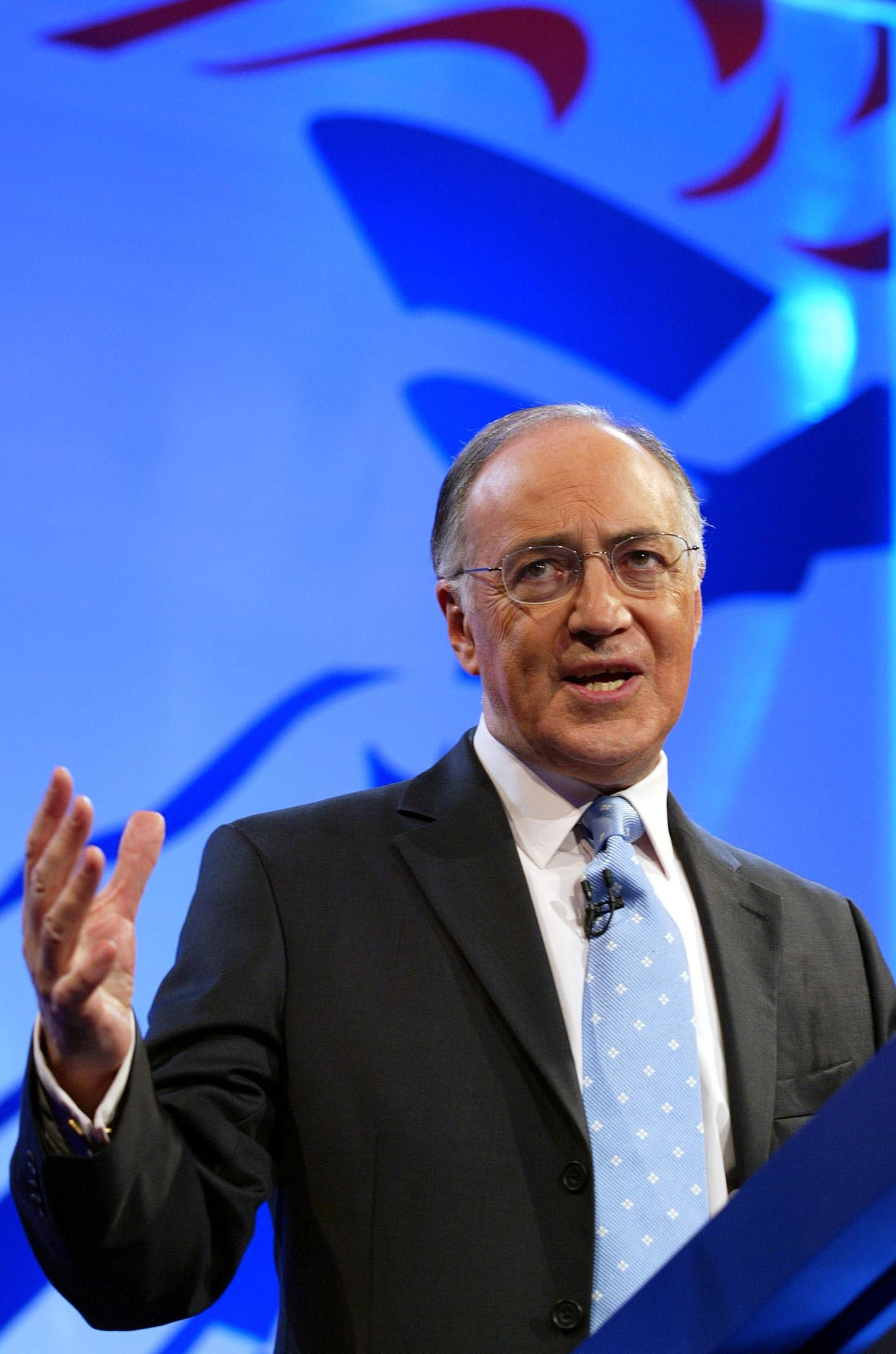
    The Leader of the Conservative Party Michael Howard, delivers his speech to the Conservative Party Conference, Bournemouth.

    Below is the text of the maiden speech made by Michael Howard in the House of Commons on 29th June 1983.

    I begin, Mr. Deputy Speaker, by echoing the remarks of my hon. Friend the Member for Bolton, West (Mr. Sackville) and of the hon. Member for Birmingham, Ladywood (Ms Short) for being permitted to make my maiden speech today. I am particularly pleased to have caught your eye at such a relatively early stage in the Parliament because it enables me to pay an early public tribute to my predecessor, Sir Albert Costain. He is a much loved man both in the constituency and, as I have discovered during the past fortnight, in this House. He is not a man who seeks the limelight but he has rendered sterling service both to his constituents and to the House. More than 22 years ago he first became a member of the Public Accounts Committee and, I believe, the length of his service since then is without equal in the history of that Committee. During a much shorter period when I was a prospective parliamentary candidate, he was unstinting in his kindness to me. That was somewhat remarkable as he had some cause to be disenchanted with those who, like me, enter the House as practising banisters. On one occasion he was waiting to catch Mr. Speaker’s eye but felt constrained to visit the room which was referred to with such affection by Mr. Speaker in his acceptance speech. Before he left the Chamber, Sir Albert entrusted his notes for safekeeping to one of his hon. and learned Friends. When he returned to the Chamber, he was somewhat dismayed to find that hon. and learned Gentleman addressing the House in a most accomplished manner with Sir Albert’s notes in his hand and Sir Albert’s words on his tongue.

    My constituency of Folkestone and Hythe is a richly varied area, containing some 20 miles of coastline, Romney marsh, a most beautiful stretch of the north downs and the two towns that give it its name. Its economic activities are similarly varied. Communications to the continent of Europe are excellent and communications with the rest of England will also be excellent when the missing link of the M20 motorway between Maidstone and Ashford is completed. I am grateful to my right hon. Friend the Member for Guildford (Mr. Howell) for reinstating that project in the road programme when he was Secretary of State for Transport. His successor will hear a good deal from me about the priority to be given to it and the date on which we may expect completion.

    I cannot pass from my constituency without reminding the House that it includes, in Hythe and Romney, two of the original Cinque ports which answered the summons issued by Simon de Montfort in the name of King Henry III to send representatives to what is usually regarded as our first Parliament in 1265. They have valued the closeness of their links with their Members of Parliament over the centuries since then and the loosening of those links which would be a consequence of the proposals for electoral reform presently being put about would be something I should greatly deplore. When one considers not just the proposals for electoral reform but also those for regional government espoused by the alliance parties and the sympathy with the creation of a federal European state expressed by the right hon. Member for Tweeddale, Ettrick and Lauderdale (Mr. Steel), it is not always appreciated how much the total package of alliance proposals would emasculate the powers of this House. I hope to retain for many years the trust of the people of the Folkestone and Hythe constituency who have sent me here, and I hope to continue to serve their interests in a House of Commons that has not been shorn of its powers.

    I understand that there is still a view that a maiden speech should keep its distance from controversy. Although as a practising barrister of nearly 20 years’ standing I cannot pretend to be a stranger to controversy, I shall do what I can to honour that tradition in the hope that the two brief points that I wish to make will command such widespread assent that no question of controversy can arise.

    In the recent election, it was widely recognised, not only by Conservatives, that strikes and industrial action contribute to the problem of unemployment. Increasing recognition of that in recent years has been reflected in the increasing reluctance of workers to take industrial action. My right hon. Friend the Chancellor referred earlier to the importance of the reform of trade union law, especially as it affects the rights of individual members of trade unions. There is one critical area — critical for the personal freedom of individual workers as well as for the link between strikes and unemployment—in which in my view the legislative support given to the individual is inadequate. I refer to the position of the worker who refuses to join a strike, who may be excluded from his trade union as a consequence and who in a closed shop may lose his job for that reason. It may surprise some of my hon. Friends to know that, despite all the legislation of the last Parliament, it is still possible for that fate to befall a worker and for that worker to be denied any of the compensation or other remedies generally available at law for a worker who is unfairly dismissed.

    The Government have not been wholly insensitive to this issue. In some circumstances, set out in the code of practice on closed shop agreements and arrangements which in its revised form came into operation last month, it is likely that compensation will be payable. In my view, however, that is by no means good enough, for two reasons.

    First, as a matter of basic individual freedom a worker should be entitled to know without qualification that he cannot be sacked for refusing to strike without being entitled to all the remedies for unfair dismissal provided by our law. That protection is rightly conferred on the worker who is sacked because he is or proposes to become a member of a trade union. The worker who is sacked for refusing to strike is surely entitled to the same protection.

    Secondly, in the real world it is stretching credulity beyond breaking point to suppose that a worker faced with an extremely difficult decision and subject to considerable pressure will sit down and go through the code of practice line by line to determine whether the circumstances set out in it correspond with those of the strike in which he is involved. The full absurdity of the situation becomes apparent when one appreciates that the definition of the circumstances set out itself involves very difficult questions of law and a consideration of the meaning of statutory provisions recently described by Lord Diplock, sitting in a judicial capacity in another place, as most regrettably lacking in the requisite degree of clarity. That brings me to my final point, which has far wider application than the law relating to employment. When the same case was before the Court of Appeal, the Master of the Rolls made a plea to Parliament which we should do well to heed. He said: My plea is that Parliament when legislating in respect of circumstances which directly affect the ‘man or woman in the street’ or the ‘man or woman on the shop floor’ should give as high a priority to clarity and simplicity of expression as to refinements of policy. He continued: When formulating policy, Ministers, of whatever political persuasion, should at all times be asking themselves and asking parliamentary counsel ‘Is this concept too refined to be capable of expression in basic English? If so is there some way in which we can modify the policy so that it can be so expressed?’ Having to ask such questions would no doubt be frustrating for ministers and the legislature generally, but in my judgment this is part of the price which has to be paid if the rule of law is to be maintained. I do not believe that the refinement of policy which gave rise to the inclusion of some circumstances and the exclusion of others from the code of practice on the closed shop can be justified. Even if it could, I believe that the questions posed by the Master of the Rolls should have been asked. Had they been asked, I believe that the answer would have been to abandon that refinement of policy.

    In the first maiden speech of this debate, my hon. Friend the Member for Derbyshire, South (Mrs. Currie) asked for greater simplicity in the law as it affects the right to buy council houses. I endorse that plea, but the area that she identified is not the only one that calls out for such treatment. For the reasons that I have given, lack of clarity in employment law can cause injustice and can damage the economy. I hope that my right hon. Friend the Secretary of State for Employment will introduce measures to alleviate that injustice in the near future and that my other right hon. Friends who bring forward legislation will pay full attention to the plea made by the Master of the Rolls. Many of us on the Conservative Back Benches intend to encourage them to do so in the months and, I hope, years ahead.

  • Edward Heath – 1950 Maiden Speech in the House of Commons

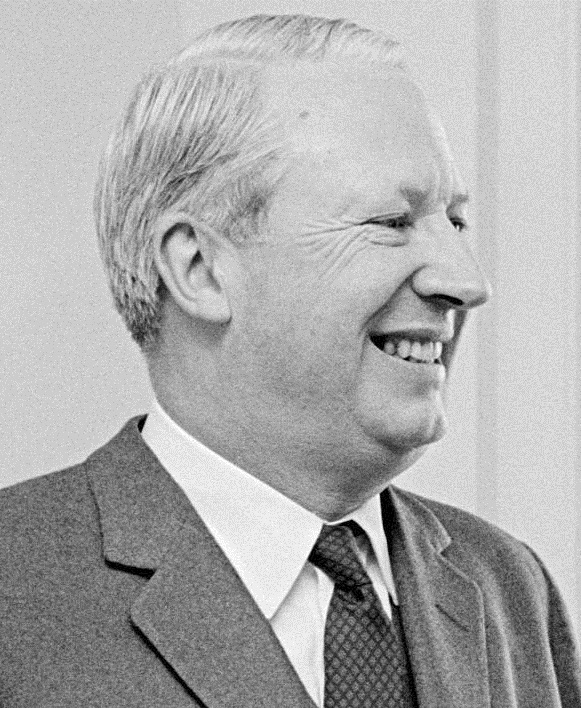
    tedheath

    Below is the text of the maiden speech made by Edward Heath in the House of Commons on 26th June 1950.

    As this is the first occasion on which I have had the privilege of addressing the House, I ask for that customary indulgence which is generously given to new Members. I am very glad indeed of the opportunity to take part in this Debate. As I was fortunate in being in the Federal German Republic for part of the Whitsun Recess, I should like to place before the House what I found were the objectives of the German Government in taking part in the Schuman discussions.

    Before I do that, however, I should like to follow for a moment the right hon. Member for Wakefield (Mr. Arthur Greenwood), and also the Chancellor of the Exchequer, in the arguments that they produced. It is a tradition of this House that new Members in making their maiden speeches should not be controversial. I hope I shall not be thought to go beyond the bounds of that tradition if I answer some of the points that were raised by those two right hon. Gentlemen.

    The right hon. Member for Wakefield accused us on this side of the House of play-acting. Nothing could be further from the truth. We on this side of the House realise the importance of the issues at stake, and today, with the threat of war in Korea, nobody on this side of the House can be accused of playacting in considering the affairs of Western Europe. The right hon. Gentleman also said that his movement was an international movement. The strange thing is that, from their document which was published recently, it is now apparent that in this country, at any rate, the movement has become a national movement, and that the views which were expressed in that document are not representative of those of other Socialist parties in Europe—certainly not of those members of Socialist parties whom I have met.

    It seems to me that the point at issue in this Debate arises out of a word used in the last communiqué presented with the French memorandum of 1st June. The French put forward their proposition in the words: The Governments have assigned to themselves as their immediate objective … The Chancellor of the Exchequer, in his speech, spoke of the “principle.” I think it is interesting to see the change of tone which has taken place in the time between the communiqué, which is the report of the conversations of the Minister of State with the French Ambassador, and the final communiqué in which the British Government refused to take part. If I may quote the Minister’s words, they were that the Ambassador said we were not taking up an attiude of opposition to this principle but were prepared to enter into discussions with the object of finding a practical method of applying the principle. With that the Minister of State agreed. Then the French put forward the word “objective.” It is surely different from “principle,” because one may have an objective, and the way in which one reaches the objective is governed by principles, and so the principles safeguard the road to the objective. If one finds one cannot carry out one’s principles, then one does not reach the objective, and one withdraws—which is the position covered by the Motion we have put forward.

    Now, the Chancellor of the Exchequer spoke looking at the worst point of view the whole time. He spoke of the high authority, suggesting that we should have no say in arranging the power of the high authority. Surely, that would not be the case. He said we should be taking a risk with the whole of our economy. We on this side of the House feel that, by standing aside from the discussions, we may be taking a very great risk with our economy in the coming years—a very great risk indeed. He said it would also be a great risk if we went in and then withdrew. We regard it as a greater risk to stand aside altogether at this stage.

    The Chancellor spoke about the position of the Empire. We all realise the importance of the Empire, and we on this side certainly think it must be supported above all. But the right hon. and learned Gentleman did not tell us what the views of the Empire are. What are the views of the Empire in this matter? Have the Government had discussions with the other Governments of the Empire about this matter? Can we be told what are their views—what are the views of our Empire statesmen? As far as we can ascertain, they have not protested against this scheme.

    The Chancellor spoke all the time as though this were to be a restrictionist plan. Surely the object of the plan is to be one of expansion? Surely, the task to be put upon the high authority is to be the task of expansion, rather than of restriction. Lastly, the Chancellor, as do the communiqués, and as does this document published by the Labour Party, spoke of the importance of full employment. So did also the right hon. Member for Wakefield. From that stems their desire not to co-operate with any Government that is not a Socialist one. This is in contrast with a document called “National and International Measures for Full Employment,” by a group of economists, which is published by the United Nations. It has received scant attention from the Government. On page 7 the authors say: In our view, however, the steps required to promote full employment in free enterprise economies are fully consistent with the institutions of such countries. The measures recommended in the present report to sustain effective demand do not involve any basic change in the economic institutions of private enterprise countries. The position which the Government take up is that no other country wants full employment and that no other country is capable of pursuing full employment unless it has a Socialist Government. That is obviously far from the truth.

    Now I should like to say a word about the reasons which I found the German Government had for taking part in these talks, and of what is the attitude of the German Government. I found that their attitude was governed entirely by political considerations. I believe there is a genuine desire on their part to reach agreement with France and with the other countries of Western Europe. I believe that in that desire the German Government are genuine, and I believe, too, that the German Government would be prepared to make economic sacrifices in order to achieve those political results which they desire. I am convinced that when the negotiations take place between the countries about the economic details, the German Government will be prepared to make sacrifices.

    I think it is also true that when the German Government accepted the invitation they were quite aware that no precise details of the nature of the high authority were known, and that they were not aware of many of the economic details involved, but that, in order to achieve the political results which they want, they were prepared to accept the invitation to join these discussions. The first thing they want is to achieve agreement with France, and secondly they want to achieve the unity of Western Europe in order to stand against the threat from the East. On the Continent people are very sensitive about that threat from the East.

    That is not to say that the German Government does not see many advantages in coming into the Schuman discussions. It sees, first of all, that it will negotiate on a basis of equality in Europe—a position it has only just reached for the first time since the war. It also sees, I believe, a means of securing the abolition of the International Ruhr Authority, the implications of which are obviously very considerable. We must realise that if within the Schuman Plan agreement were reached for the abolition of that Authority, with the support of America, it would be extremely difficult for this country to object. The German Government sees, too, a solution of the Saar problem. Above all, it sees a means of abolishing the restriction of 11.1 million tons on its steel output. That is an important point indeed for the German Government, which is capable at the moment of seeing steel production in Germany go up to 14½ million or 16 million tons. It sees also a means of securing a vast expansion of German coal production.

    If those are advantages, there are sown in those advantages the seeds of conflict with France over this economic basis. I wish to spend a moment or two on these economic details because of their political implications. Under Marshall Aid, France has been able to expand her steel production very considerably. She would like to see German coke go to Lorraine and German steel production to remain pegged, while the Germans see in the plan an opportunity for expanding their steel production. There, firstly, is a possible seed of conflict.

    In addition, Germany wishes to see set up again the dismantled broad strip rolling mill at Dinslaken, while under Marshall Aid France has been building two such strip rolling mills, and not all will be required, by Europe. There may also be difficulties over German markets in Bavaria and the Saar because it may be easier for the French to supply those markets than for the Germans. Finally, there is the grave problem of future trade with Eastern Europe which many in the Ruhr want to start to develop. There are seeds of conflict in these negotiations between France and Germany, and I submit that that is a very strong reason why we should take part in these discussions, in order that we may balance out the difficulties between France and Germany which are bound to arise on the economic side.

    Under the Schuman Plan, Germany may very well become once again a major factor in Europe. Anyone going to Germany today is bound to be impressed by the fact that the German dynamic has returned; that Germany is once again working hard and producing hard, and that therefore Germany will become a major factor in Europe. I suggest that there are only two ways of dealing with that situation. One is to attempt to prolong control, which the Chancellor has already dismissed as being undesirable and impracticable. The only other way is to lead Germany into the one way we want her to go, and I believe that these discussions would give us a chance of leading Germany into the way we want her to go.

    Lastly, I want to mention one point which I think has received scant attention in the discussions about the Schuman Plan so far. There is a sentence in the very first communiqué of M. Schuman, in which he says: After the talks have been successful, Europe with new means at her disposal will be able to pursue the realisation of one of her essential tasks—the development of the African Continent. That has touched the German imagination in a way in which many other parts of the plan have not, because she sees in the outcome of the Schuman Plan once again the outlet to Africa, and if the outlet to the East is to be blocked, then the outlet to Africa is the most obvious alternative. But does it not also mean for all of us a development of steel and coal production for those markets? I would also submit that, if we can say that we have united Europe in the matter of steel and coal, we can say to the Americans, “There is an outlet for the President’s Fourth Point, in the capital development of a great area of the world.” That might very well be most important from the American point of view.

    After the First World War we all thought it would be extremely easy to secure peace and prosperity in Europe. After the Second World War we all realised that it was going to be extremely difficult; and it will be extremely difficult to make a plan of this kind succeed. What I think worries many of us on this side of the House is that, even if the arguments put forward by the Government are correct, we do not feel that behind those arguments is really the will to succeed, and it is that will which we most want to see. It was said long ago in this House that magnanimity in politics is not seldom the truest wisdom. I appeal tonight to the Government to follow that dictum, and to go into the Schuman Plan to develop Europe and to co-ordinate it in the way suggested.

  • Alex Salmond – 1987 Maiden Speech in the House of Commons

    alexsalmond

    Below is the text of the maiden speech made by Alex Salmond in the House of Commons on 29th June 1987.

    You have called me to speak at rather an apt time, Mr. Deputy Speaker. I have been watching with interest this evening and counting the relative strengths of the Scottish Nationalist party and Plaid Cymru, on the one hand, and the Scottish Conservative contingent, on the other. As the debate has worn on, the relative strengths have to-ed and fro-ed. At the moment, with five hon. Members on our Benches and only two Scottish Conservative Members, we have the most satisfactory result of the evening so far.

    I confess that I have been playing my game of spot the Scottish Tory for some time. Their number has been as low as one and as high as seven during this debate, but for most of the time there have been four Scottish Conservative Members in the Chamber. For some time, I thought that the Secretary of State for Scotland had laid down his particular 40 per cent. rule on his own contingent of hon. Members.

    My first duty is to pay tribute to my predecessor, Mr. Albert McQuarrie, who was known in the House and elsewhere as a robust character. He came to the House late in life, but I know that he played a full part in its debates, and I am sure that all hon. Members will join me in wishing him a long and happy retirement.

    Banff and Buchan, the constituency for which I now have parliamentary responsibility, is a constituency of robust characters, as one would expect from an area that depends for its livelihood on fishing, farming and oil and the industries related to them. My constituency has robust characters who work with their hands and get their faces dirty. They are involved in producing, making and catching things. They are people engaged in the manufacturing and primary sectors who are the real creators of wealth. If Government policy was orientated more to the primary and manufacturing sectors of industry, rather than to the rentier economy produced by the Conservative party, the long-term health and welfare of this country would be better served.

    I shall examine in turn the problems facing the three basic industries of my constituency—farming, fishing and oil. I notice that a good deal of attention was paid in the Gracious Speech to the problems of the inner cities, and I welcome Government initiatives on that serious problem. However, in Scotland we do not have a serious inner city problem. In our major cities we have problems on peripheral housing estates, but we have, too, an enduring and extremely serious problem in our rural communities. I do not think that the Government realise the extent to which the decline in farm income is causing such problems for the rural areas and I hope that they will turn more of their attention to that as the Session progresses.

    Conservatives claim that theirs is the party that reduces business taxation. If that is so, I hope to hear soon that they intend to abandon their plans to levy additional taxation on the fishing industry in the form of light dues—the dues paid for navigational lights. At the moment, the Government propose to remove the traditional exemption from light dues from the fishing industry while retaining that exemption for the owners of yachts and pleasure boats. I am sure that the right hon. Member for Old Bexley and Sidcup (Mr. Heath) would be very relieved to hear that, but I think too that he would join Opposition Members in arguing strongly that we should not impose an additional tax on working fishermen while those who own pleasure boats and yachts remain exempt. Light dues, which relate to a public service concerned with public safety, should continue properly to be met from the public purse.

    We have heard some interesting remarks from the Secretary of State for Scotland who, since the turn of this year, has ascribed all the problems of the Scottish economy to the decline of the oil industry in Scotland. That is a remarkable feat, given that Scotland has lost 180,000 manufacturing jobs since 1979.

    If the Secretary of State thinks that the impact of the oil downturn has been so serious in Scotland—it has cost us 30,000 jobs—why was it that the Government argued so forcibly for, welcomed and encouraged the decline in oil prices, which has caused these grievous burdens for the Scottish economy? Since 1979, successive Chancellors have received from the Scottish oil industry in revenue terms and in 1987 prices the sum of £70,000 million—approximately £14,000 for every man, woman and child in Scotland. Those Chancellors have been very sure that that should not be Scotland’s oil revenue, but, when it comes to a downturn in the industry, there has been no doubt that Scotland should have the job losses. For these three industries—farming, fishing and oil—I will argue at every opportunity in the Chamber, and I will argue for a stronger defence of their welfare.

    I move on to the political position facing Scotland and the reaction of Scottish Members to the Gracious Speech. Without doubt the Gracious Speech is interesting not for what it contains about Scotland but for what it does not contain. There is no sign that the Government will make any concessions to Scotland following their massive defeat at the polls. That position was encapsulated by the Secretary of State who, in an interview on Scottish television last week, said that the Gracious Speech is the same as that which we would have had if the Conservative party had won 72 Scottish seats instead of 10. That betrays the arrogance and contempt with which the Conservative party now proposes to treat the Scottish electorate. in its view, it does not matter what we in Scotland say or do, how we vote, how we think or how we learn from our experience of the policies under which we suffer. That position is not sustainable in the longer term. How long it is sustainable will depend on the level of opposition from Opposition Members.

    A number of questions have been asked about the importance attached to self government by the Scottish electorate. If the election results do not provide a convincing answer to that question, I have here the results of an opinion poll commissioned during the election campaign. The Conservative party has an interesting and geographically split view of opinion polls. It believes in them in England when they show that it is winning, but it does not believe them in Scotland when they show that it is not winning.

    I remember earlier this month when this opinion poll was released. I was sitting in a television studio with Mr. Michael Hirst, who did not believe the contents of the opinion poll. The results of the poll showed that the majority of Scottish Conservatives were about to lose their seats, although the Secretary of State for Scotland had said that such opinion polls were unreliable, that this could not happen and that the Conservative party in Scotland would increase its representation. In fact the poll has been proved correct in its analysis of how many Scottish Conservatives would lose their seats.

    It also asked people how important they regarded the setting up of a Scottish assembly. No fewer than 62 per cent. thought that it was very important or quite important. Only 25 per cent. argued that it was not very important or not at all important.

    We take opinion polls as we find them, but it is an incredible proposition from a party reduced to such a rump in Scotland, as a result not just of this but of a series of elections, to argue that it has the divine right to interpret the wishes of the Scottish electorate more than any other party, or particularly the party that won the Scottish election—the Labour party.

    Like many new Members I am engaged in moving home, and as I was clearing out some of my files I came across some yellowing pages of newspaper cuttings from the period immediately before and after the general election of 1983 in Scotland. In them, a number of Scottish Members of Parliament were making the case that the rights of Scotland should be respected—a case with which I agree. They were called “Labour’s new dogs of war,” and they included the hon. Members for Glasgow, Cathcart (Mr. Maxton), for Carrick, Cumnock and Doon Valley (Mr. Foulkes), for East Lothian (Mr. Home Robertson) and for Glasgow, Shettleston (Mr. Marshall). They argued that, by their efforts, they could impose the will of the Scottish people on the House and that they would manage to extract for the Scottish people a measure of Scottish devolution. We are now four years on and the dogs of war not only have not bitten very hard but have lost their bark.

    I scrutinised with some interest the speech made by the hon. Member for Cathcart on Thursday, in which he came up with the incredible proposition that the Conservative party has half a mandate in Scotland. His argument was that the Conservative party has a mandate over such sectors as the economy and United Kingdom matters, but does not have a mandate over specifically Scottish Office issues such as education. It is an incredible argument that the Conservative party has the right to destroy the Scottish economy but does not have the right to destroy the Scottish education system. It is not a case of half a mandate. The Conservative party either has or has not a mandate in Scotland.

    My hon. Friend the Member for Caernarfon (Mr Wigley) has put the case for the rights of parties coming up from the people. The hon. Member for Falkirk, West (Mr. Canavan) has argued eloquently why the Conservative party has no mandate in Scotland. For the benefit of Tory Members, I shall repeat it. The Tory party does not have a mandate in Scotland because Scotland is a nation and as such has a right to determine its own political destiny.

    I will repeatedly argue for independence for Scotland within the context of the EEC. I recognise that that is not the majority view in Scotland, although opinion poll evidence shows substantially more support for that position than for the position favoured by the Tory, party—the status quo. Scottish people have the right to choose the amount of devolution or self government that they want. Therefore, I am prepared to argue that, because the Labour party won the election in Scotland, it has the right to insist on its plans for the Scottish people being put into effect.

    The basic question is: how will the Conservative party be made to do this? The hon. Member for Glasgow, Garscadden (Mr. Dewar), in his quick-fire speech, was long on description of the condition of Scotland, but short on what he and his colleagues are going to do about it. The most with which he threatened the Conservative party was a few late nights for the reduced band of Scottish Conservatives. Incidentally, I am told that in Labour party circles at the moment the hon. Member for Garscadden is considered as something of a radical. If he is a radical, I wonder how conservative the rest are. I do not know what he does to Tory Members, but if I were in their position he would not frighten me.

    The same applies to the eloquent address of the hon. Member for Glasgow, Hillhead (Mr. Galloway). He cannot convince the Conservative party, Scottish Conservative Members or the Secretary of State for Scotland, by argument or appeal, to change their position. The Scottish Conservatives are a lost cause. They have lost their ability to argue their case before their fellow countrymen and women.

    I find remarks about the largesse of the London Treasury to areas such as Scotland, Wales and the north of England amazing, as Scotland has an annual surplus of revenue over expenditure of £3.5 billion. I cannot, therefore, take seriously the idea that Scotland is subidised by the London Exchequer.

    I hear other remarks about the history and geography of Scotland which make me realise why so much of the Gracious Speech is devoted to the English education system. I suspect, however, that, in looking at the state education system in England, English Conservatives are looking at the wrong sector for additional education on economics, history and geography. I seriously suggest to Conservative Members representing English constituencies that the nations of Scotland and England have a close and long history. Sometimes it has been a troubled history but it has always been a close one. At this juncture in our affairs, when there is a dramatic political divergence between Scotland and England, and indeed between England and Wales, would it really hurt them so much to concede a little justice to the Scottish nation?

  • Caroline Lucas – 2010 Maiden Speech in the House of Commons

    Below is the text of the maiden speech in the House of Commons made by Caroline Lucas on 28th May 2010.

    Mr Speaker,

    I am most grateful to you for calling me during today’s debate.

    The environment is a subject dear to my heart, as I’m sure you know, and I’ll return to it in a moment.

    I think anyone would find their first speech in this chamber daunting, given its history and traditions, and the many momentous events it has witnessed.

    But I have an additional responsibility, which is to speak not only as the new Member of Parliament for Brighton Pavilion, but also as the first representative of the Green Party to be elected to Westminster.

    You have to go back several decades, to the election of the first Nationalist MPs in Scotland and Wales, to find the last maiden speech from a new national political party.

    And perhaps a better comparison would be those first Socialist and Independent Labour MPs, over a century ago, whose arrival was seen as a sign of coming revolution.

    When Keir Hardie made his maiden speech to this House, after winning the seat of West Ham South in 1892, there was an outcry.

    Because instead of frock coat and top hat, he wore a tweed suit and deerstalker.

    It’s hard to decide which of these choices would seem more inappropriate today.

    But what Keir Hardie stood for now seems much more mainstream.

    Progressive taxation, votes for women, free schooling, pensions and abolition of the House of Lords.

    Though the last of these is an urgent task still before us, the rest are now seen as essential to our society.

    What was once radical, even revolutionary, becomes understood, accepted and even cherished.

    In speaking today, I am helped by an admirable tradition – that in your first speech to this House, you should refer to your constituency and to your predecessor.

    David Lepper, who stood down at this election after thirteen years service as Member for Brighton Pavilion, was an enormously hard-working and highly-respected Member whose qualities transcend any differences of Party.

    I am delighted to have this chance to thank him for his work on behalf of the people of Brighton.

    It is also a great pleasure to speak about Brighton itself. It is, I am sure, well-known to many Members, if only from Party conferences.

    My own Party has not yet grown to a size to justify the use of the Brighton Centre, although I hope that will change before long.

    But I can say to honourable members who are not familiar with it, that it is one of the UK’s premier conference venues; and there are proposals to invest in it further to help ensure that Brighton retains its status as the UK’s leading conference and tourism resort.

    There are also the attractions of the shops and cafes of the Lanes and North Laine, the Pier and of course the Royal Pavilion itself, which gives its name to the constituency.

    And beyond the immediate boundaries of the constituency and the city, there is the quietly beautiful countryside of the South Downs and the Sussex Weald.

    Brighton has always had a tradition of independence – of doing things differently. It has an entrepreneurial spirit, making the best of things whatever the circumstances, and enjoying being ahead of the curve.

    We see this in the numbers of small businesses and freelancers within the constituency, and in the way in which diversity is not just tolerated, or respected, but positively welcomed and valued.

    You have to work quite hard to be a “local character” in Brighton.

    We do not have a single dominant employer in Brighton. As well as tourism and hospitality, we have two universities, whose students make an important cultural, as well as financial, contribution to the city.

    There are also a large number of charities, campaigning groups and institutes based there, some local, others with a national or international reach, such as the Institute of Development Studies, all of which I will work to support in my time in this place.

    I would like also to pay tribute to those wonderful Brighton organisations that work with women. In particular I’d like to mention Rise, who do amazing work with women who have been victims of domestic abuse.

    Many of my constituents are employed in the public and voluntary sectors. They include doctors and teachers, nurses and police officers, and others from professions that do not always have the same level of attention or support from the media, or indeed from politicians.

    But whatever the role – social workers, planning officers, highway engineers or border agency staff – we depend upon them.

    I’m sure that members on all sides would agree that all those who work for the State should be respected and their contribution valued. In a time of cuts, with offhand comments about bureaucrats and pencil-pushers, that becomes yet more important.

    There is also a Brighton that is perhaps less familiar to honourable members. The very popularity of the City puts pressure on transport and housing and on the quality of life.

    Though there is prosperity, it is not shared equally. People are proud of Brighton, but they believe that it can be a better and fairer place to live and work.

    I pledge to everything I can in this place to help achieve that, with a particular focus on creating more affordable, more sustainable housing.

    Brighton was once the seat of the economist Henry Fawcett who, despite his blindness, was elected there in 1865. Shortly afterwards he married Millicent Garrett, later the leader of the suffragists, a movement he himself had supported and encouraged.

    So he lent his name to the Fawcett Society, which is still campaigning for greater women’s representation in politics.

    The task of ensuring that Parliament better reflects the people that it represents remains work in progress – and as the first woman elected in Brighton Pavilion, this is work that I will do all that I can do advance.

    I said when I began that I found this occasion daunting.

    Perhaps the most difficult task is to say a few words about the latest radical move that the people of Brighton have made – that is, to elect the first Green MP to Parliament.

    It has been a long journey.

    The Green Party traces its origins back to 1973, and the issues highlighted in its first Manifesto for a Sustainable Society – including security of energy supply, tackling pollution, raising standards of welfare and striving for steady state economics – are even more urgent today.

    If our message had been heeded nearly 40 years ago, I like to think we would be much closer to the genuinely sustainable economy that we so urgently need, than we currently are today.

    We fielded fifty candidates in the 1979 general election as the Ecology Party, and began to win seats on local councils. Representation in the European Parliament and the London Assembly followed.

    Now, after nearly four decades of the kind of work on doorsteps and in council chambers which I am sure honourable members are all too familiar, we have more candidates and more members, and now our first MP.

    A long journey.

    Too long, I would say.

    Politics needs to renew itself, and allow new ideas and visions to emerge.

    Otherwise debate is the poorer, and more and more people will feel that they are not represented.

    So I hope that if, and when, other new political movements arise, they will not be excluded by the system of voting. Reform here, as in other areas, is long-overdue.

    The chance must not be squandered. Most crucially, the people themselves must be given a choice about the way their representatives are elected.

    And in my view, that means more than a referendum on the Alternative Vote – it means the choice of a genuinely proportional electoral system.

    Both before the election and afterwards, I have been asked the question: what can a single MP hope to achieve? I may not be alone in facing that question.

    And since arriving in this place, and thinking about the contribution other members have made over the years, I am sure that the answer is clear, that a single MP can achieve a great deal.

    A single MP can contribute to debates, to legislation, to scrutiny. Work that is valuable, if not always appreciated on the outside.

    A single MP can speak up for their constituents.

    A single MP can challenge the executive. I am pleased that the government is to bring forward legislation to revoke a number of restrictions on people’s freedoms and liberties, such as identity cards.

    But many restrictions remain. For example, control orders are to stay in force. Who is to speak for those affected and for the principle that people should not be held without charge, even if it is their own homes?

    House arrest is something we deplore in other countries. I hope through debate we can conclude that it has no place here either.

    A single MP can raise issues that cannot be aired elsewhere.

    Last year Honourable Members from all sides of the House helped to shine a light on the actions of the international commodities trading group Trafigura, and the shipping of hazardous waste to the Ivory Coast.

    There was particular concern that the media in this country were being prevented from reporting the issues fully and fairly.

    This remains the case, for new legal actions concerning Trafigura have been launched in the Dutch courts, and are being reported widely in other countries, but not here.

    Finally, I would like to touch on the subject of today’s debate.

    I have worked on the causes and consequences of climate change for most of my working life, first with Oxfam – for the effects of climate change are already affecting millions of people in poorer countries around the world – and then for ten years in the European Parliament.

    But if we are to overcome this threat, then it is we in this chamber who must take the lead.

    We must act so that the United Kingdom can meet its own responsibilities to cut the emissions of carbon dioxide and other gases that are changing our climate, and encourage and support other countries to do the same.

    This House has signed up to the 10:10 Campaign – 10% emissions reductions in 2010. That’s very good news. But the truth is that we need 10% emission cuts every year, year on year, until we reach a zero carbon economy.

    And time is running short. If we are to avoid irreversible climate change, then it is this Parliament that must meet this historic task.

    That gives us an extraordinary responsibility – and an extraordinary opportunity.

    Because the good news is that the action that we need to tackle the climate crisis is action which can improve the quality of life for all of us – better, more affordable public transport, better insulated homes, the end of fuel poverty, stronger local communities and economies, and many more jobs.

    I look forward to working with Members from all sides of the House on advancing these issues.

  • Philip Hammond – 1997 Maiden Speech in the House of Commons

    philiphammond

    Below is the text of the maiden speech made by Philip Hammond in the House of Commons on 17 June 1997.

    I am delighted to make my maiden speech in the debate on this short but important Bill, which will have a significant effect on many of my constituents.

    A number of my hon. Friends who are new Members have already made their maiden speeches. My tardiness owes something to Disraeli’s advice to a new Member: “It is better they wonder why you do not speak than that they wonder why you do.” It must be said that if I were looking for support from my colleagues, my timing has not been perfect; but Conservative Members are not so numerous that we can afford to carry passengers indefinitely and, for better or worse, the time has now come.

    I have the privilege to represent the new constituency of Runnymede and Weybridge, which was formed largely from the former Chertsey and Walton constituency, with a piece of North-West Surrey attached to it. The boundary commission seldom wins friends when naming new constituencies, but that much-maligned body has surely got it right this time in including the historic name of Runnymede in the title of a constituency for the first time.

    I am sure that many hon. Members envy me a constituency which stretches from the Wentworth golf course in the west to the St. George’s hill course in the east, by way of another five first-class courses. It is, perhaps, in the interest of diligent pursuit of parliamentary duties that such a constituency should return a non-golfing Member.

    I follow in the footsteps of a number of eminent Members who have represented areas that are now part of my constituency, but it is my immediate predecessors in Chertsey and Walton and North-West Surrey to whom I now pay tribute. Both Sir Geoffrey Pattie and Sir Michael Grylls did excellent work on behalf of their constituents over the years, in their different ways. My special thanks are due to Sir Geoffrey Pattie for the superb apprenticeship that he bestowed on me during the 18 months before my election. He served Chertsey and Walton for 23 years, becoming a Minister and a vice-chairman of the Conservative party. I can honestly say that, if at the end of my parliamentary career I have made half as many friends and admirers in my constituency as Sir Geoffrey has, I shall regard that career as having been a great success.

    Runnymede and Weybridge comprises two local authority areas, the borough of Runnymede itself and part of the borough of Elmbridge. The constituency straddles the M25 and the M3; indeed, in those road atlases that tend to exaggerate the width of roads my constituency appears to contain little other than the intersection of those two motorways. It also comprises the ancient town of Chertsey, where the Romans first crossed the River Thames, Egham, Addlestone and Weybridge, as well as the historic site of Runnymede and that of the Tudor royal palace of Oatlands. Those historic locations, together with a selection of smaller towns and villages and the garden estates of Wentworth and St. George’s Hill, are set in the beautiful Surrey countryside, which many people are surprised to find so close to London.

    Most, if not all, hon. Members will recognise the name of my constituency and may even be able to locate it geographically through their knowledge of the events in 1215. The basis of constitutional government in England began to emerge when Magna Carta was signed in the meadows by the Thames, between Staines and Windsor, near the town of Egham. We can trace the origins of our modern freedoms to that event which took place in my constituency. It was on 15 June that year when the King and the barons first met at Runnymede. During the next few days, they negotiated the charter. I am delighted to be able to commemorate this week, the 782nd anniversary of the signing of Magna Carta, by making my maiden contribution in the House in the name of Runnymede and Weybridge.

    Rather more recently, Brooklands, in Weybridge, has been renowned as the home of British motor sport and the birthplace of the British aviation industry. It spawned an engineering industry in the area, which provided an important part of the country’s aviation resource during the second world war. It has also created a surprisingly diverse economy in our constituency.

    The Brooklands museum is an extraordinary tribute to the men of vision and spirit who built those twin industries on Hugh Locke-King’s race-track during the 1920s and 1930s. I strongly recommend hon. Members to take the time to visit that museum when passing through my constituency.

    Like people in many similar areas of the home counties, my constituents enjoy the benefits of material prosperity, which are due primarily to our proximity to London and the excellent communications that we enjoy because of the motorway network and Heathrow airport. We also suffer because of that proximity from traffic, noise, pollution and the inexorable pressure for further development. The challenge for my constituency as we move into the new millennium will be to get the balance right. We must achieve the correct balance between continuing prosperity and maintaining the quality of life in the area. That will not be an easy task, but I look forward to playing my part, together with the elected local authorities in the constituency, in achieving it over the years to come.

    It will be a pleasure to work with those local authorities, especially Surrey county council, now returned to Conservative control by a substantial majority, and Runnymede borough council, which is also Conservative controlled. Whatever other messages the electors of Surrey may have sent out on 1 May, they clearly voted yes to sound Conservative principles and good management in local government.

    Runnymede has the lowest council tax in Surrey while, by general consensus, delivering a high standard of services. It has no statutory obligation to do so, but it is the highest spending authority on services for the elderly in Surrey. Its programme of upgrading and improving council-owned housing stock has the widespread support of tenants. Its private sector partnerships have attracted interest across the country. A key factor in achieving that enviable combination of low council tax and high service provision has been the careful management of its capital receipts. Runnymede is debt-free and it has chosen to invest its capital receipts to produce a substantial income to supplement the council tax for the benefit of all the people of Runnymede.

    When the Labour party first promoted the idea of the release of capital receipts, it was presented as some kind of cost-free option. The idea was to take out from under the bed the pot of gold that the wicked Tories had squirrelled away and to spend it to good effect. It is now generally understood that there is no pot of gold. To the extent that set-aside capital receipts are cash-backed, the cash is largely in the wrong places. In public sector borrowing terms, the receipts have already been taken into account. Any increase in the aggregate supplementary credit approvals issued will result in an increase in the public sector borrowing requirement. There is no offsetting effect on the PSBR from any notional release of set-aside capital receipts. There was no mention earlier of the Revenue effects of the increased housing provision that the Government are seeking. If the Government achieve anything by the Bill it will be only by robbing Peter to pay Paul.

    The reference in the Bill to capital receipts is a smoke-screen. It does not detail the methodology that will apply in determining the supplementary credit applications. If it is to increase the amount of investment in social housing, it must envisage an increase in the aggregate amount of borrowing by local authorities for that purpose.

    The Bill provides a thin cover, through the mechanism of taking total capital receipts into account when determining the supplementary credit approvals, for a transfer of borrowing power from authorities with capital receipts to those without. In many cases, that will mean a transfer of borrowing power from authorities that have managed their housing stock well; taken a forward-looking, innovative approach to housing; and undertaken large-scale voluntary transfers to those that have succeeded in frustrating their tenants’ right to buy and which have eschewed the opportunities of the large-scale voluntary transfers that have brought such a welcome diversity to the social housing sector. Incidentally, such transfers have also attracted £4 billion of private sector money, which otherwise would not have been available. The Bill represents the worst kind of subsidy—a subsidy from the efficient to the inefficient.

    The implementation of the Bill represents an unjustifiable penalisation of thrifty, well-managed councils such as Runnymede and an erosion of the principle of local autonomy and accountability, which the Government purport to favour. It will also lead directly to the imposition of higher council taxes and higher rents as receipt-rich authorities are forced to run down their balances and forgo the considerable income that those balances currently generate. No less an organisation than Shelter, hardly a well-known supporter of the Conservative view of the world, has calculated that council house rents will rise by £6 a week if all the receipts are released. It is clear that council taxes will rise or services will be cut as prudent councils find that the dice are loaded against them and are forced to liquidate investments.

    The Bill is an attack on thrift and good management. It represents a thinly veiled transfer of borrowing power to Labour’s friends in local government. I fear that my constituents may expect more of the same when the local government settlement is announced.

    The Bill attacks the capital balances of prudent authorities and an attack on their revenue support will not be far behind. It is the new Government’s double whammy for the council tax payers of Surrey.

    When the Bill is stripped of the smokescreen of capital receipts, it is clear that it paves the way for either an increase in the PSBR or for the reallocation of borrowing power away from receipt-rich authorities. It would be better if it said so plainly without hiding behind the fig leaf of capital receipts. It represents an inefficient way of achieving the Government’s legitimate manifesto commitment to higher investment in social housing.

    The Bill is unfair in its effect on prudent local authorities. It is lacking in detail. It confers excessive discretion on Ministers. In short, it is an ill-conceived piece of legislation and I urge the House to vote against it on Second Reading.

  • Dennis Turner – 1987 Maiden Speech in the House of Commons

    Below is the text of the maiden speech made in the House of Commons by Dennis Turner on 2nd July 1987.

    I felt a little diffident about speaking after the comment by the leader of the Social Democratic party, the right hon. Member for Plymouth, Devonport (Dr. Owen), about people coming from local government, but then I composed myself, on the basis that as I have come from local government I might have more contemporary experience to bring to the House on some of the major issues that are being debated today and have been raised during the debates on the Loyal Address over the past five days.

    I sincerely thank hon. Members on both sides of the House, and all the workers in the House — the people who serve us our food, the Whips’ Office, Mr. Speaker’s Office, and the Fees Office, which I must not forget — for the warm welcome that I have received and for the courteous and helpful way in which I have been treated. Every hon. Member has helped me in settling into an awesome place. It is an experience that one has to live through to fully appreciate it. I say that in all humility. I am grateful for the help that has been shown to me.

    I come to the House following a legend — the legend of Bob Edwards, who was a fine parliamentarian, and who devoted all his life to the interests of the people. If I can serve the people of my constituency one quarter as well as he did, I shall be very pleased.

    Bob Edwards made a wider contribution than that, from the days when he sat with Trotsky as a young man, and with Mao Tse Tung. He fought in the Spanish civil war. All that is known to the House. He is such a modest man. He served through the years with such humility. It is a great privilege to follow him. To have had him as a mentor over the past 20 years has been of great value to me.

    Bob represented a black country constituency. Many of my constituents expected me to use words such as yow, bay or thear, and wanted me to talk in good black country dialect. However, I shall not do so, only because I have respect and regard for the Hansardwriters. The dialect orginated from the language of Chaucer, but I understand the difficulties of writing down all that I have been saying in black country dialect, so I shall stick to the Queen’s English as we debate the Queen’s Speech.

    Bob represented the black country towns of Bilston, Coseley and Sedgley. I now represent, as he did before his retirement, the constituency of Wolverhampton, South-East, which still takes in a large part of the black country. I am a black country man and proud of it. I come here with the spirit of the black country with all that has happened to us over the past few years, some of which has been debated in the past few days.

    Many of my black country men would not comprehend what has been said in the speeches over the past few days, I think that they would have difficulty in identifying some of the things that have been said by the Government about the community in which we live in the black country today. Unemployment is 25 per cent. in my constituency. In Wolverhampton, 25,000 good men and women do not have the opportunity to make a useful contribution to society and cannot receive the rewards that would arise from that.

    When we talk of unemployment, we must take into account the indignity that comes with it. Independence and freedom have been mentioned often in the past few days. The people whom I represent no longer have the freedom and independence given by the wage packet. A wage packet is important to them, and their dignity, standards and independence are based on that. So I must reconcile that freedom and independence with the difficulties and impoverishment in which many of our people have been placed by being out of work and finding it difficult to cope in present circumstances.

    I wonder what I am supposed to say to the lady who came to see me and told me that she was existing on £39.50 a week. Although she received housing benefit, she had to pay for gas and electricity and keep herself on that amount of money. I reflect on that, and on the fact that there must be days in the week on which people, inside and outside the House, spend that much on one meal, yet that person and many thousands of others have to exist week by week on amounts such as that coming into their homes.

    It is said that there is investment in housing, but in Wolverhampton we are starved of investment in housing. Year by year, since the Conservative Government came to power—my objective is not to make a political point—we have seen our capital programmes reduced to the extent that our ability to do what we want to in the inner areas has been taken away from us and we are not in a position to make a contribution.

    Two thousand five hundred senior citizens and disabled people in Wolverhampton are seeking bungalows or purpose-built sheltered accommodation. We have not been in a position to build a bungalow for the past four or five years. We have estimated that it will take some of the people on that list who are 70 years old now until they are 120 to qualify for the bungalows or sheltered accommodation that they need, because of our lack of ability to provide it.

    In Wolverhampton, 74 per cent. of the people are on housing benefit. Is that the freedom and independence that we are told about? What opportunities are afforded them to buy their own homes? Without any ideological hang-up, we— a Labour-controlled council—were selling houses in the 1960s and 1970s, and that is true of many authorities up and down the land. So the idea that tenants were somehow liberated purely by the advent of the Conservative Government is quite erroneous.

    If we talk of health, 85 people have been turned away from our hospitals in the past three weeks—people who were seriously ill and could not be provided with a bed when they desperately needed one for emergency treatment. There has been a cut of £3.9 million in our district health authority funding since 1983 — which is not the increase about which we have heard. Recently, because of pressures of finance, we have cut back by 50 per cent. on the incontinence pads that our elderly and disabled people need to be able to live in some kind of decency and comfort. That has happened in the past month.

    Will the education that we hear about be education that is uplifting for all, or occasional schools that will be identified and can be moved into the private sector? In the schools in Wolverhampton, there has been a reduction, year after year, in the capital programmes that are needed to improve those schools. There has been chaos in the legislation dealing with teachers, and we know that we cannot now give an education service to our children because of the turmoil that exists. Are we really intending to improve the lot of all our children in all our schools, or that of only a few? We shall see the test of that in the months ahead.

    Across all these issues—and there are many more—the reality of people’s lives in my community is different from what is portrayed in the speeches that we have had from Conservative Members. The Father of the House, the right hon. Member for Castle Point (Sir B. Braine) spoke a couple of days ago about the new licensing laws, but Omar Khayyam, that philosopher of old, would not have subscribed to his views on them: Ah love! could thou and I with Fate conspire To grasp this sorry Scheme of Things entire, Would we not shatter it to bits—and then Re-mould it nearer to the Heart’s Desire! That is what we want in our community. We want fresh thinking and application from this House for the real needs of our people. If we do that, we will give people hope where it does not now exist. We can give people the opportunity to believe that they can grow and build.

    In our lives, we have infinitesimal time to do what is necessary. Would it not be better now if, together, we were to start building something better, not only for some of the people, but for all of them? That would make a tremendous contribution to the people whom I represent.

  • Stephen Twigg – 1997 Maiden Speech in the House of Commons

    Below is the text of the maiden speech made by the new MP for Enfield Southgate, Stephen Twigg, in the House of Commons on 16th May 1997.

    It is a great privilege to have the opportunity to make my maiden speech so early in the parliamentary Session, and I am delighted to be here as the first ever Labour Member of Parliament for the constituency of Enfield, Southgate. I hope to be the first in a long line of Labour Members of Parliament elected by the people of Enfield, Southgate, where I was born and brought up.

    During my lifetime, there have been just two Members of Parliament for the constituency before me. Michael Portillo was elected in a by-election in 1984. Shortly after his election to Parliament, he visited Southgate school, where I was then a sixth former. Although our politics were miles apart, Michael Portillo impressed me then as an articulate, charismatic and candid politician. Since then, he has provided more than 12 years of professional service to the people of Enfield, Southgate. During the general election campaign, on our rare encounters, he was always courteous and charming, and on the night of the election count his dignity in defeat earned him widespread and well-deserved respect. I am sure that, if he chooses to do so, he will continue to play an important role in the public life of this country.

    Mr. Portillo succeeded Sir Anthony Berry, who was tragically killed in the Brighton conference bombing in 1984. Sir Anthony Berry represented the people of Enfield, Southgate for more than 20 years in the House and is still remembered with great respect and affection by many of my constituents. In his maiden speech here in 1965, Sir Anthony warned of the dangers of the introduction of comprehensive education in Enfield. As a product of Southgate comprehensive school, I have to say that I think that many of his fears have proved to be unfounded.

    Enfield, Southgate is a wonderful and diverse local constituency. We embrace both the busy, urban life of Palmers Green and the north circular road, and the rural tranquillity of Hadley Wood and the green belt. Much of my constituency is a collection of villages—Southgate Green, Oakwood, Grange Park and Winchmore Hill, which has been spared a drive-through McDonald’s because of the determined opposition of local people and the good sense of our local Labour-controlled council.

    Southgate’s diversity is a great strength. It is a multi-ethnic and multi-religious community. Only this week, I had the privilege to lay the foundation stone for the new Hindu community centre of the Darji Mitra Mandal. There is a large Jewish community, as well as significant numbers of Christians, Muslims and Sikhs. It will be a privilege to represent them all.

    During my election campaign, perhaps the biggest single issue on the doorstep was the future of the island of Cyprus. I warmly welcome the Government’s commitment in the Gracious Speech to seeking a just and lasting settlement in Cyprus and I look forward to giving my full and active support to those efforts.

    Perhaps the most positive feature of the recent campaign for me was the opportunity to discuss politics with large numbers of young, first-time voters in my constituency. For me, the first sign of the large swing to Labour in Enfield, Southgate came with the results of the mock elections at our three local secondary schools, Winchmore, Broomfield and Southgate. All three schools voted Labour by overwhelming majorities. That showed the way forward for the results in Enfield, Southgate.

    I have never accepted the widely held idea that young people today are apathetic and not interested in politics. I am involved in a Fabian Society research project working with young, first-time voters, talking to them about their attitudes and opinions. In my experience, young people have clear values and strong opinions. What they reject is not politics itself, but the way we do politics in this country—the style, the language and, above all, the adversarial culture. It is an adversarial culture which is best symbolised by the old way that Prime Minister’s Question Time was done. I am sure that many people will welcome the change made in the past week.

    At the election, the biggest swing to Labour was among first-time voters. This Parliament owes it to our young people to forge a new sort of politics based on consensus, dialogue and co-operation. That is why constitutional reform is so important.

    I welcome the commitments in the Gracious Speech to devolution, the incorporation of the European convention on human rights and to reform of Parliament itself. This is not some arcane, abstract debate that is of interest only to the so-called chattering classes. It is about devolving power to the people and starting to restore people’s faith in politics.

    As a Greater London Member of Parliament, I especially welcome the proposals for a new strategic authority and a directly elected mayor for London. This country is alone in the democratic world in denying its capital city a democratic voice. The removal of that voice was one of the most petty and vindictive acts of the previous Government. I look forward to a new elected authority, working alongside an elected mayor. The mayor will be a powerful champion of London’s interests, ensuring that our first-class capital city has the impact and influence that it rightly deserves. I hope that all hon. Members representing London, regardless of their party, will unite in campaigning for a yes vote in the proposed London w ide referendum.

    Constitutional reform is not some academic debating point; it has real relevance to the bread and butter concerns of our constituents. A new authority for London can start to improve the appalling state of our transport system. Greater London’s crumbling transport infrastructure is letting down the people and the economy of this great city. We need a new authority and we need a new mayor to take the lead and get London moving again. The Labour party supports a proportional voting system for the proposed new Scottish Parliament and Welsh Assembly. I hope that we shall also adopt a similar system for the new London authority. That will ensure that we have a credible London voice representing the diversity of opinion in our capital city.

    More widely, as my hon. Friend the Member for Great Grimsby (Mr. Mitchell) said, our manifesto proposes a commission on electoral reform for the House of Commons, followed by a referendum. Proportional representation for this House is an idea whose time has come. Electoral reform is an important democratic change, which will assist in the renewal of hope and faith in politics itself. Labour’s proposed referendum will enable the people to decide how the House is elected. It is a momentous and crucial commitment. Following the election result in Scotland, Wales and much of urban England, it is an argument that I hope the Opposition will take more seriously than they have done, both in the interests of democracy and of their party.

    This Parliament is often described as the mother of Parliaments. There is much in our parliamentary history of which we can be proud. Constitutional reform is not about tearing up our history, but about building on what is good and changing what is not. I support the Government’s proposals, both because they are good and because they will contribute to the renewal of politics and democracy in this country. Now is the time for a new, consensual politics in the United Kingdom. I look forward to playing my small part in securing those important and long-overdue reforms.

  • Margaret Thatcher – 1960 Maiden Speech

    margaretthatcher

    Below is the text of the maiden speech in the House of Commons of Margaret Thatcher, made on 5th February 1960.

    I beg to move, That the Bill be now read a Second time.

    This is a maiden speech, but I know that the constituency of Finchley which I have the honour to represent would not wish me to do other than come straight to the point and address myself to the matter before the House.

    I cannot do better than begin by stating the objects of the Bill in the words used by Mr. Arthur Henderson when he introduced the Bill which became the Local Authorities (Admission of the Press to Meetings) Act, 1908, which was also a Private Member’s Measure. He specified the object and purpose as that of guarding the rights of members of the public by enabling the fullest information to be obtained for them in regard to the actions of their representatives upon local authorities.

    It is appropriate at this stage to mention that the public does not have a right of admission, either at common law or by statute, to the meetings of local authorities. Members of the public are compelled, therefore, to rely upon the local Press for information on what their elected representatives are doing. The original Measure was brought as a result of a case in which the representatives of a particular paper were excluded from a particular meeting.

    The public has the right, in the first instance, to know what its elected representatives are doing. That right extends in a number of directions. I do not know whether hon. Members generally appreciate the total amount of money spent by local authorities. In England and Wales, local authorities spend £1,400 million a year and, in Scotland, just over £200 million a year. Those sums are not insignificant, even in terms of national budgets. Less than half is raised by ratepayers’ money and the rest by taxpayers’ money, and the first purpose in admitting the Press is that we may know how those moneys are being spent. In the second place, I quote from the Report of the Franks Committee: Publicity is the greatest and most effective check against any arbitrary action. That is one of the fundamental rights of the subject. Further, publicity stimulates the interest of local persons in local government. That is also very important. But if there is a case for publicity, there is also a case for a certain amount of private conference when personal matters are being discussed and when questions are in a preliminary stage. It is in trying to find a point of balance between these two aspects—the public right of knowledge and the necessity on occasion for private conference—that the difficulty arises.

    An attempt was made by the 1908 Act to meet this difficulty, and I now turn to the history of the Measure which I am about to present. Provision was made by the 1908 Act for Press representatives to attend meetings of local councils and meetings of education committees in so far as they had delegated powers, and, also a number of other bodies which have now ceased to exist because successive Parliaments have substituted new bodies to carry out the powers which the 1908 Act formerly permitted the Press to publicise.

    Long before the events of the past summer, there was a very good case for amending the 1908 Act. The first good case arose when the Local Government Act, 1929, abolished boards of guardians, to whose meetings the Act admitted the Press. Boards of Guardians were responsible for the administration of hospitals and many other matters. The first attempt to bring the law of 1908 up-to-date came in 1930, when the right hon. Member for South Shields (Mr. Ede) introduced a Private Member’s Measure, which I am happy and relieved to learn received a Second Reading. It did not get any further because of a rather precipitate change of Government, which I do not think even the most optimistic hon. Member opposite would believe was imminent at the moment. The case for the Bill then was that boards of guardians no longer existed and the Act needed amending, firstly, by reference to its past performance, and secondly, by reference to the new legislation of 1929.

    Then came another major local government Measure, the Local Government Act, 1933. That Act has very considerable significance, because in Section 85 local authorities were empowered to appoint any committees they chose. As a result, many authorities began to go into committee of the full council, not merely for the purpose which is in the spirit of the 1908 Act—that is to say, in order to discuss something which was truly of a confidential nature—but in order merely to exclude the Press, without addressing their minds to whether such exclusion was justified by reference to the matter to be discussed. That began to provide the first major legal loophole in the Act. Where previously local authorities had to deliberate in open council, with the exception of circumstances arising from the business which justified the exclusion of the Press, after that Act they were enabled to resolve themselves into committee merely as a matter of administrative convenience.

    Two more Private Members’ Measures attempted to bring the 1908 Act up-todate—one introduced in 1949 by the hon. Member for Westbury (Sir R. Grimston), and the other introduced in 1950 by the hon. Member for Solihull (Mr. M. Lindsay). In the meantime, the need was becoming even greater, because in 1944 came the Education Act, which removed from the sharp light of publicity education committees which had been within purview of the 1908 Act. So we find that the purpose of this Act which governs the position now is no longer effective, because its provisions have become greatly out-dated. This is one of the major grounds for attempting now to bring the 1908 Act up-to-date and make its purpose effective by means of a new Act.

    I now turn to the Bill before the House and will try to deduce its general principle from the Clauses there set down. There are six points I should like to make. The first point is, on what occasions in local authority work will this Bill entitle the Press to be present? I use the word “entitled” because there are many authorities which already practise the admission of the Press to a far greater extent than the Bill would necessitate their doing if it became law. This is meant to establish a minimum legislative code of practice for the local authorities. Therefore, the first question is to which meetings of local authorities would the Press be entitled to be admitted by virtue of the Bill. I would refer hon. Members to Clause 2 (2), which contains the major point with reference to committees, and I will try to put the point in fairly simple language —rather simpler than the complicated drafting we find here.

    May I point out that committees of local authorities whose only power is to recommend a course of action to the council—a course of action which must be taken by the council and which cannot be taken by the committee without reference back—are not included at all in the Bill? Therefore, any committee of a local authority whose only task is to recommend a course of action to the council is not within the purview of the Bill.

    I am well aware that a number of committees of local authorities have two different kinds of power—power to recommend and power to discharge the function of the local authority itself because that local authority has specifically delegated that task to the committee. Where the committee has both of these functions, it comes within the realm of the Bill if, and only if, a substantial Dart of its functions consists in discharging delegated powers. Where a committee only has the odd delegated power referred to it, it will not come within the Bill. Where local authorities have made a practice, as some have, of delegating their own functions to committees, these committees have substantial delegated powers, and therefore come within this Clause.

    The Press will be admitted to the main council meetings of local authorities and to those meetings which effectively discharge the functions of the council; that is the committees with substantial delegated powers, but others are not included. I know that some authorities include them, and I would like to see more authorities include them, because I think it would be in the interests of local government, but they are not entitled to be included under this Bill.

    Having got the Press in to these meetings, or having entitled them to be in, there must inevitably be occasions, such as personal circumstances coming under discussion, matters preliminary to legal proceedings, matters with regard to the acquisition of land, or such matters which would inevitably come up, when the Press were entitled to be present, unless some effective provision was made to exclude the Press on these occasions.

    My second point, therefore, is: having got the Press in, upon what grounds is a local authority entitled to exclude it? There must inevitably be some occasions. We have had great difficulty in drafting the Clause to fit all cases. I had hoped to draw up a schedule of circumstances in which local authorities would be entitled to exclude the Press. That was not possible, and we have had to go back to a kind of omnibus Clause. I refer hon. Members to Clause 1 (2), which is the operative Clause for this purpose. I suggest most earnestly that when the Press is excluded it must be because of some particular reason arising from the proceedings of the local authority at the time, and there must be very good reason for the exclusion. The real reason for excluding the Press is that publicity of the matter to be discussed would be prejudicial to the public interest.

    There are two prongs to this Clause. Publicity would be prejudicial for two main groups of reasons. The first group is where the matters under discussion are of a confidential nature. They may relate to personal circumstances of individual electors. They may relate to a confidential communication from a Government Department asking local authorities for their opinion on a subject which the Minister would not like to be discussed in open session until he is a good deal further on and has received the views of local authorities.

    There is another group of subjects which perhaps could not be strictly termed confidential but where it would be clearly prejudicial to the public interest to discuss them in open session. They may relate to staff matters, to legal proceedings, to contracts, the discussion of which tender to accept and other such matters. On this prong the Press has to be excluded for a special reason which would need to be stated in the resolution for exclusion. Where the matter is confidential it would not need to be specified further in the resolution for exclusion. Where it was for a special reason, that reason would need to be specified in broad general terms in the resolution for exclusion. This subsection is effective and wide enough in its drafting to cover all occasions upon which a local authority could possibly have good grounds for going into private session. Those are the two main operative Clauses of the Bill.

    My third point relates to documents. I understand that there is a very wide variation in practice between the number of documents which different local authorities give to the Press. I do not know how many hon. Members have tried to obtain information about a local authority of which they are not a member but happen to be a ratepayer. One sometimes goes to a council meeting without any idea of what is to be discussed. One sits there for about 15 minutes and all one hears is numbers being counted up to about twenty and starting all over again. Unless the Press, which is to report to the public, has some idea from the documents before it what is to be discussed, the business of allowing the Press in becomes wholly abortive. Therefore, Clause 1 (3, b) makes provision for a limited number of documents to be supplied to the Press at its request in advance of the meeting. It specifies that the agenda must be supplied to the Press if it so requests and is prepared to pay for it.

    Agendas vary very much. Some are couched in terms which do not betray for one moment the subject which is to be discussed. One sees such items as “To discuss the proposal of Mr. Smith” and, “To receive the recommendation of Mr. Jones”. As distinct from the supporting accompanying documents, the agenda itself is usually a comparatively brief document. I have, therefore, thought fit to put into the subsection a provision that the agenda shall be supplied to the Press together with such further statement or particulars as are necessary to convey to an outside person the nature of the subject to be discussed. Therefore, the Press must have some idea from the documents what is the true subject to be discussed at meetings to which its representatives are entitled to be admitted.

    If the whole agenda was supplied, it might include some things which would be likely to be taken when the Press was excluded. I understand that the practice in many councils is to have Part I and Part II, to take subjects in public session first, and then have a resolution and go into camera for the next group of subjects which come up in private. The corporation, acting through its proper officer, to whom it would have to give instructions, is entitled to exclude from the agenda matters which are likely to be taken in camera so that no confidential matters will leak out by that process. Another provision in the Clause is that the corporation may, if it thinks fit—not must—include supporting committee reports or documents, but it would have to exercise its mind to include them. The Press would not be able to demand such documents as of right.

    Fourthly, I have been approached and asked about the question of qualified privilege for local councillors and people who serve on local authorities. I have been approached by people who suggest that the privilege should be made absolute. I could not possibly accede to that, as I think that absolute privilege should be given very rarely indeed. However, there is a consequential provision in the Bill which means that where qualified privilege at present exists for statements made by people serving on local authorities that qualified privilege shall not cease to exist merely because the Press is present. That retains the present position and removes one of the reasons why people can object to the Press being present, because unless there were a consequential provision it might serve to remove the qualified privilege.

    Fifthly, I understand from various sources that my proposals are under some criticism because they contain no sanctions or penalties upon local authorities. I should therefore like to state briefly what I am advised the position is when any statute is breached. There are general sanctions available at law for this purpose. Where a public right is infringed, as it would be in the event of the Bill becoming law and local authorities wrongfully excluding the Press, any person can apply to either the Attorney-General or the Solicitor-General for what is known as a relator action. He must state on the application the grounds and enclose counsel’s opinion that there is a good cause of action, that is to say, that it is probable that the council wrongfully excluded under particular circumstances. The person must supply also—I have no doubt that this is very important—a solicitor’s certificate to the effect that the person to take action and to go to the courts is a person who is likely to be able to meet the costs, because the Attorney-General will not foot the bill. He only lends his name to the action.

    When that is done, the courts can adjudicate on whether that exclusion was legal or illegal. In the event of the litigant getting a declaration that the exclusion was illegal, he would get costs, and the district auditor already has power to surcharge those costs upon the members of the local authority whose misconduct was responsible for the illegal action occurring. I submit that those sanctions that are available by the ordinary law are sufficient to enable this Measure to be enforced.

    My sixth point relates to the Schedule. I shall not go through the Schedule in any great detail, except to point out that a considerable number of the bodies referred to in it are the successors in title to those mentioned in the 1908 Act—the divisional executives established under the Education Act, the regional hospital boards and so on. Hon. Members will note that some committees of authorities are specifically excluded—those whose functions consist solely of determining matters of a confidential nature.

    For example, committees of regional hospitals boards are specifically excluded. Committees of executive councils are specifically excluded, which means that any disciplinary matter relating to doctors, nurses, and so on, would not come before the public eye because the committee discharging the function does not come within this Measure.

    I hope it is evident from what I have said that we are trying very hard to put into the form of legislation a code of practice that will safeguard the rights of the public. There was, last summer, one instance of the letter of the 1908 Act being contravened, and in a number of instances certainly the spirit of that Act was contravened. It is not, therefore, only a matter of bringing the 1908 Act up to date; because of the abuse of the law, there is a case for safeguarding the rights of the citizen. I hope that hon. Members will think fit to give this Bill a Second Reading, and to consider that the paramount function of this distinguished House is to safeguard civil liberties rather than to think that administrative convenience should take first place in law.

    Finally, Mr. Speaker, I should like to acknowledge the help given to me by my right hon. Friend and his Department which, I understand, has been as great as any Government Department could give to a private Member. I want also to acknowledge the help of those who have been good enough to subscribe their names to the Bill, and I should like to thank the House for its very kind indulgence to a new Member.

  • James Purnell – 2001 Maiden Speech in the House of Commons

    jamespurnell

    Below is the text of the maiden speech made by James Purnell in the House of Commons on 17th July 2001.

    I am delighted to follow the hon. Member for Romford (Mr. Rosindell). A couple of my hon. Friends have mistaken me for him in the Corridors, but I can tell that we shall probably not agree on a huge amount over the next few years. However, I pay tribute to him on his maiden speech for his humour, his conviction in his views and his obvious pride in his birth place and the town that he represents. I am sure that hon. Members will join me in wishing him the best for a successful parliamentary career.

    I am extremely grateful to you, Sir Alan, for giving me the opportunity to make my maiden speech in this debate on Europe. I should like to start by saying a few thank yous: first, to members of the Stalybridge and Hyde Labour party for selecting me as their candidate, and, secondly, to the voters of Stalybridge and Hyde for returning me to Parliament; but most of all, on behalf of both of those groups, I thank Tom Pendry for his service to the constituency over 30 years.

    It is common and traditional for Members in my position to pay tribute to their predecessors as good constituency MPs, but I doubt that many have had part of their constituency named after their predecessor. Tom Pendry square in Stalybridge will stand as a reminder of the exceptional work that he did for his constituents, who are now my constituents, and in particular of the leading role that he played in attracting £30 million of investment to the town to bring it back to life.

    Members on both sides of the House will remember Tom not just for his humour and love of the good life but for his time as a Whip and as an Under-Secretary of State in the Northern Ireland Office. They will remember him for his dedication to issues associated with sport and tourism and for his participation in debates in the House, but in Stalybridge and Hyde, Tom will be remembered as a friend, an ally and a fighter.

    Members will also remember that before coming to the House Tom was the colonial boxing champion, so, at least until the last general election campaign, he could lay claim to having the most famous right hook in the Chamber. Now that that title has passed on, I must report that Tom has also been overshadowed locally by Ricky Hatton from my constituency, who last week successfully defended his light-welterweight world title for the first time. I am sure that the House will join me in congratulating him and in passing on our best wishes to Tom for an active and successful future.

    Other than Tom, Stalybridge and Hyde is probably best remembered politically as the venue for Hugh Gaitskell’s speech immediately after the 1952 Labour party conference at which Herbert Morrison and Hugh Dalton were voted off the national executive. Last weekend, I was speaking to Councillor Jim Wainwright, who picked Gaitskell up from the station that day. He told me that on the way to the conference he asked Gaitskell what he was going to speak about. Gaitskell replied that he was going to launch a counter-attack against the Bevanites and, in effect, accuse up to a sixth of them of being communist fellow travellers.

    Councillor Wainwright stopped the car, turned to Gaitskell and told him in language that I could not possibly repeat in the House that he might as well get straight back on the train and go back to Leeds. Apparently the only way that Gaitskell could persuade Councillor Wainwright to drive on was by saying that he had already released his remarks to the press, so he might as well go ahead and make them. I am afraid that spin was alive even then.

    I hope that I shall receive a milder reception this afternoon than Gaitskell received that day. In his diaries, he speaks of the speech being, for him, “unusually violent”. He adds: At the time, most of my friends were horrified. They thought I would lose a great deal of support. Most of the Labour party hated it, and hundreds of resolutions were sent in criticising him.

    I hope also that my party will remember the lessons of those events. It is vital that in our second term we find a way to allow debate, discussion and even criticism within our party. However, there should be no place in our party for talk of counter-insurrections or coups; nor should we ever forget the importance of the unity of purpose that got us where we are today.

    Apparently, after making his speech Gaitskell offered to return to my constituency later to make amends. The offer was politely refused, but if he were to return today he would barely recognise Stalybridge and Hyde. At the peak, there were more than 50 mills in my constituency; today, there are only two. More than a third of the population worked in those mills; today, barely a handful do. Most of the rest of the work force were employed in manufacturing in famous factories throughout the north-west; today, almost all of those factories have gone. The last to go was Gallagher’s, which closed in 1997; I think that more than a 1,000 jobs were lost in the chase for Government subsidies in Northern Ireland.

    My constituency has known hard times and unemployment, but one thing that Gaitskell would find has not changed since his day is the people of Stalybridge and Hyde. They continue to pride themselves on being blunt, straightforward even; and they pride themselves on their self-reliance and hard work. The people of Stalybridge and Hyde, Dukinfield, Mossley and Longdendale refused to lie down and suffer the closures. They were determined to fight back, community by community, village by village, street by street, family by family, to overcome the closures and to attract new companies and jobs. I am delighted to be able to say that they succeeded. Stalybridge and Hyde are now thriving towns. At barely 3 per cent., the unemployment rate is less than the national average. Firms in my constituency export chemicals, plastics and industrial machinery all over the world. I am extremely proud of the fact that my constituency has one of the highest rates of manufacturing employment in the north-west.

    If there is one image I should like to leave hon. Members with this afternoon, it is not of our beautiful countryside, although I believe that Werneth Low, the Longdendale valley and the hills around Mossley rival anywhere in the country; it is the people of Stalybridge and Hyde that I want the House to remember. Jay McLeod, a vicar in Micklehurst, is breathing new life into his community and using basketball to give young people an alternative to crime. The teachers in the sure start project in Hattersley are working to give the children of that neglected council estate at least the chance of an equal start in life. Barry Cooke, the retiring head teacher of Hyde technology school, showed by turning that school around that no matter the deprivation facing the local community, it is still possible to have high expectations of every child and match the results achieved in the rest of the country.

    That is why I am so proud to represent Stalybridge and Hyde. The people of my constituency have shown that the best way to respond to change is not to suffer it, nor to resist it, but to welcome it and be in its vanguard so that we can shape it to our ends. We believe that every individual should have the chance to fulfil himself, but people can do so only through an active and enabling state. Those are the people for whom I will fight in my time in Parliament. I will fight for better public services and higher pay. Most of all, I will fight, fight and fight again so that Stalybridge and Hyde is given its fair share of resources, not out of pity or because of the problems we face but as a reward for our role as pioneers of change in the vanguard of Government policy.

    I am especially pleased to speak in today’s debate on Europe. The most famous of Gaitskell’s other speeches was the last he made before his tragically early death. At the Labour party conference he spoke of his fear that going into Europe would mean the end of 1,000 years of history. I can tell from this afternoon’s debate that that view still has some supporters among Opposition Members, but during my time here I want to argue that it has been conclusively disproved. To people of my generation, the idea that Britain’s interests are fundamentally opposed to Europe’s is fanciful. The idea that Germany and France should be considered our enemies strikes them as beyond belief.

    I am not unlike many members of my generation in having spent a lot of my life in Europe. When I was two, I moved with my parents to France, where I went to school. As the cliché goes, some of my best friends are French. That has never made me any less patriotic or less proud to be British, but it has made be proud to be European. I am proud that we have lived in peace on this continent for nearly 60 years. and proud that, in the treaty that we are debating, we have the opportunity to let in the states of eastern Europe and lift the iron curtain that descended on our continent after the second world war. Most of all, I am proud that on this continent we have the opportunity to build a society that can stand as an alternative role model to American capitalism, an alternative voice in diplomatic debates and an alternative source of power.

    I remember going to Berlin the week that the wall came down. I have one burning memory from that trip of going to a church in east Berlin, which had been a centre of reform and resistance to the East German Government. I walked into the church where, all over the walls, people had pinned up bits of paper—poems, essays and letters—about their hopes for their new country. They were clear that they wanted to be free of authoritarian rule, but they were crystal clear that the acceptance of markets did not mean the acceptance of squalid public services, environmental damage and alienated communities. That is the challenge to which my generation must respond. We must live up to the hopes and aspirations expressed in that church, and build a Europe that is as dedicated to equality as it is to efficiency; a Europe that tries to build competitive markets, but also has successful public services and a fair welfare state to ensure that our prosperity is fairly distributed.

    Those are my politics. An activist in my constituency bet me that I would not use the word “socialist” tonight. Well, I just have, although personally I have never been afraid to call myself a socialist. Members who know what I was doing before I came to the House will probably not be surprised if I do not plan to incur the wrath of the Whips regularly. Having said that, I make no apology for tempering my discipline with a dose of idealism. I believe in a politics of hope, courage and opportunity. My Government have a historic chance to show that courage to transform our public services and our relationship with Europe. I thank the voters of Stalybridge and Hyde for giving me a chance to play a part along the way.