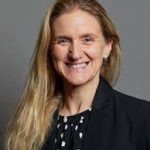
The speech made by Kim Leadbeater, the Labour MP for Spen Valley, in the House of Commons on 29 November 2024.
I beg to move, that the Bill be now read a Second time.
Thank you, Mr Speaker, and thank you to everyone who is attending this hugely significant debate. It is a privilege to open the debate on the Terminally Ill Adults (End of Life) Bill, a piece of legislation that would give dying people, under stringent criteria, choice, autonomy and dignity at the end of their lives. I welcome the debate on this hugely important issue.
Let me say to colleagues across the House, particularly new colleagues, that I know this is not easy—it certainly has not been easy for me—but if any of us wanted an easy life, I am afraid we are in the wrong place. It is our job to address complex issues and make difficult decisions. I know that for many people this is a very difficult decision, but our job is also to address the issues that matter to people. After nearly a decade since the subject was debated on the Floor of the House, many would say that the debate is long overdue.
For my part, I have tried incredibly hard to ensure that the tone of the debate has been—and continues to be—robust, of course, but most importantly respectful and compassionate. I am pleased that, for the most part, that has been the case. I can be confident that that same tone of respect and compassion will be adopted by colleagues today, whatever views they hold. That is particularly important as we have people in the Public Gallery who have a strong personal interest in this issue. They hold a range of views. Some of them have lost loved ones in difficult and traumatic circumstances, and others are themselves terminally ill.
I want to pay a huge and heartfelt tribute to those families and to every single person who has contacted me about this issue, and in many cases shared their own very personal stories of loss and death. I know from my own personal experience of grief that telling your story over and over again takes energy, courage and strength. I am incredibly grateful to them all. It is their voices and their stories that have inspired me.
Such stories are difficult to hear, but it is vital that they are heard as they are at the heart of the debate. They show that the law is failing people. Where that is the case, we have a duty to do what is right to fix it. Those here today or watching at home are dealing with the real consequences of the failings of the current system. I will start by recounting just a few of their stories.
Warwick was married to his wife Ann for nearly 40 years. She had terminal peritoneal cancer, which meant that she could not breathe properly. She spent four days gasping and choking, remaining awake throughout despite being given the maximum dose of sedatives. She eventually died of suffocation. She had begged Warwick to end her life, but as he stood over her with a pillow he could not do what she asked as he did not want that to be her final memory of him. Ann had excellent palliative care, but it simply could not ease her suffering.
Tim fell in love at first sight when he met his wife Louise—he proposed after just three days. But Louise got cancer, twice, and at the end, the morphine simply could not control her pain. In desperation, she managed to smash a small glass bottle and tried to take her own life, not realising that her toddler daughter had got into bed with her. Tim found her. He says,
“You get to a point where you stop praying for a miracle and start praying for mercy.”
Former police officer James waved is mum off as she embarked on her final trip, to Dignitas. She had terminal vasculitis. James desperately wanted to accompany his mum and hold her hand during her final moments, but he knew, because of his job as a police officer, that it was just not possible. Indeed, she insisted that he must not go with her, so she went alone—no one to hold her hand, and no proper goodbye or funeral. Those are just a few examples of the heartbreaking reality and human suffering that far too many people experience as a result of the status quo. the public know this.
I have always been keen to ensure that my politics stays rooted in the world beyond Westminster. It is clear that public opinion is very much in favour of a change in the law. Polling shows consistently that around 75% of people would like to see the legalisation of assisted dying for terminally ill, mentally competent adults. These findings are significant, but it may not be that surprising that most people believe, as I do, that we should all have the right to make the choices and decisions we want about our own bodies. Let us be clear: we are not talking about a choice between life or death; we are talking about giving dying people a choice of how to die.
Let us examine what that choice currently looks like. I do not have a legal background but I have always been driven by a strong sense of injustice. If I see a problem, I will do everything I can to try to solve it. Indeed, in this job, we all do that every week and every day, whether here in Parliament or in our constituencies. When four former directors of public prosecutions, including the Prime Minister, two former presidents of the Supreme Court and many lawyers all agree that the law needs to change, surely we have a duty to do something about it.
Intentionally helping another person to end their life is currently illegal under the Suicide Act 1961, and carries a maximum prison sentence of 14 years. This includes family and friends helping someone who is terminally ill to die, both in the UK and overseas. Existing guidance does not stop people from being investigated by the police, adding fear, guilt and further trauma to grieving families. The law is not clear, and it does not protect individuals, families or medical professionals. That drives people to very desperate measures.
What about coercion? Senior King’s Counsel have said:
“There is currently no established system for identifying abuse or coercion in advance of a person’s death or for helping vulnerable people to make end of life decisions.”
Kevin McKenna (Sittingbourne and Sheppey) (Lab)
I have been a nurse for more than a quarter of a century, and in that time I have worked mostly in intensive care as a specialist. I have worked with compassionate and skilled, well-trained clinicians who have been taught to spot coercion—it is fundamental to our practice. Does my hon. Friend agree that it is wrong to suggest that clinicians cannot spot coercion in these cases?
Kim Leadbeater
My hon. Friend makes a very important point. I thank him for it, and for his years of service as a nurse. I have spoken to many medical professionals about this issue, and they say that this is part of their job. They are very skilled and they work closely with patients, particularly dying patients, to assess their needs and to have those difficult and delicate conversations. As the KCs said, at the moment we check for coercion in cases where people have taken their own lives—when someone is dead. The Bill would make coercion a criminal offence with a sentence of up to 14 years.
Surely, by putting a legal framework around this difficult situation, we will provide an extra level of safeguarding. One psychotherapist, who is terminally ill herself, said to me recently that coercion happens when things are hidden away. The Bill would bring things out into the open. Surely, that must be safer for everyone. Let us look at what the absence of a robust legal framework looks like.
Simon Hoare (North Dorset) (Con)
I thank the hon. Lady for giving the House the time to debate the Bill this morning. She references coercion, and I understand her point about the two medics, but medics will not be able to see or hear everything at all times. People will not be put beyond challenge, because subsequent to the death, if a relative claims coercion of another relative, investigation will remain. I am entirely unclear how, without peradventure, two clinicians can claim that there had been no coercion at any point.
Kim Leadbeater
The hon. Gentleman has made the point for me: within a robust system, we will check for coercion, but we do not have any of that now. At the moment, the person will be definitely be dead. We have to look at the status quo. Putting in layers of safeguarding and checking for coercion must be better than the system that we have now.
Alicia Kearns (Rutland and Stamford) (Con)
Colleagues are right to raise questions around coercion. I hosted a phone-in on LBC where people rang in and said, “I feel like I have to end my life because I recognise how difficult it is for my family to see me suffering.” The limit in the Bill, however, is that someone must have only six months to live according to two doctors and a judge, which I genuinely believe massively reduces the risk of coercion. Are we really saying that people are so desperate to bump off their families that if they were told that they had six months to live, they would escalate the process and do it sooner?
Kim Leadbeater
The hon. Lady makes an excellent point—she is absolutely right. The very strict criteria in the Bill add extra layers of safeguarding, which, again, we just do not have at the moment.
Richard Burgon (Leeds East) (Ind)
I have the deepest respect for my hon. Friend, but one thing that concerns me is societal or systemic coercion. At the moment, elderly people in our society pay thousands of pounds a month to be in a care home. What reassurances can my hon. Friend give that an elderly person in a care home who has been given six months to live would not think to themselves, “I’m a burden. I have been given six months to live. If I end my life now, I can save my family between £25,000 and £55,000”? That really concerns me.
Kim Leadbeater
As I have said, at the moment, we have no idea whether that person would take action because we are not having those conversations. By getting two medical professionals and a High Court judge involved, we would be putting this out in the open. Evidence from other jurisdictions shows clearly that coercion tends to happen the other way; what tends to happen is that families try to prevent the person from making the choice of an assisted death.
Several hon. Members rose—
Kim Leadbeater
I will take one more intervention.
Wera Hobhouse (Bath) (LD)
Is it not the case that the conversations that patients will have with doctors will bring out whether they have been coerced or are suffering intolerably? The criteria are about suffering, not whether somebody worries that they are a burden.
Kim Leadbeater
I agree absolutely. Those conversations, which are not taking place at the moment, are very important. I will make some progress.
There has rightly been a lot of discussion about palliative care in recent weeks, and I am convinced that a significant amount of that discussion would not have taken place without the introduction of the Bill. It is a long overdue conversation, and I am very pleased to see it happening.
I have met with the Association for Palliative Medicine, Hospice UK, Sue Ryder and Marie Curie, and last week I was delighted to attend the inaugural meeting of the all-party parliamentary group for hospices. I also attended the fantastic Kirkwood hospice, which serves my constituency of Spen Valley. I pay tribute to the dedicated staff and volunteers across the country in the palliative care sector, who do some of the most vital work in society. We must do more to support them, and I look forward to working with the Government and colleagues across the House in that important endeavour. That is why I have included in the Bill a requirement for the Secretary of State to report to the House on the availability, quality and distribution of palliative care.
Of course, assisted dying is not a substitute for palliative care—it is not an either/or. We have some of the best palliative care in the world in this country, and, when it can meet the needs of terminally ill people, it is second to none. However, when it cannot, surely the choice of an assisted death should be one component of a holistic approach to end of life care.
The comprehensive report by the Health and Social Care Committee, published earlier this year, found no indications of palliative care deteriorating in quality or provision in places where assisted dying had been introduced.
Jim Shannon (Strangford) (DUP)
Ever mindful of what the hon. Lady has said about the criteria, I remind her that Belgium started off with a simple project like the one she refers to but it deteriorated and expanded to include sufferers of dementia and under-18s—children. What guarantees do we have that this legislation will not end up with a situation like that in Belgium, in which case anything goes? Is that what the hon. Lady wants? I do not want that. Does she?
Kim Leadbeater
I thank the hon. Member for his intervention, but let us be very, very clear. Huge amounts of research has been done by the Health and Social Care Committee, and indeed by myself and others. The model being proposed here is nothing like what happens in Belgium. It is nothing like what happens in Canada. There are strict, stringent criteria, and if the House chooses to pass the Bill, those criteria cannot be changed.
Mark Pritchard (The Wrekin) (Con)
I am grateful to the hon. Lady for giving way and congratulate her on the measured way in which she has conducted this debate over the last few weeks. Whatever side of the House and whatever side of the debate, I would like to recognise that—it is not always the case. But is it not the case that the Bill crosses a new and irreversible medical red line for doctors and nurses? Is it not the case that in other Bills we have seen in this House over the years, the safeguards invariably become obsolete over time, and so the safeguards in this Bill, however well meant, should be seen as temporary safeguards and not immutable safeguards?
Kim Leadbeater
Absolutely not. I respectfully disagree with the right hon. Gentleman. In countries where a Bill of this nature has been implemented, the safeguards have been in place and the boundaries have never changed. I will come on to talk about that.
Sir Oliver Dowden (Hertsmere) (Con) rose—
Kim Leadbeater
I will take one more intervention and then I must make some progress.
Sir Oliver Dowden
I thank the hon. Lady for giving way. I have a great deal of sympathy for the arguments she is making. However, we have seen, time and again, excessive judicial activism taking the words in this House and expanding their meaning into places we had not foreseen. What reassurances can she give that the words in her Bill will be respected by the judiciary and that we will not find ourselves in a decade’s time in a totally different place that this House did not intend?
Kim Leadbeater
I thank the right hon. Gentleman for his intervention. The courts have repeatedly put this issue back to Parliament. This is not their domain. This is the legislation. There are strict criteria.
Coming back to palliative care, in situations where pain simply cannot be managed, the result is deaths that are so horrific that the person themselves can spend hours, and in some cases days, in unimaginable pain as they die. I want to bring the debate back to the issue that we are trying to solve. For their loved ones, no matter how many joyful and happy memories they have, they also have the trauma that comes from watching someone you love die in unbearable agony and fear. That memory stays with them forever.
Rebecca’s mum Fiona developed metastatic brain cancer at the age of 69. She had very good palliative care, but her pain could not be managed, and she died begging and screaming for assistance to end her suffering. Her family and the medical team treating her cried beside her bedside as it took her 10 days to die.
Lucy’s husband Tom was 47, a music teacher with a young son. He had bile duct cancer which obstructed his bowel, resulting in an agonising death. Tom vomited faecal matter for five hours before he ultimately inhaled the faeces and died. He was vomiting so violently that he could not be sedated and was conscious throughout. Lucy pleaded with the doctors to help. The doctor treating him said there was nothing he could do. His family say that the look of horror on his face as he died will never leave them. Lucy now has post-traumatic stress disorder, which is quite common for families who lose loved ones in such harrowing circumstances.
Rachel Taylor (North Warwickshire and Bedworth) (Lab)
I thank my hon. Friend for the powerful and moving stories she is telling. A constituent of mine watched her mum suffer from pancreatic cancer. Unable to keep any food down, she basically starved to death. Does my hon. Friend agree that that is no way to see a loved one die? Does she also agree that we did not come into this place to shy away from difficult choices, but to listen to our constituents and make better laws for everyone?
Kim Leadbeater
I thank my hon. Friend for her intervention, and I am so sorry to hear that story from her constituency. We all have stories from all our constituencies, and she is absolutely right that we are here to make difficult decisions. On her example there, I have been astonished by the number of people who have been in touch with me to tell me about the terminally ill loved ones who have starved themselves to death out of desperation—something that takes far longer than we may imagine and is just horrific for everyone involved. That is currently legal, and doctors are required to assist the patient through this agonising process. How can we allow that, but not a compassionate and humane assisted death?
Blair McDougall (East Renfrewshire) (Lab)
I join the right hon. Member for The Wrekin (Mark Pritchard) in commending my hon. Friend for the way she has made sure that this binary debate has not been a polarising one. I started the debate where she is now, but I have moved to opposing the Bill by the stories I have heard of disabled people who have had “do not resuscitate” put on their medical records without their permission, or who have been stopped by strangers in the street and been told, “You would be better off dead.” I know she will say that we are voting on the specifics of her Bill, but we are also voting on a principle. Does she agree that there should be a precautionary approach, and does she honestly believe the legislative process gives us the time to be sure that we are making the right decision?
Kim Leadbeater
I thank my hon. Friend for his intervention and I will come on to some of those points later in my speech. Let us be very clear: the title of the Bill refers to terminally ill adults, not disabled people or elderly people, as another hon. Member referred to. The criteria are very clear.
I come back to the status quo, which is the problem we are trying to address. If people want to avoid the trauma of some of the harrowing circumstances I have described, they can have an assisted death—just not in this country. If they have £10,000 or £15,000, they can make the trip to Switzerland or elsewhere but, because of the current legal position, it is often a deeply distressing and very lonely experience, shrouded in secrecy, with people feeling like criminals as the fear of prosecution hangs over them.
Ilana’s husband Crispin had late-stage motor neurone disease. He was paralysed, and Ilana is a wheelchair user, but at his request she took him on a traumatic and difficult journey to Switzerland. She describes the intense stress and anxiety she felt due to the total secrecy of their plan—and we can only imagine what the journey home was like, on her own, with an empty seat beside her.
There are also those terminally ill people who take matters into their own hands. Gareth’s father Norman served in the Welsh Guards. He was a strong man, but his final five years were full of pain and discomfort. He had prostate cancer, which he lived with for 15 years. He was given good initial hormone therapy and chemo, but the cancer spread everywhere and the pain could not be eased. One day, when it all became too much, he went into his garden with the gun he owned and shot himself. Gareth’s sister rushed to his house and found him. Gareth said his father just wanted the pain to stop.
Then there is Peter, from Mirfield in my own constituency, who stopped me in a car park a couple of weeks ago to tell me the harrowing story of his beloved wife, who was diagnosed with metastatic cancer aged 52. The treatment was ineffective and her symptoms were unbearable. She took an overdose of her medication, and Peter found her and took her to hospital. She recovered and he brought her home, but the following day she made another attempt to take her own life, in a way that is too awful to describe. Peter found her dead, and he spent the next eight hours being questioned by the police.
It is estimated that more than 600 terminally ill people take their own lives every year. Often patients will store up medication. Josh, a 33-year-old from Huddersfield went to coach his local kids’ rugby team one Saturday and came back to tell his mum all about it. He found her dead. Lisa, who was terminally ill, had stored up her medication and taken her own life.
Our former colleague Paul Blomfield, the previous MP for Sheffield Central, has campaigned tirelessly on this issue since his dad Harry took his own life in 2014, alone in his garage, after being diagnosed with inoperable lung cancer. Language matters: Harry was not suicidal; he loved life, but he had watched too many of his friends have lingering, degrading deaths and he did not want that for himself. But, like the others, he could not tell Paul and his family of his plan, as they would have been complicit and could have faced prosecution. How many precious days and weeks did Harry miss out on as a result of having to take action while he was still physically able to do so? Hearing these stories is not easy, but it is important.
Lloyd Hatton (South Dorset) (Lab)
What I have been struck by in recent weeks as I have listened to Members from across the House is the clear agreement that the current situation is neither sustainable nor dignified. Almost everyone in this House agrees that the status quo is unacceptable in terms of dignity, palliative care and end of life. Given that, does my hon. Friend agree that today’s debate is about how we depart from the unacceptable situation that we currently face? Is today’s vote not the first stage of an important discussion about we improve the end of life for hundreds and hundreds of people across this country?
Kim Leadbeater
I wholeheartedly agree. I am setting out what we are dealing with now. This cannot be right, and surely we have a duty to do something about it.
Wendy Morton (Aldridge-Brownhills) (Con)
Will the hon. Lady give way?
Kim Leadbeater
I am going to make some progress, if that is okay.
Some of the most important voices in this debate are, of course, those of people currently living with a terminal illness. Having a terminal diagnosis is perhaps one of those situations where it is very hard, if not impossible, to know how we would feel. I have met many terminally ill people over recent weeks and every one of them is in my thoughts today.
Sophie, who is here today, was diagnosed with stage 4 secondary breast cancer, which has spread to her lungs, liver and pelvis. She is allergic to opioids, so she knows that her pain is very unlikely to be able to be managed. She has a 17-year-old daughter. All she asks is to have the choice to say goodbye to her daughter at a time of her choosing, in circumstances that she can have some control over, and for her daughter to be able to remember her as the vibrant, positive woman she is.
Nathaniel, who also joins us today, has stage 4 incurable bowel cancer, which is now in his liver and brain. Like many of us, Nat says that he does not know whether he would choose an assisted death or not, but he simply cannot understand why anyone would want to deny him the choice. He says:
“I wish to live as fully as I can and for as long as possible. But when the time comes”,
Nat also wants
“the right to die with dignity and compassion”.
Another very emotional lady came up to me at a recent interfaith event. She and her husband thanked me for putting the Bill forward. She said, “Kim, I am a proud Christian and I am guided by my faith. But I also have terminal cancer and I want the right to choose a compassionate death.”
There has been much discussion about the views of people who hold religious beliefs. I fully respect those beliefs and do not intend to say much more about this, other than that I know there are a range of views within faith communities. Indeed, some of the most powerful conversations that I have had have been with people of faith, including in my own constituency. People of different religions have said that although they would not choose an assisted death for themselves or their family, who are they to stop someone else who may want to make that choice?
Barry Gardiner (Brent West) (Lab)
Will my hon. Friend give way?
Kim Leadbeater
I will make some progress, if I may. I hope that I have set out the problem that clearly exists. Now allow me to set out how the Bill can address that problem and, most importantly, do so safely and effectively.
If the Bill were to become law, it would contain the most robust and strongest set of safeguards and protections in the world. Very strict eligibility criteria and multiple layers of checks and safeguards are embedded in the Bill, none of which, as we have seen, exist at the moment. I made a conscious decision to name it the Terminally Ill Adults (End of Life) Bill, rather than anything else. That title can never be changed and ensures that only adults who were dying would ever come within its scope. As such, the Bill is not about people choosing between life and death; it is about giving dying people with six months or less to live autonomy about how they die and the choice to shorten their deaths.
The Bill does not apply to people with mental health conditions. It does not apply to the elderly. It does not apply to people with chronic health conditions, and it does not apply to disabled people, unless, of course, they have a terminal illness, in which case they would and should be entitled to the same rights as anyone else.
Daisy Cooper (St Albans) (LD)
One group of people who are not often talked about are the learning disabled. Clause 9(3)(b) says that if an assessing doctor has any doubt as to the capacity of the person, they may refer them for a further psychiatric assessment. If the Bill is voted through today, will the hon. Member engage in a debate about whether that language should be strengthened from “may” to “must” and whether the training and experience required of the assessor should be strengthened as well?
Kim Leadbeater
The hon. Lady makes an excellent point and highlights a community who we must consider in light of the Bill. I would absolutely be open to that conversation in Committee; it is a very valid point.
There are different views within the disabled community. As Professor of Disability Research, Sir Tom Shakespeare says that it is unacceptable that people with disabilities continue to face social stigma and inequalities, but that it would be a mistake to conclude that we should oppose legalising assisted dying for terminally ill people until those wider problems are fixed. He says that it is paternalistic and wrong to imply that inequalities will be resolved by reducing choices, and that a clear, transparent legal framework for end-of-life choice is better for everyone. He is right. There is, of course, still work to do in the fight for equality for people with disabilities, but once again it is not an either/or. I will campaign alongside many others in this place for those rights, but I will also campaign for the rights of terminally ill people, because their rights are as important as anybody else’s rights.
Barry Gardiner
I have huge respect for the hon. Lady for the way that she has conducted this debate over the last few weeks. My concern is that she has focused today on the individual and the individual choice, but we are here to legislate for society as a whole. In legislating, what we are saying if we pass the Bill is that it is okay to take that choice—[Interruption]—and there will be some people who have six months of their life to go who will then feel, “Ought I to do this? Is this something that I now should do?” That brings into play a whole set of considerations—“Is it better for my family? Is it financially better for my family?”—in ways that, at the moment, are out of scope. Rather than simply focusing on the individual suffering, which we all recognise is acute, we must broaden the debate to the impact that the legislation will have on society as a whole.
Kim Leadbeater
I thank my hon. Friend for his intervention. I suggest that the Bill will give society a much better approach towards end of life. We are already hearing conversations about dying and death which I do not think we have heard enough in this country. We have to take a holistic view. Indeed, that is what happens in other countries and other jurisdictions. Having those deep and meaningful conversations about death and dying is really important. My hon. Friend’s comments bring me on nicely to the protections and safeguards in the Bill.
Mr Toby Perkins (Chesterfield) (Lab)
A decade ago, I voted against a similar Bill, because I felt that perhaps it was not perfect and there were more things that I needed to know. My hon. Friend is right that we have not talked about death for the 10 years since or considered any legislation. The truth is that if we vote against her Bill today, it will be the end of the conversation once again for another decade.
Kim Leadbeater
My hon. Friend is absolutely right. How many people will go through the situations I have described if it is another 10 years before we address this matter?
Several hon. Members rose—
Kim Leadbeater
I am not going to take any more interventions, I am afraid, because I am conscious that lots of hon. Members want to speak; I know Mr Speaker is conscious of that as well.
Under the Bill, any terminally ill person who wants to be considered for an assisted death would have to undertake a thorough and robust process involving two doctors and a High Court judge. No other jurisdiction in the world has those layers of safeguarding. The person requesting assistance must have mental capacity and a settled wish at every stage. That means they must repeatedly demonstrate that they understand the information relevant to their decision, the ability to retain that information, and to use or weigh that information as part of the process of making the decision. We know that capacity can fluctuate which is why it is assessed at every step of the process.
Melanie Ward (Cowdenbeath and Kirkcaldy) (Lab)
On that point, will my hon. Friend give way?
Kim Leadbeater
I am sorry but I am not going to take any interventions, as I need to make progress.
The court must speak to one of the doctors and can hear from anybody else they deem necessary. If there is any evidence of coercion, the court will not approve the request, and if evidence emerges subsequently, the court order could be revoked. It is also important to note that the person can change their mind at any time, with periods of reflection built in. Having consulted at the highest levels in the judiciary and the medical profession, I know that they can and will fulfil those safeguarding responsibilities and that they have the expertise to do so.
Let us be clear: as my hon. Friend the Member for Sittingbourne and Sheppey (Kevin McKenna) said earlier, this is not brand new territory for doctors. Doctors, working in partnership with other clinicians, are already required to manage complexity in end-of-life decision making. I followed the request of the British Medical Association that doctors should be under no obligation whatsoever to participate, but if they do participate, they will receive appropriate training and support. Doctors should be able to use their professional judgment when and if a conversation takes place, taking their cue from the patient, as they do for many other issues. I welcome that patient-centred approach. Many doctors feel the change in the law would safeguard clinicians and patients by making everything explicit.
When it comes to the detail of what assisted dying would look like, we have the benefit of drawing on the experience of 31 jurisdictions around the world. I could talk extensively about the international experience of assisted dying. The Health and Social Care Committee report did a brilliant job of that, and this Bill has looked at best practice as well as models which I and many others would not be comfortable with our having here in England and Wales.
Reflecting on their experience, clinicians in Australia say:
“through deep and meaningful conversations between doctors, patients and their loved ones we can dispel fear, reduce suffering, bring death and dying out of the shadows, and so allow patients and their families a better quality of life and quality of death”.
As one Australian Member of Parliament said:
“We have brought ‘behind-closed-doors’ practices into the open and given dying people meaningful, transparent choices. Crucially none of the fears that were put forward as reasons not to change the law have been realised. The status quo was broken and assisted dying works.”
Evidence from around the world shows that the option of having an assisted death actually lifts the fear that terminally ill people have, and that many never actually use it but are able to make the best of the time they have left due to the comfort and reassurance that it provides.
People talk about a slippery slope, but the Health and Social Care Committee found that not one jurisdiction that has passed laws on the basis of terminal illness has expanded its scope. [Interruption.] That is absolutely true. As the courts here and in Europe have repeatedly made clear, Parliament is sovereign. This Bill could not be made any broader through any judicial process.
Speaking of process, with reference to the Bill, having listened to what I know are genuine concerns of Members about ensuring that we get this legislation right, I commit to the House that if the Bill passes Second Reading today, which I sincerely hope it does, I am minded to move a motion that gives the Bill Committee the power to take oral and written evidence in order to ensure that a thorough approach continues to be taken. That is not normal procedure for a private Member’s Bill, but I think that that is the right thing to do. I also reassure colleagues that the Bill Committee will meet over a number of weeks, meaning that there is ample time for full consideration of the details of the Bill, including amendments. The Committee will be representative of the views and make-up of the House. Let me be clear: that will mean there will be representatives of different parties with a range of views on the Committee.
As the Leader of the House said at the Dispatch Box just yesterday, and has said several times, the Government will, of course, work with me to ensure that the Bill is workable and operable. That will quite rightly take time, and I have included in the Bill a commencement period of up to two years—this is not going to happen overnight. That timeframe can be explored in Committee, as it is more important to get this right than to do it quickly.
In conclusion, for the reasons I have set out, I am very clear that the law needs to change to give terminally ill people choice at the end of life and to protect their loved ones from fear of prosecution. There will be some of us here today who are lucky enough not to have personal experience of this issue, but sadly we know that any one of us could end up in this heartbreaking situation. We are all living longer, which is brilliant, and I have campaigned inside and outside Parliament for a greater focus on prevention and early intervention of illness and disease to keep us fit and healthy for as long as possible, but any one of us or our loved ones could be unfortunate or unlucky enough to receive a terminal diagnosis. I struggle to see how it is fair or just to deny anyone the autonomy, dignity and personal choice of taking control of their final weeks. And the right to choose does not take away the right not to choose. Giving the choice of an assisted death to those who want it would of course not stop anyone who is terminally ill from choosing not to make that choice.
Whatever happens today, I am incredibly proud of the work that my fantastic team and the many campaigners have done on this hugely significant, emotional and sensitive subject. We need to be clear: a vote to take this Bill forward today is not a vote to implement the law tomorrow. It is a vote to continue the debate. It is a vote to subject the Bill to line-by-line scrutiny in Committee, on Report and on Third Reading. Then, of course, the Bill will go to the Lords for what I have no doubt will be further robust debate and scrutiny. This will be a thorough process, focused on one of the most significant issues of our time—an issue that people across the country clearly want us to address, none more so than the many families who are facing the brutal and cruel reality of the status quo. Today is the beginning, not the end, of that process, but the debate can continue only if colleagues join me in the Aye lobby today. I wholeheartedly encourage them to do so, and I commend the Bill to the House.