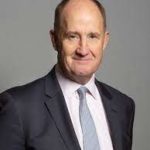
Tag: Kevin Hollinrake

  • Kevin Hollinrake – 2022 Speech on the Energy Price Support Payment in Northern Ireland

    Kevin Hollinrake – 2022 Speech on the Energy Price Support Payment in Northern Ireland

    The speech made by Kevin Hollinrake, the Parliamentary Under-Secretary of State for Business, Energy and Industrial Strategy, in Westminster Hall, the House of Commons, on 16 November 2022.

    It is a pleasure to speak with you in the Chair, Sir Gary. I congratulate the hon. Member for North Down (Stephen Farry) on securing this very important debate, and I thank the hon. Members for Strangford (Jim Shannon), for Belfast South (Claire Hanna) and for South Antrim (Paul Girvan) for their interventions. They all made important and salient points relating to the problem in Northern Ireland.

    Given the record energy prices, the Government understand the pressures being faced by households and businesses in Northern Ireland and right across the United Kingdom, and we are taking direct action to address the issue. Clearly, the crisis has been driven by Mr Putin’s illegal invasion of Ukraine, which has caused a surge in the global price of wholesale gas, leading to an unprecedented increase in the amount that households and businesses are paying for the gas, electricity and oil they use. This has compounded already high prices in economies across the globe that are recovering from the covid-19 pandemic. The effects of the price rises are being felt up and down the country, but the Government are determined to ensure that families can provide power for their homes and that businesses can power the economy.

    Paul Girvan

    While we have been sitting here, I have taken the opportunity to check on today’s oil price. In England, people can buy a litre of 28 kerosene for 85.9986 pence, but the current price in Northern Ireland is £1.0835—a difference of 22 pence. How can we address the imbalance in transporting oil from GB to Northern Ireland? We have no refinery in Northern Ireland, and no way of dealing with it.

    Kevin Hollinrake

    The hon. Gentleman makes a very good point, and I heard his comments earlier about the increased price of oil in Northern Ireland. The hon. Member for North Down spoke of the very high number of households in Northern Ireland that are off-grid, and that is extremely important. I will try to cover that point in my remarks.

    The announcements made by the Government in September demonstrated our commitment to protecting UK households and businesses through the energy price guarantee, the energy bill relief scheme and the energy bills support scheme, which is the key matter under discussion. Under the plans, households, businesses and public sector organisations across Northern Ireland will be protected from significant rises in energy bills, thanks to the Government’s support. As well as outlining the support that still needs to be delivered, I will set out what the UK Government are already delivering in Northern Ireland, and what is to follow shortly.

    The energy price guarantee in Northern Ireland launched on 1 November, offering equivalent support to that provided in Great Britain for domestic households. The scheme reduces the price that energy suppliers charge customers for units of gas and electricity, providing money off energy bills. Households will receive backdated support to cover October 2022 through a higher discounted rate. Through the EPG scheme, a typical household in Great Britain with both gas and electricity contracts will save around £700 this winter, based on current prices. Equivalent support will be provided for households in Northern Ireland.

    Government support will also be provided for households that use alternative fuels for heating, such as heating oil or liquified petroleum gas instead of mains gas. The alternative fuel payment scheme will provide a one-off payment of £100 to ensure that all households that do not benefit through the energy price guarantee receive support for the cost of the fuel they use. The £100 payment has been calculated with reference to increases in the cost of heating oil between September 2021 and September 2022. The aim is to ensure that a typical customer using heating oil will be offered support that is broadly in line with that offered by the energy price guarantee for those using mains gas to heat their homes. However, I hear what hon. Members say, and we are monitoring the price of heating oil and other alternative fuels very closely, now and in the months ahead, to see whether further payments are required at a future point in time.

    Households in Great Britain that are eligible for the payments will receive £100 credit on their electricity bills this winter. For Northern Ireland, the Government are working with electricity suppliers to explore how the payment could be delivered via electricity bills under a similar delivery model. Details of when the payment will be made will be confirmed shortly—we have heard that word a number of times from Ministers at the Dispatch Box—so I cannot give the hon. Member for North Down a firm date, but we are very keen to deliver it as quickly as possible.

    Jim Shannon

    I thank the Minister for his response. In Northern Ireland, my understanding is that the proportion of those who are dependent on oil—I think the hon. Member for North Down (Stephen Farry) referred to this—is between 65% and 68%, so two thirds of the population in Northern Ireland need the payments. I hope he does not mind, but I am going to press the Minister on this. He says the payment is imminent or will be made shortly, or whatever. The people back home in my constituency—indeed, all our constituents—want it, and they want it now. The people have it here on the mainland, and we want the same.

    Kevin Hollinrake

    I totally understand that. We have to get this right. There are some complications in terms of timing, which I will set out. I wish I could give the hon. Gentleman a firm date. I get frustrated, too, in debates like this. I am slightly sitting on the fence in not giving a firm date, but I guarantee to him and other Members that the measure will be implemented as quickly as possible. I had meetings with officials earlier today. They are fully cognisant of the issue and keen to deliver quickly.

    There are a number of complications. There is no central register either in Great Britain or in Northern Ireland for people who do not use the gas grid for their heating. We are working rapidly with stakeholders on the best way to identify those who merit support. Households that are eligible but do not receive alternative fuel payments because they do not have a relationship with an electricity supplier will receive the £100 via the alternative fuel payment alternative fund, which will be provided by a designated body.

    Stephen Farry

    I am grateful to the Minister for giving way and for what he has said so far. May I press him on the data on customers who use home heating oil? If we take the entirety of households in Northern Ireland and subtract those currently using gas, we can use the dataset that remains and assume that they are using home heating oil. That will give the Minister 99% accuracy. Similarly, I hope the £400 energy support will come shortly. Will the Minister explain the technical issues to the people of Northern Ireland, who are slightly confused as to why it is taking so long? We appreciate that the companies in Northern Ireland are different from those in Great Britain and that there might be question marks over their viability, but, to our minds, they are well-established and secure companies, so there should not be any real doubt about their ability to deliver the Government scheme.

    Kevin Hollinrake

    I will go on to explain some of the complications. The hon. Gentleman’s points have been well made and heard by me and officials, so we will do what we can. In the discussions that I had this morning, it sounded as though there was a solution. We just need to roll it out as quickly as we can.

    The energy bill relief scheme for Northern Ireland will apply to all eligible non-domestic electricity and natural gas customers, including businesses, charities and the public sector, which receives its gas or electricity from licensed suppliers. Discounts will be automatically applied by suppliers to the energy bills of eligible customers, covering energy usage between 1 October 2022 and 31 March 2023. The scheme, as has been said, will run for an initial six-month period. The exact discount applied will depend on the type of contract a customer is on and when it was agreed. Although the scheme applies to energy use from 1 October, savings applied to October bills are typically received in November, which means businesses in Northern Ireland start to feel the benefits in November.

    The Government announced on 21 September that we will also provide support to non-domestic consumers who use alternative fuels in Great Britain and Northern Ireland. Further information will be provided shortly. The schemes are supporting millions of households and businesses with rising energy costs, and the Chancellor made it clear that they will continue to do so from now until April next year.

    Beyond April, the Prime Minister and the Chancellor—this applies to the whole of the United Kingdom—have agreed that it would not be responsible for the Government to continue exposing the public finances to unlimited volatility in international gas prices. A Treasury-led review is considering right now how households and businesses will be supported after April 2023 and will publish its findings by January 2023. The objective is to design a new approach that will cost the taxpayer significantly less than planned while ensuring enough support for those in need. It is very important that non-domestic customers that are less likely to be considered vulnerable to energy price increases, particularly larger businesses that are not energy-intensive, use the six months we have to identify measures they can take to protect themselves against high energy prices.

    On support already received, low-income households received a cost of living payment in July of £326 and will receive another payment of £324 by 23 November. The energy bills support scheme launched in Great Britain in October provides eligible households with a discount of £400—that is the key point in front of us—that is being paid in six-monthly instalments in the UK.

    Energy policy is devolved to Northern Ireland, but the issue has now been put back to the UK Government to deal with. The hon. Member for North Down referred to the taskforce. The reason it only met twice was that its job was to determine the best way to address this issue, and it determined that the UK Government should do it. The issue is now with officials and Ministers in my Department to make sure that we deliver the scheme in a way that accounts for the differences in Northern Ireland, and we are working with suppliers to get this across the line as quickly as possible.

    Detailed work is under way to establish how suppliers can use their systems to pass funds on to consumers in a way that is consistent with the Government policy intent, while ensuring that public money is properly protected. We will of course use our experience thus far in the scheme in the rest of the United Kingdom, and we will work with the Utility Regulator in Northern Ireland to deliver the scheme.

    We have already acted to resolve one of the barriers to delivering the scheme in Northern Ireland by taking new powers in the Energy Prices Act 2022, which received Royal Assent only on 25 October. We now need to provide clarity on timings on when the scheme will be finally rolled out to households in Northern Ireland.

    Some households in Northern Ireland who do not have a direct contract with an electricity supplier or a meter of their own, for example park homes, cannot receive the £400 discount directly via an electricity supplier. We will also support those households under a separate arrangement called the energy bills support scheme alternative funding.

    The Government have delivered and will continue to deliver comprehensive support for energy consumers across the United Kingdom to overcome the extraordinary challenges we are facing. We are delivering support to households and businesses in Northern Ireland through the EPG and the energy bill relief scheme already, but we fully recognise the need to provide further clarity on when these measures will be delivered to consumers in Northern Ireland and are working at significant pace to do so.

    I cannot give a firm date, but I can give the commitment that we are trying to expedite payments by every possible means. We have listened to the points made by the hon. Gentleman and others, particularly about off-grid homes, which is an issue not just in Northern Ireland but across the country, and we are working to make sure that the payments are at the right level. I am very grateful to the hon. Gentleman for raising this important topic today. I will continue to work with him to try to make sure that we get the money out of the door as quickly as possible.
  • Kevin Hollinrake – 2022 Statement on Product Safety – Transitional Arrangements

    Kevin Hollinrake – 2022 Statement on Product Safety – Transitional Arrangements

    The statement made by Kevin Hollinrake, the Parliamentary Under-Secretary of State for Business, Energy and Industrial Strategy, in the House of Commons on 14 November 2022.

    I have today laid before Parliament the draft statutory instrument Product Safety and Metrology (Amendment and Transitional Provisions) Regulations 2022 and an accompanying draft explanatory memorandum. The instrument will provide businesses with additional time to transition to the post-exit independent UKCA regime, providing businesses with flexibility and choice on how to comply with product regulations.

    We are committed to doing all we can to provide flexibility for industry. These measures intend to reduce immediate burdens and costs for businesses, in light of current cost of living and global supply chain challenges, whilst maintaining high standards of product safety.

    The main purposes of this instrument are to:

    Extend acceptance of certain products meeting EU requirements and markings on the market in Great Britain for a further two years, until 31 December 2024.This intends to provide businesses with flexibility and choice on how to comply with product regulations.

    And, as previously announced on 20 June 2022, but with updated timelines:

    Provide that where manufacturers, or other relevant persons, have acted under EU conformity assessment procedures by 31 December 2024, that action will be treated as having been taken under the UK conformity assessment procedures until the expiry of the certificate, or until 31 December 2027, whichever is sooner. This is intended to reduce immediate costs associated with third-party retesting and recertification and make the transition to UKCA compliance easier for businesses.

    Extend existing labelling provisions for UKCA marking, importer information and responsible persons’ information until 31 December 2027. This is intended to reduce costs and burdens associated with fulfilling labelling requirements.

    There are different rules for medical devices, construction products, cableways, transportable pressure equipment, unmanned aircraft systems, rail products, cosmetics and marine equipment. There are also different rules for Northern Ireland.

    The statutory instrument will be made using powers under section 8 of the European Union (Withdrawal) Act 2018. Further details about the changes and their effects are contained in section 7 of the accompanying draft explanatory memorandum. The draft of this instrument and the accompanying draft explanatory memorandum can be found on gov.uk.

    My officials will continue to engage with industry closely to provide businesses with support, and to understand how to take a pragmatic approach to improving regulation to the benefit of businesses and consumers. This will include continuing to review the UK regulatory framework to understand how we could reduce costs and burdens for businesses in the longer term.

  • Kevin Hollinrake – 2022 Comments on Rishi Sunak Becoming Prime Minister

    Kevin Hollinrake – 2022 Comments on Rishi Sunak Becoming Prime Minister

    The comments made by Kevin Hollinrake, the Conservative MP for Thirsk and Malton, on Twitter on 20 October 2022.

    I very much hope Rishi Sunak will stand and become our new PM. He has the right leadership attributes, the ability to get things done, an unrivalled knowledge of the economy and a proven track record as Chancellor, the second toughest job in British politics.

  • Kevin Hollinrake – 2022 Speech on Economic Crime and Corporate Transparency Bill

    Kevin Hollinrake – 2022 Speech on Economic Crime and Corporate Transparency Bill

    The speech made by Kevin Hollinrake, the Conservative MP for Thirsk and Malton, in the House of Commons on 13 October 2022.

    It is a pleasure to speak in this debate and a particular pleasure to speak after the right hon. Member for Barking (Dame Margaret Hodge). She has done incredible work in this area for many years, for which we should pay tribute to her, and I hope she will continue for many years to do the same. I know that she has talked once or twice about hanging up her political boots—if the accommodation Whip is listening, I would very much like to inherit her office if she ever does—but nevertheless I hope she continues in Parliament for many years to come.

    On a more serious note, all hon. Members deal with tragic cases and I want to refer to a couple of mine. Leah Heyes was a 15-year-old girl whose life ended in a carpark in Northallerton in 2019. Andrew Bellerby took his own life aged 35 in 2015. The connection between those two tragic cases is, of course, drugs. Lia suffered an adverse reaction to her first experiment with ecstasy, and Andrew’s life had been devastated by drug dependency. We also try to help families in those tragic cases, who are trying to pick up the pieces and make the best of what has happened to them, by putting in place measures to stop such things happening again. Too often we look at ways to try to deal with suicide cases more effectively or clamping down on people who deal drugs, but that is treating the symptoms, not the causes.

    The causes are linked to economic crime. Many people will have watched the television series “Narcos”. The big cartels make a huge amount of money distributing the drugs that result in those tragic cases. They make so much that they bury hundreds of millions of pounds, because it is difficult to legitimise the money. They are not supposed to be able to pay that dodgy money into a bank or buy a yacht or a house with it, because questions should be asked about where the money has come from. Without the ability to launder the money, it is pointless perpetrating those horrendous crimes and being the linchpins behind those tragic cases.

    The reality, however, is that many of our large financial institutions facilitate the laundering of that money. In 2012, HSBC, which we regard as a trusted organisation, was fined £1.9 billion for laundering money for the Sinaloa cartel, which was run by El Chapo. It is incredible that that would happen, but the obvious reason it does is money. The banks can make huge amounts of money themselves. My friend the right hon. Member for Barking mentioned the Danske Bank case. Normally a regional branch of a bank would have a profit margin of about 20% on turnover. The Estonian branch of Danske Bank that dealt with the £200 billion of Russian kleptocrat money had a profit margin of 460%, and that huge amount of money was the incentive. It is inconceivable that the people at the top of HSBC and Danske Bank did not know what was going on. It is impossible to make such extraordinary profits without those at senior levels knowing what is going on. But time and again we simply fine the bank and do not hold the individuals to account.

    Drugs are not the only issue. Some of them are problems that we are trying to solve, such as the small boats crisis. Traffickers are making huge amounts of money and they need to be able to move that money around. Paul Stanfield, the head of economic crime at Interpol, says that it is all about the money and

    “If you want to tackle organised crime, you have to go after the money”.

    But the reality is that the UK makes all this easier. Because of some of our lax regulations on shell companies, which allow money to be hidden behind the veils of different companies in different jurisdictions, and because of the expertise in London and our overseas territories, the UK is the destination of choice for money laundering. The money may go to different places but it is laundered through London.

    That is why many of the measures in the Bill are welcome, including those on transparency and Companies House. This is a big job. It is not only new companies whose directors must be verified, but existing ones. That is millions of companies. The Minister has been excellent in engaging on these issues, as was the previous Security Minister, but I would like to understand how that will be achieved. We may be putting £63 million into Companies House, but verifying the identities of people who have significant control over organisations will be a big job.

    The resources going to Companies House need to be beefed up, and it makes sense to increase the very low fee of £12 for setting up a company in the UK to £50 or £100. I have set up quite a lot of companies in my time, and a fee of £50 or £100 would not have deterred me. That could increase resources to make sure that the enforcement happens. Too often, we look at innovation and legislation but we do not look closely enough at implementation. Without that, it is pointless having this debate. Implementation is key, and resources are key to that.

    We are bound to focus on measures that are not in the Bill—that is what Back Benchers do. I have said many times that the No. 1 measure we need is an extension of the failure to prevent provisions on bribery and tax evasion, which have been so effective. People say that we talk a lot and never get anything done, but the bribery provisions have been massive in holding corrupt companies to account. The Serious Fraud Office has deferred prosecution agreements for Rolls-Royce for Airbus, with almost £1 billion in fines going to the Treasury. The SFO also prosecuted the GPT Special Project Management Ltd case. The SFO does not get many successful convictions but GPT Special Project Management Ltd pleaded guilty in Southwark Crown court in 2020, and paid £28 million in financial forfeitures as a result, on the back of the Bribery Act 2010.

    I pay tribute to my hon. Friend the Member for Cheadle (Mary Robinson) for her work on whistleblowers. It is an area that the Bill does not cover at the moment, but I hope that the Minister will introduce more provisions. My constituent Ian Foxley blew the whistle in 2011, resulting in a conviction 10 years later. He was well paid, operating in the middle east for GPT, but he has had 11 years without any remuneration. He was earning probably £200,000 a year, so he is millions of pounds down. We do not protect or compensate whistleblowers, and that is wrong. Those people do the right thing and come forward but—not to put too fine a point on it —we hang them out to dry.

    Peter Grant (Glenrothes) (SNP)

    Does the hon. Gentleman agree that there is a grave injustice when those who have done the right thing have a lifetime loss of earnings of millions of pounds, but when crooked accountants are called up before and disciplined by the Financial Reporting Council, their loss of earnings from being suspended for a short time, which could run into millions of pounds, is taken into account? The sentence is often more lenient if it will have a significant financial impact on an accountant who has given false information to the FRC. It appears that the crooks are better treated than the people who try to bring them to justice.

    Kevin Hollinrake

    The hon. Gentleman makes a very interesting point. We need to clamp down on enablers of all kinds, and we need to get tougher in lots of ways to crack down on this in the way that we would all like to see. I know that provisions on whistleblowers will not be part of this Bill—although there may be amendments in Committee to that effect—but we want those brought forward as quickly as possible.

    The failure to prevent is so important. It has to include the ability to hold an individual director to account, which would start to reduce the incidence of money laundering and the facilitation of all kinds of offences, including the huge profits made from drug dealing. An illustration of this is what happened with health and safety legislation back in 1974, when directors were made individually responsible and could go to jail if they did not prevent or seek to prevent serious injuries on their building sites. It became a health and safety offence that could be pinned on the individual. After that happened, deaths and serious injuries dropped by 90%. Of all the measures we have talked about today, this would have the biggest effect in terms of cutting down on economic crime, because lots of our financial organisations are complicit when it suits their interests to be so.

    There are many other things we should do. We should extend what we did with unexplained wealth orders in terms of cost protection to other elements of the Proceeds of Crime Act 2002 such as property freezing orders and recovery orders. Bill Browder, who is very outspoken in these cases, has come up with an interesting idea. If an individual is sanctioned, anyone who has dealt with that individual—whether it be an accountant, a solicitor or anyone else—should have to hand over their records in connection with that individual to the authorities, so that we can track down the money more effectively. I cannot see a good argument against that.

    We have talked about freezing and seizing assets. That is difficult to do, because we have to prove that there was a crime, and we believe in property rights and the rule of law in the UK, so taking these assets off individual oligarchs is tough. One thing that seems like an open goal is the fact that we hold about £30 billion in Russian foreign currency reserves. It is clear that Russia is guilty of international crimes in its invasion of Ukraine. We could legislate to ensure that that money is not just frozen, as it is currently, but confiscated, seized and used to pay reparations to Ukraine.

    There are many other things we could do, which I will talk about further during the later stages of the Bill. I may well table one or two amendments, which I know Ministers will continue to engage with and, I hope, will look kindly on, because all these measures will clamp down on economic crime, which is good for the UK and good for business. It is not bad for the economy—it is good for the economy—and it will drive out these heinous crimes all around the world, not just in the UK. We will then be able to point proudly at our record on tackling economic crime, and I hope the Minister will take credit for that as this legislation passes through the House.

  • Kevin Hollinrake – 2022 Tribute to HM Queen Elizabeth II

    Kevin Hollinrake – 2022 Tribute to HM Queen Elizabeth II

    The tribute made by Kevin Hollinrake, the Conservative MP for Thirsk and Malton, in the House of Commons on 10 September 2022.

    It is a great privilege, on behalf of myself, my family—my mum, as an adoring fan of the Queen and the royal family, would have been particularly proud—and my constituents, to pay tribute to Her Majesty the Queen and pay my respects to her family.

    Sadly, we never truly appreciate what we have until it is gone and there is no finer illustration of that than the passing of Her Majesty the Queen. She has been such a constant presence that, throughout the inevitable peaks and valleys of life, it seemed she would always be there—a golden thread woven through each of our lives. She has, though, always been there for us, as strong and steadfast as her beloved highlands: seemingly faultless—I am sure she would argue with that—and infallible, but accepting, understanding and forgiving of fallibility.

    The Queen was truly the best of us. She had an exceptional sense of public service, duty, responsibility and selflessness, combined with good humour, hope and optimism. She made us proud to be British, yet she was always humble, unassuming and deeply interested in everything and everyone around her. It was never about her. The finest tribute and greatest legacy that we could ever give is to follow her lead to be better versions of ourselves—more selfless, more charitable, more optimistic, more forgiving and less judgmental—in her memory. Perhaps it is understandable that we did not fully appreciate what we had, so now let us appreciate what we have. God bless her and God save the King.

  • Kevin Hollinrake – 2022 Speech on the Supply of Drugs to Children

    Kevin Hollinrake – 2022 Speech on the Supply of Drugs to Children

    The speech made by Kevin Hollinrake, the Conservative MP for Thirsk and Malton, in the House of Commons on 19 July 2022.

    I beg to move,

    That leave be given to bring in a Bill to make the offence of supplying or offering to supply a controlled drug aggravated when the person to whom the drug is supplied or offered is under 16; and for connected purposes.

    As John F. Kennedy once said:

    “Children are the world’s most valuable resource and its best hope for the future.”

    Society recognises our special duty to protect children, and to ensure that those who bring them harm feel the full force of the law. The Supply of Drugs to Children Under 16 (Aggravated Offence) Bill, or Leah’s law, intends to change the law to make clear that no person under the age of 16 can consent to taking illegal substances, and to ask our judges to impose tougher sentences on those who supply drugs to our children. That will have the dual effect of keeping young people safe and acting as a deterrent to those who callously target children.

    To outline why this change is long overdue, let me explain the tragic background to the Bill. In May 2019, 15-year-old Leah Heyes from Northallerton was sold MDMA by two friends. She took the substance in a car park and died shortly after, tearing the life of her family and community apart. The unimaginable was exacerbated by the fact that the young adults who sold Leah the drugs received custodial sentences of 21 and 12 months respectively. The two ended up serving a paltry six months each.

    At 15, Leah was, in the eyes of the law, just a child when her life was cruelly cut short. Quite rightly, society and the law offer greater protections and special consideration to children. As we know, it is illegal to sell alcohol or cigarettes to, or to have sex with, somebody under the age of 16, and somebody under that age cannot consent to sex. Even beauty salons that allowed under-18s to use sunbeds would be committing a specific offence against children. When it comes to the supply of drugs, one would think that we would offer our children greater protection against those who seek to exploit their innocence, but we do not.

    It is an offence under section 4 of the Misuse of Drugs Act 1971 to supply a controlled drug to any person, but that blanket approach to sentencing does not protect those who need it most. There is clear disregard shown, and a callousness, in knowingly deciding to put a child’s life in danger, yet when it comes to dealing drugs, there is not a greater penalty applied for doing that. Although there are statutory aggravating factors—for example, when an offender uses a child to deliver drugs, or supplies drugs on or in the vicinity of school premises during or close to school hours—those do not apply when someone sells drugs to children such as Leah; it is a huge gap in the law.

    Although the tragedy of drug-related death is not limited to children, adults are seen by law as having legitimate agency and the capability to make their own choices. In other areas, however, the law recognises that children do not have that capability. Given the added peer pressure in this age of social media, children are particularly impressionable and vulnerable targets. It cannot be right to class a child’s agency as being the same as an adult’s when it comes to something as damaging as drugs. We know that county lines drug gangs target young people, who in turn go on to supply drugs to their peers. Profits pile up for the dealers, and the cycle continues.

    Although case law has established law that targeting vulnerable individuals or children in order to supply them with drugs could be examples of aggravating features, that approach is not mandated by a specific piece of legislation, and that is what Leah’s law would do. This would not be an unconventional approach to drugs sentencing. Certain states in Australia recognise the differentiation, and in Tasmania, New South Wales and South Australia, there are specific offences for the supply of drugs to under-16s.

    Since Leah’s death, her mother, Kerry Roberts, has tirelessly championed the case for Leah’s law—that is why I am standing before the House now. Kerry is watching today, and I thank her for raising awareness of the issue. She does not want her daughter’s death to be in vain, and for that the whole House will have nothing but admiration. Although Kerry is not my constituent, drug-related crime among young people affects each and every one of us in Parliament, and I fully intend to help her campaign succeed. If we ensure that just one person thinks twice about selling drugs to an under-16-year-old, save just one child’s life, or create just one better start in life, it would make the Bill, and all Kerry’s crucial work, worth while.

    I do appreciate that the Government are carrying out a great deal of work on restricting drug supply and working with charities and agencies, but the reality is that the global fight against drugs is a massive undertaking and this will take many, many years to solve. We must deter these perpetrators from preying on our children. We can start to tackle this issue on behalf of all the families whose lives have been devastated by drug crime. It speaks volumes that the Leah’s law petition garnered 10,276 signatures, but it is disappointing that the Government’s response thus far is that they are not going to act on this. I did, however, have a very constructive meeting with the Minister, so I hope that position will change soon.

    It is simple; I am asking the Government to think again and support my Bill to make it a specific offence to supply drugs to those aged under 16, ensuring that this crime carries a harsher sentence. I will continue to work with Leah’s mother and with Ministers to make this campaign a reality.

  • Kevin Hollinrake – 2022 Speech on Achieving Economic Growth

    Kevin Hollinrake – 2022 Speech on Achieving Economic Growth

    The speech made by Kevin Hollinrake, the Conservative MP for Thirsk and Malton, in the House of Commons on 18 May 2022.

    It is a pleasure to speak in this debate. I will focus my remarks on the work of SMEs in driving economic growth. As we often say in this place, they, more than anything else, are the engine room of economic growth.

    Taking a step back from that, the most important thing in driving economic growth—the foundation of which is productivity, which leads to prosperity—is more competition. Competition is very good for opportunity but also very good for consumers: it drives down prices and drives up service. When we started our estate agent business back in 1992, we quickly got to a leading market share in our marketplace. We were doing quite well. Two or three years later, we noticed lots of other “For Sale” and “To Let” boards popping up all over the place as new competition came in and was taking market share from us. Suddenly we were no longer the new kids on the block—the people who had got to No. 1. We had been pushed off our perch as the market leader. That made us look at what we were doing and become more efficient and more effective, work harder, and put a new package together so that we could once again become market leaders. That is the effect of competition—the driving force behind all the benefits for consumers that we see from competition. That is how it works in reality.

    Clive Lewis

    What competition drives the energy, water and rail sectors? They seem to be natural monopolies, if I am not mistaken, so can the hon. Gentleman tell me how the free market and competition help to drive down prices in those sectors?

    Kevin Hollinrake

    That is quite interesting, because energy distribution was very competitive in this country, with a huge expansion in the number of energy distributors that led to a driving down of prices very effectively. Where people got caught out was with the huge increase in wholesale costs, which drove lots of them out of business. However, that was an excellent example of how competition does work and drives down prices for consumers and increases choice. As to source energy, I agree that there are not enough big producers, which is why we must be careful when one or two big companies dominate the marketplace.

    G.K. Chesterton said:

    “Too much capitalism does not mean too many capitalists, but too few capitalists.”

    That is why we need to focus on competition, making sure that the environment is very attractive to new businesses starting up and growing—SMEs. All our policies should focus on small businesses, not on big businesses, which can generally look after themselves.

    We have to look at the brutal facts, I am afraid. I was a bit disappointed, as I said earlier, by what the Governor of the Bank of England said to the Treasury Committee about some of the issues we are seeing with labour shortages, which are driving inflation. We looked at some of the issues that SMEs, in particular, are facing in terms of accessing labour. In 2020, the last year we have reliable data for, net migration into the UK dropped by 88% from 271,000 people down to 34,000 people. People may say that is a good thing because we wanted to get a hold of immigration, and some of it may be due to covid effects. Nevertheless, pubs, restaurants and farmers, all of whom are generally SMEs, are finding life very difficult. We have to make sure that there is an available supply of labour. Another issue causing particular problems for SMEs is red tape at the borders—non-tariff barriers, as they might be called. There is a 45% reduction in the number of SMEs exporting to the European Union. These are facts we have to confront and deal with.

    Levelling up is of particular interest to me as a representative of the north—from the north and for the north. We need to make sure that we level up properly and that the opportunities are spread equally nationwide. It is a huge undertaking. In relative terms, the gap between the north-east and London and the south-east in terms of productivity per capita is as wide as it was between East Germany and West Germany prior to reunification. It took 30 years and $2 trillion to narrow that gap. It is the right thing to do but it is a long haul. We need to get the private sector to invest, which was the lesson from East Germany. Such things as the enterprise investment scheme and the seed enterprise investment scheme are vital for equity investment to SMEs. Those measures are due to expire in 2025, and we need to see them extended. I would also like to see enhanced tax breaks for the EIS and SEIS so that businesses in the less well-off parts of the country can attract more investment capital into those areas.

    Finally, one thing could make a massive difference. Lots of SMEs in this country will not borrow—some 73% would rather grow more slowly than borrow—which is partly because of the lack of trust between small businesses and big banks. Other parts of the world have something called regional mutual banks—Germany is a good example—that expanded lending during the financial crisis. In the UK, we contracted lending during the financial crisis—about 20% on either side. Regional mutual banks lend more into the economy at key times, and that could be a good policy for driving SMEs forward in our regions.

  • Kevin Hollinrake – 2021 Speech on the Abolition of Business Rates

    Kevin Hollinrake – 2021 Speech on the Abolition of Business Rates

    The speech made by Kevin Hollinrake, the Conservative MP for Thirsk and Malton, in the House of Commons on 12 January 2021.

    I beg to move,

    That leave be given to bring in a Bill to abolish business rates; and for connected purposes.

    At one of my first hustings as a prospective parliamentary candidate back in 2015, a question came from the audience about a local electrical retailer that had just closed down. The question, which came to loud applause from the audience, was, “What are the Government going to do about it?” The irony, of course, was that the business had closed not due to the actions or inactions of the Government, but because the people in that very audience had stopped shopping on high streets and started shopping online, which is creating the change we are seeing on our high streets this very day.

    Having said that, there is no doubt that rent and rates are having a disproportionately large effect on high street businesses compared with online businesses. In time, of course, that differential will naturally diminish, as rents—and therefore rates—reduce. The problem is that by that time, hundreds of thousands of businesses and millions of jobs will have been lost forever. Last year alone, 180,000 jobs were lost in retail in the UK. We need immediate change.

    My Bill delivers immediate change. It abolishes business rates completely and replaces the revenue with a small increase in VAT, thereby fundamentally levelling the playing field between online and our precious local high street businesses. I have taken into account the Government’s manifesto commitment not to increase VAT in this Parliament, but the scale and pace of change to the business landscape necessitates a new approach today.

    Business rates as they are were designed for a bygone era a long time ago, when business went hand in hand with high street premises. Covid has quickly made that time seem even more distant, as the trends already in train have been accelerated due to our forced house arrest. Online sales now account for 33% of all retail sales, up from 20% only a year ago.

    The inevitability of this transition and transformation, and the urgent need for reform, is widely recognised across the House. I have sat on two Select Committee inquiries on the matter, one by the Housing, Communities and Local Government Committee and one a joint endeavour between the HCLG Committee and the Treasury Committee. The Treasury itself, of course, is fully aware of the need for reform, and our Ministers have gone further than any of their predecessors.

    In July last year, the Treasury undertook a review and a call for evidence, which set out some potential options for reform. The main suggestions were an online sales tax, or increased rates of VAT or corporation tax. It seems that the Treasury is most keen on an online sales tax, as the document asked for opinions on that solution rather than the other two, and stated that the Treasury expects

    “that any such tax would exist alongside business rates.”

    That has to be seen as a further complication of the tax system.

    I very much welcome the call for evidence, and my Bill and this speech are little more than a contribution to this debate, but I would like to offer one key reflection that is not addressed by the review. It is not only the retail playing field that needs to be levelled. Retail is perhaps the most obvious sector where consumer behaviour is changing, but there are similar trends in other fields. New competition to high street pubs and restaurants is emerging from the dark kitchens of business parks, facilitated by Deliveroo, Just Eat and Uber. Sales and lettings agents—I draw the House’s attention to my entry in the Register of Members’ Financial Interests—are being challenged by the likes of Purplebricks, Strike and Yopa, and travel agents and insurance brokers are also witnessing similar competitive trends.

    An online sales tax for retail would therefore only partially level the business playing field. It would also be a very blunt instrument, as different retail sectors have different profit margins, so it would hit some sectors harder than others. Many high street retailers also offer online and click and collect sales, leading to the potentially fiendishly complex prospect of a retailer having to decide how a product was sold and quantifying the tax on it accordingly, while still having to pay business rates, albeit at a reduced level.

    In my view, it would be better to completely scrap business rates and apply a small increase to the sales tax that we already have—VAT. That would immediately level the playing field and would not create any additional bureaucracy or burden on business. We would completely dispense with the convoluted business rate system, including revaluations, check, challenge, appeal, annual bills and debt collection. It would liberate thousands of talented, intelligent, hard-working people in the Valuation Office Agency and survey practices across the country to find new career opportunities that would help drive the UK economy forward.

    No longer would we need the myriad reliefs—small business, charitable, empty property, retail and rural—as, due to its input and output elements, VAT would continue to automatically adjust, depending on the business type and turnover. A further and perhaps more controversial levelling would be delivered through a reduction of the VAT threshold, currently £85,000, to the German level of £20,000. The current level creates winners and losers either side of the cliff edge. It disincentivises growth and incentivises tax evasion.

    There are no easy solutions. As Ronald Reagan once said:

    “There are no easy answers, but there are simple answers.”

    An increase in VAT from 20p to 23p would fill the £30 billion per annum gap created by the abolition of business rates. Some might say, “Won’t businesses simply pass on the increase to consumers?” Yes, of course. In a competitive free market, all taxes are paid by consumers, as profit margins are inexorably driven down towards the cost of capital. Exactly the same thing happens with corporation tax, business rates and, indeed, online sales tax.

    Others might raise concerns about how it might affect recent moves to allocate business rates receipts to fund local authorities, but the HCLG Committee heard compelling evidence that there was very little correlation between business rates and local service need, so it makes no sense to fund councils by means of a system that needs to be adjusted through convoluted top-ups and tariffs. We should look again at the future funding of our councils alongside this proposal.

    Governments of all shades have a chequered history when it comes to simplification of the tax system, picking winners, targeting incentives and allocating reliefs. We should avoid doing that wherever possible. Instead, we should focus on a levelling of the business playing field. The move from business rates to VAT does exactly that. I commend the Bill to the House.

  • Kevin Hollinrake – 2019 Speech on Disabled Access at Thirsk Station

    Below is the text of the speech made by Kevin Hollinrake, the Conservative MP for Thirsk and Malton, in the House of Commons on 26 June 2019.

    I am grateful to you for granting this important debate, Mr Speaker, because train travel has never been more popular or important. Around 20,000 miles of railway track criss-cross our island, and altogether, we made 1.8 billion rail journeys last year—a 3% rise on the previous year. I am a frequent rail user, boarding a train every week at York or Thirsk that whisks me to Westminster to represent my constituents, and then boarding another to return home to glorious North Yorkshire in time for my surgeries and visits at the weekend. Importantly, this week the Government legislated for a target of net zero carbon emissions by 2050. Using public transport is one way that we can help to tackle climate change and improve air quality.

    Jim Shannon (Strangford) (DUP)

    This week, most Members across the House took the decision to drive for that net zero carbon outcome for the UK, but that can be achieved only if more people make use of public transport. The fact that those who are disabled are precluded from using many railway stations, such as Thirsk, due to the lack of facilities is absurd. Does the hon. Gentleman agree that the Government must, in future policy relating to climate change targets, enable all people to travel on public transport, not just those who are able-bodied?

    Kevin Hollinrake

    The hon. Gentleman is absolutely right. As I will say later, around 40% of stations do not have access for disabled people, and we know that disabled people are accounting for a greater and greater proportion of our population, so this is hugely important. I am grateful for his intervention.

    We need to encourage train use for all users and facilitate access to stations. Trains allow us to commute and explore the length and breadth of our country, from Thurso in the very north of Scotland to St Ives in Cornwall, both of which, I must mention, are replete with step-free access for disabled passengers. This is the essence of the problem: these essentials cannot just be for those who are in the physical prime of their life. Trains and the 2,500 stations that they pass through should be made more accessible for everyone. Everyone, including disabled people, the elderly and parents pushing prams, should have the same opportunity to travel by train.

    In particular, Thirsk railway station in my constituency is in need of accessibility improvements, which will make a real difference to people’s lives. As with most stations, trains travel through Thirsk extremely quickly—I have stood on the platform when trains come through at over 100 miles an hour—but Thirsk is unique in that it has an island ticket office and platforms stationed between the tracks. Concrete steps are the only way to access the ticket office and platforms. Passengers must reach the ticket office and both platforms by navigating a barrow crossing across the high-speed railway line. This can be a very difficult and even traumatic experience for the elderly, disabled passengers, parents with pushchairs or people heaving heavy suitcases. Thirsk is not alone: ​40% of railway stations in England, Scotland and Wales do not have step-free access, and research found that over a third of working-age disabled people had experienced problems using trains in the last year as a result of their disability. A solution is much needed.

    The railway industry is on the right track: it is encouraging more people to travel by train using the disabled persons railcard; carriages have been adapted; and I regularly see ramps on platforms, and kindly staff going above and beyond to facilitate access for passengers. Information is also improving and becoming more widely available to disabled users. National Rail has published an access map online, which is a great resource for disabled passengers, but it also highlights the limited access they have to railway stations in my constituency. I quote the entry for Thirsk station:

    “customers should note that access to all platforms is via a barrow crossing which is reliant upon staff assistance, and cannot be accessed outside of staffed hours.”

    Fortunately, we are starting from a good place in this debate, as improving access to our railway stations for disabled passengers is very much a key priority for the Government. As for further down the line, Network Rail is working towards an entirely accessible transport network by 2030, in which there will be assistance if physical infrastructure remains a barrier. That timetable will remind those of us who remember train travel before privatisation of the British Rail slogan, which is apt: “We’re getting there”.

    I am grateful to my right hon. Friend the Transport Secretary and the Minister, whom I met to discuss these issues and our bid to the Access for All funding programme. Access for All is providing £300 million of additional funding to make 73 stations more accessible by 2024. Unfortunately, Thirsk is not one of them. I felt that our campaign was good, and was building up a head of steam. It had strong support from Graham Meiklejohn at TransPennine Express, Grand Central, Graham North for North Yorkshire County Council, Professor Abrahams of the Northallerton and Thirsk Rail Users Group, members of the public, and of course me. I am grateful to all those people, with whom I work very closely on this issue.

    Our bid was unsuccessful. Apparently, we fell short on footfall. However, the number of users on these routes continues to increase. There was a 3.6% increase this year, and the population of Hambleton is expected to grow by 4% by 2035, which of course will mean more disabled and elderly people there. I am disappointed that our bid was unsuccessful, but to be fair, I am not sure that we adequately highlighted the fact that there is no unaided access to any platform at Thirsk station. We need to revisit our bid, make it more compelling, and point out the growing issues at the station. According to the Rail Delivery Group, in 2018, there were 6,700 people using a disabled person’s railcard in my constituency. That is up from 4,200 in 2015—an increase of 59%. It is great that more people are saving money on their journeys, ​but what is the point of encouraging the use of that railcard if its users are deterred from using the train, or simply cannot access the platform?

    According to the Office for National Statistics, nearly one in five people in England and Wales have some form of disability. Leonard Cheshire estimates that almost 45,000 journeys are made by disabled people at Thirsk station each year. The Equality Act 2010, which I know the Minister is very familiar with, urges the Secretary of State to make regulations to allow disabled persons to travel without unreasonable difficulty in safety and reasonable comfort. I call on the Minister, the Secretary of State and the Department for Transport to ensure that that can happen at Thirsk railway station.

    I appreciate that funds are always in short supply; there is no magic money tree. Elected representatives, including my colleagues in the Department, must always consider those footing the bill—the taxpayer—and, of course, value for money. I am keen to work with the Department, TransPennine Express, local authorities and local enterprise partnerships to find a solution. I am very flexible in my approach to ensuring better access to the station. Rather than putting in two lifts, one on either side of the bridge, there is perhaps a business case for putting in a lift on one side of it, and for moving the ticket office on the platform to the other side. That would be a cheaper option. It would save us perhaps around £1 million in our bid. It will be interesting to see what further funding might be made available to facilitate that solution.

    As I say, there are alternative cost-effective solutions. I would be keen to hear more from the Department about what can be done. I invite the Minister to Thirsk—it is always a pleasure for anyone to visit Thirsk—to meet the groups I mentioned and help develop a plan. Facilitating access is something we can all get on board with. I look forward to working with Ministers to develop a plan to improve disabled access at Thirsk station and, over time, to see better access to public transport for all.