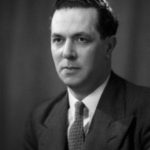
Tag: Keith Joseph

  • Keith Joseph – 1972 Statement on Whittingham Hospital

    Keith Joseph – 1972 Statement on Whittingham Hospital

    The statement made by Keith Joseph, the then Secretary of State for Social Services, in the House of Commons on 15 February 1972.

    With your permission, Mr. Speaker, and that of the House, I should like to make a statement on the Report of the Committee of Inquiry into the administration of, and conditions at, Whittingham Hospital, near Preston, Lancashire. The report has been published this afternoon in Command Paper No. 4861.

    Allegations of ill-treatment of patients, fraud and maladministration at Whittingham were made in confidence to my predecessor in 1969. These were followed by a special audit investigation and inquiries by the police. Shortly after the police inquiries were completed a nurse was tried and convicted of manslaughter of a patient. As soon as I was free to do so after these proceedings I set up the committee of inquiry, which made its report to me early in November. Publication of the report has been delayed while charges against two other nurses, on which both were acquitted. were before the courts.

    The report is very disturbing. It is highly critical of standards of medical and nursing services in some parts of the hospital, particularly for longer-stay patients, and of the management. It also criticises the Manchester Regional Hospital Board, and to some extent my Department also. With a few qualifications, which are not however central to the main issues, I accept the conclusions and recommendations.

    The report assesses Whittingham as a hospital of wide contrasts and an extreme example of a hospital which has failed to keep up with the times. Side by side with some good modern services, it found in the long-stay wards evidence of old-fashioned methods, inadequate treatment and rehabilitation, poor buildings and insufficient medical and nursing staff. The report severely criticises the medical and nursing administration, the management structure and the way these worked; it describes the result as a hospital with day-to-day tactics but no overall strategy The committee of inquiry believes that in these conditions there have been instances of ill-treatment and large-scale pilfering by some members of the staff and the further evil of suppression of complaints about such practices when made by junior staff.

    As the House knows, I have set up a Committee to review the procedures for dealing with complaints in hospitals, and I have arranged for this most distressing aspect of the Whittingham Report to be brought to its attention.

    The report apportions a share of the blame for the general state of affairs at Whittingham to the regional hospital board, which, while pioneering the establishment of psychiatric units in general hospitals, did not adequately recognise the needs of elderly long-stay patients, which led to dual standards of care. I accept that my own Department as well as others may not have been sufficiently alive to this danger in earlier years. Our present policies take full account of it.

    The report recommends that all members of the Whittingham Hospital Management Committee should be invited to resign and the committee reconstituted. It also recommends complete operational integration of the medical and nursing services at Whittingham with those of the psychiatric unit at Preston. Such integration is undoubtedly most desirable, but in my view it is doubtful whether it can be achieved satisfactorily without amalgamating under a single hospital management committee the hospitals at present in the Whittingham and in the Preston and Chorley groups. The board has already started local consultations on proposals for amalgamation. The chairman of the Whittingham committee resigned in December on grounds of ill-health, and four other members have resigned in the course of discussions of the proposed amalgamation. With my endorsement the chairman of the board is inviting the remaining member to resign so that a reconstituted committee can be appointed with amalgamation with the Preston and Chorley group of hospitals in mind at an early date. The new committee will need to consider the many detailed recommendations in the report for improvements at Whittingham itself. There have already been important staff changes.

    This report highlights two of the most important problems facing the hospital service today: the proper care and treatment of longer-stay and elderly patients in large isolated mental hospitals, and the proper planning of the transition from services based on such hospitals to services based on departments in general hospitals. I have asked all boards to review their services for longer-stay mentally ill patients, looking particularly at outmoded attitudes, at allocation of staff, and at management policies and organisation. Each board is also now working out and discussing with my Department plans for the restructuring of its services for the mentally ill; these will provide for a properly organised transition to services based in general hospitals, and improved standards in the old mental hospitals until they eventually close.

    It would be wrong to jump to general conclusions from the indictment in this report of some parts of one hospital. There have been enormous improvements in the last 20 years in nearly all psychiatric hospitals. The great majority of staff, at Whittingham as well as elsewhere, work with patience and devotion, often in difficult and unsatisfactory conditions, which we are now making great efforts to remedy.

    I have referred in this statement to the main points which arise from the report. The Command Paper includes a foreword I have written which contains similar comments and also refers in more detail to the recommendations addressed to my Department and to the regional hospital board; action on most of these has already been taken or is under way.

    The House will, I am sure, be grateful, as I am, to Sir Robert Payne and the other members of the Committee for the time and effort they devoted to their inquiry and to producing this forthright and constructive report. Ever since I have been in office I have been continuing the theme of my predecessor in concentrating on improvements in this and related fields where they are most needed. The House can be sure that the lessons of this report will not be forgotten.

  • Keith Joseph – 1985 Speech on the Teachers’ Dispute

    Below is the text of the speech made by Keith Joseph, the then Secretary of State for Education and Science, in the House of Commons on 22 October 1985.

    With permission, Mr. Speaker, I should like to make a statement about the teachers’ dispute in England and Wales.

    Intense efforts have been made in recent months by the Government to bring this damaging dispute to a satisfactory conclusion. I regret to say that they have, so far, been unsuccessful. Some of the teacher unions have chosen to continue to disrupt the education of the pupils in their charge rather than accept—or even to discuss—the offer made to them. I deplore this, the damage it causes, and the example it sets.

    In August, the Government offered the prospect of an additional £1,250 million for teachers’ pay over four years from next April, a sum equivalent to an extra 4 per cent. on the present pay bill rising to an extra 9 per cent. by the fourth year. On 12 September, the employers made an offer constructed upon the conditional Government willingness to see this substantial extra investment on teachers’ pay. Under that offer, all teachers stood to receive increases in April and November. Those on their scale maxima would have got additional increases in either September or next March. The average end-of-year increase would have been over 8 per cent. in addition, one in five classroom teachers would have benefited significantly from the additional 70,000 promotions planned from September 1986. All of this would have been on top of any normal annual increase negotiated from April 1986.

    All classroom teachers at present on scale 1 or scale 2, even without promotion, could have looked forward to £10,500 a year plus whatever is negotiated each year on pay. In return for these proposals, which would have brought real benefits to the education service, as well as substantial improvements in pay for large numbers of teachers and in promotion prospects, the teachers were asked for a clear commitment to the professional fulfilment of their duties and an acceptance of a pay system which would have offered relatively greater rewards to promoted teachers and to those holding senior leadership posts.

    The teacher unions took just 20 minutes to reject this offer. Since then some unions have been engaging in forms of industrial action explicitly intended to cause the maximum disruption to the education service at the minimum cost to the teachers involved in the disruption. This is deplorable and underlines why we so urgently need an agreement to define more clearly the teachers’ professional responsibilities.

    Since then I regret to say that the employers, by a small majority, have been willing to make offers relating to pay alone. Even before the teacher unions confirmed that their demands far outstripped the employers’ capacity to pay, I repeated the Government’s position. We refuse to provide any additional resources for a “no strings” pay deal which would be a reversion to the discredited approach where negotiations on pay are separated from negotiations on pay structure and conditions of service. Separation has for years meant, “You pay us now and we will talk about reform later.”

    Simultaneous negotiation of all elements provides the only credible way forward. Notwithstanding the passage of the original deadline, therefore, the ​ Government remain ready to consider whether additional resources could still be approved within the £1,250 million envelope for 1986–87 and subsequent years provided the conditions for reform are met. The Government are also willing to set aside resources from within the total of £1,250 million to help employers cover the cost of supervising pupils at midday. I have discussed that proposition with the employers, and it is agreed between us that officials should now clarify the way ahead.

    The Government will continue to make every effort to see a bargain struck, which would provide improved pay and prospects for teachers in return for a better career and promotion structure, the clarification of teachers’ duties, and an end to the disruption.

    Our objective is to improve the standard of teaching in schools and the quality of our education system. That is why we have agreed to the commitment of such substantial additional resources towards improving teachers’ salaries. But we are not prepared to release the resources without simultaneous action on teachers’ duties and the pay structure to ensure that the nation receives a fair return for the extremely large investment.

  • Keith Joseph – 1985 Speech on Higher Education

    Below is the text of the speech made by Keith Joseph, the then Secretary of State for Education and Science, in the House of Commons on 21 May 1985.

    With permission, Mr. Speaker, I wish to make a statement about the Green Paper published today on the future development of higher education. Copies of the Green Paper are available in the Vote Office. It covers the United Kingdom as a whole and, therefore, I am speaking with the agreement of my right hon. Friends the Secretaries of State for Scotland, Wales and Northern Ireland. I see my colleagues from those Departments on the Government Front Bench.

    The purposes of the Green Paper are to present the Government’s thinking on future development of higher education, to set the scene for the next decade, and to invite the views of those involved in higher education and of the taxpayers and ratepayers who finance so much of the cost.

    The paper has been prepared in the light of advice on future strategy from the University Grants Committee and from the National Advisory Body for Public Sector Higher Education in England, published last September. In Scotland, a review of strategy and of planning and funding arrangements for higher education is being undertaken by the Scottish Tertiary Education Advisory Council. The application in Scotland of the policies addressed in the paper will be considered in the light of the council’s advice, which will be available later this year.

    As well as reaffirming the view of the aims and purposes of higher education defined in the Robbins report in 1963, the Government believe that it is vital for our higher education to contribute more effectively to the improvement of the performance of the economy. This is not because the Government place a low value on the general cultural benefits of education and research or on study of the humanities. The reason is simply that, unless the country’s economic performance improves, we shall be even less able than now to afford many of the things we value most, including education for pleasure and general culture and the financing of scholarship and research as an end in itself. The Green Paper, therefore, emphasises the need for higher education to become more responsive to changing industrial and commercial circumstances, and the importance of close links between higher education on the one hand and business, the professions and the public services on the other.

    Since 1963, successive Governments have endorsed the so-called “Robbins principle” that, “courses of higher education should be available for all those who are qualified by ability and attainment to pursue them and who wish to do so.”

    The UGC and the NAB have advised that qualification for higher education should be interpreted broadly and that the test should not be paper qualifications but “ability to benefit”. So long as the taxpayer continues to bear most of the cost of higher education, however, the benefit must be sufficient to justify the cost. Subject to that, the Government accept that the criteria for entry to higher ​ education—which will, as at present, remain under the control of institutions themselves — should place more emphasis on intellectual competence, motivation and maturity, and less on formal qualifications. Those criteria should be applied as rigorously to those with paper qualifications as to those without. The Government do not expect this change of emphasis significantly to affect the numbers of students for whom higher education should be provided. A consultative paper on student support arrangements will be published shortly, as part of the review of such arrangements which I announced on 5 December last.

    As with their policies for schools, in higher education too the Government are committed to raising standards and the pursuit of value for money. In both these areas important reports have recently been published, and are under active consideration.

    The report of the committee of inquiry into academic validation in public sector higher education, chaired by Sir Norman Lindop and published in April, deals with the approval, and monitoring of standards, of degree level courses in polytechnics and colleges. It recommends substantial changes in the arrangements of universities which validate public sector courses and of the Council for National Academic Awards. One proposal is that some institutions in the public sector should in future take full responsibility for their own academic standards and award their own degrees. The Government have invited comments on the report and will consider these before coming to decisions.

    The report of a steering committee chaired by Sir Alex Jarratt, based on efficiency studies undertaken in six universities, has proposed significant changes in universities’ planning and management structures. The present arrangements were developed in a period of increasing resources. Now that resources are no longer expanding, changes are needed if universities are to be able to spend to best advantage the public funding likely to be available. The Jarratt report will also be relevant to the rest of higher education where other efficiency studies are in hand.

    In research, the Government wish to ensure that the available resources are used to the greatest possible advantage, which requires more selectivity and planning. The University Grants Committee is developing and promoting new selective allocation and planning arrangements. It is also important that commerce, industry and the public services should take full advantage of what higher education has to offer through research, technology transfer, business start-up facilities and consultancy services. The Green Paper stresses the need for higher education to pay more attention to the development of such services.

    The Green Paper recognises that continuing education should be a growth area in higher education, whether for vocational or non-vocational purposes. The Government and local authorities have an important role in stimulating such provision, and the Government contribute directly to the development of in-career vocational education through the professional, industrial and commercial updating programme. But the cost should not fall principally on the taxpayer and ratepayer. Employers are urged to recognise more fully their need, in their own interests, to encourage and to pay for the development and updating of their staff, while adults in work can be expected to contribute substantially to the cost of courses that they take for career advancement or for personal satisfaction.

    The Jarratt report recommends a review of the role, structure, and staffing of the University Grants Committee. The Government have accepted this recommendation, and I shall announce the terms of reference and form of the review as soon as possible.

    The Government’s expenditure plans published last January indicate the sums that the Government plan to make available for higher education up to the end of the present planning period. Beyond this there are the same difficulties about providing projections of future funding for higher education as there are for other public expenditure programmes. The Government accept that they must give the best indications of longer term policies for higher education that they can, but planning also requires institutions to manage their commitments and the funds available to them so as to be able to pursue their objectives effectively in circumstances of change and uncertainty. Present projections of student demand suggest that there will be a substantial fall in student numbers in the 1990s and planning for the changes that will be necessary must begin shortly.

    The Government will review their policies for higher education in the light of the responses to the Green Paper, and hope to be able to make a further statement of intentions in the course of 1986.