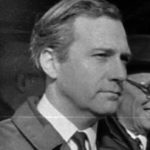
Tag: John Stonehouse

  • John Stonehouse – 1969 Statement on Resolution of Post Office Dispute

    John Stonehouse – 1969 Statement on Resolution of Post Office Dispute

    The statement made by John Stonehouse, the then Postmaster General, in the House of Commons on 3 February 1969.

    I am glad to take this first opportunity to inform the House of the agreement I reached with the Union of Post Office Workers last Friday, 31st January, on the pay of the overseas telegraphists.

    As I told the House on 20th January, I had offered 5 per cent. from 1st July, 1968, plus a further 2 per cent. from an early date, conditional upon acceptance of certain changes in practice devised to increase productivity, in particular the introduction of what is known as “Received Revision procedure”.

    The agreement is for a 5 per cent. increase from 1st August, 1968; for a further 2 per cent. productivity payment from 1st April, 1969, provided the Received Revision procedure has been fully introduced by then; and for a post hoc revaluation in October, 1969 of the savings achieved, any necessary adjustment of the 2 per cent. being made retrospectively.

    This costing will also take account of any other productivity changes that are agreed and fully introduced in the meantime and for the reactivation of O.T.R.U. to be completed by 30th September, 1969; and for the financial benefits of the reactivation to be considered jointly in October, 1969, any pay adjustments then thought necessary being backdated to 1st July, 1969.

    This is a good agreement, which has the advantage of providing for firmly-based productivity arrangements related to defined changes in procedure by defined and early dates. It has an inbuilt incentive for productivity to be maximised to the benefit of the public, the staff and the Post Office.

    I am delighted that the dispute has been settled in this fair and satisfactory way. I have no doubt that close and cordial working relationships with the union will quickly be restored so that we can go forward together to tackle the many new developments that lie ahead for the Post Office.

    The immediate job is to restore services after the strike, and this is well in hand. Telecommunications services are largely back to normal already. All restrictions on postal services will be removed within the next day or so and services as a whole should be back to normal in a week.

    Mr. Dobson May I thank my right hon. Friend for his statement, and offer him congratulations upon achieving what he and the union consider to be a just settlement to this dispute?

    May I ask why there were no negotiations between Monday of last week and Friday, when the union was at all times willing to meet other members of the Government to discuss this dispute and the terms of a settlement, broadly along the lines now reached by my right hon. Friend?

    Finally, will my right hon. Friend tell the House the cost to Post Office revenue of this very difficult and unnecessary dispute?

    Mr. Stonehouse It was not possible until Friday to achieve the negotiations on the productivity arrangements that the Government throughout have regarded as the most important aspect of this affair. Originally, the union, although it changed its tack during the course of the dispute, had asked for a 5 per cent. increase from 1st July last year, with no strings attached. We have insisted—and I announced this to the House some time ago—on a firm productivity agreement for which we were prepared to pay 2 per cent. It was on Friday that we were able to hammer out a very satisfactory settlement along those lines.

    The loss incurred by the Post Office through this dispute cannot yet be made exactly, but I should estimate that on the information we so far have at our disposal it is at least £2 million.

    Mr. Lubbock Is the right hon. Gentleman aware that no one will blame him, whom we admire and like, for the failure of communications that has taken place, but that we do utterly deplore the failure of communications between the Post Office and the Cabinet? Could he explain why it is that, although the Post Office explained the issues involved in this dispute very thoroughly at successive Cabinet meetings, the Cabinet was so dense as not to appreciate them until the very last moment?

    Mr. Stonehouse The hon. Gentleman would not expect me to follow him in some of those remarks. Ministers have been united in the way that they have been dealing with this dispute throughout. I can only regret that the union thought it necessary to escalate the dispute in the way it did, bringing in tens of thousands of postal workers who had no direct relationship with the narrow telegraphists’ dispute. That was the most regrettable aspect of the whole affair.

    Mr. Raphael Tuck Is it not a fact that the union originally agreed to a 5 per cent. increase, linked to a productivity agreement relating to received revision and overseas telegraph tape relay unit? Why was the agreement not based upon that, without the necessity for a strike?

    Mr. Stonehouse This has been a complex question, with which I have had to live for the last two or three months. It has involved a number of questions that we have debated in the House. The reactivation of a piece of equipment called O.T.R.U. was one of the aspects about which there was disagreement between the union and ourselves. We have now been able to reach a very satisfactory agreement on the reactivation of this particular type of equipment.

    Mr. R. Carr Is it not time to stop playing with words? Is it not absolutely clear that on the terms now conceded by the Government there need never have been a strike? Ought not the Government to apologise to the country for the mess that they have made?

    Mr. Stonehouse I said on Thursday that I regretted the strike, and I think that the whole House does. Certainly, all my right hon. and hon. Friends, and my colleagues in the Government, regret the strike. It was quite an unnecessary dispute. It is certainly true that the negotiations we had on Friday have reached a very satisfactory conclusion. I believe that this augurs well for the future relationship between the union and the Post Office, and that it would be wise for the House not to attempt to ferret into the details, the confidential details, of those negotiations. The House should direct its attention to constructive ends and the build-up of valuable and useful industrial relations in the Post Office.

    Mr. Heffer Can my right hon. Friend say how much it would have cost to have settled the dispute, as he has now said that the cost of the dispute to the Post Office was about £2 million? Would he not agree that it would have been much wiser, more sensible, intelligent and better for industrial relations to have sat down at a table much earlier and settled the business rather than going through the great travail of this industrial dispute?

    Mr. Stonehouse There is a very big assumption here, that it would have been possible a week ago to have achieved a solution to this dispute on the lines negotiated last Friday. The House will be aware that the union was asking for a 5 per cent. increase, back-dated to last July, without any strings attached. We have negotiated an agreement, backdated to last August, so protecting the six months’ retrospection rule. We also have the union’s full agreement to the introduction of a productivity arrangement that will be of very great value to the Post Office and to those who use our services.

    Mr. Peyton Is the right hon. Gentleman aware that nothing he has said has erased the suspicion that this disagreement and the strike could have been avoided, and that the terms of the settlement were always available? Is he also aware that although there may be some sympathy for him, based very largely on the other suspicion, in this instance there were too many cooks spoiling the broth?

    Mr. Stonehouse I repeat what I said. There is a very big assumption that agreement on the terms negotiated on Friday was available even a few days before. I believe that all the union negotiators involved in this dispute have come to an arrangement which is extremely satisfactory to their members, but they have also accepted something which was perhaps not available on their side even a few days, and certainly a week or so, before, namely, the need for a wage increase tied to a firm productivity agreement. That was the essential point which the Government had put to the union over the past week, and I am delighted that it has now accepted it.

  • John Stonehouse – 1969 Statement on the Post Office Dispute

    John Stonehouse – 1969 Statement on the Post Office Dispute

    The statement made by John Stonehouse, the then Postmaster General, in the House of Commons on 30 January 1969.

    The Postmaster-General (Mr. John Stonehouse) As the House knows, the strike of overseas telegraphists, which began on 20th January, has been extended by the Union of Post Office Workers to a ban on overtime by all its members at the beginning of this week and to a complete withdrawal of labour in the major cities throughout the course of today.

    The effect on the telecommunications services has been very much as I predicted. In the overseas services the non-operation of the telegraph message and manually operated telex services has led to some congestion in the automatic services. But this has not caused serious dislocation. The ban on overtime has not worsened the position in the overseas services significantly, and the effect on the inland services has been slight.

    The effect of today’s strike is more considerable. The number of staff reporting for duty in the telephone service has varied from a very few in some places to nearly 100 per cent. elsewhere, in all the 19 affected towns a skeleton service is being maintained in most switch rooms and a service of better quality in some. The 999 service has been maintained in operation throughout. The inland telegram service is virtually closed. In the 18 provincial towns affected by the strike a skeleton service is being given. Outside the 19 affected areas the inland telephone operator and telegram services are functioning with little disturbance.

    Today, the overseas automatic telex and telephone services are working normally and the overseas operator telephone service is handling reasonably successfully all the traffic which it has given to it, mainly from the Metropolis.

    In the cities where postal workers are on strike today there will be a massive backlog of mail by tomorrow.

    To give priority to really urgent mail, I have, therefore, decided that from start of business tomorrow the inland second-class letter service, that is, the 4d. service, will be suspended, and also the inland printed paper service for packets between 1½ and 2 lb. In addition, regional directors are authorised to refuse at their discretion to accept local parcels, and large batches of first-class, that is, 5d. mail, newspapers and periodicals.

    I am giving regional directors similar discretion to maintain or reopen services internal to their regions, or with neighbouring regions by arrangement, as circumstances permit.

    Information about local restrictions and services will be made available in the towns concerned.

    For the time being, I am not imposing any restriction on the overseas services.

    I hope that these measures will be successful in keeping the urgent mail flowing reasonably well. Second-class mail already in the pipeline will in some cases, unfortunately, be subject to heavy delay.

    On the actual negotiations, I have nothing to add to the statement which I made in the House on Monday evening. I repeat what I have told the House before, that I greatly regret this escalation of the dispute and the great inconvenience which it is causing to our customers.

    Mr. Bryan Is the right hon. Gentleman aware that his statement about the suspension of the second-class mail will be received with utter dismay, and that many will regard it as a continuation of his effort to force more and more people into the first-class stream?

    Secondly, does he realise that his statement shows clearly that the situation will change not only from day to day, but from place to place? Will he, therefore, give an assurance that detailed announcements of the immediate local situation will be released daily in the various areas?

    Thirdly, has the Postmaster-General been able to do anything about the promise which he made in the debate last Monday, that he would look into the possibility of special arrangements for medicines and pharmaceuticals?

    Fourthly, on the question of the dispute and the negotiations themselves, does the right hon. Gentleman recall that, in the Post Office debate on Monday night, he described two new proposals which he had made to the union that afternoon? Has he received an official reply to those proposals?

    Mr. Stonehouse I do not agree that the public will treat my statement with dismay. They recognise that this is a very serious strike indeed, and that it is the responsibility of the Post Office to maintain priority for really urgent mail. I have made the decision to encourage our customers not to use the mail services for lower priority mail.

    On the second point, I shall arrange that in each of the provincial towns as well as in London there will be statements made about the position. If any relaxation can be made as regards mail or parcels which can be accepted, a daily report will be provided.

    On the third point, I have arranged that urgent medical supplies, with the proper label affixed, will be accepted for delivery.

    Regrettably, the union has advised us that it cannot accept referring the dispute to another form of arbitration which we proposed to it on Monday. We very much regret that the union has not responded to this reasonable proposal.

    Mr. Dobson I heard the latter part of my right hon. Friend’s statement with some astonishment—[HON. MEMBERS: “Hear, hear.”]—shared, I believe, by many of my hon. Friends, that no conciliatory measures were proposed by the Government at this stage. Is he aware that, when the negotiations broke down in the early part of Monday evening, the union officials left knowing, and telling the Government officials present, that they could not accept the proposals which were being offered to them of alternative arbitration proceedings?

    Will my right hon. Friend now take it from me—I warn him carefully of this—that there is a possibility of still further escalation and still further delays, which this union, with all its proud traditions, does not want to see? It wants to have a return to properly negotiated productivity bargaining at the local level, which is all that it is asking of my right hon. Friend.

    Mr. Stonehouse The Government have made very reasonable proposals to the union. They have offered a 5 per cent. pay award from last July and an additional 2 per cent. which would come into operation as soon as an agreed productivity arrangement could be made effective. This is in line with the other arrangements which have been made for the other grades which the union represents.

    Furthermore, we have agreed that the 2 per cent. part of the package will be subjected to a post hoc revaluation in the light of experience, so that if it is, in fact, worth more, the union will get more. I think that this is a very fair proposal. It would have been most unwise to have responded to the sort of threats we have had during this week. I think that the Government’s position on this strike has been very clear and has been right.

    Mr. Bessell Is it correct, as the union has said, that it has offered to accept the 5 per cent. increase backdated to the beginning of July and to negotiate the 2 per cent.? If that is the case, is it not a grave dereliction of duty by the Postmaster-General not to have accepted that offer?

    Mr. Stonehouse I have been constantly pressed in the House about the inadequate overseas telegraph service. I want that service to be improved. It can be improved if productivity measures are introduced. It is essential, under the Government’s prices and incomes criteria, that wage increases should be allowed when associated with genuine, copper-bottomed productivity increases.

    The Government have, therefore, insisted that the package, including productivity improvements, must be accepted by the union. This will help us to improve the service, which I have recognised to need improvement, and where obvious productivity improvements can be brought into effect.

    Mr. Tomney Will the Postmaster-General now state categorically and with as much honesty as he is capable of—[HON. MEMBERS: “Withdraw.”]—whether in private he has admitted to the Union of Post Office Workers that the settlement is just and that only the Cabinet is preventing a settlement? If 14½ per cent. is good enough for the tally workers on the dockside, what is wrong with this just claim for the Post Office workers?

    Mr. Stonehouse I have no need to repeat the statement which I made in the House on Monday night. I fully endorse the Government’s line of negotiation with the union and I have publicly and privately asked the union to accept the suggestions which we have made.

    Mr. Stratton Mills Will the right hon. Gentleman consider accepting second-class mail after the arrears of mail arising from today’s stoppage have been cleared, rather than, as he appears to be doing, refusing to accept it for the complete duration of the overtime ban?

    Mr. Stonehouse Of course, I will consider what relaxation we can have, but I am concerned that we should deal with the tremendous backlog of mail which is being caused not only by today’s stoppage, but by the ban on overtime which we have experienced since the beginning of this week. We want to clear the urgent mail and then, if we can clear the congestion, we shall certainly consider accepting more mail.

    Mr. Orme Is the Postmaster-General aware that the response of the Post Office workers to today’s strike call is an indication of the injustice they feel about the manner in which the Government are treating them? Why should two classes of workers be created by the prices and incomes policy? How does he expect to get away with imposing upon them a productivity deal to which they are not genuinely a party and which is a negation of collective bargaining?

    Mr. Stonehouse There must be agreement and agreement implies that each side has a point of view. The Government’s point of view, which is reasonable, is that the 2 per cent. is the appropriate figure, but we have offered to have this reviewed in the light of experience. I do not think that anything could be fairer than that and it certainly corresponds with the agreements which we have reached with the rest of the grades for which I am responsible.

    Sir R. Cary Is the Postmaster-General aware that almost the entire switchboard staff of the Palace of Westminster reported for duty this morning? Will he convey our thanks to them?

    Mr. Stonehouse I am sure that the observations made in this Chamber will be made known to those concerned.

    Mr. George Jeger If everyone who now sends his mail by 4d. mail sticks on a 5d. stamp, how will that reduce the number of letters and the amount of overtime required to deal with them?

    Mr. Stonehouse That is a perfectly appropriate question and it helps me to make this point. We want members of 1536the public and business houses in particular who use second-class mail for circularising less important material to hold it back until the strike is over, or until the congestion has been reduced, so that the Post Office can give priority to customers who choose the first-class mail as being appropriate to the material they post.

    I believe that the action which I have announced today will encourage at least the big posters to hold back their mail until the Post Office has dealt with the congestion.

    Mr. Sharples Can the right hon. Gentleman be a little clearer about the 4d. mail already in the pipeline? Is it to be insisted that this mail is to be virtually held back by the Post Office and, if so, why was this information not included in the expensive advertisements which have appeared in the Press?

    Mr. Stonehouse We shall not deliberately hold back the mail; we do not believe in doing that. We will deal with the 5d. mail as a priority because we believe that we owe that to the customers, but we will deal with the 4d. mail in the pipeline as soon as we can.

    Mr. John Mendelson Will the Postmaster-General tell the House, as he has not yet done in all these exchanges, why the Government are refusing to give him authority to apply to this group of workpeople the procedure which was applied to the railwaymen—that they should agree to an interim increase and then, in private negotiations over the next three or four months, deal with the problems of productivity? Is not this refusal a sign of the rigidity of the incomes policy leading to dangerous madness and dislocation? Why can he not apply that procedure and then reach agreement in three or four months’ time?

    Mr. Stonehouse I am sure that my right hon. Friend the First Secretary will take note of the wider policy question which has just been raised. However, in these negotiations we have offered the union an arbitration procedure and we have not even insisted on the Civil Service arbitration procedure if the union does not want to have that. This could be set up very quickly and it could no doubt produce an interim report which would certainly help to bring the dispute to an end.

    Mr. Bryan Why is the right hon. Gentleman to discontinue the 4d. mail, the second-class mail, in country areas where local post is quite unaffected, or should he unaffected, by the strikes in the big towns?

    Mr. Stonehouse As I have said, if it is possible to accept local 4d. mail regional directors will have the authority to do so. However, much of the 4d. mail posted in country areas is destined for delivery in the major towns which have been seriously affected by today’s stoppage and which will be increasingly affected by the ban on extra hours which we have been experiencing this week. Furthermore, we face a stoppage on Sunday which will add to the congestion.

    Mr. Raphael Tuck Does the Postmaster-General appreciate that the overseas telegraph operators are alleging that the 2 per cent. offered has not been properly costed but has been only estimated? Is he aware that if he will only agree to the 5 per cent. which all other Post Office workers have received, the union representatives will get round the table and have this figure properly costed and will agree to the result? Why is the Ministerial committee being so thickheaded as to stop this, something for which the right hon. Gentleman has to “carry the can”?

    Mr. Stonehouse I have already made clear that we accept the point made by the union that the 2 per cent. is an estimated amount. Therefore, we have conceded that during the course of time there will be a post hoc revaluation. If, in the light of experience, it is worth more than 2 per cent.—if it is worth 3 per cent.—the union will receive it. We believe that, for productivity reasons, this must be tied to the 5 per cent.

    Sir D. Walker-Smith Will the right hon. Gentleman identify the powers under which, by executive action, he suspends an important part of the postal services of the community and say whether he is acting subject to any—and, if so, what—Parliamentary control? Will he also define more precisely his reference to the large packets of 5d. mail, which are also subject to the threat of interference, and say what notice, if any, people posting such mail will receive of such interference?

    Mr. Stonehouse I am advised that in this exceptional position, it is perfectly legal for these temporary restrictions to be imposed. There is no weight limit on first-class mail. There is a size limit. We are accepting first-class mail up to any weight within a particular size.

    Several Hon. Members rose—

    Mr. Speaker Order. We must move on.

    Mr. Heath May I ask the Postmaster-General to tell us the power under which he is acting and on which he has received legal advice?

    Mr. Stonehouse I will, of course, consider whether a further statement can be made about this—[HON. MEMBERS: “Answer the question.”]—I will—but I am advised that I am fully entitled to impose temporary restrictions in the light of the exceptional circumstances with which we have to deal. This is an operational restriction. It is not a complete ban on mails. If it were a complete ban on mails, it could, possibly, be construed as being out with my powers; but it is not a complete ban and, therefore, I am advised that it is acceptable.

    Mr. Heath Has the Postmaster-General come to the House and made this announcement without checking for himself that he has the authority and without being able to tell the House what that authority is? This is just not good enough.

    Mr. Stonehouse I have no reason to believe that the powers that I am exercising in running this service are in any way illegal.

  • John Stonehouse – 1969 Speech on the Strike of Overseas Telegraphists

    John Stonehouse – 1969 Speech on the Strike of Overseas Telegraphists

    The speech made by John Stonehouse, the then Postmaster General, in the House of Commons on 20 January 1969.

    I very much regret that a strike of overseas telegraphists has started as a result of a dispute over pay and productivity.

    In accordance with an agreement between the Treasury and the Staff Side of the National Whitley Council, civil servants who had not had a pay increase since 1st January, 1966 were granted a pay increase of 5 per cent. from 1st July, 1968, pending a full revision of their salary scales in the light of pay research.

    The Union of Post Office Workers opted out of this agreement. It chose instead to negotiate separately with the Post Office pay claims in respect of the various grades which it represents. It wanted to take account of increased productivity in various spheres of work, and agreements were, in fact, negotiated on this basis for telephonists and postmen.

    In the case of overseas telegraph operators, I have made an offer of 5 per cent from 1st July, 1968—equivalent to the central Civil Service pay increase—plus a further 2 per cent. from an early date conditional upon their accepting changes in practice which will increase productivity.

    The union refused to accept this offer and counter-claimed a 5 per cent. increase backdated to 1st July, 1968, deferring until next July any discussion on productivity measures. In effect, the union is now seeking to opt back into the Civil Service central pay agreement for O.T.O.s, having secured substantial advantages for the telephonists and postmen by opting out.

    The union’s proposal has great disadvantages, because it would mean deferring important improvements in efficiency which we know can be made and substantial improvements in service in a part of the system where service improvement is badly needed. I accordingly rejected the union’s proposal and maintained the offer of 5 per cent. plus 2 per cent., making a total of 7 per cent.

    I have had to close down the overseas telegraph message service and the manually operated telex services. The automatic telex services to the principal countries of Europe, New Zealand and parts of the United States and Canada, and the overseas telephone services will continue to operate, but these services are already fully loaded during normal business hours and any substantial increase in use will cause severe delay.

    I deplore the damage to the commercial life of the country, and particularly to the export drive, which will result from the strike, and I appeal once again to the union to agree to a reference to arbitration, which is the agreed method of resolving disputes of this kind.

    Mr. Carr While thanking the right hon. Gentleman for the full account of the position as it is at the moment, may I ask him to tell the House, in view of the very serious effect of this matter on our foreign trade, what positive steps he proposes to take?

    Secondly, will he consider, in conjunction with his right hon. Friend the First Secretary, in the light of this experience, whether the proposals that she has just made in her White Paper would in due course help in a situation of this kind?

    Mr. Stonehouse I agree with the right hon. Gentleman about the serious effects of this strike. This is all the more reason why I hope that the union will take note of the appeal which I have made to it during the last few days and which I have repeated today, namely, that it should allow this dispute to go to arbitration, which is the agreed procedure. I shall, of course, consult with my right hon. Friend the First Secretary about any further steps which we can take.

    Mr. Mendelson In view of the sense of grievance under which this group of officers is working, which is similar to the feeling which was held by many railway-men when there was a railway dispute earlier, would my right hon. Friend consider finding a solution along the same lines as was found on that occasion; namely, that he should call the two sides together and offer to agree to an interim increase, and that the final increase be left in abeyance until such time as agreement is reached?

    Mr. Stonehouse There is an agreed procedure for proceeding to arbitration in the event of a dispute. As the union has been asking to be treated as civil servants, subject to the central pay increase, I believe that it should accept the agreed procedure.

    However, we are very willing indeed to grant immediately the pay increase which it has requested, namely, 5 per cent. from last July plus 2 per cent. for agreed productivity measures which would help to improve the service and substantially improve the conditions of service of these employees.

    Mr. Bessell Is the right hon. Gentleman aware that this strike is likely to cost the country millions, if not tens of millions, of pounds? In these circumstances, should not he accept the offer of the union of 5 per cent. now and negotiate the question of a productivity agreement later, particularly as this is a matter of genuine national emergency?

    Mr. Stonehouse I am sure that the hon. Gentleman would not expect me to say anything today which might worsen the situation and make an agreement less likely. I will, of course, bear in mind what he has said.

    I believe that the offer which the Post Office has made to this group of employees—it is in line with agreements that have already been reached with their fellow employees, the postmen and telephonists—is one which, in all wisdom, should be accepted.

    Mr. Kitson Would the right hon. Gentleman consider, in the present difficult situation, the possibility of reducing charges during the reduced rate period for international telephone calls?

    Mr. Stonehouse I do not believe that that would be a helpful suggestion. As I said, there is spare capacity at off-peak times. I believe that it would be in the best interest of the members of the business community for them to take advantage of that spare capacity. I do not think that it would be in the general interest to reduce rates.

    Sir Clive Bossom As this is a most vital service, especially to small exporters, would it be possible for the Armed Services to handle the most urgent traffic and also the most urgent compassionate cases?

    Mr. Stonehouse I do not believe that the hon. Gentleman’s second suggestion would be particularly helpful. I am considering ways in which particularly small exporters can be assisted because, as the hon. Gentleman says, they will be particularly affected as a result of this strike.

    Mr. Kenneth Lewis Would my right hon. Friend endeavour to persuade Government Departments to limit their use of the overseas service so that industry may maximise its use?

    Mr. Stonehouse I will certainly consider that suggestion.

  • John Stonehouse – 1975 Parliamentary Question on the Number of Staff in the Cabinet Office and Downing Street

    John Stonehouse – 1975 Parliamentary Question on the Number of Staff in the Cabinet Office and Downing Street

    The parliamentary question asked by John Stonehouse, the Labour MP for Walsall North, on 24 November 1975.

    Mr. Stonehouse asked the Prime Minister what is the current total number of public servants in the Cabinet Office and his secretariat, respectively; what were the totals in 1964; and what is the percentage increase or decrease between the two dates.

    The Prime Minister The total number of public servants in the Cabinet Office is currently 681 compared with 356 at the same point in 1964. This represents a net increase in staff of 91 per cent., due largely to additional functions and services. The number of staff at 10 Downing Street is currently 68, including three who are employed part-time, compared with 45 in 1964, an increase on a full-time basis of 48 per cent.

  • John Stonehouse – 1975 Parliamentary Question on Brixton Prison

    John Stonehouse – 1975 Parliamentary Question on Brixton Prison

    The parliamentary question asked by John Stonehouse, the then Labour MP for Walsall North, in the House of Commons on 11 November 1975.

    Mr. Stonehouse asked the Secretary of State for the Home Department if he will publish in the Official Report a schedule of deaths of prisoners in the 12 months to 31st October 1975 in Brixton Prison identifying prisoners by age only and specifying the cause of death in each case.

    Dr. Summerskill Five prisoners at Her Majesty’s Prison Brixton died in the 12 months to 31st October 1975. The particulars of four are given below. The fifth death occurred on 28th October last and an inquest has not yet been held.

    CAUSES OF DEATH, AND AGES OF DEATH OF PRISONERS WHO DIED AT HM PRISON BRIXTON, 1ST NOVEMBER 1974—31ST OCTOBER 1975

    Age | Cause

    23 | Natural causes—acute pneumonia and myocarditis.
    27 | Natural causes—status epilepticus.
    39 | Suicide—hanging.
    51 | Suicide—acute narcotic poisoning.

    Mr. Stonehouse asked the Secretary of State for the Home Department whether he has caused any internal inquiry into any death of a prisoner at Brixton Prison during the 12 months to 31st October 1975; and with what result.

    Dr. Summerskill No; all five deaths which have occurred in this period were however reported to the coroner.

    Mr. Stonehouse asked the Secretary of State for the Home Department how many foreign subjects were held in Brixton Prison on 1st September and 1st October, respectively; and for what alleged offences.

    Dr. Summerskill I regret that only an estimate of the number of foreign subjects held in Brixton prison is available. On 1st September and 1st October about 300 prisoners of foreign nationality were held there, of whom about 230 also held British citizenship. More detailed information, and information about alleged offences, could be obtained only by extensive inquiry and at disproportionate cost.

  • John Stonehouse – 1975 Speech on Industry and Trade Unions

    John Stonehouse – 1975 Speech on Industry and Trade Unions

    The speech made by John Stonehouse, the then Labour MP for Walsall North, in the House of Commons on 20 November 1975.

    I do not know any-thing about the Maidstone plant. I am happy to concede the point as the hon. Gentleman, who represents the area, is so well informed about the Maidstone situation.

    We have also had a depressing situation at British Leyland which has resulted in the company having to be bailed out at enormous expense. On the news today there was the announcement that 2,000 workers producing Jaguars, cars which sell extremely well abroad and which are in great demand, have been laid off because of yet another dispute. It does not seem that the lessons are being learnt. I wonder when the Government will speak out frankly on this issue which has been so undermining the performance of British industry.

    Last week we had yet another illustration of the deplorable effect of strikes—namely, the dispute at the Daily Express. Of course we do not read very much about that sort of dispute in the newspapers, because there is an undertaking in the newspaper industry not to refer overmuch to the overmanning problems and the restrictive practices that they have to suffer. We only hear about such matters indirectly.

    I understand that 96 maintenance engineers at the Daily Express were dismissed, many of them being superfluous to requirements. Their reply was not only to put a pistol to the head of their employer in the way that Mr. Riccardo was putting a pistol at the Prime Minister’s head, but to bring out all the engineers of all the other newspapers, who also put their employers against the wall with machine guns at their heads. It was that sort of threat that made the employers collapse. Yet another victory was secured for a minority within a minority.

    That sort of action is not trade unionism: it is a Mafia tactic, a protection-racket tactic. There is too much of that sort of action in British industry and someone some day must say something about it. I believe that the trade unions have developed too much power and that they abuse their power. They do not act in the best long-term interests of their members. Further, they do not act in the best interests of the community. Very often they act irresponsibly.

    Faced with that situation, what action do the Government take? Instead of dealing with the problem of the growth of trade union feudalism within our industrial economy, a feudalism which is partly, if not mainly, responsible for our depressing experience in productivity compared with other industrial States, they announce that they will reintroduce legislation to remove the remaining unsatisfactory features of the Industrial Relations Act 1971. They will waste parliamentary time going through all that again when they could have had a Bill enacted last Session with only one serious point excluded from it from the Government’s point of view. What was that point? It was the provision that sought to establish a closed shop for journalists. When we are faced with the immense problem of trade union feudalism, why is it that we have the Government wasting time on a proposal to reintroduce legislation for that purpose?

    We also have proposals for industrial democracy, with which I agree. However, I hope that that does not mean syndicalism. In many areas in which industrial democracy is applied I believe that there is an attempt by those concerned not to run a viable industry, but to hold others to ransom.

    Regrettably, there are signs of that happening within the Post Office, an industry which I knew quite well a few years ago. At that time we came up against many overmanning techniques by the trade unions. Even today restrictive practices are still preventing the implementation of new ideas and the use of new machinery. I believe that industrial democracy must mean a greater sense of responsibility on the part of workers and those who participate rather than the impression being given that through this technique they will be able to hold on to restrictive practices which are clearly anathema to the progressive improvement of Britain’s economy.

    Reference is made in the Gracious Speech to the Post Office banking system. It is important that the Ministers responsible should come clean about the real cost of Giro. During the period when I was the Minister responsible it was my job to take over the Giro proposals which had already been agreed by my colleagues. It was my task to implement the new service. I did so at the time with some misgivings, and I look back with some dismay on what was done at that time and since. Giro has already cost the taxpayer over £30 million. It is a wasteful system. Even today it is wasting money, because it under-estimates the real cost of the service. In particular, it depends so much on the postal services and there is no accurate costing of the postal factor involved. That disguises the true cost of the Giro service.

    In introducing the Gracious Speech, the Government have taken on more than they can handle during the next year. I believe that the devolution proposals will need a great deal more consideration than even the Government have imagined. I hope that they will turn their attention away from shibboleths and diversions to tackle at least two of the most serious problems that need to be dealt with if we are to get out of our crisis.

  • John Stonehouse – 1975 Personal Statement Made in the House of Commons Following his Disappearance

    John Stonehouse – 1975 Personal Statement Made in the House of Commons Following his Disappearance

    The statement made by John Stonehouse, the then Labour MP for Walsall North, in the House of Commons on 20 October 1975.

    I think I should first explain that the fact that I am speaking from the benches on the Opposition side of the House has no party political significance whatsoever. I am standing here because this is the place that I occupied for most of my time in the House in the last nearly 19 years, and indeed it was from this bench that I made a personal statement when I returned from Rhodesia some 16 years ago on 13th March 1959.

    Mr. Speaker Order. The rules are very, very strict. The right hon. Gentleman must say only what has been passed by me.

    Mr. Stonehouse I simply wanted to say that as there were some inquiries as to why I was at this bench, in particular from some hon. Members who were already sitting here, I felt that I should explain why I chose to speak from this side of the House.

    I am grateful to you, Mr. Speaker, for your agreement to my request to make a statement. It is not easy for me; nor is it easy for the House. The events surrounding my disappearance last November, and since, have created tremendous Press publicity, and everyone’s consideration of my experience has been coloured and influenced by that media treatment. There have been incredible allegations made against me—

    Mr. Speaker Order. The hon. Gentleman must be very careful. He is not now reading from the text which has been agreed with me.

    Mr. Stonehouse I have made a few textual changes.

    Mr. Speaker Let there be no misunderstanding about this. The right hon. Member is entitled to say only what I have passed.

    Mr. Stonehouse In particular—you will see this in the text, Mr. Speaker—I deny the allegation that I was an agent for the CIA. I deny the allegations that I was a spy for the Czechs. I can only regret that the original stories were printed. The purpose of this statement is to explain, as best I can within the traditions of the House, why I was absent from the House for such a lengthy period.

    The explanation for the extraordinary and bizarre conduct in the second half of last year is found in the progressions towards the complete mental breakdown which I suffered. This breakdown was analysed by an eminent psychiatrist in Australia and was described by him as psychiatric suicide. It took the form of the repudiation of the life of Stonehouse because that life had become absolutely intolerable to him. A new parallel personality took over—separate and apart from the original man, who was resented and despised by the parallel personality for the ugly humbug and sham of the recent years of his public life. The parallel personality was uncluttered by the awesome tensions and stresses suffered by the original man, and he felt, as an ordinary person, a tremendous relief in not carrying the load of anguish which had burdened the public figure.

    The collapse and destruction of the original man came about because his idealism in his political life had been utterly frustrated and finally destroyed by the pattern of events, beyond his control, which had finally overwhelmed him. Those events which caused the death of an idealist are too complex to describe in detail here, but in the interests of clarity as well as brevity I refer to them as follows.

    Uganda was a country in which I worked for two years in the development of the co-operative movement. I was active also in developing political progress and became, for instance, a character witness for one of the accused in the Jomo Kenyatta Mau Mau trial in Kenya.

    Later, as a back-bench Member of Parliament, I campaigned vigorously for African independence and became vice-chairman of the Movement for Colonial Freedom. Much of my back-bench activities at that time—conducted, incidentally, from this bench—were concerned with advancing this cause. I believed in it sincerely and passionately. But those ideals were shattered in the late 1960s and the 1970s as Uganda and some other countries I had helped towards independence moved from democracy to military dictatorship and despair.

    The co-operative movement in Britain had been a great ideal for me from an early age. Co-operation was almost a religion for me. It was not only a way to run a business; it was a way of life from which selfishness, greed and exploitation were completely excluded. I became a director and later President of the London Co-operative Society, the largest retail co-operative society in the world, in active pursuit of those ideals. I did not do it for money. The honorarium was £20 per year.

    But I was pursued by the Communists in that position during that period. I was bitterly attacked, and at that time—

    Mr. Speaker Order. The right hon. Gentleman must say only what I have passed.

    Mr. Stonehouse That time was a most traumatic one for me and wounded my soul deeply. It had become cruelly clear that my co-operative ideals were too ambitious, for, in truth, they could not be achieved, given human motivations. I felt as though my religion had been exposed as a pagan rite.

    Bangladesh is a country which I helped to create, and, with my hon. Friend the Member for Mitcham and Morden (Mr. Douglas-Mann), I was one of the first in the House to take up the cause of self-determination for East Pakistan following the terrible events of the military crack-down in March 1971, when 10 million people had to flee for their lives to the safety of India. I became deeply involved as a result of first-hand experience in Bengal during the struggle for freedom. I sponsored several early-day motions concerned with Bangladesh, including one which attracted over 100 signatories, calling for the recognition of an independent and sovereign Bangladesh. That motion, in July 1971, was most significant in the progression of events towards the independence which finally came in December of that year.

    Bangladesh made me a citizen in recognition of my identification with the cause. I was enthused at that time with hope, but the hopes turned to tears as the conditions in that country deteriorated. Another of my ideals had collapsed.

    After the Labour defeat of 1970, I became active in export businesses, a field in which I had been successful as a Minister and one in which I felt I could make a contribution in assisting British exports. I had hoped to establish personal financial security after a few years and then to return to full-time political activity. My enterprises were successful.

    However, early in 1972, I was approached by Bengalis residing in this country who wanted me to assist the establishment of a bank to cement relationships between Britain and Bangladesh. This involved me in very great problems, which could have ruined my career and public standing, and I was left a broken man as a result of the nervous tension I suffered throughout that period. That experience contributed heavily to my breakdown.

    In 1974, with the collapse of many secondary banks and the problems of the British economy, the strains became even worse. There seemed no escape from the awesome pressures which were squeezing the will to live from the original man. Everything he had lived for and worked for seemed to be damned.

    In this House itself, I felt a big weight bearing down on me. It was physically painful for me to be in the Chamber because it was such a reminder of my lost ideals. I was suffocated with the anguish of it all. The original man had become a burden to himself, to his family and to his friends. He could no longer take the strain and had to go. Hence, the emergence of the parallel personality, the disappearance and the long absence during the period of recovery.

    That recovery took time, and in the early stages the psychiatrist in Australia advised that I should not return to England until I had recovered, as a premature return would inevitably do further harm to my health. At the time of the disappearance, no criminal charges were laid or anticipated; they did not come till four months later.

    In view of the facts, I hope that the House will agree that the right hon. Member for Walsall, North had no intention of removing himself from the processes of justice as established by Parliament.

    I am not allowed by your ruling, Mr. Speaker, to refer to what you consider to be controversial subjects, and of course I accept your judgment; but I remind you, Mr. Speaker, that one man’s meat—

    Mr. Speaker Order. The right hon. Gentleman is again departing from the text.

    Mr. Stonehouse Yes, Mr. Speaker. I am simply explaining that I accept your judgment entirely, but a personal statement is a personal statement, and I must advise the House that half of my original statement was deleted by you. However, I fully appreciate your position, and I am deeply indebted to you for your sympathy, understanding and forbearance in the difficult circumstances which I have involuntarily created for you and the House during these past 11 months. I am very grateful to those hon. Members who have extended understanding in my turmoil—especially to my hon. Friends the Members for Mitcham and Morden and for East Kilbride (Dr. Miller), the right hon. Member for Down, South (Mr. Powell), and the hon. Members for Chippenham (Mr. Awdry) and for Horncastle (Mr. Tapsell). I express thanks also to the right hon. Member for Worcester (Mr. Walker) and the then Foreign Secretary who both helped me through a terrible crisis in 1973. I thank the Clerks at the Table and their assistants, who have been exceptionally helpful in recent months.