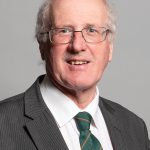
Tag: Jim Shannon

  • Jim Shannon – 2022 Speech on Social Security Support for Children

    Jim Shannon – 2022 Speech on Social Security Support for Children

    The speech made by Jim Shannon, the DUP MP for Strangford, in the House of Commons on 23 November 2022.

    As always, it is a pleasure to speak in today’s debate, Sir Christopher. I thank the hon. Member for Airdrie and Shotts (Ms Qaisar) for securing it, and congratulate her on her first Westminster Hall debate—I am convinced that it will not be her last, and we look forward to her future contributions.

    I was very impressed by the hon. Lady’s contribution today, which laid out the strategy of the Scottish Government and the work they have done outside this place for their own people. One cannot fail to be impressed by the clear commitment that the Scottish Government have to supporting children. The summary that the hon. Lady gave was illuminating and helpful; it is a guide for us in other regions across the United Kingdom to take note of, as I often do. I am a great believer in noting things that are done well in one region and taking them on board in my own region, and if we do something well, I like to share that. I know the Minister is of the same opinion.

    I am very pleased to see the Minister in his place, as he knows—I have said so to my colleagues this morning. I always look forward to his contributions and his answers; I think he understands the points that we are trying to put forward, and hopefully from that understanding will come the answers that we seek. I am sure the Minister will tell us what has been done for children and social security across the United Kingdom. I want to replicate the contribution of the hon. Member for Airdrie and Shotts from a Northern Ireland perspective; many of the things that she mentioned are happening in my constituency as well, as I will illustrate.

    The hon. Member for Airdrie and Shotts is right that the cost of living crisis is having a knock-on effect on children’s development. With the rising cost of electricity, oil, foodstuffs and school items such as uniforms and school meals, parents are struggling to make ends meet each month. That is greatly impacting parents and children. Social security services across the United Kingdom of Great Britain and Northern Ireland have a role to play in ensuring that children are given the best start in life. It is great to be able to discuss those matters.

    We all recognise that families are struggling. I do; I see it in my office every day. I find it distressing to see a family in need, or to see a mother distressed over her children and how to make ends meet. For me, the question is how we help. I know that that is also how the Minister will respond: how can we help? What can we do?

    Society is often marked, and should be marked, by its attitude to those in need. The hon. Member for Airdrie and Shotts referred to being a “voice of the voiceless”. That is what I want to be as well: a voice for the voiceless—for those who do not have the opportunity to come to Westminster but expect their MP to come for them. I am happy to do that.

    Increasing numbers of families are truly struggling through this winter. In my office, I have seen large numbers of families seeking assistance from food banks. I am always encouraged—I say this respectfully—that the first food bank in Northern Ireland was in Newtownards, in my constituency of Strangford: the Thriving Life Church food bank. We do between 20 and 25 referrals to the food bank every week, so we get a fair perspective on who is coming to the office.

    The manager of the food bank tells me that he foresees that this winter will be the hardest ever, and that is after 10 or 12 years of the food bank being in my constituency. It is not just the working class—I use that terminology to describe, rather than anything else—who come to the food bank. The working class will probably always be there, but the manager tells me that he now sees the middle class coming. I see that all the time. I see those who are squeezed by their mortgages and car repayments, who are living on a fine budget. They do not live in luxury, but they have a standard of living that they wish to have. They are being impacted, and I see that more than ever.

    Almost all the families who come to my office have young children of school age. People want to do the best for their children. That is what a father and mum do, and it is what we have done all our lives. Reports have shown that Northern Ireland has the worst poverty rates, including for child poverty, in the United Kingdom. One in four children—24%, or around 95,000—are growing up in poverty in Northern Ireland. A massive two thirds of that group are growing up in families where parents are working. Some 12% are in absolute poverty, which means exactly that: absolute. People face situations that they never thought they would face. They need help from food banks, churches and their families: mums and dads, grannies and grandas, and probably uncles and aunts will step in to help out as well.

    That highlights how dire the situation is. Belfast, Londonderry and Strabane are among the places with the highest volumes of child poverty in Northern Ireland at over 26%. The average for Northern Ireland is 17%, so in those areas it is even worse. Social security plays a crucial part in assisting people in Northern Ireland, especially families. Child maintenance is proven to help children’s wellbeing and the quality of family relationships. The parent who is not responsible for day-to-day care—the paying parent—pays child maintenance to the parent or the person who does: the receiving parent. Single parenting is a major factor in explaining why families are suffering. Looking after children as a single parent can be quite a challenge when one’s income has not increased along with inflation.

    In addition, universal credit is a widely used benefit that assists in living costs for those on low incomes. One of the girls in my office deals with nothing but benefit issues, because of the magnitude of the issue. That is a five-day week on universal credit, employment and support allowance, personal independence payments, disability living allowance, income support and even housing benefit.

    David Linden

    I know, having visited the hon. Gentleman in his constituency office in Newtownards last Easter, just how hard the staff in his office work. Does he agree with me that, even though we are in a crisis moment, now is quite a good time for a fundamental root-and-branch review of the social security system? Universal credit sometimes gets a bad rap. The concept in itself is not necessarily bad, but we need to look at how we can reform it to make it work. Churches do the right thing in terms of scripture—they look after our children and feed people—but that is not necessarily the role of churches. We should do a fundamental review of the social security system to ensure that churches can get on with their work rather than having to fill the void that has been created by the state.

    Jim Shannon

    As always, the hon. Gentleman brings knowledge to these debates, which is helpful. That is a knowledge that he has gained through practical and physical work on the ground. That can probably be said of everyone present, in fairness, but it is an illustration of that work. What do I think about the universal credit system? It was designed, by its very nature, to help. From what the lady in my office who deals with benefits issues tells me, I often find we have to advise that it might be better for people to stay on what they have at the moment. They should not necessarily transfer to universal credit because that, in theory, could disadvantage them.

    The hon. Gentleman asked whether there is a need to look at universal credit, and I think that the answer is yes, with respect. It should not be a disadvantage to go on to universal credit. It should not hurt people’s benefits. We must remember that the benefits are there for a purpose: they are there to help the person because they have a disablement. They may have care or mobility issues—serious issues. To make the change and lose out financially just does not make sense. I, the hon. Gentleman and probably all Members in the Chamber would be happy to give illustrations of that.

    Sometimes our advice has to be that what is available is not necessarily the best thing to go on to. That is the issue, unfortunately. I know that universal credit is there for a purpose, but it may not suit everybody. In addition, it is a widely popular benefit to assist with living costs for those on low incomes. The issue with universal credit is that it is a combination of many benefits and often families will receive less money. That is making it increasingly hard to cope with the rise in the cost of living. The Government, through the autumn statement, indicated that they wish to give people in the benefits system more opportunities to work. I welcome that, but that will not work in every case. It cannot work in every case because people have disability issues that mean they cannot work. In theory, it may help people, as they can gain universal credit and have a job at the same time. There are opportunities, but it does not suit all.

    The rise in the cost of living is also having a detrimental impact on people’s mental health. Any parent’s main priorities for their children are good health, housing and education. There has also been an increase in free school meals and uniform grant applications as parents are struggling to cope with the cost of school payments. This year has been horrendous. I have seen more and more people apply for the grants for free school meals and for uniform. A total of 97,000 children in Northern Ireland are on free school meals. There are consistent delays in processing the claims. The Minister is always keen to assist, so I ask, please, for some urgency when the applications are being processed. Let me give him an example. In September, one of my constituents applied for a school uniform grant. Eight weeks later—about two weeks ago—that money eventually came through. Again, at the time that it was needed, it was not there. It was not that it was not coming; that was not the issue. The issue is the processing of it.

    The Minister for Employment (Guy Opperman)

    I hesitate to interrupt esteemed colleagues in their speeches, because clearly I will try to address as many points as I can in closing. However, as always with any local constituency issue raised by colleagues from any political party, I ask the hon. Gentleman please to write me directly and I will look into it. Although that particular case may have taken eight weeks and the milk has spilt on that delay, I will look into it to try to see what I can do to ensure that the matters are processed an awful lot more quickly. We all accept that such delays are not acceptable.

    Jim Shannon

    The Minister has just demonstrated what I said earlier—he is a Minister who wants to help. I appreciate that, and I will take that opportunity. I think we all will. As he said, the milk is spilt and time has moved on, and the lady has got the payment, but she had to cover the full cost of uniform payments and free school meals herself for two months. The point is the pressure that is put on.

    I know the Minister is always there, and I thank him for his intervention. He is keen to reach out and always does; he has done so in my constituency. I appreciate that. Could some discussions take place with the Northern Ireland Assembly Minister to get a feel for the situation back home? That could be used to develop a policy that would be helpful for us all.

    There must be elements of dignity and fairness in social security support for children. Universal credit will rise by 10.1% in April 2023. I welcome that the Government have shown a willingness to support people. We thank them for the support, not just for children but also for senior citizens. My constituency has an ageing population and we also need to help them.

    That help for everyone is welcomed, including those in my constituency of Strangford, but the reality is that people are struggling now. There are ways to tackle that, with more and better jobs and a benefits system that enables people to gain extra work. I think the Government said that in the autumn statement, which the Chancellor delivered last week, but I would like to see how that will work; we need more information, because we advise people.

    Whenever we advise someone on benefits, we have to do that in a way that is to their advantage. It cannot be done without knowledge of the subject matter, because that could be detrimental. I am always conscious of that, and we have a very simple policy to always advise the pros and cons. The final decision is up to the applicant, but we have to advise them if there is a negative impact and they have to understand that.

    The rise in the cost of living is having an impact on everyone, but some are more vulnerable than others. As the hon. Member for Airdrie and Shotts said, we are a voice for the voiceless—those vulnerable people, those parents and children in need. We must do better to help them through this time.

  • Jim Shannon – 2022 Speech on Male Primary School Teachers

    Jim Shannon – 2022 Speech on Male Primary School Teachers

    The speech made by Jim Shannon, the DUP MP for Strangford, in Westminster Hall, the House of Commons on 16 November 2022.

    It is a pleasure to serve under your chairmanship, Sir Gary. Thank you for calling me to speak—it is not often I am called straight after the Member who moves the motion, but it is a real pleasure. I thank the hon. Member for Mansfield (Ben Bradley) for leading the debate. He leads on many things in Westminster Hall. I have been there to support him when he has spoken on other subjects in education and I wanted to continue to do that.

    There is no doubt that this conversation needs to be had. For some time now, the trends and statistics across the whole United Kingdom of Great Britain and Northern Ireland have shown that male teacher figures have either dropped or lulled. Whatever the reasons for that, and there are many reasons indeed, we must do more to encourage men—especially young graduates—to get into the world of teaching. We must also play a key role in destigmatising those reasons as to why men are put off and discouraged from getting into the profession.

    In previous debates to which the Minister has responded, I have tried to bring a Northern Ireland perspective. That perspective in relation to male teachers will replicate the very point made by the hon. Member for Mansfield in his speech and by others in their interventions. Male teachers are under-represented in the primary school teaching workforce in England, Scotland, Wales and Northern Ireland. The stats for Northern Ireland are just as bad as those cited by the hon. Member for Mansfield. Back home, just short of 23% of all teachers are male; in primary schools, only 15% are male.

    In the ’60s and ’70s, I went to a boarding school—it was many moons ago, so I will see how far back I can go on that—where we had only one female teacher. The rest were all male teachers. I suspect that the trends have changed and, where it might once have been male dominated, it is now very clearly female dominated. My three boys went to Grey Abbey Primary School. Before the new principal joined 15 or 20 years ago, it was a female-only school: all the teachers were female; the principal was female. That has not changed very much over the past few years.

    The figures for Northern Ireland have decreased over the past decade. The most recent figures for Northern Ireland, from ’21-’22, show that there are some 4,800 male teachers in Northern Ireland, compared with 16,160 women. The percentages are quite clear—it is about 23%. That shows a trend. How do we address that? That is what the hon. Member for Mansfield was asking. We have to look at that.

    I appreciate that this debate is about primary school teachers, but I would just add, to show the extent of the problem—the hon. Gentleman might already know this—that we do not one male nursery teacher anywhere in Northern Ireland. I am quite perturbed by that as well. I understand that trend when it comes to nurseries; there is a perception that it is always girls working in nurseries, and the facts show that it is. Those statistics alarm us greatly. To address them, we must look at the reasons why this is the case not just in Northern Ireland but across the whole of this great nation.

    One of the main issues is peer pressure. Men are often socialised to believe that teaching is a female-led job that requires extensive care and nurturing. That is wrong, but it may be a feeling that we have and an issue in society that needs to change. If we are going to make that change, we need to make teaching as attractive to males as it is to females. Despite all that, men statistically tend to end up in higher authority roles—for example, as senior teaching staff or school principals. I do not know whether that is to do with their age or whatever it may be, but there are certainly trends there that need to be looked at. That has been seen as a faulty or illegitimate argument that plays into “anti-gender role” rhetoric. None of this should not come at the expense of decent classroom teaching; merit and effort should mean more than just gender.

    It saddens me that there have been narratives of males seeking employment in teaching to display their dominant characteristics. People say that, and that might filter through society. That is wrong, but if it does in any way knock people out of kilter, we have to address it. It further marginalises men who want to be teachers and to support and encourage our young people as they go through their education. Those narratives are simply not the case and are simply not right.

    Male teachers are capable of being role models—the hon. Member for Mansfield set that out very well. Society is not broken, but young boys need a male figure in their lives to focus on, and male teachers are capable of being role models to both boys and girls. It is good for children to see that male teachers can be kind and encouraging. The hon. Gentleman referred to them as being caring, and they are. Compassion and understanding are not exclusive to one gender. There has been an assumption that male teachers can play a crucial role in a young child’s development, especially if they come from a family with only a single parent or mother.

    I am not being critical, Sir Gary—it is not my form—but I just want to make this point, which was brought to my attention through my engagement with things we are involved with in my office and from talking to teachers. Fatherless children have been shown on some occasions to stray and to get involved in addiction issues, whether it be drugs or alcohol. As the hon. Gentleman referred to, having a male figure in their life can—not on all occasions—help to maintain an element of stability and give a child a role model outside the home, so that they feel less pressurised.

    A former Secretary of State for Education initiated a £30,000 grant for a project run by the Fatherhood Institute that aims to break down the barriers that dissuade men from starting childcare careers and to tackle the myth that men are less suited to caring roles. As I said, compassion and understanding transcend all genders across society. I was interested in the comments made by the hon. Member for Rugby (Mark Pawsey) about his daughter. Those were my thoughts too coming into this debate. He illustrated the point well through his daughter’s comments, and I wholeheartedly agree with him.

    Mark Pawsey

    My daughter thinks the staffroom is a better place from having a mixture of genders in it. Male and female teachers can engage with each other in the workplace. The perspective of a male teacher may be slightly different from that of a female teacher, and the opportunity to share those experiences in the staffroom is important.

    Jim Shannon

    I absolutely agree. The hon. Gentleman is fortunate to have such a wise daughter, who seems to understand the position of a teacher in school with great wisdom and knowledge. I wholeheartedly agree that that mixture and blend would be better for us all.

    I always respect the fact that the rules are different here, as they might be in other regions across the United Kingdom of Great Britain and Northern Ireland, but we have a UK-wide problem. I understand that the Minister does not have to answer for Northern Ireland, but whatever he answers will be the template for all of us across the four regions, because the issues are the same. The dearth of male teachers in primary schools is the same, but how do we address it?

    I encourage the Minister to take the lead for all of us. I will certainly be sending the Hansard copy of the debate to my Minister back home and probably to some of the schools as well to let them know what we are doing. I ask the Secretary of State for Education to engage in an in-depth discussion with his counterparts in all the regions about further action on encouraging and incentivising more male teachers. If we can do it here, we can do it everywhere. What we can learn here can be replicated back home. What we have done back home might be of help as well.

    Back home, teaching courses have a decent number of male students, but there is clearly a barrier—I am not entirely sure why—that stops them fulfilling teaching roles in schools. We must fix that. If someone has a desire to teach and to be in education, that desire needs to be encouraged in whatever way it can to get males working in primary schools. We must ensure that the blockades are removed to help increase the numbers of male teachers.

    Again, I congratulate the hon. Member for Mansfield on securing this debate. It is a very worthy one, and I look forward to the speech by the shadow Minister, the hon. Member for Portsmouth South (Stephen Morgan), who always brings knowledge to these debates, and particularly to the Minister’s speech.

  • Jim Shannon – 2022 Speech on the West Balkans and the Council of Europe

    Jim Shannon – 2022 Speech on the West Balkans and the Council of Europe

    The speech made by Jim Shannon, the DUP MP for Strangford, in the House of Commons on 16 November 2022.

    It is a pleasure to serve under your chairship, Ms Nokes. I thank the hon. Member for Henley (John Howell) for leading the debate and for his consistent and sterling efforts as leader of the UK delegation to the Council of Europe. I think we all believe that that delegation is in good hands. If I had the opportunity, I would vote for the hon. Gentleman, and I know others would as well.

    Although the UK is no longer a member of the European Union—I am proud to be a Brexiteer—we do our best through the Council of Europe to uphold human rights, democracy and the rule of law. I am my party’s spokesperson for human rights and equality issues across the world, whether they be in Europe, the middle east or elsewhere.

    I sincerely thank the right hon. and gallant Member for Beckenham (Bob Stewart) for his contribution. I have heard it before but it does not make it less powerful to hear it again. We are all aware of his courage, his bravery and his dedication to the peace and stability of the Balkans. He did it in uniform, and I give my thanks—indeed, all our thanks—to him for that. He is a dear friend; he knows that. We think very highly of him.

    The debate is especially important as the last time we debated the issue was back in February, at the start of Russia’s invasion of Ukraine, and we have since seen the devastation that has occurred as a result. The UK has always been a leading force in the Council of Europe, ably championed by the hon. Member for Henley, in holding Putin to account, so it is great to be here to discuss the protection of other small states.

    On 13 December last year, the former Prime Minister, the right hon. Member for South West Norfolk (Elizabeth Truss), met the Foreign Ministers of the six west Balkan states of Albania, Bosnia and Herzegovina, Kosovo, Montenegro, North Macedonia and Serbia. The hon. Member for Henley referred to Turkey as well. I have a deep interest in Turkey, particularly because of its human rights abuses. The fact that it suppresses and discriminates against ethnic minorities and those of other religious viewpoints is something we have to highlight, and I am glad that the hon. Member continues to do that.

    Margaret Ferrier

    With the dangerous rhetoric about religion heightening in Bosnia and Herzegovina, does the hon. Member agree that protecting freedom of religion across the region must be a key priority, particularly as some neighbouring countries look to join the EU?

    Jim Shannon

    I certainly do. I know the Minister will respond positively. She knows that I have a deep interest in that issue. As the chair of the all-party parliamentary group for international freedom of religion or belief, it comes up all the time, and I will go on to speak about it. The hon. Member for Henley referred to fit and healthy single males who seem to be leaving Albania with regularity to come to the United Kingdom. I am not against any person who wants to emigrate, but do it legally through the system. Don’t jump on a boat and come across.

    I watched a TV programme last week that looked at a village in Albania. The village previously had a population of around 1,000, but it was down to less than 100. Those left behind were elderly people and children—not many children at that—because they are all coming across. When it comes to Albania, maybe the Minister could give some indication of what discussions there have been through the Council of Europe and what the Council will do to ensure that people do not come across in these increasing numbers.

    Bob Stewart

    I thank my good friend for allowing me to intervene on him. A good role for the Council of Europe that has not been mentioned is convening a conference to try to sort out a Dayton 2—a new approach to Bosnia. If the Council of Europe is so flipping powerful, it should actually convene this conference and get on with it. All these words and elections are meaningless if the country is broken because of its constitution, which is non-existent and frankly is a cockshy.

    Caroline Nokes (in the Chair)

    Mr Stewart, please can you think about the language you use in this Chamber?

    Bob Stewart

    Ms Nokes, I am so sorry.

    Jim Shannon

    The emotion of the occasion perhaps got the better of the right hon. Gentleman. I wholeheartedly support—with the exception of the last couple of words, of course—what he says. We have stated on multiple occasions that the UK is committed to the western Balkans and to the defence and promotion of freedom. The west has proven instrumental in ensuring support for the west Balkans’s call for greater Euro-Atlantic integration with the United States for both economic and cultural prosperity.

    One major factor posing great concern is Russia. I spoke on this issue last time, and we have truly seen the utter malice and evil that Russia has subjected Ukraine to since we last spoke on the issue. The Kremlin has repeatedly demonstrated that the Balkan states are a conducive environment to push back against the west, especially the USA. Putin’s regime has refused to accept Kosovo’s independence, attempted a brazen attack against Montenegro and committed covert attacks to target arms supplies that were destined for Ukraine. Russia is clever when it comes to subversion and in its violence, brutality and wickedness. When we look at these things logically, Russia has absolutely nothing to offer the west Balkans. These countries are in desperate need of prosperity and greater stability, and there is no comparison between the Council of Europe and the corrupt regime of Putin. That is the real threat in the Balkans.

    Part of the Berlin process is to ensure that nine EU member states, along with the west Balkans and the UK, engage with the six Balkan Administrations to promote regional co-operation and integration agendas between EU and non-EU states. I know the hon. Member for Henley is trying to do that through his leadership. Through the Council of Europe, we care much about striving for democracy and promoting fair elections. No smaller state should be subject to violent extremism. The ongoing war in Ukraine has been devastating, and the United Kingdom has a role as a western ally to help Balkan states preserve companionship and autonomy. It has been clear that Serbia has moved closer to Russia by not imposing sanctions on the Administration. We have to look at what we can do to impress on Serbia the importance of making efforts to distant itself from Putin.

    I will conclude, as I am very conscious that others want to speak. The UK works very closely with Governments in the Balkans region to support internal reforms and the rule of law. I wish for that to continue. I call on our Government—my Government—and the Minister who is in Westminster Hall today to ensure that there are ongoing conversations and support for the future of the western Balkans. I thank them—the Minister and the Government—as well as the Council of Europe, and in particular the hon. Member for Henley, for their work and achievements thus far.

  • Jim Shannon – 2022 Parliamentary Question on the Situation in Iran for Minorities

    Jim Shannon – 2022 Parliamentary Question on the Situation in Iran for Minorities

    The parliamentary question asked by Jim Shannon, the DUP MP for Strangford, in the House of Commons on 16 November 2022.

    Jim Shannon (Strangford) (DUP)

    I thank the Minister very much for his response to the questions and for his desire and determination to assist the protesters in their quest for democracy in Iran.

    Iranian protesters are calling for a non-religious state, where the rights of women and religious minorities are protected—an issue on which both the Minister and I agree. A revolutionary court in Tehran has started sentencing protesters to death on charges that allegedly include “enmity against God” and “corruption on earth”. Those charges have a chilling effect on protesters and religious minorities and have led to fears of large-scale executions in Iran in the coming weeks. Does the Minister agree that, as a country, we must pursue every available measure to support Iranians asserting their fundamental human rights and sanction officials responsible for these violent crackdowns?

    David Rutley

    The hon. Gentleman always makes these points with conviction and real passion. I share his views. We want to support the Iranian people—women, girls and those of religious minorities—in their struggle. We will take every possible step forward that we can, and, with cross-party support here, we will have extra weight and clout in making those calls for action.

  • Jim Shannon – 2022 Speech on Sri Lanka

    Jim Shannon – 2022 Speech on Sri Lanka

    The speech made by Jim Shannon, the DUP MP for Strangford, in the House of Commons on 9 November 2022.

    I am pleased to speak in this debate, Madam Deputy Speaker. I thank the hon. Member for Carshalton and Wallington (Elliot Colburn) for securing it and for setting the scene so well. It is never easy to listen when some of the atrocities are explicitly described. I always find it difficult to respond because they annoy me and I think they annoy us all. It is disturbing to think of the brutality of man upon woman, man upon man or man upon children.

    I declare an interest as chair of the all-party group for international freedom of religion or belief. Chairing that group has given me a deep insight into the issue of persecution, the abuse of the right to freedom of religion or belief and its impact on wider society, including on the economic situation of a country. I was pleased to hear some of the fantastic speeches from right hon. and hon. Members. Their depth of knowledge of the subject matter and of Sri Lanka has added to the debate. We look forward to the Minister’s response and to hearing what we in this country can do to help the Sri Lankans who been abused so terribly over the last period of time.

    The right hon. Member for Chipping Barnet (Theresa Villiers) referred to the amount of money that was spent on military equipment. That caught my attention because two or three weeks ago, a story in the national press stated that the Sri Lankan Government had spent a vast amount of money on military equipment that they could not even afford to pay for. It makes me wonder why any country or company would sell if Sri Lanka does not have the ability to pay, but that underlines the issue. She also said that the situation is reinforced by a suppressive security policy from the Sri Lankan Government—a corrupt, violent, brutal Government who must be held accountable for their deadly crimes. Whether we are talking about their officers, their soldiers or whoever it may be, they need to be made accountable, as others have said.

    I will focus on persecution. Three years ago, Sri Lanka ranked 30th on the Open Doors world watch list—a list of the top 50 countries where Christians are persecuted for their faith. This year, it dropped off the list, not because the situation is getting better for Christians or other ethnic groups in Sri Lanka, but because the persecution of religious or belief minorities is getting worse around the world. Sri Lanka is still carrying out despicable crimes, and there are still human rights issues and the persecution of religious groups. That has not stopped and I will illustrate that by describing some of the things that have happened in Sri Lanka.

    Hannah Bardell (Livingston) (SNP)

    The hon. Gentleman is making a powerful contribution. He spoke, importantly, about what we can do as Members and about what the Government can do. Does he agree that cutting international aid is possibly one of the worst things that we can do? In fact, we need an increase, and, as the hon. Member for Mitcham and Morden (Siobhain McDonagh) said, properly implementing the Magnitsky sanctions, which the Government have roundly failed to do, is also incredibly important.

    Jim Shannon

    Yes, I agree. Hopefully, when the Minister responds, he will give us some encouragement on the hon. Lady’s request, which others have made, in relation to foreign aid and the Magnitsky sanctions.

    It is critical, in the current climate of escalating human rights abuses in places such as Afghanistan, China and Russia, that we do not ignore the plight of Christians and other religious, belief or ethnic minorities in Sri Lanka. Sri Lanka is a diverse country where there are complex divisions between ethnic and religious communities. Freedom of religion or belief is guaranteed by the constitution, but despite that protection, the abuse of that fundamental right is widespread and has only increased in recent years. Christians, Muslims, Hindus and other religious minorities suffer abusive Government regulations that disproportionately affect their communities, and they endure discrimination that is unnoticed and ignored by authorities, with perpetrators escaping with impunity. The law of the land, and the Government of the land, let that happen. Tensions remain unresolved in the wake of the civil war, and recent terror attacks and the covid-19 pandemic have worsened the situation. I recall that not so many years ago Sri Lanka was a holiday destination where people wanted to go, but after everything that has been happening, that is no longer the case.

    In the past couple of months, the changes to sections 291A and 291B of the penal code, alongside the Prevention of Terrorism (Temporary Provisions) Act and the misuse of the International Covenant on Civil and Political Rights (ICCPR) Act, have been used to target members of religious minorities. I ask the Minister what discussions have taken place with the Sri Lankan Government to ensure that those laws are not used to the detriment of religious minority communities, which is what is happening. If they are being used abusively, vindictively and maliciously, we need to do something to change that.

    Last month, the United States Commission on International Religious Freedom reported that the Sri Lankan authorities were using these laws to unfairly target minorities and critics of the Government. The former UN special rapporteur on freedom of religion or belief has noted that, far from protecting religious communities, blasphemy allegations have

    “ironically become a repressive tool used for curtailing freedom of thought or opinion, conscience, and religion or belief.”

    It is always worrying whenever legislation is used in an oppressive, vindictive, violent and malicious way, which is quite clearly what is happening. False allegations of blasphemy or terrorism have resulted in sentences of 20 years for those who criticise the Government.

    Freedom of religion or belief is important not just because it protects the rights of the most vulnerable in society, but because it is a right that fosters respect among others, reduces corruption, encourages broader freedoms, develops the economy and multiplies international trust in a country. It is clear to me as chair of the APPG for international freedom of religion or belief that we must speak up for those with a Christian belief, for those with another belief and for those with no belief. That is what I believe in my heart, because I believe that our God is a God of love. I seek parity and equality for all those who express a religion or belief.

    According to the Pew Research Centre, eight of the 10 most corrupt countries have high or very high governmental restrictions on religious liberties. Religious freedom contributes to better economic and business outcomes. Advances in religious freedom are in the self-interest of businesses, Governments and societies. The fact that the Sri Lankan Government take such a lax view of human rights and religious liberties is incredibly worrying.

    When we look at the economic situation in Sri Lanka and its trade with the UK, it is vital that we focus on human rights. At Foreign, Commonwealth and Development Office questions yesterday, I asked the Minister of State, the right hon. Member for Berwick-upon-Tweed (Anne-Marie Trevelyan), whether she and the Government will uphold human rights and religious freedoms in their deals with Sri Lanka. She replied in a very positive fashion, which I hope might be a taste of a future in which human rights, justice and accountability are key to everything we do on trade. I encourage the Government to build on the Minister’s answer yesterday and ensure that progress includes the fundamental right to freedom of religion or belief for all.

    I thank the hon. Member for Carshalton and Wallington again for securing the debate, and I thank all hon. Members who have contributed in a very positive way. It is unfortunately not a debate that has much heart-warming content, but this place gives us a chance to be a voice for the voiceless and speak up for those who have nobody to speak for them.

  • Jim Shannon – 2022 Speech on Pancreatic Cancer Awareness Month

    Jim Shannon – 2022 Speech on Pancreatic Cancer Awareness Month

    The speech made by Jim Shannon, the DUP MP for Strangford, in the House of Commons on 8 November 2022.

    I beg to move,

    That this House has considered pancreatic cancer awareness month.

    It is good to see everyone here. I thank Members for attending and look forward to their contributions, especially those from the shadow Ministers. In particular, I look forward to the contribution from the Minister, who is back in post again. I wish her well and look forward to her summing up of the debate.

    It is a pleasure to speak on the subject and I declare an interest as chair of the all-party parliamentary group on pancreatic cancer. I am pleased that my application to the Backbench Business Committee for a debate was successful, and I have a number of asks. I pay special tribute to the hon. Member for East Dunbartonshire (Amy Callaghan), who is sitting to my right. She was chair of the APPG, and when her health was not the best, she asked me whether I would take it over. That seemed to be the unanimous opinion of the members of the group, so I was pleased to do so.

    I owe the hon. Lady a special thanks. She is the lady, as she always is, who presented the issue and pushed it, and I just follow in her footsteps. That is a fact. I am pleased to see her getting back to health and strength, and look forward to her contribution, which I am sure will be factual and helpful to the debate.

    With pancreatic cancer, silence is deadly. That is where we are—very much conscious of pancreatic cancer and what it does. It is a disease that gets too little attention and too little funding. That is one of my asks of the Minister, and I prepare her for it in advance. Later, I will refer to some stats and figures, which will reinforce the issue. Thousands of people die of pancreatic cancer every year, so it is critical that we secure early diagnosis and ensure that the funding for research is there. Ultimately, we must raise awareness of the disease—for example, through today’s debate.

    Pancreatic cancer is the deadliest common cancer of all, which underlines the importance of the debate, and the stats surrounding it are truly shocking: 10,000 people across the United Kingdom of Great Britain and Northern Ireland are diagnosed with the disease every year, and half the people diagnosed die within three months of their diagnosis. That is alarming, and I want to present some evidence about how the disease affects people, particularly those in my constituency.

    Sadly, only 7% of those who are diagnosed survive five years, and even fewer survive longer than that. The five-year survival rate for pancreatic cancer in Northern Ireland is one of the worst in the world at 4.9%, and it puts us 32nd out of 36 countries in the survival charts. That tells us all about where we are. The Minister is not responsible for health in Northern Ireland because health is a devolved matter, but I want to use the debate to highlight the issue and to show where we can push for the improvements that we would like to see and wish we could have. Back home, I have been pushing the Minister of Health on that for a long time, and I want us to have such a strategy on the UK mainland in the hope that we can do the same in turn in Northern Ireland.

    When I am in my constituency office, my heart sinks when people come in for help with their personal independence payment form and inform me that their illness is pancreatic cancer. I feel my stomach sinking and my heart dropping, and I take a deep breath, because I know that I am looking across the counter at someone—man or woman—who, unfortunately, has limited time left in this world. Much more often than not, pancreatic cancer is a death sentence. My office helps people with benefits, PIP forms and universal credit, which eases them through the financial issues. There is a health burden, but the other burden is finance—when someone can no longer earn the money that they need to pay the bills and get through.

    November is many things, but we are here because it is Pancreatic Cancer Awareness Month. All around the United Kingdom of Great Britain and Northern Ireland, people have been lighting up their homes and local landmarks purple, holding fundraising events for charities such as Pancreatic Cancer UK, and having conversations. It is so important to have conversations to raise awareness of the deadliest common cancer of all.

    Mr Gregory Campbell (East Londonderry) (DUP)

    I congratulate my hon. Friend on securing the debate and on the work that he is doing in the all-party parliamentary group. He is highlighting the importance of November being Pancreatic Cancer Awareness Month. Does he agree that early detection is key? Unfortunately, at the moment pancreatic cancer has the lowest survival rate of all common cancers. Awareness is critical in assisting people, moving toward early detection and trying to get those figures down.

    Jim Shannon

    I totally agree with my hon. Friend. I will give an example and mention a lady’s name; I have her permission to do so. I am pretty sure that the hon. Member for East Dunbartonshire knows this lady, and others may also know her story, which illustrates where early detection and diagnosis can make all the difference. We need to focus on the three symptoms to look out for, which can lead to the early detection and diagnosis that are so important.

    Pancreatic cancer is a brutal illness, and there is no better way of understanding how brutal it is than by hearing how it impacts an individual and their family. To that end, I will take the opportunity to share the story of Rebecca Buggs, who is the face of the Pancreatic Cancer UK campaign this Pancreatic Cancer Awareness Month. She is a nurse, who looked after pancreatic cancer patients and was well aware of the symptoms. Ultimately, her awareness of those symptoms saved her life.

    The Pancreatic Cancer UK campaign is called “No Time to Wait”, and there is no time to wait. There must be an instantaneous response to symptoms—my hon. Friend the Member for East Londonderry (Mr Campbell) mentioned the importance of that—because for patients with pancreatic cancer, delay means disaster. Rebecca, who is 43, knows that all too well. She has been a nurse for 21 years, and over the course of her career she has prepared many patients for the Whipple procedure—the only operation that provides a possible cure for pancreatic cancer. When Members hear her story, they will understand the importance of that.

    On Christmas day last year, almost 11 months ago, Rebecca began to feel very unwell. She believed it was just a covid-19 infection, as many do; if someone is not well, they think it must be covid, because covid has been prevalent for the last two and a half years. Three days later, her husband noticed that she was jaundiced and said, “Becki, you look like a Minion”—not because that is a derogatory term, but because Minions all have yellow faces. After contacting the on-call registrar, whom she fortunately knew because of her role as a nurse, she was told to head straight to her hospital for blood tests and scans.

    On 4 January this year, 10 days after her symptoms began, Rebecca was told the devastating news that she had pancreatic cancer. Luckily, her cancer was caught early enough for her to have the Whipple procedure, for which she had prepared many patients over all those years in her job. For most patients, it is far too late; only 10% of people are able to access that surgery. One of the things I will ask the Minister about is access to surgery; I know that she will have an answer to our queries, as she always does.

    In the campaign, Rebecca talks incredibly powerfully about how this time was for her and her family. It is not just about the impact on the person who has the disease; it is about the impact, in this case, on her husband, her children, her mum and dad, and everyone else. She talks about how scary it was to be the one on the operating table after preparing so many for the procedure herself, highlighting the experience of so many with this devastating cancer. She said:

    “These were the hardest 11 days of my life. I was away from my children, Jacob who’s 9 and Georgia who’s 8, and they couldn’t come and visit me because of COVID.”

    It is vital that we drive improvements so that more people like Rebecca can get access to life-saving treatment for this cancer. That is why Pancreatic Cancer UK’s “No Time to Wait” campaign is vital. We need to ensure that people can get a diagnosis and treatment or surgery—whichever is the case—as soon as possible in order to give them the best chance of survival. I share Rebecca’s concern that so many people are struggling to get GP appointments or referrals for the right tests when they have concerning symptoms such as stomach ache, backache and indigestion. As Rebecca says,

    “they become so ill and jaundiced that they get admitted to A&E and by then it’s too late.”

    When the symptoms and the diagnosis are there and the tests are done, access to surgeons and surgery is so important.

    Rebecca’s point about people with pancreatic cancer being diagnosed in A&E is particularly important. We often think in this day and age that if someone receives a cancer diagnosis, that will happen in a quiet consultation room in a hospital or perhaps in their local GP surgery, but more often than not it happens in a crowded room. More often than not—I say this with respect to doctors and GPs—it may become repetitive for GPs to tell patients that they have a diagnosis of whatever it may be, but that is a life-changing statement for the patient.

    A person came to see me this week and told me that his wife had been diagnosed with cancer, albeit not pancreatic cancer. The doctor had told her very matter-of-factly that she had it, and she was absolutely devastated. What the doctor perhaps could have done was told her husband, who could then have conveyed the news to his wife in a way that would not have been such a shock.

    People might expect that the doctor will give them their diagnosis and follow that up with a clear treatment plan for how they will treat and beat their cancer. In 2022, we expect that there will be a clear path to a cure and a good chance that, eventually, the person will be given the all-clear. But with pancreatic cancer, that just is not the case. More than 60% of patients with pancreatic cancer get diagnosed only in an emergency setting. I think that if anything at all indicates pancreatic cancer, the doctors and those who are aware of it need to prioritise it immediately, because speed is of the essence. Some 70% of people do not receive any active treatment at all, because they are too unwell by the time they are diagnosed; it is almost too late for them. Let that sink in. Imagine receiving a pancreatic cancer diagnosis and then immediately being told, “By the way, there is no possible treatment plan or cure.” That is devastating.

    We have to improve; we have to make the situation better. We have to try to respond in such a way that we add comfort, compassion and understanding—and, more importantly, the opportunity for surgery. It bears repeating that more than half of people who receive a pancreatic cancer diagnosis will die within three months. Wow—that is another blinder of a statement. It really underlines the seriousness of the matter. For people with pancreatic cancer, there really is no time to wait.

    What is the reason behind my saying all this? Primarily, it is that people with pancreatic cancer are being diagnosed far too late. We are all familiar with the fact that the earlier someone is diagnosed, the better their chances of survival. But some things are needed before people can get that crucial early diagnosis. I will outline some of them, and I hope that the Minister will be able to respond in a way that is helpful.

    First, we all need to spread awareness of the symptoms of this cancer, which are stomach and back pain, indigestion, unexplained weight loss, and jaundice. The colour caused by jaundice would obviously be noticeable right away, but all the other things are more difficult. Someone might have a bit of backache and a bit of indigestion now and again. People should always look out for any weight loss, and sometimes even weight gain. Of course, it is striking how common the symptoms on that list are. We would not naturally associate them with pancreatic cancer, but it is vital that people get checks if they experience those symptoms with no explanation. It might not be just backache or a bit of indigestion; it might be more.

    Secondly and simply, there needs to be a test. It is all well and good going to the GP with these types of symptoms, but we also need to equip GPs with the tools that they need to start ruling things out. Will the Minister tell us how we can help our GPs to have all the equipment in place to make early diagnoses, and to refer people for the right test as soon as possible if they have even a minute suspicion that a person might be facing pancreatic cancer? Currently, there is no such test, but research is ongoing to try to create one, which could make a huge difference by allowing people to be diagnosed at an early stage.

    We often speak about research and development. I probably mention it in every health debate—not to be repetitive, but because it is a real issue. Research and development is so important to find a cure and a way to help patients. Will the Minister tell us what can be done to increase research and development in this area? I will give a shocking figure that underlines the importance of research, which is the third key to unlocking earlier diagnosis. Currently, pancreatic cancer is the fifth most common cause of cancer death, but it receives just 1.4% of cancer research funding in the UK. Without sustained investment in innovative research, we will not be able to improve survival rates at the pace that we must.

    To date, Pancreatic Cancer UK has invested over £10 million in pancreatic cancer research, including research that aims to develop a simple test for the cancer, but it is a charity, so its funds are limited. Will the Minister tell us what can be done to help pancreatic cancer research and development? It is sometimes easy to say this, but I genuinely believe in my heart that the Government have to step in and help, because pancreatic cancer is so brutal and singular, and it ends life very quickly. Can we please have some direction on what can be done to help?

    To achieve major breakthroughs, we need the research and development upgraded. We need extra money spent, well above the 1.4% of cancer research funding that pancreatic cancer receives at the moment. I say with respect that if Pancreatic Cancer UK can raise some £10 million, which is quite a bit for a small charity, the Government need to match that and do a wee bit better. Despite everything we have heard today, we need the charity’s ambition and spend to be matched by the Government and other national research funders.

    In addition to driving crucial research breakthroughs, the Government must ensure that they take action to improve outcomes for people with pancreatic cancer. I know that lots of cancers are deadly, but pancreatic cancer is the deadliest. Because of that, it needs a wee bit of extra assistance. That is particularly important at the moment, as we are heading into what will be a very challenging winter for the NHS, with the pandemic, staff shortages and underfunding pushing it to breaking point. By its very nature, the press is quite negative, and it is sometimes hard to be positive about all the different news that we hear in the media, on TV and in the papers, but we need to have pancreatic cancer research and development, and response, at the centre of our cancer strategy.

    Without action, there is a risk that things will get even worse for people with pancreatic cancer, as any additional delays to vital appointments, tests and treatments—the three things we need, along with an assurance on the speed of response—will have an adverse impact on people who have no time to wait. There has been inaction on pancreatic cancer for too long, but together we can change that. Indeed, I believe it is our duty to push for better for those who are faced with this deadly cancer.

    We need to see urgent action, and there are things that the Government could do now to start shifting the dial. First, they must publish the 10-year cancer plan as soon as possible. Back in January, the then Health and Social Care Secretary, the right hon. Member for Bromsgrove (Sajid Javid), committed to publishing a 10-year cancer plan that would transform this country into a world-leading force for cancer care and treatment. Our previous Prime Minister recommitted to doing that, but we have since had silence—I say this with respect—from the new Prime Minister, who has had plenty on his plate, and the new Health and Social Care Secretary. Pancreatic cancer has been neglected by successive Governments, as have cancer plans. As a result, survival rates have not improved in decades. There has been a lack of action over time on pancreatic cancer, and we really need to ensure that work is put in place.

    A funded and ambitious cancer plan would be a real step in the right direction, demonstrating our national ambition. I am proud to be British and proud to have a Government that lead. We need to lead on this, and we need to do so very quickly. That will give us something to aim for in driving up outcomes and survival, and it will help us to give people hope. That hope has not been there for years, and it needs to be there now. I say this very politely but sincerely and firmly: currently, we are a rudderless ship, and a cancer plan would give us direction and hope. The World Health Organisation advises that all nations need a cancer strategy to give this killer disease the attention it deserves. Through this debate, through our Minister and through our Government, let us become a country that can do better and does not fail to meet that standard.

    To make a real difference, the cancer plan must have a specific focus on less survivable cancers, including pancreatic cancer—the ones that kill the most and kill the earliest. Unfortunately, it is possible to receive a diagnosis of pancreatic cancer and, within three months, to be no longer in this world. The plan must include investment in the workforce so that everyone can have a diagnosis and treatment plan within 21 days. That is the best practice that Pancreatic Cancer UK and clinical experts believe should be the reality everywhere. I make a special request for the Minister to address that. I say this often, but it does not lessen the issue, because it is important: I am proud of being in this Parliament of the United Kingdom of Great Britain and Northern Ireland, but we need to share what we have done regionally in Scotland, Wales, Northern Ireland and England in order to do things better. There may even be a necessity for a UK-wide policy and strategy.

    Getting a diagnosis quickly is crucial in ensuring people can get the treatment they need as soon as possible. In addition, the cancer plan must deliver the funding needed to enable specialist cancer nurses to support everyone with pancreatic cancer as soon as possible after their diagnosis, helping them manage their symptoms and maintain a good quality of life. We must ensure that, when the family and financial pressures are gathering around someone and they sometimes feel like it is just them fighting the disease, that is not the case. We need to wrap our arms around people and tell them that they are not on their own.

    I hope the Government will commit today to publishing the cancer plan. That is critical; it is at the core of the issue, and we need it. I encourage the Minister to meet Pancreatic Cancer UK and people affected by this awful disease to find out more about the “No Time to Wait” campaign and how the 10-year cancer plan can finally shift the dial. I know the answer will be yes but, for the purpose of having it in Hansard, will she commit to having that meeting, which I think will enable Pancreatic Cancer UK to press, push, emphasise and raise awareness of the matter?

    There has been silence around pancreatic cancer for too long, but through this debate, together—collectively as MPs, with the Minister and regionally—we can change that attitude. We need to speak up and demand immediate change on behalf of those who have already lost their lives and the families left to grieve, those who are living with pancreatic cancer right now, and those who face a diagnosis in the coming months. We want to give them hope. We want them to know that if they get the disease, their treatment will be prioritised through A&E, their diagnosis will be quick, the response will be equally quick, and surgery will follow.

    We have work to do in Northern Ireland, and I understand that—the figures I gave earlier emphasise it only too well—but we also have work to do across this great United Kingdom. I am asking for attention to be paid UK-wide in the form of a pancreatic cancer strategy, with information and guidance shared in every area of this United Kingdom of Great Britain and Northern Ireland.

    I am conscious that others want to contribute and I very much look forward to their contributions, including those of the shadow Ministers and, in particular, the Minister. I know that she, along with all of us, will want to do all she can to save lives. I look forward to her response, and I thank the Backbench Business Committee for giving me the opportunity to speak on this subject.

    In Pancreatic Cancer Awareness Month we have a duty as elected representatives in this House to deliver a message. With respect, we hope that the Minister and the Government will respond centrally, with a pancreatic cancer strategy that we can all look up to, so that when people with pancreatic cancer come to my office, as they often do, to fill in PIP forms, I can then tell them that there is some hope and show them what they need to do.

  • Jim Shannon – 2022 Speech on the Yemen Peace Process

    Jim Shannon – 2022 Speech on the Yemen Peace Process

    The speech made by Jim Shannon, the DUP MP for Strangford, in Westminster Hall on 3 November 2022.

    I give special thanks to the right hon. Member for Walsall South (Valerie Vaz) and the hon Member for Meon Valley (Mrs Drummond). I think they both set the scene very well for a subject we are terribly interested in.

    I have an incredible friendship with the right hon. Member for Beckenham (Bob Stewart), but I might have to disagree with him on one small point. I want to set this out at the beginning to have it out of the way: I believe that Saudi Arabia does stand condemned in the courts of this world for its bombing of innocent women and children. It cannot be ignored. I want to put that on record. At the same time, the right hon. Gentleman is right that when it comes to the issues of sexual abuse, murder, arrests and intimidation, that is clearly down to the Houthis. I have expressed my deep concerns about the unholy alliance between Iran and the Houthis, which disturbs me greatly, as it disturbs peace in the middle east and across the whole world.

    I declare an interest as chair of the all-party parliamentary groups for international freedom of religion or belief and for the Pakistani minorities. There are many issues in this debate, but I want to focus on one issue. Being chair of those APPGs gives me a deep interest in the issue of persecution. Recent FCDO reports on Yemen have stressed abuses occurring such as arbitrary arrests, the mistreatment of journalists, sexual violence against women and children and the persecution of religious minorities. It is the ordeal facing religious minorities that I want to focus on today. These are the stories we are getting back from Yemen. I want to focus on that specifically, as everyone else has done a marvellous job of highlighting the issues from different perspectives. It is important we do so.

    When the ceasefire came into force in Yemen this April and was later extended, a glimpse of peace seemed visible on the horizon. We all hoped it would last longer than six months, as the right hon. Member for Walsall South referred to. A glimpse of peace was visible for a short period. However, regrettably, such ceasefires do not translate into an improvement for Yemeni Christians in particular. An Open Doors analyst for Yemen observed that:

    “Christians with a Muslim background seeking emergency supplies are vulnerable to discrimination and mistreatment, if their faith is known…Their names can be removed from distribution lists, especially if help is being given out through local mosques where it can be checked whether someone is a good Muslim or not, based on mosque attendance.”

    With all the terrible things people have said for the Yemeni people themselves, it is even worse for Christians. It poses a serious risk to the majority of Christians in Yemen, as 95% of them are converts from Islam.

    The situation also raises grave concerns about the fair distribution of humanitarian aid reaching Yemenis. We all want to see more of that, but it has to be fair and equal for everyone. A lack of freedom of religion or belief for converts should not be dismissed in the name of humanitarian disaster. It has to be equal in its distribution. At this moment in time, it is not. Of course, the crisis facing Yemen is manifold and complex, but one human rights issue should not be neglected for the sake of others, particularly as research shows that where freedom of religion or belief is protected, other human rights conditions tend to improve as well. I have always believed strongly that religious belief—whatever that belief is—of ethnic groups and human rights march hand in hand together. They cannot be separated as different things —they are one.

    Suspended fighting in Yemen can, in short, mean little tangible improvement for Christians as the humanitarian crisis looms, but the staggering scale of humanitarian disaster should not lead to policy makers and authorities ignoring the plight of Yemen’s religious minorities. Indeed, a report last year by the UN High Commissioner for Human Rights documented some of the awful disregard for religious minorities in Yemen, revealing that the conflict, which seems to many to be a Sunni-Shi’a divide, leaves no room whatever for people of other faiths. Experts found that Houthi leader Abdul-Malik al-Houthi incited violence and discrimination against religious minorities for his own political and personal ends, including Baha’i and Jewish communities. In March, he said that the Christians, Jews and Baha’is

    “don’t want to coexist…They want to take away the sovereignty of Islam.”

    No, they do not; they just want the same rights, the same parity and the same equality as everyone else. They should never be treated differently just because they have a different view. I would say that if it were Muslims, because they should all have the same equality of treatment.

    The report further documented practices designed by parties to the conflict to silence their perceived opponents or punish them for their religious beliefs and legitimise their power through the spread of fear. Like others, I speak on behalf of the Christians, Baha’is and Jews— on behalf of all the ethnic minorities that are being discriminated against by al-Houthi in Yemen.

    Any peace process in Yemen must remember the country’s Christians and other religious minorities and ensure that solutions to the crisis, however temporary they may be, respect and protect the rights to freedom of expression and freedom of religion or belief. As chair of the APPG for international freedom of religion or belief, I speak up for those of a Christian faith, those of other faiths and those with those with no faith because I believe that everyone should have the same equality. We do not see that in Yemen today.

    Parties to the conflict must cease the arbitrary arrests and acts of harassment aimed at preventing the free exercise of those rights, including those directed at religious minorities and human rights defenders. We hear much about human rights defenders across the whole of the middle east. They play a very significant role, and they have been targeted too. We cannot wait until the humanitarian crisis is under control to protect those rights; they need to be safeguarded now.

    Today, I just want to highlight the plight of the persecuted Christians and ethnic groups to all hon. Members and especially the Minister, for whom I have the greatest respect. I know that what I am saying is very close to his heart. I hope we can address this matter and see the plight of others in Yemen who are perhaps hidden. We want them to be treated equally and with parity, the same esteem, the same religious freedom and the same humanitarian aid. At this moment in time, they are not.

  • Jim Shannon – 2022 Speech on Climate Change and Human Security

    Jim Shannon – 2022 Speech on Climate Change and Human Security

    The speech made by Jim Shannon, the DUP MP for Strangford, in the House of Commons on 3 November 2022.

    It is an absolute pleasure to serve under your chairmanship, Mr Efford. I thank the hon. Members for Bath (Wera Hobhouse) and for Glasgow South (Stewart Malcolm McDonald) for leading this debate. It is also a real pleasure to follow my friend and colleague the hon. Member for Glasgow North (Patrick Grady); he and I agree on this subject. I agree with the hon. Lady on it, too.

    I am pleased to add my contribution to this debate. There has been some confusion over the past few days regarding the confirmation of the attendance of the Prime Minister at the COP27 summit in Egypt, which starts this Sunday. I am pleased that the original decision was reviewed and that the Prime Minister will now attend the summit to commit to our COP26 promises, as he should because he leads this country.

    We all recognise the commitment that the Government gave at COP25 and COP26. I know that the Minister will respond to confirm the positive direction that the Government have taken and how important that is. As Members have rightly stated, climate change is set to exacerbate worldwide challenges such as rising sea levels, poverty and malnutrition. To say that we have a role to play is clearly an understatement: we have a massive role to play, not just singularly but collectively with other countries.

    I look forward to hearing the Minister’s comments from a human security perspective, too, as that is just as important. I know he will respond in a positive fashion. As my party’s spokesperson on human rights, human security means a great deal to me and my party. Like other Members, I receive hundreds of emails each week about many different and pressing issues from my constituents in Strangford; however, I must say that climate change and its impact on human security feature highly in my mailbox, so I am pleased to support Members in this debate.

    Some notable events in the past couple of years have posed a real potential threat to human security. For example, the United Kingdom’s Climate Change Committee has found a 16 cm rise in UK mean sea levels since the start of the 20th century. That cannot be ignored: it is a fact of life. We have to address those things. Can we address them in a way that will make a difference? I think we can.

    Like other areas of the United Kingdom, Northern Ireland has fallen victim to multiple extreme weather events in the past couple of years. We used to say that these sorts of floods happened every 100 years, but no: the 100-year floods happen every four or five years now. They happen regularly. On Tuesday night, I phoned my mother, as I do every night, and she said she had never rain quite like it. She is 91 years old, by the way, so she has been in this world for a long time. If she says that to me, I tell you what: I can say there has been some exceptional rainfall. The yellow warnings and the floods are there.

    Most memorably, in summer 2018 we saw the warmest June since 1910, with the mean temperature 2.1° above the 1981-2010 average. That is another example of extreme weather—another 100-year event. It ultimately resulted in a hosepipe ban, which some laughed at at the time, thinking it was ridiculous. In hindsight, it shows the impact that climate change has had on our daily lives and security. In the summer of ’22, we had extreme heat that I cannot recall having experienced for a long time, and water levels fell in many places.

    I am interested in planning matters. I see an example of the practical, physical way that change is coming in my constituency, where planning conditions have been introduced in the past couple of years to stop people building on floodplains, which they should not be doing, by the way. Ten or 20 years ago, and whenever I first joined Ards Borough Council in 1985—that was not yesterday either—that was not an issue: people were able to build on that land. Now, they cannot. Why is that happening? It is because climate change is coming and things are changing. With what it can see and from its plans, the planning department has projected where the floodplains will be. In some areas, we would have to go back to the beginning of the century to see where the land flooded in some exceptional conditions.

    The Northern Ireland Assembly’s equivalent of the Department for Environment, Food and Rural Affairs is the Department of Agriculture, Environment and Rural Affairs. DAERA has released its climate change adaptation programme for 2019-24. It underlined the impacts of the “beast from the east”—that is not Russia, by the way. The “beast from the east” was a spell of extreme weather conditions. We all experienced them in the United Kingdom of Great Britain and Northern Ireland. They were exceptional. Northern Ireland experienced a spell of severe weather with low temperatures and significant snow, the likes of which we had not seen for a lifetime. It caused a real problem for travel and, moreover, healthcare provision was significantly interrupted. We must take into consideration the effects that climate change has on our local businesses and especially our food security. That is why today’s debate is so important.

    Food security is described as people having physical, social and economic access to sufficient, safe and nutritious food. It is important for human security reasons such as poverty. We should expect to see a rise in poverty as our access to food decreases. It is my understanding—I am sure the Minister will confirm this—that the United Kingdom imports some 46% of our food. I know that the Government have committed to producing more food at home, as I believe we should—we need to be more self-sufficient—but the fact is that we import 46% of our food products from around the world.

    We are ever mindful that we cannot grow everything here, so there will always be some imports. Northern Ireland has a population of 2 million but we have a highly productive farming sector. We export some 75% to 80% of our produce overseas to mainland EU and further afield. We are bucking the trend in relation to the rest of the United Kingdom, and that indicates how important our farming sector is to us in Northern Ireland.

    It is clear this is not a domestic concern alone: internationally, we must come together as nations. This is a world crisis. We are here debating this issue at Westminster, in the mother of Parliaments, but we need buy-in from the rest of the world to make it happen. We need to take a joint approach to tackling climate change. There are widescale human security issues that can apply globally if we do not commit to our prior engagements, including the Paris agreement and the Kyoto protocol.

    I know this is something that the hon. Member for Glasgow North is interested in, as, I suspect, everyone is. I chair the all-party parliamentary group for international freedom of religion and belief. In 2018, we published our report “Nigeria: Unfolding Genocide?” Why is that applicable to today’s debate? This debate is not about food; it is about more than that. The FCDO response to the report was that it was climate change driving violence in Nigeria, not attacks on religious minorities. The fact is that it is a combination of both.

    When the APPG visited Nigeria in May and June this year, we had discussions and talks with Government officials and some of the landowners in north-east Nigeria where things are happening. The Fulani herders are losing their grassland to the encroachment of sand and desert, so they moved further south into the land that just happens to be owned by Christians, along with some Muslims. In other words, the Fulani herdsmen are moving their cattle and herds closer to and encroaching on land that farmers need to grow their crops and look after their families.

    Climate change is affecting us all, but not equally. The latest correspondence this week between Open Doors and some of the APPG’s members indicated that tensions are continuing to rise in Nigeria to an even greater level than when we visited back in May and June. When it comes to the issue of human security and climate change, that is a supreme example of what is happening. That is why we need to do things collectively and better together.

    Minority groups and often religious minorities find themselves facing the worst impacts of climate change. In many cases, families want to produce food just to feed their families—not necessarily to sell on, although they may barter on occasions—and for Christians in north-east Nigeria, for example, land degradation is combined with the constant threat of attacks from Boko Haram or the Fulani herders.

    Climate change and human security is not a topic that will be going away any time soon. The hon. Member for Glasgow North is absolutely right: we might have talked about the matter six or seven years ago, saying “the threat of”, but no, the threat and the reality is here today. I agree with him absolutely. We have the opportunity to respond in a timely and vital fashion. Delay can no longer be looked upon as acceptable in any way. We must ensure our commitments to our promises made at COP 25, COP26 and this weekend at COP27 and do what we can to curb national disasters, not just here in the United Kingdom of Great Britain and Northern Ireland but for all nations around the world. We all need to live together and do our best for everyone.

  • Jim Shannon – 2022 Speech on the Contribution to the UK Made by International Students

    Jim Shannon – 2022 Speech on the Contribution to the UK Made by International Students

    The speech made by Jim Shannon, the DUP MP for Strangford, in Westminster Hall on 2 November 2022.

    It is a pleasure to follow the hon. Member for Sheffield Central (Paul Blomfield), who genuinely brings knowledge to these debates, not just because he represents a university town but because he knows his subject. I want to put that on the record and thank him for it. It is also nice to see the Minister in his place. We have had a long friendship in this House, and it is not before time that he has been elevated to Minister. I am pleased to see him as a Minister for a subject in which he has a deep interest. I look forward to hearing what he has to say.

    I congratulate the hon. Member for Stirling (Alyn Smith) on bringing the debate forward. For the record—I am sure he knew I would say this, but I have to say it—I disagree intensely with him on one matter that he referred to. He said that we should do away with the Northern Ireland Protocol Bill. No, no—we should get the Northern Ireland Protocol Bill put through this House. Then we can be equal to everybody else in the United Kingdom—those in Wales, Scotland and the rest of the UK mainland. It is not a matter of either/or. I want to speak about international students, the subject of the debate, but I also want to say very clearly that Northern Ireland MPs are anxious to see the Northern Ireland Protocol Bill go through as it is. Then we can all have the same level of representation and the same Britishness that we all love to have.

    I am proud to hail from Northern Ireland. Queen’s University Belfast and the University of Ulster, as well as our other higher education institutions, are world class and attract a large number of international students. Northern Ireland has a sterling reputation for providing a high-class education. The result of that is a highly skilled education system, which others wish to feed from. Since the peace process and the cessation of troubles, we have seen a dramatic increase in international students coming to our shores, an unsurprising number of whom wish to stay on. We have many students who come to Northern Ireland, get good jobs, and stay there. How could they not, with all that we have to offer?

    The latest statistics show that of the 66,245 students enrolled in Northern Ireland’s higher education institutions in 2021, 74% were from Northern Ireland, 5% from GB, 3% from the Republic of Ireland, 1% from EU countries and 17% from non-EU countries. They also suggest that international students from outside the EU are worth about £102,000 each to the UK economy for the duration of their study. That is not something we can ignore. There is a financial impact, and we want to continue to gain from it. Non-EU students typically pay much higher tuition fees than local, EU or UK students: they can pay between £15,000 and £30,000 a year for courses in Northern Ireland. We have a thriving higher education sector, which we wish to see retained and built upon.

    Analysis suggests that international students delivered a net benefit of almost £26 billion to the UK in 2018-19. As the hon. Member for Sheffield Central referred to, this is a market that should clearly be encouraged, especially at our two local universities, Queen’s University Belfast and Ulster University. International students account for about £49 million of those universities’ income through fees and grants—a substantial amount of money for us in Northern Ireland—showing the importance of us having education at that level in Northern Ireland. The accounts of Queen’s University Belfast show that international students generated some £43.8 million in fees and grants in 2019-20, while Ulster University received just under £5.1 million in overseas student fees in the same period.

    When we have education debates in this place and are talking about universities, I often refer to the partnerships that Queen’s University Belfast in particular has with big business, finding cures for illnesses across the world such as diabetes, heart disease and cancer. Those partnerships are incredible, and international students are part of making them happen. There have been a great many success stories over the past few years, and Queen’s University plays a critical part in those, as do other universities across the United Kingdom.

    The students in Northern Ireland come from 135 different countries and are certainly a welcome addition. I am very pleased to see them coming, and I would like to build on that for us back home. I believe more should be done to encourage others like them to see the potential of study in Northern Ireland, with low rent, low-cost food—the past couple of months might not suggest that, but the costs are low compared with some places—and friendly locals with a warm and welcoming culture. I believe we are missing a trick by not promoting that more robustly. I think that, as other hon. Members have rightly said, we could do that for the whole United Kingdom.

    Northern Ireland boasts world-class research facilities at Queen’s University and Ulster University, with both universities ranking in the top 10 across the UK for bioscience research. I referred to some of their research on cures for the ailments that plague us, not just in this United Kingdom but across the world. Their researchers are recognised as being at the forefront of technology, health data analytics, statistics, modelling, simulation and the use of artificial intelligence, which I know the Government here are keen to promote as well. Those are the good things that universities do, quite apart from their cultural value. The hon. Member for Stirling referred to the fact that when students come here, they bring much to this great United Kingdom culturally, individually, socially and emotionally. That is something we should cherish and try to build upon.

    Northern Ireland has several unique advantages for medical research and clinical trials, with a small population of just under 2 million, an integrated health and social care system, and the electronic care record, which makes it possible to access digital health from cradle to grave. We have such a technological advantage in Northern Ireland, given our universities and the research they are involved with to try to find cures. We have much to offer, and now it is on us to promote that effectively.

    I know the Minister always seeks to give us answers, so let me ask him whether, in the short time he has been in post, he has had any discussions with his colleagues in the Department for Levelling Up, Housing and Communities to secure funds to promote our UK-wide education system globally. If he has not had those discussions yet, I know he will. We have a great education system in Northern Ireland. I want to see it grow and thrive, and I believe this debate gives us an opportunity to help it do just that.

  • Jim Shannon – 2022 Speech on Visas for International Doctors

    Jim Shannon – 2022 Speech on Visas for International Doctors

    The speech made by Jim Shannon, the DUP MP for Strangford, in Westminster Hall on 2 November 2022.

    I thank you for allowing me to participate in the debate, Mr Stringer. I thank the hon. Member for Boston and Skegness (Matt Warman) for bringing this matter to light. It is good to see the Minister in his place—a return to duty in his ministerial role—and I am confident that, like the rest of us, he will be keen to address the key issues of the debate and why this issue is so important. I wish him well in this new role and look forward to his response to our questions.

    The issue of visas is always a difficult one. I am incredibly aware of the need to protect our country and ensure that only those who have a desire to enjoy British life and to enhance it should be given visas. I understand the system of immigration and agree that it should be rigorously implemented. However, within that, we very much need to have the appropriate systems for the appropriate types of visa. That is why I believe that changes need to be made, as outlined by the hon. Member. Talented and skilled doctors want to come here and contribute to our society but unfortunately, due to the visa system, they are not always able to do so. For me, the issue is: how can we help them to help us in the United Kingdom of Great Britain and Northern Ireland?

    Margaret Ferrier

    As the hon. Member for Boston and Skegness (Matt Warman) said, a difficulty that many international medical graduates face is that many GP practices do not have a visa sponsorship licence in place, making it harder to meet the requirements before the student’s studies end. Does the hon. Member share my concerns about the general level of the Home Office backlog and the associated impact on IMGs?

    Jim Shannon

    I agree with the hon. Lady. I hope that through today’s debate and contributions, this issue can be addressed. Again, we look to the Minister to give us some help, direction or support in how we can go through the vigorous bureaucracy that is clearly there. People with talent and skills want to come here; it is about how we can make that happen.

    I have raised immigration on multiple occasions with Home Office Ministers—in particular, with regard to visas for those working on fishing boats in my constituency and the skilled work done by Filipino fishermen. The previous Minister was most helpful. That work is undoubtedly skilled, but it is under the pay threshold, so visa requirements sometimes restrict that opportunity.

    Junior doctors, nurses and others do work that is not highly paid but highly skilled and necessary. That is why there must be time-sensitive application systems for those vital jobs and staff members. We need flexibility in the system. I say this again because it is important: those highly skilled and highly talented people who wish to come here will add to society and enable us to fill some of the vacancies.

    I cannot speak for the United Kingdom mainland, but I can certainly speak with some knowledge of Northern Ireland. I am my party’s health spokesperson, and the research we did for this debate shows that 6,613 vacancies are listed for the five trusts in Northern Ireland. I know that they are not entirely for medical staff, but it is clear that we are desperately in need of staff, and there are many opportunities for doctors.

    In my constituency and neighbouring constituencies, we are having problems in relation to GPs. I absolutely agree that there is a need for restrictive immigration, but we must not cut off our nose to spite our face. I am sure those numbers are replicated throughout the entire UK; perhaps the Minister will give us some figures for GP vacancies. I know that the Government have set out a strategy for employing and recruiting more GPs—that is good news.

    During the Brexit discussions, we were told that there would be distinct differences between the visa systems. That is as it should be. The hon. Member for Boston and Skegness said that the system needs to be altered to meet the need, and that is what we need to do today.

    The hon. Gentleman mentioned GPs, and we are of the same mindset. In a neighbouring constituency, a GP surgery, which is 10 minutes from my office, is set to close down because there are not enough GPs. In response, the GPs in my area have issued a moratorium on joining or leaving local practices. In other words, they will not take any more patients, and in some cases they are directing patients who live outside the area—that was okay a few years ago—to go elsewhere.

    The trust is hopeful that it will get more GPs to take over the practice, but the fact is that we simply do not have enough GPs. That puts more pressure on the existing ones, which leads to more burnout, and the vicious cycle continues. GPs are under incredible pressure. Patients want to meet their GP; they want face-to-face appointments. That has been lost to them over the past two and a half years due to covid, but they are trying hard to get back in the queue.

    The hon. Gentleman said that 40% of all GP trainees are international medical graduates—the hon. Member for Rutherglen and Hamilton West (Margaret Ferrier) referred to that—but they have difficulties obtaining visas. I do not have the exact numbers for Northern Ireland, but I do know that we cannot afford the loss of any more GPs. I therefore add my voice to those of others in the Chamber requesting that a special dispensation be granted not simply to allow those trainees to stay but to enable us to recruit further.

    If there a block of trainee GPs who have almost completed their degrees and courses and are ready to come here, let us encourage them to do so. The question is not why it cannot happen, but how we can make it happen. The thought of training GPs to understand how we do medicine and run our practices, only for them to leave—not because they want to but because the system is not working for them—is madness. That needs to be addressed through this debate.

    Recently, medical professionals outlined to me that the mental health and self- esteem of our medical community are at an all-time low because the staff are simply burned out. I have met many nurses, GPs and surgeons who are absolutely exhausted with the work they do. For those who are on call and have a duty rota to complete, being sent an SOS text to cover shifts is no longer exceptional; it is standard. That tells us that the GPs need to be employed and some of the pressure taken off.

    We need to change the way that things are done, by giving GPs more admin support and funding for on-site nutritionists, physios and mental health teams, which we need within all health clinics. In my constituency, they are trying to do that regularly, and it should help to diagnose early, whether the problem is diabetes, arthritis or dementia. Whatever the issue, doing that correctly in GP surgeries is the way forward.

    It is impossible to imagine that things can go on much longer the way they have for the past two and a half to three years throughout the United Kingdom of Great Britain and Northern Ireland. We need change, flexibility and help, Minister. We do not want to put all the pressure on the Minister, but in this case there are ways forward. The hon. Member for Boston and Skegness has outlined them, as have I and others. We look forward to a successful conclusion to this debate, with a way forward from which we can all benefit across this great United Kingdom of Great Britain and Northern Ireland.