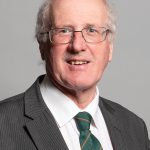
Tag: Jim Shannon

  • Jim Shannon – 2015 Parliamentary Question to the Foreign and Commonwealth Office

    Jim Shannon – 2015 Parliamentary Question to the Foreign and Commonwealth Office

    The below Parliamentary question was asked by Jim Shannon on 2015-10-14.

    To ask the Secretary of State for Foreign and Commonwealth Affairs, what recent reports he has received of the situation of the Bahá’i community in Iran.

    Mr Tobias Ellwood

    The Baha’i community in Iran is subject to mounting persecution, and we are concerned by state efforts to identify, monitor and arbitrarily detain Baha’is. We have repeatedly expressed our concern at the harassment faced by Baha’is in Iran and at the sentencing of seven Baha’i leaders to 20 years in prison. We urge the Iranian Government to ensure that all Iranian citizens are able to practise their faith freely, as required by international conventions.

  • Jim Shannon – 2015 Parliamentary Question to the Department of Health

    Jim Shannon – 2015 Parliamentary Question to the Department of Health

    The below Parliamentary question was asked by Jim Shannon on 2015-10-14.

    To ask the Secretary of State for Health, what steps his Department is taking to assist and advise all British ex-servicemen resident in the Republic of Ireland on financial support for medicines and medical aftercare.

    Ben Gummer

    Neither the Department nor the National Health Service commissions or provides medicine or medical aftercare for veterans in the Republic of Ireland (ROI).

    However, all veterans who reside overseas and are in receipt of a United Kingdom war pension, a war widows’ pension or armed forces compensation scheme payments plus their spouse/civil partner and children (under 18) are entitled to receive free healthcare from the NHS in the UK.

    All UK Veterans residing in the ROI are able to access the UK Ministry of Defence Veterans UK website and helpline and the Veteran Welfare Service for any additional support. Veterans UK may meet the cost of treatment for accepted war pension condition(s) provided the treatment is:

    – clinically necessary for a disability due to service; and

    – not available free of charge through the health system in the country of residence.

    The Ministry of Defence has a contract with Leopardstown Park Hospital Trust in Dublin that provides, through the hospital, facilities for the short and long-term care of former UK service personnel and their spouses, who are resident in the ROI and can also provide financial assistance to those who have been disabled or invalided as a result of service with the Armed Forces of the United Kingdom.

  • Jim Shannon – 2015 Parliamentary Question to the Department of Health

    Jim Shannon – 2015 Parliamentary Question to the Department of Health

    The below Parliamentary question was asked by Jim Shannon on 2015-10-12.

    To ask the Secretary of State for Health, what steps he is taking to introduce earlier forms of diagnosis of pancreatic cancer on the NHS.

    Jane Ellison

    The independent cancer taskforce published its report Achieving World-Class Cancer Outcomes: A Strategy for England 2015-2020 in July 2015, which recognised early diagnosis as a key priority for improving cancer outcomes. Recommendation 21 in particular refers to Wave 2 of the Accelerate, Coordinate, Evaluate (ACE) programme, which specifically aims to speed up and improve diagnosis of cancers with non-specific but concerning symptoms through the use of a multidisciplinary diagnostic centre.

    NHS England is working with partners across the health system to consider how best to take the recommendations of the report forward.

  • Jim Shannon – 2015 Parliamentary Question to the Department of Health

    Jim Shannon – 2015 Parliamentary Question to the Department of Health

    The below Parliamentary question was asked by Jim Shannon on 2015-10-12.

    To ask the Secretary of State for Health, what discussions he has had with the Royal Colleges on potential links between drinking alcohol and smoking tobacco and Alzheimer’s disease.

    Jane Ellison

    Improving the treatment and care of people with dementia, reducing the incidence of dementia and improving dementia research, is a key priority for the Government.

    My Rt. hon. Friend the Secretary of State has regular meetings with various stakeholders, including Royal Colleges, in which a wide range of topics are discussed. There have been no meetings to discuss the potential links between alcohol, tobacco and Alzheimer’s disease specifically.

    Studies investigating whether alcohol consumption is linked to dementia risk have had mixed results and research is ongoing. However, very heavy drinking is known to cause alcohol-related dementia, also known as Wernicke-Korsakoff Syndrome.

    Public Health England (PHE) has made dementia risk reduction one of their seven public health priorities for the next five years. In May 2014 PHE and the UK Health Forum published the Blackfriars Consensus, a statement calling for action on dementia risk reduction which was signed by 60 organisations and individuals working on dementia and other non-communicable diseases, as well as by the Secretary of State and the Health Ministers from the devolved administrations.

    PHE is now working closely with the Alzheimer’s Society and a range of others partners to deliver concerted action to reduce people’s risk of dementia by supporting them to live healthier lives and manage pre-existing conditions that increase their risk of dementia. Their programme includes work to further develop the evidence base and improve modelling of incidence and prevalence, to embed dementia risk reduction messages into health improvement and secondary prevention activity, and to raise public and professional awareness and understanding of what can be done to reduce dementia risk.

    On the latter PHE is engaging with the Royal College of General Practitioners as well as others such as Health Education England and the relevant sector skills councils.

  • Jim Shannon – 2022 Speech on Religious Education in Modern Britain

    Jim Shannon – 2022 Speech on Religious Education in Modern Britain

    The speech made by Jim Shannon, the DUP MP for Strangford, in Westminster Hall on 1 November 2022.

    It is a pleasure to serve under your chairmanship. Dame Maria. I too thank the hon. Member for Cleethorpes (Martin Vickers) for setting the scene so well and for giving us a chance to participate. It is good to see the Minister is his place, and I look forward to hearing his comments, as well as those of the shadow Minister.

    This debate could include many conflicting opinions, yet I trust we can all come from a place where we respect the ideal of faith. Although we may treasure our individual faiths, there is undoubtedly a place for all in the diverse United Kingdom of Great Britain and Northern Ireland. I know that the ideal of religious education differs from region to region. I bring the Northern Ireland perspective to these debates, as I always do, and that is somewhat different yet again. The importance of religious and theological teaching could not be more prominent today, given the expansion of belief and the ever-changing faiths we all have.

    It is great to be here today to discuss the importance of religion in schools, both primary and secondary. According to the Council for the Curriculum, Examinations and Assessment, religious education in Northern Ireland is a compulsory part of the school curriculum. As I am sure all hon. Members are aware, Northern Ireland is no stranger to different and diverse religious beliefs and the impact they can have on modern society. For young people to be able to understand our changing world, they must be able to interpret different religious issues.

    The Department for Education and the four main Churches in Northern Ireland define the religious studies curriculum, allowing for the teaching of the revelation of God, the Christian church and morality from both Protestant and Roman Catholic perspectives. That is as it should be, because the personal relationship someone has with the Lord Jesus is what is important, not their denomination or the church they go to.

    Seven out of 10 people—73%—surveyed across the United Kingdom—agreed that the role of religious education in schools is to provide pupils with opportunities to learn about other people, beliefs and cultures. A further 65% stated that the subject also allows young people to evaluate their own political beliefs. That is why the hon. Member for Cleethorpes referred to political beliefs with a religious viewpoint.

    I understand that some young people nowadays have become disillusioned with religion, but it is crucial that they have a basic understanding of how religion plays a part in modern society and indeed in modern Britain. Parents are allowed to withdraw their children from some or all aspects of the teaching of religious education, but I always encourage them not to do that, regardless of what they may think of that religion. Having strong faith oneself is one thing, but being able to understand and respect other people’s faith starts from a young age—as early as P4 teaching in Northern Ireland.

    The High Court in Northern Ireland ruled that exclusively Christian religious education and worship was discriminatory. However, we must ensure that this ruling, and the calls for it to be considered UK-wide, do not diminish the place of the larger practised religions, such as Christianity, in religious education, but rather allow learning about other faiths equally. I have the utmost belief in Christ as my saviour, but that does not mean that the faiths of Judaism, Sikhism or Islam are of no interest to me.

    I can recall the 1960s and 1970s, when I was at secondary college. Our religious education teacher asked the class whether we wanted to know about other religions, and the answer from us all was that yes, we did. Our teacher then introduced us over a period of time to other religions. In the closed society we were in, we perhaps did not have any knowledge of other religions. That teaching gave us an opportunity to understand these things at an early stage. Through another teacher in a different subject I had the chance to understand Irish history. As a proud Unionist, it did not do me any harm to understand Irish history—understanding it a wee bit better never made me less of a Unionist. It does not harm anyone to understand things from another perspective, but it does let people develop a wider understanding and respect for others, which is what I try to do in my life.

    We live in an ever-changing world; nowadays people can believe and be practically anything. In my eyes, one thing that does not change is the importance of religion—not just my own belief in Christianity, but everyone else’s beliefs as well. As chair of the APPGs for international freedom of religion or belief, and for Pakistani minorities, I know that the study of religious education allows us a chance to learn about religions without feeling the socialisation or pressure of today’s society.

    As always, there was not a thing that the hon. Member for Congleton (Fiona Bruce) said that I do not agree with. She touched on the Uyghurs, the Falun Gong in China, the Baha’i in Iran, the Yazidis in Iraq and the Rohingya Muslims. In Nigeria, which we visited in May and June, we ascertained just how bad the persecution of Christians was, but it is getting worse—there is less understanding. That is so frustrating, because the people we talked to told us they were trying to bring things together, but the reality is that that is not happening.

    Fiona Bruce

    Does the hon. Gentleman agree that it is not too lofty a thing to say that helping our young people understand how important it is to respect the freedom of religion or belief of others of different faiths and beliefs contributes towards nothing less than global peace? So many atrocities across the world start small and locally and then grow. If we can develop a generation in this country that has respect, and we can promote that across the world, we will be able to stop local friction developing so that people can learn how to live together peaceably. We will then see a better world for the next generation.

    Jim Shannon

    I wholeheartedly agree with the hon. Lady. That is something we should all strive to make happen. I am reminded of the Hindus in Pakistan and the Ahmadi Muslims in India as examples of people across the world with a different religious viewpoint who are terribly persecuted, both physically and mentally.

    My youngest staff member chose to drop religious education at GCSE in order to focus on mathematics, as that was what she wanted to do. She has since said on numerous occasions that she does not feel informed about what people believe and why they choose to believe it. She says it was great to pursue mathematics, but in a way it is a pity that she did not get that understanding at an earlier age.

    While I appreciate that education is devolved and our curriculum guidelines differ slightly, the principle that religion is important remains the same. I call on the Education Secretary—we are pushing at an open door—and respective regional Ministers to ensure that the teaching of religion in modern Britain remains in our schools to help to tackle religious discrimination and promote respect for others with a different religion or faith. It is difficult to see a path forwards if we do not know where we have come from. For me, the teachings of Christ, which tell a child that they are loved and chosen, that there is a plan for lives and that they are not alone, are imperative. When social media tells them that the opposite is true, we need the calming influence of religious education in schools.

    I am far from perfect—I am probably the most imperfect person in this room—but I believe that the creator, God, has a job that he has set only me to do. Oh, that more of our young people across this great nation would understand their unique, divinely appointed role and that, no matter what the world may say to them, they are special and worthy. I believe that RE plays an important part in understanding that. It is as essential a skill as home economics or technology. When we talk about the important things for future vocations, we should note that religious education in schools is a calming influence and gives us a better understanding of those around us. The hon. Member for Cleethorpes referred to a Scripture text, and I will finish by quoting Jeremiah 29:11, which says:

    “‘For I know the plans I have for you,’ declares the Lord, ‘plans…to give you hope and a future.’”

    Who does not need that?

  • Jim Shannon – 2014 Parliamentary Question to the Foreign and Commonwealth Office

    Jim Shannon – 2014 Parliamentary Question to the Foreign and Commonwealth Office

    The below Parliamentary question was asked by Jim Shannon on 2014-06-24.

    To ask the Secretary of State for Foreign and Commonwealth Affairs, what discussions he has had with his counterpart in the Egyptian government on the Muslim Brotherhood.

    Hugh Robertson

    The Secretary of State for Foreign and Commonwealth Affairs, my right hon. Friend the Member for Richmond (Yorks) (Mr Hague), discussed the Muslim Brotherhood with former Egyptian Foreign Minister Nabil Fahmy on 14 May.

  • Jim Shannon – 2014 Parliamentary Question to the Department of Health

    Jim Shannon – 2014 Parliamentary Question to the Department of Health

    The below Parliamentary question was asked by Jim Shannon on 2014-07-16.

    To ask the Secretary of State for Health, if he will take steps to co-ordinate with the devolved administrations to plan for the effects of an ageing population.

    Norman Lamb

    Health and care is generally a devolved issue for the devolved administrations. Nonetheless, the Department works with the devolved administrations on matters of mutual interest, including the effects of an ageing population.

  • Jim Shannon – 2014 Parliamentary Question to the Foreign and Commonwealth Office

    Jim Shannon – 2014 Parliamentary Question to the Foreign and Commonwealth Office

    The below Parliamentary question was asked by Jim Shannon on 2014-06-24.

    To ask the Secretary of State for Foreign and Commonwealth Affairs, if he will discuss with his counterparts in Egypt and Libya lessening the threat along the borders of those countries caused by terrorist networks in Libya.

    Hugh Robertson

    The National Security Adviser visited Egypt on 10-11 June and Libya on 16 June, and discussed the situation on the Libyan-Egyptian border with the then Egyptian Foreign Minister Fahmy and Libyan PM Al Thinni. We will continue to discuss means to lessen the threat along Libya’s borders with the Government of Libya and those of neighbouring states.

    The UK is providing direct support to strengthen Libya’s borders. We have a Border Security Adviser embedded with the Libyan Border Security HQ, and provide four UK experts to the EU Border Assistance Mission in Libya (EUBAM), including the Deputy Head of Mission. The UK’s Defence Advisory Training Team provides advice and training to the Libyan Ministry of Defence and institutions, including the Border Security Force.

  • Jim Shannon – 2014 Parliamentary Question to the Department of Health

    Jim Shannon – 2014 Parliamentary Question to the Department of Health

    The below Parliamentary question was asked by Jim Shannon on 2014-07-16.

    To ask the Secretary of State for Health, if he will take steps to put in place a media campaign to educate the public about alternatives to antibiotics.

    Jane Ellison

    The Department is working with other Government departments to coordinate implementation of the Antimicrobial Resistance Strategy including improving public and professional understanding and awareness.

    Public Health England (PHE) is leading on work to improve public knowledge, attitudes and behaviours in relation to antimicrobial resistance in collaboration with partners across the health and social care sector in England.

    PHE is coordinating work on European Antibiotic Awareness Day (EAAD) for England. EAAD is a European initiative which takes place on 18 November each year and aims to promote prudent antibiotic use among professionals and the public.

    PHE are also working with the Department to explore the potentional for additional targeted media work.

  • Jim Shannon – 2014 Parliamentary Question to the Foreign and Commonwealth Office

    Jim Shannon – 2014 Parliamentary Question to the Foreign and Commonwealth Office

    The below Parliamentary question was asked by Jim Shannon on 2014-06-24.

    To ask the Secretary of State for Foreign and Commonwealth Affairs, if he will take steps to encourage more tourists to visit Egypt.

    Hugh Robertson

    The decision on whether to travel to Egypt, or any other country, is for each individual to make. The purpose of Foreign and Commonwealth Office (FCO) Travel Advice is to help individuals make an informed decision. We advise anyone considering visiting Egypt to read the FCO Travel Advice before travelling.