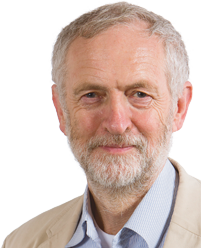
Tag: Jeremy Corbyn

  • Jeremy Corbyn – 2017 Statement on Westminster Terror Attack

    Below is the text of the statement made by Jeremy Corbyn, the Leader of the Opposition, on 23 March 2017.

    What happened yesterday was an appalling atrocity.

    Today, we are united by our humanity, by our democratic values and by that human impulse for solidarity to stand together in times of darkness and adversity.

    I express my condolences to the family and friends of PC Keith Palmer, who gave his life yesterday in defence of the public and our democracy – and to the loved ones of those still in a critical condition including the French schoolchildren visiting our capital from Concarneau in Brittany. The injured include people of ten nationalities. Innocent people were killed yesterday walking across Westminster Bridge as many millions of Londoners and tourists have done before them.

    I thank all the dedicated NHS staff working to save lives, including those from St Thomas’ Hospital who rushed out to help those in need. We are grateful for the public service workers who yesterday, today and every day they pull on their uniforms.

    It behoves us all not to rush to judgement, but to wait for the police to establish the facts. We must stay united in our communities and not to allow fear or the voices of hatred to divide or cower us.

    It is by demonstrating our values of solidarity, community, humanity and love that we will defeat the poison and division of hatred.

  • Jeremy Corbyn – 2017 Speech on Brexit

    Below is the text of the speech made by Jeremy Corbyn, the Leader of the Opposition, in Peterborough on 10 January 2017.

    Thank you for that introduction.

    Whether you voted to Leave or to Remain, you voted for a better future for Britain.

    One thing is clear, the Tories cannot deliver that. So today I want to set how Labour will deliver that vision of a better Britain.

    This government is in disarray over Brexit.

    As the Prime Minister made clear herself they didn’t plan for it before the referendum and they still don’t have a plan now.

    I voted and campaigned to remain and reform as many of you may know I was not uncritical of the European Union. It has many failings.

    Some people argued that we should have a second referendum. That case was put to our party’s membership last summer and defeated.

    Britain is now leaving the European Union. And Britain can be better off after Brexit. But that’s far from inevitable and it certainly won’t happen with a government that stands by whilst wages and salaries are driven down, industry is hollowed out and public services are cut to the point of breakdown.

    Because while the European Union has many problems so does Britain in the hands of Theresa May after six years of Conservative misrule.

    Our social care system is failing to provide essential care for people with disabilities and over a million of our elderly people.

    The NHS is in record deficit; nearly 4 million people are on waiting lists, the Red Cross is describing the state of our emergency health and social care as a ‘humanitarian crisis’.

    Our jobs market is being turned into a sea of insecurity, six million workers in Britain earning less than the living wage, nearly a million people on zero hours contracts, record numbers of people in work living in poverty while in fat cat Britain, the chief executives had already received more than most people will earn all year by the third day of January.

    My point is this, I don’t trust this government with social care, or with the NHS or with the labour market.

    So do I trust them to make a success of Brexit? Not remotely.

    Only a Labour government, determined to reshape the economy so that it works for all, in every part of the country, can make Brexit work for Britain.

    And there can be no question of giving Theresa May’s Tories a free pass in the Brexit negotiations to entrench and take still further their failed free market policies in a post-Brexit Britain.

    The Tory Brexiteers , whose leaders are now in the government and their Ukip allies had no more of a plan for a Brexit vote than the Tory remainers, like Theresa May.

    They did however promise that Brexit would guarantee funding for the NHS, to the tune of £350 million a week. It was on the side of Boris Johnson’s bus.

    What’s happened to that promise now the NHS and social care are in serious crisis? It’s already been ditched.
    And it’s not just on the NHS. We have had no answers from the government about any of their plans or objectives for these complex Brexit negotiations.

    At no point since the Second World War has Britain’s ruling elite so recklessly put the country in such an exposed position without a plan.

    As a result they are now reduced to repeating ‘Brexit means Brexit’. They are unfit to negotiate Brexit.

    That is why Labour has demanded the government come to Parliament and set out their plan before they present it to Brussels and explain what they want to achieve for our country.

    But in the glaring absence of a government plan Labour also believes it’s time to spell out more clearly what we believe the country’s Brexit objectives should be.

    People voted for Brexit on the promise that Britain outside the European Union could be a better place for all its citizens. Whatever their colour or creed. A chance to regain control over our economy, our democracy and people’s lives.

    But beyond vague plans to control borders the only concrete commitment the government has so far made is to protect the financial interests in the City of London. Though maybe that’s hardly surprising from a government that has already slashed the bank levy and corporation tax.

    In the last budget there was not a penny extra for the NHS or social care but under the Tories there’s always billions available for giveaways to the richest.

    As far as Labour is concerned, the referendum result delivered a clear message.

    First, that Britain must leave the EU and bring control of our democracy and our economy closer to home.

    Second, that people would get the resources they were promised to rebuild the NHS.

    Third, that people have had their fill of an economic system and an establishment that works only for the few, not for the many.

    And finally, that their concerns about immigration policy would be addressed.

    Labour accepts those challenges that you, the voters, gave us.

    Unlike the Tories, Labour will insist on a Brexit that works not just for City interests but in the interests of us all.

    That puts health and social care, decent jobs and living standards first and a better deal for young people and the areas of this country that have been left behind for too long.

    First, we will open the way to rebuilding our NHS by ending the under-funding and privatisation of health care.

    Leaving the EU won’t free up the £350m a week that Boris Johnson claimed but savings in EU contributions could help close the gap.

    And we will reject pressure to privatise public services as part of any Brexit settlement. Just as we oppose the attempt to give special legal privileges to corporate interests as part of the EU’s CETA or TTIP trade deals.

    This government could have given the NHS the funding it needs but it has chosen not to. Their tax giveaways to the very richest and to big business hand back £70 billion between now and 2022.

    That is more of a priority for the Tories than elderly people neglected in their homes, patients dying on trolleys or millions waiting in pain to get the treatment they need.

    Labour created the NHS, and it is only safe under a Labour government. We will give the NHS the funding it needs. The British people voted to re-finance the NHS – and we will deliver it.

    Second, we will push to maintain full access to the European single market to protect living standards and jobs.

    But we will also press to repatriate powers from Brussels for the British government to develop a genuine industrial strategy essential for the economy of the future, and so that no community is left behind.

    Tory governments have hidden behind EU state aid rules because they don’t want to intervene. They did so again last year when the steel industry was in trouble. Other governments in Europe acted and saved their industry, the Tory government here sat back.

    But EU rules can also be a block on the action that’s needed to support our economy, decent jobs and living standards.

    Labour will use state aid powers in a drive to build a new economy, based on new technology and the green industries of the future.

    That’s why Labour has set out proposals for a National Investment Bank with regional investment banks that will decide the priorities for their areas. A massive programme of investment that will be needed to rebuild regional economies.

    This country is far too centralized. So we will take back powers over regional policy. And instead of such decisions being made in Brussels or in London, we will make sure they taken locally wherever possible. Taking back real control and putting power and resources right into the heart of local communities to target investment where it’s needed.

    Third, we will use the huge spending leverage of taxpayer-funded services to massively expand the number of proper apprenticeships.

    All firms with a government or council contract over £250,000 will be required to pay tax in the UK and train young people.

    No company will receive taxpayer-funded contracts if it, or its parent company, is headquartered in a tax haven.

    And we will not buy outsourced public services, such as care for the elderly, from companies whose owners and executives are creaming off profits to stuff their pockets at the expense of the workforce and the public purse.

    Finally, a Labour Brexit would take back control over our jobs market which has been seriously damaged by years of reckless deregulation.

    During the referendum campaign, many people expressed deep concerns about unregulated migration from the EU.

    In many sectors of the economy, from IT to health and social care, migrant workers make an important contribution to our common prosperity, and in many parts of the country public services depend on migrant labour.

    This government has been saying it will reduce migration to the tens of thousands. Theresa May as Home Secretary set an arbitrary political target knowing full well it would not be met.

    They inflamed the issue of immigration. They put immense strain on public services with six years of extreme cuts and then blamed migrants for the pressure caused by Tory austerity.

    And last week a Government minister who voted ‘Leave’ told an employers’ conference, “don’t worry, we’ll still let you bring in cheap EU labour”.
    Unlike the Tories, Labour will not offer false promises on immigration targets or sow division by scapegoating migrants because we know where that leads. The worrying rise in race hate crime and division we have seen in recent months and how the issue of immigration can be used as a proxy to abuse or intimidate minority communities.

    Labour is not wedded to freedom of movement for EU citizens as a point of principle, but I don’t want that to be misinterpreted, nor do we rule it out.

    When it comes to border controls, we are proud to say we will meet our international obligations to refugees fleeing wars and persecution.

    To those EU citizens who are already here, we will guarantee your rights.

    And we continue to welcome international students who come to study in this country.

    We cannot afford to lose full access to the European markets on which so many British businesses and jobs depend.

    Changes to the way migration rules operate from the EU will be part of the negotiations.

    Labour supports fair rules and the reasonable management of migration as part of the post-Brexit relationship with the EU, while putting jobs and living standards first in the negotiations.

    At the same time, taking action against undercutting of pay and conditions, closing down cheap labour loopholes, banning exclusive advertising of jobs abroad and strengthening workplace protections would have the effect of reducing numbers of EU migrant workers in the most deregulated sectors, regardless of the final Brexit deal.

    Of course migration has put a strain on public services in some areas that’s why Labour would restore the Migrant Impact Fund that the Tories scrapped.

    Sarah Champion is leading for Labour on our policies to ensure better integration and more community cohesion and part of that again will be about restoring funding for English language lessons.

    Let’s not forget it was this Tory government that slashed funding for learning English as a second language. As we’ve seen with the Prime Minister talking about the need to strengthen mental health care, while cutting funding by 8 per cent it seems the government’s second language is hypocrisy.

    It is the ripping up of workplace protections and trade union rights that has allowed unscrupulous employers to exploit both migrant and British labour, and help to keep pay low, and drive down conditions for everyone.

    But let’s be clear, public services are not under pressure primarily because of immigration – especially since many migrant workers keep those public services going.

    They are under pressure because this Tory government has cut them to fund tax break after tax break to the super rich and big business.
    That is the Tory game – low taxes for the rich, low pay for the rest, underfund public services, and find someone to blame , It’s brutal and it’s not working.

    Labour will break with this failed model and offer solutions to problems, not someone to blame.

    Labour will demand that the Brexit negotiations give us the power to intervene decisively to prevent workers, from here or abroad, being used and exploited to undermine pay and conditions at work.

    We need a drive to provide British people with the skills necessary to take up the new jobs which a Labour government and the new economy will generate. I’ve already set out at the CBI and TUC conferences that this means asking companies to pay a bit more in tax to fund more and better access to education and skills training, and government contractors always providing decent skilled apprenticeships.

    We will end the race to the bottom in pay, working conditions and job insecurity, setting up a new Ministry of Labour to get a grip on the anything goes jobs market free-for-all.

    Labour will ensure all workers have equal rights at work from day one – and require collective bargaining agreements in key sectors in a properly regulated labour market, so that workers cannot be undercut.

    That will bring an end to the unscrupulous use of agency labour and bogus self-employment, to stop undercutting and to ensure every worker has a secure job with secure pay, that’s why we’ll set the minimum wage at the level of the living wage, expected to be £10 per hour by 2020.

    Those changes should be made to benefit the whole country.

    But while we tackle low pay at the bottom, we also have to address the excess that drives that poverty pay that leaves millions of people in poverty even though they work.

    In the 1920s, J.P. Morgan, the Wall Street banker limited salaries to 20 times that of junior employees.

    Another advocate of pay ratios was David Cameron. His government proposed a 20:1 pay ratio to limit sky-high pay in the public sector and now all salaries higher than £150,000 must be signed off by the Cabinet Office.

    Labour will go further and extend that to any company that is awarded a government contract.

    A 20:1 ratio means someone earning the living wage, just over £16,000 a year, would permit an executive to be earning nearly £350,000. It cannot be right that if companies are getting public money that that can be creamed off by a few at the top.

    But there is a wider point too. 20 years ago the top bosses of the FTSE 100 companies earned just under 50 times their average worker, today that figure is now 130 times. Last year alone, the top bosses got a 10 per cent pay rise, far higher than those doing the work in the shops, in the call centres, in the warehouses.

    So what can we do?

    … We could allow consumers to judge for themselves, with a government-backed kitemark for those companies that have agreed pay ratios between the pay of the highest and lowest earners with a recognised trade union.

    … We could ask for executive pay to be signed off by remuneration committees on which workers have a majority.

    … We could ensure higher earners pay their fair share by introducing a higher rate of income tax on the highest 5 percent or 1 percent of incomes.

    … We could offer lower rates of corporation tax for companies that don’t pay anyone more than a certain multiple of the pay of the lowest earner.

    There are many options. But what we cannot accept is a society in which a few earn the in two and a bit days, what a nurse, a shop worker, a teacher do in a year. That cannot be right.

    This is not about limiting aspiration or penalising success, it’s about recognising that success is a collective effort and rewards must be shared.

    We cannot have the CEO paying less tax than the cleaner and pretending they are worth thousands times more than the lowest paid staff.

    So this is Labour’s vision for Britain after Brexit.
    Labour will not block the referendum vote when the time comes in Parliament, we will vote for Article 50.

    But as the Opposition we will ensure the government is held to account for its negotiating demands.

    At the moment they are in total disarray, on Brexit, on the NHS and social care, on the pay in your pocket.

    Labour will build a better Britain out of Brexit.

    That will start with the refinancing of the NHS and the creation of a more equal country, in which power and wealth is more fairly shared amongst our communities. A genuinely inclusive society with strong and peaceful relations with the rest of the world.

    This is Labour’s New Year pledge to the British people.

  • Jeremy Corbyn – 2016 Speech at Labour Party Conference

    jeremycorbyn

    Below is the text of the speech made by Jeremy Corbyn, the Leader of the Labour Party, to the party’s conference being held in Birmingham on 28 September 2016.

    Thank you for that introduction. And how brilliant it is to see the hall here in Liverpool, absolutely packed for the Labour conference, well I say it’s packed but Virgin Trains assure me there are 800 empty seats.

    Either way Conference, it’s a huge pleasure to be holding our party’s annual gathering here in this fantastic city that has shaped our country, our economy, our culture and our music.

    Liverpool and its people have always been central to the Labour party and our movement. And I know some people say campaigns and protests don’t change things. But the Hillsborough families have shown just how wrong that is.

    It’s taken twenty-seven years but those families have, with great courage and dignity, finally got some truth and justice for the ninety-six who died. And I want to pay tribute to all the families and campaigners, for their solidarity, their commitment and their love.

    We must learn from them so we promise those campaigning for Orgreave, for Shrewsbury, for the thousands of workers blacklisted for being trade unionists that we will support your battles for truth and justice and when we return to government we will make sure that you have both.

    Because winning justice for all and changing society for the benefit of all is at the heart of what Labour is about.

    So yes, our party is about campaigning and it’s about protest too.

    But most of all it’s about winning power in local and national government, to deliver the real change our country so desperately needs.

    That’s why the central task of the whole Labour party, must be to rebuild trust and support to win the next general election and form the next government. That is the government I am determined to lead, to win power to change Britain for the benefit of working people.

    But every one of us in this hall today knows that we will only get there if we work together. And I think it’s fair to say after what we’ve been through these past few months that hasn’t always been exactly the case.

    Those months have been a testing time for the whole party, first the horrific murder of Jo Cox, followed by the shock of the referendum result and then the tipping over of divisions in parliament, into the leadership contest that ended last Saturday.

    Jo’s killing was a hate-filled attack on democracy itself that shocked the whole country. Jo Cox didn’t just believe in loving her neighbor, she believed in loving her neighbour’s neighbor, that every life counted the same.

    And as Jo said in her maiden speech as an MP “we have far more in common with each other than things that divide us”. Let that essential truth guide us as we come together again to challenge this Tory Government and its shaky grip on power.

    We have also lost good MPs like Michael Meacher and Harry Harpham. They were Labour through and through, passionate campaigners for a better world.

    And let me pay particular tribute to those parliamentary colleagues who stepped forward in the summer to fill the gaps in the shadow cabinet and ensure that Labour could function as an effective opposition in parliament.

    They didn’t seek office, but they stepped up when their party and in fact the country needed them to serve. They all deserve the respect and gratitude of our party and movement. And this conference should thank them today, they are our future.

    We’ve just had our second leadership election within a year. It had its fraught moments of course, not only for Owen Smith and me , and I hope we don’t make a habit of it.

    But there have also been upsides. Over 150,000 new members joined our party. Young rising stars have shone on the front bench and we found that the party is more united on policy than we would ever have guessed.

    I am honoured to have been re-elected by our party a second time with an even larger mandate. But we all have lessons to learn and a responsibility to do things better and work together more effectively. I will lead in learning those lessons and I’d like to thank Owen, for the campaign and his work as shadow work and pensions secretary.

    And all the Labour Party Staff and my own team for their brilliant work.

    One lesson is, that there is a responsibility on all of us to take care with our rhetoric, respect democratic decisions, respect our differences and respect each other. We know that robust debate has at times spilled over into abuse and hate around our party, including misogyny and anti-Semitism, especially on social media.

    That is utterly unacceptable. Our party must be a safe and welcoming space for everybody and we will continue to take firm action against abuse and intimidation.

    And let me be absolutely clear, anti-Semitism is an evil, it led to the worst crimes of the 20th century, every one of us has a responsibility to ensure that it is never allowed to fester in our society again. This party always has and always will fight against prejudice and hatred of Jewish people with every breath in its body.

    We meet this year as the largest political party in western Europe with over half a million members campaigning in every community in Britain.

    More people have joined our party in the last twenty months than in the previous twenty years. We have more of our fellow citizens in our party than all the others put together.

    Some may see that as a threat. But I see it as a vast democratic resource. Our hugely increased membership is part of a movement that can take Labour’s message into every community, to win support for the election of a Labour government. Each and every one of these new members is welcome in our party.

    And after a ten year absence, we welcome back the Fire Brigades Union to our party and to conference. We are reuniting the Labour family.

    And over the past year, we’ve shown what Labour can do when the party stands together.

    At conference a year ago, I launched our campaign against cuts to tax credits and we succeeded in knocking this government back.

    This year, three million families are over £1,000 better off because Labour stood together.

    In the Budget, the government tried to take away billions from disabled people but we defeated them …

    We have won all four by-elections we’ve contested. In the May elections, we overtook the Tories to become the largest party nationally. We won back London with a massive win for Sadiq Khan the first Muslim mayor of a western capital city.

    And we won the Bristol mayor for the first time, Marvin Rees, the first black mayor in any European city. And of course we also won the mayoralty in Salford and here in Liverpool.

    That’s the road of advance we have to return to if we’re going to challenge the Tories for power and turn the huge growth in the Labour party into the electoral support we need across Britain.

    There’s no doubt my election as Labour leader a year ago. And re-election this month grew out of a thirst for a new kind of politics, and a conviction that the old way of running the economy and the country, isn’t delivering for more and more people.

    It’s not about me of course, or unique to Britain but across Europe, North America and elsewhere, people are fed up with a so-called free market system, that has produced grotesque inequality stagnating living standards for the many calamitous foreign wars without end and a political stitch-up which leaves the vast majority of people shut out of power.

    Since the crash of 2008, the demand for an alternative and an end to counter-productive austerity has led to the rise of new movements and parties in one country after another.

    In Britain it’s happened in the heart of traditional politics, in the Labour party which is something we should be extremely proud of. It’s exactly what Labour was founded for to be the voice of the many of social justice and progressive change from the bottom up.

    But it also means it’s no good harking back to the tired old economic and political fixes of twenty years ago because they won’t work anymore. The old model is broken. We’re in a new era that demands a politics and economics that meets the needs of our own time.

    Even Theresa May gets it, that people want change. That’s why she stood on the steps of Downing Street and talked about the inequalities and burning injustices in today’s Britain.

    She promised a country: “that works not for a privileged few but for every one of us”.

    But even if she manages to talk the talk, she can’t walk the walk.

    This isn’t a new government, it’s David Cameron’s government repackaged with progressive slogans but with a new harsh rightwing edge, taking the country backwards and dithering before the historic challenges of Brexit.

    Who seriously believes that the Tories could ever stand up to the privileged few? They are the party of the privileged few, funded by the privileged few, for the benefit of the privileged few.

    This is a party, after all that now wants to force through an undemocratic Boundary Review based on an out-of-date version of the electoral register with nearly two million voters missing.

    They’ve dressed up as a bid to cut the cost of politics by abolishing fifty MPs, but the £12million savings are dwarfed by the expense of the 260 peers David Cameron appointed at a cost of £34million a year. It’s nothing but a cynical attempt to gerrymander the next election.

    And this is a prime minister who was elevated to her job without a single vote being cast after a pantomime farce which saw one leading Tory after another falling on their swords.

    When I meet Theresa May across the dispatch box, I know that only one of us has been elected to the office they hold, by the votes of a third of a million people.

    In any case, the Tories are simply incapable of responding to the breakdown of the old economic model. Because that failed model is in their political DNA.

    It’s what they deliver every time they’re in government. Tory governments deregulate, they outsource and privatise they stand by as inequality grows.

    They’ve cut taxes for the privileged few sold off our national assets to them, always on the cheap and turned a blind eye to their chronic tax avoidance.

    They’re so committed to the interests of the very richest they recruited Sir Phillip Green into government as something called an efficiency tsar.

    Well, government might be a bit more efficient if the super-rich like Sir Phillip actually paid their taxes.

    When government steps back there are consequences for every one of us.

    Look what’s happened to housing under the Tories:

    housebuilding has fallen to its lowest level since the 1920s;

    home ownership is falling as more people are priced out of the market;

    evictions and homelessness go up every year;

    council homes are sold off without being replaced.

    And another consequence is that we’re paying over £9 billion a year to private landlords in housing benefit.

    Instead of spending public money on building council housing, we’re subsidising private landlords. That’s wasteful, inefficient, and poor government.

    So Labour will, as Teresa Pearce said, build over a million new homes at least half of them council houses and we will control private rents, so we can give every British family that basic human right – a decent home.

    It’s the same in the jobs market. Without proper employment regulation, there’s been an explosion of temporary, insecure jobs nearly one million people on zero hour contracts.

    There are now six million working people earning less than the living wage and poverty among those in work is at record levels.

    That didn’t happen by accident, the Tories have torn up employment rights and deliberately tried to weaken the organisations that get people justice at work the trade unions.

    Of course trade unions are not taking this lying down. Look at the great campaign Unite has waged at Sports Direct, to get justice for exploited workers and hold Mike Ashley to account. That is why Labour will repeal the Trade Union Act and set unions free to do their job.

    And we will raise the minimum wage to a real living wage that brings working people out of poverty and we’ll ban zero hours contracts as John McDonnell and Ian Lavery have set out at this conference.

    And then there’s the scandal of the privatised railways more public subsidy than under the days of British Rail all going to private firms and more delays more cancellations. And the highest fares in Europe.

    That is why the great majority of the British people back Labour’s plan, set out by Andy MacDonald, to take the railways back into public ownership.

    But if you want the most spectacular example of what happens, when government steps back, the global banking crash is an object lesson a deregulated industry of out of control greed and speculation that crashed economies across the globe and required the biggest ever government intervention and public bailout in history.

    Millions of ordinary families paid the price for that failure. I pledge that Labour will never let a few reckless bankers wreck our economy again.

    So Labour is offering solutions. During this summer’s leadership campaign, I set out ten pledges which I believe can be the platform for our party’s programme at the next election.

    They have now been put to you and endorsed by this conference.

    They lay out the scope of the change we need to see for full employment, a homes guarantee, security at work, a strong public NHS and social care, a National Education Service for all, action on climate change, public ownership and control of our services, a cut in inequality of income and wealth action to secure an equal society and peace and justice at the heart of foreign policy.

    Don’t worry, they’re not the Ten Commandments. They will now go to the National Policy Forum and the whole party needs to build on them, refine them and above all take them out to the people of this country.

    But those ten pledges the core of the platform on which I was re-elected leader will now form the framework for what Labour will campaign for and for what a Labour government will do.

    Together they show the direction of change we are determined to take – and the outline of a programme to rebuild and transform Britain.

    They are rooted in traditional Labour values and objectives shaped to meet the challenges of the 21st century. They are values Labour is united on. They reflect the views and aspirations of the majority of our people. And they are values our country can and will support as soon as they are given the chance.

    And these pledges are not just words. Already, across the country, Labour councils are putting Labour values into action, in a way that makes a real difference to millions of people, despite cynical government funding cuts that have hit Labour councils five times as hard as Tory-run areas.

    Like Nottingham City Council setting up the not-for-profit Robin Hood Energy company to provide affordable energy;

    Or Cardiff Bus Company taking 100,000 passengers every day, publicly owned with a passenger panel to hold its directors to account;

    Or Preston Council working to favour local procurement, and keep money in the town;

    Or Newcastle Council providing free wi-fi in 69 public buildings across the city;

    Or Croydon Council which has set up a company to build 1,000 new homes, as Cllr Alison Butler said: “We can no longer afford to sit back and let the market take its course”.

    Or Glasgow that has established high quality and flexible workspaces for start-up, high growth companies in dynamic new sectors.

    Or here in Liverpool, set to be at the global forefront of a new wave of technology and home to Sensor City, a £15million business hub that aims to create 300 start-up businesses and 1,000 jobs over the next decade.

    It is a proud Labour record each and every Labour councilor deserves our heartfelt thanks for the work they do.

    But I want to go further because we want local government to go further and put public enterprise back into the heart of our economy and services to meet the needs of local communities, municipal socialism for the 21st century, as an engine of local growth and development.

    So today I’m announcing that Labour will remove the artificial local borrowing cap and allow councils to borrow against their housing stock.

    That single measure alone would allow them to build an extra 12,000 council homes a year.

    Labour councils increasingly have a policy of in-house as the preferred provider and many councils have brought bin collections, cleaners, and IT services back in-house, insourcing privatized contracts to save money for council tax payers and to ensure good terms and conditions for staff.

    I have said that Labour will put security at work and employment and union rights from day one centre stage.

    But one in six workers now in Britain are now self-employed. They’re right to value their independence but for too many it comes with insecurity and a woeful lack of rights.

    So we will review arrangements for self-employed people including social security that self-employed people pay for in their taxes, yet aren’t fully covered by.

    And we will ensure that successful innovators have access to the finance necessary to take their ideas to the next level grow their businesses and generate employment.

    So as part of our Workplace 2020 review, we will make sure that and our tax and social security arrangements are fit for the 21st century, consulting with self-employed workers and the Federation of Small Businesses.

    If the Tories are the party of cuts and short-termism. Labour is the Party of investing for the future.

    With the same level of investment as other major economies, we could be so much more unlock so much skill, ingenuity and wealth.

    That’s why we’ll establish a National Investment Bank at the heart of our plan to rebuild and transform Britain.

    And we will borrow to invest at historically low interest rates, to generate far greater returns. It would be foolish not to, because that investment is expanding the economy and the income it generates for us all in the process.

    Even this government, after years of austerity and savage cuts to investment is starting to change its tune.

    I am not content with accepting second-class broadband, not content with creaking railways, not content with seeing the US and Germany investing in cutting edge and green technologies, while Britain lags behind.

    Last year, for example the Prime Minister promised a universal service obligation for ten megabyte broadband.

    But since then the government has done nothing letting down entrepreneurs, businesses and families, especially in rural areas.

    That’s why we’ve set out proposals for a National Investment Bank with £500 billion of investment to bring our broadband, our railways, our housing and our energy infrastructure up to scratch.

    A country that doesn’t invest is a country that has given up. That has taken the path of managed decline. A Labour government will never accept second best for Britain.

    Our country’s history is based on individual ingenuity and collective endeavor.

    We are the country of Ada Lovelace, Alan Turing and Tim Berners-Lee, the land of Isambard Kingdom Brunel and Sarah Guppy of George Stephenson and Eric Laithwaite.

    The Tories have turned their back on this proud British tradition. They have put privatisation and cutting spending first.

    Britain now spends less on research as a share of national income than France, Germany, the US and China. A Labour Government will bring research and development up to three percent of GDP.

    Yesterday, Rebecca Long Bailey set out the terms of our Industrial Strategy Review. We need an economy that works for every part of this country so that no community is left behind.

    And today I’m asking everyone, businesses, academics, workers, trade unions and anyone who cares about our future prosperity to have your say in that review.

    We are a wealthy country – and not just in terms of money.

    We are rich in talent, rich in potential.

    That’s why we’ve proposed a comprehensive National Education Service at the heart of our programme for government to deliver high quality education for all throughout our lives.

    Education has always been a core Labour value from the time of Ellen Wilkinson and before.

    And a National Education Service will be an essential part of the 21st century welfare state.

    In a rapidly changing economy people need to re-train or upgrade their skills without falling into debt.

    Britain already lags behind other in productivity.

    Partly that’s about investing in technology and infrastructure.

    And partly it’s about investing in people and their skills.

    How can we build and expand the sectors of the future without a skilled workforce?

    But this Conservative government has slashed adult education budgets taking away opportunities for people to develop their skills and leaving businesses struggling to find the skilled workforce they need to succeed.

    So today I am offering business a new settlement. A new deal for Rebuilding Britain.

    Under Labour we will provide the investment to rebuild Britain’s infrastructure.

    We will fund that investment because it will lead to a more productive economy providing the basis on which our economy and our businesses can thrive, helping to provide over a million good jobs and opportunities for businesses.

    But investment in capital must include investment in human capital, the skilled workers needed to make our economy a success.

    So this is the deal Labour will offer to business.

    To help pay for a National Education Service, we will ask you pay a little more in tax.

    We’ve already started to set out some of this, pledging to raise corporation tax by less than 1.5 percent to give an Education Maintenance Allowance to college students and grants to university students so that every young learner can afford to support themselves as they develop skills and get qualifications.

    Business shares in economic success and it must contribute to it too.

    And I recognise that good businesses deserve a level playing field.

    So I also pledge to good businesses that we will clamp down those that dodge their taxes you should not be undercut by those that don’t play by the rules.

    There is nothing more unpatriotic than not paying your taxes it is an act of vandalism, damaging our NHS, damaging older people’s social care, damaging younger people’s education. So a Labour government will make shabby tax avoidance a thing of the past.

    Labour’s National Education Service is going to be every bit as vital as our National Health Service has become.

    And we recognise that education isn’t simply about preparing for the workplace. It’s also about the exploration of knowledge and unlocking the creativity in every human being.

    So all school pupils should have the chance to learn an instrument take part in drama and dance and have regular access to a theatre, gallery or museum in their local area.

    That’s why we will introduce an arts pupil premium to every primary school in England and Wales and consult on the design and national roll-out to extend this pupil premium to all secondary schools.

    This will be a £160million boost for schools to invest in projects that will support cultural activities for schools over the longer-term.

    It could hardly be more different to the Tory approach to education. Their only plan is the return of grammar schools, segregation and second class schooling for the majority and what a great job Angela Rayner is doing in opposing them.

    So this Saturday 1 October, I want you to take the message into your community that Labour is standing up for education for all.

    Grammar Schools are not the only way, the Tories are bringing division back into our society. They are also using the tried-and-tested tricks of demonising and scapegoating to distract from their failures.

    Whether it be single mothers, unemployed people, disabled people or migrants, Tory failure is always someone else’s fault.

    And those smears have consequences, from children being bullied in school, to attacks in the street – such as the rise of disability hate crime.

    I am so proud of this party. In the last year, we stood up to the government on cuts to disabled people’s benefits and cuts to working families tax credits.

    And on Monday, our shadow work & pensions secretary Debbie Abrahams announced we would be scrapping the punitive sanctions regime and the degrading Work Capability Assessment.

    As politicians, as political activists, as citizens, we must have zero tolerance towards those who whip up hate and division, stand together against racism, Islamophobia and anti-Semitism and defend those being demonised.

    It has been shaming to our multicultural society that assaults on migrants have increased sharply since the referendum campaign a campaign that peddled myths and whipped up division.

    It isn’t migrants that drive down wages, it’s exploitative employers and the politicians who deregulate the labour market and rip up trade union rights.

    It isn’t migrants who put a strain on our NHS, it only keeps going because of the migrant nurses and doctors who come here filling the gaps left by politicians who have failed to invest in training.

    It isn’t migrants that have caused a housing crisis; it’s a Tory government that has failed to build homes.

    Immigration can certainly put extra pressure on services and that’s why, under Gordon Brown, Labour setup the Migrant Impact Fund to provide extra funding to communities that have the largest rises in population.

    What did the Tories do? They abolished it and then they demonise migrants for putting pressure on services.

    A Labour government will not offer false promises on immigration as the Tories have done. We will not sow division by fanning the flames of fear. We will tackle the real issues of immigration instead whatever the eventual outcome of the Brexit negotiations and make the changes that are needed.

    We will act decisively to end the undercutting of workers’ pay and conditions through the exploitation of migrant labour and agency working which would reduce the number of migrant workers in the process.

    And we will ease the pressure on hard pressed public services – services that are struggling to absorb Tory austerity cuts, in communities absorbing new populations.

    Labour will reinstate the migrant impact fund, and give extra support to areas of high migration using the visa levy for its intended purpose. And we will add a citizenship application fee levy to boost the fund.

    That is the Labour way to tackle social tension investment and assistance, not racism and division.

    This party campaigned hard to remain in the European Union. I spoke at rallies from Cornwall to Aberdeenshire for our Labour campaign to remain and reform.

    But although most Labour voters backed us we did not convince millions of natural Labour voters especially in those parts of the country left behind.

    Left behind by years of neglect under-investment and de-industrialisation.

    Now we have to face the future together we are not helped by patronising or lecturing those in our communities who voted to leave. We have to hear their concerns about jobs, about public services, about wages, about immigration, about a future for their children. And we have to respect their votes, and the decision of the British people.

    Of course that doesn’t mean giving a blank cheque to Theresa May and her three-legged team of fractious Brexiteers as they try to work up a negotiating plan and squabble about whose turn it is to have the Chevening country retreat each weekend.

    We have made it clear that we will resist a Brexit at the expense of workers’ rights and social justice we have set out our red lines on employment, environmental and social protection and on access to the European market.

    But we will also be pressing our own Brexit agenda including the freedom to intervene in our own industries without the obligation to liberalise or privatise our public services and building a new relationship with Europe based on cooperation and internationalism.

    And as Europe faces the impact of a refugee crisis fuelled by wars across the Middle East we have to face the role that repeated military interventions by British governments have played in that crisis.

    The Chilcot report made absolutely clear, the lessons to be learned from the disastrous invasion and occupation of Iraq, just as this month’s Foreign Affair Select Committee report into the war in Libya demonstrated those lessons had still not been learned a decade later.

    The consequences of those wars have been the spread of terrorism, sectarianism and violence across an arc of conflict that has displaced millions of people forcing them from their countries.

    That is why it was right to apologise on behalf of the party for the Iraq war right to say that we have learned the lessons and right to say that such a catastrophe must never be allowed to happen again.

    We need a foreign policy based on peace, justice and human rights and what great news to hear the peace treaty in Colombia after fifty years of war and we need to honour our international treaty obligations on nuclear disarmament and encourage others to do the same.

    We are a long way from that humanitarian vision. Britain continues to sell arms to Saudi Arabia, a country that the United Nations says is committing repeated violations of international humanitarian law war crimes in Yemen just as we have seen taking place in Syria.

    So today I make it clear that under a Labour government when there are credible reports of human rights abuses or war crimes being committed British arms sales will be suspended, starting with Saudi Arabia.

    Last year, the votes we needed to win power went many different ways in all parts of our country while millions of our potential voters stayed at home.

    Many didn’t believe we offered the alternative they wanted.

    It’s true there’s an electoral mountain to climb.

    But if we focus everything on the needs and aspirations of middle and lower income voters, of ordinary families, if we demonstrate we’ve got a viable alternative to the government’s failed economic policies. I’m convinced we can build the electoral support that can beat the Tories.

    That means being the voice of women, of young people and pensioners middle and lower income workers, the unemployed and the self-employed, minority communities and those struggling with the impact of migration at work and everyone struggling to get on, and secure a better life for themselves, their families and communities.

    Running like a golden thread through Labour’s vision for today as throughout our history is the struggle for equality.

    Rampant inequality has become the great scandal of our time, sapping the potential of our society, and tearing at its fabric.

    Labour’s goal isn’t just greater equality of wealth and income but also of power.

    Our aim could not be more ambitious. We want a new settlement for the 21st century, in politics, business, our communities with the environment, and in our relations with the rest of the world.

    Every one of us in the Labour party is motivated by the gap between what our country is and what it could be.

    We know that in the sixth largest economy in the world the foodbanks, stunted life chances and growing poverty alongside wealth on an undreamed of scale are a mark of shameful and unnecessary failure.

    We know how great this country could be, for all its people, with a new political and economic settlement.

    With new forms of democratic public ownership, driven by investment in the technology and industries of the future, with decent jobs, education and housing for all with local services run by and for people not outsourced to faceless corporations.

    That’s not backward-looking, it’s the very opposite.

    It’s the socialism of the 21st century.

    Our job is now to win over the unconvinced to our vision. Only that way can we secure the Labour government we need.

    And let’s be frank, no one will be convinced of a vision, promoted by a divided party. We all agree on that.

    So I ask each and every one of you, accept the decision of the members end the trench warfare and work together to take on the Tories.

    Anything else is a luxury that the millions of people who depend on Labour cannot afford.

    We know there will be local elections next May. In Scotland, where we have won three council by-elections this summer, in Wales and in counties across England.
    And there’ll be metro mayor elections too, including here on Merseyside, where my good friend Steve Rotherham will standing as Labour’s candidate, Steve, best of luck, I will miss your comradeship and support.

    But we could also face a general election next year.

    Whatever the Prime Minister says about snap elections, there is every chance that Theresa May, will cut and run, for an early election.

    So I put our party on notice today, Labour is preparing for a general election in 2017, we expect all our members to support our campaign and we will be ready for the challenge whenever it comes.

    Let us do it, in the spirit of the great Scots-born Liverpool football manager Bill Shankly who said:

    “The socialism I believe in, is everybody working for the same goal and everybody having a share in the rewards. That’s how I see football, that’s how I see life.”

    We are not all Bill Shanklys. Each of us comes to our socialism from our own experiences.

    Mine was shaped by my mum and dad, a teacher and an engineer. Both committed socialists and peace campaigners, my mum’s inspiration was to encourage girls to believe they could achieve anything in their lives.

    And by working as a teacher in Jamaica when I was a young man, that taught me so much about the strength of communities living in adversity, as well as fighting for the low paid as a trade union organiser here in Britain.

    As the great American poet Langston Hughes put it: “I see that my own hands can make the world that’s in my mind”.

    Everyone here and every one of our hundreds of thousands of members has something to contribute to our cause.

    That way we will unite, build on our policies. Take our vision out to a country crying out for change.

    We are half a million of us, and there will be more, working together to make our country the place it could be.

    Conference, united we can shape the future and build a fairer Britain in a peaceful world.

    Thank you.
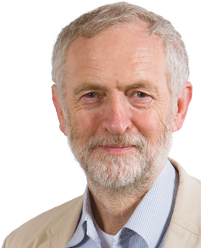
  • Jeremy Corbyn – 2016 Speech on Nuclear Deterrent

    jeremycorbyn

    Below is the text of the speech made by Jeremy Corbyn, the Leader of the Opposition, in the House of Commons on 18 July 2016.

    May I start by welcoming the right hon. Member for Maidenhead (Mrs May) and congratulating her on her appointment as Prime Minister? I wish her well in that position, and I am glad that her election was quick and short.

    I commend the remarks the Prime Minister made about the horrific events in Nice. What happened was absolutely horrific: the innocent people who lost their lives. One hopes it will not be repeated elsewhere. I was pleased she mentioned the situation in Turkey, and I support her call for calm and restraint on all sides in Turkey. After the attempted coup, I called friends in Istanbul and Ankara and asked what was going on. The older ones felt it was like a repeat of the 1980 coup and were horrified that bombs were falling close to the Turkish Parliament. Can we please not return to a Europe of military coups and dictatorships? I endorse the Prime Minister’s comments in that respect, and I pay tribute to the Foreign Office staff who helped British citizens caught up in the recent events in France and Turkey.

    The motion today is one of enormous importance to this country and indeed the wider world. There is nothing particularly new in it—the principle of nuclear weapons was debated in 2007—but this is an opportunity to scrutinise the Government. The funds involved in Trident renewal are massive. We must also consider the complex moral and strategic issues of our country possessing weapons of mass destruction. There is also the question of its utility. Do these weapons of mass destruction—for that is what they are—act as a deterrent to the threats we face, and is that deterrent credible?

    The motion says nothing about the ever-ballooning costs. In 2006, the MOD estimated that construction costs would be £20 billion, but by last year that had risen by 50% to £31 billion, with another £10 billion added as a contingency fund. The very respected hon. Member for Reigate (Crispin Blunt) has estimated the cost at £167 billion, though it is understood that delays might have since added to those credible figures—I have seen estimates as high as over £200 billion for the replacement and the running costs.

    James Cartlidge (South Suffolk) (Con)

    Is not the true cost the one we remember every Remembrance Sunday—the millions of lives we lost in two world wars? Would the right hon. Gentleman care to estimate the millions of lives that would have been lost in the third conventional war that was avoided before 1989 because of the nuclear deterrent?

    Jeremy Corbyn

    We all remember, on Remembrance Sunday and at other times, those who lost their lives. That is the price of war. My question is: does our possession of nuclear weapons make us and the world more secure? [Hon. Members: “Yes!”] Of course, there is a debate about that, and that is what a democratic Parliament does—it debates the issues. I am putting forward a point of view. The hon. Gentleman might not agree with it, but I am sure he will listen with great respect, as he always does.

    Ian Paisley

    In the past, the Labour leader’s solution to a domestic security threat was to parley with the Provisional IRA. What would his tactics be in dealing with a threat to all the peoples of this nation?

    Jeremy Corbyn

    Towards the end of her speech, the Prime Minister mentioned the nuclear non-proliferation treaty and multilateral disarmament. I was interested in that. Surely we should start from the basis that we want, and are determined to bring about, a nuclear-free world. Six-party talks are going on with North Korea. China is a major economic provider to North Korea. I would have thought that the relationship with China and North Korea was the key to finding a way forward.

    James Berry (Kingston and Surbiton) (Con)

    How would the right hon. Gentleman persuade my thousands of Korean constituents that it is a good idea to disarm unilaterally while their families and friends living in our ally South Korea face a constant nuclear threat from a belligerent regime over their northern border?

    Jeremy Corbyn

    I, too, have Korean constituents, as do many others, and we welcome their work and participation in our society. I was making the point that the six-party talks are an important way forward in bringing about a peace treaty on the Korean peninsula, which is surely in everybody’s interests. It will not be easy—I fully understand that—but nevertheless it is something we should be trying to do.

    I would be grateful if the Prime Minister, or the Defence Secretary when he replies, could let us know the Government’s estimate of the total lifetime cost of what we are being asked to endorse today.

    Mr Shailesh Vara (North West Cambridgeshire) (Con)

    Will the right hon. Gentleman give way?

    Jeremy Corbyn

    No.

    It is hardly surprising that in May 2009, an intense debate went on in the shadow Cabinet about going for a less expensive upgrade by converting to air-launched missiles. The right hon. Member for Mid Sussex (Sir Nicholas Soames) said at the time that

    “the arguments have not yet been had in public in nearly an adequate enough way to warrant the spending of this nation’s treasure on the scale that will be required.”—[Official Report, 20 April 2009; Vol. 491, c. 84.]

    Seven years later, we are perhaps in the same situation.

    The motion proposes an open-ended commitment to maintain Britain’s current nuclear capability for as long as the global security situation demands. We on the Opposition Benches, despite our differences on some issues, have always argued for the aim of a nuclear-free world. We might differ on how to achieve it, but we are united in our commitment to that end.

    In 2007, my right hon. Friend the Member for Derby South (Margaret Beckett) embarked on a meaningful attempt to build consensus for multilateral disarmament. Will the Government address where these successor submarines are going to be based? The people of Scotland have rejected Trident’s being based in Faslane naval base on the Clyde—the SNP Government are opposed to it, as is the Scottish Labour party.

    We are debating not a nuclear deterrent but our continued possession of weapons of mass destruction. We are discussing eight missiles and 40 warheads, with each warhead believed to be eight times as powerful as the atomic bomb that killed 140,000 people in Hiroshima in 1945. We are talking about 40 warheads, each one with a capacity to kill more than 1 million people.

    What, then, is the threat that we face that will be deterred by the death of more than 1 million people? It is not the threat from so-called Islamic State, with its poisonous death-cult that glories in killing as many people as possible, as we have seen brutally from Syria to east Africa and from France to Turkey. It has not deterred our allies Saudi Arabia from committing dreadful acts in Yemen. It did not stop Saddam Hussein’s atrocities in the 1980s or the invasion of Kuwait in 1990. It did not deter the war crimes in the Balkans in the 1990s, nor the genocide in Rwanda. I make it clear today that I would not take a decision that killed millions of innocent people. I do not believe that the threat of mass murder is a legitimate way to go about dealing with international relations.

    Mr Jamie Reed (Copeland) (Lab)

    As Leader of the Opposition, my right hon. Friend will be privy to briefings from the National Security Council. Will he explain when he last sought and received such a briefing and what is his assessment of the new Russian military nuclear protocols that permit first strike using nuclear weapons and that say that they can be used to de-escalate conventional military conflicts?

    Jeremy Corbyn

    Britain, too, currently retains the right to first strike, so I would have thought that the best way forward would be to develop the nuclear non-proliferation treaty into a no first strike situation. That would be a good way forward. I respect my hon. Friend’s wish to live in a nuclear-free world. I know he believes that very strongly.

    I think we should take our commitments under the nuclear non-proliferation treaty very seriously. In 1968, the Labour Government led by Harold Wilson inaugurated and signed the non-proliferation treaty. In 2007, the then Foreign Secretary, my right hon. Friend the Member for Derby South rightly said that

    “we must strengthen the NPT in all its aspects”

    and referred to the judgment made 40 years ago

    “that the eventual abolition of nuclear weapons was in all of our interests.”

    The then Labour Government committed to reduce our stocks of operationally available warheads by a further 20%. I congratulate our Government on doing that. Indeed, I attended an NPT review conference when those congratulations were spoken. Can the Government say what the Labour Foreign Secretary said in 2007 when she said that her

    “commitment to the vision of a world free of nuclear weapons is undimmed”?

    Is this Government’s vision of a nuclear-free world undimmed? My right hon. Friend also spoke as Foreign Secretary of the

    “international community’s clear commitment to a Middle East Nuclear Weapons Free Zone”.

    Several hon. Members rose—

    Jeremy Corbyn

    I will not give way.

    Indeed, at the last two nuclear non-proliferation treaty five-yearly review conferences there was unanimous support for a weapons of mass destruction-free zone across the middle east, which is surely something that we can sign up to and support. I look forward to the Defence Secretary’s support for that position when he responds to the debate.

    Neil Coyle (Bermondsey and Old Southwark) (Lab)

    My right hon. Friend is speaking about previous party policy. At the shadow Cabinet meeting last Tuesday, it was agreed that current party policy would be conveyed by Front Benchers. When will we hear it?

    Jeremy Corbyn

    I thank my hon. Friend for his view. As he well knows, the party decided that it wanted to support the retention of nuclear weapons. We also decided that we would have a policy review, which is currently being undertaken by my hon. Friend the Member for Norwich South (Clive Lewis).

    My hon. Friend the Member for Bermondsey and Old Southwark (Neil Coyle) is as well aware as I am of the existing policy. He is also as well aware as I am of the views on nuclear weapons that I expressed very clearly at the time of the leadership election last year, hence the fact that Labour Members will have a free vote this evening.

    Other countries have made serious efforts—

    Angela Smith (Penistone and Stocksbridge) (Lab)

    Will my right hon. Friend give way?

    Jeremy Corbyn

    I will come to my hon. Friend in a moment.

    Other countries have made serious efforts to bring about nuclear disarmament within the terms of the nuclear non-proliferation treaty. South Africa abandoned all its nuclear programmes after the end of apartheid, and thus brought about a nuclear weapons-free zone throughout the continent. After negotiation, Libya ended all research on nuclear weapons. At the end of the cold war, Ukraine gave up its nuclear weapons, although they were under the control of the former Soviet Union and, latterly, of Russia. Kazakhstan did the same, which helped to bring about a central Asia nuclear weapons-free zone, and in Latin America, Argentina and Brazil both gave up their nuclear programmes.

    I commend the Government, and other Governments around the world who negotiated with Iran, seriously, with great patience and at great length. That helped to encourage Iran to give up its nuclear programme, and I think we should pay tribute to President Obama for his achievements in that regard.

    The former Conservative Defence Secretary Michael Portillo said:

    “To say we need nuclear weapons in this situation would imply that Germany and Italy are trembling in their boots because they don’t have a nuclear deterrent, which I think is clearly not the case.”

    Is it not time for us to step up to the plate and promote—rapidly—nuclear disarmament?

    Mr Kevan Jones

    Like me, my right hon. Friend stood in May 2015 on the basis of a party policy which had been agreed at our conference, through our mechanisms in the party, and which supported the renewal of our continuous at-sea deterrent. He now has a shadow Front Bench and a shadow Cabinet in his own image, who, I understand, agreed last week to present that policy from the Front Bench. Is he going to do it, or will it be done by the Member who winds up the debate?

    Jeremy Corbyn

    My hon. Friend is well aware of what the policy was. He is also well aware that a policy review is being undertaken, and he is also well aware of the case that I am making for nuclear disarmament.

    Caroline Lucas

    As the right hon. Gentleman will know, a multilateral process is currently taking place at the United Nations. More than 130 countries are negotiating, in good faith, for a treaty to ban nuclear weapons. Does the right hon. Gentleman agree that the Government’s refusal even to attend, let alone take part in, that process raises serious questions about their commitment to a world without nuclear weapons?

    Jeremy Corbyn

    I think it is a great shame that the Government do not attend those negotiations, and I wish they would. I thank them for attending the 2014 conference on the humanitarian effects of war, and I thank them for their participation in the non-proliferation treaty, but I think they should go and support the idea of a worldwide ban on nuclear weapons. No one in the House actually wants nuclear weapons. The debate is about how one gets rid of them, and the way in which one does it.

    There are questions, too, about the operational utility of nuclear armed submarines. [Interruption.] I ask the Prime Minister again—or perhaps the Secretary of State for Defence can answer this question in his response—what assessment the Government have made of the impact of underwater drones, the surveillance of wave patterns and other advanced detection techniques that could make the submarine technology—[Interruption.]

    Mr Speaker

    Order. Mr Shelbrooke, I want you to aspire to the apogee of statesmanship, but shrieking from a sedentary position, despite your magnificent suit, is not the way to achieve it. Calm yourself, man; I am trying to help you, even if you don’t know it.

    Jeremy Corbyn

    Thank you, Mr Speaker.

    Can the Prime Minister confirm whether the UK will back the proposed nuclear weapons ban treaty, which I understand will be put before the UN General Assembly in September—probably before we return to the House after the summer recess? That is an important point.

    Alberto Costa (South Leicestershire) (Con)

    We can all agree that nuclear weapons are truly the most repugnant weapons that have ever been invented by man, but the key is the word “invented”; we cannot disinvent them, but we can control them, and that is what this is all about—controlling nuclear weapons.

    Jeremy Corbyn

    If this is all about controlling them, perhaps we should think for a moment about the obligations we have signed up to as a nation by signing the nuclear non-proliferation treaty, article VI of which says that the declared nuclear weapons states—of which we are one—must take steps towards disarmament, and others must not acquire nuclear weapons. It has not been easy, but the NPT has helped to reduce the level of nuclear weapons around the world.

    Mr Angus Brendan MacNeil (Na h-Eileanan an Iar) (SNP)

    I am stunned to hear the argument that has just been made from the Tory Benches that we cannot disinvent nuclear weapons. That argument could be employed for chemical and biological weapons.

    Jeremy Corbyn

    The hon. Gentleman is absolutely right. We have achieved the chemical weapons convention, a ban on cluster weapons and other things around the world through serious long-term negotiation.

    Angela Smith

    My right hon. Friend is fond of telling us all that the party conference is sovereign when it comes to party policy. Last year the party conference voted overwhelmingly in favour of maintaining the nuclear deterrent, so why are we not hearing a defence of the Government’s motion?

    Jeremy Corbyn

    Party policy is also to review our policies. That is why we have reviews.

    We also have to look at the issues of employment and investment. We need Government intervention through a defence diversification agency, as we had under the previous Labour Government, to support industries that have become over-reliant on defence contracts and wish to move into other contracts and other work.

    The Prime Minister mentioned the Unite policy conference last week, which I attended. Unite, like other unions, has members working in all sectors of high-tech manufacturing, including the defence sector. That, of course, includes the development of both the submarines and the warheads and nuclear reactors that go into them. Unite’s policy conference endorsed its previous position of opposing Trident but wanting a Government who will put in place a proper diversification agency. The union has been thinking these things through and wants to maintain the highly skilled jobs in the sector.

    Our defence review is being undertaken by my hon. Friend the Member for Norwich South. I also pay tribute to my hon. Friend the Member for Islington South and Finsbury (Emily Thornberry) for her excellent work on the review. [Interruption.] Whatever people’s views—

    Caroline Flint rose—

    Jeremy Corbyn

    Alright, I will give way—[Interruption.]

    Mr Speaker

    Order. I think the right hon. Gentleman has signalled an intention to take an intervention, but before he does—[Interruption.] Order. I just make the point that there is a lot of noise, but at the last reckoning—[Interruption.]

    Order. I will tell the hon. Member for Bolsover (Mr Skinner) what the position is, and he will take it whether he likes it or not. Fifty-three Members wish to speak in this debate, and I want to accommodate them. I ask Members to take account of that to help each other.

    Caroline Flint

    Under the last Labour Government, because of our stand on supporting non-proliferation, as a nuclear deterrent country we were able to influence a large reduction in the number of nuclear warheads around the world. Does my right hon. Friend really think that if we abandoned our position as one of the countries that holds nuclear weapons, we would have as much influence without them as with them?

    Jeremy Corbyn

    We did indeed help to reduce the number of nuclear warheads. Indeed, I attended a number of conferences where there were British Government representatives, and the point was made that the number of UK warheads had been reduced and other countries had been encouraged to do the same. I talked about the nuclear weapons-free zones that had been achieved around the world, which are a good thing. However, there is now a step change, because we are considering saying that we are prepared to spend a very large sum on the development of a new generation of nuclear weapons. I draw my right hon. Friend’s attention to article VI of the NPT—I am sure she is aware of it—which requires us to “take steps towards disarmament”. That is what it actually says.

    Simon Hoare (North Dorset) (Con)

    Will the right hon. Gentleman give way?

    Jeremy Corbyn

    I am not going to give way any more, because I am up against the clock.

    In case it is not obvious to the House, let me say that I will be voting against the motion tonight. I am sure that will be an enormous surprise to the whole House. I will do that because of my own views and because of the way—

    Mr Jamie Reed

    On a point of order, Mr Speaker.

    Mr Speaker

    I apologise for having to interrupt the right hon. Gentleman, but we have a point of order.

    Mr Reed

    I seek your guidance, Mr Speaker, on the accuracy of the language used by the Leader of the Opposition. We are not voting tonight on new nuclear warheads; we are voting simply on the submarines used to deploy those missiles. That is fundamentally different from new missiles.

    Mr Speaker

    The answer to the hon. Gentleman is that it is up to each right hon. and hon. Member to read the motion, interpret it as he or she thinks fit, and make a judgment accordingly. It is not a matter for the Chair.

    Jeremy Corbyn

    The issue of course is the submarines, but it is also the new weapons that will have to go into those submarines as and when they have been built—if they are built.

    We should pause for a moment to think about the indiscriminate nature of what nuclear weapons do and the catastrophic effects of their use anywhere. As I said, I have attended NPT conferences and preparatory conferences at various times over many years, with representatives of all parties in the House. I was very pleased when the coalition Government finally, if slightly reluctantly, accepted the invitation to take part in the humanitarian effects of war conference in Vienna in 2014. Anyone who attended that conference and heard from British nuclear test veterans, Pacific islanders or civilians in Russia or the United States who have suffered the effects of nuclear explosions cannot be totally dispassionate about the effects of the use of nuclear weapons. A nuclear weapon is an indiscriminate weapon of mass destruction.

    Many colleagues throughout the House will vote for weapons tonight because they believe they serve a useful military purpose. But to those who believe in multilateral disarmament, I ask this: is this not an unwise motion from the Government, giving no answers on costs and no answers on disarmament? For those of us who believe in aiming for a nuclear-free world, and for those who are deeply concerned about the spiralling costs, this motion has huge questions to answer, and they have failed to be addressed in this debate. If we want a nuclear weapons-free world, this is an opportunity to start down that road and try to bring others with us, as has been achieved to some extent over the past few decades. Surely we should make that effort rather than go down the road the Government are suggesting for us this evening.

  • Jeremy Corbyn – 2016 Speech on the Chilcot Inquiry

    jeremycorbyn

    Below is the text of the speech made by Jeremy Corbyn, the Leader of the Opposition, in the House of Commons on 6 July 2016.

    Before addressing the issues raised in the Iraq inquiry report, I would like to remember and honour the 179 British servicemen and women who were killed and the thousands maimed and injured during the Iraq war, and their families, as well as the hundreds of thousands of Iraqis who have died as a result of the invasion and occupation launched by the US and British Governments 13 years ago.

    Yesterday, I had a private meeting with some of the families of the British dead, as I have continued to do over the past dozen years. It is always a humbling experience to witness the resolve and resilience of those families and their unwavering commitment to seek truth and justice for those who they lost in Iraq. They have waited seven years for Sir John Chilcot’s report. It was right that the inquiry heard evidence from such a wide range of people and that the origins, conduct and aftermath of the war were examined in such detail. However, the extraordinary length of time that it has taken for the report to see the light of day is, frankly, clearly a matter of regret.

    I should add that the scale of the report, running to 6,275 pages, to which I was given access only at 8 o’clock this morning, means that today’s response, by all of us, can only be a provisional one.

    The decision to invade and occupy Iraq in March 2003 was the most significant foreign policy decision taken by a British Government in modern times. It divided this House and set the Government of the day against a majority of the British people, as well as against the weight of global opinion. As Sir John Chilcot says, the war was not in any way a “last resort”. Frankly, it was an act of military aggression launched on a false pretext, as the inquiry accepts, and has long been regarded as illegal by the overwhelming weight of international legal opinion. It led to the deaths of hundreds of thousands of people and the displacement of millions of refugees. It devastated Iraq’s infrastructure and society. As the report indicates, the occupation fostered a lethal sectarianism that turned into a civil war. Instead of protecting security at home or abroad, the war fuelled and spread terrorism across the region. Sunday’s suicide bomb attack in Baghdad that killed over 250 people, the deadliest so far, was carried out by a group whose origins lie in the aftermath of the invasion. By any measure, the invasion and occupation of Iraq have been, for many, a catastrophe.

    The decision to invade Iraq in 2003 on the basis of what the Chilcot report calls “flawed intelligence” about weapons of mass destruction has had a far-reaching impact on us all. It has led to a fundamental breakdown in trust in politics and in our institutions of government. The tragedy is that while the governing class got it so horrifically wrong, many of our people actually got it right. On 15 February 2003, 1.5 million people here, spanning the entire political spectrum, and tens of millions of others across the world, marched against the impending war. That was the biggest demonstration in British history.

    It was not that those of us who opposed the war underestimated the brutality or the crimes of Saddam Hussein’s dictatorship. Indeed, many of us campaigned against the Iraqi regime during its most bloody period, when the British Government and the US Administration were supporting that regime, as was confirmed by the 1996 Scott inquiry. But we could see that this state, broken by sanctions and war, posed no military threat, and that the WMD evidence was flimsy and confected. We could see that going to war without United Nations’ authorisation was profoundly dangerous, and that foreign invasion and occupation would be resisted by force, and would set off a series of uncontrollable and destructive events.

    If only this House had been able to listen to the wisdom of many of our own people when it voted on 18 March 2003 against waiting for UN authorisation for a second resolution, the course of events might have been different. All but 16 Members of the official Opposition at that time supported the war, while many in my party voted against it, as did others in other opposition parties. There are Members here today on all Benches, including dozens of my Labour colleagues, who voted against the war. But none of us should take any satisfaction from this report.

    We have to be saddened at what has been revealed, and we must now reflect on it. In addition to all those British servicepeople and Iraqis, civilians and combatants, who lost their lives in the conflict, many members of this House who voted to stop the war have not lived to see themselves vindicated by this report. First and foremost, it would do us well to remember Robin Cook, who stood over there, 13 years ago, and said in a few hundred words, in advance of the tragedy to come, what has been confirmed by this report in more than 2 million words.

    The Chilcot report has rightly dug deep into the litany of failures of planning for the occupation, and the calamitous decision to stand down the Iraqi army and to dissolve the entire Iraqi state as a process of de-Ba’athification. However, the reality is that it was the original decision, to follow the US President into this war in the most volatile region of the world and impose a colonial-style occupation, that led to every other disaster. The Government’s September 2002 dossier, with its claim that Iraq possessed weapons of mass destruction that could be deployed in 45 minutes, was only the most notorious of many deceptions. As Major General Michael Laurie told the inquiry:

    “We knew at the time that the purpose of the dossier was precisely to make a case for war, rather than setting out the available intelligence”.

    Military action in Iraq not only turned a humanitarian crisis into a disaster, but it also convulsed the entire region, just as intervention in Libya in 2011 has sadly left the country in the grip of warring militias and terror groups. The Iraq war increased the threat of terrorism in our own country, as Baroness Manningham-Buller, former head of MI5, made clear to the inquiry.

    There are many lessons that need to be drawn from the Iraq war and the investigation carried out by Sir John Chilcot in his inquiry; lessons for our Government, our country and this Parliament, as well as for my party and every other party. They include the need for a more open and independent relationship with the United States, and for a foreign policy based on upholding international law and the authority of the United Nations, which always seeks peaceful solutions to international disputes. We also need, and the Prime Minister indicated this, much stronger oversight of security and intelligence services. We need the full restoration of proper Cabinet government and to give Parliament the decisive say over any future decisions to go to war—based on objective information, not just through Government discretion but through a war powers Act, which I hope this Parliament will pass. As, in the wake of Iraq, our own Government and other western Governments increasingly resort to hybrid warfare based on the use of drones and special forces, our democracy crucially needs to ensure that their use is subject to proper parliamentary scrutiny.

    There are no more important decisions a Member of Parliament ever gets asked to make than those relating to peace and war. The very least that Members of Parliament and the country should be able to expect is rigorous and objective evidence on which to base their crucial decisions. We now know that the House was misled in the run-up to the war, and the House must now decide how to deal with it 13 years later, just as all those who took the decisions laid bare in the Chilcot report must face up to the consequences of their actions, whatever they may be.

    Later today, I will be meeting a group of families of military servicemen and women who lost loved ones, as well as Iraq war veterans and Iraqi citizens who have lost family members as a result of the war that the US and British Governments launched in 2003. I will be discussing with them, our public and the Iraqi people the decisions taken by our then Government that led the country into war, with terrible consequences.

    Quite bluntly, there are huge lessons for every single one of us here today. We make decisions that have consequences that go on not just for the immediate years, but for decades and decades afterwards. We need to reflect very seriously before we take any decisions again to take military action. We should realise that the consequences of those decisions will live with all of us for many decades to come, and will often be incalculable.

  • Jeremy Corbyn – 2016 Speech at Launch of the Chakrabarti Report

    jeremycorbyn

    Below is the text of the speech made by Jeremy Corbyn, the Leader of the Opposition, at the launch of the Chakrabarti Report in London on 30 June 2016.

    The Labour Party is built on the values of solidarity, social justice, equality, internationalism and human rights. That is why I have devoted my life to it, and why nine months ago, I was honoured to be elected leader by over a quarter of a million people. That is, by the way, substantially more than the entire electorate that will have the right to pick the Conservative Prime Minister this Autumn.

    After the tumultuous events of the past week in Britain, including the vote in last week’s referendum to leave the European Union, the need for us to unite around these values, to practice what we preach, and be judged by the highest of standards, is perhaps as great as it has ever been.

    So although I asked Shami Chakrabarti to carry out her inquiry after some disturbing and damaging incidents earlier this year, I believe that its findings and recommendations are of even more importance for our party, country and wider world today.

    Whatever your views on the outcome of the referendum campaign – and two thirds of Labour supporters voted Remain – we need to reflect for a few moments on some of the hateful language used by some of the most prominent participants in it.

    Boris Johnson, current favourite to lead the Tory party, compared Hitler’s murderous tyranny with the European project created from its ashes and questioned Barack Obama’s motives because of his “part-Kenyan heritage”.

    That was no dog whistle. That was a fog horn – a classic racist trope – casting doubt on someone’s motivation because of their race.

    The Justice Secretary Michael Gove compared pro-Remain economists to Nazi collaborators, a startling example of the way in which the Nazi regime and the Holocaust can be minimized, trivialized or even forgotten by ill-judged comparisons.

    And Nigel Farage warned of mass sex attacks should the Remain Campaign win, calling it the “nuclear bomb” of the Brexit campaign. Is it only me who just doesn’t find him funny any more?

    These are hateful comments – no question. They are unworthy of  the millions who voted to Leave, not out of xenophobia or racism, but often as a desperate response – yes to austerity, but also to years of being ignored and left behind by the Westminster elite.

    The people of Britain – and especially the young – need a strong, united, principled and kind Labour Party more than ever. They didn’t crash the banks, heat up the planet or start the wars of the past decade or so. But the risk is that they will have to work harder for longer, quite possibly for less pay, because of what the powerful have done in their name.

    Divide and rule is the oldest trick in the book – whether used by imperial powers abroad or hate-mongers at home. Turn people against each other. Use race or religion or anything else you can find and hope they will be too distracted or consumed to take on the great inequalities of wealth and power in the world.

    For over a hundred years, the Labour Party of Keir Hardie, Ellen Wilkinson and Manny Shinwell has existed to offer working people another way: solidarity instead of division, equality instead of injustice, inclusion instead of isolation, internationalism instead of narrow nationalism, and human rights for all.

    But we cannot do our duty, if we do not look at ourselves as well. Say what you like about me, but I’m no hypocrite. When I look in the mirror, it is less for sartorial elegance than to examine what’s in my own eye before pointing out the specks in others. I urge others in politics to do the same.

    This is why I asked Shami Chakrabarti and her colleagues to take on the vital work of looking into our own Party before we criticise others. That is what she and her team have done. And I’m here today to launch and recommend their work to our Party and to put my weight behind its immediate implementation.

    Under my leadership, the Labour Party will not allow hateful language or debate, in person, online or anywhere else. We will aim to set the gold standard, not just for anti-racism, but for a genuinely welcoming environment for all communities and for the right to disagreement as well.

    Racism is racism is racism. There is no hierarchy – no acceptable form of it. I have always fought it in all its forms and I always will. But while we respond to hate with universal principles we must also remember people’s particular experience, if we are too ensure that not one person feels vulnerable or excluded from their natural political home.

    The Jewish community has made an enormous contribution to our Party and our country – Jewish people have been at the heart of progressive and radical politics in Britain, as elsewhere, for well over a century.

    But they are also a minority amongst minorities and have had good cause to feel vulnerable and even threatened throughout history. This should never happen by accident or design in our Labour Party. Modern antisemitism may not always be about overt violence and persecution, though there is too much of that even to this day. We must also be vigilant against subtler and invidious manifestations of this nasty ancient hatred and avoid slipping into its traps by accident or intent.

    For the avoidance of doubt, I do not believe in name calling and I never have. “Zio” is a vile epithet that follows in a long line of earlier such terms that have no place in our Party. Nor should anyone indulge in the kind of stereotyping that can cause such hurt and harm.

    To assume that a Jewish friend or fellow member is wealthy, part of some kind of financial or media conspiracy, or takes a particular position on politics in general, or on Israel and Palestine in particular, is just wrong.

    Our Jewish friends are no more responsible for the actions of Israel or the Netanyahu Government than our Muslim friends are for those of various self-styled Islamic states or organisations. Nor should Muslims be regarded as sexist, antisemitic or otherwise suspect, as has become an ugly Islamophobic norm. We judge people on their individual values and actions, not en masse.

    No one should be expected either to condemn or defend the actions of foreign powers on account of their faith or race. At the same time, we should have the sensitivity to understand how upset many Labour party members and supporters are likely to feel about various human rights abuses around the world.

    Human rights language is so much more accurate and persuasive than the kind of language that was often resorted to in the Brexit debate. That is no doubt acceptable in other places and other parties, but it shouldn’t be here, on my watch, or in our name.

    I will continue – as Labour Leader – to pursue the causes of peace and justice in Israel-Palestine, the wider Middle East and all over the world. But those who claim to do so with hateful or inflammatory language do no service to anyone, especially dispossessed and oppressed people in need of better advocacy.

    Of course we as Labour Party members must all be free to criticise and oppose injustice and abuse wherever we find it. But as today’s Report recommends, can we please leave Hitler and Nazi metaphors alone (especially in the context of Israel). Why? Because the Shoah is still in people’s family experience. If every human rights atrocity is described as a Holocaust, Hitler’s attempted obliteration of the Jewish people is diminished or de-recognised in our history. Other human rights atrocities from African slavery to the killing fields of Cambodia, the Armenian and Rwandan Genocides are all of course to be remembered, but diluting their particularity or comparing degrees of evil does no good.

    Pursuing a more civil discourse does not in any way mean stifling free speech. I for one, will continue to meet, discuss and debate with all-comers in the cause of peace, progress, justice and human rights around the world. Though I acknowledge the need for the Party’s Leader to spread his or her time around a greater range of issues, I do not believe that anyone should be judged for the platforms they share or the human rights causes they take up, as long as they fight hate with every breath.

    And to those who have been afraid of so-called “witch-hunts” by the press in recent months, those who perhaps worry that debate and speech around difficult and important issues risks being shut down in our Party: I commend and endorse the Report’s recommendations about improving natural justice, transparency, consistency and accountability in the conduct of Party discipline.

    But not being racist and not being hateful is not enough for our Party to be the inclusive and vibrant political movement that Britain so sorely needs. If we are to unite and lead our country we must be the most welcoming and empowering place in which our diverse communities can prosper.

    I am very concerned about the Report’s findings on how too many black and minority ethnic members of our party have felt for too long. We must act against long term “special measures” placing local parties under limited democracy. I will also take action with colleagues to seek to improve the representation of black and minority people at every level of staffing and leadership within the Labour Party.

    We will work with our Trade Union affiliates and others to achieve the best programme of activist and leadership education possible. We will talk, read, learn and organise together. We will learn from each other’s personal experiences but also share each other’s considerable campaigning and political skills.

    The last year – with all of its highs and lows – has left me with every confidence that Labour is has the potential to be a powerful and transformatory movement, capable of winning the next General Election (whenever it comes), and many more elections after that.

    But my confidence and optimism are not naive. We all know that despite the overwhelming mandate I was given by Labour party members and supporters last year – we’ve all had a torrid few days.

    Whatever now takes place in our party, politics should be conducted in a decent manner. When I stood for the leadership last summer I called for a kinder, gentler politics, that’s still work in progress.

    Some people may equate “leadership” with nastiness. I disagree. Decency is no disqualification for leadership – in fact it should be a pre-requisite.

    Those loyal to my leadership, and to Labour’s core values, want to pursue the new politics with decency and civility, and see strength and not weakness in living those values.

    I ask Labour people to do as I do. To be kind and respectful to each other and our neighbours, and to be as courteous as we are courageous with our opponents.

    I believe that approach to be closer to the values of the British people than so much of what they have witnessed on the political stage over many recent years.

    I want to express huge thanks to Shami Chakrabarti, David Feldman and Jan Royall, as well as to Deok Joo Rhee and Godric Jolliffe – and all who submitted their views and took part in this comprehensive exercise.

    Britain deserves better – so let’s offer it. Come together as a party and then unite and lead our country through these incredibly challenging times.

  • Jeremy Corbyn – 2016 Statement on No Confidence Vote

    jeremycorbyn

    Below is the text of the statement issued by Jeremy Corbyn, the Leader of the Opposition, on the no confidence vote being held on his leadership on 28 June 2016.

    In the aftermath of last week’s referendum, our country faces major challenges. Risks to the economy and living standards are growing. The public is divided.

    The Government is in disarray. Ministers have made it clear they have no exit plan, but are determined to make working people pay with a new round of cuts and tax rises.

    Labour has the responsibility to give a lead where the Government will not. We need to bring people together, hold the Government to account, oppose austerity and set out a path to exit that will protect jobs and incomes.

    To do that we need to stand together. Since I was elected leader of our party nine months ago, we have repeatedly defeated the Government over its attacks on living standards.

    Last month, Labour become the largest party in the local elections. In Thursday’s referendum, a narrow majority voted to leave, but two thirds of Labour supporters backed our call for a remain vote.

    I was democratically elected leader of our party for a new kind of politics by 60% of Labour members and supporters, and I will not betray them by resigning. Today’s vote by MPs has no constitutional legitimacy.

    We are a democratic party, with a clear constitution. Our people need Labour party members, trade unionists and MPs to unite behind my leadership at a critical time for our country.

  • Jeremy Corbyn – 2016 Speech Made in South Yorkshire on the EU

    jeremycorbyn

    Below is the text of the speech made by Jeremy Corbyn, the Leader of the Opposition, in South Yorkshire on 16 June 2016.

    Thank you for inviting me here to South Yorkshire. I appreciate the time of the workforce and the support from the management to enable this to go ahead.

    Talking of the workers here, I’m guessing you were delighted when you heard you were going to get an extra hour’s break from work. And so I can only imagine the disappointment when you then learned that hour was for listening to a politician talking about Europe.

    But there is no doubt we all face a vital vote just a week away and I want to have a serious conversation about it and set out some of Labour’s ideas about Europe, and how to reform it.

    Not many people are grateful for the work politicians do. I don’t have any difficulty understanding why, the political class has let our country down in so many ways, but today I want to try and restore a bit of faith in politics, and set out how politics done in a different way, can improve our lives and our communities.

    The work you do here in developing the manufacturing base of the future is crucial to our economy. We need many more sites like this, backed up with a proper industrial strategy to use their innovations to build an economy of the future that can deliver for all.

    The Chancellor George Osborne promised “a march of the makers” five years ago, but that has signally failed to materialise. Once again we’ve been given a soundbite, but very little action on the ground.

    What this referendum campaign has shown, more than anything, is that politicians have failed, and are failing, to come up with solutions to the problems that people face across Britain.

    The insecurity of work the lack of good well-paid jobs, the high cost of housing, whether to rent or to buy, how we adjust to, and pay for, an ageing society, the failure to ensure decent economic growth in all parts of the country and in which we all share.

    That is the failure of politicians, not of the EU or of EU migrants for that matter.

    Too many voices in this debate are only playing that old trick the blame game. And when politicians play the blame game, it’s usually because they have nothing serious to offer themselves.

    Those pushing us to leave the EU, Conservative MPs like Iain Duncan Smith, Boris Johnson and Michael Gove, say that more money could be spent on the NHS if we left, they’ve also promised more money for farming, for fishing, for university research, for tax cuts. They’ve promised our EU contribution over and over again.

    But does anyone really believe they’re the saviours of our NHS? Hardly. They really are wolves in sheep’s clothing:

    These are the same Tory Ministers and MPs who voted to:

    – cut mental health budgets

    – scrap nurses’ and midwives’ bursaries

    – slash social care for the elderly and disabled

    – open up ever more of the NHS to private companies and private patients

    – pick damaging and unnecessary fights with junior doctors.

    Now they want to use people’s real concerns about the impact of EU migration to turn the campaign into a referendum on immigration.

    It’s easy to blame people who come to this country, to blame the outsider, to blame bureaucrats in Brussels. It’s also very convenient for politicians too. If you’re blaming a scapegoat you’re not blaming the people with the real power, the corporate elite and the politicians in government who do its bidding.

    Politicians certainly need to take responsibility, so let me make a start.

    I mentioned the banking crash yes, that was the fault of bankers but the Conservative governments of Thatcher and Major scrapped financial regulations that would have prevented that crash and Labour failed to re-regulate. So blame our own governments, don’t blame the EU or immigrants.

    It was those same governments of the 1980s and early 90s that deregulated the labour market so that zero hours contracts could flourish and the share of wealth going to workers fell off a cliff. It is unscrupulous employers and politicians who have allowed temporary contracts, agency and enforced part-time working, and bogus self-employment to mushroom. So blame the politicians who opened the door to rampant job insecurity.

    When people migrated here from the Caribbean in the 1950s and 1960s there was very little debate about migrants driving down wages and undercutting because then we had powerful employment protection and strong trade union rights.

    The veteran Labour MP Dennis Skinner talked yesterday in Parliament about Shirebrook. For many years that site was a coal mine where Eastern European miners working alongside English colleagues doing the same job, earning the same pay and in the same union.

    Today that same site is owned by Mike Ashley’s Sports Direct where he employs 200 full-time employees and 3,000 people, mainly east Europeans, on zero-hours contracts.

    Today we have a deregulated labour market that allows unscrupulous employers to undercut local pay by exploiting migrant workers and undercut good businesses by forcing a race to the bottom. So migrants aren’t driving down wages. Unscrupulous employers are because the government allows them.

    Actually by working with the European Union, Labour governments brought in the agency workers’ directive the working time directive and a whole package of legislation that helped to protect workers across Europe.

    Migrants that come here, work here, earn here and pay their taxes here.

    But, do you know what? There are other forms of free movement that really anger me. The free movement of money abroad to dodge the taxes that fund our public services, the free movement of our country’s wealth and corporate profits into tax havens.

    Does anyone here own an offshore trust? Do any of your family or friends own an offshore trust? So who was David Cameron standing up for when he wrote to the EU in November 2013 opposing proposals transparency into who owns these shady offshore trusts?

    From cuts to disability benefits and cuts tax credits, to tax breaks for the super-rich and corporations. We have a Government making the wrong choices and sticking up for the wrong people.

    Or take another example, a couple of years ago, the EU also came forward with a proposal to restrict bankers’ bonuses and what did George Osborne do? Again he rushed to Brussels within an army of taxpayer-funded lawyers to oppose it and he lost.

    But what about the positive solutions? I won the leadership of the Labour Party by a landslide because our campaign stood for something different, straight-talking, honest politics.

    If there’s a problem we will work to find a solution – not someone to blame.

    Start with immigration the biggest issue for many people in this referendum campaign.

    EU migrants pay in more in taxes than they take out in benefits. They contribute to our society and 52,000 of them work in our NHS saving our lives, caring for our loved ones.

    But large increases in migration in particular areas can put a strain on our stretched public services, already hammered by government spending cuts – local schools, GPs surgeries and housing.

    So we are calling for a Migrant Impact Fund to pump extra cash into local areas where large scale migration puts a strain on public services – on schools, GPs surgeries and housing.

    Such a fund used to exist, Gordon Brown established it in 2008 but David Cameron abolished it two years later. He was also the guy who pledged he would cut net migration below 100,000, if you remember. But today it’s well over 300,000 far higher than at any point under Labour governments and local authorities and public services have had their budgets slashed at the same time.

    And, as I raised with David Cameron yesterday in parliament, we can and we must act now to end the scandal of jobs here in Britain that are only advertised abroad.

    As I said before, if you want someone to blame, blame politicians and some of the appalling employers they protect.

    And if we want to stop insecurity at work and the exploitation of zero hours contracts that are being used to drive down pay and conditions, why don’t we do what other European countries have done and simply ban them?

    Zero hours contracts are not allowed in Austria, Belgium, Czech Republic, Denmark, France, Germany, Hungary, Italy, Netherlands, Poland and Spain. It seems we’re the odd one out. Our politicians now in power are choosing not to tackle exploitation, but we will.

    We have to clamp down on exploitation as we’ve seen at Sports Direct in Shirebrook and hire many more workplace inspectors to enforce the minimum wage. I don’t want to see workers here being exploited and driving down wages and conditions. We can stop this, and we must.

    Many of you from this part of South Yorkshire will remember that miners used to get free coal. In Denmark, Portugal and Germany today communities are setting up energy companies which sell electricity back to them at discounted rates. But ridiculously, it’s illegal to do that here.

    We need to learn from the best in Europe.

    Just down the road in Nottingham, Robin Hood Energy – a community energy scheme – has been established by the Labour council, no private shareholders, no director bonuses. Just low and competitive energy tariffs, but they could be lower still, and more councils would be doing the same if we had the same rules as elsewhere in Europe.

    Labour is calling for a vote to remain in Europe at next week’s referendum because we believe staying in the European Union offers our people a better future in terms of jobs, investment, rights at work and environmental protection.

    But we are also campaigning for reform of the European Union because we are convinced Europe needs to change to work for all, to become more democratic, strengthen workers’ rights, ditch austerity and end the pressure to privatise.

    So we have a vision for Europe, and an agenda for change, I have been discussing with leaders and governments across Europe.

    Because in our globalised world we cannot live in isolation, we achieve far more by cooperating and working together with other countries.

    Think about pollution, we could have the best environmental protection in the world, but if our neighbours are pumping poisonous chemicals into the air, or dumping waste into the sea, that will damage us regardless. Pollution doesn’t respect national borders.

    Next year the UK will have the presidency of the European Union, if we vote to remain. That means Britain can lead, can push our agenda for change, our vision for Europe.

    On tax avoidance, our Revenue and Customs estimates that there is a £34 billion tax gap. Little infuriates people more than the super-rich class and big business acting as if paying taxes is optional only for the little people.

    There are proposals now in Europe for country-by-country tax reporting, which means that companies pay their taxes in the countries where they make their profits.

    Labour members of the European parliament have backed this plan every time, while Conservatives ones oppose it, time and time again.

    We also have a special obligation to tackle tax havens, since so many of Britain’s overseas territories and crown dependencies are tax havens. So we must support an EU-wide blacklist of tax havens, to sanction them and back measures to eradicate them.

    On workers’ rights, we need far stronger action across Europe. There is a little known EU directive, for example, called the Posting of Workers Directive. It allows companies that win contracts in another part of Europe to take workers to other countries. They can post their workers abroad temporarily, rather than go through new recruitment processes.

    But legal judgements have opened up loopholes meaning that these companies are able to undercut the going rate in one country by paying the going rate in another.

    In extreme cases it has meant workers not being paid the minimum wage of the country they’re working in because it is above the rate of their home nation.

    This loophole can and must be closed and there is a proposal on the table to do so. Labour would work to secure agreement from other countries to back it.

    I mentioned the scandal of zero hours contracts earlier too. As well as outlawing these exploitative contracts in Britain, we should go further and work with our allies to establish a European minimum standard of rights at work to stop undercutting and give people the job security they need.

    And now that Germany has introduced a minimum wage there is an opportunity to move towards a European-wide minimum wage – linked to average pay and the cost of living in each country to halt the race to the bottom in pay and conditions, and increase wages across Europe.

    On the refugee crisis, Europe has had to respond to a crisis on our borders on an unprecedented scale. It is the biggest refugee crisis in global history. We – as a continent, all of us – have made mistakes but now we have to learn the lessons.

    If our union means anything, it means coming up with an agreed and united response that shares the responsibility.

    On energy and the environment, under the Tories, the UK has slipped from 3rd to 13th in the world as the best place to invest in renewables.

    Subsidies for renewables have been cut by this government, yet the European Investment Bank has invested nearly £1.5 billion since 2007 – a quarter of all its renewable funding. The European Investment Bank has been bailing out this government’s failure to invest.

    Across Europe, investment in renewable energy is coming from government and being supported properly, renewable energy is increasingly being owned by local communities, schools or workplaces. These decentralised energy grids are more efficient, less polluting and give us all more control.

    So we need to learn from the best practice across Europe, and find a mechanism to promote and encourage socially-owned clean energy across our continent.

    Our government has watered down our commitments under the EU energy efficiency directive, we would recommit to that because the technology is there to make every new building a near-zero energy building.

    We must have the vision and the strategy to create a sustainable economy, both in Britain and across our continent.

    On banking regulation, we need to throw our weight behind a Financial Transaction Tax, sometimes known as the Robin Hood Tax.

    There are currently 10 countries in Europe working together to secure a financial transactions tax across the European Union. This is a small tax on specific financial transactions to help prevent the sort of banking crash we saw a few years back, that led to the deepest economic crisis since the 1930s.

    What was the British Government’s response to this proposal? To rush to Europe to oppose it, threatening legal action.

    Labour wants to help drive this reform, to build support for an EU-wide tax as a step towards a global tax. We must reform our banking sector and discourage the dangerous practices that undermined the banks across Europe and globally.

    The process is currently in a fragile state, despite the support of France and Germany, but imagine the impetus Britain’s support could give to the campaign, both in Europe and among major economies around the world.

    On migration, we should press at European level for a Migration Relief Fund available to local authorities all over Europe to assist in supporting and upgrading schools, hospitals and public services in areas of high migration within the EU.

    On trade, we know that core purpose of the European single market scrapping trade tariffs and barriers between countries not just in Europe but dozens more has helped bring us jobs, investment and growth.

    But EU legislation that pressures governments to privatise or deregulate public services, such as rail and communications, or restrict public ownership, needs to be reformed.

    And we will not sign up to trade deals that are about privatising our public services weakening consumer protections, environmental standards or food safety standards.

    That’s why – like France – Labour would veto the TTIP transatlantic EU-US trade deal as it stands.

    By taking this approach, setting out a positive vision of hope and progress, and a clear agenda of reform for Britain’s EU presidency in 2017, I believe we can demonstrate that politics can make a difference. That we can improve lives and communities and show not only what the European Union is, but what it can become.

    There is a warning for Europe here, whatever the outcome of next week’s referendum, that the EU must demonstrate its continued relevance to its people or it will be rejected. But it’s up to British politicians too, to lead that change.

    I have tried to set out today some of Labour vision for Remain and Reform in the European Union.

    More importantly I hope I’ve been able to restore a bit of faith in what politics can do. If you have a decent government committed to making our country and our world a better place.

    I encourage you all to vote Remain on 23 June and then to support our campaign for the changes we want to see here in Britain and across Europe.

    Things can and, with your help, they will change.

  • Jeremy Corbyn – 2016 Speech at People’s History Museum

    jeremycorbyn

    Below is the text of the speech made by Jeremy Corbyn, the Leader of the Opposition, at the People’s History Museum in Manchester on 21 June 2016.

    Thank you for being here today and for that introduction, Diane.

    Thank you to Alan Johnson for all of your hard work and mileage you’ve put into the campaign, and to all colleagues: MPs, MEPs, councillors and activists who are determined to make our remain and reform position clear.

    Kate Green is the shadow secretary of state for Women & Equalities and an excellent advocate for that cause.

    But, as you will all know a few days ago we lost one of the great fighters for women and equalities in this country so I would ask you all to reflect for a moment on the life of Jo Cox.

    It’s a pleasure to be here today at the People’s History Museum which chronicles the struggles of working people over generations.

    There are now under 48 hours until polls open in the European referendum I am very clear, and Labour is very clear we are for staying in.

    One of the major reasons for that is about jobs and workers’ rights.

    So it is fitting that we are here today in this building which reflects the gains that working people, trade unions and the Labour Party have won.

    Today we live in a globalised world. The battles we fight today as a labour movement are not confined by national borders.

    Workers, capital, and corporations move across borders. That is a reality whether we vote to leave or remain.

    But only by remaining and working together with our allies across Europe can we regulate those flows and improve things for working people here in Britain.

    It was a Labour government that introduced the Equal Pay Act in 1970 following a courageous campaign by women trade unionists.

    By it was only in 1984 that law was strengthened and extended in Europe to mean equal pay for equal work of equal value in line with the EU Directive.

    There was no limit on working time for workers in Britain until the Working Time Directive, which also provided for rest breaks.

    Our rights to annual leave were underpinned by the EU too we would not have a right to 28 days leave without that membership.

    But for too many people in Britain today – work is still not secure.

    So we cannot be content with the status quo.

    If we want to stop insecurity at work and the exploitation of zero hours contracts why don’t we do what other European countries have done and ban them?

    Zero hours contracts are not permitted in Austria, Belgium, Czech Republic, Denmark, France, Germany, Hungary, Italy, Netherlands, Poland and Spain. It seems we’re the odd one out. This Tory government is choosing not to tackle exploitation Labour would.

    As well as outlawing these exploitative contracts in Britain we should go further and work with our allies to establish a European minimum standard of rights at work to stop undercutting and give people the job security they need.

    And now that Germany has introduced a minimum wage is there an opportunity to establish a European-wide minimum wage – based on the cost of living in different nations to increase workers’ pay across our continent?

    There is a little known directive called the Posting of Workers Directive nothing to do with postal workers, Alan although I do hope they get overtime for all of the referendum leaflets they are about to deliver! The Posting of Workers Directive enables companies that win contracts in another part of Europe to take their workers to work in other countries they can post their workers abroad temporarily rather than go through new recruitment processes.

    However, some legal judgements have opened up loopholes meaning that these companies are able to undermine the going rate in one country by paying the going rate in another.

    In extreme cases it has meant workers not being paid the minimum wage of the country they’re working in because it is above the rate of their home nation.

    This loophole can be closed and there is a proposal on the table to do so Labour would secure agreement from other countries and back it.

    The European Union is neither inherently good nor inherently bad. It is what we make of it and it can be an ally in our campaigning for better rights at work across Europe.

    Because, in this day and age we can only strengthen rights at work here in Britain by strengthening them across Europe.

    The only way to stop the race to the bottom on jobs and wages is to work together across our continent to raise standards for all. That’s what we did with rights for agency workers for part-time workers and on so many other issues.

    Through the social chapter and other directives we have achieved a situation in which:

    Over 26 million workers in Britain benefit from being entitled to 28 days of paid leave and a limit to how many hours they can be forced to work

    Over 8 million part-time workers (over six million of whom are women) have equal rights with full-time colleagues

    Over 1 million temporary workers have the same rights as permanent workers

    340,000 women every year have guaranteed rights to take maternity leave

    And it’s important to understand the benefit of these gains it means workers throughout Europe have decent rights at work meaning it’s harder to undercut terms and conditions across Europe.

    Several Leave supporters have stated clearly they want to leave Europe to water down workers’ rights to rip up the protections that protect work-life balance that prevent discrimination and prevent exploitation and injustice.

    That is why we say the threat to the British people is not the European Union it is a Tory-led Brexit

    So remain and fight; don’t walk away in despair.

    Today three million jobs in Britain are linked to our trade with Europe that is why our major manufacturers and our major trade unions are for remaining within Europe.

    But it is not only jobs with a direct link with Europe that are at risk our whole economy is threatened by any potential downturn caused by Brexit.

    Whatever you feel about the European Union we should not lightly be prepared to put at risk the jobs and rights of people in this country.

    Our economy is fragile and insecure hit by six years of Tory austerity that have weakened wages weakened rights at work and weakened job security.

    We know who gets laid off when there is a downturn: it is young workers, insecure workers; those most recently hired are often first out.

    We know who gets hit hardest by any downturn, it is working class communities.

    A vote to leave risks more Tory austerity and more wrong choices because those would lead the Brexit negotiations would be the Tory right cheered on by UKIP.

    They won’t pay for any downturn with tax increases on the wealthy or big corporations but with cuts to the public services of those who can least afford to lose them.

    Those running the Vote Leave campaign have supported every cut to public services every privatisation and every tax break for the richest.

    And frankly their divisive campaign deserves to lose. A vote to leave will embolden the likes of Nigel Farage and embolden them to be more xenophobic and more divisive.

    Migrants that come here, they work here, earn here and pay their taxes here.

    Many EU migrants – 52,000 of them – work in our National Health Service; they are 10% of all our doctors and 5% of our nurses.

    Many more work in other public services educating our children caring for our elderly and helping to run our public transport.

    They also come here and establish businesses providing jobs for people here in Britain and paying taxes.

    Parties like UKIP whip up division and emphasise the problems but they don’t offer any solutions.

    Identifying problems is not enough. As politicians we have to resolve them.

    Housing is in short supply because governments have not built enough in the 1980s council housing was sold off without replacement and today the Tories have let housebuilding fall to the lowest level since the 1920s.

    This year our NHS is in record deficit due to the Tories’ top-down reorganisation and their underfunding. They’ve cut social care for the elderly and disabled cut bursaries for nursed and midwives and cut mental health budgets.

    They’ve allowed NHS Trusts to dedicate more resources to be used to treat private patients and have failed to train enough nurses and doctors. Now we rely on 52,000 doctors, nurses and other staff from the EU to work in our NHS.

    Far from being a burden on our health service, migrants are saving it and saving lives here in Britain every day. You’re more likely to be treated by an EU migrant than be laying in the next bed down.

    Our schools are about to suffer the largest budget cut since the 1970s yet there is a teacher shortage and class sizes are rising. Instead of finding the money to solve this the Tory government gave a tax break that benefits the richest 5% (capital gains tax).

    Wrong government making the wrong choices and too often trying to blame someone else for the problems.

    But large increases in migration in particular areas sometimes can put a strain on our stretched public services local schools, GPs surgeries and housing.

    Some communities can change dramatically and rapidly and that can be disconcerting for some people. But that doesn’t make them Little Englanders, xenophobes or racists.

    This isn’t the fault of migrants it’s a failure of government. We propose re-establishing a Migrant Impact Fund to distribute extra money to local areas where large scale migration puts a strain on public services on schools, GPs surgeries and on housing.

    Such a fund used to exist Gordon Brown established a £50 million a year fund 2008 but David Cameron abolished it in 2010 we would reinstate it.

    It could be funded through a combination of using EU underspend and reprioritising money from outdated existing EU schemes.

    But if you want to find the main reason that our public services are struggling then it’s because of the cuts that this Tory government has made

    And we mustn’t let them get away with playing that old game: divide and rule.

    For all the arguments of recent weeks this Thursday’s decision can be boiled down to one crucial question. “What’s best for jobs in Britain, rights at work and our future prosperity?”

    On 23rd June we are faced with a choice: Do we remain to protect jobs and prosperity in Britain. Or do we step into an unknown future with Leave where a Tory-negotiated Brexit risks economic recovery and threatens a bonfire of employment rights?

    A vote for remain is a vote to put our economy and your future first. On Thursday please join me and join the overwhelming majority of the Labour movement in voting remain to protect jobs and rights at work.

    But just as importantly join with us the day after to fight for a better society to campaign for reform and to strengthen jobs and workers’ rights across Europe.

    We achieve more by working together we will achieve very little if we stand alone.

    So let’s unite to make this country better to make the EU better and to make the world a better place.

    Thank you.

  • Jeremy Corbyn – 2016 Speech in Tribute to Jo Cox

    jeremycorbyn

    Below is the text of the speech made in the House of Commons by Jeremy Corbyn, the Leader of the Opposition, on 20 June 2016.

    I beg to move,

    That this House has considered the matter of tributes to Jo Cox.

    Last Thursday, Jo Cox was doing what all of us here do: representing and serving the people who elected her. We have lost one of our own, and our society as a whole has lost one of our very best. She had spent her life serving and campaigning for other people, whether as a worker for Oxfam or for the anti-slavery charity, the Freedom Fund, as a political activist and as a feminist.

    The horrific act that took Jo from us was an attack on democracy, and our whole country has been shocked and saddened by it, but in the days since the country has also learned something of the extraordinary humanity and compassion that drove her political activism and beliefs. Jo Cox did not just believe in loving her neighbour; she believed in loving her neighbour’s neighbour. She saw a world of neighbours and she believed that every life counted equally.

    In a very moving tribute, Kate Allen, the director of Amnesty International, said:

    “Her campaigning on refugees, Syria and the rights of women and girls made her stand out as an MP who always put the lives of the most vulnerable at the heart of her work.”

    Her former colleague at the Freedom Fund, Nick Grono, said:

    “Jo was a powerful champion for the world’s most vulnerable and marginalised.”

    She spoke out in support of refugees, for the Palestinian people and against Islamophobia in this country. Her integrity and talent was known by everyone in this House, and by the community of Batley and Spen, which she proudly represented here for the past year. It was that community in Batley and Spen that brought her up, as well, of course, as her wonderful family, with whom we share their grief today.

    Her community and the whole country has been united in grief and united in rejecting the well of hatred that killed her in what increasingly appears to have been an act of extreme political violence. We are filled with sorrow for her husband, Brendan, and young children. They will never see her again, but they can be so proud of everything she was, all she achieved and all she stood for, as we are, as are her parents, as is her sister and as are her whole wider family.

    Jo would have been 42 this Wednesday. She had much more to give, and much more that she would have achieved.

    I want to thank the heroes who tried to intervene. Bernard Kenny, a 77-year-old former miner, saw the need and ran to Jo’s aid. He was stabbed and taken to hospital. I am sure that the whole House will join me in wishing Mr Kenny a speedy and full recovery—[Hon. Members: “Hear, hear.”] Many shopkeepers and bystanders also tried to help, and administered first aid to Jo and Bernard, and there were also the police officers who made the arrest and the national health service paramedics who were on the scene so quickly.

    In her maiden speech last year, Jo said:

    “Our communities have been deeply enhanced by immigration…While we celebrate our diversity, what surprises me time and time again as I travel around the constituency is that we are far more united and have far more in common with each other than things that divide us.”—[Official Report, 3 June 2015; Vol. 596, c. 674-75.]

    We need a kinder and gentler politics. This is not a factional party political point. We all have a responsibility in this House and beyond not to whip up hatred or sow division.

    Thank you, Mr Speaker, and thank you, Prime Minister, and Rose Hudson-Wilkin, our wonderful chaplain, for accompanying me to the vigil for Jo last Friday at the Priestley statue in the centre of the lovely town of Birstall. We—all of us—were moved by the unity and warmth of the crowd brought together in grief and solidarity.

    I have been very moved by the public outpourings since her death—the hundreds of letters and emails we have all received in solidarity with Jo’s family in their hour of grief—and by the outpouring of charitable donations to causes close to her heart, the White Helmets, HOPE not hate, and the Royal Voluntary Service. Last night, my hon. Friend the Member for Islington South and Finsbury (Emily Thornberry) and I held a vigil outside our town hall, one of hundreds of vigils attended by tens of thousands of people right across our land who are so shocked by what has happened and want to express that shock and grief.

    I also want to thank the other parties in this House, which have offered their sympathy and support at this very difficult time. We are united in grief at her loss, and we must be aware that her killing is an attack on our democracy. It is an attack on our whole society. As my hon. Friend the Member for Wirral South (Alison McGovern) wrote recently,

    “Jo’s life was a demonstration against despair”.

    In Jo’s tragic death, we can come together to change our politics, to tolerate a little more and condemn a little less. Jo’s grieving husband Brendan said:

    “Jo believed in a better world and she fought for it every day of her life with an energy, and a zest for life that would exhaust most people.”

    Today, we remember Jo’s compassion and her passion to create a better world. In her honour, we recommit ourselves to that task.