Tag: James Heappey

  • James Heappey – 2022 Comments on Death of Sapper Connor Liam Morrison

    James Heappey – 2022 Comments on Death of Sapper Connor Liam Morrison

    The comments made by James Heappey, the Minister for the Armed Forces, on 26 September 2022.

    It is with deep sadness that I heard of the death of Sapper Connor Liam Morrison of 23 Parachute Engineer Regiment. It’s clear from his colleagues that he had a passion for the British Army, made an instant positive impact on all those he served with, and always put the needs of his fellow soldiers above his own; a role model to all. Our thoughts and prayers are with his family and loved ones at this terrible time.

  • James Heappey – 2022 Statement on Ukraine

    James Heappey – 2022 Statement on Ukraine

    The statement made by James Heappey, the Minister for the Armed Forces and Veterans, in the House of Commons on 22 September 2022.

    I beg to move,

    That this House has considered the situation in Ukraine.

    This is a timely debate. Since my right hon. Friend the Defence Secretary last updated the House on 5 September, the Ukrainian army’s counter-offensive has made rapid progress along three axes—west, north and east of Kherson. In lightning advances through the eastern region of Kharkiv, the cities of Izyum and Balakliya have been liberated. In the east of Kharkiv Oblast, Ukraine has now secured bridgeheads on the east bank of the Oskil river where Russia is attempting to consolidate its defences. Most recently, the Ukrainian authorities report that a village close to the eastern city of Lysychansk has been recaptured. That is a significant achievement as it means that Russia no longer has full control of the Luhansk region—the self-proclaimed “people’s republic”.

    So far, Kyiv says that as much 6,000 sq km of territory has been recaptured. Russia’s forces withdrew from the region in the face of the Ukrainian advance, while a significant number of troops deserted or surrendered. The withdrawal was anything but orderly, with large quantities of munitions and equipment abandoned. Russian airborne forces have also suffered substantial losses and fear being cut off from the main Russian force. As the Russian army attempts to consolidate on a new defensive line, poor logistics mean that its troops are without food and supplies, morale continues to plummet, and the Kremlin is worried about how to stop widespread desertion.

    On day 211 of a five-day operation, none of Russia’s initial objectives has been achieved. Its attempt to take Kyiv was thwarted. Its efforts to weaken NATO have backfired. Indeed, with Finland and Sweden joining, as a direct result of Russia’s aggression against its neighbours, the alliance has never been stronger. Not only do Russian casualties continue to climb, with an estimated 25,000 Russian dead, but tens of thousands have been injured and tens of thousands more have already deserted. Russia’s war machine is now severely depleted, with more than 3,000 armoured and protected vehicles destroyed, more than 400 artillery pieces decimated and scores of fixed-wing aircraft, helicopters and unmanned aerial vehicles downed.

    Seven months into this conflict, Russia lacks sufficient manpower in the field to achieve any of its objectives and the mood of Moscow is changing. Voices from across Russian society are speaking out against the military command and making barely veiled criticism of Putin himself. The reality is that Ukraine is winning. That is the context in which we should understand Putin’s latest escalation yesterday.

    Mr Toby Perkins (Chesterfield) (Lab)

    The Minister spoke about the mood in Moscow. We saw President Putin’s ludicrous recent announcement that he would consider any attack on any areas that he now considered Russian to be an attack that could be met with a nuclear response. Will the Minister reaffirm the conviction of this House that we will not be bullied by President Putin, that the Ukrainians have our complete support and that, if Putin wants to bring an end to this violence, he can do so at any moment—

    Madam Deputy Speaker (Dame Eleanor Laing)

    Order. I think the Minister has got it.

    James Heappey

    Thank you, Madam Deputy Speaker, but the hon. Gentleman is absolutely right: the nuclear sabre-rattling—that is what it is—is the act of a desperate man who knows that this is not going his way. We will not be deterred from doing what we have done so successfully for the past nine months.

    Bob Seely (Isle of Wight) (Con)

    My right hon. Friend speaks of sabre-rattling. Clearly, there is a great deal of bluff and threat and Putin is trying to break the alliance between Kyiv and the west. Are the Government saying that it is their belief that this is purely bluff?

    James Heappey

    My hon. Friend, more than anybody in the House perhaps, will know that the Government’s exact intelligence assessment is not something to be shared in the House. However, as I said in response to the previous intervention, we believe it is sabre-rattling and that it is designed to drive a wedge into the cohesion of the western alliance and to deter us from supporting Ukraine at the exact moment when Ukrainian troops seem to have the upper hand.

    Sir Iain Duncan Smith (Chingford and Woodford Green) (Con)

    If I may pursue that a little further, we have always known that Russia sees what we used to call tactical nuclear weapons as war-fighting weapons rather than strategic ones. Although NATO has said it will not be bullied, in truth, NATO is not directly involved in this conflict. What does my right hon. Friend think might happen if Russia were to use one of those weapons as a way of deterring it? What does that do to the alliance’s position?

    James Heappey

    I hope my right hon. Friend will allow me, but I am not going to discuss nuclear doctrine at the Dispatch Box.

    Sir Bernard Jenkin (Harwich and North Essex) (Con)

    In response to the intervention by the hon. Member for Chesterfield (Mr Perkins) about not being bullied, what discussions are the UK Government having with our American counterparts, who are saying they want a negotiation without specifying what the baseline of the negotiation is? Will we be making it clear that the baseline is that Russia has to get out of all occupied Ukraine as the basis for the negotiation?

    James Heappey

    I suspect my hon. Friend knows that we speak to our American and Ukrainian counterparts daily at every level, from the military operational level through to heads of Government. The UK and the US are entirely aligned in their view that this ends on President Zelensky’s terms; it is for him to define what the end state is. I have heard nothing from Washington to suggest that that is not also their view.

    Dr Andrew Murrison (South West Wiltshire) (Con)

    Nevertheless, will my right hon. Friend accept that unless we are going to defeat Russia in classical terms, which is unlikely and undesirable, there has to be an off-ramp to allow Putin to construct a narrative that will go down well among his population and through the media, which of course he controls? It is not acceptable to say that we cannot offer Putin something out of this that will enable him to save face and get whatever it is through with his population.

    James Heappey

    I am not sure I agree entirely with my right hon. Friend. If Putin were looking for an off-ramp, he has had plenty of opportunities to de-escalate and claim victory at some point along the route. In the 48 hours immediately following a mobilisation of Russian society—a clear escalation—I am certainly not going to stand here representing His Majesty’s Government and say that he deserves any further opportunities for an off-ramp, when he has made his decision on what should come next.

    Mr Tanmanjeet Singh Dhesi (Slough) (Lab)

    Recent shocking reports of war crimes and mass graves discovered in newly liberated areas of Ukraine are further evidence of the appalling conduct of Russian forces and the need to hold them to account. Can the Minister confirm what support our Government are providing to Ukrainian prosecutors and international efforts through the International Criminal Court to document, investigate and prosecute those crimes?

    James Heappey

    From memory, it is the Canadians who have taken the lead on that internationally, but the Ministry of Justice is engaged in supporting their efforts. Obviously, as we work with the Ukrainians and see evidence of those outrages, through the closeness of our relationship and the way we are sharing information so freely, we are passing the information on outrages, when we find them, to the appropriate international bodies to ensure that they are prosecuted.

    Jim Shannon (Strangford) (DUP) rose—

    James Heappey

    I would like to make some progress if I may, but I will come to the hon. Gentleman later.

    Vladimir Putin has been forced to announce a partial mobilisation, breaking his own promise not to mobilise parts of his population. He has brought in amendments to the criminal code, increasing penalties for desertion, surrender and refusal to fight, and he has agreed to imminent sham referendums in Luhansk, Donetsk, Kherson and Zaporizhzhia, effectively annexing those territories.

    Russia is unlikely to be able to muster the 300,000 mobilised reservists quickly, let alone deploy them as an effective fighting force. Indeed, Putin’s remarks sparked mass panic in Russia yesterday, with one-way flights out of Moscow immediately selling out. Putin is rattled and his tactics transparent. He is implicitly acknowledging his heavy losses and his armed forces’ inability to achieve any of their objectives. His false narratives, escalatory rhetoric and nuclear sabre-rattling are all, bluntly, admissions of failure.

    It is clear that Putin and his Defence Minister have backed themselves into a corner. They have sent tens of thousands of their own citizens to their deaths, ill-equipped and badly led, and they are now to send hundreds of thousands more—with little training and no winter uniform—into the teeth of the Ukrainian winter against an opponent that is motivated, well equipped and succeeding. Neither Putin’s nor Shoigu’s lies, threats and propaganda can disguise the truth: Russian conscripts are going to suffer horribly for the Kremlin’s hubris.

    Margaret Ferrier (Rutherglen and Hamilton West) (Ind)

    A key consideration as Russia mobilises will be atrocity prevention. That will be essential. Will the Minister ask the Prime Minister to make it a matter for the National Security Secretariat and ensure that it is at the very heart of the UK’s strategy?

    James Heappey

    The straight answer is that atrocity prevention has always been at the centre of our strategy, trying to deny the Russians the ability to take Ukrainian territory in order to commit those atrocities. Our priority since Ukrainian territory has been taken is to give the Ukrainians the means to retake that territory as quickly as possible, so that they can get in there and investigate what has been done.

    Jim Shannon

    I reinforce what the Minister has said, but I also want to outline the human rights issue and all the atrocities taking place in the occupied territory. For instance, 400 Baptist churches have been destroyed and pastors of Baptist churches have gone missing—they have disappeared and we do not know where they are. Families have been displaced and believers have had to move. That is an example of the barbarity and violence of the Russians against churches and against the right to freedom of religious belief.

    James Heappey

    The hon. Gentleman is absolutely right and I know he speaks with real conviction on matters of freedom of religion. It is extraordinary to me, every day that we read of a recaptured town or village, to hear what has been happening, on our continent, in 2022. It is all the motivation we need to maintain course and speed and keep doing what we are doing to support Ukraine so it can retake its territory as quickly as possible.

    Alex Chalk (Cheltenham) (Con)

    As the Kremlin grows more desperate, the disinformation grows more dishonest. What more can we do to ensure that the false narrative the Kremlin is seeking to peddle—namely, the complete dishonesty and fallacy that there are NATO troops in Ukraine—is entirely exposed for the sham that it is?

    James Heappey

    I think we have been clear throughout that NATO is not an active participant in this conflict. Putin tries to claim daily on Russian television that it is, but in reality, all that NATO has done as an organisation since February is to reinforce its eastern flank to guard against contagion in the conflict. It is purely a false narrative peddled by President Putin to say anything otherwise.

    Mrs Sheryll Murray (South East Cornwall) (Con)

    Will my hon. Friend join me in welcoming the safe return of the Ukrainian prisoners of war, including the five British nationals?

    James Heappey

    I absolutely will. I place on the record our enormous gratitude to the Ukrainian Government, for it is they who negotiated that release. We are hugely grateful to them for doing so.

    In the face of—

    Alicia Kearns (Rutland and Melton) (Con)

    Will my hon. Friend give way?

    James Heappey

    I was nearly there. I will give way one last time.

    Alicia Kearns

    I thank my right hon. Friend for that point about the hostages. However, Paul Urey’s family will have found yesterday incredibly difficult because he did not come home alive. Will the Minister please reassure me that the Government are doing all they can to hold Russian proxies to account for Paul Urey’s murder—it was exactly that—by a state?

    James Heappey

    We certainly are doing all we can. If my hon. Friend has any particular concerns, I would be very happy to meet her to discuss them.

    Philip Dunne (Ludlow) (Con)

    Will my hon. Friend give way?

    James Heappey

    One last time.

    Philip Dunne

    I am most grateful to my right hon. Friend for giving way just before he winds up. The Prime Minister reconfirmed earlier this week the United Kingdom’s leadership across the western alliance in undertaking that the British Government would maintain their commitment to supporting the Ukrainian Government with both munitions and finance. Before he finishes, is there anything the Minister could add to her statement to elaborate on what that means?

    James Heappey

    Oh that I were approaching the wind- up of my speech—although I will attempt to accelerate. The detail that my right hon. Friend is hoping for is a few pages away: we will get to it.

    In the face of such irresponsible language, we must show our resolve. Ukraine and the international community will never accept the outcomes of those referendums. The UK, alongside the international community, stands united behind Ukraine, and we will continue to do all we can to support it. Russia must be held to account for its illegal invasion and continued crimes against humanity.

    As we have already discussed, the evidence of these crimes continues to mount. Within the past week, the Kremlin has fired long-range missiles at Kharkiv and used missiles to strike Pivdennoukrainsk, Ukraine’s second largest nuclear power plant. A dam on the Inhulets river at Kryvyi Rih has been attacked for no ostensible military value, and a psychiatric hospital has been fired on, killing patients and medics. In the pine forests of Izyum, we have seen once more appalling evidence of war crimes—as we seem to every time Russian troops are driven out of an area.

    So far, the UN has verified that at least 5,916 civilians have died, including, sadly, 379 children. The complete toll is almost certainly higher and millions more have been displaced because of Putin’s actions. Meanwhile, Russia’s reckless behaviour around the Zaporizhzhia nuclear plant—the biggest of its kind in Europe—has continued. Currently, all six of the plant’s nuclear reactors are offline, and the situation remains precarious despite repair to one of the power plant’s power lines, which provides vital electricity to cool the reactors.

    Putin’s callous actions are having a devastating effect not just inside Ukraine. Russia’s weaponisation of Ukrainian grain supply has had global ramifications, undermining food security and causing rising food prices. The brokering of the Black sea grain initiative between the UN and Turkey—assisted by the UK’s diplomatic efforts—is now having an impact. To date, some 165 ships bound for Europe, the middle east, Africa and Asia have left Ukrainian ports, carrying around 3.7 million tonnes of food.

    Dr Luke Evans (Bosworth) (Con)

    Will my hon. Friend give way?

    James Heappey

    If my hon. Friend will forgive me, I will make progress just so that I do not test Madam Deputy Speaker’s patience.

    That has in turn precipitated a drop in global food prices, but it is essential that the current deal is extended beyond its initial 120 days and that Russia does not renege on that agreement. Unsurprisingly, food security is high on the agenda as world leaders meet at the United Nations General Assembly in New York this week. Russian aggression is causing hundreds of millions of people in the global south to go hungry, or even starve. Putin must answer for that.

    The destructive effects of Putin’s war underline why it is essential that it ends on President Zelensky’s terms, and why the UK must maintain its unstinting support. The UK is proud to have been the first European country to provide weapons to Ukraine, and proud of our efforts to help it to defend itself from land, sea and air. To enable our Ukrainian friends to better protect themselves against Putin’s brutal use of long-range artillery, we have sent them the multiple-launch rocket system with hundreds of missiles, which can strike targets up to 80 km away with pinpoint accuracy. These continue to have a major impact on the battlefield. I place on the record the UK’s thanks to Norway, which donated three platforms to the UK, enabling us to send more of our own platforms to Ukraine.

    To date, we have also gifted more than 10,000 anti-tank missiles, almost 200 armoured vehicles, 2,600 anti-structure munitions, almost 100,000 rounds of artillery ammunition, nearly 3 million rounds of small arms ammunition, 28 M109 155 mm self-propelled guns, 36 L119 105mm light artillery guns and ammunition, 4.5 tonnes of plastic explosives, maritime Brimstone missiles, six Stormer air defence armoured fighting vehicles fitted with Starstreak anti-air missiles and hundreds of missiles, and thousands of integrated air defence systems, uncrewed systems and innovative new electronic warfare equipment. We have also deployed a British Army squadron with Challenger 2 tanks to Poland to backfill for the T-72 tanks that Poland has donated to Ukraine.

    The funding package that we announced on 30 June is being used to deliver further matériel, including more than 100 logistics support vehicles, more armoured fighting vehicles, a further 600 short range air defence missiles, an additional 30,000 rounds of artillery ammunition, more integrated air defence systems, uncrewed systems and innovative new electronic warfare equipment, and more than 20,000 sets of winter clothing. In all, the UK has spent £2.3 billion, and is the second largest donor in the world.

    Mr Clive Betts (Sheffield South East) (Lab)

    I thank the Minister for giving way. I think there is strong cross-party support for the assistance that the British Government have given. The Ukrainians themselves say that they want longer-range missiles and more tanks, particularly from Germany. What is the Government’s position on that, and what are they doing to encourage other countries to respond positively to those requests?

    James Heappey

    I speak to my Ukrainian counterpart each week—often numerous times a week—as does the Secretary of State. At the military level, we are speaking all the time. We have a good understanding of what the Ukrainians need, and in reality, it is all those things. There is a sort of baseline of ammunition to keep them in the fight tomorrow, the day after and the day after that. Then there are the things they need to build a force capable of retaking territory. We are working on delivering it all, not just by ourselves but with our partners around Europe. Ukraine will continue to get all the support that it needs as it seeks to mount a counter-offensive this autumn and beyond.

    Barbara Keeley (Worsley and Eccles South) (Lab)

    It is very important to the war effort in Ukraine that Ukrainian culture is seen and appreciated in the UK. Earlier this year, I raised with the previous Home Secretary, the right hon. Member for Witham (Priti Patel), the support needed to allow musicians from Ukraine, such as the Ukrainian Freedom Orchestra, to perform at the BBC Proms. That performance by the musicians who had fled the war in Ukraine was made possible by a visa fee waiver and support with visa processing. As there is now uncertainty, will the Minister discuss the issue with the Home Secretary so that she can confirm that that essential support will be extended to other Ukrainians who are looking to enter and perform in the UK?

    James Heappey

    I am grateful to have been asked to speak to the Home Secretary, because although I have some expertise on where in the world 152 mm ammunition is manufactured, that is something I had not heard of. I will speak to the Home Secretary and come back to the hon. Lady as quickly as I can.

    Wayne David (Caerphilly) (Lab)

    We all warmly support the effective military support that this country is giving to Ukraine, but is the Minister addressing the obvious depleting of our own reserves of available missiles?

    James Heappey

    We absolutely are. Under the previous Prime Minister and under the current one, the Treasury was given very clear instructions, which it has been delighted to follow, to replace everything that we give on a new-for-old deal. We are grateful to the Chancellor of the Exchequer for agreeing to that.

    John Spellar (Warley) (Lab)

    Providing the cash is very welcome and necessary, but is there not a fundamental problem with equipment manufacture and particularly supply chain vulnerabilities, which do not just apply to the UK? What steps is the Department taking to mobilise the defence industry and its supply chain to ensure that those obstacles are overcome, and rapidly, for our supply as well as Ukraine’s?

    James Heappey

    The right hon. Gentleman is absolutely right, and he is expert in these matters. It is certainly the case that countries have depleted their own stockpiles to support Ukraine, and as a result of a profoundly changed global security situation, everybody has committed more money to defence. Although that is great news for the defence industry in the medium term, it brings with it more demand than current manufacturing capacity can supply. The former Minister for Defence Procurement, my hon. Friend the Member for Horsham (Jeremy Quin)—sadly, he left the Ministry of Defence in the latest reshuffle, but he has been brilliantly replaced by the new one, my right hon. Friend the Member for Elmet and Rothwell (Alec Shelbrooke)—worked hard to make sure that that new manufacturing capacity is brought online as quickly as possible.

    Training is as important as military hardware. Here, too, the UK has been in the vanguard, busily establishing a network of camps to train 10,000 Ukrainians. This has been accompanied by specialist armed training across a number of countries in Europe. To date, we have trained more than 4,700 troops from the armed forces of Ukraine in the UK, and our units are being joined by forces from Sweden, Finland, Denmark, Lithuania, Canada, the Netherlands, Norway and New Zealand. Our training offer is already making a difference to Ukraine’s combat effectiveness, and it will continue for as long as Ukraine wishes.

    Ukraine has proven its capability not just to halt the invasion but to roll the Russians back. Those who contended that the support provided by the UK and our international partners was futile have been proven wrong, but Ukraine now needs more support to get through the winter, to push home its position of advantage and to recover its territorial integrity. That means helping Ukraine to replenish its stockpiles of equipment and ammunition as well as service its existing kit. It means helping Ukraine to plug its capability gap and refurbish the equipment captured in recent offensives. It also means making sure that as temperatures plummet to minus 20° and below, Ukrainian soldiers remain warm, well fed and motivated while Russian soldiers freeze without any concern from their leaders in the Kremlin.

    At the beginning of August, at the invitation of the Danish Government, the Secretary of State co-chaired a conference to discuss further support for Ukraine on training, equipment and funding. At that conference, the Defence Secretary announced that the UK would establish an international fund for Ukraine to ensure the continued supply of essential military support throughout 2023. Last week, partner nations met again to reaffirm our commitment to supporting Ukraine for as long as it takes, and to maintaining momentum on planning and co-ordinating our continued support to Ukraine throughout the next year.

    In addition, the Prime Minister, speaking at the UN General Assembly, has pledged that this Government will match or exceed the £2.3 billion of support that the UK has given to Ukraine since February. This further cements our leadership internationally and our resolve to stand behind Ukraine as it retakes sovereign territory currently occupied by the Russians.

    It is vital that we maintain our momentum in support of Ukraine. There will inevitably be those who, given the rising impacts of Putin’s weaponisation of energy, argue that we should seek to normalise relations with the Kremlin on Putin’s terms and return everything to the way it was, but we must be honest with the public. We cannot succumb to Putin’s scaremongering and threats of blackmail. This Government are doing everything they can do address the energy crisis, and on Wednesday my right hon. Friend the Business Secretary brought forward an unprecedented package of measures to address those issues.

    Dr Liam Fox (North Somerset) (Con)

    Will my right hon. Friend make it very clear that however this war ends, Putin and his henchmen who are responsible for it can never escape from the sanctions imposed on them personally, and those responsible for war crimes will be held accountable for their actions?

    James Heappey

    On the last point, I can certainly confirm to my right hon. Friend that there is every intention to make sure that people are held fully to account for the outrages that they committed or that were committed in their name. On his former point about the ongoing imposition of sanctions against those who were involved, I know that colleagues from the Foreign Office and the Treasury will be keen to make sure that that is absolutely the case.

    What we cannot do is turn back the clock. The consequences of appeasing Putin would be catastrophic not just for Ukraine, but for security in the Euratlantic as a whole. Russia would continue to threaten the prosperity of the UK and its allies, and indeed the entire rules-based international system.

    We should not assume that Putin’s ambitions would stop at Ukraine. If we fail to maintain western resolve, Putin could seek to expand his ambitions beyond Ukraine and into NATO territory in the Baltics or against our other partners. An emboldened Russia would also mean an emboldened President Xi in China. In other words, relaxing our resolve would make the next 20 years on our planet far more uncomfortable, dangerous and expensive.

    It is therefore to the enormous credit of the British public that in the face of significant personal financial challenge, they continue to overwhelmingly support the Ukrainian war effort. Their support sends a more powerful message to Putin than anything I, or any other Minister, could say from the Dispatch Box. Let us make no mistake: His Majesty’s Government will not falter and Putin’s latest pronouncements will not change our course. We will continue to stand up for and with Ukraine for as long as it takes. We will continue to provide the Ukrainian people with all the support they need to rid their land of the Russian occupiers.
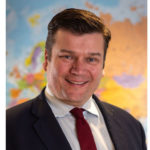
  • James Heappey – 2022 Comments on Death of Navin Thapa Magar

    James Heappey – 2022 Comments on Death of Navin Thapa Magar

    The comments made by James Heappey, the Defence Minister, on 14 September 2022. There is also a press release from the Ministry of Defence.

    It is with deep sadness that I heard of the death of Corporal Navin Thapa Magar of the First Battalion, The Royal Gurkha Rifles, in Brunei. It’s clear from his colleagues that he was a dedicated, professional soldier held in the highest regard and a shining example of what the British Armed Forces stand for. Our thoughts and prayers are with his family and loved ones at this terrible time.

  • James Heappey – 2022 Statement on Allegations Made Against British Special Forces in Afghanistan

    James Heappey – 2022 Statement on Allegations Made Against British Special Forces in Afghanistan

    The statement made by James Heappey, the Minister of State at the Ministry of Defence, in the House of Commons on 14 July 2022.

    On 12 July, the BBC broadcast an episode of “Panorama”, claiming evidence of criminality allegedly committed by the UK armed forces in Afghanistan. The Ministry of Defence is currently defending two judicial reviews relating to allegations of unlawful killings during operations in Afghanistan in 2011 and 2012. While I accept, Mr Speaker, that to allow today’s urgent question you have waived the convention that we do not discuss matters that are sub judice, advice from Ministry of Defence lawyers is that any discussion of specific detail of the cases would be prejudicial to the ongoing litigation, and thus I am afraid I simply cannot enter into detail about specific allegations made on specific operations relating to specific people.

    Mr Speaker

    I am slightly concerned. I did ask for the shadow Secretary of State, the right hon. Member for Wentworth and Dearne (John Healey), to be fully briefed by officials within the MOD, so that I would not have to be put in this position. Unfortunately, that has not been forthcoming, so I am very disappointed. I would have thought that a senior Minister, and certainly officials, would have gone through why they will not be discussing this. That did not happen, and I have been put in this position, so I am disappointed that the MOD did not take it seriously.

    James Heappey

    Let me apologise on behalf of the Department for the fact that you, Mr Speaker, and the right hon. Member for Wentworth and Dearne were put in that position. I was not aware of the request that you had made, but I assure you that, when I return to the Department, I will investigate fully why that was not responded to in the way that it should have been.

    We very much recognise the severity of these allegations, and where there is reason to believe that personnel may have fallen short of expectations, it is absolutely right that they be held to account. Nobody in our organisation, no matter how special, is above the law. The service police have already carried out extensive and independent investigations into allegations about the conduct of UK forces in Afghanistan, including allegations of ill-treatment and unlawful killing. No charges were brought under Operation Northmoor, which investigated historical allegations relating to incidents in Afghanistan between 2005 and 2013. The service police concluded there was insufficient evidence to refer any cases to the independent Service Prosecuting Authority. I stress that both these organisations have the full authority and independence to take investigative decisions outside of the MOD’s chain of command.

    A separate allegation from October 2012 was investigated by the Royal Military Police under Operation Cestro. It resulted in the referral of three soldiers to the Service Prosecuting Authority. In 2014, after careful consideration, the director of service prosecutions took the decision not to prosecute any of the three soldiers referred. It is my understanding that all the alleged criminal offences referred to in the “Panorama” programme have been fully investigated by the service police, but we remain fully committed to any further reviews or investigations when new evidence or reason to do so is presented.

    A decision to investigate allegations of criminality is for the service police. They provide an independent and impartial investigative capability, free from improper interference. Earlier this week, the Royal Military Police wrote to the production team of “Panorama” to request that any new evidence be provided to them. I am placing a copy of the RMP’s letter in the Library of the House. I understand that the BBC has responded to question the legal basis on which the RMP are requesting that new evidence, which makes little sense to me, but the RMP and the BBC are in discussions. As I have said, if any new evidence is presented to the Royal Military Police, it will be investigated.

    I am aware that the programme alleges the involvement of a unit for which it is MOD policy to neither confirm nor deny its involvement in any operational event. As such, I must refer in generality to the armed forces in response to the questions that I know colleagues will want to ask, and I cannot refer to any specific service personnel who may or may not have served in those units.

    We should continue to recognise that the overwhelming majority of our armed forces serve with courage and professionalism. We hold them to the highest standards. They are our nation’s bravest and best, and allegations such as these tarnish the reputation of our organisation. We all want to see allegations such as these investigated, so that the fine reputation of the British armed forces can be untarnished and remain as high as it should be.

  • James Heappey – 2022 Comments on Support for Lebanese Army

    James Heappey – 2022 Comments on Support for Lebanese Army

    The comments made by James Heappey, the Minister for the Armed Forces, on 6 July 2022.

    The UK and Lebanon are close friends and partners. I was proud to see first-hand the positive impact of the military cooperation between our two countries that has spanned more than a decade.

    In times of need, the UK stands shoulder-to-shoulder with Lebanon and our partners around the world to tackle shared challenges. In the current context, it is more important than ever that we continue to work together to combat threats to global peace and security.

    I have greatly enjoyed my first visit to this beautiful country and hope to return.

  • James Heappey – 2022 Speech on NATO and International Security

    James Heappey – 2022 Speech on NATO and International Security

    The speech made by James Heappey, the Minister for the Armed Forces, in the House of Commons on 19 May 2022.

    I thank all colleagues for their contributions to the debate. As ever over the past four or five months, it has been defined by gentle disagreement politely put by well-informed contributors to the debate around defence and security in the Euro-Atlantic.

    NATO is inescapably the foundation on which Euro-Atlantic security is based. It is, always was and has proven itself over the past three months still to be the most enormous deterrent, even against Putin at his most belligerent. Other multinational fora, many of which have been mentioned today—the UN, the European Union, the G7, the coalition of donors that sit outside NATO and the coalition of those who have imposed sanctions on Russia—have all been able confidently to make interventions to try to resolve the conflict, safe in the knowledge that NATO’s overwhelming firepower keeps the conflict contained within Ukraine. That has enabled many international fora to take measures to impose cost on Russia and try to persuade it to change course.

    Not only does NATO have an enormous technological and numerical advantage but, as my right hon. Friend the Member for New Forest East (Dr Lewis) and my hon. Friend the Member for Basildon and Billericay (Mr Baron) made clear, the nuclear deterrent is inescapably important to the deterrence that NATO provides. That is why the SNP’s positions on nuclear and on NATO are so contradictory. Scotland’s geography is the gatepost on the southern side of the Greenland-Iceland-UK gap. That is the most strategic gateway to the north Atlantic and is essential to all NATO’s plans. Right now, at the very tip of Scotland, some of the most advanced anti-submarine warfare capabilities are based at RAF Lossiemouth. They are there because one of Europe’s best-funded and biggest air forces is able to have those capabilities alongside the fast air that polices threats in the Norwegian and northern seas and beyond.

    Of course, Scotland hosts the nuclear deterrent on which so many countries around NATO depend, because it is the only nuclear deterrent that is assigned to NATO. It therefore seems to me more than a little contradictory that a party that wants to expel the UK’s nuclear deterrent from Scotland wants to apply to join an alliance that is ultimately underpinned by that very same deterrent.

    Stewart Malcolm McDonald

    I will be brief. After a vote for independence, who will the nuclear deterrent belong to?

    James Heappey

    I am trying hard to follow the question. The answer is either that it belongs to the United Kingdom and the Scottish Government would insist on its removal—

    Stewart Malcolm McDonald

    Yes—so it is not ours.

    James Heappey

    Yet the hon. Gentleman’s position and that of his party is that he would want to join an alliance whose deterrence is underpinned by that deterrent. It feels inconsistent. To NATO countries around the alliance, the idea that that pivotal geography on the southern end of the Greenland-Iceland-UK gap should wish to break away from one of the world’s biggest, best-resourced and best-trained armed forces seems like absolute nonsense.

    Mr Kevan Jones

    I agree. The argument is clear: NATO is a nuclear alliance. SNP Members always refer to other countries in NATO that do not have nuclear weapons, but those countries have a commitment not only to receive nuclear weapons but, in some cases, to have aircraft that deliver them. Would a future Scottish air force have to deliver the nuclear deterrent?

    James Heappey

    That is an interesting point. It seems to me that NATO is one of the most powerful arguments for the Union, because if one supports NATO, surely one continues to support the Union.

    Many colleagues have discussed the Madrid conference and shown particular interest in the strategic concept. Fundamentally, the strategic concept has three key elements for which we should be looking out and in which the UK has particular interests.

    The first key element of the strategic concept relates to the resilience of member states and the wider alliance, and to the interweaving of national security plans, reinforced by a wider NATO mass at appropriately high readiness, with robust enablers and industrial bases to get NATO into the fight and sustain it once it is there.

    The second element is adapting and modernising around advanced technologies. Inescapably, the battle space is changing. Everyone harks back to the armour-on-armour conflict of the past, and, of course, as we have seen in Ukraine, there is still a place for it, but, inescapably, there are technological advances that cannot be avoided and that the alliance must embrace. Missile technology is in the ascendancy. Cyber and space remain pivotal, even if their role in Ukraine has not been as great as we expected, and the alliance must embrace them.

    The third element is competing and integrating across domains using both military and non-military tools. Far too often in discussion, NATO is viewed through a military lens when the nature of competition is now more than just military mass on mass; it is the ability to bring to bear the full effects of the state, and all states within the alliance, to impose cost on the adversary.

    It is a selective retelling of history if the UK’s own increase in defence spending is ignored. I would argue that the UK led the way in encouraging people to increase defence spending in anticipation of the way the world was developing. Many countries have now followed, which is enormously welcome. That has changed the Euro-Atlantic security situation beyond recognition. In particular, Germany’s spending as a large continental power in the middle of Europe has massively changed things. It gives the UK and others a lot to reflect on around the capabilities that we should seek, given the mass that Germany and Poland will have in the centre of Europe.

    It is not just the cash spent on military mass that has changed; there has been a huge geo-strategic shift. As Members across the House have remarked, the fact that Finland and Sweden have abandoned decades of neutrality to join the alliance is a quite remarkable development—perhaps the most vivid example of just how badly Putin has miscalculated in his strategic aims for this conflict.

    I do not accept the Opposition’s charge that the integrated review has been overtaken by events. The IR was fundamentally about a return to systemic competition. I have an awful lot of time for the shadow Secretary of State, as he knows, but when he said that there was a section on the Indo-Pacific but not on Russia, I had a quick flick through the IR and the defence Command Papers since the IR. I found that almost every paragraph mentions NATO, Russia or the Euro-Atlantic. The one part that does not is the section on the Indo-Pacific to which he refers.

    In any case, the argument that the UK can focus only on the Euro-Atlantic is just not sound. The reality—this feels rather like watching my son’s football team play the Cheddar under-10s, where they all run around following the ball—is that there is lots to distract us in Europe right now, but there is a world beyond that is increasingly unstable and insecure. It is struggling with high food and fuel prices, which brings instability, as we saw in the Arab spring. The UK needs to keep an eye on that beyond Europe and remain engaged with it, because Iran, China, Russia and violent extremist organisations are all looking to use the west being distracted as an opportunity to stake their claim.

    Mr Baron

    Will my hon. Friend give way?

    James Heappey

    If my hon. Friend does not mind, I will push on because I have only a minute and a half to go.

    I pay tribute to our armed forces deployed right now across the entire eastern flank of NATO, in Finland, Estonia, Latvia, Lithuania, Poland, Slovakia, Romania and Bulgaria, in the sea as well as in the air. Thousands of them are deployed, and they are enjoying their service alongside their NATO allies. They are coming to understand exactly what it is to be a part of NATO, believing in the collective defence of countries on the other side of Europe and being willing to give their lives in their defence, as the NATO treaty requires.

    We will continue lethal aid to Ukraine for as long as it is required. We are sending in a great deal of our own stuff, but we are also bringing influence to bear to encourage others around the world to send theirs. Then there is the race for Ukraine to rearm more quickly than a sanction-ridden Russia. We are working hard with the Ukrainians to understand what their requirements will be, work out how to get them the platforms and deliver the training that they will need to operate them. Of course, colleagues in the rest of Government are working to rebuild Ukraine when the conflict finishes. We must not get carried away by any of the successes for Ukraine in recent weeks. A great deal of hard fighting remains. There is no celebration when Russia fails, but Russia is failing far too often. We will continue to do everything we can to support Ukraine. NATO will continue to reinforce its eastern flank to reassure our allies there, and the UK will continue to do all we can to ensure that Putin fails.

  • James Heappey – 2015 Maiden Speech in the House of Commons

    James Heappey – 2015 Maiden Speech in the House of Commons

    The maiden speech made by James Heappey, the Conservative MP for Wells, in the House of Commons on 1 June 2015.

    I am grateful for the opportunity to speak in this House for the first time. The world around us is changing quickly; new threats emerge as readily as new opportunities. Therefore, for the sake of our security, our standing in the world and the good of our economy, it is important that we seek to shape the world around us, rather than waiting to be shaped by it. We must be proud of, and seek to maintain, the fact that Britain is a global power. That is about not only our ability to project military power across the globe, but the role we play in the UN, NATO, the Commonwealth and the EU. It is about maintaining our place as a global centre for business and trade. It is about recognising that British culture and values reach far further and carry more influence than even the largest military ever could.

    Before entering politics I served our country in the Army, first in the Royal Gloucestershire, Berkshire and Wiltshire Regiment, and then in The Rifles. In that time I had the great privilege of serving alongside men and women from all parts of this United Kingdom, and indeed the Commonwealth, both here in the UK and overseas in Basra, Kabul and Sangin. Those who serve our country in the Royal Navy, Army and Air Force accept an unlimited liability. If the Government and this House ask them to deploy, they will. On land, at sea and in the air, we can have confidence that our forces will punch well above their weight, because I have seen at first hand just how courageous, determined and selfless our soldiers, sailors and airmen are.

    However, we owe those men and women the certainty that we will always support them and their families, both at home and overseas. Since the last strategic defence and security review, the threats facing our country have become much more complex. If Britain is to meet those threats, we must be clear in our intent to fund defence properly. We simply cannot ask our forces, regular and reserve, to meet all those threats without resourcing them to do so. Therefore, as we progress towards the SDSR, we must understand that any further cuts in defence must mean a cut to our strategic ambition as a nation. I hope that neither is needed.

    As this is my first time speaking in the House, I would like to pay tribute to my predecessor, Tessa Munt. Ms Munt was a committed supporter of our community in Somerset. Over a long and difficult campaign in a marginal seat there has been much on which we have disagreed, but it is important to note at this first opportunity the hard work of Tessa Munt and her dedicated staff.

    It is an incredible honour to stand here as the Member of Parliament for Wells, and I would like to thank my constituents for sending me here to speak on their behalf. Mine is a constituency that contributes greatly to Britain’s standing in the world. The city of Wells is England’s smallest city, but with the most complete ecclesiastical estate in Europe it is a major tourist attraction and the backdrop to many television programmes and films. In Street is the global headquarters of Clarks Shoes, a brand recognised around the globe and enjoying growth in new markets, while in Chilcompton is the fashion icon Mulberry. Shepton Mallet is the capital of cider production in this country. Only this weekend, the Royal Bath and West show hosted, once again, the largest cider competition on the planet. In Highbridge, Burnham-on-Sea, Berrow and Brean, we welcome well over 1 million tourists a year who come to stay on the magnificent Somerset coast and to journey inland to the Mendips area of outstanding natural beauty. Our local farmers produce the best milk money can buy; we just need to make sure that they are paid what it is worth. Glastonbury hosts the best music festival on earth. Cheddar is famed for its gorge and for lending its name to the world’s most popular cheese.

    I am so proud to represent such a beautiful and varied part of the world, but while there is much to celebrate, so is there much to do. The Prime Minister has called Her Majesty’s speech a one-nation programme that will benefit all in our country. I am delighted about that, because for too long rural areas have not received the same investment as our large towns and cities. Our market towns and villages struggle with poor road connections, very limited access to the rail network, weak phone signals, and achingly slow broadband. To unlock the incredible potential for economic growth in rural communities, we must improve that infrastructure. The investment by this Government in broadband has already brought formidable results. Village by village, fibre-optic connections are being made and life is speeding up. However, the final 5% of the superfast broadband roll-out is disproportionately concentrated in constituencies like mine, and so I urge the Government to push on with that final phase as soon as possible. Within that final few per cent. will be some of Britain’s most isolated communities; we simply cannot leave them behind.

  • James Heappey – 2022 Speech at the Sir Henry Leach Memorial Lecture

    James Heappey – 2022 Speech at the Sir Henry Leach Memorial Lecture

    The speech made by James Heappey, the Minister for the Armed Forces, in London on 5 May 2022.

    Ladies and gentlemen, thank you very much indeed for inviting me to come and speak today. I know that there was at least one other who would have been invited in front of me and he sends his apologies, but that is the role of the deputy and I am grateful for the opportunity nonetheless, to come and enthuse about all that a retired soldier has learned about the importance of maritime power projection in my time as the Minister for the Armed Forces. And to be invited to do so as the Sir Henry Leach lecture is a real honour and particularly to have Sir Henry’s daughter and family in the room.

    It would be remiss I think, not to reflect on the fact that this is the 40th anniversary of the Falklands conflict. Sir Henry made his name both as a maritime commander during the Cold War, but also in the advice that he gave around to the use of maritime power in the Falklands. This is a good moment I think to reflect to the Falklands generation of veterans, that, although the news agenda is elsewhere, right now and I think we would probably have all thought when we were looking at the news grids back in and sort of October, November last year that the commemoration of the 40th anniversary of the Falklands would be very high profile and it’s not. And I don’t want anybody in the wider Royal Navy community to think that that is because our thoughts are not with those who, those eighty-five Royal Navy personnel, twenty-six Royal Marines and eighty Royal Fleet Auxiliary personnel who gave their lives in that conflict. It is an act of great sacrifice. And I think that where there is the parallel is that 40 years ago, the British public knew that the right thing to do was to sail an awfully long way to stand up for the rights and the freedom of Falkland Islanders, and to accept all of the risks that that brought with it. And what we’ve seen over the last three months is the British public are every bit as resolved to do the right thing, no matter what the risks may be to the United Kingdom. And so whilst the conversation is dominated by Ukraine, I just wanted to open this lecture by making sure that everybody in the Royal Navy community, in the Royal Marines community, knows that absolutely nobody in Her Majesty’s Government has forgotten that this is a very important anniversary and that our thoughts and admiration are with all who fought so valiantly on the sea and from the sea, in that conflict.

    Now, the other thing that I think Sir Henry would appreciate about the world in which we live today is that we have returned to a period of systemic competition. Now the IR foresaw that and the IR started to re-gear the British Armed Forces to be a set of armed forces that could persistently be present in parts of the world where we are challenged and to compete, but when it was in the IR, it was just words, it was just policy. What’s happened over the last year and particularly in the last three months, has brought that into very sharp focus. But I think what’s interesting is when you stop and think about it, in the maritime domain, everything has changed but yet nothing has changed. The UK’s geography hasn’t changed. We still sit, from the Russian perspective, at the left hand gate post of their routes into the North Atlantic. The Greenland, Iceland, UK gap hasn’t changed in its strategic importance. It is still hugely important that you have the ability to protect your fisheries and your oil and gas assets at sea, both in home waters and in the waters of overseas territories, in the waters of allies and partners. And of course, it’s hugely important that you can protect to defend your trade routes. Although a big difference since the end of the Cold War, is that the offshoring of manufacturing and the globalisation of supply chains has meant that those sea lines of communication are now even more important to Western economies than they were 30 or 40 years or so ago. So no change in that sense. Geography hasn’t changed, the resources of the ocean and of our seas and our requirements protect them hasn’t changed, and sea lines of communication for the purposes of trade, no change. But what has changed is the existence of undersea infrastructure and the threat that can be posed against that, that is material to our national security and the existence of our liberalised global economy. 97 per cent and rising of global data travels and cables under the seas and trade worth $10 trillion per day.

    So too, is there a renewed challenge to the rules based international system and with that, the governance and protection of rights on the global commons. And that is not just about how we do our business on the high seas but so too, and this was put into a very sharp focus when I was in the office of Commander of the 5th Fleet in Bahrain, where he was showing me the three pinch points in his patch – the Suez, the Bab-el-Mandeb and the Straits of Hormuz. And you realise that it doesn’t take much in the way of maritime power or even indeed in the Navy, missile power, in order to hold at risk and entire global order at certain points of geography around the world.

    The other thing that has really changed is the geopolitics of some of the key seas in our near abroad. During the Cold War, the Black Sea had just Turkey as a NATO member, and then Bulgaria, Romania, Ukraine, Russia, Georgia, as part of the Warsaw Pact, or the Soviet Union. Now it’s the complete inverse. Romania, Bulgaria have joined Turkey. Georgia is a NATO aspirant, Ukraine remains we think a NATO aspirant, we’ll see how that shifts. Also, Russia stands alone in the Black Sea, where previously it was the opposite way around for NATO. Exactly the same, I think that the geopolitics of the Baltic. In the Cold War, the Baltic was West Germany, Denmark and Norway, in NATO. Sweden and Finland, non-ally, but then the Soviet Union in St. Petersburg, and in Kaliningrad, and then Estonia, Latvia, Lithuania, Poland and East Germany, around the rest of the coast. Completely inverted if, as looks likely, Finland and Sweden decide to make a bid to join NATO. All of a sudden in the Baltic, St Petersburg’s and Kaliningrad stand alone around a coastline that would otherwise be NATO. That’s a massive geopolitical shift in two really important European seas. Then there is the change of climate and with that the opening up of a sea route in the high north, and how we will stand up for a rules based international system and freedom of navigation rights, between east and west, across Russia’s northern coast. So our interest in the maritime remains enormous, self-evidently so and as an island nation with global ambition, how could it be anything but. But our competition in our near abroad through NATO, in reacting to changing geopolitics and changing security situation in the Euro-Atlantic is a great challenge for the Navy, for the Fleet Commander and Charlie Stickland, Chief of Joint Operations, is here as well. How does NATO reassure its allies in seas that are now predominantly NATO coastlines, but where a belligerent Russia will seek to challenge. That requires naval resource, that requires a presence. That’s a resource and a presence that can be internationalised, but it requires a clear commitment from us to be there, and to stand up for the rights of our NATO partners in those seas.

    So too, however, must we not be fixed, I liken it to watching my son play under-tens football, where the style is very much to chase the ball. All 20 players on the pitch are within about 10 yards ball at any one time. And there’s a danger that just as last year, on the eve of HMS Queen Elizabeth and her Strike Group sailing, all of the conversation was about the Indo Pacific tilt and the opportunities there, there’s a danger that this year, we focus exclusively on sub hunting in the North Atlantic, standing up for our neighbour, for our allies and partners in the Baltic and the Black Sea, competing in the Mediterranean and then everything reverts to being about the Euro-Atlantic. But that would be a massive mistake because we have an obligation as a global trading nation and just because of the nature of modern competition between states, to also compete for influence, prosperity and to protect our friendships in sub-Saharan Africa, the Middle East, the Caribbean, South- East Asia, South Pacific and the Caribbean.

    And it was fortuitous that she was in the right place at the right time but in the South Pacific, take that as an example, about as far away from the UK as you could get but where the UK through the Commonwealth has partnerships and friendships that have lasted decades, but that we have been failing to meaningfully service for decades as well. In fact, we’ve be relying, I would argue, entirely on the Australians and New Zealanders to carry on flying the flag for the Commonwealth with countries in the South Pacific. Well, how fantastic that literally months after the offshore patrol vessels arrive in the Indo Pacific we have exactly the sorts of moments where the danger was that China would be the first to arrive in Tonga with aid and China becomes the person who helped Tonga in their hour of need. But instead, a Royal Navy offshore patrol vessel was two days sail away because she was forward present, ready to react whatever the situation was. And she was there alongside the Australians and New Zealanders reacting to that moment. I thought that was the most brilliant vindication of why we do forward presence, why we need to operate, why we need to be constantly recognising that we are in a competition, and that point of competition changes all the time from the humanitarian, to the opportunity to develop capability together and to share aligned inventories and ways of operating all the way through to the more hard edged competition that is the business of naval power.

    I think the case for naval power is clear, obviously, I’ve eulogised already about the threats from the sea and our opportunities around the world. But the challenge is what sort and how much of it. Now I was warned passionately, strongly, by every sailor I’ve spoken to – do not read anything into the Moskva because they will start telling you about the position that the radars were in at the time that it was hit and that therefore, crew error, so I won’t. I also phoned up Ben yesterday morning and alongside that warning, I said yeah, but why is everything constantly bigger? Why is a destroyer now the size of a cruiser and why is a frigate now the size a of destroyer? Why is the answer to everything in the naval world, what you need minister is bigger and more expensive. There followed naval architecture 101 around height of mast, beam and therefore length and tonnage. So I sort of get that these things are more complicated than a simple former soldier might have initially thought. But I do think there are some realities that we would be failing ourselves if we weren’t to challenge ourselves over. Missile technology, on land and at sea, appears to be a ascendant. Industrial base, particularly in the UK, but actually you could argue across the West compared to China, particularly, our industrial base is limited. And supply chains are increasingly challenging and raw materials increasingly expensive. So in those circumstances, surely there is a conversation to be had about a more disruptive approach to maritime power projection. Is the answer really ever bigger ships, ever bigger submarines? Now for what it’s worth, this isn’t me saying that we’ve made mistakes or the things we’re buying are not right. I think the UK’s current fleet and our planned acquisitions over the next decade or two are right. I think that the Carrier Strike Group deployment was a huge success and proof that projection of air power from the maritime remains a hugely persuasive hard tool power that can be projected anywhere in the world. And when you get to that amazing elysian field of interoperability with your key allies as we proved in the Mediterranean and in the Philippine Sea, then it can be a really, really persuasive reminder of those who seek to challenge the rules based international system, just how much power can be brought quickly to bear against them on a sovereign piece of territory that can self-propel anywhere in the world.

    But I’m interested in how we put alongside that Carrier Strike Group vision, and these amazing destroyers and frigates that we will buy over the next decades, a dispensable, dispersible, autonomous capability that makes the challenge for our adversaries was even harder, that poses them with real dilemmas. I also want to see the Royal Navy lead the way in lethality. I thought that Andrew’s predecessor Jerry Kyd, in his haul-down letter, wrote some really persuasive things about the importance of the lethality. And I think it is quite interesting when the US and the UK send ships into the Barents Sea it is the American DDGs that attract attention because of their lethality and their ability to project power from the maritime to the land domain. Our frigates clearly have an important role in protecting those destroyers so our presence was very necessary. But prickly, more lethal naval platforms that pose adversaries challenge at sea and from the sea to land, I think are conversations that we need be having ourselves and challenging ourselves to get right. I also think that we need to rediscover and all these people with beards who spend their life beneath the ocean or deep in bunkers at Northwood are effusive about this, but we’ve got to listen to them, that the submarine domain is less well understood than space. And we have to invest in the advantage that you can find beneath the oceans because I continue to believe that it is a place from which you can do all manner of stuff in a way that your adversaries don’t get a say in what so ever.

    But it’s how we operate too. And I think that our competition for relationships, for inventory with partners around the Gulf of Guinea, along the East African coast in the Caribbean, in the Arabian Gulf and in the South Pacific are opportunities to compete to maintain the UK sphere of influence and to push back against the growing Chinese influence, particularly in many parts of the world, but actually Russia is active in many parts of the world too with similar ambitions. And that doesn’t mean that we are there as a guarantor of their security. It is that we engage them as partners, as equals without creating debt dependency, without demanding basing rights in return. The deal that we do is that we have a set of values that we espouse, and we have a willingness to have a relationship as equals, that in my experience, when I have seen Royal Navy training teams around the world doing this with our partners in the Commonwealth and beyond, our people just instinctively get it and when they do, it is brilliant. It is powerful. It is wonderful. And it stands in stark contrast to the way that the Chinese do their business with chequebook and stick.

    And we mustn’t be dismissive. There’s a tendency because we did the Carrier Strike Group and it went so well with the Charles de Gaulle and with the Reagan to say that’s how we operate, a carrier Navy and that’s what matters. Of course we are. But there are a network of patrol boat navies with security challenges in the maritime domain of their own in seas around the world where the white ensign has a place and where British naval expertise is a currency that is hugely admired and where there’s an appetite to partner. So I’m every bit as excited about HMS Queen Elizabeth and Prince of Wales as I am HMS Spey, Tamar, Medway, Forth and Trent. And there will be a moment where those switch to be the Type 31s, but I hope that they don’t switch completely because in some parts of the world Type 31 is too big. It’s over roaring. When you turn up, you’re not being a partner, you’re being the boss. And so I hope that the Navy strikes a balance between putting Type 31 out in replacement to the batch two OPVs but also in addition to the batch two OPV. So the right platform with the right profile is in the right place, flying the flag for the UK. And for what it’s worth since the Secretary of State wasn’t available and the speech is mine, the thing that I really interested in is for those patrol boat navies, given the role that we have that is non-discretionary in home waters, how do we, the Royal Navy here in the UK, use a set of smaller simply maintained, highly exportable patrol vessels in our home waters that then have the RN seal of approval for which the export market – and the Secretary of State for International Trade nods enthusiastically – there are dozens of navies in the market to buy that sort of platform. And it would be great if we could operate it in home waters too. As the First Sea Lord said yesterday, all great minister, but it’s going to cost you but it’s a conversation to have.

    Ladies and gentlemen, over the last 18 months or so I had the huge pleasure of seeing the Royal Navy deployed on its Littoral Response Group experimentation deployment into the Mediterranean. I have had the pleasure of sitting in the ops room of a Type 45 destroyer where they have shown me the air picture that they saw as they sailed across the bottom of Crimea. I have stood on offshore patrol vessels in Curaçao, Cartagena and Dhaka. I have stood on minesweepers in Bahrain, I have been on a submarine on the first day of fresh air after its deployment with our continuous at sea deterrent. I’ve been in bunkers being briefed on the incredible spooky stuff that our SSNs is do day in day out. I have been briefed by frigate and destroyer crews that have been in the high north, the Black Sea, the Baltic and the North Atlantic. The Royal Navy is operating the world over with huge success. It is magnificent, it is ready to fight. The maritime contribution to our national security right now is inescapably important and I am so proud of the work that our men and women who wear dark blue at work are doing. I want them to be busier yet. I want them to continue to be Europe’s foremost Navy with a war-fighting capability that makes our adversaries take note. But so too, do I want to see the white ensign flying in all corners of the world as partners to nations big and small, reminding them that in the UK they have a real friend and from the sea we do things best, thank you.

  • James Heappey – 2022 Statement on Small Boats Migration

    James Heappey – 2022 Statement on Small Boats Migration

    The statement made by James Heappey, the Minister for the Armed Forces, in the House of Commons on 19 April 2022.

    The Prime Minister announced on 14 April 2022 that the Ministry of Defence has commenced primacy for this Government’s operational response to small boat migration in the English channel. This follows months of close collaboration between Departments and partners to establish operational plans and detailed working arrangements. The details for Operation ISOTROPE—including responsibilities, governance and financial arrangements—have been agreed with the Home Office and will operate until 31 January 2023. This surge in Defence support will assist the Border Force in optimising existing processes, assets and expertise to bring small boat numbers under manageable levels, enabling continued public confidence in this Government’s response during a particularly challenging period.

    Operation ISOTROPE will respond to the circumstances of attempted migrant flows in the months ahead. Initially, the Government have provided Defence with an additional £50 million of funding which will be used to enhance a number of surface and surveillance capabilities and optimise existing process and infrastructure. This will enable the MOD to monitor and manage migrants attempting this perilous journey and, alongside the Border Force, ensure that those arriving on UK shores do so safely and can then be passed promptly into the Home Office immigration system for appropriate processing. Overall responsibility for managing borders and immigration is not impacted by this announcement and remains with the Home Office.

  • James Heappey – 2022 Speech on Support for Ukraine

    James Heappey – 2022 Speech on Support for Ukraine

    The speech made by James Heappey, the Minister for the Armed Forces, in the House of Commons on 2 March 2022.

    The House stands united today in our support for Ukraine and the Ukrainian people. We showed that in the way we rose to support the Ukrainian ambassador before Prime Minister’s questions, and, for all the necessary challenge over policy that goes on in this place, we will show it again this afternoon, because fundamentally we in this House are agreed that President Putin’s ill-conceived enterprise in Ukraine must not and will not succeed.

    But how we achieve that is not just through the sanctions we impose, the military aid we provide or the breadth of the cultural and diplomatic isolation we secure, as important as all those things are; it is through the beacon of hope we provide, and not only for the Ukrainian people but for the Russian people too. How they would love to have a day where the opposition choose the topics for debate, immediately after a session in which the legislature, without fear, can challenge the Head of Government. Indeed—perhaps no Government Minister has ever said this from the Dispatch Box before—how lucky we are to have an Opposition altogether.

    We have grown complacent over that freedom. We do not value it as we should. It is no cliché to remind the House that freedom is not free and that no matter how much we complain about the imperfections of our own politics, people have fought and died so that we can argue in this place and in our national media over whatever we wish. Today in Ukraine, people are fearful that those days may soon be over for them. They know only too well that freedom is not free. In the lifetime of their most senior citizens, they have lost their freedom and recovered it twice already. It is no wonder that so many thousands of Ukrainian men and women are rallying to the flag to ensure they do not lose it again.

    Mr Kevan Jones (North Durham) (Lab)

    I put on record my thanks to the Defence Secretary and the Minister for their actions over the past few weeks. They have shown proper leadership on this. Will the Minister support comments from Gerry Connolly, who is the president of the NATO Parliamentary Assembly? He is arguing within NATO for a centre for democracy, to make exactly the arguments that the Minister is making, to reinforce among our populations why we have NATO and what it is defending.

    James Heappey

    I think I instinctively support the proposition. It is extraordinary—forgive me, Madam Deputy Speaker; I know you were keen on brevity, but this is a tangent too interesting to miss, frankly—but when we came together after the second world war to bring NATO into being, it went without saying that the freedom, liberty and democracy we all enjoy was something we should collectively stand for, but in the 70 years or so that have passed since, we have forgotten what a luxury that is. We have forgotten how to speak proudly about freedom without being criticised as somehow trying to shut down the other side. There absolutely is a market for the west to relearn that we can disagree with each other ferociously and we can have polarised societies in which one side simply cannot abide the very existence of the argument of the other, yet we can still see the good in that and communicate it strongly to those who do not have that luxury.

    In this debate today, we must also be clear on who our quarrel is with. When we talk of aggression, deceit and contempt for the international system, we must not talk about “Russia”; we must talk of Putin and the kleptocrats that surround him. When we talk of who must pay the price for this grotesque violation of international law, we must blame Putin, the Russian elites and the hubris of the Kremlin’s military leaders, but again, not the Russian people.

    We want the Russian people to enjoy the freedom, democracy and security that we have been taking for granted. We want them to know that NATO and the west mean them no harm. We are a defensive alliance, and we were recasting ourselves for an altogether different future until President Putin annexed Crimea and challenged the sovereignty of so many other countries in eastern Europe and the Caucasus. When President Putin fails—and he eventually will—we look forward to a Euro-Atlantic where Russia and the rest of Europe exist as friends and neighbours. In the meantime, we stand our ground not to intimidate the Russian people, but to deter their President, who is a bully and has caused too many in our alliance to think that they could be next.

    I would like to provide the House with a brief update on the situation in Ukraine. Russian forces have met strong resistance and are behind schedule on their intended plans. We recognise, unfortunately, that the cities of Melitopol and Kherson in the south of the country have fallen, but that brave resistance remains in both. Colleagues, those were both day one objectives for the Russian armed forces, and both only fell in recent days after fierce opposition. Everywhere else in the country, no other city or major town has fallen to the advancing invaders. As much as that should be a cause for celebration and hope, it is important we remain realistic about what is still to come. The harder the Ukrainians fight back, the harder Putin will order his military to push. Already, we have seen a horrific artillery and missile barrage on Kharkiv among other places. I am fearful for what is to come in Kyiv. As the Prime Minister has said today, and as the right hon. Member for Wentworth and Dearne (John Healey) rightly noted, there is already clear evidence that in applying indiscriminate force in the way that he has, President Putin and his military leadership have already committed war crimes.

    Margaret Greenwood (Wirral West) (Lab)

    I thank the Minister for the update. It is an absolutely tragic situation and we all stand in support of people in Ukraine. More than half a million residents have already left the country in a short time, and the UN estimates that the number could go up to 4 million, which would create the largest refugee crisis that Europe has witnessed in decades. Will the Government offer the UK as a place of sanctuary for people regardless of whether they have family here?

    James Heappey

    If the hon. Lady will allow me, I will come to the humanitarian aspect towards the end of my remarks.

    Many hon. Members and our friends in the media have been increasingly concerned about the advancing column to the north of Kyiv. They are right to be—it is an enormous concentration of military firepower and it contains the stores needed for a battle in the capital. Let us be clear, however: no Russian military planner wanted to see that column move at such a glacial pace.

    There have been cries for the column to be disrupted or destroyed, which is not something that NATO could ever do without entering the conflict, but the reason it is inching forwards so slowly is that it is being held up by blown bridges, obstacles, artillery fire and fierce attacks from the Ukrainians. That column may yet reach Kyiv—it will reach Kyiv—but it will be vastly depleted when it does and we have already given the Ukrainians the tools with which to attrit it further.

    The real scandal is not that the column exists—we have known all along that Russia would need to encircle and take Kyiv—but for the Russian people. How on earth could their military leaders think that such a large concentration of military hardware on a single road, backed up in a traffic jam for tens of miles, could lead to anything other than an awful loss of Russian life? Like so many of President Putin’s plans, I am afraid that there is hubris, tactical naivety and a total disregard for the brave young Russian soldiers who he has sent into battle. We should take no satisfaction in their slaughter. The Ukrainians are doing what they must to defend their country and its capital city, but there will be an awful number of casualties because of such dire Russian military planning.

    The UK stands with Ukraine in providing further defensive military, humanitarian and other assistance to the country. As I have told the House already, we have trained 22,000 members of the Ukrainian armed forces under Operation Orbital since 2015 and we were among the first European nations to send defensive weapons to the country with an initial tranche of 2,000 anti-tank defensive missiles.

    It is an odd feeling, because those missiles are deadly weapons and I am afraid that, every time they succeed, they take young lives. We should reflect, however, that the UK has sent forward a weapon that has become almost a symbol of the defiance of the Ukrainian armed forces, so as brutal as the effect of that weapons system is, it is something for which the Ukrainian people will regard us favourably and be grateful for a very long time.

    In the next hours and days, we will provide a further package of military support to Ukraine, including lethal aid in the form of defensive weapons and non-lethal aid such as body armour, medical supplies and other key equipment as requested by the Ukrainian Government. It is not possible to share with the House more of the detail at this sensitive point in operations, but we will do our best to share it with hon. Members after the event as much as we can.

    Meanwhile, in response to the growing humanitarian crisis, we are putting more than 1,000 more British troops at readiness, some of whom have started to flow forwards into neighbouring countries. That complements the hundreds of millions of pounds already committed to building Ukrainian resilience and providing vital medical supplies. Last Friday night, the Defence Secretary organised a virtual donor conference on military aid for Ukraine, during which all 27 nations present agreed to provide the country with much-needed lethal aid and medical supplies.

    In the midst of this catastrophe, it is important to recognise the importance of the unity that the international community has shown against Russian state aggression. The United Nations General Assembly has been holding an emergency special session, just the 11th in its history, with nation after nation speaking up in condemnation of President Putin and in favour of peace.

    We have also seen an extraordinary change in the defence posture of several nations. Germany has increased its defence spending to more than 2% per cent of its GDP, and changed a decades-long policy of not providing lethal aid. Sweden and Finland—nations proud of their respective neutrality and non-alignment—have agreed to donate arms to Ukraine. Even Switzerland has been party to sanctions against Russia. This is a seismic shift in the Euro-Atlantic security situation. If Putin hoped for fracture, he has achieved consensus. Countries such as South Korea and Singapore have also in recent days unveiled sanctions on Russia, despite south-east Asia having largely avoided taking sides in the previous conflicts.

    Yesterday, new financial legislation was laid in the House that will prevent the Russian state from raising debt in the UK and that will isolate all Russian companies, of which there are over 3 million, from accessing UK capital markets. Alongside the measures taken by other nations, these crippling economic sanctions are already having an effect. Russia’s central bank has more than doubled its key interest rate to 20%, while Moscow’s stock market remains closed for the third consecutive day in a bid to avoid major slumps. Ultimately, it will not be Putin who pays the price of the economic constrictions, but the Russian people, with soldiers dying, inflation rising and the country cut off from the outside world. As I said at the start of my remarks, we need to show the Russian people some hope for the way that things could be when President Putin eventually fails, as he surely will.

    Dr Murrison

    I am following the Minister’s remarks with a great deal of interest. In his very fine speech, the right hon. Member for Wentworth and Dearne (John Healey), who spoke for the Opposition, mentioned China in his sixth point. I hope my hon. Friend will do so also, because there is one country that could turn this off tomorrow if it wished to, and that is China. What position have the UK Government taken on China? Although my enemy’s enemy is my friend, will he be wary and cautious about his dealings with China, given that China of course continues to commit human rights abuses in Xinjiang, potentially in Taiwan and in Hong Kong? While it is commendable that it abstained at the United Nations, we need to be very careful about how we position ourselves with respect to China in the weeks and months ahead.

    James Heappey

    My right hon. Friend is absolutely right, and I have no doubt that my right hon. Friend the Minister for Asia and the Middle East will want to talk about China in her concluding remarks. Right now there is an opportunity to work with Beijing to bring about an outcome that is right for Euro-Atlantic security in the short term, but I do not think that that automatically means we close our eyes to our wider concerns about China and our competition with that country over the decades ahead.

    Finally, I want to update the House on NATO defence and security activities. In addition to HMS Trent, HMS Diamond has now sailed for the eastern Mediterranean. We are doubling the number of UK troops in Estonia, with the Royal Tank Regiment and the Royal Welsh battlegroups now complete in Tapa. We have increased our fast air presence from RAF Akrotiri in Cyprus, from where those jets are now engaged in NATO air policing activity over Poland and Romania.

    In his excellent speech, the right hon. Member for Wentworth and Dearne asked two questions of the MOD about capability. The first was on cyber-resilience, and he will not be surprised to know, I hope, that there has been a series of Cobra meetings on homeland resilience and that the cyber-threat to the homeland has been an important part of those discussions. It is a capability that the UK has invested in through the National Cyber Security Centre. I would never go so far as to say we are well prepared because, frankly, we cannot know fully what is thrown at us, but the right discussions have been had and the right investments have been made, and I think what we have as a defensive cyber-capability is one of the best in the world.

    The right hon. Gentleman also asked me a question about the shape and size of the Army, and he knows from his many clashes over the Dispatch Boxes with my right hon. Friend the Secretary of State that it is subject to some debate, but the Secretary of State, to his credit, has always said he is a threat-based policy maker. It may well be that we learn something new from what is going on in Ukraine at the moment, but my reflections in the immediate term, from the operational analysis I am seeing, is that precision deep fires and armed drones are doing exactly what we saw in Nagorno-Karabakh and Syria, on which we based the integrated review. For those in massed armour in a modern battlespace, that is a pretty dangerous and difficult place to be. We may yet see something different when we get into the close fight that will cause us to reconsider. Right now, however, the lessons we are learning from what is going on are exactly the same as those from Nagorno-Karabakh and northern Syria, and the IR was based on that operational analysis, with the Army rightly observing what it would call a deprioritisation of the close fight.

    Chi Onwurah

    I thank the Minister for giving way and for his update. He is right to emphasise the unanimity of the international consensus on the invasion of Ukraine and on sanctions. He may be aware of reports that Russian oil producers are not able to find purchasers for some of their oil production; however, there are purchasers and movements of oil shipments in the gulf of Finland. What is our position and the international position on Russian oil shipments and starving Russia of the foreign currency that delivers?

    James Heappey

    I do not feel entirely qualified to answer in the detail I would want, but my analysis of the geostrategic situation in eastern and southern Europe is that we certainly need to have our eyes wide open to who else beyond the obvious western European countries are customers for Russian oil and gas. We need to be having a discussion within the international community about how some very vulnerable countries, perversely including Ukraine, but also Serbia and others in the Balkans, are still drawing on Russian gas, and how we get them off that without causing a situation that completely cripples their economies. But I am somewhat out of lane and dare say the Secretary of State for Business, Energy and Industrial Strategy would be concerned to have heard me offer even those thoughts.

    Chris Bryant

    Will the Minister deal with something else?

    James Heappey

    I will try.

    Chris Bryant

    If I may take the Minister down another lane, I think Ministers accept that everybody in the House wants the Government to be able to move as fast as possible on sanctions. I just note for instance that Abramovich is now trying to sell his football club, and clearly lots of oligarchs are rapidly divesting themselves of things, including through auction houses, and I hope that Sotheby’s, Christie’s and others are taking action on that today. Can the Minister update the House on the measures the Government will take—perhaps this will be done later by the Minister winding up the debate—to speed up those sanctions? We are a long way short of what the US and the European Union have done; there may be legitimate reasons for that, but we do worry about it.

    James Heappey

    I do my best to inform myself as widely as I can. I suspect the Minister for Asia and the Middle East will be able to give a fuller reply to the hon. Gentleman later. I think there is a requirement to launch the widest and quickest set of sanctions we can in a way that is legally acceptable, but neither should we diminish the effect of the sanctions that have already been put in place thus far. I share the hon. Gentleman’s sentiment that we could and should do more, but let us not forget just how punitive what has been done is and the effect it is having.

    I want to finish by talking about the humanitarian situation, which I am afraid risks becoming a catastrophe. Ukraine will keep fighting; so it should. Russia must stop. Europe—the world—must be ready to support that situation as it evolves because the fighting is going to get worse. We should explore, and we are exploring, what humanitarian corridors could look like, but they will not be easy and will need the support of both sides.

    Colum Eastwood (Foyle) (SDLP)

    The Minister is making an impassioned speech. The scenes in Ukraine are heartbreaking and it is my strong view that we should do everything we can to allow refugees to come here. The Prime Minister said in today’s Prime Minister’s questions that European Union countries were able to move more quickly and waive visa requirements because they were part of Schengen, but that is simply not the case. The Irish Government and Ireland are not part of Schengen—as we should all know by now after the long discussions around Brexit, they are part of the common travel area—but Ireland was able to do it; why are this Government not waiving visa requirements for refugees fleeing Ukraine?

    James Heappey

    Again, the right of family members to come here has already been offered, and it is for 100,000 people, as I understand it, which is extraordinarily generous. I understand the hon. Gentleman’s point and his concern, and I know that many hon. Members see this as an increasingly totemic issue.

    Mr Alistair Carmichael (Orkney and Shetland) (LD) rose—

    James Heappey

    I will take the right hon. Gentleman’s point, but I do want to conclude.

    Mr Carmichael

    I am grateful to the Minister for giving way, but is this not a moment to reflect that if the Nationality and Borders Bill, which is currently in the other place, were to pass with clause 11 as part of it, any Ukrainian coming here to seek refuge who passed through another country to get here would be criminalised and treated as a second-rate refugee? Does that not make him feel a little uneasy? Is this not a moment for the Government to reconsider that proposal?

    James Heappey

    The right hon. Gentleman, who is a skilled parliamentarian, asks his question in a way that makes it uncomfortable to hear. However, the reality is that the criminalisation of those illegal routes—as they will be—is an important deterrent against the illegal criminal gangs who so viciously and exploitatively bring people across the channel at huge expense and in huge danger. Actually, legislation that might change that situation, provided that it is accompanied with safe and legal routes, and I have every confidence that it will be—[Interruption.] Well, I beg to differ. I do not share his analysis of the Bill or its effect and the need for it.

    Jeremy Corbyn

    Will the Minister give way?

    James Heappey

    I really want to make progress. Madam Deputy Speaker has already been generous with Front-Bench speakers, and many Back-Bench colleagues want to speak.

    This is an important point, because the humanitarian crisis will get worse.

    Yasmin Qureshi (Bolton South East) (Lab) rose—

    James Heappey

    I am sorry; I will not give way any further. The international community needs to consider what the options could be for humanitarian corridors and, potentially, safe havens. However, that will be challenging.

    Yasmin Qureshi rose—

    James Heappey

    I really will not give way; I am sorry.

    Madam Deputy Speaker (Dame Eleanor Laing)

    Order. Let us make this perfectly clear. If the Minister gives way now, some of the hon. Lady’s colleagues will not get to speak in the debate at all. Actions have consequences everywhere.

    James Heappey

    Thank you, Madam Deputy Speaker.

    That will not be easy, and we should not get our hopes up, because both sides in the conflict will need to agree. However, we should want to explore that urgently.

    I believe passionately that Ukrainians do not want to leave their country. As the right hon. Member for Wentworth and Dearne (John Healey) said in his speech, they do not want to be refugees. Therefore, once they have reached the west of their country—or, in extremis, crossed the border immediately from it—our mission should be about making them as comfortable as possible there so that they can go home as quickly as they want to, because they are patriots who want to be Ukrainians living in Ukraine.

    I am afraid that this will get much worse before it gets any better—that is what keeps me awake at night. We must work out how we can alleviate the humanitarian challenge and the sheer misery of the millions of people who find themselves living in cities that are under siege without risking escalation that could make this world war three.

    There is cause for optimism as the Ukrainians are fighting heroically, but we must brace ourselves, as the Ukrainian people are, for something much worse. Putin could stop this now if he wanted to. We must all continue to insist that he does and that Ukrainian territorial sovereignty is restored completely.