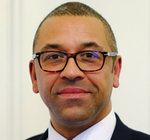
Tag: James Cleverly

  • James Cleverly – 2022 Comments on Meeting with Prime Minister of Kosovo

    James Cleverly – 2022 Comments on Meeting with Prime Minister of Kosovo

    The comments made by James Cleverly, the Foreign Secretary, on Twitter on 31 October 2022.

    Today I met the Prime Minister of Kosovo, @albinkurti ahead of the Berlin Process Summit. We discussed the Kosovo-Serbia relationship and the need for courage and compromise to benefit people in both countries. UK-Kosovo relations are strong and long-standing

  • James Cleverly – 2022 Statement on the Situation in Ukraine

    James Cleverly – 2022 Statement on the Situation in Ukraine

    The statement made by James Cleverly, the Foreign Secretary, in the House of Commons on 31 October 2022.

    Mr Speaker, with permission I will update the House about the situation in Ukraine.

    This morning Russian missiles again struck Kyiv and other cities, destroying critical national infrastructure and depriving Ukrainians of water and electricity.

    Earlier today I spoke to our Ambassador in Kyiv and I heard again of the extraordinary resilience of Ukraine’s people in the face of Russian aggression.

    At the weekend, Russia suspended its participation in the Black Sea Grain Initiative, which has allowed the export of 100,000 tonnes of food every day, including to some of the least developed countries in the world.

    Putin is exacting vengeance for his military failures on the civilians of Ukraine by cutting off their power and their water supply, and on the poorest people in the world by threatening their food supplies.

    Over 60 percent of the wheat exported under the Black Sea Grain Initiative has gone to low and middle income countries, including Ethiopia, Yemen, and Afghanistan.

    It would be unconscionable for those lands to be made to suffer because of Putin’s setbacks on the battlefield in Ukraine.

    I urge Russia to stop impeding this vital initiative that is helping feed the hungry across the world and agree to its extension.

    Meanwhile, Russia’s suicide drones and cruise missiles are killing Ukrainian civilians, obliterating their homes, and even destroying a children’s playground.

    A third of the country’s power stations were put out of operation in a single week.

    None of this achieves any military purpose.

    Putin’s only aim is to spread terror and to deprive Ukrainian families of shelter, light, and heat as harsh winter approaches.

    I’m sure the House will join me in condemning his breaches of international humanitarian law.

    I’m sure every Honourable and Right Honourable member will share my conviction that Putin will never break the spirit of the Ukrainian people.

    And the House will share my incredulity over the glaring contradictions in Putin’s thinking.

    He claims that Ukraine is part of Russia and Ukrainians are Russians but at the same time he calls them Nazis who must be bombed without mercy.

    When he launched his invasion, he convinced himself that Russian forces would be welcomed into Kyiv and they would either support him or be too craven to stand in his way.

    He could not have been more wrong.

    The last eight months have shown the scale of his miscalculation.

    They have shown the barbarity of his onslaught, including the mass rape committed by Russian soldiers in Ukraine.

    The UK’s campaign to prevent sexual violence in conflict is more urgent than ever and I will host a conference on this vital subject next month.

    And now the Kremlin is resorting to peddling false claims, churning out invented stories that say more about the fractures within the Russian government than they do about us.

    It is also reprehensible that Iran should have supplied Russia with the Shahed drones that are bringing destruction to Ukraine, in violation of UN Resolution 2231.

    On 20 October, the Government imposed sanctions on three Iranian commanders involved in supplying weaponry to Russia, along with the company that manufactures Shahed drones.

    Earlier, Putin announced on 30 September that Russia had annexed four regions of Ukraine spanning 40,000 square miles – the biggest land grab in Europe since the Second World War.

    Once again, this exposes his self-delusion.

    Putin has declared the annexation of territory he has not captured – and what he had managed to seize he is in the process of losing.

    On 12 October, 143 countries – three quarters of the entire membership of the United Nations – voted in the General Assembly to condemn the annexation.

    Russia had just four supporters – Syria, Belarus, Nicaragua, North Korea – and when those regimes are your only friends, you know you really are isolated.

    When 141 countries denounced Putin’s invasion back in March, some speculated if that was the ceiling of the international support for Ukraine.

    The latest vote showed even more nations are now ready to condemn Russia.

    But Putin still thinks that by forcing up food and energy prices, we will lose our resolve.

    Our task is to prove him wrong.

    We will not waver in our support for Ukraine’s right to self-defence.

    I delivered that emphatic message when I spoke to my Ukrainian counterpart on Tuesday and my Right Honourable Friend the Prime Minister said the same to President Zelenskyy, when they spoke on the phone, the first foreign leader he called upon his appointment as Prime Minister.

    On Thursday I will attend a meeting of G7 Foreign Ministers in Germany, where I will send a unified signal of our shared determination.

    This year Britain has given Ukraine £2.3 billion of military support – more than any country in the world apart from the United States of America.

    We will provide Ukraine with more support to repair its energy infrastructure and we have committed £220 million of humanitarian aid.

    The House will have noted Putin’s irresponsible talk about nuclear weapons, and an absurd claim that Ukraine plans to detonate a radiological “dirty bomb” on its own territory.

    No other country is talking about nuclear use. No country is threatening Russia or threatening President Putin. He should be clear that for the UK and our Allies, any use at all of nuclear weapons would fundamentally change the nature of this conflict. There would be severe consequences for Russia.

    And how counter-productive would it be for Russia to break a norm against nuclear use that has held since 1945 and has underpinned global security.

    Nothing will alter our conviction that the Ukrainians have a right to live in peace and freedom in their own lands.

    If Putin were to succeed, every expansionist tyrant would be emboldened to do their worst and no country would be safe.

    That is why we stand and will continue to stand alongside our Ukrainian friends until the day comes – as it inevitably will – that they prevail.

    Mr Speaker I commend this statement to the House.

  • James Cleverly – 2022 Statement on Terrorist Attack in Mogadishu

    James Cleverly – 2022 Statement on Terrorist Attack in Mogadishu

    The statement made by James Cleverly, the Foreign Secretary, on 30 October 2022.

    I condemn in the strongest possible terms yesterday’s cowardly and horrific attack in Mogadishu. My thoughts are with the families and friends of those who were tragically killed and hurt. We continue to stand with the government and people of Somalia in their fight against terrorism. The UK condemns terrorism in all its forms.

  • James Cleverly – 2022 Statement at the UN Security Council Counter-Terrorism Committee Meeting

    James Cleverly – 2022 Statement at the UN Security Council Counter-Terrorism Committee Meeting

    The statement made by James Cleverly, the Foreign Secretary, on 29 October 2022.

    Madame Chairman, your Excellencies, Ladies and Gentlemen,

    May I start by thanking India, our hosts, and Dr. Jaishankar for his key note speech.

    You are right that countries must do more nationally and internationally to counter the threat of terrorism. The UN and an effective CTC, both have a significant role to play in this endeavour.

    Just outside my office in London is an elegant memorial to those to those who were killed in the Bali bombing of 2002. 202 victims that came from more than 20 countries, including 23 from the UK.

    When terrorists struck London in 2005, one of the 52 people they murdered was 37 year old Neetu Jain, a biochemist graduate, who was born in Delhi.

    And the victims of the 2008 Mumbai attacks, who we honoured yesterday, came from every continent.

    Terrorism is a global problem, and a global threat, so I am incredibly grateful for Foreign Minister Jaishankar for using India’s Security Council Presidency to focus on this crucial issue, and advance his 8 point plan.

    The UK’s partnership with India is hugely important to me. And I’m pleased to be taking forward our CT cooperation this weekend. But let me now turn to the technological advances which offer terrorists new opportunities that we must counteract.

    Within the space of just two decades, terrorists have gone from circulating crackly voice recordings from the depths of Tora Bora, to global online recruitment and incitement campaigns, to live-stream attacks. And online incitement and racialisation of vulnerable people in far off countries, who have then gone on to use simple rental vans as weapons of terror. So we must continue to work together to fight terrorist ideologies online.

    In 2015 we set up the Counter Daesh Communication Cell in London, in partnership with the United States of America and the Government of the United Arab Emirates. Together we have worked with governments, civil society and communities to challenge Daesh’s narrative.

    We are also working with the G7 and Global Internet Forum to counter terrorism. And we continue to press tech companies, amongst whom are some of the internet’s biggest players, to crack down ever harder on extremist online content.

    Technologies that advance the online world also powers the real world. But both are open to exploitation. Tech designed with the best intentions can be repurposed for the worst of aims.

    From a garden – our Ambassador’s Garden – in Abu Dhabi, in January of this year, I saw the UAE’s Air Defence System interdict Houthi missiles. And only a few weeks earlier, drones had killed three people in Abu Dhabi. Drones are being used currently to target critical national infrastructure and civilian targets in Russia’s brutal invasion of Ukraine. So from the UAE to Ukraine, unmanned aerial systems from relatively cheap and unsophisticated, to those with military specifications, are used to inflict terror, death and destruction.

    This is why we have sanctioned three Iranian military commanders and one Iranian company involved in the supply of drones and why we must also do more to stop these technologies getting into terrorists’ hands.

    In 2019 the UK government launched our Counter-Unmanned Aircraft Strategy and we are funding new counter-drone technologies.

    And we are working through the Global Counter Terrorism Forum, to ensure we all do more to stop terrorists from misusing drones.

    The internet has also given terrorists groups murky new routes to conceal their finances and sustain their activities. We work with industry and international partners to understand and disrupt terrorist finances, including in Somalia and North Africa. We have made tackling illicit finance a core pillar of our cooperation with international partners like the UAE. And we look forward to India’s ‘No Money For Terrorism Conference’ in November.

    This is vital work. The threat from terrorism has not gone away. We know that a repressive response will only exacerbate the problem.

    And if we are to keep our people safe, we must comply with human rights, and we must continue to work together, and with industry, and all parts of our communities, to discredit the narratives of hate.

    To counter radicalisation. To infiltrate networks. To foil plots. And to starve terrorists of the finances and emerging technologies that they would use to do us harm.

  • James Cleverly – 2022 Comments Changing Support to Rishi Sunak in Conservative Leadership Contest

    James Cleverly – 2022 Comments Changing Support to Rishi Sunak in Conservative Leadership Contest

    The comments made by James Cleverly, the Foreign Secretary, on 24 October 2022.

    We face great challenges at home and abroad.

    I said we needed experience at the top of Government and I stand by that.

    The candidate with the most experience is clearly Rishi Sunak. He can count on my full support as our Prime Minister and I will be voting for him.

  • James Cleverly – 2022 Comments on Boris Johnson Returning as Prime Minister

    James Cleverly – 2022 Comments on Boris Johnson Returning as Prime Minister

    The comments made by James Cleverly, the Conservative MP for Braintree, on Twitter on 23 October 2022.

    The last few weeks show that being PM is tough and no other job in government is quite like it.

    I know Boris [Johnson] has learned lessons from his time in No 10 and will ensure the focus is on the needs of the country from day 1.

    I will be supporting him to return to the role of PM.

  • James Cleverly – 2022 Comments on Sanctions Against Iran

    James Cleverly – 2022 Comments on Sanctions Against Iran

    The comments made by James Cleverly, the Foreign Secretary, on 20 October 2022.

    Later today I will be announcing further sanctions in response to Iran’s supply of drones for use in attacking civilian targets and critical infrastructure in Ukraine. Iran cannot be allowed to violate UN resolutions.

  • James Cleverly – 2022 Comments on Chinese Consulate-General in Manchester

    James Cleverly – 2022 Comments on Chinese Consulate-General in Manchester

    The comments made by James Cleverly, the Foreign Secretary, on 18 October 2022.

    I’ve ordered the summoning of the Chinese Chargé d’Affaires to demand an explanation for the shocking scenes outside the Chinese Consulate-General in Manchester on Sunday.

    Peaceful protest is a fundamental right in the UK and the Chinese Government must respect that.

  • James Cleverly – 2022 Comments on the Dismissal of Kwasi Kwarteng

    James Cleverly – 2022 Comments on the Dismissal of Kwasi Kwarteng

    The comments made by James Cleverly, the Foreign Secretary, on Twitter on 14 October 2022.

    The PM is right that growing the economy is the best way to secure the UK’s economic stability.

    We will get through this storm. She’s right about that.

    We’ll deliver the high growth, high wage economy that gets Britain moving.

  • James Cleverly – 2022 Statement on the UN General Assembly Vote on Ukraine

    James Cleverly – 2022 Statement on the UN General Assembly Vote on Ukraine

    The statement made by James Cleverly, the Foreign Secretary, on 12 October 2022.

    Today’s UN General Assembly vote is a powerful demonstration of the international community’s widespread condemnation of Russia’s outrageous, illegal attempts to annex the Ukrainian regions of Donetsk, Luhansk, Kherson and Zaporizhzhia.

    This is an important show of international unity against an aggressor that seeks to destabilise the international norms that protect us all. In the face of President Putin’s unprovoked aggression, 143 nations across the globe have come together in defence of the UN Charter and in solidarity with Ukraine.

    The vote is indisputable evidence of what we have known for some time – Putin stands alone on the international stage and his actions are driving his country further into self-inflicted isolation.