
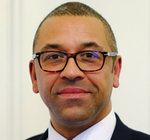
Tag: James Cleverly

  • James Cleverly – 2021 Statement on Yemen

    James Cleverly – 2021 Statement on Yemen

    The statement made by James Cleverly, the Minister for the Middle East and North Africa, in the House of Commons on 8 February 2021.

    I thank my right hon. Friend the Member for Bournemouth East (Mr Ellwood) for asking a question on this important matter. The ongoing conflict and humanitarian situation in Yemen remain a challenge for the international community. The new Houthi offensive in Marib has only made our efforts to bring peace and stability even more difficult. Nevertheless, we continue to work with the international community to find a peaceful resolution, with an emphasis on the political process.

    The UK is playing a leading role in responding to the crisis in Yemen through both our humanitarian response and our diplomatic influence. We actively support the UN special envoy, Martin Griffiths, in his work to reach a political solution, and we pay tribute to his tireless efforts to bring about peace. The UK has pledged over £1 billion in aid to the humanitarian response since the conflict began.

    My right hon. Friend the Foreign Secretary and I have regular calls with partners on Yemen. Recently, the Foreign Secretary spoke to Secretary Blinken in the new United States Administration and to the Saudi Foreign Minister. Last month, I spoke with the Yemeni Foreign Minister to offer my condolences after the attacks at Aden airport. The UK has also used its role as the penholder at the UN Security Council to help move the Yemen peace process forward, working with our partners and allies at the United Nations to ensure that Yemen continues to be a top priority for the international community.

    We welcome the recent statement by President Biden to instigate a review of US foreign policy towards Yemen. Our ambassador in Washington has already spoken with the new US envoy to Yemen. I also welcome reports that the US may reverse the previous Administration’s designation of the Houthis as foreign terrorist fighters. The UK has engaged closely with the US Administration on that very matter.

    However, we cannot—we must not—ignore the Houthi actions. Those include the use of children and sexual violence as tools of war, the persecution of religious minorities and attacks on civilians. On 30 December, the Houthis attacked Aden airport, killing 27 civilians and injuring more than 100 others. We must address the Houthi sense of impunity, to make the peace process meaningful, and that must extend to other actors in the region, notably Iran. I note the US decision to pause its arms exports while it reviews its policy towards Yemen. I reassure the House that the Government take their own export responsibilities extremely seriously and assess all export licences in accordance with strict licensing criteria.

    The political settlement is the only way to bring about long-term peace and stability in Yemen and to address the worsening humanitarian situation. The Government remain committed to bringing an end to the conflict.

    Mr Ellwood

    Last week, President Biden gave his first foreign policy speech, reversing many of the isolationist policies of his predecessor and seeking to re-engage with like-minded allies in order to revisit major global hotspots neglected by the west. The complex civil war in Yemen, now entering its seventh year, was named specifically. Today, it is the largest humanitarian catastrophe in the world. The US President has appointed a new envoy, as we have just heard, and will end support for the offensive operations and connected arms sales, seeking to establish the conditions for a ceasefire and fresh peace talks.

    The war in Yemen is complicated. The country never properly stabilised following unification in 1990, and President Hadi has struggled to handle corruption, unemployment, tribal disputes and, most critically, separatist and extremist agendas pursued by the Houthis and al-Qaeda respectively. The Houthi advance into the capital in 2014 led to UN Security Council resolutions that legitimised a Saudi-led military coalition to support President Hadi. Despite many rounds of talks—some of which I was involved with, as a Minister—six years on, we are no closer to peace. Indeed, the conflict has spilled out into a wider proxy war.

    The US reset is to be welcomed, and this poses our first big test of what global Britain means in practice. In that spirit, I encourage the UK to fully align ourselves with our closest security ally by ending arms exports connected to the war and to reverse the cuts to our overseas aid budget. I recommend that, as the UN Security Council penholder on Yemen, the UK offers to host a UN summit that looks at political options for peace and that the UK is willing to commit British forces to any UN stabilisation effort that may be required once a political settlement is reached. This is a real opportunity for Yemen to end the war. I hope the Minister can confirm today Britain’s resolve to play a leading role.

    James Cleverly

    I thank my right hon. Friend for his thoughtful contribution and the work he did as Minister on this portfolio. I can absolutely confirm that the United Kingdom’s desire to bring about a peaceful settlement in Yemen is unwavering. We will continue to work with our international partners—both the United States and regional partners—to bring that about.

    My right hon. Friend made a number of specific points. The UK has—indeed, I have on a regular basis—spoken with the UN envoy to Yemen, Martin Griffiths, and we fully support his work. We will look at ways to bring together the various parties around the negotiating table. I note my right hon. Friend’s idea about a UK-hosted summit. He will understand that I cannot commit to something like that at the moment, but I welcome his thoughtful contribution. Similarly, he will completely understand that it would be inappropriate for me to speculate about what a military intervention might look like. The Saudi-led coalition was mandated at the UN Security Council; as he said, this is something he worked on during his tenure. We also note that the Kingdom of Saudi Arabia has a legitimate right to defend itself against attacks, and we completely condemn the attacks both within Yemen, at Aden airport, and cross-border, into the Kingdom of Saudi Arabia.

  • James Cleverly – 2021 Statement on Preventing Terrorist Threats

    James Cleverly – 2021 Statement on Preventing Terrorist Threats

    The statement made by James Cleverly, the Minister for Middle East and North Africa, on 12 January 2021.

    Mr President, I would like to thank you for hosting this important debate today, and also Under-Secretary-General Voronkov, Executive Director Coninsx and Ms Fatima Akilu for their informative and important briefings.

    It’s been twenty years since the Security Council established the Counter-Terrorism Committee. Our work has strengthened the cooperation we need to protect all our citizens and counter the scourge of terrorism.

    Subsequent Security Council resolutions have built an effective toolkit for guidance and measures for states to respond to the evolving threat.

    They now cover everything from international legal cooperation to counter-terrorist financing, from specific challenges like aviation security to broad issues like human rights, gender, and civil society.

    With the support of the Counter-Terrorism Executive Directorate, the Committee has helped assess states’ implementation of the resolutions and identified emerging challenges, examples of best practice, and opportunities for technical assistance.

    Of course, the Council and the Committee have not been acting alone.

    In 2014, the Global Coalition against Daesh brought together 83 partners, including the United Kingdom, to combat Daesh and liberate eight million people from its control.

    Organisations such as the Global Counter Terrorism Forum, of which the UK is a founding member, have bolstered international cooperation.

    Other parts of the UN system, most importantly the UN Office of Counter-Terrorism, have also played an important role.

    Through this work, and through the leadership of the United Nations Security Council, we have built a shared understanding of the terrorism threat and developed the tools to counter it.

    Mr President, as a result of our collective efforts, Al-Qaeda has been degraded. Daesh was defeated on the battlefields of Iraq and Syria.

    But sadly, the threat has evolved and remains with us.

    Terrorist groups, including Al-Qaeda and Daesh affiliates, continue to operate around the world.

    Terrorist narratives continue to radicalise individuals in diffuse and unpredictable ways. New threats from extreme right-wing groups have increased.

    So, the work of the Council and of the Committee remains vital.

    Looking forward, I want to stress four key priorities:

    Firstly, the Council should continue to learn and adapt to the latest threats and emerging trends.

    I mentioned extremist right-wing groups. Terrorist misuse of social media and other new technologies needs greater attention. We also need to tune in to how longer-term effects of COVID-19 might influence the terrorism dynamic.

    Secondly, the Council should reaffirm states’ obligation under international law to protect and promote human rights whilst countering terrorism.

    The threats posed by terrorism do sometimes require states to take extraordinary measures. However, too often counter-terrorism is used to justify egregious human rights violations and oppression. States must act within the boundaries of international law. Otherwise, we undermine the very rights and freedoms that the UN was established to promote.

    While it is not the only instance around the world, a case in point is the situation in Xinjiang where the Uyghur and other ethnic minority communities face severe and disproportionate measures, with up to 1.8 million people having been detained without trial.

    These well-documented measures are inconsistent with China’s obligations under international human rights law including the International Convention on the Elimination of All Forms of Racial Discrimination.

    They run counter to the Security Council’s long-standing requirement that counter-terrorism measures comply with States’ obligations under international law, including international human rights law.

    Third, the Council should reaffirm the importance of inclusion and partnerships.

    Effective counter-terrorism requires more than the cooperation of governments. It requires whole societies.

    That means promoting the leadership of women, young people, and minorities, building effective partnerships with the private sector, with religious leaders, and ensuring we listen to all the voices of our peoples.

    And fourth, the Council should push for coherence within the UN system.

    We welcome the existing close cooperation between the Counter-Terrorism Executive Directorate and the UN Office of Counter-Terrorism, as well as the Al-Qaeda and Daesh Monitoring Team and other UN agencies.

    It remains vital that this continues, especially in the area of capacity-building, so that resources are deployed effectively and where they can have the greatest impact.

    Mr President, as the terrorist threat endures and evolves, so too must our resolve to fight it remain firm.

    The Security Council’s counter-terrorism architecture has been an integral part of that fight over the last twenty years, and the United Kingdom will work to ensure it remains relevant, efficient and effective in the years ahead.

    Thank you.

  • James Cleverly – 2021 Speech on Peace and Security

    James Cleverly – 2021 Speech on Peace and Security

    The speech made by James Cleverly, the Minister for Middle East and North Africa, on 8 January 2021.

    Mr President, thank you for convening this timely debate. My thanks also to Secretary-General Guterres, Mr Faki and Mrs Johnson Sirleaf for clearly outlining the challenge.

    We see, all too often, the devastating impact of conflict on a country and its neighbours. As the war in Syria rages on, over 9 million of its people cannot afford basic food supplies.

    More than 6 million – including 2½ million children – are refugees far from home. On either side of the border, COVID-19 has only made their situation more precarious.

    This fragility is a key challenge to the peace and security we all desire. By 2030, 80% of the world’s extreme poor will live in fragile states and regions.

    While our attention is still on the health impact of COVID-19, we know its social and economic effects will magnify that trend.

    We also know that sustainable development and economic growth are just not possible without peace.

    Mr President, I want to highlight three key elements to maintain international peace and security: inclusion, partnership and an integrated approach to fragility and security.

    To my first point: peace processes are often the domain of a small number of well-connected men. But we know that peace will not last, if half the population aren’t represented at the negotiating table.

    Women and community leaders must have a seat from the start. Their meaningful participation can prevent conflict, support conflict resolution and maintain peace.

    We need to protect and clear the path for women who speak up for their rights, their communities and their futures.

    The UK has supported the International Civil Society Action Network to develop the Protection Framework for women peacebuilders.

    As the Council’s penholder on the Women, Peace and Security agenda, we urge all member states to commit to its recommendations.

    To my second point, the UN and African Union are stronger together as partners for peacebuilding.

    The collaboration that delivered the Central African Republic peace agreement, and AU mediation in Sudan are just two examples of how our partnership promotes peace.

    I commend the progress made by the African Union on Silencing the Guns, bolstering the African Peace and Security Architecture, the Panel of the Wise and FemWise.

    Through the UN, the UK is helping train African peacekeepers, and we recently deployed 300 military personnel to MINUSMA.

    I also welcome the recent extraordinary meeting of IGAD heads of state to discuss regional security concerns. However, resolution will come not only with discussion, but with difficult choices and action.

    Thirdly, I want to state the importance of an integrated approach to prevent conflict. The recent Twin Resolutions on Sustaining Peace show the international community’s determination to address the causes before the guns start firing.

    We have mechanisms to help us, like the African Union’s Continental Early Warning System, which the UK supports.

    Effective interventions need to span humanitarian, development and peacebuilding operations. The UK worked with the OECD to develop the Recommendation on the Humanitarian-Development-Peace nexus, which will guide future interventions.

    It is also important that the UN and International Financial Institutions continue developing their working partnership. We welcome the cooperation between the UN, World Bank, EU and Government of Burkina Faso that helped unlock $700 million of World Bank funding.

    To sum up, the challenges to maintaining peace continue to grow and the costs of excluding women and failing to think holistically become ever more apparent.

    But there is light. The UN has taken positive steps in its ability to maintain peace in fragile settings, including the Secretary-General’s reform agenda.

    The UN’s capacity to prevent and respond to conflict has been bolstered through the Peacebuilding Fund, the Multi-year Appeal and the Peace and Development Advisors.

    The Peacebuilding Commission is now a critical forum for international cooperation on fragile states and regions.

    Crucially, we better understand the importance of inclusive peace-making and peacebuilding. We know we are more effective when we work with regional partners on complex challenges. And we know the value of tackling the drivers of conflict before a shot is fired.

    In an evolving world, as we continue to adapt, our partnerships are our strength, inclusion is our security, and the prize is peace.

  • James Cleverly – 2020 Comments on Buildings in Givat HaMatos

    James Cleverly – 2020 Comments on Buildings in Givat HaMatos

    The comments made by James Cleverly, the Minister for the Middle East and North Africa, on 18 November 2020.

    Israel’s decision to advance the construction of 1,257 settlement buildings in the Givat HaMatos area of the occupied West Bank, would violate international law, and risks causing serious damage to the prospects for a viable Palestinian State.

    We condemn this decision, which is incompatible with Israel’s declared goal of peace, and call for both the tender process and the advancement of other settlements in East Jerusalem and elsewhere in the West Bank to be suspended immediately.

  • James Cleverly – 2020 Comments on Lebanon

    James Cleverly – 2020 Comments on Lebanon

    Comments made by James Cleverly, the UK Minister for the Middle East, on 27 July 2020.

    I was deeply impressed by the passion and drive of the Lebanese people I met. I am confident that this country can have a bright future, but it must take urgent and drastic action now to avoid economic catastrophe.

    The UK is helping to tackle coronavirus in the country, which in turn will help stop future waves of the disease. This pandemic has already caused the death of so many around the world, but together we can stop it. No one is safe until we are all safe.

  • James Cleverly – 2020 Statement on Prisons Under Sentence in Bahrain

    James Cleverly – 2020 Statement on Prisons Under Sentence in Bahrain

    Below is the text of the statement made by James Cleverly, the Minister for the Middle East and North Africa, in the House of Commons on 9 July 2020.

    The UK and Bahrain continue to have a close and important relationship. We benefit from an ongoing, open and genuine dialogue in which we work together on mutually beneficial issues while also raising points of significant difference with one another.

    It is because of this long-standing partnership that we are able to have candid conversations about matters of importance to the UK—in particular, our human rights concerns. Our relationship allows us to raise sensitive and difficult issues, both privately and publicly, in a constructive manner in order to uphold our moral responsibility on human rights issues. We have raised and will continue to raise the cases both of Mohammed Ramadhan and Hussain Moosa at senior levels with the Government of Bahrain.

    On 8 January, British embassy Manama officials attended the final session of the Court of Appeal for the retrial of the two men mentioned. Both individuals were convicted of terrorist charges and given the death sentence again. On 8 January, the former Minister for the Middle East and North Africa, my right hon. Friend the Member for South West Wiltshire (Dr Murrison), publicly stated our deep concern that death sentences were again handed out, and the UK’s position has not changed on this matter. We continue to actively monitor these two cases as they are taken to the court of cassation for final review.

    The UK’s position on the use of the death penalty is long-standing and unequivocal: we oppose its use in all circumstances and in all countries as a matter of principle. The Government of Bahrain are fully aware of our view. This was made explicitly clear by the former Minister to a senior Bahraini counterpart last year. It was then reinforced by my noble friend Lord Ahmad in the other place, who issued a public statement expressing the UK’s opposition to the use of the death penalty, in response to actions taken in Bahrain.

    I can assure the House that our efforts to raise these cases, and also the broader issues of the use of capital punishment, with the Bahraini authorities will continue. Bahrain is a Foreign and Commonwealth Office human rights priority country, in part due to its policy surrounding the death penalty. We continue to monitor developments on all matters that relate to human rights within the country. We remain absolutely committed to the promotion of universal freedoms and upholding human rights globally. That has been made clear only this week with the introduction of the UK’s first autonomous human rights sanctions regime.

  • James Cleverly – 2020 Statement on Syria

    James Cleverly – 2020 Statement on Syria

    Below is the text of the statement made by James Cleverly, the Minister for the Middle East and North Africa, in the House of Commons on 24 February 2020.

    I am grateful to my right hon. Friend for bringing this urgent question to the House. We are deeply concerned by the crisis in north-west Syria, where the situation on the ground is deteriorating. Over 900,000 people have been displaced while fleeing the regime and Russian bombardment. They are fleeing northwards and being squeezed into increasingly dense enclaves. With camps full to capacity, many are sleeping in the open, in temperatures well below freezing.

    Nearly 300 civilians have been killed in Idlib and Aleppo since 1 January this year. The Office of the United Nations High Commissioner for Human Rights has confirmed that 93% of those deaths were caused by the regime and its allies. International humanitarian law continues to be ignored, with civilian infrastructure being hit probably as a result of active targeting. As recently as yesterday, the White Helmets reported that Russian warplanes hit a children’s and women’s hospital in the village of Balioun in Idlib.

    The UK has condemned, and continues to condemn, these flagrant violations of international law and basic human decency. Following UK lobbying, in August 2019 the UN Secretary-General announced a board of inquiry into attacks on civilian infrastructure supported by the UN or that were part of the UN deconfliction mechanism, which we continue to support. We look forward to the publication of the results as soon as possible.

    We have repeatedly pressed—including at the UN Security Council—for an immediate, genuine and lasting ceasefire. We have called a number of emergency council sessions on Idlib in New York, most recently on 6 February alongside the P3, where the UK ambassador to the UN, Karen Pierce, reiterated our clear call for a ceasefire and our support for Turkey’s efforts in the region. There is overwhelming support for that in the Security Council, and we regret very much that the Russians continue to obstruct the possibility of agreement.

    As the Foreign Secretary noted on 31 January this year, only a political settlement in line with UN Security Council resolution 2254 can deliver a lasting peace for Syria. The UK will continue to support the efforts of the UN special representative for Syria, Geir Pedersen, to that end. We regret that the Syrian regime continues to stall the process, despite the cost to the Syrian people and the loss of Syrian lives.

    Despite this political obstruction, the UK remains an active leader in the humanitarian space. In the financial year 2019-20, the Department for International Development has allocated £118 million to projects implemented by organisations delivering cross-border aid, primarily into north-west Syria, including into Idlib. This has helped to provide hundreds of thousands of vulnerable people with food, clean water, shelter and healthcare, including psychosocial support.​

    We have provided funding to response partners, including the UN, to pre-position essential supplies to support innocent families and civilians displaced by conflict and are supporting all our partners to respond to this humanitarian crisis.

  • James Cleverly – 2019 Statement on EU Law Services

    Below is the text of the statement made by James Cleverly, the Parliamentary Under-Secretary of State for Exiting the European Union, in the House of Commons on 3 July 2019.

    Today, I wish to inform the House about the release of two new services by The National Archives, operating in the capacity of the Queen’s Printer, which will help aid legal certainty and support research in preparation for EU exit.

    Yesterday, I signed regulations for the commencement of the relevant powers and duties under part 1 of schedule 5 to the European Union (Withdrawal) Act 2018, which placed on the Queen’s Printer the statutory obligation to make arrangements for the publication of EU legislation relevant to the UK after exit.

    At 9:00 today, The National Archives released two new services. First there is a new online collection of documents and data, relevant to the UK, drawn from the EUR-Lex website: the official source of EU law, delivered as part of the Government’s official web archive. This is available for the public to search and will be updated until exit day, when it will be frozen and act as a permanent historical record of the relevant EU documents on our exit from the EU.

    Secondly, The National Archives has added relevant EU legislation to www.legislation.gov.uk. the official legislation website, in order to allow the public to locate the law as it applies to them postexit. This brings together EU legislation that will be retained in UK law on exit with details about the corrections made by UK statutory instruments for EU exit and will show the ‘as amended’ UK applicable versions of the texts. This service includes a full timeline of changes pre-exit and will incorporate the amendments made by UK legislation postexit, with annotations so users can verify the text of the legislation for themselves, if they wish.

    The Government have commenced these powers and duties now because these services are ready and their availability will be useful to those, such as businesses and the legal sector, who need to understand what the law is and will be on exit.