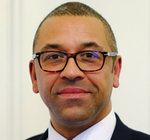
Tag: James Cleverly

  • James Cleverly – 2021 Comments on Vaccinations

    James Cleverly – 2021 Comments on Vaccinations

    The comments made by James Cleverly, the Conservative MP for Braintree, on Twitter on 27 December 2021.

    Medics tell us that:

    60% of Covid patients in #Essex hospitals are unvaccinated.

    Up to 90% of Covid patients in #London ICUs are unvaccinated.

    Please get vaccinated.

  • James Cleverly – 2021 Statement on the Humanitarian Situation in Afghanistan

    James Cleverly – 2021 Statement on the Humanitarian Situation in Afghanistan

    The statement made by James Cleverly, the Minister for the Middle East, in the House of Commons on 15 December 2021.

    My noble Friend the Minister for South Asia, United Nations and the Commonwealth, Lord Ahmad of Wimbledon, has made the following written ministerial statement:

    Afghanistan is facing a serious and worsening humanitarian crisis. The UN estimates that 22.8 million people, over half the population, are now suffering “crisis” or “emergency” levels of acute malnutrition, over a third more than at this time last year. Afghanistan is now estimated to have more people suffering from “emergency” levels of acute malnutrition, 8.7 million, than any other country.

    The UK has been at the forefront of efforts to address the situation, including through our presidency of the G7. The Prime Minister, Foreign Secretary and Minister of State have discussed the situation extensively with world leaders including in the margins of COP26. The Foreign Secretary represented the UK at a G20 leaders meeting on 12 October that agreed to step up emergency aid. Lord Ahmad visited New York in late October to speak to senior UN officials, and has been in regular contact since August, with the UN’s emergency relief co-ordinator, heads of UN agencies including the World Food Programme, the United Nations Children’s Fund, the UN High Commissioner for Refugees and the UN Office for the Co-ordination of Humanitarian Affairs as well as other senior officials such as the head of the ICRC and the Aga Khan Development Network. In November, he also met with Deborah Lyons, the UN Secretary-General’s Special Representative for Afghanistan.

    We have used our engagement with Taliban to press them to ensure a suitable environment for aid delivery, as well as to respond to international concerns on terrorism, the protection of human rights, especially the rights of women, girls and members of minorities, and the departure of non-Afghan nationals and Afghans eligible for resettlement overseas. These were our top priorities during the visit to Kabul by the Prime Minister’s Special Representative for Afghan Transition, Sir Simon Gass, on 5 October, as well as in telephone calls and subsequent meetings by UK officials with the Taliban in Doha.

    The UN Secretary General launched a flash appeal for Afghanistan on 13 September. The event was attended by the then Foreign Secretary and by Lord Ahmad. But further efforts will be needed. The UN has requested nearly $4.5 billion for 2022, the largest humanitarian appeal on record, reflecting the magnitude of the humanitarian challenge ahead.

    The UK was at the forefront of this, and in August, the Prime Minister said that the UK would double its assistance for Afghanistan to £286 million this financial year.

    On 3 September, the Government announced the allocation of up to £30 million of this for Afghan refugees in neighbouring countries, of which £10 million has been disbursed directly to humanitarian agencies in the region.

    On 31 October, the Prime Minister announced the allocation of £50 million in immediate support for vulnerable communities within Afghanistan. We have now disbursed £49 million of this, in addition to the disbursement of over £32 million for humanitarian activity inside Afghanistan between April and October. 1.

    On 12 December, the Foreign Secretary announced the allocation of a further £75 million to provide life-saving food, and emergency health services as well as shelter, water and hygiene supplies. Through the £75 million and £50 million allocations, the UK will support over 3.4 million people, with emergency food, health, shelter, water and protection. We will work with aid agencies to prioritise those most at risk, including households headed by women and people with disabilities. The funding will be channelled through the Afghanistan Humanitarian Fund, the World Food Programme, the International Organisation for Migration, the United Nations Children’s Fund, the United Nations Population Fund and International Rescue Committee.

    In addition, the Government have today committed to matching donations from the British people to the Disasters Emergency Committee Afghanistan appeal, up to £10 million. This means that public donations will have greater impact and give life-saving support to more people in Afghanistan.

    So far this financial year, we have disbursed over £81 million within Afghanistan and £10 million to support Afghan refugees in the region. A full breakdown appears in the annexes attached. All our humanitarian assistance is going to UN agencies or trusted and experienced international NGOs and not to the Taliban.

    We are particularly concerned by the impact of the situation on women and girls. We are consulting women’s organisations, Afghan women leaders and implementing partners to understand how best to support their needs. In allocating UK funds, we are seeking to ensure that women, girls and other marginalised groups have equal, safe and dignified access to assistance and services.

    The humanitarian crisis has been a central subject of all our conversations with the Taliban. We have pressed them to respect humanitarian principles and allow aid agencies to operate freely. The Taliban wrote to the UN’s emergency response co-ordinator on 10 September promising to respect humanitarian principles, including free access for aid workers.

    We are monitoring the situation carefully. Our partners report that aid delivery channels are open and humanitarian access is reasonable. But aid workers also face challenges as a result of the liquidity shortage, which makes payments more difficult. We are working closely with multilateral organisations, banks and NGOs to address these.

    The UK has also taken a leading role in international discussions on how to support essential basic services. We are encouraging the World Bank and its shareholders to use the $1.5 billion in the Afghanistan reconstruction trust fund for this. We welcome the decision by the World Bank’s Board on 30 November to transfer $280 million to support the humanitarian response and basic health services via UN agencies. We are also working with G7 partners to encourage the World Bank to produce options to allocate the $1.2 billion remaining in the fund.

  • James Cleverly – 2021 Statement on Bosnia and Herzegovina

    James Cleverly – 2021 Statement on Bosnia and Herzegovina

    The statement made by James Cleverly, the Minister for the Middle East and North Africa, in the House of Commons on 9 November 2021.

    I thank my hon. Friend for his interest in the current situation in Bosnia and Herzegovina, and he is right to highlight it. The recent political violence is of significant concern to the UK Government. Milorad Dodik, the Bosnian Serb member of the presidency, has threatened to withdraw Republika Srpska—the entity—from a range of state institutions. That is an act that the High Representative calls a de facto secession. This is a dangerous and deliberate attempt to distract from a failure to improve standards of living and to tackle corruption. It is unacceptable.

    The UK fully supports the territorial integrity and sovereignty of Bosnia and Herzegovina. After the devastating conflict of the 1990s, the region has lived in peace for 26 years, and the Dayton political system, which should have been used to deliver progress and development for citizens, has been exploited by politicians who are focused on building and maintaining their own position.

    We recognise the important role that the EUFOR peace and stabilisation force has played, and we welcome the renewal of its mandate—an important deterrent against those malign actors who wish to see instability on Europe’s doorstep. We worked hard in the Security Council to ensure that it authorised EUFOR’s mandate for a further 12 months. The UK continues to play an active role. My hon. Friend the Europe Minster was in Bosnia and Herzegovina in the summer to support that work.

    The High Representative will visit the UK for meetings in December. The UK is in close contact with him to ensure that we work in co-operation and is giving him vocal support, including on the use of executive powers should the situation require it. That is a further check and balance on the destabilising actions in Bosnia and Herzegovina. At the upcoming NATO Foreign Ministers meeting, the Foreign Secretary will push for more focus and resource on Bosnia and Herzegovina, and on the need to rebuff Russia’s actions.

    The international community also has collective responsibility to ensure that there is no return to the conflict of the 1990s. Along with our international partners, we are ensuring that the High Representative’s position and work are secured, and we will continue to urge Russia to return to productive engagement with the peace implementation council’s steering board. Along with our international partners, we are working to tackle the divisive rhetoric and actions from some politicians in Bosnia and Herzegovina, including the threat to re-establish a Republika Srpska army and to pull out of other established state-level institutions.

    The UK is committed to helping the people of Bosnia and Herzegovina build a better future in a stable and prosperous state, with strong institutions. We support the NATO Headquarters Sarajevo, including through the secondment of UK staff officers who play an important role in building the capacity of the armed forces. We are providing capacity building and expertise to those actors who demonstrate genuine commitment to progress.

  • James Cleverly – 2021 Statement on the Treaty on the Non-Proliferation of Nuclear Weapons

    James Cleverly – 2021 Statement on the Treaty on the Non-Proliferation of Nuclear Weapons

    The statement made by James Cleverly, the Minister for the Middle East and North Africa, in the House of Commons on 1 November 2021.

    Today the UK published its national report ahead of the 10th review conference of the parties to the treaty on the non-proliferation of nuclear weapons (NPT). This report reviews the progress that the UK has made against the NPT’s three pillars: disarmament, non-proliferation and the peaceful uses of nuclear energy. It will be submitted to the UN before the 10th review conference that will take place in New York in January 2022.

    The UK’s commitment to the treaty and to fulfilling our NPT obligations remains undiminished. As an original signatory of the NPT, and a nuclear weapon state that takes its responsibilities seriously, the UK remains committed to the long-term goal of a world without nuclear weapons where all states share in the peaceful uses of nuclear technologies.

    The NPT has been an unmitigated success for over 50 years. It is the centre of international efforts to stop the spread of nuclear weapons, to create a nuclear weapon-free world, and to enable access to the peaceful use of nuclear technology.

    Despite its successes, we should not underestimate the challenges facing the global nuclear order. We have previously identified risks to the UK from major nuclear armed states, emerging nuclear states and state-sponsored nuclear terrorism. Those risks have not gone away; some have increased. We face a deteriorating nuclear security environment. The increase in global competition, challenges to the international order, and the proliferation of nuclear weapons pose a significant challenge to strategic stability. We must work to reverse this trend. The NPT will be central to this and we must continue to work with others to reinforce the parts of the international architecture that are under threat. We must also shape the international order of the future so that it can respond effectively.

    We are proud of our contributions to the NPT and the steps we have taken since the last review conference in 2015.

    We have played a leading role by pioneering work in nuclear disarmament verification, championing transparency and advancing risk reduction. We continue to work closely with international partners, civil society and academia to enhance mutual trust and confidence and create the environment for further progress on disarmament. We continue to press for significant steps towards multilateral disarmament. This includes the entry into force of the comprehensive nuclear test ban treaty, and successful negotiations on a fissile material cut-off treaty in the conference on disarmament. We possess the smallest stockpile of any of the nuclear weapon states recognised by the NPT and are the only one to maintain a single delivery system. Maintaining the UK’s nuclear deterrent capability at a minimum credible level, taking into account the international environment, is fully consistent with our international legal obligations, including those under article VI of the NPT.

    The UK continues to be a strong supporter of the International Atomic Energy Agency (IAEA), which underpins non-proliferation under the NPT. We have sought to strengthen the international nuclear safeguards system, through our diplomatic efforts and through direct assistance from our nuclear safeguards programme. The review conference offers opportunities to encourage all states that have not yet done so to sign, ratify and implement safeguards agreements. We seek new opportunities to enhance the security of nuclear materials, ensuring these arrangements remain robust and evolve to meet new threats. We will promote the ratification of security conventions at the review conference and continue to provide direct assistance to other states through our global nuclear security programme.

    Finally yet importantly, we want to highlight the sometimes overlooked part of the NPT: the peaceful uses of nuclear technologies. The UK has encouraged and will continue to encourage the development and exchange of peaceful nuclear technologies enabled by the NPT. This has a positive impact on people’s lives through nuclear medicine, food safety and pest control. Nuclear technologies have a critical part to play in tackling climate change—not only in helping to achieve net zero, but also through nuclear applications that can help countries to adapt and become more resilient to climate change.

    Looking towards the 10th review conference, the UK seeks an outcome that strengthens the NPT as the irreplaceable foundation and framework for our common efforts on nuclear disarmament, non-proliferation and the peaceful uses of nuclear technology. The UK is ready to work with all countries to strengthen the regime and to promote international stability, peace and security.

    A copy of the report has been placed in the Libraries of both Houses and on the www.gov.uk website.

  • James Cleverly – 2021 Statement on Nazanin Zaghari-Ratcliffe

    James Cleverly – 2021 Statement on Nazanin Zaghari-Ratcliffe

    The statement made by James Cleverly, the Minister for the Middle East and North Africa, in the House of Commons on 25 October 2021.

    It is indefensible and unacceptable that Iran has rejected Nazanin Zaghari-Ratcliffe’s appeal against the new charges made against her. We continue to call on Iran to let her return home to the UK immediately. On 22 September, the Foreign Secretary spoke to the Iranian Foreign Minister to make clear our deep concern about the ongoing situation of Mrs Zaghari-Ratcliffe, alongside the continued detention of Anoosheh Ashoori and Morad Tahbaz. Iran must release British dual nationals who have been arbitrarily detained so that they can return home.

    The Foreign Secretary spoke to Mrs Zaghari-Ratcliffe and Richard Ratcliffe on 16 and 17 October respectively. Earlier this month, I spoke to the families of arbitrarily detained dual British nationals and reiterated that the UK Government, from the Prime Minister down, remain fully committed to doing everything we can to help them to return home. We also called for humanitarian treatment of detained British dual nationals. Their welfare remains a top priority for us. We lobby on health concerns and mistreatment allegations whenever we have specific concerns or a family member brings issues to our attention. We call on the Iranian Government immediately to allow health professionals into Evin prison to assess the situation of dual British nationals incarcerated there. We continue to raise their cases at the most senior levels and discuss them at every opportunity with our Iranian counterparts. Our ambassador in Tehran regularly raises our dual national detainees with the Iranian Ministry of Foreign Affairs. The Foreign, Commonwealth and Development Office provides consular assistance to the families of British dual nationals detained in Iran wherever they seek our support.

    The UK Government continue to engage with international partners and directly with the Government of Iran on a full range of issues of interest to the UK. Our priorities remain to prevent Iran from acquiring nuclear weapons capability, to promote stability and security in the region, and to secure the full release of our dual national detainees. I can assure this House that the safety and welfare of all British dual nationals detained in Iran remains a top priority for the UK Government. We will continue to raise our concerns with our Iranian interlocutors at every level, and we will not stop until those who have been detained unjustly are at home with their loved ones.

  • James Cleverly – 2021 Comments on UK and Kuwait Agreement

    James Cleverly – 2021 Comments on UK and Kuwait Agreement

    The comments made by James Cleverly, the Minister for the Middle East, on 22 September 2021.

    The breadth of today’s discussions demonstrated the UK and Kuwait’s long-standing partnership, including trade, technology, security and military training.

    The Joint Steering Group ensures that our two countries are prepared to tackle any shared future challenges, and benefit from emerging opportunities, together.

  • James Cleverly – 2021 Comments on Support for Refugees in Palestine

    James Cleverly – 2021 Comments on Support for Refugees in Palestine

    The comments made by James Cleverly, the Minister for the Middle East and North Africa, on 20 May 2021.

    Palestinian and Israeli civilians should not face the brunt of this conflict, and no child or family should go without food, water or shelter. Today’s UK support will help UNRWA deliver life-saving humanitarian aid to those that need it most.

    The international community needs to ensure UNRWA is able to save lives and reduce the suffering.

    The escalation of violence and loss of life in Israel and the Occupied Palestinian Territories has shocked all of us. Both sides must work towards an immediate ceasefire, to prevent the further loss of life and a worsening humanitarian situation.

  • James Cleverly – 2021 Statement on Nazanin Zaghari-Ratcliffe

    James Cleverly – 2021 Statement on Nazanin Zaghari-Ratcliffe

    The statement made by James Cleverly, the Minister for the Middle East and North Africa, in the House of Commons on 27 April 2021.

    Iran’s decision to sentence Nazanin Zaghari-Ratcliffe on further charges is totally inhumane and wholly unjustified. This Government remain committed to doing all that we can to secure Mrs Zaghari-Ratcliffe’s return home to the United Kingdom so that she can be reunited with her daughter, Gabriella, and her husband, Richard. It is indefensible and unacceptable that Iran has chosen to continue this wholly arbitrary court case against Mrs Zaghari-Ratcliffe. The Iranian Government have deliberately put her through a cruel and inhumane ordeal. We continue to call on Iran in the strongest possible terms to end her suffering and allow her to return home.

    Since her arrest in April 2016, Mrs Zaghari-Ratcliffe has faced terrible hardship and appalling treatment. This Government have relentlessly lobbied for an improvement to both the conditions endured by Mrs Zaghari-Ratcliffe while she was in prison and those conditions still experienced by others, including Morad Tahbaz and Anoosheh Ashoori, who are still incarcerated. Although Iran does not recognise dual nationality, and therefore views Mrs Zaghari-Ratcliffe as only an Iranian citizen, that has not stopped this Government from lobbying at every opportunity for their release, and her return home to the UK. We have never been granted sight of the judicial process, or consular access to our dual British nationals detained in Iran; however, that has not stopped our ambassador in Tehran consistently pressing for her full and permanent release with senior Iranian interlocutors, most recently today, 27 April.

    Since I was last at the Dispatch Box, the Foreign Secretary and Foreign, Commonwealth and Development Office officials have been in regular contact with Mrs Zaghari-Ratcliffe and her family. Our ambassador in Tehran has visited Mrs Zaghari-Ratcliffe at her parents’ home in Tehran to reiterate the Government’s commitment to do all that we can to secure her return to the UK. The Foreign Secretary has spoken with both Mrs Zaghari-Ratcliffe and her husband to underline the fact that the UK Government, from the Prime Minister down, remain committed to doing everything that we can to achieve that.

    Since Mrs Zaghari-Ratcliffe’s arrest in 2016, we have raised the case regularly at the highest levels of Government. The Prime Minister has raised it with President Rouhani, most recently on 10 March, and the Foreign Secretary’s personal ongoing engagement with Foreign Minister Zarif continues, with their most recent call being on 3 April. That lobbying of Iranian interlocutors at every opportunity has helped to secure the release of Mrs Zaghari-Ratcliffe in March 2020 and the removal of her ankle tag on 7 March this year.

    As I have said, however, what we ultimately seek to achieve, and what we are ultimately working towards, is the release of all British dual nationals held in arbitrary detention in Iran, and their ability to return home. The UK continues to take concrete steps to hold Iran to account for its poor human rights record. At the Human Rights Council in March 2021, we strongly supported the renewal mandate of the United Nations special rapporteur on the situation of human rights in Iran, and we made clear to Iran that its repeated violations of human rights, including those of foreign and dual nationals, are completely unacceptable. The UK Government also joined the Canadian initiative against arbitrary detention on 15 February. We continue to work with G7 partners to enhance mechanisms to uphold international law, tackle human rights abuses and stand up for our shared values.

    I assure the House that the safety and the treatment of dual British national detainees in Iran remains a top priority for the UK Government. Iran is the one responsible for putting Mrs Zaghari-Ratcliffe through this cruel and inhumane ordeal over the last five years, and it remains on them to release her to be reunited with her family, and to release the others. We continue to stress that these second charges are baseless. She must not be returned to prison.

  • James Cleverly – 2021 Statement on the Report on Victim Compensation for Gaddafi-sponsored IRA terrorism

    James Cleverly – 2021 Statement on the Report on Victim Compensation for Gaddafi-sponsored IRA terrorism

    The statement made by James Cleverly, the Minister for the Middle East and North Africa, in the House of Commons on 23 March 2021.

    In March 2019, the then Foreign Secretary, my right hon. Friend the Member for South West Surrey (Jeremy Hunt) appointed Mr William Shawcross as his special representative on UK victims of Gaddafi-sponsored IRA terrorism. Mr Shawcross was commissioned to write an internal scoping report on the subject of compensation for UK victims of Gaddafi-sponsored IRA terrorism. Mr Shawcross submitted his report in March 2020.

    The Government thank Mr Shawcross for his report. Since it was commissioned as an internal scoping report, to provide internal advice to Ministers, and draws on private and confidential conversations held by Mr Shawcross, the Government will not be publishing the report.

    These important issues have needed careful and thorough consideration across Government given the complexity and sensitivity of the issues raised.

    The UK Government reiterate their profound sympathy for UK victims of Gaddafi-sponsored IRA terrorism and indeed for all victims of the Troubles. We recognise the pain and suffering of victims of violent crime, including terrorism, and provide publicly funded support and compensation schemes for those affected.

    The UK Government are clear that the primary responsibility for the actions of the IRA lies with the IRA. Nevertheless, the Gaddafi regime’s support for the IRA was extensive. It is widely documented in the public domain. It involved money, weapons, explosives and training from the 1970s onwards. It helped fuel the Troubles in Northern Ireland and enhanced the IRA’s ability to carry out attacks in Northern Ireland and Great Britain.

    The responsibility for providing compensation specifically for the actions of the Gaddafi regime lies with the Libyan state. The Government have therefore repeatedly urged the Libyan authorities, including at the highest levels of the Libyan Government, to engage with UK victims and their representatives, and to address their claims for compensation.

    However, there are clear practical difficulties in obtaining compensation from Libya for Gaddafi-sponsored IRA terrorism. The conflict, political instability and economic instability that have prevailed in Libya for most of the last 10 years since the fall of the Gaddafi regime present particular challenges.

    Mr Shawcross has considered these issues, including the difficulties of defining UK victims of Gaddafi-sponsored IRA terrorism given the extensive nature of Libyan support for the IRA, and the range of proposals for providing compensation to victims. The Government have reflected fully on these issues. The Government’s considered view is that an additional, UK-funded mechanism for providing compensation to victims of the Troubles would not provide accountability for the specific role of the Gaddafi regime in supporting the IRA.

    Mr Shawcross also considered whether compensation for UK victims should be funded from Libyan frozen assets in the UK. Under international law, when assets are frozen, they continue to belong to the designated individual or entity. Frozen assets may not be seized by the UK Government.

    In implementing financial sanctions, the UK is obliged to comply with the relevant United Nations obligations. UN Security Council resolution 2009 (2011) states that the aim of the Libya financial sanctions regime is

    “to ensure that assets frozen pursuant to resolutions 1970 (2011) and 1973 (2011) shall as soon as possible be made available to and for the benefit of the people of Libya”.

    There is also no legal basis for the UK to refuse the release of frozen assets once conditions for delisting or unfreezing those assets set out in UN Security Council resolution 2009 of 2011 are met.

    Therefore, regrettably, the UK has no legal basis to seize frozen Libyan assets or to refuse the release of frozen assets. The Government cannot lawfully use Libyan assets frozen in the UK to provide compensation to victims.

    The UK Government have also considered whether they should provide compensation to victims from public funds, which it may subsequently recoup from Libya. The responsibility for providing compensation specifically for the actions of the Gaddafi regime is the direct responsibility of the Libyan state. It is not therefore for the UK Government to divert UK public funds specifically for this particular purpose.

    Victims of violent crime, including terrorism, occurring in Great Britain can access the criminal injuries compensation scheme, funded by the UK Government, subject to eligibility criteria and time limits. Bereaved family members can access bereavement and funeral payments. In Northern Ireland, victims have access to the Northern Ireland criminal injuries compensation scheme. The Troubles permanent disablement scheme, to be delivered by the Northern Ireland Executive, will provide acknowledgement payments to people living with permanent physical or psychological disablement resulting from being injured in Troubles-related incidents. Details of when the scheme will be open for applications, and how people can apply, will be published by the Northern Ireland Executive.

    The UK will continue to press the Libyan authorities to address the Libyan state’s historic responsibility for the Gaddafi regime’s support for the IRA.

  • James Cleverly – 2021 Statement on Yemen

    James Cleverly – 2021 Statement on Yemen

    The statement made by James Cleverly, the Minister for the Middle East and North Africa, in the House of Commons on 2 March 2021.

    I thank my right hon. Friend the Member for Sutton Coldfield (Mr Mitchell) for raising this urgent question. The situation in Yemen remains among the worst humanitarian crises in the world. Two thirds of the entire population—more than 20 million people—require some form of humanitarian assistance. The UN estimates that in the first half of this year, 47,000 people will be in famine conditions and 16.2 million will be at risk of starvation. Improving the dire circumstances faced by so many Yemenis continues to be a priority for this Government.

    Yesterday, I attended the high-level pledging conference for the United Nations humanitarian appeal for Yemen. I announced that the UK will provide at least—I repeat, at least—£87 million in aid to Yemen over the course of financial year 2021-22. Our total aid contribution since the conflict began was already over £1 billion. This new pledge will feed an additional 240,000 of the most vulnerable Yemenis every month, support 400 health clinics and provide clean water for 1.6 million people. We will also provide one-off cash support to 1.5 million of Yemen’s poorest households to help them buy food and basic supplies.

    Alongside the money that the UK is spending to reduce humanitarian suffering in Yemen, we continue to play a leading diplomatic role in support of the UN’s efforts to end the conflict. Yesterday, I spoke to the United Nations special envoy, Martin Griffiths, and we discussed how the UK could assist him in ending this devastating war. Last week, the United Nations Security Council adopted a UK-drafted resolution that reiterated the Council’s support for the United Nations peace process, condemned the Houthi offensive in Marib and attacks on Saudi Arabia and sanctioned Houthi official Sultan Zabin for the use of sexual violence as a tool of war.

    Just last night, a Houthi missile hit and injured five civilians in southern Saudi Arabia. I condemn that further attack by the Houthis on civilian targets in Saudi Arabia and reiterate our commitment to help Saudi Arabia defend itself.

    We are also working closely with our regional and international partners for peace. On 25 February, the Foreign Secretary spoke to the Saudi Foreign Minister, Faisal bin Farhan, about the Yemen peace process, and he also recently discussed this with the US Secretary of State. I discussed Yemen with the Omani ambassador to the UK on 4 February and spoke to the Yemeni Foreign Minister on 20 January regarding the attack on Aden and the formation of a new Yemeni Cabinet.

    The UK is also leading efforts to tackle covid-19 in Yemen and around the world. This month, as part of the UN Security Council presidency, my right hon. Friend the Foreign Secretary called for a ceasefire across the globe to allow vulnerable people living in conflict zones to be vaccinated against covid-19. The UK, as one the biggest donors to the World Health Organisation and GAVI’s COVAX initiative, is helping ensure that millions of vaccine doses get through to people living in crises such as Yemen.

    I thank my right hon. Friend for raising this question and thank hon. Members for their continued interest in Yemen. The conflict and humanitarian crisis deserves our attention, and the UK Government remain fully committed to doing what we can to help secure a better future for Yemenis.