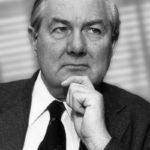
Tag: James Callaghan

  • James Callaghan – 1977 Response to the No Confidence in the Government Motion

    James Callaghan – 1977 Response to the No Confidence in the Government Motion

    The speech made by James Callaghan, the then Prime Minister, in the House of Commons on 23 March 1977.

    I listened to the right hon. Lady’s essay with considerable interest. It was a series of generalisations which, while certainly interesting, were perhaps not altogether novel. As her complaint against me and the bill of indictment built up minute after minute, until I was almost overwhelmed, I felt like repeating the immortal words of Adlai Stevenson” If the right hon. Lady will stop telling untruths about me, I promise not to tell the truth about her.”

    However, in the series of generalisations to which the House was treated I did not find any particular thread that led me to discover how the Conservative Party would deal with the issues of the day. At the end of the right hon. Lady’s speech I was still not clear whether it was the policy of the right hon. Member for Leeds, North-East (Sir K. Joseph) that would prevail on public expenditure. I was still not quite clear, on the matter of incomes policy, whether it was the good sense of the right hon. Member for Lowestoft (Mr. Prior) or the attitude of the right hon. Member for Leeds, North-East that would prevail.

    I have no idea what they would do about industrial strategy or securing industrial regeneration. Nor was there any indication of how they would see Britain’s social progress. There was none of that. I say to those who are not just blind followers of the right hon. Lady that before they vote tonight they should consider what they are voting for as well as what they are voting against.

    The truth is that since the events of last autumn there has been a new stability in the financial and monetary affairs of this country. It is true—reserves have risen by $3.7 billion in the last two months. We have successfully negotiated a safety net that has given stability to sterling. This is together with the $1.5 billion medium-term credit negotiated from the commercial banks on favourable terms, which indicates confidence in this country’s future and in the Labour Government’s policies.

    In the last four months there have been more than £6 billion worth of sales of gilts to help finance our borrowing requirements. Interest rates are now down, with the minimum lending rate at a full two points less than it was when the Opposition left office of 1974.

    Our domestic credit expansion is well within the target of £9 billion in a full year. Within the last year, the sterling money supply has increased by a little over 6 per cent. compared with 28 per cent. and 24 per cent. in the last two years that the Opposition were in office. If this situation continues, the home buyer can look forward to a reduction in building society rates of interest.

    The growth of industrial output of 2 per cent. and of gross domestic product of 1 per cent. in the fourth quarter shows that the economy is now turning upwards. In the most recent three months exports are up and imports are holding level, with the current deficit reduced to £288 million compared with £518 million in the preceding three months.

    Business confidence is on the upturn. The percentage of firms working below capacity is the lowest for two years and new orders for exports of engineering industries are up by 46 per cent. It was welcome news yesterday that unemployment has fallen again, as it has in each of the last two months. The fall last month, seasonally adjusted, was the biggest for four years.

    The most welcome news is the fall in the number of unemployed school-leavers, from 208,000 in July to 42,000 in February and 34,000 in March. There are more vacancies for jobs—these are up by a third on a year ago. Our industrial relations record, due to the work of ACAS and the industrial relations legislation which was passed on the basis of conciliation and consent and not on confrontation, is the best for 10 years.

    I will come to the matter of unemployment again in a moment. I cannot guarantee that this decline of the last two months will be continued in the next few months. [HON. MEMBERS: “Oh.”] I see no reason for hon. Members to mock that statement, unless they are seeking only to make party points. The immensity of the task on unemployment is added to by the fact that at the present time the number of additional new entrants to the work force is about 150,000 a year. That makes the problem all the more formidable.

    The world economy is still in a precarious state and the wrong decisions internationally could have serious effects on our economy and on those more vulnerable economies in the less developed countries. It is my hope that the Downing Street summit will achieve a unity of Western leaders in purpose and action. We must ensure a unity of action to prevent a trade war that will plunge the world back into an even deeper recession. We must ensure that there is unity of action to counteract unemployment, which is running at a rate of 15 million in the industrialised Western world. What kind of future are we offering to young people in the various industrialised countries if we tolerate these levels of unemployment as a permanent feature of Western industrialised society?

    It will be vital in May to seek a new initiative for the Western world to help the less developed countries overcome their balance of payments problems caused by the increase in oil prices.

    Mr. Nicholas Ridley (Cirencester and Tewkesbury) Does the Prime Minister think that it really helps less developed countries if we borrow $20 billion that would otherwise be available for development by them?

    The Prime Minister The two matters are not totally related. The future of the credit facilities for the less developed countries is something that is concerning the International Monetary Fund at the moment. Such calls as are being made upon it by Western industrialised countries will be offset by the creation of new facilities. We have a formidable agenda in front of us and this is something in which the whole future of society—whether it be capitalist, mixed, Socialist, or Marxist is at stake. Did hon. Members hear anything about this from the Leader of the Opposition today?

    Britain is not isolated or insulated from the rest of the world economically. But, especially with North Sea oil coming in at a rate of 30 million tons a year—one-third of our requirements—our economy presents a picture of some encouragement for the future—I emphasise “some encouragement”. That view is receiving endorsement by authoritative commentators throughout the world.

    Last week, the OECD, in its annual review of the United Kingdom economy, said: Britain could achieve a rapid rate of economic growth compared with past levels and a steady rise in living standards over the next few years. About this Administration it went on to say: As a result of the relatively novel approach”— adopted by this Government— less heavily orientated than previously towards the short term, the economy could—for the first time since the 1967 devaluation—be able to break away from the vicious circle of the past. That is the judgment of those who consider where the country has got to today, and it is a picture of some encouragement to the British people.

    There are many problems ahead. Our position is based, as the right hon. Lady said, on the industrial strategy. That strategy is not just the strategy of the Government, as she always seems to think. It is a strategy that has the full backing of the TUC and of the CBI. So when the right hon. Lady attacks the industrial strategy she is not just attacking the Government, as she seems to think; she is attacking a policy agreed among these three major elements. It is recognised that sustained recovery is needed. For the troubles of our economy are by now long-standing and deep-seated. To make the structural changes that are necessary to restore the dynamic of a mixed economy will need a settled approach over a long, hard haul. The foundations of economic health will not be relaid in less than a decade. Yes, that is from “The Right Approach”. I have been quoting from it for some time, and right hon. and hon. Members opposite did not even notice.

    Our policy is based not just on words but on a co-operative effort by Government, trade unions and management. So what can be done to regenerate our industry, since it is industry that will provide the basis for our future prosperity? I have described before what industrial sectors and firms are doing, and it is upon our industrial performance that the future of our standard of life and, indeed, the nature of our society will depend.

    But that is not all. We recognise that our greatest national asset is the skill of our own people. That is why we have devoted over £180 million for training and retraining, created over 86,000 extra training places, and applied special measures to keep people in work. The £202 million spent in the last 20 months on the temporary employment subsidy has helped to preserve against the world blizzard 214,000 jobs, and we have also provided £130 million for the job creation programme, and introduced many other measures besides.

    All round, the industrial strategy is blessed by representatives of both labour and management in industry. What would the Opposition do, for example, about the 40 sector working parties now going through their own industries, firm by firm to see how industrial efficiency can be increased? What would the Opposition do about the selective aids which are now going to vital industries such as machine tools, machinery, foundries and electronic components, where thousands of jobs are involved? We know what the right hon. Member for Leeds, North-East would do: he would have them out on the stones next week.

    Sir Keith Joseph (Leeds, North-East) Will the Prime Minister tell us where the money that the Government are spending to sustain some industries is coming from except by destroying other jobs by over-taxing, over-borrowing and printing money?

    The Prime Minister Did I hear the right hon. Gentleman say “printing money”? I have always known him to be an honest man, even if it costs him a great deal, but, really, he knows better than that. What has he to say for himself? “Printing money”? I shall answer him. I would sooner that taxation was a little higher and 200,000 people were kept in work than pursue the policy of abolishing all the subsidies and putting those people on the dole.

    I hoped that the Leader of the Opposition would spell out, as her leading spokesman is opposed to this policy, what she would do. What would she put in place of our policy? What would she do to regenerate industry? How would she create the jobs? Would she get rid of the temporary employment subsidy? These are questions that people will be asking the Conservative Party, and we have no idea of what the Conservative policy is in any of these areas.

    I turn now to the question of prices because prices are one of the key issues. Last year, with the co-operation of the trade unions, we had good success, and inflation came down to under 13 per cent. There have been set-backs since then, and it is right that the country should know the reasons and what the Government are doing to try to ensure that these set-backs do not recur.

    Last summer, when the pound came under heavy pressure in the currency markets of the world, the sterling prices of our imports rose, and we are still seeing the effects, although, as I have said, the value of the pound is now stabilised. It will still be a few months before the benefits of the more stable pound are seen in the shops, but already the benefits are coming through for our wholesale prices.

    In the last three months input prices rose by only 2¼ per cent.—a very low figure. In a few months’ time we shall be seeing the effect on the prices of goods in the shops, and the latest forecasts indicate a good prospect that by the end of this year inflation will be below the 15 per cent. estimated last December. Indeed, the latest forecast by the OECD, published last week, predicted a rise below 12 per cent. at an annual rate in the second half of the year.

    But no Government could guarantee that, because the prices of many of the goods in our shops are dependent on factors right outside any Government’s control. Last summer’s drought put up food prices by 6 per cent. or more, and, as the House knows, world commodity prices are outside the Government’s control. Indeed, world prices in dollar terms are currently more than 50 per cent. up on 12 months ago, and there have been particularly steep increases in the price of coffee, which has trebled, and that of tea, which has increased by two and a half times on the commodity markets.

    We have seen some glimpses of what the Opposition’s policy is on these matters. I shall take the House into my confidence in case they have not caught everyone’s attention. The hon. Member for Derbyshire, West (Mr. Scott-Hopkins) told my right hon. Friend the Minister of Agriculture on 16th March that he failed to understand why my right hon. Friend was unwilling to accept the package of the Commission in Brussels and devalue the green pound by 5.9 per cent. The effect of that would be to increase food prices in this country by 1¼ per cent. at a stroke—immediately—if my right hon. Friend accepted that misguided advice.

    What about the hon. Member for Cleveland and Whitby (Mr. Brittan), who I am glad to see has now been promoted to the Front Bench? His view is that there is a powerful case to be made against price controls altogether. Is that the policy of the Opposition? Is it?

    The Opposition seem to be a little confused. They are not quite sure whether their policy is to get rid of price control or to maintain price control. We shall give them the opportunity of making up their minds. They can vote for our new prices Bill when it is brought to the House in a week or two’s time. Let us see where they stand. Let them give us a clear indication.

    We cannot achieve success—[HON. MEMBERS: “Hear, hear.”]—Conservative Members are very sharp today—we cannot achieve success without ensuring other policy considerations and unless we take into account four elements. The Opposition should have told us where they stand on these elements.

    First, we need a stable currency. Secondly, we need a new incomes agreement. Thirdly, we need increased competitiveness and efficiency in British industry. Fourthly, we need Government intervention against unjustifiable price increases and profit margins.

    The Opposition will soon have the chance to stand up and be counted. The Government will be introducing a new prices Bill. The new policy will be based on profit margin control, subject to safeguards, for firms in manufacturing, services, and distribution. This will replace the detailed, over-restrictive and outdated cost controls written into the Price Code that we inherited from the last Conservative Government.

    The Price Commission will be given new powers to investigate and, if necessary, to disallow specific price increases anywhere in the economy. These changes will greatly increase the flexibility and efficiency of our system of price control. Are the Opposition in favour of this or are they against?

    I pass now to the future of this Parliament.

    Mr. William Whitelaw (Penrith and The Border) Before the Prime Minister leaves the subject of prices, is it not really time that the Chancellor of the Exchequer had the courage and the decency to admit to the British people that his claim that inflation was running at 8.4 per cent. at the October 1974 election was utterly and totally fraudulent? If the Chancellor will not do that, what can his credibility be for the future?

    The Prime Minister The right hon. Gentleman will have the pleasure of hearing my right hon. Friend the Chancellor of the Exchequer introduce his Budget next week.

    I turn for a moment to the future for us sitting in this House. First and foremost, the Government intend to use the time ahead to carry through our economic and industrial strategy. The various indicators to which I referred earlier all point perhaps for the first time for a generation, to the possibility of at last securing steady and sustainable economic growth in this country, with a stable currency, a surplus on the balance of payments, strict control of monetary policy, falling rates of interest, declining price inflation, a rising rate of investment in manufacturing industry, continuing industrial peace, tax reforms and a lower burden of personal taxation. On these foundations we shall build the growing prosperity of our people.

    We shall use the time of this Parliament to plan how best to distribute the fruits of success of our economic policy and to maintain a proper balance between the needs of the public services and the wish of the private individual to have more real income in his pocket to spend. It will require planning. I tell the right hon. Lady the Leader of the Opposition that this cannot be left to the brutal dictates of the laissez-faire market; nor can it be frittered away in current consumption. The future strength of our industry must be secured through investment in our industrial strategy. We shall plan not only the regeneration of our industry but that of our great cities, to eliminate ghettos of poverty and racial tension. We shall see these policies through.

    It will need the co-operation of all our people. The social cohesion that we have maintained through these last few difficult years was possible only because we were able to win and hold the trust of the working people of this country.

    We do not know where the Opposition stand on any of these major issues. We do not even know where they stand or whether they would try to get another voluntary incomes policy. But we know that without the voluntary co-operation of the British working people the whole of our recovery and the fight against inflation would be entirely jeopardised. There is only one way, that of conciliation and consultation, preserving the cohesion and consensus in our society, of which the Opposition were once rightly proud but which in recent years they seem to have deserted.

    This Government follow these objectives and have pursued them successfully during the past three years and will continue to do so in the remaining years of this Parliament.

    Mr. Eldon Griffiths (Bury St. Edmunds) rose—

    The Prime Minister Much else—

    Mr. Eldon Griffiths rose—

    Mr. Speaker Order. If the Prime Minister is not giving way, the hon. Member for Bury St. Edmunds (Mr. Griffiths) must sit down.

    The Prime Minister Much else remains to be done. I have already referred to the need to co-ordinate the responsibilities of industrialised countries to our global economic problems, and I gladly welcome contributions here.

    I shall say one other thing about the vote tonight and the attitude of the Opposition. There are hon. Members on both sides of the House who have a deep and genuine concern about the problems of East-West relations. Perhaps the biggest fear that we have is over whether we shall maintain peace or drift into war. The problems are those of nuclear proliferation, of who holds nuclear weapons, and of whether we endeavour to live in relative amity with those who hold an entirely different philosophic view about the organisation of society.

    If we cannot learn to live with them, we shall certainly die with them.

    Against that background I ask the House to consider whether the right hon. Lady, the Leader of the Opposition, contributes to detente and relations with the Soviet Union. The Opposition’s domestic policies are mirrored in their international policy which, where it is specific, is dangerous, and on many major issues and crucial areas of international economic co-operation it is totally non-existent. It is against this background that we have been conducting conversations to see on what basis these general policies should be continued.

    The conversations have taken place with many people. We have been anxious to discover whether there is sufficient identity of interest to enable the general policies that I have outlined to be continued. There is no doubt that the Government, half way through the life of this Parliament, wish to see that the policies which are being followed—they are not pleasant policies, and they are not intended to be pleasant—shall be followed through resolutely.

    We have had discussions with the leaders of the Ulster Unionist Party. It is not my intention to go into any detail on this except to say that I am impressed by the case that has been made by the hon. Member for Antrim, South (Mr. Molyneaux) and by the right hon. Member for Down, South (Mr. Powell) who accompanied him on the matter of the number of seats and the under-representation of Northern Ireland in this House. I indicated to the hon. Gentleman—and I hope that he will not mind my saying this—that, irrespective of the way in which he and his colleagues vote tonight, it is my intention, with the consent of my colleagues, to refer to a Speaker’s Conference, if you will care to preside, Mr. Speaker, the question of the representation of Northern Ireland.

    The hon. Member for Antrim, South has made no bargain with me about that. I have no idea how he intends to vote, but I told him and I repeat here publicly what I intend to do.

    Mr. James Kilfedder (Down, North) If the right hon. Gentleman feels that these are changes that should be granted to the Ulster people now why did he not grant them years ago when we were pressing for them in this House?

    The Prime Minister There has been considerable debate about that—[HON. MEMBERS: “Bribery.”]—but the latest reason is that the House was genuinely waiting for the result of the devolution discussions and for what would happen—[Interruption.] The Conservatives may not like it, but it happens to be the simple truth.

    Mr. Michael Mates (Petersfield) rose—

    The Prime Minister The Lord President and I have also had talks with the Leader of the Liberal Party.

    Mr. Mates rose—

    Mr. Speaker Order. The Prime Minister is clearly not going to give way.

    Mr. Mates rose—

    Hon. Members Name him!

    Mr. Speaker Order. I have no intention of naming anyone if I can help it.

    The Prime Minister Very well, Mr. Speaker, I shall give way to the hon. Gentleman.

    Mr. Mates I am grateful to the Prime Minister. His talk of bargaining over seats in Ulster is a part, albeit an unattractive part, of the political deals that go on. Will the right hon. Gentleman take this opportunity categorically to deny that any deal was offered or mentioned concerning the movement of two battalions of troops to Ulster as part of a political settlement? Will he confirm that this was no part of his discussions, because to use British troops as a political pawn in this chess game would be utterly disgusting?

    The Prime Minister It only goes to show that second or third thoughts are best, and I am glad that I gave way to the hon. Gentleman. I am sure that the hon. Member for Antrim, South will not mind my saying that at no time in our discussions did any questions of this sort come up and that the hon. Gentleman and myself would have regarded it as insulting if we had endeavoured to bargain on that basis.

    Mr. James Molyneaux (Antrim, South) I am grateful to the Prime Minister for giving me this opportunity for denying that any such point was raised at any time. I think that we would both view any such report with contempt. May I also say in fairness to the Prime Minister that all our discussions were conducted on the basis that there could be no concession or sacrifice of principle on the part of either of us?

    The Prime Minister I was saying that my right hon. Friend the Lord President and I had discussions with the Leader of the Liberal Party and with the hon. Member for Cornwall, North (Mr. Pardoe). It is our view that there is a sufficient identity of interest between us at present to establish some machinery that will enable us to consult each other about future developments in this Parliament—[HON. MEMBERS: “Oh.”] We therefore—[An HON. MEMBER: “Sing it again.”]

    Mr. William Molloy (Ealing, North) Chuck him out.

    Mr. Speaker Order. The House knows that I cannot see behind me, but I can hear. I hope that whoever has been shouting at my left ear will stop doing it and go away.

    The Prime Minister You have no idea how much you have relieved my mind, Mr. Speaker. I thought that it was you shouting at me.
    We have therefore agreed to establish some machinery to keep our positions under review and we intend to try an experiment that will last until the end of the present parliamentary Session, when both the Liberal Party and ourselves can consider whether it has been of sufficient benefit to the country to be continued—[Interruption.] I am very happy to see the Opposition applaud this new-found stability in Parliament. It will give this Administration the stability it needs to carry on with the task of regenerating British industry and of securing our programme.

    We therefore intend to set up a joint consultative committee under the chairmanship of my right hon. Friend the Leader of the House. This committee will examine policy and other issues that arise before they come to the House, and of course, we shall examine the Liberal Party’s proposals. [Interruption.] I think that Conservative Members should listen to this, because their fate may depend upon it.

    The existence of this committee will not commit the Government to accepting the views of the Liberal Party, nor the Liberal Party to supporting the Government on any issue. There will, however, be regular meetings between Ministers and spokesmen of the Liberal Party including meetings, for example—which have already begun—between the Chancellor of the Exchequer and the Liberal Party’s economic spokesman.

    Mr. Cranley Onslow (Woking) On a point of order, Mr. Speaker. Is it not a well-established practice that Budget proposals are not divulged to anybody in advance? May we be assured that that practice will not be set aside in this relationship between the Government and the Liberal Party?

    Mr. Speaker That is not a point of order. I suggest to the House that we shall not know more unless we listen.

    Mr. Kenneth Lewis (Rutland and Stamford) On a point of order, Mr. Speaker. In view of what the Prime Minister has lust said, may we take it that the next Liberal Party spokesman will be speaking from the other side of the House?

    Mr. Speaker Order.

    Mr. Kenneth Lewis rose—

    Mr. Speaker Order.

    Mr. Kenneth Lewis rose—

    Mr. Speaker Order. I warn the hon. Gentleman that he has been extremely discourteous to me. I warn hon. Members that unless they resume their seats when I stand up and call for order, I shall order them out of the Chamber. I know the importance of the vote tonight to both sides, but the House must treat its Speaker with courtesy.

    Mr. Timothy Raison (Aylesbury) Will the Prime Minister give way?

    The Prime Minister No. I know that there were complaints about the reception that the right hon. Lady received, but it has been repaid a thousand fold by the Opposition during the last half hour.

    In addition, the Prime Minister and the Leader of the Liberal Party will meet whenever necessary to discuss these matters. [An HON. MEMBER: “What does that mean?”] It means exactly what it says—that we shall meet for discussions.

    The issue of direct elections is a difficult one. I have already indicated that the Government will be presenting legislation on direct elections to Parliament in this Session, for direct elections next year. The Liberal Party has reaffirmed to me its strong conviction that a proportional system should be used as the method of election.

    Next week the Government propose to publish their White Paper on direct elections. As hon. Members will find, that will set out a choice among different electoral systems, but it will make no recommendation. The purpose of doing that is to enable the Government to hear the views of the House on these matters, but, in view of the arrangement that I now propose to enter into with the Leader of the Liberal Party, there will be consultation between us on the method to be adopted, and the Government’s final recommendation will take full account of the Liberal Party’s commitment. [Interruption.] I do not know whether Conservative Members think they are disturbing me, but I promise them that they are not. I could go on for a long time.

    To come back to the White Paper, whatever the final recommendation on these matters, it will be subject to a free vote of both Houses of Parliament. As far as the Government are concerned, all hon. Members will be entitled to vote in any way that they think fit.

    The Leader of the Liberal Party put to us very strongly, though it was hardly necessary to do so because we are agreed about this, that progress should be made on legislation for devolution, and to this end the Liberal Party has today submitted a detailed memorandum to us. Consideration will be given to that document and consultations will begin on it, and in any future debate on the devolved Assemblies and the method of representation—for example, proportional representation—there will be a free vote.

    The House has no doubt forgotten, but there was the Housing (Homeless Persons) Bill which I recommended to the House during the Queen’s Speech, but for which time was not able to be found, so the hon. Member for the Isle of Wight (Mr. Ross) took over the Bill and with some Government assistance has been endeavouring to put it through. We shall provide extra time to secure the passage of that Bill.

    The Local Authorities (Works) Bill will be confined to the provisions that are required to protect the existing activities of direct labour organisations, in the light of local government reorganisation.

    That, together with the fact that we agree that this should be made public, represents the contents of the discussions that have gone on between us. They will give the Government the opportunity of maintaining a stable position while they carry through their economic and social policies. It will enable us to take away what the right hon. Lady thought was a weakness, and that is the instability of the Government not knowing from day to day what will be the position of the Opposition. We shall now be able to overcome that, and for that reason I am certain that this is in the national interest.

    Mr. Dennis Skinner (Bolsover) It seems that my right hon. Friend and other members of the Cabinet will spend a great deal of their time and energy in future consulting the 13 Members of the Liberal Party. Will my right hon. Friend give a categoric assurance that there will be equal and if necessary better consultation with Back Bench Members of his own Parliamentary Labour Party, because we carry more weight in this Parliament than do the Liberals?

    The Prime Minister My hon. Friend is quite correct. As he will know and as the Opposition do not know, in recent weeks there has been correspondence between the Liaison Committee and the Chairman of the Parliamentary Labour Party and myself and my right hon. Friend the Leader of the House in which we have overhauled the whole process of consultation with the Parliamentary Labour Party. As my hon. Friend knows, this was not to be published, but the new machinery was reported to the Parliamentary Labour Party meeting two or three weeks ago when I was present, I believe that my hon. Friend was there, too. It was unanimously accepted as being appropriate and suitable to enable the views and opinions of the Parliamentary Labour Party to be borne in upon the Government before legislation was introduced. I thank my hon. Friend for enabling me to make that clear.

    Mr. James Sillars (South Ayrshire) I am grateful to the Prime Minister for giving way; he has given way a great deal this afternoon. I come back to the Liberal Party memorandum on devolution. Would not my right hon. Friend agree that the main problem about devolution has been and always will be the timetable motion? If the Liberal Party suggests that that should be a vote of confidence issue, we all know that the problem about the future of a timetable motion, as with the one on 22nd February, is the Labour Party’s own Members of Parliament.

    The Prime Minister I regret to say that I have not yet studied the Liberal Party’s memorandum. It has only just reached us.

    Hon. Members Oh!

    Mr. Speaker Order.

    The Prime Minister I see that the Opposition are in a giggly mood, and I suppose that it is a measure of their discomfiture.

    As far as the future of the Bill is concerned, I would have no hesitation in discussing by what method we can ensure that there is progress on the Bill to bring it to a conclusion on as agreed a basis as possible. I can go no further than that. My view on this matter has always been clear. It has always seemed to me that it is vital in the interests of Scotland that there should be a Bill on devolution, and the more we can get it agreed, the better it will be. I can go no further than that.

    Mr. Eldon Griffiths rose—

    The Prime Minister I will not give way.

    Mr. Eldon Griffiths rose—

    Mr. Speaker Order. It is quite clear that the Prime Minister has said that he will not give way.

    Mr. Eldon Griffiths rose—

    The Prime Minister I have given way much more to the Opposition, but that, Mr. Speaker, concludes my report to the House.

    Hon. Members Oh!

    The Prime Minister My report was set against a barrage of interruption. But I must say that I have a feeling that at the end of the day I shall not feel as worried as will hon. Gentlemen opposite.

  • James Callaghan – 1977 Speech on the Loyal Address

    James Callaghan – 1977 Speech on the Loyal Address

    The speech made by James Callaghan, the then Prime Minister, in the House of Commons on 3 November 1977.

    I join the Leader of the Opposition in paying tribute to the agreeable manner in which both the mover and seconder of the Loyal Address, my hon. Friends the Members for Leicester, East (Mr. Bradley) and Hemel Hempstead (Mr. Corbett), performed their tasks.

    My hon. Friend the Member for Leicester, East lived up to our expectations. He was well informed and combative. He has a distinguished trade union record in his own union, of which he has been President for 13 years. He has done a remarkable job there, on which all members of the Transport and Salaried Staffs’ Association have congratulated him. He is very well known for his work in international transport and, as the right hon. Lady the Leader of the Opposition said, he is Chairman of Kettering Town Football Club. We all know my hon. Friend’s disposition. I do not know how he survives now that the club has been top of the Southern League for so long. It must be a most depressing thought for him. Perhaps Mr. Ron Greenwood, the England manager, would like to have my hon. Friend’s telephone number. He might be able to do something with it.

    As the right hon. Lady said, both my hon. Friend the Member for Leicester, East and my hon. Friend the Member for Hemel Hempstead referred to complaints against the Government. But what were they complaining about? They were complaining about inadequate public expenditure. They were complaining that their hospitals were not being modernised, as I know from correspondence that I have received.

    The right hon. Lady cannot have the arguments both ways. She will try, but I do not think that the attempt will carry much conviction. Does she believe that we should immediately meet the complaints of both my hon. Friends in these matters of public expenditure? She asked us to do so in the matter of Forces’ pay, to which I shall refer a little later. It does not lie in the mouth of the right hon. Lady to pick up that kind of complaint, which I dare say will be used time after time in the country by the Conservative Party, and pretend that there is a painless way to reduce public expenditure. There is not. When it is reduced, people suffer and services go under.

    I congratulate both my hon. Friends on the way in which they represent their constituencies. They are basically both good constituency Members, and I congratulate them on that.

    Before I proceed with a discussion of the Queen’s Speech, I should like to refer to the statement that President Brezhnev made yesterday to the Joint Session of the Supreme Soviet and the Central Committee. As the House will know, President Carter, President Brezhnev and I agreed that negotiations would begin last July on the question of trying to bring about a comprehensive test ban treaty. I have said in the House on a number of occasions that there was a serious and businesslike atmosphere about these discussions, but we were held up because the Soviet Union genuinely advanced the view that peaceful nuclear explosions could be delineated separately from other nuclear explosions. We do not accept this view. We did not see how it could be so. The discussion proceeded in a very orderly way.

    The statement that President Brezhnev made yesterday, in which he said, as I understand it, that he was prepared to reach agreement on a moratorium covering peaceful nuclear explosions along with a ban on all nuclear weapon tests, is a most significant development of Soviet policy. It is something that I welcome very much. I would say that it is a signal—a signal to the West that the Soviet leadership are in earnest about the policy of detente. If they had merely been negotiating on the basis of propaganda, they would not have come to this decision, which is something that we should very much welcome.

    On the question of defence, I would only say to the right hon. Lady that it every other NATO country spent the same proportion of its gross national product as we spend on defence, the troubles of NATO would have been over long since. I seem to remember that whereas we cut about £200 million off our defence budget in the last round of public expenditure reductions—[Interruption.] I do not carry the exact figures in my head. I believe that I am right, but I am ready to be corrected in the House. I believe that if every other country spent the same proportion of GNP as we do, it would be worth about $21 billion to NATO. Therefore, let some other people also consider where their responsibilities lie.

    Mr. Norman Tebbit (Chingford) rose—

    The Prime Minister I shall not give way now. I have only just started my speech.

    Mr. Tebbit rose—

    Mr. Speaker Order. It looks as though the Prime Minister is not giving way.

    The Prime Minister We are only at the beginning of the Session. I have a feeling that I shall have enough of the hon. Gentleman before it finishes.

    The proposals in the Queen’s Speech constitute a full programme for a normal Session. The three major Bills—on devolution to Scotland and to Wales and to provide for direct elections to the European Assembly—will take up a substantial part of the available parliamentary time. In addition, there will be the usual essential Bills and some highly desirable Bills that we should like to introduce if time becomes available without putting too much pressure on hon. Members. The Bills falling in this category include the Bill to improve safety and discipline at sea and a Bill to bring the industrial rights of Post Office workers into line with those of other workers.

    As always, there are a number of measures that my hon. Friends have told me that they would like to see, and I have no doubt that there are Bills that Opposition Members will say they would like to see. Therefore, I should like to give an indication of other matters which are becoming ripe for legislation but which will depend on the parliamentary time we have available. There is a possible Bill to implement a European convention on the suppression of terrorism; and a Bill to establish new bodies to be responsible for professional standards in nursing and midwifery; and there are measures of consumer protection and cooperation, including legislation to establish a Co-operative Development Agency; and there is a measure to protect small depositors.

    The right hon. Lady spoke of the need for an education Bill. There is a prospect, although I put it no higher, of such a Bill, dealing with school management and parents’ wishes in the allocation of schools. There is a growing need to reorganise the higher courts in Northern Ireland. We shall take any suitable opportunity to begin legislation on one or more of these matters, although I repeat that at the beginning of the Session there seems unlikely to be much spare parliamentary time.

    My right hon. Friend the Leader of the House will bring forward the usual proposals on Private Members’ time. The allocation of Supply time provided by the Standing Order will apply, and the Leader of the Opposition will no doubt wish to discuss with the other parties what Supply Days should be allocated to them.

    Hon. Members will see that there is no likelihood of Parliament’s being short of work. Indeed, there seems enough work already not only for this Session but also for a full and fruitful Session in 1978–79. But perhaps we had better wait and see how things develop.

    Mr. Gordon Wilson (Dundee, East) rose—

    The Prime Minister I shall come to the hon. Gentleman’s troubles a little later, if that is agreeable.

    Obviously, the fact that the Government are in a minority in the House makes the task of legislation more difficult. It does not impede the Government on administrative matters, except where the administrative decisions need later to be submitted to Parliament, and then we tend to get into trouble. [Interruption.] Of course, there are certain administrative decisions that a Government can take. There are others that need to be submitted to Parliament. I am not stating any novel constitutional principle. On the whole, despite one or two mishaps, I think that we have managed rather well so far.

    Here I should like to refer to the decision of the Liberal Party to enter into a working arrangement with the Government. By doing so, whilst preserving their full independence as a party, the Liberals ensured—this, of course, is why the Opposition are so angry with the Liberal Party —a measure of political stability at a time when the country was passing through a period of economic and financial difficulties last spring. The decision of the Liberal Party gave greater certainty to the Government that we could pursue with steadiness the policies that are now being seen to provide results, and the Liberal Party is entitled to full credit for that and for its decision.

    But the Opposition never allow us to forget that the Government are still a minority in the House, although it is becoming more of a moot point whether we are in a minority in the country. I say this because we have an important legislative programme to carry through. I would not want to see the major items in that programme either mutilated or prevented from being brought to a conclusion.

    In the last Session we had to endure being held up on the Scotland and Wales Bill for reasons chat are now largely removed.

    In short, I see no need for an election. The Government, with Liberal support, have a working majority and I hope that hon. Members in the Scottish National Party and Plaid Cymru agree that it would be a disservice to the people of Scotland and Wales if the two Bills were not brought to a conclusion, so that Scotland and Wales can then vote on the issue in the referendum on the specific question of whether they want to see these Assembles brought into being. The passage of these two Bills is a major issue for the Government.

    Mr. Gordon Wilson If the Prime Minister is soliciting support in the House, would it not be better if he were to revise fundamentally the terms of the Scotland Bill as announced in July and give the Scottish Assembly not only powers to provide employment and to run the economy but Scotland’s oil wealth, which the right hon. Gentleman’s Government are presently stealing?

    The Prime Minister I was coming to some of the changes we have made. I never hoped to satisfy the Scottish National Party, but I hope to satisfy the Scottish people.

    As a result of discussions that my right hon. Friend the Lord President has had during the summer months, we have agreed to introduce separate Bills for Scotland and Wales, and I hope that that meets the criticism that was being made last Session. In addition, there are new proposals for a referendum and improvements in the procedures when disputes arise on the interpretation or application of the devolution statute for Scotland. The revised Bills will not seek to regulate in so much detail as before the way in which the Assemblies arrange and conduct their business. The Scottish Assembly itself will be able to determine the time of its own dissolution. The Government’s powers to override the actions of the devolved Administrations are more closely defined. These are changes that were pressed upon us and they go a long way to meet criticisms that were uttered. In all this the protection of flatters essential to the unity of the United Kingdom will remain assured.

    I would like to confirm that the passage of each Bill has an equal importance in the eyes of the Government.

    Mr. Gwynfor Evans (Carmarthen) Will the Prime Minister inform the House of the timing and the order of these two measures?

    The Prime Minister I think that my right hon. Friend the Leader of the House should make the normal business reply in due course. I think that even the hon. Member for Carmarthen (Mr. Evans) will understand that it is not possible to be running two Bills in the same afternoon in the same debating chamber, but I want to make clear to him—[Interruption.] I am glad to see that there is a new-found enthusiasm by the Opposition in this matter. My right hon. Friend the Leader of the House will make an announcement on this very quickly. I want to assure the hon. Gentleman that the passage of both Bills has equal importance in the eyes of the Government.

    For reasons that have never been made clear, but which we can all suspect, I think that we know somehow that the Conservative Party is still opposed to coming to conclusions on these matters. What they want is a never-ending round of talk and talk and talk. That was all I could make out of what the right hon. Member for Cambridgeshire (Mr. Pym) wanted.

    I remind the right hon. Gentleman that it is now nearly nine years since the Kilbrandon Commission was set up and discussions have been proceeding ever since. How can we bring it to a considered conclusion if the Opposition call for talks and talks and talks? Experience going back some years shows that it is always possible for the talkers to prevent the passage of measures of this kind unless there is a timetable. We believe that a fixed amount of time should be allocated to these Bills and we shall ask the House to agree to a timetable that will provide for systematic discussion and a proper conclusion.

    Mr. Tam Dalyell (West Lothian) Under the new Bill, shall I still be able to vote on many matters in relation to West Bromwich but not West Lothian, as I was under the last Bill, and will my right hon. Friend be able to vote on many matters in relation to Carlisle but not Cardiff?

    The Prime Minister If my hon. Friend the Member for West Lothian (Mr. Dalyell) does not vote for the Bill he will not be able to vote for anything much else. It will not be me who will deal with him.

    The policy of the Government is to play a strong and positive part in the development of the European Community. We shall again present to Parliament a Bill to provide for direct elections to the European Assembly. Our purpose is to strengthen unity and democracy in Europe.

    This will be done with two conditions in mind. First, the authority of national Government and parliaments must be maintained and, second, we must ensure that the common policies followed by the Community do not impede national Governments in attaining their economic, industrial and regional objectives. In that context we shall continue to work for changes in the common agricultural policy.

    In the formulation of new Community policies, we shall work for real agreement and co-ordination among the members without any reserve. But we shall also inject a full measure of realism and we shall ensure that full account is taken of our needs, for example in such an important matter as the common fisheries policy. It would be interesting to know where the Conservative Party stands in its attitude to some of these Community matters. I read the speech of the right hon. Member for Yeovil (Mr. Peyton) agreeing with the Commission that it would be a very good thing to get rid of the so-called green pound no matter that it would raise food prices substantially, without any compensation, as far as I could see. Surely the Conservative Party should make clear whether it supports, without reservation, and on every issue put forward by the Community, the line adopted by the Community. Surely the Conservative Party can support the Community in general without lying down in front of it on every single issue.

    Mr. Peter Tapsell (Horncastle) Does not the Prime Minister realise that it has been the collapse in the value of sterling which has created all the problems with the green pound?

    The Prime Minister The hon. Member for Horncastle (Mr. Tapsell) knows much better than that. He knows the history of the green pound. It came into operation long before there was any question of the problem of sterling at all. The conflict arose because of German agricultural problems.

    The Bill to provide for direct elections is substantially the same Bill as that to which the House gave a Second Reading last Session. Judging by the interruptions that are being made, it is likely to be the cause of some difficulties inside the parties. At its conference the Labour Party declared itself against the whole concept of these elections, and I have taken full account of that and also of the fact that my hon. Friend the Member for Bolsover (Mr. Skinner) did not sign the treaty. I fear that there is a difference of opinion between us. The Government’s opinion is that we are bound by the obligations undertaken when Britain entered the Community, that those obligations have been subsequently reinforced by the undertakings we have given to other European countries and that therefore we must proceed. The House gave the Bill a Second Reading last Session.

    There will be a free vote for Government supporters on the method of voting and the House will be able to make a choice between voting for a list of candidates or voting to elect a single Member by a simple majority. I notice the right hon. Lady’s early attempt to get an alibi on the subject. The system that will be chosen will be important because the choice of system will determine the date of the first elections. With the list system the elections can take place in 1978, whereas with the traditional first-past-the-post system the elections could not be held until 1979. [HON. MEMBERS: “Why not? ] That will have to be discussed when the Bill comes before the House, but it is basically because of the difficulties of delimiting constituencies in accordance with the practices and traditions laid down by the House. [Interruption]. I hear hon. Members saying that the delay has been our fault, but whatever the cause of the delay the simple fact is that we shall not have these elections until 1979 unless we choose the list system.

    Mr. Michael English (Nottingham, West) It may be that it is due to the opposite side of the House that my right hon. Friend is enforced to make this statement. Is he aware, however, that for centuries constituencies in this country were changed by being scheduled to the Act of Parliament concerned? It would be possible to do that if we so wished.

    The Prime Minister Of course that would be possible if the House wished to do it, but I should like to hear what the constituencies ad to say about that kind of practice. I think that my hon. Friend would find a great deal of difficulty if he proposed such an action without going through all the usual procedures.

    The Government will accept whatever decision the House arrives at on this matter. In order to reassure the right hon. Lady, I can say that our intention is to bring the Bill in on 10th November.

    I refer once again—and I think the House will be with me—to the continuing agony in Northern Ireland. Every year we return to this matter and each year there seems to be a growing understanding that the overwhelming majority of the people of the Province are totally opposed to the continuation of violence that has brought and will bring no political result but will lead only to death, maiming and destruction. The lawlessness continues. Murderous attacks are still frequent. However, in the last year there has been a progressive reduction in the level of violence, and the House will congratulate the security forces on their increased success in apprehending those responsible for such crimes. The House will pay tribute to the Royal Ulster Constabulary, the Army and the Ulster Defence Regiment for the way in which they are carrying out their duties.

    I believe that it is a common objective in the House to see a system of devolved government introduced in which all the community can participate and which would command widespread acceptance within the Province. My right hon. Friend the Secretary of State for Northern Ireland continues to seek sufficient common ground for this purpose among the Northern Ireland parties and will be prepared to consider a limited interim step if this seems more likely to be acceptable.

    However, direct rule must continue for the time being, and it must be as fair and as sensitive to the feelings of the community as possible. You, Mr. Speaker, have been good enough to say that you will be willing to continue with the conference under your chairmanship to consider the prospects of increased representation in Northern Ireland in this House.

    I place on record the deep respect of the whole House for the endurance and courage of people in all parts of Northern Ireland. We ask them to give no comfort to the men of violence, but to continue and increase their support for the forces that alone can bring security and quiet to the Province and enable the people there to live in peace.

    Mr. Churchill (Stretford) Does the Prime Minister not agree that it is a scandal that the Armed Forces of the Crown serving in Northern Ireland are earning half the wages of the average Grunwick worker, and will the right hon. Gentleman do something about that?

    The Prime Minister These matters will be discussed later. We all want to do the best we can for the Forces. There is no party issue between us on that. The hon. Gentleman knows, as do others, of the difficulties here. My right hon. Friend the Secretary of State for Defence is considering all these matters to see what help can be given.

    Perhaps I may here refer to the remarks of my hon. Friend the Member for Leicester, East on the problems of mixed communities and of the problems being caused in Leicester. I hope that the House will permit me to turn aside before passing on to other matters to comment on the disgraceful scenes that we witnessed during the recess in the attempts to foment racial discord.

    There could be few people of whatever party who did not feel a shaft of anger at the scenes at Lewisham and Lady-wood where ill-disposed people misused our democratic practices to create tension and raise up hatred and violence between black and white. I should like to offer a suggestion at the beginning of this Session which I hope the House will take in the spirit in which it is put forward. There may be some differences between the parties on how these matters should be handled, but for the sake of peace in our large cities I urge that we should not enlarge any differences which exist. The menace of the National Front is to all parties, and the methods of those who oppose the National Front by violence are equally unacceptable.

    The House has a responsibility through its attitudes on these matters when they are under discussion to foster harmony between all people living in these islands. We should have full and open discussions in the hope of coming to a common point of view so that on this, perhaps the most grave of issues, the House can act as a Council of State, giving a lead to the nation in creating a valuable cohesion in our society. We begin from the principle that all men and women, whatever their colour, who are citizens of this country should have equal rights under the law.

    I come to some of the other legislation. The purpose of the shipbuilding Bill will be to provide for a redundancy scheme for employees of British Shipbuilders and Harland and Wolff, which have been badly hit by the recession in shipbuilding throughout the world. The trade unions and British Shipbuilders have been consulted about the proposals and are participating in drawing up a scheme which will alleviate hardship on redundancy. This will be placed before the House in due course.

    Mr. Eric S. Heller (Liverpool, Walton) Will the National Enterprise Board be asked to seek out alternative employment in the areas concerned, since those areas are the worst hit by unemployment and just cannot tolerate more unemployment, even with redundancy payments?

    The Prime Minister My hon. Friend is quite right. Perhaps this matter can be raised again in the debate on trade and industry early next week. I shall see that my right hon. Friend the Secretary of State for Industry is informed about my hon. Friend’s point.

    On the new scheme to give help to people on the first occasions when they buy their own homes, there has been an improvement in the general situation because the mortgage interest rate is now down to 9½ per cent. That is saving many people a lot of money or is shortening the period of repayment. But we can now go further. Finding the deposit is often the first and biggest hurdle to jump. More than 40 per cent. of first-time buyers put down less than £1,000 as a deposit. We are therefore discussing with representative bodies the prospect of giving to young couples and others a loan of up to £500 which would be interest-free for the first five years. This would mean that their savings would be matched pound for pound up to the first £500 of savings. I am sure that this would be a very great boon.

    The purpose of the legislation on inner cities will be to give local authorities greater powers to help those who live and work there by means of direct financial assistance to industry to help with the conversion and improvement of old industrial premises, to give 100 per cent. grants in London to clear derelict land, and to subsidise rents and aid the preparation of sites.

    For the rural areas, a new transport Bill will remove restrictions which now make it illegal for car owners to make a charge when they give lifts, and it will also enable community buses to operate in areas that the ordinary bus service does not reach.

    We shall also need to reserve space in the legislative programme for legislation on Rhodesia, whose future the House will have the opportunity to discuss more fully next week during the debate on the renewal of the Southern Rhodesia Act. Therefore, perhaps the House will excuse me if I do not go into that in more detail now.

    With regard to our financial and economic position, we begin the parliamentary year at a time when Britain’s financial and economic position is improving, but the world climate has worsened. In the first half of this year world trade has been static. Only in the United States of America has there been a sustained expansion, but growth has slowed during the summer. In many countries like our own, unemployment has risen until total unemployment in the industrialised world now stands at no less a figure than 16 million—many of them young people.

    Nor do the latest forecasts for world economic growth and trade show much improvement next year, I regret to say. Some of the countries to which we were looking for growth in their economies will not be able to meet the targets that they had set for themselves. In an attempt to offset the shortfall both the German and the Japanese Governments announced measures to stimulate their economies.

    Nor have we solved the serious problems caused by the imbalance and mal-distribution of the world’s massive payments, surpluses and deficiencies since the rise in the price of oil. I remind the right hon. Lady that it is an important factor in considering how well off, or how much better off, we might have been if there had not been that increase. The right hon. Lady is right: one of our great hopes is North Sea oil. But she might put the other factor into the balance sheet when trying to draw up a fair assessment.

    I thought that it was untypical of the right hon. and learned Member for Huntingdonshire (Sir D. Renton) to be so ungenerous last week on the matter of overseas aid. The problems being posed for many of these developing countries are greater than they have ever known. The hardship is there, but it is not only a question of hardship. There is also the question of healthy growth. It seems to be both the path of wisdom and to have, I hope, some measure of idealism about it if, at a time when our financial situation is improving, we can set aside what, heaven knows, is only a small sum to help them towards a healthy world economy and a healthy position themselves.

    Sir David Renton (Huntingdonshire) I think that the right hon. Gentleman cannot be aware of the hardship that is being suffered through the National Health Service being made short of funds, as was mentioned by both the mover and the seconder of the Address, and by the serious cuts in education, upon which so much of the future of this country depends in those counties where the rate support grant has been cut. The right hon. Gentleman must be rather more sensitive. He should bear in mind, for example, that our people do not take kindly in such circumstances, to £5 million being paid to Communist guerrillas in Mozambique.

    The Prime Minister The right hon and learned Gentleman is being typical. Perhaps I have mistaken him all these years. He totally misrepresents the position on these matters. I think that in relation to Mozambique and in relation to cur general aid programme, what we do in the world is wise and sensible for a country such as Britain. I think that if Conservative Members were in Government they would take a view different from that which they now take. To encourage this shortsighted view among many people in Britain who are ready to believe the worst does no credit to the Conservative Party.

    The biggest problem of all is how to induce a large and sustained growth in the world economies, because without that world unemployment will not go down, nor will investment or world trade grow sufficiently. Britain is enjoying the agreeable experience of a massive improvement in our financial position. The exchange reserves are at record levels. Short-term interest rates have improved to the point that they are now about 5 per cent., against about 15 per cent. a year ago—much lower than when the Conservative Party was in power. Longer-term interest rates have come down significantly. Let us take credit for this. Let industry take credit for this: with encouragement from the Government the volume of our exports has increased by about 10 per cent., despite the depressed level of world trade. Let us not discourage our exporters by saying that they have not done anything. They have done a good job.

    The most significant measure of Britain’s success has been the continuing reduction month by month in the rate of inflation. Thanks to the co-operation of the trade unions and their members during the last two years we are now experiencing a most dramatic improvement in the rate of price increases. The sacrifices of the last two years have been worth while, and every family in the country will feel the benefit increasingly in the years and months ahead both through tax reductions and through less frequent price rises.

    Let us consider these tax reductions. I do not think that we should be deterred from making substantial changes in the rate because of the bureaucratic mind of the right hon. Lady. Incidentally, the right hon. Lady’s history is not right, but I shall not go into that.

    The tax on a single man or woman earning £40 a week this year will be £84 less than it was last year. In other words, this year’s reduction will be worth two weeks’ wages. A family man, with two children, earning £60 a week gets a reduction in his tax bill this year, by comparison with last year, of £106. If one goes to the other end of the scale, one finds that a family man, with two children, earning £10,000 a year gets a reduction of £478. That is actual money in his pocket. He will pay £478 less than he did a year ago. That is equal to a fortnight’s salary or wages.

    Those are significant tax reductions, whatever qualification anybody might care to make. I shall have another opportunity to demonstrate this, but what is clear is that the burden of total tax and benefits is no greater today than it was when the Conservative Government left office.

    Mr. Tebbit rose—

    Mr. Speaker Order. We cannot have two hon. Members on their feet at the same time.

    The Prime Minister I rarely get any courtesy from the hon. Member for Chingford, and I ought not to turn the other cheek, but I give way to him.

    Mr. Tebbit I am grateful to the Prime Minister for giving way, and I shall extend the other cheek to him as well and give him the opportunity to tell the House whether that £60-a-week man on average industrial earnings, with two young children, will be as well off now as he was at the time of the last General Election.

    The Prime Minister The answer is “Yes “, in terms of tax deductions. What I am saying is that the average—[Interruption.] Let us have this argument on another day—[Interruption.] Very well, let us do it now, but I ask hon. Members not to complain if I take a long time, because I still have other things to say.

    In 1973–74, the average earnings of a married man with two children under 11 was £44.80 a week. In 1977–78, it is £80 a week. [Interruption.] The hon. Member for Chingford put his question, and he is getting a jolly good reply. The figures that I have given show that that man is earning £36 a week more now. If we take into account child benefits and family allowances, the tax and national insurance paid by the average family man is in real terms the same this year as it was in 1973–74.

    Let us continue with this argument because I shall relish it. We shall destroy the Conservative Party with regard to this matter before we have finished with it. I advise Conservative Members to check their figures very carefully. I am sure that they will try to find a lot of excuses. I have no doubt about that.

    Inflation is being conquered.

    Mr. Terence Higgins (Worthing) rose—

    The Prime Minister No.

    Mr. Speaker Order. It is quite clear that the Prime Minister is not giving way.

    The Prime Minister On the contrary, Mr. Speaker. I have given way a very great deal. However, I must proceed to the end of my speech. There are some things that I want to say with which the House will disagree but I hope that hon. Members will listen to them.

    Mr. Churchill On a point of order, Mr. Speaker. The Prime Minister indicated that he would make some reference to industrial production. Would it be in order for him to do so?

    Mr. Speaker That is not a point of order. The House takes very great care to ensure that I am not allowed to decide the contents of speeches.

    The Prime Minister If the hon. Member for Stretford (Mr. Churchill) can only contain himself, I shall come to that question.

    I ask the House to consider whether it is possible to consolidate the substantial improvement in the rate of inflation next year. My own answer is a qualified one. It is this: yes, we can if there is moderation in wage settlements. We have asked that the increases in national earnings during the next 12 months should be kept within a limit of 10 per cent. Let me say straight away that there is nothing mean or petty for a person earning £70 a week—which is now a little below the average—to earn another £7 a week. We should not treat that as though it is small beer or petty feed. It is a substantial sum.

    Some groups of workers, through their trade unions, have already shown that they are willing to settle within these limits. I thank them for it because they are acting in their own best interests.

    Another powerful instrument is the 12 months’ interval between settlements, which the TUC entered into voluntarily without any pressure. It undertook this itself as a means of securing an orderly return to collective bargaining.

    But I confess that I am concerned about some of the trends at the present time. I do not intend to discuss any particular claims this afternoon, but I want to leave no one in any doubt about what the Government are trying to do and why they are: trying to do it. This will mean repeating myself, but I must continue to drive it home.

    First, let me say what the struggle is about. We are not fighting against anyone. We are not trying to teach anyone a lesson—either any group of workers or any trade union. No. What we are fighting against is rising prices and rising unemployment. What we are fighting for 42is a moderate increase in pay in order to get more jobs, faster growth and steadier prices. All this can be got and, indeed, is now being got. The measures that the Chancellor has introduced will, if they are carried through, ensure a faster rate of growth next year than we have had for some years past. That is the Government’s policy. That is our responsibility and determination.

    I know that we have the support of many trade unions and millions of trade unionists. I urge them to settle within the guidelines and I also urge employers to do the same. This may bring difficulties with some groups. Perhaps we shall have friction and withdrawals of labour. I regret this prospect, but I can assure the House that the Government will not seek to provoke a confrontation. We do not wish to see any particular group of workers suffer, but nor do we think it right that any group should secure advantages through their strength that others are ready to forgo.

    It may be that this winter the British people will he asked to accept some dislocation and some inconvenience. Indeed, some is going on at the present time. The Government will do their best to minimise this, and as long as we have the support of the House of Commons and public opinion we shall continue to fight the battle for lower prices and lower unemployment.

    The support of public opinion is vital to our success, It is upon the settled conviction of the British people that we must and do rely. We must win this battle for Britain, and I ask for the support of every man and woman in the land.

    Mr. Victor Goodhew (St. Albans) What did the right hon. Gentleman do in 1974?

    The Prime Minister I at last come to the hon. Member for Stretford. The improvement in our financial—

    Mr. Goodhew Sheer hypocrisy.

    The Prime Minister How dare the hon. Member for St. Albans (Mr. Goodhew) say that?

    Mr. Goodhew Of course I dare. Will the right hon. Gentleman give way?

    The Prime Minister I am not giving way to that. The improvement in our financial affairs and the slowing down of inflation has not been matched by equal successes in increasing production or employment. I hope that satisfies the hon. Gentleman.

    Mr. Churchill No, it does not.

    The Prime Minister There have been some successes, notably in increasing the volume of our export of manufactures. But that has been partially offset by increased imports of manufactures, although not to the same extent. As my hon. Friend the Member for Hemel Hempstead said, some of our most important industries, such as footwear, textiles, shipbuilding, steel and clothing, have been passing through a difficult time. Now we are in a position to go for growth. Now we have overcome the inflationary spiral, not a boom which will collapse—[Interruption.] It will continue for the next few months. I have always said that. I am saying nothing new about this. This speech is so old that it could have been written in the Book of Exodus.

    I know that the right hon. Member for Lowestoft (Mr. Prior) has got to watch his back a little, but we shall look after him. He need not worry. I was trying to say that we are in a position to go for growth but not a boom which will collapse. We do not intend to do that and we shall not be pushed into that position. What we want is steady and sustained growth. [Interruption.] Is not that what the Opposition want, too? If they do, what are all the catcalls about?

    Through the industrial strategy we are planning ahead for the growth of output, higher productivity and more employment. Our ultimate aim must be a high output, high wage economy. That is the objective. But to get it—I hope that I have the support of the Opposition—we must move out of the present situation in which the productivity of both labour and capital and, therefore, our level of wages are all lower than that of our main competitors. That is why we shall continue to develop an industrial strategy which brings management, unions and the Government together.

    My hon. Friend the Member for Leicester, East referred to our commitment to a significant advance in industrial democracy so that workers should be able to serve on the boards of the firms and industries in which they work. Representation on the board must reflect the established methods and trade union procedures whereby workers’ views are already represented to their employers. The TUC at Blackpool in September pointed to ways other than board representation in which workers could be more closely involved in decision taking in ways more directly related to collective bargaining procedures.

    The Government welcome this development and when the discussions which we are now undertaking have been concluded we shall come forward with our own proposals. We aim to secure the widest possible consensus in the nationalised industries and we have already asked the chairmen to consult the unions with a view to making joint proposals for improvements in consultation and participation. They will be submitting interim reports on the progress that they have made by the end of the year.

    Above all our objectives, we want to conquer unemployment, particularly among the young. This is a matter of the deepest concern to everyone, and we continue to believe that the best foundation for more jobs is a growing economy and a healthy economy. We do not underrate what has been done so far, nor the stimulus which the Chancellor has applied. By next September the new Youth Opportunities Programme will be in full swing. It will provide up to 230,000 young people a year with a range of courses and opportunities designed to meet their individual needs as they seek secure permanent employment. This is a big programme. We shall take whatever steps are necessary to improve it wherever we can. There will be an opportunity for the House to discuss these matters further next Wednesday.

    Whilst we have wrestled with these intractable problems we have not forgotten our basic responsibilities to those without the strength to fight for themselves. Let us remember that in the week after next there will be a substantial increase in the retirement pension—to £17.50 for a single person and £.28 for a married couple. This will not simply restore the purchasing power of the pension but, with the decline in inflation which is taking place and will continue for some months, will raise it to a higher real value than ever before.

    Next April the second stage of the child benefit comes into effect, with a significantly higher level of benefit for about 7 million families and a doubling of the benefit for a quarter of a million single-parent families, and from this month we shall be extending the new non-contributory benefits for the disabled to include married women of working age who are unable to do their own housework.

    To conclude, the country is weathering the worst economic recession that the world has seen for over 40 years. We are giving protection to the victims of that recession. We stand in this country now at a point at which the real standard of life of our people is beginning to improve. We shall continue to improve it provided that we show restraint during the next year. Our added strength will enable Britain to play a larger part in the affairs of Europe and the world. We can truly say, as a result of a combination of circumstances well known to the House, that our destiny is now in our own hands, and it is for us to make of it what we will.

  • James Callaghan – 1977 Statement on Meeting with the French President

    James Callaghan – 1977 Statement on Meeting with the French President

    The statement made by James Callaghan, the then Prime Minister, in the House of Commons on 13 December 1977.

    With your permission, Mr. Speaker, I will make a statement about the talks I have had yesterday and today with the President of the French Republic, M. Valery Giscard d’Estaing.

    The objective of these annual meetings is to develop the habit of regular but informal consultation between British and French Ministers so that this becomes the most natural way of exchanging views on matters of long-term importance to both countries. On this occasion, I was glad to be able to welcome the President to Chequers together with the French Prime Minister, M. Barre, and their colleagues the Ministers of Foreign Affairs and of Defence. On the British side, my right hon. Friends the Chancellor of the Exchequer, the Foreign and Commonwealth Secretary, the Secretary of State for Defence, the Secretary of State for Trade, and the Minister of State for Industry took part in our discussions The talks took place in a friendly atmosphere and revealed a broad similarity of approach to the main issues of the day.

    As I reported to the House on 7th December, current questions affecting the European Community were fully discussed at last week’s meeting of the European Council. At Chequers, the President and I discussed the longer-term development of the Community. We found that our views were similar. We discussed the important and pressing question of the Community’s fisheries policy, on which the Commission’s proposals will provide the basis for a further meeting of the Fisheries Council next month.

    We resumed our discussions on the world economic situation and were in agreement that it is essential for the OECD and the Community to achieve their growth targets next year if unemployment is not to rise still higher. Our own fight against inflation, which is making good progress, needs the help of more expansionary policies in the strongest economies. We discussed the problems arising from the surpluses accumulated by the OPEC countries and by Japan.

    In a thorough review of our bilateral relations, we agreed to establish a Committee for Industrial Co-operation, drawn from senior officials of the two countries, which will identify new areas of industrial co-operation between us. These will include offshore oil technology, technology that is peripheral to the computer industry, the paper industry and the machine tool industry, among others. We welcomed the contacts already established between British Leyland and Renault on possible co-operation between these companies which, while leaving the initiative to them, we support and encourage.

    We discussed a proposal for a 2,000 megawatt cross-Channel electricity cable link. We noted that the generating authorities in our two countries are in negotiation towards an agreement and expressed our support for this. We reviewed prospects for co-operation in the supply of defence equipment, and welcomed the significant progress that is being made. We exchanged views on possible new projects in the field of civil aviation. We agreed that quick decisions were needed on the various options which had opened up and that these matters should be decided on the basis of the commercial and market factors involved.

    We agreed that there will be annual meetings in future between senior officials of our countries who are concerned with economic management. In a wider framework, we agreed to encourage the Franco-British Council to organise annual meetings, such as we already have with the Federal Republic of Germany and other countries, between leading British and French politicians, industrialists, trade unionists and others to discuss matters of common concern.

    We had a very thorough and useful exchange of views on the international situation, devoting particular attention to the prospects for a Middle East settlement and to Africa, on which our thinking was very close. We agreed to deepen consultation between us on African problems.

    This latest meeting has confirmed once again the value of these exchanges as a positive and constructive basis on which to build Franco-British friendship.

    Mrs. Thatcher

    May I put three points to the Prime Minister? First, does the Prime Minister agree that in these days we are not short of Summits, of committees of co-operation or of Summit statements, particularly about the need for extra growth, and that they are all phrased in the same terms? The only thing that we are short of is results from the Summits. It is ironic that this statement on the need for industrial growth comes on a day when industrial production is once again down. Does the right hon. Gentleman think that any practical proposals for growth have ever emerged from these Summit meetings?

    Secondly, in view of our need fox greater agricultural production, did the Prime Minister discuss with the President the need to devalue the green currencies? Thirdly, did he tell the President that it is his intention to increase his commitment to defence expenditure in accordance with our own commitment to our other allies?

    The Prime Minister

    It is true, I think, that there are far more international meetings than there ever have been and that sometimes the results are not commensurate with the effort which has been put in. Nevertheless, there are problems here of interdependence which have not been solved and cannot be solved by any one country. I know that I speak for the President of France, as I speak for myself, when I say that this exchange of views is of very great value, and I do not think that the right hon. Lady is doing justice to these exchanges by the approach that she takes.

    Certainly the matters of the cross-Channel electricity link, the supply of defence equipment, and the examination of new fields for co-operation in the industrial areas are of value. What happens, as the right hon. Lady may discover one day, is that one can supply a political impetus. When issues are being discussed by officials—no doubt very well—or by industries, it sometimes needs Heads of Government and appropriate Ministers to get together in order to give the real push. That is the value of it, not that any great results come out of any one meeting. I should like to cut down on the number of meetings that I attend in this way, but I do not think that it would be of value to this country if we were to cut off these Summits. Therefore, I do not agree with the right hon. Lady about that.

    We did not discuss the question whether we should devalue the green pound. All the green currencies in Europe are capable of adjustment and it is for Governments to decide when they do so. Our Government have not decided not to devalue. It would be a question how we measure the relative importance of the consumer and the return to farmers in this sphere.

    We did not discuss our contributions in the area of defence, at least not in financial terms. We discussed possible projects on which we could work together in the sphere both of a possible replacement for some existing helicopters and, indeed, of some other armaments.

    Mr. Conlan

    Did my right hon. Friend take the opportunity of discussing the problems associated with the Concorde landing rights, and did he give the opportunity to the French Government to associate with the British Government to ensure that there will be more co-ordination than there has been in the past to ensure that Concorde can land in a greater number of places than is seemingly possible at the moment?

    The Prime Minister

    We discussed this briefly, but the problem of the landing rights at Singapore is basically a matter, I think, with which we ourselves have to deal, and I did not invite the French President to assist on that matter. However, there is co-operation whenever we need to work together.

    Mr. Cyril Smith

    Did the Prime Minister have any discussion on the problems of the British textile industry, particularly in relation to any objections that France or any other Common Market Member may have to an extension of the temporary employment subsidy? If he did have such discussions, what form did they take and can he give us any indication whether the Government will agree to any such extension?

    The Prime Minister

    We discussed this matter briefly, particularly in relation to the negotiations that the Community has been carrying on. I did not raise with the French President the question of the temporary employment subsidy, nor he with me. Obviously this has to be the subject of an early decision, but I cannot imagine any circumstances in which either it will not continue or there will not be a replacement of it when the present scheme runs out—unless, of course, we have the dire misfortune of the return of a Conservative Government, in which case all these schemes will be washed out and unemployment will rise to 3 million.

    Mr. Amery

    Did the Prime Minister discuss with the President how we could exploit the 12-year lead we have over United States technology in supersonic civil flight?

    The Prime Minister

    We touched on this matter, but naturally we did not reach any conclusions about it. This is a matter which will come increasingly under discussion. I express only the personal view to the right hon. Gentleman that he should not expect it to be Government policy at this stage. I do not think another Anglo-French project could possibly succeed in view of the resources that would be required; it would have to be on a broader scale. But this is not a matter on which the Government have reached a conclusion.

    Mr. Ward

    I welcome what my right hon. Friend has said about the need for an electricity link with France. Will he say whether the French raised the question of a gas pipeline to take advantage of Britain’s lead in this area?

    The Prime Minister

    No, Sir, we did not discuss that, but we discussed the differences that arise in our economies because of the great good fortune that this country has with its massive reserves of coal and the oil discoveries that have been made, as well as, of course, the natural gas. I think that the French Government wish that they were in the same position. They, of course, are having to go nuclear much earlier than we are because of their shortage.

    Mr. Peter Walker

    Is the Prime Minister aware that all the areas of industrial collaboration that he identified are areas in which collaboration probably should be on a wider scale than merely an Anglo-French basis? For example, West Germany has a considerable interest. What action is the right hon. Gentleman taking about that?

    The Prime Minister

    Particularly in relation to defence, we covered this aspect of the matter, and the European Programme Group, which the right hon. Gentleman may know about, is considering possible defence collaboration in the manufacture and development of particular projects on an Anglo-French-German basis. However, these were only bilateral talks between us.

    On the other hand, I think that the President of France feels—and, certainly, I feel—that we share a number of problems in various areas. These are becoming increasingly known to us, and, though obviously they are also linked with Germany, perhaps we have a closer link with France. This is particularly true of textiles, for example. It is true also, I think in shipbuilding, where we have problems, in steel, and in the attitude towards the Japanese surplus. All of these are very important issues where I think an Anglo-French initiative can be and should be built—but not to the exclusion of any of our partners.

    Mr. Heffer

    In discussing the question of our oil and coal reserves, did my right hon. Friend stress the essential unity of the United Kingdom, particularly in view of the fact that the President of France entertained the so-called President of the Quebec Province of Canada and appeared to support independence? In view of the attitude being developed by the Scottish nationalists in relation to Scotland, this could have a significance for this country.

    The Prime Minister

    I discussed the question of devolution with the President and told him that I thought the best way to preserve the independence and unity of the United Kingdom was for the devolution Bill to go through in the form that, broadly, it is in now—and I believe that this would take a lot of poison out of the propaganda that is being used, in Scotland in particular.

    Mr. Gwynfor Evans

    Did the Prime Minister discuss with the President of France the Philistine and even barbarous policy followed by the French Government towards the culture and language of Brittany, which is now leading to the destruction of an ancient language?

    The Prime Minister

    No, Sir.

    Mr. James Johnson

    In view of what the Prime Minister said about M. Giscard d’Estaing and fishing policy, is he aware that in the eyes of our fishing industry the French are a bête noire? Did they discuss the tough and patriotic line taken by the Secretary of State for Agriculture, Fisheries and Food? If so, did M. Giscard d’Estaing say anything about the 50-mile exclusive limit?

    The Prime Minister

    I think that it would be true to say that there would not be normal relations with France unless there was some friction between fishermen off the South-West coast and French fishermen, who claim ancient and historic rights to fish there. My right hon. Friend the Foreign Secretary pointed out—and I supported him in this—that because of the need to preserve our fishing stocks there is more identity of interest between the French and ourselves, if we choose to exercise it, than on the surface there might seem to be. We hoped that the French would join us in defending these coastal rights that we have put forward.

    Mr. Henderson

    Did the Prime Minister find any movement in the French view towards the position that our fishermen have taken, namely that we must have exclusive control over territorial limits if we are to have conservation in the future? Did the French President indicate that when he visits Edinburgh he intends to say “Vive l’Ecosse libre”?

    The Prime Minister

    I cannot compete in this linguistic exercise. I cannot say that the French President made any alteration in the French approach to this problem. It is an important issue to him because of unemployment among French fishermen and he has his interests to look after. The question is whether we can identify a joint interest here in the preservation of our coastal areas. I think that we can.

    Mr. Marten

    As a great believer in Franco-United Kingdom co-operation rather than British-French co-operation, may I ask whether the accord which seems to have stemmed from this meeting extended to a joint belief that no extra powers should be given to the directly-elected Assembly, if there is one? Do France and Britain see eye to eye on that point?

    The Prime Minister

    I do not think that I want to go any further than the phrase that I used—namely that we found that our views were similar.

    Mr. Skinner

    In view of the Leader of the Opposition’s scathing remarks about this summitry—I am sure that the Prime Minister knows that I am a sceptic about these matters—does my right hon. Friend think that the Leader of the Opposition’s worldwide summitry has tended to establish her as more of an international statesman, taking into account what she has had to say this afternoon and that she has travelled to Australia, Yugoslavia, Italy, China and a score of other places? On the specific matter of direct elections, is the Prime Minister saying that both he and Giscard d’Estaing are agreed on the phrase that he used, namely that to delay for another year does not really matter?

    The Prime Minister

    No, Sir, not on that point. I am sure that the French President would much prefer us to come to a conclusion so that elections could be held in 1978.

    As for world travel, it is not for me to comment on anyone else’s travels, by any means of locomotion. But I am bound to say, having read the debate yesterday, that it seems to me that we have a new test to apply to international trade, namely that all trade with Communist countries is bad unless the Leader of the Opposition has visited them.

    Mr. Forman

    In reviewing the intractable problems of the world economic situation with the French President, was there any meeting of minds between Her Majesty’s Government and the French Government on the vital importance of Britain and France using their influence jointly in gatherings such as GATT and elsewhere to increase the trade potential for our exports to developing countries and also to improve the access for their exports to our countries?

    The Prime Minister

    That is a very important and interesting question. I cannot say that we spent time on it in the discussions yesterday, but it is certainly a matter that our officials could take up and I shall be glad to bring it to their attention.

    Mr. Faulds

    Did my right hon. Friend discuss the Middle East with the French President, more particularly in view of the fact that the French Government make a more realistic appraisal of their interests in that part of the world—an example which we might well follow?

    The Prime Minister

    Yes. We discussed this subject and we each put forward our own views about it. As to whose position is more realistic I would not care to say, except that I am glad to be able to report that I keep in constant contact with the leaders both of the Arab countries and of Israel. I had a telephone conversation yesterday with Mr. Begin—

    Mr. James Lamond

    Reverse charge?

    The Prime Minister

    It really would take a Scot to think of that. I am also keeping in close communication with the Arab leaders on these matters and shall continue to do so.

    Several Hon. Members rose—

    Mr. Speaker

    Order. Another long statement is to follow. I shall take two more speakers from each side. Mr. Ian Lloyd.

    Mr. Ian Lloyd

    Since this important conference concentrated on the question of industrial growth, may I ask the Prime Minister whether he and the President had before them the interesting report by the Economic and Social Committee of the Commission on the subject of industrial growth? Did he or the President refer to the criteria set out in that report, and did the Prime Minister explain to the President why not one of those criteria was satisfied by the Polish shipbuilding deal?

    The Prime Minister

    The House gave its answer on the last part of that question very forcefully last night. The speeches led me to the conclusion that the Opposition were a little unwise to raise the question.

    As for industrial co-operation, we discussed what bilateral approaches could be made between British and French industry, except in the defence sector at which, as I said, we looked in a wider context. Although we had at the back of our minds the document referred to by the hon. Gentleman, we did not discuss that paper in particular.

    Mr. Hayman

    In view of the grave problems of the civil aircraft industry in France and here, can my right hon. Friend tell the House when the urgent decisions on new projects, to which he has referred, are likely to be made?

    The Prime Minister

    Both the President and I will ask our respective industries to work hard at this subject and to reach a conclusion as quickly as possible. I know that that answer is not very definite. We had in mind that the industry should be able to evaluate the position by late spring, and that both Governments could then reach a conclusion. I repeat, however, that this issue must be approached on a commercial basis.

    Mr. Michael McNair-Wilson

    In an earlier reply the Prime Minister seemed to rule out the possibility of any future versions of Concorde. Will he tell us what discussions he had about the existing Concorde production line and whether there is any prospect of further aircraft being ordered?

    The Prime Minister

    We did not discuss that matter, but I cannot hold out any hope that there will be any extension of the existing line. There are no orders for further numbers of Concorde.

    Mr. John Garrett

    Did my right hon. Friend discuss with the French President the superior rate of economic growth in France, which has obtained for some years past, and the extent to which that has been due to interventionist national planning and public ownership of the financial institutions? Did my right hon. Friend feel that we had anything to learn from the French experience?

    The Prime Minister

    I think that both of us have something to learn from each other. But in the eyes of the major parties in France there is clearly not the same ideological objection to public enterprise as exists in the mind of the Conservative Party here. Therefore, the French have been able to approach the issue on a less dogmatic basis than seems possible here. There is certainly a great deal of intervention by the French Government in their industry, as is well known.

    The French will not have such fast economic growth next year as they would like. We hope that our rate of growth will be much faster as a result of the fact that we have now overcome inflation. Indeed, our rate of growth next year might even approach that of the French.

  • James Callaghan – 1977 Speech on Pay of Nationalised Industry Board Members

    James Callaghan – 1977 Speech on Pay of Nationalised Industry Board Members

    The speech made by James Callaghan, the then Prime Minister, in the House of Commons on 15 December 1977.

    The Government have given careful consideration to the difficult question of the pay of nationalised industry board chairmen and members.

    The recommendations of the Review Body on Top Salaries for salary levels at 1st January 1975, on which the Government deferred a decision in the wider national interest, were for increases of the order of 30 per cent. on average, and considerably more for some individuals. Substantial absolute sums were involved. Inevitably, therefore, the salaries of this group are at present significantly out of line with their counterparts elsewhere.

    But, in deciding how far they can go, the Government must have regard to the measures which are still being taken in the national interest to control inflation and which continue to demand very considerable restraint from all sections of the community. The Government therefore have to consider not only what scope there is within the current pay guidelines, but also how the absolute sums involved relate to what the community as a whole is being asked to bear.

    The Government have concluded that at the present time a general increase of 5 per cent. with effect from 1st January 1978 is the most that can be allowed but that up to 10 per cent. should be paid to the less-well-paid members of the group tapered so as to ensure that the lower percentage applies at salaries above £13,000 a year.

    The Government recognise that this will still leave nationalised industry board members significantly out of line with their counterparts elsewhere. They will wish to look again at the way forward when the Review Body on Top Salaries makes its recommendations for April 1978.

  • James Callaghan – 1977 Parliamentary Answer on the House of Lords

    James Callaghan – 1977 Parliamentary Answer on the House of Lords

    The Parliamentary Answer given by James Callaghan, the then Prime Minister, in the House of Commons on 27 January 1977.

    [Mr. Gwilym Roberts asked the Prime Minister what progress he has made in his consideration of the position of the House of Lords.]

    The Prime Minister

    The Government are continuing to keep the position of the House of Lords under review.

    Mr. Roberts

    Does my right hon. Friend agree that the removal of the House of Lords in anything like its existing form is a necessary advance towards democracy? Does he accept that this matter must be tackled by the next Labour Government if not by this one?

    The Prime Minister

    I certainly agree that the House of Lords is not the epitome of the democratic system, but I think that we had better undertake one constitutional change at a time.

    Mr. David Steel

    Does the Prime Minister recall that one of his predecessors said that the reform of the House of Lords would brook no delay? As that was Mr. Asquith in 1910, does he agree that there has been quite a lot of brooking since then? As long as the House of Lords goes unreformed, will the Prime Minister give it some constructive work to do and get it started on the Bill for European elections?

    The Prime Minister

    I am happy to give their Lordships some constructive work to do. It might turn their idle hands from the mischief they have done to the Aircraft and Shipbuilding Industries Bill. The Liberal Party has had many opportunities since the date mentioned by the right hon. Gentleman to tackle this particular problem. If he can promise me the full support of his party on this matter without wavering or quavering, I might be tempted to look in his direction.

    Mr. Michael Stewart

    In the course of the Government’s review of this subject will the Prime Minister study a valuable Fabian pamphlet on it written some years ago by my right hon. Friend the Secretary of State for Energy?

    The Prime Minister

    I always study the writings of my right hon. Friend with the greatest care.

    Mr. Fletcher-Cooke

    Is it the policy of the Government to go for a one-chamber system of government, or is it merely the policy of the Labour Party?

    The Prime Minister

    Yesterday morning the National Executive decided that it should go on record as being in favour of the abolition of the House of Lords. I cannot see why anybody should defend it in its present form. But, as I have said, a number of issues have to be settled and a number of hurdles have to be jumped before that legislation actually appears.

    Mr. Kinnock

    Does my right hon. Friend agree that we could more profitably advance democracy by spending this year abolishing the House of Lords and reforming the House of Commons than multiplying bureaucracy in the form of devolution?

    The Prime Minister

    My hon. Friend was not a Member of this House when I had some experience of this matter. I should want a full guarantee of his total support and that of a great many others before I embarked on it again.

  • James Callaghan – 1974 Speech on Foreign Affairs

    Below is the text of the speech made by James Callaghan, the then Foreign Secretary, in the House of Commons on 19 March 1974.

    I have been looking at the balance of the speech that I have prepared, and I am aware that this is a general debate during which we ought to have a review of all foreign policy matters. In the light of the need to keep time down, at any rate during my speech, I shall endeavour to indicate the Government’s general approach to a number of topics as well as our particular approach and to go into some detail on the question of our relations with the European Community. My right hon. Friend the Minister of State can, in reply, take up in more detail some of the issues which I would otherwise have covered, and which may be raised during the debate.

    I wish to make some general observations indicating the stance which the Labour Government will take in their approach to foreign affairs. There are two particular issues upon which I wish to state our position clearly.
    The foreign policy section of our election manifesto was entitled “Peace and Justice in a Safer World”. How do we translate that into action? I begin by recommitting the Government to the purposes of the United Nations and to supporting it as the principal international organisation dedicated to the promotion of human rights, the rule of law, and the peaceful settlement of disputes.

    No country has a greater concern for peace, security and prosperity throughout the world than has the United Kingdom. These are also the objectives of the United Nations. We recognise the ​ practical limitations of that organisation, but a Labour Government will make the fullest use of the opportunities for international co-operation which only the United Nations is in a position to offer on a global basis.

    Complementary to our support for the United Nations will be the rôle which we shall accord to the Commonwealth. This historic association brings together more than 30 independent nations in a grouping which nowadays is fashioned not by conquest, or political expediency, or material self-interest, but rather by a common desire to meet together, to exchange opinion and advice, and for each of us to profit from the diverse experience of the others.

    Its value is not limited to the headline-making and spectacular Heads of Government meetings. Of equal importance is the multitude of other meetings conducted under the Commonwealth’s auspices. There is the Commonwealth Foundation, which exists to promote contacts between professional associations and individuals throughout all the member States.

    Co-operation also takes place in such important matters as science, health, law and economics, ranging from the telecommunications network to regional arrangements such as the South Pacific Bureau for Economic Co-operation.

    However, this machinery, although important, is only the nuts and bolts. The real value of the Commonwealth is more intangible. It is the common feeling we share that its very membership ensures that it has an outward-looking attitude towards the problems of the world—an attitude which the present Government will encourage and share. We shall give our full support to proposals which will bring the Commonwealth countries closer together.

    I make clear at the outset that we shall have a dual thrust in the purpose of our policy, by using both the United Nations and the Commonwealth to the maximum of our power.

    I turn now to the European Economic Community. We have consistently said that the entry negotiations and agreement of 1970 did not sufficiently protect British interests. That is why the Gracious Speech committed the Government to a fundamental renegotiation of Britain’s terms of ​ entry. I should like to say how we propose to begin the process of renegotiation, but before doing so I wish to detain the House for a moment with an issue of equal, if not greater, importance; namely, the recent speeches and remarks of President Nixon and Dr. Kissinger, which have called attention to the unsatisfactory state of repair into which relations between the Community and the United States have fallen. By implication this raises the question with which we, and, I hope, all in the House, are much concerned; namely, the political direction that the Community itself seems to be taking.

    We must go back to October 1972, in Paris, where a meeting of Heads of State and of Governments, which was attended by the Leader of the Opposition, was held. The Governments present pledged themselves to:

    “Set themselves the major objective of transforming before the end of the present decade … the whole complex of the relations of Member States into a European Union.”

    I hope that the House notes that all of this was to be done by 1980.

    A year later, at Copenhagen, the Heads of State and of Governments declared that they intended to speed up this work—it was not going fast enough. In the meantime, they confirmed their common will that Europe should speak with one voice.

    My colleagues and I, and some members of the present Opposition, frequently pressed the Leader of the Opposition and other right hon. Gentlemen to tell us, and, more important, to tell the country, what these epoch-making declarations really meant. They were undertakings which had been entered into without consultation with Parliament, or, even less, with the British people.

    I was sceptical from the outset about their attainment, but either the Conservative Government would not say, or, as I suspect was more likely, they did not know. However, what must be clear to them now that they have fought an election recently is the deep scepticism that the British people feel about these objectives and the general political direction that Europe seems to be taking.

    Clearly, we cannot enter into definitive discussions on the concept or form of such a union until our renegotiation has settled the whole basis of our future relationship with the Community.

    Mr. Russell Johnston (Inverness) rose——

    Mr. Callaghan

    I shall give way to the hon. Gentleman, but I promise that I intend to go into some detail.

    Mr. Johnston

    The right hon. Gentleman referred at the outset of his speech to the election and to the fact that in his view its result demonstrated deep scepticism by the British people regarding our membership of the Community. In view of the result of the election, I do not understand on what evidence the right hon. Gentleman makes that statement.

    Mr. Callaghan

    I shall repeat my exact words. I spoke about the deep scepticism that the British people feel about these objectives and the general political direction that Europe seems to be taking. It is about those matters that I found the scepticism to exist. There is a divided view whether we should be in membership, but there is a very sceptical view about what is happening under the umbrella of Europe.

    The fact that these issues have hardly been debated is in itself sufficient reason for my reminding the House what the previous Government committed us to. But we now have an additional factor—the doubts expressed from the other side of the Atlantic. The recent statements that have been made there should start a great deal of soul-searching about what kind of Europe it is that the Community is seeking to create and what is to be the relationship between that Community and the United States.

    I wish to indicate our approach to these matters. First, our manifesto states:

    “A Labour Britain would always seek a wider co-operation between the European peoples.”

    I shall enlarge on that a little later. Parallel with that, Britain needs to base her system of alliances for defence and other purposes, as well as our system of trading arrangements, on a much wider foundation.

    These two issues need not be in conflict, but in our estimation it is not possible indefinitely to sustain a close alliance with the United States on matters of defence, which involve the closest co-operation and interdependence, without a parallel co-operation on matters of ​ trade, money, energy and so on. My understanding from my early contacts with Community countries is that most members of the Community agree with that approach. In the light of M. Jobert’s speech at the weekend, perhaps all of them agree.

    I must emphasise that we repudiate the view that Europe will emerge only out of a process of struggle against America. We do not agree that a Europe which excludes the fullest and most intimate co-operation with the United States is a desirable or attainable objective.

    That does not mean that European countries become satellites of the United States. A Labour Government will certainly want a great measure of control over multinational enterprises and companies in this country. We are in favour of maintaining the national identity of key enterprises either by a measure of public ownership or in other ways. Nor should anyone wish to see a Community organised in the interests of large-scale industry at the expense of the ordinary worker.

    Some may have found President Nixon’s rough words the other day unduly harsh. But at least they had the effect of introducing a greater sense of realism, and that has been a scarce commodity in much of the discussion over the past two years. The peoples of Europe have been treated to too much high-flown rhetoric and not enough substance. Our belief is that the Community should accept more modest and attainable goals.

    I have no doubt that the attitude of this country and of other countries in the Community to world problems will be found to be similar on a number of matters. But surely the timetable laid down in the Paris Summit communiqué, both about union itself and about economic and monetary union, were never attainable from the start. On these questions, events over the past 12 months speak for themselves. I need remind the House only of the ill-fated “snake”, which choked after its first indigestible meal.

    We shall scrutinise with great care any future proposals for money parities fixed by the Community. We do not accept that such arrangements can be allowed to conflict with our objective—the much better objective—of making new monetary arrangements on a world basis.

    What else will underlie our attitude towards the Community? First—and I come to a positive matter here—it is in our interests and in everyone else’s to foster the good relations that have grown up between France and Germany over the past 25 years. I remember vividly the occasion at the Council of Europe in Strasbourg in 1950 when, after historic debates, the doors were flung open and for the first time the German delegates entered and sat down as colleagues among the French and the remainder of us, five short years after the war. It was a moment that I shall not forget. There are now only three of us in the House who were present on that occasion—you, Mr. Speaker, my hon. Friend the Member for Coventry, North-West (Mr. Edelman) and myself. It was a most moving moment so soon after the war to see the German delegates come in. at a time when there was much more feeling than there is now.

    The memory remains with me of a day which has led to 25 years in Western Europe in which tension between France and Germany has been at the minimum. We must keep it that way. Therefore, we shall seek good relations with both France and Germany in particular. We shall do nothing to try to come between those two countries. Obviously, we shall also seek to have the best relations with the other members of the Community. I look forward to my visit to Herr Walter Scheel and to Chancellor Brandt, and also to meeting M. Jobert and my other colleagues in the very near future.

    Mr. Patrick Cormack (Staffordshire, South-West)

    I do not disagree with what the right hon. Gentleman has said, but will he tell us whether the fundamental aim of the renegotiations is to stay in the Community or come out?

    Mr. Callaghan

    If the hon. Gentleman will allow me to continue my speech, he may find at the end that his question is answered. I am now on the question of political co-operation. I shall come to the matter of renegotiations in a few minutes.

    I want to make the next point, having made it clear that no one will use us to try to drive a wedge between France and Germany, if that were possible. Our aim is quite contrary. Many of us have lived through two world wars. Our approach ​ as a Government will be to intensify the system of political consultation and co operation and, in so far as it is possible, to work out common positions through joint discussion with the Community countries.

    This seems to us to make sense, but it cannot be to the exclusion of bilateral talks or talks within international organisations. We have a natural affinity with the other countries of Western Europe; it is not limited to the Nine.

    There are, for example, the Scandinavian countries, with which we have close links. I must emphasise again that for us the value of political consultation and co-operation will be ruined if it appears to take an anti-American tinge or if consultation with the United States is inadequate. Of course, we do not always expect to agree with the United States.

    That is not the point. That is a different matter. We shall be ready to start talks and arrangements that may be made between the Community and other groupings.

    There are two in particular that occur to me. First, there are the proposed talks with the Arab States. We certainly welcome such a dialogue between the Community and those States. But I assume that neither the Community nor the Arab States themselves would want that dialogue to hamper Dr. Kissinger’s efforts to secure a measure of peace in the Middle East. It is clear that he believes that at present the beginning of that dialogue would do so.

    Therefore, it seems to me to make common sense that I should assume that the Nine—going to them as I shall, I hope not with any posture other than that of an anxious inquirer after the truth—I want to explore the problem further with the United States to clear up any misunderstandings that may unfortunately have arisen, both on the range of the talks and on their timing. That is the proposition I shall put when I meet my colleagues on this subject.

    We think that in principle there is much to be said for having these discussions with the Arab States. As soon as we can get the misunderstandings out of the way, let us get on with them. Leaving the question of oil on one side, the Government have a strong desire that bilateral talks on trade between Britain and the Arab States should continue when they already exist and should be intensified.

    Next, a Labour Government will seek in the course of our approach to the Community that Europe’s markets shall be more open to the world. We believe that it would be advantageous to Europe as a whole if there were wider access to European markets for foodstuffs from such traditional suppliers as Australia, New Zealand, Canada, the United States, the Argentine and others. We regard this question of access as vital to ourselves in this country, whatever Europe may think about it.

    I have seen many prophecies. In my view, he is a bold man who prophesies what will happen to future world prices for foodstuffs and other commodities. We have seen their prices go up and we have seen them go down. Whatever the temporary position—and I hope that people will not base their long-term aspirations on what could be only a temporary position—two bountiful harvests in succession would make a substantial difference to the relationship between EEC prices and world prices.

    Next we shall seek a renegotiation of the financial burden imposed upon Britain by the Community budget. The division of the burden within the Community must be fair. As my right hon. Friend the Lord President outlined last night, and indeed as my right hon. Friend the Prime Minister said again today, we shall ensure that arrangements are made for this Parliament at Westminster to have the fullest opportunity to scrutinise and to reach conclusions on the arrangements agreed at Brussels.

    It is against this background that I look forward to meeting my colleagues, the other Foreign Ministers, in Luxembourg on 1st April. With the future direction and shape of the Community in a state of flux and its relations with the United States so uncertain, it would be irresponsible for Britain to leave an empty chair.

    We shall discuss these urgent matters relating to prices and other issues of importance within the Community. Nor shall we aim to conduct the negotiations as a confrontation. It is hardly necessary for me to add that a Labour Government will embark upon these fundamental talks in good faith not to destroy or to wreck but to adapt and reshape the policies of the Community and our terms ​ of membership in such a way that they will better meet the needs of our own people, as well as of others in Europe, and meet our conception of the Community’s relations with other States.

    It is not unhelpful that these two strands come together at this point in time—namely, our general concern with the political shape and direction of Europe and the impact of the terms of entry upon our own people and upon our traditional trading partners. Even if we had not wished to raise the political questions, President Nixon’s remarks ensured that this would happen.

    Mr. William Baxter (West Stirlingshire)

    Does my right hon. Friend’s statement presuppose the fact that we shall renegotiate the terms of the Treaty of Rome?

    Mr. Callaghan

    If my hon. Friend will wait, he will find that I shall come even to that point. I am sorry if I am detaining the House overlong, but it is important that we should try to set out the definitive position. I hope that I have covered most of the questions as regards our principal approach. The details will have to be worked out later. We shall start with a genuine attempt to see whether our approach and our interests can be accommodated by the other members of the Community. If they cannot, we shall try to find out whether we can overcome the differences that separate us.

    One immediate question we shall raise, because it comes before us straight away, is that of domestic prices. Higher prices are partly the result of an increase in world prices, as was said during the election, but partly because of the requirements placed on us by the Community, and there can be no escape from that. The first may be inevitable; the second is unacceptable, especially in our present inflationary situation.

    This is the first question that must be looked at urgently, and it arises immediately at the meeting of the Agricultural Council on Thursday and Friday of this week, which is intended to fix the intervention prices for the 1974–75 season. We shall not by then, of course, have had time to work out our renegotiation proposals in full. But, in accordance with our general approach to participation in ​ Community meetings, my right hon. Friend the Minister of Agriculture will be attending to ensure that our interests are safeguarded. His objective will be to make certain that for the British housewife there will be no rise in prices in basic foodstuffs as a result of that meeting. We cannot accept imported inflation.

    Other matters with which we shall he concerned in our renegotiations include the protection of the interests of the Commonwealth and other developing countries. That will mean a review of aid policies and of the arrangements for the Community’s trade with Commonwealth countries.

    There is some difference of opinion whether achievement of our objectives will require some amendments to the Treaty of Accession. If we find on this issue or that that other members of the Community are unable to agree within the existing treaty framework to improvements which we feel are vital to our existing position, the question of amending the Treaty of Accession would arise, and we are examining this to see whether it is likely to do so. Given the general background which I have outlined, we shall begin with a subject by subject approach. We shall attempt to achieve our objectives in a series of parallel, co-ordinated negotiations. We shall not be seeking a confrontation, though other members of the Community will recognise that we are unable to carry forward further processes of integration which could prejudge the outcome of the negotiations.

    Mr. Neil Marten (Banbury)

    I congratulate the Foreign Secretary on his healthy and robust speech. Since the Labour Party manifesto said

    “… whilst the negotiations proceed and until the British people have voted, we shall stop further processes of integration, particularly as they affect food taxes”,

    may we have an assurance that there will be no further integration from this moment onwards?

    Mr. Callaghan

    I am grateful to the hon. Member for Banbury (Mr. Marten), and I am delighted to see that he is such a keen student of Labour’s manifesto. Indeed, had he fought the election on it he might well have had an even ​ larger majority than the one he achieved. The question of integration and intervention prices is a very difficult one, and my right hon. Friend the Minister of Agriculture is going to Brussels to examine the situation this week. I want only to confirm the objective and not the means. The objective is that there shall be no increase in domestic prices to the British housewife in the shop. The kind of negotiations my right hon. Friend will undertake we must leave to him. But our basic requirement—and I am sure that this is the way in which the British family will see the situation—is that, whatever arrangements are made, they will not result in higher prices. That is the way in which my right hon. Friend will approach the matter. There is also a technical problem, and the hon. Member for Banbury, with his usual acuteness, has seized upon it. I am glad to say that the Minister of Agriculture has also noticed it.

    Sir Derek Walker-Smith (Hertfordshire, East)

    I should like to ask the Foreign Secretary to take a little further the manner in which he dealt with the question put to him by the hon. Member for West Stirlingshire (Mr. Baxter) and to clarify the juridical framework within which the Government see the processes of renegotiation. The right hon. Gentleman was asked about his intentions, if any, to seek amendment to the Treaty of Rome, and he replied in the context of possible amendment to the Treaty of Accession. Can he tell the House whether the Government have any proposals to make under Article 236 of the Treaty of Rome involving the possible amendment of that article? Is that matter included in any renegotiation, and how does he assess the prospects of achieving success in any such effort, bearing in mind the fact that amendments under the treaty have to go back to the national parliaments for their individual ratification?

    Mr. Callaghan

    The last part of the right hon. and learned Gentleman’s question gives a clue to the approach that we ought to make. Anything that will require the agreement of all the parliaments throughout the Community will be extremely difficult. Therefore, I should not like to start off from that point of view. We must see how we go and where we get. We start with what we regard as the ​ vital interests of this country. We shall see where they are brought short against the Treaty of Accession.

    I come back to the Treaty of Accession because that is the major obstacle. At that stage we shall have to see whether we go to the various countries concerned and say to them “We are sorry, but we regard this matter as being so vitally important that it will require amendment to the Treaty of Accession”. If then we find at a later stage that the Treaty of Rome itself is an obstacle, there will need to be a good deal of discussion before we get to that point. We shall come back to the House and discuss the matter here. I hope that there will be no hole-in-the-corner settlement of this kind of issue. We all recognise how serious and important this kind of approach would be. I am sure that the right hon. and learned Gentleman will understand my general approach. I assure him that I am not looking for obstacles or rocks which have not yet appeared. I can see that there are plenty of rocks in the way. I have not yet seen any rocks which arise under the Treaty of Rome. If they come, so much the worse. We shall have to navigate round them when we get to them. But for the moment that is not my approach. We have enough problems to deal with in the approach that I have taken so far, and I hope that no one thinks that the approach underrates the difficulties of the task upon which we are embarked.

    It must be understood that we are in earnest. We are not reacting to other people. We are stating what we believe to be our fundamental approach and our fundamental interest. We believe that in a number of cases our interest coincides with that of other countries in the Community and that our general approach to the Community outlook is one which should be accepted. We shall approach it on that basis, seeking the co-operation of others and trying to persuade and convince others.

    Our purpose is to look at the operation of the Community in both the economic and the political spheres not in a spirit of destructive criticism but of constructive realism. We shall be willing to take adequate time for these important discussions and negotiations, though everyone will recognise that they cannot be dragged out indefinitely.

    In the light of the progress or lack of it that we make, we shall consult the ​ views of the British people and consider at what stage it will be right to submit the results of our efforts to them so that they may declare their opinion. In view of the unique importance of these discussions, we intend that they should have the opportunity to do so.

    I have tried to set out our approach as clearly as I can without filling in the details. But the House will understand and, I hope and believe, will support this kind of approach.

    Against the background that I have outlined of our approach to the United Nations, the Commonwealth and the Community itself, we shall look for opportunities to build a safer and more productive relationship with the Soviet Union. In particular, we shall use our influence to bring the Conference on Security and Co-operation in Europe, now in its second stage at Geneva, to a successful conclusion. If we could do so, that would justify the original imaginative initiative on which it started and would reward the efforts that have been expended upon it.

    Then there are the even more complicated and important MBFR negotiations in Vienna. These must not be allowed to take the sterile path of so many earlier disarmament conferences. I am reviewing the present state of the discussions there, and we shall help them forward as much as we can. We shall also make it our business to back and stimulate this multilateral diplomacy by developing bilateral relations with the countries of Eastern Europe up to the limit that the situation in each case allows.

    Following on my visit to Eastern Europe last summer, I look forward to my discussions with the Foreign Minister of Poland, who will be visiting this country in April.

    Success in the process of détente will be of the greatest value to us all. There is no country involved in NATO or the Warsaw Pact which could not think of a million worthwhile things to do with money saved from the crippling arms burden.

    My right hon. Friend the Secretary of State for Defence is in the process of reviewing the contents of the Labour Party manifesto on the matter of defence in order to reduce the level of our defence ​ expenditure, and both he and my right hon. Friend the Chancellor of the Exchequer will shortly have more to say about the reductions which are to be made.

    The quest for savings would be easier if there were signs from Eastern Europe that they were no longer bent on expanding their armed forces and their weapons programmes. At the Labour Party Conference last year I said that I would dearly like an agreement which would remove NATO weapons targeted on the Soviet Union but that for such an agreement to become effective it would need to remove the threat of Warsaw Pact weapons targeted on NATO.

    However we get on in this connection—and we shall do our best to make it succeed—I think that there is common agreement that the largest immediate threat to peace lies perhaps not in Europe but in the Middle East. By a fortunate coincidence, in the week before the election was called, I was able to visit the Middle East and have conversations with both Mrs. Meir and President Sadat.

    My talks with President Sadat convinced me that there is a possibility of achieving a situation in the area perhaps short of absolute peace but giving the region an era of stability unknown in more than a generation. Despite what is happening at the moment, I still believe that to be true, because the will is present.

    Likewise, my talks with Mrs. Meir left me in no doubt that there is an overwhelming desire for a secure peace in her country, too. But we should be clear that it is Israel which runs the greater risks in the search for peace.

    I wish to pay a sincere tribute to the the herculean efforts of Dr. Kissinger, whose tireless work has done so much to bring about the present situation of even modified optimism.

    Our own policy is that we stand ready to play any role that would be constructive in peace-keeping or in the negotiations, but we do not wish to push ourselves forward. I discussed this with both leaders with whom I talked. There is no occasion for Britain to push herself forward unless there is a genuine desire on behalf of the main protagonists for our participation. Then we should consider it very seriously.

    We believe that the earliest possible just and lasting solution will come through the full implementation of Security Council Resolution 242. Such a settlement will have to take account of the fundamental principles of that resolution—Israel’s withdrawal and the right of every State in the area to live in peace and security. We also believe that there will be no permanent peace unless a settlement provides for a “personality” for the Palestinian people—a word which I choose deliberately for reasons which may not be immediately clear but I believe it to be the best word in the present circumstances.

    The other problem resulting from the Middle East conflict—namely, the energy crisis—also needs urgent treatment. When Dr. Kissinger came to London three months ago, the Prime Minister and I had the opportunity of talking to him, and we both welcomed his ideas for cooperation between energy producers and consumers, and we believe that the Washington Energy Conference was a useful and timely initiative.

    The repercussions of the massive increase in oil prices has transformed the world in which British foreign policy operates. International trade and finance are not accustomed to accommodating the levels of money now available to the oil States. We desire the closest possible co-operation with the major producing and consuming countries on such matters as price and demand management and research programmes, and we shall follow up the prospects of effective international action on the economic and monetary impact of the new situation. Some of the ideas now being put about are very interesting and could transform our relations.

    Our capacity to help the less developed countries will obviously be determined to a great extent by the pace of our economic recovery. But our manifesto clearly commits us to the United Nations targets, and we shall seek to achieve them in the years ahead.

    I apologise for dealing in the final part of my speech with one other important issue on which there may be differences between us. It is the area of British interest and involvement in Southern Africa, where there could be the seeds of a wider conflict.

    It is our view that the prosperity and stability of the African continent depends in the long run on removing the sources of racial and other frictions between its different parts. We shall play our part in the international community in seeking to end discrimination and injustice in Southern Africa in conformity with the wishes of the majority of its inhabitants.

    British firms trading with South Africa have a special duty towards their nonwhite workers who are prevented by apartheid regulations from defending their rights and interests through the process of free collective bargaining. Therefore, I welcome the public and parliamentary interest in the performance of British firms operating in South Africa and, in particular, the recent publication of the report of the Trade and Industry Sub-Committee of this House which the Government will examine in detail.

    We shall continue to follow the policy which we pursued in our previous administration of embargoing the sale of arms to South Africa in accordance with our international obligations. We shall give no help or co-operation to the South African Government which could be used for internal repression or the enforcement of apartheid.

    With regard to Portugal’s involvement in Southern Africa, we made our position clear during Dr. Caetano’s ill-starred visit last year. It is our view that the Portuguese Government, in the interests of their own people as much as in those of the peace and stability of the African continent, should state clearly their acceptance of the principle of self-determination for their dependent territories and should embark upon specific programmes to give it effect. Meanwhile, our policy will be to give the Portuguese Government no assistance by way of sales of arms for their military operations in Africa.

    There is still one area of Southern Africa which remains a specifically British responsibility—Rhodesia. I imagine that we all want to see a settlement of that problem, but it must be one which we are satisfied enjoys the support of the African majority there. The Africans themselves must play a major part in working out the terms of a settlement which they could support. Until that happens we shall continue the policy of sanctions and examine whether they can be ​ made more effective. Whether they agree or disagree, the white minority in Rhodesia will recognise, in what I have said, Britain’s clear determination to accept nothing short of an honourable settlement and that they face a lonely future if they continue along their present road.

    Nations often find themselves in the same difficult position as individuals. We frequently have dealings with people whose politics we disagree with and whose actions we dislike. So it is with countries. There are nations whose internal repression of their citizens we deplore. Whether such nations fall on the right or on the left of the political spectrum, the case for speaking is even stronger when silence might be deemed to be consent or indifference. The violation of human rights has the same degrading consequence for the individual as for the State which practises it whether he resides in a country that calls itself left or right.

    More than ever we are part of one world in terms of human rights, in terms of the need for defence co-operation, or the need to overcome the world’s interlocking problems in economic, energy and monetary matters.

    I realise that the degree to which Britain can exercise a positive and independent influence in the world is limited. It depends to a great extent on regaining our economic strength. The country is back at work and the Government are pursuing policies which, in my judgment, will promote social unity and greater national cohesion. That is the best foundation for our hope that Britain can make an increasingly influential contribution to the peace and prosperity of the whole world.

  • James Callaghan – 1976 Statement on President Giscard d’Estaing’s State Visit

    Below is the text of the speech made by James Callaghan, the then Prime Minister, in the House of Commons on 24 June 1976.

    With your permission, Mr. Speaker, I wish to make a statement about my talks with the President of the French Republic, M. Valery Giscard d’Estaing.

    President Giscard d’Estaing’s State visit to the United Kingdom marks the opening of a new and hopeful chapter in the long history of Anglo-French relations. All of us who had the pleasure of hearing the President’s address from the Royal Gallery yesterday welcomed the positive and constructive spirit in which he spoke of the relationship between our two countries. I am happy to say that a similar spirit of friendship, candour and constructiveness has marked our official talks. Both of us welcomed the opportunity to deepen the understanding between our two Governments and countries, and all our discussions were conducted in this spirit.

    In the course of both our private talks and the official sessions, we were able to touch on most of the principal subjects of joint interest and concern to our two Governments. In particular, as partners in the European Community, we had a full discussion on Community matters, including the question of direct elections to the European Assembly, on which both sides were able to explain their concerns. We also discussed the common fisheries policy, on which my right hon. Friend the Foreign and Commonwealth Secretary and I explained to the President the critical importance we attach to the forthcoming negotiations.

    On the Tindemans Report, and the future of Europe generally, we had a useful exchange of ideas and achieved a much clearer recognition of how much common ground there is between us.

    Finally, and perhaps of greatest significance for preventing future misunderstandings, we reached agreement on the need for closer and more systematic contacts between our two Governments. The President and I have decided to meet once a year, accompanied by ministerial colleagues as appropriate, in order to discuss relations between our two countries and, in particular, the problems of common interest deriving from our membership of the European Economic Community. The first meeting will be held in Paris before the end of this year. We have decided that there should be a similar annual meeting between the Ministers responsible for foreign affairs, and that there should be periodic meetings between the other principal Ministers, notably those responsible for home affairs, the economy and finance, energy, industry, defence and trade. The text of the Joint Declaration embodying this decision will be printed in the Official Report.

    France should know that we welcome unreservedly this new arrangement and will play our full part in raising our relationship to a new high level. I hope that other nations of Europe will see it as a contribution to the cohesion of the European Community, and thus as being of benefit to Europe as a whole.

  • James Callaghan – 1979 Motion of No Confidence Debate

    Below is the text of the speech made by the then Prime Minister, James Callaghan, during the No Confidence debate called by the Conservative Party, which was held in the House of Commons on 28th March 1979.

    The Prime Minister The right hon. Lady, the Leader of the Opposition began by recalling the circumstances in which our debate on the motion of no confidence is taking place. As she said, it follows directly from my proposal last week that in the light of the devolution referendums, and especially because of the result in Scotland, there should be a limited period of discussion between the parties before Parliament debated the orders that would repeal the Scotland and Wales Acts once and for all.

    The right hon. Lady did not immediately reject that proposal. She waited for the well-advertised move by the Scottish National Party. Its Members told the world what they would do, and they did it. They tabled a motion censuring the Government. For what? For not immediately bringing the Act into force.

    The Opposition, of course, want nothing like that. They want the very reverse. They want to get rid of the Act. But the SNP motion was enough for the Opposition Chief Whip. I am glad to see that he is now securely perched on the Front Bench. I hope that he will not fall off. When the SNP tabled its motion, the right hon. Gentleman went into action. He scurried round to the Liberal Party to find out if it would vote for a motion of censure—and he was not disappointed. The Liberals, spinning like a top, assured him that they would be ready, indeed that they were anxious, to take part in talks with the Government on the future of the Acts, but, equally, they were ready to vote for any motion that would prevent such talks from even beginning.

    Fortified by that display of Liberal logic, the Opposition tabled their own vote of no confidence. We can truly say that once the Leader of the Opposition discovered what the Liberals and the SNP would do, she found the courage of their convictions.

    So, tonight, the Conservative Party, which wants the Act repealed and opposes even devolution, will march through the Lobby with the SNP, which wants independence for Scotland, and with the Liberals, who want to keep the Act. What a massive display of unsullied principle!

    The minority parties have walked into a trap. If they win, there will be a general election. I am told that the current joke going around the House is that it is the first time in recorded history that turkeys have been known to vote for an early Christmas.

    On Friday I wrote to the other parties basically concerned with devolution for Scotland and Wales, formally confirming the talks that I had offered in the House. So far, not surprisingly—I do not complain about it—I have had no reply, except for what the right hon. Lady said on television. But when the motion of no confidence is defeated, the Governmen’s offer will still stand.

    We shall be glad, and will seek, to open discussions with the other parties about the future of the Scotland Act within the limited time period that I proposed last week. The Government firmly believe that that should be the next step before Parliament takes the final step of debating and deciding on the orders to erase the Acts from the statute book.

    Mr. Gordon Wilson (Dundee, East) rose—

    The Prime Minister Amid the general excitement of today, I ask the House not to forget that the people of Scotland are expecting hon. Members on both sides to treat their constitutional future with seriousness and not just as a by-product of a grab for office.

    Today, the right hon. Lady has widened the discussion into a general indictment of the Government’s record and actions.

    Mr. Nicholas Ridley (Cirencester and Tewkesbury) rose—

    Mr. Speaker Order. The Prime Minister is not giving way.

    The Prime Minister As this is a motion of no confidence, I think that I am entitled to deploy our case in the way that I choose best.

    I reply to the right hon. Lady by advancing three propositions. First, this Government, who have been in a minority in this House for most of their life, have achieved an outstanding record of social progress and economic performance.

    Secondly—and on this point I do not differ from the right hon Lady—during the years that lie ahead there will be a great deal for the Government and for the country to do in such areas as improving our industrial efficiency, the return to full employment, controlling prices, better industrial relations, and overcoming poverty. There will be no sense of complacency by the Government about what needs still to be done, but neither should we overlook the achievements of the last five years.

    My third proposition is that we shall make most progress by adapting and broadening the policies that have served so far to protect the people of this country in the midst of world recession and not by sudden switches or reversals of policy.

    The right hon. Lady clearly believed this afternon that she was putting forward some new policies. On the contrary, what we heard was a repetition of the same old policies that the Conservative Government tried between 1970 and 1974—policies that failed and that finally led to the ignominy of the three-day candlelit week in which the last Conservative Government expired.

    Perhaps I might add a fourth proposition to the other three. If we are to succeed, the country needs a Labour Government with a working majority—and we shall seek that in the early future.

    During the coming year, developments in the world at large will critically affect Britain’s prospects for jobs, for prices, and for trade. Last summer, in Bonn, I met the leaders of six of the major industrial countries and together with my right hon. Friend the Chancellor of the Exchequer we pressed very hard that all the countries present should take domestic action that would sustain world levels of trade and improve the unequal distribution of our balance of payments.

    The measures that we then decided upon have had a good measure of success and, as a result, the world economy, including that of this country, has benefited from a faster growth rate. But, with some notable exceptions, prices are still rising too fast and the level of world unemployment is not yet falling. Yesterday’s decision by the oil-producing countries to raise prices will not help either inflation or employment, and will increase the problems caused by the interruption in Iranian oil supplies. They will have a further adverse effect on world trade and on the world balance of payments, especially of large oil importing countries, such as the United States. The price increases may force certain countries to adopt more restrictive growth and trade policies. They will certainly make it more necessary than ever for all countries to adopt concerted and co-operative policies if we are to maintain levels of world trade and employment. The right hon. Lady says that such meetings are not worth while. If she ever had the responsibility for these matters, she would learn how valuable these meetings are.

    I wish to emphasise the priority that must be given to saving oil on a world scale. Britain is more fortunate than most. This year, thanks to the North Sea enterprises, we shall produce three-quarters of our requirements. In the course of next year, Britain will reach self-sufficiency. That is an inestimable boon.

    Nevertheless, there is an obligation on Britain, as on everybody else, to be sparing, to be economical in the use of oil, and to meet the international obligations that we have entered into in company with other countries. There is general agreement among the industrial countries that we should reduce oil consumption in each of our countries by 5 per cent. I believe that to be the minimum reduction. We in Britain are working to that end and are fortunate to have a well-based coal industry to replace part of our oil consumption.

    Although this country’s supplies are reasonably assured and we may escape comparatively unscathed, if an oil scarcity should develop or high prices should restrict the level of output in other countries, it will clearly become more difficult for us to export, and jobs in export industries will be at greater risk, with a consequential effect on the rest of our economy, as on the economies of other countries.

    I claim that the Government’s economic policies are well-designed to meet this test. We have given high priority to new investment in industrial plant and machinery, through tax reliefs and direct financial aid, and our industries have responded by investing more. We have made the restraint of inflation an overriding priority to keep our costs down. We have doubled our programme to train skilled men and women for new jobs and we have established the National Enterprise Board, which is giving financial backing to new industries and enterprises like the Rolls-Royce aero-engine that will power the new American Boeing aircraft, and the microprocessor venture in which we must mark out a place among world leaders.

    Since 1974 we have set up the successful Scottish and Welsh Development Agencies to encourage new enterprises. Employers and trade unions are jointly working together to study the future prospects for their industries and for export markets, and how to prevent import penetration, under the aegis of the sector working parties and with the aid of the Government.

    I note what the right hon. Lady said about protecting yesterday’s jobs. I agree that we must strike a balance between protecting jobs that are now fading and creating new jobs, but I can claim—if the Opposiion were looking at this matter objectively they would agree—that it makes sense to protect some of our more vulnerable industries from the onslaught made on them by the new industrial countries. We have eased their transitional difficulties by financial help—or perhaps I should say by public expenditure—to give them a breathing space while they adapt to new methods or new products.

    During 1978, against that background, unemployment was reduced by more than 100,000. Employers and workers are ready to take advantage of that partnership with the Government. By working together we are slowly but surely—too slowly for my liking—making British industry more fit to face the rigours of world competition.

    We have not overlooked the fact that during such a period of transition there will be casualties among companies and firms, and the Government have devised social measures to ease the problem for those who are affected. The job release scheme allows people to retire at 62 with an allowance, provided that they are replaced by younger people. There is the subsidy paid to small firms which take on extra full-time workers. There is the programme that helps people aged between 19 and 24 who have been out of work for six months and older people who have been out of work for at least a year.

    Payments are made to companies forced to work short time that compensate them at a rate of 75 per cent. of the gross wages for each day lost. All these and other schemes operated by the Manpower Services Commission have led the rest of Europe—I ask the right hon. Lady to note this when she is so scathing about our policies—to acknowledge that this country has a comprehensive job creation and job protection programme that has eased the social tensions that would otherwise have been created and that exist in other countries, as we have witnessed on our television screens.

    The Labour Government are convinced that that basic approach makes for greater sense than the free market, free-for-all approach that would abolish grants and financial aid, which was put forward by the Opposition spokesman. That would undermine these programmes and that policy. If the Conservative Party were to get its hands on our affairs, it would be an act of vandalism.

    Turning to some aspects of industrial relations, as the right hon. Lady correctly said, the events of the winter demonstrate the difficulties into which a society such as ours can be drawn. They also demonstrate the difficulties that arise when there is not an agreed understanding between the Government and the trade unions. If there had been agreement last autumn, we might have avoided some of the events of the winter. I do not seek to ascribe responsibility for the failure to agree, but I point to the consequences—especially to those who believe that confrontation is the best way forward. Are the events of this winter to become a regular pattern under a Conservative Government?

    This Government have reached a new agreement with the TUC. It is not perfect, and it may be breached on occasion, but our future prospects depend on how successfully we build on that agreement. It is important for its reaffirmation—let the Opposition deny it if they dare—that the Government and the TUC must work in partnership. Is that agreed, or not? Let me add that the Government take the view—I come immediately to the point that has been raised by the hon. Member for Exeter (Mr. Hannam)—that we shall make most progress by building the widest possible economic consensus with the unions, employers and Government.

    The agreement between us covers three areas. First, there is the guidance that the TUC has issued to its affiliated unions on the handling of industrial relations and on the need to observe agreements, stating that strike action is to be taken in the last resort. There is a strong recommendation for strike ballots. The agreement recognises the concern about certain aspects of the closed shop and gives advice on the flexible operation of such agreements. Those are the issues on which the Opposition have focused. Do they prefer to jeer at the prospects of that agreement breaking down rather than hope that it will succeed?

    Secondly, there is agreement by the TUC, in which the CBI will participate, on the need to take part, each year, in a national assessment of the economy for the year ahead. That was suggested by the right hon. Lady, even though it was a little late, so let hon. Members not jeer at that. If anybody jeers at that, he will be in for a wigging pretty quickly. There is also agreement to discuss what increase in production can be achieved, how much increase in labour costs the country can afford, and how inflation can be kept down. There is a bold and ambitious target, to which we have set our hands, of working to get inflation below 5 per cent. in the next three years. That is the objective.

    Thirdly, there is recognition of the problem of how to adjust remuneration differentially between the various groups of workers, and particularly in the public services, without leading to one group leapfrogging over another. That is a most difficult area, and we have not yet found the answer. I am grateful to Professor Clegg and his colleagues—I hope that my hon. Friends are noting the jeers—who have undertaken the task in the new Standing Commission on pay comparability.

    The agreement with the TUC recognises and sets out that some of these pay problems are becoming more intractable. It is ready to take part in work to try to achieve a national consensus on the overall distribution of income. These are important areas for discussion and agreement. They cannot be solved by the right hon. Lady’s simplistic approach that she described some months ago as the withdrawal of Government from interference in wage bargaining. As the right hon. Lady hopes soon to have responsibility, the question that I am about to ask becomes more pertinent. If she proposes to withdraw from interference in wage bargaining, how will she deal with the public services pay? What principles will she apply? In her first reactions—I hope that later ones will be different—she poured scorn on the effectiveness of that agreement, unlike the right hon. Member for Lowestoft (Mr. Prior). I shall not embarrass him by going into that further.

    If any Government can secure success in those areas, it will take us a long way forward in solving a problem that has long been the cause of inflationary discontent, namely, how to adjust pay levels in different occupations and industries without at the same time generating other claims that at the end of the day leave the structural problems unsolved but, in the process, fuel inflation.

    The agreement with the TUC has set some ambitious aims. They are a formidable challenge, not only to the Government but to the trade union movement. The seriousness with which solutions to these problems are pursued—the Government are following them up with the TUC—will be watched closely by the country to see whether the agreement has the substance that I believe it will have.

    I am certain that that is the better way forward—far better than the Opposition’s plan, which seems to be to dust off some of their more ancient pieces of artillery left over from 1970 and make a planned industrial offensive. Of course it is right to highlight any individual or collective cases of folly and excessive abuse of power—evils that the great majority of trade unionists deplore, just as much as do the rest of the community. But for the Conservative Party to highlight and exploit individual cases as a means of driving the trade union movement, in general, into a corner, tarring all the 11 million members of unions with the same brush, is a dangerous miscalculation.

    The 1980s will not be the occasion for an action replay of the Tories’ misjudgments of the beginning of the 1970s. The agreement with the TUC will not be perfect, but it is an important step towards industrial peace and steadier prices. It is an agreement that deserves support, not sabotage.

    The right hon. Lady seemed to be under the impression that today she has been proposing some entirely new policies, making a new beginning. On the contrary, all that she was doing was to offer us the stale and outdated 1970 Conservative Party election manifesto.

    I know that the Opposition want to forget the years 1970–74. The right hon. Member for Sidcup (Mr. Heath), the former leader of the party, is removed from Conservative Party collective thinking like Trotsky was blotted out of the photographs of the Stalin era. [Interruption.]

    Mr. Speaker Order.

    The Prime Minister I admit that I am provoking them a little, Mr. Speaker.

    Indeed, if we are to judge from recent broadcasts, Conservative history ceased when Harold Macmillan stepped down as Prime Minister in 1963.

    Each of the main planks of the right hon. Lady’s platform today was nailed down in the 1970 manifesto—cut taxes, curb the power of the trade unions, restore respect for law and order, full-hearted support for the European Community, and centralised power decentralised. It was all there.

    What was the result when they were elected? Property speculators were given a free hand—[Interruption.]

    Mr. Speaker Order. The right hon. Lady the Leader of the Opposition was heard in silence.

    The Prime Minister As I was saying, property speculators were given a free hand, credit control was abolished, and the money supply was increased to finance some pretty phoney finance companies. The Conservatives opened up one of the most discreditable periods in the history of the City of London. [HON. MEMBERS: “Hodge.”] I would not advise any hon. Member to say that outside.

    I know that many of the reputable companies in the City look back on that period with great distaste. Now some of the speculators are emerging from their holes, rubbing their hands once again. I warn them not to count their chickens before their cheques bounce.

    The Conservatives failed, when they were in Government, to safeguard our greatest national asset—North Sea oil. They handed out the assets to the oil companies with unparalleled generosity. They would have let the revenues from oil slip through their fingers. They left gaping loopholes in the rules governing corporation tax paid by the oil companies. They did not even negotiate an arrangement to ensure that the United Kingdom, the home country, would ensure for itself a substantial proportion of the oil that was produced. We had to put all this right when a Labour Government came to office, and through the participation agreements this country can now be sure of safeguarding for our own use a substantial proportion of the oil that is pumped.

    On the other side of the coin, the Tories’ doctrinaire approach to industrial relations left an Act of Parliament which, as the CBI spokesman told us, was surrounded by hatred, and where every relationship was sullied by its provisions. That, too, we have had to put right.

    The right hon. Lady calls for less government at local level. Does she really think we have forgotten the handiwork of the right hon. Members for Leeds, North-East (Sir K. Joseph) and for Worcester (Mr. Walker)? Let her reflect, when she calls for less burueacracy, that local authority manpower between 1970 and 1974 increased by nearly 300,000—the biggest increase in bureaucracy ever in any comparable period.

    In the Health Service the right hon. Member for Leeds North-East achieved the unenviable double of setting up a new form of organisation that was unsuited to the needs of the Service and at the same time of dramatically increasing the numbers working in the administration. It does not lie in the mouths of the Opposition to call for a reduction in bureaucracy, or for the right hon. Lady to speak, as she did at Solihull, of Whitehall strangling local democracy.

    The right hon. Lady complains about inflation, and justifiably so. So do I, regularly. At 9.6 per cent. it is higher than it should be, but we have brought it down from 25 per cent. What happened between 1970 and 1974? It more than doubled. Today, the figure that is complained of is lower than when the Conservative Party left office.

    On the question of monetary policy, let me give the figures. We are being invited today to go back to the old remedies. Between 1970 and 1974, the average annual increase in the money supply was 21 to 22 per cent. a year. Under this Government the average is about 9 per cent. a year. When the Conservatives were in power they got rid of the Industrial Reorganisation Corporation. This time they want to hamstring the National Enterprise Board. They intend to cut public expenditure. They keep saying so. What do they propose to do? Do they propose to stop the National Enterprise Board funding the new Rolls-Royce aero-engines? [HON. MEMBERS: “Answer”.] There are more questions yet. Let us have a compendium. Do they intend to cut the Euopean airbus? Will they stop the production of the new HS146 aicraft? Is it the youth employment schemes that are to go? Is it the Welsh Development Agency or the Scottish Development Agency, which is at the moment backing 9,000 jobs with £20 million of investment?

    Is it the new social benefits that we have introduced that are to go or the mobility allowance for the disabled, the invalid care allowance, or help to disabled housewives? I make no mention of school milk.

    Since we came into office the average number of patients on each doctor’s list has declined. Are the numbers to be allowed to swell again when public expenditure is cut?

    The numbers of people served by home helps have increased. The meals on wheels service has been enlarged.

    Are these to be cut back? Or is it the rebuilding of our cities? Would they tamper with the child benefit scheme, whose allowance is to be increased from £3 to £4 per week from 1 April?

    What about the pensioners? During the Conservatives’ term of office pensioners’ living standards fell behind those of the population who were working. By contrast, this Government have steadily improved the real position of the pensioner year by year, by increasing the pension by whichever has been the higher of the forecast earnings or the forecast prices. That is now a statutory responsibility. It has improved the standard of life of the pensioner after he or she retires, by comparison with the wage earner.

    Let me give the figures. When the Conservative party left office the pensioner’s proportion of the net earnings of a married male manual worker was 40 per cent. Today the pensioner’s proportion of the same net earnings of the male married manual worker is 50 per cent.—an increase in real standards. We shall fulfil our statutory obligations again this year.

    This is the season of Estimates and revenue. Yesterday we debated expenditure on the Armed Forces for the coming year. Today I should like to inform the House of the estimate of the Chancellor of the Exchequer for old-age pensions for the coming year. First, he has provided for a correction to the underestimate in the forecast made this time a year ago—a question that has been raised on a number of occasions by hon. Members on both sides, but mainly from Government supporters, I grant. Let us associate the Conservatives with this. Do not let them escape their share of the responsibility.

    Earnings last year rose faster than the forecast on which the Chancellor based his uprating at that time. He has taken account of this in the new increase that will operate for the next pension year from November. For a marired couple, therefore, he has provided for an increase in the pension next November of about £4 a week to around £35, and for a single person of about £2.50 per week, to about £22. That is provided in the Estimates. That will be one more important step to reduce the gaps that still exist in our society—to remedy the injustices, to erase the class divisions and racial bigotry, to attack poverty and the lack of opportunity that still face many of our citizens. The difference between the Opposition and the Government is that we know that these problems will not be solved by a return to those policies of 1970 or by soup-kitchen social services. They will be overcome only if we harness the energy and the ideals of our people to build a fairer and more just society.

    Let need, not greed, be our motto. Our purpose as a Government and as a party is to present a bold, Socialist challenge to all these problems as we face these tasks. I ask for the confidence of the House and of the country so that we may continue with our work.

  • James Callaghan – 1976 Ruskin College Speech

    Below is the text of the speech made by the then Prime Minister, James Callaghan, at Ruskin College in 1976.

    I was very glad to accept your invitation to lay the foundation stone for a further extension of Ruskin College. Ruskin fills a gap as a ‘second chance’ adult residential college. It has a special place in the affections of the Labour movement as an institution of learning because its students are mature men and woman who, for a variety of reasons, missed the opportunity to develop their full potential at an earlier age. That aspect of the matter is a particular interest of my own. Ruskin has justified its existence over and over again. Your students form a proud gallery and I am glad to see here this afternoon some of your former students who now occupy important positions. They include leading academics, heads of state of commonwealth countries, leaders of the trade union movement and industrial life and members of Parliament. Indeed, eleven of the present Labour members of Parliament graduated from Ruskin and five of them are either in the government, or have served there, including one present member of the Cabinet, Eric Varley, the secretary for the industry.

    Among the adult colleges, Ruskin has a long and honourable history of close association with the trade union movement. I am very glad to see that trade unions are so strongly represented here today because you are involved in providing special courses for trade union officials and I hope that this partnership will continue to flourish and prosper.

    The work of a trade union official becomes ever more onerous, because he has to master continuing new legislation on health and safety at work, employment protection and industrial change. This lays obligations on trade unionists which can only be met by a greatly expanded programme of education and understanding. Higher standards than ever before are required in the trade union field and, as I shall indicate a little later, higher standards in the past are also required in the general educational field. It is not enough to say that standards in this field have or have not declined. With the increasing complexity of modern life we cannot be satisfied with maintaining existing standards, let alone observe any decline. We must aim for something better.

    I should like to pay tribute to Billy Hughes for his work at Ruskin and also for his wider contributions to education as chairman of the Adult Literacy Resource Agency. This has been a strikingly successful campaign for which credit must go to a number of organisations, including the BBC. It is a commentary on the need that 55,000 students were receiving tuition this year with a steady flow of students still coming forward. Perhaps most remarkable has been that 40,000 voluntary teachers have come forward to work, often on an individual personal basis, with a single student. When I hear, as I do in so many different fields, of these generous responses to human need, I remain a confirmed optimist about our country. This is a most striking example of how the goodwill, energy and dedication of large numbers of private persons can be harnessed to the service of their fellows when the need and the opportunity are made plain.

    There have been one or two ripples of interest in the educational world in anticipation of this visit. I hope the publicity will do Ruskin some good and I don’t think it will do the world of education any harm. I must thank all those who have inundated me with advice: some helpful and others telling me less politely to keep off the grass, to watch my language and that they will be examining my speech with the care usually given by Hong Kong watchers to the China scene. It is almost as though some people would wish that the subject matter and purpose of education should not have public attention focused on it: nor that profane hands should be allowed to touch it.

    I cannot believe that this is a considered reaction. The Labour movement has always cherished education: free education, comprehensive education, adult education. Education for life. There is nothing wrong with non-educationalists, even a prime minister, talking about it again. Everyone is allowed to put his oar in on how to overcome our economic problems, how to put the balance of payments right, how to secure more exports and so on and so on. Very important too. But I venture to say not as important in the long run as preparing future generations for life. RH Tawney, from whom I derived a great deal of my thinking years ago, wrote that the endowment of our children is the most precious of the natural resources of this community. So I do not hesitate to discuss how these endowments should be nurtured.

    Labour’s Programme 76 has recently made its own important contribution and contains a number of important statements that I certainly agree with. Let me answer that question ‘what do we want from the education of our children and young people?’ with Tawney’s words once more. He said: ‘What a wise parent would wish for their children, so the state must wish for all its children.’

    I take it that no one claims exclusive rights in this field. Public interest is strong and legitimate and will be satisfied. We spend £6bn a year on education, so there will be discussion. But let it be rational. If everything is reduced to such phrases as ‘educational freedom’ versus state control, we shall get nowhere. I repeat that parents, teachers, learned and professional bodies, representatives of higher education and both sides of industry, together with the government, all have an important part to play in formulating and expressing the purpose of education and the standards that we need.

    During my travels around the country in recent months, I have had many discussions that show concern about these matters.

    First let me say, so that there should be no misunderstanding, that I have been very impressed in the schools I have visited by the enthusiasm and dedication of the teaching profession, by the variety of courses that are offered in our comprehensive schools, especially in arts and crafts as well as other subjects and by the alertness and keenness of many of its pupils. Clearly, life at school is far more full and creative than it was many years ago. I would also like to thank the children who have been kind enough to write to me after I visited their schools: and well written letters they were. I recognise that teachers occupy a special place in these discussions because of their real sense of professionalism and vocation about their work. But I am concerned on my journeys to find complaints from industry that new recruits from the schools sometimes do not have the basic tools to do the job that is required.

    I have been concerned to find out that many of our best trained students who have completed the higher levels of education at university or polytechnic have no desire to join industry. Their preferences are to stay in academic life or to find their way into the civil service. There seems to be a need for more technological bias in science teaching that will lead towards practical applications in industry rather than towards academic studies.

    Or, to take other examples, why is it that such a high proportion of girls abandon science before leaving school? Then there is the concern about the standards of numeracy of school-leavers. Is there not a case for a professional review of the mathematics needed by industry at different levels? To what extent are these deficiencies the result of insufficient co-operation between schools and industry? Indeed, how much of the criticism about basic skills and attitudes is due to industry’s own shortcomings rather than to the educational system? Why is it that 30,000 vacancies for students in science and engineering in our universities and polytechnics were not taken up last year while the humanities courses were full?

    On another aspect, there is the unease felt by parent and others about the new informal methods of teaching which seem to produce excellent results when they are in well-qualified hands but are much more dubious when they are not. They seem to be best accepted where strong parent-teacher links exist. There is little wrong with the range and diversity of our courses. But is there sufficient thoroughness and depth in those required in after life to make a living?

    These are proper subjects for discussion and debate. And it should be a rational debate based on the facts. My remarks are not a clarion call to Black Paper prejudices. We all know those who claim to defend standards but who in reality are simply seeking to defend old privileges and inequalities.

    It is not my intention to become enmeshed in such problems as whether there should be a basic curriculum with universal standards – although I am inclined to think there should be – nor about any other issues on which there is a divided professional opinion such as the position and role of the inspectorate. Shirley Williams, the new secretary of state is well qualified to take care of these issues and speak for the government. What I am saying is that where there is legitimate public concern it will be to the advantage of all involved in the education field if these concerns are aired and shortcomings righted or fears put at rest.

    To the critics I would say that we must carry the teaching profession with us. They have the expertise and the professional approach. To the teachers I would say that you must satisfy the parents and industry that what you are doing meets their requirements and the needs of our children. For if the public is not convinced then the profession will be laying up trouble for itself in the future.

    The goals of our education, from nursery school through to adult education, are clear enough. They are to equip children to the best of their ability for a lively, constructive, place in society, and also to fit them to do a job of work. Not one or the other but both. For many years the accent was simply on fitting a so-called inferior group of children with just enough learning to earn their living in the factory. Labour has attacked that attitude consistently, during 60 or 70 years and throughout my childhood. There is now widespread recognition of the need to cater for a child’s personality to let it flower in its fullest possible way.

    The balance was wrong in the past. We have a responsibility now to see that we do not get it wrong again in the other direction. There is no virtue in producing socially well-adjusted members of society who are unemployed because they do not have the skills. Nor at the other extreme must they be technically efficient robots. Both of the basic purposes of education require the same essential tools. These are basic literacy, basic numaracy, the understanding of how to live and work together, respect for others, respect for the individual. This means requiring certain basic knowledge, and skills and reasoning ability. It means developing lively inquiring minds and an appetite for further knowledge that will last a lifetime. It means mitigating as far as possible the disadvantages that may be suffered through poor home conditions or physical or mental handicap. Are we aiming in the right direction in these matters?

    I do not join those who paint a lurid picture of educational decline because I do not believe it is generally true, although there are examples which give cause for concern. I am raising a further question. It is this. In today’s world, higher standards are demanded than were required yesterday and there are simply fewer jobs for those without skill. Therefore we demand more from our schools than did our grandparents.

    There has been a massive injection of resources into education, mainly to meet increased numbers and partly to raise standards. But in present circumstances there can be little expectation of further increased resources being made available, at any rate for the time being. I fear that those whose only answer to these problems is to call for more money will be disappointed. But that surely cannot be the end of the matter. There is a challenge to us all in these days and a challenge in education is to examine its priorities and to secure as high efficiency as possible by the skilful use of existing resources.

    Let me repeat some of the fields that need study because they cause concern. There are the methods and aims of informal instruction, the strong case for the so-called ‘core curriculum’ of basic knowledge; next, what is the proper way of monitoring the use of resources in order to maintain a proper national standard of performance; then there is the role of the inspectorate in relation to national standards; and there is the need to improve relations between industry and education.

    Another problem is the examination system – a contentious issue. The Schools Council have reached conclusions about its future after a great deal of thought, but it would not be right to introduce such an important change until there has been further public discussion. Maybe they haven’t got it right yet. The new secretary of state, Shirley Williams, intends to look at the examinations system again, especially in relation to less-academic students staying at school beyond the age of 16. A number of these issues were taken up by Fred Mulley and will now be followed up by Shirley Williams.

    We are expecting the Taylor Committee Report shortly on the government and management of schools in England and Wales that could bring together local authority, parents and pupils, teachers and industry more closely. The secretary of state is now following up how to attract talented young people into engineering and science subjects; whether there are more efficient ways of using the resources we have for the benefit of young people between the ages of 16 and 19 and whether retraining can help make a bridge between teacher training and unemployment, especially to help in the subjects where there is a shortage.

    I have outlined concerns and asked questions about them today. The debate that I was seeking has got off to a flying start even before I was able to say anything. Now I ask all those who are concerned to respond positively and not defensively. It will be an advantage to the teaching profession to have a wide public understanding and support for what they are doing. And there is room for greater understanding among those not directly concerned of the nature of the job that is being done already.

    The traditional concern of the whole Labour movement is for the education of our children and young people on whom the future of the country must depend. At Ruskin it is appropriate that I should be proud to reaffirm that concern. It would be a betrayal of that concern if I did not draw problems to your attention and put to you specifically some of the challenges which we have to face and some of the responses that will be needed from our educational system. I am as confident that we shall do so as I am sure that the new building which will rise here will house and protect the ideals and vision of the founders of Ruskin College so that your future will be as distinguished as your past and your present.

  • James Callaghan – 1945 Maiden Speech in the House of Commons

    Below is the text of the speech made by James Callaghan in the House of Commons on 20th August 1945, his maiden speech in Parliament.

    Rising for the first time, I seek the indulgence which the House always extends to those who address it. However, I must say that listening during the last few days it seemed to me that a new tradition is growing up; you get up and ask for indulgence, and then proceed to lay about you with all you have got, tormenting everybody on the other side, and hoping to get away with it. I hope I shall not trespass too deeply on the indulgence of Members on the other side of the House, but I do want to ask hon. Members to lift their eyes for a few moments from the European scene to what is happening in Asia at the present time.

    I was very glad indeed to hear what the Foreign Secretary had to say about the prodigious American contribution to victory in the Pacific war. Those of us who have had the opportunity of seeing a little of that contribution are left in amazement at the breadth of conception and the speed of execution with which the Americans have carried out their attack across thousands of miles of ocean. I believe it to be almost unparalleled in its field, but at the same time I would like to say that I think this House and this country also owe a debt to those dogged Australians who slogged their way across New Guinea.

    However, this very successful strategy of the Americans, which has taken Japan by the throat at the earliest opportunity, has left problems behind it. The first problem is this, that because they have been willing to leap across hundreds of miles of ocean, cutting the communications of the Japanese, they have left behind them large forces of well-equipped troops, well-housed, well-dug-in, well trained and not a bit feeling like surrender. We are going to face the spectacle of tens of thousands of troops at present in Truk, in Rabaul, in Indo-China, in Malaya, throughout the Netherlands East Indies, returning to Japan undefeated and that, in my judgment, is a most dangerous event. I do not suggest for one moment that we should prosecute the war on those islands to kill them—we value the lives of our own men too much—but I do say that the course which events are taking in Japan at the present time is liable to reinforce the militaristic myth which has bedevilled that country far too long.

    I will try to speak with a due sense of responsibility for I remember the Foreign Secretary’s words on the need for it. I can understand the policy of the Allied commanders at the present moment, which is to use the authority of the Emperor of Japan to compel the surrender of his troops, but I hope that when that surrender has been compelled, we shall have no more to do with the Emperor of Japan. He is, as a divine monarch, the embodiment of all that is opposed to a democratic State and I think this ancient and honourable House will recall that 300 years or so ago it once had occasion to deal with the divine rights of kings. Now we have the spectacle of an Emperor who puts himself on a far higher plane than did our own King Charles. We must have had enough of the Emperor. His position as a semi-divine monarch cannot be reconciled with the introduction of a democratic State in Japan and I say that we must get rid of him.

    The second point I want to make is this. I do not know whether hon. Members have been following the composition of the new peace Cabinet in Japan, but I regard it as the height of insolence to the Allied commanders that some of the men now holding office in the Japanese Cabinet should be permitted to retain those offices, and I hope the Allied commanders will make away with them. May I remind the House that the present Vice-Premier of Japan, Prince Konoye, is the man who was Prime Minister of Japan when she made war on China; that he is the man who condoned the stripping of British subjects at Tientsin; that he is the man who concluded the military alliance with Italy and Germany? Is that the sort of man we are going to treat with? Do hon. Members know, too, the Character of the present Foreign Secretary of Japan, Shigemitsu? He, too, was a member of the War Cabinet in Japan who was recently operating against us, and who has exchanged the friendliest of messages with Herr Hitler, Signor Mussolini and Count Ciano in the past. We must have nothing to do with these people. They hold out no hope for the future as far as we are concerned.

    I hope, if I may look across the Inland Sea to China for a moment, that at some stage before we break up, the Foreign Secretary will be able to give us some information about the present negotiations between China and Russia. I believe these discussions are fraught with in credible possibilities for peace or war in the future. If I might venture to utter a criticism of what the right hon. Gentleman the Member for Warwick and Leamington (Mr. Eden) said earlier in the day, it would be this: he seemed to refer to China as though it were a country like Greece or Bulgaria or Poland. Hon. Members will know as well as I do that China is no country; it is a continent, it is an empire. General Chiang Kai-shek cannot claim to speak for the whole of the peoples of China. I think I am right in saying that at one time during recent years there have been as many as four Governments in China; certainly at the moment there are two who can lay claim to the allegiance of considerable numbers of the Chinese people. I think we should be very hesitant in coming down on one side without having regard to the vast territories which are administered by another section of the Chinese people, which are administered well, and as far as one can make out, have some contribution to make to the future of the world.

    One final word. I think that now the rising tide of Japanese aggression has passed its summit and the waters are beginning to recede, we shall find that the configuration of the landscape has changed. Throughout the whole of Asia there are new problems and new landmarks arising. A fierce resurgent nationalism is to be detected throughout the whole of the Netherlands East Indies, throughout Indo-China and Malaya, certainly in Burma, which will give headaches to the Empires of Britain and of the Dutch and to France. I believe the Foreign Secretary will have to find new men and new methods if we are to deal successfully with the problems which will confront Great Britain in its relations with its Dominions and its Colonies in South-East Asia.