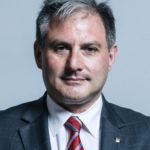
Tag: Jack Lopresti

  • Jack Lopresti – 2023 Parliamentary Question on Ambulance Cover on Strike Days

    Jack Lopresti – 2023 Parliamentary Question on Ambulance Cover on Strike Days

    The parliamentary question asked by Jack Lopresti, the Conservative MP for Filton and Bradley Stoke, in the House of Commons on 24 January 2023.

    Jack Lopresti (Filton and Bradley Stoke) (Con)

    What steps he is taking to ensure that ambulance services continue to operate during strikes.

    The Secretary of State for Health and Social Care (Steve Barclay)

    We have introduced a range of contingency measures, such as the provision of military personnel, who are available to assist with the driving of ambulances, and community first responders, who can help before ambulances arrive on the scene.

    Jack Lopresti

    Will my right hon. Friend join me in thanking call handlers at the South Western Ambulance Service NHS Foundation Trust—and the public—for halving the number of 999 calls to the trust over the last month, and reducing average call answering times by 95%, to just three seconds? Will he also join me in expressing dismay at the approach taken by the Leader of the Opposition during the most recent session of Prime Minister’s Question Time in seeking to sow fear in the hearts of my constituents and others for his own narrow political gain?

    Steve Barclay

    I am happy to join my hon. Friend in paying tribute to the work of call handlers at the South Western Ambulance Service, and to the staff there as a whole. He is right to draw attention to the improved performance that we have seen in recent weeks, and also right to point out that all parts of the United Kingdom have faced considerable challenges, particularly over the Christmas period when we saw a significant spike in flu levels.

    Rachael Maskell (York Central) (Lab/Co-op)

    We have just heard in the Health and Social Care Committee that on strike days there was a drop in service demand, but also value added by the increased clinical support, resulting in better and more cost-effective decisions. Why does that happen on strike days rather than on every single day of the year?

    Steve Barclay

    We are taking a number of steps to improve performance, and not just on strike days—but I thought the hon. Lady was going to refer to the comment that she made about those on her own Front Bench, when she said:

    “I think what our health team need to do is really spend more time in that environment with clinicians to really understand what drives them.”

    We on this side of the House are spending a significant amount of time with clinicians, and it is important that those on the hon. Lady’s Front Bench do so as well.

  • Jack Lopresti – 2016 Parliamentary Question to the Ministry of Defence

    Jack Lopresti – 2016 Parliamentary Question to the Ministry of Defence

    The below Parliamentary question was asked by Jack Lopresti on 2016-02-23.

    To ask the Secretary of State for Defence, what steps he is taking to protect the armed forces from persistent legal claims.

    Penny Mordaunt

    As we promised in our manifesto, I am examining with colleagues across Government a range of measures which will reduce litigation against our Armed Forces. This litigation makes it harder for them to do their jobs, causes them great stress and undermines international humanitarian law. The Prime Minister has already set in hand work to discourage opportunistic legal action. I will announce my proposals in the near future.

  • Jack Lopresti – 2016 Parliamentary Question to the HM Treasury

    Jack Lopresti – 2016 Parliamentary Question to the HM Treasury

    The below Parliamentary question was asked by Jack Lopresti on 2016-04-13.

    To ask Mr Chancellor of the Exchequer, what fiscal steps he is taking to help people keep more of their earnings.

    Harriett Baldwin

    At Budget 2016 the Government increased the personal allowance to £11,500 and raised the higher rate threshold to £45,000 in 2017-18.

    31 million people will pay less tax after these changes, with a typical basic rate taxpayer paying over £1,000 less income tax in 2017-18 than in 2010-11.

  • Jack Lopresti – 2016 Parliamentary Question to the Department for Transport

    Jack Lopresti – 2016 Parliamentary Question to the Department for Transport

    The below Parliamentary question was asked by Jack Lopresti on 2016-04-25.

    To ask the Secretary of State for Transport, what steps his Department has had with the Department for Business, Innovation and Skills on supporting skills development to help deliver the Government’s transport infrastructure programmes.

    Andrew Jones

    The Transport Infrastructure Skills Strategy published in January this year sets out our plans, among which our ambition to create thirty thousand apprenticeships in the roads and rail sectors by 2020. Earlier this month we launched the taskforce that will implement the strategy, chaired by Simon Kirby, CEO of HS2 Ltd. These steps have been carried out in consultation with the Department for Business, Innovation and Skills, Her Majesty’s Treasury and other partners across Government.

  • Jack Lopresti – 2016 Parliamentary Question to the HM Treasury

    Jack Lopresti – 2016 Parliamentary Question to the HM Treasury

    The below Parliamentary question was asked by Jack Lopresti on 2016-04-25.

    To ask Mr Chancellor of the Exchequer, what estimate he has made of the UK’s (a) payments to the EU, (b) receipts through EU schemes and (c) receipts through the UK rebate in each year between 2020 and 2030.

    Mr David Gauke

    HM Treasury’s approach to estimating the net cost of the EU budget to the UK over the long term is set out in Annex B of HM Treasury Analysis: the long-term economic impact of EU membership and the alternatives, publicly available at the following link:

    https://www.gov.uk/government/uploads/system/uploads/attachment_data/file/517415/treasury_analysis_economic_impact_of_eu_membership_web.pdf

  • Jack Lopresti – 2016 Parliamentary Question to the HM Treasury

    Jack Lopresti – 2016 Parliamentary Question to the HM Treasury

    The below Parliamentary question was asked by Jack Lopresti on 2016-04-25.

    To ask Mr Chancellor of the Exchequer, how many officials work in his Department’s Referendum Unit; and what the estimated cost of that unit is.

    Mr David Gauke

    The Treasury does not have a Referendum Unit. The Treasury is appropriately resourced to support the Government’s priorities in Europe.

  • Jack Lopresti – 2014 Parliamentary Question to the Ministry of Defence

    Jack Lopresti – 2014 Parliamentary Question to the Ministry of Defence

    The below Parliamentary question was asked by Jack Lopresti on 2014-04-25.

    To ask the Secretary of State for Defence, what steps he is taking to ensure that mortgage lenders are aware of the Armed Forces Help to Buy scheme.

    Mr Philip Dunne

    As announced by the Secretary of State for Defence in September 2013, the Forces Help to Buy scheme was launched on 1 April 2014. The Department has worked closely with the Council of Mortgage Lenders throughout the development and roll-out of the scheme. There have also been consultations with a range of other bodies, such as the Building Societies Association, the Association of Mortgage Intermediaries and the Financial Conduct Authority, as well as with individual mortgage lenders.

  • Jack Lopresti – 2022 Tribute to HM Queen Elizabeth II

    Jack Lopresti – 2022 Tribute to HM Queen Elizabeth II

    The tribute made by Jack Lopresti, the Conservative MP for Filton and Bradley Stoke, in the House of Commons on 10 September 2022.

    Sadly, I never met the Queen. It was something I had always hoped to do. However, as for most people in our country and the Commonwealth, she was always a positive presence in my life.

    We remember that Her Majesty Queen Elizabeth II was not only our Head of State and the mother of our nation, but had the same responsibilities and duties for the peoples of our dependent sovereign territories—faraway places such as the Falkland Islands—and for the Governments and peoples of the Commonwealth nations around the world. That was brought home to me in an amazing way when I was chairman of the all-party group on Gibraltar.

    Gibraltar National Day is today, 10 September, when Gibraltar celebrates its unique identity and its Britishness. Normally, there is a huge rally in Casemates Square, which is right in the middle of Gibraltar. It is a fantastic occasion, when the whole place is festooned with Union flags and the red and white of the Gibraltar flag. Today, the celebrations have been postponed until next year, and the proclamation of King Charles III was shown on the screens in Casemates Square. Fabian Picardo, the Chief Minister, spoke yesterday of a “cloud of sorrow” over the Rock. The Royal Gibraltar Regiment had a 96-gun salute.

    In happier times, in the diamond jubilee year of 2012, the National Day rally had a huge picture of the Queen, and every platform speaker expressed thanks and appreciation for Her Majesty’s service and spoke of their pride in their Britishness and in their Queen, referring to the fact that she had visited Gibraltar. On the platform that day, Fabian used a phrase that I had not heard before but that encapsulates how the Queen was a great unifier of many different peoples and nations. He said that the people of Gibraltar, other sovereign territories and the Commonwealth are all part of the “great British family”—even more so in Gibraltar, a small piece of rock, with a real melting pot of different religions and cultures, within physical sight of the north African coast. Everyone was united on that day, with an outpouring of love, pride and appreciation for our monarch. It reminded me of that old Latin quote, “civis romanus sum”—“I am a Roman citizen”—which one could be, from Africa to northern Britannia, regardless of one’s place of birth or religion.

    Yesterday evening, I rushed back to my constituency to attend a service at St Peter’s church in Filton. The congregation was told by the Rev. Lizzie Gregory that it was not a service of commemoration—that will come—but a time for the community to come together, support one other, grieve together and give thanks. It was a wonderful service and it was great to see so many people there. Most had come on foot from nearby. I could sense the pride, depth of emotion and the community supporting one another.

    I do not normally quote French Heads of State, unless they were born in Corsica, but President Macron’s comments on the passing of the Queen sum up how we and the rest of the world saw her:

    “To you, she was your Queen. To us, she was The Queen. She will be with all of us forever.”

  • Jack Lopresti – 2022 Speech at the Sir David Amess Summer Adjournment Debate

    Jack Lopresti – 2022 Speech at the Sir David Amess Summer Adjournment Debate

    The speech made by Jack Lopresti, the Conservative MP for Filton and Bradley Stoke, in the House of Commons on 21 July 2022.

    It is a privilege and an honour to speak in the first Sir David Amess summer Adjournment debate. David always exuded such joy and compassion, and it was difficult not to smile whenever you saw him. I am sure we all miss him.

    I will begin by highlighting a particularly significant issue in my constituency, which I have raised many times in the Chamber: the M49 junction, which would link the motorway directly to the Severnside enterprise and distribution area. The area is home to GKN, Amazon, Tesco, Royal Mail and many other companies. When completed, the junction will not only help to bring thousands of new jobs to the area but help to reduce heavy goods traffic and pollution in small surrounding villages such as Pilning and Easter Compton.

    It seems remarkable to me that the project was started without the means to complete it and connect it to the link road. There is essentially a 160 metre-long privately owned strip of land between the newly built motorway junction and the road connecting it to the distribution centre. How was £50 million of taxpayers’ money spent on a motorway junction without the land to connect it up to the link road?

    Since 2019, I have had meetings with the Secretary of State for Transport, roads Ministers, South Gloucestershire Council, Highways England and the West of England Combined Authority, but we still seem no closer to getting the project completed and connecting the road to the motorway. I will continue to meet Ministers, South Gloucestershire Council and Highways England, and I will urge them all to get a grip of the situation and get the project completed as quickly as possible.

    I turn to the bid for local levelling-up funding to regenerate world war one Hangar 16U, an exciting and substantial project by developer YTL located alongside the Brabazon and Charlton Hayes mixed-use developments. The restoration and reuse of that historic building will achieve the following aims. First, it will secure the restoration of a world war one hangar that contributes significantly to the unique and important heritage of the area, making the building accessible to all. Secondly, it will support the wider regeneration aims of the north fringe masterplan, which in turn will address issues of deprivation in some of the nearby communities of Patchway and Filton.

    Thirdly, the project will support visitor and tourist attractions while meeting the needs of existing and newly emerging communities. Fourthly, it is in a highly accessible location by foot, cycle and public transport. Fifthly, its community focus supports community cohesion and wellbeing. Having always supported the evolving north fringe development area, I have no doubt that when it is completed, it will be a truly fantastic place to live, work, visit and be entertained. I look forward to the result of the funding bid and very much hope that Ministers will look favourably upon it.

    As well as its historic links with aviation, demonstrated fantastically by the Aerospace Bristol museum and science, technology, engineering and maths learning centre—home to the last Concorde to land at Filton airfield, where the British Concordes were designed and built—my constituency in the south-west of England is at the centre of the largest aerospace cluster in Europe. There are 800 companies and 57,000 people in the south-west working in the aerospace supply chain for companies such as Airbus, Rolls-Royce, GKN and Leonardo.

    The Farnborough international air show is taking place this week. Not only does it serve as a showcase for the UK’s aerospace sector, but it is a great platform for exports. The UK’s aerospace sector represents more than 110,000 jobs. In my constituency of Filton and Bradley Stoke, more than 20,000 jobs are directly dependent on the aerospace and defence sectors, with many more involved in the broader supply chain. In 2019, the aerospace sector contributed £34 billion to UK exports. It was good to see my right hon. Friend the Prime Minister supporting the air show on Monday.

    This week, the Government announced £155 million of joint industry and Government funding, through the Aerospace Technology Institute, to help the industry invest in the technology of tomorrow, such as solar cells that can be used in electrically powered aircraft, low-weight electric motors, and the extra high-performance wing led by Airbus. Of course, we also look forward to increasing activity in the space sector.

    Let me conclude by thanking you, Mr Deputy Speaker, and the staff who look after us here. I hope everybody manages to take some time out and get some rest, recuperation and quality time with loved ones over the summer.

  • Jack Lopresti – 2022 Speech on NATO and International Security

    Jack Lopresti – 2022 Speech on NATO and International Security

    The speech made by Jack Lopresti, the Conservative MP for Filton and Bradley Stoke, in the House of Commons on 19 May 2022.

    The ongoing terrible events in Ukraine remind us that we need to make sure that we not only maintain our defence expenditure, but invest wisely in capability that will ensure that we remain a credible NATO ally. We have seen recently in Ukraine how good equipment can blunt the attacks of the most aggressive invader. Op Orbital, which began in 2015 in response to Russian aggression in the Donbas and Crimea, has been a successful training mission to equip Ukrainian forces and is paying huge dividends now as Ukraine’s army has risen magnificently to the challenge. This is the best possible example of the value of investing in training and equipment.

    The history of the last century shows us what happens when countries seek to appease dictators and are willing to trade other people’s freedoms for their own security. It is for this reason that the Washington treaty signed in 1949 bound the founding members of the Atlantic alliance together with a pledge enshrined in article 5 that an attack on one member was an attack on all. Since then, the Atlantic alliance, the most successful military alliance in history, has helped to ensure the freedom of this country and western Europe, especially during the cold war, in the face of an aggressive Soviet Union. A mark of its success is that the original group of 12 founding nations has expanded to 30 today. It is no coincidence that, as soon as they were able to escape the yoke of Soviet tyranny, our neighbours in central and eastern Europe sought to join NATO. The fact that now both Finland and Sweden—long bywords for neutrality—have taken the first steps to join the NATO alliance shows the attraction of it as well as its reputation.

    This country has always placed NATO at the heart of its defence policy, and the Ministry of Defence characterises the UK’s armed forces as “Allied by design”. Unlike Russia, this country has allies and partners around the world, and our NATO allies know that the UK will stand with them. We train together on a regular basis—something which should never be sacrificed on the altar of savings by the Treasury. We must increase our defence expenditure.

    As a former British Defence Secretary, Denis Healey—another gunner—who was the military beach commander at Anzio said in 1969:

    “Once we cut defence expenditure to the extent where our security is imperilled, we have no houses, we have no hospitals, we have no schools. We have a heap of cinders.” —[Official Report, 5 March 1969; Vol. 779, c. 551.]

    Or, as we are seeing in the Ukraine, piles of rubble.

    The invasion of Crimea by Russia in 2014 was a much-needed wake-up call for the Atlantic alliance, but it was not an easy matter to stir up all of its members. In 2016 President Obama spoke of “European free riders” who relied far too much on the United States for their security under the nuclear umbrella. In 2019 President Macron accused the alliance of being brain dead.

    Since 2014 the UK has contributed elements in the air policing mission in the Baltic on five occasions, as well as on the ground in Estonia, in the NATO battlegroup, since it was established in 2017. One of my sons, Michael, a fourth generation gunner, a Bombardier with 1 Royal Horse Artillery, has served in Estonia with his regiment and has just returned from a major exercise in Germany. I am pleased to see that we now have a brigade headquarters in Estonia.

    If Putin thinks that he can unsettle the NATO alliance by his casual reference to Russia’s “massive nuclear” forces, he is very much mistaken. Predictably, that has led to calls from some in this House, namely the Scottish National party, that we should rid ourselves of the nuclear deterrent. To those who say that we can never use it, I gently remind them that we are deploying it and relying on it every single day. Talk of the use of tactical nuclear weapons by Russia must also be dealt with by leaders being firm in their resolve to maintain the alliance’s undertaking that an attack on one is an attack on all.

    Events in Ukraine have given the international community a shock, but Russia’s actions remind us all that rogue nation states still retain the capacity to act violently when they think they can get away with it. We were beginning to get used to the idea of counter-insurgency, grey zone and cyber warfare, believing that this was the pattern for future conflicts. Putin may have been encouraged by the weak western response to the situation in Syria and the weak response to his initial aggression in Georgia and Crimea. It is worth reminding ourselves that the mission in Afghanistan was a NATO one. It was begun as an article 5 mission—the only time article 5 has been invoked so far after the 9/11 terrorist attacks, so the shambolic abandonment of Afghanistan created a very dangerous perception of weakness of the west and NATO among our enemies around the world.

    Russia is attempting to weaponise its gas supplies. This has long been foretold by those of us who warned of the dangers posed by the Nordstream gas pipeline. So alongside deterrence, we must relearn the need for resilience, in our supply chains as well as our food and energy security. I hope that the Government will give serious consideration to reinforcing our sovereign defence manufacturing capability.

    While we congratulate ourselves on our united stance against Putin’s aggression, some members of the NATO alliance were initially reluctant to commit to it. In the Ministry of Defence Command Paper, the Government announced the creation of the Ranger Regiment. This, and the sort of training missions that we have seen in Operation Orbital, will boost the ability of our NATO allies to defend themselves.

    The message from the House to our allies must be that for as long as the UK remains a leading member of NATO, we will invest in our security to ensure our freedom, and we recommend that all our NATO allies do the same.