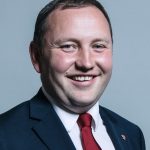
The speech made by Ian Murray, the Labour MP for Edinburgh South, in the House of Commons on 14 December 2022.
I congratulate the hon. Member for Edinburgh East (Tommy Sheppard), as the Minister did, on bringing this motion to the Chamber and on his introductory speech, although I am not sure he spoke about the motion at all in the near half hour he spoke, so we are not any the wiser about what it is trying to achieve or what would happen on 10 January were it to pass.
This is the first opportunity I have had to congratulate the hon. Member for Aberdeen South (Stephen Flynn) on becoming the SNP group’s new leader. I suspect he will be the family favourite to carve the turkey on Christmas day this year up in Aberdeen, seeing as he is proven to be quite adept at wielding a knife. His experience of knifing large turkeys should stand him in good stead.
The House may recall that the last time Parliament took control of an Order Paper, it was the first time since the 19th century, and it was on an amendment tabled by the former Conservative MP Oliver Letwin, also in the names of my right hon. Friends the Members for Normanton, Pontefract and Castleford (Yvette Cooper) and for Leeds Central (Hilary Benn). That amendment was to conduct indicative votes on the way forward for the Brexit deal, all the way back in 2019. I am surprised that the SNP would want to remind the House of that historic occasion—a process that would have resulted in this House backing a customs union with the EU—when the SNP abstained and that particular proposition fell. The SNP then pushed for an election, and we all know how that ended. Then, almost three years ago to the day, the SNP backed no deal on the Brexit deal on the table.
Today, SNP Members have brought forward a motion that they know they cannot win, instead of a motion that would put pressure on this disastrous Conservative Government, which is where the guns have to aim. That is what Opposition day debates should be used for, like the vote that the Labour party brought about on fracking, which contributed to the demise of a Conservative Government.
Alan Brown
While the hon. Gentleman is trying to rewrite history, will he confirm that the SNP voted to stay in that customs union, rather than some arbitrary notion of a customs union? We not only want to go back into the EU, but appreciate the benefits of the customs union, the single market and the freedom of movement of people, which the Labour party has thrown to the wind.
Ian Murray
The hon. Gentleman needs to realise that when a Division Bell goes in this Chamber, Members have a choice, and the choice the SNP made was not to back the customs union in a vote that was subsequently lost by a handful of votes. When the Division Bell rang on, I think, 19 December 2019 on the very thin and poor trade and co-operation agreement, the SNP made the decision to back no deal, which would have been even more disastrous than the deal we got from the Government at that time. [Interruption.] They chunter from a sedentary position, but Hansard and the voting record of this House are clear.
I was saying that Opposition day debates should be like the one we brought about on fracking that brought down the former Prime Minister’s Government. The truth is that SNP Members could seek to take control of the Order Paper to take extra powers, if they wished—the extra powers they have talked about today, perhaps on national insurance, corporation tax or immigration, which the hon. Member for Edinburgh East mentioned in particular. It is not like they even use the powers they have at their disposal already. Instead they are doing it to get another referendum. Clearly, they have changed the piper, but not the tune. I hope Santa brings them a new song sheet, but that might be a tall order, given that many SNP MPs have been very naughty this year in plotting against the right hon. Member for Ross, Skye and Lochaber (Ian Blackford).
On the topic of Christmas, what SNP Members are failing to grasp when they are busy banging the drum for another independence referendum is that one in five working-age Scots are in poverty, one in four Scottish children are in poverty and 14% of Scottish pensioners will be spending Christmas in poverty. That is a shameful record for the UK and Scottish Governments when previous Labour Governments lifted millions out of poverty.
I would say what a pleasure it is to be involved in this debate, but that would not be entirely true. Yet again, when the SNP has precious time to use on any issue they wish to debate, they choose this one. It is like the famous film “Groundhog Day”, in which Bill Murray relives the same day over and over again, but in this place we relive the same debate over and over again. Every single time, the SNP chooses the same debate topic. We are in the midst of the worst cost of living crisis in generations, we have the worst Conservative Government in history, and we have the most appalling economic conditions, created in Downing Street by a party that has failed on economic stability, growth and living standards. We have poverty rising, fuel poverty rocketing, an inflation crisis, a war in Europe and the most incompetent, out-of-touch and out-of-time UK Government, but the SNP wants to let them off the hook by reverting to type. Nobody likes that more than the Conservative Government.
We could have debated the Joseph Rowntree Foundation report published this afternoon that shows that 7.2 million people are going without the basics. This is Britain in 2022. Some 4.2 million are in arrears with their bills, 2.4 million people are borrowing to pay bills, and there are 5.7 million who are hungry, cutting or skipping meals. The cost of living crisis that is engulfing the country is the biggest worry by far for Scottish families, but the hon. Member for Aberdeen South and his party trundle on in blind pursuit of something that the Supreme Court confirmed was, as we all expected, just a matter of law. Dealing with the crisis requires both of Scotland’s Governments to move quickly and decisively and, as 70% of the Scottish people consistently say, to work together.
Peter Grant (Glenrothes) (SNP)
I agree with the hon. Gentleman’s excoriating denunciation of the failings of the Conservative party; will he explain why it is that in my Fife, his Edinburgh and all over Scotland his party is doing dirty deals to keep the Tories in power after the people have tried to vote them out?
Ian Murray
It is extraordinary that that is the hon. Gentleman’s intervention. There is no Scottish council where Labour is in coalition with the Conservatives, and SNP Members know that. What upsets them more than anything else is the fact that they threw their toys out of the pram in Edinburgh because they could not get their own leader elected as leader of the council. I am grateful to the Labour group for stepping up to run Edinburgh Council when nobody else was able to command the authority of the council in order to do so.
Opposition parties of all—[Interruption.] SNP Members are chuntering and bantering from a sedentary position; wait till they find out who propped up the minority SNP Administration at Holyrood from 2007 to 2011. They might want to look that up. Opposition parties of all colours are rightly demanding more from this Tory Government, but the party sat to my left seems quite content to ignore the significant powers it has in Scotland that could be used to help people now. The grim reality is that I have had, as I am sure we all have, constituents attend my surgeries in tears, asking what more help they can get to ensure that their children do not go to school hungry and how they can pay their bills, heat their homes and put food on the table.
It is easy for the SNP to pass the buck, given the circumstances, but have SNP Members forgotten that, thanks to the devolution that the hon. Member for Edinburgh East mentioned, the Scottish Government have the power to introduce new support? They could top up the Scottish welfare fund, write off school meal arrears, cut the cost of commuting, offer a water rebate paid through the cash reserves of the water companies, and spend the £2 billion underspend they had last year on helping Scots now. Those are just some of the things they could do. We would have been delighted to have debated those particular choices in the Chamber today, because politics is always about choices.
Alun Cairns
I am grateful to the hon. Member for presenting an array of policy options that could have been pursued in Scotland, but those options also exist in Wales, largely, so why have the Labour Administration in Wales not taken them up?
Ian Murray
I was delighted to take an intervention from the right hon. Gentleman, because I expected him to stand up and apologise for what his Government have done in giving the SNP all the grievance it requires to rip this country apart. The bigger threat to the Union is not the nationalists; it is the wretched Conservative Government.
As I was saying, the Scottish Government have the power to mitigate some of the cost of living crisis, but, importantly, they also have the choice. What we are seeing is not just a dereliction of duty; they are simply blaming everyone else. We should just remember that when he was the party’s business spokesperson, the new SNP leader here, the hon. Member for Aberdeen South, whipped his SNP MPs so that they did not support the vote to introduce a windfall tax on the oil and gas sector to help to freeze energy prices—a position that he was forced to reverse when he realised how ridiculous it was that he was standing up for the excess profits of the oil and gas sector over the interests of Scottish bill payers.
What is clear is that the SNP does not want to have a debate on any of the hot topics of the day—priorities being discussed around every single dinner table in homes across Scotland—because its own record in government for the last 15 years is utterly deplorable.
Too many Scots are having to make the choice between heating and eating. In fact, heartbreakingly, too many Scots do not have that choice at all because they can do neither. That is the sad indictment of both the UK and the Scottish Governments, but, rather than debate those issues, we have another SNP stunt. It is a stunt, because SNP Members know that it will fail, but it will create the grievance that they thrive off.
While SNP Members play these games, the big issues do not get discussed. This morning, I was on the Daily Record news website and the first thing that popped up was a headline saying, “Scots patient spent 15 hours in ambulance outside hospital in freezing temperatures.” The news article immediately below that was “SNP announces plans for new bill on Scottish independence vote.” That in a nutshell shows why SNP Members choose to talk about nothing but independence.
This week, the Homeless Project Scotland group has been tweeting pictures of homeless and vulnerable people queuing up in freezing conditions in Glasgow, waiting for hot food. Last night, there were even children in the queue, grasping a bread roll in anticipation of being fed. I wonder what those shivering, vulnerable people would say to SNP MPs if they went down that queue and told them what they had chosen to debate today in the Chamber. They have the power to help those people and the platform to be their voice, but they walk by on the other side.
Perhaps SNP Members are worried that the debate will become about how the SNP’s Westminster group organised a coup against the right hon. Member for Ross, Skye and Lochaber and then did not back the First Minister’s pick to replace him. Perhaps they are so riven with division that all they can talk about is the one issue that binds them together. Whichever it may be, we can conclude that, true to form, they are putting their party before the needs of ordinary Scots.
Today, we could have debated education and the First Minister’s “defining mission” to close the educational attainment gap in Scotland, but we cannot do that because her defining mission has been abandoned. Just this week, damning figures were published showing that the attainment gap remained wider than it was pre-pandemic for both primary literacy and numeracy and that the gap in primary numeracy attainment was wider than at any point since the First Minister made her commitment. In March 2021, the SNP promised to
“provide every child in Scotland with a device to get online, including a free internet connection and the support to use it”,
but in December last year it emerged that fewer than one in 10 had been supplied.
The first full teaching strike in Scotland since Margaret Thatcher’s reign is due to the SNP’s incompetence and dereliction of duty on the education sector. To have an eleventh hour pay offer rejected so comprehensively, provoking real anger among teachers in the process, is an indictment of the Scottish Government’s woeful planning and negotiations on pay. I congratulate them on getting a deal with the nurses—they should be congratulated because they have got people around the table when the UK Government refuse even to talk—but only a few weeks ago we were told that they could not do that and that they had no money to do so, blaming everyone else. It appears that they did have the money and, if only they had had the will, they could have had that concluded. I hope that they have that will with other public sector workers.
We could have been debating health. Well, SNP Members cannot do that, either, because they preside over one in seven Scots now being on a waiting list, the worst A&E waiting times in history, thousands of patients languishing for more than 12 hours on trolleys or ambulances—[Interruption.]. I can hear sighs; there will be more sighs from the people on trolleys for 12 hours. Only 45% of people are seen within the four-hour target at the Edinburgh Royal Infirmary in my constituency. One in 11 beds are taken by people who should not be in hospital, despite the First Minister promising to abolish delayed discharge, and the SNP has not met its own 62-day target for cancer referrals since it introduced the policy more than a decade ago. There is also a GP and dentistry crisis of the SNP’s own making, so it is little wonder that SNP Members do not want to debate the national health service.
We could have debated the biggest issue for our planet: climate change. SNP Members will not do that, either, as the Climate Change Committee said this week:
“The Scottish Government lacks a clear delivery plan and has not offered a coherent explanation for how its policies will achieve Scotland’s…emissions reduction targets”.
So we will not debate climate change.
Perhaps SNP Members would like to debate energy and the First Minister’s pledge to set up a Scottish national energy company, but they will not, because that plan has been dropped. The statistics that they have been bandying around on renewables have been trashed by the UK Statistics Authority, and Scottish civil servants have been telling them for a long time to stop using them. The only way to get a national energy company is through a UK Labour Government delivering on GB Energy, which would reduce bills, provide energy security, create jobs, contribute to our climate goals and be owned by the people, for the people. So, nothing on energy.
What about a debate on Scottish Government spending, after the Auditor General called on the SNP Government to drop the spin and improve their transparency, with better controls to ensure that financial decisions deliver value for money for Scottish taxpayers, or perhaps a debate on the £2 billion underspend from last year? I wonder why SNP Members will not debate the building of ferries and transport services to Scotland’s island communities.
Maybe we could have debated the substance of SNP propositions for independence. We have had hours and hours of debate in this House, but still no answers on its ludicrous and contradictory currency position, and still nothing on pensions. We have heard a bit about a confirmed hard border between Scotland and the rest of the UK, but zero on how a country can be an EU member without abiding by EU rules, and absolutely nothing on how to deal with the deficit or the debt required to set up a new currency. SNP Members have not even mentioned in this House their economic paper for independence, which the First Minister launched a few weeks ago, but everyone else rubbished. They do not want to talk about it, because arguing about process is all they have left.
SNP Members could even have debated how the Tories have crashed the economy, the country’s historically low growth over the last 12 years, the fact that this Prime Minister has created the highest tax burden on working people in 80 years, or how there is now a Tory premium on everyone’s mortgages, rents, energy bills and food shop, as well as their dreadful response to the immigrant boat tragedies and how the Tories have presided over the largest fall in living standards on record since the 1950s, but nothing.
The fact is that the SNP is treating the Scottish public like fools, with a failing Scottish Government hiding behind the veil of an empty and failing independence policy—[Interruption.] I hear from a sedentary position, “But they keep voting for us”. That is the excuse I got from the Scottish Health Secretary when I said that we needed £6 million for new GP practices in Edinburgh South. He said, “There isn’t a problem, and by the way, if there was a problem, people would stop voting for us.” That is SNP Ministers’ attitude to people raising legitimate concerns about the way they run their Government.
SNP Members want to take control of the Order Paper not to take more of the powers they always call for or even to condemn this Government, but to get another referendum, which few Scots want. The truth is that this is just a game to them. They could, if they were successful today, just take control of the Order Paper and dissolve the Union, but, no, they want to create grievances when people just want to be able to turn their heating on, feed their families, get a GP appointment or an operation, or go to A&E and not wait 24 hours on a trolley. They have also forgotten that they would still have to get their legislation passed by this House, even if they could get control of the Order Paper.
Nobody wants another referendum any time soon, let alone the First Minister herself. Less than 30% agree with a referendum on the First Minister’s timetable, and only a third think there should be one in the next five years. It barely polls as a priority for Scots. SNP Members are always very good at talking about polls when they go in their favour, but the one they were championing yesterday shows that less than 20% of Scots see independence as a priority.
This charade today says to the Scottish people that their concerns and issues are of no relevance to the SNP Members who are supposed to be here to represent them. They are not standing up for Scotland, but are disregarding Scotland’s interests. It says to Scottish voters that, at the next election, they have a choice—to continue with these games from MPs sitting on the Opposition Benches, or have Scottish Labour MPs on the Government side of the House, having kicked the Tories out of power. It is a real chance to transform the UK and a real chance to transform Scotland. Scotland deserves much better. Scotland deserves change, and that change is coming with a Labour Government.