Tag: Iain Duncan Smith

  • Iain Duncan Smith – 2024 Comments on Laura Saunders

    Iain Duncan Smith – 2024 Comments on Laura Saunders

    The comments made by Iain Duncan Smith, the former Leader of the Conservative Party, on 20 June 2024.

    I just think this is people being incredibly stupid and venal when they do that sort of thing, first of all, what the hell are they doing anyway betting on an election? They’re meant to fight it and don’t make money out of , that’s definitely not the case. I said earlier on that this is a vocation and you need to behave like it’s a vocation and your job is to try and get your party back into Government and not to play games with it and so it’s unacceptable. Whatever happens to them wouldn’t be hard enough in my book.

  • Iain Duncan Smith – 2023 Speech on the UK Visit of Governor of Xinjiang

    Iain Duncan Smith – 2023 Speech on the UK Visit of Governor of Xinjiang

    The speech made by Sir Iain Duncan Smith, the Conservative MP for Chingford and Woodford Green, in the House of Commons on 9 February 2023.

    I find that response from my hon. Friend, for whom I have the highest respect, to be a very weak turn from the Foreign Office. The Uyghur region in north-west China has been the site of severe human rights violations, crimes against humanity and genocide for more than six years. In 2017, satellite imagery confirmed that a network of internment camps had been set up throughout the region. Throughout this time, Erkin Tuniyaz has been responsible for the murderous and repressive policy, alongside its architect, Chen Quango.

    Testimony from camp survivors—who are absolutely appalled to hear that a Foreign Office official will meet this individual—and leaked official Chinese Government documents, satellite images and drone footage indicate that the camps are sites of severe mass arbitrary detention and severe human rights abuses, including systematic sexual violence against women, torture and the forced sterilisation of many women. Reports of cultural and religious oppression, mass digital in-person surveillance, forced labour, mass sterilisations and abortions and a system of mass criminalisation and arbitrary detention are also completely documented.

    The weak response from the Foreign Office hides something. It is not that it has invited him here, but it has made it clear that when he comes, he will be welcome to see officials. Whether or not the Foreign Office is tough, this is a propaganda coup for the Chinese Government. Governor Tuniyaz has defended the use of mass detention centres and doubled down and expanded their use. During his tenure, more than 1 million Uyghurs and other people from predominantly Muslim minorities have been detained in Xinjiang. A man who declares that nothing is going on is hardly likely to be bothered by a Foreign Office official telling him, “Now, now, you’ve got to stop this.”

    I remind my hon. Friend the Minister that in 2021, the House of Commons in this United Kingdom declared for the first time that genocide is taking place against the Uyghurs and other minorities in the Xinjiang region of China. Let us compare our response with that of the United States. The UK has sanctioned only three rather junior people. The US has introduced 107 punitive sanctions, five new laws, 11 specific investment bans and 10 sanctions on individuals, including Chen Quanguo and Erkin Tuniyaz. I call on the UK Government to rescind this invitation and sanction Erkin Tuniyaz and Chen Quanguo for their role in this crime against humanity and genocide. The place to deal with these individuals is in a tribunal or court of law, not in the quiet office of a Foreign Office official.

    Leo Docherty

    I appreciate sincerely the long-standing interest of my right hon. Friend in this issue, and he speaks with great sincerity and power. He draws a comparison with the sanctions regime in the US. The numbers might be different, but that reflects our desire and approach to use these opportunities to deliver a very strong and robust message. It is institutionally the judgment of the FCDO that we are better off not denying ourselves the opportunity to send extremely robust and strong messages of condemnation of the brutality that has been carried out by the Chinese state in Xinjiang. He alluded to that difference of approach, but we are confident in its utility.

    My understanding is that, in advance of the suggestion of this meeting, the invitation was extended to human rights groups in the UK to afford them the opportunity to send a very strong message to this individual about their view of repression in Xinjiang. That was at the heart of what was judged to be useful about the prospect of such a meeting.

  • Iain Duncan Smith – 2001 Speech on “No Place for Racism in the Conservative Party” at Asian of the Year Dinner

    Iain Duncan Smith – 2001 Speech on “No Place for Racism in the Conservative Party” at Asian of the Year Dinner

    The speech made by Iain Duncan Smith, the then Leader of the Opposition, at the Asian of the Year dinner, on 25 October 2001.

    “It is a great pleasure for me to be here tonight to present the Asian of the year award for 2001. I would like to add once again my congratulations to Mr Gujral on winning that award. You typify so many of the values that I associate with British Asians, of hard work, enterprise and through your extensive charitable work, a strong commitment to helping the wider community. They are values that we all hold in common. This award is a tremendous achievement and I know I speak for all of us here when I say it is richly deserved.

    At the outset I would like to thank Jasbir Sachar, Managing Director of the Asian Who’s Who International for organising this event, that is firmly established as one of the high points of the British Asian calendar. Your annual publication serves as an essential work of reference about the British Asian community and, just as important, charts your success. So I am delighted to have been able to contribute the foreword to this year’s publication, as I am to receive a copy tonight.

    It is also a great honour for me to follow His Excellency Nareshwar Dayal, the High Commissioner of India, not least because of my own family links with India. In fact my father was born there – in Madras. It is a constant reminder to me of the closeness of the ties that bind so many of us with the sub-continent – ties that continue to grow stronger. That is something that I very much welcome and, as leader of the Conservative Party, wish to encourage and develop further. Of course, tonight’s event takes place against the backdrop of the military conflict that is raging in Afghanistan, a conflict in which our country is a fully committed coalition partner with the United States. Some two and a half weeks after the first bombing raids began it is worth reminding ourselves of our purpose and why it is so important that having started, we see it through.

    In our own country, in Northern Ireland, we have experienced thirty years of sustained terrorist violence and acts of cowardly evil. Hopefully, with the encouraging events of this week, we might now be able to look forward at last to a permanent end to violence there and a future for Northern Ireland based exclusively on democracy and consent.

    Yet nothing that we have been through here in any way prepared us for the scale of the atrocities that were carried out on 11th September in New York and Washington.

    Those attacks left over 7,000 people dead from over sixty countries. They included people of all religions– including Christians, Jews, Sikhs, Hindus, Muslims – and of none. They were the worst terrorist attacks ever perpetrated against our own country with hundreds of our fellow British citizens murdered. It must also rank as one of the worst terrorist outrages against countries such as Pakistan and India.
    They were attacks on us all and on the civilised values – democracy, freedom and the rule of law – that underpin our society.

    They could not go unpunished.

    Bin Laden and his Al Qu’ida network that planned and carried them out must be brought to justice, along with the Taleban regime that has harboured and sustained them.

    Let us be clear about one thing. This is not a war against Islam or the people of Afghanistan. It is a war against international terrorism, nothing more, nothing less. We must never allow Bin Laden to succeed in driving a wedge between Muslim countries and the west.

    Bin Laden and his supporters know no limits. There is no compromising with such fanatics. They simply have to be defeated.

    Some people argue that, yes, we must respond, but that the bombing has gone on for long enough and there should now be a pause – if only to allow essential humanitarian aid to get through to the Afghan people. I understand that view, but I cannot agree with it.

    Ending the humanitarian crisis is directly linked with military success. The biggest obstacle to delivering aid is the continued control of large parts of Afghanistan by the Taleban, who have intercepted aid, taxed it and sent some of it to market. For an effective aid programme to work the Taleban must fall. In its place there needs to be a broadly based government that is representative of the Afghan people and which will co-operate with the aid agencies. The window for that to happen is narrow, with most of the key passes into the country closed by the early New Year. So we must see the present action through.

    It is vital that this conflict is not allowed to sour relations between different communities here in Britain. All of us in public life have a responsibility to ensure that this does not happen.

    At the Conservative Conference a fortnight ago I said that, as Party Leader, I will be intolerant of those who are intolerant of others. I’ve demonstrated that already by the actions I have taken.

    I have also appointed Shailesh Vara as one of the Vice-Chairmen of the Conservative Party, Mohammed Riaz as my personal adviser on various race related issues, and Nirj Diva as my adviser on Asian issues in the European Parliament. Shailesh and Riaz were Conservative candidates at the last Election and Nirj is a Conservative MEP. All of them are first rate.

    I believe in a United Kingdom which is genuinely open and inclusive of all its citizens and in which racism and bigotry – of whatever kind – can have no place.

    Britain today is a diverse society, made up of many different groups, communities and cultural traditions. I believe that this is as a source of strength, providing our country with a richness of which we should all be proud.

    I want the United Kingdom to provide everybody with the same rights, the same obligations and the same levels of opportunity – a country where people are judged solely on their merits, whoever they are and wherever they come from.

    That is my view. It is also the clear and unequivocal position of the Conservative Party.

    It is a United Kingdom that respects differences, which enables us to hold on to the things that makes us distinctive but always allows us to come together as British. It is possible to be proud of your Asian roots, at the same time as being proud of your British heritage too. That is because whether we are Hindu or Sikh, Muslim or Christian, black, white or brown we are all as British as each other. It underpins our sense of being One Nation and the fact that the United Kingdom belongs to us all.

    And let us never forget that during the two world wars some five million soldiers from the sub-continent and the Afro-Caribbean countries fought side by side with British soldiers in the struggle for freedom. Many of them died. No – let us never forget.

    Tonight we are doing more than launching the latest edition of the Asian Who’s Who International. We are celebrating the fact that the story of British Asians is also one of the great British success stories of recent years. That is all the more impressive given the fact that so many British Asians came here with next to nothing. Many of those who were thrown out of Uganda in the 1972 – and I know some those present here tonight are in that category – had to leave literally with only the clothes they were wearing.

    Yet despite the handicaps and the obstacles businesses owned by the Asian community have prospered and employ many thousands of people.

    There is no doubt that you make an outstanding contribution to the strength, prosperity and success of the United Kingdom. And in so many aspects of our national life – business, the arts, the media and the professions – you play an increasingly prominent role.

    But I want your contribution to go much further. The blunt truth is we still have far too few British Asians, members of other ethnic communities, and for that matter, women actively involved in politics in our country. I want to encourage more of them into the mainstream of British political life.

    I appreciate the difficulties that there have been in the past. Political parties of all persuasions, not just the Conservative Party, have not always appeared attractive to the different ethnic groups in our society. That has begun to change. We have British Asians – Nirj Deva and Bashir Khanbhai as Conservative Members of the European Parliament. People like Narinda Saroop have done outstanding work for the Party over many years.

    We have come a long way. But I readily accept that we still have a long way to go. My aim is clear. It is to broaden the appeal of the Conservative Party for British Asians, and for members of all the different ethnic groups in Britain.

    There is no place, and never has been, in the Conservative Party for those who extol the virtues of a creed that demeans people on the basis of their ethnicity. There is no place for racism in the Conservative Party.

    I want the Conservative Party to reflect and represent the diversity of our national life. I want us to be a Party for all the people.

    That means attracting more Asians into the Conservative Party at all levels. I want British Asians to contribute to the major policy review that I launched earlier this week, to become involved in the constituencies, to get elected to Parliament, to serve in Conservative Governments and Cabinets and, yes, to lead our Party in the future.

    The Conservative Party has much to learn from the values that have underpinned your success – a belief in freedom, enterprise, tradition, education, individual responsibility, fulfilling our obligations to others and in public service. They are your values. They are Conservative values too.

    And let me make it abundantly clear. Under my leadership the Conservative Party will be open to everyone who shares our values.

  • Iain Duncan Smith – 2001 Speech to the CBI

    Iain Duncan Smith – 2001 Speech to the CBI

    The speech made by Iain Duncan Smith, the then Leader of the Opposition, to the CBI on 6 November 2001.

    It is a great pleasure for me to be with you this morning at the 25th CBI National Conference, and I am grateful for you kind words of introduction.

    I am particularly pleased, at the beginning of my new role, as the leader of my party, to have this opportunity to speak to you. I hope that today is the beginning of a new dialogue between the Conservative Party and British business.

    Your Conference this year takes place against an increasingly difficult background for British business and the United Kingdom economy as a whole. The feeling of unease and uncertainty has, of course, been exacerbated by the events of 11 September.

    The Conservative Party is fully behind the Government in its total backing for the United States in the war against terrorism. It is their war and it is our war. We must see it through to the end.

    All of us has a role to play. Politicians in presenting a united front. And you, in business, by not allowing the terrorists to succeed in deflecting you from your normal, daily activities.

    Yet it is clear, as most commentators agree, that the global economy was weakening from well before the terrible atrocities committed on that day.

    As the most recent Economic Review by Deloitte and Touche states: ‘there is no doubt that a severe slowdown is in train’.

    As the report makes clear, to blame this on 11 September would be, in their words, ‘mistaken’.

    Without in any way being alarmist about our prospects this picture gives us all concern. It means that for many businesses there are going to be immense challenges ahead.

    In this context of growing economic difficulty, it is more important than ever that the Government’s policies support business and foster competitiveness.

    Throughout its first term, the current Government inherited an economy in which the fundamentals were strong. There was a favourable global economic environment. The world economy generally performed well.

    As a result the Government was able to increase taxes while their immediate effect for many people was blunted by rising incomes.

    The task of any responsible Government, however, is not to pursue an economic policy just for the times when things are going well and then assume that those circumstances will last forever. They need to ensure that the economy is also in a position to withstand unexpected shocks. Instead, Ministers seem to have believed their own rhetoric about boom and bust being abolished forever.

    At a time when many of our competitors have been cutting taxes, Gordon Brown has spent the last four years raising them. The tax burden has increased by a massive £28 billion, or 10p on the basic rate of income tax. The CBI itself puts the increased burden of business taxes at £5 billion a year.

    It is little surprise, therefore, that a recent Pricewaterhousecoopers study showed that Britain has now lost two-thirds of the tax advantages we enjoyed against our European neighbours in the mid 1990s.

    To make matters worse, instead of easing the burden of regulations on British business, the Government has spent the past four years increasing them. The Institute of Directors has put the added cost to business of regulations at a further £5 billion. According to research carried out by the independent House of Commons Library in the year 2000 alone, 3,864 new regulations were introduced– the highest figure on record.

    And in place of a truly responsible and prudent approach to spending, we have seen spending allowed to run ahead of growth. If that continues it can only mean one thing.

    As the IFS said in March: ‘If spending is to grow by more than GDP growth beyond 2003-4 then further increases in tax will be required’.

    Or as a senior Downing Street policy adviser was quoted as saying yesterday: “We have to get over, and the public have to understand, that all these changes that are being talked about come at a price. The only way that they can be paid for is tax increases”.

    All of this has contributed to a worrying picture for our competitiveness.

    Now there is the risk of adding further uncertainty to the economy. The Government have set a course to join the euro that would lock us forever into a one size fits all interest rate irrespective of whether it suited our economic circumstances of not.

    Of course on Sunday, the Chancellor sought to sound a more cautious note than the Prime Minister in Brighton last month. Yet this is just another episode in Labour’s now all too familiar good cop, bad cop routine whose purpose is to make a decision to bounce Britain into the euro look objective.

    It is all part of a game. Whenever they want to appear warm about the euro, we see the Prime Minister, or Peter Mandelson or Peter Hain. When they want to appear sceptical we see Gordon Brown or Jack Straw. They urge those of you who are pro-euro to run ahead of them in advocating membership. At the same time they try to assure those of you who are against, that membership is a far off prospect when the truth is that they are committed to join.

    The result of this game is to produce the worst of all worlds. It is destabilising to industry that wants to plan ahead with a degree of certainty. And it clearly exposes the so-called five economic tests as totally bogus. We all know that they have nothing to do with economics and everything to do with politics.

    A strong, dynamic economy relies on fundamental economic stability and the flexibility to respond to different circumstances. That is why in the referendum Conservatives will campaign to keep the pound.

    I know that some of you will agree with this, while others won’t. Yet our position has the virtue of being offering stability – you at least have a clear sense of where you are with the Conservatives. And it is sustainable because, as the fourth largest economy in the world we can make a success of our own currency, if that is what we choose.

    It stands in stark contrast to the now you see it, now you don’t peekaboo politics being played by the Government on the euro.

    Building a strong, dynamic and competitive economy is vital. It underpins so many of our aspirations. Without it, the improvements that all of us seek in our public services simply are not deliverable. And building world-class public services has to be our overriding priority as a nation.

    Britain is the fourth largest economy in the world. Yet ask anyone who uses the public services, and they will tell you that in so many areas they would disgrace the third world.

    Of course I don’t pretend that the problems with our public services began 1 May 1997. Yet it is undoubtedly the case that since then things either haven’t improved, or they have simply got worse.

    Our hospitals have been operating throughout the summer at winter levels of crisis so that a Health Minister is now forced to admit the winter crisis now lasts for the whole year. Our schools are such that up to forty per cent of all teachers with three years experience are leaving the profession. Our police are so demoralised that, according to the Chairman of the Police Federation, morale is at an all time low with resignations having increased by over 80 per cent in the past four years.

    We live in the age of the communications revolution, where vast amounts of information are transmitted across the globe every second. Yet we have patients lying on trolleys in crowded hospital wards for hours before they are seen by a consultant.

    We live in the age of the global economy where more money is traded in the City of London’s foreign exchange markets in two hours than the British Government spends in a year. Yet too many of our children leave school ill-equipped to take advantage of the opportunities that are on offer.

    And we live in an age of where we can buy goods and services through the internet in minutes. Yet the state of our transport system means that travelling a few miles can take hours.

    What angers people more, is that this comes at a time when we are constantly told that record amounts of investment are going into these services. We are urged to be patient. All that is needed is time. The Government’s view seems to be that all it will take is one more heave.

    Yet we have had four and a half years already. For all the boasts of new investment, of record amounts of money and new initiatives, things the experience of real people is that things are not just failing to get any better, they are going from bad to worse.

    Take the Health Service. Only yesterday figures showed that despite an extra £8.4 billion in the past two years alone, there has been almost no rise in the numbers of patients treated. At the present rate there is no way that Labour will meet their Election pledge to cut the maximum waiting time for in patients to six months by 2005. No wonder Ministers are reportedly concerned that the cash “has disappeared into a black hole”.

    All of this is of enormous importance to all of you in business. Put simply, failing and unreformed public services cost you money. They cost you money in the extra taxes the Government imposes on you to pay for them. And they add to your costs when you have to pick up the bills for their failure. It is happening now.

    Your own annual absence survey for 2001 states that 192,000,000 working days were lost due to sickness. It estimates that this costs British business £10.7 billion a year. Coronary heart disease in men accounts for the loss of 47,000 working years every year. In France and Germany waiting times are virtually negligible. Here, it can take a year for a heart by-pass. A constituent of mine waiting for a by-pass started by working five days a week, gradually it went down until after a year he was working a half day, one day a week. Yet as he put it to me: “my employers still have to bear the cost of not having me around”.

    According to one survey transport problems are costing British business at least £5 billion a year in lost working time. Include productivity losses, the cost soars to £10 billion a year. As one who has used the Tube endlessly to get to work, my abiding memory of last summer is not just the endless delays that make people late, but the cramped and sweaty carriages that mean when you eventually arrive, it takes half an hour before you are in a fit state to think of work.

    Last year Tesco was so alarmed by poor literacy and numeracy standards that it was forced to spend £1 million to send hundreds of recruits on courses to bring them up to scratch on the 3Rs. As one Tesco manager said: ‘The people we are employing are not thick or stupid. They have just not been given the right education in the first place’.

    The conclusion is clear. Failing public services don’t just create human tragedies; they result in business tragedies too.

    For too long in this country we have been locked into a sterile debate. We have been told that there were only two choices. Either we have higher taxes and better public services, or we have lower taxes and worse public services. Yet what we have had for the past four years is higher taxes and worse services.

    It is a false choice, based on an argument that simply wouldn’t run anywhere else in those European countries that tax no more heavily than we do, yet spend more on their public services.

    The real choice before us is not, as the Prime Minister tells us, between short term tax cuts or increased investment. We can continue down the same road of taxing ever more heavily in order to plough ever more money to pay for unreformed services. Or we can combine a low tax, wealth-creating economy with genuine public service reform.

    The other danger with the current course is that not only will it not work, it will ultimately be self-defeating. As taxes continue to rise we will risk undoing those things on which business success – and the money to pay for public services – actually depends. We will never pay for public services pursuing a policy that taxes and regulates businesses out of existence.

    We will have a situation in which sclerosis in the unreformed public services will ultimately lead to sclerosis in the economy as a whole.

    Nor will the Government’s approach to public/private partnerships solve their tax and spend dilemma. Conservatives strongly believe in bringing the private sector in to help provide public services. But Labour’s approach won’t work because it is a one-sided partnership.

    Four things are needed when private capital is brought into public projects: clear information, on which customers and suppliers can make a choice; freedom for customers to choose; freedom for providers to manage their businesses; and sanctity of contracts.

    Labour is providing none of these. In the health service, for example, the information about cost and performance is not available. Customers are not free to choose their health provider. Private providers are not free to manage their businesses, but have to abide by NHS practices. The Government is insisting on total control.

    What they are offering is not a public private partnership, but off-balance sheet finance. It is public services on the never-never.

    What they fail to understand is the trade-off between risk and reward that the private sector makes. If private capital providers can’t rely on the Government to keep to the terms of the deal, if the Government don’t hold to the sanctity of contracts, then there will be a huge risk premium on providing capital for public projects. And who is going to trust the Government to keep to the deal after they have ripped off 250,000 shareholders of Railtrack? What is the risk premium on dealing with the Government now?

    After the Railtrack debacle how many of you would want to deal with a Government that expects you to take all the risks, but is prepared to dump on you the minute anything goes wrong? So I make no apology for saying that we need a fundamental re-assessment of our approach. Not just to the financing of our key services, but also to the way in which those services are run. Because, the truth is that however much money we pour into the system, so long as the system remains the same things will not change. And Britain will be condemned to public services that shame our country.

    Just as the incoming Conservative Government in 1979 came to power with a radical reform agenda to transform an ailing economy, Britain now needs a Government with the an equally radical reform agenda to transform the public services.

    We need to reject the dogma that insists on services always being delivered by a monopoly state provider. We need to run our services in the interests of those who use them instead of providing favours for the vested interests that pay the political bills. And we need, where appropriate, to include the best of British enterprise and innovation that is found in the private and voluntary sectors.

    That is what other countries do. Only an ideological attachment to existing structures prevents Britain from doing the same. Yet that is what we get with Labour. They are ideologically wedded to the system, which is why, whatever the rhetoric, they simply cannot deliver.

    So we will be listening to the people who work in our public services as well as those who use them. We will be working with the charities, the churches, the public and the private sector to help us shape the policies that will deliver the results that people demand. And we will be seeing what can be learned from other countries too. That is why I have asked members of my Shadow Cabinet to travel to other European countries and beyond to see why their public services are so much better than ours.

    There are those who say that we can only have European levels of healthcare, education standards or transport if we have European levels of tax. They are missing the point. It is European countries such as France and Germany that are reducing taxes, while Britain has been putting them up.

    Our European neighbours have been prepared to learn from Britain about the need for low taxes, flexible markets and privatisation. It is time, when it comes to running public services, Britain has the self-confidence to learn from Europe.

    So the choice for Britain over the coming years is a clear one. It is to continue taxing and regulating ourselves into yesterday, while at the same time presiding over the steady and certain decay of our essential public services. Or we can choose a different way – one that sets business free, that promotes enterprise and on the public services whose only dogma is delivery.

    It is the latter course that, under my leadership, Conservatives will be following over the next four years.

    I know from working in industry that the most important resource a business has is its people. Yet the failing public services has become a hidden tax on that resource.

    People are devalued, while business is left to pick up the cost.

    Instead of investing in people we spend more and more money investing in failure.

    And the failure to reform our public services is a failure to invest in people.

  • Iain Duncan Smith – 2001 Speech to the American Enterprise Institute

    Iain Duncan Smith – 2001 Speech to the American Enterprise Institute

    The speech made by Iain Duncan Smith, the Conservative MP for Chingford and then Leader of the Conservative Party, in Washington DC, the United States, on 30 November 2001.

    Nothing, of course, will ever remove from our memories the horrific attacks – in this city and in New York – that took place on September 11. It is still almost impossible to comprehend what happened on that day, or to understand the hate that could motivate men to carry out such evil deeds. The grief felt throughout the United Kingdom on that day was real and heartfelt.

    They were attacks on Britain’s staunchest ally and Britain’s greatest friend. Yet they were attacks on us all and on the shared values that we hold dear. Over 4,000 people were brutally murdered from over 80 countries. In terms of loss of life, they were the worst terrorist outrages in British history too. So my message is simple – we are in this together.

    If one thing has stood out since September 11, however, it has been the indomitable spirit of the American people never to bend the knee to terrorism. The response of your nation, under fire, has demonstrated to the whole world why the spirit of freedom and democracy will always triumph over evil and terror. And the leadership given by President Bush and others, such as Rudolph Guiliani, has been quite outstanding.

    Such an atrocity could not go ignored or unpunished. The guilt of Bin Laden, and the Taliban regime that harboured him, was beyond any reasonable doubt. Having been shown some of the intelligence by the Prime Minister, I am quite clear that they are guilty as charged. That is why the British Government, with the backing of my Party, was right to give its full support to the President in taking whatever course of action he felt appropriate.

    Our aims in Afghanistan have been clear all along. The removal of the Taliban regime and its replacement by a more broadly-based government, bringing Bin Laden to justice and dismantling his Al-Qa’eda terrorist network.

    The first of these – the removal of the Taliban – is now virtually assured. UN sponsored talks are currently taking place about the formation of a new Government. Hopefully the shape of that Government will emerge quickly so that some stability can at last be brought to a people who have suffered so much from a succession of tyrannical regimes.

    And the net is closing in on Bin Laden. The professionalism of our Armed Forces – American and British – will ensure that either he is brought to justice or that justice is brought to him.

    The success that has been achieved in recent weeks is a vindication of the strategy pursued by the international coalition, with the United States at its head. We must see it through to the finish and not be distracted by those who, for whatever reason, call for an end to the bombing before our task is properly completed.

    Yet, while the war in Afghanistan might just be beginning to have an end in sight, the war against terrorism is emphatically not over. It must go on.

    You have called this particular part of the Conference “Confronting the Terrorists”. To me, that encapsulates neatly what I believe to be the overriding joint purpose of our two countries, not just in Afghanistan, but wherever terrorism rears its evil head or finds sanctuary.

    We in the United Kingdom have had to face terrorism for too long. Thousands of people have died as a result – enough is enough. If September 11 told us one thing, it is that terrorism today knows no limits. There is no weapon they will not use, and no life they are not prepared to take. We need to realise that these people are fanatics who will stop at nothing. That is why we have to stop them. If we fail to maintain the pressure on terrorism everywhere, then we are all at risk.

    Winning the war against terrorism requires us to fight it on all fronts. It means tackling the terrorist organisations direct. It means drying up their sources of finance. It means tackling the links between terrorism and organised crime. And it means dealing with those rogue states that for too long have been able to get away with harbouring terrorists and using them for their own twisted purposes.

    A clear lesson is that the days of the safe havens are over. We are no longer prepared to tolerate your activities. That goes for Afghanistan, just as it should for other countries we know, and can show, are involved in international terrorism. Where these states are unwilling to take effective action against terrorism they must be prepared to face a determined response from the wider international community – and I hope that the United Kingdom will continue to be at the forefront of that response.

    As Defence Secretary, Donald Rumsfeld, made absolutely clear just over a fortnight ago: ‘we are in this for the long haul’.

    And certainly I agree with President Bush when he says that there can be no further justification for the continuing Iraqi failing to abide by the Gulf War ceasefire obligations to allow UN inspectors back into the country to monitor its weapons of mass destruction. As Richard Butler has made clear, Iraq has used the three years since UNSCOM was kicked out to build up its arsenal.

    The events of September 11 also shattered one of the post-Cold War illusions that we no longer faced any direct threats. In fact the threats today are many and more varied than ever before – from the car bomber to the rogue state with ever more powerful weapons of mass destruction – nuclear, chemical or biological. Nobody can be in any doubt that if Bin Laden had been able to lay his hands on a nuclear device then he would not have used it.

    As I have said before, proving one threat does not disprove another. And against many of these threats we are currently literally defenceless. That is particularly the case when it comes to ballistic missiles. It makes them the weapon of choice for the terrorist or rogue state bent on blackmail or carnage.

    Traditional methods of arms control will not solve the problem. Those countries, like Iraq, are the least likely to observe treaties. Stemming the flow of military technology to these countries might delay their ability to develop weapons of mass destruction but we cannot guarantee that it will halt it. Preventative defence, seeking to bring these countries within the family of civilised nations, clearly has a part to play, though in a number of cases we are a long way from that.

    That is why it is essential for us to look collectively at new ways of strengthening our defences. In this context I reiterate my Party’s backing for President Bush’s plans for the development of an effective ballistic missile defence shield – for the United States and her allies – in which the United Kingdom plays a full role.

    Far from holding back on missile defence, I believe that the events of September 11 have made it all the more important to press ahead.

    Confronting the terrorists must mean all terrorists. As far as I, and the Conservative Party, is concerned terrorism is indivisible. What happened in the United States is the same as that which has been carried out in the United Kingdom, and in particular in Northern Ireland. The only difference is scale. Even then we should never forget that some 3,600 people have lost their lives in terrorist violence associated with Northern Ireland. As Northern Ireland’s First Minister, David Trimble, and I argued last week, there is no moral difference whatever between those who planned and carried out the attacks on the Pentagon and the Twin Towers or those who planned and carried out Enniskillen, Omagh, Greysteel and countless other atrocities over 30 years.

    Nor is there any difference between the illicit trade in drugs that helps to finance the terrorist operations of Al-Qa’eda and the illicit trade in drugs that sustains the activities of Republican and Loyalist Paramilitaries in Northern Ireland.

    Over the years the IRA has clearly established links with international terrorist organisations. Much of its weaponry was supplied courtesy of Colonel Gaddafi. In August, three suspected IRA members were apprehended in Colombia suspected of collaborating with the narco-terrorist group FARC. The IRA is in many respects the prototype for international terror groups and the organisation from which they draw inspiration.

    And even with the current ‘ceasefires’, and the IRA act of decommissioning, the terrorist threat from dissident groups remains high. So we need to continue to confront the domestic terrorist threat in the United Kingdom.

    When Gerry Adams said in New York recently, ‘those who support us know the difference between what’s been happening in Ireland and what happened in this city on September 11′ – he is wrong – there should be no equivocation about our response to terror.

    We agree that because a person has a violent past, it does not mean they cannot have a future if they renounce violence completely. We want the peace process to succeed. Yet we should never fall into the trap of those who would claim there are different categories of terrorist or, worse still, ‘good terrorists’ and ‘bad terrorists’. Do that and we are a short step from giving legitimacy to all terrorist violence. The dead of the United Kingdom are testament to that.

    This will not be an easy road – it will not be a quick journey – but the United States and Britain have been together for too long to weaken now. Together in defence of freedom.

    We must be strong in the face of tragedy – relentless in the pursuit of evil – resolute in the fight and just in victory.

  • Iain Duncan Smith – 2001 Speech to the Conservative Friends of Israel

    Iain Duncan Smith – 2001 Speech to the Conservative Friends of Israel

    The speech made by Iain Duncan Smith, the Conservative MP for Chingford, on 10 December 2001.

    “When I accepted this invitation to speak to Conservative Friends of Israel, I had hoped it would be a rather different occasion.

    I had hoped that despite events of September 11, we would be definitively winning the war against global terror.

    I was optimistic that the State of Israel, a lighthouse of democracy in a troubled region, would feel a little safer and a little more secure.

    I wanted very much to celebrate with you the first day of Chanucah, the festival of lights, but I also want to reaffirm the dignity of life.

    Tragically, the events of the last few days in Israel remind us that we still have a long way to go before the scourge of terrorism is eradicated.

    Fifteen people killed in Israel by terrorism a week ago last Saturday. Twenty-five dead because of terrorism the day after. Over 230 Israelis killed by suicide bombers and other means since 1994. Hundreds more injured.

    After September 11 many in the West have had to come to terms with terrorists whose utter disregard for human life has led to suicide bombers and the use of anthrax. This is something Israeli citizens contend with every day and every night.

    What we were forced to accept on September 11, is something that Israel learnt a long time ago. You cannot appease terror.

    Make no mistake, the individuals who perpetrated the latest atrocity in Israel have no wish to negotiate a peaceful settlement with the Israelis. The recent murders took place just as the American Envoy Anthony Zinni was trying to negotiate a cease-fire.

    They have no desire to improve the life of their fellow citizens.

    Their sole objective is to destroy Israel and everything she represents – liberal values, pride in the nation state, economic achievement. This truth was so passionately expressed by Binyamin Netanyahu in my talks with him a few weeks ago.

    Similarly, those who attacked America did not care to change American Foreign Policy towards the Arab world. They did not want to improve the plight of Afghan citizens. They wanted to destroy everything America stands for. The bombing of the World Trade Centre was not an attack on America’s policy towards Islam. It was an assault on scientific, technological and economic achievement – it was an attempt to destroy democracy, capitalism and the rule of law.

    It is this fanatic hatred of the West and its values that give us a warning that Al Quaeda, Hamas and others will stop at nothing to achieve their aims. Who knows what biological, chemical or nuclear weapons terrorists would unleash if given the opportunity?

    That is why my party has given backing to President Bush’s plans for an effective ballistic missile defence shield – for the United States and her allies. Far from holding back on missile defence, the events of September 11 have made it all the more important to press ahead.

    Our fight against terror must not stop in Afghanistan. The days of safe havens for terrorists are over. No longer can we appease or turn a blind eye to regimes that support terrorism. As the Chief Rabbi said only recently, ‘terror is evil, whoever is responsible and whatever is the reason’.

    Last week, I visited the United States and met with President Bush and other members of his Administration.

    I agree with the President when he said after the events in Israel that it was the moment for those who want peace to ‘rise up and fight terror’. I am glad that the US Administration has taken action to target the finances of terrorist organisations like Hamas.

    Against this background, surely it is time that our national broadcasters, not just, but including the BBC, stopped describing Hamas and jihad with such euphemisms as radical and militant?

    Let us call things what they are: They are terrorist organisations.

    Such fudging of what Hamas or Islamic Jihad are confers some sort of legitimacy on people who are terrorists. Such misappropriation is absurd when even Palestinian moderates in Jerusalem describe the suicide bombers as terrorists.

    I join President Bush in calling on Chairman Arafat to do everything in his power to ensure that those responsible for the murder of innocent Israelis are brought to justice.

    Hamas and Islamic Jihad are not interested in peace. They demand nothing less than the destruction of Israel and all that it stands for. The violence and terror they use have become ends in themselves. Israel has the right to defend herself accordingly.

    It is now up to the Palestinian Authority to show that it will no longer tolerate terrorism. More than that, it must never again allow terrorists to justify their monstrous acts in the name of the Palestinian cause.

    One of our historians Sir Martin Gilbert, made an astute observation. He said: ‘Israel is often the centre of world attention. This is seldom for her achievements, which are considerable, or for the quality of life which she has created, and which is the envy of many nations’.

    I agree. This is a sad reflection on the world as it is, not on the world as it should be.

    This is not just because of fifty-four years of achievement – against all the odds. Nor because of the contribution that Israel has made to science, agriculture, technology, and many other spheres, across the world.

    For me, it is Israel’s contribution towards civil society that is the most important.

    A country, which was founded upon the work of volunteers and philanthropic activity – and has today over 28,000 voluntary and charitable organisations – has much to teach us about public service, responsibility, compassion and duty towards others.

    It seems to me that these values are steeped in the Jewish tradition. All across the world Jewish organisations and others work hard to support Israel, whether it is through philanthropy or by actively sending volunteers to help in Kibbutzim, hospitals or schools. Other organisations like the Conservative Friends of Israel do so much to ensure that Israel’s voice is heard in Westminster and Whitehall. This matters because Britain’s diplomatic tradition ensures that that message is carried beyond Britain shores.

    We in Britain face a major challenge. Even with growing prosperity our social problems seem ever greater.

    Even with vast and growing state resources devoted to our public sector, our health, transport and education infrastructure are failing. They need drastic reform, yet this Government is wedded to the system – a state monopoly which has crowded out other types of care.

    Yet despite the work of so many in this room like David Garrard, Michael Heller and the Jewish community as a whole, we have a desperate need to renew and replenish values of service to others, compassion and responsibility to those in need.

    Our mission must be to find ways of providing public services that actually work for the public. So that every school is good enough for your child; so that you get to choose the doctor and the hospital you want and trust; so that your train runs on time.

    That is why, I and my Shadow Cabinet are visiting public services across Europe, where health and education systems put Britain to shame. Countries like Germany where healthcare is a successful mix of care provided by the voluntary and faith communities as well as by the public and the private sectors.

    There is one precondition for making this happen in Britain: a new spirit of public service.

    Divisiveness damages our communities. Our civil life has been badly hurt at every level, whether it is by narrow interest groups in public policy, or hooliganism on our streets.

    Working for the common good, and demanding that others do so too, with respect for everyone and respect for their liberty, is the basic principle on which we can deliver improvements.

    Our party is dedicated to public service. Its whole ethos is based on voluntarism. So many of our activists dedicate themselves to community endeavour through charitable and voluntary activities.

    Yet none of this is being recognised. We have allowed our opponents to characterise us as greedy and selfish. We have let ourselves be unfairly caricatured as the party which knows the price of everything and the value of nothing.

    As leader I will make it my priority to visit examples of community endeavour across the country. I want to see at first hand how faith inspired organisations, charities and voluntary groups are changing people’s lives. How a well-run residents group can rejuvenate a run-down council estate. How volunteers can equip the young and unemployed with crucial skills to succeed in life.

    Just as we unleashed business entrepreneurs in the eighties, I want to unleash the social entrepreneurs. I hope many more will be young entrepreneurs.

    Where would we be without the social entrepreneurship that established the Dixons City Technology College in Bradford, one of the best schools in the country?

    Where would we be without the social entrepreneurship of those who have done so much to set up successful Jewish schools like the Joy and Stanley Cohen Primary School in Hertsmere?

    Where would we be without the social entrepreneurship of those behind organisations like Jewish Care that do so much to assist the vulnerable, or like the Jewish Marriage Council, which helps keep families together?

    Many other social entrepreneurs – faith inspired organisations and voluntary groups – full of compassion and dedicated to public service – are already operating in their thousands up and down the country to help individuals in need. Some are here today. We need to support them and learn from them.

    I am told that David Ben Gurion once said: ‘In Israel, in order to be a realist you must believe in miracles’.

    As the leader of the Conservative Party, I think I know what he meant.

    Our party must once again be disciplined and determined to return to Government. We must inspire people to believe that we are on their side – our policy must be about helping people to achieve.

    That is why I have set in train the biggest review of our policies for twenty-five years. Too often, we have been defined by what we are against, not what we are for. I am determined that over the next few years we will set out an imaginative and inspiring agenda. This will be an agenda which will give people dignity, self-respect and a better life for themselves and their families.

    I said at the beginning that I had wanted to celebrate with you. I believe we still can. The modern miracle that is Israel should be celebrated and encouraged.

    I am proud that the majority of my Parliamentary party are members of CFI. The level of support which CFI has, shows all too clearly the depths of warmth and feeling that Conservatives have to Israel and all she stands for. CFI has an enviable record of achieving worthy objectives and I congratulate Director Stuart Polak for over ten years of exceptional work.

    I am delighted that Gillian Shepherd who does so much for CFI is now our Party Vice Chairman and is now responsible for selecting our next generation of Parliamentary Candidates.

    When I was in the United States, I was reminded of the words of one of America’s greatest Presidents, George Washington: ‘May the children of the stock of Abraham who dwell in this land continue to merit and enjoy the good will of other inhabitants – while every one shall sit in safety under his own vine and fig tree and there shall be none to make him afraid’.

    We who cherish freedom know how much it has cost us. It has been paid for in the lives of countless generations.

    Burke said: ‘All that is required for the triumph of evil is that the good should do nothing’.

    Now for the sake of future generations of Palestinians and Israelis it is time for the good to act to defeat the men of evil and find powerful accommodation.

  • Iain Duncan Smith – 2022 Parliamentary Question on the Threat from China

    Iain Duncan Smith – 2022 Parliamentary Question on the Threat from China

    The parliamentary question asked by Iain Duncan Smith, the Conservative MP for Chingford and Wood Green, in the House of Commons on 29 November 2022.

    Sir Iain Duncan Smith (Chingford and Woodford Green) (Con)

    May I congratulate our friend the hon. Member for Strangford (Jim Shannon) on successfully securing this urgent question? He raises a series of very important points. We all absolutely and rightly condemn the brutal treatment yesterday of Ed Lawrence, the BBC cameraman, that saw him dragged away and beaten. I have seen a text from him to a colleague saying that he was beaten hard during the course of his detention.

    With all the other issues that have been raised—the chasing and incarceration of journalists in Hong Kong, the crackdowns and genocide on the Uyghur—there is now an endless litany of China’s bad behaviour, so I simply ask my hon. Friend the Minister this. How is it that yesterday the Prime Minister, who previously said that China posed a “systemic threat”, has now moved to saying it poses “a systemic challenge”, and that our strongest policy statement now, in terms of our reputation and relationship with China, is that we are going to be “robustly pragmatic”? Can he please explain to me how “robustly pragmatic” will worry the Chinese any one bit?

    David Rutley

    I thank my right hon. Friend for his comments. He is a long-standing campaigner on these issues, and I listen keenly to what he says, as does the Foreign Secretary. What the Prime Minister set out yesterday was a co-ordinated and coherent approach in which we do more to adapt to China’s growing impact. As he knows, we will revise and update the integrated review, which will help us to invest in our alliances and in the serious capabilities that we need to counter the actions that we see in China’s foreign policy.

  • Iain Duncan Smith – 2001 Speech on Care Homes

    Iain Duncan Smith – 2001 Speech on Care Homes

    The speech made by Iain Duncan Smith, the then Leader of the Opposition, on 12 December 2001.

    Thank you all for coming here today. Improving our public services is at the heart of my policy agenda, and improving the way in which we treat the sick and elderly is my personal priority.

    It is becoming clearer with every day that Labour’s mismanagement of the NHS has plunged both the care of the elderly, and care homes in particular, into crisis.

    It is clear to anyone with any common sense that a thriving care home sector is pivotal to the overall well-being of the health service. There are patients lying in hospital who are fit enough to be discharged, but remain in hospital solely because there is nowhere to discharge them to.

    And why is this the case? Because under Labour, a combination of ineptitude and mismanagement has seen the closure of almost 50,000 care home beds since 1997. At any one time, over 6,000 hospital beds are occupied by patients whose discharge has been delayed. The Department of Health state that 680,000 patients have their discharges delayed every year.

    That patients remain in hospital when they could – and should – be elsewhere means that they occupy, through no fault of their own, precious beds that would otherwise be given to patients requiring operations. No wonder the waiting lists remain stubbornly high: Not only is there a queue to get into hospital, but Labour have now brought us the queue to get out of the hospital.

    It speaks volumes about their approach to health more generally. They will never deliver necessary reform because they have a deep-rooted antipathy towards private providers.

    The Government seems unable to understand that the system of healthcare in this country needs reform.

    They talk about working with the private sector, but here is an area in which there is a longstanding relationship between the public and private sectors, and the Government is making a mess of it.

    Massive over-regulation, and a cavalier disregard for the basic economics of operating care homes, have seen care homes close at an alarming rate. Homes have faced financial ruin because of the extra costs imposed as a result of the Care Standards Act. Homes that cannot comply with the new regulations have had to close, and the number of available places will continue to diminish at an alarming rate. It is widely known that the costs of a place in a local authority home can be significantly higher than those in privately-run homes.

    No wonder we have a situation where in some health trusts, such as Brent and Harrow or North & Mid Hampshire, over 18% of their beds are blocked.

    Labour seem to have forgotten that ‘care’ is about treating people with the dignity to which they are naturally entitled, and not about quibbling over square inches and room sizes. The nature of a person’s care and treatment must be determined by their need, not by the administrative convenience of the Labour Party.

    Labour’s only solution is to spend more money. But they will do so without reforming the system: indeed they will make it worse through constant interference from the centre. We will all pay more, but get less.

    Health care in Britain, and long term care in particular, needs fresh thinking, and it is that fresh thinking that the Conservative Party is going to provide. The crisis in the care homes sector, and its implications for the care of the elderly generally, is one of our top priorities.

    Unlike Labour, we are not bound by dogma, nor will we handcuff ourselves to a status quo which becomes daily more indefensible. We are free to find solutions which address the real problems people face, not the fantasy view of the NHS which ministers seem to have. We need solutions which deliver better care, not more problems.

    I sincerely hope that by working with the experts gathered here today, we will be able to work together for the benefit of everyone who relies on the NHS and social services.

  • Iain Duncan Smith – 2002 Speech in Birmingham

    Iain Duncan Smith – 2002 Speech in Birmingham

    The speech made by Iain Duncan Smith, the then Leader of the Opposition, in Birmingham on 17 January 2002.

    Some people say that the world changed on September 11th. They say that we have entered a new era – that a period of peace and order has been shattered by a wholly new and unexpected threat.

    And they say that out of this, a different world must be born. A world in which everyday behaviour must change. A world which demands a seismic shift in the powers between Government and people. A world that requires the dissolution of old alliances and their replacement with new ones.

    They also say that it is a world that promises a new order. One in which the threat of terror can finally be subdued in favour of a permanent peace. In which alliances that have been forged to root out a specific enemy can be turned to a broader and permanent purpose.

    I do not see September 11th in those terms. I don’t believe that the world before September 11th was as benign as others, then or now, would have us believe. The end of the Cold War did not represent the triumph of reason and goodwill but a victory for a decades-long policy of credible and effective opposition to those who would destroy us. A victory for practicality, not pipe dreams.

    And as the communist threat ended, it was replaced by a myriad of other threats. That’s why, when fashionable opinion regarded a policy of strengthening our defences as being somehow unnecessary I was more determined of the need to defend against different threats. I have spoken often about the threat of rogue states and their connection with terrorism. I have also pointed out that their terror feeds off organised crime and, as a result, links right through to the drug dealers on our street corners and schools.

    And because I don’t believe that the period between the end of the Cold War and September 11th ushered in a new era of consensus, ‘the end of history’ as some have put it, I am concerned that there are some who say a new global settlement should be the principal goal of the Government.

    Conservatives take the world as it is, not as we would prefer it to be. Those on the Left are always prone to policies that rely on a view of the world as they would wish it to be. So-called ethical foreign policies, or public dreams of pivotal roles take us nowhere if they are built, not on a shrewd understanding of the world as it is, but on a refusal to contemplate a world that eludes attempts to control and order it.

    “Instead of aiming for an all-encompassing consensus built on a vision of a new world order, my instincts are always to build from the bottom up: to derive policy from the instincts and values of the people we represent, guided by our own values.

    To me the grandeur of the response to September 11th lies in the sum of instinctive reactions by a whole host of unrelated people and groups whose behaviour is impelled more by their values than by the deliberate enactment of an ambitious plan. The dying who sustained the lives of their loved ones with a final telephone call. The firefighters who instinctively plunged into the burning buildings to rescue others.

    The Mayor and the President who, in very different ways, found in themselves the ability to lead their people. The ties of history that caused Britain instantly and unswervingly to commit our help to our American friends in the fight against terrorism.

    Perhaps most of all the way sovereign nations came together for a singular, and very specific, purpose that has been conspicuous in its success.

    The steps that these thousands of individuals took were not grounded in some abstract theory, but in values and instincts expressed through actions.

    In Britain today the Government seems to be constantly finding ways to prevent people’s own instincts and values from guiding their behaviour. Whether it is in the public services, in companies or in local and national government, people’s actions are increasingly justified by, or even dictated by, policies with which they must comply. If there’s a single word that has gained currency over the last 30 years, and encapsulates much of what is going wrong, it is ‘compliance’.

    It is dangerous for at least two reasons. First, the more pervasive is the compliance mentality, the more we degrade the capacity of our employees and our neighbours to exercise personal influence and responsibility. We dumb down the individual.

    Second, it implies that the official view that replaces individual discretion will be wiser and more effective. We need more, not less discretion, as individuals, as teachers, as doctors, as social workers, as neighbours.

    My colleague Oliver Letwin, the Shadow Home Secretary, spoke last week about how we need to support and help families, schools, and communities in building the values that sustain a neighbourly society. An ethos of public service is one such value. Labour claim that the value of public service is incompatible with the private sector. But it is their own remorseless centralisation that is the gravest threat to the notion of public service. Our teachers, our nurses and our police officers will progressively lose their sense of vocation if all they are permitted to do is to follow detailed instructions from Whitehall. Labour are destroying, not building, the neighbourly society by not allowing people the freedom to express their values through their actions.

    At the heart of my politics is a belief that people’s values should be free to drive their behaviour. That applies to political parties as it does to individuals.

    I was recently asked in an interview whether there is a Conservative equivalent of Clause IV in the Labour Party’s constitution: an article of faith that we have to repeal to be seen as a modern party.

    The answer is that it is unimaginable that the Conservative Party should be faced with such a dilemma, because the idea of a Clause IV is inconceivable for us. Labour draw their policies from a blueprint for society. They have a top-down approach to policy which leaves them always susceptible to the glamour of grand schemes and global solutions.

    Blair may have removed Cause IV from Labour’s constitution, but he could not remove it from their hearts. He executed a coup de theâtre – milking the applause that were given to a symbolic clash of personalities, the repudiation the old and its replacement with the new.

    Characteristically, though, all of his efforts were focussed on changing the superficial expression, rather than the underlying instincts. Labour remain hostile by instinct to solutions that do not involve heavy state direction. It is no surprise that when Labour’s policies are tested by crisis they fall apart amid chaos and recriminations.

    Stephen Byers, once New Labour’s leading cheerleader for modernisation, now says that there is too much private sector in the Third Way.

    The Health Secretary, Alan Milburn said that he would ‘come down like a ton of bricks on anyone who has anything to do with the private sector’. He said, just six months ago, ‘thankfully we have one monopoly provider and that is the National Health Service and as long as there is a Labour government in power that will remain the case’. On Tuesday, in blind panic at the impossibility of delivering health improvements, he said that he wanted to see the end of the NHS as a ‘centrally run, monopoly provider of services’. When their rhetoric rails against their own instincts it is inevitable, that they should suffer the political equivalent of a nervous breakdown. They have no basis of principle for their policies, so they have nowhere to go, nowhere to turn. So they barricade themselves against reality with 5, 10 and even 20-year plans – each one more ludicrous than the last.

    John Prescott unveiled a 10-year plan for the railways in 1999. In 2000 we had a 10-year NHS National Plan. Last November the Chancellor announced a 20-year plan for the NHS. On Monday Stephen Byers rushed in another 10-year plan. Two year, two portfolios, four 10-year plans.

    Always a new plan – they never get shorter, and the Government never talks of being four years into a plan.

    They also have a cynical purpose. They take refuge in the abstract to distract people from what is all too real. They go to enormous lengths to prevent themselves from being judged.

    David Blunkett tries to turns the clock back to zero by blaming their failure on crime on his predecessor, Jack Straw. John Prescott said ‘judge us on transport after 5 years’. Five years come and Stephen Byers says it will take another 10. If anyone personifies Labour’s failure to hide behind plans rather than take responsibility it is Stephen Byers.

    This whole approach is alien to Conservatives. We have never believed in new world orders or domestic blueprints. We have always been the practical party, because we have never tried to cut ourselves loose from our principles, but instead have expressed them through our policies.

    Conservatives have been successful when we have articulated a clear view of the problems that Britain faces, and have found ways to solve them that rely on empowering people rather than pushing them around. ‘Trust the people’ has always been a powerful Conservative rallying cry. It has never let us down in the past, and it will not now. We have embarked on the most far-reaching renewal of our policies for a generation. It is our opportunity to refresh our sense of purpose, and to make connections way beyond our usual supporters.

    The first thing this requires is to be clear about our priorities. We can’t concentrate on everything at once, and nor should we. To govern is to choose, and as we prepare for government we will not flinch from making choices.

    We choose to concentrate on the issues that make most difference to people’s lives. So our efforts will be focussed on solving the crisis in our public services – the health service that makes people afraid to fall sick; schools that deprive millions of children of the opportunities that a first class education offers; a transport system that makes travelling in or between our cities an ordeal.

    And we will focus on the problems – and they include our public services – that are hardening the arteries of our economy turning it from one of the most flexible and dynamic in the Western world into one of the most overburdened, conformist and bureaucratic.

    We understand instinctively that the quality of our lives is influenced more by our families, our communities and our environment than by the economic forces that those on the Left think determine our well being. So we will sweep aside Labour’s ludicrous assertion that Britain’s streets are becoming safer than ever. We all know from experience that is not true, and we will look for the means to revive the neighbourliness that stops the conveyor belt of crime from ever taking hold. And we will address the concerns of a new generation for the condition of our environment. It is fertile territory for Conservative thinking. The best traditions of Conservatism are about our duties as stewards of an unending inheritance, rather than revolutionaries seeking to impose a new order.

    During the years ahead, people can count on the Conservatives always to have, at the forefront of our minds, the same concerns that they do.

    As we renew our policies we will not be content to listen only to the usual voices. I mean to expand the range of people and organisations that influence us.

    But the way we develop policy will be characterised by leadership and direction, and based firmly on Conservative values. Our values have stood the test of time. The problems may have changed, but the values that underpin our solutions are as relevant as ever.

    By their nature, Conservative values are not easy to capture in distilled form. Their true expression is through our policies and how we conduct ourselves. But as we renew our policies, and expose the failures of this government, these are the themes that will be consistently expressed.

    The first is that our policies will clearly help people to be more independent of the state. Labour is making Britain a nation of supplicants. Every time the Chancellor presents a budget, he draws more people into dependence on his largesse.

    Forty per cent of our fellow citizens will rely on means-tested benefits by 2003 – up from 25 per cent in 1997. When more and more people have to rely on the Government for their living we compromise their dignity and damage our economy and our democracy.

    We in Britain do not save enough – and societies saving as little as ours are heading for long-term welfare dependency.

    And we must go further. It’s not just a matter of increasing people’s independence, our policies must reduce the power of the state over people – and that is our second principle. Because I trust the people, I want people to have more freedom to shape their own lives.

    We have a Government of control freaks. For Labour, control is not a means to an end, but an end in itself.

    It was explicit in the old Clause IV, and is implicit in everything they do in Government. Their first instinct was to take the railways back into state control – without any idea of how this would help or even of what to do next. The chaos and misery that passengers are suffering is as nothing to them, compared with the self-satisfaction they feel from being in control.

    They bombard our teachers with orders and directives, and destroying their ability to act according to their instincts as professionals and as individuals. They attach so many strings to taxpayers’ money spent on health that hospitals have even less money to spend according to doctors’ priorities than before.

    And they take every opportunity to emasculate the institutions, like Parliament, that exist to hold them to account.

    Our policies will reduce compulsion by the state, and ensure that whenever the government exercises power it is effectively scrutinised, and that the rights of individuals are protected.

    As we reduce compulsion, so we increase the choices available to our citizens – and that is our third principle.

    Because Labour cannot bring themselves to trust people’s instincts, they are against choice. Among their first acts was to remove choice in our education system, by banning Grant Maintained schools – themselves established by parental choice – and scrapping the assisted places scheme.

    As a country, we have always been stubbornly varied. Our great cities still find their characters in the urban villages that make them up. Our counties are proud of how they differ from their neighbours. They embody a diversity that runs with the grain of Britain’s history and our character. But that diversity cannot be imposed. That is why the Government’s bogus regional agenda seeks to replace what is organic and historical, with something that is alien and unworkable. The only diversity that this Government will permit is one of its own design – a diversity that is not the outcome of choice, but its reverse – the attempted imposition of order.

    Choice does not equal insecurity. Indeed the opposite is true, which is why the fourth characteristic of our policies must be that they provide greater security for our fellow citizens.

    As we have grown more prosperous as a nation, we have lost some of the things that made us feel secure.

    It is a paradox that many of the very institutions that were meant to increase our sense of security have become some of the prime sources of insecurity in our lives. The NHS was conceived as a safeguard on which we could all rely. But for many – especially our most vulnerable citizens – the possibility of falling seriously ill and having to rely on the NHS is a nightmare. It adds to their worries, rather than reduces them.

    The Prime Minister said in the House of Commons last week that crime is falling. That is not the experience of millions of our fellow citizens, who feel less and less secure in our streets. Muggings are up by 40 per cent. Violent assaults are up by 20 per cent. And, as with our public services, it is the most vulnerable in our society who bear the brunt of the effect of crime.

    The only credible solution is decisive action to tackle at source the causes of these insecurities. Palliative measures offer only false comfort. In the late 1970s we recognised that the growing power of the trades unions was a source of increasing national insecurity – compromising our ability to earn a living. A decade of policies to mollify the threat of ever worsening industrial relations failed absolutely to resolve the insecurity that it bred. People predicted that the consequences of decisive action would be destabilising. They did the same when we reformed the British economy during the 1980s.

    But in both cases, the result of decisive action to address the causes, not mitigate the symptoms, was to restore a more fundamental security to our national life.

    Essential to the confidence that comes from competitiveness is our fifth principle – that our policies should remove obstacles to enterprise, both at home and abroad.

    Our businesses resent the fact that in more and more areas they must, in effect, obtain a licence to trade from the Government. It sometimes seems that what is not illegal is becoming compulsory.

    A government which says it sees the virtue of eliminating rules, taxes and regulations on international trade is oblivious of the fact that precisely these measures are taking over our own domestic economy. They have identical effects: impediments to trade whether in Britain or internationally impoverish us all and our policies will be characterised by removing them.

    The CBI itself puts the increased burden of business taxes at £5 billion a year. The Institute of Directors has put the added cost to business of regulations at a further £5 billion. And in the year 2000 alone 3,864 new regulations were introduced – the highest figure on record. No wonder our businesses have to struggle harder and harder to compete.

    The Government says it wants a new relationship with the private sector to pay for public service projects. But it will never work because they lack the basic instincts to avoid interference and control. Just look at the railways.

    Four things are needed when private capital is brought into public projects: clear information, on which customers and suppliers can make a choice; freedom for customers to choose; freedom for providers to manage their businesses; and sanctity of contracts.

    Labour lacks the most elementary appreciation of each of these. Take the health service, for example. Information about cost and performance is not available.

    Customers – GPs or patients are not free to choose their health provider. Private providers are not free to manage their businesses, but have to abide by NHS practices. Characteristically, the Government insists on total control.

    And if private capital providers can’t rely on the Government to keep to the terms of the deal – if the Government doesn’t hold to the sanctity of contracts – then there will be a huge risk premium on providing capital for public projects. After the Railtrack debacle what is the risk premium on dealing with this Government now?

    All of our policies will be informed by a vision of what our country is like at its best. They will be marked by more self-confidence in Britain than any of our opponents dare display.

    This Government has always been embarrassed by our traditions and our ways of doing things. They have tried to promote bogus makeovers for Britain as a nation – do you remember ‘Cool Britannia’? And when that failed, they have tried, as in their approach to Europe, to submerge the things that make us distinctive as a nation.

    Conservatives are confident about Britain’s future because we are comfortable with our past. Labour is neither.

    People don’t want grand schemes and elegant theories. What people want, in fact expect, from our democracy is something much more simple and yet far more difficult to achieve. They want us to give them the freedom to make life better, to help them when required and to get out of the way when we are not.

    So our policies will result in less politics in people’s lives, whereas the Government wants more. Policy renewal is inseparable from effective opposition. Our first duty is to expose the problems people in Britain face, especially where, as in so many areas, the Government attempts to disguise the scale of its failure by a culture of deceit.

    But the way that we oppose must also convey our own principles, and exemplify, rather than detract from, our own approach.

    Oliver Letwin’s analysis of crime is based on precisely the Conservative principles I have described of recognising the importance of allowing people’s values to govern their behaviour. He is showing that our approach is principled, intelligent and humane. The proposals that we announced this week to replace the House of Lords with a directly-elected Senate, standing above political patronage, shows that our principles can have striking expression. They underline the fact that we can recognise when the time has come for change, and we will embrace it in a way that reflects principle, not self-interest.

    In the months to come more flesh will be put on these bones of these principles for a distinctively Conservative approach to government. But within that skeleton, this backbone will be particularly important. For even before our far-reaching policy review has come up with its results, Labour will certainly try to discredit it, and us.

    Of course, that’s what politics is often about. And there’s nothing wrong with heated debates, or even the occasional polemic, as long as the issues are fully exposed as a result. But my distaste for New Labour’s political style is quite different.

    The Prime Minister used to say that the problem with Old Labour was that it confused means with ends. The problem with New Labour is that it its only purpose is to stay in power.

    This Government has impoverished politics. They have weakened all the institutions that could check or effectively scrutinise their actions – the Lords neutered, the Commons ignored, the media alternately cosseted and intimidated.

    The Prime Minister has appointed more peers more quickly than any holder of his office in history.

    Wasn’t it typical of New Labour that their plan for the House of Lords was to take the 80 per cent appointed House they created in 1999 and offer to turn it into an 80 per cent appointed House, with a further 20 per cent chosen by party bosses through closed lists?

    No wonder the sense of alienation with politics grows by the day.

    I am determined that the next Conservative Government will not just implement different policies that reflect our principles. Our whole approach to government will be fundamentally different. We will check the obsessive media manipulation, the suppression of debate, the erosion of constitutional checks and balances. We will stop burying bad news, adjusting targets and double counting public spending figures.

    We seek power for a purpose, we will pursue policy based on principle, and this will give our government clear direction.

    And we will conduct ourselves in opposition as we mean to conduct ourselves in government. Honest, principled politics is important. Because we trust people, we know the importance of persuading them to trust us.
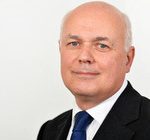
  • Iain Duncan Smith – 2002 Speech to the Royal Institute for International Affairs

    Iain Duncan Smith – 2002 Speech to the Royal Institute for International Affairs

    The speech made by Iain Duncan Smith, the then Leader of the Opposition, on 31 January 2002.

    For more than three-quarters of a century, British and foreign politicians alike have been beating a path to the doors of Chatham House in order to set out their wares before this distinguished and discriminating gathering. I am honoured and delighted to be invited to do likewise.

    Henry Kissinger’s most recent book, published before the outrages of 11th September, was provocatively entitled “Does America Need a Foreign Policy?” His answer, of course, was “yes”. Dr Kissinger argues that (I quote) “in the 1990s, American preeminence evolved less from any strategic design than a series of ad hoc decisions designed to satisfy domestic constituencies” which had “given rise to the temptation of acting as if the United States needed no long-range foreign policy at all”.

    Under President George W. Bush – as I learned for myself when I talked to him and senior members of his Administration – America does indeed now have such a policy. It is strong, focused, self-confident, realistic and governed by an intelligent perception of America’s national interest.

    In this, as in other respects, the Americans have much to remind us of.

    Dr Kissinger’s question about America was obviously asked tongue-in-cheek: a super-power does clearly need a long-range foreign policy. But Britain needs one just as much. We are the fourth largest economy, a power with global interests but limited resources to defend them. We have to be focused in our analysis, realistic in our objectives, staunch in our alliances, ingenious in our methods and resolute in our actions.

    And, to quote Kissinger again, our leaders need “the intuitive ability to sense the future and thereby master it”. It is a tall order. But, then, whoever said statesmanship was easy?

    Tuesday 11th September brought home to many the domestic imperative of foreign affairs. The terrorist outrages committed against New York and Washington transformed public perceptions throughout the West. Suddenly, people of all political persuasions and none were compelled to take stock of the dangers and the complexities of the world beyond our shores.

    It is essential, however, not to fall into the trap of believing that the world itself – along with perceptions of it – changed fundamentally on that fateful Tuesday.

    Most obviously, al-Qaeda was planning these attacks for a number of years beforehand. Indeed, arguably, if different decisions had been taken by the US authorities in the wake of earlier outrages the horrors of last September might have been avoided.

    As the title of this address suggests, Britain does indeed have to make its way in a “changing world”. But it is important to distinguish what changes from what stays the same.

    11th September was not, after all, the first time even in modern recollection when the world appeared to be undergoing fundamental change. It happened at the end of the Cold War. Freedom was extended to millions who had never known it. And geopolitics was all at once turned up-side-down. The world became uni-polar, with the United States as the only global superpower. The international system was more open but less predictable. It was one where the globalisation of both economics and culture were promoted by a communications revolution.

    But there also grew up a dangerously false view of realities. The Cold War had lasted so long that many people assumed that a stand-off between great powers was the usual state of affairs. And now that there was no such stand off, it was tacitly assumed that there was also no serious threat to peace.

    In fact, the end of the Cold War meant no such thing. It marked in many respects a return to earlier conditions – ones where a number of powers jostled for advantage, and where both alliances and tensions shifted in line with the circumstances of the day.

    Within this more fluid world NATO’s role retained its importance. And so did America’s leadership. But the old disciplines disappeared along with the old rigidities. Hence the rise of the rogue state. Hence also Saddam Hussein and the Gulf War.

    And then again the world seemed fundamentally to change on 11th September. Old rivalries have given way to at least one new partnership – that emerging between the West and Russia, whose strategic importance has been emphasised by the demands of the War Against Terrorism. So too, the rivalry between the US and China, which had grown sharply in recent years, has suddenly been put on hold. These, then, are some of the ways in which the world today has changed.

    And yet equally important is the extent to which the underlying realities have not changed at all – either with the end of the Cold War or with the start of the War on Terrorism. We have clearly not reached anything like the “End of History”, when swords are forged into ploughshares – or perhaps laptops – as the lure of prosperity transforms yesterday’s warrior into today’s entrepreneur.

    Yet these particular instances fail to get to the heart of the matter. Even before we analyse the risks that surround us we should at least always assume that they exist. For that is the way the world is. Human nature has made it so.

    The insight I have described here is at the heart of the Conservative view of foreign policy. Conservatives – with a big and a small “c” – are interested in the world as it is. We are realists; and we rejoice in the fact, because we know that it allows us to avoid succumbing to the distractions and descending into the cul-de-sacs that lure the unwary.

    There is, though, another view. And it is frequently proclaimed by the Prime Minister.

    The Conservative Party has supported, and will support, the Prime Minister whenever the national interest demands. But this does not detract from the fact that the present government has an approach to British foreign and security policy which is, at its very roots, misguided.

    The problem is simple and fundamental. It is that the Prime Minister seems to believe that there are no limits to what Britain, acting as part of an all-embracing global coalition of the Righteous, can and should do to make the world a better place. To judge from a speech he made earlier this month in Bangalore, he does not even see any limits to foreign policy, saying (I quote): “In today’s globally interdependent world foreign and domestic policy are part of the same thing”.

    If, of course, this means that you cannot have a successful foreign policy without also having a successful domestic policy, then there is a certain amount of truth in it. But, even then, it is not the whole truth. Countries which seek to pursue ambitious foreign policies which neither advance their interests nor match their resources are putting their standing and possibly their security at risk. And there is worse. An unfocused approach to foreign policy leads to, and is often devised in pursuit of, media grand-standing.

    The truth is that high profile diplomacy always contains it own temptations. Before foreign leaders decide to offer their personal services in sorting out long-standing international disputes, they should be clear about the answer to three searching questions. First: what do I expect to achieve?

    Second: what practical means are at my disposal?

    And third: am I best placed to do it?

    Without clarity on these points, the correct conclusion may be to stay at home.

    So much of today’s Designer Diplomacy demonstrates a worrying lack of realism. What is at work is a delusion about the way the world actually works, one which consists (in T. S. Eliot’s words) of : “Dreaming a system so perfect that no-one will need to be good”.

    Today’s utopian internationalists, who only have to glance at an opportunity for multilateral intervention in order to jump at it, run the risk of weakening national support for those military engagements which are fundamental to our security. Moreover, they fail to recognise that it is only when nations consider that their vital interests are engaged that they will make those sacrifices and shoulder those commitments that lead to successful outcomes.

    Let me take the War Against Terrorism as a decisive case in point.

    The attacks on the World Trade Centre and the Pentagon provoked such national, as well as international, outrage because no-one could fail to see that they were intended as attacks not just on America’s interests, policies, and actions but on America herself.

    I said at the time that America’s war was – and is – our war. That is both because our people and our interests are so close to those of America and because we also had the will and the means to make America’s struggle ours as well. But the fact remains that America unambiguously led the war – a sovereign power leading a coalition of sovereign powers.

    America has now demonstrated decisively that its capacity for action is the best guarantee of the world’s security. But America has also demonstrated that, no matter how powerful the currents of globalism and internationalism, the decisive strike against international terrorism required mobilising national loyalty, national pride and national willingness for sacrifice. That remains the most reliable way of ensuring that grave wrongs are punished and that just wars are won.

    This reflection leads to my first conclusion about the right priorities for British policy today. For me, as a Conservative, a successful foreign and security policy is one which always has a clear understanding of the national interest.

    That is not an isolationist principle: quite the reverse – it is precisely because our national interest is bound with the interests of other civilized nations that we must pursue a vigorous foreign policy. But we must always have a clear understanding of our mission.

    But, naturally, the national interest has to be viewed in the round, with intelligence and perception.

    In today’s interdependent world, the national interest can be damaged or advanced by crises arising far away from our shores – not unusually in the Middle East, home to most of the world’s hydrocarbon resources. But many other areas too, where international terrorism, or proliferation of weaponry, or destabilising ethnic tension, or human or ecological disaster threaten, will rightly concern us. The War Against Terrorism itself reinforces this truth. After all, when our troops were acting to smash the Taliban in Afghanistan they were also acting to cut off a deadly channel of heroin that kills young people in our cities at home.

    Moreover, it can sometimes arise, as in Kosovo, that a failure to take military action to protect an endangered civilian population would be morally culpable. It may also be right to intervene in order to maintain a great principle whose infraction with impunity could set a fatal precedent – for example, the principle that aggression shall not prosper, or that borders shall not be changed by force. And over and above all these security matters, the maintenance of global trade, promotion of global prosperity and enlargement of global freedom are real national concerns of Britain. But when we do, which was not the case in Kosovo at the outset, we must determine to put the right forces in place to force our plan.

    The history of our nation has qualified us well to play a major strategic and humanitarian role. The fact that Britain bestrides three spheres of influence: its Commonwealth, its special relationship with America and its partnership with other European states enables it to have influence over the response of the international community to disasters both natural and man-made.

    Other countries actually look to Britain to take a lead because of our heritage in international diplomacy and our reputation for getting things done.

    British NGO s are highly regarded and it is no surprise that the United Nations has just picked Oxfam as an acknowledged world expert to restore water supplies in Goma. Providing international help on this scale is resource hungry that is why hard questions need to be asked about the effectiveness of aid, making sure it gets into the right hands. And as far as possible helping to make a country self-reliant and not dependent.

    Reform of international organisations through whom Britain channels its multi-lateral aid should not escape our attention. European Development assistance accounts for a third of all our giving and although there has been some progress in cutting red tape and speeding up EU relief efforts, much more needs to be done. Britain’s role on the international stage is an important part of our nation’s identity. Being respected for the quality of our help to others in trouble is something we can be rightly proud of.

    The second follows from a clear understanding of our priorities. It is that diplomacy is no substitute for strong defence, and foreign entanglements that leave British forces overstretched and vulnerable are to be avoided.

    Britain is not just another second order world power. We are unique, and our uniqueness lends our opinions weight. No other power enjoys the combination of far-flung links through the Commonwealth, or our special standing in the Gulf, or our place at the historic hub of the English speaking world or our long tradition of civil peace or our international reputation for decency and fair-dealing. These are all important advantages. But while trumpeting all these claims, let’s not forget something else: Jaw-Jaw is indeed preferable to War-War – but investment in defence is also an investment in our international influence. We are listened to, above all, because we are permanent member of the UN Security Council, and a nuclear power with highly effective armed forces – and because we benefit from a uniquely close relationship with the only global superpower. Each of these – our defence preparedness and our alliance with America – is vital to our national interest.

    Happily, our relations with our great ally are in good repair, though I should like to see them stronger still, as I shall explain.

    Our lack of defence preparedness, however, gives greater cause for concern. The size of our armed forces has been shrinking at the same time as they have been tasked with extra commitments – the most recent being a new peacekeeping mission in Kabul which is much less well-defined than the original objective of removing the Taliban and al-Qaeda.

    What any sensible British Government has to recognise, and then to act upon, is that we cannot hope to do more in the world and yet spend less on it. That’s called facing up to reality.

    In the US today, there is a drive towards further strengthening of military capabilities. In Europe, however, it is a very different picture. According to the latest figures from the International Institute for Strategic Studies, EU countries’ defence spending continues to fall. This is deeply disturbing, and there is no sign yet that the events of 11th September have shaken Europeans – or the British Government – out of their complacency.

    That brings me to my third conclusion – the vital strategic importance of our relationship with America. For it is upon our American friends’ cooperation that our effectiveness as a military power and our security as a nation depend. Not the least of the positive inheritance from the Conservative eighties and nineties is that Americans know that Britain is America’s most reliable ally. It is to the credit of the Prime Minister that he has reinforced that perception by his well-chosen words of support during recent months. In fact, at an emotional level the Trans-Atlantic relationship has rarely been closer.

    This emotion also reflects a deep reality. People sometimes query the importance of the “special relationship” and suggest that it is just nostalgia. It isn’t. It reflects the fact that the British and Americans see the world in much the same way – which itself reflects our shared history, language, culture, values and beliefs. And it is upon such foundations that international relationships are built. Yet while psychological closeness is important, it is not a substitute for decision-making.

    Since September 11th something else has changed. We have all but seen the last of the attempts to induce America to abandon its plans for Ballistic Missile Defence. Russia has been constructive over the issue, recognizing that the ABM Treaty was based on a military doctrine which has substantially changed. The priority now is not so much to deter a massive nuclear strike: it is to protect ourselves, our forces and our allies from missile attack by rogue states or from the risk of accidental missile launches.

    I believe that the British Government should have given stronger support to President Bush’s plans and led the debate here in Europe. Indeed, we should be doing all we can to take advantage of them. Just as we benefit from America’s nuclear umbrella, so we should also seek to benefit from its Ballistic Missile shield. Staying outside it by default would be to take an unforgivable risk with our nation’s security.

    A further piece of confusion is also discernable on the political horizon. Labour’s position on Ballistic Missile Defence is explicable by the internal politics of the Labour Party.

    Yet America is determined to see this enterprise through – and rightly so. Washington clearly sees that the problem of rogue states and the problem of international terrorism are intimately connected.

    The world cannot be safe while Saddam Hussein is free to develop weapons of mass destruction. Nor can we accept that, simply because they were hostile to the Taliban, other states which actively support terrorism should be treated as if they were upstanding members of the international community. Britain should give absolute support to the measures necessary to ensure that events like those of 11th September are never repeated.

    We should always recognize that our ability to help shape the thinking of the USA is greatest if we retain the capacity to act. If all we have to offer is our wisdom, our influence is likely to be diminished.

    The confusions evident in this Government’s approach to foreign and security policy are also reflected in its confused approach to Europe. What is required is a clear, consistent strategy to promote Britain’s national interests in all our dealings with the European Union – and that is my fourth conclusion. This is a larger topic than can conveniently be covered here. But the main components of the Conservative Party’s policy are well known and enjoy very widespread support.

    They are, first, that we believe that the European Union continues to have great potential to help bring stability and prosperity to what should be a growing number of member states. To deliver that the EU needs radical reform, and that reform should be built from the bottom up rather than from the top down – in other words from the nation states and their parliamentary and political systems. A Conservative government would lead that process of reform, rather than pursue the Government’s policy of continual drift.

    The statements of both the present Right-of-Centre Italian Government and of the Conservative Candidate for the German Chancellorship demonstrate that the kind of concerns we have about over-centralisation are widely shared – even within countries which have been at the forefront of closer European integration.

    Second, and in keeping with this, we continue to oppose Sterling’s abolition in favour of the Euro. Our view is that there will never be a single interest rate and a single monetary policy which are right for all European countries. We remember the effects of the ERM. We also note the disastrous consequences of a fixed exchange rate in Argentina. We shall strongly, and I believe successfully, argue for retention of the Pound in any referendum which is called.

    Third, we believe that the proposed European Rapid Reaction Force is an exercise in politics not in serious security policy. It is – and has been intended as – an alternative to NATO, the most successful defence organisation that the world has ever seen. It will involve duplication. It will lack credibility. It will create confusion about Western aims. It risks decoupling Europe from America. It will add nothing to European defence capabilities, which as I have already noted are actually declining. In short, the European Army is a venture which only makes sense if it is regarded as a necessary part of creating a European superstate – something which the Prime Minister denies is his intention.

    The fifth element of our Conservative foreign policy concerns supranational organisations more widely. International cooperation between sovereign states is and always will be necessary to achieve practical objectives which would be beyond countries acting alone. That is why we have always been supportive of international bodies including the United Nations and the World Trade Organisation. The danger today, however, is that some supranational organisations are being invested with more powers than they are suited to wield.

    For example, we expressed our concerns in the last parliament about how the blueprint for an International Criminal Court would work in practice. It may, as in the cases of Yugoslavia and Rwanda, be necessary to set up special courts to deal with altogether unique circumstances. But we must avoid at all costs creating a situation which makes it more difficult for law-abiding nations to pursue just action, because it is their officials or soldiers which will find themselves having to answer to such a political body, not those from countries which scorn all law.

    There are parallel issues in economic affairs. We need to find and retain the right balance between global and national decision-making. The World Trade Organisation, as successor to the GATT, does sterling work in helping integrate the global market place. Removing obstacles to trade is the single most important task international economic decision makers have – for trade is the driving force of prosperity. But at the same time we should be cautious about more ambitious plans that have been mooted to create a “New Economic Order”.

    We should, in fact, remember: supranational organisations never of themselves kept the peace – that has been left to well-armed nation states. And supranational organisations never of themselves made nations rich – that was the work of countless individuals producing and consuming in the market place, in the context of fair and democratic institutions.

    I have tried to cover a wide canvas today, and some details will need to be filled in on other occasions. But the five axioms I have set out – and the philosophy which underpins them – are, I believe, clear, consistent and coherent. They stem from a view of the world, a world seen through Conservative eyes. The great Macaulay was not, of course, a Conservative – though I fancy he would be today. I warm to his observation, all the same, that “an acre in Middlesex is worth a principality in Utopia”. Our historian would doubtless be extremely surprised at the cost of land in Middlesex. But I am sure he would not be at all surprised to find preoccupations with Utopia still generating political folly. The next Conservative Government will try to change that.