Tag: Holocaust

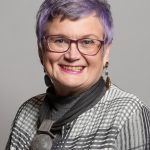
  • Carolyn Harris – 2021 Speech on Holocaust Memorial Day

    Carolyn Harris – 2021 Speech on Holocaust Memorial Day

    The speech made by Carolyn Harris, the Labour MP for Swansea East, in the House of Commons on 28 January 2021.

    Every year across the country, we come together to mark Holocaust Memorial Day: to remember those who have been lost; to hear the retelling of stories from those who have survived; and to reflect on what we can do to stop such atrocities taking place again. I thank the Holocaust Educational Trust and the Holocaust Memorial Day Trust for the fantastic resources and ceremonies they have provided to ensure that the memorial is still happening safely in 2021.

    Thinking of this year’s theme—“Be the light in the darkness”—I think of those glimmers and moments of hope brought about through unimaginable bravery and courage. I came across Madeline Deutsch’s story in the US Holocaust Memorial Museum collection, where she shared the sacrifices that her mother made to keep her safe during their time in the camps in the second world war. Madeline spoke of how her mother would give up her scraps of bread in order to keep her child safe and fed through the hardest and most trying of circumstances. Although we are aware of how the Nazi regime targeted their evil at all Jews, along with those who did not fit the idea of Aryan, today I want to talk about the treatment and experience of women in camps.

    Ravensbrück was the largest Nazi concentration camp established for women. Over 120,000 women had been imprisoned in Ravensbrück by the time it was liberated in 1945. Those women faced not just the harsh reality of the camps; they could also face forced medical experiments and sterilisations, be made to work in makeshift brothels or were murdered. In what must have been the very darkest of times, we still hear stories such as the sacrifices that Madeline Deutsch’s mother made to keep her child fed and safe.

    Although we know that identity-based persecution often affects all those who fall into the targeted groups, women’s experiences during genocide can be unique. Today we remember those women who lost their lives or experienced persecution not only in the holocaust, but in the genocides that have sadly followed since. Let us remember the light and hope shown by men and women; let us remember the sacrifices made by fathers and mothers; and let these stories show us that in the very darkest of times, there can always be light.
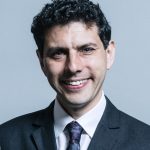
  • Alex Sobel – 2021 Speech on Holocaust Memorial Day

    Alex Sobel – 2021 Speech on Holocaust Memorial Day

    The speech made by Alex Sobel, the Labour MP for Leeds North West, in the House of Commons on 28 January 2021.

    Today’s Holocaust Memorial Day theme of “Be the light in the darkness” is really important. We are going through a form of darkness ourselves with the coronavirus epidemic, and 1,500 out of every 100,000 people in this country have died due to coronavirus. For European Jews, the death rate was two thirds of our whole community in the second world war. The fear that Jews had every day in the period from when Hitler took power was unbelievable, and we need to reflect on that today. It did not start with extermination. It started with acts of antisemitism, the forced shaving of beards, the forced labour camps, the removal of religious rights and the detention of children.

    I can also say all those things that I have just said about the Uyghur Muslims in China. They are going through a form of persecution, which we need to stand up to today on Holocaust Memorial Day. I praise the Board of Deputies of British Jews for its work on this. We also have other genocides in the world. I am the Chair of the all-party parliamentary group on West Papua, where more than half a million people have been killed. The universities of Sydney and Yale have classified this as genocide, and it is important not just to reflect on history but to remember those people who are being oppressed and having genocidal action taken against them today. We have a duty to speak out about what is happening now, as well as reflecting on what happened to my own ancestors—people I will never get to meet and whose children were never born. That is something that has fallen not just on the Jewish community, but on other communities around the world. It is not just about communities of race or religion. We need to remember other minority communities, such as the trans community, who are going through terrible forms of persecution and oppression around the world, and who are grossly misunderstood in many places. We also need to send our solidarity to communities of identity and others today on Holocaust Memorial Day. This is not a day just about Jews and the holocaust; this is a day about all those facing oppression, genocide and persecution. As a Jewish person, I send my solidarity and my support to all those facing persecution. We need to be able to shine a light in the darkness. It is said that light is the best disinfectant. Today, we can shine that light and start to disinfect the problems and issues of the world.

  • Ed Davey – 2021 Speech on Holocaust Memorial Day

    Ed Davey – 2021 Speech on Holocaust Memorial Day

    The speech made by Ed Davey, the Leader of the Liberal Democrats, on 28 January 2021.

    I pay tribute to everyone who has spoken in this debate so far, not least the last very moving speech by the hon. Member for Beckenham (Bob Stewart). I would like to start my contribution by reading a couple of lines from the memoir of Gerda Weissmann Klein, who was 18 when she was sent to the first of several concentration camps, Bolkenhain. She wrote:

    “Ilse, a childhood friend of mine, once found a raspberry in the concentration camp and carried it in her pocket all day to present to me that night on a leaf. Imagine a world in which your entire possession is one raspberry and you give it to your friend.”

    For me, those words simultaneously drive home the holocaust horrors, while exemplifying the compassion and generosity that existed even in those most awful conditions. It shows us that Ilse Kleinzahler, a young woman in a concentration camp with nothing in the world but a raspberry, could be the light in that unimaginable darkness.

    Years later, Gerda said:

    “I like to remember some of the things in camp, how people helped each other. I want to tell young people about that—that there was friendship and love and caring.”

    Like so many accounts from holocaust survivors, the story has a heartbreaking coda. Ilse died on a death march a week before Gerda was liberated. They were holding each other’s hand. We must never forget the atrocities of the holocaust—never—how Ilse and 6 million Jews were murdered by the Nazis and the inhumanity inflicted on humans by humans. We must remember, so that we try harder to stop it happening again, as it has, tragically, in Cambodia, Rwanda, Bosnia and elsewhere, as other colleagues have said. We must be vigilant in our opposition to hatred, discrimination and oppression and vigilant in defence of peace, respect and human rights.

    Let us also remember, as Mrs Klein does, the friendship, the love and the caring that existed even amidst all that horror. If those qualities can exist in a Nazi concentration camp in the middle of the holocaust, they can certainly exist now. No matter how difficult things are, how big our challenges may be or how dark the days might seem, we can still find those most human of qualities. We can still care for each other, we can still love each other and we can still be the light in the darkness.

  • Bob Stewart – 2021 Speech on Holocaust Memorial Day

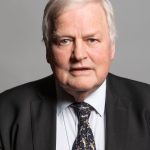
    Bob Stewart – 2021 Speech on Holocaust Memorial Day

    The speech made by Bob Stewart, the Conservative MP for Beckenham, in the House of Commons on 28 January 2021.

    I was born four years after the genocide of the holocaust ended, but I have been a witness to genocide. In 1992-93, I was the British UN commander in Bosnia, and the whole country was an example of genocide. I do not have much time, so let me concentrate on one incident on one day: the Ahmic house in Ahmići, on 22 April 1993.

    I approached the house to discover that a man and a boy had been shot down in their doorway and their bodies burnt. The boy’s naked body had his fist up in the air. It was horrific. My soldiers told me to look round the back. I went into the cellar, and I could not believe what I saw. The first thing I got was, frankly, the smell; it was awful. Then my eyes focused on a mass of red and black, and I realised it was bodies. One body—I think it was an adult—was arched so far backwards, probably in agony, that it must have broken the back. There were four children there, too, but here is the point: as I looked at the head of what I thought was a woman, her eyes were still there. I was horrified. We went outside. We leant against the wall. My soldiers and I could say nothing. Later, as he was shovelling up the remains of people, a soldier turned to me and said, “Sir, this is Europe in 1993, not Europe in 1943.” We buried over 104 people—I think it was 104 people—in a mass grave nearby. It has affected me deeply. I may not look it, but deep down, I am deeply affected by the genocide I witnessed.

    My mother went to Belsen at the end of the war. She was an officer of the Special Operations Executive. She never told me about it until I was stationed nearby. I said to her then, “Why, mum, have you not told me about this?” She said, “Robert, I was ashamed.” I said, “Mum, why were you ashamed? You were in uniform. You were fighting the Nazis. You had learned to parachute. You had learned to fight them.” She said, “I was ashamed, Robert, because this genocide occurred in my generation.”

    Genocides have occurred since 1945. As I have said, I was a witness to one; it is burned into me. The purpose of this debate is to make sure that we try to stop it happening again.

  • Liam Byrne – 2021 Speech on Holocaust Memorial Day

    Liam Byrne – 2021 Speech on Holocaust Memorial Day

    The speech made by Liam Byrne, the Labour MP for Birmingham Hodge Hill, in the House of Commons on 28 January 2021.

    Let me add my thanks to everybody who has helped to sponsor and organise this debate. I, too, pay tribute to the Holocaust Educational Trust and the Holocaust Memorial Day Trust for helping to ensure that the debate is so well organised and so well informed. Seventy-six years on, we still do not look out on a world where we have banished genocide. We cannot yet look out on a world where we have banished antisemitism. Until that moment comes, we need debates like this to remember with contrition and humility, as well as determination, how much further we still have to go.

    I want to offer two lessons today that I have reflected on in the run-up to this important day. One is a lesson not from Britain but from Denmark: it is the story of the Danish resistance. Those of us have been to Yad Vashem will know that in the Avenue of the Righteous there is only one memorial to an entire national movement, and that is the memorial to the Danish resistance. This movement came together in 1940 after Hitler invaded Denmark. Together, it organised the extraordinary evacuation of 7,200 Jews, along with 700 of their relatives, in October 1943 after Hitler had given the order to arrest the Jews, with extermination in mind.

    This was an exercise in good people coming together—people like Sven Teisen, a member of the Danish resistance, who lost his life in the course of 1943, and Oliver Sandberg, who gave over their house next to the Øresund, over which Jews were ferried to safety in Sweden. Sven Teisen was the uncle that I never knew. Oliver Sandberg was his cousin. They were among thousands of ordinary Danes who came together inspired by one simple idea: that ordinary people can make a difference in standing up to hate.

    I am so grateful that our schools are now teaching this lesson to our children. They are schools like Rockwood Academy in Alum Rock my constituency. This is a gold standard Holocaust Educational Trust school that has brought alive the testimony of Mady Gerrard. It has named its new building after Mady, and its lights now shine up like a light in the darkness to help light up the January skies here in Birmingham. I want our region to become a region of sanctuary for refugees in the years to come.

    I want us to listen to the lessons of Sofia Darr, the headteacher, who I heard from this morning. She said that she has just seen the most extraordinary emotional journey of her children. She wants us to reflect on how we help them to connect at a human level, and on how we recognise their pledges by bringing them together and putting them on a national stage, giving our young people, through their leadership, the chance to genuinely spark a movement for change against hate.

  • Feryal Clark – 2021 Speech on Holocaust Memorial Day

    Feryal Clark – 2021 Speech on Holocaust Memorial Day

    The speech made by Feryal Clark, the Labour MP for Enfield North, in the House of Commons on 28 January 2021.

    It is an honour to have the opportunity to speak in this important debate. I was privileged to join the online commemorative ceremony to mark Holocaust Memorial Day yesterday to honour those who were murdered for who they were and to stand against prejudice and hatred today.

    Holocaust Memorial Day reminds us that there are fewer people around the world with direct lived experience of that hellish extermination. It is crucial to hear the deeply moving testimonies of the remaining survivors, because the message of suffering, pain, trauma and human cruelty must never ever be forgotten. Those testimonies remind us of the impact of the holocaust: the lives cut short, the families ripped apart, and the courage and bravery of those who survived who seek to ensure that their suffering informs a better future for every one of us. The theme of the Holocaust Memorial Day this year is “Be the light in the darkness”. It encourages everyone to reflect on the depths that humanity can sink to, but also the ways in which individuals and communities resisted that darkness to be the light before, during and after the genocide.

    Holocaust Memorial Day is also a day for us to recognise and remember other atrocities that have taken place since that time, including in Rwanda, Bosnia, Cambodia and, most recently, the genocide of Yazidis by the evil that is known as ISIS. In the summer of 2014, as ISIS rampaged and rolled into Sinjar, the international community was still asleep and the Yazidis defenceless. ISIS perpetrated the unthinkable. Thousands of boys and men were slaughtered, while women and girls were enslaved and raped, with hundreds of thousands put on display, all because they believed in something different. Another genocide happened on our watch.

    Thousands of Yazidis still languish in camps with the hope of returning home one day. Six years later, with ISIS defeated militarily and global recognition of ISIS’s atrocities accepted, efforts have failed to see Yazidis return in large numbers. Recognition of the genocide of Yazidis has not ended their pain and suffering. Thousands are still unable to return home and feel safer in the camps in which they live. They live in fear of ISIS resurging and constant Turkish airstrikes. What Yazidis want is accountability, justice and the reunification of families. Thousands of children and women are still missing, either enslaved or murdered.

    Justice and peace go hand in hand, but bringing to justice those who committed these evil acts will dissuade future perpetrators while also breaking the cycle of violence by demonstrating that justice systems can work. The crisis for Yazidis is not over. Justice means more than perpetrators being tried for terrorism against the Iraqi state; it means, where possible, convicting ISIS members for crimes committed against Yazidis, for torture, kidnapping, enslavement, rape and murder. The crisis is not over if human rights of the Yazidis in Iraq are not respected in law and policy and by all members of society. Yazidis need more than remembrance.

  • Andrew Percy – 2021 Speech on Holocaust Memorial Day

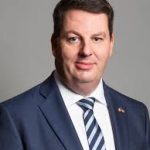
    Andrew Percy – 2021 Speech on Holocaust Memorial Day

    The speech made by Andrew Percy, the Conservative MP for Brigg and Goole, in the House of Commons on 28 January 2021.

    It is an honour to take part in this debate today. It was disappointing early on in this debate, however, to hear a Member once again using this debate for their own personal campaign against the location of the UK holocaust memorial. It was, in my opinion, inappropriate and offensive.

    I want to begin with the name of Hilel Gruzin. His name was provided to me with the Yellow Candle I received for Yom HaShoah earlier this year. Hilel was one of the victims of the holocaust, dying at the age of just 21 in 1944 in Latvia, and I hope we can remember his name today. His memory is a blessing.

    I want to thank Brigg Town Council for the memorial day ceremony we undertook on Sunday. We were unable, of course, to meet in person this year, but I thank the town council for organising what was anyway a very moving memorial day. I also pay particular tribute to Rabbi Thomas Salamon from my synagogue, who provided some words to us on that day, particularly recounting his story—of his family and of growing up as the son of a mother who was interned in one of the camps.

    I want briefly to talk about the work of the APPG against antisemitism, of which I am proud to be co-chair. The work we have been doing this year has largely focused on online antisemitism, which we know is a growing problem in this country. It is something we have to get a grip on, and get a grip on quickly, given the prevalence of social media and the growth of it.

    We hear a lot about Facebook, and a lot about Twitter and TikTok, but one platform we have heard less about is Amazon, a company that many of us would herald for helping get us through these past few months—it has many strings to its bow—but, sadly, one that has taken a very long time to remove antisemitic content. Only recently, 92 books were removed from its platform because of holocaust denial material. At the end of last year, my co-chair and I had to write to Amazon about antisemitic responses that came in the form of Alexa—quite appalling responses—and we have had to write to it again regarding the content it has on its site from the notorious conspiracy theorist and antisemite David Icke, which although provided by a third party, is accessed via Amazon.

    In the final seconds I have, my plea to all these platforms is to act responsibly. They cannot contract out their responsibility in regard to antisemitism. This is an area that, sadly, is growing, and they have to do more. I hope that the online harms Bill will provide an opportunity for us to ensure they do more.

  • Pat McFadden – 2021 Speech on Holocaust Memorial Day

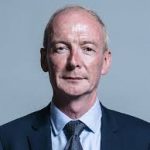
    Pat McFadden – 2021 Speech on Holocaust Memorial Day

    The speech made by Pat McFadden, the Labour MP for Wolverhampton South East, in the House of Commons on 28 January 2021.

    I thank everyone who made this debate possible. Holocaust Memorial Day stands as a reminder of where racism and the dehumanisation of others can lead. Many years ago, I travelled to Auschwitz-Birkenau with children from my constituency, on a visit organised by the Holocaust Educational Trust. No one who has made that visit will ever forget the experience. The industrial mass killing, the meticulous gathering of clothing and goods—not random acts of chaotic violence but the most organised programme of killing in history.

    We recoil and say “Never again”, but since the holocaust there have been further atrocities in the world fuelled by racial hatred and the desire to demonise people because of their faith or because they are a minority of one kind or another. The lessons for today still matter. We should never engage in the conferring of collective guilt, we should openly reject conspiracy theories about dual loyalties or international cabals influencing world events, and we should reject the world view that results in a hierarchy of victimhood where some cannot accept that Jewish people could really be the victims of racism.

    It is sadly the case that antisemitism still exists in our society, and indeed became more prominent in recent years, including in my own party. It never represented the Labour tradition, which at its best is a politics open to people of all faiths and none and which seeks to break down barriers, not reinforce them, yet still antisemitic views found a home in some of the darker corners of the left, as well as the far right. I am glad and relieved that, under new leadership, we have firmly turned a page on that era. To do so fully and completely, we must not only reject antisemitism but the worldview that gives rise to it, the conspiracy theories that go along with it and the hierarchy of victimhood that is blind to it.

    The experience of remembering the holocaust should also inform the ways that we think about refugees today. The UK can be proud of the role we played not only during the war, in liberating the world from tyranny, but before the war, in making a new home for around 10,000 children through the Kindertransport programme. Each one of those children was given a new life and a new chance. Today, when child refugees are still trying to reach our shores, we should remember how precious that chance of a new life can be, and what an amazing contribution to our country can be made by those who are given a chance.

    The lessons of Holocaust Memorial Day are not only those from history; they live with us every day. The greatest of all is that we share much more through our common humanity than anything that could drive us apart.

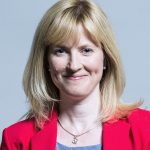
  • Rosie Duffield – 2021 Speech on Holocaust Memorial Day

    Rosie Duffield – 2021 Speech on Holocaust Memorial Day

    The speech made by Rosie Duffield, the Labour MP for Canterbury, in the House of Commons on 28 January 2021.

    Yesterday, my friend Paula Sherriff—a much missed former Member of this House—tweeted a quote that read:

    “If we held a moment of silence for every victim of the Holocaust we would be silent for eleven and a half years.”

    It is often easy to feel disconnected from the figures and statistics that are read out in this place. Six million people. Six million Jews were murdered by the Nazis. Most of us will struggle to imagine a number too huge to picture in our minds. It is easier, then, for us to imagine what it might feel like in our own lives if overnight the family living next door to us were to disappear, if several of our classmates and teachers did not turn up for school one day, and if there were noticeably fewer people around—emptier shops, cafés, gyms and school playgrounds—just as there has been during lockdown.

    But 6 million people did not catch an infectious respiratory virus; they were forced out of their homes, rounded up, robbed, starved, humiliated, branded, tortured, experimented on and killed because of their race and religion. One deranged bully devised and built a murderous plan to wipe out an entire race of people. Of course he could not do this alone, so he tapped into some of our most complicated human flaws—weakness, fear, vulnerability, ignorance—and harnessed them to produce mass inhumanity. Despotic bullies disarm us by yelling their hatred and spite. We all fear becoming their next target. The safest option is to run and hide, to be compliant and complicit. Our instinct is to protect ourselves and those closest to us. But some chose not to.

    The people in this place are all here because we chose, one way or another, not to be bystanders. The political arena is not for the faint-hearted, and, sadly, despite what we all now know about the atrocities enacted by the leaders of the Nazi regime, the world has not learnt to stop electing bullies who use their positions of power to make the lives of some intolerable, and they do so in plain sight. Some shout about building walls, inciting hatred, fuelling division, legitimising racism and even encouraging violence. Others arrange to have their political opponents or critics assassinated and poisoned, try to rig elections, and refuse to relinquish power or recognise democracy.

    Right now, we know that there are groups of people being persecuted, imprisoned, rounded up, robbed, tortured and branded because of their race and religion. And what are we doing to stop it? We have to find ways to make sure that we are not being mere bystanders. Let us all be braver, like those who resisted. As Edmund Burke said:

    “The only thing necessary for the triumph of evil is for good men to do nothing.”

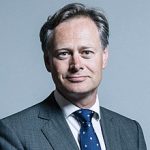
  • Matthew Offord – 2021 Speech on Holocaust Memorial Day

    Matthew Offord – 2021 Speech on Holocaust Memorial Day

    The speech made by Matthew Offord, the Conservative MP for Hendon, in the House of Commons on 28 January 2021.

    In last year’s debate, I spoke about the only concentration camp on British soil, on the island of Alderney. Lager Sylt and Lager Norderney contained Russian and Polish prisoners-of-war, as well as Jewish slave labourers. I raised the issue of undisclosed and unrecorded burial sites of murdered inmates and told the House:

    “Rabbinic law dictates that the grave sites of Jewish people should not be disturbed.”

    However, I expressed my personal view that

    “unmarked graves, mass graves and locations of bodies hidden by their murderers are not proper graves in themselves, and I believe that it is appropriate for the identification of bodies to be undertaken”—[Official Report, 23 January 2020; Vol. 670, c. 492.]

    Some people took my words as advocating a full exhumation of the Channel Islands, but that is not necessary or even desirable. The burial site on Alderney was designated and formally marked by the Commonwealth War Graves Commission as an official war grave, but it was deaccessioned by the CWGC in 1961.

    Back in July 2019, my right hon. Friend Lord Pickles, head of the UK delegation of the International Holocaust Remembrance Alliance, along with the deputy head, Sally Sealey, and Dr Gilly Carr, a member of the UK delegation, visited Alderney. The purpose of the trip was to make an assessment of the island’s holocaust-related heritage sites after the revelation of new geophysical evidence and the potential presence of further bodies in a mass grave on Longis Common on Alderney.

    Putting aside the religious issues, it has been stressed to me that opening mass graves is not as revealing as one might imagine that and that gains in knowledge are slight compared with the moral and spiritual costs of disturbance. Knowledge already exists about the sites, and the combination of non-intrusive means of investigation, world war two aerial imagery and research of the records should be sufficient to tell us, with some certitude, what lies beneath Longis Common. I have been advised that a considerable amount is already known about what lies beneath that ground. That is because the British Government are still sitting on embargoed files that detail what they found at the cemetery after the war and their own excavations at the cemetery. Today, I am calling on the Government to find the missing records of the 1961 exhumation, and the detailed records that the UK made of each set of remains by the British excavation in Alderney. We have a duty to ensure that no one is left behind. I ask the Government to play their part and do the right thing by releasing all information and documents in their possession.