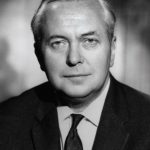
Tag: Harold Wilson

  • Harold Wilson – 1965 Speech on Foreign Affairs

    Harold Wilson – 1965 Speech on Foreign Affairs

    The speech made by Harold Wilson, the then Prime Minister, in the House of Commons on 19 July 1965.

    This two-day debate, to which the Opposition and the Government have each contributed a day, can be expected to range pretty widely. In opening it, I feel that it may be more helpful to the House that I should not embark—as has sometimes been done in these debates in the past—on a comprehensive tour d’horizon, touching on all the issues of world affairs, but none of them, perhaps, very deeply. Rather I propose to single out three or four major issues which have dominated international relations in the past few weeks and months and which must be expected to dominate all our affairs for the rest of this year and perhaps much longer.

    The issues which I think, the House would want me to deal with are Vietnam, Malaysia, the central problem of relations with the Middle East, the present situation in Europe, the prospects for disarmament, and measures to stop the spread of nuclear weapons.

    To choose these subjects means that I shall not be dealing with a number of major issues which hon. and right hon. Members will wish to raise. It means excluding a discussion of the present situation in United Nations, although I know that my right hon. Friend the Foreign Secretary will hope to deal with that if he catches your eye, tomorrow, Mr. Speaker.

    It leaves little time for discussing the wider problems of the Middle East, including South Arabia and the Gulf States, or the flare-up in Santo Domingo, the question of Spain, the Gibraltar issue, and many other issues which will be in the minds of hon. Members. But as three Foreign Office Ministers hope to take part in the debate if they catch your eye, Mr. Speaker, I trust that the Government will be able at some stage in the next two days to deal with any questions which are raised.

    Before I turn to my main subject, I should like to say a word or two about some of the underlying themes of world affairs against which these three or four central issues have to be considered.

    The first relates to the nature of the challenge that we are facing. I would be the last person to underrate or understate the grave dangers of the fighting in Vietnam escalating into a major land war in Asia, or even into a graver confrontation than that. Nor do I think that there is a sufficiently widespread realisation of the dangers that could occur by any intensification or extention of the confrontation between Malaysia and Indonesia. But, having said that, I should point out that it is clear that the past year has shown us, with growing clarity, how the nature of the world struggle is changing.

    We must remain on our guard in Europe; we emphatically cannot afford the luxury of further strains within N.A.T.O. or the further development of nationalism within an alliance whose essence and inspiration are international collective defence. But the very nature of the thermo-nuclear balance in the world—the so-called balance of terror, based on a recognition that either of the two major nuclear Powers has within itself the capability to destroy utterly large areas of the other, and thus of itself and of the world—means that N.A.T.O. must maintain adequate conventional strength in Europe.

    Having said that, I submit that the main danger in the world now is a more subtle form of challenge, of penetration, not capable of resistance by purely, or even mainly, military means. We must guard against the temptation to be so dominated by the undoubted challenge and danger that we were facing in the early 1950s that we put all our strength into defending our front door while the back door and the kitchen window are left unguarded. It was this theme which underlay the important speech of my right hon. Friend the Secretary of State for Defence at the last N.A.T.O. Defence Ministerial Meeting, and I believe that there was widespread recognition that his call for a fundamental reappraisal of the scale and nature of the challenge that N.A.T.O. was facing was timely—indeed, overdue.

    We may look at this situation in rough periods of ten years since the war. If the problem of 1945–55—the first ten years after the war—was to come to terms with the new power situation which followed the defeat of Hitler, particularly the situation in Europe, and then to build up an effective situation of strength based on collective security; and if the dominant theme of the second post-war decade has been that of a world coming to terms with the facts of thermo-nuclear power—with Cuba, in 1962, providing the watershed—it is equally true that that second decade saw the emergence of new problems which I believe will dominate the third post-war decade from 1965 onwards, and, I believe, for many years after that.

    This new problem is presented by the emergence of China as a world Power, by the ideological struggle between Russia and China, and by the growth of the so-called National Liberation Movements, not only in Asia, but in Africa and in Latin America. Just as there has been a growing recognition that the military, weapons appropriate to conventional land warfare are inappropriate, irrelevant and even dangerous in the jungle, so there is widespread recognition that political and economic infiltration cannot be dealt with mainly or even primarily by a military approach.

    I say quite frankly to the House that this was one of the underlying themes of the recent and, I believe, successful Commonwealth Conference.

    Behind all these specific issues which dominated that conference and which featured in the communiqué—such as the Vietnam Peace Mission, Rhodesia, disarmament, Commonwealth trade, the Commonwealth Secretariat and the rest—there was a deeper and more fundamental theme. I probably over-simplify it, but I do not think that I over-dramatise it when I say that what was at stake at that conference, and what is at stake in all the dealings of advanced industrial countries with the newly emerging nations, what was at stake in Algiers and Cairo and actually during the Commonwealth Conference, and what will be of growing importance as year succeeds year is the struggle for the soul of Africa. I hope that there can be no doubt in any of our minds who are the leading nations in that struggle. I hope that there can be no doubt either that Britain, through history, through geography, through the whole history of our Commonwealth development, cannot contract out of that struggle.

    I refer to one other theme to which the right hon. Gentleman the Leader of the Opposition drew attention in opening the foreign affairs debate from this Box a year ago, namely, the rift which has developed between Russia and China. That was one of his main themes last year. I agreed with a great deal of what he said then, though I think that the passage of another year has underlined at any rate one warning which I gave him then. I said that, while I was not underrating the importance of this development, there was a danger in attitudes which might seem to suggest that because of disagreement between Russia and China we might automatically assume—as the right hon. Gentleman at one point last year almost seemed to assume—that Russia’s desire for coexistence would cause her to agree more readily with Western policies, the feeling that we could and should play on this rift in the Communist camp. I said then that I thought that this was dangerous, and I think that the whole course of world events since then has proved it.

    I do not want to compete with the professional demonologists, be they Kremlinologists, Pekinologists or any other kind, in seeking to analyse the significance of the theoretical and ideological part of the argument. More important, perhaps, is the difference arising from the stage of development which the two countries have reached, the fact that the Soviet Union has vast achievements, vast developments, a vast capital structure—I am not saying a “capitalistic” structure—to defend and has, in consequence, developed a system of society which, making complete allowance for political differences, has become, not least in its functional structure and in its class structure, more and more assimilated to that of an advanced Western country, whereas China, at a much earlier stage of development, is, perhaps, inevitably, more militant and more—as their leaders would claim—revolutionary in her ideological doctrines and, much more important, more revolutionary in her attitude to world affairs.

    I think that my warning of last year stands. The very fact that there is a struggle between Russia and China not only for power and influence amongst uncommitted nations, be they in Afro-Asia or Latin America, but, still more poignant in the minds of leaders of Moscow and Peking, a struggle for the leadership not only of the uncommitted world, but of the Communist world, means that, when the strains are at their greatest, as they have been over Vietnam, one cannot assume—as, perhaps, might have been assumed a year ago—that the Soviet Union will then be driven into accepting more and more Western positions.

    It is precisely because of this struggle, precisely because of this difference, that we are faced with this great challenge to our diplomacy, and we have to see that we do not force the Soviet Union into positions of competitive militancy which may not be in her long-term interests and which certainly are not in the interests of world peace. I believe that this consideration is one of the central ones in the first main problem to which I now turn, the problem of Vietnam.

    I do not intend to take up the time of the House with a long account of the development and history of the present situation in Vietnam, from the 1954 Geneva Agreement onwards. The House will recall that, in our last foreign affairs debate, my right hon. Friend the Foreign Secretary dealt with the whole ten or eleven years and, in his admirable Oxford speech which has been widely, and rightly, praised, he dealt with the history of this question with the utmost clarity. He explained, as I tried to do in that same debate last April and many times subsequently, why we have supported the actions of the United States in Vietnam. The American position, which we support, is this—that when conditions have been created in which the people of South Vietnam can determine their own future, free from external interference, the United States will be ready and eager to withdraw her forces from South Vietnam.

    This is what they have said, and we support them. This is right, but it can only be as a result of a conference. We support that too. A unilateral withdrawal of the United States would have incalculable results, first in Vietnam. It would have incalculable results, too, over a much wider area than Vietnam, not least because it might carry with it the danger that friend and potential foe, throughout the world would begin to wonder whether the United States might be induced also to abandon other allies when the going got rough. One has only to look at the map of South-East Asia—rich, fertile, mouth-watering, not in current economic terms, but in terms of temptation to those seeking a wider sphere of exclusive influence.

    Again, in terms of great power relationships, a unilateral withdrawal would be held as a humiliating defeat and would make not only countries such as Russia but—let us be frank—America herself, that much more intransigent and tough and determined to see that the experience was not repeated and that much less inclined to policies of co-existence. I think that there is now a growing recognition that the problem of South Vietnam cannot be solved by military means. Military means can prevent an imposed solution, but there can be no victory now. This war will end when that realisation penetrates those capitals which are at present intoxicated by hopes of an early military settlement.

    However, if the South Vietnamese Government and people, with their American allies, may not be able to impose a settlement on the Vietcong and the North, equally, it is not within the power of the National Liberation Front, with whatever aid they get from North Vietnam, to bring South Vietnam and the Americans to their knees. Perhaps I am not going too far when I say that the only condition in which there could be a military solution of the struggle in Vietnam will be one which followed a major escalation, possibly a major world war. That would, on doubt, provide a military solution, but such a war might settle a lot of other things besides the position in Vietnam, not excluding the question of the future of human life on this planet.

    If the House accepts this analysis, it is a question, by every means open to us, of getting men round the table to secure an honourable and lasting peace. This has been the central theme of Her Majesty’s Government’s policy for many months. The right hon. Gentleman the Leader of the Opposition, with whom I do not intend to pick any quarrels this afternoon—[An HON. MEMBER: “Why not?”]—in speeches in the North the weekend before last—Why not? Because I think that there were one or two passages there which he would, on reflection, prefer that he had not used. He said: I hope the Socialist Government will now recognise that peace is not furthered by opportunism, but by solid, secret work and preparation through diplomatic channels, leading to negotiation. I wonder what he thinks we have been doing all these months. Let us take, first, our relations with Washington. We have, throughout, been in the closest discussion with the United States Government, one of the main parties to this dispute and to any possible conference. I had long discussions myself, as the House knows, with President Johnson on this matter last December and again in April.

    Nor are our discussions limited to the times when the President and I are sitting on the same side of the Atlantic. My right hon. Friend has had many discussions with the American Secretary of State, both in America and in Europe, and all of us have discussed the matter with the American Administration at all levels. While it is true that, in those dark months in February and March, when it was difficult for me to explain to the House what we were doing and what we were urging: at any rate we were able, by April, not only privately but publicly, to express our full support for the President’s Baltimore speech in which he called for discussions.

    As the House knows, subsequently the President, other American leaders, the Secretary of State, Mr. Adlai Stevenson—with whom I was discussing this Vietnam problem for several hours only nine days ago—all the American leaders, have since April expressed their willingness without conditions to enter into negotiations. At one point they indicated their willingness to suspend bombing policies in order that discussions would take place. We played our part in trying to carry this message through to the North Vietnamese authorities through the channels open to us, but without success.

    So much, then, for our diplomatic contacts with the United States. What about the other side? As the House knows, the Foreign Secretary is, with the Foreign Soviet Minister, a co-Chairman under the Geneva Agreement. In February we urged Mr. Gromyko to take joint action with my right hon. Friend for an approach to all the other Geneva powers as a first step towards a peaceful settlement. After some weeks, indeed on the eve of Mr. Gromyko’s visit to London, we were told that it was not acceptable for the Soviet Foreign Minister to join in this approach. Throughout the week of Mr. Gromyko’s visit to London my right hon. Friend day after day—supplemented by my own efforts at a two-hour meeting—tried to persuade Mr. Gromyko to join with us in an initiative on the lines we proposed. We failed.

    Then, as the House will know, in April we took up the Soviet suggestion of a conference on Cambodia and expressed our willingness to join with them in calling such a conference. Even a Cambodia conference was bristling with complications, including the question of the attitude of certain other states directly affected in South-East Asia. When hon. Gentlemen sometimes express doubts about Mr. Gordon Walker’s visit, let me say that to him more than to anyone they lay the credit for getting a general acceptance of such a conference in South-East Asia but we have not so far been able to persuade the Soviet Government to carry out their original intention in joining us in calling it.

    On more than one occasion we have tried to use the good offices of the Secretary-General of the United Nations. His proposed peace tour secured the same result as the unofficial visit of Mr. Gordon Walker. The Indian representative was rebuffed, the seventeen non-aligned nations were rebuffed, and France was rebuffed. More recently we secured the almost unanimous Commonwealth support for a Commonwealth Mission on Vietnam, and again Peking and Hanoi refused to accept the Mission.

    When the right hon. Gentleman the Leader of the Opposition says that what he calls “opportunist proposals” such as the Commonwealth Peace Mission or the visit of my hon. Friend the Member for Leek (Mr. Harold Davies) to Hanoi are “inappropriate, even dangerous”, when, as he suggested, in a rather extravagant phrase that this was the Foreign Secretary falling into the Communist trap, I wonder just how he feels that the secret diplomacy for which he calls can operate in this situation. I hope we shall hear from him about this. Of course, he tells us how successful this was in the case of Laos, but I remind him that even though this took place at a time when Russia and China were both willing to see a conference take place, it took him almost two years to get agreement, including the time for getting the conference established. When we look at the situation in Laos today we can be forgiven for wondering whether it was the unqualified success it is sometimes suggested to have been.

    Laos is not a parallel with the situation in Vietnam. The situation in regard to Vietnam is entirely different. It is in part, both in origin and character, a civil war, but it is equally a war that most of us feel would not be sustained and could not be intensified but for the participation of North Vietnam in the fighting both with troops and with supplies. Therefore, Hanoi is the key to this situation. I hope I carry hon. Members opposite with me in the statement that Hanoi is the key to this situation. What I want them to understand is that that key cannot be turned in Moscow. There is no direct line from the West through Moscow to Hanoi. If there were it would have been turned a long time ago, but I assure right hon. Members opposite that there is no possible means for diplomatic approaches in Moscow to get through to the authorities in Hanoi.

    The Soviet position is that the Vietnam situation is one which must be settled between the parties to the fighting—listed by them as the United States and Vietnam, including, of course, North Vietnam and the National Liberation Front, the Vietcong. The Soviet position is that they are not involved in the fighting and, further, that they have not been asked by those whom they support and recognise as allies, namely North Vietnam, to intervene in a mediatory or any other rôle. When the Commonwealth ambassadors went to see Mr. Kosygin about the Commonwealth Peace Mission, he made these points clear to them and he told our representatives that they should go to Hanoi. So, in those circumstances, it is quite impossible for the normal workings of diplomacy to get through to Hanoi via Moscow.

    I hope this will be agreed as one of the basic facts of the situation when we are asked to use diplomatic channels, that we cannot use Moscow diplomatic channels to get at Hanoi. Equally, there is the position of Her Majesty’s Consul General in Hanoi—perhaps here I may pay my tribute to him and to his predecessors for the faithful and devoted way in which they carry out their duties in most difficult conditions. Her Majesty’s Government—and this, of course, was true of right hon. Gentlemen opposite as well as of ourselves—do not recognise de jure or de facto the D.R.V. Our Consul General therefore exercises purely consular functions, although there have been occasions—nothing like universal—when he has been able to transmit messages, and indeed to get a reply. But there have been other times when, I must tell the House, the absence of diplomatic recognition has led to refusal to receive an important message. It was for this reason—however much we may regret it—that Mr. Ponsonby was not allowed to accompany my hon. Friend in his talks, although my hon. Friend had the valuable benefit of his advice in a whole series of meetings during his visit.

    So the impeccable view of the right hon. Gentleman about using diplomatic channels, although I heartily agree with this as a principle, simply will not work as far as Hanoi is concerned. It will not work in this dangerous Vietnam crisis. Unless he is suggesting that we should accord diplomatic recognition to North Vietnam—if that is what he is suggesting, I hope he will make it plain to us, but I do not think he is suggesting it—then I think his criticism is entirely unfounded. What is worse, it might appear to carry with it the suggestion—I am sure he does not mean this—that if we cannot work towards peace by ordinary diplomatic methods, then we ought not to go on working towards peace.

    So far I have been talking entirely in terms of the initiatives and approaches necessary to get a conference. This was one of the two declared objectives of the Commonwealth Peace Mission. We intended also, of course, to try to identify the conditions which would make a ceasefire possible. Here I draw a distinction between what might be called external action on the one hand and a cease-fire in the fighting within South Vietnam on the other. The Commonwealth Peace Mission, with the full support of the Commonwealth—this is in the memorandum for guidance to the Mission, endorsed by the conference and printed with the communiqué—called in terms for

    “(a) a suspension of all U.S. air attacks on North Vietnam, and

    (b) a North Vietnamese undertaking to prevent the movement of any military forces or assistance or material to South Vietnam.”

    It was felt that bilateral restraint of this kind would help the Mission in the discharge of its duties. This was in a sense an expression of external intervention. To insist on a cease-fire inside South Vietnam is just as urgent, although to say that this must precede a conference and be a condition of the conference taking place might defer the time at which the conference began to meet. For one thing, to police and inspect a cease-fire in the conditions of fighting in South Vietnam is much harder than to police and inspect external intervention. It is possible, for example, to police, inspect or verify where external bombing is going on. That can be inspected. But, in the conditions of South Vietnam, it is very much more difficult, because incidents like throat cutting and hand grenade attacks on a dark night present different problems of policing. And if one cannot police them satisfactorily, it is always possible that isolated incidents might lead to an outbreak of fighting, mutual recrimination and accusations.

    At various times suggestions have been put forward for the kind of settlement to which this conference might lead if we were able to get the conference established. Some have suggested an Austrian-type solution, with neutrality guaranteed by the major powers. Others have suggested a Korean-type solution, with the country divided for a time, with effective defence of the frontier—if that is possible in Vietnamese conditions—leading to an integrated country at a later stage.

    Others have suggested—and I think that this is right—a straight return to the 1954 Agreement. I do not think it would be helpful for us to try to decide this question in detail today. This must be a matter for the conference. As I have said, the main objective of the Commonwealth Peace Mission is to establish the conditions in which such a conference can be held with any hope of success.

    What I think is more immediately relevant is the type of conference which should be held. This is something which I hope lies sufficiently in the near future for us to be able to be discussing how it should be done. I do not think there is any difference of view on either side of the House about it. Her Majesty’s Government strongly take the view—and this was the view of our Commonwealth colleagues and, I think, of right hon. Gentlemen opposite—that we should be creating the conditions in which Mr. Gromyko and my right hon. Friend, as Geneva co-Chairmen, could convene a conference, whether at Geneva or elsewhere, under the aegis of the 1954 Agreement and under their co-chairmanship. This proposal has the support of the United States, and I think it right to remind the House that the United States Government are ready to accept the 1954 Agreement as a basis for the ultimate solution. The American Secretary of State said on 4th July: We would be glad to go to the conference table and take up these agreements of 1954 and 1962 to see where they went wrong and try and bring the situation back to those basic agreements. I am sure the House will agree with that approach. To sum up the Vietnam situation, I invite the agreement of the House to these propositions.

    First, this is a war—and this is inevitable in conditions of modern war, even conventional war—which as long as it continues will bring death, destruction, tragedy and mutilation to thousands upon thousands of people whose only desire is to live in peace with their own people, and who in all conscience have seen enough fighting, fighting on their own homeland, fighting without respite, for almost a quarter of a century. I think that there will be no disagreement with proposition number one.

    Secondly, this is a war which carries with it the gravest danger of escalation; of extension to the point where we might, within a very short period of time, see it extended to become a major land war on the Asian mainland. Nor is that the entire extent of the danger which it presents, because my third proposition is that this is a war the very fact of which is poisoning the whole of international relationships, is halting the hopeful progress towards co-existence on which Eastern and Western nations alike have pinned their hopes and which, if it is allowed to continue, may possibly lead to a reversal of the hopeful trend and a hardening of attitudes which it may take years to break down again. I do not think that there will be any disagreement on that.

    Fourthly, a solution to this problem will not be found by military means alone. A decision to defer any hope of a political solution, to deny the means of a political solution, is a decision that the military measures may be intensified with all that that means. I do not think that there will be any disagreement with that proposition.

    Fifthly, to get a political solution means getting men round a table. Every effort to do this—whether through the co-Chairmen, whether through the Secretary-General of the United Nations, whether through the French initiative, whether through my right hon. Friend’s message to the Heads of the Geneva Conference Governments, whether through the initiative of the 17 non-aligned countries, whether through the initiative of the Commonwealth Peace Mission and subsequent attempts to get acceptance of that Mission—has so far foundered on the unwillingness of Hanoi, and, to the extent to which China accepts responsibility of these matters, of Peking to agree to negotiations. I do not think that there will be any disagreement with that proposition.

    Sixthly, all these attempts have established the willingness of the United States, the Government of South Vietnam and of the majority of the Geneva parties to have negotiations. No further diplomatic approaches are necessary with them. That is probably accepted by hon. Members.

    Seventhly, the key to the situation is Hanoi, as I pointed out earlier. This is the view of Her Majesty’s Government. It is the view of the United States and of the Soviet Union. I hope that I carry hon. and right hon. Gentlemen opposite with me as well in saying that because, if they agree about this, it brings me to my eighth proposition, which is that there is no means open to Her Majesty’s Government and to the vast majority, whether of Western powers, Geneva powers, Commonwealth powers or of non-aligned powers, of influencing Hanoi by ordinary diplomatic means because diplomatic channels do not exist. I hope that I carry hon. Gentlemen opposite with me on this proposition as well.

    My ninth proposition is that, in these circumstances, it was the duty of Her Majesty’s Government, and it remains their duty, to seek to get the message through to Hanoi in the hope of getting acceptance, first, for the Commonwealth Peace Mission and, secondly, of getting support for the conference. It is our duty, in these circumstances, to do this by any means open to us, orthodox or unorthodox, conventional or unconventional, regardless of whether we may have to suffer disappointments and what right hon. Gentlemen opposite like to call rebuffs. Again, I would like to hear from the right hon. Gentleman whether he agrees with this proposition, which seems to follow from those I have argued.

    The outcome of my hon. Friend’s visit was a disappointment, due partly, in his view, to a high degree of confidence in North Vietnam—no doubt reflected in China—that time is on their side, that they are winning, that they have more to gain on the battlefield than in the conference room. I believe that this view is tragically wrong, and I think that my hon. Friend’s visit and his 16 hours of persistent argument about it may have done something to shake that confidence. I hope it has.

    I hope that, in the cooler atmosphere of this debate, recognition will be given to the fact that, in these uniquely difficult circumstances, my hon. Friend’s visit represents the first occasion on which we in the West have been able to get a message through. That message was delivered with vigour, with conviction and with sincerity and fluency, if not directly at the North Vietnamese personalities we should have liked, and even if we had to accept Hanoi’s refusal to receive Foreign Office officials on the ground that we did not recognise North Vietnam. That was the reason we could not have them there.

    Of one thing I am sure; that these arguments have by now got through to the political high command of North Vietnam in a way they have never got through to the leading Ministers there before. The danger we faced only a month ago when the Commonwealth initiative was announced was of rigidity, fixed positions, inability to communicate and unwillingness to consider fresh attitudes. One thing the Commonwealth Mission has done is to make every country involved think again.

    I believe that my hon. Friend’s visit, while it has not melted the ice, has caused some cracks and shifting to take place in what seemed solid pack ice. Those who think that these two initiatives were wrong have a duty to explain what they would have done in these unique circumstances to stop the present conflict and the danger of a further drift to war.

    Sir Alec Douglas-Home (Kinross and West Perthshire)

    Can the Prime Minister say something about Dr. Nkrumah’s visit? Is it part of the Commonwealth initiative, or has it been arranged by the right hon. Gentleman, or has it been done solely on Dr. Nkrumah’s responsibility?

    The Prime Minister

    All I can say is that Dr. Nkrumah as well as Dr. Williams and, of course, Sir Abubakar, and I have been in the closest touch from the moment the Commonwealth Peace Mission was appointed and have consulted throughout on all messages, initiatives, and the rest. But until Dr. Nkrumah has given his own reply to the invitation which I learned from my hon. Friend North Vietnam was intending to give, I think that I had better not say anything more. But I would be glad to say something further when we have the reaction of Accra to the particular proposal. I think that within a few hours—probably before this debate ends—it may be possible to say something.

    I hope that my hon. Friend will have brought home, not only to us in the outside world but to those in Hanoi, the danger of continuing in a position where they carry so much of the responsibility for the continuance of the war. In this country, and in every other country, there is a great desire for peace in Vietnam. That is a banner—the “Peace in Vietnam” banner—that I hope we could all carry, although it is becoming clear that some of those who shout loudest for it, both here and in other countries, are concerned not with peace in Vietnam but with victory in Vietnam.

    There will be no quick or easy victory for anyone, and a refusal to negotiate now will mean an intensification of the war in which, in the end, inevitably after thousands more have lost their lives, after thousands more have been made homeless, and after innumerable children have been made fatherless, the realisation will slowly dawn that peace will come only at the conference table. If that is what occurs, as I believe it will occur ultimately, the responsibility will lie on those who refuse to come to the conference table. For let us be clear—the enemies of negotiation are the enemies of peace.

    I have spent so much time on Vietnam because, as I have said, this utterly dominates world relationships; because it is the cloud overhanging every East-West dialogue. But, as the House knows, we are deeply concerned, deeply involved, in another Asian confrontation—that between Malaysia and Indonesia. Our full support is pledged to Malaysia in its struggle to maintain its integrity as a nation against a country which refused to recognise its very existence. This country, under the previous Government and under this Government, has been unstinting in providing military support, and I want the House to know that although actual fighting has been up to now on a relatively limited scale—and we thank God for that—we should be utterly wrong to dismiss the danger of a much more serious crisis over Malaysia if this issue is not quickly settled. I have said before now in this House why Britain cannot take the initiative in mediation here—I think that it is well understood—but other Asian countries, including Commonwealth countries, may well have a rôle to play as soon as there are signs of a willingness to talk.

    Turning from that subject, since I understand that my right hon. Friend will be dealing with the Middle East tomorrow, if he catches Mr. Speaker’s eye, I will not go into the vast issues of that region today, save only to say this. Within hours of this Government taking office, the then Foreign Secretary, Mr. Gordon Walker, made clear his desire for improved relations with the United Arab Republic. He embarked on a series of discussions, the so-called dialogue, with the United Arab Republic Ambassador. For our part, we see no reason why the hostility and difficult relations of the years since Suez should be continued into the future, though in saying that we have certainly no intention, as we have made clear, and as I now repeat, in any way of deserting our traditional friends in the Middle East or in any way altering our relationship to the Arab-Israel dispute. As part of our contribution to civilising and improving relations in the Middle East, we envisaged at the earliest possible moment a visit by a senior Foreign Office Minister to Cairo.

    This is still our intention and our hope—we want to see relations improved. But one major obstacle stands in the way; and this is the series of subversive and terrorist actions taking place in South Arabia in circumstances which make it impossible for us to acquit Egypt and her friends of connivance, even involvement. We have addressed the strongest protests to the U.A.R. on this question. Many of us in all parties took the opportunity of the entirely helpful and friendly visit of a U.A.R. parliamentary delegation to make this country’s position clear a week or two ago. I hope to have another opportunity of doing this tonight because, given an ending of this terrorist campaign, I believe that one of the greatest difficulties standing in the way of a speedy and mutually helpful improvement of relations between Britain and the U.A.R. will have been removed. If it is removed, I should like to pay my tribute to the visit of the U.A.R. parliamentary delegates and to the contribution which hon. Members of all parties in this House made to the success of that visit.

    Before I sit down, the House will, I think, expect me to refer to the situation in Europe, and also to say something of our hopes in the forthcoming Geneva Disarmament Meeting. I do not think it necessary for me to add anything to what has been said in this House in foreign affairs and defence debates about Britain’s relations with the N.A.T.O. Alliance. We approach its problems in a radically reforming spirit designed to bring closer unity within the Alliance, to create a more effective defence, and to ensure that it responds to the changing nature of the challenge it is facing. Progress in this matter is slow, and will be slow. I know that the House understands the difficulties—particularly in regard to our own Atlantic Nuclear Force proposals—of advancing further until after the German elections.

    But I must make reference to another aspect of European affairs, namely, the strains that have recently developed with the European Economic Community. I hope that we can all agree on this; that no one in Britain, and certainly not the Government, can find any cause for rejoicing in the situation that has developed within the E.E.C. in the past two or three weeks. We have had many debates in this House about whether Britain should join the E.E.C.—or, more precisely, about the terms on which Britain could join the E.E.C.—but, whatever the disagreements, and there have been disagreements within parties at least as much as between them, I think that we are all united in one belief, which is that the success of the Community itself is vitally important for the countries concerned and for Europe as a whole.

    I have had occasion in the past to quote the Labour Party’s statement, endorsed by an overwhelming majority at the Brighton Conference three years ago. I think it right today, in this present set-up, to remind the House of the opening words of that statement, because they express the views of Her Majesty’s Government today as surely as they expressed our views as a Party in 1962. The statement opened: The Labour Party regards the European Community as a great and imaginative conception. It believes that the coming together of the six nations which have in the past so often been torn by war and economic rivalry is, in the context of Western Europe, a step of great significance. It is aware that the influence of this new Community on the world will grow and that it will be able to play—for good or for ill—a far larger part in the shaping of events in the 1960s and 1970s than its individual member states could hope to play alone. Our arguments were not about whether we wished to see the Community succeed, but about the question whether Britain could or could not join it on the particular terms open to us without perhaps fatally compromising our essential national and Commonwealth interests. We had those arguments, perhaps we shall have them again, but, at any rate, the fact that we have had these arguments about the conditions in which Britain could join, should not detract from our earnest hope that the present difficulties in Europe will be overcome on terms acceptable to the member countries. It is not for us to take sides or to express opinions, still less to exploit this serious difficulty which has arisen for advancing a particular conception or a particular doctrine about European unity or about British participation. I hope no one is going to start saying, “Ah, well, because there are five who hold one view and the others hold another view, we can take advantage of the split between the five and the one.” I hope no one will say that an assertion has been made that supranationality is unacceptable and that that fits in with our doctrines, which most of us hold, against a supranational solution in political and defence matters. I think we can be most helpful by not attempting to take sides but by using such influence as we have to make sure that our European friends settle this problem amongst themselves on terms acceptable to them, because by so doing they will not only be helping themselves but peace in Europe.

    Our position remains, too, that means should be found as soon as possible to begin the dialogue between E.F.T.A. and the Common Market countries with a view to reducing and ultimately ending the economic and political damage which results from this costly and far from economic division of Europe.

    There is no immediate issue of our being asked or being able to join the Common Market, and so we do not need to argue at this moment about the terms. What all of us agree about is the need to get a single trading market for the whole of Europe, first covering the countries of the Six and E.F.T.A., and, as political realities permit, capable of bringing about closer economic relations between Western Europe and Eastern Europe. Equally, we are anxious to play our full part in increasing political unity within Europe on the basis of a growing and more intimate inter-governmental co-operation. My right hon. Friend has repeatedly urged—indeed, we all have—the need for Britain to be in on the ground floor in any such political discussions.

    This review of foreign affairs and the rôle of British policy in the present world scene that I have tried to give this afternoon is inevitably a sombre one. For reasons which I have explained and which are well understood by the House as a whole, we have gone through some very difficult months, not only in direct East-West relations, but in the wider expression of East-West relations in such fields as the United Nations and in disarmament.

    My right hon. Friend will no doubt wish to deal in greater detail with some of these questions. But, while our attention in the House has been so highly concentrated on Vietnam in these months, I hope the House will have seen and, indeed, will recall its judgment on the leadership which Britain has been able to give in helping the United Nations to emerge from its difficulties stronger, more united and more effective. After years of doubts about the degree of support that this country was prepared to give the United Nations, when the chips were down, I believe that Britain’s acceptance of the U.N. as a cornerstone of our world policy is now recognised by every nation in the world.

    If that is true, I believe no one is more responsible than our representative in the United Nations, a member of the Government, my noble and learned Friend, Lord Caradon. The hon. Gentlemen who laugh have identified themselves as the small group of men who do not begin to understand the nature of the world that we are living in. Not only have we taken action to act in accordance with resolutions of the United Nations, not only have we taken an unprecedented lead in pledging logistic support for world peace-keeping operations—the first step to the international police force we have all dreamed of—but, at the darkest moment in the United Nations financial crisis this summer, a crisis where finance was the symbol rather than the cause of the strains between nations, it was Britain who came out with the proposal for an unconditional contribution, and it is now for more nations to follow our lead.

    We have played our full part in the Disarmament Commission, and now I think the House will be glad to welcome the fact that the 18 Nation Geneva Conference is to resume in a week’s time. We have a Minister—and I think this is unique in the world—charged with full-time responsibilities in the realm of disarmament. During the weeks and months when hope of renewed discussion seemed dim, he has been active, not only in Whitehall, but in almost constant discussion with our allies, our friends, and with anyone who had anything to contribute in the disarmament field. By setting up a highly authoritative advisory council in this country, including scientists, defence and international experts from the universities, from Parliament and elsewhere, the Government have been able to draw on a wide range of expert advice.

    We have been hard at work on the general problems of comprehensive nuclear and conventional disarmament. But we believe that the first and most urgent task must be an agreement to prevent the further spread of nuclear weapons. In our approach to the disarmament conference, we are reinforced—and I know the House will welcome this—by the powerful and unanimous declaration of the entire Commonwealth, 21 countries, of further proposals and further steps for disarmament and non-proliferation which we issued from our meeting last month.

    We have spent these months working on the draft of a non-dissemination treaty which we have been discussing and are still discussing with our Western Allies and which we hope to present to the Geneva Conference. This treaty is not based on any exclusive attempt to preserve nuclear privileges for a small group of powers. It is based on a realistic recognition of the consequences there would be if nuclear weapons were to pass into the hands of more and more states, with all the dangers that a nuclear war by mistake, miscalculation, accident or madness could bring.

    We shall press on urgently to extend the plans for a partial test-ban treaty to cover the whole area of nuclear testing, including underground tests. We should like to see progress made towards President Johnson’s plan for a freeze of strategic nuclear delivery vehicles, on which both sides have agreed in the past. But we believe that we should go further with this and link with it a phased destruction of some of these weapons, as well as a freeze on their extension; because, pending a comprehensive and complete disarmament treaty, we believe that it is urgent to make a move towards limiting and reducing nuclear armouries, without destroying or upsetting the present overall military balance.

    It is our hope, starting from this conference, to move forward within Europe, and not only within Europe but to achieve, within a maintained balance of military power, areas of controlled disarmament in which there could be agreed and balanced reductions of conventional forces and nuclear-free zones, provided, as I have made clear, they are genuinely nuclear-free, taking into account the missiles trained on an area as well as those sited within it.

    A sombre scene, therefore, but one where there are hopes of advance. I believe that it is the duty of Britain to take initiatives in any and every field where they are needed today. I believe that we can claim that in only a few months we have not been backward in doing so—initiatives within the Western Alliance, initiatives to improve relations with France, initiatives towards bridge-building in Europe, initiatives that led to a cease-fire and easing of tension between India and Pakistan over the Rann of Kutch, and initiatives for peace in Vietnam. Wherever one looked last autumn—and I want to make it plain that this is a commentary on the international scene and not a reflection on our predecessors in office, who played their part in moves to ease tension—there seemed to be vast, apparently limitless areas of solid pack ice, rigid, immobile and to all appearances permanent and immovable. I believe that cracks are appearing in that cold front, a thaw here, signs of movement there, and I believe that we as a nation have contributed at least as much as any other nation to those cracks appearing.

    I believe that this is a rôle for Britain. Our traditions, the skill of our Diplomatic Service at home and abroad, our pattern of alliances and our unique relationship with a great Commonwealth all fit us for what the world needs today, at least in relation to many of the world’s problems, and that is a phase of diplomacy by movement. If I may change my arctic metaphor, we have tended, in relation to problems not only of East-West tension but of European economics, to dig ourselves in deep in a system of diplomatic trench warfare. Patient preparation through diplomatic channels—yes, I agree with the right hon. Gentleman, where they exist they should be used; and intimate daily contact with our friends and allies in preparation for the next move, yes, that is our policy. But we must have the courage to recognise that some of the great battles in history have been won by recognising the right moment to break out.

    What in the right circumstances can be true of a war of movement can be true of a diplomacy of movement. No one is better fitted than Britain to take advantage of open territory—nor to choose when the moment has arrived to embark on it. That, I am sure, has been the traditional rôle of Britain in world affairs throughout history. I am sure that it is the main lesson to be drawn from this serious but not entirely unhopeful review of the world position that I have tried to present to the House today.
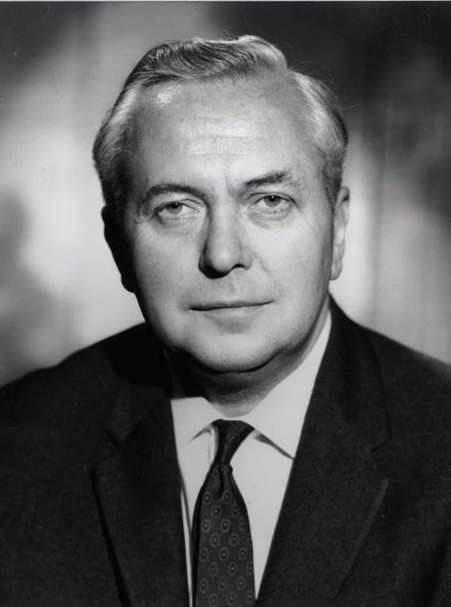
  • Harold Wilson – Comments on Establishing the Welsh Office

    Harold Wilson – Comments on Establishing the Welsh Office

    The comments made by Harold Wilson in his autobiography.

    Of great importance to over two and a half million people was the creation of a Welsh Department under the Secretary of State for Wales, with a seat in the Cabinet. Based to a considerable extent on the Scottish Office, which had existed since 1885, it was given full responsibility for local government, housing and planning, economic planning, roads, forestry and derelict land clearance and later for tourism and health, together with shared responsibility for agriculture with the ministry.

  • Harold Wilson – 1978 Speech on Rhodesia

    Harold Wilson – 1978 Speech on Rhodesia

    Below is the text of the speech made by Harold Wilson, the then Labour MP for Huyton, in the House of Commons on 7 November 1978.

    I associate myself with what my right hon. Friend the Foreign Secretary and the right hon. Member for Cambridgeshire (Mr. Pym) said about the retirement of John Davies. We shall remember his unfailing courtesy and his diligence in whatever task he was given. Some of us, of course, remember him in his FBI—and later CBI —capacity, ​ I am glad to have the opportunity today to comment on all that has been said and written before and since the publication of the Bingham report on Rhodesian oil sanctions. I was abroad when it was published. When I returned to London, I said then that I would reserve all public comment until this debate since, as I was Prime Minister during part of the relevant time covered by Bingham, I was answerable then to the House and therefore the statement is due to this House.

    At the same time, I called for a full public inquiry involving or invoking whatever powers were needed, which must mean the right to call for the appearance of persons and the production of papers, including all relevant Government documents, Cabinet minutes, Cabinet committee minutes—all papers submitted to the Cabinet and its committees and all interdepartmental exchanges. I have called also for all the relevant papers to be laid as soon as possible before the House itself and to be published. Before I sit down I shall say why I think that that is necessary.

    Even since that time a month ago when I made that statement, still further facts have emerged which keep putting the controversy into a yet different light. A fortnight ago, The Sunday Times carried a story asserting that one of the two British oil companies was still supplying oil to Rhodesia, on a transfer arrangement with Mobil, Caltex and others, right up to a date four days before the Bingham report was published. What that means, of course, is that not one but three Prime Ministers in office from 1968–69 to 1978 were unaware of this disreputable traffic. Whether it was disreputable and illegal must be a matter for the Director of Public Prosecutions and the courts. But over this period there have been three Prime Ministers, five successive Foreign Secretaries and nine Energy Ministers— counting my right hon. Friend the present Secretary of State for Energy as two because he held the position both in 1969 and from June 1975.

    I am perfectly certain that none of those Ministers—none of the holders of those posts in successive Governments—knew of any of these events. Indeed, I should mention that you yourself, Mr. Speaker, received an honourable mention in the Bingham report, particularly for ​ putting inconvenient questions to Shell at one of the meetings when, I think, you were Minister of State. There is in a letter reference to both my noble Friend Lord Thomson and to the then Minister of State, whose name at that time was George Thomas and, I understand, still is.

    The situation regarding knowledge of these facts has not changed from that time right up certainly to 1976. In 1976 the Government sent a report to the United Nations sanctions committee, and this is what it said:

    “The competent United Kingdom authorities have studied the report most carefully, and have discussed its contents with the British oil companies mentioned. These authorities are satisfied that the report contains no evidence of sanctions breaking by any British companies or individuals and have accepted the assurances given by Shell and BP that neither they nor any company in which they have an interest have engaged either directly or with others in supplying crude oil or oil products to Rhodesia.”

    I emphasise that the report said:

    “neither they nor … with others. This is the same position”

    —the report continued—

    “established as in 1968 when Her Majesty’s Government investigated similar charges at the highest level with the same companies.”

    That was 2nd September 1976. The Government made it plain that in 1976 it did not regard the position as having changed since 1968 and that no more about the illegal or disreputable traffic was known in 1976 than in 1968.
    In my own case the first time I received any information—I shall give details to the House in a moment—indicating this traffic now exposed in Bingham was last April, seven months ago. In a speech at Oxford I criticised on that occasion Mr. Andrew Young’s attack on my right hon. Friends the Prime Minister and the Foreign Secretary the previous day, when Mr. Young accused my right hon. Friends on the Treasury Bench of wanting to get rid of the responsibility for Rhodesia. On the following day, 2nd April, I was asked to appear on BBC radio to discuss Mr. Andrew Young’s position.

    I was asked in the course of that interview about sanctions. I repeated what I had always been told and what I had made public, namely, that in my view the breach of sanctions was due to President de Gaulle, who appeared to connive at oil shipments through Mozambique, crossing the border into South Africa, and then, some miles further into South Africa, forking right into Rhodesia. It was a tortuous route, now described in detail in the Bingham report, with place-names and maps. That was what we understood to be the position and it was what I told the House and said publicly.

    Indeed, I had been asked by the Cabinet, as the House knows, to raise this matter of French behaviour with President de Gaulle on my visit to Versailles in June 1967. Our conversation on that occasion and what President de Gaulle said has been reported and is public knowledge.

    My reference to this matter in the BBC programme led to my receiving a somewhat intemperate letter from Mr. Rowland, of Lonrho, which he has recently published. He said that I must have known about the action of BP and Shell, and he enclosed a number of documents of his own purporting to substantiate his allegations about them. I replied to him that I knew no more than what I said on a number of occasions, including the BBC broadcast, but that since his documents seemed to relate to his legal action against the oil companies concerned, I could not comment.

    At this point it is appropriate to quote the Bingham report. At the beginning—

    Mr. Robin Maxwell-Hyslop (Tiverton) rose

    Sir H. Wilson

    I am sure that I shall deal with the hon. Gentleman’s point later.

    Mr. Maxwell-Hyslop

    Could not the right hon. Gentleman send his dirty linen to a laundry—

    Sir H. Wilson rose—

    Mr. Maxwell-Hyslop

    —so that the House can get on with the debate? Will he not—

    Mr. Speaker

    Order. Once the right hon. Member who is addressing the House gets back to his feet, the hon. Gentleman must he aware that those who are intervening must resume their seats.

    Mr. Maxwell-Hyslop rose—

    Hon. Members

    Sit down.

    Mr. Maxwell-Hyslop rose—

    Mr. Speaker

    Order. I thought that the hon. Gentleman’s intervention was Over.

    Mr. Maxwell-Hyslop rose—

    Mr. Speaker

    I know that the House wants to give a good hearing to the right hon. Member for Huyton (Sir H. Wilson), who has an important statement to make to the House.

    Mr. Maxwell-Hyslop

    Ex-Prime Ministers are not absolved from the normal rules of the House. The right hon. Gentleman gave way to me. [HON.MEMBERS: “Sit down.”] I have the same rights as any other hon. Member of this House in debate. The point I wish to make—[HON. MEMBERS: “No.”]

    Mr. Speaker

    Order. May I explain the position? I thought that the hon. Member for Tiverton (Mr. Maxwell-Hyslop), who knows procedure very well indeed, knew that if the person who is being called to speak rises to his feet again he must be allowed to continue, otherwise it will be possible for an hon. Member with an intervention to speak for 20 minutes. The right hon. Gentleman had got back on his feet. Sir Harold Wilson.

    Mr. Maxwell-Hyslop

    On a point of order, Mr. Speaker. It is not in accordance with the rules of order of this House that when a Member gives way to another he can then terminate a short intervention by rising again. [HON. MEMBERS: “It is.”) It is not. I put the question to the right hon. Gentleman—

    Mr. Speaker

    Order. The hon. Gentleman is on one of those rare occasions when he is not correct. [HON. MEMBERS: “Quite right.”] Order. I wish the House would leave this to me. The hon. Gentleman, on reflection, must realise that the House wants the right hon. Gentleman to continue.

    Mr. Maxwell-Hyslop

    Further to that point of order, Mr. Speaker. I willingly and gratefully give way to your ruling.

    Hon. Members

    Oh.

    Mr. Speaker

    Order. I wish that some of those who laugh would give way as quickly.

    ​Sir H. Wilson

    There are some important matters to discuss, and I am sorry that I gave way and caused that long delay.

    At this point it is appropriate to quote the Bingham report. At the beginning of what he calls “Factual conclusions” on page 212, chapter 14, paragraph 3(b), Mr. Bingham says:

    “In making this summary we would emphasise … that the summary is of facts now known”.

    The word “now” was underlined by Mr. Bingham. He goes on:

    “many of the facts now summarised were not contemporaneously known to one or other or both of the Groups ”
    —that is BP and Shell—

    “in London; some were not known until the relevant documents were assembled from many sources for presentation to us”

    —that is, the Bingham pair. He continues:

    “some came to light in the course of the investigation. It would be wrong to assume that all the events now summarised were known to the Groups in London at the time the events were taking place.”

    That is certainly true. Bingham’s examination of 40 witnesses, mainly South Africa-based—especially Mr. Walker— has unearthed many facts. Some, I am sure, were not known to Shell and to BP headquarters. All the more so, they were not known to Her Majesty’s Government until Bingham was published.

    The Sunday Times report of 22nd October this year, referring to the supplies continuing until September this year until four days before Bingham was published, was first denied by BP within the day. The report was then confirmed by BP the following day. If BP did not know that, Her Majesty’s Government had an even smaller chance of knowing. Yet this was going on all the time until September this year. The same is true of fact after fact catalogued by Bingham—some but not all of which the London headquarters of the major oil companies did know, but they were facts, which we, the Government, did not know.

    In August, while I was on holiday, I read press reports seemingly anticipating what the Bingham report would say. They were mainly leaks of Lonrho’s submissions to Bingham. Therefore, in September I availed myself of a former ​ Minister’s right to look at all relevant documents, as well as Cabinet documents and papers, as well as two other documents sent from the Foreign and Commonwealth Office to No. 10. One of these was the letter from Lord Thomson of Monifieth. He said in a Granada Television programme that he had apprised me of the fact that British oil was getting through to Rhodesia. In fact, his letter said that British, French and American oil was getting through to Rhodesia.

    The second of the documents which I especially asked to see, and almost know by heart now, was the minute of the meeting chaired by my noble Friend on 6th February 1969, now published in Bingham, annex II pages 268 to 271. I shall address myself first to those two documents because most of the discussion was centred on them. My study of the documents at No. 10 confirmed that the letter of 15th March 1968, to which he had referred, was sent to me and that I had seen it. I had ticked it in the usual way. Now let me refer to its contents. The letter was from Lord Thomson’s secretary to mine. It was in reply to a memorandum from my office which had asked for an investigation into President Kaunda’s allegations of British breaches of oil sanctions.

    The reply began by outlining the action taken by the Commonwealth Office to secure a rebuttal of the suggestion that the British major oil companies were breaking the sanctions. It stated that it had been decided to use a Question tabled by my noble Friend Lord Brockway in another place that was answered by Lord Brown, then of the Board of Trade. The letter recorded the Minister’s answer of 5th March 1968, which read:

    “The investigations done into the activities of British oil companies leave Her Majesty’s Government satisfied that the British oil compaines themselves are not supplying oil to Rhodesia.”—[Official Report, House of Lords, 5th March 1968; Vol. 289, c. 1220.]

    That was an arranged answer that will be found in Hansard of another place.

    Hon. Members will have noticed the word that I accentuated—namely, “themselves”. I inquired into that. That was a reference to “unreliable purveyors” as we knew them in those days, secondary dealers in Lourenco Marques who were suspected by our people of not being ​ above passing on their supplies to South Africa. Some of them were suspected by our people of not being above sending on to Rhodesia by one of a number of routes the oil that they had bought. The oil majors and the British Government were all at one in warning British companies in Mozambique to be vigilant in checking the bona fides of those whom they supplied. The letter went on to refer to assurances of Mr. McFadzean of Shell and Mr. Fraser of BP on careless sales to those who were really spivs.

    The letter included another much publicised phrase that justified my noble Friend’s answer to a question put to him on the Granada programme. The passage in the letter reads:

    “although we are satisfied that British oil companies have at no time been directly involved in the supply of oil to Rhodesia through Mozambique, we now know that a good deal of the oil which is getting to Rhodesia has been corning from refined products delivered to Lourenco Marques by the French, British and US oil companies. In other words, the oil which is getting through to Rhodesia, does not all come from Sonarep or CFP”.

    My check on that point was again answered in terms of the spivs, the unreliable secondary dealers, whom the Government and the oil companies agreed should be investigated and dealt with by denying supplies case by case.

    The conclusion drawn at almost every Cabinet and Cabinet committee every time we met throughout the period, and for a long time afterwards, as the House was told on many occasions, was that French, Portuguese and some American companies were the real culprits. At every stage that was recognised, and at almost every ministerial meeting renewed demands were made for bilateral approaches to be made to France, Portugal and the United States and reference made to the need for a comprehensive United Nations resolution binding on all these suppliers.

    I have referred to my meeting with General de Gaulle. In the event—much later—we had the United Nations resolution. The countries that I have named ignored it or got round it.

    I have set out the Government’s aim during that period. I do not know what more we could have done. I take up a point, with which I totally agree, that was made by my right hon. Friend the Foreign Secretary. We knew that we ​ could not have a major military confrontation with South Africa. It would have been necessary to impose a blockade on South Africa. The Beira patrol took five frigates. A study of a possible Lourenco Marques patrol suggested that a further 17 would be needed. Any question of blockading South Africa would have been utterly unreal. Even if it had been possible, what would it have meant? Would it have meant cutting off all oil supplies to South Africa? If we had “rationed” South Africa, Rhodesia could still have been supplied. The oil consumption of South Africa was far greater than Rhodesia’s needs.

    At the beginning of the Bingham report it is made clear that South Africa needed 5 million tons a year while Rhodesia needed only 400,000 tons. Rhodesia’s consumption was 8 per cent. of South Africa’s. In an old phrase, the South Africans could have put aside the supplies needed for Rhodesia in their eye corner and seen no worse. The hope, forlorn as it proved, was to try to get a United Nations resolution and South African compliance.

    My right hon. Friend the Foreign Secretary has mentioned the arms embargo on South Africa. That was something we were able to deal with and we did. We had made an announcement before the General Election of 1964 that we would immediately impose an arms embargo. That was done the morning after the Government were formed—indeed, before the Cabinet had ever met. I gave an order that all shipments of arms to South Africa must stop. I heard to my surprise on the Sunday that arms were being unloaded from some ships at Southampton. Opposition Members may or may not have agreed with our policy, but they will recall that in 1974—some shipments of arms to South Africa had taken place while Labour was out of office—we announced to the House a short time after taking office that we had stopped the aircraft shipments and the shipments of other arms to South Africa.

    I turn to the second important document to which I referred—namely, the Foreign Office note of the meeting held between my right hon. and noble Friend Lord Thomson, Foreign Office officials and the chairmen of Shell and BP. My ​ right hon. and noble Friend took that meeting, but by that time he had no direct responsibility for Rhodesia and sanctions. The Commonwealth Office had been merged with the Foreign Office. In 1968 he had, as Minister without Portfolio, maintained a sort of residual responsibility for Southern African affairs. By 1969 he had entirely different duties as Minister without Portfolio. Later as Chancellor of the Duchy of Lancaster he had a number of entirely different duties—for example, the co-ordination of Government action on the Redcliffe-Maud report on local government reform to a growing, later full-time, preoccupation with renewed plans for seeking entry to the EEC. Nevertheless, at that time my right hon. Friend the then Foreign Secretary was away and my right hon. and noble Friend was asked to chair the meeting with the oil majors.

    The only Minister present with direct responsibility for African affairs was Maurice Foley. The House will remember that he had a great knowledge of Africa. As we can see in the note now published, his only contribution was on an entirely separate point that had nothing to do with the so-called laundering—namely, the rationing of South Africa.
    The text of the note of the meeting is published in the Bingham report. The report makes clear its circulation. A copy was sent to No. 10. It was not circulated to the Cabinet either by the Foreign Office or by No. 10. I have checked on that on a number of occasions in recent weeks.

    I have seen the copy that came over. It was not marked to me. There is no record of my seeing it. Nor is there any record of it having been seen by Sir Michael Palliser, as he now is. That may sound bizarre, but hundreds of documents, telegrams, despatches, notes of meetings, reports and assessments from the Foreign Office come in every week from the Foreign Office. This particular document—I note that the Prime Minister agrees with me—was not marked urgent or highlighted in any way. It was not marked in any way.

    A copy was also marked—I must tell the hon. Member for Staffordshire, South-West (Mr. Cormack) that this is not a laughing matter—to the private secretary ​ to the Cabinet secretary, Lord Trend. Again it was not marked for special attention by him. If Lord Trend had thought that it contained anything of the sort that the Bingham report has imported into it, I am sure that he would have come steaming in right away to insist that it go to the Cabinet. It was the document that set out the minutes of the meeting that I have mentioned, the Shell-BP-Total deal.

    The text of the meeting suggests that there was little realisation of the import of the disclosure. Partly in the light of material only later available, the Bingham report clearly regards it as important. If we had had the same material available, we would have regarded it as important. There is also published in the Bingham report a report of the oil companies of the same meeting. No one took the view that it was important at the time. They did not even open a file on it.

    My right hon. Friend the then Foreign Secretary saw me shortly after the document had been circulated. He saw me not about Total but about the Soames affair, which was greatly engaging the interest of the Foreign Office at the time. My analysis is that Michael Palliser was similarly preoccupied. He had been appointed to the post of Minister at the Embassy at Paris. He was being briefed and was, indeed, regularly visiting Paris at that time. He was also heavily engaged in preparation for my visit with him to Nigeria and Addis Ababa at the height of the Nigerian war. There is no reflection on him whatsoever for failing to realise what nine and a half years afterwards is now recognised in that particular document.

    It is tempting to ask: what would have happened if someone—a Foreign Office Minister or official—had realised the document’s importance? I know what would have happened. The Foreign Secretary, my right hon Friend the Member for Fulham (Mr. Stewart), would have dropped everything and come round to see me, perhaps stopping for a moment to telephone me to say that he was on his way. He would have put it as the first item on his weekly general report to Cabinet on foreign affairs. My right hon. Friends who were members of Cabinet know that this would have been reported there. But it was not in fact reported to ​ the Cabinet or to any relevant Cabinet committee or any other. I ask the House to consider what would have happened if our attention had been drawn to its implications.

    The Bingham report, nearly 10 years later, has been sent to the Director of Public Prosecutions. Obviously, I cannot comment further on this.

    Sir Bernard Braine (Essex, South-East)

    Will the right hon. Gentleman give way?

    Sir H. Wilson

    I am sorry, but I have given way once too often. [HON. MEMBERS: “Oh.”] I shall certainly give way to the hon. Gentleman. I always used to do so on similar subjects. However, I should like to develop this point before I give way.

    The then Attorney-General, now my noble Friend the Lord Chancellor, would in these circumstances have been no less vigorous in taking action, if the meaning of the minute had been realised, than the Director of Public Prosecutions. I do not think that my noble Friend the present Lord Chancellor would object to my saying—and there are former colleagues present tonight who will confirm it —that no member of the Administration was more hawkish on Rhodesia than my noble Friend when he was Attorney-General. He had been intimately involved long before UDI. He had been with me to Salisbury in our October 1965 mission, hoping to head off UDI. He was with me on HMS “Tiger” and on HMS “Fearless”. He was, if anything, critical of any willingness to do any kind of a deal with Mr. Ian Smith on those occasions, as indeed, equally, was my noble Friend Lord Thomson. Both of them were very critical of apparent easy ways out. So his duty as Attorney-General would have been clear if the significance of the Total deal had been recognised.

    Therefore, unless one suspects a conspiracy of the then Foreign Secretary, my noble Friend the Lord Chancellor, a wide circle of foreign officials and the Cabinet Secretary to deceive both the Cabinet and Parliament, it is certainly the case that the future conduct of every ministerial meeting involving Rhodesia would have been entirely different, and we would have been taking up these questions many years ago.

    Sir Bernard Braine

    The right hon. Gentleman is taking us through a catalogue of events as he remembers them. Will he take his mind back to the date when he saw President de Gaulle? Am I not right in saying that precisely 12 days before that Foreign Office officials had met French Foreign Office officials in Paris in order to discuss alleged breaches by British oil companies of sanctions? Is the right hon. Gentleman telling the House that he was not told of that at the time, that he and his senior civil servants were totally unaware that sanctions were being broken? I think that the right hon. Gentleman owes the House an explanation in view of the statement that he has been making, which would suggest that neither he nor his senior officials, at any time, knew anything about what was going on, and that is very hard to believe.

    Sir H. Wilson

    No, Sir. There were two cases in those years, and certainly at that time, in which allegations were being made about Britain. Indeed, the meeting to which I have referred concerned allegations from the Portuguese. The Portuguese themselves were spreading allegations that Britain was breaking sanctions at that time. [HON. MEMBERS: “Oh.”] It is all in Bingham. They were making allegations and our officials discussed with the French the allegations that were made against us. That was when we were trying to get the French to agree, before I met de Gaulle, that they would stop breaking sanctions. That is as I recall it. Certainly there was a meeting just before I went for that purpose.

    Mr. Roderick MacFarquhar (Belper)

    Accepting my right hon. Friend’s statement, of course, that there was no vast conspiracy of the type that he indicated at the end of his last set of remarks, may I ask whether he would not at least accept that there must somewhere have been a grotesque error of judgment and that it is impossible to see, in his catalogue of all the people who could not have been guilty of that grotesque error of judgment, where it lay?

    Sir H. Wilson

    Before I sit down I intend to say where I think criticism may be applied. [HON. MEMBERS: “Oh.”] Certainly. But the very point raised by my hon. Friends is my reason for pressing so strongly for a full and independent inquiry. Let the inquiry see all the papers and all the facts and let the inquiry say, independently—not those who were involved in this matter or those who were not involved, or those who put questions about it now—who, if anyone, was guilty of this evasion.

    As I have said, I have been through the record of every Cabinet and Cabinet committee meeting during those three years. These are the ones that I have suggested ought to go to an inquiry, and not only to an inquiry but to the House. I do not know whether the assent of one Prime Minister is enough to get the papers for his period. As far as I am concerned, if it is necessary to have my consent, I am agreeable, if the rules and conventions permit. I am sure that they do.

    I will say this much: at the Cabinet meeting of 7th March, one month after the famous meeting in February chaired by my noble Friend, we discussed sanctions. No reference was made to the 6th February meeting. At none of the meetings held that year—I cannot go into details, though I have read all the minutes and all the papers—was any reference made to that particular meeting of 6th February. At a sub-committee in April, I asked for a full report on sanctions to be submitted by the Foreign and Commonwealth Secretary, and we got a full report, on nearly 30 pages, both by my right hon. Friend and by a committee of all the officials of all the Departments concerned. There was no reference there to the Total deal, CFP, nor was there any reference whatsoever to the meeting on 6th February.

    Mr. Alexander W. Lyon

    Will my right hon. Friend give way?

    Sir H. Wilson

    No, I am sorry. I have given way too often. I might give way when I have finished developing my point.

    In addition to the Cabinet and associated minutes and documents, I asked No. 10—the people there are always ready to do this—to make available every letter, every minute, every comment, notes of telephone calls, the lot, during this relevant period—four bulky files, in all about 8 in. or 9 in. thick. I have been through them. They cover inquiries mainly by myself or by my right hon. Friend the Foreign Secretary on drought ​ in Rhodesia, registration of trade marks, successive drafts of speeches for my noble Friend Lord Caradon, a scheme of mandatory certificates of origin in reducing exports from Rhodesia, queries about Orders in Council, queries about reports from Lisbon about a questionable sugar deal, demands to chase up reports from Greece, Norway, Italy and West Germany, two more about dubious shipments of ferrochrome and maize, questions about certain European countries and Japan concerning CKD cars, and where the Dutch were getting their tobacco from.

    I cite all this. I think that Opposition Members felt that this was work that should not have been being done. I am just making it clear that so much work was going on and I was so much involved in this myself that it is inconceivable that any of us could have known about or colluded with the story about a total breakdown of sanctions on this important question of oil.

    As I say, some hon. Members might feel that I should have been concerned with weightier matters, but that was what was inevitable. As I say, it is inconceivable that it could have been involved at the time if we had known anything about an oil swap with France, Total or anyone else.

    I have mentioned these as well as the whole history that I have unfolded, and even the documents that I have quoted, because I believe that I have the right to ask the House to conclude that it would have been inconceivable for my Cabinet colleagues, myself, the Attorney-General or the officials to have connived at any action brought to our notice constituting a body blow to our sanctions policy.

    There was therefore, as far as the Government as a whole and individual Ministers were concerned, no awareness that the meeting of the oil company chairman with Lord Thomson had created a new situation. With the advantage of hindsight and what Bingham has revealed, this collusive agreement had shown the situation very clearly in terms of BP and Shell’s relationship with Total. Had we known then what Bingham has reported, it would have been taken much more seriously. It would have been the duty of myself or the Foreign Secretary, or the duty of us both, to report to Ministers ​ collectively. We would have to have initiated a fresh look at the whole situation and involved the whole Cabinet. The Attorney-General would have had to look at the situation and the Director of Public Prosecutions would almost certainly have been involved—nearly a decade earlier than he has been involved. All the heart-searching of Cabinet and Cabinet committee meetings in 1969 would have had to take account of this situation. Instead, the whole emphasis was placed on trying to secure South African, as well as French and Portuguese, adherence to United Nations policy.

    Mr. Alexander W. Lyon

    The whole implication of what my right hon. Friend is saying is that our colleague Lord Thomson did not disclose to him what we know, through the Bingham report of the meetings, was disclosed to the noble Lord. Is my right hon. Friend really saying that that would happen between the Commonwealth Secretary and the Prime Minister on an issue of this importance? How does my right hon. Friend meet the denial of Lord Thomson that he failed to disclose to the Cabinet what took place at the meetings?

    Sir H. Wilson

    Let me say first that Lord Thomson was not Commonwealth Secretary at the time. He was working on other things entirely. He might not have known whether there had been any developments. I certainly do not believe that when my noble Friend heard what was said he realised the implications. It is easy to he wise and critical 10 years after, but it is clear and the Commonwealth Office official—and I am not resting on officials here—interpreted it to him in terms which suggested that there was no necessity to get worried about it.

    We knew that, because of South Africa, oil was getting through to Rhodesia. Even if we had realised the extent and implications of the BP, Shell and Total agreement, apart from action with BP-Shell, I do not think that we would have gone to the United Nations and asked for oil sanctions to be ended.

    There have been recent press comments suggesting that, with this problem, we should have ended oil sanctions, but, with or without the knowledge that we now have, we would have been right in seeking, as we were all the time, a United Nations ban—even though the countries ​ I have mentioned proceeded to disregard it. There was no question of dropping the other sanctions which were, to a high degree, effective. In answer to a Question in the House, I said that, as a result of sanctions, Rhodesia’s gross product had fallen very considerably and I gave the figures. All the criticisms from Conservative Members were that we were doing too much damage to Rhodesia. There was never any suggestion that we had been slack in what we were doing.

    Though there was no change in the situation after the time the Conservative Party became the Government, despite the United Nations decision, even though, as we now know, the Total-British arrangement was still working throughout the early 1970s, I am sure that the incoming Conservative Government were no more aware than we were of the implications. I do not believe that they were told. The right hon. Member for Sidcup (Mr. Heath) will no doubt say whether this was so or not. My strong impression is that no one thought of telling him or Lord Home any more than they had during the period when we were in office. Lord Home was very active in relation to Rhodesia. He visited the country and made proposals for a settlement which were put to a test of the opinion of the people of Rhodesia. Clearly the Conservative Government knew as little and as much as the outgoing Government. Their ignorance of what was going on and their inability to stop the flow of oil to Rhodesia was the same as ours.

    I should like to rebut some views expressed in press comments about the conventional practice relating to the briefing of an incoming Administration. The suggestion has been made, apparently with authority, that an incoming Government are not told of anything that occurred under the previous Administration unless it has been made public. It is true that an incoming Government are not told of internal discussions round the Cabinet table during the outgoing

    Administration, but anything that bears on relations with external bodies, whether overseas Governments or, say, industrial corporations in this country, must be explained, whether those relationships have been publicly explained in detail or not. For example, if we had been involved in discussions ​ with the United States or the EEC, and they had not been announced, it would have been the duty of officials to tell the incoming Government how far that process had gone, though to do so with discretion, of course. Equally, the incoming Government in 1974 had to be told about the degree of commitment made by the previous Government in respect of Rolls-Royce engines. Were there to be a change of Government in a foreseeable period, the incoming Administration have to be told about the commitments entered into by the National Enterprise Board or Government Departments in relation to help for industry. I believe that the alleged constitutional bar is a fiction.

    I remind the House that in my statement on 6th September I expressed my strong support for an independent, high-level inquiry. Should the House, at the end of this debate, still have doubts or reservations, I would repeat my view in favour of such an inquiry and, as the Prime Minister responsible for the Cabinet and Cabinet committee meetings during part 1 and part 3 of the various phases of this period, I express the hope that all the internal papers of the Government during that period—I cannot speak for others—including the minutes and associated documents should be made available to the inquiry and to the House.

    This is only fair, not just to the three Prime Ministers who have been involved during this period, but to my right hon. Friend the Member for Fulham and his successors and, as is underlined by a careful study of the Bingham report, to my right hon. Friends who were Ministers or Secretaries of State for Energy, including my right hon. Friend who was Secretary of State for Northern Ireland until November 1969 and my right hon. Friend the present Secretary of State for Energy who took over the old Ministry of Fuel and Power in November 1969 and has got it again now. Was he told? I would judge that he was not. Only the internal papers of the Ministry, which I have not seen, can tell us.

    Ever since I prepared these notes last week, new evidence has come to light. Hon. Members will be able to form their own view on how far Foreign Office officials withheld information from Ministers. I would judge very little, though at the famous February meeting, ​ Lord Thomson’s conclusion followed advice. I believe that there is no complaint against Foreign Office officials about informing Ministers and doing so quickly, but if we are to believe what was published in the press this weekend, officials of the Energy Ministry were in much closer contact with the oil companies—that is to say, with the London headquarters of the major companies, not with the pro-consuls of the oil companies in South Africa.

    A book on the Bingham report was published yesterday. It has been written by a solicitor. I have not read it and few other hon. Members will have had time to read it, but The Sunday Times published an extract two days ago. In February 1968, Mr. Francis of Shell did not tell the Ministry. The Bingham report confirms this but points out that while the Shell note was explicit about the Total deal, the note of the meeting sent to the Foreign Office was not. The report goes on to say that in May 1968 much more detail was given to a Ministry official. The report in The Sunday Times said:

    “although the view was taken that neither the groups nor H.M. Government would wish to be too much involved with the details”.

    That is a quotation from what the oil companies said. The Sunday Times said that, according to the book by Mr. Andrew Phillips,

    “by this time it was too late for Ministers to undo the swap”.

    I believe that that would have been for Ministers to decide, but the accusation here is that information about the swap was given and that it was not until many months afterwards that we were told about it, even if one accepts that Lord Thomson meeting as being full information. It is alleged that it was known in the Ministry nearly a year before.

    What is even more suspicious—and this is something which, even if there had been no case before, makes the case for an inquiry now—is the suggestion in Sunday’s article that BP and Shell were giving assurances to Rhodesia before UDI and therefore resolving Smith’s doubts about going ahead. This is the accusation in a serious book, published after a lot of study and based on the Bingham report.

    Still worse, there are suggestions that there had been discussions between British oil companies and Total for a swap even at that time, before UDI. There have been all the stories about the letters which were missing. Bingham could not find them. There were the letters that were not written because it was thought that it would not be safe, and there were the letters that were destroyed.

    These matters really do provide the need for an inquiry, but perhaps most of all the need for an inquiry if there is any suggestion at all that Ian Smith—who was considering whether to go for UDI or not, and was being pushed this way and that—was helped to be persuaded into UDI by oil companies saying that they would look after him in regard to sanctions and “There is no need to worry, old chap”, and so on. These are the allegations, and there is certainly a case for their investigation.

    Some of my hon. Friends are deeply concerned about the power of multinational companies. I have not shared, and I do not share, their anxiety about many of them, and never have. But the Bingham report, and now the facts published this week, if verified, might suggest that their case has been not overstated but understated, certainly in respect of Shell, arrogantly asserting power with scant regard for responsibility. There were the BP revelations of only a fortnight ago, showing that, even while the Bingham report was being duplicated, the company was still engaged in sordid swaps with a group of international oil corporations, Caltex, Mobil and the rest.

    Mr. Russell Kerr (Feltham and Heston)

    It is in the nature of the beast.

    Sir H. Wilson

    It may be a laughing matter to Conservative Members, but they wanted this debate, as I wanted it. They have to be told these facts, whether they like them or not. Certainly, as I pointed out, while I do not go along with some of my hon. Friends in what they say about the multinationals, I have always felt—

    Mr. Dennis Skinner (Bolsover)

    My right hon. Friend ought to now.

    Sir H. Wilson

    My hon. Friend is having so many successes, he might be put in charge of this one day.

    ​Mr. Skinner

    If anyone has learned a lesson over this, my right hon. Friend has.

    Sir H. Wilson

    I absolutely accept this. But, concerning the multinational oil companies, it is a fact that successive Governments have had difficulties with them on the home front. For example, I remember a Minister of Fuel and Power who was flatly refused any statistics from the oil companies, although he could get statistics from all his other clients. I remember very well indeed that senior Treasury officials have told me that they could not get the information necessary from the oil companies. I believe, therefore, that if the latest book to which I have referred is true, we are up against a much more serious problem than any of us thought when this debate was decided upon some weeks ago.

    Mr. Stephen Hastings (Mid-Bedfordshire)

    I do not wish to be discourteous to the right hon. Gentleman. I recognise that he is making an important statement of a kind. Nevertheless most of us, I think, are here to discuss the tragedy of Rhodesia, which may seem to a good many of us to be even more important. You have appealed to all of us, Mr. Speaker, for brevity. I wonder if you would prevail on the right hon. Gentleman to move a little more rapidly towards his denouement or conclusion, or whatever it is.

    Sir H. Wilson

    The hon. Member for Mid-Bedfordshire (Mr. Hastings), if he was here earlier, will remember that we wasted 10 minutes as a result of an intervention of one of his hon. Friends on what, if this were not the House of Commons, I would call a piece of pure tomfoolery.

    Dr. Jeremy Bray (Motherwell and Wishaw)

    My right hon. Friend will recall that I was Parliamentary Secretary to the Ministry of Power in 1966–67. He will also be aware that I do not owe him any particular political debt. Will my right hon. Friend accept that if I catch Mr. Speaker’s eye I shall seek substantially to support and to elaborate some of the points that my right hon. Friend has made concerning the Ministry of Fuel and Power?

    Sir H. Wilson

    I am grateful to my hon. Friend. I will just say this about ​ the Ministry at that time. Looking back on it—it is a bit ludicrous, and we are all to blame for this—I recall that to police what was being done by these powerful corporations, as we now know, we had only a very small group. That was in addition to doing all the other oil work of the Ministry. There were three under-secretaries and five assistant secretaries, one of whom took up employment in BP in 1970. That is what we should look at.

    Suppose that we had had the reports to which reference has been made. Suppose that we had known—this is hypothetical—what could we have done? We would have informed the Attorney-General. Perhaps there would have been a cease and desist order under the sanctions power. This might have led to the oil companies withdrawing from South Africa, or the Government might have pressed them to do so. But Rhodesia would still have got the oil. South Africa would have seen to that. We should have had to come to Parliament for all the powers needed in that situation. Parliament would have had to comment on the cease and desist order.

    I believe that if all that had happened. Rhodesia would still have got the oil, because oil is a viscous fluid, and nowhere is it more viscous than in South Africa.

    We have learned a lot about that viscosity in South Africa. It would have flowed to Rhodesia, but the Government strategy would still have had to be what it was, in those circumstances, namely, to get a mandatory United Nations order binding on South Africa, France and Portugal. We did get action in the end by the United Nations, and it was defied by all three of those nations. But that is hypothetical, because Ministers were not told.

    Although that was the case all those years ago, there is one institution, the House of Commons, which cannot be denied a full disclosure, and which has the right and the duty to see all these facts—and, by the tabling of the information that I have asked for, the media and the British people also have the right to know. That is why I press for an inquiry, whether by Privy Councillors who are Members of this House or by Privy Councillors who are Members of another place, provided that they have ​ had no connection with these problems during this period. That is why I press for such an inquiry, however it may be done. I also press for all the papers to be laid, not just for the members of the inquiry but for this House and those we represent.

  • Harold Wilson – 1965 Memorial Speech to Winston Churchill

    haroldwilson

    Below is the text of the speech made by Harold Wilson, the then Prime Minister, in the House of Commons on 25 January 1965.

    I beg to move, That an humble Address be presented to Her Majesty humbly to thank Her Majesty for having given directions for the body of the Rt. Hon. Sir Winston Churchill, K.G., to lie in state in Westminster Hall and for the funeral service to be held in the Cathedral Church of St. Paul and assuring Her Majesty of our cordial aid and concurrence in these measures for expressing the affection and admiration in which the memory of this great man is held by this House and all Her Majesty’s faithful subjects. In accepting this Motion, this House, and, by virtue of its representation in this House, the nation, collectively and reverently will be paying its tribute to a great statesman, a great Parliamentarian, a great leader of this country.

    The world today is ringing with tributes to a man who, in those fateful years, bestrode the life of nations—tributes from the Commonwealth, from our wartime allies, from our present partners in Europe and the wider alliance, from all those who value the freedom for which he fought, who still share the desire for the just peace to which all his endeavours were turned. Winston Churchill, and the legend Winston Churchill had become long before his death and which now lives on, are the possession not of England, or Britain, but of the world, not of our time only but of the ages.

    But we, Sir, in this House, have a special reason for the tribute for which Her Majesty has asked in her Gracious Message. For today we honour not a world statesman only, but a great Parliamentarian, one of ourselves.

    The colour and design of his greatest achievements became alive, on the Parliamentary canvas, here in this Chamber. Sir Winston, following the steps of the most honoured of his predecessors, derived his greatness from and through this House and from and through his actions here. And by those actions, and those imperishable phrases which will last as long as the English language is read or spoken, he in turn added his unique contribution to the greatness of our centuries-old Parliamentary institution.

    He was in a very real sense a child of this House and a product of it, and equally, in every sense, its father. He took from it and he gave to it.

    The span of 64 years from his first entry as its youngest Member to the sad occasion of his departure last year covers the lives and memories of all but the oldest of us. In a Parliamentary sense, as in a national sense, his passing from our midst is the end of an era.

    He entered this House at 25—already a national and controversial figure. He had fought in war, and he had written of war, he had charged at Omdurman, he had been among one of the first to enter Ladysmith, an eye-witness of the thickest fighting in Cuba, a prisoner of a Boer commando—though not for as long as his captors intended.

    And he brought his own tempestuous qualities to the conduct of our Parliamentary life. Where the fighting was hottest he was in it, sparing none—nor asking for quarter. The creature and possession of no one party, he has probably been the target of more concentrated Parliamentary invective from, in turn, each of the three major parties than any other Member of any Parliamentary age, and against each in turn he turned the full force of his own oratory. If we on this side of the House will quote as a classic words he uttered over half a century ago, about the party he later came to lead, hon. Members opposite have an equally rich treasure-house for quotations about us, to say nothing of right hon. and hon. Gentlemen below the Gangway.

    When more than 40 years after his first entry as a young M.P. he was called on to move the appointment of a Select Committee about the rebuilding of this Chamber, he proclaimed and gloried in the effect of our Parliamentary architecture on the clarity and decisiveness of party conflict; he recalled, with that impish quality which never deserted him, the memories of battles long past, of his own actions in crossing the Floor of this House, not once in fact but twice.

    For those who think that bitter party controversy is a recent invention and one to be deplored, he could have had nothing but pitying contempt. And as he sat there, in the seat which I think by general wish of the House should be left vacant this afternoon, in those last years of the last Parliament, silently surveying battles which may have seemed lively to us, could we not sense the old man’s mind going back to the great conflicts of a great career and thinking perhaps how tame and puny our efforts have become?

    A great Parliamentarian, but never a tame one—they misjudge him who could even begin to think of him as a party operator, or a manipulator, or a trimmer, or a party hack. He was a warrior, and party debate was war; it mattered, and he brought to that war the conquering weapon of words fashioned for their purpose; to wound, never to kill; to influence, never to destroy.

    As Parliament succeeded Parliament he stood at this Box, at one time or another holding almost every one of the great Offices of State. He stood at the Box opposite thundering his denunciation of Government after Government. He sat on the bench opposite below the Gangway, disregarded, seemingly impotent, finished. His first Cabinet post—the Board of Trade—made him one of the architects of the revolution in humane administration of this country. He piloted through the labour exchanges; he led the first faltering steps in social insurance.

    The Home Office and then the more congenial tenure of the Admiralty—Ministerial triumph and Ministerial disaster in the first War. Colonies, War, the Treasury: the pinnacle of power, and then years in the wilderness. The urgent years, warning the nation and the world, as the shadow of the jackboot spread across an unheeding Europe. And then came his finest hour. Truly the history of Parliament over a tempestuous half-century could be written around the triumphs and frustrations of Winston Churchill.

    But, Sir, it will be for those war years that his name will be remembered for as long as history is written and history is read. A man who could make the past live in “Marlborough”, in his dutiful biography of Lord Randolph, who could bring new colour to the oft-told tale of the history of the English-speaking peoples, for five of the most fateful years in world history, was himself called on to make history. And he made history because he could see the events he was shaping through the eye of history. He has told us of his deep emotions when, from the disaster of the Battle of France, he was called on to lead this nation. I felt he said, as if I were walking with destiny, and that all my past life had been but a preparation for this hour and for this trial. Ten years in the political wilderness had freed me from ordinary party antagonisms. My warnings over the last six years had been so numerous, so detailed, and were now so terribly vindicated, that no one could gainsay me. I could not be reproached either for making the war or with want of preparation for it. I thought I knew a good deal about it all, and I was sure I should not fail. Therefore, although impatient for the morning, I slept soundly and had no need for cheering dreams. Facts are better than dreams. His record of leadership in those five years speaks for itself beyond the power of any words of any of us to enhance or even to assess. This was his finest hour, Britain’s finest hour. He had the united and unswerving support of the leaders of all parties, of the fighting services, of the men and women in munitions and in the nation’s industries, without regard to faction or self-interest. In whatever ôle, men and women felt themselves inspired to assert qualities they themselves did not know they possessed. Everyone became just those inches taller, every back just that much broader, as his own was.

    To this task he brought the inspiration of his superlative courage, at the hour of greatest peril; personal courage such as he had always shown, and indeed which needed a direct order from his Sovereign to cause him to desist from landing on the Normandy beaches on D-Day; moral courage, the courage he had shown in warning the nation when he stood alone, now inspired the nation when Britain and the Commonwealth stood alone. There was his eloquence and inspiration, his passionate desire for freedom and his ability to inspire others with that same desire. There was his humanity. There was his humour. But above all, he brought that power which, whenever Britain has faced supreme mortal danger, has been asserted to awaken a nation which others were prepared to write off as decadent and impotent, and to make every man, every woman, a part of that national purpose.

    To achieve that purpose, he drew on all that was greatest in our national heritage. He turned to Byron—”blood, tears and sweat.” The words which he immortalised from Tennyson’s “Ode on the Death of the Duke of Wellington” might well be a nation’s epitaph on Sir Winston himself. Not once or twice in our rough island-story, The path of duty was the way to glory; He that walks it, only thirsting For the right, and learns to deaden Love of Self, before his journey closes, He shall find the stubborn thistle bursting Into glossy purples, which outredden all voluptuous garden-roses. The greatest biographer of Abraham Lincoln said in one of his concluding chapters: A tree is best measured when it is down. So it will prove of Winston Churchill, and there can be no doubt of the massive, oaken stature that history will accord to him. But this is not the time.

    We meet today in this moment of tribute, of spontaneous sympathy this House feels for Lady Churchill and all the members of his family. We are concious only that the tempestuous years are over; the years of appraisal are yet to come. It is a moment for the heartfelt tribute that this House, of all places, desires to pay in an atmosphere of quiet.

    For now the noise of hooves thundering across the veldt; the clamour of the hustings in a score of contests; the shots in Sidney Street, the angry guns of Gallipoli, Flanders, Coronel and the Falkland Islands; the sullen feet of marching men in Tonypandy; the urgent warnings of the Nazi threat; the whine of the sirens and the dawn bombardment of the Normandy beaches—all these now are silent. There is a stillness. And in that stillness, echoes and memories. To each whose life has been touched by Winston Churchill, to each his memory. And as those memories are told and retold, as the world pours in its tributes, as world leaders announce their intention, in this jet age, of coming to join in this vast assembly to pay honour and respect to his memory, we in this House treasure one thought, and it was a thought some of us felt it right to express in the Parliamentary tributes on his retirement. Each one of us recalls some little incident—many of us, as in my own case, a kind action, graced with the courtesy of a past generation and going far beyond the normal calls of Parliamentary comradeship. Each of us has his own memory, for in the tumultuous diapason of a world’s tributes, all of us here at least know the epitaph he would have chosen for himself: “He was a good House of Commons man.”

  • Harold Wilson – 1984 Maiden Speech in the House of Lords

    haroldwilson

    Below is the text of the maiden speech in the House of Lords of Harold Wilson, made on 14th March 1984.

    My Lords, in hoping for the indulgence of the House for my maiden speech, I should perhaps confess that this is not in fact the first time that I have spoken from these red Benches. My first parliamentary speech in 1945, in the role of the then lowest form of ministerial life—Parliamentary Secretary to the Ministry of Public Building and Works—was made from the Front Bench in here because, owing to the bombing of another part of the Palace of Westminster, their then Lordships graciously made this Chamber available. I was assigned to the task of directing the progress of the other building.

    I should just like to mention that that was after Walter Elliot (remembered by the older ones of us here), seeing from Whitehall that the Palace of Westminster was on fire, ordered—simply ordered, without any authority—the fire brigade to let the other place burn, pointing out that it was only 100 years old, having been built after the Treasury, as usual, had tried to save money the wrong way and had burnt all those tally sticks. So the fire brigade managed to save at any rate this part of the building.

    I do not know whether in a debate such as today’s I have to declare an interest as Chancellor of the University of Bradford—unpaid. But at any rate this debate on education gives a number of us—including myself—the opportunity to express our anxieties over present and forecast future difficulties that the Open University (OU) is required currently to face.

    I had conceived the idea of the Open University well before anyone ever thought of making me Leader of Her Majesty’s Opposition. I think that I called it the University of the Air, and I kept it under wraps right through the summer of 1964 before announcing it. I announced it finally, with the usual hand-outs, in September. So far as I recall, not a single newspaper reported the plan, except the Economist, then edited by Geoffrey Crowther, who was rapturous about the idea, and later he became the first Chancellor of the University.

    In making that proposal, which, as I say, did not receive a lot of early support, I had particularly in mind the fighting men of World War II, many of who perhaps would have gone to university but for the war, and who had married and had family commitments: the Open University gave some of them a chance to earn wages or salaries and at the same time to study. I do not need to tell this House that the Treasury was implacably opposed. Well, of course—what would your Lordships expect? But so, I am sorry to say, was the Department of Education, which I understand has improved a little from those days. But the resources of civilisation were not to be discounted. I appointed my noble friend Lady Lee of Asheridge Minister of State in the Department of Education. It was no idle threat, I assure your Lordships, and she had to take charge of the whole operation, and the outcome was a triumph on her part.

    At the same time broadcasting involvement was essential. Fortunately, at about that time the heads of the BBC wanted something from me. They came to see me, for a second channel. Well, we negotiated—if you can call it that. The condition that they accepted was an adequate provision of time for the new broadcasting university; and in fact their co-operation was invaluable in those years when it was an entirely new operation, as it has been in all those years since. I think that the university has also been quite useful to the BBC in providing a new area of training for its people.

    I am not quite sure of the rules, but perhaps at this point I ought to record, or declare, a family interest. My elder son, who has been a maths don at four Oxford colleges, is an OU lecturer, and over the years he has given me a good deal of evidence that the course there is at least as tough and as difficult as they required for an Oxford degree; and our other son has graduated through the Open University.

    The interesting fact is that today there are over 50 such universities all over the world, all modelled on ours, and for many years our balance of payments was fortified by sales of teaching material and, at least for a time, of equipment. Some of the engineering students needed to have engineering equipment and others needed equipment for similar studies. But it is, sadly, on the record that two or three years ago, when they cut back on university finances in our new universities, Her Majesty’s Government at the same time put the brake on so far as the OU was concerned.

    I should like to refer to what happened to the British universities. There were big debates in both Houses. In Bradford, for example, all our students in, say, engineering (our main subject), are required to work about a third of their four-year course in British factories or firms. In a few years’ time—and here I am thinking in particular of those who come from the Commonwealth, or further afield—whether as civil servants who have to authorise the import of this or that particular piece of machinery, or whether as industrialists themselves, those former students, as a result of their presence here in this country, working in one British factory or another, may well dictate what equipment they should import.

    Now I should like to turn to the Open University. I believe that the recent cuts forced on OU programmes will prove at least as serious as this short-sighted anti-Commonwealth attitude which we have seen developing in other ways and in other parts in recent years. The 1982 financial provision for the OU of £58.7 million has been cut to £58.2 million in 1983. You may say that this is not very much, £58.7 million to £58.2 million. But it is, of course, a much sharper cut than it appears to be because the figures make no allowance for inflation. Again, if we look at student grants, they amounted to £924 in 1980 and, at constant prices, to £814 in 1981. In real terms, they were 13½ per cent. lower. Over four years from 1980 to 1984, the university’s grant from Whitehall has increased by 24 per cent.—yes, thank you very much, certainly—while the retail price index has risen by 42 per cent., or two-four reversed.

    The £50-odd million that I have mentioned may seem a large sum, but not if’ one realises that the university teaches three-quarters of the whole nation’s part-time university students. It is not sufficiently appreciated that there are these part-time courses and that three-quarters of them are taken in charge by the university. It is also worth knowing, and the Treasury, which perhaps has some responsibility in this area, ought to be pleased to hear—I hope that it will hear—that the Open University graduate costs the country only a little over half as much as a graduate from a conventional university.

    I shall not weary the House with the whole catalogue of cut and cut again. I shall just instance computers. There are two novel and highly successful courses for managers and engineers in industry all over the country, not simply for those who can travel locally to a university. These same managers and engineers in industry have courses dealing with micro-processors and product design and development. It is a fact that already 30,000 engineers and managers have taken these courses through the OU. This year there are 1,100 undergraduates studying the digital computer. There are 2,300 studying the course “Computing and Computers” at a very low cost to the nation. This is a good investment.

    Jointly with the Science and Engineering Research Council, itself of high repute, the university is now planning postgraduate courses which will bring working engineers, working scientists and managers up to date in the latest developments in both manufacturing and the industrial application of computers. Current plans are now at risk at the hands of the rather less than imaginative Treasury, which seems to resent the kind of world in which we all live; these threatened plans would provide for 60,000 citizens of this country operating in this field.

    To cut these research facilities is, to use an old cliché, selling the seed corn, and this at a time when the university’s own industrial company—yes, it is a limited company—the Open University Educational Enterprise Limited, has handed over nearly £440,000 from interest and profits on its activities. I am sure that my noble friend Lord Perry, who has much more experience of this subject than any of us and who was really the creator of the Open University as we know it today, could confirm and verify with far more authority than I can command the alarming figures I have quoted, these current trends and the threat of more to come. He could estimate, I think, their significance for higher education in the widest sense. The facts show that over the next three years, to 1986, on the plans laid down by the authorities, the university will have to cut expenditure by £13.5 million.

    What the statistics will not show are the disappointments and the broken prospects of a generation of students whose potential contributions to British industry and to British inventiveness and competitiveness in a growingly competitive world are being snatched away, from what industry and the education process could provide, by the Treasury, which could not, in my view, in terms of the problems I am describing—I may be a little biased but I have known the Treasury for 40-odd years, and I was First Lord of it once—with any marked success, run a fish and chip shop.

    Noble Lords, at least those of my generation—I remind them of this before I sit down—will know the story of the man during the war who, having climbed the Duke of York’s steps and walked along to Whitehall, was asked by a passer-by “Which side is the War Office on?”, eliciting the reply “Ours, I hope”. After what I have described, based on firm and irrefutable facts and figures—there are lots more of them if anyone wants to have them—the need is for more work, more jobs and, if I may say so, more proof that Her Majesty’s Treasury is really fully committed in this war, this most desperate war, that we have in this country today, the war against unemployment.

    I wish to conclude by referring briefly to this. During the war, I was involved at the head of a series of Government statistical departments. I have to emphasise—and I would be ready to give reasons for this estimate, perhaps when we debate economic affairs in a different way—that the real unemployment figure for Britain is not 3⅓ million. Not at all; that is a completely phoney figure. The real figure is at least 4⅓ million, if one allows for the fact that school-leavers, for example, have been given great help in the creation of training courses by leading firms. In every speech I make in America or when touring abroad, I always pay tribute to one or two in the constituency that I represented for what they do to create jobs that do not really exist for some of these kids. I am thinking of Messrs. Pilkington, British Insulated Callender’s Cables and our Ford factory. But, of course, if our industry is to flourish, and if we are to keep among the top nations in this new technological revolution, then it is essential that the Government stimulate education for industry.

    I had the privilege, as I have said, of working for a time on Winston Churchill’s staff, before he sent me round to other departments to try to get their statistics as he would like to see them—not “cooking” them, but making them credible, understandable and comprehensible. Winston Churchill—there are many here who knew him better than I did—was undoubtedly a humanist. He did a great deal for people who were unattached to him. If he or Clement Attlee were alive today, if either was in charge, I can just imagine that a battery of brief and pungent directives would be flying around Whitehall headed “Action this day”. Many in this House have seen or received and shuddered when they got those documents, as I did. However, on youth unemployment, on stagnation in industry and on training for industry, I am certain that their message would have been “Action now” to stir our people and, above all, the younger generation to genuinely satisfying work and to training facilities that anticipate economic needs and opportunities of the remaining years of this century.

    Is it too much to ask that the same power and sense of direction be now applied in our training and education systems, and in a relevant attack upon the factors that are producing youth unemployment, through the provision of adequate, however varied, educational opportunities on which not only the future of those children, the future citizens, depend, but on which the future of Britain herself in the next half century will most certainly depend?

  • Harold Wilson – 1970 Speech to Labour Party Conference

    haroldwilson

    Below is the text of the speech made by Harold Wilson, the then Leader of the Opposition, to the Labour Party conference in October 1970.

    Last year this Conference met in the spirit of pride and confidence. Pride in five years’ achievements in transforming our society. Confidence in the more rapid advance which lay before us once crippling economic deficit had given place to economic strength. This year our task is to resist those who seek to halt and to reverse those achievements, who seek to turn back.

    18 June should not be seen simply in terms of a rejection of one set of men, of one Party, of the replacement of one Government by another. It was the rejection of a system of society based on a set of values of which our people are proud, but which our opponents discounted as they preached their philosophy of greed. All that is yours, they said, all that you dream of achieving will still be yours, but you won’t have to pay for it. The taxes on what you earn will be cut. There will no longer be a problem of rising prices. Their cynical conclusion was that enough of the electorate would be prepared to place at risk all the Labour Government have achieved for the better and fairer education of our children, for dignity and civilised standards in old age or sickness; all we have done to help the casualties of modern industrial society, to create a fairer and more equal society, in return for the lure held out by the Tories, the lure of increased spending power.

    Their cynicism was vindicated not so much by those who voted but by those who did not trouble to vote.

    Now our task, above all others, in the months ahead is to overcome that cynicism by making clear the values in which we believe, by convincing our people that only by our Socialist policies can those ideals be achieved.

    It means exposing the emptiness of those Tory promises as time reveals that emptiness; it means a determined fight for our principles as others proclaim the doctrines of selfishness and sectional advantage.

    It means fighting to preserve the concept of the national community, caring for all, and willing to share, against those who have reck­lessly embarked on a course of dividing our people, of promoting conflict and exalting personal advantage.

    How we are to do that must be, the keynote of this Conference, the task of this Movement, starting now.

    First we must expose what has happened in the three months since the General Election. Contrary to the promises they held out of immediate action to change the direction of our Government and our society, we have had – as even the Conservative press are beginning to bear witness – a period in which Government, action, decision, have been at a discount.

    This is not to say that in the first heady days no decisions were taken. There was, indeed, that short burst of ‘instant’ ideological arrogance. Three decisions within three days before the Cabinet had even met.

    Sir Alec Foster-Dulles searching for Com­munists on the Indian Ocean bed and concluding that the threat must be met by shipping arms to Apartheid South Africa. The Governess of the Board of Education reversing the trend of a generation of educational thought and advance by giving encouragement and fresh hope to reactionary Tory education authorities in their fight to maintain the 11-plus. The decision to put council houses on the market and diminish the stock of immediately-needed accommodation for the overcrowded and the unhoused.

    And very soon thereafter the decision to abolish the Land Commission: values created by the community no longer to accrue to the community: values created by the community were now to enrich the speculative developer.

    Instant decision when it was a question of pandering to Tory prejudice.

    Indecision, procrastination when problems had to be faced up to.

    That was why after that first week they pulled the blankets over their heads and hoped the problems would go away. The only recorded case in zoology of hibernation in the summer.

    This from a Government whose Leader’s final clarion election call was: ‘Britain is in danger of falling asleep.’

    From a Leader who two days before polling day outlined a policy to be ‘pursued immed­iately.’ Immediately. An instant economic policy to be carried out at one stroke.

    Now, a hundred days on, even the Tory press has had to admit what everyone else knows, and most people are saying, that Britain has no government. There’s been nothing like it since the Hans Andersen story when the populace turned out to see the whole imperial establishment parade through the streets – only this time it is the clothes that have no Emperor.

    Though no words of mine could rival the for-once attributable briefing by a Downing Street spokesman recorded in the Financial Times a few weeks ago: ‘The Government is in the back seat but it is watching the driving mirror to see what others are doing.’

    By mid-August Conservative papers were appealing for reassurance that a government existed. Even the Daily Sketch ran a panic headline: ‘Reassure us, Ted.’

    And even now, he hasn’t. For what they have discovered is that the mess they are in is the promises they made, promises they cannot keep, promises they knew they would

    not be able to keep when they made them.

    It is right that what they then promised must be set on the record. Kept on the record, for now we face a massive nation-wide brain­washing operation aimed at persuading you that what you heard them say is not what they now want you to think they said.

    They were going to act. The emphasis in that last pre-election week was on immediate action, at a stroke to reduce the rise in prices, increase production and reduce unemploy­ment. They are his words. It’s in the book.

    A Better Tomorrow. On TV last week he was asked by Mr. Burnett after three months, ‘When is tomorrow?’ ‘Well,’ he said, ‘we are working towards it all the time.’ We are working towards tomorrow all the time. Watchman, what of the night -and how long will it be?

    That wasn’t the pre-election mood.

    Sir Alec Douglas-Home, I quote: ‘In the first month of a new Conservative Government, taxation will be reduced. That would do more than anything to release energies.’ He can be dismissed from the case. Economics were never his strong suit.

    But what of his Leader, the present Prime Minister? Last week was not his first interview with Mr. Burnett. Before the election Mr. Heath gave a firm pledge to him – to the electorate – that they would abolish S.E.T. and they would cut direct taxation in the first budget. Now, apparently, no budget till April: no sense of urgency, still less emergency there. That’s not what they said in that last week of the election. Already immediate action ruled out.

    But now they are hedging even about their budget policy when finally they are forced to introduce one. S.E.T. not to be abolished. Reduced maybe – but not yet. Mr. Robert Carr was put up last month to say that the present Government unfortunately could not ‘make progress with expansion and the reduc­tion of taxation to which the Government is pledged, till we have got this present cost inflation spiral under control.’ Mr. Barber was reported as confirming this. But what his Leader said on 16 June was that cutting taxes, and especially S.E.T., was the immediate way to ‘break into the price/wage spiral by acting directly on prices and costs,’ to give us a ‘breathing-space’ while long-term policies were being worked out.

    I am not in fact today going to embark on a considered attack on the Conservative Govern­ment’s economic policy, because I don’t know what it is – any more than they do.

    A government whose leader pledged himself in the Manifesto to deal ‘honestly and openly with the House of Commons, with the Press and with the public’ relies not on open straight talk, but on closed, anonymous hints behind cupped hands.

    Mr. Heath and Mr. Barber will not deny that the message they are putting out on taxes is this:

    No immediate action. No abolition of S.E.T. in the first budget;

    In fact no decreases in taxation until they’ve made those sweeping cuts in public expenditure, the mighty promise of which always set those Tory audiences ablaze;

    Cuts in expenditure or not, they can’t cut taxes until they’ve broken the wage-spiral.

    The whole public discussion of Tory economic strategy has now been reduced to a plaintive barnyard soliloquy by the unfortunate Secretary of State for Employment and Productivity about which came first, the hen or the egg. And the price of both is going up under the Tories.

    But they are not even pretending now that they have a policy for prices, at any rate for stopping them rising. True, the repeated assertion that they had is precisely what won the election. Morning, noon and night. I recall that moving appeal the Conservative Leader made to the housewives of Leicester.

    Someone had given him a shopping list. Bread, how dear that was. And, oh dear, it’s going up again. Milk – what price does he now think that will be when the better tomorrow dawns? He revealed the most intimate secrets of his larder, jam, sausages, the lot. He wept that the housewives were telling him that they had to go for the cheaper cuts of meat, buying standard eggs instead of large ones.

    Oh yes, and he mourned that the dinner money at school takes more out of her purse. Strangely I haven’t yet read that school meals have become cheaper under the Tories. But let me put this question to Mr. Heath. (Cap’n, art thou sleeping there below?). Since I know he would not wish his speech to the Leicester housewives to be dismissed as vulgarian vote-getting, will he just reassure them now by giving a pledge, for what that is now worth, that the review of public expenditure they have announced will not involve an increase in the price of school meals?

    But it was not only in Leicester. To make assurance doubly sure, there was his firm pledge of immediate action on all prices, private sector and public sector, issued with a blaze of publicity, by coincidence just two days before polling-day. In view of the organised attempt to bury this effusion – well, it is being said, after all, Mr. Heath didn’t actually write it, it was written for him – I feel it right that so superb a passage of English prose should not be allowed incontinently to be swept into oblivion. In other words I’m going to read it.

    But there is a very real alternative which ought to be pursued immediately. That alternative is to break into the price/wage spiral by acting directly to reduce prices. This can be done by reducing those taxes which bear directly on prices and costs such as the Selective Employment Tax, and by taking a fain grip on public sector prices and charges, such as coal, steel, gas, electricity charges and postal charges. This would at a stroke, reduce the rise in prices, increase production and reduce unemployment. It would have an immediate effect on moderating the wage/price spiral which would far outweight any effects of a higher pressure in demand for labour.

    ‘Immediate,’ ‘at a stroke.’ He went on: ‘In this way we can obtain a breathing space which must be well used to put our industrial relations on a sound footing … to cut direct taxation and to encourage savings…’ And so forth.

    In other words, this was to be done at once.

    And in case any one had missed the point he concluded with the choice which in his view the country was facing: whether to continue with a Labour Government, or (I quote) ‘Whether it would prefer immediate and determined action to avert such a crisis.’ Well, we haven’t had it. The crisis. Or the action.

    One action he was going to take was to hold prices down artificially in the public sector. We warned him at the time that that would mean Treasury subsidies, and they would mean not lower taxes but very much higher taxes. The Treasury soon told him.

    So we had a short period in which Ministers fell over themselves to raise charges in the public sector, even when it wasn’t necessary. One was in the field of public transport. In the election, of course, we had had his doleful forecast, in due course, if Labour were returned, of a minimum fare of a shilling for short journeys on bus or tube. A shilling minimum. It may be a surprise to him, but this took effect on 16th August, just two months after he came into office: the shilling minimum fare was imposed. By the Tory Greater London Council.

    Labour had refused to approve it and sent it for impartial enquiry by the Prices and Incomes Board.

    The Tory Government, in an unaccustomed fit of exertion, approved it.

    For good measure, when it came to half-price fares, the Conservative Government further approved a new break-through in the higher Conservative duodecimal mathematics, based on the inflationary principle that half of one shilling is sevenpence.

    But the Tories said, public sector prices would be scrutinised with vigilance. Not though, to protect the consumer.

    When Mr. Heath saw Mr. Victor Feather we got the real threat: publicly-owned industries would be starved of finance, and subject to rigid price control, not to protect the consumer but as a sanction to enforce a wage policy selectively directed against public employees.

    Before Parliament adjourned they told us of their Policy for the private sector. There was to be no further use of the Prices and Incomes Board to deal with excessive price demands; the early warning system for price increases was to go.

    Then we got this pearl from Mr. Robert Carr: ‘We believe that where there is competition that is the most effective means of safe­guarding the consumer, and the less it is interfered with the better.’

    So you must thank all the gods of competi­tion, and Mr. Carr, their earthly spokesman, for the safeguards you are privileged to enjoy against price rises by private enterprise which led first the oil companies, then the tobacco industry, the bakers, the cement industry, to put up their prices.

    But you should be so lucky. The safe­guards didn’t stop there. A fortnight ago the country was electrified by an announcement that the early warning system, and the agreed system of price-control for the brewing industry, were to be abrogated. This was announced by Farmer Prior who, although he can claim a higher degree of sophistication per live-hundredweight than most of his colleagues, decided that he could not improve on the words of Mr. Carr. ‘Where there is competition that is the .most effective means of safeguarding the consumer, and the less it is interfered with the better.’

    I cannot tell you how thirsty dockers in my constituency, tears dropping into their tankards, blessed the name of Prior: nor of their mortification the next day when they read in their Daily Telegraph the headline: ‘4d.-a-pint beer rise forecast,’ for in beer as in bread, the mills of competition grind slowly. But they were happy to read in the City page of their Daily Mail the following Tuesday, with what joy the news had been received in the brewery-shares section of the Stock Exchange.

    For even this period of inert government has enabled me to acquit the Conservatives of a charge I have sometimes heard, that they lack care and compassion. I was reluctant to believe this because we had that election broadcast of theirs, when Mr. Chataway said: ‘I care – and Ted cares too.’

    They lost no time in showing that care when approached by the bankrupt brewers. Indeed I must in fairness to them, record another case, the deep concern shown by the Minister of Housing and Local Government when he overruled the report, made by the inspector after a public inquiry, and decided a planning case on behalf of a major brewery company not 20 miles from here.

    Not content with falling over themselves to allow private enterprise to raise its prices, the next step was to encourage them to do it.

    The Chancellor of the Exchequer, whose appointment is the only thing Mr. Heath has ever done to suggest that he has a sense of humour, will not be disposed to dispute the source of the message which one paper after another simultaneously felt moved to announce a fortnight ago.

    The headline in the Guardian: ‘Tories to let prices go free.’ In the Daily Telegraph: ‘Price rises to rebuild working capital in order.’ ‘Companies may raise prices with tacit Gov­ernment blessing.’

    The Times: ‘The shortage of company liquidity is acknowledged; and it is argued that the solution lies in raising prices where this is necessary for maintaining profits, investments and working capital.’

    ‘The solution lies in raising prices.’

    Three months to the day after that dramatic promise of immediate and direct action to break the price/wage spiral, the Government had decided that they had so little to offer their industrial friends in fulfilment of their promises to reduce taxation on industry – on top of all the other pledges to reduce taxation – that their only solution to deal with the prob­lem of the squeeze on liquidity, the problem of cash flow in industry, was to encourage industrialists to get on with it, to put up prices and get more money for them­selves.

    So now we know. A Government elected precisely because of its pledges to tackle rising prices insists now that in private enterprise prices are not high enough.

    A Government elected after accusing its Labour predecessor of planning to hold down wages, has embarked now on deliberate action to hold wages down, starting with the weakest and lowest paid. And this at a time of free-for-all in prices.

    The Government’s strategy has now emerged.

    It is a strategy first of distraction. To dis­tract the country from the Government’s failure by putting all the blame for their econ­omic difficulties, not on their own irresponsible election promises, but on the trade unions and their members. And in shifting the blame, to use the whole power of Government in enforc­ing a policy of selective interference with wages, to the point where the costly and bitter disputes they were elected to avoid are not only to be allowed to happen, but actively provoked.

    It is a strategy, second, of ostentatious in­difference to the modernisation of industry, and the needs of the development areas, by discard­ing priority industrial and regional projects.

    It is a strategy, third, of re-shaping public expenditure on principles which pre-date the welfare state, and by methods which must inevitably destroy the welfare state as we know it today.

    First, the policy of a deliberate show-down with organised labour. The Government standing aside when their intervention is necessary to avert or end a dispute, in the private sector; the Government acting as provocateur in wage negotiations in the public sector.

    In the private sector, denying conciliation where conciliation is needed. Deciding that fifty years of conciliation are to be set aside. That the Secretary of State’s job was to be that of a querulous referee who conceives it as his function to stand on the touch-line selectively throwing his bottles at just one set of players.

    This and his discriminatory wages policy against the public sector, miners, nurses, railwaymen, probation officers, teachers, manual workers in Government employment. Ministers who have talked of anarchy are hell-bent on intensifying anarchy. Those who have talked of disputes are dedicated to pro­voking them.

    There is one clear and definite message on which this Conference has already shown its determination.

    The Tories are not going to be allowed to divide one section of our national community from another. To resist the Tories is one thing, and determination to resist is unequivocal. But we all recognise the clear responsibility on this Movement: I mean this Movement, industrial and political. For when doctrinaire Tory measures have been beaten back we shall have the responsibility of showing to the country that, together, we are capable of working out an effective approach for dealing with problems that confront, not this country alone, but every modern industrial society. A policy for full employment based on stability of values and the protection of those within our com­munity least able to help themselves.

    This eluded us before because in 1964 we came to office in the middle of urgent and immediate problems which never gave us the time and the opportunity to work out the necessary approach. Now we have the time and together we must use it to find a way. It is not a question of formal declarations or treaties. It is a question rather of expressing our common purpose.

    That cannot be made explicit until, between us, we can set out a climate in which that purpose can alone operate. And it is to define and fashion that climate as well as to agree on our mutual responsibilities, that the future work and co-operation of this Movement must be directed.

    And putting back the clock in industrial relations is matched by the second part of the strategy, a reversion to the law of ruthless profit-seeking in industry, regardless of national or regional priorities.

    The law of the market, which recognises only profit, however earned, the balance-sheet to be paramount, ignoring the economic or social claims of employment, of export, of the development of Britain’s productive resources.

    If the policies they have decided to follow had been adopted by us, the Upper Clyde would not have been saved.

    Cammell Laird’s – now busy with new orders – would have closed; there would have been no British-owned computer industry, and the last section of the indigenous British motor-car industry would before long have passed into American ownership.

    We are told that investment grants are to go, investment allowances are to take their place – rewarding those that have profits to show, denying new industries and firms, however enterprising, who need a start.

    This is not economic policy. It is economic abdication. The assertion of Government, of community responsibility, whether for the strength of our economy or the welfare of our people, is to give place to a new concentration of power, where the take-over bidder, the financial entrepreneur holds sway, regardless of what is produced, regardless of the decay of proud regions, the welfare of their workers, the opportunities for their children.

    And the third element in their strategy is the re-shaping of Government social expendi­ture, not on new priorities, but on the old priorities; on which until this year, all parties had turned their backs.

    If a phrase was coined that I regret it was ‘Yesterday’s Men.’ Why did we have to use that flattery? Yesterday is modernity compared with those who now seek their inspiration in the golden days before World War One – golden for some. Selsdon Man, gagged and muted throughout the election, has now become Selsdon Minister. Remember how we warned that these men would take us back – in the social services back to pre-Beveridge; back in housing to pre-Wheatley; back in health to pre-Bevan. When I warned that they would seek to introduce the concept of first-and second-class status within the Health Service – the test being ability to pay – I was indignantly contradicted by Mr. Heath.

    I warn them that if they lay their hands on all that has been built up by the British people, by this Movement, then whatever their mask of cold indifference and doctrinaire arrogance, the fight we shall put up by day and by night against their legislation will make even the battles they had to fight to get the Rent Act through seem mild by comparison.

    We all of us in this Party, in this Movement, have the right to make that warning explicit. We are proud of the achievements of the first post-war Labour Government in creating in those years of unparalleled difficulty, the Welfare State, the Health Service, that great advance in education, and low rent housing.

    We are proud of the record of countless members of local authorities over a generation, bringing to the legislation passed by Parliament the warmth, humanity and compassion of people nurtured in socialism and social ideals.

    We are proud of our record over the past six years, when once again we did not allow crippling economic difficulties to daunt us, of the years in which we almost doubled the provision for our social services, health, housing, education and the attack on poverty.

    It is because of what the Labour Govern­ment achieved that over this past year – indeed this was one of the great themes of the last Conference – all of us recognised and stressed that more and more must be done for the forgotten members of our society. The men­tally handicapped, including very particularly the mentally handicapped children. The problem of shelter and care in old age, the creation of a real equality of opportunity in education, not only at 11 but at 18. So much had been done, so much more still remained to do. For the first time we had been able to create an economic base on which we could build.

    I warn this Conference, as earlier I sought to warn the country, what irresponsible Tory financial promises must mean for our great national social services, and the essential local services dependent upon national provision. They are failing to get even a fraction of the expenditure cuts they had said would be so easy. That is why I must warn at once about the danger of Tory action this autumn to cut back the real value of Government provision for all the wide range of local social services.

    The biennial Rate Support Grant has to be determined before the end of the year and secure Parliamentary approval. Of small importance that the record provision made in 1968 was attacked by Mr. Heath as being too small, when he thought there were votes in such an attack – that implied pledge goes the way of all the rest.

    Now we shall have the Conservative Government blindly swinging their axe. The more severely they cut down necessary provision, then the more will local authorities, at a time when so many are Conservative-led, be tempted to cut and slash essential services to avoid still further loading the rates over and above what will be forced upon them by declared Conservative policies.

    And it is as these Councils balance essen­tially inadequate central finance with their desire to keep rates as low as possible that the temptation will be upon them, a temptation they are not the men to resist, to economise and pare on all those items of local government expenditure which are the characteristic of a civilised society – what they no doubt will call the frills – what we consider the means to a better and fairer Britain.

    The irresponsible promises of the Tories have brought upon them, and upon Britain, the problems I have described.

    And this applies with equal force to the policies for Southern Africa. Recall how this began. Sir Alec told the press his firm decision, our embargo on arms for South Africa would be revoked. But when he was confronted by us in Parliament it was a different story. All he was doing was consulting the Common­wealth. There has been no decision. There would be no decision before Parliament resumed in the autumn.

    But then there was the strange case of Mr. Heath. He refused to publish the message he had sent to the Commonwealth, of which, for greater accuracy, I had obtained a copy. However, the Prime Minister of Canada pub­lished his own reply in which he referred to Mr. Heath’s message as a ‘decision.’ Nothing like dealing honestly and directly with Parlia­ment, the press and the public, not to mention the Commonwealth.

    We warned him over the Springbok tour, over his policies for South Africa and Rhodesia. We warned him that his policies would endanger any hopes of a rational policy on equal community relations, regardless of race or colour. Those warnings were con­temptuously ignored.

    It is my clear duty this morning, not to repeat them, but to reinforce them by saying what the policy of the next Government will be.

    It is important that, in default of the present Government, someone must assert that, in these matters, Britain stands and always will stand on the side of the eternal decencies.

    If the Conservatives, for whatever reason – be it an unwillingness to reverse the instant, ideological government of Sir Alec Douglas-Home, be it the pressures of the Monday Club, the Powellites – if they decide to spurn the Commonwealth, indeed to risk its very existence, by a decision to sell arms to South Africa, then whatever contracts they may sign will be repudiated by an incoming Labour Government at the next Election. Any ship­ments arising from them will be embargoed. And let me warn them about any manoeuvrings designed to tie our hands. We have seen before how they were able to turn a commercial agreement into an enforceable international treaty. If for ideological reasons they clothe these indefensible contracts with the enforce­ability of a treaty, then let them know that a Labour Government will accept no treaty which is in conflict with the decision of the United Nations, our membership of which, our commitment to whose decisions, were themselves enshrined in a treaty which we have regarded and always will regard as bind­ing on the individual decisions of Government. I hope that this will help Mr. Heath, despite himself, to be able to attend a full meeting of the Commonwealth in Singapore next January. But should he ignore these warnings, I want to make this appeal to our Common­wealth friends.

    I know how you feel on this issue. You feel as we do.

    You know that this is a matter not of a few millions on the balance sheet.

    That recognising this and knowing how the heart of Britain really beats on this question, that you do not leave the Commonwealth, which I believe to be one of the greatest forces not only for international co-operation but for international decision in the years ahead. Bite on the Tory bit and realise that there will again be a Britain with a different conception of Commonwealth leadership.

    Rhodesia too.

    I recall the equivocation of the Tory leader­ship over the years since U.D.I. Not that there were even votes in it, but the Tory leadership had to move very close to appease­ment of a racialist regime in order to keep within their ranks the racialist extremists who never fail to assert their power when they recognise that they are faced with a leadership lacking in moral fibre on these fundamental matters of principle.

    Again the future of the Commonwealth is at stake, a derisory consideration perhaps, when with a Parliamentary majority of thirty, they are facing the hard-liners of the Monday Club.

    They have said, it is on the record, that there will be no agreement on a legal independence except on the basis of the five prin­ciples which we laid down. All Parties in this country are committed to them: History will not forgive, nor shall we tolerate a settlement based on the racialist principles of the police-state, now near-fascist regime in Rhodesia.

    But, Mr. Chairman, the overseas issue which will dominate the life and work of this parliament, will be the decision that has to be taken about Britain’s application to join the European Economic Community. A decision which has to be taken when the Brussels negotiations reach a point where Parliament and the country can measure and assess the advantages and the costs.

    This is not the time for decision.

    Last year at Conference I pointed out that Britain’s application had been made, approved by Parliament, approved by Conference, three years ago. Few, if any, were proposing a reversal of that decision. The question was, what terms for entry.

    The main change since last year has been the physical opening of the negotiations, though there have also been changes and developments within the Community itself which will have an important bearing on the terms of Britain’s entry. It is too early to judge what the terms will be.

    I have not changed my view, although I respect the view of many here who think differently, that providing we can get the right terms, entry will be advantageous for Britain. A country which depends as much as Britain for our exports to world markets must face the fact that the three principal markets into which we trade are for one reason and another being more and more rigged and systematised and certainly not to our advantage.

    The North American market, in which these past two years has seen such great success for British exports, is becoming more and more subject to a fever of protectionism against which it was our duty to warn suc­cessive Presidents. I have small doubt that these warnings have been repeated by those who now have the responsibility.

    The Commonwealth. Some of us on entering office had high hopes that we could reverse the downward trend in trade within the Commonwealth, and at Commonwealth Conference after Confer­ence I sought to establish meetings of trade Ministers and by other means to get agree­ment on means to increase Commonwealth trade.

    But we have to face the fact here that some of our biggest Commonwealth trading partners are more and more integrating their economies with those of their neighbours, Australia with Japan and the countries of South-East Asia; Canada more and more with her neighbour, and also with the Caribbean and South America; we have had disappointments in Commonwealth countries in Africa and a growing number of these have been making their own arrangements with the European Common Market.

    And that third great area, the vast European market, is the subject of tight and cohesive trading rules which are made by others, with no British participation. The problem here is not only the rules of that increasingly inte­grated community. There is a problem, too, of the growth of the large multi-national com­pany or trust whose interests and loyalties transcend national boundaries, and who make their own rules. The European Corporation is becoming a reality even if so many of the Europe-wide companies, in motors, in com­puters, in electronics, are in fact American dominated and controlled.

    It is to face this challenge that we have seen the growth of the huge mergers in British industry with economic and industrial and social consequences which we have not yet fully learned how to meet – another great question on the agenda of our future work.

    If the terms which emerge from the nego­tiations are such as to impose a crippling and unacceptable burden on our balance of pay­ments and our social structure, I should be the first to say that these terms must be rejected. But we have to recognise that the right terms would give us a greater power of participation in the decisions which will in­creasingly dominate world industry.

    Last year I said that Britain’s growing strength meant that if the terms were right we need not fear the sharper competition which entry would mean; that we could indeed benefit from the new opportunities British industry would have.

    But equally, I said that if the terms were wrong, we had by our own efforts, our own restraint, our own self-discipline, created for ourselves the strength to stand on our own feet outside the Community.

    I believe that is still true, though we shall watch anxiously how far the irresponsible men now in power in this country fritter away that strength by pursuing false economic objectives and by their policy of dividing – where we did so much to unite – our nation.

    Unlike the situation eight years ago, had it been a Labour Government which secured entry into the Common Market in the present negotiations, it would not have been out of crippling weakness but out of confident strength. That strength must not now be dissipated.

    But if our warnings about this fall on deaf ears there is one argument we will not accept – we heard it before – that, whatever the terms, we have to go in because we are too weak to stay out.

    Between 1964 and 1970 the Labour Govern­ment brought Britain through to a position of economic strength. But the political effects of the very measures we had to use have denied to us – for a time – the opportunity to follow through. The opportunity to use that strength we had created, to intensify and accelerate the creation of a better and fairer Britain.

    For how often have all of us said that economic strength is not an end in itself. It is a means, but a necessary means, to the realisation of everything this Movement stands for. That was the message seven years ago at Scarborough. The message that Socialism must be used to harness, control, humanise, civilise the speed of the new technological revolution. The Scarborough programme for modernising and reorganising industry, and providing for those who suffered through change, was becoming a reality under the Labour Government, forced through against those who, while not resisting change, de­manded that the direction and force of that change should be dictated by private interests, for private ends.

    If the Labour Government had not been pushing the Scarborough programme through, this country by now would have slipped out of the mainstream of technological and econ­omic advance with all the harmful and social consequences this neglect and abdication would have involved. But if Scarborough was right and necessary for its time, we must recognise that time has moved forward and that Britain must move forward with it. There are new problems now, and tomorrow will bring other problems of whose scope and nature we can only be partly aware. The Socialism of the Labour Party possesses the only approach to match and conquer those problems. We must begin planning now within this Party to create the apparatus which will make that approach a reality.

    For our experience of the Scarborough pro­gramme has taught us this. First, that the sheer implications of economic and social change imposed by the speed of modern science and industrial technique are such that their planning and control need to be not less wide than we attempted, but wider. That the planning cannot be related to the arbitrary lifetime of a single Parliament only. That we have to have our vision of the Britain of the nineteen-eighties and ’nineties to be able to plan the measures of the ’seventies.

    And the second lesson is this. The very facts I have just mentioned about the aggregation of power in vast national and international economic groupings underline the need for a continued assertion of the protection of the increasingly helpless individual against the demands of increasingly ruthless and remote economic, power.

    Man has to work, in order to consume. He is not a free being simply because society gives him more alternative ways of spending the money he earns, if he becomes less free in how he earns it. Man does not live by the monthly index of retail sales alone.

    But, and this is the third challenge to modern society, to industrial frustrations are added a wider dimension, going far beyond the dictates of the production-line. The dimension of man in his environment. And here I do not mean only the social costs of technical advance, the pollution of the air and water, and the countryside.

    The problem of the environment is psycho­logical as well as physical. You can pollute a man’s soul, a child’s dreams, just as you can poison the water and the air around him, if every decision affecting his future is taken by more and more remote, less and less account­able beings. And if technological advance dic­tates that more and more decisions are taken, whether in public or private enterprise, at stages further and further from the point where the work is done, then a modern conception of Government means a greater, not a smaller, degree of concern and protection for the man and woman at the point where the work is done.

    Government’s task, Parliament’s task, is not only to ensure the accountability of economic decisions: it is to ensure that those affected by these decisions are first consulted and then safeguarded. Three months have dramatised the essential difference between a Labour Government and its successors. The Labour Government insisted that if the coal, industry had to suffer from technological change, the men affected must be given protection and economic security. As a matter of course we brought a Bill before Parliament last June to continue that protection. After three months of vacillation and hesitancy, and despite the urgent insistence of all of us, that Bill has not yet been reintroduced, nor solid assurances given that in the form we laid down, it will be.

    When a shipyard was in danger of closure under the Tories, the Tory Minister’s message was: ‘You’re out on your own.’ Palmer’s Yard closed this weekend. But the challenge goes far beyond the loss of work and security. Those who seek to deal with the problems of modern industry by repression and appeals to law and order fail to get at the underlying frustration. Frustration for the individual.

    When we hear learned and self-righteous individuals who have forgotten even what it was to be young, condemning modern youth, they fail to understand the frustration of young, people lost or trapped in the blind alleys of modern industrial society. Or students who, questioning the basis of the system of indus­trial recruitment or the big brother dossiers, will fight any attempt to transform a free university into an adjunct of industrialism. It is frightened men, and men out of touch, who seek to fight the student frustration by repression alone, without understanding.

    It’s a frightened and unthinking act, not a confident act, that is inspired by the belief that you can deal with our student problem by sending a sick student out of the country. Law, yes. Order, yes, but these are comple­ments to, not a substitute for attacking the conditions which give rise to the problem. The break-out in advanced but uncaring societies of black power, as men condemned for gener­ations to helotry on no basis other than the colour of their skin, turn to violence – and are exploited by others who can turn violence to their own ends.

    There are other frustrations too. The frus­trations of working men and women on the factory floor, who see vast changes taking place around them but are scarcely able to influence the forces which dictate the course of their lives. The frustration of office workers and technicians who feel that big power-blocs are elbowing them aside, so that they must cling on to their living standards by their finger­tips.

    It is for Labour to reunite these sections of the community. It is for us to strengthen the power of the community and make it relevant to the needs of the new decade.

    The worker is hostile to the student, grumb­ling that his income tax goes to pay for their demonstrations. The rumbling against immigrants goes on, wherever social conditions create tensions. We must condemn violent demonstrations. We must condemn with all the vehemence in our power the manifesta­tions of Powellism. It is not so much that the Powellites have exploited fear and hatred, or even that they have created fear and hatred in order to exploit them. They were exploiting a vacuum. They were taking up a cause – how­ever venomous that cause – because there were so many who, due to the conditions in which they worked, the conditions in which they lived, felt that they had no one to give them a lead, no one with whom they could identify. But we must not make the mistake of dis­carding as beneath our notice the human beings involved in these confrontations. Ugly emotions are the outcome of false hostilities created by social conditions it is our duty to transform.

    We must convince all these groups – factory workers, office workers, technicians, immigrants, students, that their interests are not in conflict but in common, and can be served only by their combining together to support Labour’s implementation of Socialist policies.

    In the explanations offered last June we became familiar with the word ‘volatility.’ It wasn’t volatility in the sense of something flashy and insubstantial. It was closer to cynicism, in the case of tens of thousands of our fellow citizens, sullenness, a feeling that political battles had nothing for them. A Parliamentary colleague has told me of a block of old and substantial municipal flats in his constituency, where the total poll was thirty per cent. You’re all the same, he was told, whoever’s in power – and they might have meant in Parliament, they might have meant in the Council – they haven’t fixed my drain, or got rid of the damp.

    The task of our Socialism is to make Parlia­ment a reality to people who feel that nobody cares. This of itself is a condemnation of a new Government which is resolved – if irresolute on all else – to narrow the area of Parliamentary concern, whether in an economic system which leaves the vital decisions to the irresponsible and the unaccountable, or in social affairs where matters of social concern are to become primarily matters of personal provision, regardless of the power to provide.

    It is for us in this Movement to challenge that negativism, and to provide the answer to it. To show that man need not be a dwarf in the shadow of his own means of livelihood. To prove that Parliament and local democracy can be made relevant to people’s lives – work­ing lives, family lives – through a Socialism which connects their lives with the mechanisms which dominate them and the decisions which determine them.

    The Conservatives say that ‘You’re out on your own.’ That Government must contract and withdraw, only holding the ring while the giant corporations make decisions in their own interests. They call this individualism. But it is the death of individualism.

    The individual identity, the rights of a man and his family can only be restored and enhanced if individuals join together to con­trol the apparatus they have created.

    This is Socialism. This is why, if Socialism had never been thought of before, it would now have to be invented. This is why the Socialism of the Labour Party is more relevant and more needed now than ever before.

    We are now at the start of a Parliament – a Parliament in which the electorate have decided that we are to carry out the role of Opposition.

    We shall do our job, and do it vigorously. But while we must always be a party of protest, the last six years have proved that we are now also a party of Government.

    We must begin preparing now for the day when the people of Britain decide that they want to take the Government of the country back into their own hands.

    This Conference is that beginning.

  • Harold Wilson – 1965 Labour Party Conference Speech

    haroldwilson

    Below is the text of the speech made by the then Prime Minister, Harold Wilson, to Labour Party Conference in Blackpool in 1965.

    Mr. Chairman and fellow delegates, I present to Conference the Parliamentary Report. The delegates here, and those whom we represent here today, were responsible by their unremitting and dedicated efforts for the election to Parliament, for the first time for 13 years, of a Labour majority. And it is entirely right and fitting that in the name of that Labour majority I should today report back to you. In every phase of the tough year through which we have gone, we have never for one moment forgotten those who put us there, the ideals for which they fought, the sacrifices they have made: for every one of us realises that not one of us would be in Parliament today as a result of his own efforts, but that we are there as representing a determined people.

    When the country voted a year ago, it was not just a decision to replace one group of men and women by another, as in the long history of ‘ins’ and ‘outs’ which characterised an earlier phase of our Parliamentary history. The country took a decision. It was a decision for a New Britain, for a more positive and purposeful Britain – a Britain in which our economic resources would be planned and mobilised for the welfare of the British people as a whole – yes – but more than that, for the strengthening of Britain’s influence in the world. It was a decision that our latent economic strength, measured not in terms of industrial buildings, and plant and machinery, but in terms of the innate skills and energies of our people, should be purposefully developed year by year, in fulfilment of an economic and social plan – and not contemptuously and fitfully organised on a stop-go-stop cycle directed less to Britain’s strength and wellbeing than to the electoral success of the Party of privilege. It was a decision that the economic strength, which has so long lain dormant and only partially realised, should be used to build a New Britain – a Britain that cares – a Britain that rejects the distortion which Tory policies and Tory philosophies had created. It was a decision – last October – springing from a sense of frustration – of shame even, at a distortion of our society which had come to exalt private gain and purely material affluence and which had sacrificed to that scramble for material affluence the social priorities – social affluence as opposed to private affluence – which is the hallmark of a civilised society.

    It was a decision that the old closed circle of opportunity based on family connections and school connections should go and should yield place to a land of opportunity for every boy and girl – for every man and woman – equal opportunity in our schools, equal opportunity to the right to higher education in all its forms, equal opportunity for the keen and thrusting and trained men and women in industry to get to the top. It was a decision that not only our industrial system, but every aspect of our national life that has been corrupted by the doctrine of a self-perpetuating establishment, should give way to an open society where knowing your job would mean more than knowing the right people.

    It was a decision that national purpose should override sectional interests and that just as social good should take priority over private gain, so earning money should take precedence over making money. It was a decision for change, not change for its own sake, but change, radical and dynamic, for economic and social purpose. It was a decision that this second industrial revolution (which Harold Collison has just referred to) should be tempered with a humanity that was lacking from the first industrial revolution, a lack indeed that led to the creation of this Labour Movement.

    It was a decision, in short, that Britain should have a government and that that government should govern.

    For Britain for a long period before the last election had had no government. Whatever limited ideals and policies had animated the incoming Tory Government of 1951, had long ago lost their fire. The Conservative Government had remained in office in a posture of almost total abdication, content to leave the basic decisions that affected Britain’s economic life to the irresponsible and faceless controllers and manipulators of the centres of economic power. And drift and lack of purpose at home had led to drift and lack of purpose abroad.

    It was this abdication, this refusal either to take the decisions that had to be taken, or to make way for those who would; it was this sacrifice of decision to electoral manipulation that more than anything else created the formidable problems which have dominated the past 12 months – the first year of this new Labour Government.

    One thing I think, Mr. Chairman, you will allow me to say.

    For nearly a year now, Britain has had a government, prepared to tell the nation the facts, prepared to talk in the gritty accents of reality, to tell the nation what had to be done, and unafraid to take the decisions that have to be taken, regardless of their short-run political popularity or any long-run electoral considerations.

    We said it would not be easy. We said, in the spirit of the imperishable philosophy of Nye Bevan, first proclaimed here in Blackpool, that our actions would be governed by the language of priorities.

    Time and time again before the election, we warned that our entry into office would be dominated by a deep-lying industrial and trade crisis. A crisis which in the event, was made immeasurably graver by their postponement of the day of electoral decision, and their failure in those humiliating months to take the decision that had to be taken.

    When we issued those warnings, and I can take you back to a whole series of speeches beginning in Swansea in January, 1964, we underlined three things.

    We underlined first, that we should be facing this crisis with a limited range of financial weapons which would be all that they would bequeath to us, but that we should use these weapons to the full, if necessary, to make Britain strong and sterling strong, whatever it meant, and however this might appear contrary to our broad long-term policy. We said that long before the election.

    But we said, secondly, that while we were doing this, we would be taking every measure open to us not only by refurbishing and modernising the financial weapons, but also by creating new and more selective weapons of economic policy, to ensure that Britain should no longer be fated to plunge into a trade and payments crisis every time we dared, fitfully, for a few months, to break out of economic stagnation into a short period of expansion.

    For we said that the condemnation of the Conservative stop-go-stop cycle was not merely their emphasis on stop. It was their failure all the time to build up our economic strength, to broaden our industrial base with more and modern equipment, to speed the training of skilled labour – so that we could break out of this cycle of crisis.

    And the third thing we said – and all this was said before the election – was that if we faced a crisis, we would not, as happened in the bitter years that have followed each Tory election victory – seek to solve our problems by placing the greatest burdens on those least able to bear them; on the old, the sick, the disabled, the children. And neither would we hold back in a general freeze, the urgent task of bringing work to those areas where work was needed.

    Although the Parliamentary Report I am presenting today has been dominated throughout this past year by the economic situation we inherited, it would, I think, be wrong for me to deal in detail with either the crisis and its causes, or with the action we have taken because the First Secretary of State and the Chancellor of the Exchequer, if they catch your eye, Mr. Chairman, will be dealing with this on Thursday.

    It is for me only to draw out one or two central themes. One – we have met the successive developments of this crisis by decisions, by measures, that have been taken, measures which were not only relevant to the current need and the current problems and the current state of sterling, but were also relevant to the deep, underlying, longer-term problems we are facing. And equally, and no one would question this, the measures we have taken to rid this nation not only of the economic crisis that we inherited but of the industrial inadequacies, the industrial distortion which underlay and caused that crisis – those measures that we have taken have been opposed, misrepresented and irresponsibly misused by the very men who bore the responsibility for the crisis and who, for their own unworthy reasons, had failed to take the decisions which they knew, and which they know, to have been necessary.

    My second point is that while we have had to use the rusty and outworn weapons they left to us, we have from the outset been making an attack on the root causes of our economic problems. We have attacked irrelevant and costly prestige defence projects. We have attacked the problem of our uncontrolled capital exports. We have attacked the problem of our unbalanced investment programmes and the problem of government expenditure. But above all through the National Economic Development Council, through the separate councils for individual industries, through the Ministry of Technology, we are engaged now on a great campaign to make this country technology-conscious and to speed the application of the fruits of scientific research to our industrial processes.

    And, Mr. Chairman, they fought us: they fought us on the aircraft cuts – the Conservatives, aided and abetted by the Liberals in their Censure Motion on the aircraft cuts; they fought us on our attack on the debilitating freedom of the City to export abroad capital which we needed at home; they attacked us on our policies to modernise industries – all the things we have done have been resisted and opposed by day and by night by the Conservative Opposition.

    The long process of filibuster and delay on the Finance Bill has been presented by certain sections of the Press as though all that was involved was a cliff-hanging exercise in Parliamentary majorities and a long drawn-out Tory selection conference. But what was really at stake was this: the most fundamental reform of our system of taxation which Parliament has seen for over half a century – and we did it with a majority of three. And let it be noted that in this Finance Bill battle, there were 107 divisions in which the Liberals – shades of the 1909 People’s Budget – voted 13 times with the Government for fiscal modernisation and 94 times with the Opposition against fiscal modernisation.

    There they were, Conservatives and Liberals alike, with modernisation on their lips, voting with their feet against urgent measures of fiscal reform. And what they were fighting against was the Government’s attack on the expense account racket; against an effective capital gains tax; against the Corporation Tax, which when it is stripped of all its technical detail was a measure to get industry to plough back more of its profits into expansion and re-equipment and modernisation and to distribute less of those profits as dividends; and when it is stripped of all its detail was a measure to ensure that less of our investment capital is exported abroad and more of it is kept where it is needed, here in Britain. For that Budget and that Finance Bill were directly relevant to our industrial problems. But they were more than that, they were an essential part of the task of creating a fairer Britain, of eliminating economic and fiscal privilege, they were an essential element in creating the climate of social justice that we always said would be necessary if we were to appeal to all sections of the community for restraint, for sacrifice of personal advantage in the matter of prices and incomes and productivity. How could George Brown have gone to Brighton if we had not carried through the Finance Bill first?

    Fourthly, we have the whole relevance of the National Plan to our future policies for industrial expansion. As George Brown will be dealing with this on Thursday, I don’t propose to say anything about it now. This is a breakthrough in national economic policy. It is more than that. It is also a breakthrough in the whole history of economic government by consent and consensus. In a very real sense, the publication of the Plan marks the beginning of phase two of the work of this Parliament and of this Government.

    Because, after a year in which our first preoccupation was how to weather the storm, the whole world realises that despite the sour pronouncements of our opponents, we are now getting within measurable distance of balancing our overseas payments. The economy is strong. Sterling is strong. Employment is strong. But let no one under-rate the weight that we have been carrying in facing this economic problem over this last year. Indeed, because our first year, which is the period covered by this Report, has been utterly dominated by the economic situation they left us with, it would have been perfectly understandable if I had had to stand before you this morning and to say that because of that economic situation I was sorry but we had lost a year in starting the attack on the problems we were facing last October: if I were to stand up and say that we have not been able to build the New Britain because we had a demolition job to do first, to clear away the damage left by the Tory economic crisis. If that were what I had to report, I would not have apologised to this Conference.

    But, in fact, this has been one of the most productive years in British Parliamentary history. It has been a year of Government. It has been a year of active and progressive legislation. The Parliamentary Report lists; – and I am not going to go through the whole list – the massive legislative programme that we have carried through the House of Commons, or will have carried into law by the time this session finally ends next month. As one reviews this record it brings back to me all that they were saying a year ago, when they said that Labour would not be able to form a government. ‘The chaps weren’t there.’ All right. Man for man, woman for woman, I challenge comparison between every member of the Labour Front Bench and their predecessors. I will go further. Man for man, woman for woman – I challenge any Tory editor to answer this (I hope you will pass this message on), and to make a comparison between every Labour Front Bencher and his Tory Shadow Cabinet opposite number – always supposing that any single Tory editor even knows at any moment of time who the opposite number is.

    Indeed, I would go further. Even if – and heaven forbid – all of my colleagues and I were to get under an illuminated tram tomorrow – every one of us – you could form out of our present second-eleven, our Ministers of State and Parliamentary Secretaries, a Cabinet and top Ministerial team at least as good as we present to you now, and far better than anything our opponents could put forward. You don’t win either the F.A. Cup or the English cricket championship unless you have got good reserves.

    So, ‘Labour could not form a government.’ That was one of the things they said a year ago. Another thing they said was that we would not have firmness of purpose, that we would not govern with authority, that we should be pushed around. We have not been pushed around. We have not been pushed around abroad, and we have not been pushed around at home – and we are not going to be. This is government of the people, it is government by the people, it is government for all the people. And the accent is on government.

    Let me remind you of something else they said. That with a majority of three we could not get through major legislative programmes. And certainly all the time, while we have been doing this, there has been this anxious pulse-taking about our majority by pollsters and by Press alike. Day to day medical bulletins in the national Press. It has, in fact, been a diversionary Opposition tactic to concentrate attention on the size of our majority and not on the measures that that majority was systematically carrying through the House.

    Let me give you the figures. In this session so far, there have been 268 divisions. Thirty-nine of these were free votes – an unusually high proportion. Two hundred and twenty-nine, therefore, were straight confrontations between Government and Opposition. Three of these we can dismiss. They were lost when the Tories were playing their midnight game of Cowboys and Indians in the houses of Smith Square and Lord North Street – which Tony Benn generously connected up with a telephone so that they could know what they were voting about. And they talk about proxy voting for sick MPs! The other 226 we won and our average majority was more than 13. In only a handful of divisions did we have a majority below our nominal three. And just to put Scarborough into its perspective, perhaps it is right that I should record that the Liberal Party – what Mr. Grimond quaintly calls the Radical Left, voted 68 times with us and 157 times with the Conservatives. To be fair, on four occasions, they abstained.

    Five years ago, Mr. Chairman, you told Conference that you did not join the Labour Party to become a left-wing Liberal. To judge from the right-wing Liberal voting record in this Parliament, you would have been a lonely man if you had.

    It would be utterly wrong in presenting this Parliamentary Report to Conference if I did not now pay tribute to the magnificent work of the Government Whips, led by Ted Short, Sidney Irving, and if I might draw the veil aside a little further, our pairing whip, John Silkin I do not believe any team of whips has ever done such a magnificent job in the history of Westminster, but it would be equally wrong not to pay tribute to the tremendous morale and loyalty of our Labour Members, not least the new Members whom you returned to Westminster last October. Our new Members are already veterans. They have already been through what is one of the greatest Parliamentary ordeals in history and they have enjoyed it. I don’t know how many times I have talked to some of our new Members during the small hours, even as dawn approached, talked to them a little anxiously perhaps, to be greeted with the rebuke ‘this is what we came here for.’

    And if the House adjourned at 3 am or 3.30 am you could see them gaily claiming that they had been lucky – they had got a half day off. But day by day, and night by night, as the small majorities ticked their way across the scoreboard, we were carrying through a fundamental reform of our tax system. And the Finance Bill they said we couldn’t get through, and that we wouldn’t get through, is now the Finance Act.

    But, sir, you would agree that no tribute to the unity, the morale and the loyalty of the Parliamentary Labour Party could possibly be complete without a tribute to the Chairman of the Parliamentary Party, that great and ever young veteran, Manny Shinwell.

    In a lifetime of service to this movement, nothing has surpassed or will surpass his contribution in this past year.

    So, despite the economic crisis, despite the obstructive time-wasting manoeuvres of the Tory Party on the Finance Bill, the Rent Bill and other measures, we succeeded in a little over eight months in carrying through the Houses of Parliament 65 Bills. That is two more than the Tories managed in the previous session with a majority of 100; it is 14 more than the average for the 13 years 1951 to 1964. What is more, many of these were major Bills and we had to produce them without having had the time or the opportunity before we came to power, of course, to get them drafted. So that with the usual delays that an incoming government has, we have still been able to present a formidable legislative programme.

    I am only going to say a word or two about some of these Bills. The first one was referred to yesterday by Peggy Herbison. It was a small one but there are many here who know what it means in terms of real humanity when we carried out our pledge – in our first Bill – to introduce a Bill to give old-age pensioners on our housing estates and elsewhere the right to free or concessionary bus fares – the Bill the Tories refused to introduce, the Bill the Tories blocked for years.

    2.  We said we would take urgent action to raise pensions, and as Peggy told you yesterday, within a fortnight of Parliament meeting, we introduced the Bill.

    3.  We had given a pledge to abolish the earnings rule for widows and to increase the pension of the ten shilling widow. We honoured the pledge.

    4.  We said we would abolish the prescription charge. We abolished it.

    5.  We said we would provide security of tenure for families in their homes. Without waiting for our main Rent Act repeal measure, we put an immediate stop to evictions.

    6.  We had promised to repeal the Tory Rent Act, to provide new machinery for fixing fair rents, and to give Government and all others who required them, the powers they needed to fight the evils of Rachmanism. That Bill is through the Commons despite Tory obstruction. It is in the Lords – within a week of Parliament meeting again, we intend it to become law. It was on the Bill to restore security of tenure, and it was on the Rent Bill that our new Members, not I imagine to their surprise, saw the full virulence of Tory Opposition tactics when the Tories were fighting for something near and dear to them, the rights of landlords and property interests.

    7.  We had said that those who lost their jobs as a result of industrial changes should receive, as of right, severance pay. In the Redundancy Payments Bill – which you carried through Parliament, Mr. Chairman, we have kept that pledge.

    8.  We said we would take action to bring new life to the Highlands and Islands of Scotland. The Highlands and Islands Development Act – what they call the ‘Marxist measure’ – is on the Statute Book.

    9.  We gave a pledge about the Trade Disputes Bill. We have honoured that pledge.

    10.  We have introduced a new Monopolies Bill to curb the abuses of monopoly power.

    11.  We said we would provide machinery to overhaul our archaic and obsolete system of law. The Law Commissioners have been set up and they are at work under Labour’s Act of Parliament, and the Lord Chancellor is now due to present to Parliament the detailed and imaginative programme of law reform to which the Commissioners have set their hands.

    12.  We said we would get rid of the restrictions on the right of railway workshops and other nationalised industrialised undertakings, to do work for export or for strengthening our industrial base. That was our pledge and the Minister of Transport has already acted. And we shall introduce a further measure to remove those restrictions which require statutory repeal.

    This is just part of our record for one Parliamentary session. We have begun to lay the legislative foundations of the New Britain, though – I must repeat this – it takes time, it necessarily takes time, for the legislation to bear fruit. Dick’s Rent Act, when it becomes law, will take time to work through but, at this, stage we cannot put it to Conference.

    When I talk about phase two, if you like, session two of this Parliament, I am not only referring to the improvement in our economic position, I am referring to the fact that starting with the Plan a fortnight ago, we shall now have a steady flow of new Government measures and new Government Bills.

    Yesterday, Dick, the Minister of Housing and Local Government, told you something of our plans in the field of housing. Let me say that he did not tell you a half of it. He cannot yet, but he will soon, and he will have a great deal more to say when the National Housing Plan is published in a few weeks’ time. You see, we have had to spend so much of the first session in clearing up the festering debris of the Tory Rent Act legislation. Now we can go forward.

    The housing problem, as every one of us said in the election, is the greatest social problem of this age, comparable in its impact, comparable in terms of human misery, to the problem of unemployment in those pre-war years. We said in the election that we would treat it as a priority operation. We said that if it were necessary to hold back any form of less essential building so that the Housing Programme could be increased, we should not hesitate to see what was necessary and to do what was necessary. Yesterday, Charlie Pannell, the Minister of Public Buildings and Works, gave you details of what this meant.

    Dick told you what the programme was. Five hundred thousand houses a year by 1970, and a rising proportion of houses to let, but within that total is more to let and more for the owner-occupier. This is the only answer to the over-crowding problem in our towns and cities. The only answer to the problem of the slums, the only answer to the problem of Rachmanism – the evils of which the Tories, when they were in power first denied and then minimised – evils which were dramatically highlighted by the Milner Holland Report last autumn.

    Last week, we announced our plan for London Housing and Dick yesterday rightly paid tribute to Bob Mellish who has worked day and night to get this London housing programme launched – and it has been a labour of love.

    But you cannot build houses without land. Last week, the Minister of Land and Natural Resources published our White Paper with our proposals for a Land Commission. This, and the Bill which is to follow, make a reality of one of the central promises of Labour in the last election – our promise to deal once and for all with the problem of racketeering in the price of land, our promise to see that land is available when it is needed both for local authority housing programmes and for owner-occupiers; our promise that we would do this because otherwise Town and Country Planning is meaningless; our promise – a basic theme of Socialist belief – that profits arising through the action of the community should accrue to the community.

    I call that a Socialist theme; yes, I should have thought a Liberal theme, too. That great ‘modernising’ Party on this theme at least at Scarborough last week carried through an exercise in recidivism which places its present leadership some years behind the Liberals of 60 years ago. In 1909, in 1910, they filled the land with song, ‘God gave the land to the people.’ Now, in 1965, we have the first fruits of Liberal revisionism: while they would not intend to throw doubt on the Almighty’s intention in this respect, their researches suggest that He did not intend this declaration to be taken too literally.

    The Conservatives, predictably, condemned the proposals out of hand. The umbilical links between the Conservative Party and the landlords and property interests are too close to permit of much objectivity. But it is interesting to see in their first statement that they now support a levy on land profits. Since when? In Government, right to the last minute, they rejected all our proposals for a radical solution. On television, and throughout the election, their leader proclaimed his determination to die in the last ditch in defence of the free market in land.

    Let this be clear. We regard our land proposals, worked out after an infinity of care and study, as essential to our housing programme and to our programme of rebuilding Britain. These issues cannot be discussed in the vulgar currency of Press comment about deals with this, that or the other political Party. Our land programme is a categorical imperative for this movement, for this Government, and for Britain.

    We will not trade this or any other principle with those who may be faint of heart or infirm of purpose. We shall insist that all these measures go through. To take any other course would be an abdication of the responsibilities of Government.

    As with land, so with financial provision. Dick referred to this yesterday. We shall announce our proposals for the long-term relations between the central Government and local government in the matter of finance. We shall announce our new and revolutionary proposals (that Dick was hinting at yesterday) for the finance of local authority housing. We are hard at work on rating reform.

    And let me say to our friends from Wales – I opened the General Election campaign just a year ago last Saturday in Cardiff – to our friends from the Midlands, from London and other areas, we are pledged in this forthcoming session to deal once and for all with the leasehold problem.

    Having referred to housing, I think it is right since this is referred to at length in the Parliamentary Report – and you would not want me to burke it – that at this point I should say something about immigration.

    I do not propose to anticipate the debate which is to take place on Wednesday about the Government’s White Paper and our proposed legislation. But I want it understood that this is a decision, not of one Department of State, it is a Government decision, collectively taken and after the fullest consideration, by the highest authority in our system of government. But it is right, first, that I should stress our insistence on the positive attack on the problems presented by immigration. This is a positive White Paper. There has been too much talk about the negative side of it. We have legislated against racial incitement and against racial discrimination in public places. A number of senior Ministers have been, and are, spending, and will continue to spend, a lot of their time, and an energetic junior Minister is spending practically his whole time, on the practical problems of assimilation and integration of Commonwealth immigrants in our big towns and cities, especially in the fields of housing and education. We have sought to deal with the problem of immigration in consultation with other Commonwealth countries. But we must face the fact that largely because of the widespread evasion of the Act, in the concluding months of the Conservative Government – and, of course, the loopholes remain – there are towns and cities in Britain which are being asked today to absorb a degree of immigration on a scale beyond their social capacity to absorb, without serious risks, having regard to the time required for absorption.

    There have been those – and we all know there have been those – who did not scruple to play on issues of race and colour for squalid and ignoble political motives. I want to say to you, with all the emphasis at my command, that the Government takes the view that we have a duty to act here and that failure to fulfil that duty might lead in a very short time to a social explosion in this country of the kind that we have seen abroad.

    We cannot take the risk of allowing the democracy of this country to become stained and tarnished with the taint of racialism or of colour prejudice. I want to make it clear that in the positive policies set out in the White Paper for assimilation, for absorption, for integration, we proceed from the proposition that everyone living in this country, everyone who has come in or will come in is a British citizen, entitled to equality of treatment regardless of origin or race or colour.

    Time will be required for assimilation and this is why we must have restriction, particu;larly having regard to the widespread evasions. But I repudiate the libel that the Government’s policy is based either on colour or on racial prejudice. We repudiate, and let me say for my part, I resent, the accusation of illiberality or of any desire whether on the part of the Home Secretary, or of the Government as a whole, to act in an arbitrary manner. Our concern was with evasion, and the new power – which I know has caused anxiety – in respect of repatriation relates only to those who have illegally or fraudulently entered this country.

    Mr. Chairman, I have referred to the last session of the Commons. Sixty-five measures in the last session: and it would not be right or proper for me to indicate all the measures which we can expect to see passed in the session which is due to begin on 9 November. We have already announced that we shall. legislate to give effect to the forward looking measures in Fred Peart’s White Paper on Agricultural policies. Before Parliament meets, we shall be publishing our proposals for a Parliamentary Commissioner, the so-called Ombudsman, to investigate the grievances of individual citizens where a prima facie case is made out involving injustice or culpable neglect by great Departments of State. We shall be laying before the nation the reforms necessary in social security and our detailed plans for relating benefits to earnings.

    And we plan to introduce another measure of which we gave notice in the Queen’s Speech at the Opening of Parliament last November. As part of our proposals to reform Company Law, so as to give shareholders greater information about the activities of the companies they own, we propose to introduce a statutory obligation on the part of members of boards of directors to give full details of any contributions of their shareholders’ money towards the funds of any political party, or of any front organisation which exists for political purposes. I think that it will be generally agreed and here I confidently count on the unanimous support of the House of Commons, that this will not only be a valuable reinforcement of existing statutory provisions within the field of Company Law and the protection of shareholders, but it will also provide a necessary cleansing agent – cleaning up one of the seamier sides of British public life and improving the standard of our democracy.

    The Parliamentary Report I have just discussed gives the record of our achievement in our first session. By the end of our second session, we shall have carried into law almost the whole of the specific pledges which we laid before the country last October, and on which all of us fought that great campaign. Our manifesto was designed for a full five year Parliament. It was not our final programme: it was the first of a broadening series of Socialist programmes, and yet, though it is designed for five years, in two sessions the greater part of it will have become law – to say nothing of a great programme of social reform which we have introduced or shall be successively introducing outside the specific pledges we made a year ago.

    I beg you, in your humanity, to consider what all this means for the Conservative Opposition. For their stock in trade is based on the repetitive use of two dying assets. One is their unscrupulous political use of the measures we have had to take to deal with their economic crisis. The second is their pathetic complaint that we have broken our election promises, and this complaint which, as we have seen in Parliament and outside, has taken the form of a newly discovered Conservative concern for many groups of people – or should I say groups of voters – whose needs they scorned for 13 years. They are suddenly concerned about aid for owner-occupiers, about aid for ratepayers, about the doctors, about the teachers. As I said on television last week, nothing is more pathetic than this repetitive complaint that in less than a year, we have not yet done everything that they failed to do, or neglected to do, or hadn’t the humanity to do, or refused to do, or didn’t know how to do, in 13 years.

    And now, as the economic deficit moves slowly but surely into economic surplus, and equally, as we put into effect measure after measure in fulfilment of the mandate for which we asked in our election manifesto – as these two things happen – so will this discredited Tory Party be reduced to a querulous and impotent irrelevance, because during all this period they have not put forward a single positive proposal.

    I call as witness 300 Labour Members of Parliament. In a year of almost unprecedented Parliamentary, activity, with measure succeeding measure in its passage through the House, we have not had from the Conservative Opposition, a single statement of alternative policy on any of the issues on which we have legislated. Negative opposition to one Bill after another, whether they are Bills for which we have sought and obtained a mandate, or whether they are corrective financial measures made necessary by the crisis they had bequeathed to us, on all these things their record has been not only negative, it has been nihilist. We have had from them no proposals, and, of course, anyone who looks at the political scene – even the Press will be admitting this in their leaders very soon – will say that when a country has to judge it is not judging between two parties on the record of how negative one of them has been in Opposition: it is judging between a government and an alternative government, and the Conservative Party have destroyed any claim they might have had to be regarded as a credible alternative government.

    And so it goes on. Most measures they have denounced out of hand as soon as they have seen them. They have now set up a department in the Conservative Central Office to divide all our Bills and White Papers into two classes: those they attack on sight and those they attack before they have read them.

    Month by month; we have been promised the new statement of Conservative principles. It was ready in January, it will be ready in March. It was ready for a spring election, we should have it in July. Now we are told it is going to be available before, during, or after the Conservative Party Conference. For my part, I shall neither praise nor condemn its contents until I have read it. But I will say this. In so far as it calls for changes in Government policies, or improvements in our system of society, or improved quality of management in industry – which they now keep talking about – or reforms in trade unions, in so far as it calls for a fairer distribution of our social services, then the publication of this policy statement will be a more eloquent and damning indictment than any words or comments of mine could be, on the Conservative record, of their failure to do all the things they now say are necessary, when they have just ended responsibility for the conduct of the nation’s affairs and the shaping of our social system – which lasted for 13 years.

    Nye had a word for it, as always: Why look in the crystal ball when you can read the book? Thirteen volumes of it.

    This is one reason why their efforts to produce a policy should command our sympathy; they can produce nothing new without utterly condemning their own record.

    Another reason for sympathy – and I am sorry that I am not getting the sympathetic expressions on your faces that I hoped for – is that they are trying to produce a policy in a Party which is fundamentally divided not only on means but also on its basic philosophy. Weasel words cannot bridge the gulf between those who slowly and reluctantly have come to accept, at any rate, some measure of economic planning and those among their leaders – recently promoted some of them – who claim a policy of economic and social anarchy, a policy, a philosophy, which had already been repudiated by some of the more progressive Tories in the 1860s.

    But there is something more serious than this. We are told that under their new leadership, the old slogans will go and that new and more inspiring themes will lie at the heart of their policies. What are these themes? Partnership? Co-operation? A combined operation to modernise Britain? None of these.

    We are told, with authority, that the keynote is to be ‘conflict.’ That is to be the philosophy – ‘conflict.’ That the Conservative Party should now consciously ally itself with management against all other groups in the community.

    That management must be set against labour, that equally, labour must be set against management. This apparently is what is meant by the fashionable new word ‘abrasive’ – a return to the bitterness of Taff Vale and to the class-war philosophy of Galsworthy’s ‘Strife.’ This is the modernisation. The Conservative Party, always materialist, is now logically getting itself ready to adopt a Marxist posture.

    I warn these men that they are playing with fire for electoral purposes. Some of them showed that they were not above unleashing the evil passions of race and colour hatred, and none of them, even yet, has denounced what was done in their name a year ago.

    But now, it is clear that in the top leadership of their Party there are men who will not scruple for electoral purposes to unleash a new source of conflict in Britain, in British industry, by incitement and provocation in industry. This Government of ours has not been slow to condemn nor slow to act where industry has faced paralysis through sporadic unofficial disputes and our condemnation, through your words and actions, Mr. Chairman, is directed against any – be they feudal managements, or irresponsible strikers – who have jeopardised our industrial recovery.

    Now the Tories, who for 13 years did nothing, claim to have discovered the problem of industrial relations. Let them realise that the course on which they now appear to be set, so far from reducing industrial problems, could set industry ablaze.

    The truth is that the new Conservative appeal to professional management is a diversionary tactic to conceal their basic preoccupation not with the functions of management and industrial efficiency with which we are concerned, but with ownership (following their tradition), with the rights of a privileged minority, by those who own money and make money out of that ownership, or those who own land and hold the rest of the country to ransom through the ownership of land. That was the inspiration of their Finance Bill fight when the Shadow Chancellor and his cub tycoons, that assembly of city acolytes, were fighting not for industry but for finance. It was also the spirit that informed the two successive Conservative leaders in their attacks on the Highland and Islands Bill and all other land legislation.

    For what they are engaged on is not a question either of measures or of men. It is a desperate attempt to provide the admen with what they call the new image.

    I have said before at this Conference that I don’t think much of this image stuff. For us men at any rate, our shaving mirror tells us what the image is. It is something never very far removed from the face that we present. Nikolai Gogol, so far as I am concerned, has the last word on these Colman, Prentiss and Varley techniques in his foreword to his play, ‘The Government Inspector,’ a century and more ago when he quoted this Russian proverb: ‘NA ZERKALO NYETCHA PYENYAT KOLI ROZHA KRIVA.’ For the benefit of any who are not familiar with that, in the words of the authorised translation, ‘Don’t blame the mirror if the mug is ugly.’

    Enough of them. We have more important things to talk about. We are building the New Britain, and with this I close my introduction this morning. We do not claim to have built it yet. In our first year, we were building with the brokers’ men looking over our shoulder. We have had to clear from the building site the debris of wasted years. What we can say – it is a modest claim, perhaps – is that this year has been spent on the foundations, on putting the footings in. But in all we have done, whatever the difficulties, whatever bottlenecks we have had, and the two principal ones have been money and Parliamentary time, in all this difficult year, we have kept our eyes raised to the great design of the structure that we are seeking to build.

    I began this morning by saying what I felt was the vision of the New Britain for which our people voted a year ago. I have shown how in this unprecedentedly difficult year, we have started to move towards that new Britain. The years that lie ahead will see our forward march.

    Soon, we shall be announcing our plans for a great productivity drive, a great technological revolution, which will turn into a reality the vision that we proclaimed at Scarborough.

    This new Britain that we are building will be a Britain of opportunity. An opportunity for the young; an opportunity under the forward looking proposals which Alice Bacon has worked out in the Home Office for children, deprived of a fair chance in life, to have that: chance. And opportunity to us means for every boy and girl, the right to the educational development which will enable him or her to develop their innate talents and qualities to the full.

    This is why educational expenditure is running at a record level, why school building has been exempted from the restrictions of the past year, and why it is planned to raise it at so rapid a rate over the next five years. This is why we have made the purposive start on the ending of the 11 plus selection and on the creation of a truly comprehensive system. This is why the Secretary of State for Education and Science has moved to give effect to the plan set out in Signposts for the Sixties and approved by conference for the integration of the public school system.

    But equally, if there can be no arbitrary selection at 11 plus, there can be none either at 18 plus hence our drive to build up the universities and to establish parity of esteem between those universities with a technological background and those founded on older disciplines. And I am proud to speak as the. Chancellor designate of Bradford University.

    But this must be the Britain which releases the energies of our people at every age.

    We do not regard the battle for production as a limited private war confined to Ministers and Government servants, and top industrial managers and trade union leaders. It must be a battle in which the whole British people is mobilised. That is why we have called for the establishment of production committees in every factory, allowing all who have contributions to make to increased production to play their full part regardless of outdated ideas about the sacred preserves of management.

    We want to see – and here our great new regional councils can give the lead – the service of our young technologists and scientists mobilised in an assault on the technical problems of industry and I should like to see our junior chambers of commerce mobilise keen young business men, exporters, salesmen, marketing experts, for the attack on the export markets. We promised you two years ago it would be our aim to release the energies of the British people and we meant it.

    But this cannot be judged in industrial terms alone. The new Britain must be related not only to the quantity of production but to the quality of life. At Scarborough, I said the automative age would at once make possible these facilities and create the demand for increased facilities for the use of leisure.

    And even with the limitations which the last year has imposed, we all of us are proud of what Jennie Lee has achieved in providing for increased expenditure and increased investment in our national arts and amenities and especially for the extension of this programme to the provinces.

    And she is working with equal determination to make a reality of another cherished Labour proposal – the University of the Air, to provide for our people an opportunity of higher education, perhaps a higher education they missed through no fault of their own, whether vocationally or in pursuing more liberal studies. Jennie and those advising her have already studied in depth all that will be involved in creating a new national university of the air, with its vice-chancellor, its system of degrees and diplomas, its courses, using television and radio, particularly local broadcasting stations, bringing into the service the work of colleges of further education, making use of residential and correspondence courses, the W.E.A., and the extra-mural departments.

    There are those who are disappointed that we have not done more to alter the external trappings of our society. Frankly, we have been more concerned with the citadels of effective power than with its external embellishments. It has been more important to assert national and social responsibility in our economic and social life. This may be disenchanting, but we are more interested in the monthly trade returns than in Debrett, more preoccupied with reading what is said by the industrial correspondents and economic editors than what is said by William Hickey; more concerned with modernising the machinery of government, including the vitally necessary creation of modern regional machinery, much more with the action that will need to follow the Report of the Estimates Committee on the Recruitment, Training and Structure of the Civil Service than in altering the layout of Burke’s Landed Gentry. In the language of priorities, we are more concerned with the work of the House of Commons – a newly nationalised House of Commons – than with the future of the House of Lords. Though I should perhaps mention that since last October, there have been no hereditary peerages created, and no baronetcies either, nor has the Labour Chief Whip followed the example of his Tory predecessors who regularly used the Honours List as a means of rewarding, and corrupting, their Parliamentary Party.

    That is our Parliamentary Report to you. We intend to get on with the job you gave us to do. I believe that is what you want. I believe that is what the country wants and for once, I find myself reinforced by the unity of the two public opinion polls – I have not seen an Express one lately – which show that an overwhelming majority of our fellow-citizens are sick and tired of manoeuvring, of Press gossip about an early and unnecessary election, and want to see what Labour can do with the mandate they gave to us.

    Others may manoeuvre. We have a job to do. We have not been approached by any other Party with a view to a pact, a deal or a coalition. It is entirely right and proper that a Party leader should be concerned to show the fullest respect, as he does, to those who elected their 10 Members; it is equally right and proper for us to show our equal respect for the views of those who elected our 300. We are clear what our mandate means in terms of our Parliamentary programme and in terms of executive Government. I hope that others will feel able to support these measures which we put forward because we believe them to be in the national interest. If they can, we shall welcome their support. If they cannot, we shall have to go on without them.

    So, if others find themselves unable honourably to support the measures we put forward – and I intend no reflection on their motives – this must be a matter for them. But if this leads to a seizure in our Parliamentary government, or a situation in which effective government cannot be carried on, then let this be understood – this will not then be an issue to be settled in the back corridors of the Palace of Westminster, it will be an issue to be settled by the sovereign and independent decision of the British people.

    For the power you conferred on us is not a gift, but a trust; it belongs not to us but to the whole British people; and it will not be the Parties or the pressmen; the pollsters, the principalities and powers who will decide: it will be the people, who alone can refresh and reinforce our mandate, and it will be to the people that we shall render the account of our stewardship in carrying out the task they gave us of building a new and fairer Britain.

  • Harold Wilson – 1945 Maiden Speech

    haroldwilson

    Below is the text of the maiden speech made in the House of Commons by Harold Wilson on 9th October 1945.

    I am not sure whether in making a maiden speech from what is, I think, an unusual part of the House one is entitled to ask for its indulgence. Probably I am not entitled to ask for it, though on this occasion I feel the need for it even more than many of my colleagues who were elected to Parliament for the first time in the recent Election. They, at least, have spoken with great authority on the subjects which they have chosen and, although I find myself speaking from a part of the House where one is expected to speak with authority — though I am told this has not always been the case — I am called on to deal with a subject which even veteran Members of this House would enter upon only with very great trepidation — the important question of the amenities and facilities provided for private Members of this House.

    May I say that, speaking as one of the new young Members to whom my hon. Friend referred, I share, as we all do, their desire to see Parliament work as efficiently as it is possible for it to work. My hon. Friend raised a number of points with some of which I am not competent to deal. For instance, he raised the question of the Treasury for which I am, perhaps fortunately, not answerable. He raised also the question of postage which I know is inflicting very serious concern on a number of hon. Members, and I will undertake to see that what he said is brought to the notice of the authorities concerned. I think that all I can properly reply to is this question of the allocation of rooms for which the Ministry of Works is partly responsible, and also the subject he mentioned at the beginning, namely, the provision of accommodation in London for Members who have, so far, had difficulty in finding it.

    With regard to the amenities of Members within this House, the Government and all the authorities concerned are trying to do everything possible to improve them so that Members can do their job as efficiently as possible. I know how important this is in the matter of facilities for dictating letters and interviewing the general public. Members who have had greater experience than I have told me that in the past few weeks the amount of correspondence they have received has been very much greater than they can remember in the past. Certainly, those Members who have had an opportunity, during the recent Recess, of refreshing themselves by visiting their constituencies, or living in them, can testify to the desire of the public, greater than ever before, to see their Member of Parliament and discuss with him questions of private or public importance. I believe that the confidence of the public in Parliament as an institution, and in Members as individuals; is perhaps greater now than at any time in the past.

    The Government are most desirous that all possible facilities shall be given for adequate meetings, and for free and frank discussion between Members and the public. My hon. Friend referred to facilities which have been provided in other parts of the world. I, too, have seen the lavish scale on which Congressmen and Senators in the United States for instance, can entertain members of the public. As the House will know, provision is being made, when the Chamber is rebuilt, for additional amenities for Members, particularly for interviewing and the dictation of letters. In order that those who are charged with the duty of building the new Chamber shall be kept informed of what is required, I am asked by my right hon. Friend to say that it is his intention to carry out the proposal made by his predecessor to appoint a panel of private 188 Members to advise him on any questions of lay-out which may arise in the course of that work.