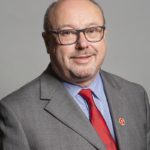
Tag: Grahame Morris

  • Grahame Morris – 2022 Speech on BBC Local Radio

    Grahame Morris – 2022 Speech on BBC Local Radio

    The speech made by Grahame Morris, the Labour MP for Easington, in the House of Commons on 8 December 2022.

    I, too, congratulate the right hon. Member for Hemel Hempstead (Sir Mike Penning) on securing the debate and offer my thanks to the Backbench Business Committee for making time available for it. I rise to speak both as co-chair of the National Union of Journalists cross-party parliamentary group and to represent the concerns of my constituents in Easington, County Durham on the vital role of BBC local radio services, and to warn BBC management of the damaging impact of the proposed cuts to those services.

    I do not think anyone is disputing that the way we consume news is changing. Undoubtedly, there is a greater emphasis on digital content and listen-on-demand platforms, but many people—especially older and rural listeners—continue to rely on traditional radio broadcasting. It is not an insignificant audience: 5.7 million people regularly listen to BBC local radio services. As many Members have indicated, the plan to reduce guaranteed local programming—much of which is shared content—to just 40 hours a week threatens to undermine the extent to which BBC local radio properly serves the whole demographic with reliable local news and information. Let us not forget, it is not doing that out of altruism; it is part of the BBC’s public service obligation under the terms of the royal charter.

    BBC local radio helps to combat social isolation. My mother is 87, and the radio is important. She never gets out, and it is a source of comfort, information and friendship, in a way. It helps people to keep in touch with what is happening in their local communities. Indeed, in the last annual report, as I think has been referred to previously, the BBC boasted how local radio

    “delivered real value by keeping people safe and informed through challenging times such as Storm Arwen”.

    I can testify to that, because my area was badly affected. The electricity and so on were out and, particularly in the north-east, people were left without power for many weeks. I am grateful to the local radio and the NUJ members who kept people informed. That included some important information regarding health and safety and the distribution of food parcels and other materials. Similarly, during the pandemic many people were isolated in their homes, and the “Make a Difference” campaign brought together volunteers who helped neighbours during the covid-19 emergency, helping to deliver food, to do shopping and so on.

    The problem is compounded in my own region. The Institute for Public Policy Research did a report on digital exclusion in the north-east in September 2021. It showed that digital exclusion was a long-term problem, even before the covid-19 pandemic. However, since the pandemic began, there has been increased reliance on digital services. In fact, it was referred to in Cabinet Office questions this morning. In regions such as mine, the older demographic in particular, me old mother, and many other people in similar circumstances are not able to access online digital alternatives. That might be because of a lack of access to wi-fi, to connectivity or to devices, or perhaps because of a lack of skills or confidence. I do not think they should just be put on one side. Inequalities in access to digital and online resources and activities are closely associated with other dimensions of inequality, and in many cases they exacerbate feelings of isolation. Altogether, this suggests a deepening of the impacts of inequalities associated with digital exclusion.

    The BBC’s report also said that we should ensure

    “that digital isn’t the only option. The final aspect of inclusive service design with regards to digital provision is the need to offer a suitable offline alternative for anyone who is unable to access digital service for any reason. Digital by default services often do not offer sufficient offline support, meaning that users or customers become very frustrated and often can’t get what they need.”

    While this debate is about cuts to local radio services, we should also recognise what is happening in much of the other media. The UK has seen a steady decline of local newspaper titles, which we have discussed here and in Westminster Hall. The Press Gazette reported that at least 265 local titles have gone since 2005. Members should be aware that the BBC’s digital first strategy also plans to scrap or merge the current BBC News TV channel with BBC World News, and then replace both with a single, globally focused channel with the capacity to provide a separate UK-focused feed in cases of major breaking news. Journalists working on the programme feel that this will significantly impact their capacity to provide more in-depth coverage of news beyond the national headlines, especially in the nations and regions of the United Kingdom.

    In that sense, the cuts to BBC local radio services are a double whammy for our constituents, and certainly for mine. The NUJ parliamentary group has written to Ofcom to urge it to conduct a review of whether the BBC’s digital first plans in their present form would constitute a breach of its charter obligations to serve all communities and localities in the UK with relevant news coverage. Those concerns have been expressed across the House, and to be fair, Ministers have echoed them, although I gently point out that the freeze of the BBC’s licence fee settlement at a time of double-digit inflation invariably puts pressures on the BBC’s budget. I would also like to reinforce the point made by the right hon. Member for Maldon (Sir John Whittingdale) that, although we pay £159 for our BBC licence fee, only about £7.60 of that goes on maintaining local radio. That represents, by any standard, excellent value for money.

    The BBC says that these proposals are being consulted upon. My understanding from discussions with NUJ members in my region is that the consultation has been very much top-down. As my hon. Friend the Member for York Central (Rachael Maskell) said, if BBC management had gone to BBC local radio journalists and asked for their input and advice on how to bring about efficiencies and deliver a more local service, they would have come to a rather different conclusion.

    I share the NUJ’s view that these cuts will seriously diminish a service that is highly valued by listeners and underpins local democracy. Investment in digital content should not come at the expense of services on which so many of our constituents continue to rely.

  • Grahame Morris – 2022 Speech on Cancer Services

    Grahame Morris – 2022 Speech on Cancer Services

    The speech made by Grahame Morris, the Labour MP for Easington, in the House of Commons on 8 December 2022.

    It is a privilege to speak in this debate, and I want to express my appreciation for the work of the Select Committee and for the way its Chair, the hon. Member for Winchester (Steve Brine), presented the report and the way forward. It is very instructive and informative, and I cannot disagree.

    I must make some declarations of interest. I am, and have been for some time, vice-chairman of the all-party parliamentary group for radiotherapy. I want to confine my remarks to radiotherapy, although I do have a broader interest as vice-chairman of the all-party parliamentary group on cancer. People might not believe this, but I worked for almost 15 years in an NHS diagnostic laboratory, so I have a little bit of knowledge of the front- line. I served for five years as a member of the Health Committee when I was first elected, under the chairmanship of Stephen Dorrell initially and then Sarah Wollaston. I found that to be one of the most interesting and rewarding things I have done in the House of Commons since being elected.

    I also served on the Health and Social Care Public Bill Committee—I must thank you, Madam Deputy Speaker, for putting me on that Committee—which was a marathon. I remind Members who were not around at the time that part of the justification put forward by the then Prime Minister and the coalition Government for those major reforms and restructuring of the national health service, including the commissioning of cancer services, was the poor outcomes on cancer. The system we have now was born out of a recognition that we needed to do better.

    I pay tribute to the hon. Member for Westmorland and Lonsdale (Tim Farron), who chairs the APPG for radiotherapy, and the hon. Member for Strangford (Jim Shannon), who is an assiduous advocate for improved cancer services, not just in Northern Ireland but throughout the country.

    I am delighted that this report signposts the way to future work. I am very pleased that the hon. Member for Winchester indicated that it is his intention, with the agreement of the Committee, to do further work on how we might achieve the laudable 75% diagnosis target by 2028. I am pleased that the Minister of State, Department of Health and Social Care, the hon. Member for Faversham and Mid Kent (Helen Whately), is responding to the debate. I am sure that, like some of her predecessors, including the hon. Member for Winchester, she will grow tired of me banging the drum for cancer services, and for radiotherapy in particular, but there are some very important points and sound advice that come not from me, although I should say that I am a cancer survivor. I have had lymphatic cancer on three occasions, and I have benefited from surgery, chemotherapy and radiotherapy, so I understand what is involved and I value the vast improvements there have been in all those pillars of cancer treatment.

    The sexy thing on cancer services is early diagnosis. It captures a lot of headlines, and the hon. Member for Winchester was right to point that out, but it goes hand in glove with having the requisite treatment capacity. With the best will in the world, the investment in new diagnostic hubs, which I welcome and is laudable, will simply increase the number of patients in the system. If we are to improve outcomes for cancer patients, we simply must address the issues around cancer treatment capacity.

    I believe the Minister has a copy of the six-point plan for improving outcomes from the APPG and the charity Radiotherapy UK. We are not saying that radiotherapy is somehow in competition with the other pillars of cancer treatment; rather, it complements them. Advancements in science, technology and skills, with the introduction of artificial intelligence, the ability to map tumours precisely and incredible advancements in MRI scanning facilities, used in parallel with precision radiotherapy machines, gives us an opportunity to make a quantum leap in treatment and to improve productivity.

    The cancer workforce is very small; it is only around 6,500 nationally. They are a highly skilled, highly motivated group of individuals who are doing a fantastic job, and I pay tribute to the cancer workforce, particularly those who work in the field of radiotherapy, who are holding the line at the moment and facing growing pressures in the system.

    As a country, we spend about 5% of our dedicated cancer budget—not 5% of the entire NHS budget—on radiotherapy. If we look at international comparators, which we must do, we see that the OECD average is about 9%, so we are spending about half as much as other similar developed industrial nations. To put that into context—because sometimes we get lost in the figures—the NHS spends more on a single cancer drug, Herceptin, than on the entire radiotherapy service across the country.

    I want to touch on commissioning, which is an issue that can be readily addressed and that came about as a consequence of the 2012 Lansley reforms. We took that up directly with the Minister when she kindly met a delegation earlier this week. Cancer services are currently nationally commissioned by NHS England, but there are things that could be done rapidly to increase treatment capacity by addressing some of the anomalies in the current tariff system.

    Perversely, NHS trusts that have the latest advanced precision radiotherapy equipment are financially disadvantaged from using it because of the tariff system. Bizarrely, patients are being treated with 30 fractions of radiotherapy when it is perfectly possible to treat them with four, five or six fractions of precisely delivered radiotherapy if the machines are available and the staff are trained to do it. In many cases, the machines are there but the tariff system works against rolling out that facility. That is completely perverse and it is crazy that we do not do that.

    We can learn from examples of what is happening in similar European countries. The Chair of the Select Committee mentioned the rapid improvements that have been made in Denmark as a result of having a well-thought-through, well-developed and well-scrutinised plan to improve cancer services. Rightly, some European countries also have diagnostic hubs, but in many cases they are combined diagnostic and treatment hubs, so it is conceivable that patients go in for diagnosis and rapidly begin their treatment—in some European countries, on the same day. Many patients here wait a month, and far too many wait more than two months—62 days—before their treatment starts.

    I have some particular points to make to the Minister, which we also raised with her directly. The Chair of the Select Committee mentioned the new cancer plan. As a House and as a nation, we need some clarity on whether there will be a new 10-year cancer plan and whether the Department and the Ministers are making the case to the Treasury to secure the necessary funding. I hope that, as part of that, the Minister will look at the six-point plan for improved radiotherapy services that she has in her possession. Even without a cancer plan, however, there are things that could be done immediately to address the issues around the tariff system and the bureaucracy that holds back technology, which NHS England could easily resolve.

    We are going to move to a new commissioning system with integrated care boards over large areas, but they have no capital budget and their funding is revenue based, so we must address the issue of those centres across the country. It is wonderful if people live near the Royal Marsden, which is one of the finest hospitals not just in the country or in London, but probably in the world, but if people live in the south-west, Cumbria or the north-east, they cannot readily access such a tremendous centre. We must address some of those health inequalities before the new commissioning arrangements come in, so that we have a systematic approach to replacing machines that are more than 10 years old, rather than having to make out a business case and compete against other centres that may already be well provided with the latest technology.

    We are on a time limit, so I will wrap up, because I do not want to incur the wrath of Madam Deputy Speaker. I give the Minister credit for her commitment and aspiration to improve cancer outcomes and to have a first-class service. I hope that the Health and Social Care Committee will play its role in scrutinising the cancer plan, or the Minister’s plans to improve cancer services. I am pleased that she recognises the validity of the representations that have been made already and that there is an urgent need to address the tariff issue. I would like an assurance that that will be done quickly, not in a year or two, because there is clear evidence that it could improve outcomes and it is what we call low- hanging fruit.

    There is a lot more that I could say and lots of figures that I could quote—for example, I am concerned about the latest cancer waiting times; the Minister attended our presentation where it was shown graphically that there are huge variations across the regions. The Government must address that. I think we could get cross-party support for a sensible cancer plan, so I look forward to seeing the proposals that she comes up with when she has consulted with her colleagues and the Treasury.

  • Grahame Morris – 2015 Parliamentary Question to the Department for Communities and Local Government

    Grahame Morris – 2015 Parliamentary Question to the Department for Communities and Local Government

    The below Parliamentary question was asked by Grahame Morris on 2015-10-22.

    To ask the Secretary of State for Communities and Local Government, what action the Government has taken to bring back into use long-term empty properties.

    Brandon Lewis

    The number of long term empty homes is at its lowest since records began. Over the last Parliament, the Government provided the right tools and incentives to tackle empty properties.

    • Through the New Homes Bonus, local authorities earn the same financial reward for bringing an empty home back into use as building a new one. Since April 2011 almost £3.4 billion has been paid in recognition of the delivery of over 700,000 homes, plus over 100,000 long-term empty properties brought back into use. 75 per cent of local authorities are financially better off in 2014-15 than if New Homes Bonus scheme didn’t exist.
    • We made changes through the Local Government Finance Act 1992 so local authorities can charge up to 150% council tax for homes empty for over two years.
    • We extended permitted development rights to make it easier to convert property from business to residential to give new life to thousands of empty buildings.
    • We amended Empty Dwelling Management Orders to ensure they are only used to tackle the most problematic empty homes.
    • We provided £216 million direct funding to local authorities, registered providers and community groups between 2012- 2015 to help tackle the problem of empty homes and properties. This funding created 9,044 homes from empty properties.
  • Grahame Morris – 2015 Parliamentary Question to the Department for Communities and Local Government

    Grahame Morris – 2015 Parliamentary Question to the Department for Communities and Local Government

    The below Parliamentary question was asked by Grahame Morris on 2015-10-22.

    To ask the Secretary of State for Communities and Local Government, what estimate his Department has made of the number of properties required to meet housing demand in (a) England, (b) the North East and (c) Easington constituency in each of the next five years.

    Brandon Lewis

    The Government does not assess demand for housing or set housing targets. The National Planning Policy Framework and planning guidance expects local authorities to objectively identify and then meet the housing needs of their area.

  • Grahame Morris – 2015 Parliamentary Question to the Department for Communities and Local Government

    Grahame Morris – 2015 Parliamentary Question to the Department for Communities and Local Government

    The below Parliamentary question was asked by Grahame Morris on 2015-10-22.

    To ask the Secretary of State for Communities and Local Government, what funding his Department has provided to renovate, repair and bring back into use long-term empty properties in each of the last five years.

    Brandon Lewis

    The number of long term empty homes is at its lowest since records began. Over the last Parliament, the Government provided the right tools and incentives to tackle empty properties.

    • Through the New Homes Bonus, local authorities earn the same financial reward for bringing an empty home back into use as building a new one. Since April 2011 almost £3.4 billion has been paid in recognition of the delivery of over 700,000 homes, plus over 100,000 long-term empty properties brought back into use. 75 per cent of local authorities are financially better off in 2014-15 than if New Homes Bonus scheme didn’t exist.
    • We made changes through the Local Government Finance Act 1992 so local authorities can charge up to 150% council tax for homes empty for over two years.
    • We extended permitted development rights to make it easier to convert property from business to residential to give new life to thousands of empty buildings.
    • We amended Empty Dwelling Management Orders to ensure they are only used to tackle the most problematic empty homes.
    • We provided £216 million direct funding to local authorities, registered providers and community groups between 2012- 2015 to help tackle the problem of empty homes and properties. This funding created 9,044 homes from empty properties.
  • Grahame Morris – 2015 Parliamentary Question to the HM Treasury

    Grahame Morris – 2015 Parliamentary Question to the HM Treasury

    The below Parliamentary question was asked by Grahame Morris on 2015-10-21.

    To ask Mr Chancellor of the Exchequer, what assessment he has made of the effect of changes to tax credits on family incomes.

    Damian Hinds

    The Government provided an overall assessment of the impact of Summer Budget policies in Impact on households: Distributional analysis to accompany Summer Budget 2015 available here:

    https://www.gov.uk/government/uploads/system/uploads/attachment_data/file/443229/PU1822_Distributional_Analysis.pdf

    The government provided an additional impact assessment on request of the House of Lords Secondary Legislation Scrutiny Committee. This can be found on the Committee’s web site at

    http://www.parliament.uk/documents/lords-committees/Secondary-Legislation-Scrutiny-Committee/DraftTaxCreditsRegs2015-ImpactAssessment.pdf

  • Grahame Morris – 2015 Parliamentary Question to the Ministry of Justice

    Grahame Morris – 2015 Parliamentary Question to the Ministry of Justice

    The below Parliamentary question was asked by Grahame Morris on 2015-10-27.

    To ask the Secretary of State for Justice, what his plans are for Just Solutions International; and if he will make a statement.

    Andrew Selous

    I refer the hon member to the Secretary of State’s statement of 13 October 2015 at the following link: http://www.publications.parliament.uk/pa/cm201516/cmhansrd/cm151013/debtext/151013-0001.htm#15101362000003

  • Grahame Morris – 2015 Parliamentary Question to the Ministry of Justice

    Grahame Morris – 2015 Parliamentary Question to the Ministry of Justice

    The below Parliamentary question was asked by Grahame Morris on 2015-10-27.

    To ask the Secretary of State for Justice, what steps the Government is taking to improve services for victims and witnesses of crime.

    Mike Penning

    The Government is undertaking a wide range of measures to improve services for victims and witnesses of crime.

    We recently published a revised Victims’ Code which will come into force on 16 November. As a result, victims of all criminal offences, and not just victims of more serious offences, will be entitled to support; and victims will be entitled to support from a wider range of organisations.

    Significant work is being undertaken by the Ministry of Justice to improve the experience of victims and witnesses when they engage with the criminal justice system, which includes strengthening the protection available when going to court. We have already doubled the number of Registered Intermediaries available to offer support to vulnerable witnesses and are giving vulnerable victims and witnesses greater opportunity to give evidence away from court using new live-link facilities. This is on top of a range of existing special measures to help reduce the anxiety of attending court, including giving evidence from behind a screen in the courtroom or the use of live-link from another room in court to the courtroom.

    Police and Crime Commissioners are responsible for commissioning the majority of emotional, practical and specialist support services for victims of crime, based on their assessment of local needs, and receive funding from the Ministry of Justice to do so. In addition, the Ministry of Justice funds services to support those bereaved by murder and manslaughter, female and male victims of rape, victims of road traffic crime and victims of terrorism, and support for victims and witnesses attending criminal courts. To help victims find the services they need, the Ministry of Justice has recently launched the Victims’ Information Service, which includes a website directory of services and a free telephone helpline which can provide immediate assistance and support.

  • Grahame Morris – 2015 Parliamentary Question to the Ministry of Justice

    Grahame Morris – 2015 Parliamentary Question to the Ministry of Justice

    The below Parliamentary question was asked by Grahame Morris on 2015-10-27.

    To ask the Secretary of State for Justice, which articles contained in the Human Rights Act are planned to be omitted from the proposed British Bill of Rights.

    Dominic Raab

    Our Bill of Rights will protect fundamental human rights, and prevent abuse of the system. The Government will fully consult on our proposals before introducing legislation and we will set out our proposals in due course.

  • Grahame Morris – 2015 Parliamentary Question to the Department for Transport

    Grahame Morris – 2015 Parliamentary Question to the Department for Transport

    The below Parliamentary question was asked by Grahame Morris on 2015-10-27.

    To ask the Secretary of State for Transport, what recent assessment he has made of the effectiveness of his Department’s policies on increasing access to public transport for disabled passengers.

    Andrew Jones

    We have made significant progress since 2010 on increasing access to public transport.

    Compliance with bus accessibility regulations is 89% of buses in England in 2015 compared to 59% in 2009-10; while 60% of rail vehicles, up from less than 40% in 2010, were built or fully refurbished to modern access standards.

    By the end of this year Access for All will have completed more than 150 step-free routes at rail stations against a target of 125. More than 1,200 stations have also received smaller scale improvements. To build on this success £160m has been allocated to another 68 stations to be delivered by 2019.